
2027 Best Online Certificate Program in Medical Office Administration: Guide to Online Degrees

Co-Founder and Chief Data Scientist
Choosing an online certificate in medical office administration is usually a practical decision: you want healthcare career training that is faster than a degree, flexible enough for work or family responsibilities, and directly connected to entry-level office roles in clinics, hospitals, physician practices, billing departments, and related healthcare settings. The challenge is that programs can look similar on the surface, even though they differ in cost, credit requirements, accreditation, course focus, employer connections, and whether they prepare you for billing, reception, records, or broader office support roles.
This guide explains what online medical office administration certificate programs teach, how long they take, what they cost, which schools are listed, what jobs graduates commonly pursue, and how to compare programs before enrolling. It is written for students who want a shorter healthcare credential, working adults changing careers, and healthcare support workers who want stronger administrative, billing, records, or office technology skills.
Quick Answer: Is an Online Certificate in Medical Office Administration Worth Considering?
An online certificate in medical office administration can be a useful entry point into healthcare administration if you want a shorter, lower-cost credential focused on front-office operations, medical terminology, billing basics, patient scheduling, records management, and healthcare communication. Many programs can be completed in about one year, and listed tuition ranges from $76 to $280 per credit for in-state students and $268 to $371 per credit for out-of-state students.
- Graduates may pursue roles such as medical receptionist, patient service representative, medical billing specialist, medical records specialist, or medical office support worker.
- Reported annual pay in the article ranges from $35,900.80 to $39,312.00 for entry-level roles, $40,331.20 to $43,118.40 for more experienced roles, and up to $47,424.00 for office manager-level positions.
- The best fit is usually a student who wants administrative healthcare work, not a heavily clinical role. Students seeking hands-on patient care may want to compare this path with medical assisting or other clinical certificates.
What can I expect from an online certificate program in medical office administration?
An online certificate program in medical office administration trains students to support the daily business side of healthcare. Instead of focusing primarily on direct clinical care, these programs emphasize the tasks that keep a medical office organized: greeting patients, scheduling appointments, maintaining records, processing insurance information, using office software, understanding medical terminology, and communicating with healthcare teams.
Most programs are designed for entry-level preparation. Students should expect a focused curriculum rather than a broad general education experience. Courses often cover medical terminology, keyboarding, office applications, medical insurance and billing, records management, legal and ethical responsibilities, and electronic health records. Some programs also include concentrations in medical coding, medical scribing, dental office administration, or medical reception.
The online format is usually the main advantage. Students can often complete coursework around work schedules, caregiving responsibilities, or other commitments. However, online learning still requires discipline. You will need reliable internet access, comfort with learning management systems, and enough weekly study time to complete assignments, readings, quizzes, and practice exercises.
Where can I work with an online certificate program in medical office administration?
Graduates of online medical office administration certificate programs can look for administrative and support roles across healthcare settings. Common workplaces include physician offices, outpatient clinics, hospitals, specialty practices, dental offices, urgent care centers, insurance-related healthcare offices, and medical records or billing departments.
Typical roles may involve checking in patients, answering phones, updating patient files, scheduling visits, verifying insurance information, preparing documents, processing billing details, and supporting office workflow. Some graduates move into more specialized positions in billing, coding support, medical records, or patient services after gaining experience or earning additional credentials.
| Work Setting | Common Duties | Best Fit for Students Who Want |
| Physician practice or clinic | Patient intake, scheduling, phone communication, insurance verification, record updates | A front-office role with frequent patient contact |
| Hospital administrative department | Records support, patient service coordination, documentation, departmental office tasks | A larger healthcare environment with more defined procedures |
| Billing or insurance office | Claims support, billing documentation, insurance forms, payment tracking | More back-office work and less face-to-face interaction |
| Dental or specialty office | Appointment coordination, patient files, billing support, practice-specific documentation | A focused healthcare office setting |
| Medical records department | File maintenance, electronic health record updates, privacy procedures, data accuracy | Detail-oriented records and compliance work |
How much can I make with an online certificate in medical office administration?
Earnings vary by job title, employer, location, experience, certification, and whether the role focuses on reception, billing, records, or office management. Based on 13 data points from Indeed, including employee reports, user data, and job postings, the salary examples in this article fall into the following ranges:
- Entry-level roles: Medical receptionists and patient service representatives may earn between $35,900.80 and $39,312.00 annually, or $17.26 to $18.90 per hour.
- More experienced roles: Medical billing specialists and medical records specialists may earn between $40,331.20 and $43,118.40 annually, or $19.39 to $20.73 per hour.
- Leadership roles: With substantial experience and additional credentials, medical office managers may reach $47,424.00 annually, or $22.80 per hour.
These figures should be treated as estimates, not guarantees. Pay can change significantly by region, employer size, job duties, certification requirements, and prior healthcare experience.
- 2027 List of the Best Online Certificate Programs in Medical Office Administration
- How long does it take to complete an online certificate program in medical office administration?
- How does an online certificate program in medical office administration compare to an on-campus program?
- What is the average cost of an online certificate program in medical office administration?
- How can you find affordable online colleges for medical office administration?
- What are the financial aid options for students enrolling in an online certificate program in medical office administration?
- What are the prerequisites for enrolling in an online certificate program in medical office administration?
- What courses are typically in an online certificate program in medical office administration?
- What types of specializations are available in online certificate programs in medical office administration?
- How to choose the best online certificate program in medical office administration?
- What should I look for in a medical office administration program to ensure it meets my career goals?
- Is an online certificate program a cost-effective investment for your career?
- What career paths are available for graduates of online certificate programs in medical office administration?
- What is the job market for graduates of online certificate programs in medical office administration?
- What career advancement and industry collaboration opportunities can online certificate programs provide?
- What is the return on investment for online certificate programs in medical office administration?
- Can online certificate programs pave the way for advanced healthcare education?
- Do Employers Recognize and Value Online Certificate Programs in Medical Office Administration?
- What emerging technologies should I consider in a medical office administration role?
- How Forensic Psychology Impacts Medical Administration
- What factors affect the overall affordability and hidden costs of online certificate programs?
- How does an online certificate program in medical office administration help students run medical offices effectively?
2027 List of the Best Online Certificate Programs in Medical Office Administration
How do we rank schools?
To identify online medical office administration certificate options, Research.com reviewed programs using a ranking approach that draws from credible education data sources and publicly available institutional information. Sources used in the evaluation include:
- Peterson’s data set;
- College Scorecard database;
- National Center for Education Statistics; and
- IPEDS database.
Programs were reviewed using factors such as academic reputation, enrollment, affordability, accreditation, and other relevant indicators. Rankings should be used as a starting point, not the only basis for enrollment. Before applying, confirm current tuition, course availability, online delivery format, transfer policies, and whether the certificate matches your target job.
1. Wayne Community College
Wayne Community College offers online medical office administration certificate options with typical class sizes of 20 to 25 students. Students can study areas such as medical coding, dental office administration, medical insurance, and medical scribing. Applicants generally need a high school diploma or equivalent and may complete placement assessments in English, mathematics, reading, and computer skills.
- Program Length: One year
- Tracks/concentrations: Medical Terminology, Keyboarding, Word Processing
- Cost per Credit: $76 (in-state), $268 (out-of-state)
- Required Credits to Graduate: 17
- Accreditation: Southern Association Of Colleges and Schools Commission on Colleges (SACSCOC)
2. Craven Community College
Craven Community College offers a Medical Office Administration: Medical Billing and Coding certificate for students who prefer administrative healthcare work over clinical care. The program prepares students for employment in medical and healthcare-related offices through coursework in medical terminology, office procedures, medical insurance, and billing. The program does not include procedure or diagnostic coding.
- Program Length: One year
- Tracks/concentrations: Medical Terminology, Medical Office Procedures, Medical Insurance and Billing
- Cost per Credit: $76 (in-state), $268 (out-of-state)
- Required Credits to Graduate: 15
- Accreditation: SACSCOC
3. Vance-Granville Community College
Vance-Granville Community College provides a fully online medical office administration certificate. Applicants are typically asked to submit high school transcripts, post-secondary transcripts when transfer credit is requested, and standardized test scores.
- Program Length: One year
- Tracks/concentrations: Keyboarding, Medical Insurance and Billing
- Cost per Credit: $76 (in-state), $268 (out-of-state)
- Required Credits to Graduate: 17
- Accreditation: SACSCOC
4. Lenoir Community College
Lenoir Community College offers an online medical office administration curriculum designed for roles such as Patient Services Representative, Medical Office Specialist, and Medical Billing Specialist. Students study medical terminology, insurance and billing, electronic health records, and medical-legal topics. Graduates may choose to sit for the Certified Medical Administrative Assistant (CMAA) exam, a credential that may strengthen employability in administrative healthcare roles.
- Program Length: One year
- Tracks/concentrations: Medical Terminology, Medical Insurance and Billing
- Cost per Credit: $76 (in-state), $268 (out-of-state)
- Required Credits to Graduate: 18
- Accreditation: SACSCOC
5. Pitt Community College
Pitt Community College provides a medical office receptionist certificate that prepares students for administrative roles in medical offices. Students who want a longer academic pathway can also explore the school’s associate degree in medical office administration.
- Program Length: One year
- Tracks/concentrations: Medical Terminology, Keyboarding, Office Software Applications
- Cost per Credit: $76 (in-state), $268 (out-of-state)
- Required Credits to Graduate: 17
- Accreditation: SACSCOC
6. Beaufort County Community College
Beaufort County Community College offers the Medical Office Administration - Basic Medical Office Certificate for students seeking foundational training for entry-level medical office employment. The curriculum includes medical terminology, legal and ethical issues, medical billing and insurance, and document formatting.
- Program Length: One year
- Tracks/concentrations: Medical Terminology, Legal and Ethical Considerations, Medical Billing and Insurance, Document Formatting
- Cost per Credit: $76 (in-state), $268 (out-of-state)
- Required Credits to Graduate: 15
- Accreditation: SACSCOC
7. Forsyth Technical Community College
Forsyth Technical Community College offers a medical office administration program with a receptionist focus. Students build practical skills in appointment scheduling, patient communication, and front-office support for healthcare practices, hospitals, and insurance-related settings.
- Program Length: One year
- Tracks/concentrations: Medical Reception
- Cost per Credit: $76 (in-state), $268 (out-of-state)
- Required Credits to Graduate: 18
- Accreditation: SACSCOC
8. Wake Technical Community College
Wake Technical Community College offers a fully online certificate in medical office administration. The program emphasizes medical and computer skills for entry-level employment in healthcare office environments.
- Program Length: One year
- Tracks/concentrations: Medical Terminology, Medical Insurance and Billing
- Cost per Credit: $76 (in-state), $268 (out-of-state)
- Required Credits to Graduate: 18
- Accreditation: SACSCOC
9. Surrey Community College
Surry Community College trains students for administrative healthcare roles in areas such as billing and coding support, dental offices, patient services, and medical documentation. The curriculum includes medical terminology, computer applications, medical office management, and medical coding.
- Program Length: One year
- Tracks/concentrations: Medical Terminology
- Cost per Credit: $76 (in-state), $268 (out-of-state)
- Required Credits to Graduate: 12
- Accreditation: SACSCOC
10. Purdue University Global
Purdue University Global offers an online medical billing and coding certificate. The program develops technical knowledge and professional skills for entry-level billing and insurance specialist roles in physician offices and institutional settings. It may also support career paths such as patient referral specialist, coder, or medical receptionist.
- Program Length: Two years
- Tracks/concentrations: Medical Billing and Coding
- Cost per Credit: $280 (in-state), $371 (out-of-state)
- Required Credits to Graduate: 44
- Accreditation: Higher Learning Commission (HLC)
What Students Often Value in Online Medical Office Administration Certificates
Students who choose this type of certificate often cite flexibility, shorter completion time, and practical career preparation as major advantages. Online learning can be especially useful for working adults, parents, and students who live far from campus. Still, individual outcomes depend on the program, the student’s effort, local employer demand, and whether the curriculum matches the roles the student wants.
-
: "
“I needed a healthcare career path that fit around work and family responsibilities. The online format made it possible to study consistently without commuting, and the office-focused coursework helped me understand patient scheduling, billing basics, and healthcare communication.”
"
-
: "
“I wanted to work in healthcare but did not want a primarily clinical program. A medical office administration certificate gave me a clearer route into billing, records, and patient service roles.”
"
-
: "
“The biggest benefit was speed. The courses were focused, practical, and connected to the type of entry-level job I wanted.”
"
Key Facts About Online Certificate Programs in Medical Office Administration
- Many online medical office administration certificates can be completed in about one year, or two semesters.
- Listed tuition ranges from $76 to $280 per credit for in-state students and $268 to $371 per credit for out-of-state students.
- Undergraduate students may receive up to $6,895 in Federal Pell Grants if eligible.
- Common admission requirements include proof of high school completion, high school transcripts, and college transcripts when applicable.
- Experienced certificate holders may advance into medical office manager roles, with salaries averaging $47,424.00 per year.
- About 114,600 new job openings for medical assistants are projected each year over the decade, according to the data cited in this article.
How long does it take to complete an online certificate program in medical office administration?
Most online medical office administration certificate programs take about one year, or two semesters, to complete. The exact timeline depends on the number of required credits, whether the program uses full-time or part-time enrollment, and how many courses you take each term.
- Program design: Some certificates are built for full-time study, while others are intended for working adults who take fewer courses at once.
- Credit requirements: Programs in this guide range from 12 to 44 required credits, which can affect completion time.
- Student pace: Taking more credits per term may shorten the timeline, while part-time study can extend it.
| Student Situation | Likely Timeline | What to Consider |
| Full-time student | Often about one year | Best for students who can manage a heavier course load |
| Part-time working adult | May take longer than one year | Better for students balancing work, caregiving, or other commitments |
| Accelerated learner | Potentially faster if the school allows heavier enrollment | Requires strong time management and steady weekly study time |
| Program with more credits | Longer completion time may be required | Compare the added coursework with your career goals before paying more |
How does an online certificate program in medical office administration compare to an on-campus program?
Online and campus-based medical office administration certificates often cover similar topics: medical terminology, office procedures, billing concepts, records, communication, and healthcare software. The main difference is how students complete the work. Online formats can reduce commuting and provide scheduling flexibility, while on-campus programs may offer more face-to-face structure and immediate access to campus resources.
Students comparing formats should also review related options such as medical coding programs, especially if they want a more specialized billing and coding pathway rather than broad office administration training.
Learning environment
In an online certificate program, students typically access lectures, readings, assignments, discussion boards, quizzes, and instructor messages through a learning platform. Communication may happen through email, video meetings, chat, or course forums. This format works well for independent learners who can stay organized without a daily classroom routine.
Campus programs usually provide scheduled class sessions and in-person contact with instructors and classmates. This may be better for students who prefer a structured environment, immediate feedback, or campus-based support services.
Pacing
Many online programs use asynchronous coursework, meaning students can complete activities during approved weekly windows rather than attending class at a fixed time. Some courses may still have due dates, exams, or occasional live requirements. Students exploring broader online education options can compare formats through Research.com’s guide to online degree pathways.
Online learning has become more common across higher education. In one cited statistic, 72% of educational providers and faculty members acknowledged offering online courses in response to workforce demand for specialized skills.
Schedule
Online certificates are often more flexible because students can complete readings, watch lectures, and submit assignments without commuting to campus. Some schools also provide multiple start dates. Purdue University Global, for example, offers its medical office administration certificate program from March to September.
Time to complete
Campus-based programs often follow a traditional term schedule, while online programs may allow different pacing. However, flexibility does not always mean faster completion. Students who take only one or two courses at a time may need more time to finish. If a program requires a larger credit load, completion may also take longer even when coursework is online. Students unfamiliar with academic calendars can review how a traditional academic calendar may affect pacing.
| Factor | Online Certificate | On-Campus Certificate |
| Flexibility | Usually stronger for working adults and remote learners | More dependent on fixed class times |
| Interaction | Mostly digital communication with instructors and classmates | More face-to-face interaction |
| Commute and housing | Often no commute or campus housing costs | May require travel or relocation |
| Structure | Requires self-direction and time management | Built-in classroom schedule may help students stay on track |
| Best for | Independent learners who need scheduling flexibility | Students who prefer in-person support and routine |
What is the average cost of an online certificate program in medical office administration?
The online medical office administration certificate programs listed in this guide range from $76 to $280 per credit for in-state students and $268 to $371 per credit for out-of-state students. Total cost depends on the number of required credits, tuition classification, fees, books, supplies, software, and whether the school charges online learning or technology fees.
Online programs can sometimes reduce indirect expenses because students may avoid commuting and housing costs. Still, the lowest tuition is not always the best value. A slightly higher-cost program may be worthwhile if it has stronger accreditation, better career services, useful externship options, or a curriculum aligned with your target job.
| Minimum Cost per Credit | Maximum Cost per Credit | |
| In-state | $76 | $280 |
| Out-of-state | $268 | $371 |
How can you find affordable online colleges for medical office administration?
Finding an affordable online certificate requires more than comparing advertised tuition. You should calculate the total program cost, check whether credits transfer, confirm financial aid eligibility, and compare the program’s job alignment with your goals.
Compare public, private, in-state, and out-of-state tuition
- Public vs. private colleges: Public community colleges may offer lower tuition, particularly for in-state students.
- Per-credit pricing: Multiply tuition by required credits. A program with a lower per-credit cost can still become more expensive if it requires far more credits.
- Residency rules: Out-of-state rates can be much higher, so ask whether online students qualify for special tuition rates.
Use financial aid and scholarships strategically
- FAFSA: Complete the Free Application for Federal Student Aid if the school and program are eligible for federal aid.
- Healthcare scholarships: Search for awards from colleges, local healthcare employers, foundations, and professional organizations.
- Employer tuition assistance: If you already work in healthcare, ask whether your employer reimburses certificate coursework.
Ask about transfer credit and prior learning
- Previous coursework: Relevant college credits may reduce the number of courses you need to take.
- Certifications: Some schools may award credit for prior credentials or documented training.
- High school pathways: Students with dual-enrollment or career and technical education coursework should ask whether any credits apply.
Look beyond tuition
- Payment plans: Installment plans can make tuition easier to manage without requiring full payment upfront.
- Books and software: Ask whether textbooks, office software, coding manuals, or exam preparation materials are included.
- Technology fees: Online programs may charge fees that do not appear in the headline tuition rate.
Consider community colleges and adult-friendly online schools
Community colleges often provide career-focused certificates at lower tuition rates. Working adults may also want to compare schools that offer flexible scheduling, online advising, multiple start dates, and clear transfer pathways. Research.com’s guide to the most affordable online colleges for working adults can help students compare options designed for cost-conscious learners.
What are the financial aid options for students enrolling in an online certificate program in medical office administration?
Financial aid may be available for eligible students enrolled in qualifying online certificate programs. Availability depends on the institution, program length, enrollment status, student financial need, and accreditation.
Federal aid
- Federal Pell Grant: Eligible low-income undergraduate students may receive up to $6,895 per year.
- Career and Technical Education Grants: Some grants support training for career-focused fields, including healthcare-related pathways.
- Direct Stafford Loans: These fixed-interest loans may be subsidized or unsubsidized, depending on eligibility.
Institutional aid
- College scholarships: Schools may offer awards for students in healthcare, business technology, or administrative programs.
- Payment plans: Some colleges let students divide tuition across installments. Wayne Community College, for example, offers a five-month plan.
Questions to ask the financial aid office
- Is this certificate eligible for federal financial aid?
- What is the total cost after tuition, fees, books, and required technology?
- Are scholarships available specifically for healthcare administration or certificate students?
- Can I use employer reimbursement, veterans benefits, or workforce training funds?
- Will dropping below full-time status change my aid package?
What are the prerequisites for enrolling in an online certificate program in medical office administration?
Most medical office administration certificates are undergraduate-level programs with relatively accessible admission requirements. Compared with longer healthcare degrees, these certificates usually focus on readiness for college-level coursework, basic technology skills, and proof of prior education.
Students considering this route can also compare other online diploma and certificate programs to see whether a certificate, diploma, or associate degree best fits their timeline and career goals.
Common admission requirements
- Proof of high school completion, such as a high school diploma or GED certificate;
- High school transcripts; and
- College transcripts if you previously attended another postsecondary institution.
Some schools may require placement testing, residency verification, or academic readiness assessments. For example, students applying to North Carolina colleges more than a decade after high school graduation may need to take the Reinforced Instruction for Student Excellence (RISE) placement test, which evaluates readiness for college-level work.
Technology requirements
Online students need dependable access to the tools required for virtual coursework. Before enrolling, confirm the school’s technical standards and make sure your computer can run the required software.
- Computer with current software and browser compatibility
- Reliable high-speed internet connection
- Speakers, headphones, webcam, or microphone when required
What courses are typically in an online certificate program in medical office administration?
Course names vary by college, but most programs focus on the administrative systems used in healthcare offices. The goal is to help students understand the language of healthcare, communicate with patients and providers, manage records accurately, and support billing and office workflow.
- Medical Terminology: Introduces common healthcare terms, root words, abbreviations, and basic concepts in anatomy and pathology so students can understand medical documentation and office communication.
- Medical Coding and Insurance: Covers basic coding concepts and insurance processes used when preparing or supporting claims. Students learn how different insurance types affect billing workflows.
- Medical Office Management: Examines medical office operations, management styles, risk management, financial procedures, and the coordination of front-office duties.
- Medical Law and Ethics: Reviews legal terms, contracts, liability, confidentiality, patient rights, and ethical issues that healthcare office staff may encounter.
- Records Management: Teaches students how to organize, update, protect, and retrieve patient records in both electronic and traditional formats.
- Keyboarding: Builds typing speed and accuracy for clerical work, data entry, appointment scheduling, and document preparation.
Students should compare course lists carefully. A certificate labeled “medical office administration” may be reception-focused at one school, billing-focused at another, and records-focused at a third.
What types of specializations are available in online certificate programs in medical office administration?
Some certificate programs provide a general medical office administration curriculum, while others let students focus on a specific administrative function. Choosing the right specialization matters because a reception-focused program may not prepare you as deeply for billing or coding work, and a billing-heavy program may not emphasize patient-facing communication as much.
Clinical-adjacent and coding-related options
- Medical Coding: Focuses on coding systems such as CPT and ICD-10 for documentation and insurance claim support.
- Medical Assisting: May include some clinical support concepts along with administrative responsibilities, depending on the program.
Administrative specializations
- Medical Billing Specialist: Emphasizes insurance procedures, billing workflows, claims processing, and collections.
- Medical Records Specialist: Focuses on patient record accuracy, confidentiality, electronic records, and compliance practices.
- Practice Management: Introduces scheduling, financial management, personnel coordination, and other business functions within a medical practice.
Additional focused areas
- Long-Term Care Administration: Covers administrative needs in long-term care environments.
- Legal and Ethical Issues in Healthcare: Provides deeper preparation in confidentiality, compliance, liability, and ethical decision-making.
- Information Technology in Healthcare: Trains students to use electronic health records and other healthcare office technologies.
How to choose the best online certificate program in medical office administration?
The best program is not automatically the cheapest, fastest, or highest-ranked. It is the one that is accredited, affordable for your situation, aligned with your target role, and structured in a way you can realistically complete.
Check accreditation first
Accreditation helps confirm that a school meets recognized academic standards. Institutions accredited by agencies such as organizations like SACSCOC or HLC have undergone external review. Accreditation can also affect transfer credit and access to federal financial aid, so verify the school’s status before applying.
Match the curriculum to the job you want
If your goal is medical reception, look for patient communication, scheduling, keyboarding, and office software. If you want billing or records work, prioritize insurance, billing, coding, EHR, and compliance coursework. If you may continue into an associate degree, ask whether the certificate credits apply.
Compare total cost, not just tuition
Ask for a full cost estimate that includes tuition, fees, books, exam preparation, software, and any required equipment. Also ask whether out-of-state online students pay a different rate and whether the program has payment plans.
Review support services
Useful online programs provide advising, tutoring, technical support, library access, career services, resume help, and guidance on internships or externships when available. These supports can matter as much as course content, especially for first-time online learners.
| Question to Ask | Why It Matters |
| Is the institution accredited? | Accreditation affects quality assurance, transferability, and federal aid eligibility. |
| How many credits are required? | Credit load affects time, cost, and workload. |
| Does the curriculum match my target job? | Reception, billing, records, and practice management require different skill emphasis. |
| Are courses fully online or partly synchronous? | Live meeting requirements may affect work and family schedules. |
| What career services are available? | Resume help, job boards, and employer connections can support the transition to work. |
| Do credits transfer into an associate degree? | Transferability matters if you plan to continue your education. |
What should I look for in a medical office administration program to ensure it meets my career goals?
Start with the job you want after graduation, then work backward. A student targeting medical reception should prioritize scheduling, patient communication, keyboarding, office software, and customer service. A student targeting billing should look for stronger insurance, billing, and coding coursework. A student targeting records management should focus on EHR, privacy, compliance, and documentation accuracy.
Accreditation should also be nonnegotiable. It signals that the institution has been reviewed for educational quality and may affect financial aid and credit transfer. If you are especially interested in coding-related work, compare medical office administration certificates with medical coding accredited programs to see which route offers the depth of coding preparation you need.
Is an online certificate program a cost-effective investment for your career?
An online medical office administration certificate can be cost-effective when the total price is manageable, the program is accredited, and the curriculum leads toward realistic entry-level roles in your area. It may be less cost-effective if you overpay for a program with limited career support, weak transfer options, or coursework that does not match your target position.
To evaluate value, compare tuition, technology fees, books, time to completion, financial aid, and the opportunity cost of studying. Then compare those costs with expected job options and wages. Students considering a clinical-administrative pathway may also want to review the medical assistant certification online cost to decide whether medical office administration or medical assisting better fits their goals.
What career paths are available for graduates of online certificate programs in medical office administration?
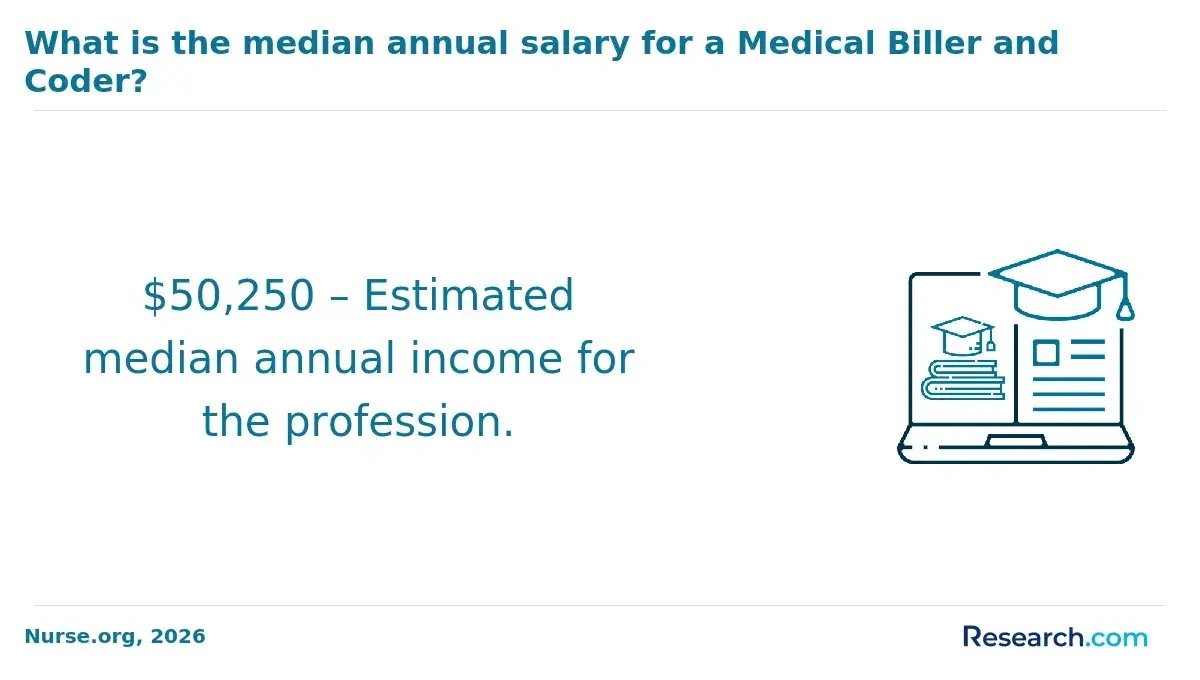
An online certificate in medical office administration can support entry into several healthcare office roles. Entry-level positions may include medical receptionist and patient service representative. According to the salary figures cited in this article, medical receptionists average $35,900.80 annually, while patient service representatives earn around $39,312.00 per year.
With experience, graduates may move into more specialized roles. Medical billing specialists average $40,331.20 annually, while medical records specialists average $43,118.40. With additional experience and credentials, some workers progress to medical office manager roles, with salaries averaging $47,424.00 per year.
Students who want deeper billing and coding preparation can compare this certificate with certificate programs in medical billing and coding, which may provide a more specialized route into claims, coding, and reimbursement work.
| Career Path | Typical Focus | Salary Figure Cited |
| Medical Receptionist | Front desk, scheduling, phones, patient check-in | $35,900.80 annually |
| Patient Service Representative | Patient communication, registration, appointment support | $39,312.00 per year |
| Medical Billing Specialist | Billing workflows, claims support, insurance documentation | $40,331.20 annually |
| Medical Records Specialist | Patient records, EHR updates, documentation accuracy | $43,118.40 annually |
| Medical Office Manager | Office operations, staff coordination, workflow oversight | $47,424.00 per year |
What is the job market for graduates of online certificate programs in medical office administration?
According to the US Bureau of Labor Statistics (BLS), employment in medical assistant occupations is projected to grow by 14% from 2024 to 2034, which is faster than average. The BLS also projects about 114,600 openings for medical assistants each year over the decade. Many openings are expected to result from workers transferring to other occupations or leaving the labor force, including retirement.
Although medical office administration and medical assisting are not identical, both are connected to healthcare support employment. Students should review local job postings to confirm which credentials employers in their area request for administrative roles, billing positions, records roles, and patient service jobs.
What career advancement and industry collaboration opportunities can online certificate programs provide?
Stronger online certificate programs do more than deliver coursework. They may provide career advising, resume support, interview preparation, employer connections, job boards, mentorship, or internship and externship guidance. These services can be especially valuable for students entering healthcare for the first time.
Students who want a faster route into broader healthcare support work may also compare certificate programs with accelerated medical assistant programs. The right choice depends on whether you want administrative office work, clinical support tasks, or a blend of both.
What is the return on investment for online certificate programs in medical office administration?
Return on investment depends on total program cost, financial aid, completion time, job availability, and how much the credential improves your employability. A low-cost certificate with transferable credits and strong career alignment may provide better value than a more expensive program with limited job support.
Before enrolling, estimate the full cost and compare it with likely entry-level earnings. Also ask whether the certificate can stack into an associate degree or healthcare administration pathway. Students interested in moving beyond certificate-level training can compare longer options, including the best accelerated healthcare administration degree programs online.
Can online certificate programs pave the way for advanced healthcare education?
Yes, a medical office administration certificate can serve as a first academic step toward more advanced healthcare education, especially if the credits transfer into a diploma, associate degree, or bachelor’s program. The certificate can help students build confidence with healthcare terminology, documentation, compliance, and technology before committing to a longer program.
However, students should not assume automatic transfer. Ask each school whether certificate credits apply to future degrees and whether the institution has articulation agreements. Students considering much more advanced healthcare education can explore pathways such as a 3 year accelerated PharmD program, but they should understand that advanced clinical programs have separate prerequisites, admission standards, and timelines.
Do Employers Recognize and Value Online Certificate Programs in Medical Office Administration?
Employers generally care most about whether the candidate can perform the work: communicate professionally, manage patient information accurately, use office and EHR systems, understand confidentiality, and support billing or scheduling processes. An online certificate from an accredited institution can help demonstrate preparation, especially when paired with relevant experience, strong references, and optional industry credentials.
Online delivery alone is usually not the deciding factor. Program quality, accreditation, course relevance, and the student’s ability to explain their skills matter more. Graduates who continue building healthcare expertise may later pursue broader roles, including some career paths discussed in Research.com’s guide to the highest paying medical jobs.
What emerging technologies should I consider in a medical office administration role?
Medical offices increasingly rely on digital tools to manage patient access, records, billing, scheduling, communication, and compliance. Students should choose programs that teach current office technologies and help them become comfortable with secure digital workflows.
- Electronic Health Records (EHR) Systems: Administrators use EHR platforms to update patient information, retrieve records, coordinate documentation, and support provider workflows.
- Telehealth Management Platforms: Medical office staff may schedule virtual visits, send instructions, manage documentation, and support secure communication for remote care.
- Automated Billing and Coding Software: Billing tools can support claims processing, reduce data-entry errors, and help track reimbursement workflows.
- Patient Self-Service Portals: Portals allow patients to schedule appointments, view results, complete forms, and communicate with offices. Administrators often help patients navigate these systems.
- Data Security and Compliance Tools: Secure storage, encryption, access controls, and privacy procedures help protect patient information and support HIPAA compliance.
How Forensic Psychology Impacts Medical Administration
Forensic psychology examines behavior in legal and ethical contexts. While it is not a core requirement for most medical office administration roles, some concepts can be useful in healthcare office settings where staff must manage conflict, protect confidentiality, and respond professionally to sensitive situations.
- Conflict resolution: Behavioral insight can help administrators respond calmly to disagreements among patients, staff, or providers.
- Patient interaction: Understanding stress, fear, and communication patterns can support more empathetic front-office service.
- Ethical decision-making: Legal and behavioral frameworks can help staff think through privacy concerns, difficult conversations, and patient disputes.
Administrators interested in the intersection of behavior, ethics, and legal processes may explore advanced study, such as a forensic psychology master's. This is not required for entry-level medical office administration, but it may appeal to professionals who want broader expertise in behavioral analysis, ethics, or legal systems.
What factors affect the overall affordability and hidden costs of online certificate programs?
The real cost of an online certificate includes more than tuition. Students should account for fees, books, technology, software, exam preparation materials, transcript fees, graduation fees, and any costs tied to optional certifications. Lost work hours may also matter if coursework requires scheduled attendance or intensive study time.
Students comparing healthcare administrative credentials can review related cost discussions, including the medical billing and coding certificate program cost, to understand how price varies by specialization and school type.
| Common Mistake | Better Approach |
| Choosing only the lowest tuition | Compare total cost, accreditation, transferability, and job alignment. |
| Ignoring accreditation | Confirm institutional accreditation before applying or paying fees. |
| Assuming every online program is self-paced | Ask whether courses have live meetings, fixed deadlines, or proctored exams. |
| Overlooking technology requirements | Verify software, device, webcam, and internet requirements in advance. |
| Assuming credits will transfer | Get written confirmation if you plan to continue into a degree. |
| Expecting guaranteed salary outcomes | Use salary data as guidance and research local job postings. |
How does an online certificate program in medical office administration help students run medical offices effectively?
An online certificate in medical office administration helps students understand the systems that keep healthcare offices functioning. Coursework usually combines patient communication, scheduling, records management, billing concepts, office software, privacy rules, and basic management practices.
Students learn how to coordinate appointments, manage patient flow, communicate with healthcare providers, and reduce scheduling disruptions. They also practice the documentation skills needed to maintain accurate patient information and support continuity of care.
Records and billing coursework helps students understand electronic health records, insurance verification, coding-related documentation, and privacy responsibilities under HIPAA. These skills are important because errors in records, billing, or patient information can affect reimbursement, compliance, and patient trust.
Some programs also introduce supervisory and office management concepts. Students may study staff scheduling, conflict resolution, supply tracking, budgets, and workflow coordination. These skills can become more important as graduates move from entry-level reception or records positions toward team lead or office manager responsibilities.
Students comparing short healthcare credentials can also explore quick certifications that pay well to see how medical office administration fits alongside other career-focused training options.
Key Insights
- An online certificate in medical office administration is best for students who want administrative healthcare work, such as reception, patient services, billing support, records, or office coordination.
- Many programs can be completed in about one year, but credit requirements vary from 12 to 44 credits among the listed programs.
- Listed tuition ranges from $76 to $280 per credit for in-state students and $268 to $371 per credit for out-of-state students, before fees and other expenses.
- Accreditation, curriculum fit, total cost, transferability, and career services should matter more than ranking position alone.
- Salary outcomes are not guaranteed. The article cites earnings from $35,900.80 for medical receptionist roles to $47,424.00 for medical office manager roles, depending on position and experience.
- Students interested in billing or coding should compare general medical office administration certificates with more specialized billing and coding programs.
- The strongest program choice is one that matches your target job, fits your schedule, keeps debt manageable, and gives you skills employers can recognize immediately.
References:
- Nurse.org. (2026). Medical Billing and Coding Salary by State. https://nurse.org/healthcare/medical-billing-coding-salary/
- Robert Half. (2025). The Best Healthcare Jobs for 2025. https://www.roberthalf.com/us/en/insights/career-development/highest-paying-healthcare-jobs
- U.S. Bureau of Labor Statistics. (2025). Occupational Outlook Handbook: Healthcare. https://www.bls.gov/ooh/healthcare/
- U.S. Bureau of Labor Statistics. (2025). Medical Assistants : Occupational Outlook Handbook. https://www.bls.gov/ooh/healthcare/medical-assistants.htm
Other Things You Should Know About Online Certificate Programs in Medical Office Administration
When choosing the best online certificate program in medical office administration for 2027, consider accreditation, curriculum comprehensiveness, faculty expertise, flexibility of the online platform, student support services, and post-graduation career assistance. Evaluating these factors ensures you select a program that enhances your skills and career prospects.
Yes. A medical office administration certificate can support preparation for the Certified Professional Coder (CPC) exam, but it does not replace exam eligibility. The CPC is offered by the AAPC, and candidates typically need anatomy, coding, and medical terminology knowledge before testing.
In 2027, essential technological skills for medical office administration include proficiency in electronic health records (EHR) systems, telehealth platforms, and data management software. Mastery of these technologies is critical for efficient patient data handling and supporting virtual healthcare services.
Most 2027 medical office administration certificate programs do not require prior healthcare experience. They are designed for beginners and focus on teaching essential skills such as medical billing, coding, and office management. However, familiarity with medical terminology can be beneficial.


