
2027 Best PharmD Accelerated Degree Programs

Co-Founder and Chief Data Scientist
Choosing an accelerated PharmD program is not just a question of finding the shortest path to a pharmacy degree. Students also need to compare accreditation, prerequisite rules, clinical rotation access, online requirements, total cost, licensure preparation, and whether the compressed schedule fits their learning style. The wrong choice can delay graduation, increase debt, or create licensure complications after completing the program.
This guide is designed for students comparing accelerated Doctor of Pharmacy options in the United States, including high school students considering direct-entry PharmD pathways, college students with science prerequisites, career changers, and working adults evaluating online or hybrid pharmacy programs. You will learn how accelerated PharmD programs work, what they cost, how long they take, which schools are featured for 2027, and what questions to ask before enrolling.
Quick answer: What is an accelerated PharmD program?
An accelerated PharmD program is a Doctor of Pharmacy pathway that shortens the time needed to complete pharmacy education or allows students to enter the professional phase sooner. Some programs compress the professional PharmD curriculum into three years, while others offer direct-entry six-year pathways that combine pre-pharmacy and professional coursework. Graduates still need to meet state licensure requirements, including preparation for the North American Pharmacist Licensure Examination (NAPLEX) and any state-specific requirements.
What are the benefits of getting an accelerated PharmD degree?
- Faster entry into the pharmacy workforce: A shortened pathway can help qualified students begin practicing sooner than they would in a traditional route.
- Potentially lower opportunity cost: Finishing earlier may reduce the time spent outside full-time professional employment, although tuition and living costs still vary widely by school.
- Structured, high-intensity learning: Accelerated PharmD programs often suit students who are academically prepared, organized, and comfortable with demanding schedules.
- Clear professional goal: These programs are best for students who are already committed to becoming pharmacists and are ready for a healthcare curriculum built around science, patient care, and clinical practice.
What can I expect from an accelerated PharmD program?
Accelerated PharmD programs are intensive professional degrees that combine pharmaceutical science, clinical decision-making, patient counseling, pharmacy law, and supervised practice experiences. The pace is usually faster than a traditional four-year professional sequence, so students should expect fewer long academic breaks and a heavier weekly workload.
- Pharmaceutical science foundation: Students study pharmacology, pharmacokinetics, pharmaceutics, medicinal chemistry, and drug therapy principles.
- Patient-centered clinical training: Coursework emphasizes medication safety, therapeutic monitoring, counseling, disease-state management, and interprofessional collaboration.
- Experiential education: Students complete practice experiences in community pharmacies, hospitals, ambulatory clinics, and other healthcare settings.
- Advanced Pharmacy Practice Experiences: APPE rotations typically place students in specialized settings such as community pharmacy, hospital pharmacy, ambulatory care, and other clinical environments.
- Licensure preparation: Programs prepare students for the NAPLEX while also helping them understand state-specific rules that may affect internship hours, exams, and pharmacist licensure.
Where can I work with an accelerated PharmD degree?
A PharmD can lead to work in patient-facing, administrative, research, regulatory, and academic settings. The accelerated format does not change the degree title, but students should choose rotations and electives that match the career setting they want after graduation.
- Community pharmacies: Pharmacists dispense medications, counsel patients, provide immunizations where permitted, and support medication therapy management.
- Hospitals and health systems: Pharmacists review medication orders, monitor drug interactions, support inpatient care teams, and manage medication safety processes.
- Clinical pharmacy roles: Pharmacists may specialize in oncology, cardiology, infectious diseases, critical care, ambulatory care, pediatrics, geriatrics, or psychiatric pharmacy.
- Pharmaceutical industry: Graduates may work in research and development, medical affairs, drug manufacturing, regulatory affairs, or related industry functions.
- Government agencies: PharmD graduates may contribute to public health, drug safety, policy, regulation, or medication access programs.
- Academia and research: Some pharmacists teach, conduct research, mentor students, or pursue fellowships and postgraduate training.
How much can I make with an accelerated PharmD degree?
Pharmacist earnings depend on role, employer, location, experience, credentials, and practice setting. Salary outcomes are not guaranteed by any degree program, but the following general ranges are commonly used when comparing pharmacy career paths:
- Staff Pharmacist: $100,000 - $140,000 per year
- Clinical Pharmacist: $120,000 - $160,000 per year
- Pharmacy Manager: $130,000 - $180,000+ per year
- Best PharmD accelerated degree programs for 2027
- How long does an accelerated PharmD program take?
- Online vs. on-campus PharmD programs
- Average cost of a PharmD program
- Financial aid options for PharmD students
- Common PharmD admissions prerequisites
- Typical PharmD courses
- PharmD specializations and focus areas
- Trends shaping accelerated PharmD programs
- Is an accelerated PharmD worth the investment?
- Challenges students face in accelerated PharmD programs
- Return on investment for an accelerated PharmD
- Student support services that matter
- Supplementary certifications for PharmD students
- How to choose the best PharmD program
- Career paths for PharmD graduates
- Job market for PharmD graduates
- Complementary accelerated healthcare programs
- International students in accelerated PharmD programs
- Health information management and PharmD careers
- Bioinformatics and PharmD career outcomes
- Healthcare administration skills for PharmD graduates
Best PharmD Accelerated Degree Programs for 2027
How do we rank schools?
Because a PharmD requires a major academic and financial commitment, students need rankings that are transparent about data sources and program context. Research.com considers publicly available education data and institutional information from sources such as:
- the IPEDS database
- Peterson's database, including its Distance Learning Licensed Data Set
- the College Scorecard database,
- and the National Center for Education Statistics.
The programs below are listed to help students compare structure, tuition, credits, acceleration options, and accreditation status for 2027. Always confirm the latest tuition, admissions rules, and state licensure compatibility directly with each school before applying.
| School | Program structure | Tuition information stated | Credits stated | Accreditation stated |
| Florida A&M University | 4 years professional phase; direct entry possible after at least 54 credit hours of prerequisites | $11,929 per semester for Florida residents; $21,768 per semester for non-Florida residents | 145 credit hours | Accreditation Council for Pharmacy Education (ACPE) |
| Massachusetts College of Pharmacy and Health Sciences | 3 years; 2 years classroom instruction plus 10 months advanced rotations | 45,076 per year | Traditional PharmD requires 145 credits; accelerated credits not specified | Accreditation Council for Pharmacy Education (ACPE) |
| Ohio Northern University | 6 years; 2 years pre-pharmacy plus 4 years professional study | $33,960 per year | Not specified | Accreditation Council for Pharmacy Education (ACPE) |
| Saint Joseph’s University | 6 years; BS and PharmD combined | $48,710 per year | 177 credits | Accreditation Council for Pharmacy Education (ACPE) |
| Western New England University | 4 years; fully online PharmD with required hands-on experiences | $44,460 per year | 146 credits | Accreditation Council for Pharmacy Education (ACPE) |
| Duquesne University | 4 years accelerated online or 6 years traditional | $1,914 per credit hour | 142 credits | Accreditation Council for Pharmacy Education (ACPE) |
| Rutgers, The State University of New Jersey | 6 years; 0-6 program | $18,479 per year for New Jersey residents; $32,339 per year for non-residents | Not explicitly stated | Accreditation Council for Pharmacy Education (ACPE) |
| St. John's University | 6 years; 2 years pre-pharmacy plus 4 years professional study | $47,974 per year | Exact number not specified | Accreditation Council for Pharmacy Education (ACPE) |
| The University of Rhode Island | 6 years traditional or accelerated PharmD/MS option | 16,678 per year for Rhode Island residents; $34,774 per year for non-residents | 204 credits | Accreditation Council for Pharmacy Education (ACPE) |
1. Florida A&M University
Florida A&M University offers a Doctor of Pharmacy program with a four-year professional phase available in Tallahassee or Crestview, Florida. Students who have completed at least 54 credit hours of prerequisite coursework may apply directly to the professional phase, which can shorten the route for applicants who already have substantial college credit or a bachelor’s degree. The program includes clinical rotations and practice experiences, and FAMU is described as the only pharmacy program in the United States with a fully accredited Institute of Public Health.
- Program length: 4 years for the professional phase; students with enough prerequisite coursework may enter directly
- Tracks or concentrations: No specific tracks or concentrations are mentioned
- Tuition cost: $11,929 per semester for Florida residents, $21,768 per semester for non-Florida residents (based on 2024-2025 tuition rates).
- Required credits to graduate: 145 credit hours
- Accreditation: Accreditation Council for Pharmacy Education (ACPE)
2. Massachusetts College of Pharmacy and Health Sciences
The Massachusetts College of Pharmacy and Health Sciences offers a three-year accelerated PharmD for students who have completed pre-pharmacy coursework and hold a bachelor’s degree. The format includes two years of classroom instruction and 10 months of advanced rotations. MCPHS also provides a 5-Year Accelerated PharmD Pathway for students in the Boston PharmD program who want to complete the professional phase in three years instead of four.
- Program length: 3 years; 2 years classroom instruction plus 10 months advanced rotations
- Tracks or concentrations: No specific tracks or concentrations are mentioned for the accelerated program
- Tuition cost: 45,076 per year (based on 2024-2025 tuition rates; same for all students regardless of residency)
- Required credits to graduate: Not specified for the accelerated program, but the traditional PharmD requires 145 credits.
- Accreditation: Accreditation Council for Pharmacy Education (ACPE)
3. Ohio Northern University
Ohio Northern University provides a direct-entry six-year PharmD pathway that begins after high school. Students complete two years of pre-pharmacy study followed by four years of professional coursework. This structure is useful for students who want a defined undergraduate-to-professional route instead of applying separately to pharmacy school after completing prerequisites elsewhere.
- Program length: 6 years; 2 years pre-pharmacy plus 4 years professional study
- Tracks or concentrations: No specific tracks or concentrations
- Tuition cost: $33,960 per year (resident and non-resident)
- Required credits to graduate: Not specified, but the curriculum is designed to be completed within the six-year timeframe.
- Accreditation: Accreditation Council for Pharmacy Education (ACPE)
4. Saint Joseph’s University
Saint Joseph's University offers a six-year pathway that combines a Bachelor of Science in Pharmaceutical and Healthcare Studies with the PharmD curriculum. Students gain access to more than 400 clinical affiliation sites and can use facilities such as a compounding laboratory and continuum of care simulation suite. The program also offers business-related certificates in fields such as pharmaceutical marketing and finance.
- Program length: 6 years; BS and PharmD combined
- Tracks or concentrations: No specific concentrations, but business-related certificates are available
- Tuition cost: $48,710 per year (based on 2024-2025 tuition rates)
- Required credits to graduate: 177 credits, including pre-professional and professional phases
- Accreditation: Accreditation Council for Pharmacy Education (ACPE)
5. Western New England University
Western New England University offers a fully online PharmD pathway intended for students who need flexibility while completing a professional pharmacy curriculum. The program uses online coursework along with required immersive and hands-on experiences. Students seeking management preparation may also consider the dual PharmD/MBA option.
- Program length: 4 years
- Tracks or concentrations: No specific concentrations, but students can pursue a dual PharmD/MBA degree.
- Tuition cost: $44,460 per year (same for all students)
- Required credits to graduate: 146 credits
- Accreditation: Accreditation Council for Pharmacy Education (ACPE)
6. Duquesne University
Duquesne University offers both a six-year traditional PharmD and a four-year accelerated online PharmD for students who have completed pre-pharmacy coursework or already hold a bachelor’s degree. The accelerated option blends online instruction with on-campus experiences. Students can choose from six concentrations and may pursue dual-degree options such as a PharmD/MBA.
- Program length: 4 years accelerated online or 6 years traditional
- Tracks or concentrations: Community Pharmacy Practice, Pharmaceutical Sciences, Managed Care Pharmacy, Pharmacogenomics, Leadership and Administration, and Experiential Education
- Tuition cost: $1,914 per credit hour (same for all students)
- Required credits to graduate: 142 credits
- Accreditation: Accreditation Council for Pharmacy Education (ACPE)
7. Rutgers, The State University of New Jersey
Rutgers University's Ernest Mario School of Pharmacy offers a six-year 0-6 PharmD program that integrates pre-professional and professional study. The program is based in a research-intensive university environment and includes interprofessional learning opportunities. Rutgers also offers dual-degree options that may combine the PharmD with degrees such as an MD, MPH, or MBA.
- Program length: 6 years; 0-6 program
- Tracks or concentrations: No specific PharmD concentrations are listed, but dual-degree programs are available
- Tuition cost: $18,479 per year for New Jersey residents; $32,339 per year for non-residents (based on 2024-2025 tuition rates)
- Required credits to graduate: Not explicitly stated, but the program includes two years of pre-professional coursework and four years of professional study.
- Accreditation: Accreditation Council for Pharmacy Education (ACPE)
8. St. John's University
St. John's University offers a six-year entry-level PharmD program with two years of pre-professional study followed by four years of professional pharmacy education. Students complete Advanced Pharmacy Practice Experiences at more than 160 affiliated sites and participate in co-curricular activities that support leadership, service, mentorship, and professional development.
- Program length: 6 years; 2 years pre-pharmacy plus 4 years professional study
- Tracks or concentrations: No specific tracks or concentrations are mentioned
- Tuition cost: $47,974 per year (same for all students)
- Required credits to graduate: The exact number of credits required is not specified.
- Accreditation: Accreditation Council for Pharmacy Education (ACPE)
9. The University of Rhode Island
The University of Rhode Island offers a six-year direct-entry PharmD that combines pre-professional and professional coursework. Students complete practical training across settings such as hospitals, community pharmacies, and pharmaceutical companies. The university also offers an accelerated PharmD/MS option in Pharmaceutical Sciences and a dual PharmD/MBA degree.
- Program length: 6 years traditional or accelerated PharmD/MS option
- Tracks or concentrations: No specific PharmD concentrations are listed, but accelerated PharmD/MS and dual PharmD/MBA options are available
- Tuition cost: 16,678 per year for Rhode Island residents; $34,774 per year for non-residents (based on 2024-2025 tuition rates)
- Required credits to graduate: 204 credits
- Accreditation: Accreditation Council for Pharmacy Education (ACPE)
How long does it take to complete a PharmD accelerated degree program?
Accelerated PharmD timelines vary because schools use different definitions of “accelerated.” Some shorten the professional curriculum, some admit students directly from high school, and others allow students with prerequisites or a bachelor’s degree to bypass separate pre-pharmacy study.
| Pathway | Typical structure based on programs listed | Best fit |
| Three-year accelerated PharmD | Compressed professional curriculum after pre-pharmacy coursework and, in some cases, a bachelor’s degree | Students with strong science preparation who can handle year-round or intensive study |
| Four-year professional PharmD with direct entry to professional phase | Professional curriculum after prerequisite completion | Students who already completed required college coursework |
| Six-year direct-entry PharmD | Two years of pre-pharmacy plus four years of professional study | High school students who want a structured pharmacy pathway from the start |
| Dual or combined degree route | PharmD paired with MS, MBA, MPH, or another degree | Students targeting research, management, public health, or interdisciplinary roles |
How does an online PharmD degree compare to an on-campus program?
Online PharmD programs can make pharmacy education more accessible, but they are not fully hands-off or entirely remote in the way some non-clinical degrees can be. PharmD students still need laboratory skill development, supervised practice experiences, and clinical rotations. Before enrolling, ask exactly how often you must travel to campus and whether rotation placements are available in your area.
| Factor | Online or hybrid PharmD | On-campus PharmD |
| Schedule flexibility | Often better for students balancing work, family, or distance from campus | Usually follows a more fixed weekly campus schedule |
| Faculty and peer interaction | May include live virtual sessions, discussion boards, and remote advising | More frequent face-to-face contact with classmates, faculty, and campus resources |
| Clinical and lab requirements | Still requires hands-on experiences, rotations, and sometimes campus immersion | Labs and simulations are usually integrated into campus life |
| Best for | Self-directed learners with reliable technology and strong time management | Students who prefer in-person accountability and daily access to facilities |
| Main risk | Underestimating travel, rotation logistics, or the intensity of online science coursework | Less flexibility for students who cannot relocate or commute |
What is the average cost of a PharmD degree program?
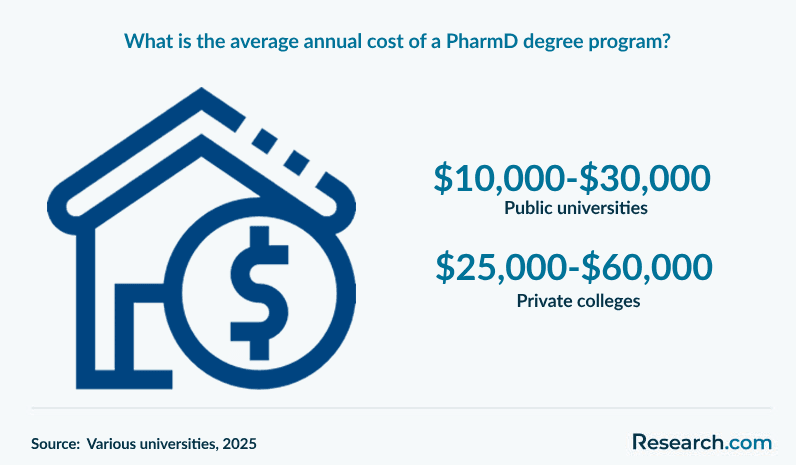
PharmD costs differ significantly by school type, residency status, credit load, fees, and whether a student must relocate. Public in-state tuition is generally lower than private or out-of-state tuition, but the total cost of attendance should also include fees, books, supplies, health insurance, transportation, housing, and lost income during rotations.
- Public institutions: In-state tuition at public universities typically ranges from $10,000 to $30,000 per year.
- Private institutions: Tuition at private universities can range from $25,000 to $60,000 per year.
- Additional expenses: Students should budget for fees, books, supplies, living costs, transportation to rotation sites, exam fees, and licensure-related costs.
Students comparing doctoral-level costs across fields may also review Research.com resources such as the cheapest online doctorate in psychology programs, but pharmacy students should rely on PharmD-specific tuition, rotation, and licensure costs when calculating affordability.
The most useful cost comparison is not tuition alone. Compare total program cost, available aid, years to graduation, required travel, unpaid rotation time, and expected debt at repayment.
What are the financial aid options for students enrolling in a PharmD degree program?
PharmD students may use several types of aid, but borrowing for a professional doctorate should be planned carefully. Before accepting loans, estimate monthly repayment under different income scenarios and ask the school for cost-of-attendance details by year.
- Federal loans: Eligible students can apply for federal loan options, including Stafford and Grad PLUS loans.
- Direct Stafford Loans: These federal loans may be subsidized or unsubsidized; subsidized loans do not accrue interest while the student is in school, while unsubsidized loans do.
- Direct Grad PLUS Loans: These loans are available to graduate students and typically have higher interest rates than Stafford loans.
- FAFSA: Students apply for federal aid by completing the Free Application for Federal Student Aid.
- Private loans: Banks and private lenders may offer loans, but terms, rates, and borrower protections can vary.
- Scholarships: Pharmacy schools, professional associations, foundations, and employers may offer awards for pharmacy students.
- Grants: Need-based grants may be available for eligible students.
- Work-study: Some universities offer work-study positions, although accelerated PharmD schedules may limit how much students can work.
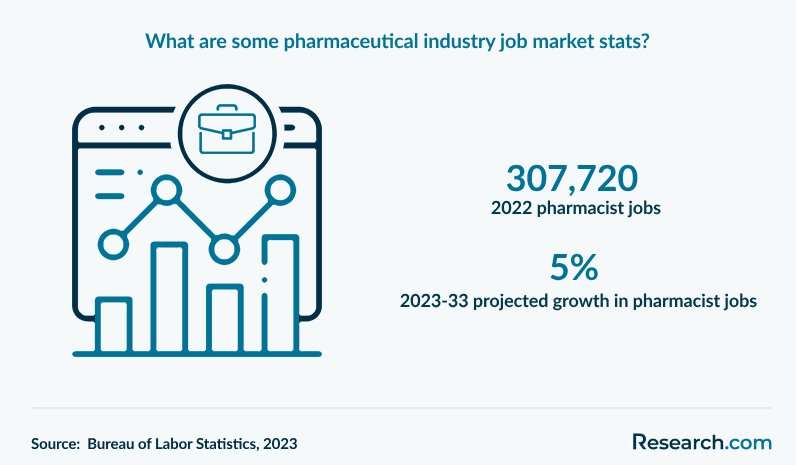
As of May 2022, there were 307,720 pharmacist jobs in the United States. The Bureau of Labor Statistics projects 5% growth in pharmacist jobs from 2023 to 2033, with approximately 14,200 openings for pharmacists projected each year, on average, over the decade.
What are the prerequisites for enrolling in a PharmD degree program?
Admissions requirements vary by school, pathway, and whether the applicant is entering from high school, college, or another career. Accelerated programs usually expect applicants to be ready for advanced science coursework from the first term.
- Prerequisite coursework: Most programs require college-level science and math courses, commonly including biology, chemistry, and related foundational subjects.
- PCAT status: Many schools previously required the Pharmacy College Admission Test (PCAT), but it was retired in January 2024 and has become optional for pharmaceutical colleges.
- GPA: Programs often set minimum GPA standards for overall coursework and science prerequisites.
- Recommendations: Applicants may need letters from faculty, supervisors, pharmacists, or other professionals who can speak to academic readiness and professionalism.
- Personal statement or essay: Some schools require an essay explaining motivation, experience, and fit for the pharmacy profession.
- Experience: Pharmacy work, volunteer service, healthcare exposure, research, or shadowing may strengthen an application even when not required.
Do not assume prerequisites are interchangeable across schools. A course accepted by one PharmD program may not satisfy another program’s requirement.
What courses are typically in a PharmD degree program?
PharmD curricula are built to prepare students for safe medication use, patient care, healthcare collaboration, and pharmacist licensure. Specific course titles vary, but most programs include the following areas.
Core courses
- Pharmaceutics: Drug formulation, dosage forms, delivery systems, and medication preparation.
- Pharmacology: How drugs act in the body and how the body responds to medications.
- Medicinal Chemistry: Drug structure, design, synthesis, and relationships between chemical properties and therapeutic effects.
- Pharmacotherapy: Evidence-based medication use for disease prevention, treatment, and monitoring.
- Pharmacy Law and Ethics: Legal responsibilities, professional standards, controlled substance rules, and ethical decision-making.
Common practice areas
- Community Pharmacy: Retail dispensing, counseling, medication therapy management, and patient education.
- Hospital Pharmacy: Inpatient medication distribution, clinical consultation, safety monitoring, and drug information.
- Clinical Pharmacy: Direct patient care and medication optimization in collaboration with healthcare teams.
- Pharmaceutical Industry: Drug development, manufacturing, regulatory affairs, marketing, and medical information.
- Ambulatory Care Pharmacy: Medication management for patients in outpatient clinics and physician office settings.
- Consultant Pharmacy: Medication-use guidance for healthcare facilities, long-term care organizations, and other institutions.
- Managed Care Pharmacy: Pharmacy benefits, formulary management, medication access, and cost-effectiveness decisions.
Electives and advanced topics
- Geriatric Pharmacotherapy: Medication therapy for older adults, including age-related drug response changes.
- Pediatric Pharmacotherapy: Medication dosing, formulations, and safety considerations for children.
- Oncology Pharmacy: Drug therapy for cancer treatment and supportive care.
- Nuclear Pharmacy: Preparation and dispensing of radioactive medications for imaging and therapy.
- Nutrition Support Pharmacy: Parenteral and enteral nutrition, drug-nutrient interactions, and clinical nutrition support.
- Pharmacogenomics: Use of genetic information to guide medication selection and dosing.
- Psychiatric Pharmacy: Medication management for mental health conditions.
- Pain Management Pharmacy: Pharmacologic and non-pharmacologic strategies for acute and chronic pain.
- Infectious Diseases Pharmacy: Antimicrobial selection, stewardship, resistance considerations, and infectious disease treatment.
- Critical Care Pharmacy: Medication management for patients in intensive care and other high-acuity settings.
Students interested in public health, population health, or medication access may compare dual-degree options with resources such as the cheapest online public health degree programs, especially when evaluating PharmD/MPH pathways.
What types of specializations are available in PharmD degree programs?
Specializations, electives, concentrations, residencies, certificates, and dual degrees can help PharmD students shape their career direction. Not every school offers every option, so students should verify which focus areas are available before enrolling.
- Ambulatory Care Pharmacy: Outpatient medication management and chronic disease support.
- Cardiology Pharmacy: Medication therapy for cardiovascular diseases.
- Clinical Pharmacy: Direct patient care and therapeutic decision support.
- Community Pharmacy: Medication dispensing, counseling, immunization services, and patient access.
- Compounding Pharmacy: Customized medication preparation for individual patient needs.
- Critical Care Pharmacy: Medication management for critically ill patients.
- Emergency Medicine Pharmacy: Pharmaceutical care in emergency departments.
- Geriatric Pharmacy: Medication therapy for older adults.
- Hospital Pharmacy: Inpatient medication services and clinical pharmacy support.
- Infectious Diseases Pharmacy: Antimicrobial therapy and infectious disease management.
- Nuclear Pharmacy: Radioactive medication preparation and dispensing.
- Oncology Pharmacy: Cancer medication management and supportive care.
- Pediatric Pharmacy: Medication therapy for infants, children, and adolescents.
- Pharmacogenomics: Genetics-informed medication decisions.
- Psychiatric Pharmacy: Medication management for behavioral and mental health conditions.
Students who want pharmacy leadership roles can also compare management-oriented programs, including the cheapest online healthcare management degree programs, when considering complementary credentials.
What emerging trends are shaping the future of accelerated PharmD programs?
Pharmacy education is adapting to changes in healthcare delivery, technology, and employer expectations. Accelerated programs must prepare students not only for dispensing and medication counseling, but also for data-informed care, telehealth environments, interprofessional teams, and advanced patient safety responsibilities.
- More online and hybrid delivery: Demand for flexible professional education has contributed to growth in online PharmD programs, although clinical and lab components still require in-person participation.
- Simulation-based training: Schools increasingly use simulation to help students practice communication, compounding, therapeutic decisions, and patient safety scenarios before rotations.
- Telehealth and digital care: Pharmacists need to understand remote patient counseling, electronic health records, medication adherence tools, and virtual care workflows.
- Data-driven pharmacy practice: Employers value pharmacists who can interpret medication-use data, quality measures, pharmacogenomic information, and population health trends.
- Expanded clinical responsibilities: Pharmacists continue to work in broader patient-care roles, including medication therapy management and immunization services where permitted.
Is an accelerated PharmD degree a sound financial investment?
An accelerated PharmD can be financially sensible when the student completes the program on time, borrows responsibly, passes licensure exams, and enters a role that supports manageable loan repayment. It can be a poor fit when the student underestimates the pace, chooses a program without confirming accreditation or licensure compatibility, or takes on debt without understanding local salary conditions.
Students comparing cost-efficient pharmacy pathways may find Research.com resources on pharmacy school online options useful, but the decision should be based on total debt, not headline tuition.
| Question | Why it matters |
| Is the program ACPE-accredited? | Accreditation is central to licensure eligibility and professional credibility. |
| How many years will I actually need? | A three-year curriculum may save time, but only if prerequisites, rotations, and progression rules align with your situation. |
| What is the total cost of attendance? | Tuition alone may exclude fees, travel, living costs, supplies, and licensure expenses. |
| Where are rotations located? | Travel, relocation, and limited local placements can add cost and stress. |
| What happens if I need to slow down? | Accelerated programs may have fewer flexible pacing options than traditional programs. |
What challenges do students face in accelerated PharmD programs?
The main challenge is intensity. Accelerated students often move through complex scientific and clinical material quickly while preparing for labs, assessments, rotations, and professional expectations. Students who work many hours or have major caregiving responsibilities should ask how realistic the schedule is before committing.
- Compressed coursework: Students may have less time to recover from difficult exams or master dense material.
- Limited schedule flexibility: Rotations, labs, and synchronous classes can conflict with work or family responsibilities.
- Fast progression rules: Falling behind in one course may affect the entire degree timeline.
- High self-management demands: Success requires consistent study blocks, early help-seeking, and strong organization.
- Clinical placement pressure: Students must meet professionalism and competency standards in real healthcare settings.
Applicants who want to compare admissions difficulty and program fit can review guidance on choosing a pharmacy school, but they should not choose only by perceived ease of admission.
What is the return on investment for an accelerated PharmD degree?
ROI depends on the relationship between total education cost and post-graduation earnings. The earlier a student graduates and starts earning pharmacist wages, the better the financial case may become, but debt level, geographic salary differences, residency or fellowship plans, and employment setting all affect the outcome.
PharmD candidates should compare pharmacy ROI with other healthcare careers before applying. For example, students considering lower-cost or shorter healthcare options may want to review career guides such as how much does medical coding pay to understand trade-offs in training length, salary potential, and job responsibilities.
What student support services enhance success in PharmD programs?
Strong support services are especially important in accelerated PharmD programs because students have less time to correct academic, financial, or clinical placement problems. Ask schools how support is delivered to online, hybrid, commuter, and rotation-year students.
- Academic advising: Advisors should help students plan prerequisites, progression, remediation, and graduation requirements.
- Career counseling: Career offices should support residency applications, fellowships, employer networking, CVs, interviews, and job searches.
- Mentorship: Faculty, alumni, and pharmacist mentors can help students choose rotations and specialty areas.
- Wellness support: Accelerated programs can be stressful, so mental health and wellness resources matter.
- Peer tutoring: Tutoring and study groups can help students manage difficult courses before problems become severe.
- Clinical placement support: Students should know who coordinates rotations and how site quality is monitored.
Some students also build related healthcare knowledge through adjacent programs, including accredited medical billing and coding training online, particularly if they are interested in healthcare operations, reimbursement, or documentation.
What supplementary certifications can enhance my PharmD career prospects?
Supplementary credentials can help PharmD students or graduates demonstrate focused skills, but they should not distract from licensure, rotations, or core pharmacy competencies. Choose add-on training only when it supports a defined career goal.
- Clinical informatics: Useful for pharmacists interested in health technology, medication data, electronic records, and decision-support systems.
- Healthcare administration: Relevant for future pharmacy managers, directors, or health-system leaders.
- Billing, coding, and reimbursement knowledge: Helpful for pharmacists working around payer systems, medication access, specialty pharmacy, or clinic operations.
- Patient care support credentials: Programs such as certifications you can get online that pay well may help students understand front-line clinical workflows, although they do not replace pharmacy licensure.
How does one choose the best PharmD degree program?
The best PharmD program is the one that is accredited, affordable for your situation, compatible with your state licensure goals, and realistic for your academic and personal responsibilities. Rankings can narrow the list, but they should not replace careful program-level due diligence.
- Confirm ACPE accreditation: Do not apply before verifying that the program is accredited by the Accreditation Council for Pharmacy Education.
- Check licensure alignment: Ask whether the program meets educational requirements for the state where you plan to practice.
- Compare total cost: Include tuition, fees, housing, transportation, books, insurance, rotation travel, exam fees, and borrowing costs.
- Review curriculum fit: A student interested in pharmacogenomics, public health, industry, or ambulatory care should confirm that relevant electives and rotations exist.
- Evaluate faculty and rotation sites: Strong clinical partners can shape residency options and job readiness.
- Ask about NAPLEX preparation: Request information about licensure support, practice exams, and remediation services.
- Understand online requirements: Online students should ask about campus visits, synchronous classes, technology expectations, and local rotation placement.
- Look beyond unrelated comparisons: Pharmacy programs have different requirements than fields covered in resources such as affordable online master's programs for teachers, so use PharmD-specific criteria.
Common mistakes to avoid when choosing a PharmD program
| Mistake | Better approach |
| Choosing only the shortest program | Compare graduation requirements, academic calendar, rotation timing, and progression rules. |
| Looking only at tuition | Calculate total cost of attendance and expected borrowing. |
| Assuming online means fully remote | Ask about campus immersions, labs, exams, and clinical rotations. |
| Ignoring accreditation | Verify ACPE accreditation before applying or paying deposits. |
| Assuming all programs meet every state’s licensure rules | Contact the school and state board of pharmacy for licensure compatibility. |
| Relying only on rankings | Use rankings as a starting point, then compare outcomes, support, cost, and fit. |
What career paths are available for graduates of PharmD degree programs?
PharmD graduates can work across community, hospital, clinical, government, industry, military, academic, and specialty pharmacy settings. Some roles may require postgraduate residency, fellowship training, board certification, or specialized experience.
| Career path | Typical responsibilities |
| Community Pharmacist | Dispenses medications, counsels patients, supports medication therapy management, and provides services in retail pharmacy settings. |
| Hospital Pharmacist | Manages inpatient medication distribution, reviews therapy, provides drug information, and supports hospital care teams. |
| Clinical Pharmacist | Works directly with patients and providers to optimize medication therapy. |
| Ambulatory Care Pharmacist | Supports medication management in outpatient clinics and physician offices. |
| Consultant Pharmacist | Advises facilities and organizations on safe and effective medication use. |
| Pharmaceutical Industry | Works in research, development, manufacturing, medical affairs, marketing, or regulatory-related functions. |
| Managed Care Pharmacist | Develops and manages pharmacy benefits, formularies, and medication access policies. |
| Government Pharmacist | Works with agencies such as the Food and Drug Administration (FDA) or the Veterans Administration (VA). |
| Military Pharmacist | Provides pharmaceutical care to service members and their families. |
| Academic Pharmacist | Teaches pharmacy students and conducts research. |
| Nuclear Pharmacist | Prepares and dispenses radioactive medications for diagnostic or therapeutic use. |
| Oncology Pharmacist | Specializes in medication therapy for cancer patients. |
| Pediatric Pharmacist | Focuses on medication therapy for children. |
| Psychiatric Pharmacist | Manages medications for patients with mental health disorders. |
| Geriatric Pharmacist | Specializes in medication use for older adults. |
Pharmacists may also collaborate with mental health professionals in settings where medication management and counseling intersect. Students interested in behavioral health context may explore Online psychology certificate programs as a supplementary educational option.
Reported salary figures vary by role, experience, and location. A Pharmacy Graduate Intern can expect to earn an average of $44,590 annually, while a Graduate Pharmacist earns around $90,403. The average salary for a Pharmacist is $152,920, with specialized positions such as a Clinical Pharmacist earning $147,460 and a Clinical/Hospital Pharmacist earning $142,400. In-Store Pharmacists have an average salary of $166,400, while Industry Pharmacists earn $127,432 and Managed Care Pharmacists earn $135,030. Location also affects earnings, with Pharmacists in Maryland earning $152,920 and those specifically in Baltimore, MD, earning $152,475.
Education level may also influence compensation. Pharmacists holding a JD, MD, PhD, or equivalent earn $147,597, while those with a Master's Degree or MBA earn $147,326. These figures should be treated as reference points rather than guaranteed outcomes.
What is the job market for graduates with a PharmD degree?
The pharmacist job market is shaped by healthcare demand, retail pharmacy changes, expanded clinical services, automation, and regional competition. Students should look at national data, but they should also research local job postings and employer preferences in the state where they plan to practice.
- National employment base: As of May 2022, there were 307,720 pharmacist jobs in the United States.
- Projected growth: The Bureau of Labor Statistics projects 5% growth in pharmacist jobs from 2023 to 2033, about as fast as the average for all occupations.
- Annual openings: Approximately 14,200 openings for pharmacists are projected each year, on average, over the decade.
- Common employer: Pharmacists are most often employed by the Pharmacies & drug stores industry.
- Work schedule: Full-time employees in the Pharmacies & drug stores Industry Group work an average of 41.6 hours per week and have an average annual salary of $72,016.
Students outside pharmacy who want to complete general education or transition quickly into healthcare-related study may also compare fast track degree programs, but PharmD preparation remains a specialized professional pathway.
Jobs and employment
- As of May 2022, there were 307,720 pharmacist jobs in the United States.
- The Bureau of Labor Statistics projects 5% growth in pharmacist jobs from 2023 to 2033, which is about as fast as the average for all occupations.
- Approximately 14,200 openings for pharmacists are projected each year, on average, over the decade.
Salary and career earnings
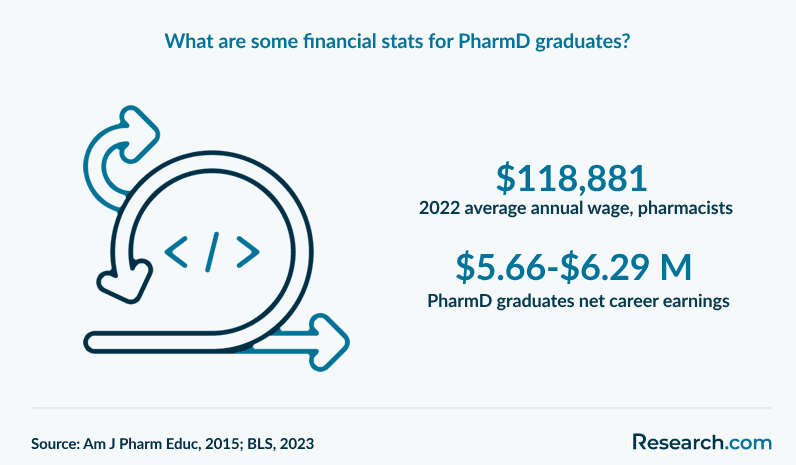
- The average annual wage for pharmacists was $118,881 in 2022. PharmD graduates may accumulate net career earnings of $5.66 million to $6.29 million throughout their careers, which is about 3.15 times more than high school graduates and 1.57 to 1.73 times more than those with bachelor's degrees in biology or chemistry.
Job outlook and market growth
- The BLS 2020 report forecasted a 2% decline in pharmacist jobs over the next decade, below the anticipated overall growth in US employment at that time. The most recent BLS data shows a more positive outlook with projected 5% growth from 2023 to 2033.
Industry and education data
- Pharmacists are most often employed by the Pharmacies & drug stores industry.
- Full-time employees in the Pharmacies & drug stores Industry Group work an average of 41.6 hours per week and have an average annual salary of $72,016.
- In 2018, there were 14,905 graduates from established pharmacy programs.
- Tuition costs for Pharmacy majors are, on average, $9,273 for in-state public colleges, and $36,636 for out-of-state private colleges.
- Pharmacists have a low unemployment rate of approximately 3%, compared to the national average of 5.9% (as of the 2015 data).
- The Pharmacist Aggregate Demand Index has generally held steady above 3.2 since the summer of 2012, suggesting a favorable job market for pharmacists.
Here’s what graduates say about accelerated PharmD programs
The accelerated pathway matched my goal of entering clinical pharmacy quickly. The three-year structure was demanding, but the clinical experiences helped me feel prepared for patient care. Ayisha
The program pushed me academically and personally. The pace was intense, but close relationships with classmates and faculty helped me stay focused while preparing for community pharmacy practice. Dimitri
As a working adult returning to school, I needed flexibility and support. The online format helped me manage school, work, and family responsibilities while preparing for hospital pharmacy. Eliana
Can complementary accelerated healthcare programs boost my PharmD career prospects?
Related healthcare training can help PharmD students understand clinical workflows, patient intake, documentation, and interdisciplinary care. It is most useful when it supports a clear pharmacy goal rather than simply adding another credential.
For example, students who want exposure to basic clinical support roles may review medical assistant 6 week programs. However, these programs do not replace PharmD requirements, pharmacist licensure, or supervised pharmacy practice experiences.
Can international students thrive in accelerated PharmD programs?
International students can succeed in accelerated PharmD programs, but they should carefully verify admissions requirements, English proficiency expectations, visa support, clinical placement rules, and state licensure implications. Some programs may have limits on where international students can complete rotations or obtain licensure after graduation.
- Ask whether prerequisite coursework from another country is accepted and how it is evaluated.
- Confirm English language testing requirements and whether waivers are available.
- Review visa support and whether the program format satisfies full-time enrollment rules.
- Ask how clinical rotations are assigned and whether international students face restrictions.
- Clarify whether the degree supports licensure in the state where you intend to work.
International learners considering adjacent healthcare data or administration pathways can also compare options such as the best higher education pathway programs for international students, especially if they are weighing pharmacy against health information management.
How can a fast track online health information management degree complement my PharmD career?
Health information management can complement pharmacy by strengthening skills in healthcare data, compliance, documentation, informatics, and quality improvement. This can be useful for pharmacists interested in medication safety analytics, health-system leadership, electronic health records, or population health.
A fast track online health information management degree may be most relevant for PharmD graduates who want to move toward informatics, operations, compliance, or data-informed medication management.
Can advanced bioinformatics insights enhance my PharmD career outcomes?
Bioinformatics can support pharmacy careers tied to pharmacogenomics, precision medicine, translational research, and medication response analysis. Pharmacists who can interpret genetic and clinical data may be better prepared for roles where therapy decisions depend on complex datasets.
Students considering this direction may evaluate masters bioinformatics online training as a possible complement to PharmD education, particularly for research, informatics, or personalized medicine roles.
Can supplementing a PharmD degree with healthcare administration skills boost leadership and management potential?
Healthcare administration training can help PharmD graduates move from clinical practice into leadership, operations, finance, quality improvement, or policy roles. This combination is especially relevant for students interested in pharmacy management, health-system administration, managed care, or executive-level healthcare positions.
Students pursuing leadership roles may compare options such as a healthcare administration degree online to build business, regulatory, financial, and organizational skills alongside pharmacy expertise.
Questions to ask before applying to an accelerated PharmD program
- Is the program accredited by the Accreditation Council for Pharmacy Education?
- Does the program meet licensure requirements in the state where I plan to practice?
- How many prerequisites must I complete before starting the professional phase?
- Is the PCAT required, optional, or no longer considered?
- How many campus visits are required for online or hybrid students?
- Where are clinical rotations located, and who arranges them?
- What is the total cost of attendance for every year of the program?
- What percentage of students complete the program on time?
- What academic support is available if I struggle in an accelerated course?
- How does the school prepare students for NAPLEX and state-specific requirements?
- Are residencies, fellowships, dual degrees, or certificates available in my area of interest?
- What career services are available during the final year and after graduation?
Key Insights
- Accelerated does not always mean three years: Some programs compress the professional curriculum, while others use six-year direct-entry models or allow students with prerequisites to enter the professional phase sooner.
- Accreditation is non-negotiable: Confirm ACPE accreditation before applying, paying deposits, or assuming the program supports licensure.
- Online PharmD programs still require hands-on training: Expect labs, immersive experiences, clinical rotations, and possible campus visits even when coursework is delivered online.
- Cost should be measured by total attendance, not tuition alone: Include fees, living costs, rotation travel, exam fees, and borrowing costs when comparing programs.
- The job outlook is moderate but positive in the cited data: BLS projects 5% growth in pharmacist jobs from 2023 to 2033, with approximately 14,200 openings projected each year.
- Fit matters as much as speed: Accelerated PharmD programs are best for students with strong science preparation, disciplined study habits, and a clear commitment to pharmacy practice.
- Specialization can improve career direction: Rotations, electives, certificates, residencies, and dual degrees can help students prepare for clinical pharmacy, industry, informatics, management, or public health roles.
References:
- Bureau of Labor Statistics. (2023). Occupational Employment and Wages, May 2023: 29-1051 Pharmacists. Bureau of Labor Statistics.
- Bureau of Labor Statistics. (2023). Pharmacists: Occupational Outlook Handbook. Bureau of Labor Statistics.
- Chisholm-Burns, M. A., Gatwood, J., Spivey, C. A., & Dickey, S. E. (2016). Economic Analysis of Obtaining a PharmD Degree and Career as a Pharmacist. American Journal of Pharmaceutical Education, 79(8), 117.
- Data USA. (n.d.). Pharmacists. Data USA.
- Data USA. (n.d.). Pharmacies & drug stores. Data USA.
- Data USA. (n.d.). Pharmacy. Data USA.
- Industry Pharmacist Organization. (2022). Analysis of Direct-To-Industry Jobs Among 2021 PharmD Graduates. Industry Pharmacist Organization.
- Lebovitz, L., & Eddington, N. D. (2019). Trends in the Pharmacist Workforce and Pharmacy Education. American Journal of Pharmaceutical Education, 83(1), 7051.
- Salary.com. (2025). Clinical Pharmacist Salary in Maryland. Salary.com.
- Salary.com. (2025). Clinical Pharmacist Salary in the United States. Salary.com.
- Salary.com. (2025). Clinical/Hospital Pharmacist Salary in North Carolina. Salary.com.
- Salary.com. (2025). Graduate Pharmacist Salary in the United States. Salary.com.
- Salary.com. (2024). In Store Pharmacist Salary in the United States. Salary.com.
- Salary.com. (2025). Industry Pharmacist Salary. Salary.com.
- Salary.com. (2025i). Registered Pharmacist Salary in the United States. Salary.com.
Other Things You Should Know About Accelerated PharmD Programs
Most accelerated PharmD programs require at least a 2.5 to 3.0 GPA, plus completed prerequisite courses such as general chemistry, organic chemistry, biology, and anatomy with lab. Many schools also require a minimum grade of C or better in each prerequisite before admission.
Accelerated PharmD programs generally require completion of pre-pharmacy courses, such as biology, chemistry, and anatomy. Some programs may also demand prior healthcare experience or a minimum GPA. Check each institution's specific requirements for detailed enrollment criteria.


