
2027 Easiest Pharmacy Schools to Get Into

Co-Founder and Chief Data Scientist
Choosing the right pharmacy school is a critical step for aspiring pharmacists, but not all programs are equally demanding when it comes to admission requirements and academic rigor.
For students seeking a more accessible path to a pharmacy degree, certain schools offer a balance of quality education and less stringent prerequisites compared to most others. These easy pharmacy schools are ideal for individuals looking to start their pharmacy careers without the intense competition often associated with top-tier institutions.
What are the benefits of getting into an easy pharmacy school?
- Accessible Admission Requirements. Easy pharmacy schools often have lower GPA thresholds, fewer prerequisite courses, and more flexible standardized test requirements (e.g., PCAT). This accessibility enables students with non-traditional academic backgrounds or less competitive grades to pursue a career in pharmacy.
- Faster Enrollment Process. With simplified application requirements and potentially rolling admissions, these schools allow students to begin their pharmacy education sooner. This streamlined process can be particularly beneficial for those who are eager to jumpstart their careers.
- Cost-Effective Options. Some easy-to-enter pharmacy schools may have more affordable tuition rates or offer significant financial aid packages. Lower costs can make pursuing a pharmacy degree more feasible, especially for students who are budget-conscious.
- Supportive Learning Environment. Many accessible pharmacy programs focus on creating a nurturing educational experience. Smaller class sizes, approachable faculty, and student support services often make it easier for students to succeed academically and professionally.
- Pathway to Licensure. Graduating from any accredited pharmacy program, whether considered "easy" or rigorous, qualifies students to take licensure exams such as the North American Pharmacist Licensure Examination (NAPLEX). This ensures that graduates can pursue careers as licensed pharmacists without limitations.
- Flexibility for Non-Traditional Students. Easy pharmacy schools may offer flexible learning options, including part-time schedules, online courses, or hybrid programs. These features cater to students who are balancing work, family, or other commitments while pursuing their degrees.
What can I expect from an easy pharmacy school?
Attending an easy pharmacy school can be a rewarding experience, especially for students looking for a more accessible path into the field of pharmacy. These programs still maintain accreditation and academic standards, but they often offer unique features and adjustments that cater to a broader range of students. Here's what you can generally expect:
- Simplified Admission Process. Easy pharmacy schools typically have less stringent admission requirements, such as lower GPA minimums, fewer prerequisite courses, and flexible or waived standardized test requirements like the PCAT. This makes it easier for students with non-traditional academic backgrounds or gaps in their education to gain entry.
- Comprehensive Curriculum. While admission may be less competitive, the curriculum of an easy pharmacy school is still designed to meet the requirements for licensure and professional practice. You’ll study core subjects like pharmacology, medicinal chemistry, and patient care, ensuring you gain the necessary knowledge to pass licensure exams and succeed as a pharmacist.
- Focused Student Support. Many easy pharmacy schools emphasize creating a supportive learning environment. Expect access to tutoring services, approachable professors, and academic advisors who can help you navigate challenges and keep up with the program’s demands.
- Flexible Learning Options. These programs often cater to diverse student needs by offering flexible schedules, part-time options, or hybrid learning formats. This flexibility can be particularly beneficial for working professionals or those balancing personal commitments while pursuing their degree.
- Hands-On Training. Despite being considered "easy" to get into, these schools provide the same essential hands-on training through clinical rotations and internships. This ensures students are well-prepared for real-world pharmacy practice.
- Diverse Peer Group. You may find a more diverse group of classmates, including non-traditional students, career changers, and international students. This diversity can enrich your learning experience and broaden your professional network.
- Accreditation Standards. Accreditation ensures that even less competitive pharmacy schools meet the professional and educational standards required for licensure. Look for programs accredited by the Accreditation Council for Pharmacy Education (ACPE) to ensure the program’s quality and credibility.
Where can I work with a pharmacy degree?
A pharmacy degree opens the door to a wide range of career opportunities across various industries. Whether you’re interested in clinical practice, research, education, or business, there are numerous paths to explore. Here are some of the most common workplaces for pharmacy graduates:
- Retail Pharmacies. Retail or community pharmacies, such as those in drugstores, grocery stores, or independent pharmacies, need pharmacists to dispense medications, counsel patients, and provide essential health services like vaccinations.
- Hospital and Clinical Pharmacies. Pharmacists working in hospitals or healthcare facilities collaborate with healthcare teams to ensure safe and effective medication use for patients.
- Pharmaceutical Industry. The pharmaceutical industry offers roles in drug development, manufacturing, and regulatory affairs. Pharmacists in this field may work on clinical trials, ensure compliance with regulatory standards, or market new medications to healthcare providers.
- Government and Public Health Agencies. Pharmacists can work for government agencies like the Food and Drug Administration (FDA), Centers for Disease Control and Prevention (CDC), or local health departments. Roles in these organizations often involve policy development, drug safety evaluation, or public health initiatives.
- Academia and Research. Pharmacy graduates with advanced degrees may pursue careers teaching the next generation of pharmacists while conducting research to advance the field.
- Long-Term Care and Assisted Living Facilities. Pharmacists in long-term care facilities focus on managing medications for residents with chronic or complex conditions. They ensure safe prescribing practices and monitor drug interactions for elderly or disabled patients.
- Health Insurance and Managed Care Organizations. Pharmacists in this sector work to optimize medication use and control costs. They may analyze prescribing patterns, develop formulary recommendations, or engage in patient education initiatives.
Pharmacists can also work in specialized pharmacy services or military and veterans affairs. They can also open their own private pharmacies or consulting businesses.
How much can I make with a pharmacy degree?
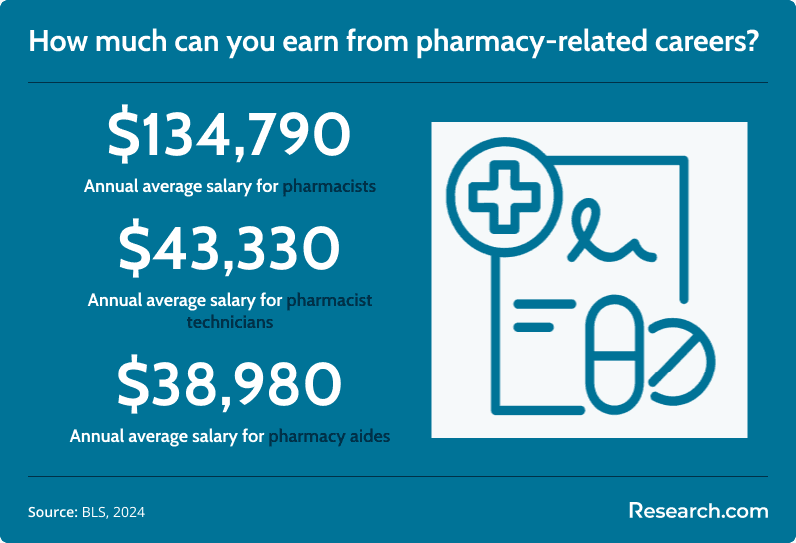
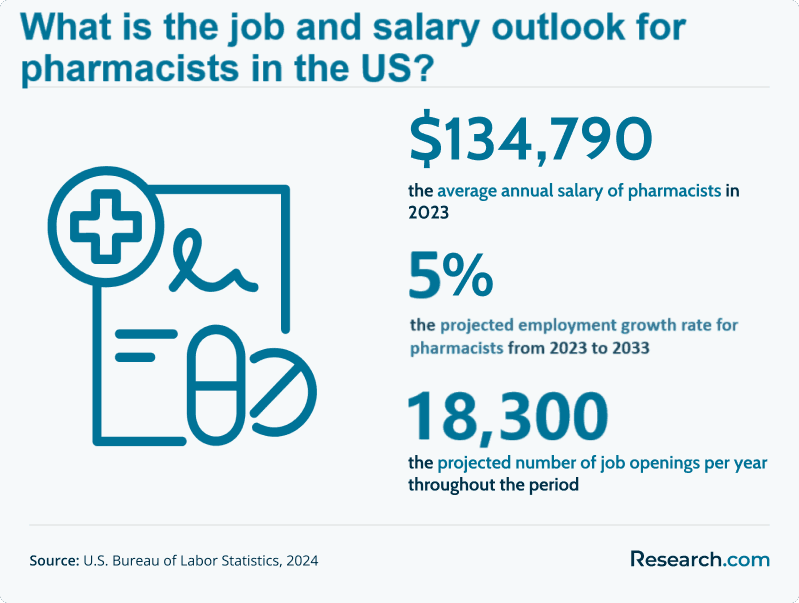
Pharmacists enjoy competitive salaries, reflecting the high demand and critical role they play in healthcare. According to the U.S. Bureau of Labor Statistics (BLS), the average annual wage for pharmacists was $134,790 as of 2023. Salaries can vary depending on the work setting, with retail and hospital pharmacists earning similar wages, while those in specialized roles, such as nuclear or industry pharmacists, may earn even more.
Entry-level positions typically start around $100,000–$120,000 per year, and experienced pharmacists or those in management roles can exceed $150,000 annually. These figures highlight the financial stability and growth potential a pharmacy degree offers.
- List of the Easiest Pharmacy Schools for 2027 List of Schools
- How long does it take to become a pharmacist? Completion Time
- What are the typical prerequisites for enrolling in pharmacy schools? Enrollment Prerequisites
- What courses are typically included in PharmD programs? What courses are typically included in PharmD programs?
- What is the average cost of attending pharmacy schools? Average Cost
- What are the financial aid options for students enrolling in pharmacy schools? Financial Aid Options
- How do I choose the best and easiest pharmacy schools to get into? School Selection Criteria
- What career paths are available for graduates of pharmacy schools? Career Paths
- What Are the Essential Steps to Secure Your Pharmacy License? What Are the Essential Steps to Secure Your Pharmacy License?
- What additional support services do easy pharmacy schools offer? What additional support services do easy pharmacy schools offer?
- How Can Additional Certifications Enhance Your Pharmacy Career? How Can Additional Certifications Enhance Your Pharmacy Career?
- How is curriculum innovation preparing students for future challenges in pharmacy? How is curriculum innovation preparing students for future challenges in pharmacy?
- What emerging trends are shaping pharmacy education? What emerging trends are shaping pharmacy education?
- How can integrating healthcare management education enhance your pharmacy career? How can integrating healthcare management education enhance your pharmacy career?
- What types of specializations are available in pharmacy schools? Specializations
- What is the job market for pharmacy school graduates? What is the job market for pharmacy school graduates?
- What are the most common challenges students face in pharmacy school? What are the most common challenges students face in pharmacy school?
- Can pharmacy students benefit from accelerated healthcare administration programs? Can pharmacy students benefit from accelerated healthcare administration programs?
- Can interdisciplinary studies enhance your pharmacy career? Can interdisciplinary studies enhance your pharmacy career?
- Can obtaining supplementary certifications, such as medical billing and coding, provide a competitive advantage? Can obtaining supplementary certifications, such as medical billing and coding, provide a competitive advantage?
Easiest Pharmacy Schools to Get Into for 2027
Students who search for the easiest pharmacy schools to get into are usually looking for a realistic path into a PharmD program—not a shortcut around the difficulty of pharmacy education. Admission requirements matter, especially if your GPA is below average, you do not want to take the PCAT, or you are applying without a completed bachelor’s degree. But pharmacy school still leads to a licensed healthcare profession, so the right choice must balance accessibility with accreditation, affordability, clinical training, and licensure eligibility.
This guide is for pre-pharmacy students, transfer students, high school applicants considering direct-entry options, and career changers comparing healthcare graduate programs. It explains which pharmacy schools appear more accessible based on the provided admissions data, what “easy to get into” actually means, how long the path takes, what PharmD students study, how much programs may cost, and what questions to ask before applying.
Quick Answer: What Makes a Pharmacy School Easier to Get Into?
A pharmacy school is generally easier to access when it has a listed minimum GPA around 2.5–3.0, does not require the PCAT or GRE, accepts students who have completed prerequisites rather than a full bachelor’s degree, offers direct admission or assurance pathways, or provides more than one application cycle each year. These features can reduce barriers, but they do not make the PharmD curriculum easy.
The schools in this guide should be understood as comparatively accessible PharmD options. Students still need strong preparation in chemistry, biology, anatomy, physiology, communication, and patient-care skills. Before applying, confirm that the program has the right accreditation for pharmacist licensure and that its graduates can pursue licensure in the state where you plan to work.
How Research.com Evaluates Pharmacy Schools
Research.com reviews pharmacy schools through a practical student-decision lens. Instead of focusing only on prestige, we consider factors that affect whether applicants can enter, afford, complete, and use a program for professional goals. Data foundations include sources such as the IPEDS database, Peterson’s database, the College Scorecard database, and The National Center for Education Statistics.
In this article, “easy” means more admissions-accessible compared with other pharmacy schools. It does not mean lower academic standards, reduced clinical expectations, or guaranteed admission. For more information on how Research.com compares institutions, readers can visit the Research.com methodology page.
| Rank | Pharmacy School | Campus Location | School Acceptance Rate | Minimum GPA Listed | PharmD Length |
| 1 | University of Kentucky | Lexington, KY | 96% | 2.5 on a 4.0 scale | 4 years |
| 2 | University of the Incarnate Word | San Antonio, TX | 97% | 2.5 on a 4.0 scale | 4 years |
| 3 | University of New Mexico | Albuquerque, NM | 96% | 2.5 on a 4.0 scale | 4 years |
| 4 | University of Montana | Missoula, MT | 96% | 2.5 on a 4.0 scale | 4 years |
| 5 | North Dakota State University | Fargo, ND | 94% | 3.0 on a 4.0 scale | 4 years |
| 6 | University of Toledo | Toledo, OH | 95% | 2.5 out of 4.0 after prerequisites | 4+ years |
| 7 | Southwestern Oklahoma State University | Weatherford, OK | 93% | 2.5 on a 4.0 scale | 4 years |
| 8 | University of Wyoming | Laramie, WY | 94% | No minimum GPA stated; 2.5 recommended | 4 years |
| 9 | Wilkes University | Wilkes-Barre, PA | 92% | 2.5 on a 4.0 scale | 4 years |
| 10 | Palm Beach Atlantic University | West Palm Beach, FL | 92% | Prerequisites required with C- or better | 4 years |
1. University of Kentucky
The University of Kentucky provides a four-year PharmD pathway for applicants who have completed the required pre-pharmacy foundation. Admission consideration requires at least 70 semester credit hours of pre-pharmacy coursework, and courses used for those requirements cannot have grades of D or below. Students do not need a bachelor’s degree to apply, though some may be able to complete one while advancing through the PharmD program. The stated minimum GPA is 2.5 on a 4.0 scale.
The program blends patient-centered training with technology-supported learning. Pharmacy students receive an iPad for testing and note-taking, and the Patient-Centered Care Experience, known as PaCE, gives learners structured opportunities to practice with students from different class years.
- Location: Lexington, KY
- School acceptance rate: 96%
- Program length: 4 years
- Total tuition: $30,198 (resident) | $56,675 (non-resident)
- Required credits to graduate: 162
- Accreditation: Accreditation Council for Pharmacy Education (ACPE)
2. University of the Incarnate Word
The University of the Incarnate Word delivers its PharmD through the Feik School of Pharmacy. Students study pharmaceutical science, patient care, professional practice, and technology use in pharmacy environments.
Applicants must have a minimum GPA of 2.5 on a 4.0 scale and complete pre-pharmacy courses at a regionally accredited U.S. college or university. The admissions file must include official transcripts from all colleges attended and two recommendation letters. PCAT scores are optional. Applicants who move forward complete a personal interview, a critical thinking assessment, and a writing sample.
- Location: San Antonio, TX
- School acceptance rate: 97%
- Program length: 4 years
- Tuition: $1,170 per credit hour
- Required credits to graduate: 157
- Accreditation: Southern Association of Colleges and Schools Commission on Colleges
3. University of New Mexico
The University of New Mexico College of Pharmacy offers a PharmD for students preparing to become licensed pharmacists and work in patient-care settings. Its 7:1 student to faculty ratio may be useful for applicants who prefer smaller academic environments and more direct access to faculty.
Applicants complete prerequisite courses in areas such as English, science, math, humanities electives, and related subjects. The school does not require the GRE or another standardized test. Admission requires a minimum GPA of 2.5 on a 4.0 scale, three recommendation letters, and an interview for applicants selected to continue in the process.
- Location: Albuquerque, NM
- School acceptance rate: 96%
- Program length: 4 years
- Annual tuition: $10,881 (residents) | $22,386 (non-residents)
- Required credits to graduate: 143
- Accreditation: Accreditation Council for Pharmacy Education
4. University of Montana
The University of Montana Skaggs School of Pharmacy offers a PharmD that combines clinical practice preparation with an emphasis on care for underserved communities. Students may earn certification to administer immunizations during the first year, allowing participation in vaccine-related services at local health clinics. Through the L.S. Skaggs Institute for Health Innovation, students may also encounter research, precision medicine, and pharmacogenomics.
Admission consideration requires a minimum GPA of 2.5 on a 4.0 scale, an undergraduate pre-pharmacy degree, and 20 hours of volunteer, paid medical, or social experience. High school graduates with at least a 3.4 GPA can consider the GrizRx Assurance Program, which allows students to complete pre-pharmacy requirements in two years and progress into the PharmD program if pathway standards are met.
- Location: Missoula, MT
- School acceptance rate: 96%
- Program length: 4 years
- Total cost of attendance per year: $39,938 (residents) | $68,282 (out-of-state students)
- Required credits to graduate: 136
- Accreditation: Accreditation Council for Pharmacy Education
5. North Dakota State University
North Dakota State University houses its PharmD in the School of Pharmacy. The entry-level professional curriculum prepares students for pharmacy practice across different settings, with attention to medication therapy results and patient safety.
NDSU may appeal to applicants who want a process with fewer extra application pieces. The minimum GPA is 3.0 on a 4.0 scale. The school does not require an essay or GRE, and the PCAT is optional. Applicants should still be ready to show strong preparation in prerequisite subjects such as anatomy, biology, physiology, chemistry, public speaking, and related foundational courses.
- Location: Fargo, ND
- School acceptance rate: 94%
- Program length: 4 years
- Total tuition: Students are assessed a different tuition rate to cover the higher costs associated with the program.
- Required credits to graduate: 147
- Accreditation: Accreditation Council for Pharmacy Education
6. University of Toledo
University of Toledo gives high school seniors a direct admission route if they have a GPA of 3.5 or higher. Students who apply after completing prerequisites need at least a 2.5 out of 4.0 GPA for consideration.
This option may suit students who want pharmacy education connected to a medical-campus setting and may later want to pair pharmacy with business or another graduate field. PharmD students can also take part in the Rocket Pharmacy Alumni Mentorship Program, which pairs incoming pharmacy students with alumni mentors.
- Location: Toledo, OH
- School acceptance rate: 95%
- Program length: 4+ years
- Tuition per credit hour: $698.32 (in-state) | $1,247.55 (out-of-state)
- Required credits to graduate: 136
- Accreditation: Accreditation Council for Pharmacy Education
7. Southwestern Oklahoma State University
The Southwestern Oklahoma State University College of Pharmacy offers two PharmD admission entry points each year, which can help applicants avoid waiting for only one annual cycle. Students can also explore the Pharmacy, Leadership, Innovation, and Quality Outcomes option if they want leadership-focused learning in addition to the core pharmacy curriculum.
The listed minimum GPA is 2.5 on a 4.0 scale. Applicants interested in the twice-yearly admissions structure should still confirm prerequisite deadlines, financial aid timing, and rotation schedules before assuming that the calendar will shorten the full path to graduation.
- Location: Weatherford, OK
- School acceptance rate: 93%
- Program length: 4 years
- Tuition per credit hour: $705.58
- Required credits to graduate: 140
- Accreditation: Accreditation Council for Pharmacy Education
8. University of Wyoming
University of Wyoming prepares PharmD students for pharmacy careers in settings such as private pharmacies, government agencies, academia, community practice, and hospitals. Applicants need at least two years of preprofessional study and at least 72 semester credit hours. The application goes through PharmCAS.org, and the school does not require supplemental applications, essays, or test scores.
The process is relatively straightforward. The school does not publish a minimum GPA requirement, but it recommends a GPA of 2.5. Prerequisite courses such as microbiology, statistics, chemistry, and genetics must be completed with a C or higher, and applicants submit two recommendation letters.
- Location: Laramie, WY
- School acceptance rate: 94%
- Program length: 4 years
- Tuition: $6,720 (resident) | $20,120 (non-resident)
- Required credits to graduate: 146
- Accreditation: Council for Pharmacy Education
9. Wilkes University
The Wilkes University Nesbitt School of Pharmacy offers a PharmD with connections to fellowships, scholarships, and employer relationships. Partnerships or affiliations involving organizations such as Sanofi and Geisinger may interest students who want exposure to pharmaceutical and healthcare environments while planning their careers.
Applicants need a minimum GPA of 2.5 on a 4.0 scale. They must either complete the required prerequisites or hold a bachelor’s degree. The application also includes a statement of purpose and three recommendations.
- Location: Wilkes-Barre, PA
- School acceptance rate: 92%
- Program length: 4 years
- Tracks/concentrations: Spanish, Public Health
- Tuition: $22,185 per semester
- Required credits to graduate: 139-143
- Accreditation: Accreditation Council for Pharmacy Education
10. Palm Beach Atlantic University
Palm Beach Atlantic University offers its PharmD through the Lloyd L. Gregory School of Pharmacy. The program uses a practice-oriented, student-centered model and integrates Christian values into professional formation and ethical judgment.
Applicants complete roughly two years of pre-professional coursework before entering the School of Pharmacy. Prerequisites must come from a regionally accredited college or university, must have a grade of C- or better, and must have been completed within 10 years of the application.
- Location: West Palm Beach, FL
- School acceptance rate: 92%
- Program length: 4 years
- Tuition: $37,380 per year (first to third year) | $44,250 per year (final year)
- Required credits to graduate: 144
- Accreditation: Accreditation Commission for Pharmacy Education
How Long Does It Take to Become a Pharmacist?
The full path to becoming a pharmacist commonly takes about 6 to 8 years. Many students complete two to four years of undergraduate or pre-pharmacy coursework, then enter a four-year PharmD program. Some applicants finish a bachelor’s degree first, while others apply once they have completed the required prerequisites.
Some accelerated or combined programs may shorten the undergraduate-plus-PharmD timeline to as little as 6 years. After earning the PharmD, graduates who want more specialized clinical practice may complete 1–2 years of residency training, although many general pharmacist roles do not require a residency.
If you are comparing pharmacy with other licensed healthcare careers, remember that each profession has its own sequence of education, exams, and state authorization. For example, nursing students should review the requirements for becoming a registered nurse, which typically involve an accredited nursing program, the NCLEX-RN exam, and state licensure.
Typical Pharmacy School Prerequisites
Prerequisites help pharmacy schools determine whether applicants are prepared for professional-level study in drug therapy, biomedical science, calculations, and patient communication. Requirements differ by institution, so students should compare each school’s current prerequisite checklist before submitting applications.
| Requirement Area | What Applicants May Need | Why Schools Review It |
| Previous college study | Many schools expect at least 2 years of undergraduate coursework, while some programs prefer or require a bachelor’s degree. | PharmD courses assume students already have science, math, and communication foundations. |
| Required prerequisite courses | Frequent subjects include general chemistry, organic chemistry, biology or microbiology, anatomy and physiology, physics, calculus or statistics, English or communication, psychology, sociology, and additional social sciences. | These classes support later work in pharmacology, therapeutics, and patient-care decisions. |
| GPA expectations | Accessible programs often list minimum GPAs near 2.5–3.0, though stronger applicants may show higher grades. | Admissions teams use GPA as one measure of readiness for a demanding professional curriculum. |
| Standardized testing | The PCAT may be accepted or required by some schools, but several programs listed here make it optional or do not require standardized exams. | When optional, test scores may support an application, but they are not always needed. |
| Healthcare or pharmacy exposure | Some programs value pharmacy employment, volunteer service, paid medical work, or social service experience. | Experience can show professional motivation and familiarity with patient-facing environments. |
| Recommendation letters | Most schools request 2–3 letters from instructors, supervisors, pharmacists, or other healthcare professionals. | Letters provide evidence of work ethic, professionalism, communication, reliability, and academic potential. |
| Statement and interview components | Applicants may complete a personal statement, interview, writing sample, or critical thinking exercise. | These steps help schools assess motivation, judgment, communication, and fit for pharmacy practice. |
Students who need flexible study formats can also review accredited online PharmD programs. Before enrolling, confirm which labs, simulations, rotations, and state licensure requirements must be completed in person.
What Do Students Study in a PharmD Program?
A PharmD program combines biomedical science, medication therapy, healthcare systems, communication, ethics, and supervised practice. Course titles vary by school, but most curricula include these areas:
- Foundational sciences: Biology, chemistry, anatomy, physiology, microbiology, and related scientific preparation.
- Pharmaceutical sciences: Pharmacology, medicinal chemistry, pharmaceutics, pharmacokinetics, and medication dosage forms.
- Clinical pharmacy: Pharmacotherapy, disease-state management, medication safety, and patient assessment.
- Healthcare systems and regulation: Pharmacy law, public health, healthcare delivery, insurance, quality improvement, and ethics.
- Professional communication: Patient counseling, documentation, leadership, interprofessional teamwork, and professional development.
- Electives and focus areas: Options may include public health, Spanish, pharmacogenomics, oncology, managed care, or other school-specific topics.
- Experiential education: Introductory and advanced pharmacy practice experiences in community, hospital, clinical, and other healthcare settings.
The purpose is to prepare students for pharmacist licensure exams and safe medication-related care. Students weighing pharmacy against other advanced healthcare roles may also compare timelines by asking how long nurse practitioner school is, since nurse practitioner preparation follows a different mix of nursing education, graduate training, and clinical requirements.
How Much Does Pharmacy School Cost?
Pharmacy school pricing depends on the institution, public or private status, residency classification, delivery format, and local cost of living. PharmD tuition commonly ranges from $15,000 to $40,000 per year for in-state public schools and $30,000 to $70,000 per year for private or out-of-state schools. Across a four-year PharmD, total tuition may range from $60,000 at cheap online pharmacy schools to $200,000 at reputable private universities.
Tuition is only one part of the budget. Students may also need to pay for books, lab fees, housing, transportation, technology, insurance, and daily living expenses, which can add $10,000 to $20,000 annually depending on location and lifestyle. Online or accelerated options may reduce some expenses, but they may still require travel, clinical placements, technology fees, or residency-related costs. Applicants comparing accessible healthcare options may also look at the easiest PA programs to get into or flexible nursing routes such as the easiest online Master of Science in Nursing program.
The chart below uses U.S. Census Bureau American Community Survey (ACS) data showing that the number of pharmacists increased each year from 286,400 in 2018 to 337,400 in 2023.
Financial Aid Options for Pharmacy Students
Because PharmD programs can involve substantial borrowing, applicants should compare net cost and repayment exposure rather than tuition alone. A practical funding plan may combine federal loans, institutional scholarships, outside awards, employer support, and conservative borrowing.
| Funding Source | How Students Use It | Questions to Ask First |
| Federal Direct Unsubsidized Loans | Graduate students may use these federal loans for pharmacy school expenses, with fixed interest rates and access to federal repayment options. | Check annual and aggregate limits, when interest begins accruing, and which repayment plans may apply. |
| Direct PLUS Loans | These loans can help cover remaining graduate education costs after other aid is applied. | Review the credit check requirement and estimate total repayment before taking on a large balance. |
| Institutional scholarships | Pharmacy schools may award merit-based or need-based aid to new and continuing students. | Ask whether awards renew and whether you must maintain a specific GPA. |
| Professional organization scholarships | Groups such as the American Pharmacists Association (APhA) and the National Community Pharmacists Association (NCPA) provide scholarship opportunities. | Confirm eligibility, application deadlines, membership conditions, and essay requirements. |
| State grants or scholarships | Some states offer support to residents pursuing pharmacy education, particularly for in-state study. | Look for residency rules, portability limits, and any service obligations. |
| Work-study | Eligible students may earn income through federal or school-based work-study positions. | Make sure work hours do not interfere with heavy coursework, exams, labs, or rotations. |
| Private student loans | Banks and credit unions may provide loans when federal and institutional aid are not enough. | Compare variable rates, cosigner rules, deferment options, and borrower protections. |
| Loan forgiveness and repayment programs | Public Service Loan Forgiveness may apply to qualifying employment, and some states support pharmacists working in rural or underserved areas. | Verify employer eligibility, qualifying payment rules, and documentation requirements before depending on forgiveness. |
| Military education benefits | Eligible service members, dependents, or students pursuing military healthcare paths may use tuition assistance or programs such as the Health Professions Scholarship Program (HPSP). | Understand service commitments and compare schools that support military learners, including military friendly colleges online. |
| Employer tuition assistance | Some large pharmacy employers offer tuition support or reimbursement to employees pursuing pharmacy education. | Ask about annual caps, approved programs, employment commitments, and repayment obligations if you leave. |
How to Choose the Best Accessible Pharmacy School
The best pharmacy school is not automatically the one with the lowest GPA threshold or highest acceptance rate. It is the program you can realistically enter, pay for, complete, and use to meet pharmacist licensure and career goals. Students comparing PharmD options—or broader accessible doctoral routes such as the easiest doctoral programs—should weigh admissions flexibility against professional outcomes and academic fit.
- Start with accreditation. For pharmacist licensure, Accreditation Council for Pharmacy Education (ACPE) accreditation is a critical checkpoint. Do not choose a school based only on acceptance rate.
- Match your transcript to prerequisites. A school is not accessible for you if you are missing required science courses. Gaps in organic chemistry, anatomy, physiology, microbiology, or math can delay an application.
- Read beyond the GPA minimum. A 2.5 minimum does not equal automatic admission. Schools may review science GPA, prerequisite GPA, interviews, recommendations, writing samples, and healthcare experience.
- Understand test policies. PCAT-optional or test-free programs may help applicants whose strengths are coursework, experience, or communication rather than standardized exams.
- Calculate the full cost of attendance. Include tuition, fees, housing, meals, transportation, rotation travel, insurance, books, technology, and loan interest.
- Investigate rotation sites. Clinical and practice experiences are central to pharmacy education. Ask where rotations are located, how placements are assigned, and whether travel is expected.
- Evaluate support services. Tutoring, advising, mentoring, exam preparation, and mental health resources can be decisive in a rigorous PharmD program.
- Connect school choice to licensure plans. If you plan to practice in a specific state, ask how the curriculum and experiential hours support that state’s licensing process.
- Request outcome information. Ask about licensure exam pass rates, residency placement, employment support, attrition policies, and academic progression rules.
| Your Situation | Program Features to Prioritize | Risks to Check Carefully |
| You have a lower overall GPA but stronger recent science coursework | Holistic-review schools with a 2.5 minimum GPA | Science GPA standards, course repeat rules, and interview expectations |
| You prefer not to submit standardized test scores | PharmD programs where the PCAT or GRE is optional or not required | Whether optional test scores still affect scholarships or competitive review |
| You are applying from high school | Direct admission or assurance pathways with standards such as a GPA of 3.5 or higher or at least 3.4 for certain tracks | Progression requirements after entry, including college GPA and course-grade minimums |
| You need the most affordable route | Public in-state programs and lower-cost online or hybrid options | Fees, rotation travel, and whether online delivery supports licensure requirements |
| You want a specialized clinical career | Schools with hospital rotations, research exposure, specialty electives, and residency advising | Assuming an easier admission path also provides strong specialty preparation without reviewing outcomes |
For a related comparison of accessible program options, review our guide to the easiest pharmacy school choices.
Career Paths for Pharmacy School Graduates
A PharmD can lead to several pharmacy-related careers. Some graduates work directly with patients in community pharmacies or hospitals, while others move into research, industry, public health, education, consulting, administration, or specialized medication management.
| Career Option | Common Work Environment | Good Fit For Graduates Who Want To |
| Community pharmacist | Retail pharmacies, grocery pharmacies, independent pharmacies, and community health settings | Dispense medications, counsel patients, provide immunizations, and support everyday medication use. |
| Clinical pharmacist | Hospitals, clinics, specialty practices, and health systems | Collaborate with physicians, nurses, and other clinicians to improve drug therapy and manage complex cases. |
| Pharmaceutical industry roles | Pharmaceutical companies, clinical research organizations, regulatory affairs, sales, and marketing | Support drug development, clinical trials, compliance, product strategy, or medical communication. |
| Academic or research pharmacist | Universities, research centers, and teaching hospitals | Teach future pharmacists, conduct studies, and contribute to therapy or practice-model development. |
| Long-term care and geriatric pharmacy | Nursing homes, assisted living facilities, and consultant pharmacy organizations | Manage medication regimens for older adults and address chronic disease, safety, and polypharmacy concerns. |
| Consultant pharmacist | Healthcare organizations, long-term care facilities, private consulting, and patient advisory roles | Advise organizations or individuals on safer, more effective medication use. |
| Specialized pharmacy practice | Nuclear pharmacy, pediatric pharmacy, oncology, compounding, infectious disease, and other focused areas | Develop deeper expertise in a defined practice area that may require residency, certification, or advanced training. |
| Public health and policy | Government agencies, nonprofits, public health departments, CDC, FDA, and advocacy organizations | Work on prevention, health education, medication policy, and population-level care. |
| Entrepreneurship | Independent pharmacies, consulting firms, medication management services, and healthcare startups | Pair pharmacy expertise with business strategy, patient service, and innovation. |
| Military and Veterans Affairs | Armed forces, veterans’ hospitals, and federal healthcare systems | Provide pharmacy care for active-duty members, veterans, and federal patient populations. |
Steps to Secure a Pharmacy License
After earning a PharmD, graduates must follow the licensing requirements of the state where they want to practice. These requirements generally include approved experiential or internship hours, national licensing examinations, and sometimes a state-specific pharmacy law exam or additional documentation. Once licensed, pharmacists typically complete continuing education to maintain professional standing.
Licensure rules vary by state, so students should research requirements before enrolling rather than waiting until graduation. If your goal is practice in Texas, this guide explains how to become a pharmacist in Texas.
Student Support Services to Look For in Accessible Pharmacy Schools
Accessible admission does not guarantee an easy student experience. A strong PharmD program should offer support for advanced science courses, clinical learning, exam preparation, professional development, and student well-being.
- Academic tutoring: Help with challenging areas such as pharmacology, medicinal chemistry, calculations, and therapeutics.
- Faculty advising: Guidance on course planning, academic progression, career decisions, and early intervention when problems arise.
- Peer mentoring: Support from advanced students who can share study methods, rotation advice, and expectations.
- Career services: Resume support, mock interviews, employer connections, residency advising, and job-search assistance.
- Mental health resources: Counseling and wellness services for stress, burnout, workload pressure, and clinical training demands.
- Licensure exam preparation: Review sessions, practice exams, advising, and structured preparation as graduation approaches.
Can Additional Certifications Improve a Pharmacy Career?
Certifications can help pharmacists demonstrate focused expertise in areas such as medication therapy management, compounding, immunization delivery, pharmacogenomics, or administrative practice. They are most useful when they support a defined role or specialization instead of serving as general resume padding.
Some pharmacists also build administrative skills for operations, compliance, or revenue-cycle work. For example, medical coding knowledge may support a different healthcare administration skill set; readers can compare this path through an overview of medical coding salary considerations.
How Pharmacy Curricula Are Changing
Pharmacy education is evolving with new care models, digital health tools, and more team-based healthcare. Many programs now place greater emphasis on simulation labs, telehealth exposure, interprofessional education, precision medicine, and realistic patient-care decision-making.
These changes reflect the modern pharmacist’s expanding role. Graduates may counsel patients remotely, collaborate with physicians and nurses, interpret medication-related data, support chronic disease management, and operate within clinical and administrative systems. Students interested in complementary administrative skills can also compare the best schools for medical billing and coding.
Trends Shaping Pharmacy Education and Practice
Pharmacy programs are increasingly incorporating digital health, simulation-based instruction, interprofessional teamwork, pharmacogenomics, and broader patient-care services. These priorities align with healthcare’s move toward coordinated treatment, prevention, medication safety, and data-supported clinical decisions.
Online and hybrid learning have also changed how some healthcare education is delivered. Pharmacy students should still expect in-person requirements for labs, simulations, and clinical rotations. Students comparing costs in different healthcare fields may also review medical assistant program cost information.
How Healthcare Management Education Can Support Pharmacy Careers
Pharmacists who understand budgeting, staffing, compliance, quality improvement, and healthcare operations may be better positioned for supervisory and leadership roles. Management education can be especially relevant for pharmacists who want to oversee pharmacy departments, lead clinical programs, manage independent pharmacies, or move into healthcare administration.
Students who want business and operations training while staying employed can compare healthcare management schools online as a flexible complement to pharmacy expertise.
Common Pharmacy Specializations
Specialization allows pharmacists to focus on a practice setting, treatment area, patient group, or industry function. Some specialty paths require a residency, certification, or additional supervised experience.
- Clinical pharmacy: Medication management in hospitals, clinics, and collaborative care teams.
- Pharmacotherapy: Drug therapy planning for chronic and complex conditions such as diabetes, hypertension, or asthma.
- Geriatric pharmacy: Medication care for older adults, including polypharmacy and age-related safety concerns.
- Pediatric pharmacy: Medication therapy for infants, children, and adolescents, with attention to dosing and safety.
- Oncology pharmacy: Preparation, monitoring, and management of chemotherapy and other cancer-related therapies.
- Nuclear pharmacy: Handling and preparing radioactive medications used in imaging and treatment; this area typically requires additional certification.
- Infectious disease pharmacy: Antimicrobial stewardship and medication management for bacterial, viral, fungal, and other infections.
- Pharmacogenomics: Personalized medication decision-making based on how genetics may influence drug response.
- Compounding pharmacy: Customized medications for patients whose needs are not met by standard formulations.
- Public health pharmacy: Prevention, health education, community programming, and policy work.
- Managed care pharmacy: Medication-use strategy, cost-effectiveness, outcomes improvement, and insurance-related decisions.
- Industrial and regulatory pharmacy: Drug development, manufacturing, quality control, and regulatory compliance in the pharmaceutical industry.
Job Market Outlook for Pharmacy School Graduates
The pharmacy job market depends on location, employer type, specialization, and local demand. According to the U.S. Bureau of Labor Statistics (BLS), pharmacist employment is projected to grow at a steady rate, with opportunities influenced by healthcare needs, pharmaceutical advances, and changing pharmacist responsibilities.
Graduates may pursue roles in retail pharmacies, hospitals, clinics, long-term care facilities, public health, government, research, and industry. Competition may be stronger in saturated metropolitan areas or highly desirable specialties, while rural and underserved areas may offer different opportunities. Students aiming for higher-responsibility roles often improve competitiveness through residency training, advanced certifications, strong rotation performance, or targeted experience.
Pharmacy is often discussed alongside other jobs in the medical field that pay well, but students should not assume that earning a PharmD guarantees a specific salary, employer, specialty, or location.
Common Challenges in Pharmacy School
Students may compare pharmacy with the easiest college degree, but PharmD study is not an easy academic path. Even schools with more accessible admission standards require strong science preparation, clinical judgment, professionalism, and time management.
| Challenge | Why Students Face It | Practical Response |
| Intense coursework | Students must learn pharmacology, medicinal chemistry, pharmacokinetics, therapeutics, calculations, and patient-care concepts. | Seek tutoring early, create consistent study groups, and review weekly instead of relying on last-minute cramming. |
| Time management strain | Classes, labs, exams, rotations, work, and personal responsibilities can overlap. | Use a semester calendar, block study time, and talk with advisors before the workload becomes unmanageable. |
| Financial pressure | Tuition, fees, living costs, and loans can add up quickly. | Compare total cost of attendance, apply for aid early, and avoid borrowing more than necessary. |
| Licensure exam preparation | Graduates must retain and apply a large body of pharmacy knowledge before practice. | Begin review gradually, use school exam-prep tools, and track weak areas by subject. |
| Clinical rotation transition | Students shift from classroom learning to real patient-care settings and healthcare teams. | Prepare before each rotation, request feedback, and practice clear professional communication. |
| Mental health stress | High expectations, long hours, and imposter syndrome can affect well-being. | Use counseling, peer support, faculty mentoring, and realistic workload boundaries. |
| Keeping up with the profession | Drugs, technologies, regulations, and treatment guidelines continue to change. | Build habits around professional reading, continuing education, and field updates. |
Can Pharmacy Students Benefit from Accelerated Healthcare Administration Programs?
Healthcare administration study can support pharmacy students and pharmacists who want to move into leadership, operations, compliance, or management. These programs may strengthen skills in budgeting, policy, organizational decisions, and healthcare systems.
Students considering this option can review accelerated healthcare administration programs to decide whether the schedule and content fit alongside pharmacy school or professional practice.
Can Online Certificate Programs Strengthen a Pharmacy Career?
Online certificates may help pharmacy students or pharmacists build targeted knowledge in pharmacogenomics, digital health, healthcare administration, clinical management, or other emerging practice areas. The strongest certificates connect clearly to a role, promotion goal, or specialty direction.
Before enrolling, review the provider, employer recognition, cost, time commitment, and practical skill value. Students comparing wider healthcare credentials can explore certificate programs in the medical field.
Can Interdisciplinary Study Help Pharmacy Students?
Pharmacy intersects with chemistry, biology, genetics, data analysis, public health, communication, and healthcare administration. Interdisciplinary coursework can help students better understand drug mechanisms, patient behavior, health systems, and research methods.
For instance, students interested in molecular drug action or research may add biochemistry study to strengthen their scientific base. Affordable options such as a cheap online biochemistry degree may be relevant for learners building a stronger foundation before or alongside pharmacy preparation.
Can Supplementary Certifications Such as Medical Billing and Coding Provide an Advantage?
Supplementary credentials can be worthwhile when they support a specific career plan. A pharmacist interested in administration, reimbursement, revenue cycle, or practice management may benefit from understanding medical billing and coding systems.
Programs such as accredited medical billing and coding schools online may add useful administrative knowledge, but students should compare cost, accreditation, employer recognition, and time commitment before enrolling.
Questions to Ask Before Applying to an Accessible Pharmacy School
- Is the PharmD program accredited by the appropriate pharmacy education accreditor?
- Will the program meet educational requirements for pharmacist licensure in the state where I want to practice?
- What minimum GPA is listed, and does the school separately review science GPA or prerequisite GPA?
- Is the PCAT required, optional, or not reviewed?
- Can I apply after prerequisites, or does the program require a completed bachelor’s degree?
- How many students are admitted per cycle, and how many admissions cycles are available each year?
- What is the full cost of attendance, including tuition, fees, housing, books, transportation, and rotation expenses?
- Where are clinical rotations located, and could I need to relocate or travel?
- What support exists for students who struggle during the first year?
- How does the school prepare students for pharmacist licensure exams?
- What support is available for residency applications, fellowships, and employment after graduation?
Common Mistakes to Avoid When Choosing Pharmacy Schools
- Choosing by acceptance rate alone. A high school acceptance rate does not prove that the PharmD program is affordable, accredited, supportive, or aligned with your goals.
- Failing to verify accreditation. Accreditation affects licensure eligibility and employer confidence. Confirm it directly before applying.
- Comparing only tuition. Fees, housing, transportation, rotation travel, and loan interest can change the real cost significantly.
- Assuming online means fully remote. Pharmacy education often includes labs, simulations, and clinical rotations that require in-person participation.
- Overlooking prerequisite details. One missing science course can delay an application by months.
- Treating the minimum GPA as a guarantee. Schools may also evaluate recommendations, interviews, experience, writing ability, and professionalism.
- Waiting too long to research licensure. State licensing rules should influence your school list from the beginning.
- Adding certificates without a purpose. Extra credentials are most useful when they support a specific role, specialty, or leadership plan.
What Pharmacy Graduates Say About Their Degrees
- Donna: "Pharmacy school was one of the most demanding experiences I have had, but it prepared me for the clinical responsibilities I handle now. The courses, rotations, classmates, and faculty guidance helped me gain the confidence to care for patients every day."
- Martin: "What I valued most was the chance to move toward a specialty that mattered to me. Oncology coursework and rotation experiences helped me build professional relationships and discover career paths I had not considered at the beginning."
- Stephanie: "My pharmacy degree gave me more than medication expertise. It changed how I think, communicate, and collaborate with patients and healthcare teams. Completing the program made the hard nights and sacrifices feel worth it."
References
- United States Bureau of Labor Statistics. (2024, April 3). May 2023 National Occupational Employment and Wage Estimates | United States. BLS.
- United States Bureau of Labor Statistics. (2024, April 3). Occupational Employment and Wages, May 2023 | 29-1051 Pharmacists. BLS.
- United States Bureau of Labor Statistics. (2024, August 29). Occupational Outlook Handbook | Pharmacists. BLS.
- United States Census Bureau. (2024, October 18). More Than 60% of U.S. Pharmacists Were Women but They Earned Less Than Their Male Counterparts. Census.gov.
Key Insights
- The easiest pharmacy schools to get into are more accurately described as PharmD programs with accessible admissions features, not easy academic programs.
- Many accessible schools list minimum GPAs around 2.5–3.0, but applicants may still need specific prerequisites, recommendations, interviews, writing samples, or healthcare experience.
- Accreditation and state licensure eligibility should come before acceptance rate, convenience, or price when building a school list.
- Most students spend about 6 to 8 years becoming pharmacists, including undergraduate or pre-pharmacy coursework and a four-year PharmD program.
- Affordability depends on total cost of attendance, not tuition alone. Fees, housing, transportation, books, technology, living expenses, and rotation travel can materially change the real price.
- PharmD graduates can work in community pharmacy, hospitals, clinical practice, industry, public health, academia, consulting, long-term care, military settings, and specialized pharmacy areas.
- Healthcare administration study and certificates can support leadership or specialized goals, but extra credentials should match a clear career strategy.
- The strongest pharmacy school choice is one you can enter, afford, complete, and use to qualify for the licensure and practice setting you actually want.
Other Things You Should Know About Pharmacy Schools
Many of the easiest pharmacy schools to enter in 2027 accept applicants with a minimum prerequisite GPA near 2.75 to 3.0, while some prefer 3.0 or higher. Most also require specific science courses, a background check, and an interview before admission.
The easiest pharmacy schools to get into in 2027 often require courses like biology, chemistry, and organic chemistry. Some schools may also expect anatomy or physiology. These prerequisites ensure students have a basic scientific foundation before entering a pharmacy program.


