2027 What You Need to Know About Becoming a Nursing Major

Co-Founder and Chief Data Scientist
A nursing major is a serious career decision, not just a college major. Students who choose nursing are preparing for a licensed healthcare role that requires science coursework, supervised clinical practice, emotional maturity, and the ability to make sound decisions when patients are vulnerable or unstable.
This guide is for high school students, college transfer students, career changers, current licensed practical nurses, and working RNs comparing nursing degree options. It explains what a nursing major involves, how nursing differs from other healthcare fields, what prerequisites and courses to expect, how long each pathway takes, what nursing school can cost, how RN licensure works, and how to evaluate advanced nursing options without choosing a program that does not match your goals.
Quick Answer: Is Nursing a Good Major?
Nursing can be a strong major for students who want a licensed, patient-facing healthcare career with multiple entry points and advancement paths. It is also demanding. Nursing students must complete science-heavy coursework, clinical rotations, and the NCLEX-RN licensing process before practicing as registered nurses. The field offers several pathways, including ADN, BSN, accelerated BSN, MSN, DNP, bridge programs, and specialty certifications, but the best choice depends on your current education, budget, state licensure requirements, career timeline, and tolerance for clinical pressure.
Key Things You Should Know Before Choosing Nursing
- Nursing programs are academically intense: Expect courses in anatomy, physiology, microbiology, pharmacology, pathophysiology, patient assessment, nursing ethics, and evidence-based care. Strong study habits matter from the first term.
- Clinical training is required: Nursing majors do not learn only from textbooks. Clinical rotations place students in supervised healthcare settings where they practice patient care, documentation, communication, and safety procedures.
- Licensure is not automatic: Completing a nursing major is not enough to work as an RN. Graduates must meet state board requirements and pass the NCLEX-RN before receiving a nursing license.
- Degree choice affects flexibility: ADN programs can be faster and less expensive, while BSN programs may offer broader preparation for leadership, public health, graduate study, and some employer preferences.
- Nursing has many specialties: Graduates can work in hospitals, clinics, long-term care, home health, schools, public health, emergency care, pediatrics, oncology, geriatrics, mental health, advanced practice, education, and leadership.
- Demand is strong, but work is difficult: Nursing can offer job stability and mobility, but students should prepare for long shifts, high emotional exposure, physical strain, documentation demands, and continuing education expectations.
- What is a nursing major?
- How is nursing different from other healthcare majors?
- What prerequisites do nursing schools usually require?
- What courses do nursing majors take?
- How long does it take to complete a nursing pathway?
- How much does nursing school cost?
- How do you become a registered nurse after nursing school?
- What nursing specialties can students pursue?
- What jobs can nursing majors get?
- What are affordable options for advanced nursing specialization?
- What skills do nursing majors need to succeed?
- How can online advanced nursing degrees support career growth?
- What is the job outlook for nursing graduates?
- How does an online direct-entry MSN program work?
- What advancement options are available to nursing majors?
- How do you check nursing program accreditation and quality?
- What is the salary outlook for advanced nursing roles?
- How can bridge programs shorten the path to advanced nursing roles?
- What challenges do nursing majors face?
- How can a dual degree advance a nursing career?
- What is the fastest RN-to-BSN pathway?
- Are online advanced nursing degrees flexible and cost-conscious?
- How can culturally responsive nursing programs strengthen advanced practice?
- What makes some nursing programs easier to enter?
- What financial aid options are available for nursing majors?
- Can biology coursework help future nurses?
- Can RN-to-BSN students complete programs without clinicals?
- How can online women’s health nurse practitioner programs affect a career?
- What can you do with an MSN in public health?
What is a nursing major?
A nursing major is a degree program that prepares students to provide patient care, understand disease processes, use clinical judgment, communicate with healthcare teams, and meet the educational requirements for nursing licensure. The curriculum blends classroom learning with laboratory practice, simulation, and supervised clinical rotations.
As of 2024, there were 4,867,802 registered nurses. Nursing students learn how to assess patients, monitor changes in condition, administer medications within their scope of practice, educate patients and families, document care, and advocate for safe treatment. Graduates commonly work in hospitals, clinics, long-term care facilities, community health settings, schools, and home health environments.
Nursing majors may choose several academic routes. The most common options include an Associate Degree in Nursing (ADN), a Bachelor of Science in Nursing (BSN), and graduate-level pathways such as a Master of Science in Nursing (MSN). Students trying to lower education costs may also compare aid-eligible online institutions, including the cheapest online colleges that accept FAFSA, while confirming that any nursing program they choose meets accreditation, clinical placement, and licensure requirements.
| Degree Path | Best Fit | Typical Outcome |
| ADN | Students who want a shorter entry route into registered nursing | Eligibility to pursue RN licensure after meeting state and exam requirements |
| BSN | Students who want broader preparation in leadership, public health, research, and clinical practice | Eligibility to pursue RN licensure and stronger preparation for graduate study |
| MSN | RNs or qualified career changers pursuing advanced clinical, leadership, or education roles | Preparation for specialized roles such as nurse practitioner, nurse educator, or clinical leader, depending on program track |
How is nursing different from other healthcare majors?
Nursing is distinct because it centers on direct patient care, bedside assessment, health teaching, medication administration, care coordination, and continuous monitoring. While many healthcare majors contribute to patient outcomes, nursing specifically trains students to recognize changes in patient condition and respond within a defined clinical scope.
Other healthcare majors may focus on systems, populations, diagnostics, technology, or operations rather than ongoing hands-on care. Public health majors often study prevention, epidemiology, policy, and community health. Medical laboratory or technology programs may focus on testing and diagnostic support. Healthcare administration prepares students to manage budgets, staff, compliance, and organizational performance; students interested in that route can compare options such as an affordable online masters in healthcare administration or the easiest online master of healthcare administration programs.
| Major | Main Focus | Typical Work Setting | Choose This If... |
| Nursing | Direct patient care, assessment, treatment support, education, and care coordination | Hospitals, clinics, long-term care, home health, schools, community settings | You want a licensed clinical role with substantial patient interaction |
| Public Health | Disease prevention, population health, policy, and community programs | Government agencies, nonprofits, health departments, research organizations | You want to improve health outcomes at the community or population level |
| Healthcare Administration | Healthcare operations, staffing, budgets, compliance, and leadership | Hospitals, clinics, insurance organizations, healthcare systems | You prefer management and systems work over direct bedside care |
| Medical Technology | Laboratory testing, diagnostic procedures, and technical healthcare support | Clinical labs, hospitals, diagnostic companies | You like healthcare science but prefer lab-based work |
What prerequisites do nursing schools usually require?
The RN workforce is expected to expand by 6% over the next decade. Admission requirements vary by school, degree level, and applicant background, but most nursing programs expect students to show academic readiness in science, math, communication, and general education. This is true for campus programs and many flexible options, including an online nursing degree for non nurses.
- High school diploma or equivalent: Applicants generally need a completed high school credential or GED before entering a nursing program.
- Science preparation: Programs commonly look for biology, chemistry, anatomy and physiology, microbiology, nutrition, and related science coursework.
- General education courses: English composition, psychology, sociology, statistics, basic math, and communication courses may be required before or during the nursing curriculum.
- Application screening: Schools may review grades, prerequisite completion, entrance exam scores, interviews, healthcare experience, background checks, immunization records, and clinical eligibility requirements.
- State and clinical site rules: Even if a school admits you, clinical placement may require additional documentation, drug screening, CPR certification, or background clearance.
Students comparing healthcare and public service fields should separate nursing requirements from unrelated career tracks. For example, those interested in public safety may want to understand the criminology and criminal justice difference, while students considering teaching instead of healthcare can review easiest education degree options.
What courses do nursing majors take?
The Bureau of Labor Statistics projects 193,100 openings for RNs each year through 2032. Nursing majors complete a structured mix of foundational science, nursing theory, skills lab, simulation, and clinical practice. Students comparing campus and online options should remember that even when didactic courses are online, clinical requirements usually occur in approved healthcare settings. For flexible formats, compare programs such as a nursing degree online.
Common Nursing Courses
- Foundations of Nursing: Introduces patient safety, vital signs, infection control, basic assessment, communication, documentation, and core nursing procedures.
- Health Assessment: Teaches students to collect patient histories, perform physical assessments, identify abnormal findings, and report concerns appropriately.
- Medical-Surgical Nursing: Covers care for adults with acute and chronic illnesses, post-surgical needs, and complex medication or monitoring requirements.
- Pharmacology: Focuses on medication classes, actions, side effects, safe administration, patient teaching, and dosage-related judgment.
- Maternal-Child Nursing: Addresses pregnancy, birth, newborn care, postpartum care, and family-centered nursing practice.
- Pediatric Nursing: Prepares students to care for infants, children, and adolescents while communicating with families and guardians.
- Psychiatric-Mental Health Nursing: Covers therapeutic communication, crisis response, mental health conditions, safety, and patient-centered behavioral care.
- Community Health Nursing: Examines prevention, health promotion, public health principles, and nursing care outside hospital walls.
- Geriatric Nursing: Focuses on aging, chronic illness, mobility, cognition, medication safety, and long-term care needs.
Science and Clinical Foundations
- Anatomy and Physiology: Explains body systems and how normal function supports clinical decision-making.
- Microbiology: Builds understanding of pathogens, infection control, immune response, and disease transmission.
- Pathophysiology: Connects disease processes to symptoms, complications, treatment priorities, and nursing interventions.
- Nutrition: Covers diet, healing, chronic disease management, and patient education.
- Statistics or Evidence-Based Practice: Helps students interpret data, research findings, quality measures, and patient outcomes.
Clinical Rotations
Clinical rotations are where nursing students apply classroom knowledge under supervision. Rotations may include hospitals, clinics, nursing homes, mental health settings, maternal-child units, community health sites, and simulation labs. Students should ask each program how clinical sites are assigned, whether evening or weekend clinicals are required, and what happens if a placement is delayed.
| Course Area | Why It Matters in Nursing Practice |
| Pharmacology | Medication safety is central to patient care and requires careful judgment. |
| Pathophysiology | Nurses need to understand why symptoms happen and when a condition may be worsening. |
| Health Assessment | Accurate assessment helps nurses detect changes early and communicate clearly with providers. |
| Clinical Practice | Students build confidence with real patients, documentation, teamwork, and prioritization. |
How long does it take to complete a nursing pathway?
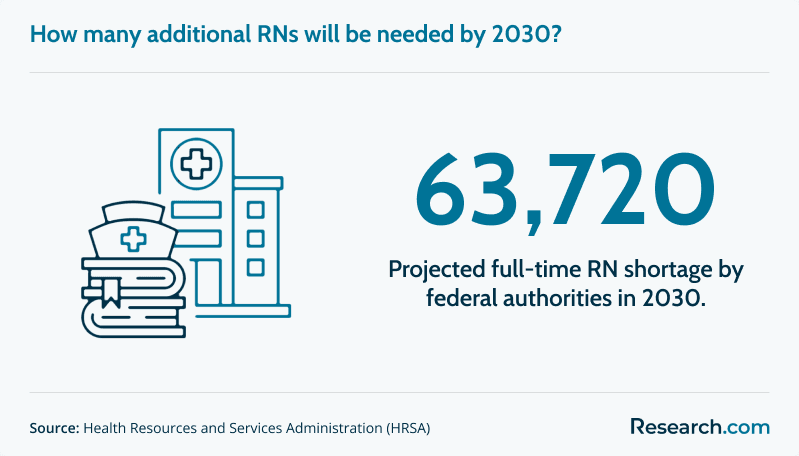
The demand for nursing majors continues to rise. Federal authorities project a shortage of 78,610 full-time RNs in 2025 and a shortage of 63,720 full-time RNs in 2030. Program length depends on your current education, whether you study full time or part time, and whether you choose an entry-level or advanced pathway.
| Nursing Pathway | Typical Duration | Who It Usually Serves |
| Associate Degree in Nursing (ADN) | 2 years (full-time) | Students seeking a shorter route into registered nursing |
| Bachelor of Science in Nursing (BSN) | 4 years (full-time) | Students who want broader undergraduate nursing preparation |
| Accelerated BSN | 12-18 months | Students who already hold a bachelor’s degree in another field |
| Master of Science in Nursing (MSN) | 2-3 years | RNs pursuing advanced practice, education, or leadership roles |
An ADN may be the fastest traditional entry point, while a BSN may provide stronger long-term flexibility. Career changers who already have a bachelor’s degree often consider accelerated BSN options, including the cheapest online accelerated BSN programs. Working RNs may prefer bridge programs that recognize prior nursing education and experience.
How much does nursing school cost?
Nursing school cost depends heavily on degree level, public or private status, residency, program length, fees, books, uniforms, supplies, transportation, clinical requirements, exam costs, and financial aid. Nursing can lead to strong career opportunities, and it is often discussed among highest paying degrees, but students should not choose a program based only on potential income.
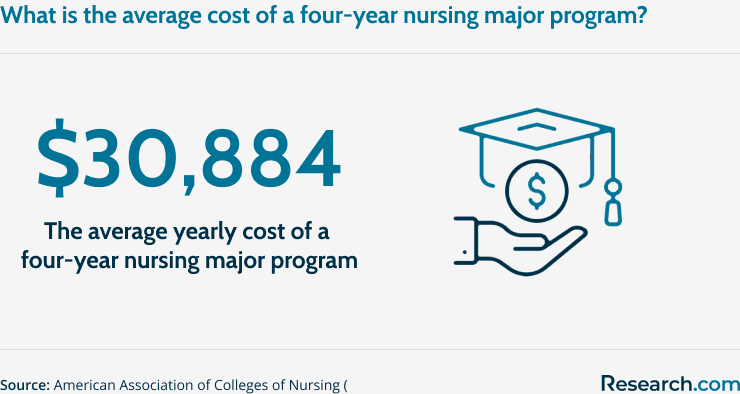
- ADN Program: The total cost can range from $23,900 to $66,320.
- BSN Program: The total cost can range from $89,556 to $211,392.
| Cost Factor | Why It Changes the Final Price | Question to Ask |
| Program type | ADN, BSN, accelerated, bridge, and graduate programs have different tuition structures. | What is the full program cost, not just per-credit tuition? |
| Public or private institution | Private schools often charge more, while public tuition may vary by residency. | Do in-state, out-of-state, and online students pay different rates? |
| Clinical expenses | Students may need transportation, uniforms, immunizations, background checks, and supplies. | Which clinical-related costs are not included in tuition? |
| Financial aid | Scholarships, grants, employer tuition benefits, and loans can change net cost. | What aid do nursing students commonly receive at this school? |
| Time away from work | Intensive programs may limit employment during school. | Can students realistically work while enrolled? |
How do you become a registered nurse after nursing school?
The total supply of RNs decreased by more than 100,000 from 2020 to 2021. According to the American Association of Colleges of Nursing, this was the largest drop ever observed over the past four decades.
To become an RN, students must complete an approved nursing education pathway and satisfy licensing rules in the state where they intend to practice. The exact process can vary, but the core steps are similar across states.
- Graduate from an accredited or state-approved nursing program: Common routes include an ADN, BSN, or approved diploma program.
- Apply through the state board of nursing: The board reviews education, identity, background, and other eligibility requirements.
- Register for and pass the NCLEX-RN: This national exam evaluates whether candidates have the knowledge and judgment needed for entry-level nursing practice.
- Receive state licensure: After meeting education, exam, and board requirements, candidates may receive authorization to practice as registered nurses.
- Maintain the license: Nurses must follow state renewal rules, continuing education requirements, and professional standards.
Before enrolling, ask the school whether its program meets RN licensure requirements in your state. This is especially important for online programs, relocation plans, and students who may want to work across state lines.
What nursing specialties can students pursue?
A nursing major can lead to many specialties, from entry-level bedside roles to advanced practice. Nearly 2 million individuals entered the nursing workforce with a bachelor’s degree in 2022, now making it the most common degree for initial U.S. licensing. Specialization may begin through clinical experience, employer training, certification, or graduate education.
Common Clinical Specialties
- Medical-Surgical Nursing: Care for adults with a wide range of acute and chronic conditions.
- Pediatric Nursing: Support infants, children, adolescents, and their families.
- Maternal-Child Health Nursing: Provide care during pregnancy, birth, postpartum recovery, and newborn care.
- Geriatric Nursing: Work with older adults, chronic illness, mobility issues, cognitive changes, and long-term care needs.
- Psychiatric-Mental Health Nursing: Care for patients with mental health and behavioral health needs.
- Critical Care Nursing: Monitor and support seriously ill patients, often in intensive care units.
- Emergency Room Nursing: Triage and treat patients with urgent and unpredictable conditions.
- Perioperative Nursing: Support patients before, during, and after surgery.
- Oncology Nursing: Care for patients receiving cancer screening, treatment, symptom management, and survivorship support.
Advanced Practice and Graduate-Level Specialties
- Nurse Practitioner (NP): Assess, diagnose, treat, prescribe where permitted, and educate patients within a defined specialty area. Students interested in family practice can review affordable online FNP programs.
- Certified Registered Nurse Anesthetist (CRNA): Provide anesthesia-related care in surgical and procedural settings.
- Clinical Nurse Specialist (CNS): Apply advanced expertise to improve care quality in a specialty area such as critical care or oncology.
| Specialty | Best Fit for Students Who... |
| Emergency Nursing | Handle rapid changes, uncertainty, and high-pressure decision-making well |
| Pediatrics | Communicate well with children, caregivers, and family-centered care teams |
| Oncology | Want long-term patient relationships and complex treatment coordination |
| Psychiatric-Mental Health | Are interested in behavioral health, therapeutic communication, and safety planning |
| Public Health | Want to connect nursing with prevention, policy, and community-level care |
What jobs can nursing majors get?
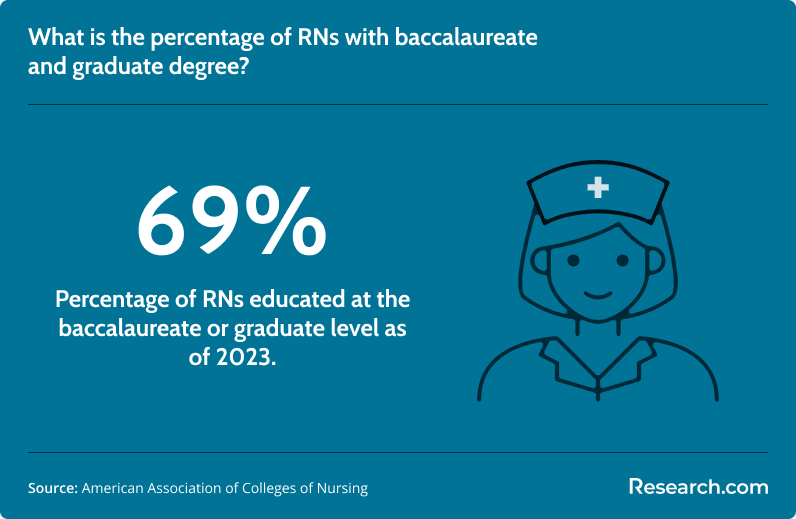
As of 2023, 69% of of RNs are educated at the baccalaureate or graduate level. A nursing major most commonly leads to RN practice, but the work environment can vary significantly. Some roles are fast-paced and acute, while others emphasize prevention, education, chronic disease management, rehabilitation, or community care.
Registered Nurse Roles
- Hospital RN: Work in medical-surgical, intensive care, emergency, pediatric, maternity, oncology, operating room, or step-down units.
- Clinic RN: Support outpatient visits, patient education, triage, medication coordination, and chronic disease follow-up.
- Long-Term Care RN: Care for older adults or patients needing extended support in nursing homes or skilled nursing facilities.
- Home Health RN: Provide care, teaching, wound support, medication review, and monitoring in patients’ homes.
- School Nurse: Support student health, medication administration, screenings, care plans, and emergency response in schools.
Advanced Practice Registered Nurse Roles
- Nurse Practitioner: Provide advanced assessment, diagnosis, treatment, prescribing where permitted, and preventive care.
- Certified Registered Nurse Anesthetist: Administer anesthesia and monitor patients during procedures.
- Clinical Nurse Specialist: Improve patient care in a defined specialty through expert consultation, education, and quality initiatives.
What are affordable options for advanced nursing specialization?
Advanced nursing specialization does not always require choosing the most expensive program. A better approach is to compare accredited programs by total cost, clinical placement support, faculty expertise, certification exam alignment, student services, and whether the schedule allows you to keep working.
Students interested in psychiatric mental health practice can compare program quality and price through resources such as the cheapest PMHNP programs. Cost matters, but it should not outweigh accreditation, state authorization, clinical readiness, or eligibility for the credential you want.
What skills do nursing majors need to succeed?
Nursing students need more than compassion. They must learn to prioritize under pressure, communicate clearly, recognize clinical changes, use evidence, document accurately, and manage demanding schedules. Clinical skill grows over time, but habits such as preparation, reflection, and asking for feedback can make a major difference.
- Clinical judgment: The ability to notice relevant findings, connect them to possible risks, and escalate concerns appropriately.
- Communication: Clear handoffs, patient teaching, family updates, and teamwork with physicians, pharmacists, therapists, and support staff.
- Time management: Nursing school requires balancing exams, readings, care plans, labs, clinical shifts, and personal responsibilities.
- Emotional resilience: Students may encounter pain, death, family distress, conflict, and moral stress during clinical training.
- Professional accountability: Safe nursing practice depends on honesty, preparation, ethical conduct, and knowing when to ask for help.
Students planning advanced practice careers can strengthen specialized competencies through options such as nurse practitioner programs online, after confirming licensure and clinical placement requirements.
How can online advanced nursing degrees support career growth?
Online advanced nursing degrees can help working nurses pursue leadership, practice, education, or systems-focused roles without fully stepping away from employment. These programs may deliver theory, research, policy, and leadership courses online, while clinical or practice experiences are completed through approved sites or projects.
For nurses seeking doctoral-level preparation, a DNP degree online may be worth comparing if the program’s pace, accreditation, practicum expectations, and state authorization align with career goals. Faster formats can be useful, but they should still provide enough support for advanced practice preparation and project completion.
What is the job outlook for nursing graduates?
The job outlook for nursing majors is strong. The Bureau of Labor Statistics (BLS) projects a 6% growth in employment for registered nurses from 2023 to 2033, which is faster than the average for all occupations.
Several forces support demand for nurses, including an aging population, chronic disease management, ongoing need for preventive care, and healthcare advances that require skilled monitoring and patient education. At the same time, demand can vary by region, specialty, employer type, shift, and local healthcare funding conditions.
- Aging Population: More older adults typically increases the need for chronic disease care, rehabilitation, long-term care, and care coordination.
- Healthcare Advances: New treatments and technologies require nurses who can educate patients, monitor responses, and support safe implementation.
- Chronic Disease Management: Conditions such as diabetes, heart disease, and cancer often require ongoing nursing support.
- Preventive Care: Nurses play a central role in screenings, patient teaching, immunization support, and community health initiatives.
How does an online direct-entry MSN program work?
An online direct-entry MSN program is designed for students who already hold a non-nursing bachelor’s degree and want to transition into nursing at the graduate level. These programs typically combine pre-licensure nursing preparation with graduate coursework, clinical experiences, and preparation for professional roles defined by the program track.
Students should be cautious with the word “online.” Nursing licensure preparation requires hands-on clinical learning, so online direct-entry programs must still arrange or approve in-person clinical experiences. Before applying, verify whether the program leads to RN licensure eligibility, whether it meets your state’s rules, and how clinical placements are secured. You can begin comparing options through an online direct-entry MSN program guide.
What advancement options are available to nursing majors?
Nursing offers clear advancement routes because the profession has multiple degree levels, certifications, specialties, and leadership paths. An RN may advance by earning a BSN, completing specialty certification, moving into charge nurse or management work, entering graduate school, or pursuing advanced practice.
A BSN-prepared RN may later pursue an MSN to become a nurse practitioner, clinical nurse leader, nurse educator, administrator, or public health nurse leader. Specialty certifications in areas such as critical care, oncology, pediatrics, emergency nursing, or psychiatric-mental health nursing can also support role mobility, depending on employer requirements and professional goals.
For a broader comparison of degree levels and role outcomes, review Research.com’s guide to types of nurses and salaries. The right advancement plan should account for your desired scope of practice, state rules, tuition cost, schedule, clinical requirements, and expected return on investment.
How do you check nursing program accreditation and quality?
Accreditation is one of the most important checks before choosing a nursing program. Students should confirm that the program is recognized by appropriate nursing accreditation bodies, such as the Accreditation Commission for Education in Nursing (ACEN) or the Commission on Collegiate Nursing Education (CCNE), and that it is approved by the relevant state board of nursing for licensure preparation.
Program quality should be evaluated through more than reputation. Ask about NCLEX-RN pass rates, graduation rates, clinical placement support, faculty availability, student support, simulation resources, certification exam preparation, and employer connections. Cost-conscious RN students may compare options such as the lowest cost RN to BSN online programs, but low tuition should never replace accreditation and licensure fit.
| Quality Check | Why It Matters |
| Program accreditation | Supports educational quality and may affect licensure, transfer, graduate admission, and employer recognition. |
| State board approval | Determines whether the program can prepare students for RN licensure in the target state. |
| NCLEX-RN outcomes | Shows how well graduates are prepared for the licensing exam. |
| Clinical placement process | Delays or weak placements can affect completion timelines and readiness. |
| Total cost | Tuition, fees, supplies, travel, and lost work time all influence affordability. |
What is the salary outlook for advanced nursing roles?
Advanced nursing roles can offer strong compensation because they often require graduate education, advanced clinical judgment, certification, and greater responsibility. Actual salary varies by state, employer, specialty, years of experience, shift, setting, and scope of practice.
Prospective students should avoid assuming that any degree guarantees a specific income. Instead, compare regional salary data, tuition cost, loan burden, job postings, certification requirements, and employer demand. Students considering psychiatric-mental health roles can review state-level information on DNP psychiatric nurse practitioner salary trends.
How can bridge programs shorten the path to advanced nursing roles?
Bridge programs allow nurses to build on prior education instead of starting over. Common examples include RN-to-BSN, ADN-to-MSN, and BSN-to-DNP pathways. These programs may combine undergraduate completion, graduate coursework, advanced clinical preparation, leadership training, and evidence-based practice.
Bridge programs are useful when they save time without weakening preparation. Before enrolling, confirm admission requirements, whether a BSN is awarded along the way, clinical hour expectations, state authorization, accreditation, and whether the advanced track aligns with your intended role. Students comparing associate-to-graduate routes can review ASN to nurse practitioner programs.
What challenges do nursing majors face?
Nursing school is challenging because students must master dense academic content while also learning to perform safely in clinical environments. Many students struggle most with the combination of exams, care plans, lab checkoffs, clinical schedules, commute time, family obligations, and emotional exposure to illness or death.
- Heavy science load: Anatomy, physiology, microbiology, pharmacology, and pathophysiology require consistent review rather than last-minute studying.
- Clinical anxiety: Working with real patients can be stressful, especially when students are still building confidence.
- Time pressure: Nursing programs often have strict deadlines, attendance policies, and clinical preparation requirements.
- Emotional fatigue: Caring for patients and families during difficult situations can be draining.
- Financial strain: Tuition, supplies, transportation, and reduced work hours can create pressure.
Working nurses returning to school may reduce disruption by choosing structured bridge options such as RN to BSN fast track programs, provided the pace is realistic.
How can a dual degree advance a nursing career?
A dual degree can help nurses move into roles that require both clinical credibility and business judgment. For example, combining nursing with business can be useful for healthcare administration, service-line leadership, consulting, operations management, quality improvement, or executive-track roles.
Dual degrees are not necessary for every nurse. They make the most sense for professionals who want to influence staffing, budgets, strategy, patient outcomes, and organizational performance. Nurses considering leadership at the intersection of clinical care and management can explore dual MSN MBA programs online.
What is the fastest RN-to-BSN pathway?
The fastest RN-to-BSN pathway is usually an online or hybrid bridge program designed for licensed RNs who already completed prior nursing coursework. These programs often focus on leadership, community health, research, evidence-based practice, health assessment, and professional nursing development rather than repeating entry-level clinical training.
Speed should not be the only factor. Ask whether the program is accredited, whether credits transfer smoothly, whether courses are offered year-round, and whether your work schedule can handle accelerated terms. For options marketed around accessibility, compare the easiest RN to BSN programs carefully against quality and licensure considerations.
Are online advanced nursing degrees flexible and cost-conscious?
Online advanced nursing degrees can be flexible for working nurses because lectures, assignments, discussions, and some projects may be completed remotely. They may also reduce commuting costs and allow students to remain employed. However, advanced nursing programs often still require supervised clinical hours, practicums, campus intensives, or local site approvals.
When evaluating affordability, compare total tuition, fees, technology costs, clinical placement expenses, travel, books, certification exam costs, and time away from work. Nurses seeking doctoral options can review inexpensive DNP programs, while verifying accreditation and specialty fit.
How can culturally responsive nursing programs strengthen advanced practice?
Culturally responsive nursing education prepares nurses to care for patients whose health beliefs, language needs, community experiences, and access barriers may differ from their own. This matters in advanced nursing because nurse practitioners, nurse leaders, educators, and public health nurses often design care plans and programs for diverse populations.
Programs that emphasize cultural humility, health equity, community engagement, and respectful communication can help nurses serve patients more effectively. Students interested in institutions with distinctive missions and community-centered training may compare pathways such as HBCU midwifery programs.
What makes some nursing programs easier to enter?
Admissions difficulty depends on applicant volume, available clinical seats, prerequisite standards, GPA expectations, entrance exams, program format, and local workforce needs. Some schools use holistic review, while others rely heavily on grades and testing. A program that is easier to enter is not automatically lower quality, but students should examine outcomes carefully.
Before applying, compare admission requirements, application deadlines, waitlist policies, clinical capacity, graduation support, NCLEX-RN preparation, and accreditation. Students seeking less competitive entry points can review the easiest nursing program to get into, but should still confirm licensure alignment and student outcomes.
What financial aid options are available for nursing majors?
Nursing students may use a combination of federal aid, state aid, institutional scholarships, private scholarships, employer tuition assistance, loan repayment programs, military benefits, and payment plans. The right mix depends on eligibility, school participation, enrollment status, and whether the program is properly accredited.
Students should complete financial aid steps early and ask nursing departments about scholarships reserved for healthcare students. Graduate students comparing advanced practice pathways can also review cost-conscious options such as the cheapest online BSN to DNP. Always compare net cost after aid rather than advertised tuition alone.
Can biology coursework help future nurses?
A biology background can help nursing students understand disease processes, microbiology, genetics, anatomy, physiology, and cellular function. This foundation can make courses such as pathophysiology and pharmacology easier to connect to patient care.
Biology alone does not replace nursing education or clinical training, but it can strengthen scientific reasoning. Students who want additional science preparation can explore the best online biology degree programs while checking whether credits will transfer into nursing prerequisites.
Can RN-to-BSN students complete programs without clinicals?
Some RN-to-BSN programs are designed for licensed nurses and may not require traditional bedside clinical rotations. Instead, they may use community health projects, leadership assignments, quality improvement work, or practice-based learning that builds on the student’s existing RN experience.
The phrase “without clinicals” should be reviewed carefully. Requirements vary by school and state, and some programs still include applied practice components even if they do not require hospital-style clinical shifts. Working RNs can compare RN to BSN programs without clinicals to see how each school defines practice learning.
How can online women’s health nurse practitioner programs affect a career?
Women’s health nurse practitioner programs prepare nurses for advanced care focused on reproductive health, preventive screenings, pregnancy-related care, gynecologic concerns, health education, and lifespan-based women’s health needs. Online formats may help working nurses complete coursework with more schedule flexibility, but clinical training remains essential.
Before choosing a program, confirm certification alignment, state authorization, clinical placement support, faculty experience, and total cost. Cost-conscious students can compare the cheapest women's health nurse practitioner online programs.
What can you do with an MSN in public health?
An MSN with a public health focus can move nurses beyond individual bedside care into population health, prevention, epidemiology-informed practice, community assessment, program planning, policy, and health education. Graduates may work with government agencies, nonprofits, healthcare systems, community clinics, schools, or public health organizations.
Possible roles include public health nurse leader, community health consultant, health policy coordinator, epidemiology-related nursing role, program manager, or population health specialist. For a deeper career breakdown, review jobs you can do with a MSN in public health.
Common Mistakes to Avoid When Choosing a Nursing Major
| Mistake | Why It Can Hurt You | Better Approach |
| Choosing a program without checking accreditation | It can affect licensure eligibility, transfer credits, graduate school options, and employer recognition. | Verify nursing accreditation and state board approval before applying. |
| Looking only at tuition | Fees, supplies, travel, clinical costs, and lost work time can change the true price. | Compare total cost of attendance and net cost after aid. |
| Assuming online means fully remote | Nursing programs commonly require in-person clinicals, labs, practicums, or campus intensives. | Ask exactly where and when hands-on requirements take place. |
| Ignoring state licensure rules | A program may not meet requirements in every state. | Confirm eligibility with the state board where you plan to practice. |
| Choosing the fastest program without checking support | Accelerated formats can be overwhelming and may leave little room for work or family demands. | Ask about tutoring, advising, clinical coordination, and exam preparation. |
| Assuming salary outcomes are guaranteed | Pay varies by location, specialty, employer, schedule, experience, and credentials. | Review local job postings and salary data before borrowing heavily. |
Questions to Ask Before Enrolling in a Nursing Program
- Is the program accredited by a recognized nursing accreditor and approved by the relevant state board of nursing?
- Does the program meet RN licensure requirements in the state where I plan to work?
- What are the NCLEX-RN pass rates and graduation outcomes?
- Who arranges clinical placements, and how far might I need to travel?
- What is the full cost, including fees, books, uniforms, supplies, background checks, and exam expenses?
- Can I work while enrolled, or is the schedule too intensive?
- What support is available for students who struggle academically or clinically?
- How many credits can I transfer, and will prior healthcare experience count?
- Does the program prepare me for the specialty or graduate degree I want later?
- What happens if I fail a course, miss a clinical requirement, or need to pause enrollment?
Key Insights
- A nursing major prepares students for licensed, hands-on healthcare practice, but graduation alone does not make someone an RN; state licensure and the NCLEX-RN are required.
- ADN, BSN, accelerated BSN, MSN, bridge, and DNP pathways serve different students. The best option depends on prior education, budget, timeline, career goals, and licensure needs.
- As of 2023, 69% of of RNs are educated at the baccalaureate or graduate level.
- Nearly 2 million individuals entered the nursing workforce with a bachelor’s degree, now making it the most common degree for initial U.S. licensing.
- 69% of of RNs are educated at the baccalaureate or graduate level in 2022.
- The total supply of RNs decreased by more than 100,000 from 2020 to 2021.
- Federal authorities project a shortage of 78,610 full-time RNs in 2025 and a shortage of 63,720 full-time RNs in 2030.
- The BLS projects 193,100 openings for RNs each year through 2032.
- The RN workforce is anticipated to grow from 3.1 million in 2022 to 3.3 million in 2032, an increase of 177,440 nurses.
- Before choosing any nursing program, verify accreditation, state approval, clinical placement support, total cost, NCLEX-RN outcomes, and whether the format fits your life.
Here’s What Graduates Have to Say About Becoming a Nursing Major
Studying nursing gave me both the scientific foundation and the patient-care perspective I needed. The coursework was difficult, but clinical training helped me understand how much thoughtful nursing can change a patient’s experience. Maria
Nursing school pushed me harder than I expected. I learned how to think clearly during stressful situations, communicate with patients, and trust my training while still asking for help when I needed it. James
Choosing nursing opened more career possibilities than I knew existed. The program was demanding, but the support from classmates and instructors helped me build the confidence to enter a profession with real purpose. Taylor
References:
- American Association of Critical-Care Nurses (n.d.). Nursing workforce fact sheet.
- Bureau of Labor Statistics (BLS). (2024, October 18). Registered nurses.
- Health Resources and Services Administration (2024). The nurse-survey fact sheet, 2024. Bureau of Health Workforce.
- National Nursing Institutes (n.d.). NSI National Health Care Retention Report.
- National Council of State Boards of Nursing (n.d.). Active RN licenses.
- People Element (2024). 2024 Nursing Shortage Statistics.
Other Things You Should Know About Becoming a Nursing Major
Before starting a nursing major in 2027, you typically need to complete courses in biology, chemistry, and mathematics. These foundational courses are essential for understanding the complex subjects in nursing education. Specific requirements may vary by program.
Most nursing programs expect biology, chemistry, and anatomy and physiology before admission, with a minimum grade of C or higher. Many also require microbiology, algebra, and a recent math or placement score. Competitive programs may ask for 2.5 to 3.0 GPA and completed lab work.