2027 Best Online Nursing Programs in Missouri – Accredited RN to BSN Programs

Co-Founder and Chief Data Scientist
Choosing an online nursing program in Missouri is not just about finding a convenient class schedule. You also need to know whether the program is accredited, whether it prepares you for Missouri licensure, how clinical placements work, what the total cost may be, and which pathway fits your current education level. This guide is for first-time nursing students, working LPNs, career changers, and current nurses comparing online and hybrid nursing options in Missouri.
Below, you will learn how to become a nurse in Missouri, what online nursing programs can and cannot do, how long different pathways take, what costs to expect, which schools are commonly considered by nursing students, and how to compare programs before applying.
Best Online Nursing Programs in Missouri Table of Contents
- How to become a nurse in Missouri?
- What is the typical cost of a nursing program in Missouri?
- How long does it take to become a nurse in Missouri?
- Can you become a nurse in Missouri with an online degree?
- Online Nursing Programs in Missouri for 2027
- Is Missouri good for nursing?
- What can I do with a nursing degree in Missouri?
- Career Advancement: LPN to BSN Pathways in Missouri
- What are the financial aid and scholarship options available for nursing students in Missouri?
- How can non-nurses transition into nursing careers through bridge programs in Missouri?
- What are the current regulatory and licensure updates for nurses in Missouri?
- What are the emerging nursing specializations driving career growth in Missouri?
- How can interdisciplinary collaboration enhance my nursing career in Missouri?
- Are ADN Programs a Viable and Efficient Pathway for Nursing Careers in Missouri?
- How can I evaluate the success of online nursing programs in Missouri?
- What role does telehealth play in online nursing education and practice in Missouri?
- Is an LVN Career Path a Viable Option in Missouri?
- How can I choose the right nursing career pathway in Missouri?
- How can I transition into advanced practice roles in Missouri?
- Can adding medical billing and coding skills benefit my career as a nurse in Missouri?
- How can I develop effective leadership skills to advance my career in Missouri?
Quick Answer: Are Online Nursing Programs in Missouri Worth Considering?
Yes, online nursing programs in Missouri can be a practical route into nursing or career advancement if the program is properly accredited, approved for the credential you need, and provides valid clinical experiences. Most pre-licensure nursing programs are not fully online because students must complete hands-on labs and supervised clinical hours. However, many RN-to-BSN, LPN-to-BSN, MSN, DNP, and post-master’s options use online coursework with local or arranged clinical placements.
| Student Type | Best-Fit Pathway | Important Caution |
| First-time nursing student | ADN or BSN program with in-person labs and clinicals | Confirm Missouri Board approval and NCLEX-RN preparation. |
| Working LPN | LPN-to-RN, LPN-to-BSN, or practical nursing bridge option | Ask how much prior coursework and licensure experience will transfer. |
| Registered nurse with an ADN | Online RN-to-BSN program | Compare total tuition, transfer credits, and employer tuition assistance. |
| Career changer with a bachelor’s degree | Accelerated BSN or entry-level nursing bridge program | Expect a demanding schedule and required clinical attendance. |
| Experienced nurse seeking advanced roles | MSN, DNP, or nurse practitioner track | Check specialty accreditation, clinical placement support, and certification eligibility. |
How to become a nurse in Missouri?
To become a nurse in Missouri, you generally need to complete an approved nursing education program, pass the appropriate licensure exam, and apply through the Missouri State Board of Nursing. Your exact steps depend on whether you want to become a licensed practical nurse, registered nurse, nurse practitioner, nurse educator, or another advanced nursing professional.
Step 1: Choose the right nursing credential.
Missouri nursing students can start through several academic routes, including practical nursing certificates, associate degree programs, diploma programs, bachelor’s degrees, and graduate nursing programs. The best choice depends on how quickly you want to enter the workforce, whether you plan to continue to a BSN or MSN later, and whether your target employers prefer bachelor’s-prepared nurses.
| Pathway | Typical Student | Common Goal | Best For |
| Practical nursing certificate | Students seeking a faster entry into bedside care | LPN licensure | Those who want a shorter, lower-cost starting point. |
| Associate Degree in Nursing | Students who want to become RNs efficiently | NCLEX-RN eligibility | Students balancing cost, speed, and RN entry. |
| Bachelor of Science in Nursing | First-time college students or transfer students | BSN-prepared RN roles | Students aiming for broader hospital, leadership, or graduate-school options. |
| RN-to-BSN | Licensed RNs with an ADN or diploma | Bachelor’s completion | Working nurses who want advancement without repeating entry-level training. |
| MSN or DNP | Experienced RNs | Advanced clinical, teaching, leadership, or practitioner roles | Nurses pursuing specialization or expanded practice authority. |
Step 2: Meet admissions and education requirements.
Most nursing programs require a high school diploma or GED certificate before admission. Competitive programs may also require prerequisite science courses, minimum GPA standards, entrance assessments, background checks, drug screening, immunization records, and CPR certification. If you are comparing online BSN-to-RN options in Missouri, look closely at whether the program is designed for pre-licensure students or for already licensed RNs completing a BSN.
According to recent data, there are over 140,000 nurses working in the state (Missouri Hospital Association, 2024). Because nursing is a licensed profession, applicants should prioritize schools approved by the Missouri State Board of Nursing and accredited by a recognized nursing accreditor. Accreditation is not a formality; it can affect financial aid, transfer credit, licensure eligibility, graduate school admission, and employer recognition.
Step 3: Pass the appropriate licensure exam.
After completing the required nursing program, graduates seeking RN licensure must pass the National Council Licensure Examination for Registered Nurses, commonly known as the NCLEX-RN. Practical nursing graduates take the appropriate practical nursing licensure exam. Passing an exam alone is not the final step; candidates must also apply to the Missouri State Board of Nursing and satisfy state requirements.
The Missouri State Board of Nursing reviews whether applicants meet state standards for licensure. If you are considering LPN programs in Missouri, remember that an LPN is a licensed practical nurse, not a nurse practitioner. Nurse practitioner roles require graduate education and advanced credentialing. Once licensed, nurses may pursue roles in hospitals, clinics, long-term care facilities, home health, public health, telehealth, schools, and specialty practices.
What is the typical cost of a nursing program in Missouri?
The typical cost of nursing programs in Missouri ranges from $48,101 for in-state students to $89,388 for out-of-state students (Missouri State University, 2025). This estimate includes application fees, tuition, student services fees, and supplemental course fees. Actual costs vary by institution, residency status, program level, transfer credits, whether you study full time or part time, and whether you choose a public, private, online, hybrid, or campus-based format.
Students comparing RN-to-BSN options should calculate the full program price rather than only the per-credit rate. If cost is your primary concern, reviewing the most affordable online RN-to-BSN programs can help you benchmark Missouri options against lower-cost alternatives.
Practical nursing certificates may cost less than a full degree. Tuition for practical nursing certificates in Missouri schools can range from $7,000 to $25,000, depending on program length and institution type. However, students should also budget for uniforms, lab fees, background checks, exam fees, supplies, technology, transportation to clinical sites, and possible lost work hours during clinical rotations.
Cost factors nursing students often overlook
| Cost Category | Why It Matters | Question to Ask |
| Clinical travel | Online coursework may still require in-person clinical rotations. | Where are clinical sites located, and can I complete them near home? |
| Transfer credit policy | Accepted credits can reduce both time and tuition. | How many credits will the school accept before I enroll? |
| Program fees | Nursing programs often add lab, simulation, testing, and equipment fees. | What is the total estimated cost, not just tuition? |
| Licensure and testing | Graduates must pay for exam and licensing steps. | Which exam, application, and review costs should I expect? |
| Part-time enrollment | Flexible pacing may increase time to completion. | Will part-time study change tuition, fees, or financial aid eligibility? |
How long does it take to become a nurse in Missouri?
The timeline depends on the credential. A traditional bachelor’s degree in nursing usually takes four years at a university. Students who want a faster RN pathway may consider 2 year nursing programs in Missouri through an associate degree in nursing. Practical nursing and flexible online options, including online LPN programs, commonly take one to two years to complete.
After finishing the academic program, graduates need time to prepare for licensure. Students pursuing RN licensure should plan for NCLEX-RN preparation, application processing, testing availability, and state licensure review. If you want to acquire your license as a registered nurse, you need to study for at least six months before taking the National Council Licensure Examination for RNs.
Before taking the NCLEX, candidates must register for the exam and wait for Authorization to Test, often called ATT. Once eligible, candidates have 90 days to take the exam at approved testing centers around the country.
| Nursing Goal | Approximate Education Timeline | What Happens After Graduation |
| LPN | One to two years | Licensure exam and Missouri application review |
| RN through ADN | About two years | NCLEX-RN, state licensure, and entry-level RN job search |
| RN through BSN | Four years | NCLEX-RN, state licensure, and broader hospital or specialty options |
| RN-to-BSN | Varies by transfer credits and pacing | BSN completion for advancement, graduate school, or employer preference |
| MSN or DNP | Varies by degree level and specialty | Advanced certification, credentialing, and expanded career options |
Can you become a nurse in Missouri with an online degree?
Yes, you can become a nurse in Missouri with an online degree if the program is accredited, meets the state’s educational requirements, includes approved clinical experiences, and prepares graduates for the correct licensure process. Online nursing education is especially common for RN-to-BSN, MSN, DNP, and post-master’s certificates. Pre-licensure programs usually combine online theory courses with in-person labs, simulations, and clinical rotations.
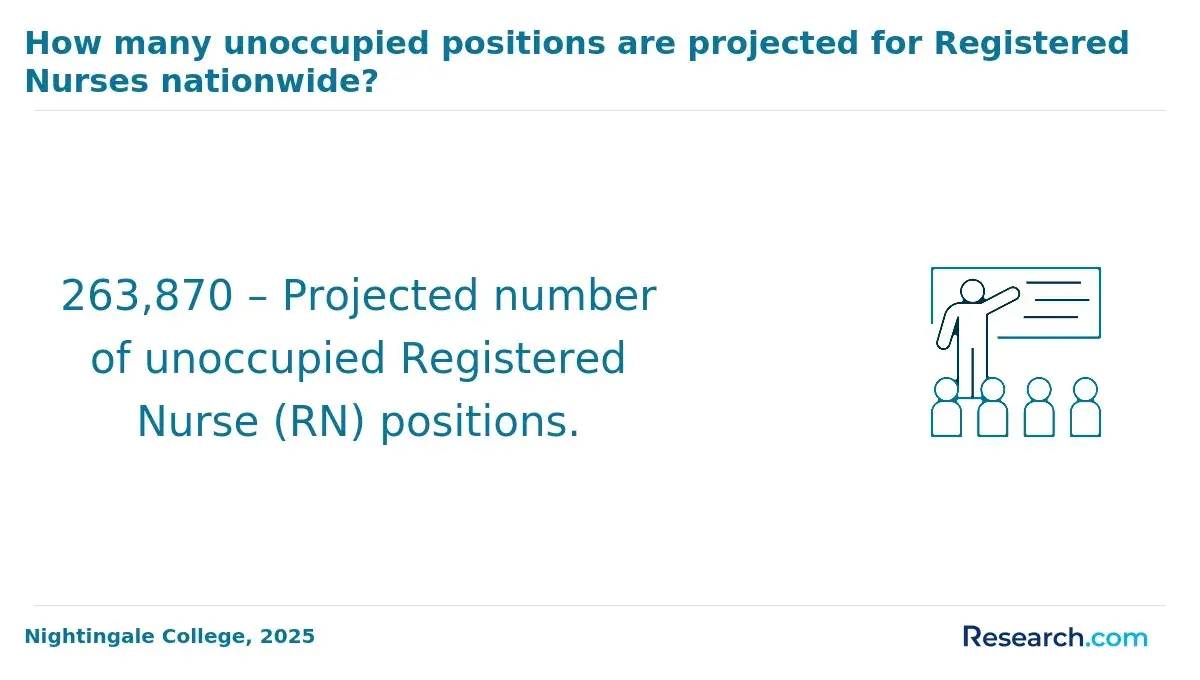
Accreditation matters because nursing is highly regulated. A program that looks convenient online may not qualify you for licensure, financial aid, graduate study, or employer reimbursement. Nationally, a 13% nursing shortage is projected for Missouri in 2026, amid ongoing demand for registered nurses (Nightingale, 2026). That demand can make nursing attractive, but students should still choose programs based on outcomes, approval status, and fit rather than convenience alone.
Online Nursing Programs in Missouri for 2027
Missouri students can find online and hybrid nursing options at several institutions. Some are designed for first-time nursing students, while others serve licensed nurses returning for a BSN, MSN, DNP, or specialty credential. Students considering other healthcare-related academic paths may also compare nursing with a healthcare management degree, especially if they are more interested in operations, administration, compliance, or leadership than direct clinical care.
The schools below are examples of Missouri institutions offering nursing-related online or hybrid pathways. Before applying, confirm current admission requirements, accreditation, clinical placement policies, program availability in your location, and tuition with the school directly.
Southwest Baptist University
Southwest Baptist University is one Missouri option for students comparing online nursing programs. The school reported a 100% passing rate last year in the NCLEX, and there are currently 409 students enrolled in its exclusively online education courses in nursing.
- Program Length: Four years
- Tracks/concentrations: N/A
- Cost per Credit: $870
- Required Credits to Graduate: 128
- Accreditation: Commission on Collegiate Nursing Education (CCNE)
Central Methodist University
Central Methodist University reported one of the highest NCLEX passing rates in 2024, at 94%. The university offers 32 online degree programs in areas such as accounting, education, and healthcare, giving students multiple academic options beyond nursing as well.
- Program Length: 14 months to four years
- Tracks/concentrations: Clinical Nurse Leadership and Nursing Education
- Cost per Credit: $380
- Required Credits to Graduate: 34 for a master and 120 for a bachelor degree
- Accreditation: Commission on Collegiate Nursing Education
Missouri State University
Missouri State University offers nursing pathways that include BSN, MSN, DNP, and post-master’s options in health education. Students should compare the university’s program level, clinical expectations, and cost structure against their career goals before applying.
- Program Length: Four years
- Tracks/concentrations: N/A
- Cost per Credit: $333
- Required Credits to Graduate: 120
- Accreditation: Commission on Collegiate Nursing Education
University of Missouri, Kansas City
The University of Missouri provides nursing and health studies options across bachelor’s, master’s, and PhD levels. Students interested in advanced study can review available specializations and determine whether the program supports their intended certification or career focus.
- Program Length: Two to four years
- Tracks/concentrations: Pediatric nursing, nursing education, gerontology nursing, and others
- Cost per Credit: $654 (in-state), $1,244 (out-of-state).
- Required Credits to Graduate: 128
- Accreditation: Commission on Collegiate Nursing Education
Columbia College
Columbia College offers associate and bachelor’s degree options for nursing students. Students must pass the HESI (A2) assessment before moving forward in the nursing sequence, so applicants should prepare for admissions testing as part of their enrollment plan.
- Program Length: Four to five years
- Tracks/concentrations: Mental health nursing, pathophysiology, pharmacology, and more
- Cost per Credit: $375
- Required Credits to Graduate: 77
- Accreditation: Commission on Collegiate Nursing Education
How to compare these programs
| Program Factor | Why It Should Influence Your Decision |
| NCLEX pass rate | Shows whether graduates are being prepared for licensure, though one year of data should not be the only metric. |
| Accreditation | Supports licensure, financial aid, transferability, employer recognition, and graduate study. |
| Clinical placement help | Online students still need real patient-care training; weak placement support can delay graduation. |
| Total cost | Per-credit tuition does not include every fee or expense. |
| Program format | Hybrid, synchronous, asynchronous, and campus-intensive formats affect work schedules. |
| Student support | Advising, tutoring, simulation access, and licensure preparation can improve completion prospects. |
Is Missouri good for nursing?
Missouri can be a solid state for nursing students and practicing nurses because healthcare employers continue to need qualified professionals across hospitals, clinics, rural care settings, long-term care facilities, home health, and specialty practices. National RN demand is expected to grow by 5 percent from 2024 to 2034 (BLS, 2024), and Missouri has also reported workforce pressure, including 11% of statewide vacancies for staff nurses.
For nurses seeking higher responsibility and pay, graduate education may open doors to advanced practice, education, leadership, and specialty roles. Students comparing advanced practice routes can review the best online nurse practitioner programs to understand how program structure, clinical requirements, and specialty tracks differ.
Who should consider nursing in Missouri?
- Students who want a licensed healthcare career: Nursing provides a structured path from education to licensure to employment.
- Working adults seeking advancement: Online RN-to-BSN, LPN-to-BSN, MSN, and DNP options can support career movement without fully leaving the workforce.
- People willing to complete clinical training: Even online nursing students must be ready for supervised in-person practice.
- Students interested in rural or underserved care: Missouri’s mix of urban and rural communities creates varied practice environments.
Who may want a different healthcare path?
- Students who do not want licensure exams: Nursing requires state licensure and ongoing compliance.
- People seeking a fully remote degree with no clinical work: Pre-licensure nursing cannot be completed only through online classes.
- Students more interested in business than patient care: Healthcare administration, informatics, public health, or billing may fit better.
What can I do with a nursing degree in Missouri?
A nursing degree can lead to direct patient-care roles, teaching positions, advanced practice careers, and leadership opportunities. Your options depend on your license level, degree, specialty training, experience, and employer requirements. The salaries below reflect cited Missouri compensation figures and should be treated as estimates rather than guarantees.
| Role | Typical Preparation | Missouri Salary Figure Cited | Good Fit For |
| Registered Nurse (RN) | ADN or BSN plus NCLEX-RN and licensure | Newly minted RNs in Missouri earn around $70,306 (Salary.com, 2026). | Graduates seeking bedside, clinic, community, or specialty nursing experience. |
| Nurse Educator | Nursing degree plus teaching or clinical experience | Nurse educators in this state earn around $96,623 (ZipRecruiter, 2026). | Nurses who enjoy teaching students, training staff, or developing curricula. |
| Nurse Practitioner (NP) | Graduate nursing degree and advanced credentialing | A nurse practitioner can earn about $129,210 (U.S. Bureau of Labor Statistics, 2024). | RNs asking what can you do with an MSN? and considering expanded clinical responsibility. |
| Certified Nurse Anesthetist | Advanced graduate preparation and specialized clinical training | In Missouri, they earn an average of $133,345 (ZipRecruiter, 2026). | Experienced nurses interested in anesthesia, acute care, and advanced clinical practice. |
Advanced roles may require graduate study, certification, and specialty-specific clinical hours. Nurses comparing graduate education costs can review affordable online MSN programs as part of a broader return-on-investment analysis.
Career Advancement: LPN to BSN Pathways in Missouri
An LPN-to-BSN pathway can help Missouri practical nurses move toward RN licensure, broader clinical responsibility, and long-term advancement. This route is usually designed for licensed practical nurses who already understand basic patient care and want to build toward a bachelor’s-level nursing credential.
Why an LPN might choose a BSN pathway
LPN-to-BSN programs may make sense for nurses who want to qualify for RN roles, strengthen leadership potential, prepare for graduate study, or become more competitive for hospital-based positions. A BSN may also support movement into areas such as pediatrics, gerontology, public health, critical care, care coordination, and nursing education over time.
Online and hybrid formats for working LPNs
Many LPNs need a program that fits around work and family obligations. Online coursework can reduce commuting time, but students should not assume the full program is remote. Clinical training, skills labs, simulations, and assessments may require scheduled attendance. Before enrolling, ask whether the school helps arrange clinical placements or expects students to find their own sites.
Students comparing flexible advancement options can explore online LPN-to-BSN programs to understand how bridge formats, transfer credits, and clinical requirements differ.
What are the financial aid and scholarship options available for nursing students in Missouri?
Nursing school can be expensive, but students may reduce out-of-pocket costs through federal aid, state grants, institutional scholarships, employer support, private awards, and loan repayment programs. The strongest strategy is to combine several funding sources and compare net cost after grants and scholarships, not just the published tuition rate.
- Federal financial aid: Students should complete the Free Application for Federal Student Aid, or FAFSA, to be considered for grants, work-study, and federal loans.
- Missouri grants and scholarships: Missouri residents may qualify for state-funded aid, including the Access Missouri Financial Assistance Program and the A+ Scholarship Program.
- Institutional scholarships: Nursing schools may offer awards based on academic achievement, financial need, service goals, or intended nursing specialty.
- Loan repayment programs: Programs such as the NURSE Corps Loan Repayment Program may help graduates who work in underserved communities reduce educational debt.
- Private nursing scholarships: Organizations such as the American Association of Colleges of Nursing and the Missouri League for Nursing offer scholarship opportunities for nursing students.
- Employer tuition support: Working LPNs, RNs, and healthcare employees should ask whether their employer reimburses tuition for approved nursing programs.
Ways to lower your nursing school cost
- Ask for a written transfer credit evaluation before committing to a school.
- Compare total program cost, including fees, supplies, clinical travel, testing, and technology.
- Look for employer partnerships or hospital-based tuition assistance.
- Choose an accredited program to preserve financial aid eligibility and career mobility.
- Avoid borrowing the maximum loan amount unless you have a clear repayment plan.
How can non-nurses transition into nursing careers through bridge programs in Missouri?
Non-nurses can enter the profession through bridge and accelerated programs designed for students who already have college coursework or a bachelor’s degree in another field. These programs can shorten the academic path by applying prior general education credits while concentrating heavily on nursing science, clinical judgment, pharmacology, assessment, and supervised practice.
- Accelerated academic route: Students with a prior non-nursing bachelor’s degree may consider accelerated or second-degree BSN options. Those comparing flexible formats can review online BSN programs for non-nurses.
- Flexible delivery: Some programs use hybrid or online coursework, but clinical and lab components still require in-person participation.
- Workforce need: Missouri’s healthcare system continues to need skilled nurses, particularly in high-need and underserved areas.
- Graduate-school foundation: A structured bridge pathway can prepare students for later MSN or DNP study if they want advanced practice, teaching, or leadership roles.
- Return-on-investment review: Career changers should compare tuition, lost income, program intensity, salary expectations, and licensure outcomes before enrolling.
Questions career changers should ask before applying
- Will my prior degree or credits reduce the program length?
- Can I work while enrolled, or is the schedule too intensive?
- Where will I complete labs and clinical rotations?
- What are the program’s NCLEX pass rates and completion outcomes?
- Does the program qualify graduates for Missouri licensure?
What are the current regulatory and licensure updates for nurses in Missouri?
Missouri nurses must follow state licensure requirements, scope-of-practice rules, renewal procedures, and any continuing education or compliance expectations that apply to their role. Because requirements can change, students and licensed nurses should verify information directly with the Missouri State Board of Nursing before making education or career decisions. For a focused overview, review the nursing license requirements in Missouri.
What are the emerging nursing specializations driving career growth in Missouri?
Specialization can help nurses move beyond general bedside roles and build expertise in areas such as critical care, oncology, informatics, gerontology, pediatrics, telehealth, community health, and aesthetic nursing. These paths may require certifications, graduate education, supervised experience, or employer-specific training. Nurses considering niche practice areas should compare job demand, certification requirements, work setting, malpractice considerations, and salary potential. For one example of a specialized field, review salary information on how much aesthetic nurses make.
How can interdisciplinary collaboration enhance my nursing career in Missouri?
Nurses rarely work alone. Strong patient care depends on collaboration with physicians, medical assistants, pharmacists, social workers, therapists, coders, case managers, and administrators. Building interdisciplinary skills can improve communication, reduce care gaps, and prepare nurses for leadership in complex healthcare environments. Students who want to understand adjacent healthcare roles can compare nursing training with medical assistant programs in Missouri.
Are ADN Programs a Viable and Efficient Pathway for Nursing Careers in Missouri?
ADN programs can be a practical route for students who want to become registered nurses faster and at a potentially lower upfront cost than a traditional four-year BSN. An ADN may be especially attractive for students who plan to work as an RN and later complete an RN-to-BSN program online. However, students should compare accreditation, clinical placement quality, NCLEX outcomes, transfer agreements, and employer preferences. Students exploring admissions accessibility can review information on ADN programs.
| ADN Advantage | ADN Limitation | Best Strategy |
| Shorter route to RN eligibility | Some employers may prefer BSN-prepared nurses | Choose an ADN with clear RN-to-BSN transfer options. |
| Often lower initial tuition | May require later schooling for advancement | Plan the cost of both ADN and BSN completion. |
| Strong fit for local workforce entry | Clinical placement quality varies by school | Ask about placement sites, faculty support, and NCLEX outcomes. |
How can I evaluate the success of online nursing programs in Missouri?
The best online nursing program is not necessarily the one with the lowest tuition or the most convenient schedule. Look for measurable indicators of student success, including NCLEX pass rates, graduation rates, retention, employment outcomes, clinical placement support, student support services, accreditation, and graduate satisfaction. Comparing these data points across accredited nursing schools in Missouri can help you separate strong programs from risky ones.
Program evaluation checklist
- Is the program approved for Missouri licensure preparation?
- Is it accredited by a recognized nursing accreditor?
- What is the most recent NCLEX pass rate?
- How are clinical placements arranged for online students?
- What technology, simulation, tutoring, and advising support is available?
- What is the total cost after transfer credits and scholarships?
- Will the degree support graduate school, specialty certification, or employer advancement?
What role does telehealth play in online nursing education and practice in Missouri?
Telehealth is now an important part of healthcare delivery, especially for patients in rural or underserved communities who may have limited access to in-person services. Online nursing programs may introduce telehealth through virtual simulations, remote communication practice, digital documentation, chronic disease management scenarios, and patient education exercises.
For nurses, telehealth requires more than technical comfort. It also demands strong assessment judgment, clear communication, privacy awareness, documentation accuracy, and the ability to recognize when a patient needs in-person care. Missouri nurses working in primary care, behavioral health, chronic care management, and specialty clinics may increasingly encounter telehealth workflows.
Nurses pursuing advanced clinical roles can compare nurse practitioner programs in Missouri to see how programs address telehealth, rural care, clinical technology, and advanced patient management.
Should I become a nurse in Missouri?
Nursing in Missouri may be a good choice if you want a licensed healthcare career with multiple entry points, advancement options, and opportunities to work in varied settings. It is a demanding path, however. Students must be prepared for rigorous science coursework, clinical schedules, licensure exams, emotional stress, physical workload, and ongoing professional accountability.
If you like healthcare but prefer operations, staffing, finance, compliance, or administration, nursing may not be the only route. Students with clinical experience who want to move into organizational roles can also explore management jobs in healthcare.
How can I enhance my professional development after becoming a nurse in Missouri?
Professional development should begin early in a nursing career. New nurses can build momentum by seeking mentorship, joining professional associations, earning specialty certifications, volunteering for unit-based committees, strengthening documentation skills, and learning how quality improvement and patient safety initiatives work. Nurses who want a step-by-step career overview can review how to become an RN in Missouri.
Is an LVN Career Path a Viable Option in Missouri?
Students researching LVN careers should know that Missouri commonly uses the term LPN, or licensed practical nurse, while LVN is used in some other states. The practical nursing route can still be a viable entry point for students who want focused clinical training, a shorter path into patient care, and a foundation for later advancement. To understand this route in more detail, review how to become an LVN nurse in Missouri.
How can I choose the right nursing career pathway in Missouri?
The right pathway depends on your starting point, finances, timeline, career goal, and tolerance for academic intensity. A high school graduate may compare ADN and BSN options. A working LPN may evaluate bridge programs. A registered nurse may look at RN-to-BSN or MSN options. A career changer may prefer an accelerated BSN. Students at the beginning of the practical nursing route can review how to become an LPN in Missouri.
| If Your Priority Is... | Consider... | Be Careful About... |
| Fastest entry into nursing | Practical nursing or ADN | Whether the role matches your long-term career ceiling. |
| Hospital RN competitiveness | BSN or ADN followed by RN-to-BSN | Total cost and time to complete both stages. |
| Changing careers quickly | Accelerated BSN or bridge program | Program intensity and limited ability to work full time. |
| Advanced clinical practice | MSN, DNP, or nurse practitioner track | Certification, licensure, and clinical placement requirements. |
| Leadership or education | BSN, MSN, graduate certificate, or DNP | Whether the curriculum includes management, teaching, or systems content. |
How can I transition into advanced practice roles in Missouri?
Advanced practice roles require deliberate planning. Nurses should build strong RN experience, choose a graduate specialty, complete required clinical hours, prepare for certification, and understand Missouri credentialing expectations. Programs that integrate clinical practicums, evidence-based practice, healthcare technology, and leadership preparation may be especially valuable. For role-specific guidance, review how to become a nurse practitioner in Missouri.
Can adding medical billing and coding skills benefit my career as a nurse in Missouri?
Medical billing and coding skills can be useful for nurses who want to move into utilization review, case management, documentation improvement, compliance, revenue cycle support, informatics, or healthcare administration. These skills are not a replacement for nursing licensure, but they can broaden career options and help nurses understand how documentation affects reimbursement and care operations. Nurses interested in this administrative skill set can review how to become a medical biller and coder in Missouri.
How can I develop effective leadership skills to advance my career in Missouri?
Nursing leadership develops through clinical credibility, communication, delegation, conflict resolution, quality improvement, mentorship, and systems thinking. Nurses who want management or advanced practice roles should seek preceptors, volunteer for committees, track measurable outcomes, and consider formal leadership training or graduate education. Specialized advanced practice routes, such as learning how to become a nurse midwife in Missouri, can also build leadership through higher-level clinical responsibility.
Common Mistakes to Avoid When Choosing an Online Nursing Program in Missouri
| Mistake | Why It Can Hurt You | Better Approach |
| Choosing a program only because it is online | Convenience does not guarantee licensure eligibility or strong outcomes. | Verify accreditation, state approval, clinical requirements, and NCLEX preparation. |
| Comparing only tuition per credit | Fees, supplies, travel, and repeated courses can change the real cost. | Ask for a full cost estimate through graduation. |
| Assuming clinicals will be arranged for you | Some programs place students; others expect students to secure sites. | Get clinical placement policies in writing before enrolling. |
| Ignoring transfer credit rules | Poor transfer policies can add semesters and cost. | Request a transcript review before making a deposit. |
| Relying only on rankings | A highly visible school may not be the best fit for your schedule, budget, or license goal. | Use rankings as one data point, not the entire decision. |
| Assuming salary outcomes are guaranteed | Pay varies by role, employer, location, shift, experience, and credential. | Use salary data as a planning estimate and compare local job postings. |
Key Insights
- Online nursing can work in Missouri, but clinical training still matters: Many programs deliver coursework online, but pre-licensure nursing requires in-person skills practice and supervised patient care.
- Accreditation and state approval should come before convenience: A flexible program is only useful if it supports licensure, transferability, graduate study, and employer recognition.
- Missouri offers several nursing entry points: Students can compare practical nursing certificates, ADN programs, BSN degrees, RN-to-BSN tracks, LPN-to-BSN pathways, and graduate nursing options.
- Costs vary widely: Nursing program costs in Missouri range from $48,101 for in-state students to $89,388 for out-of-state students, while practical nursing certificates may range from $7,000 to $25,000.
- Demand signals are strong but not a guarantee: National RN employment is expected to grow by 5 percent from 2024 to 2034, Missouri has over 140,000 nurses working in the state, and workforce shortage projections point to continued need.
- The best pathway depends on your starting point: First-time students may compare ADN and BSN programs, LPNs may pursue bridge options, RNs may complete a BSN or MSN, and career changers may consider accelerated BSN programs.
- Program outcomes should drive your choice: Before applying, review NCLEX pass rates, graduation rates, accreditation, clinical placement support, total cost, and graduate career outcomes.
Related Articles for Nearby States
- 2027 Best Online Nursing Programs in Kansas – Accredited RN to BSN Programs
- 2027 Best Online Nursing Programs in Iowa – Accredited RN to BSN Programs
- 2027 Best Online Nursing Programs in Nebraska – Accredited RN to BSN Programs
- 2027 Best Online Nursing Programs in Arkansas – Accredited RN to BSN Programs
- 2027 Best Online Nursing Programs in Oklahoma – Accredited RN to BSN Programs
- 2027 Best Online Nursing Programs in Illinois – Accredited RN to BSN Programs
- 2027 Best Online Nursing Programs in Kentucky – Accredited RN to BSN Programs
- 2027 Best Online Nursing Programs in Tennessee – Accredited RN to BSN Programs
- 2027 Best Online Nursing Programs in Indiana – Accredited RN to BSN Programs
- 2027 Best Online Nursing Programs in South Dakota – Accredited RN to BSN Programs
References:
- AACN. (2025). 2024-2025 Enrollment and Graduations in Baccalaureate and Graduate Programs in Nursing. https://www.aacnnursing.org/news-data/all-news/schools-of-nursing-enrollment-increases
- AACN enrollment data. Bureau of Labor Statistics. (2025). Registered Nurses. https://www.bls.gov/ooh/healthcare/registered-nurses.htm
- Columbia College. (n.d.). Nursing Department. https://www.ccis.edu/degrees/nursing-bachelor
- Columbia College nursing information. NCSBN. (2025). 2024 National Nursing Workforce Study. https://www.ncsbn.org/workforce
- Salary.com. (2026). New Graduate Registered Nurse Salary in Missouri. https://www.salary.com/research/salary/posting/new-graduate-registered-nurse-salarySalary.com Missouri RN salary page
Other Things You Should Know About Online Nursing Programs in Missouri
Yes, there are multiple accredited online nursing programs in Missouri. The best RN to BSN programs in Missouri are accredited by recognized bodies like the Commission on Collegiate Nursing Education (CCNE) or the Accreditation Commission for Education in Nursing (ACEN), ensuring high educational standards.
In 2027, the best online nursing programs in Missouri feature flexibility, accreditation by bodies like the CCNE or ACEN, and robust support services. They offer a blend of online coursework and local clinical placements, allowing students to balance studies with work. Key considerations include program length, tuition costs, and graduation rates.
For 2027, students seeking the best online RN to BSN programs in Missouri should prioritize accreditation from recognized bodies, program flexibility, faculty expertise, student support services, and clinical placement opportunities. The University of Missouri and Maryville University offer highly regarded programs, providing convenient learning with a focus on quality education and career advancement.
Yes, you can become a nurse in Missouri with an online degree, provided the program is accredited. After completing the degree, you must pass the NCLEX-RN exam to obtain licensure.
Some top online nursing programs in Missouri include those offered by Southwest Baptist University, Central Methodist University, Missouri State University, the University of Missouri, and Columbia College.
Yes, Missouri offers bridge programs for RN to BSN, allowing registered nurses to further their education. These programs typically require licensure as an RN, completion of prerequisite courses, and may vary in length from 12 to 24 months.
RN to BSN programs in Missouri typically require completing around 120 credit hours, including both nursing-specific courses and general education requirements. Transfer credits from previous nursing coursework can often be applied to this total, allowing for a more efficient pathway to graduation.
After graduation, nurses seeking Missouri licensure must hold an active RN license and meet Missouri State Board of Nursing standards for renewal or endorsement. RN to BSN coursework does not grant licensure by itself; the Board also requires a completed application, fee payment, and verification of an approved nursing education program.