
2027 Best Online Nursing Programs in Arizona – Accredited RN to BSN Programs

Co-Founder and Chief Data Scientist
Arizona registered nurses who already hold an associate degree often face the same question: is returning for a Bachelor of Science in Nursing worth the time, cost, and workload? For many working RNs, an online RN to BSN program can be the practical middle ground. It allows licensed nurses to build bachelor’s-level skills in leadership, evidence-based practice, community health, research, informatics, and care coordination without leaving the workforce.
The push toward BSN-prepared nursing remains important. The Institute of Medicine recommended that at least 80% of the U.S. nursing workforce earn a BSN, and while that goal was not fully reached, progress has continued as RN to BSN pathways have become more accessible (National Council of State Boards of Nursing, 2024). Arizona nurses now have several accredited online options that can shorten the route from ADN to BSN by recognizing previous nursing coursework and active RN licensure.
This guide explains how online RN to BSN programs in Arizona work, what they cost, which accredited programs stand out, what admissions requirements to expect, and how to decide whether this path fits your career goals. If you are still comparing broader online bachelor’s options, you may also want to review Research.com’s guide to the best online BSN programs.
Quick Answer: Are Online RN to BSN Programs in Arizona Worth It?
For licensed Arizona RNs with an ADN, an online RN to BSN program can be worth it if you want stronger job mobility, access to leadership or specialty roles, eligibility for graduate nursing programs, and a credential preferred by many employers. The best choice is an accredited program that accepts your transfer credits, fits your work schedule, clearly explains practicum expectations, and offers transparent tuition and financial aid information.
An RN to BSN program is not usually the right first step if you are not already a licensed RN. Non-nurses, CNAs, and LPNs typically need a different bridge or pre-licensure pathway before entering an RN to BSN completion program.
Best Online Nursing Programs in Arizona Accredited RN to BSN Programs Table of Contents
- Why Pursue an RN to BSN Program in Arizona
- What can I expect from online nursing programs in Arizona?
- What are the requirements for an online RN to BSN program in Arizona?
- What to look for in an online RN to BSN program?
- The Best Online RN to BSN Nursing Programs in Arizona for 2027
- What professional development and networking opportunities are available for RN to BSN students in Arizona?
- How does a BSN prepare you for advanced nursing opportunities?
- What challenges do RN to BSN students typically face?
- How Do Online RN to BSN Programs Align With State Licensing Standards?
- How do online RN to BSN programs integrate clinical training?
- What financial aid options can help fund an RN to BSN program?
- Is an Accelerated RN to BSN Program Right for Me?
- What Accreditation and Outcome Metrics Indicate a Top RN to BSN Program?
- What are the potential job opportunities after completing an RN to BSN program?
- Can I pursue an affordable online RN to BSN program in Arizona?
- Can a BSN Degree Broaden Your Career Path Beyond Direct Patient Care?
- What Are the Career Prospects for Nurse Midwives in Arizona?
- How Do State Regulations Impact LPN-to-BSN Transitions in Arizona?
- Can LPNs Transition to RN and Advance Their Careers in Arizona?
- How Can a BSN Propel You Toward Advanced Nursing Practice?
Why Pursue an RN to BSN Program in Arizona
An RN to BSN program is designed for registered nurses who already know how to provide direct patient care but want the broader academic preparation associated with bachelor’s-level nursing practice. In Arizona, this can matter for nurses who want to compete for hospital roles, move into specialty units, qualify for management opportunities, prepare for graduate school, or work in settings where care coordination and independent judgment are central.
The decision is not only about adding a credential. A BSN curriculum usually expands an RN’s training in population health, leadership, research, healthcare systems, policy, ethics, informatics, quality improvement, and evidence-based care. Those areas become more important as nurses work across hospitals, outpatient clinics, home health, public health, long-term care, and community-based settings.
Employers often prefer BSN-prepared nurses
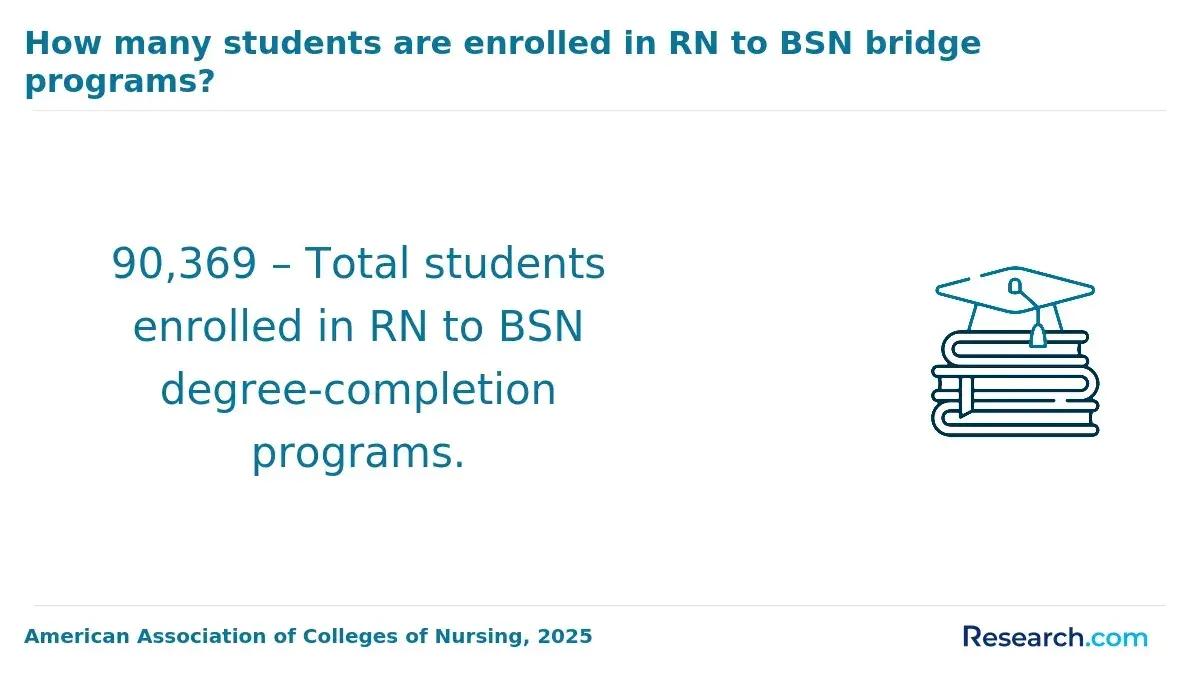
The American Association of Colleges of Nursing reported that 82.4% of employers strongly prefer nurses with a BSN. The same source noted that 41.1% of hospitals and healthcare facilities require RN applicants to have a BSN.
Arizona does not require every RN to hold a BSN for licensure, so nurses should avoid assuming that a bachelor’s degree is mandatory for all RN jobs. However, employer preferences can still affect hiring, promotion, specialty placement, and long-term career mobility. In competitive healthcare markets, a BSN can help an experienced ADN-prepared RN meet screening criteria for roles that list a bachelor’s degree as preferred or required.
BSN-prepared nurses may have stronger earning potential
Salary outcomes vary by employer, city, shift, specialty, years of experience, and union or facility pay structures. Still, BSN completion can support access to roles with higher pay ranges. Payscale (2024) reported that RNs with a BSN earn an average of $91,000, compared with $75,000 for RNs with an ADN and $71,000 for those with an RN diploma.
For Arizona specifically, the average salary for BSN nurses is $84,847. Location also matters. In Phoenix, a BSN nurse earns an average of $89,369.
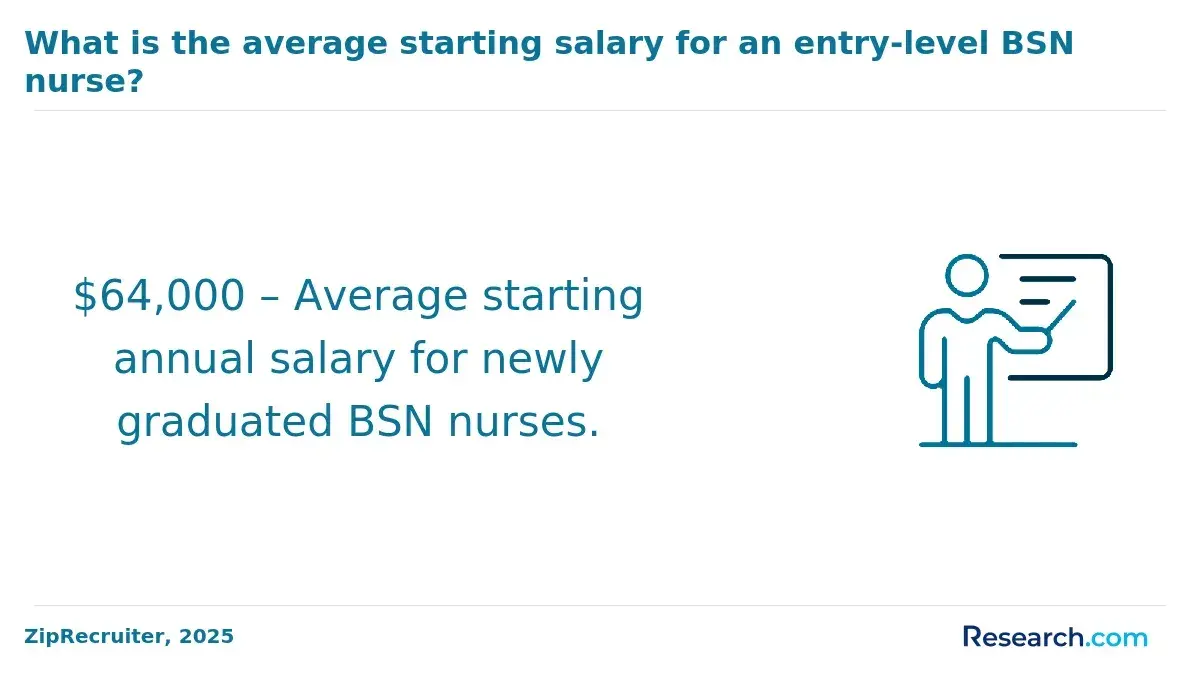
The Arizona Office of Employment and Population Statistics reported that RNs with a BSN earned an average of $45.79 per hour in 2024, while ADN-prepared RNs earned $37.62 (BSNEdu, 2024).
A BSN adds education beyond bedside skills
ADN programs prepare nurses for licensure and clinical practice. RN to BSN programs build on that base by emphasizing the systems, leadership, research, and population-level knowledge nurses need as healthcare becomes more complex.
The AACN has pointed to evidence that BSN-prepared nurses contribute distinct capabilities in patient care. It also noted that more than two-thirds of RNs are educated at the baccalaureate or graduate level. In practical terms, BSN coursework can help nurses strengthen clinical reasoning, communication, care coordination, professional integration, and leadership capacity.
The AACN has also associated BSN preparation with lower mortality rates, better patient outcomes, fewer procedural violations, fewer medication errors, stronger assessment skills, and improved critical thinking. These findings do not mean that an individual degree guarantees a specific outcome, but they do explain why many healthcare organizations value bachelor’s-level nursing education.
A BSN can expand the settings where you are competitive
Hospitals remain major employers of RNs, but care increasingly extends into outpatient, home-based, community, and coordinated care environments. Nurses in these settings may need to educate patients, manage transitions, interpret quality metrics, use health technology, and coordinate with interdisciplinary teams.
BSN-prepared nurses may be better positioned for roles in home health, community clinics, public health, health maintenance organizations, physician practices, nursing facilities, behavioral health settings, case management, quality assurance, care coordination, and unit leadership.
The value of a BSN is strongest when it connects to a clear career move: entering a specialty unit, applying for charge nurse or nurse manager roles, qualifying for graduate study, or meeting an employer’s education requirement.
A BSN can support greater autonomy and leadership
Nurses with broader preparation may have more opportunities to participate in care planning, patient education, quality initiatives, technology implementation, discharge coordination, and preventive care. This does not replace state scope-of-practice rules or facility policies, but it can make nurses more competitive for roles requiring independent judgment and systems thinking.
Graduate nursing education also typically requires a bachelor’s degree. If your long-term plan includes an MSN, doctorate, or DNP programs, completing a BSN is usually the academic bridge that makes those options possible. Some specialty certifications may also require or strongly prefer bachelor’s-level preparation.

What can I expect from online nursing programs in Arizona?
Online RN to BSN programs in Arizona are degree-completion programs, not entry-level nursing programs. They are built for licensed RNs who have already completed foundational nursing training, passed the NCLEX-RN, and entered practice. Instead of repeating basic nursing courses, these programs focus on bachelor’s-level competencies.
Common subject areas include nursing leadership, community and public health, evidence-based practice, healthcare informatics, quality and safety, genetics and genomics, ethics, policy, research, care coordination, and capstone or practicum-based learning.
Typical RN to BSN curriculum
| Course area | What it helps you learn | Why it matters in practice |
| Leadership and management | Team coordination, delegation, communication, and change management | Useful for charge nurse, supervisor, and unit leadership roles |
| Evidence-based practice and research | How to interpret research and apply evidence to care decisions | Supports safer, more consistent, and quality-focused patient care |
| Community and public health | Population health, prevention, health education, and community assessment | Prepares nurses for public health, outreach, and non-hospital roles |
| Nursing informatics | Use of healthcare data, electronic records, and clinical technology | Important for documentation, quality improvement, and technology-enabled care |
| Capstone or practicum | Application of BSN-level learning to a real healthcare problem or setting | Helps connect online coursework to professional nursing practice |
How long does an online RN to BSN program take?
Completion time depends on transfer credits, enrollment intensity, program format, and whether you take breaks between terms. Many Arizona online RN to BSN programs can be completed faster than a traditional four-year BSN because students enter with prior nursing coursework and RN licensure.
- Full-time study: usually 1-2 years
- Part-time study: usually 2-4 years
- Accelerated study: about 1 year in some programs
Accelerated options can be attractive, but they are not automatically better. A one-year plan may require a heavier course load, fewer breaks, and strong time management. Nurses working full-time or rotating shifts should ask whether the program offers multiple start dates, asynchronous coursework, flexible deadlines, and advisor support.
Why choose online instead of campus-based study?
The main advantage of online RN to BSN study is flexibility. Working RNs often need a program that can fit around 12-hour shifts, weekend rotations, family responsibilities, and unpredictable clinical schedules.
Online learning is most useful when the program is intentionally designed for practicing nurses rather than simply moving campus lectures to a virtual platform. Before enrolling, ask whether the school offers reliable technical support, accessible faculty, clear weekly expectations, and practicum options near your location.
- Flexible access: Online coursework can often be completed outside standard classroom hours.
- Work-school balance: Nurses can continue gaining experience while completing their BSN.
- Lower indirect costs: Online students may reduce commuting, relocation, parking, and housing expenses.
- Applied learning: Assignments often allow students to connect coursework to their current clinical environment.
- Faculty interaction: Strong programs provide discussion boards, office hours, feedback, and advising rather than leaving students to learn alone.
If you are comparing online nursing degree formats more broadly, Research.com’s guide to an online bachelor’s in nursing degree program can help you understand the wider online nursing education landscape.
How much do online RN to BSN programs in Arizona cost?
Program cost depends on the school, tuition model, number of transfer credits accepted, residency status, fees, course load, and whether you attend a public or private institution. Some schools charge per credit, while others use flat-rate or subscription-style tuition models.
The average cost of an online RN-to-BSN program ranges from $20,000 to $80,000. On-campus pathways can cost as much as $100,000 per year after living and commuting expenses are included.
Online programs may cost less because students usually do not pay for campus housing and may have fewer transportation expenses. However, “online” does not automatically mean inexpensive. Always calculate total cost, including tuition, required fees, books, technology charges, background checks, clinical compliance costs, and any travel required for practicum or campus intensives.
To compare lower-cost options, start with Research.com’s guide to online RN to BSN programs affordable. Then verify current tuition directly with each school because costs can change by term and residency status.
Ways to reduce RN to BSN costs
- Maximize transfer credits: Ask for a written transfer evaluation before committing.
- Use employer tuition reimbursement: Many healthcare organizations support RN education, but requirements may include grade minimums or work commitments.
- Apply for institutional scholarships: Nursing departments may offer awards specifically for licensed RNs returning for a BSN.
- Complete the FAFSA: Federal aid eligibility can depend on enrollment status and prior borrowing.
- Compare total program cost, not only tuition: Fees can make two programs with similar tuition very different in price.
- Choose a pace you can sustain: Part-time study may reduce term-by-term pressure, but it can extend the time to graduation.
Common RN to BSN courses
Most RN to BSN completion plans include roughly 10 upper-division nursing courses and approximately 30 credits, although the exact structure depends on transfer credits and school requirements. Courses may include:
- Trends in Professional Nursing
- Transitions in Professional Nursing
- Nursing Management
- Nursing Leadership
- Nursing Ethics
- Innovations in Healthcare
- Nursing Informatics
- Nursing Research/Evidence-Based Practice
- Collaborative Nursing
- Community Health Nursing
- Capstone Course
What are the requirements for an online RN to BSN program in Arizona?
Admissions requirements vary by school, but most online RN to BSN programs in Arizona expect applicants to already hold RN licensure and prior nursing education. Because these are completion programs, they are not designed for students who have not yet become registered nurses.
| Requirement | What it usually means | What to verify before applying |
| Active RN license in good standing | You must be licensed as a registered nurse and free from disqualifying restrictions | Whether the school accepts out-of-state RN licenses or requires Arizona licensure |
| Associate degree in nursing | You typically need an ADN from an accredited nursing program | Whether diploma-prepared RNs or non-ADN applicants have a separate pathway |
| Minimum GPA | Many programs require at least a 2.0 GPA in prior nursing coursework | Whether prerequisite or science-course GPA requirements are higher |
| Background check | Clinical or practicum sites may require screening before placement | Whether additional drug screening, immunizations, or health documentation are required |
| Work or equivalency requirement | Some programs require a minimum of 30 hours per week of work or an equivalency exam | Whether your current employment status satisfies the program’s policy |
Active RN licensure in good standing
You must already be a registered nurse to enter most RN to BSN programs. If you are not licensed yet, review the Arizona Board of Nursing’s requirements for initial licensure, renewal, verification, payments, and license status. The state’s online nursing portal allows applicants and licensees to manage many of these tasks digitally.
If your RN license was issued outside Arizona, contact each school before applying. Some online programs accept licenses from other states, while others may have state authorization, practicum, or residency limitations.
Associate degree in nursing from an accredited program
Most RN to BSN programs require an ADN from an accredited nursing program. Accreditation matters because it can affect credit transfer, employer recognition, graduate school eligibility, and financial aid access.
Minimum GPA of 2.0 in your associate degree program
Many programs use a 2.0 minimum GPA as a baseline requirement. Selective programs may evaluate prerequisite grades, prior science coursework, professional experience, or additional academic indicators.
Criminal background check
Background checks are common because students may complete projects, practicums, or clinical activities connected to healthcare organizations. Requirements can vary by program and site.
Minimum of 30 hours per week work or completion of equivalency exam
Some schools ask applicants to document current nursing employment or complete an equivalency exam. This requirement helps confirm that students can connect BSN coursework to active nursing practice.
Before applying, request a current admissions checklist from each school. Ask about deadlines, transfer evaluations, essays, references, immunization documentation, clinical compliance requirements, and whether the program is authorized to enroll students in your state.
What to look for in an online RN to BSN program?
The best online RN to BSN program is not simply the fastest or cheapest one. It is the program that is accredited, affordable for your situation, realistic with your work schedule, and aligned with your next career move.
RN to BSN program selection checklist
- Accreditation: Look for recognized nursing accreditation, such as the Commission on Collegiate Nursing Education (CCNE) or the Accreditation Commission for Education in Nursing (ACEN).
- Transfer credit policy: Ask how many ADN, general education, and licensure-based credits you can apply toward the BSN.
- Total cost: Compare tuition, fees, books, technology charges, clinical compliance expenses, and time to completion.
- Course format: Determine whether classes are asynchronous, synchronous, self-paced, accelerated, or cohort-based.
- Practicum expectations: Confirm whether clinical projects can be completed where you work or near your home.
- Faculty access: Strong online programs make it easy to reach instructors, advisors, and technical support.
- Curriculum relevance: Courses should build leadership, research, quality improvement, informatics, and community health skills. Research.com’s guide to the best majors for nursing degree students can help you understand related nursing study areas.
- Graduate school alignment: If you plan to pursue an MSN, DNP, or nurse practitioner track, check whether the BSN meets those prerequisites.
Common mistakes to avoid
| Mistake | Why it can hurt you | Better approach |
| Choosing only by tuition | A low per-credit rate may not reflect fees, transfer limits, or extra terms | Compare total degree cost after transfer credits are applied |
| Ignoring accreditation | It may affect employer recognition, aid eligibility, and graduate admission | Confirm institutional and nursing program accreditation before enrolling |
| Assuming online means no clinical work | Many programs include community health, leadership, or practicum projects | Ask where and how practice-based assignments are completed |
| Overloading your schedule | Accelerated coursework can be difficult with full-time shifts | Choose a pace that fits your work, sleep, commute, and family obligations |
| Relying only on rankings | A highly ranked program may not be the best fit for your credits or goals | Use rankings as a starting point, then compare fit, cost, support, and outcomes |
The Best Online RN to BSN Nursing Programs in Arizona for 2027
Research.com reviewed online RN to BSN options in Arizona using information from program pages, expert sources, and review sites. Key factors included accreditation, course structure, transfer-credit policies, program length, and curriculum design. Always confirm current tuition, admissions requirements, and state authorization directly with the school before applying.
Arizona online RN to BSN program comparison
| School | Format and length | Credits and transfer notes | Accreditation noted |
| Arizona State University Tempe | Online RN to BSN; 14 months; 10 classes; 7.5 weeks per class | Minimum of 39 credits required | CCNE and Arizona State Board of Nursing |
| University of Phoenix Tempe | Online and campus options; 14 months with maximum transfer credits | 120 credits required; up to 90 transfer credits; 87 total credits from ADN and valid unrestricted or unencumbered RN license | CCNE |
| Northern Arizona University Flagstaff | Traditional online pathway and personalized track | Minimum of 30 credits of nursing courses; up to 90 transfer credits | CCNE |
| Pima Medical Institute Tucson | Fully web-based RN to BSN; designed for completion in 16 months | 120 credits required; up to 70 transfer credits | CCNE |
| Grand Canyon University Phoenix | Online RN to BSN; as little as 14 months | 120 credits required; up to 90 transfer credits | CCNE |
1. Arizona State University Tempe
Arizona State University offers an online RN to BSN program accredited by both CCNE and the Arizona State Board of Nursing. The program is 14 months long and includes 10 classes, with each class lasting 7.5 weeks. Students must complete a minimum of 39 credits.
The curriculum covers innovation in nursing, health promotion across the lifespan, public and global nursing, community and public health nursing in the United States, nursing management, research and evidence translation, writing for healthcare management, and professional nursing theory. Students complete the program through a culminating capstone.
ASU notes that its faculty includes nationally recognized educators. Around 80% of nursing students at ASU receive some form of financial aid.
Arizona State University Tempe: key highlights
- The program can be completed fully online in 14 months.
- Courses are taught by experienced faculty, including nationally recognized instructors.
- Around 80% of ASU nursing students receive some type of financial aid.
2. University of Phoenix Tempe
The University of Phoenix offers a CCNE-accredited RN to BSN program available online and on campus. Students need 120 credits to complete the bachelor’s degree. With maximum transfer credits, the program can be completed in 14 months.
Students may receive 87 total credits from an ADN and a valid unrestricted or unencumbered RN license. RNs without an ADN transfer receive 40 total credits and may complete the degree in 2.5 years.
Coursework includes health information & technology, theoretical development & conceptual frameworks, nursing leadership perspectives, ethical & legal considerations, public health, healthcare policy & financial management, and promoting healthcare communities. Students also complete a practicum in a clinical setting. Each course lasts five weeks.
University of Phoenix Tempe: key highlights
- Students can transfer up to 90 credits from previous nursing education.
- The program can be completed in as little as 14 months.
- The degree requires 120 credits.
- Eligible transfer credits may cover up to 75% of the bachelor’s degree.
- The program includes 33 required BSN program courses of study credits, including 11 core nursing courses.
- Students receive 40 lower-division nursing credits for holding an active, unencumbered RN license.
- The university offers an unlimited number of scholarships.
3. Northern Arizona University Flagstaff
Northern Arizona University offers two RN to BSN options in Arizona: a traditional online pathway and a personalized track. The online pathway is designed for students who want to study remotely and manage coursework around their schedules. The personalized track provides a more individualized on-campus learning option. Both programs are accredited by the CCNE.
Students complete at least 30 credits of nursing coursework. Course topics include health assessment, principles of palliative care, gerontology, nursing family roles, nursing informatics & health care policy, public health nursing, nursing leadership, research & evidence-based practice, and a nursing leadership capstone.
Northern Arizona University Flagstaff: key highlights
- The minimum number of units for completion is 12.
- Students can transfer up to 90 credits from previous nursing education.
- Students connected to certain organizations may qualify for tuition discounts, industry mentor guidance, and admission support.
4. Pima Medical Institute Tucson
Pima Medical Institute offers a CCNE-accredited online RN to BSN program designed for completion in 16 months. The program uses a fully web-based format, which can help working nurses complete coursework from a convenient location.
The curriculum includes computer applications, technical writing, nursing informatics, health assessment, world religions, Spanish, critical thinking, transcultural nursing practice, statistical concepts, quality improvement, community-oriented nursing, culture & human diversity, and nursing leadership & management.
Pima Medical Institute Tucson: key highlights
- The program requires 120 credits.
- Students may transfer up to 70 credits from previous nursing education.
- The program is structured for completion in as little as 16 months.
- The college offers financial aid options to help students manage BSN costs.
5. Grand Canyon University Phoenix
Grand Canyon University offers a CCNE-accredited online RN to BSN program for registered nurses with an ADN. The program is offered in a Christian environment and can be completed in as little as 14 months.
Coursework includes nursing research, professional dynamics, statistics, family-centered health promotion, ethical and spiritual decision making, nursing leadership & management, pathophysiology, and trends & issues in today’s healthcare industry. Students may complete the practicum at their workplace or another nearby healthcare facility. Most classes are five weeks long.
Grand Canyon University Phoenix: key highlights
- Students need 120 total credits to earn the BSN.
- Students can transfer up to 90 credits from previous nursing education.
- The program can be completed in as little as 14 months.
- Students interested in earning both a bachelor’s and master’s degree in nursing can consider the fast-track RN to MSN option.
What professional development and networking opportunities are available for RN to BSN students in Arizona?
An RN to BSN program can do more than add academic credits. It can also help nurses build professional relationships, identify specialty interests, and connect with mentors who understand Arizona’s healthcare landscape.
- Professional nursing organizations: Arizona RN to BSN students can join groups such as the Arizona Nurses Association (AzNA) or the American Nurses Association (ANA). These organizations may provide webinars, conferences, mentorship, advocacy updates, and continuing education resources.
- Clinical partnerships and workplace projects: Programs may work with healthcare organizations such as Banner Health, Mayo Clinic, and Dignity Health. Depending on the school, students may complete projects or practicums that connect academic learning to real healthcare settings.
- Conferences and seminars: State and national nursing events can expose students to leadership trends, patient safety topics, healthcare policy, and specialty practice areas.
- Peer networking in online programs: Discussion boards, group projects, and virtual cohorts can help working nurses exchange strategies and build relationships beyond their own employer.
- Certification preparation: Some RN to BSN students use bachelor’s-level study as a foundation for specialty certification in areas such as critical care, oncology, geriatrics, informatics, or leadership.
How does a BSN prepare you for advanced nursing opportunities?
A BSN is often the academic bridge between RN practice and advanced nursing roles. It can prepare nurses for graduate school, specialty certification, leadership positions, and broader roles in education, care coordination, quality improvement, or public health.
Nurses who want to become nurse practitioners usually need to complete graduate-level education after earning a BSN or entering an approved bridge pathway. If that is your goal, compare the nurse practitioner programs in Arizona and review each program’s admissions requirements before choosing an RN to BSN option.
BSN coursework in leadership, policy, research, and evidence-based practice can also support roles such as nurse manager, clinical educator, quality improvement coordinator, case manager, or specialty RN. For nurses interested in an MSN or DNP, the BSN can satisfy a core prerequisite and demonstrate readiness for higher-level study.
What challenges do RN to BSN students typically face?
The most common challenge is balancing coursework with nursing shifts, family responsibilities, and personal obligations. Online RN to BSN programs are flexible, but they still require weekly reading, writing, discussion participation, projects, and sometimes practicum coordination.
- Time management: Shift work can make it difficult to maintain a consistent study schedule.
- Academic writing: RN to BSN programs often require research papers, evidence-based projects, and APA-style writing.
- Technology demands: Students must be comfortable with learning platforms, digital submissions, video meetings, and online library tools.
- Practicum planning: Some students need to coordinate site approvals, preceptors, or workplace-based projects.
- Burnout risk: Working full-time while taking accelerated courses can increase stress if the schedule is unrealistic.
Students can reduce these challenges by choosing a manageable course load, using academic advising early, requesting transfer evaluations, and clarifying practicum expectations before enrolling. If you are still working toward initial RN status, Research.com’s guide on how to become an RN in Arizona explains the earlier career steps.
How Do Online RN to BSN Programs Align With State Licensing Standards?
RN to BSN programs generally do not replace RN licensure requirements because students are expected to enter with an active RN license. Instead, these programs build on existing licensure by deepening knowledge in professional practice, ethics, community health, leadership, and regulatory awareness.
Prospective students should confirm that an online program is authorized to enroll Arizona students and that any practicum or project requirements can be completed in Arizona or in the student’s state of residence. Nurses should also maintain an active license and meet renewal requirements while enrolled. For state-specific guidance, review Research.com’s overview of nursing license requirements in Arizona.
How do online RN to BSN programs integrate clinical training?
RN to BSN programs usually do not repeat the same type of bedside clinical rotations required in pre-licensure nursing education. Instead, they often use practice-based assignments, community health projects, leadership practicums, quality improvement work, virtual simulations, case studies, and capstone projects.
Some programs allow students to complete projects at their current workplace, while others require approval for a community or healthcare site. Before enrolling, ask whether you must find your own preceptor, whether your employer can serve as a project site, and how the school handles site agreements. Nurses planning to continue into advanced practice may also compare future graduate options, including cheapest nurse practitioner programs.
What financial aid options can help fund an RN to BSN program?
RN to BSN students may be able to use multiple funding sources, including federal financial aid, institutional scholarships, employer tuition reimbursement, nursing association scholarships, grants, veterans benefits, and payment plans. The right mix depends on your enrollment status, employer benefits, prior borrowing, and school policies.
Before borrowing, ask the financial aid office for a full cost estimate and confirm whether aid applies to every term in the program. Also check whether your employer requires you to remain employed for a certain period after receiving tuition reimbursement.
Some students also explore adjacent healthcare pathways while planning their long-term education. For example, Research.com provides resources on medical assistant programs in Alabama and medical assistant programs in Arizona. These are not substitutes for an RN to BSN program, but they may be relevant for readers comparing healthcare entry points for family members or career changers.
Is an Accelerated RN to BSN Program Right for Me?
An accelerated RN to BSN program can be a good fit if you have strong transfer credit, reliable study time, comfort with online learning, and a clear reason to finish quickly. It may be less suitable if you are working overtime, changing jobs, managing major family responsibilities, or returning to school after a long academic break.
| Choose an accelerated RN to BSN if... | Consider a slower pace if... |
| You can commit consistent weekly study hours | Your work schedule changes frequently or includes heavy overtime |
| You already meet most general education requirements | You still need several non-nursing prerequisites |
| You are comfortable with academic writing and online platforms | You want more time to rebuild study habits |
| You need the BSN soon for promotion, specialty placement, or graduate admission | Your priority is minimizing stress or spreading costs over time |
If you are comparing accelerated nursing pathways more broadly, Research.com’s guide to ABSN programs California explains another type of accelerated BSN route, although ABSN programs typically serve students who already hold a non-nursing bachelor’s degree and want to enter nursing.
What Accreditation and Outcome Metrics Indicate a Top RN to BSN Program?
Accreditation should be the first quality screen. For RN to BSN programs, nursing accreditation from CCNE or ACEN can signal that a program has undergone recognized review. Institutional accreditation also matters for financial aid, transfer credit, and graduate school recognition.
After accreditation, evaluate outcomes and support. Ask schools for graduation rates, student retention, employment support, student satisfaction information, faculty credentials, advising access, practicum placement support, and graduate school acceptance patterns if available. Because RN to BSN students already hold RN licensure, NCLEX-RN pass rates may be less directly relevant for the completion track than they are for pre-licensure programs, but they can still provide context about a school’s nursing education quality.
Students comparing Arizona nursing education options can also review Research.com’s list of accredited nursing schools in Arizona.
What are the potential job opportunities after completing an RN to BSN program?
A BSN does not guarantee a specific job title or salary, but it can make nurses eligible for a wider range of roles. The strongest opportunities depend on your experience, specialty background, employer requirements, certifications, and willingness to move into leadership or non-bedside work.
| Career area | Examples of roles | Why a BSN may help |
| Advanced clinical nursing | ICU, ER, oncology, cardiology, pediatrics, specialty unit RN | Some employers prefer or require a BSN for specialty departments |
| Leadership and supervision | Nurse manager, nurse supervisor, clinical nurse leader, nursing director | BSN coursework includes leadership, systems thinking, and quality improvement |
| Public health and community nursing | Public health nurse, community outreach nurse, health educator | BSN programs emphasize population health and prevention |
| Case management and quality | Case manager, quality improvement coordinator, care coordinator | BSN training supports interdisciplinary planning and outcome-focused care |
| Education and staff development | Clinical educator, staff development nurse, academic support roles | A BSN can support teaching and training roles, though some positions require graduate education |
| Advanced practice preparation | Future NP, CNS, CRNA, or nurse midwife pathway | The BSN often serves as the foundation for graduate-level nursing education |
If you are not already an RN but want to enter nursing, compare online BSN programs for non nurses. Those programs are structured differently from RN to BSN completion programs.
Can I pursue an affordable online RN to BSN program in Arizona?
Yes, but affordability depends on more than the advertised tuition rate. Arizona RNs should compare total program cost, transfer credits, employer reimbursement, financial aid, program length, and whether the schedule allows them to keep working.
Cost-saving strategies for Arizona RNs
- Use in-state public options when available: Arizona residents may pay less at public institutions than at out-of-state or private schools.
- Request a transfer audit: The more credits accepted, the fewer courses you may need to pay for.
- Ask your employer about tuition benefits: Hospitals and healthcare systems may reimburse part of your tuition if you meet their rules.
- Apply for scholarships early: Nursing scholarships can have separate deadlines from admission applications.
- Use veterans benefits if eligible: Benefits such as the GI Bill may help qualified students fund their BSN completion.
How to balance cost and quality
Do not choose the cheapest program if it lacks recognized accreditation, weak student support, unclear practicum policies, or poor transfer-credit transparency. A slightly higher-cost program may be the better value if it lets you finish faster, transfer more credits, and receive stronger advising.
Questions to ask before enrolling
- What is the total cost after my transfer credits are applied?
- Are there separate fees for technology, graduation, background checks, or clinical compliance?
- Can I complete practicum or capstone work at my current workplace?
- How many hours per week should I expect to study?
- What happens if I need to stop out for a term because of work or family obligations?
- Does the program meet graduate school prerequisites if I later pursue an MSN or DNP?
For nurses comparing future psychiatric-mental health graduate options, Research.com also provides a guide to the cheapest online pmhnp programs.
Can a BSN Degree Broaden Your Career Path Beyond Direct Patient Care?
Yes. A BSN can support movement into nursing-adjacent roles where clinical knowledge is valuable but the work is less focused on direct bedside care. These areas may include healthcare informatics, quality assurance, utilization review, case management, patient education, policy support, healthcare consulting, and administrative leadership.
Some nurses also build complementary skills in billing, coding, documentation, or revenue cycle operations. If that direction interests you, Research.com’s guide on how to become a medical biller and coder in Arizona explains one related healthcare operations pathway.
What Are the Career Prospects for Nurse Midwives in Arizona?
Nurse midwifery is an advanced practice path focused on women’s health, prenatal care, labor and birth support, postpartum care, and related reproductive health services. A BSN can be an important step toward this career because nurse midwives need specialized graduate-level education and certification beyond RN licensure.
BSN-prepared nurses interested in maternal and women’s health can use their bachelor’s degree to prepare for graduate study, clinical specialization, and leadership within obstetric or community health settings. For a detailed pathway, review Research.com’s guide on how to become a nurse midwife in Arizona.
How Do State Regulations Impact LPN-to-BSN Transitions in Arizona?
LPNs follow a different pathway than RNs entering an RN to BSN program. An LPN usually must complete a bridge or associate-level nursing pathway, meet clinical requirements, and qualify for RN licensure before entering a standard RN to BSN completion program.
Arizona regulations can affect credential evaluation, clinical education, examination requirements, and approved program options. LPNs should confirm that any bridge program is aligned with state licensure expectations before enrolling. If you are at the beginning of this route, Research.com’s guide on how to become an LPN in Arizona explains the initial steps.
Earn Your BSN Through an Online Nursing Program in Arizona
An online RN to BSN program can be a strong next move for Arizona RNs who want to build bachelor’s-level skills while staying employed. The best program for you depends on transfer credits, accreditation, total cost, schedule flexibility, practicum requirements, and whether the curriculum supports your long-term plan.
If your next goal is advanced practice, you may eventually compare the fastest np program options after completing the appropriate prerequisites. Nurses considering graduate-level study can also explore masters in nursing online programs.
CNAs and LPNs should note that an RN to BSN program is not usually their first step. For example, a CNA in Arizona would need an appropriate nursing pathway before moving from aide-level work toward RN licensure and eventually BSN completion. The Arizona CNA registry is a state database maintained by the Arizona State Board of Nursing for checking nursing aide status and licensure information.
Can LPNs Transition to RN and Advance Their Careers in Arizona?
Yes, LPNs can advance toward RN practice, but they typically need an LPN-to-RN, LPN-to-ADN, or approved bridge pathway before pursuing a traditional RN to BSN completion program. These pathways focus on the additional clinical competencies, academic requirements, and licensure steps needed to become a registered nurse.
For more detailed guidance on practical and vocational nursing pathways, review Research.com’s article on how to become an LVN nurse in Arizona.
How Can a BSN Propel You Toward Advanced Nursing Practice?
A BSN can position nurses for graduate nursing education, advanced certifications, leadership roles, and specialized clinical pathways. It strengthens the academic foundation needed for diagnostic reasoning, evidence-based practice, management, policy awareness, and advanced patient care responsibilities.
If your long-term goal is advanced practice, start planning early. Review admission requirements for graduate programs, maintain a strong GPA, seek relevant specialty experience, and document leadership or quality improvement work. Research.com’s guide on how to become a nurse practitioner in Arizona explains the next stage for nurses pursuing NP roles.
Current Trends Affecting Arizona RN to BSN Students
- Employer expectations continue to rise: Many hospitals and healthcare organizations prefer BSN-prepared nurses, especially for specialty, leadership, and quality-focused roles.
- Online education is now mainstream for working nurses: RN to BSN programs increasingly use asynchronous coursework, virtual collaboration, and workplace-based projects to support employed students.
- Technology skills matter more: Informatics, electronic health records, telehealth, quality dashboards, and data-informed care are now part of everyday nursing practice.
- Care is moving beyond hospital walls: Community health, home care, outpatient services, and care coordination create opportunities for nurses with broader population-health preparation.
- Graduate pathways are competitive: Nurses who plan to pursue NP, DNP, or other advanced roles should choose BSN programs that support strong writing, research, and leadership preparation.
Key Insights
- An online RN to BSN is best for licensed RNs, not nursing beginners: Arizona nurses with an ADN can use these programs to complete a bachelor’s degree faster by applying prior nursing credits and active RN licensure.
- Accreditation should be non-negotiable: Prioritize programs with recognized nursing accreditation, such as CCNE or ACEN, and confirm institutional accreditation before enrolling.
- BSN completion can improve career mobility: It may support specialty placement, leadership roles, public health work, case management, quality improvement, and future MSN or DNP study.
- Salary benefits are possible but not guaranteed: Payscale (2024) reported average earnings of $91,000 for RNs with a BSN, compared with $75,000 for ADN-prepared RNs, but actual pay depends on location, experience, employer, and role.
- Total cost matters more than tuition alone: Compare transfer credits, fees, financial aid, employer reimbursement, practicum costs, and the number of terms required to finish.
- Accelerated programs require discipline: A 14-month or 16-month pathway can be efficient, but it may not fit every nurse’s work schedule or personal responsibilities.
- The best program is the one that matches your next move: Choose based on whether you want promotion, specialty practice, graduate school, non-bedside work, or simply stronger long-term flexibility in nursing.
Related Articles for Nearby States
- 2027 Best Online Nursing Programs in New Mexico – Accredited RN to BSN Programs
- 2027 Best Online Nursing Programs in Nevada – Accredited RN to BSN Programs
- 2027 Best Online Nursing Programs in California: Accredited RN to BSN Programs
- 2027 Best Online Nursing Programs in Utah: Accredited RN to BSN Programs
- 2027 Best Online Nursing Programs in Colorado – Accredited RN to BSN Programs
- 2027 Best Online Nursing Programs in Texas – Accredited RN to BSN Programs
- 2027 Best Online Nursing Programs in Oklahoma – Accredited RN to BSN Programs
- 2027 Best Online Nursing Programs in Kansas – Accredited RN to BSN Programs
- 2027 Best Online Nursing Programs in Wyoming – Accredited RN to BSN Programs
- 2027 Best Online Nursing Programs in Idaho – Accredited RN to BSN Programs
References:
- Carson-Newman. (2025). By the Numbers: Nursing Statistics 2025. https://onlinenursing.cn.edu/news/nursing-by-the-numbers
- HRSA. (2025). 2024 National Sample Survey of Registered Nurses. https://bhw.hrsa.gov/data-research/access-data-tools/national-sample-survey-registered-nurses
- Nightingale College. (2024). Nursing Shortage: 2026 US Statistics. https://nightingale.edu/blog/nursing-shortage-by-state.html
- NCSBN. (2025). 2024 National Nursing Workforce Study. https://www.ncsbn.org/workforce
- U.S. Bureau of Labor Statistics. (2025). Occupational Outlook Handbook: Registered Nurses. https://www.bls.gov/ooh/healthcare/registered-nurses.htm
Other Things You Should Know About Online Nursing Programs in Arizona
Yes, many Arizona RN to BSN programs require a fingerprint-based background check before clinical coursework or program admission. Students may also need a current RN license, immunization records, CPR certification, and a drug screen, with final clearance often required by the Arizona State Board of Nursing or clinical partners.
In 2027, the cost for online RN to BSN programs in Arizona varies based on the institution. Tuition ranges from $9,000 to $15,000 for the entire program. Additional fees, books, and materials may add to the cost, so it is essential to research each program’s detailed expenses.
In 2027, institutions like Arizona State University, University of Phoenix, and Northern Arizona University offer accredited online RN to BSN programs. These programs provide flexibility for working nurses and include courses aligned with the latest healthcare standards.
Yes, many Arizona online RN to BSN programs offer part-time study options, enabling working nurses to balance their professional commitments. Part-time students typically complete their degrees in 2 to 3 years, depending on the program's flexibility and course load.
Yes, reputable online RN to BSN programs in Arizona are accredited by recognized accrediting bodies such as the Commission on Collegiate Nursing Education (CCNE) or the Accreditation Commission for Education in Nursing (ACEN). Accreditation ensures the program meets high academic and professional standards.
Common requirements include having an active RN license, an associate degree in nursing from an accredited program, a minimum GPA (usually 2.0 or higher), and a criminal background check. Some programs may also require work experience or completion of an equivalency exam.
Courses typically include nursing leadership, nursing ethics, healthcare technology, public health, nursing informatics, evidence-based practice, community health nursing, and a capstone project. These courses aim to develop advanced nursing skills and knowledge.
Key factors to consider include accreditation, curriculum, faculty qualifications, technology and platform used, program flexibility, cost, and support services. It's also important to consider the school's reputation and the availability of financial aid or scholarships.


