2027 Best Nurse Practitioner Programs in Arizona – Accredited Schools Online & Campus

Co-Founder and Chief Data Scientist
Choosing a nurse practitioner program in Arizona is a major career decision for registered nurses who want more clinical authority, broader patient-care responsibilities, and stronger long-term career mobility. Arizona’s healthcare system continues to face staffing pressure, and a recent report identifies the state as one of the top states with a critical healthcare staffing and nursing shortage, with a 23% increase in demand for specialized nurses anticipated by 2025.
This guide is designed for Arizona RNs, BSN graduates, career changers exploring nursing pathways, and working nurses comparing online and campus-based nurse practitioner options. You will learn what NP programs include, how long the path takes, what programs cost, how licensure works, which specializations are available, and how to choose a program that fits your schedule, budget, and career goals.
Quick Answer: Are Nurse Practitioner Programs in Arizona Worth Considering?
Yes, nurse practitioner programs in Arizona can be a strong option for licensed RNs who want to move into advanced practice, primary care, psychiatric-mental health, acute care, pediatrics, or other specialized roles. Graduates may qualify for national certification exams and Arizona advanced practice licensure if they complete an accredited program and meet state requirements. The median annual salary for nurse practitioners in Arizona typically ranges from $100,000 to $120,000, although earnings depend on specialty, employer, experience, and location.
What are the main benefits of nurse practitioner programs in Arizona?
- Broader career options: Graduates can pursue roles in primary care, family practice, pediatrics, psychiatric-mental health, adult-gerontology, specialty clinics, nurse education, administration, and clinical leadership.
- Competitive earning potential: Nurse practitioners in Arizona commonly report median annual salaries between $100,000 and $120,000, with variation by workplace, specialty, and region.
- Flexible study formats: Online and hybrid NP programs can help working nurses continue their education while managing employment, family obligations, and clinical requirements.
What can I expect from a nurse practitioner program in Arizona?
A nurse practitioner program in Arizona prepares registered nurses for advanced clinical decision-making, patient assessment, diagnosis, treatment planning, prescribing responsibilities, and specialty-specific care. Most programs combine graduate nursing coursework with supervised clinical practice and are designed to prepare students for national certification in their chosen NP population focus.
- Advanced clinical training: Students complete supervised practicum hours in healthcare settings such as clinics, hospitals, specialty practices, community health centers, or behavioral health facilities.
- Specialty-focused curriculum: Coursework is aligned with the NP track, such as family nurse practitioner, psychiatric-mental health nurse practitioner, adult-gerontology, pediatric, or acute care.
- Interprofessional practice: Students learn to coordinate care with physicians, nurses, pharmacists, social workers, behavioral health providers, and other healthcare professionals.
- Certification preparation: Graduates of eligible accredited programs can sit for national board certification exams in their specialty area.
- Multiple enrollment formats: Arizona students may find full-time, part-time, online, hybrid, and campus-based program options depending on the school.
| Program component | What it means for students | Why it matters |
| Core graduate nursing courses | Advanced health assessment, pharmacology, pathophysiology, evidence-based practice, and role development | Builds the foundation for diagnosis, treatment planning, and safe prescribing |
| Specialty courses | Population-focused content such as family care, adult-gerontology, psychiatric-mental health, pediatrics, or acute care | Determines which national certification exam and career path you may pursue |
| Clinical practicum | Hands-on supervised experience with patients and preceptors | Required for skill development, certification readiness, and licensure preparation |
| Capstone or final project | Applied project, evidence-based practice initiative, or final clinical synthesis | Shows readiness to apply graduate-level nursing knowledge in practice |
Where can I work with a nurse practitioner license in Arizona?
A nurse practitioner license in Arizona can support employment across many care settings. The right workplace depends on your specialty, certification, clinical experience, and preferred patient population.
- Hospitals: Because Arizona is one of the strong states for nursing careers, NPs may find roles in emergency departments, intensive care units, specialty units, medical-surgical departments, and hospital-based clinics.
- Primary care clinics: Family and adult-gerontology primary care NPs often diagnose common conditions, manage chronic illnesses, provide preventive care, and support wellness across the lifespan.
- Specialty clinics: NPs may work in pediatrics, cardiology, oncology, women’s health, mental health, gerontology, and other specialty areas.
- Community health centers: These settings often serve uninsured, low-income, migrant, rural, or medically underserved populations.
- Urgent care centers: NPs can treat non-life-threatening illnesses and injuries that need prompt evaluation, such as infections, minor injuries, or acute symptoms.
How much can I make with a nurse practitioner license in Arizona?
Based on data from the U.S. Bureau of Labor Statistics (BLS) and other cited sources, the median annual salary for nurse practitioners in Arizona typically ranges from $100,000 to $120,000. Actual pay can differ by county, employer type, specialty, years of experience, shift structure, and demand for services in a particular area.
NPs with training in high-need specialties or experience in hospitals, specialty clinics, metropolitan regions, or hard-to-staff settings may earn salaries closer to the higher end of the stated range. Rural and less populated areas may offer different compensation structures, sometimes balancing salary with loan repayment, schedule flexibility, or broader practice autonomy.
- Top Nurse Practitioner Programs in Arizona for 2027
- How long does the Arizona NP pathway take?
- Online vs. campus nurse practitioner programs in Arizona
- Average cost of Arizona nurse practitioner programs
- Financial aid for Arizona NP students
- Admission requirements for nurse practitioner programs in Arizona
- Common courses in Arizona NP programs
- Nurse practitioner specializations available in Arizona
- How to choose the right Arizona NP program
- Common challenges for nurse practitioner students in Arizona
- How to get licensed as a nurse practitioner in Arizona
- Career paths after an Arizona nurse practitioner program
- Professional development options for Arizona nurse practitioners
- How technology is changing NP education in Arizona
- How to move from RN to nurse practitioner in Arizona
- Accreditation and certification readiness for Arizona NP programs
- How allied health experience can support NP program success
- Using an LPN pathway as an early step toward NP practice
- Arizona state licensing requirements for nurse practitioners
- Continuing education expectations for Arizona nurse practitioners
- Administrative and financial skills for Arizona NPs
- Additional certifications that may support NP career growth
- Why collaboration with pharmacists matters for nurse practitioners
- Job market for Arizona nurse practitioner graduates
- Online RN options for non-nurses in Arizona
- How to succeed as a nurse practitioner in Arizona
- Best ways to compare Arizona NP program options
- Balancing work and graduate study in an Arizona NP program
Best Nurse Practitioner Programs in Arizona for 2027
How do we rank schools?
Graduate nursing education is a major financial and professional investment, so our ranking methodology is built to help students compare programs using transparent, relevant, and practical information.
Our process draws from established data sources, including the IPEDS database, Peterson‘s database and its Distance Learning Licensed Data Set, the College Scorecard database, and the National Center for Education Statistics.
1. Northern Arizona University MSN FNP
Established in 1899 in Flagstaff, Northern Arizona University offers online nurse practitioner programs in Arizona for aspiring APRNs, with occasional immersive experiences at the North Valley Campus and required in-person practicums. Its MSN options include family nurse practitioner and psychiatric mental health nurse practitioner pathways.
- Program length: 28 months part-time, 21 months full-time
- Tracks/concentrations: Family nurse practitioner
- Cost: $10,650 per year (in-state students), $25,396 per year (out-of-state students)
- Required credits to graduate: 56 credits
- Accreditation: Accreditation Commission for Education in Nursing (ACEN)
2. Arizona State University MSN FNP
Arizona State University offers graduate nurse practitioner preparation that combines advanced coursework with clinical learning designed for diverse patient populations. The program is structured for RNs who want to move into family-focused advanced practice.
- Program length: 18 months full-time, 28 months part-time
- Tracks/concentrations: Family nurse practitioner
- Cost: $24,452 per year (in-state students), $45,042 per year (out-of-state students)
- Required credits to graduate: 46.5 credits
- Accreditation: CCNE (Commission on Collegiate Nursing Education)
3. Grand Canyon University MSN
GCU offers an NP curriculum that includes advanced health assessment, pharmacology, pathophysiology, and evidence-based practice. Students can align their studies with career interests in family health, adult-gerontology, pediatric health, or psychiatric-mental health.
- Program length: 18-24 months full-time, 36-48 months part-time.
- Tracks/concentrations: Family nurse practitioner, adult-gerontology acute care nurse practitioner (AG-ACNP)
- Cost: N/A
- Required credits to graduate: 48 credits
- Accreditation: Commission on Collegiate Nursing Education (CCNE).
4. University of Phoenix MSN FNP
The University of Phoenix provides an MSN nurse practitioner pathway built for students who need graduate-level nursing preparation with a structured, flexible format. The program emphasizes applied advanced practice skills, clinical learning, and preparation for modern healthcare settings.
- Program length: 28 months part-time (30 months with a required in-person residency).
- Tracks/concentrations: Family nurse practitioner
- Cost: $49,900
- Required credits to graduate: 48 credits
- Accreditation: Commission on Collegiate Nursing Education (CCNE)
5. University of Arizona Post-Master of Science (MS) Certificate
The University of Arizona offers Arizona nurse practitioner options at the doctoral level and through post-master’s certificate pathways, including adult-gerontology acute care NP, family NP, and pediatric NP. Graduates are prepared for advanced patient-care responsibilities in hospitals, clinics, community settings, and specialty practices.
- Program length: 20 months for full-time students
- Tracks/concentrations: Adult-gerontology acute care nurse practitioner (AGACNP), family nurse practitioner (FNP), pediatric nurse practitioner
- Cost: $26,400 per year
- Required credits to graduate: 54 credits
- Accreditation: Accreditation Commission for Education in Nursing (ACEN)
6. Chamberlain University MSN
Chamberlain University offers an online MSN nurse practitioner program designed for working nurses who need flexibility. The program emphasizes accessible coursework, faculty support, and graduate preparation across several NP population tracks.
- Program length: 21 to 30 months
- Tracks/concentrations: Adult-gerontology acute care nurse practitioner (AGACNP), family nurse practitioner (FNP), pediatric nurse practitioner
- Cost: N/A
- Required credits to graduate: 48 to 56 credits
- Accreditation: Commission on Collegiate Nursing Education (CCNE).
7. Midwestern University DNP
Midwestern University provides a campus-based DNP option through its College of Health Sciences. Students who prefer face-to-face learning may value the program’s clinical emphasis, healthcare facilities, and interdisciplinary training model.
- Program length: 18 months
- Tracks/concentrations: Primary care nurse practitioner (PCNP), family nurse practitioner (FNP)
- Cost: $36,222 per year
- Required credits to graduate: 87 credits
- Accreditation: Accreditation Commission for Education in Nursing (ACEN).
8. Western Governors University MSN Psychiatric Mental Health Nurse Practitioner
Western Governors University offers a psychiatric mental health nurse practitioner program in an online format. WGU’s competency-based structure allows students to progress through material as they demonstrate mastery, which may appeal to motivated learners with strong time-management skills.
- Program length: 2 to 4 years
- Tracks/concentrations: Psychiatric mental health nurse practitioner
- Cost: $51,440 to $70,040
- Required credits to graduate: 66 to 74 credits
- Accreditation: Commission on Collegiate Nursing Education (CCNE)
9. University of Phoenix MSN Psychiatric Mental Health Nurse Practitioner
The University of Phoenix offers an MSN psychiatric mental health nurse practitioner option for nurses who want to focus on behavioral health assessment, treatment planning, and mental health care delivery. The curriculum is structured to develop clinical reasoning, leadership, and advanced practice skills.
- Program length: 28 months
- Tracks/concentrations: Psychiatric mental health nurse practitioner
- Cost: $49,900
- Required credits to graduate: 48 credits
- Accreditation: Commission on Collegiate Nursing Education (CCNE)
10. Brookline College MSN
Brookline College offers nursing programs with an on-campus learning environment, smaller class settings, and faculty support. Its curriculum blends graduate nursing theory with hands-on clinical experiences for students preparing for advanced practice roles.
- Program length: 18 months
- Tracks/concentrations: Family nurse practitioner
- Cost: $24,452 per year
- Required credits to graduate: 46.5 credits
- Accreditation: Commission on Collegiate Nursing Education (CCNE)
How should you use this list of Arizona NP programs?
Do not choose a nurse practitioner program based only on name recognition or tuition. Start by confirming accreditation, then verify that the specialty track matches your career goal, the program meets Arizona licensure expectations, and clinical placement support is realistic for where you live.
| Decision factor | Why it matters | Question to ask before applying |
| Accreditation | Certification and licensure eligibility often depend on completing an accredited program. | Is the program accredited by CCNE or ACEN? |
| Specialty track | Your track determines the certification exam and patient population you can serve. | Does the program offer FNP, PMHNP, AGACNP, PNP, or another track aligned with my goal? |
| Clinical placement support | Clinical availability can affect graduation timing and stress level. | Does the school assign placements, assist with placements, or require me to find my own preceptors? |
| Format | Online, hybrid, and campus formats require different levels of schedule flexibility and travel. | How often must I attend campus, labs, immersions, or residencies? |
| Total cost | Fees, travel, books, background checks, and lost work hours can change affordability. | What is the full estimated cost beyond tuition? |
Key Findings
- Arizona is among the top 5 states facing major healthcare staffing shortages, and demand for specialized nurses is expected to rise by 23% by 2025.
- Nurse practitioners in Arizona typically earn a median salary ranging from $100,000 to $120,000 per year, although compensation varies by specialty, employer, experience, and location.
- Arizona NP programs usually include advanced clinical coursework, supervised practicum experiences, specialty training, and preparation for national certification exams.
- Graduates can work in hospitals, primary care offices, specialty clinics, community health centers, urgent care centers, academic environments, and healthcare leadership roles.
- Employment of nurse practitioners in Arizona is projected to grow 101% until 2030.
How long does it take to become a nurse practitioner in Arizona?
The full pathway to becoming a nurse practitioner in Arizona usually takes at least 6 to 8 years beyond high school. That timeline includes earning a BSN, becoming licensed as an RN, gaining nursing experience, completing a graduate NP program, passing a national certification exam, and applying for Arizona advanced practice recognition.
Program length depends on your starting point. A BSN-prepared RN can move directly into many MSN or DNP nurse practitioner programs, while an ADN-prepared nurse may need a bridge pathway. Nurses comparing earlier entry points may also review online LPN programs, but an LPN credential alone is not enough for NP admission.
Some accelerated and bridge pathways are designed to reduce the time needed for advancement. For example, direct entry nurse practitioner programs may serve students entering nursing from another bachelor’s background, while accelerated NP programs may help qualified nurses move through graduate training more efficiently.
| Step | Typical requirement | Decision point |
| Earn nursing education | BSN is commonly required for NP admission | ADN nurses should compare RN-to-BSN and bridge options |
| Become an RN | Pass the NCLEX-RN and obtain RN licensure | Confirm licensing rules in Arizona or your clinical state |
| Gain experience | Many programs prefer or require 1 to 2 years | Choose clinical work that supports your future specialty |
| Complete NP graduate study | MSN, post-master’s certificate, or DNP pathway | Verify specialty track, accreditation, and clinical placement support |
| Pass certification and apply for licensure | National certification plus state application | Check Arizona Board of Nursing requirements before enrolling |
How does an online nurse practitioner program in Arizona compare to an on-campus program?
Online and on-campus NP programs can both lead to advanced practice preparation, but they differ in schedule structure, interaction style, clinical placement logistics, and travel expectations. The better choice depends on how you learn, where you live, and how much support you need finding clinical sites.
| Factor | Online NP program | On-campus NP program |
| Flexibility | Often better for working nurses because didactic coursework may be completed remotely | More fixed class, lab, and campus attendance requirements |
| Learning environment | Uses learning platforms, recorded or live lectures, discussion boards, and virtual meetings | Provides face-to-face classroom learning and in-person faculty access |
| Peer and faculty interaction | Communication may occur through video calls, email, forums, and scheduled online sessions | Interaction happens in real time through classes, labs, study groups, and campus activities |
| Clinical placements | Students may need to identify local preceptors depending on the school | Schools may have established healthcare partnerships, though this varies by program |
| Best fit | Disciplined learners who need schedule flexibility and can manage remote coursework | Students who prefer structured routines, in-person support, and campus-based learning |
Flexibility
Online nurse practitioner programs usually provide more control over when and where students complete academic coursework. This can be valuable for RNs who work rotating shifts, live far from campus, or need to continue earning income during school. Campus programs tend to require set attendance for classes, labs, seminars, and clinical activities.
Learning environment
Online programs rely on digital course platforms, video lectures, virtual simulations, discussion boards, and remote faculty communication. Campus programs provide a traditional classroom environment where students can interact with professors and classmates in person.
Interaction
In online programs, interaction may be asynchronous, synchronous, or a mix of both. Students should understand the difference before enrolling because synchronous sessions require attendance at specific times, while asynchronous work offers more scheduling independence. Campus programs naturally provide more immediate face-to-face communication during lectures, labs, and group activities.
Clinical experiences
Both online and campus-based NP programs require clinical practicum experiences. The biggest difference is often placement coordination. Some online programs expect students to secure preceptors in their own communities, while some campus programs maintain relationships with local healthcare organizations. Always ask how clinical placements are handled before committing.
What is the average cost of nurse practitioner programs in Arizona?
Students can generally expect to pay between $400 to $800 per credit hour for an online NP program. For a typical program requiring about 45 credit hours, that translates to an estimated cost of around $22,500 for a nurse practitioner degree.
However, tuition is only one part of the cost. Students should also budget for program fees, clinical compliance requirements, books, software, background checks, immunizations, travel to clinical sites, campus intensives, certification exam fees, and possible reductions in work hours.
| Cost category | What to check | Why it can affect affordability |
| Tuition | Per-credit rate and total required credits | Small per-credit differences can become significant over a full program |
| Fees | Technology, lab, clinical, graduation, and program fees | Fees may not be included in advertised tuition |
| Clinical expenses | Travel, parking, health records, background checks, and drug screening | Clinical requirements can add recurring out-of-pocket costs |
| Residencies or immersions | Required campus visits or in-person intensives | Travel and lodging can increase the real cost of online programs |
| Lost income | Reduced shifts or part-time work during clinical semesters | Opportunity cost can be as important as tuition |
What are the financial aid options for students enrolling in nurse practitioner programs in Arizona?
Arizona NP students may be able to reduce out-of-pocket costs through federal aid, scholarships, employer support, and state-specific assistance. Availability depends on the school, enrollment status, financial need, employer policies, and program eligibility.
- Federal student aid: Eligible students can submit the Free Application for Federal Student Aid (FAFSA) to be considered for federal loans, grants, and work-study opportunities. Federal Direct Loans, Pell Grant eligibility, and Federal Work-Study depend on individual circumstances and program rules.
- Scholarships: Nursing associations, foundations, employers, community organizations, and schools may offer awards for graduate nursing students. Some scholarships consider academic achievement, financial need, background, service commitment, or specialty area.
- State-specific aid: Arizona residents may qualify for certain state-based grants, scholarships, or healthcare workforce programs. Requirements and funding availability can change, so students should verify current details directly with the state or school.
- Employer tuition assistance: Hospitals, clinics, and healthcare systems may help employees pay for graduate nursing education through tuition reimbursement or assistance programs. These benefits may require continued employment after graduation.
What are the prerequisites for enrolling in nurse practitioner programs in Arizona?
Admission requirements vary by school and NP track, but most Arizona nurse practitioner programs expect applicants to show strong nursing preparation, active RN licensure, academic readiness, and clinical maturity.
- Bachelor of Science in Nursing (BSN) degree: Most NP programs require a BSN from an accredited institution. Some may consider ADN or diploma-prepared nurses through bridge coursework or additional requirements.
- Registered nurse licensure: Applicants usually need an active, unrestricted RN license in Arizona or in the state where they will complete clinical rotations.
- Clinical nursing experience: Many programs prefer or require prior RN experience, commonly at least one to two years in a clinical setting.
- Prerequisite coursework: Programs may expect prior study in anatomy and physiology, microbiology, statistics, pharmacology, and health assessment.
- GPA requirement: A minimum GPA of 3.0 or higher on a 4.0 scale is commonly expected, though exact requirements differ by institution.
- Letters of recommendation: Schools may ask for recommendations from nursing supervisors, faculty members, clinical leaders, or other healthcare professionals.
- Personal statement or essay: Applicants may need to explain their professional goals, interest in advanced practice, relevant experience, and reasons for selecting a specialty.
- Interview: Some programs use interviews to assess readiness, communication skills, clinical judgment, and fit for graduate-level practice.
What courses are typically in nurse practitioner programs in Arizona?
NP curricula usually combine advanced nursing science, clinical decision-making, specialty courses, and supervised practice. Course names vary, but the following subjects are common across Arizona programs.
- Advanced health assessment: Develops advanced physical assessment, patient history, diagnostic reasoning, and clinical documentation skills.
- Pathophysiology: Examines disease mechanisms, altered body systems, and physiological changes across patient populations.
- Pharmacology: Covers drug classes, mechanisms of action, pharmacokinetics, pharmacodynamics, safe prescribing, and medication management.
- Advanced practice nursing role development: Explores scope of practice, ethics, legal responsibilities, professional standards, and interprofessional care.
- Evidence-based practice: Teaches students how to apply research, clinical expertise, and patient preferences to improve care decisions.
- Primary care management: Focuses on assessing, diagnosing, treating, and monitoring common acute and chronic conditions in primary care settings.
What types of specializations are available in nurse practitioner programs in Arizona?
Your nurse practitioner specialty determines the type of patients you serve, the certification exam you take, and the care settings where you are most likely to work. Arizona programs may offer several population-focused tracks.
| Specialization | Primary patient focus | Common work settings |
| Family nurse practitioner (FNP) | Patients across the lifespan, including children, adults, and older adults | Primary care clinics, community health centers, urgent care, private practices |
| Adult-gerontology nurse practitioner (AGNP) | Adult and older adult patients in primary or acute care | Hospitals, outpatient clinics, long-term care, specialty practices |
| Pediatric nurse practitioner (PNP) | Infants, children, and adolescents | Pediatric clinics, hospitals, specialty pediatric practices |
| Psychiatric-mental health nurse practitioner (PMHNP) | Patients with psychiatric, behavioral, and mental health needs | Behavioral health clinics, hospitals, telehealth, community mental health centers |
| Women’s health nurse practitioner (WHNP) | Women’s reproductive, gynecological, prenatal, and postpartum care | Women’s health clinics, OB-GYN practices, community health organizations |
- Family nurse practitioner: FNP programs prepare nurses to provide primary care, manage common acute and chronic conditions, and care for individuals and families across age groups.
- Adult-gerontology nurse practitioner: AGNP tracks focus on adult and older adult care, either in primary care or acute care settings, including chronic disease management and complex care needs.
- Pediatric nurse practitioner: PNP programs train nurses to provide well-child care, immunizations, acute illness management, chronic disease support, and pediatric specialty care.
- Psychiatric-mental health nurse practitioner: PMHNP programs prepare nurses to assess, diagnose, and treat mental health conditions, provide psychotherapy, prescribe psychotropic medications, and collaborate with behavioral health teams.
- Women’s health nurse practitioner: WHNP programs emphasize gynecological care, reproductive health, contraceptive counseling, routine screenings, prenatal care, and postpartum support.
How to choose the best nurse practitioner programs in Arizona?
The best NP program is not automatically the fastest, cheapest, or most recognizable. It is the program that is accredited, licensure-aligned, financially realistic, clinically supported, and matched to your intended specialty.
- Verify accreditation first: Look for programs accredited by the Commission on Collegiate Nursing Education (CCNE) or the Accreditation Commission for Education in Nursing (ACEN). Accreditation affects certification eligibility, employer confidence, and licensure preparation.
- Choose the right specialization: Confirm whether you want family practice, adult-gerontology, pediatrics, psychiatric-mental health, acute care, or another track before comparing schools.
- Review the curriculum: Make sure the program includes advanced assessment, pathophysiology, pharmacology, primary care or specialty management, and clinical practicum experiences.
- Ask about clinical placements: Clinical placement quality can shape your training. Compare the placement process across NP programs and different nursing degree levels so you understand expectations.
- Evaluate faculty and support services: Review faculty credentials, academic advising, tutoring, career counseling, certification exam support, and clinical coordination resources.
- Match the format to your life: Decide whether online, hybrid, or campus learning fits your schedule, commute, work hours, family obligations, and preferred learning style.
Common mistakes to avoid when comparing Arizona NP programs
| Mistake | Why it creates problems | Better approach |
| Choosing only by tuition | The cheapest program may have limited placement support, hidden fees, or a format that does not fit your schedule. | Compare total cost, accreditation, outcomes, clinical support, and flexibility. |
| Ignoring accreditation | Non-accredited programs can create certification and licensure barriers. | Confirm CCNE or ACEN accreditation before applying. |
| Assuming online means fully remote | Many online NP programs still require clinicals, residencies, labs, or campus immersions. | Ask about every in-person requirement before enrolling. |
| Overlooking clinical placement policies | Students may struggle if they must find preceptors without enough guidance. | Ask whether the school assigns, assists with, or approves student-found placements. |
| Picking a track before researching jobs | A specialty mismatch can limit career satisfaction or require additional certification later. | Compare local job postings, patient populations, and long-term goals. |
What are the common challenges faced by nurse practitioner students in Arizona?
NP school is demanding because students must balance graduate coursework, clinical hours, professional responsibilities, and personal obligations. Planning for these challenges early can reduce stress and improve completion odds.
- Balancing coursework and clinical hours: NP students must manage readings, assignments, exams, documentation, and practicum schedules. The workload can be difficult for nurses who continue working full time.
- Financial pressure: Tuition, fees, books, clinical requirements, and reduced work hours can strain budgets. Students should build a funding plan before starting.
- Stress and mental health demands: Heavy clinical and academic expectations may increase anxiety or burnout, especially during advanced assessment and practicum semesters.
- Advanced medical content: Moving from RN practice into advanced diagnosis, prescribing, and treatment planning requires a significant academic shift.
- Clinical placement logistics: Students may face competition for preceptors, long commutes, or placement delays if the program does not provide strong support.
- Diverse patient needs: Arizona’s communities include rural, urban, tribal, migrant, older adult, and underserved populations, requiring cultural humility and adaptable care strategies.
How to get your nurse practitioner license in Arizona?
The Arizona NP pathway generally requires RN licensure, graduate education, national certification, and state approval for advanced practice. Always confirm current requirements with the Arizona Board of Nursing before applying to a program or submitting licensure documents.
- Earn a Bachelor of Science in Nursing: A BSN typically requires around four years of full-time study and is the standard academic foundation for graduate NP admission.
- Become licensed as an RN: After completing nursing education, candidates must pass the NCLEX-RN exam and obtain registered nurse licensure in Arizona.
- Build clinical experience: Many NP programs expect applicants to have 1 to 2 years of RN experience before admission.
- Complete an accredited MSN or other graduate NP pathway: Arizona RNs must complete graduate nurse practitioner preparation from an accredited academic institution. Because admission can be competitive, applicants may benefit from reviewing practical strategies for getting accepted into graduate school.
- Pass national certification: After graduation, candidates must pass the certification exam for their population focus, such as family nurse practitioner or adult-gerontology nurse practitioner.
What career paths are available for graduates of nurse practitioner programs in Arizona?
For many RNs asking whether nursing school is worth it, the answer depends on career goals, cost, licensure alignment, and salary expectations. Arizona NP graduates can pursue a range of advanced clinical and leadership roles.
- Primary care provider: Primary care NPs evaluate patients, diagnose conditions, manage chronic disease, provide preventive care, and support long-term wellness in clinics, outpatient facilities, private practices, and community health centers.
- Specialty nurse practitioner: Specialty NPs focus on areas such as psychiatry, pediatrics, oncology, cardiology, women’s health, gerontology, or acute care.
- Hospital-based NP: Hospital NPs may work in emergency departments, ICUs, specialty units, and inpatient services, managing complex or acute patient needs.
- Community and public health NP: These practitioners work with underserved populations, address care gaps, support prevention, and improve health access in community settings.
- Academic or research NP: NPs may teach, mentor students, conduct research, contribute to evidence-based practice, or work in academic health systems.
- Leadership and administration: Experienced NPs may become clinical directors, nurse managers, program coordinators, quality improvement specialists, or healthcare executives.
Physician offices currently report the largest recorded employment count for nurse practitioners, with 122,830 individuals employed in that sector. The following chart provides additional context on NP employment across industries.
What are the professional development opportunities available for nurse practitioners in Arizona?
After licensure, Arizona nurse practitioners can continue building expertise through continuing education, specialty certifications, conferences, workshops, preceptor training, leadership development, and participation in professional associations. These activities help NPs stay current with clinical standards, technology, prescribing practices, and patient-care models. Nurses who want additional academic flexibility can also explore online nursing programs in Arizona that support long-term career development.
How is technology reshaping nurse practitioner education in Arizona?
Technology is changing how NP students practice clinical reasoning before they enter patient-care settings. Arizona programs may use digital health tools, simulation, telehealth training, virtual case studies, and data-informed decision-making exercises. These methods can help students prepare for care delivery models that increasingly involve remote monitoring, electronic records, telemedicine, and interdisciplinary communication. Students interested in high-acuity care can also compare online acute care nurse practitioner programs that incorporate digital learning tools.
How can I transition from an RN to a nurse practitioner in Arizona?
The RN-to-NP transition begins with a solid registered nursing foundation. Nurses at the beginning of the pathway should understand how to become a registered nurse in Arizona, including education, licensure, and early clinical experience. Once licensed, RNs should gain experience in a setting related to their intended NP specialty, then apply to an accredited graduate program with the right population focus. Advising, mentorship, and early clinical planning can make the transition smoother.
Are nurse practitioner programs in Arizona accredited and ready for certification?
Accreditation is one of the most important quality checks for NP education. Accredited programs are expected to meet standards for curriculum, faculty qualifications, clinical training, and certification preparation. Students should confirm that the program’s accreditation status supports eligibility for their intended national certification exam and Arizona advanced practice licensure. Cost-conscious students interested in psychiatric-mental health may also compare the most affordable online PMHNP programs while still prioritizing accreditation and clinical quality.
Can allied health training improve success in nurse practitioner programs in Arizona?
Allied health experience can help future NP students become comfortable with patient interaction, documentation, care coordination, and healthcare workflows before beginning advanced nursing study. For example, medical assistant training in Arizona can introduce students to clinical environments, patient communication, and team-based care. This background does not replace RN or graduate NP requirements, but it can help build early confidence in healthcare settings.
Could an LPN license serve as a stepping stone to a nurse practitioner career in Arizona?
An LPN license can be an early entry point into nursing and patient care, but it is not a direct route to NP practice. Students who begin as LPNs typically need to progress through RN licensure, often complete a BSN, gain RN experience, and then enter an accredited graduate NP program. For those considering this staged pathway, a guide on how to get a LPN license in Arizona can clarify the first step.
What are the state licensing requirements for nurse practitioners in Arizona?
Arizona nurse practitioners must meet state-specific licensing and advanced practice requirements. In general, this includes completing an accredited NP program, passing a national certification exam, meeting clinical education expectations, submitting an application to the Arizona Board of Nursing, and providing required documentation such as licensure history and background information. Students should review Arizona nursing license requirements before selecting a program.
What are the continuing education requirements for nurse practitioners in Arizona?
Nurse practitioners in Arizona must maintain competence and comply with renewal expectations throughout their careers. Continuing education may include clinical updates, ethics, prescribing, regulatory changes, technology integration, and specialty-specific learning. Because requirements can change, NPs should verify renewal rules through official channels and review how to maintain a nursing license in Arizona as part of their compliance planning.
How can nurse practitioners strengthen their administrative and financial expertise in Arizona?
Clinical skill is essential, but many NPs also benefit from understanding practice operations, reimbursement, coding, billing, documentation, compliance, budgeting, and workflow management. This knowledge is especially useful for NPs who want to manage clinics, lead teams, or work in independent or entrepreneurial practice settings. Training related to medical billing and coding certification in in Arizona can provide useful context for the financial side of healthcare delivery.
Can additional advanced practice certifications enhance career prospects in Arizona?
Additional credentials may help NPs expand their scope of expertise, move into niche clinical roles, or support leadership goals. However, every certification requires time, cost, and maintenance, so nurses should choose credentials that match patient-care goals and employer demand. Those interested in reproductive and maternity care can review nurse midwife qualifications in Arizona to understand how an additional advanced practice pathway may fit long-term plans.
How can interdisciplinary collaboration with pharmacists enhance nurse practitioner practice in Arizona?
Nurse practitioners frequently make medication-related decisions, so collaboration with pharmacists can improve prescribing accuracy, medication reconciliation, drug interaction review, patient education, and chronic disease management. Understanding pharmacy training and responsibilities can strengthen team-based care. NPs who want broader context can explore how to become a licensed pharmacist in Arizona to better understand the pharmacist’s role in interdisciplinary practice.
What is the job market for graduates of a nurse practitioner program in Arizona?
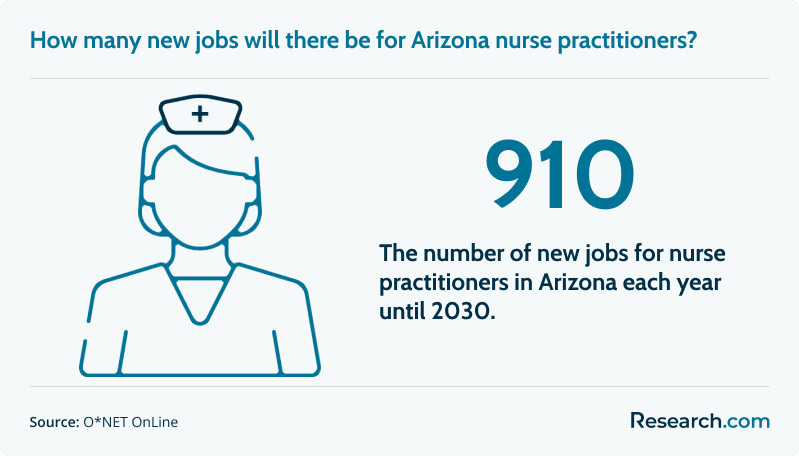
The job outlook for nurse practitioners in Arizona is strong. Employment for these professionals is expected to grow by 101% until 2030, with 910 new job openings projected each year.
This state-level trend fits the broader national pattern. Across the United States, employment for nurse practitioners is expected to grow by 45% over the next decade.
NPs are especially important in areas affected by provider shortages, including rural and underserved communities in Arizona. Population growth, aging patients, chronic disease management, and demand for preventive and primary care all contribute to the need for advanced practice nurses.
Arizona has also taken steps to expand the scope of practice for nurse practitioners. This allows qualified APRNs to assess, diagnose, order diagnostic tests, prescribe medications, and begin treatment plans independently in certain practice settings without physician oversight, which can increase professional autonomy and employment opportunities.
What online RN programs are available for non-nurses in Arizona?
People without prior nursing experience can begin with RN preparation before considering the nurse practitioner pathway. Online RN options for non-nurses may combine foundational nursing coursework with required in-person clinical experiences. These programs can be helpful for working adults who need flexibility while preparing for RN licensure.
Arizona learners who do not yet have a healthcare background can explore online RN programs for non-nurses as an entry route into nursing. After becoming licensed RNs, gaining experience, and completing further education, they may later qualify for graduate NP programs.
How to succeed as a nurse practitioner in Arizona?
Success as an Arizona nurse practitioner requires more than completing a degree. You need the right specialty, strong clinical judgment, certification readiness, professional relationships, and ongoing learning habits.
- Select a program that matches your clinical goal: If you want high-acuity practice, compare options such as the best acute care NP programs.
- Take clinical practicums seriously: Clinical rotations are where classroom knowledge becomes patient-care skill. Seek feedback early and often.
- Prepare for certification throughout the program: Do not wait until graduation to review exam content and certification requirements.
- Build a professional network: Join nursing organizations, attend local events, and maintain relationships with preceptors and faculty.
- Commit to lifelong learning: Healthcare practice changes, and NPs must stay current through continuing education and specialty updates.
- Maintain a professional online presence: Updated professional profiles can help with networking, job searches, and credibility.
- Choose the right practice setting: Urban hospitals, rural clinics, community health centers, and specialty practices offer different responsibilities and patient populations.
- Understand Arizona’s regional needs: Align your skills with local demand, including primary care access, behavioral health, chronic illness management, and rural healthcare.
What Are the Best Options for Nurse Practitioner Programs in Arizona?
The best Arizona nurse practitioner program depends on your starting credential, specialty interest, budget, schedule, and clinical placement needs. Accreditation, curriculum quality, certification preparation, faculty support, and practicum access should carry more weight than marketing claims. Students comparing broader nursing education options can also review the best nursing schools in Arizona before narrowing their list to NP-specific programs.
What are the key considerations for balancing work and education in nurse practitioner programs in Arizona?
Many Arizona NP students continue working while enrolled, but graduate nursing study requires careful planning. The most difficult semesters are often those that combine advanced clinical coursework with practicum hours.
Related Articles for Nearby States
- 2027 Best Nurse Practitioner Programs in New Mexico – Accredited Schools Online & Campus
- 2027 Best Nurse Practitioner Programs in Nevada – Accredited Schools Online & Campus
- 2027 Best Nurse Practitioner Programs in California – Accredited Schools Online & Campus
- 2027 Best Nurse Practitioner Programs in Utah – Accredited Schools Online & Campus
- 2027 Best Nurse Practitioner Programs in Colorado – Accredited Schools Online & Campus
- 2027 Best Nurse Practitioner Programs in Texas – Accredited Schools Online & Campus
- 2027 Best Nurse Practitioner Programs in Oklahoma – Accredited Schools Online & Campus
- 2027 Best Nurse Practitioner Programs in Kansas – Accredited Schools Online & Campus
- 2027 Best Nurse Practitioner Programs in Wyoming – Accredited Schools Online & Campus
- 2027 Best Nurse Practitioner Programs in Idaho – Accredited Schools Online & Campus
- Discuss scheduling with your employer early: Clinical hours may not fit neatly around work shifts, so ask about flexibility before practicum terms begin.
- Choose part-time study if needed: A slower pace can reduce burnout for nurses balancing family, employment, and school.
- Clarify clinical hour expectations: Ask when clinicals begin, how many hours are required each term, and whether weekend or evening placements are realistic.
- Create a financial backup plan: Reduced work hours may affect income, especially during intensive clinical rotations.
- Protect study time: Graduate-level pharmacology, pathophysiology, and assessment require consistent review, not last-minute studying.
- Use school support services: Advising, writing centers, faculty office hours, and certification review resources can make a measurable difference.
References
- Arizona State Board of Nursing. (n.d.). Addressing the nursing shortage in Arizona: Arizona Board of Nursing announces Nurses for a Healthy Arizona grant recipients. AZBN.
- O*NET OnLine. (n.d.). Arizona employment trends: 29-1171.00 - Nurse practitioners. O*NET OnLine.
- ThriveAP. (n.d.). How Much Does It Cost to Become a Nurse Practitioner? | ThriveAP. ThriveAP.
- U.S. Bureau of Labor Statistics. (2025). Occupational Employment and Wage Statistics. U.S. Bureau of Labor Statistics.
Key Insights
- Arizona nurse practitioner programs are best suited for licensed RNs who want advanced clinical responsibility, specialty practice options, and stronger long-term career flexibility.
- Accreditation should be your first screening factor. Confirm CCNE or ACEN accreditation before comparing tuition, schedule, or program length.
- Online NP programs can be flexible, but they are not effortless or fully remote. Clinical placements, residencies, and in-person requirements may still apply.
- The NP pathway usually takes 6 to 8 years beyond high school when BSN education, RN licensure, experience, graduate study, certification, and state licensing are included.
- Arizona NPs commonly earn median annual salaries between $100,000 and $120,000, but salary outcomes are not guaranteed and depend on specialty, employer, region, and experience.
- Clinical placement support is a critical decision factor. Ask whether the school finds placements, helps secure them, or expects students to locate their own preceptors.
- The strongest program choice is the one that aligns with your intended specialty, Arizona licensure requirements, certification goals, budget, and realistic work-life schedule.
Other Things You Should Know About Nurse Practitioner Programs in Arizona
Arizona nurse practitioner graduates usually need a national board certification tied to their population focus, such as the AANP or ANCC exam for family or adult-gerontology tracks. Arizona licensing also requires proof of current certification before an advanced practice registered nurse license is issued by the Arizona State Board of Nursing.
After completing a program in 2027, nurse practitioners in Arizona must pass a national certification exam and apply for licensure through the Arizona State Board of Nursing. This includes submitting proof of education, completing a background check, and paying the applicable fees.
In 2027, Arizona’s nurse practitioner programs generally offer flexible scheduling and online coursework to accommodate part-time students. Many programs provide evening and weekend classes, allowing students to maintain employment while advancing their education. This flexibility makes continuing education more accessible to those balancing various responsibilities.