
2027 Fastest Online Pediatric Nurse Practitioner Graduate Certificate Programs

Co-Founder and Chief Data Scientist
Selecting the right pediatric nurse practitioner graduate certificate program can be challenging, especially for working nurses seeking fast and flexible options. Employment for nurse practitioners, including pediatric specialties, is projected to grow by 40% from 2023 to 2033, creating a strong need for qualified graduates. Yet, with so many online programs offering different timelines and features, finding the best path can feel overwhelming.
This article, prepared by experts in career planning, highlights the fastest online pediatric nurse practitioner graduate certificate programs. It is designed to help nurses identify accredited, career-focused programs that meet certification requirements while accommodating their professional and personal schedules.
What are the benefits of earning an online PNP graduate certificate?
- Completing an online PNP graduate certificate prepares graduates for advanced roles such as primary care PNPs, acute care PNPs, neonatal nurse practitioners, telehealth PNPs, or clinical nurse specialists
- Pediatric nurse practitioners earn an average of $135,161 per year, with experienced professionals and neonatal specialists earning up to $170,000–$186,000 annually.
- Online PNP programs provide flexible, self-paced learning, enabling nurses to work while earning advanced credentials and expanding career opportunities.
What can I expect from a fast-track online PNP graduate certificate program?
A fast-track online PNP graduate certificate program offers an accelerated pathway for nurses to specialize in pediatric care. Core courses typically include advanced pathophysiology, pharmacology, pediatric health assessment, and evidence-based practice, often paired with 500–720 supervised clinical practicum hours. Many programs also feature a capstone project to integrate clinical and academic learning.
Tuition ranges from $14,915 to $39,746, depending on the institution and credit requirements. Online learning is delivered through asynchronous modules, interactive virtual classrooms, and recorded lectures, with some programs including short on-campus residencies for hands-on practice, making it flexible for working professionals.
Where can I work after completing an online PNP graduate certificate program?
An online Pediatric Nurse Practitioner (PNP) graduate certificate prepares graduates for advanced roles in pediatric healthcare, preventive care, and specialized clinical practice. PNPs find employment across the following industries:
- Health Care (66%): Hospitals, private practices, community health clinics, and pediatric specialty centers providing primary or acute care services.
- Education (17%): Nursing schools, universities, or training programs as clinical instructors or pediatric nursing educators.
- Government (4%): Public health departments, military healthcare systems, and child welfare agencies.
- Professional Services (3%): Consulting roles in healthcare policy, program development, or pediatric care strategies.
- Nonprofits (2%): Community health organizations, international health missions, and child advocacy programs.
- Others (4%): Healthcare media, medical equipment manufacturing, or companies supporting pediatric healthcare infrastructure.
How much can I make with a pediatric nurse practitioner graduate certificate?
Obtaining an online PNP graduate certificate can lead to competitive salaries within pediatric healthcare, with compensation influenced by experience, specialization, and geographic location. Below is a detailed overview of potential earnings:
- Average Salary: Pediatric nurse practitioners earn an average annual salary of approximately $135,161, which translates to about $64.98 per hour.
- Location: Salaries are notably higher in certain regions, with cities such as San Francisco, CA, and Nome, AK, offering average annual pay around $165,000, exceeding the national average by 20–24%.
- Experience Levels: Entry-level PNPs typically earn around $110,000 per year, while seasoned professionals with over 10 years of experience can earn $170,000–$186,000 annually.
- Industry Variations: Practitioners in acute or neonatal care settings generally command higher salaries than those in primary care, reflecting the advanced clinical expertise required.
- Specializations: Neonatal nurse practitioners are among the top earners in the field, with an average salary of approximately $136,649 per year.
- List of Fastest Online Pediatric Nurse Practitioner Graduate Certificate Programs for 2027 List of Programs
- How long does it take to complete an online PNP graduate certificate program? Completion Time
- How does an online PNP graduate certificate program compare to an on‑campus program? How does an online PNP graduate certificate program compare to an on‑campus program?
- What is the average cost of an online PNP graduate certificate program? Program Cost
- What are the financial aid options for students enrolling in an online PNP graduate certificate program? Financial Aid
- What are the prerequisites for enrolling in an online PNP graduate certificate program? Prerequisites
- What courses are typically included in an online PNP graduate certificate program? What courses are typically included in an online PNP graduate certificate program?
- What types of specializations or tracks are available within an online PNP graduate certificate program? What types of specializations or tracks are available within an online PNP graduate certificate program?
- How to Choose the Best Online PNP Graduate Certificate Program How to Choose the Best Online PNP Graduate Certificate Program
- How Can I Verify Accreditation and Quality in an Online PNP Graduate Certificate Program? How Can I Verify Accreditation and Quality in an Online PNP Graduate Certificate Program?
- What career paths are available for graduates of an online PNP graduate certificate program? What career paths are available for graduates of an online PNP graduate certificate program?
- What is the job market outlook for graduates with an online PNP graduate certificate? Job Market
- Is an Online PNP Graduate Certificate Worth the Investment? Is an Online PNP Graduate Certificate Worth the Investment?
- How Do Direct-Entry NP Programs Compare to Online PNP Graduate Certificates? How Do Direct-Entry NP Programs Compare to Online PNP Graduate Certificates?
Fastest Online Pediatric Nurse Practitioner Graduate Certificate Programs for 2027
Nurses who already hold graduate nursing credentials often choose a pediatric nurse practitioner graduate certificate when they want to move into advanced pediatric primary care or acute care without completing another full degree. The main decision is not just which program is shortest. You also need to know whether the program matches your certification goal, whether clinical placements are realistic in your state, how much the certificate will cost, and whether the format fits your work schedule.
This guide reviews fast online and hybrid pediatric nurse practitioner certificate options, explains how these programs work, compares online and campus formats, and outlines costs, prerequisites, courses, financial aid, career paths, and job outlook. It is designed for MSN- or DNP-prepared nurses who want a practical way to compare PNP certificate programs before applying.
Quick answer: What is the fastest online PNP graduate certificate?
The fastest online pediatric nurse practitioner graduate certificate programs in this list can be completed in as few as 2 semesters, although clinical hours, gap analyses, state authorization, and preceptor availability can extend the actual timeline. The shortest options are usually post-master’s certificates for nurses who already completed advanced pathophysiology, pharmacology, health assessment, and some graduate clinical coursework.
Before choosing the fastest program, confirm three things: the certificate track is primary care or acute care based on your career goal, the school is appropriately accredited, and the curriculum supports the certification exam you plan to pursue.
How these programs were evaluated
To identify fast online PNP certificate options, Research.com reviews institutional and program information alongside education datasets from the IPEDS database, Peterson's database, the College Scorecard database, and The National Center for Education Statistics.
These sources help standardize comparisons across program length, tuition, credit requirements, institutional data, and accreditation information. Readers who want a deeper explanation of how Research.com evaluates schools and programs can review the Research.com methodology.
Fast comparison of featured online PNP certificate programs
| Rank | School and program | Program length | Credits | Cost per credit | Accreditation |
| 1 | University of Arizona — Pediatric Nurse Practitioner Graduate Certificate | 4 semesters, part-time | 27 | $1,053 | WASC Senior College and University Commission (WSCUC) |
| 2 | Walden University — Post-Master’s Certificate in PNP Primary Care | 2 semesters | 43 | $775 | Commission on Collegiate Nursing Education (CCNE) |
| 3 | Drexel University — Pediatric Primary Care Nurse Practitioner Post-Master's Certificate | Four 10-week quarters per year | 34 | $1,169 | Commission on Collegiate Nursing Education (CCNE) |
| 4 | Thomas Jefferson University — Post-Graduate Pediatric Primary Care Nurse Practitioner | 2 semesters | 18 | $1,337 | Commission on Collegiate Nursing Education (CCNE) |
| 5 | Saint Louis University — Primary Care Pediatric Nurse Practitioner, Post-Master's Certificate | 2 semesters | 16–31 | $1,400 | Commission on Collegiate Nursing Education (CCNE) |
| 6 | University of Colorado Anschutz Medical Campus — Post-Graduate Certificate in Acute Care Pediatric Nurse Practitioner | 1.5 years | 19 | $785 resident; $1,273 non-resident | Higher Learning Commission (HLC) |
| 7 | Herzing University — Post Master’s Certificate in Pediatric Nurse Practitioner | 20 months | 33 | $755 | Commission on Collegiate Nursing Education (CCNE) |
| 8 | University of Missouri-Kansas City — Acute Care Pediatric Nurse Practitioner | 18 months to 2 years | 21 | $922.75 | Commission on Collegiate Nursing Education (CCNE) |
| 9 | St. Catherine University — Pediatric Nurse Practitioner Post-Graduate Certificate | 6 semesters | 21 | $1,200 | Accreditation Commission for Education in Nursing (ACEN) |
| 10 | University of Texas at Austin — Acute Care Pediatric Nurse Practitioner Certificate Program | 4 consecutive semesters, part-time study | 24–30 | $1,205 resident; $1,730 non-resident | Commission on Collegiate Nursing Education (CCNE) |
1. University of Arizona — Pediatric Nurse Practitioner Graduate Certificate
The University of Arizona’s College of Nursing offers a part-time online certificate for nurses who already hold a master’s degree and want preparation in pediatric primary care. The program emphasizes pediatric assessment, diagnostic thinking, and the management of acute and chronic conditions in children. Students complete 720 supervised clinical hours, generally through approved local clinical experiences. The curriculum is designed to support preparation for pediatric primary care practice and ANCC certification eligibility.
- Program length: 4 semesters, part-time
- Cost per credit: $1,053
- Total credits: 27
- Accreditation: WASC Senior College and University Commission (WSCUC)
2. Walden University — Post-Master’s Certificate in PNP Primary Care
Walden University offers an online post-master’s certificate for MSN-prepared nurses who want to add pediatric primary care preparation. Coursework addresses child and adolescent development, pediatric pharmacology, and evidence-based care in outpatient settings. Students also complete focused practicum experiences that build supervised pediatric clinical competency.
- Program length: 2 semesters
- Cost per credit: $775
- Total credits: 43
- Accreditation: Commission on Collegiate Nursing Education (CCNE)
3. Drexel University — Pediatric Primary Care Nurse Practitioner Post-Master's Certificate
Drexel University’s online post-master’s certificate serves advanced practice nurses who want specialized preparation in pediatric primary care. The curriculum covers advanced pediatric pharmacology, diagnostic reasoning, and evidence-based clinical decision-making. Students complete clinical practicums with approved preceptors and must attend required campus-based intensives, including a 4-day skills session. Drexel’s quarter calendar may help some students move through coursework more quickly than a traditional semester schedule.
- Program length: Four 10-week quarters per year
- Cost per credit: $1,169
- Total credits: 34
- Accreditation: Commission on Collegiate Nursing Education (CCNE)
4. Thomas Jefferson University — Post-Graduate Pediatric Primary Care Nurse Practitioner
Thomas Jefferson University’s online post-graduate certificate is built for MSN- or DNP-prepared nurses who want to deepen their pediatric primary care expertise. Students study pediatric assessment, pharmacotherapeutics, and diagnostic reasoning. Clinical requirements are determined through a gap analysis, which can affect the number of credits and hours a student must complete. The program also includes preparation aligned with the CPNP-PC certification exam.
- Program length: 2 semesters
- Cost per credit: $1,337
- Total credits: 18
- Accreditation: Commission on Collegiate Nursing Education (CCNE)
5. Saint Louis University — Primary Care Pediatric Nurse Practitioner, Post-Master's Certificate
Saint Louis University’s Trudy Busch Valentine School of Nursing offers a mostly online post-master’s certificate for nurses preparing to care for pediatric patients from birth through young adulthood. The program includes pediatric health promotion, prevention, and management of acute and chronic conditions. Students complete 750 supervised clinical hours and may receive faculty guidance and clinical placement support.
- Program length: 2 semesters
- Cost per credit: $1,400
- Total credits: 16–31
- Accreditation: Commission on Collegiate Nursing Education (CCNE)
6. University of Colorado Anschutz Medical Campus — Post-Graduate Certificate in Acute Care Pediatric Nurse Practitioner
The University of Colorado Anschutz Medical Campus provides a post-graduate certificate for MSN-prepared nurses seeking acute pediatric care preparation. The program combines online coursework with 360 supervised clinical hours and focuses on evaluating and managing serious short-term pediatric conditions. Students also complete on-campus skills training, which is important to consider when planning travel and work schedules.
- Program length: 1.5 years
- Cost per credit: $785 resident; $1,273 non-resident
- Total credits: 19
- Accreditation: Higher Learning Commission (HLC)
7. Herzing University — Post Master’s Certificate in Pediatric Nurse Practitioner
Herzing University offers a fully online post-master’s pediatric nurse practitioner certificate for nurses pursuing pediatric primary care roles. The 33-credit curriculum includes advanced pathophysiology, pharmacology, pediatric decision-making, and 585 supervised clinical hours. The program offers rolling admissions, flexible scheduling, and online support services. Graduates may be eligible for the CPNP-PC certification and can apply some coursework as dual credit toward a DNP.
- Program length: 20 months
- Cost per credit: $755
- Total credits: 33
- Accreditation: Commission on Collegiate Nursing Education (CCNE)
8. University of Missouri-Kansas City — Acute Care Pediatric Nurse Practitioner
The University of Missouri-Kansas City offers a blended post-master’s acute care PNP pathway for nurses who want to work with medically complex pediatric patients. Coursework includes specialty pharmacology, advanced pediatric assessment, and evidence-based practice. Students complete clinical experiences with preceptors in inpatient and outpatient settings and attend required on-campus residencies. Classes may include both asynchronous and synchronous components.
- Program length: 18 months to 2 years
- Cost per credit: $922.75
- Total credits: 21
- Accreditation: Commission on Collegiate Nursing Education (CCNE)
9. St. Catherine University — Pediatric Nurse Practitioner Post-Graduate Certificate
St. Catherine University’s hybrid pediatric nurse practitioner certificate is designed for APRNs who want added preparation in pediatric primary care. Students complete online coursework and clinical practicums while building skills in evidence-based and holistic pediatric care. The timeline may appeal to working nurses who need a slower pace rather than the shortest possible route.
- Program length: 6 semesters
- Cost per credit: $1,200
- Total credits: 21
- Accreditation: Accreditation Commission for Education in Nursing (ACEN)
10. University of Texas at Austin — Acute Care Pediatric Nurse Practitioner Certificate Program
The University of Texas at Austin offers a hybrid acute care PNP certificate for MSN-prepared nurses who want advanced preparation in the care of critically ill pediatric patients. Students complete the program over four part-time semesters and fulfill 540–720 supervised clinical hours. The curriculum includes skills labs and simulations and is aligned with PNCB certification requirements.
- Program length: 4 consecutive semesters, part-time study
- Cost per credit: $1,205 resident; $1,730 non-resident
- Total credits: 24–30
- Accreditation: Commission on Collegiate Nursing Education (CCNE)
How Long Does an Online PNP Graduate Certificate Take?
Most online pediatric nurse practitioner graduate certificate programs take 12 to 24 months. The exact timeline depends on the school calendar, required credits, clinical hour requirements, whether the program conducts a gap analysis, and whether the student studies full time or part time.
Students with prior graduate coursework in advanced pathophysiology, pharmacology, assessment, and clinical practice may finish faster if the program accepts those courses toward certificate requirements. Students who need additional clinical hours, must travel for intensives, or have difficulty securing a preceptor may need longer.
Clinical placements are often the main pacing factor. Even when didactic courses are online and asynchronous, students must complete supervised pediatric clinical hours in approved settings. Nurses comparing advanced nursing pathways outside pediatric practice can also review the fastest online MSN nursing informatics degree options if informatics, data, and healthcare technology are a better fit than direct pediatric care.
| Timeline factor | How it can affect completion speed | What to ask before applying |
| Gap analysis | Prior graduate courses may reduce or expand required credits. | Will my transcript be reviewed before admission or after enrollment? |
| Clinical hours | More required hours can lengthen the program, especially for working nurses. | How many pediatric clinical hours will I personally need? |
| Preceptor availability | Limited pediatric sites can delay practicum start dates. | Does the school find sites, approve student-found sites, or both? |
| Campus intensives | Required visits add travel time and may affect work scheduling. | How many campus visits are required, and when are they scheduled? |
| Course sequencing | Some courses are offered only once per year. | If I miss a course, will graduation be delayed? |
Online vs. On-Campus PNP Graduate Certificate Programs
Online and campus-based pediatric nurse practitioner certificate programs can lead to similar academic and clinical preparation, but the learning experience is different. Online programs are often better for working nurses who need schedule flexibility, while campus programs may be stronger for students who want face-to-face instruction, immediate access to simulation labs, and more structured local networking.
If your long-term goal is nursing education rather than pediatric advanced practice, a different pathway such as the shortest MSN in nursing education online may be more relevant than a PNP certificate.
| Factor | Online PNP graduate certificate | On-campus PNP graduate certificate |
| Course delivery | Uses online modules, recorded content, live virtual sessions, and learning platforms. | Relies on in-person lectures, classroom discussion, and scheduled campus attendance. |
| Clinical training | Clinical hours are usually completed at approved sites near the student when available. | Clinical placements may be connected to university-affiliated hospitals, clinics, and labs. |
| Flexibility | Often better for nurses who work shifts or live far from campus. | Works best for students who can attend classes and labs on a fixed schedule. |
| Cost considerations | May reduce commuting, relocation, parking, and housing costs, though online fees may apply. | May include campus fees, transportation, housing, and parking expenses. |
| Student support | Typically includes virtual advising, digital libraries, online tutoring, and remote career resources. | Provides in-person advising, campus libraries, simulation labs, job fairs, and alumni events. |
| Best fit | Experienced nurses who can manage independent learning and coordinate clinical logistics. | Students who prefer structured schedules, in-person faculty contact, and campus-based services. |
How Much Does an Online PNP Graduate Certificate Cost?
The average cost of an online PNP graduate certificate program is approximately $1,060 per credit hour for in-state students and $1,161 per credit hour for out-of-state students. Using those averages, total tuition is typically around $26,130 for in-state learners and $28,317 for out-of-state students.
Actual tuition varies by institution, residency status, total credits, and whether the school charges separate online, technology, lab, clinical, or program fees. Tuition for online PNP graduate certificate programs ranges from $14,915 to $39,746 for in-state students and $19,378 to $41,520 for out-of-state students. Public universities often charge lower rates to residents, while many private universities use one tuition rate for all online students.
Students comparing price should look beyond the per-credit rate. A lower credit price can still lead to a higher total cost if the program requires more credits. Nurses seeking lower-cost options can compare programs listed among affordable online post-master’s pediatric NP certificates.
| Cost category | Why it matters | Question to ask the school |
| Tuition per credit | This is the largest expense but does not show the full price by itself. | What is the current tuition rate for my residency status? |
| Total required credits | More credits can offset a lower per-credit price. | How many credits will I need after transcript review? |
| Clinical fees | Some schools charge for clinical coordination, compliance tracking, or placement services. | Are there practicum, placement, or compliance fees? |
| Travel expenses | Hybrid programs may require campus intensives or travel to clinical sites. | How many in-person visits are required? |
| Books and supplies | Textbooks, software, exam preparation, and clinical equipment may be separate. | What estimated costs are not included in tuition? |
| Certification and licensure costs | Graduates may need exam, state licensure, and credentialing expenses after completing the program. | Which post-graduation costs should I plan for? |
Financial Aid Options for Online PNP Certificate Students
Graduate certificate students may qualify for several forms of aid, but eligibility depends on the school, enrollment status, program classification, and federal aid rules. Always confirm whether the certificate is aid-eligible before assuming loans or scholarships will apply. Nurses exploring other advanced practice pathways can also compare fast-track online MSN nurse midwifery programs if women’s health and birth care are a stronger career match.
- Federal Direct Unsubsidized Loans: Eligible graduate students can borrow up to $20,500 annually after completing the FAFSA, and interest begins accruing when funds are disbursed.
- Graduate PLUS Loans: These credit-based federal loans may help cover education costs that remain after other aid is applied.
- Institutional scholarships and grants: Nursing schools may offer merit aid, need-based aid, tuition discounts, or graduate nursing scholarships.
- Employer tuition assistance: Hospitals, clinics, and healthcare systems may reimburse tuition or provide education benefits for nurses pursuing advanced credentials.
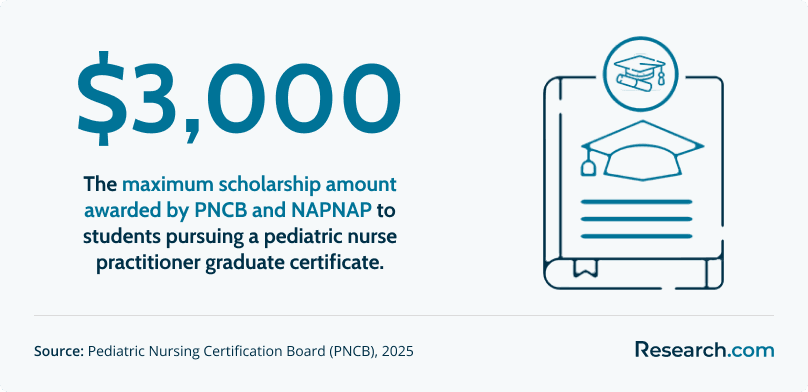
- State and professional nursing scholarships: Nursing organizations and state-based programs may support advanced practice students. For example, PNCB & NAPNAP scholarships provide awards of up to $3,000 for students pursuing a PNP certificate.
- Private loans and school payment plans: Students who do not qualify for enough aid may use private education loans or installment plans, but they should compare interest rates, fees, and repayment terms carefully.
Admission Requirements for Online PNP Graduate Certificate Programs
Online pediatric nurse practitioner graduate certificates are usually designed for registered nurses who already completed graduate nursing education. Admission standards vary by school, but most programs expect applicants to show advanced academic preparation, active licensure, and readiness for pediatric clinical training.
- Graduate nursing degree: Most programs require an MSN from an accredited institution, and some also accept DNP-prepared applicants.
- Active RN license: Applicants generally need a current, unencumbered registered nurse license in the state where they will complete clinical work.
- Graduate GPA: Many schools expect a minimum cumulative GPA of 3.0 on a 4.0 scale from prior graduate study.
- Statistics coursework: A college-level statistics course with a grade of C or higher is commonly required because PNP coursework relies on research interpretation and evidence-based practice.
- Nursing experience: Programs often prefer one to two years of RN experience, especially in pediatric, family health, primary care, emergency, or acute care settings. This is far more advanced than entry-level pediatric support roles, though readers exploring earlier healthcare careers can review pediatric medical assistant requirements.
- Application documents: Typical materials include official transcripts, a resume or CV, recommendation letters, a personal statement, proof of licensure, and sometimes an interview.
Typical Courses in an Online PNP Graduate Certificate
PNP certificate coursework builds advanced pediatric assessment, diagnosis, treatment, prescribing, and family-centered care skills. Exact courses depend on whether the program prepares students for primary care or acute care practice.
- Advanced pathophysiology: Students examine disease processes and physiological changes that affect infants, children, and adolescents.
- Advanced pharmacology: Coursework covers medication selection, safe prescribing, dosage considerations, adverse effects, and pediatric pharmacotherapeutics. Students who want a lower-level introduction to medication roles can compare free and low-cost pharmacy technician certification resources, although PNP prescribing education is graduate-level and clinically advanced.
- Pediatric health assessment: Students practice advanced physical assessment, developmental screening, history-taking, and pediatric diagnostic reasoning.
- Pediatric primary care: This course focuses on wellness visits, health promotion, immunizations, prevention, and management of common childhood illnesses.
- Acute pediatric care: Acute care coursework prepares students to evaluate and manage critically ill or unstable pediatric patients in hospital and emergency settings.
- Evidence-based practice in pediatrics: Students learn how to apply research findings, clinical guidelines, and quality improvement strategies to pediatric care.
- PNP clinical practicum: Supervised practicum hours allow students to apply didactic knowledge in approved pediatric clinical environments.
PNP Certificate Specializations: Primary Care vs. Acute Care and Other Focus Areas
The most important specialization choice is whether you want pediatric primary care or pediatric acute care. These tracks prepare nurses for different patient populations, work settings, and certification pathways. Some programs also allow clinical experiences in more focused pediatric areas.
| Specialization | Primary focus | Common settings | Best for nurses who want to... |
| Primary Care PNP | Prevention, wellness visits, developmental care, and chronic condition management. | Outpatient clinics, private practices, community health centers, and school-based care. | Provide long-term pediatric care in ambulatory settings. |
| Acute Care PNP | Complex, unstable, and critically ill pediatric patients. | Hospitals, pediatric ICUs, emergency departments, and specialty units. | Work in high-acuity settings with rapid clinical decision-making. |
| Neonatal PNP | Care for premature, high-risk, or medically fragile newborns. | NICUs, delivery units, and neonatal specialty clinics. | Focus on newborn care and intensive neonatal support. |
| Pediatric mental health care | Behavioral health screening, diagnosis, treatment planning, and family education. | Integrated pediatric clinics, behavioral health programs, and community settings. | Address child and adolescent mental health needs. |
| Pediatric cardiology care | Care for children with congenital heart disease and other cardiac conditions. | Cardiology clinics, children’s hospitals, and cardiac specialty services. | Work in pediatric cardiac care; nurses interested in surgical cardiac environments can also review CVOR nurse requirements. |
| School or community health PNP | Preventive care, public health, immunizations, and population-based child health. | Schools, health departments, community clinics, and nonprofit programs. | Support child health outside traditional hospital settings. |
| Pediatric emergency care | Rapid assessment, stabilization, triage, and urgent treatment. | Emergency departments, urgent care centers, and transport teams. | Manage urgent or life-threatening pediatric presentations. |
| Pediatric oncology care | Care coordination, symptom management, chemotherapy support, and family education. | Children’s hospitals, oncology clinics, and specialty infusion centers. | Support children and families through cancer treatment. |
How to Choose the Best Online PNP Graduate Certificate Program
The best PNP certificate is the one that matches your certification target, state requirements, clinical access, budget, and timeline. A short program is not useful if it does not support your intended credential or if clinical placement delays prevent you from graduating on time. Nurses whose goal is research, academia, or senior leadership may want to compare doctoral routes such as accelerated BSN-to-PhD online bridge programs instead of a post-master’s PNP certificate.
- Start with the certification track: Decide whether you need pediatric primary care or acute care preparation, then verify that the program aligns with the certification exam you plan to pursue.
- Confirm accreditation: Look for recognized nursing or institutional accreditation and make sure it satisfies employer, certification, and state requirements.
- Ask for a gap analysis: If you already completed graduate nursing courses, ask how many credits and clinical hours you personally must complete.
- Investigate clinical placement support: Clarify whether the school secures preceptors, helps identify sites, or expects students to arrange their own placements.
- Compare total cost, not just tuition: Include fees, travel, books, clinical compliance costs, exam costs, and lost income if you must reduce work hours.
- Review faculty expertise: Prioritize programs with faculty who have pediatric advanced practice experience in your intended specialty.
- Check online format details: Ask whether classes are synchronous, asynchronous, hybrid, or cohort-based and whether any campus visits are required.
- Verify state authorization: Online nursing programs may not accept students from every state, and clinical approvals may vary by location.
Questions to ask before enrolling
| Question | Why it matters |
| Does this program prepare students for PNP primary care or acute care certification? | Choosing the wrong track can limit your eligibility for the role you want. |
| How many clinical hours will I need after transcript review? | Certificate requirements may differ from student to student. |
| Can I complete clinical hours in my state? | State authorization and site approval can affect enrollment and graduation. |
| Who is responsible for finding preceptors? | Clinical placement delays are one of the most common barriers in online NP programs. |
| Are there required campus intensives? | Travel can increase cost and complicate work schedules. |
| What is the total estimated program cost? | Fees, travel, books, and certification expenses may not be included in tuition. |
How to Verify Accreditation and Program Quality
Accreditation is one of the first things to check because it can affect certification eligibility, employer recognition, transferability, and financial aid access. For nursing programs, look for accreditation from recognized bodies such as the Commission on Collegiate Nursing Education (CCNE) or the Accreditation Commission for Education in Nursing (ACEN). Institutional accreditation also matters, especially for federal aid and academic credibility.
Quality is broader than accreditation. Review graduation outcomes, certification exam preparation, faculty pediatric experience, student support, clinical placement processes, and whether the program has clear state authorization information. Students comparing quality and price across nursing pathways can also review affordable online nursing programs.
Career Paths After an Online PNP Graduate Certificate
Graduates of online PNP graduate certificate programs may work in pediatric primary care, hospital-based acute care, neonatal settings, telehealth, specialty clinics, or clinical leadership. Actual scope of practice depends on state law, national certification, employer credentialing, and prior experience.
1. Primary Care Pediatric Nurse Practitioner
Primary care PNPs provide care for children from infancy through adolescence. Their work often includes wellness visits, developmental screening, preventive counseling, immunizations, and chronic disease management. They commonly practice in outpatient clinics, private practices, community health centers, and school-linked health programs.
Median salary: $135,194 per year.
2. Acute Care Pediatric Nurse Practitioner
Acute care PNPs care for children with serious, complex, or unstable conditions. They may work in hospitals, emergency departments, specialty units, and pediatric intensive care units. Their responsibilities can include advanced assessment, diagnostic coordination, treatment planning, post-surgical management, and collaboration with physicians and interdisciplinary teams.
Median salary: $135,161 per year.
3. Neonatal Nurse Practitioner
Neonatal nurse practitioners focus on newborns who need advanced care, especially premature or critically ill infants. They may work in NICUs, delivery rooms, and neonatal specialty clinics. Their work includes newborn assessment, treatment planning, family education, and coordination with neonatologists and neonatal care teams.
Median salary: $136,649 per year.
4. Telehealth Pediatric Nurse Practitioner
Telehealth PNPs provide virtual pediatric care, often for minor illnesses, follow-up visits, family education, medication checks, and access support for rural or underserved communities. This role requires strong assessment skills, comfort with digital health tools, and awareness of telehealth practice rules. Nurses comparing remote-care nursing roles can also review information related to telemetry nurse salary.
Median salary: $130,295 per year.
5. Pediatric Clinical Nurse Specialist
Pediatric clinical nurse specialists often combine advanced clinical knowledge with staff education, quality improvement, evidence-based practice, and systems-level patient care initiatives. They may work in hospitals, academic medical centers, pediatric specialty programs, or nursing leadership roles.
Median salary: $94,545 per year.
Job Market Outlook for PNP Certificate Graduates
The broader nurse practitioner labor market is projected to remain strong. The U.S. Bureau of Labor Statistics projects employment for nurse practitioners, nurse anesthetists, and nurse midwives to grow 40% from 2023 to 2033. That projection applies to the broader advanced practice category, not only pediatric nurse practitioners, but it signals continued demand for advanced practice clinicians.
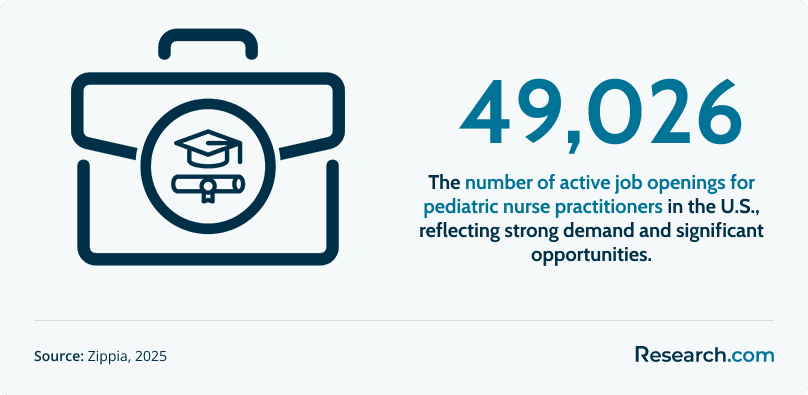
Additional workforce data cited for this field report that between 2018 and 2028, pediatric NP roles are expected to see 118,600 new positions. The same source set reports over 188,546 pediatric NPs currently employed in the U.S. and roughly 49,026 active job openings.
Salary trends also appear favorable in the cited sources, with average pay for pediatric nurse practitioners rising by 11% in the past five years. Demand may be supported by primary care access needs, pediatric specialty care, hospital staffing models, and the expansion of telehealth. However, local hiring conditions vary by state, specialty, employer, certification, and scope-of-practice rules.
Is an Online PNP Graduate Certificate Worth It?
An online PNP graduate certificate can be worth the investment for nurses who already hold a graduate nursing degree and want to add a pediatric advanced practice specialty without completing another full MSN. The return depends on your current credential, the number of credits you must complete, your ability to secure clinical hours, the certification you pursue, and local demand for pediatric NPs.
The certificate is most likely to make sense if you already know you want pediatric practice, your state allows the intended scope of practice, and the program’s clinical structure is realistic. It may be less useful if you are unsure about pediatrics, need a broader NP role, or would benefit more from a doctoral pathway such as short online DNP programs.
| Choose an online PNP certificate if... | Consider another pathway if... |
| You already have an MSN or DNP and want pediatric specialization. | You do not yet have graduate nursing preparation. |
| You know whether primary care or acute care pediatrics fits your goals. | You are still deciding among family, adult-gerontology, psychiatric, or women’s health NP roles. |
| You can complete supervised pediatric clinical hours in your area. | You live where approved pediatric preceptors are difficult to secure. |
| You want a shorter path than earning another full degree. | You need a full NP program to become eligible for first-time NP certification. |
| Your employer or target job values pediatric NP certification. | Your career goal is nursing education, informatics, administration, or research. |
Online PNP Certificates vs. Direct-Entry NP Programs
Online PNP graduate certificates and direct-entry NP programs serve different students. A PNP certificate is typically for nurses who already completed graduate nursing education and want to add pediatric specialization. Direct-entry NP programs are structured for candidates entering the nurse practitioner pathway without the same prior advanced practice preparation.
| Comparison point | Online PNP graduate certificate | Direct-entry NP program |
| Typical applicant | MSN- or DNP-prepared nurse adding a pediatric specialty. | Student entering an NP pathway without prior advanced practice preparation. |
| Program purpose | Specialization or additional certification preparation. | Foundational preparation for becoming an NP. |
| Length | Often shorter because prior graduate coursework may apply. | Usually longer because it includes broader NP preparation. |
| Clinical requirements | May be determined through a gap analysis. | Usually includes full NP clinical preparation requirements. |
| Best fit | Nurses who already know they want pediatric advanced practice. | Students who need a complete route into nurse practitioner practice. |
Common Mistakes to Avoid When Choosing an Online PNP Certificate
- Choosing only by speed: The fastest program is not always the best program if it lacks the right track, clinical support, or certification alignment.
- Ignoring accreditation: Accreditation can affect certification, employment, financial aid, and professional credibility.
- Assuming online means no campus visits: Many online and hybrid programs require intensives, skills labs, or simulation experiences.
- Underestimating clinical placement challenges: Preceptor availability can delay graduation, especially in competitive pediatric markets.
- Looking only at per-credit tuition: Total credits, fees, travel, exam costs, and books can change the real price.
- Failing to check state authorization: Some online nursing programs cannot enroll students or approve clinical placements in every state.
- Confusing primary care and acute care tracks: These pathways prepare students for different settings and certification routes.
- Assuming salary outcomes are guaranteed: Earnings vary by location, employer, specialty, experience, certification, and scope of practice.
What Graduates Say About Fast Online Pediatric Nurse Practitioner Certificate Programs
- : "The accelerated online certificate helped me strengthen my pediatric clinical skills without stepping away from my job or family responsibilities. The focused coursework gave me a clearer framework for caring for children across different settings. — Ricky"
- : "I chose the online format because I needed flexibility while continuing my nursing career. The program was demanding, but the pediatric assessment and treatment content directly supported the advanced role I wanted. — Earlo"
- : "Finishing a fast-track pediatric nurse practitioner certificate helped me reach my professional goal sooner than I expected. The program emphasized practical, evidence-based pediatric care and gave me more confidence with young patients and families. — Donnie"
References
- AACN Nursing. Scholarships and financial aid. Retrieved from AACN Nursing.
- AANP. Career information for pediatric nurse practitioner candidates. Retrieved from AANP.
- Indeed. Pediatric nurse practitioner salaries. Retrieved from Indeed.
- Investopedia. PLUS loan overview. Retrieved from Investopedia.
- IPEDS Nursing. Pediatric nursing workforce data. Retrieved from IPEDS Nursing.
- JPeds. Pediatric nursing article. Retrieved from JPeds.
- NAPNAP. About pediatric nurse practitioners. Retrieved from NAPNAP.
- NHSC. Scholarship eligibility requirements. Retrieved from NHSC.
- Pediatric Nursing. Pediatric nursing article. Retrieved from Pediatric Nursing.
- PNCB. CPNP-PC certification. Retrieved from PNCB.
- PNCB. CPNP-PC recertification. Retrieved from PNCB.
- PNCB. PNCB recertification programs. Retrieved from PNCB.
- PNCB. Renew certifications. Retrieved from PNCB.
- RegisteredNursing.org. Growing need for pediatric nurse practitioners. Retrieved from Registered Nursing.
- Rural Health Info. Scholarships, loans, and loan repayment. Retrieved from Rural Health Info.
- StudentAid.gov. Types of loans. Retrieved from StudentAid.gov.
- ZipRecruiter. Clinical nurse specialist salary. Retrieved from ZipRecruiter.
- ZipRecruiter. Neonatal nurse practitioner salary. Retrieved from ZipRecruiter.
- ZipRecruiter. Pediatric acute care nurse practitioner salary. Retrieved from ZipRecruiter.
- ZipRecruiter. Pediatric nurse practitioner salary. Retrieved from ZipRecruiter.
- ZipRecruiter. Telehealth nurse practitioner salary. Retrieved from ZipRecruiter.
Key Insights
- The fastest online PNP graduate certificate programs listed here can take as little as 2 semesters, but clinical placement, gap analysis results, and campus requirements may change the real timeline.
- Primary care and acute care PNP tracks are not interchangeable. Choose the track that matches your intended certification, work setting, and patient population.
- Program cost should be evaluated by total credits, fees, clinical expenses, travel, and certification costs, not by tuition per credit alone.
- Accreditation, state authorization, and clinical placement support are essential. A flexible online format does not guarantee you can complete clinical hours where you live.
- An online PNP certificate is usually best for MSN- or DNP-prepared nurses who already know they want pediatric advanced practice. Students seeking first-time NP preparation may need a full NP program instead.
- Before applying, ask each school for a personalized plan showing required credits, clinical hours, expected completion date, campus visits, and total estimated cost.
Other Things You Should Know About Online PNP Graduate Certificate Programs
In 2027, several online programs offer accelerated pathways to a Pediatric Nurse Practitioner certificate. Programs typically range from 9 to 12 months, allowing students to quickly complete their certification while maintaining full-time employment. Each institution may differ in prerequisites and clinical requirements, so it's advisable to review specific program details.
Yes, completing a pediatric NP certificate while working full-time is achievable with proper planning and time management. Many online programs offer part-time schedules and asynchronous classes to support working nurses. However, clinical rotations may require flexible work hours or time off. Supportive employers, reduced work schedules, and effective prioritization can make balancing professional and academic responsibilities more manageable for aspiring Pediatric Nurse Practitioners.
In 2027, the fastest pathways to completing a Pediatric Nurse Practitioner Graduate Certificate Program are typically offered through accelerated online formats. These programs can often be completed in under a year, depending on prior coursework, allowing students to quickly advance their careers while balancing personal and professional responsibilities.


