
2027 Best Direct-Entry Nurse Practitioner Programs

Co-Founder and Chief Data Scientist
Choosing a direct-entry nurse practitioner program is a high-stakes decision for career changers. You are not simply picking a graduate degree; you are choosing the route that will move you from a non-nursing bachelor’s background into RN preparation, advanced nursing coursework, clinical training, certification eligibility, and eventually nurse practitioner practice.
That path can be efficient, but it is not automatically the right choice for every student. Direct-entry nurse practitioner programs can be academically intense, expensive, and highly regulated. The best program for you depends on your target specialty, state licensure rules, clinical placement support, schedule, cost tolerance, and whether the program’s structure actually leads to the credential you want.
This guide explains how direct-entry nurse practitioner programs work, what they cost, how long they take, which schools are included in our 2027 list, and how to compare programs before applying. It also covers admissions requirements, accreditation, board certification, online versus campus options, common mistakes, and career outcomes so you can make a practical, evidence-based decision.
Quick Answer: What Is a Direct-Entry Nurse Practitioner Program?
A direct-entry nurse practitioner program is designed for students who already hold a bachelor’s degree in a field other than nursing and want to enter advanced nursing practice. These programs usually begin with accelerated prelicensure nursing coursework that prepares students for RN licensure, then move into graduate-level nurse practitioner preparation in a specialty such as family practice, adult-gerontology, pediatrics, psychiatric-mental health, women’s health, or acute care.
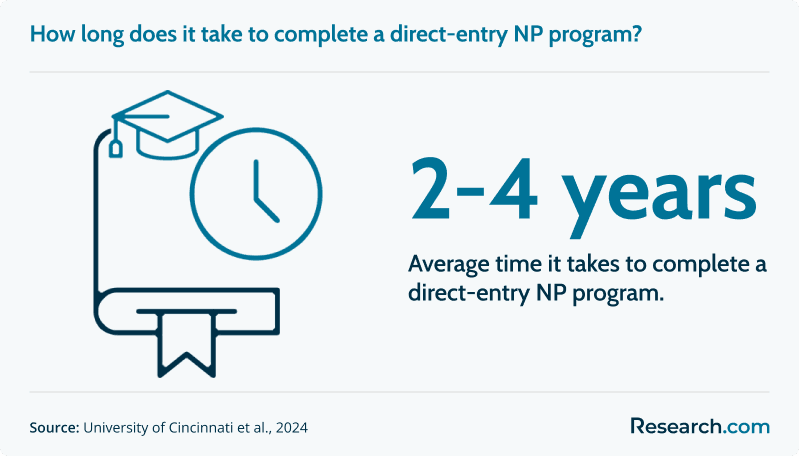
Most direct-entry nurse practitioner programs take 2 to 4 years, depending on the format, specialty, enrollment status, and clinical requirements. Tuition can be substantial, with many programs falling between $60,000 to $120,000 overall, although school-specific costs vary widely. Applicants should confirm accreditation, NCLEX-RN preparation, national certification eligibility, clinical placement support, and state licensure alignment before enrolling.
What are the main benefits of a direct-entry nurse practitioner pathway?
- It can shorten the route for non-nurses. Instead of completing a separate BSN and then applying to an NP program, students may move through RN preparation and graduate nursing education in one structured pathway.
- It supports specialty-focused career planning. Many programs allow students to prepare for roles in primary care, acute care, psychiatric care, pediatrics, women’s health, neonatal care, or adult-gerontology practice.
- It may offer flexible learning formats. Some direct-entry nurse practitioner programs include online or hybrid coursework while still requiring in-person clinical training.
- It connects to a growing profession. Data from 2024 showed a 35.5% increase in nurse practitioners in the U.S. over the past five years, reflecting continued demand for advanced practice providers.
- It can lead to strong earning potential. Salary sources cited in this guide report an average starting salary of approximately $164,000 for new NPs, while BLS data reports a median annual salary of $126,260 for nurse practitioners.
What can I expect from a direct-entry nurse practitioner program?
A direct-entry nurse practitioner program usually has two major phases. The first phase helps students without nursing training build the foundation needed for registered nursing practice. The second phase focuses on graduate-level advanced practice nursing in a selected NP specialty.
Early coursework often covers core nursing skills, patient safety, health assessment, pharmacology, pathophysiology, ethics, evidence-based practice, and care coordination. After students meet prelicensure requirements, they typically prepare for the NCLEX-RN and then continue into advanced practice coursework and specialty clinical experiences.
Students should expect a demanding pace. Programs often combine lectures, lab work, high-fidelity simulation, clinical rotations, case-based assignments, group projects, research-focused work, and capstone or synthesis experiences. The academic workload can feel especially intense for students coming from fields outside healthcare because they must learn nursing fundamentals and graduate-level clinical reasoning in a compressed timeline.
| Program component | What it usually includes | Why it matters |
| Prelicensure nursing phase | Foundational nursing courses, skills labs, simulation, and clinical rotations | Prepares non-nurses to meet RN licensure requirements and sit for the NCLEX-RN |
| RN licensure step | NCLEX-RN preparation and state board requirements | Students generally need RN licensure before moving into advanced practice eligibility |
| Graduate NP coursework | Advanced assessment, advanced pharmacology, advanced pathophysiology, diagnostics, and specialty management | Builds the clinical knowledge required for nurse practitioner practice |
| Specialty clinical training | Supervised patient care in settings aligned with the chosen NP track | Supports certification eligibility and readiness for real-world practice |
| Certification and licensure preparation | Board exam preparation, documentation of clinical hours, and state-specific requirements | Helps graduates transition from student to licensed advanced practice provider |
Cost is another major consideration. The cost of these programs varies but typically ranges from $900 to $1,500 per credit hour. Because many programs require 60–80 credit hours, total tuition can add up quickly before fees, books, technology, travel, clinical compliance costs, and living expenses are included.
Completion time depends on the school’s design and your enrollment status. Full-time students often finish in 2–4 years. Part-time options may take up to 4 years and can be useful for students who need to keep working, but they may also delay licensure, certification, and salary gains.
Where can I work with a direct-entry nurse practitioner degree?
Graduates who complete the required RN licensure, graduate NP preparation, national certification, and state licensure steps can work in many healthcare environments. The right setting depends heavily on the NP specialty. For example, family nurse practitioners are commonly found in primary care clinics, psychiatric-mental health nurse practitioners often work in behavioral health settings, and acute care nurse practitioners may practice in hospitals or specialty units.
According to BLS 2024 data cited in the original article, the industries with the highest employment for nurse practitioners include the following:
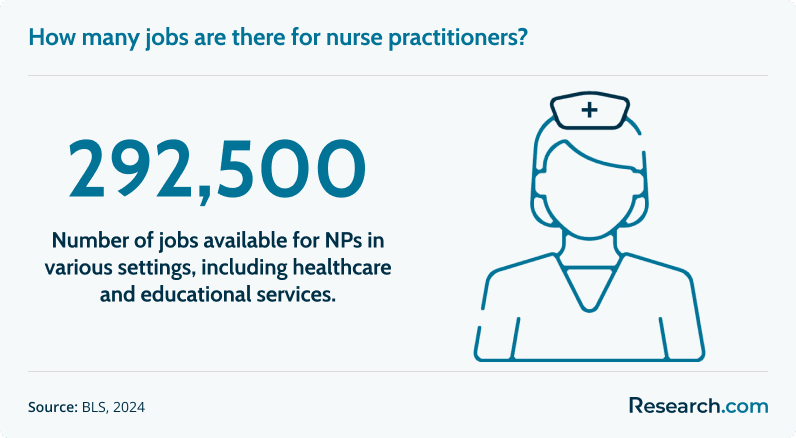
- Offices of Physicians: Approximately 137,030 NPs work in physician office settings, where they may diagnose conditions, manage chronic diseases, provide preventive care, and coordinate treatment with physicians and other clinicians.
- General Medical and Surgical Hospitals: Around 61,740 NPs are employed in hospitals, including roles connected to inpatient care, surgical support, specialty teams, and recovery planning.
- Outpatient Care Centers: These settings employ 25,440 NPs and often include urgent care, ambulatory specialty clinics, same-day procedures, and chronic care management.
- Offices of Other Health Practitioners: With 11,400 positions, these workplaces may include specialty practices such as dermatology, behavioral health, rehabilitation, or integrative care.
- Home Health Care Services: About 7,410 NPs work in home-based care, often supporting older adults, medically complex patients, and people managing chronic illness outside a hospital.
How much can I make with a direct-entry nurse practitioner degree?
Salary depends on specialty, location, employer type, experience, schedule, scope of practice rules, and local demand. According to 2024 data cited in this guide, the average starting salary for new NPs is approximately $164,000, up 8.6% from the previous year’s $152,000. The same source notes that salaries can reach $310,000 annually in specialized or high-demand roles.
BLS data reports a median annual salary for nurse practitioners of $126,260. This number reflects earnings across experience levels and industries, so it should not be treated as a guaranteed starting salary. Another summary figure cited in this article lists a median annual salary of $124,680, which is why applicants should always verify the source year, occupation category, and geographic assumptions before building an ROI estimate.
When comparing programs, do not evaluate salary in isolation. A lower-cost program with strong clinical placement support and board exam outcomes may offer a better financial path than a more expensive program with weak support. Likewise, a specialty with higher pay may require more demanding clinical preparation, less schedule flexibility, or relocation to areas with stronger demand.
- Best Direct-Entry Nurse Practitioner Programs for 2027
- How long does a direct-entry nurse practitioner program take?
- Online vs. on-campus direct-entry nurse practitioner programs
- Average cost of direct-entry nurse practitioner programs
- Financial aid options for direct-entry NP students
- Prerequisites for direct-entry nurse practitioner programs
- Certification and licensure requirements after graduation
- Board exam pass rates and clinical outcomes
- Accreditation standards to verify
- Common courses in a direct-entry nurse practitioner curriculum
- How clinical training is structured
- How technology supports clinical training
- Is a direct-entry nurse practitioner degree worth the investment?
- How competitive are direct-entry nurse practitioner programs?
- Why faculty qualifications matter
- Available nurse practitioner specializations
- Career support services for graduates
- How to choose the right direct-entry nurse practitioner program
- Career paths after a direct-entry nurse practitioner program
- Challenges students should expect
- How accelerated online tracks may support career goals
- Job market outlook for direct-entry nurse practitioner graduatesAdditional questions about direct-entry NP programs
How do we rank our schools?
Research.com builds education rankings using data from established sources, including the IPEDS database, Peterson’s database, the College Scorecard database, and the National Center for Education Statistics. These sources help us compare institutions using consistent education data rather than promotional claims. You can review the broader ranking process on the Research.com methodology page.
Best Direct-Entry Nurse Practitioner Programs for 2027
The programs below are designed for students who want to move into nursing from another academic field. Some lead directly into NP preparation, while others include an accelerated RN or master’s entry phase followed by a specialty pathway. Before applying, confirm the exact credential sequence, state eligibility, clinical placement model, and whether the program leads to your intended NP certification.
1. University of Cincinnati
The University of Cincinnati offers an accelerated Direct-Entry MSN pathway for students who already hold a non-nursing bachelor’s degree. The program is structured so students can earn an MSN, become RNs, and prepare for nurse practitioner career options through a five-semester format. Students also benefit from the university’s Academic Health Center environment and clinical exposure in major healthcare settings, including a trauma center and a pediatric hospital.
- Required Credits to Graduate: 64
- Tracks/Concentrations: Adult-Gerontology Acute Care Nurse Practitioner (AGACNP), Adult-Gerontology Primary Care Nurse Practitioner (AGPCNP), Women's Health Nurse Practitioner (WHNP), Family Nurse Practitioner (FNP), Neonatal Nurse Practitioner
- Cost: $836 per credit for OH residents, $861 per credit for Metro residents, $1,423 per credit for non-residents
- Accreditation: Commission on Collegiate Nursing Education (CCNE)
2. University of Pennsylvania
The University of Pennsylvania offers an accelerated Master of Professional Nursing (MPN) option for students entering nursing without prior nursing preparation. Students can complete the RN-focused portion in 15 months, and those who want advanced practice preparation may continue through the MPN/MSN option. The curriculum emphasizes health equity, policy awareness, and interprofessional care, with 10 specialty tracks available through the MSN route.
- Required Credits to Graduate: 21
- Tracks/Concentrations: AGACNP, AGPCNP, Neonatal Nurse Practitioner, Women’s Health/Gender-Related Nurse Practitioner, Pediatric Acute Care Nurse Practitioner (PNP-AC), FNP, Pediatric Primary Care Nurse Practitioner (PNP), Psychiatric-Mental Health Nurse Practitioner (PMHNP), Nurse Midwifery, Nursing and Healthcare Leadership
- Cost: $142,749 in total
- Accreditation: CCNE
3. Marquette University
Marquette University provides a Direct Entry MSN program that helps students from non-nursing backgrounds enter the nursing profession in as few as five semesters. The program includes in-person and online learning options at two Wisconsin locations, along with simulation-based learning and clinical practice opportunities. Graduates are prepared to sit for the NCLEX-RN exam and pursue nursing roles or further advanced preparation.
- Required Credits to Graduate: 75
- Tracks/Concentrations: NP, Nursing Administration, Nurse Midwifery
- Cost: $67,000 in total
- Accreditation: CCNE
4. Yale University
Yale University offers the Graduate Entry Pre-Specialty in Nursing (GEPN) program for students who did not study nursing as undergraduates. The three-year structure begins with foundational nursing preparation and continues into advanced specialty training. Students complete clinical experiences across varied healthcare settings and prepare for future roles in advanced practice, leadership, post-master’s study, or doctoral education.
- Required Credits to Graduate: 45
- Tracks/Concentrations: AGACNP, AGACNP, FNP, Nurse Midwifery, PNP-AC, PNP, PMHNP, WHNP
- Cost: $69,831 in total
- Accreditation: CCNE
5. Simmons University
Simmons University offers a direct-entry MSN pathway for students who want to become family nurse practitioners. The program combines nursing foundations with clinical learning in the Boston healthcare environment. Graduates are prepared to pursue the FNP national board certification exam and may enter clinical, research, or primary care-focused roles depending on licensure and career goals.
- Required Credits to Graduate: 96
- Tracks/Concentrations: FNP
- Cost: $1,559 per credit for pre-licensure, $1,235 per credit for post-licensure
- Accreditation: CCNE
6. Vanderbilt University
Vanderbilt University offers an accelerated MN program for students entering nursing from another academic background. The four-semester format prepares students for RN licensure and emphasizes comprehensive patient care, health equity, justice, and clinical practice. The program includes 1,200 hours of hands-on experience, and graduates may continue into a specialty through a Post-Master's Certificate or DNP route.
- Required Credits to Graduate: 66
- Tracks/Concentrations: AGPCNP, FNP, Nurse Midwifery, PNP, PMHNP, WHNP, Gender-Related NP
- Cost: $1,997 per credit
- Accreditation: CCNE
7. Northeastern University
Northeastern University offers a direct-entry nursing pathway that allows non-nurses to earn both a BSN and an MSN. Students begin with RN prelicensure preparation, complete clinical training, and then move toward advanced nursing specialization. The program’s experiential model includes co-op learning, research options, and global opportunities for students preparing to work across healthcare environments.
- Required Credits to Graduate: 36 to 42
- Tracks/Concentrations: FNP, AGACNP, Neonatal Nurse Practitioner, PNP, PMHNP
- Cost: $22,510 per semester
- Accreditation: CCNE
8. The Ohio State University
Ohio State University offers a Graduate Entry MSN program for students with bachelor’s degrees outside nursing. Students select a specialty at the start of the program, complete graduate nursing coursework and clinical experiences, and take the NCLEX-RN midway through the pathway. The program is designed to prepare graduates for advanced roles in hospitals, clinics, and other care settings.
- Required Credits to Graduate: 96 to 116
- Tracks/Concentrations: AGPCNP, PNP, FNP, PMHNP, Nurse Midwifery, WHNP, Neonatal Nurse Practitioner
- Cost: $9,682 per semester for Ohio residents, $22,982 for non-residents
- Accreditation: CCNE
9. University of Rochester
The University of Rochester offers an accelerated MN pathway for students who want to enter nursing quickly and continue toward NP preparation. Students complete a 12-month accelerated BSN program before moving into an NP specialty. The program emphasizes clinical readiness and prepares students to sit for the NCLEX-RN exam before progressing toward master’s-prepared nurse practitioner roles.
- Required Credits to Graduate: 70.5
- Tracks/Concentrations: AGACNP, AGPCNP, FNP, PMHNP, PNP
- Cost: $109,600 in total
- Accreditation: CCNE
10. University of Vermont
The University of Vermont offers a direct-entry MSN model that begins with a year of full-time, on-site preparation for the NCLEX-RN exam. After earning RN licensure, students may continue into an online MSN pathway. This structure can work well for students who want an initial campus-based prelicensure phase followed by more flexible graduate study while working as registered nurses.
- Required Credits to Graduate: 72.5 to 75.25
- Tracks/Concentrations: Business Leadership, Education, Integrative Health and Wellness, Public Health, Trauma-Informed Care
- Cost: $678 per credit for Vermont residents, $1,200 per credit for non-residents
- Accreditation: CCNE
Key Findings for Prospective Students
- Direct-entry nurse practitioner programs usually take 2-4 years, though the actual timeline depends on the prelicensure phase, specialty, clinical placements, and full-time or part-time enrollment.
- Program tuition commonly falls between $30,000 to $100,000 in summary estimates, while broader cost discussions cite $60,000 to $120,000 for the entire program.
- Salary figures vary by source and definition: one cited figure lists a median annual salary of $124,680, while BLS data cited in this article reports a median annual salary of $126,260.
- Nurse practitioner roles are projected to grow by 46% from 2023 to 2033, with approximately 135,500 new job openings expected.
- Many programs require between 40 to 70 credits, but several direct-entry pathways in this guide list higher credit requirements because they combine prelicensure and graduate preparation.
- Typical admissions requirements include a bachelor’s degree outside nursing, prerequisite science coursework, letters of recommendation, a personal statement, and often a minimum 3.0 GPA.
How long does it take to complete a direct-entry nurse practitioner program?
Students who already hold a BSN can often move into advanced practice through a BSN to NP program, which takes two years on average. Career changers without a nursing degree have a different route. A direct-entry program can combine the nursing foundation, RN preparation, and graduate NP education so students do not necessarily need to complete a separate four-year BSN before applying to an MSN or NP pathway.
Most direct-entry nurse practitioner programs take 2 to 4 years. The first part may include about a year of accelerated prelicensure nursing coursework, labs, and clinical training. After that, students continue into the nurse practitioner portion, which often takes 1.5 to 3 years depending on the specialty and format.
A full-time direct-entry pathway is often among the quickest ways to become a nurse and continue toward nurse practitioner preparation. Part-time study can be more manageable for working adults, but it usually extends the time before RN licensure, NP certification eligibility, and full earning potential.
| Pathway | Typical timeline | Best for | Trade-off |
| Full-time direct-entry NP pathway | 2 to 4 years | Students who can prioritize school and clinical training | Fast but academically intense and less flexible |
| Part-time direct-entry pathway | May take up to 4 years | Students balancing work, caregiving, or relocation limits | More manageable pace but delayed completion |
| Separate BSN then NP route | Often longer than direct entry for non-nurses | Students who want a staged transition into nursing | May offer more time to build RN experience before NP training |
How does an online direct-entry nurse practitioner program compare to an on-campus program?
Online and campus-based direct-entry nurse practitioner programs can both prepare students for nursing licensure and advanced practice, but they differ in structure, scheduling, student support, and clinical logistics. The most important point is that “online” does not mean fully remote. Nursing programs still require in-person labs, simulations, clinical rotations, or campus intensives.
| Factor | Online or hybrid program | On-campus program | Decision tip |
| Schedule flexibility | Often better for students who need asynchronous coursework or fewer weekly campus visits | Usually follows a more fixed class and lab schedule | Choose online or hybrid only if you are highly organized and can manage independent learning |
| Clinical placement | May allow placements closer to home, but policies vary by school | May use established local healthcare partners near campus | Ask whether the school secures placements or expects students to find preceptors |
| Hands-on learning | May use simulation technology, short residencies, and local clinical sites | Offers regular in-person lab, faculty, and peer interaction | Campus learning may be stronger if you prefer immediate feedback and structured practice |
| Cost considerations | Can reduce commuting or relocation costs, though tuition may be similar | May require housing, parking, relocation, or commuting expenses | Compare total cost, not only tuition |
| Licensure planning | Requires careful state authorization and clinical approval checks | Often built around the school’s home-state requirements | Confirm the program meets requirements in the state where you plan to practice |
An online pathway may be the most practical option if you need flexibility and can complete clinical requirements locally. Some students also look for the easiest nurse practitioner program, but “easy” should not mean weak. A better goal is to find an accredited program with realistic admissions requirements, strong support, transparent outcomes, and a format you can sustain.
What is the average cost of direct-entry nurse practitioner programs?
The total cost of direct-entry nurse practitioner programs varies by institution, residency status, private or public control, delivery format, and program length. The average tuition discussion in the original article places many full-program costs between $60,000 to $120,000.
Students should separate tuition from the full cost of attendance. A program that looks affordable per credit may become expensive after fees, required campus visits, clinical travel, certification exam costs, background checks, immunization tracking, uniforms, equipment, technology, and living expenses are included.
| Cost category | Typical amount cited | What to verify before enrolling |
| Tuition | Public universities may charge around $500 to $1,000 per credit, while private schools may charge up to $2,000 per credit | Resident versus nonresident rates, annual tuition increases, and whether graduate and prelicensure credits are priced differently |
| Program credits | Programs usually require 60 to 75 credits, though some listed programs require more | Whether the credit total includes the full direct-entry sequence or only one phase |
| Books, fees, supplies, and technology | Additional costs can add $5,000 to $10,000 | Simulation fees, clinical compliance fees, software subscriptions, equipment, and exam preparation costs |
| Living and travel expenses | Varies by location and format | Housing, commuting, parking, relocation, clinical site travel, and campus residency requirements |
The chart below lists the highest-paying states for nurse practitioners, as reported by the BLS in 2024.
What are the financial aid options for students enrolling in a direct-entry nurse practitioner program?
Direct-entry nurse practitioner students may use several types of aid, but eligibility can vary depending on whether the coursework is classified as undergraduate, graduate, prelicensure, or advanced practice study. Students should ask financial aid offices to explain how aid applies to each phase of the program.
- Federal financial aid: Submit the Free Application for Federal Student Aid (FAFSA) to determine eligibility for federal loans, work-study, and grants such as the Pell Grant when applicable.
- Nursing scholarships: Nursing associations, foundations, hospitals, and workforce development organizations may offer awards for students pursuing nursing and advanced practice credentials.
- HRSA and service-based support: Programs such as the HRSA Nurse Corps Scholarship Program or Nurse Corps Loan Repayment Program may support eligible students or graduates who commit to qualifying service in underserved communities.
- State funding: Some states provide grants, loan repayment, or workforce incentives for residents entering nursing or advanced practice roles. Check the state nursing board, state higher education agency, and state health department.
- Employer tuition assistance: Students already working in healthcare should ask whether their employer provides tuition reimbursement, scholarship partnerships, or paid education leave.
- School-based aid: Ask each program about merit scholarships, need-based grants, graduate assistantships, payment plans, and whether aid continues after the RN phase.
What are the prerequisites for enrolling in a direct-entry nurse practitioner program?
Admissions requirements for the best direct entry NP programs for non nurses vary, but most schools look for evidence that applicants can handle accelerated science-heavy coursework, patient care responsibilities, and graduate-level clinical reasoning.
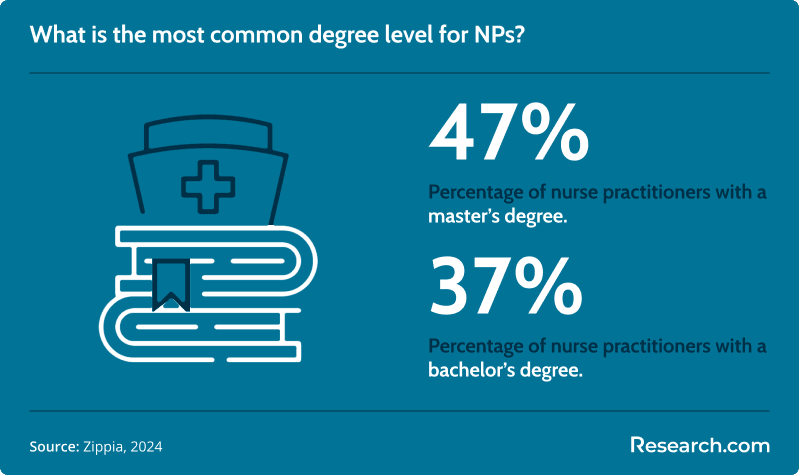
- Bachelor’s degree: Applicants usually need a completed bachelor’s degree in a field other than nursing. A healthcare-related major may help but is not always required.
- Minimum GPA: Many programs expect a GPA around 3.0 on a 4.0 scale, while highly selective programs may expect stronger academic performance.
- Prerequisite courses: Common prerequisites include anatomy, physiology, microbiology, statistics, and other science or health-related courses.
- Letters of recommendation: Schools often request 2-3 letters from professors, supervisors, clinicians, or professional references who can discuss your academic ability, maturity, communication, and service orientation.
- Personal statement: A strong essay should explain why you are moving into nursing, what patient population you want to serve, and why a direct-entry route fits your goals.
- Healthcare exposure: Paid or volunteer experience is not always mandatory, but it can make an application more credible because it shows you understand the realities of patient care.
If you are still comparing entry routes into nursing, you may also want to review the easiest accelerated nursing programs to get into and compare them with direct-entry MSN or NP options.
What are the certification and licensure requirements after completing a direct-entry nurse practitioner program?
Direct-entry students usually must complete several regulated steps before practicing as nurse practitioners. First, they must meet RN education requirements and pass the NCLEX-RN. Then they must complete the graduate NP specialty curriculum, supervised clinical hours, and any program-specific requirements for national board certification eligibility.
National certification depends on the specialty. Graduates may certify through organizations such as the American Association of Nurse Practitioners or the American Nurses Credentialing Center, depending on the track and exam. State boards then determine advanced practice licensure, prescriptive authority, renewal rules, and continuing education requirements.
Because requirements differ by state, students should confirm licensure alignment before enrolling, especially in online or hybrid programs. If you want to compare the earnings associated with earlier nursing credentials, Research.com also explains BSN nurse salary expectations.
How do direct-entry nurse practitioner programs perform in board exam pass rates and clinical outcomes?
Board exam pass rates, NCLEX-RN performance, certification outcomes, graduation rates, clinical placement completion, and employer feedback can reveal more about a program than marketing language. Strong outcomes may indicate that the curriculum, faculty support, simulation training, and clinical partnerships are working well together.
Prospective students should ask each school for recent NCLEX-RN pass rates, NP certification pass rates by specialty, attrition rates, clinical placement data, and graduate employment information. If the school does not publish these outcomes, ask admissions staff or the nursing department to provide them in writing.
Students comparing work environments and long-term fit may also find value in exploring least stressful nursing specialties, especially if they are choosing between high-acuity and primary care roles.
What accreditation standards should I consider for direct-entry nurse practitioner programs?
Accreditation is one of the most important checks for any direct-entry nurse practitioner program. It helps confirm that the curriculum, clinical expectations, faculty qualifications, and academic policies meet recognized nursing education standards. It can also affect licensure eligibility, certification eligibility, credit transfer, financial aid access, and employer acceptance.
Look for nursing program accreditation from recognized bodies such as the Commission on Collegiate Nursing Education or the Accreditation Commission for Education in Nursing. Also verify institutional accreditation, state authorization for online learning, and whether the program is approved by the state board of nursing where the prelicensure portion is delivered.
Students planning advanced doctoral study should also examine how MSN credits may apply to DNP pathways. For comparison, Research.com covers streamlined doctoral options such as the 3-semester DNP program guide.
What courses are typically in a direct-entry nurse practitioner program?
Direct-entry nurse practitioner curricula combine accelerated nursing foundations with advanced practice content. The exact course sequence depends on the school and specialty, but most programs cover the science of disease, safe medication use, patient assessment, care planning, research, ethics, and population-focused care.
- Foundations of Nursing: Covers essential nursing concepts, clinical safety, patient communication, documentation, and basic care skills.
- Pharmacology: Explains medication actions, therapeutic uses, adverse effects, interactions, and safe administration principles.
- Health Assessment: Teaches students to collect histories, perform physical exams, identify abnormal findings, and document patient information.
- Pathophysiology: Examines how disease processes affect body systems and how those changes guide diagnosis and treatment planning.
- Evidence-Based Practice: Builds skills in reading research, evaluating evidence, and applying findings to improve patient outcomes.
- Pediatrics and Family Care: Introduces care across developmental stages, including child health, family systems, prevention, and common conditions.
- Primary Care Management: Focuses on diagnosing, treating, monitoring, and educating patients with common acute and chronic conditions.
- Clinical Practicums: Places students in supervised healthcare settings where they apply classroom learning to patient care.
How are clinical training experiences optimized in direct-entry nurse practitioner programs?
Clinical training is where direct-entry students convert academic learning into patient care skill. Strong programs use a layered approach: simulation first, supervised clinical practice next, and progressively more complex patient encounters as students gain competence.
High-quality clinical education may include high-fidelity simulation labs, hospital rotations, primary care placements, specialty clinics, community health experiences, telehealth observation, case conferences, and interprofessional team training. These experiences help students practice assessment, differential diagnosis, patient education, medication management, and care coordination under supervision.
Accelerated options, including programs discussed in Research.com’s guide to a 12-month FNP program online, can be appealing, but students should look closely at whether the pace still allows enough supervised practice, feedback, and clinical confidence building.
How does technology enhance clinical training in direct-entry nurse practitioner programs?
Technology now plays a major role in nursing education, especially for students in hybrid or online formats. Simulation labs, virtual patient cases, electronic health record training, telehealth modules, remote lectures, and digital assessment tools can help students practice decision-making before working with patients in clinical settings.
Technology is most useful when it supports, rather than replaces, supervised clinical learning. Virtual scenarios can sharpen reasoning and provide immediate feedback, but students still need direct patient care experience, preceptor guidance, and hands-on skill development.
Students comparing flexible and affordable nursing education pathways may also want to review Research.com’s guide to the cheapest RN to BSN program online to understand how online nursing education formats differ by credential level.
Is a direct-entry nurse practitioner degree a sound financial investment?
A direct-entry nurse practitioner degree can be a strong financial investment for students who finish the program, obtain licensure and certification, and enter a specialty with solid demand. However, the return is not automatic. The upfront cost, unpaid clinical time, lost income during full-time study, loan interest, relocation, and certification expenses can change the financial picture substantially.
Before enrolling, estimate your total cost of attendance and compare it with realistic local salary data. Include tuition, fees, living expenses, transportation, clinical travel, exam costs, and the income you may give up while studying. Then compare programs by graduation rates, board pass rates, clinical placement support, and employment outcomes.
Students focused on reducing debt should compare lower-cost specialty routes, including options discussed in Research.com’s guide to the cheapest AGNP programs.
| A direct-entry NP program may be worth it if... | You may want another path if... |
| You are committed to advanced nursing practice and have confirmed your target specialty | You are unsure whether you want patient care, nursing, or graduate-level clinical responsibility |
| The program is accredited and meets licensure requirements in your intended state | The school cannot clearly explain certification eligibility or state authorization |
| You can manage the cost without unsustainable debt | You would need to borrow heavily without a clear salary and repayment plan |
| The school has strong clinical placement support | You would be responsible for finding preceptors with little institutional help |
| The timeline fits your work, family, and financial situation | The accelerated pace would put your academic performance or wellbeing at risk |
How competitive are direct-entry nurse practitioner programs?
Admissions competitiveness varies widely. Highly selective universities may expect strong GPAs, recent science prerequisites, healthcare exposure, compelling essays, and excellent references. Other programs may use a more holistic review process and place more weight on professional maturity, service experience, leadership, communication, and readiness for an accelerated curriculum.
Applicants can improve their chances by completing prerequisites with strong grades, gaining direct exposure to patient care, shadowing nurses or NPs when possible, writing a focused personal statement, and applying only to programs that match their specialty and licensure goals.
If admissions accessibility is a major concern, Research.com also provides a guide to the easiest nursing schools to get into in California, which can help students compare broader nursing entry options.
How do faculty qualifications impact direct-entry nurse practitioner program quality?
Faculty quality matters because direct-entry students are learning nursing fundamentals and advanced practice thinking in a compressed timeframe. Instructors with current clinical experience, advanced credentials, research engagement, and strong teaching skills can help students connect textbook concepts to real patient care.
When evaluating faculty, look for instructors who are board-certified in the specialty they teach, maintain clinical practice or relevant scholarship, publish or contribute to professional nursing work, and have experience mentoring students through clinical decision-making. Faculty availability also matters; even highly credentialed instructors are less helpful if students cannot access them for feedback.
Students comparing affordability and faculty-supported online options may also find Research.com’s overview of cheap FNP programs online useful.
What types of specializations are available in direct-entry nurse practitioner programs?
Specialization is one of the most important decisions in a direct-entry nurse practitioner program because it shapes your coursework, clinical placements, certification exam, patient population, and job market. Do not choose a track only because it sounds popular or highly paid. Choose one that matches the patients you want to serve and the work settings where you can see yourself practicing.
- Family Nurse Practitioner (FNP): Focuses on primary and preventive care for patients across the lifespan. Students comparing bridge options may also look at RN to FNP programs.
- Pediatric Nurse Practitioner (PNP): Prepares students to care for infants, children, adolescents, and families in primary or acute pediatric settings.
- Adult-Gerontology Nurse Practitioner (AGNP): Focuses on adult and older adult care, including chronic disease management, prevention, and complex health needs. Research.com also discusses some of the highest paid NP specialty options.
- Women’s Health Nurse Practitioner (WHNP): Centers on reproductive, gynecological, prenatal, postpartum, and gender-related health services.
- Psychiatric-Mental Health Nurse Practitioner (PMHNP): Prepares students for mental health assessment, psychotherapy-related care, medication management, and behavioral health treatment planning.
- Acute Care Nurse Practitioner (ACNP): Trains students to manage complex and critically ill patients in hospitals, ICUs, specialty units, and emergency-related settings.
- Neonatal Nurse Practitioner (NNP): Focuses on premature, critically ill, or medically fragile newborns and often leads to practice in neonatal intensive care settings.
The chart below illustrates the growth of the nursing workforce over the past five years, as reported by the HRSA in 2024.
Are comprehensive career support services available for direct-entry nurse practitioner graduates?
Career support can make a major difference, especially for students who entered nursing from another profession and may not yet have a healthcare network. Strong programs offer more than a general university career center. They provide specialty-specific advising, resume support for clinical roles, certification exam guidance, interview preparation, employer connections, alumni mentoring, and job search assistance.
Ask whether the nursing school hosts healthcare job fairs, maintains employer partnerships, tracks graduate employment, helps students identify residency or fellowship opportunities, and supports graduates seeking roles in rural or underserved settings. Students considering advanced clinical leadership may also compare future doctoral options such as DNP accelerated programs.
How to choose the best direct-entry nurse practitioner program?
The best direct-entry nurse practitioner program is the one that meets licensure requirements, fits your specialty goal, provides reliable clinical training, and makes financial sense for your life. Rankings can help you build an initial shortlist, but they should not replace your own due diligence.
- Verify accreditation first: Confirm institutional accreditation and nursing program accreditation. If you are considering online study, start with schools that meet standards expected of regionally accredited online universities or established campus institutions.
- Confirm the credential sequence: Ask whether the program awards a BSN, MSN, MN, MPN, certificate, or another credential at each stage.
- Check state licensure alignment: Make sure the program meets RN and advanced practice requirements in the state where you plan to practice.
- Evaluate clinical placement support: Determine whether the school arranges placements, assists with preceptors, or expects students to secure sites independently.
- Match the specialty to your goals: Do not enroll unless the program offers the NP track you actually want.
- Compare total cost: Include tuition, fees, living costs, travel, equipment, exam fees, and lost wages.
- Review outcomes: Ask for NCLEX-RN pass rates, NP certification pass rates, completion rates, and employment outcomes.
- Assess student support: Look for academic advising, tutoring, clinical coaching, mental health resources, and faculty availability.
| Question to ask | Why it matters |
| Is the program accredited by CCNE or ACEN? | Accreditation can affect certification, licensure, aid, and employer recognition |
| Will I be eligible for RN licensure and NP certification in my state? | Online and out-of-state programs may not meet every state’s requirements |
| Who finds clinical placements? | Students can face major delays if they must locate preceptors without school support |
| What are the most recent pass rates? | NCLEX-RN and certification outcomes help show whether students are being prepared effectively |
| What is the total cost of attendance? | Tuition alone does not show the full financial commitment |
| Can I switch specialties? | Some programs lock students into tracks early, while others may allow limited changes |
What career paths are available for graduates of direct-entry nurse practitioner programs?
Graduates can pursue a range of clinical and nonclinical roles once they complete the required licensure and certification steps. The available path depends on specialty preparation, state scope of practice, employer needs, and experience.
- Family Nurse Practitioner: Provides primary care, preventive services, chronic disease management, and patient education in clinics, community health centers, and private practices.
- Acute Care Nurse Practitioner: Works with medically complex or critically ill patients in hospitals, specialty units, emergency-related settings, or intensive care environments.
- Psychiatric-Mental Health Nurse Practitioner: Provides mental health assessment, medication management, care planning, and behavioral health support.
- Pediatric Nurse Practitioner: Cares for infants, children, and adolescents in outpatient clinics, hospitals, pediatric practices, or specialty settings.
- Women’s Health Nurse Practitioner: Focuses on reproductive health, gynecological care, prenatal and postpartum needs, and related patient education.
- Public health roles: Uses clinical knowledge in community health, prevention, program management, and policy-related work. Students interested in this direction may consider pairing nursing preparation with affordable online MPH programs.
- Academic or research roles: Supports nursing education, clinical research, quality improvement, or healthcare innovation, often with additional experience or doctoral preparation.
What challenges do students face in direct-entry nurse practitioner programs?
Direct-entry programs can be rewarding, but they are not easy. Students without nursing backgrounds must quickly adjust to clinical language, patient care expectations, lab skills, ethical responsibilities, and high-stakes exams. The transition can be stressful because the learning curve is steep and clinical performance matters from the beginning.
- Accelerated workload: Students often handle dense science content, skills practice, and clinical preparation at the same time.
- Clinical confidence gap: Non-nurses may initially feel less comfortable in patient care settings than classmates with healthcare experience.
- Time pressure: Clinical hours, exams, assignments, and commuting can make it difficult to work full time.
- Financial strain: Tuition, reduced income, and clinical travel can create pressure if students do not plan carefully.
- Licensure complexity: Students must track RN licensure, advanced practice certification, and state-specific rules.
- Preceptor availability: In some markets, finding qualified preceptors can be difficult if the school does not provide strong placement support.
Students who need more flexibility may want to compare direct-entry MSN programs for non-nurses online, but should still confirm clinical placement expectations before enrolling.
How can accelerated online tracks enhance my career prospects as a direct-entry nurse practitioner?
Accelerated online tracks can help motivated students move through coursework more efficiently while maintaining some schedule flexibility. They may be especially useful for students who live far from campus, need to continue working part time, or want access to a specific specialty not available locally.
However, accelerated online study works best for students who are disciplined, comfortable with digital learning, and able to complete in-person clinical requirements without delays. The career value comes from the same essentials as any strong NP program: accreditation, licensure alignment, quality clinical training, certification preparation, and employer-recognized outcomes.
Students interested in a focused specialty pathway can review options such as fast track MSN women's health nurse practitioner online programs to compare speed, flexibility, and specialty fit.
What is the job market for graduates with a direct-entry nurse practitioner degree?
According to 2024 data from the Bureau of Labor Statistics (BLS), nurse practitioner roles are projected to grow 46% from 2023 to 2033. The same outlook cited here indicates approximately 135,500 new job openings during that period.
Demand is tied to several healthcare needs: primary care access, chronic disease management, preventive care, outpatient services, telehealth, behavioral health, and care for aging populations. Rural and underserved communities may have particularly strong needs for advanced practice clinicians, although job availability and scope of practice still vary by state.
Graduates from direct-entry nurse practitioner programs can be well positioned for this market if they complete all licensing steps, choose a viable specialty, build strong clinical experience, and understand local employer expectations. A degree alone is not enough; certification, state authorization, patient care competence, and professional references are critical.
Other Things You Should Know About Direct-Entry Nurse Practitioner Programs
What is the easiest NP program to get into?
The easiest NP programs to enter are usually those with flexible prerequisite policies, no GRE requirement, holistic admissions review, and GPA thresholds that are realistic for a wider applicant pool. For direct-entry applicants, “easy to get into” should never be the only priority. The program must still be accredited, clinically strong, and aligned with licensure requirements.
What are the hardest NP programs to get into?
The most competitive NP programs are often at highly selective universities or in specialties with limited seats, intensive clinical requirements, and strong applicant demand. These programs may expect high GPAs, excellent science grades, healthcare exposure, polished essays, and strong recommendations. Acute care and psychiatric-mental health tracks can be especially competitive at some schools.
Which country is best for nurse practitioner?
The United States has extensive nurse practitioner education options and a large NP labor market. Canada and Australia are also known for high-quality NP education and expanding advanced practice roles. International students should compare licensing rules, visa considerations, education costs, scope of practice, and whether credentials transfer across borders.
Are there dual-degree options, such as RN to FNP and DNP tracks?
Yes. Some pathways allow students to progress from RN preparation into FNP study, DNP preparation, or other advanced credentials. These options can be useful for students who want leadership, advanced clinical expertise, or doctoral-level preparation, but they require careful review of cost, timeline, clinical requirements, and licensure outcomes.
Common Mistakes to Avoid When Choosing a Direct-Entry NP Program
- Assuming every direct-entry program leads directly to NP practice: Some programs prepare students for RN licensure first and require a later certificate, MSN, or DNP step for advanced practice.
- Ignoring accreditation: A non-accredited or poorly aligned program can create problems for licensure, certification, employment, and financial aid.
- Looking only at tuition: Fees, clinical travel, lost wages, supplies, exam costs, and living expenses can change the real price.
- Failing to check state rules: Online programs may not meet licensure requirements in every state.
- Underestimating clinical placement challenges: If the school does not help secure sites, students may face delays.
- Choosing a specialty too quickly: Some tracks are difficult to switch once the program begins.
- Relying only on rankings: Rankings are useful, but your best program depends on specialty fit, cost, location, outcomes, and licensure alignment.
References
- American Association of Colleges of Nursing (AACN). (2024). Nursing Workforce Fact Sheet. AACN.
- AMN Healthcare. (2024). Nurse Practitioner Salary Report 2024. AMN Healthcare.
- Bureau of Labor Statistics (BLS). (2024a). 29-1171 Nurse Practitioners. Occupational Employment and Wages. BLS.
- Bureau of Labor Statistics (BLS). (2024b). Nurse Anesthetists, Nurse Midwives, and Nurse Practitioners. Occupational Outlook Handbook. BLS.
- Health Resources and Services Administration (HRSA). (2024). State of the U.S. Health Care Workforce, 2024. HRSA.
- Zippia. (2024). Nurse Practitioner Education Requirements. Zippia.
Key Insights
- A direct-entry nurse practitioner program is best for career changers who are certain they want advanced nursing practice and are ready for an intensive, clinically focused graduate pathway.
- Do not assume all direct-entry programs have the same structure. Some combine RN and NP preparation, while others require an additional specialty certificate or doctoral step after the initial nursing credential.
- Accreditation, state licensure alignment, clinical placement support, and board exam outcomes are more important than program speed alone.
- Cost should be evaluated as total cost of attendance, not just tuition per credit. Include fees, travel, clinical expenses, exam costs, and lost income.
- Specialty choice has long-term consequences. Choose an NP track based on patient population, work setting, scope of practice, and job market—not only salary.
- Online and hybrid programs can be effective, but every nursing pathway still requires in-person clinical training. Ask who secures placements before you apply.
- The NP job outlook is strong, with 46% projected growth from 2023 to 2033, but individual outcomes depend on certification, location, specialty, experience, and employer demand.
Other Things You Should Know About Direct-Entry Nurse Practitioner Programs
Applicants should verify that the program includes at least 500 supervised direct patient care clinical hours for the NP portion and that the hours are tied to the chosen population focus. Accreditation standards from CCNE or ACEN also matter because they affect eligibility for advanced practice certification and state licensure.
Direct-entry nurse practitioner programs in 2027 generally require a bachelor's degree in any field, completion of prerequisite science courses, a minimum GPA of 3.0, letters of recommendation, and a personal statement. Some programs may also require healthcare experience or an interview. Requirements can vary, so checking specific program details is essential.


