2027 Online Electrical Engineering Degrees That Prepare Students for Electrical Engineering Roles

Co-Founder and Chief Data Scientist
Choosing an online electrical engineering degree is a high-stakes decision because the right program can lead to roles in power systems, electronics, automation, communications, and embedded systems. The U.S. Bureau of Labor Statistics reports that electrical and electronics engineers had a 2024 median annual pay of $118,780, making program quality and accreditation especially important.
This guide is for prospective students, transfer students, and working adults who want to understand costs, timelines, employer respect, licensure issues, and career fit before enrolling.
Key Things You Should Know
- For professional engineering pathways, prioritize an online electrical engineering program with institutional accreditation and ABET programmatic accreditation, especially if you may pursue the Fundamentals of Engineering exam, Professional Engineer licensure, or government-contractor roles.
- Online electrical engineering degrees are typically comparable to campus programs when they use the same curriculum, faculty standards, lab expectations, and assessment methods; the format matters less than accreditation, rigor, and hands-on technical preparation.
- The BLS reports 2024 median annual pay of $118,780 for electrical and electronics engineers and projects 9% employment growth from 2023 to 2033, but outcomes vary by location, industry, experience, clearance eligibility, and technical specialization.
What is an online electrical engineering degree and how does it prepare students for engineering roles?
An online electrical engineering degree is a college program that teaches students how electrical systems are designed, analyzed, tested, and improved. Depending on the school, the credential may be a Bachelor of Science in Electrical Engineering, Bachelor of Science in Engineering with an electrical concentration, Master of Science in Electrical Engineering, or an engineering technology degree. These are not identical, so students should match the degree type to the jobs they want.
A bachelor's degree is usually the entry point for engineering roles that involve circuit design, power systems, controls, embedded systems, semiconductor applications, telecommunications, or product testing. A master's degree is more common for engineers who want deeper specialization, research-and-development roles, leadership preparation, or a pivot into areas such as signal processing, power electronics, robotics, or machine learning for hardware systems.
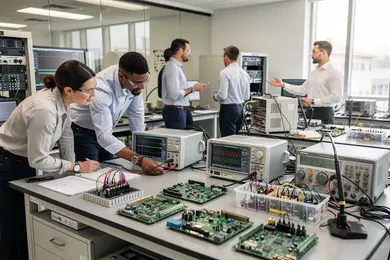
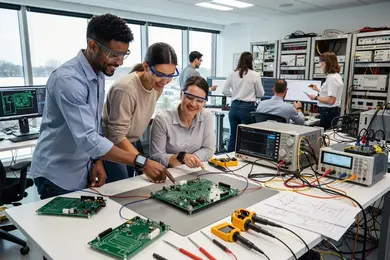
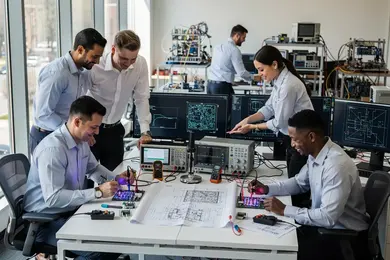
Online programs prepare students through a mix of theory, applied design work, labs, simulations, and capstone projects. The strongest programs do not simply post lecture videos; they require students to solve engineering problems, use industry software, collect and interpret data, document design decisions, and communicate technical trade-offs.
Students comparing an online bachelor's in electrical engineering should look closely at whether the program is a true electrical engineering degree or a related engineering technology pathway. Engineering technology programs can be valuable, but they often emphasize implementation and applied systems more than design theory, which may affect eligibility for certain engineering jobs or licensure routes.
The degree is generally a strong fit for students who like math, physics, computing, electronics, and structured problem-solving. It may not be the best fit for students seeking a low-math technology credential, a short career change program, or a degree with minimal lab work. Electrical engineering is flexible, but it is also one of the more technically demanding undergraduate majors.
Are online electrical engineering degrees respected by employers and comparable to campus-based programs?
Online electrical engineering degrees can be respected by employers when they come from properly accredited institutions and maintain the same academic expectations as campus-based programs. Many employers focus on the school, accreditation, project experience, technical interviews, internships, and demonstrated skills rather than whether every lecture was attended in person.
The comparison becomes more complicated when a program lacks ABET accreditation, has limited lab work, or uses a curriculum that is closer to engineering technology than engineering design. In those cases, students may still qualify for technical roles, but they should verify whether the degree supports their target job descriptions, graduate school plans, or licensure goals.
The table below summarizes how employers and graduate programs often evaluate online versus campus-based electrical engineering education. It is useful because the real question is not whether "online" is acceptable, but whether the program produces credible evidence of engineering competence.
| Factor | Why it matters | What to check |
| Accreditation | Signals that the school and, when applicable, the engineering program meet external quality standards. | Confirm institutional accreditation and whether the specific electrical engineering program is ABET-accredited. |
| Curriculum rigor | Employers expect graduates to understand circuits, systems, design constraints, and engineering analysis. | Compare course titles, credit hours, prerequisites, and capstone expectations with campus programs. |
| Laboratory experience | Electrical engineers need measurement, testing, debugging, and documentation skills. | Ask how labs are completed online, what hardware is required, and whether remote or in-person lab sessions are used. |
| Project portfolio | Projects help students prove applied skill in interviews. | Look for design projects, team assignments, senior capstones, and opportunities to use professional tools. |
| Career support | Online students may need intentional help finding internships and entry-level roles. | Review employer partnerships, career coaching, alumni outcomes, and virtual recruiting access. |
Students should be especially careful with schools that market convenience but provide little information about lab delivery, faculty credentials, ABET status, or graduate outcomes. A respected online degree should make its academic quality easy to verify.

What accreditation should online electrical engineering programs have to qualify graduates for professional practice?
Accreditation is one of the most important quality checks for online electrical engineering degrees. At minimum, the college or university should hold institutional accreditation from a recognized accrediting organization. For students who want the broadest engineering career and licensure options, the electrical engineering program itself should also be accredited by ABET's Engineering Accreditation Commission.
ABET accreditation matters because many state engineering boards, federal employers, defense contractors, and graduate programs use it as a shorthand for engineering curriculum quality. It is especially relevant for students who may eventually pursue Professional Engineer licensure, which often begins with the Fundamentals of Engineering exam and later requires supervised work experience and a Principles and Practice of Engineering exam. Requirements vary by state, so students should confirm rules with the state licensing board where they expect to practice.
Students should verify accreditation before applying, not after enrolling. A practical review should include these steps:
- Check the university's institutional accreditation through the school's official accreditation page and recognized accreditation databases.
- Confirm that the specific electrical engineering program, not just the school or engineering department, has ABET accreditation if licensure or traditional engineering practice is a goal.
- Ask whether the online version is included under the same ABET-accredited program as the campus version, because delivery formats and program names can differ.
- Review state board rules if you plan to become a licensed Professional Engineer, since some states treat non-ABET, international, or engineering technology degrees differently.
- Save written confirmation from admissions or the program director if accreditation language is unclear.
Accreditation does not guarantee a job or salary, but it reduces avoidable risk. It helps ensure that the degree is more likely to be recognized by employers, licensing boards, and graduate schools that expect a standard engineering education.
How do online and on-campus electrical engineering degrees differ in format, flexibility, and learning experience?
Online and on-campus electrical engineering programs usually differ more in delivery than in academic goals. Both should teach engineering fundamentals, require design work, and assess whether students can solve technical problems. The biggest differences involve scheduling, lab logistics, peer interaction, and how much structure students receive each week.
The table below compares the formats in decision terms. Use it to identify which learning environment fits your work schedule, study habits, location, and need for hands-on support.
| Category | Online electrical engineering degree | On-campus electrical engineering degree |
| Schedule flexibility | Often better for working adults, military students, caregivers, and students far from campus. | Usually follows fixed class times and campus schedules. |
| Lab experience | May use mailed lab kits, simulation software, remote labs, short residencies, or approved local facilities. | Typically uses campus labs with direct equipment access and in-person supervision. |
| Peer interaction | Requires more intentional participation through discussion boards, group projects, and virtual meetings. | Offers easier informal study groups and in-person project collaboration. |
| Self-management | Requires strong planning, independent study habits, and comfort troubleshooting technology. | Provides more built-in structure through class meetings, labs, and campus routines. |
| Relocation needs | Usually minimal, though some programs require occasional campus visits. | Often requires living near campus or commuting regularly. |
An online format makes sense if you need flexibility and can stay disciplined without daily campus structure. A campus format may be better if you learn best through face-to-face labs, want a traditional residential college experience, or need frequent in-person tutoring and faculty access.
Hybrid programs can be a strong middle ground. They may deliver lectures online while requiring periodic in-person labs, design intensives, or exams. Before enrolling, students should ask whether any campus visits are mandatory and whether those sessions add travel, lodging, or missed-work costs.
What courses and technical skills are typically included in an online electrical engineering curriculum?
An online electrical engineering curriculum usually begins with math and science foundations, then moves into circuit theory, electronics, signals, systems, electromagnetics, controls, power, communications, and design. The strongest programs also build computing skills because modern electrical engineers often work with code, embedded devices, simulation tools, data acquisition, and automated testing.
The table below shows common curriculum areas and the job-related abilities they support. This helps students understand whether a program is preparing them for broad engineering practice or a narrower technical niche.
| Curriculum area | Common topics | Career relevance |
| Mathematics and physics | Calculus, differential equations, linear algebra, mechanics, electricity, and magnetism. | Supports engineering modeling, signal analysis, and system design. |
| Circuits and electronics | DC and AC circuits, analog electronics, digital logic, microelectronics, and measurement. | Prepares students for hardware design, testing, troubleshooting, and product development. |
| Signals and systems | Signal processing, frequency analysis, communications, and control theory. | Useful for telecommunications, audio, radar, robotics, automation, and embedded systems. |
| Power and energy | Power systems, machines, renewable energy, grid infrastructure, and power electronics. | Relevant to utilities, electric vehicles, renewable energy, manufacturing, and infrastructure projects. |
| Computing and design | Programming, MATLAB or Python, circuit simulation, CAD tools, embedded systems, and capstone design. | Helps students demonstrate applied problem-solving and create portfolio-worthy projects. |
Students should also look for evidence that the program teaches current engineering workflows. AI-assisted design, model-based engineering, digital twins, hardware-in-the-loop testing, and automation are changing how engineers prototype and validate systems. These tools do not replace engineering judgment, but they raise expectations for graduates to interpret models, validate outputs, and document assumptions.
Electrical engineering overlaps with computing, especially in embedded systems, digital hardware, robotics, and signal processing. Students who discover they are more interested in software than hardware may want to compare the curriculum with an online computer science degree before committing, because computer science programs usually place more emphasis on algorithms, software systems, databases, and scalable applications.
Before enrolling, ask whether students get access to required software through the school or must purchase licenses independently. Also ask whether lab kits, oscilloscopes, microcontroller boards, or other hardware are included in tuition and fees.
What are the typical admission requirements and application materials for online electrical engineering programs?
Admission requirements vary by degree level and institution, but electrical engineering programs tend to be more math-intensive than many online degrees. Schools want evidence that applicants can handle calculus, physics, programming, and technical problem-solving. Transfer students should expect a close review of prior math, science, and engineering credits.
Most undergraduate applicants can expect some combination of the following materials. Requirements may differ for first-year, transfer, adult, military, and international applicants:
- High school transcript or prior college transcripts showing completion of algebra, trigonometry, precalculus, calculus, physics, chemistry, or related prerequisites.
- Minimum GPA requirement, often with separate expectations for math and science coursework.
- Standardized test scores if required, though many universities now use test-optional or test-flexible policies.
- Personal statement, short essays, or professional goals statement explaining interest in engineering.
- Letters of recommendation, especially for selective programs or applicants with nontraditional backgrounds.
- Resume or work history for adult learners, military applicants, and students applying to degree-completion programs.
- English proficiency documentation when required by the institution.
Graduate applicants usually need a bachelor's degree in electrical engineering, computer engineering, physics, or a closely related field. Applicants from other majors may be admitted conditionally but required to complete bridge courses in circuits, signals, programming, math, or electromagnetics before taking advanced coursework.
Transfer credit can significantly affect cost and completion time, but it can also create surprises. Engineering programs often have strict course sequencing, and a transferred general education course may not reduce the time needed to finish if key engineering prerequisites are missing. Students should request a written degree audit before enrolling.
How long do online electrical engineering degrees take to complete, and what do they cost?
Completion time depends on degree level, transfer credits, course load, lab scheduling, and whether the program is full-time or part-time. A traditional online bachelor's degree usually requires about four years of full-time study, while degree-completion pathways for students with an associate degree or prior credits may take about two to three years. Online master's programs commonly take one and a half to three years, depending on pace and thesis or non-thesis requirements.
Cost varies widely, so students should compare total program cost rather than tuition alone. The College Board's 2024 Trends in College Pricing data reported average published tuition and fees of $11,610 for in-state students at public four-year institutions for 2024-25. That figure is useful as a benchmark, but online engineering students may face different pricing models, technology fees, lab fees, equipment costs, and out-of-state tuition policies.
For a realistic budget, include each of the following cost categories before deciding whether a program is affordable:
- Tuition per credit and the total number of required credits after transfer evaluation.
- Mandatory online learning, engineering, lab, technology, graduation, and proctoring fees.
- Hardware, lab kits, calculators, microcontroller boards, measurement tools, and required software access.
- Travel and lodging for any required campus residencies, labs, orientations, or exams.
- Lost income if the program requires reduced work hours or fixed synchronous attendance.
- Interest costs if using student loans, especially for part-time study that extends the repayment timeline.
Students comparing affordability across fields should use the same full-cost method they would use when evaluating programs such as the cheapest MLIS degree online: tuition is only one part of the investment. For engineering, equipment, lab access, and course sequencing can change the real price of attendance.
Accelerated programs may reduce time away from the workforce, but they are not automatically cheaper or better. They can be demanding because electrical engineering courses build on each other. Part-time programs may be more manageable for working adults, but they can extend costs and delay entry into engineering roles.
What electrical engineering careers and job roles can graduates of online programs pursue?
Graduates of reputable online electrical engineering programs can pursue roles in industries that depend on power, electronics, communications, automation, computing hardware, transportation, aerospace, manufacturing, and energy infrastructure. Entry-level job titles vary by employer, and some roles may prefer internships, security clearance eligibility, specific software skills, or graduate education.
The table below connects common roles with typical responsibilities. It can help students choose electives, projects, and internships that match the type of engineering work they want to do.
| Role | Typical responsibilities | Helpful preparation |
| Electrical engineer | Designs, tests, improves, or supports electrical systems and components. | Circuits, electromagnetics, power, electronics, lab testing, and documentation. |
| Power systems engineer | Works on power generation, transmission, distribution, grid reliability, or renewable integration. | Power systems, machines, protection, energy systems, and utility internships. |
| Electronics engineer | Develops or tests analog, digital, or mixed-signal electronic devices. | Electronics, PCB design, circuit simulation, embedded systems, and measurement tools. |
| Controls engineer | Designs automation, feedback, robotics, or industrial control systems. | Control theory, programming, sensors, industrial automation, and systems modeling. |
| Embedded systems engineer | Builds hardware-software systems for devices, vehicles, medical equipment, or industrial products. | Microcontrollers, C or C++, real-time systems, digital logic, and debugging. |
| Test or validation engineer | Creates test plans, validates product performance, analyzes failures, and documents results. | Lab methods, instrumentation, statistics, scripting, and technical communication. |
Students who want the strongest career launch should build evidence of applied skill while enrolled. Employers often look for projects, internships, co-ops, undergraduate research, lab competence, and the ability to explain design trade-offs clearly.
A practical career-preparation plan should include these steps:
- Choose electives that align with a target area such as power, embedded systems, communications, controls, or electronics.
- Build a project portfolio with schematics, code samples, test results, design notes, and clear explanations of your role.
- Apply early for internships or co-ops, including remote-friendly engineering support roles if local options are limited.
- Learn at least one technical computing environment such as Python, MATLAB, SPICE-based simulation tools, or embedded C.
- Practice explaining engineering decisions in interviews, not just showing final answers.
Not every graduate will enter a design engineering role immediately. Some start in test, field engineering, applications engineering, manufacturing engineering, technical sales engineering, or engineering support. These roles can still build valuable experience and may lead to more specialized engineering work over time.
What is the salary outlook and industry demand for electrical engineers in the United States?
The salary outlook for electrical engineering is strong compared with many occupations, but it is not uniform. The BLS reports that electrical and electronics engineers had a median annual wage of $118,780 in 2024. Median pay is a midpoint, not a promise; actual compensation depends on region, employer, industry, degree level, experience, security clearance, and specialization.
Demand is supported by several U.S. trends: grid modernization, renewable energy integration, electric vehicles, semiconductor investment, factory automation, aerospace and defense needs, telecommunications infrastructure, and embedded electronics in everyday products. The BLS projects 9% employment growth for electrical and electronics engineers from 2023 to 2033, which is faster than the average for all occupations. For students, this suggests a healthy labor market, but competition can still be strong for high-profile employers and specialized design roles.
Industry choice can affect both pay and daily work. Utilities and energy companies may emphasize reliability, compliance, and long-term infrastructure. Semiconductor and electronics firms may value device physics, testing, and design tools. Aerospace and defense employers may require U.S. citizenship or security clearance eligibility for certain roles. Manufacturing and automation employers often value controls, sensors, PLCs, robotics, and field troubleshooting.
Salary data should be used as one input in a return-on-investment decision. Students should compare likely debt, completion time, local job availability, internship access, and the program's placement support. A lower-cost program with strong accreditation and employer connections may be a better investment than a more expensive program with limited engineering career services.
How can students evaluate and choose a reputable online electrical engineering program?
Choosing a reputable online electrical engineering program requires more than comparing rankings or tuition. The best choice is the program that aligns with your career goal, meets accreditation expectations, provides credible labs, fits your schedule, and offers a realistic path to completion.
Use the following process before applying. It is designed to reduce the most common risks: enrolling in the wrong degree type, underestimating costs, or choosing a program that does not support your career goal.
- Define your target outcome first, such as design engineering, power systems, embedded systems, controls, graduate school, or licensure preparation.
- Verify institutional accreditation and ABET status for the exact program name and delivery format.
- Request a sample degree plan showing prerequisites, course sequencing, lab requirements, and expected completion time.
- Ask how online labs work, what equipment is required, and whether any campus visits are mandatory.
- Compare total cost after transfer credits, fees, equipment, software, travel, and likely borrowing.
- Review faculty expertise, elective depth, senior design requirements, internship support, and employer relationships.
- Speak with an advisor about transfer credits, but also request written confirmation so you can compare offers accurately.
- Check whether graduates can access the same career services, recruiting events, alumni network, and internship listings as campus students.
Students with adjacent interests should also compare related online degrees before committing. For example, someone drawn to AI modeling, large datasets, and analytics may find that the cheapest online data science masters programs better match their goals than an advanced electrical engineering degree focused on hardware, power, or signal systems.
Common red flags include vague accreditation language, no clear lab plan, unusually short completion timelines for students without prerequisites, pressure-heavy admissions calls, limited faculty information, and refusal to provide a written transfer-credit evaluation. Another warning sign is a program that advertises engineering careers but awards a degree in a different field that employers may not treat the same way.
The right program should make you more confident after investigation, not less. If admissions staff cannot answer basic questions about ABET status, labs, software, faculty, transfer credits, and career outcomes, keep comparing options before committing.
Other Things You Should Know About Electrical Engineering
Online electrical engineering degrees in 2027 offer a comprehensive curriculum that combines theoretical knowledge with virtual labs and real-world projects. These programs are designed to equip students with essential skills such as circuit design, systems analysis, and problem-solving, crucial for various roles in electrical engineering.
Sometimes. Some programs include mailed lab kits or provide remote lab access, while others require students to buy approved hardware, tools, or software. Always ask for a complete equipment list before enrolling so you can budget accurately.
For licensure, the program should hold ABET accreditation through ABET’s Engineering Accreditation Commission. ABET-accredited bachelor’s degrees are the standard requirement for taking the FE exam, which is the first step toward PE licensure in most states.
Some students do, especially in part-time programs, but the workload is demanding. Courses involving calculus, circuits, labs, and design projects require consistent weekly study time. Working students should choose a realistic course load rather than rushing and risking poor performance or withdrawal.
References
- How to Evaluate If an Engineering Program Is a Good Fit - Your College-Bound Kid https://yourcollegeboundkid.com/2023/03/10/how-to-evaluate-if-an-engineering-program-is-a-good-fit/
- Online vs. On-Campus: Which Mode of Learning Is Best for You? https://www.onlinemastersdegrees.org/student-resources/which-mode-of-learning-is-best/
- 6 Best Online Electrical Engineering Degree Programs for Future Engineers https://www.myprivatetutor.com/blog/best-online-electrical-engineering-degree-programs
- Job Outlook: Electrical Engineering | Progressive https://www.progressiverecruitment.com/en-us/knowledge-hub/industry-insights/job-outlook-electrical-engineering/
- Electrical Engineer Salary in the United States 2026 | Cake https://www.cake.me/resources/industry-job-overview/electrical-engineer-salary
- Online Electrical Engineering Degrees - BSEE, MSEE https://www.onlineengineeringprograms.com/electrical
- Inside the Best Online Bachelor's in Electrical Engineering Degrees https://www.onlinecolleges.me/engineering-degrees/bachelors/electrical-engineering/
- Electrical Engineering Careers | How To Become An Electrical Engineer https://www.learnhowtobecome.org/engineering-careers/electrical-engineer/
- Electrical Engineering Job Market: 2026 Outlook & Pay https://pathwise.io/electrical-engineering-job-market/
- Applying to Electrical Engineering Programs: Graduate School Admissions Overview https://blog.accepted.com/applying-to-electrical-engineering-programs-graduate-school-admissions-overview/