2027 Best Online Electrical Engineering Degrees for Renewable Energy Careers

Co-Founder and Chief Data Scientist
Choosing an online electrical engineering degree for renewable energy means balancing flexibility, accreditation, lab access, cost, and career fit. The decision matters because the U.S. Energy Information Administration reported that renewables supplied about 23% of U.S. utility-scale electricity generation in 2024, increasing demand for engineers who understand power systems, grids, storage, and controls.
This guide is for prospective students, career changers, and working technicians who want a practical way to compare programs, avoid weak options, and choose a degree aligned with clean energy careers.
Key Things You Should Know
- The strongest online electrical engineering programs for renewable energy are ABET-accredited bachelor's or master's degrees with power systems, power electronics, smart grid, energy storage, and controls coursework.
- College Board's 2024 pricing report lists average published tuition and fees at $11,610 for in-state public four-year students, $30,780 for out-of-state public students, and $43,350 for private nonprofit students.
- Career outcomes depend on role and experience; the BLS May 2024 median annual wage for electrical engineers was $111,910, but renewable energy salaries vary by industry, location, licensure, and project responsibility.
What are the best online electrical engineering degrees for renewable energy careers?
The best online electrical engineering degrees for renewable energy careers are not simply the most convenient programs. They are programs that combine rigorous electrical engineering fundamentals with energy-focused electives, recognized accreditation, credible labs, transfer pathways, and evidence that graduates can move into power, utilities, solar, wind, battery, grid modernization, or controls roles.
For most students, the strongest degree choice is an ABET-accredited Bachelor of Science in Electrical Engineering if they do not already hold an engineering degree. A master's degree is usually a better fit for working engineers who already have a bachelor's degree and want to specialize in power systems, renewable integration, or advanced grid technologies.
Use the comparison below to match the degree level to your background and career target. This helps prevent a common mistake: enrolling in a broad technology or engineering management program when the job you want requires an engineering degree with substantial electrical systems training.
| Degree option | Best fit | Renewable energy value | Watch for |
| Online BS in Electrical Engineering | First-time engineering students, transfer students, technicians moving into engineering | Builds the core math, circuits, electronics, electromagnetics, controls, and power systems foundation needed for entry-level engineering roles | Confirm ABET accreditation, lab format, transfer credit rules, and whether senior design can focus on energy systems |
| Online BS in Electrical Engineering Technology | Hands-on learners seeking applied roles in testing, operations, field service, or implementation | Can support renewable energy technician, applications, commissioning, or operations pathways | May not meet requirements for some engineering roles or Professional Engineer licensure in every state |
| Online MS in Electrical Engineering | Engineers seeking specialization or advancement | Often includes power electronics, electric machines, smart grid, energy conversion, and optimization electives | May require a previous engineering degree and prerequisite coursework |
| Online graduate certificate in power or renewable energy systems | Engineers or technical professionals who want a shorter credential | Useful for skill updating in solar, storage, power markets, grid integration, or controls | Usually not a substitute for an engineering degree if the target job requires one |
The best program for you depends on where you are starting. If you are still comparing accredited options, reviewing rankings of online electrical engineering courses USA can help you identify programs with stronger engineering depth before you contact admissions offices.
Before choosing a program, ask schools direct questions that reveal whether the degree is truly aligned with renewable energy work. The answers will tell you more than a marketing page or a general ranking.
- Is the electrical engineering program ABET-accredited, and does the online format carry the same accreditation as the campus format?
- Which courses specifically cover power systems, renewable energy integration, power electronics, energy storage, controls, or smart grids?
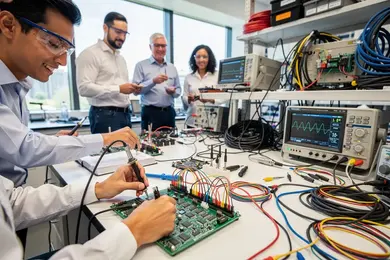
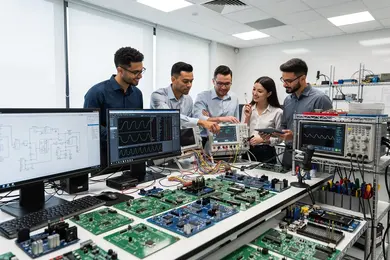
- How are labs completed: at home, through simulation, during campus intensives, or at approved local sites?
- Can senior design, capstone, or thesis projects focus on solar, wind, batteries, microgrids, electric vehicles, or grid modernization?
- What employers, utilities, manufacturers, or energy firms have recently hired graduates from the program?
Avoid programs that advertise "green energy" heavily but provide little electrical engineering depth. Renewable energy employers often need engineers who can analyze circuits, protection systems, converters, grid interconnection, reliability, and safety-not just understand sustainability concepts.
What accreditation should an online electrical engineering program have?
An online electrical engineering program should come from an institution with recognized institutional accreditation and, for bachelor's programs, ideally programmatic accreditation from ABET's Engineering Accreditation Commission. ABET accreditation is especially important if you want maximum flexibility for engineering employment, graduate school, federal roles, or future Professional Engineer licensure.
Accreditation matters because electrical engineering is a safety-critical discipline. Engineers may work on utility interconnection, substations, battery systems, electric vehicle charging, power converters, control systems, and equipment that must meet technical standards. Employers and licensing boards often use accreditation as a quality signal that the curriculum includes the expected engineering science, math, design, ethics, and lab components.
The table below explains the main types of accreditation and why each matters when comparing online programs. Use it to separate legitimate engineering degrees from less rigorous or poorly recognized options.
| Accreditation type | What it means | Why it matters for renewable energy careers |
| Institutional accreditation | The college or university is reviewed by a recognized accreditor | Usually required for federal financial aid, transfer credit, and employer recognition |
| ABET Engineering Accreditation Commission | The engineering program meets discipline-specific quality standards | Strongest signal for traditional electrical engineering roles and many licensure pathways |
| ABET Engineering Technology Accreditation Commission | The engineering technology program meets applied technical standards | Useful for applied technical careers, though not always equivalent to an engineering degree for licensure or engineering titles |
| State authorization | The school is allowed to enroll online students in your state | Important for distance learners, especially if internships, labs, or licensure-related requirements are involved |
A common red flag is a school that says it is "accredited" without clearly naming the accreditor or specifying whether the exact electrical engineering program is ABET-accredited. Institutional accreditation and programmatic accreditation are different, and one does not automatically imply the other.
Before enrolling, verify accreditation directly through ABET's public program search and the institution's accreditation page. Also confirm that your state licensing board accepts the degree if you plan to pursue the Fundamentals of Engineering exam and later Professional Engineer licensure.
How do online and campus electrical engineering programs compare?
Online and campus electrical engineering programs can lead to similar academic outcomes when the curriculum, faculty expectations, labs, and accreditation are comparable. The biggest differences are usually delivery format, lab logistics, peer interaction, scheduling flexibility, and access to local energy employers.
Online study is often attractive to working adults, military students, caregivers, and technicians already employed in utilities or manufacturing. Campus study may be better for students who need frequent in-person tutoring, want access to physical labs every week, or value face-to-face recruiting and research opportunities.
The table below summarizes the trade-offs that most affect learning quality and career preparation. It is especially useful if you are deciding whether online flexibility is worth the extra responsibility of self-directed study.
| Factor | Online electrical engineering | Campus electrical engineering |
| Schedule | More flexible; may include asynchronous lectures and evening work | More structured; classes and labs meet at fixed times |
| Labs | May use lab kits, remote labs, simulations, campus intensives, or approved local facilities | Regular access to physical equipment, lab staff, and in-person troubleshooting |
| Networking | Depends on virtual advising, project teams, employer webinars, and local internships | Easier access to student groups, research labs, faculty offices, and campus recruiting |
| Best for | Disciplined learners who need flexibility and can plan independent study time | Students who want immersive in-person support and daily engineering community |
| Main risk | Falling behind in math-heavy courses without a strong weekly study routine | Less flexibility for students balancing full-time work or family responsibilities |
Online STEM degrees vary in how they handle hands-on learning. Even outside engineering, programs such as an exercise science degree online show why students should ask how labs, practicums, and local site requirements work before assuming every requirement can be completed fully at home.
Choose online if flexibility is essential and the school can clearly explain lab delivery, instructor access, tutoring, and career support. Choose campus if you learn best through frequent in-person interaction or want easier access to research groups, lab assistant roles, and regional energy industry recruiting.
What renewable energy courses are in an electrical engineering degree?
A renewable energy-focused electrical engineering degree usually starts with the same foundation as any rigorous EE program: calculus, differential equations, physics, circuits, digital systems, electronics, signals, electromagnetics, controls, and engineering design. The renewable energy focus comes through upper-division electives, labs, capstones, and sometimes graduate-level concentrations.
Look for courses that connect electrical engineering fundamentals to real energy systems. These subjects are more valuable than broad sustainability survey courses if your goal is to design, analyze, test, or operate renewable energy infrastructure:
- Power systems: Grid modeling, load flow, fault analysis, protection, transmission, distribution, and interconnection studies.
- Power electronics: Converters, inverters, rectifiers, motor drives, switching devices, and control of energy conversion equipment.
- Renewable energy systems: Solar photovoltaic systems, wind energy conversion, hydroelectric concepts, distributed generation, and hybrid systems.
- Energy storage: Battery systems, battery management, thermal considerations, grid-scale storage, and safety constraints.
- Smart grid and microgrids: Grid communications, automation, distributed controls, resilience, and demand response.
- Controls and embedded systems: Feedback systems, sensors, microcontrollers, and automation used in turbines, inverters, and energy devices.
- Electric machines and drives: Motors, generators, transformers, and drives used in wind turbines, industrial systems, and electric vehicles.
- Power quality and reliability: Harmonics, voltage regulation, reliability analysis, and equipment performance in renewable-heavy grids.
Renewable energy engineering is also becoming more data-intensive. Smart meters, grid sensors, inverter telemetry, weather forecasting, and predictive maintenance all create data streams that engineers must interpret. Students who want to strengthen this side of their profile may compare engineering electives with complementary data science programs, especially if they are interested in grid analytics, forecasting, or energy software roles.
When reviewing curricula, pay attention to prerequisites. A course titled "renewable energy" may be introductory, while a course in power electronics or power systems analysis may be more valuable for engineering roles even if the title sounds less green.
What admission requirements do online electrical engineering programs have?
Admission requirements vary by degree level, but online electrical engineering programs usually expect strong preparation in math and science. Bachelor's programs often review high school transcripts, transfer credits, calculus readiness, physics background, GPA, and sometimes standardized test scores if the school still uses them.
Master's programs usually require a bachelor's degree in electrical engineering or a closely related field, transcripts, prerequisite coursework, references, and sometimes a statement of purpose.
The most important admission issue is not just getting accepted. It is making sure you can start at the right academic level. Electrical engineering builds quickly from calculus and physics into circuits, electronics, signals, controls, and power systems, so weak preparation can extend your timeline and raise your cost.
Use the list below as a practical readiness check before applying. If several items are missing, ask admissions whether the program offers bridge courses or whether you should complete prerequisites at a community college first.
- You are ready for calculus or have already completed college algebra, trigonometry, precalculus, or calculus with solid grades.
- You have completed or can soon complete calculus-based physics, especially mechanics and electricity and magnetism.
- You can commit consistent weekly time to problem sets, labs, projects, and exam preparation.
- You understand the program's transfer credit policy, including limits on older technical credits.
- You have confirmed whether labs require travel, scheduled synchronous sessions, special equipment, or proctored exams.
- You have checked whether the degree title is electrical engineering, electrical engineering technology, or a related engineering field.
Some students discover that a different technical pathway fits better. For example, students more interested in software, automation, simulations, or energy data platforms may compare electrical engineering with a computer science bachelor degree online before committing to a math- and hardware-heavy engineering curriculum.
Avoid the mistake of choosing the fastest admission offer without reviewing prerequisites and support services. A program that admits you quickly but offers little math tutoring, advising, or lab guidance may become more expensive if you need to repeat core courses.
How long does an online electrical engineering degree take?
An online bachelor's degree in electrical engineering typically takes about four years for full-time first-time students, but many online learners take longer because they study part time, transfer credits, or balance employment. A master's degree often takes one to three years depending on course load, prerequisites, thesis requirements, and whether the student is working full time.
Timeline is one of the most important ROI factors because engineering courses are sequential. If a required course is offered only once per year and you miss it, graduation can be delayed even if you have completed many credits.
The table below shows realistic timelines by student type. Use it to estimate not only graduation date, but also how long you may be paying tuition, delaying earnings growth, or balancing school with work.
| Student pathway | Typical time frame | What affects the timeline most |
| First-time full-time bachelor's student | About 4 years | Calculus readiness, course sequencing, lab availability, and full-time credit load |
| Transfer student with an associate degree | About 2 to 3 years after transfer | How many credits apply to the engineering major rather than only general education |
| Part-time bachelor's student | Often 5 to 7 years | Work schedule, course rotations, summer enrollment, and prerequisite pacing |
| Online master's student | About 1 to 3 years | Thesis versus coursework-only format, employer tuition support, and prerequisite gaps |
| Graduate certificate student | Often less than 1 year to 18 months | Number of courses, term length, and whether credits can later transfer into a master's degree |
To shorten the timeline safely, prioritize transfer planning over course overload. Taking calculus, physics, and general education courses at a lower-cost institution can help, but only if the engineering school confirms in writing that those courses will transfer and satisfy degree requirements.
Be cautious with accelerated claims. Electrical engineering is conceptually cumulative, and moving too fast through circuits, electronics, signals, or controls can weaken your preparation for power systems and renewable energy design work.
What does an online electrical engineering degree cost?
The cost of an online electrical engineering degree depends on residency status, public versus private tuition, transfer credits, fees, lab requirements, books, software, equipment, travel, and how long it takes to graduate. Tuition is only one part of the total cost, especially in engineering programs that may require lab kits, proctoring, simulation software, or campus residencies.
College Board's 2024 pricing report gives a useful national benchmark for published tuition and fees at four-year institutions. These figures are not specific to electrical engineering, but they help students compare whether an online program's tuition is above or below common U.S. pricing levels.
- In-state students at public four-year institutions: $11,610 per year.
- Out-of-state students at public four-year institutions: $30,780 per year.
- Private nonprofit four-year institutions: $43,350 per year.
Online students should calculate total program cost, not just price per credit. A lower per-credit rate can become less attractive if the school accepts few transfer credits, charges high distance-learning fees, or requires repeated travel for labs.
The table below lists major cost factors and why each one matters. Use it when comparing financial aid offers or speaking with admissions and billing offices.
| Cost factor | Why it matters | Question to ask |
| Tuition per credit | Core driver of cost, especially for students completing many major credits | Is the rate different for online, out-of-state, or upper-division engineering courses? |
| Transfer credit acceptance | Accepted credits can reduce both time and tuition | How many credits will apply directly to the electrical engineering degree plan? |
| Engineering and technology fees | Engineering programs may charge additional course or lab fees | Are there separate fees for labs, software, proctoring, or equipment? |
| Lab travel or campus intensives | Travel, lodging, and time off work can add significant indirect cost | Are any in-person sessions required, and how often? |
| Time to completion | Extra semesters add tuition and may delay career advancement | Are required courses offered every term or only once per year? |
| Employer tuition assistance | Can reduce out-of-pocket cost for working adults | Does the program schedule align with employer reimbursement rules? |
To reduce cost, compare public online programs, maximize approved transfer credits, ask about scholarships for engineering students, use employer tuition assistance if available, and avoid borrowing for courses that may not count toward the degree. Also review whether financial aid requires a minimum credit load that fits your work schedule.
What jobs can you get with an electrical engineering degree in renewable energy?
An electrical engineering degree can lead to renewable energy roles in utilities, solar and wind development, battery storage, power electronics manufacturing, electric vehicle infrastructure, grid modernization, consulting, automation, and energy software. The best-fit role depends on whether your degree is engineering or engineering technology, your internship experience, and your strength in power systems, controls, electronics, and data analysis.
According to the BLS Occupational Outlook Handbook, employment for electrical and electronics engineers is projected to grow 9% from 2023 to 2033. That outlook covers more than renewable energy alone, but it signals that engineering demand is being supported by areas such as manufacturing, research and development, semiconductors, power systems, and connected technologies.
The table below connects common renewable energy job titles with typical responsibilities. Titles vary by employer, so read job descriptions carefully rather than relying only on the position name.
| Job title | Typical responsibilities | Helpful coursework or experience |
| Power systems engineer | Analyze transmission, distribution, protection, load flow, reliability, and grid interconnection | Power systems, protection, power quality, utility internships |
| Solar design engineer | Design photovoltaic electrical systems, review layouts, size equipment, and support permitting | Renewable energy systems, NEC familiarity, CAD, power electronics |
| Wind energy electrical engineer | Work on turbine electrical systems, collection networks, controls, and grid connection | Electric machines, controls, power systems, field experience |
| Battery energy storage systems engineer | Support battery system design, integration, safety review, controls, and grid services | Energy storage, power electronics, thermal and safety concepts |
| Power electronics engineer | Develop converters, inverters, drives, and control systems for renewable and EV applications | Electronics, power electronics, embedded systems, simulation tools |
| Microgrid engineer | Design and analyze distributed generation, storage, controls, and resilience systems | Smart grid, controls, protection, energy modeling |
| Grid modernization engineer | Support automation, sensors, communications, reliability, and distributed energy resource integration | Power systems, communications, data analysis, controls |
Entry-level candidates can improve their prospects by completing an energy-related capstone, joining IEEE or a power and energy student group, learning industry software used in power analysis, and seeking internships with utilities, EPC firms, manufacturers, or energy developers.
A common mistake is assuming that passion for sustainability is enough. Employers usually screen for engineering fundamentals, project experience, software tools, safety awareness, and the ability to communicate technical trade-offs to project managers, clients, or regulatory teams.
What salary can renewable energy electrical engineers expect?
Renewable energy electrical engineer salaries vary by job title, industry, state, seniority, licensure, and whether the role involves design authority, field commissioning, project management, or specialized power electronics. The most reliable broad benchmark is the BLS May 2024 median annual wage for electrical engineers, which was $111,910.
That median should be used as context, not a promise. Entry-level roles may pay less, while experienced engineers in high-cost regions, specialized power electronics, utility planning, or engineering management may earn more. Renewable energy job titles also overlap with broader categories such as electrical engineer, electronics engineer, energy engineer, power systems engineer, and project engineer.
The table below gives a practical salary context by career stage. It avoids implying guaranteed outcomes and instead shows how responsibilities usually change as engineers gain experience.
| Career stage | Typical role focus | Salary interpretation |
| Entry level | Calculations, drawings, testing, documentation, simulations, and supervised design work | Often below the occupation median until the engineer gains project and technical ownership |
| Early career | Independent design tasks, field support, interconnection studies, equipment selection, and client coordination | May approach or exceed broad occupation benchmarks depending on employer and region |
| Experienced engineer | Lead design, protection studies, grid analysis, controls strategy, commissioning, or technical review | Often influenced by specialization, licensure, industry, and responsibility for safety-critical decisions |
| Senior or lead engineer | Project leadership, standards review, mentoring, risk management, and cross-disciplinary coordination | Compensation may include higher base pay, bonuses, or management-track opportunities |
To evaluate salary potential, compare job postings in your target region and track the required tools, certifications, and experience. A degree is the foundation, but internships, software proficiency, communication skills, and licensure eligibility can strongly affect competitiveness.
Do renewable energy electrical engineers need licensure or certifications?
Renewable energy electrical engineers do not always need licensure, but Professional Engineer licensure can be important for roles involving public safety, stamped engineering documents, consulting, utility infrastructure, or responsible charge over design work. Requirements vary by state, so students should check the licensing board where they plan to work.
The typical PE pathway includes graduating from an eligible engineering program, passing the Fundamentals of Engineering exam, gaining qualifying supervised engineering experience, and passing the Principles and Practice of Engineering exam. ABET-accredited engineering degrees usually provide the clearest route, though state rules differ.
Certifications can also help, especially when they match a specific job function. They are usually supplements to a degree, not replacements for engineering education.
| Credential | Best for | Why it may matter |
| Fundamentals of Engineering exam | Students or recent graduates pursuing the Engineer in Training or Engineer Intern designation | First major step toward PE licensure in many states |
| Professional Engineer license | Engineers responsible for public-facing design, consulting, or stamped documents | Can expand authority and credibility for certain power and infrastructure roles |
| NABCEP credentials | Solar photovoltaic professionals and designers | Recognized in the solar industry, particularly for PV installation and design knowledge |
| Project Management Professional | Engineers moving into project leadership | Useful for managing schedules, budgets, teams, vendors, and stakeholders |
| Software or vendor training | Engineers using specialized power, modeling, protection, or design tools | Can show practical readiness for employer-specific workflows |
Before paying for a certification, check job postings for the roles you want. If employers consistently request PE eligibility, NABCEP, power systems software, safety training, or project management experience, prioritize the credential that appears most often in your target market.
Avoid assuming that certifications can compensate for a non-accredited or weak degree if your target role requires an engineering background. The smartest path is usually a strong accredited degree first, then targeted credentials based on the renewable energy niche you want to enter.
Other Things You Should Know About Electrical Engineering Degrees
It can be challenging online because the major is math-heavy and requires consistent practice. Students who succeed usually have strong time management, use tutoring early, form study groups, and treat asynchronous courses like scheduled classes.
Often, yes. Some programs require lab kits, circuit components, calculators, webcams for proctoring, or specific software. Ask for a complete equipment and software list before enrolling so you can budget accurately.
A minor can help if it supports your target role. Useful options may include computer science, mathematics, data analytics, environmental science, business, or physics, but core engineering performance and project experience usually matter more than the minor itself.
An online electrical engineering degree should be accredited by ABET’s Engineering Accreditation Commission, or EAC. ABET accreditation signals that the curriculum meets recognized engineering standards and is the credential most often expected by employers and state licensing boards for engineering roles.
References
- Renewable Energy Engineer: Empowering Sustainable Futures https://enable.green/esg-roles/green-energy-careers/renewable-energy-engineer-job-description/
- What certifications do I need for electrical work in renewable energy? https://gtec.co.uk/insights/what-certifications-do-i-need-electrical-work-renewable-energy
- The Significance of Electrical Engineering Certification for Professional Advancement - CertLibrary Blog https://www.certlibrary.com/blog/the-significance-of-electrical-engineering-certification-for-professional-advancement/
- Best Online Electrical Engineering Degrees 2025 https://www.onlineu.com/degrees/electrical-engineering
- NextGenEnergyJobs.com | The #1 Renewable Energy Job Board https://www.nextgenenergyjobs.com/career-advice/electrical-engineer-renewable-energy-salary
- Diploma in Renewable Energy (Electrical) - iLearn Engineering® https://www.ilearnengineering.com/course/diploma-in-renewable-energy-electrical