2027 How to Choose an Online Electrical Engineering Degree for Automation Careers

Co-Founder and Chief Data Scientist
Choosing an online electrical engineering degree for automation is a high-stakes decision because the field blends hardware, software, robotics, controls, and industrial systems. The U. S. Bureau of Labor Statistics reports a 2024 median annual wage of $111,910 for electrical engineers, but outcomes vary by industry, experience, and credentials.
This guide is for students, working technicians, military learners, and career changers comparing online programs. You will learn how to judge accreditation, curriculum, cost, lab quality, career fit, and ROI before enrolling.
Key Things You Should Know
- Prioritize ABET-accredited bachelor's programs if you want the broadest eligibility for engineering roles, graduate study, and possible Professional Engineer licensure later.
- Use salary data cautiously: BLS reported a 2024 median wage of $111,910 for electrical engineers, but automation-specific pay depends heavily on industry, travel, programming depth, and hands-on controls experience.
- Compare total cost, not just tuition; College Board's 2024 pricing data shows published annual tuition and fees averaging $11,610 for in-state public four-year colleges and $43,350 for private nonprofit four-year colleges.
What is an online electrical engineering degree with a focus on automation?
An online electrical engineering degree with an automation focus is a degree program that teaches students how electrical systems are designed, controlled, monitored, and integrated into automated equipment. Instead of studying only circuits or power systems in isolation, automation-focused students learn how sensors, motors, programmable logic controllers, robotics, embedded systems, control theory, and industrial networks work together in real facilities.
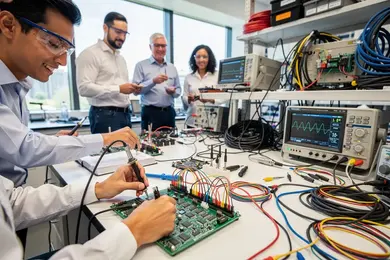
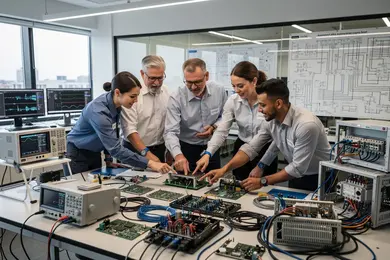
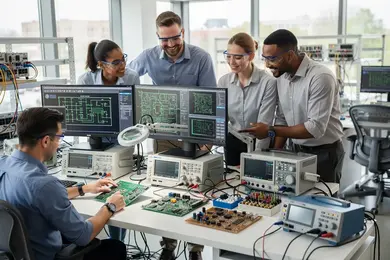
The "online" label can mean several things. Some programs deliver lectures and assignments fully online but require in-person labs, proctored exams, short campus residencies, or locally arranged lab work. Others use remote lab kits, simulation software, and virtual instrumentation. For automation careers, the most valuable programs do not treat online learning as passive video watching; they require students to build, program, troubleshoot, and document systems.
This degree is usually a good fit if you want roles in manufacturing automation, robotics integration, energy systems, industrial controls, semiconductor production, building automation, utilities, aerospace, or test engineering. If your main goal is software development, AI engineering, or cloud computing, an affordable online computer science degree may be a better fit, especially if you do not want a math-heavy hardware curriculum.
The table below compares common degree levels so you can match the credential to your starting point and career goal.
| Program type | Typical fit | Automation relevance | Main limitation |
| Associate degree in electronics, electrical engineering technology, or mechatronics | Technicians, maintenance workers, and learners who want faster entry | Strong for PLCs, wiring, troubleshooting, motors, and instrumentation | May not qualify for engineering titles or PE pathways in many settings |
| Bachelor's in electrical engineering | Students seeking engineer-level design, controls, power, robotics, or systems roles | Best all-around degree for automation engineering careers | Requires substantial calculus, physics, labs, and time commitment |
| Bachelor's in electrical engineering technology | Hands-on learners focused on implementation and applied systems | Useful for controls, field engineering, automation support, and testing | May be viewed differently than an engineering degree by some employers and licensing boards |
| Master's in electrical engineering, systems engineering, robotics, or controls | Engineers who want advanced automation, autonomy, signal processing, or controls roles | Strong for specialization and advancement | Usually requires a technical bachelor's background |
| Graduate certificate in automation, controls, robotics, or embedded systems | Working engineers who need targeted upskilling | Good for adding specialized skills without a full degree | Not a substitute for an accredited bachelor's degree when one is required |
How do online and on-campus electrical engineering programs for automation compare?
Online and on-campus programs can lead to similar academic outcomes when the curriculum, faculty expectations, labs, and accreditation are comparable. The key difference is not whether lectures happen on a campus; it is whether students get enough guided practice with measurement tools, circuits, controls software, and automation hardware.
The comparison below highlights the trade-offs that matter most for automation students, especially those who need flexibility but cannot afford a weak lab experience.
| Factor | Online electrical engineering program | On-campus electrical engineering program | Best choice when |
| Schedule flexibility | Often better for working adults, military learners, parents, and students far from campus | Usually tied to fixed class and lab schedules | Online is stronger if you need to keep working while studying |
| Laboratory access | May use mailed kits, simulation, remote labs, or short residencies | Usually offers direct access to benches, oscilloscopes, drives, robots, and faculty support | Campus is stronger if you learn best through supervised hands-on work |
| Automation equipment | Quality varies widely; strong programs specify PLCs, controllers, software, and lab tools | Often easier to verify through lab tours and faculty conversations | Choose the program that shows clear evidence of real controls and instrumentation work |
| Networking and recruiting | Can be strong if the school has employer partnerships, virtual career fairs, and project teams | Often easier for internships, student clubs, and local employer visits | Campus may help if you are entering engineering with no industry contacts |
| Cost and relocation | May reduce commuting or relocation costs, though lab fees and equipment costs can add up | May require housing, transportation, and schedule changes | Online may be better if the program is accredited and you can complete labs affordably |
Students often assume online programs are automatically less hands-on, but that is not always true. The better question is whether the program documents how students complete labs, capstone projects, teamwork, safety training, and troubleshooting. This is the same kind of scrutiny students should apply to other hands-on online fields, such as an online sports science degree, where practical experience is central to professional preparation.
Online learning makes the most sense if you are self-directed, already work in a technical environment, can create a reliable study schedule, and have access to employer-sponsored projects or equipment. On-campus learning may be better if you are new to engineering, need structured lab support, want a residential college experience, or plan to compete for internships that recruit heavily from campus.
What accreditation should an online electrical engineering program for automation have?
Accreditation is one of the most important filters when choosing an online electrical engineering degree. At the institutional level, the college or university should be accredited by an accreditor recognized by the U.S. Department of Education or the Council for Higher Education Accreditation. At the program level, the strongest signal for engineering is ABET accreditation, especially for bachelor's programs in electrical engineering.
ABET accreditation matters because it evaluates whether a program meets accepted standards for engineering curriculum, faculty qualifications, student outcomes, continuous improvement, and facilities. For students interested in automation, it does not guarantee a specific job, but it can reduce risk when applying for engineering roles, graduate programs, employer tuition reimbursement, and licensure pathways.
Before you apply, verify accreditation directly rather than relying only on marketing pages. Use this checklist to avoid costly misunderstandings:
- Confirm that the institution itself is accredited by a recognized institutional accreditor.
- Check whether the exact online electrical engineering program, not just the university, has ABET accreditation.
- Look at the program name carefully because electrical engineering, electrical engineering technology, electronics engineering technology, and mechatronics are not identical credentials.
- Ask whether online students receive the same transcript notation as campus students.
- If PE licensure may matter later, contact your state engineering board to confirm how it treats the degree.
A common mistake is choosing a low-cost program that sounds engineering-related but lacks the recognition needed for your target role. This can be especially risky if you plan to work in utilities, public infrastructure, consulting, or regulated industries where employers may screen for ABET-accredited engineering degrees.
Which courses and specializations matter most for automation-focused electrical engineering majors?
Automation is interdisciplinary, so a strong program should go beyond basic circuit theory. The curriculum should help you understand how physical systems behave, how controllers make decisions, how machines communicate, and how engineers verify that systems are safe and reliable.
The table below shows the courses and skill areas that most directly support automation careers. Use it as a curriculum audit when comparing degree plans.
| Course or specialization area | Why it matters for automation | What to look for in the program |
| Circuits and electronics | Builds the foundation for sensors, actuators, drives, and control hardware | Labs involving measurement, signal behavior, circuit design, and troubleshooting |
| Signals and systems | Helps students model dynamic systems, noise, filtering, and system response | Assignments using simulation tools and real-world signal interpretation |
| Control systems | Central to feedback loops, stability, process control, and motion control | Coverage of PID control, state-space methods, stability analysis, and control design |
| Embedded systems and microcontrollers | Supports smart devices, machine controllers, and sensor-based automation | Hands-on programming with microcontrollers, real-time constraints, and interfaces |
| Power electronics and motors | Important for drives, robotics, conveyors, pumps, and industrial equipment | Coverage of motor control, variable-frequency drives, converters, and safety |
| PLC programming and industrial networks | Directly applies to factories, utilities, logistics, and process automation | Exposure to ladder logic, structured text, HMIs, SCADA, fieldbus, and Ethernet-based protocols |
| Robotics and mechatronics | Connects mechanical motion, control, sensors, and software | Projects involving kinematics, motion planning, actuators, and system integration |
| Cybersecurity for industrial systems | Protects connected control systems and operational technology environments | Discussion of network segmentation, secure remote access, and OT risk |
Current automation roles increasingly reward engineers who can work with data from machines, sensors, and production systems. If you want to complement electrical engineering with analytics, a structured data science learning path can help you understand predictive maintenance, process optimization, computer vision, and AI-assisted quality control.
For the strongest career preparation, look for a capstone project that requires you to design or improve a working system. Good examples include an automated sorting station, motor control system, robotic workcell, smart building controller, renewable energy monitoring platform, or digital twin connected to live sensor data.
What admission requirements and prior math or science background are typically expected?
Admission requirements vary by school and degree level, but electrical engineering is usually one of the more math-intensive undergraduate majors. Online programs may be flexible in delivery, yet they rarely reduce the technical expectations. Students should be ready for calculus, physics, programming, and lab-based problem solving.
Most bachelor's programs expect evidence that you can handle college-level quantitative work. Typical requirements may include the following:
- High school diploma, GED, or equivalent credential for first-year admission.
- Prior coursework in algebra, trigonometry, precalculus, chemistry, and physics, depending on the school.
- College transcripts for transfer applicants, especially if you have completed calculus, physics, programming, or electronics courses.
- Minimum GPA requirements that may differ for first-year, transfer, and major-specific admission.
- Placement testing or prerequisite review before enrolling in calculus, physics, or engineering courses.
- For master's programs, a bachelor's degree in electrical engineering or a closely related technical field, often with prerequisite gaps reviewed individually.
If your math background is weak, do not ignore it. A slower start with precalculus, calculus readiness modules, or community college prerequisites may be more efficient than failing a core engineering sequence. The smartest path is often to strengthen math before enrolling full time, especially if you will be working while studying.
Transfer students should pay close attention to course equivalency. A course titled "electronics" or "applied calculus" may not automatically satisfy an engineering program's requirements. Ask the school for a written transfer evaluation before committing, and confirm whether transferred credits affect your time to graduation, financial aid eligibility, or access to upper-division courses.
How long do online electrical engineering degrees take and what do they cost?
A bachelor's degree in electrical engineering typically requires about four years of full-time study, but online students often take longer because many are working adults. Transfer credits, summer enrollment, prerequisite gaps, and lab scheduling can significantly change the timeline. An associate degree may take about two years full time, while a master's degree commonly takes one to three years depending on course load.
Cost varies widely by institution, residency status, credits required, lab fees, and whether you already have transferable coursework. College Board's 2024 data reported average published tuition and fees of $11,610 for in-state students at public four-year colleges and $43,350 at private nonprofit four-year colleges. For online engineering students, the practical takeaway is to calculate the full degree cost, not just the per-credit price.
When comparing programs, include all major cost categories so you can estimate a realistic budget:
- Tuition per credit and the total number of credits required for the degree.
- Mandatory online learning, technology, engineering, lab, or proctoring fees.
- Required software, calculator, lab kits, circuit components, microcontroller boards, or test equipment.
- Travel costs for campus intensives, internships, exams, or required residencies.
- Books, simulation tools, cloud-based platforms, and professional exam preparation materials.
- Opportunity cost if you reduce work hours to complete labs, projects, or internships.
Financial aid can reduce out-of-pocket cost, but borrowing should be evaluated carefully. For federal student loans first disbursed in the 2024-25 academic year, the undergraduate Direct Loan fixed interest rate was 6.53%, which makes program length and unnecessary credits more expensive over time. Ask each school whether it offers transfer scholarships, employer partnership discounts, military benefits, paid co-ops, or credit for prior learning.
Accelerated programs can be worthwhile if you already have strong math preparation, significant transfer credit, and enough weekly study time. They can backfire if compressed courses leave too little time for engineering practice. For automation, speed should not come at the expense of labs, capstone quality, or internship access.
What automation careers can you pursue with an online electrical engineering degree?
An online electrical engineering degree can prepare students for automation-related roles across manufacturing, energy, utilities, logistics, aerospace, automotive, electronics, building systems, medical devices, food processing, and semiconductor production. The exact roles available depend on degree level, ABET status, internship experience, programming skills, and how much hands-on lab or field experience you have.
The table below summarizes common automation career paths and what each role usually emphasizes.
| Career path | Typical responsibilities | Skills that matter most |
| Automation engineer | Designs, programs, tests, and improves automated production or process systems | Controls, PLCs, sensors, HMIs, troubleshooting, documentation |
| Controls engineer | Develops feedback control systems for machines, processes, motors, or robotics | Control theory, PID tuning, drives, modeling, industrial software |
| Robotics engineer or robotics integration engineer | Implements robotic workcells, end effectors, safety systems, and motion programs | Robotics, motion control, vision systems, safety standards, mechatronics |
| Electrical design engineer | Designs panels, power distribution, wiring diagrams, and control hardware | CAD tools, electrical codes, schematics, motors, power electronics |
| Test engineer | Builds and runs systems that verify product performance, reliability, or compliance | Instrumentation, data acquisition, scripting, measurement, statistics |
| SCADA or industrial systems engineer | Supports monitoring, control, and communication systems for distributed operations | SCADA, networks, cybersecurity basics, databases, industrial protocols |
| Field applications or commissioning engineer | Installs, validates, troubleshoots, and trains users on automation equipment | Customer communication, travel readiness, diagnostics, controls hardware |
Automation also overlaps with sustainability and infrastructure. Students interested in water systems, renewable energy, pollution control equipment, smart grids, or environmental monitoring may find that an online environmental engineering degree aligns better with their long-term goals than a traditional automation-heavy electrical engineering path.
Entry-level candidates often begin as electrical engineers, controls technicians, automation specialists, test engineers, field engineers, or applications engineers. Advancement usually comes from leading commissioning projects, designing larger systems, managing safety and compliance, mentoring technicians, or moving into systems architecture, project management, or engineering leadership.
What is the salary potential and job outlook for electrical engineers in automation?
Salary potential for automation-focused electrical engineers is generally tied to the broader electrical engineering labor market, but automation skills can be especially valuable in industries that depend on reliability, uptime, robotics, and high-volume production.
According to the U.S. Bureau of Labor Statistics, the 2024 median annual wage for electrical engineers was $111,910. This is a national median, not a promise for any graduate, and it includes many types of electrical engineering work beyond automation.
The job outlook is also favorable but should be interpreted carefully. BLS projected employment for electrical and electronics engineers to grow 9% from 2023 to 2033, which indicates demand above many occupations but does not mean every location or specialty will expand equally. Automation opportunities often track capital investment, reshoring, semiconductor activity, robotics adoption, energy modernization, and manufacturing competitiveness.
The table below shows major factors that can move salary and career options up or down for automation-oriented electrical engineers.
| Factor | How it affects salary and opportunity | What students can do |
| Industry | Semiconductors, aerospace, energy, advanced manufacturing, and automation vendors may pay differently than smaller local employers | Compare employer demand in your target region before choosing electives |
| Hands-on controls experience | Employers often value candidates who can troubleshoot real systems, not just explain theory | Build PLC, robotics, motor control, or instrumentation projects |
| Programming ability | Automation roles increasingly involve scripting, data handling, embedded code, and industrial software | Learn Python, C or C++, ladder logic, structured text, and version control where relevant |
| Travel and commissioning | Field-based roles may offer faster experience growth but can involve irregular schedules | Decide early whether travel-heavy work fits your lifestyle |
| Licensure and regulated work | PE credentials may matter more in utilities, public infrastructure, and consulting than in many factory roles | Keep the PE pathway open with an ABET-accredited degree if that future is possible |
AI and automation are not replacing the need for electrical engineers; they are changing the skill mix. Employers increasingly look for engineers who can integrate sensors, controls, data systems, machine vision, cybersecurity practices, and human-machine interfaces. Programs that treat automation as both hardware and software preparation are usually better aligned with this trend.
Are licenses, certifications, or PE registration needed for automation engineering roles?
Many automation engineering roles do not legally require Professional Engineer registration, especially jobs inside manufacturing companies, equipment vendors, robotics integrators, and product development teams. However, licensure can matter for work involving public safety, utilities, consulting, stamped engineering documents, building systems, or public infrastructure. Requirements vary by state, so students should verify rules with the relevant state engineering board.
The standard PE pathway usually includes earning an engineering degree from an acceptable program, passing the Fundamentals of Engineering exam, gaining qualifying supervised engineering experience, and passing the PE exam. An ABET-accredited electrical engineering bachelor's degree can make this path more straightforward in many states, but state rules differ.
Certifications are not a replacement for an engineering degree, but they can strengthen an automation résumé when they match the tools employers use. Consider certifications only after you know your target role and industry:
- Fundamentals of Engineering exam for students or graduates who want to keep the PE pathway open.
- Professional Engineer license for roles involving regulated engineering services, public infrastructure, or responsible charge.
- ISA Certified Automation Professional for experienced automation professionals who meet eligibility requirements.
- Vendor training or credentials from major PLC, robotics, drives, HMI, or industrial networking platforms used by target employers.
- Cybersecurity or industrial control systems training for roles involving connected operational technology environments.
A common mistake is collecting certifications before building fundamentals. For early-career students, calculus-based engineering coursework, lab projects, internships, and a strong capstone usually matter more than a long list of short credentials. Certifications become more powerful when they reinforce real projects you can explain in interviews.
How can you systematically evaluate and choose a reputable online automation program?
The best program is not simply the cheapest, fastest, or highest-ranked option. It is the program that matches your target automation role, preserves future options, fits your schedule, and provides credible engineering preparation at a cost you can justify.
Use the following step-by-step process to compare programs consistently:
- Define your target outcome first, such as controls engineer, automation engineer, robotics integrator, test engineer, or electrical design engineer.
- Filter for institutional accreditation and, for bachelor's engineering programs, verify whether the exact program has ABET accreditation.
- Audit the curriculum for controls, embedded systems, PLCs, robotics, power electronics, industrial networks, instrumentation, and a substantial capstone.
- Ask how online labs work, including equipment, software, remote access, safety requirements, faculty support, and any required campus visits.
- Request a written transfer credit review before enrolling, especially if you have community college, military, technical, or prior university credits.
- Calculate total cost through graduation, including fees, equipment, travel, interest on loans, and any credits that do not transfer.
- Review career support, internship access, employer partnerships, alumni outcomes, and whether online students receive the same services as campus students.
- Talk with an advisor, a faculty member, and ideally a current student before committing.
Red flags deserve special attention because they can turn a flexible online degree into an expensive detour. Watch for these warning signs:
- The school avoids clear answers about ABET status or uses vague phrases such as "aligned with ABET standards" instead of confirmed accreditation.
- The curriculum has few or no labs in circuits, electronics, controls, embedded systems, or instrumentation.
- The program promises unusually fast completion without explaining prerequisites, transfer limits, lab schedules, or course sequencing.
- Admissions staff discuss monthly payments but not total program cost, loan interest, graduation requirements, or transfer risk.
- The school cannot explain how online students access internships, capstone support, faculty office hours, or career services.
- The degree title sounds like electrical engineering but is actually a technology, technician, or general studies program that may not match your career goal.
Before you enroll, ask direct questions and keep written answers. Good questions include whether online and campus students earn the same degree, whether labs require travel, which automation platforms are used, how often courses are offered, what percentage of credits can transfer, and whether graduates have entered controls, robotics, power, test, or automation roles.
In general, choose an online electrical engineering program if it is accredited, technically rigorous, transparent about labs and cost, and compatible with your life. Consider a different path if you mainly want technician-level maintenance work, pure software roles, a very short credential, or a program that avoids calculus and physics but still claims to prepare engineers.
Other Things You Should Know About Electrical Engineering
Most online electrical engineering programs require calculus I–III, differential equations, and calculus-based physics before upper-division coursework. Some also expect programming in C++ or MATLAB. Programs may place students into remedial classes if placement scores or transfer credits do not meet these prerequisites.
Building projects that demonstrate your proficiency in robotic systems, PLC programming, and IoT devices can greatly enhance your automation engineering portfolio in 2027. Focus on integrating real-world scenarios, like smart home systems or automated manufacturing processes, to showcase your practical skills and innovative thinking.
Yes, many technicians use online degrees to move toward engineering roles. The transition is strongest when the program accepts relevant transfer credits, the student completes calculus-based engineering coursework, and work experience includes controls, instrumentation, electronics, or automation projects.
References
- High School Classes Required for College Admission - National Association for College Admission Counseling (NACAC) https://www.nacacnet.org/high-school-classes-required-for-college-admission/
- Online Electrical Engineering Degrees https://www.affordablecollegesonline.org/degrees/engineering-programs/electrical-engineering/
- What is a PE? https://www.nspe.org/about/about-professional-engineering/what-pe
- Job market for electrical engineers: no cause for concern https://pcim.mesago.com/nuernberg/en/pcim-insights/pcim-magazine/job-market-for-electrical-engineers-no-cause-for-concern.html
- Electrical Engineering and Its Automation https://see-en.tongji.edu.cn/info/1030/1299.htm
- What Can You Do with an Electrical Engineering Degree | HAN https://www.hanuniversity.com/en/programs/bachelor/electrical-and-electronic-engineering/fulltime/careers/
- Undergraduate MajorElectrical Engineering and Automation-CUGB https://en.cugb.edu.cn/SIE/40980.jhtml
- What are your criteria in choosing an automation tool? https://club.ministryoftesting.com/t/what-are-your-criteria-in-choosing-an-automation-tool/52102
- What Can You Do With an Electrical Engineering Degree? https://www.onlineu.com/resources/college-planning/what-can-you-do-with-electrical-engineering-degree
- Do I Need a Professional Engineer License? | Career Guide https://peaktechnical.com/do-i-need-a-professional-engineer-license/