2027 Best Online Bachelor's in Electrical Engineering With Asynchronous Coursework

Co-Founder and Chief Data Scientist
Choosing an online electrical engineering degree is a high-stakes decision because the right program must balance flexibility, lab training, accreditation, and career value. The need is timely. The U.S. Bureau of Labor Statistics projects employment for electrical and electronics engineers to grow 9% from 2023 to 2033, faster than the average for all occupations.
This guide is for working adults, transfer students, military learners, and first-time undergraduates who need asynchronous coursework. You will learn how programs work, what they cost, which schools to compare, and how to avoid costly enrollment mistakes.
Key Things You Should Know
- ABET-accredited online electrical engineering bachelor's options are limited, so students should verify both institutional accreditation and Engineering Accreditation Commission accreditation before applying.
- Asynchronous coursework can make lectures and assignments flexible, but labs, exams, group projects, and office hours may still require scheduled participation or specific hardware.
- BLS data published for the 2023 to 2033 period projects 9% employment growth for electrical and electronics engineers, while May 2024 wage data places the median annual pay for these roles at $118,780.
What is an online bachelor's in electrical engineering with asynchronous coursework?
An online bachelor's in electrical engineering with asynchronous coursework is a four-year undergraduate engineering degree that teaches students how to design, test, analyze, and improve electrical systems without requiring them to attend most class meetings at a fixed time. "Asynchronous" usually means lectures are recorded, readings and assignments are posted in a learning management system, and students complete weekly work by stated deadlines.
This format is especially useful for students who work full time, serve in the military, care for family members, or live far from an engineering campus. It is not the same as a self-paced degree, however. Most programs still follow academic terms, require prerequisite sequencing, and set due dates for homework, exams, labs, and design projects.
The key term to understand is electrical engineering. Unlike electrical engineering technology programs, which usually focus more on applied implementation and technical operations, electrical engineering programs typically emphasize calculus-based design, circuit theory, signals, electromagnetics, electronics, control systems, embedded systems, and power systems. That distinction matters because some employers, graduate schools, and licensing boards may treat engineering and engineering technology degrees differently.
Asynchronous online engineering also differs from online programs in fields with fewer lab and hardware requirements. Students comparing flexible degrees across disciplines may notice that programs such as the best library science programs can often move more coursework fully online with fewer physical lab constraints. Electrical engineering students should expect more structured technical requirements, even when lectures are flexible.
This degree generally fits students who want to pursue engineering roles in electronics, energy, telecommunications, automation, robotics, aerospace, defense, manufacturing, or embedded systems. It may not be the best fit for students who dislike advanced math, need a completely self-paced program with no lab deadlines, or want the fastest possible credential for technician-level work.
How does asynchronous online electrical engineering compare to traditional on-campus programs?
Asynchronous online electrical engineering programs can be academically comparable to campus programs when they use the same curriculum, faculty oversight, learning outcomes, and accreditation standards. The main difference is not necessarily what students learn, but how they access lectures, labs, advising, tutoring, and peer collaboration.
The table below summarizes the practical differences that usually matter most to students deciding between online and on-campus study. Use it to identify which format matches your learning style, schedule, and support needs.
| Comparison point | Asynchronous online electrical engineering | Traditional on-campus electrical engineering |
| Schedule flexibility | Best for students who need to watch lectures and complete assignments around work or family commitments. | Best for students who can attend classes, labs, and study sessions at fixed times. |
| Lab access | May use mailed lab kits, simulation software, remote lab platforms, or short scheduled sessions. | Usually uses campus labs with direct access to benches, equipment, and lab staff. |
| Peer interaction | Often depends on discussion boards, group project tools, video meetings, and proactive outreach. | Usually easier to build study groups and meet faculty informally. |
| Career services | Can be strong, but students may need to seek virtual career fairs, remote advising, and local internships. | Often provides more in-person employer events, lab assistant roles, and campus recruiting. |
| Best fit | Working adults, military learners, geographically distant students, and disciplined independent learners. | Students who want daily structure, in-person labs, and a traditional residential college experience. |
Online is not automatically easier. Electrical engineering is mathematically demanding in any format, and asynchronous study requires strong time management because falling behind in calculus, physics, circuits, or signals can quickly affect later courses.
A campus program may be better if you learn best through in-person demonstrations, want immediate access to specialized equipment, or plan to participate heavily in undergraduate research. An asynchronous online program may be better if flexibility determines whether you can enroll at all, especially if you already have transfer credits or technical work experience.

Which accredited schools offer fully online electrical engineering bachelor's degrees?
The strongest online electrical engineering bachelor's programs are typically those that combine regional or institutional accreditation with programmatic accreditation from ABET's Engineering Accreditation Commission. ABET accreditation is especially important for students who may later pursue professional engineering licensure, graduate school, federal engineering roles, or employers that prefer ABET-accredited degrees.
The table below highlights well-known U.S. options to investigate for fully online or primarily online electrical engineering bachelor's study. Program formats and accreditation listings can change, so students should confirm the current ABET status, delivery format, state authorization, and any in-person requirements directly with the school before applying.
| School | Online electrical engineering option | Why it may be a strong fit | Important point to verify |
| Arizona State University | Online Bachelor of Science in Engineering in Electrical Engineering | Good option for students seeking a large public research university with established online delivery and ABET-aligned engineering pathways. | Confirm current ABET listing, lab delivery, proctoring rules, and course availability by term. |
| University of North Dakota | Online Bachelor of Science in Electrical Engineering | Often considered by students who want an ABET-accredited public university engineering degree with distance delivery designed for working learners. | Confirm whether any labs, exams, or experiences require scheduled attendance, live participation, or special equipment. |
| Florida International University | Online Bachelor of Science in Electrical Engineering | May appeal to students looking for a public university option with online engineering coursework and a broad technical curriculum. | Confirm current accreditation, transfer policies, residency requirements, and availability in your state. |
Students should be cautious with "online electrical engineering" search results because some lead to electrical engineering technology, electronics engineering technology, computer engineering, or general engineering programs. Those can be valuable, but they may not serve the same career or licensure goals as an ABET-accredited electrical engineering degree.
Military-affiliated learners should also compare transfer credit, tuition assistance, Yellow Ribbon participation, deployment flexibility, and veteran advising. A deeper program-search resource for this audience is available in this guide to online electrical engineering degrees for veterans.
What admissions requirements and prior preparation are needed for these online programs?
Admissions requirements vary by school, but online electrical engineering bachelor's programs usually expect stronger math and science preparation than many other online undergraduate degrees. Students should be ready for calculus-based physics, differential equations, programming, and circuit analysis early in the curriculum.
Before applying, review the requirements below because missing prerequisites can add terms, increase cost, or delay admission to upper-division engineering courses:
- High school diploma, GED, or equivalent credential for first-year applicants.
- College preparatory math, ideally through pre-calculus or calculus, depending on the school's placement policy.
- Science preparation in physics and chemistry, especially for students entering directly from high school.
- Official transcripts from all prior colleges for transfer students.
- Minimum GPA requirements, which may differ for general university admission and engineering major admission.
- Placement tests or prerequisite checks for calculus, writing, chemistry, and physics.
- Possible programming or computing prerequisites, often in Python, C, C++, MATLAB, or a similar technical environment.
- English language proficiency documentation for applicants whose prior education was not in English.
Transfer students should pay close attention to course equivalency. A general physics course may not satisfy a calculus-based engineering physics requirement, and a college algebra course will not replace calculus. The most efficient path is often to complete lower-division math, physics, chemistry, and general education courses at a community college only after confirming they will transfer into the engineering degree plan.
Students who have been away from school for several years should not assume they are unqualified. Many successful online engineering students start with refresher coursework in algebra, trigonometry, and pre-calculus before attempting calculus. That preparation may feel slower at first, but it can prevent repeated courses later.
What core courses and technical topics are covered in the online electrical engineering curriculum?
The online electrical engineering curriculum is usually designed around the same technical foundation as a campus-based engineering degree. Students move from math and science fundamentals into electrical systems, design methods, lab work, and a senior capstone project.
The table below shows common curriculum areas and why each one matters. Exact course titles vary by school, but most ABET-oriented programs cover these competencies in some form.
| Curriculum area | Typical topics | Why it matters |
| Mathematics | Calculus, differential equations, linear algebra, probability, and statistics | Provides the language used to model circuits, signals, control systems, and electromagnetic behavior. |
| Physical science | Calculus-based physics, chemistry, and sometimes materials science | Builds the scientific base for understanding energy, motion, fields, and materials used in electrical systems. |
| Circuits and electronics | DC and AC circuits, semiconductor devices, analog electronics, and digital logic | Develops the ability to analyze and design electrical and electronic hardware. |
| Signals and systems | Signal processing, communications, Fourier analysis, and system response | Supports work in telecommunications, audio, radar, controls, imaging, and data transmission. |
| Power and energy | Power systems, machines, renewable energy integration, and grid concepts | Prepares students for roles tied to electrification, utilities, energy storage, and infrastructure modernization. |
| Embedded systems and computing | Microcontrollers, programming, computer architecture, and real-time systems | Connects hardware design with software-controlled devices, robotics, sensors, and automation. |
| Engineering design | Team projects, technical communication, constraints, ethics, and capstone design | Shows whether students can apply theory to realistic engineering problems with cost, safety, and performance limits. |
Current industry trends are influencing course selection. Students interested in electric vehicles, renewable energy, robotics, semiconductors, artificial intelligence hardware, or smart infrastructure should look for electives and projects that align with those areas. AI is not replacing electrical engineers, but it is changing expectations: graduates may be more competitive when they can use simulation tools, automate testing, analyze sensor data, and understand both hardware and software constraints.
A common mistake is choosing electives only because they sound interesting. A better strategy is to map electives to a target field, such as power systems, embedded systems, radio frequency engineering, controls, or microelectronics. That gives internships, capstone projects, and resumes a clearer story.
How long do online electrical engineering bachelor's programs take and what do they cost?
Most online bachelor's in electrical engineering programs require about 120 to 130 credits. A first-time full-time student usually needs about four years, while a part-time student may need five to seven years depending on course load, prerequisite sequencing, and summer enrollment. Transfer students with approved general education, calculus, physics, and lower-division engineering credits may finish faster.
Cost varies widely because tuition depends on residency status, institution type, transfer credit, technology fees, lab kits, textbooks, software, and how many credits you must complete after admission.
College Board's 2024 Trends in College Pricing reported average published tuition and fees of $11,610 for in-state students at public four-year institutions, $30,780 for out-of-state students at public four-year institutions, and $43,350 at private nonprofit four-year institutions for the 2024-25 academic year. Those figures are not online engineering prices, but they help set a national benchmark for comparing published tuition.
When estimating total cost, students should look beyond the per-credit rate. The following cost items can materially change the real price of an online engineering degree:
- Tuition per credit and whether online students pay in-state, out-of-state, or separate distance-learning rates.
- Mandatory online learning, technology, engineering, laboratory, or proctoring fees.
- Required lab kits, calculators, circuit components, software licenses, webcams, or testing equipment.
- Transfer credit acceptance for calculus, physics, general education, and prior engineering coursework.
- Course repeat policies, especially for sequential math and engineering courses.
- Financial aid eligibility, employer tuition assistance, military education benefits, scholarships, and payment plans.
- Time-to-completion risks if required courses are not offered every term.
Students who are comparing affordability across online degrees should use the same total-cost logic they would use in other graduate or undergraduate searches. For example, resources on the cheapest MLIS degree online show why the lowest advertised tuition is not always the lowest total cost after fees, transfer limits, and time in school are considered.
The best value is not always the cheapest program. For electrical engineering, a slightly higher-cost ABET-accredited option may provide stronger long-term utility than a cheaper non-ABET program if your goals include professional engineering licensure, certain defense or government roles, or engineering graduate study.
How does asynchronous delivery work for labs, projects, and hands-on electrical engineering training?
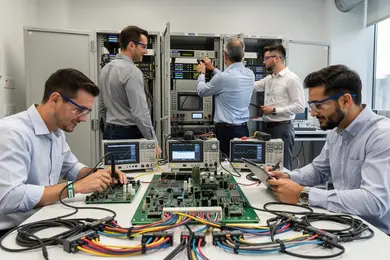
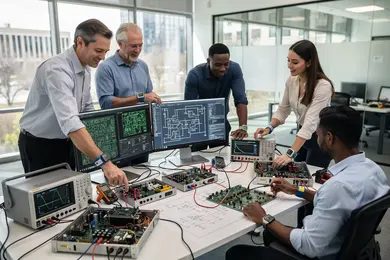
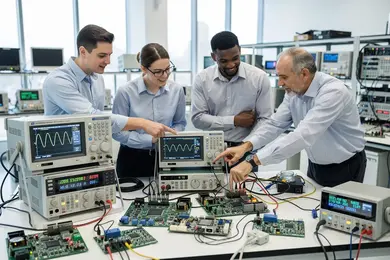
Labs are the biggest concern for many students considering asynchronous electrical engineering. A credible online program must give students meaningful practice with measurement, troubleshooting, design, simulation, and documentation, not just recorded lectures and quizzes.
Schools usually solve the hands-on challenge through a combination of methods. Each method has strengths and limits, so students should ask how often each is used and whether it supports the courses they care about most.
- Mailed lab kits that include breadboards, sensors, microcontrollers, circuit components, measurement tools, and project hardware.
- Simulation software for circuits, signals, control systems, electromagnetic fields, power systems, or embedded design.
- Remote-access labs where students control real equipment through an online interface.
- Recorded demonstrations paired with student analysis, lab reports, and design assignments.
- Local proctoring or approved testing environments for exams and practical assessments.
- Scheduled virtual lab meetings, office hours, or team project sessions even when lectures are asynchronous.
- Senior capstone projects completed through remote collaboration, local prototyping, employer-based projects, or approved home lab setups.
The best asynchronous programs are transparent about lab expectations before enrollment. If a program cannot explain how students complete electronics labs, measurements, design projects, and capstone work at a distance, that is a red flag.
Students should also consider their home setup. Reliable broadband, a modern computer, a safe workspace, and comfort with software installation are not optional conveniences in online engineering. They are part of the learning environment. If you travel often or deploy for military service, ask whether lab kits and proctored assessments can be completed from different locations.
What entry-level careers can graduates pursue with an online electrical engineering bachelor's?
Graduates with an online bachelor's in electrical engineering can pursue many of the same entry-level roles as campus graduates when the degree is appropriately accredited and the student has relevant projects, internships, or technical experience. Employers usually care about demonstrated skills, accreditation, project quality, communication ability, and whether the applicant can solve engineering problems in a team environment.
The table below outlines common entry-level paths and the type of work each role typically involves. Actual job titles vary by employer and industry.
| Entry-level role | Typical responsibilities | Useful preparation |
| Electrical engineer | Designs, tests, and improves electrical systems, components, or equipment. | Circuits, electronics, design projects, lab documentation, and engineering analysis. |
| Electronics engineer | Works on electronic devices, embedded hardware, communications equipment, or control electronics. | Digital logic, microcontrollers, signal processing, PCB concepts, and programming. |
| Power systems engineer | Supports generation, transmission, distribution, protection, or renewable energy integration. | Power systems electives, energy projects, grid concepts, and utility internships. |
| Controls engineer | Develops or maintains automated systems used in manufacturing, robotics, aerospace, or process industries. | Control theory, sensors, actuators, PLC exposure, MATLAB or Python, and systems modeling. |
| Test engineer | Creates test plans, collects measurements, validates products, and troubleshoots failures. | Lab skills, instrumentation, data analysis, technical writing, and quality methods. |
| Field applications engineer | Helps customers use technical products, troubleshoot systems, and connect design needs to product capabilities. | Communication skills, electronics knowledge, customer-facing experience, and product documentation. |
Students interested in sustainability should distinguish between engineering and broader environmental career paths. Electrical engineering can lead to renewable energy, energy storage, electric transportation, and grid modernization roles, while a resource on what can you do with an environmental studies degree may be more relevant for students drawn to policy, conservation, environmental compliance, or ecological research.
To improve employability, online students should not wait until graduation to build experience. Strong next steps include completing a capstone tied to a target industry, documenting projects on a portfolio, pursuing internships or co-ops when possible, joining IEEE or similar professional groups, and practicing technical interviews that involve circuits, systems, programming, and design trade-offs.
What are typical salary ranges and job outlook for electrical engineering graduates?
Electrical engineering salaries vary by industry, region, security clearance requirements, experience, and specialization. BLS May 2024 data reports a median annual wage of $118,780 for electrical and electronics engineers. Students should treat that figure as a labor-market midpoint, not a promise of what any individual graduate will earn.
The career outlook is also favorable relative to many occupations. BLS projections for 2023 to 2033 show 9% growth for electrical and electronics engineers, reflecting demand in areas such as research and development, semiconductor-related work, telecommunications, power infrastructure, manufacturing, and engineering services.
The table below gives a practical way to interpret salary expectations by career stage. It avoids promising outcomes and instead shows how responsibilities tend to expand as engineers gain experience.
| Career stage | Typical scope of work | What influences pay most |
| Entry level | Assists with design, testing, documentation, modeling, troubleshooting, and project support under supervision. | Internships, ABET accreditation, location, technical projects, software skills, and industry. |
| Early career | Owns defined components, test procedures, design tasks, or system analyses with increasing independence. | Specialization, performance, certifications, security clearance, and ability to work across hardware and software. |
| Midcareer | Leads subsystems, mentors junior engineers, coordinates vendors, and makes design trade-off decisions. | Leadership, project complexity, licensure, domain expertise, and employer type. |
| Advanced or senior roles | Guides architecture, technical strategy, compliance, safety, budgets, or multidisciplinary engineering teams. | Management scope, patents or specialized expertise, regulated-industry experience, and business impact. |
Licensure can matter for some electrical engineers, especially those who offer services to the public or work in power, utilities, building systems, or infrastructure. The typical path involves graduating from an ABET-accredited engineering program, passing the Fundamentals of Engineering exam, gaining supervised experience, and later passing the Principles and Practice of Engineering exam. Requirements vary by state, so students should verify rules with their state licensing board.
Technology trends are reshaping the field rather than eliminating it. AI-assisted design, digital twins, automated testing, and advanced simulation can make engineers more productive, but employers still need people who understand physical systems, safety constraints, standards, reliability, and real-world failure modes.
How can students evaluate and choose a reputable online electrical engineering program?
Choosing a reputable online electrical engineering program requires more than scanning rankings. The right program should match your career goal, learning style, budget, location, transfer history, and need for flexibility.
Use the following steps before you submit an application or pay an enrollment deposit. They are designed to help you avoid the most common mistakes online engineering students make.
- Confirm institutional accreditation through a recognized accreditor and verify whether the electrical engineering program is ABET Engineering Accreditation Commission accredited.
- Ask whether the diploma and transcript identify the program differently from the campus version, especially if the school also offers engineering technology degrees.
- Request a degree plan showing prerequisite sequences, course rotation, lab requirements, and estimated time to graduation based on your transfer credits.
- Ask exactly how labs work, including required kits, software, remote equipment access, safety rules, and any scheduled sessions.
- Compare total cost, not just tuition, by adding fees, lab materials, proctoring, textbooks, software, and extra terms caused by course availability.
- Review career support for online students, including internship help, employer events, portfolio support, alumni access, and engineering-specific advising.
- Check whether the program supports your target specialization, such as power, electronics, communications, controls, embedded systems, or signal processing.
- Ask about student support in difficult courses, including tutoring, faculty office hours, peer study options, and policies for repeating prerequisite courses.
Red flags include vague accreditation language, no clear lab plan, very limited faculty access, pressure to enroll immediately, unclear transfer evaluations, missing graduation requirements, or a curriculum that appears too light in calculus, physics, circuits, and engineering design.
The final decision should come down to fit. Choose the program that you can realistically finish, that meets your technical and accreditation needs, and that gives you enough lab, project, and career support to compete for the roles you want.
Other Things You Should Know About Electrical Engineering Degrees
Possibly, but the degree should typically be ABET-accredited and you must meet your state licensing board's rules. Online delivery alone is usually not the deciding factor; accreditation, exams, supervised experience, and state requirements matter more.
The technical difficulty is similar because the math, physics, circuits, and design expectations remain demanding. Online study can feel harder if you need external structure, but it can work well for disciplined students who use tutoring, office hours, and a consistent weekly schedule.
Many employers focus on the school, accreditation, skills, projects, internships, and interview performance rather than the delivery format. A reputable online program with strong lab and design components is generally more credible than a vague or non-accredited program with unclear outcomes.
Most programs require a strong high school or transfer background in calculus, physics, and algebra, plus college readiness in chemistry. Many also expect one year of precalculus or equivalent and minimum placement scores in math and English before enrollment.
References
- Online vs. On-Campus: Which Mode of Learning Is Best for You? https://www.onlinemastersdegrees.org/student-resources/which-mode-of-learning-is-best/
- High School Classes Required for College Admission - National Association for College Admission Counseling (NACAC) https://www.nacacnet.org/high-school-classes-required-for-college-admission/
- Inside the Best Online Bachelor's in Electrical Engineering Degrees https://www.onlinecolleges.me/engineering-degrees/bachelors/electrical-engineering/
- Best Online Electrical Engineering Degrees 2025 https://www.onlineu.com/degrees/electrical-engineering
- Your Career Options in Electrical Engineering - Electrical Engineering https://electrical.mines.edu/your-career-options-in-electrical-engineering/