2027 Online Electrical Engineering Degrees With Microprocessors Coursework

Co-Founder and Chief Data Scientist
Choosing an online electrical engineering degree is harder when your goal is microprocessors, embedded systems, or computer hardware-not just general circuits. The stakes are real: BLS May 2024 data reports a $111,910 median annual wage for electrical engineers, but outcomes depend heavily on accreditation, lab access, transfer credit, and technical electives.
This guide is for prospective undergraduates, transfer students, and working technicians comparing online programs. You'll learn what to study, which program features matter, what costs to expect, and how to choose a degree that supports your career goals.
Key Things You Should Know
- For bachelor's programs, ABET accreditation is one of the most important quality signals because it can affect employer recognition, graduate school options, and eligibility for the Fundamentals of Engineering exam in many states.
- Microprocessor-focused electrical engineering coursework usually includes digital logic, computer architecture, embedded systems, C or C++ programming, HDL design, real-time systems, and hands-on labs using development boards or simulation tools.
- According to BLS May 2024 wage data, the median annual wage was $111,910 for electrical engineers and $155,020 for computer hardware engineers, but salaries vary by industry, location, experience, security clearance, and hardware-software skill mix.
What is an online electrical engineering degree with microprocessors coursework?
An online electrical engineering degree with microprocessors coursework is a bachelor's or master's program that teaches core electrical engineering while giving students structured exposure to processor-based systems. Instead of focusing only on power, signals, electromagnetics, or communications, these programs include courses that connect hardware, software, digital design, and control.
Microprocessors are programmable chips that execute instructions inside devices such as industrial controllers, medical equipment, vehicles, consumer electronics, robotics systems, and Internet of Things products. Closely related terms include microcontrollers, which combine a processor with memory and input/output features, and embedded systems, which are specialized computing systems built into larger products.
At the undergraduate level, the degree is usually a Bachelor of Science in Electrical Engineering, Electrical and Computer Engineering, or Electronics Engineering Technology. At the graduate level, it may be a Master of Science in Electrical Engineering, Computer Engineering, or Engineering with embedded systems, digital systems, or computer architecture electives.
This path is a strong fit if you want to design, test, program, or integrate electronics that make physical devices work. It may not be the best fit if your main interest is civil infrastructure, water systems, pollution control, or sustainability engineering; in that case, comparing an environmental engineering degree may be more useful.
The table below summarizes the most common degree options so you can match the credential to your starting point and career target.
| Degree option | Typical student profile | Microprocessor relevance | Best-fit outcome |
| Bachelor's in Electrical Engineering | First-time or transfer students seeking an engineering foundation. | Usually includes circuits, digital logic, electronics, signals, controls, and microprocessor or embedded systems electives. | Entry-level electrical engineer, test engineer, hardware engineer, embedded systems associate role. |
| Bachelor's in Electrical and Computer Engineering | Students who want a stronger hardware-software blend. | Often includes computer architecture, digital systems, embedded programming, and FPGA or HDL coursework. | Embedded systems engineer, firmware-adjacent hardware role, computer engineering pathway. |
| Electronics Engineering Technology degree | Hands-on learners and technicians moving toward applied engineering roles. | Often emphasizes lab work, instrumentation, industrial electronics, and microcontroller applications. | Electronics technologist, field applications specialist, test and validation role. |
| Master's in Electrical or Computer Engineering | Engineers seeking advancement or specialization. | Electives may cover advanced embedded systems, VLSI, real-time systems, computer architecture, or cyber-physical systems. | Senior engineer track, systems architect support, R&D, technical leadership. |
How do online electrical engineering programs compare to campus-based options?
Online electrical engineering programs can be just as rigorous as campus programs when they use the same faculty, learning outcomes, assessment standards, and accreditation framework. The biggest difference is delivery: online students complete lectures, simulations, coding assignments, and some discussions remotely, while labs may use mailed kits, remote-access equipment, simulation environments, short campus residencies, or approved local proctors.
The decision is not simply whether online is "better." It depends on how much flexibility you need, how the program handles laboratories, and whether you can stay disciplined in a math-heavy curriculum.
The table below compares the major trade-offs that matter most for electrical engineering students, especially those interested in microprocessors and embedded systems.
| Factor | Online program | Campus-based program | What it means for microprocessors coursework |
| Flexibility | Best for working adults, military students, parents, and transfer students who need asynchronous or evening options. | Best for students who can attend scheduled labs and classes in person. | Online students should confirm whether embedded systems labs can be completed remotely without delaying graduation. |
| Lab experience | May use hardware kits, remote lab platforms, simulation software, or limited residencies. | Usually offers direct access to benches, oscilloscopes, fabrication equipment, and faculty support. | Hands-on development boards and debugging tools are especially important for microcontrollers and digital systems. |
| Networking | Often depends on virtual career fairs, online project teams, and student initiative. | More spontaneous access to student clubs, research labs, and local employers. | Students targeting hardware roles should build a visible portfolio to offset reduced in-person lab exposure. |
| Cost control | May reduce relocation, commuting, and housing costs. | May provide more campus resources but can require relocation or full-time attendance. | Lower living costs can improve ROI, but only if the program has credible labs and relevant electives. |
| Learning style | Works well for self-directed students comfortable with independent problem solving. | Works well for students who need frequent face-to-face support. | Digital design and firmware assignments require persistence, debugging discipline, and comfort learning from documentation. |
Online programs are usually a smart choice when you need geographic flexibility and can verify strong lab support. Campus programs may be better if you want undergraduate research, robotics clubs, cleanroom access, or daily interaction with faculty and peers. Students comparing unrelated flexible majors should remember that an online degree in exercise science, for example, may involve very different lab expectations than an engineering program with circuits and embedded hardware.

Which accredited schools offer online electrical engineering degrees focused on microprocessors?
Several U.S. universities offer online electrical engineering, electrical and computer engineering, or closely related engineering technology programs that include microprocessor, embedded systems, digital systems, or computer architecture coursework. Because curricula change, students should verify current course availability, delivery format, and accreditation before applying.
The table below lists examples of schools commonly considered by online engineering students. "Microprocessor relevance" means the program includes courses or electives related to digital hardware, embedded systems, microcontrollers, computer engineering, or processor-based design; it does not necessarily mean the degree has a formal microprocessors concentration.
| School | Online degree example | Accreditation note | Microprocessor or embedded systems relevance | Best fit |
| Arizona State University | Online Bachelor of Science in Electrical Engineering | Students should verify current ABET status for the specific online program. | Digital design, circuits, electronics, and computer engineering-related coursework may support embedded systems preparation. | First-time or transfer students seeking a broad online engineering degree. |
| University of North Dakota | Online Bachelor of Science in Electrical Engineering | ABET-accredited engineering options have historically been a major feature; verify the current program listing. | Electrical engineering core may include digital systems, electronics, controls, and design experiences relevant to processor-based systems. | Students who want a structured online engineering pathway with required labs. |
| Old Dominion University | Online electrical engineering technology or engineering-related completion pathways | Accreditation varies by exact degree and level; verify ABET or programmatic status where applicable. | Applied electronics, instrumentation, and digital systems coursework can support technician-to-engineer advancement. | Transfer students and working technologists with prior credits. |
| Florida International University | Online Bachelor of Science in Electrical Engineering | Students should confirm current ABET recognition for the exact catalog year and delivery mode. | Curriculum may include electronics, digital systems, circuits, communications, and embedded-relevant electives. | Students seeking a public university online engineering option. |
| Stony Brook University | Online Bachelor of Science in Electrical Engineering degree completion option | Students should check current ABET and degree-completion requirements. | Upper-division electrical engineering coursework may support computer engineering and digital systems interests. | Transfer students who have completed lower-division engineering prerequisites. |
| Purdue University | Online graduate programs in electrical and computer engineering | Graduate engineering programs typically rely on institutional reputation and departmental strength rather than ABET. | Advanced ECE electives may include computer engineering, digital systems, VLSI, or embedded-related topics. | Engineers seeking advanced specialization or leadership roles. |
A strong shortlist should include more than brand recognition. Ask whether the exact microprocessors, embedded systems, FPGA, or computer architecture courses are offered online every year, whether prerequisites are available remotely, and whether lab equipment is included in tuition or billed separately.
What microprocessors and embedded systems courses are typically included in these programs?
Microprocessor coursework sits at the intersection of electronics, digital logic, programming, and system design. Students usually build up to it gradually: first learning circuits and programming, then digital systems, then processor architecture, and finally embedded design projects.
Most programs use a combination of required courses and electives. The exact names vary, but students interested in microprocessors should look for the following course categories in the catalog.
- Programming for engineers: Introduces C, C++, Python, MATLAB, or another language used for numerical analysis, hardware control, and embedded development.
- Digital logic design: Covers Boolean algebra, combinational logic, sequential logic, memory elements, timing, and finite state machines.
- Circuits and electronics: Builds the analog foundation needed to understand sensors, power, signal conditioning, and device behavior around a processor.
- Microprocessors or microcontrollers: Teaches instruction sets, memory maps, interrupts, input/output, timers, serial communication, and low-level programming.
- Computer architecture: Explains how processors execute instructions, use cache and memory, handle pipelines, and interact with peripherals.
- Embedded systems: Applies microcontrollers or processors to real devices, often using development boards, sensors, actuators, and real-time constraints.
- HDL, FPGA, or digital hardware design: Uses Verilog or VHDL to design and test hardware logic for programmable devices.
- Control systems and signals: Helps students understand feedback, sampling, filtering, and dynamic behavior in robotic, industrial, and mechatronic systems.
- Senior design or capstone: Gives students a portfolio-ready project that may combine PCB design, firmware, sensors, wireless communication, and testing.
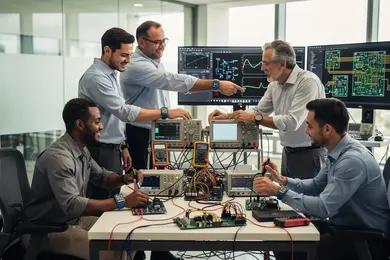
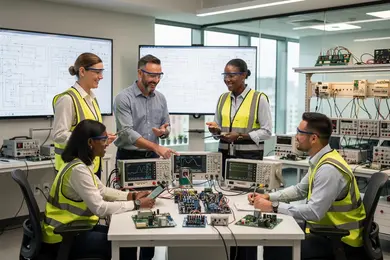
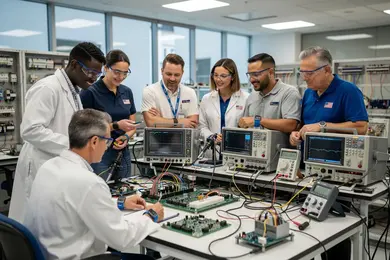
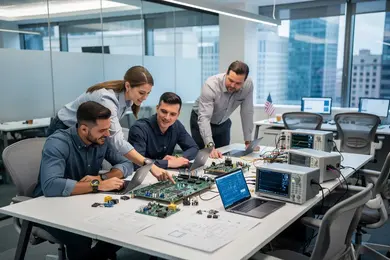
Students should pay close attention to the lab format. A credible online microprocessors course should involve more than reading about architecture; it should include coding, debugging, timing analysis, hardware interfaces, or simulation-based verification. If the program uses lab kits, ask whether you will use common tools such as microcontroller boards, oscilloscopes, logic analyzers, circuit simulation software, or HDL toolchains.
Current industry trends make this coursework more valuable. AI is moving into edge devices, vehicles rely on more embedded control units, and manufacturers need engineers who understand both hardware constraints and software behavior. That does not mean every electrical engineer must become a software developer, but it does mean processor literacy is increasingly useful across hardware-centered roles.
What admission requirements do online electrical engineering programs usually have?
Admission requirements depend on whether you are applying as a first-time undergraduate, transfer student, degree-completion student, or graduate applicant. Electrical engineering is math-intensive, so schools usually evaluate readiness in algebra, trigonometry, calculus, physics, and prior college STEM coursework more carefully than they would for many nontechnical majors.
Prospective students should expect some combination of the following requirements. These items matter because missing prerequisites can add semesters and increase total cost even if the advertised program length looks short.
- High school diploma or equivalent: First-year applicants typically need proof of graduation and may need a strong record in math and science courses.
- College transcripts: Transfer and degree-completion applicants must submit transcripts from every institution attended, including community colleges and military coursework where applicable.
- Calculus readiness: Many programs require placement into calculus or completion of prerequisite math before beginning engineering core courses.
- Physics with lab: Engineering physics is commonly required before upper-division electrical engineering courses.
- Programming background: Some programs expect prior exposure to programming, while others include it early in the curriculum.
- Minimum GPA: Schools often set separate GPA thresholds for general admission, engineering admission, and transfer into upper-division courses.
- Standardized tests: Many online bachelor's programs are test-optional, but policies vary by institution and applicant type.
- Graduate prerequisites: Master's applicants generally need an engineering, physics, math, or closely related background; students without an ECE background may need bridge courses.
A common mistake is applying to a program because it is online without checking whether all prerequisites are also available online. Before enrolling, ask the admissions advisor to map your completed credits against the degree plan and identify any courses that require campus attendance, synchronous labs, or local proctoring.

How long do online electrical engineering degrees take and what do they cost?
An online bachelor's degree in electrical engineering usually takes about four years for a full-time first-time student, but many online learners enter with transfer credits and study part time. Degree-completion students may finish faster if they already have calculus, physics, programming, and lower-division engineering courses. Master's programs commonly take one to three years depending on course load, thesis requirements, and employer tuition support.
Cost depends on tuition classification, transfer credit, fees, lab equipment, textbooks, software, and whether you can keep working while enrolled. College Board's 2024 pricing report lists average published tuition and fees for public four-year in-state students at $11,610 for the 2024-2025 academic year; that figure is not an online engineering price quote, but it gives students a benchmark for judging whether a program is unusually expensive or competitive.
When comparing programs, look beyond per-credit tuition. The following cost categories are the ones most likely to affect your real out-of-pocket price.
- Tuition: Public universities may charge different rates for in-state, out-of-state, and online students; private nonprofit universities may use a single online rate.
- Engineering fees: Some programs add technology, distance education, proctoring, or college-of-engineering fees.
- Lab kits and equipment: Microprocessors courses may require development boards, components, meters, or specialized software access.
- Transfer-credit policy: Generous transfer evaluation can reduce both time and cost, especially for students with community college engineering prerequisites.
- Course sequencing: If key courses are offered only once per year, a missed prerequisite can extend enrollment and raise total cost.
- Employer assistance: Working adults should check tuition reimbursement rules, grade requirements, and annual caps before choosing course loads.
For a realistic ROI estimate, ask each school for a personalized degree audit and total cost projection. Avoid choosing solely by the lowest tuition if the program lacks ABET accreditation, hands-on labs, or the embedded systems electives you need. Also avoid assuming an accelerated path is always cheaper; a compressed schedule can make it harder to work, complete labs carefully, or maintain grades in calculus-heavy courses.
What careers can you pursue with an online electrical engineering degree in microprocessors?
An online electrical engineering degree with strong microprocessors coursework can lead to roles in hardware design, embedded systems, testing, automation, manufacturing, aerospace, defense, automotive electronics, consumer devices, telecommunications, medical technology, and energy systems. The strongest candidates usually combine electrical engineering fundamentals with practical evidence of debugging, programming, lab testing, and documentation.
The table below connects common job paths with the kind of work they involve. Use it to decide whether you want a hardware-heavy, software-adjacent, testing-focused, or systems-oriented career.
| Career path | Typical responsibilities | Helpful microprocessor skills | Common entry point |
| Electrical engineer | Designs, analyzes, tests, and improves electrical systems and components. | Digital logic, circuits, instrumentation, embedded interfaces. | Bachelor's in electrical engineering plus internships or capstone projects. |
| Embedded systems engineer | Develops hardware-software systems inside devices, machines, or products. | C/C++, microcontrollers, real-time constraints, debugging, communication protocols. | Electrical or computer engineering degree with embedded projects. |
| Computer hardware engineer | Designs and tests computer systems, boards, processors, memory systems, or related hardware. | Computer architecture, HDL, FPGA, timing, verification, hardware testing. | Electrical or computer engineering degree; graduate study may help for advanced design roles. |
| Test and validation engineer | Builds test plans, validates hardware performance, investigates failures, and documents results. | Lab instruments, automated testing, firmware loading, data analysis. | Engineering degree, electronics lab experience, scripting skills. |
| Controls or automation engineer | Works with sensors, actuators, controllers, industrial equipment, and feedback systems. | Microcontrollers, PLC concepts, control systems, signal conditioning. | Electrical engineering degree with controls, embedded, or mechatronics coursework. |
| Field applications engineer | Helps customers integrate chips, boards, sensors, or embedded products into larger systems. | Product documentation, interface protocols, debugging, communication skills. | Engineering degree plus strong customer-facing and troubleshooting ability. |
This degree is most useful when your target jobs require engineering judgment, quantitative analysis, and hardware literacy. If your interests lean more toward ecology, conservation, environmental policy, or sustainability analysis rather than electronics, an environmental science degree may point to a more aligned career path.
To improve employability, build a project portfolio while you study. Strong examples include a sensor-based embedded device, a small robotics controller, an FPGA design, a PCB project, a real-time data logger, or a capstone that includes schematics, code, testing results, and a clear explanation of trade-offs.
What are the salary expectations for electrical engineers specializing in microprocessors?
Salary expectations depend on the exact role, industry, location, clearance requirements, degree level, and how close the job is to high-value hardware design. Microprocessor-related roles often overlap with electrical engineering, computer engineering, firmware, semiconductor, aerospace, automotive, and defense work, so students should compare several occupational categories rather than relying on one salary number.
BLS May 2024 data reports a median annual wage of $111,910 for electrical engineers. That benchmark is useful for general planning, but microprocessor-heavy roles can fall above or below it depending on whether the job is focused on advanced hardware design, product testing, manufacturing support, or field applications.
The table below shows relevant U.S. wage benchmarks from BLS May 2024 data. Treat these as occupational reference points, not promises for graduates of any specific program.
| Occupation | Median annual wage | How it relates to microprocessors | Reader takeaway |
| Electrical engineers | $111,910 | Broad category covering electrical systems, electronics, controls, power, and related design or testing work. | Useful baseline for bachelor's-level electrical engineering roles. |
| Electronics engineers, except computer | $127,590 | Includes electronic components, systems, communications, and instrumentation work. | Relevant for students targeting electronic product design and advanced hardware systems. |
| Computer hardware engineers | $155,020 | Closest BLS category for processor, board, memory, and computer system hardware design. | Often requires strong computer engineering skills and may favor candidates with advanced projects or graduate study. |
| Software developers | $133,080 | Relevant when embedded roles lean heavily into firmware, device drivers, tools, or systems software. | Programming depth can expand options, but pure software roles may not require an EE degree. |
The salary lesson is practical: do not choose a program only because it has "microprocessors" in one course title. Choose one that helps you build marketable proof-projects, lab skills, internships, co-ops, Git repositories, design documentation, and experience with industry-standard tools.
What is the job outlook for microprocessor and embedded systems engineers?
The outlook is positive but specialized. BLS employment projections released in 2024 estimate electrical and electronics engineers will grow by 9% from 2023 to 2033. For students, that indicates a healthier-than-average market, but it does not remove the need to compete on skills, internships, and project quality.
Demand is shaped by several U.S. trends: semiconductor investment, electrified vehicles, robotics, automation, defense electronics, medical devices, smart infrastructure, and connected industrial systems. Embedded intelligence is also moving closer to the "edge," meaning devices increasingly process data locally instead of sending everything to the cloud. That raises the value of engineers who understand power limits, timing, reliability, sensors, and low-level software.
AI is changing the work rather than replacing the need for hardware knowledge. Engineers may use AI-assisted coding, simulation, test generation, and documentation tools, but they still need to verify physical behavior, timing, safety, signal integrity, thermal constraints, and regulatory requirements. In microprocessor-related work, a model can suggest code, but an engineer must know whether the system behaves correctly on real hardware.
The strongest outlook is likely for students who can bridge disciplines. Employers often value candidates who can read schematics, write embedded code, use lab instruments, interpret datasheets, debug communication protocols, and explain design decisions clearly to both hardware and software teams.
How can students evaluate and choose a reputable online electrical engineering program?
A reputable online electrical engineering program should be transparent about accreditation, curriculum, labs, faculty, student support, transfer policies, costs, and career outcomes. The best choice is not always the cheapest or most famous school; it is the program that matches your academic background, schedule, budget, and target job.
Use the following steps before you apply or enroll. They are designed to prevent the most expensive mistakes online engineering students make.
- Verify accreditation first: For bachelor's engineering programs, check whether the exact program and delivery format are ABET-accredited or otherwise clearly recognized by employers and licensing boards relevant to your goals.
- Read the full curriculum map: Confirm that microprocessors, embedded systems, digital logic, computer architecture, HDL, controls, or related electives are actually available online.
- Ask how labs work: Find out whether labs use mailed kits, remote equipment, simulations, local proctors, or campus residencies, and ask what equipment you must buy.
- Request a transfer-credit review: Do this before committing, especially if you completed calculus, physics, circuits, programming, or general education courses elsewhere.
- Check course rotation: Ask how often required upper-division engineering courses are offered and whether missing one course can delay graduation by a year.
- Compare total cost, not just tuition: Include fees, lab kits, software, books, proctoring, travel, and the income impact of reducing work hours.
- Evaluate student support: Look for online tutoring, faculty office hours, technical help, career services, internship support, and advising for part-time students.
- Look for career evidence: Ask about internship access, employer partnerships, capstone examples, graduate school placement, FE exam preparation, and alumni outcomes.
- Avoid vague "engineering" labels: Make sure the degree title and coursework align with electrical engineering jobs, not only general technology or management roles.
- Talk to current students if possible: Ask about workload, lab difficulty, responsiveness of instructors, and whether online students receive equal access to key courses.
Also compare alternatives honestly. If you already have a bachelor's degree and only need embedded systems skills, a graduate certificate or targeted master's may be more efficient than a second bachelor's. If you want a flexible online credential but not a math-heavy engineering path, programs such as an MLIS follow a very different academic and career model.
The biggest red flags are unclear accreditation, missing lab details, limited upper-division course availability, aggressive admissions pressure, no personalized transfer review, and career claims that sound guaranteed. A credible school should be willing to answer detailed questions before you pay a deposit.
Other Things You Should Know About Electrical Engineering
Often, yes, but eligibility rules vary by state engineering board. Students who may pursue professional engineering licensure should prioritize ABET-accredited bachelor's programs and confirm FE exam eligibility with the state where they plan to apply.
You do not need to enter as an expert, but you should be ready to learn programming seriously. Microprocessors courses commonly use C, C++, assembly concepts, Python, MATLAB, or hardware description languages, depending on the program.
Most programs require a Windows or Linux computer, a USB oscilloscope or logic analyzer, and a microcontroller kit such as an ARM or Arduino board. Some schools also require simulation software like MATLAB, Multisim, or Proteus, plus remote lab access for embedded systems assignments.
References
- Studienmodell Embedded Systems https://eit.rptu.de/fgs/eis/lehre/studienmodell
- Applying to Electrical Engineering Programs: Graduate School Admissions Overview https://blog.accepted.com/applying-to-electrical-engineering-programs-graduate-school-admissions-overview/
- Inside the Best Online Bachelor's in Electrical Engineering Degrees https://www.onlinecolleges.me/engineering-degrees/bachelors/electrical-engineering/
- Embedded Microprocessor: Functions, Principles and Applications https://www.allpcb.com/allelectrohub/embedded-microprocessor-functions-principles-and-applications
- Electrical Engineer Salary in the United States 2026 | Cake https://www.cake.me/resources/industry-job-overview/electrical-engineer-salary
- Careers - Vault https://vault.com/professions/embedded-systems-engineers
- Embedded Systems Engineer: Salary and Responsibilities in 2026 | Bluecoders https://www.bluecoders.com/en/fiches-metiers/ingenieur-systeme-embarque
- Best Embedded Systems Course Offline Online Classes 2026 https://smeclabs.pro/embedded-systems-course/
- Top 5 Embedded Systems Jobs | Amoria Bond https://www.amoriabond.com/insights/articles/top-5-embedded-systems-jobs/