2027 Online Electrical Engineering Degrees That Help Build Employer-Ready Engineering Skills

Co-Founder and Chief Data Scientist
Choosing an online electrical engineering degree means balancing flexibility with a field that still demands rigorous math, labs, design work, and accreditation. The payoff can be meaningful: the U.S. Bureau of Labor Statistics reported a May 2024 median annual wage of $111,910 for electrical engineers.
This guide is for prospective students, working adults, transfer students, and military learners who want a practical path into engineering. You will learn how online programs compare, what employers look for, how to verify quality, and how to judge cost, timeline, and career fit.
Key Things You Should Know
- ABET-accredited online electrical engineering degrees are the safest choice for students who may pursue Professional Engineer licensure, graduate study, or roles where employers screen for accredited engineering preparation.
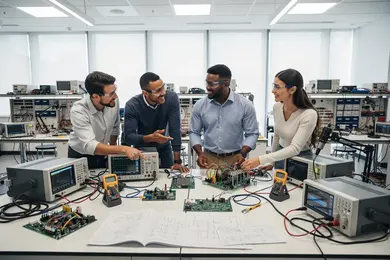
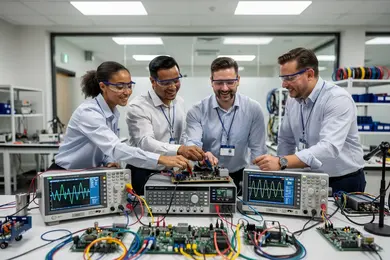
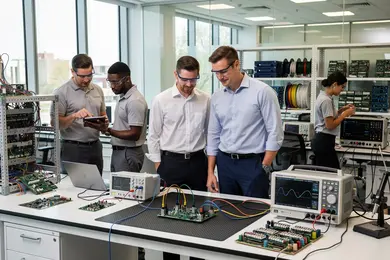
- Electrical engineering is math- and lab-intensive even online; strong programs use remote labs, simulation tools, shipped lab kits, design projects, and industry software to build job-ready skills.
- ROI depends on total cost, transfer credit, time to completion, and target role; BLS May 2024 data places the median annual wage for electrical engineers at $111,910, but outcomes vary by industry, location, experience, and specialization.
What is an online electrical engineering degree and how does it compare to campus programs?
An online electrical engineering degree is a college program that teaches the theory, design methods, lab techniques, and engineering problem-solving skills used to develop electrical systems, circuits, electronics, power systems, communications hardware, control systems, and embedded technologies. At the bachelor's level, it usually leads to a Bachelor of Science in Electrical Engineering or a closely related engineering degree. At the graduate level, it may lead to a Master of Science in Electrical Engineering, Master of Engineering, or specialized engineering master's degree.
The biggest difference is delivery, not academic intent. A strong online program still requires calculus, physics, circuits, electronics, signals, labs, senior design, and faculty-reviewed engineering work. The practical question is whether the online format gives you enough interaction, lab access, project feedback, and employer-recognized rigor for your goals.
The comparison below shows where online and campus programs usually differ. Use it to decide whether flexibility or in-person immersion matters more for your situation.
| Decision factor | Online electrical engineering degree | Campus electrical engineering degree |
| Best fit | Working adults, transfer students, military learners, caregivers, and students who need geographic flexibility. | Students who want daily in-person labs, clubs, research groups, and direct campus recruiting. |
| Course delivery | Often asynchronous lectures with scheduled exams, live help sessions, or proctored assessments. | Mostly scheduled classroom, lab, and discussion sessions. |
| Lab experience | Remote instruments, simulation software, mailed kits, local lab arrangements, or short campus residencies. | Dedicated campus labs with faculty, technicians, and peer teams on site. |
| Networking | Requires intentional effort through virtual career fairs, LinkedIn, professional societies, and project teams. | More built-in through campus clubs, labs, recruiting events, and faculty office hours. |
| Credential perception | Strong when the program is ABET-accredited and the transcript does not signal a watered-down curriculum. | Strong when the institution and program have recognized engineering outcomes. |
Online makes the most sense if you are self-directed, comfortable with technical tools, and able to schedule consistent study time. Campus may be better if you learn best through real-time instruction, want hands-on access to specialized lab equipment, or plan to pursue undergraduate research intensively.
How do online electrical engineering programs build practical, employer-ready engineering skills?
Employer-ready electrical engineering skills come from applying theory to real systems. A program should not stop at recorded lectures and exams; it should require students to model, build, test, troubleshoot, document, and present engineering solutions. This matters because employers often evaluate entry-level candidates through projects, internships, design portfolios, technical interviews, and evidence of tool fluency.
Good online programs typically combine several applied learning methods. These elements help replace or supplement the traditional campus lab experience:
- Remote and virtual labs: Students may control real instruments through a browser, analyze captured signals, or run experiments through simulation environments.
- Hardware kits: Courses may use microcontrollers, breadboards, sensors, oscilloscopes, or measurement tools shipped to students for home experiments.
- Engineering simulation software: Students often use circuit simulation, MATLAB-style computation, CAD tools, control modeling, electromagnetic analysis, or digital logic environments.
- Team design projects: Strong programs require students to work in distributed teams, manage version control, write technical reports, and present design trade-offs.
- Industry-aligned assignments: Projects may involve power conversion, embedded systems, communications links, renewable energy integration, robotics, or signal processing.
AI and automation are also changing what "job-ready" means. Electrical engineers increasingly use AI-assisted design, automated testing, digital twins, predictive maintenance tools, and model-based systems engineering. Students should still understand first principles, because employers need engineers who can verify results, identify unsafe assumptions, and explain why a design works.
If you are evaluating a program, ask for examples of completed student projects, not just course names. A strong capstone should show design constraints, testing evidence, cost or performance trade-offs, and written documentation. That portfolio can become one of your best tools when applying for internships or entry-level engineering roles.
Which accreditation and ABET standards should online electrical engineering degrees meet?
Accreditation is one of the most important quality checks for an online electrical engineering degree. Institutional accreditation tells you the college or university meets broad academic and administrative standards. Programmatic accreditation, especially ABET accreditation, evaluates whether a specific engineering program meets professional standards for curriculum, faculty, facilities, continuous improvement, and student outcomes.
For electrical engineering, the key accreditor is ABET's Engineering Accreditation Commission. ABET accreditation is especially important if you may pursue the Professional Engineer path, apply to engineering graduate programs, work for employers that require accredited engineering preparation, or seek roles in regulated areas such as utilities, infrastructure, aerospace, defense, and public-sector engineering.
The following table summarizes the main accreditation checks. These distinctions matter because a university can be accredited while a specific engineering program is not ABET-accredited.
| Quality marker | What it means | Why it matters |
| Institutional accreditation | The college or university meets recognized standards for academic quality and administration. | Usually required for federal financial aid, credit transfer, and graduate school recognition. |
| ABET Engineering Accreditation Commission accreditation | The specific engineering program meets ABET engineering standards. | Often preferred or required for engineering licensure pathways and many technical employers. |
| State authorization | The school is allowed to offer online education to students in your state. | Important for enrollment eligibility, complaint processes, and some professional pathways. |
| Licensure alignment disclosures | The school states whether the program meets educational requirements for licensure in specific states. | Helps students avoid enrolling in a program that does not support their PE goals. |
Do not rely only on a school's marketing language. Before enrolling, search ABET's official program database, confirm the exact program name and delivery format, and ask the department whether the online pathway is covered by the same accreditation status as the campus version. ABET accredits programs, not general subject areas, so the wording matters.
What courses and specializations are typically included in online electrical engineering curricula?
Online electrical engineering curricula usually begin with the same foundation as campus programs: mathematics, physics, computing, circuits, electronics, and engineering design. The curriculum then branches into areas such as power systems, communications, controls, electromagnetics, microelectronics, signal processing, embedded systems, and computer engineering.
The courses below are common in bachelor's-level programs and many bridge or prerequisite sequences for graduate study. They help you understand whether you are prepared for the workload and whether the program matches your career goals.
| Curriculum area | Common courses | Skills developed |
| Math and science foundation | Calculus, differential equations, linear algebra, physics, probability. | Modeling, quantitative reasoning, and engineering analysis. |
| Core electrical engineering | Circuit analysis, electronics, digital logic, electromagnetics, signals and systems. | Understanding and designing electrical and electronic systems. |
| Computing and embedded systems | Programming, microcontrollers, computer architecture, real-time systems. | Hardware-software integration and device-level problem-solving. |
| Systems and applications | Control systems, power systems, communications, signal processing. | Designing systems that measure, transmit, control, or deliver energy and information. |
| Professional practice | Engineering ethics, technical communication, project management, senior design. | Documentation, teamwork, compliance awareness, and design presentation. |
Specializations matter because electrical engineering is broad. A student targeting electric utilities may need power electronics, machines, grid systems, and protection. A student targeting semiconductors may need microelectronics, device physics, and fabrication concepts. A student targeting robotics may need controls, embedded systems, sensors, and real-time programming.
One common mistake is choosing a program with the right degree title but the wrong elective depth. Before enrolling, compare the elective catalog with current job postings in your target industry. If most roles ask for PCB design, FPGA work, RF systems, PLCs, power electronics, or embedded C, make sure the curriculum gives you credible exposure to those tools and concepts.
What are the admission requirements and prerequisites for online electrical engineering degrees?
Admission requirements vary by degree level, but electrical engineering programs are usually more prerequisite-heavy than many online degrees. Schools want evidence that students can handle calculus-based physics, advanced mathematics, computing, and intensive technical problem-solving. If you are missing prerequisites, some schools allow conditional admission, bridge courses, or completion through community college before full entry into the major.
Prospective students with military experience should also ask about credit for technical training, deployment flexibility, and veteran support services. Those comparing an electrical engineering degree online for veterans should verify whether military credits apply only to electives or can satisfy specific engineering prerequisites.
These are the most common requirements by program level. Use them to identify gaps before you apply.
| Program level | Typical admission requirements | Common prerequisites |
| Bachelor's degree | High school diploma or equivalent, transcripts, minimum GPA, placement results, application materials. | Precalculus or calculus readiness, physics readiness, chemistry or computing depending on the school. |
| Transfer bachelor's pathway | College transcripts, minimum transferable credits, minimum GPA, course equivalency review. | Calculus sequence, calculus-based physics, introductory programming, general education courses. |
| Master's degree | Bachelor's degree, transcripts, technical background, resume, letters or statement depending on school. | Undergraduate electrical engineering, computer engineering, physics, or closely related engineering coursework. |
| Graduate certificate | Bachelor's degree or advanced technical background, transcripts, sometimes professional experience. | Varies by certificate; often circuits, signals, programming, or math foundations. |
If you are not yet calculus-ready, do not rush into upper-division engineering coursework. A better plan is to build math strength first, then transfer into the engineering major. Electrical engineering courses stack on each other, so weak preparation in calculus, physics, or programming can slow completion and raise the risk of repeating expensive courses.
How long do online electrical engineering programs take, and what formats are available?
A full online bachelor's degree in electrical engineering typically takes about four years for first-time, full-time students, but many online learners are transfer students who complete only the upper-division engineering sequence through the university. Master's programs often take one to three years depending on course load, thesis requirements, and whether the student continues working full time.
Format affects your real timeline as much as degree level does. Some programs are asynchronous, while others require live sessions, scheduled exams, short campus visits, or synchronous labs. Students comparing technical online fields may notice that pacing and lab expectations differ widely, just as they do in online exercise science programs and other applied science degrees.
The table below summarizes common formats. It can help you match program structure to your work schedule and learning style.
| Format | How it works | Best for |
| Asynchronous online | Students watch lectures and complete assignments on weekly deadlines. | Working adults who need scheduling flexibility. |
| Synchronous online | Students attend live virtual classes, labs, or discussions at set times. | Learners who want real-time faculty interaction. |
| Hybrid or low-residency | Most coursework is online with occasional campus labs or intensives. | Students who want online flexibility but need hands-on lab access. |
| Part-time pathway | Students take fewer courses per term and extend completion time. | Full-time workers, caregivers, and military students. |
| Accelerated or year-round pathway | Students use shorter terms or summer enrollment to move faster. | Students with transfer credit, strong prerequisites, and available study time. |
Be realistic about weekly workload. Engineering courses often require problem sets, coding, lab reports, group meetings, and exam preparation. Taking fewer courses and finishing successfully is usually better than overloading, withdrawing, and increasing your total cost.
What are the tuition costs, financial aid options, and total ROI for online electrical engineering degrees?
Online electrical engineering costs vary widely because tuition may be charged by credit, term, residency status, or program type. Public universities may offer lower in-state rates, but some online programs charge a flat online tuition rate regardless of residency. Private nonprofit institutions can be more expensive, though scholarships, employer tuition assistance, and transfer credits may narrow the gap.
As a national benchmark, College Board's 2024 Trends in College Pricing reported average published tuition and fees of $11,610 for in-state students at public four-year institutions and $43,350 at private nonprofit four-year institutions for the 2024-25 academic year. Those figures are not specific to electrical engineering, but they show why students should compare total program cost instead of reacting only to the advertised per-credit rate.
When estimating cost, include more than tuition. Engineering students may also pay for software, lab kits, proctoring, books, equipment, technology fees, travel for residencies, and repeated courses if prerequisites are weak.
- Federal financial aid: Eligible students can use grants, loans, and work-study by submitting the FAFSA and attending an eligible institution.
- Scholarships: Engineering departments, professional societies, state agencies, and employers may offer awards for STEM students.
- Employer tuition assistance: Working adults in utilities, manufacturing, defense, telecom, or technology may receive partial reimbursement if the degree supports job duties.
- Transfer credits: Completing lower-division math, science, and general education courses at a lower-cost institution can reduce total tuition if credits transfer cleanly.
- Military and veteran benefits: GI Bill benefits, Yellow Ribbon participation, and military tuition assistance can substantially change the out-of-pocket calculation for eligible learners.
To evaluate ROI, compare the total net cost against your target role, not just the broad field average. A low-cost program that lacks ABET accreditation or needed lab experience may be a poor fit for licensure-oriented goals. A higher-cost program may make sense if it offers strong transfer acceptance, employer partnerships, career services, and a curriculum aligned with your specialization.
A practical ROI check should include these steps:
- Calculate total tuition, fees, software, equipment, travel, and financing costs after grants, scholarships, transfer credits, and employer support.
- Compare the curriculum with job postings for your target roles in your region or preferred remote-friendly industries.
- Confirm ABET status if licensure, government work, utilities, or traditional engineering roles are part of your plan.
- Ask the school for career outcomes, internship access, senior design examples, and employer relationships specific to electrical engineering students.
- Estimate opportunity cost, including reduced work hours, longer completion time, and whether part-time study delays promotion or job change plans.
What electrical engineering careers can you pursue with an online degree, and in which industries?
An online electrical engineering degree can support many of the same career paths as a campus degree when the program is rigorous, accredited when needed, and supported by strong project work. Common roles involve designing, testing, improving, or maintaining electrical and electronic systems. Entry-level opportunities may use titles such as electrical engineer, test engineer, controls engineer, power engineer, electronics engineer, systems engineer, validation engineer, or applications engineer.
Electrical engineers work in industries tied to electrification, automation, connectivity, computing hardware, and infrastructure. Students interested in energy, sustainability, or environmental systems may also compare engineering roles with broader pathways connected to an environmental science degree, especially if their goal is policy, conservation, or environmental compliance rather than technical system design.
The table below connects common career paths with the work they involve. Use it to identify which specialization and project portfolio would best support your goal.
| Career path | Typical responsibilities | Industries hiring |
| Power systems engineer | Analyze generation, transmission, distribution, protection, and grid reliability | Utilities, renewable energy, infrastructure, consulting, government |
| Electronics engineer | Design and test analog, digital, or mixed-signal electronic systems | Consumer electronics, aerospace, medical devices, manufacturing |
| Embedded systems engineer | Develop hardware-software systems for connected devices and controls | Automotive, robotics, industrial automation, IoT, defense |
| Controls engineer | Design automation, feedback, instrumentation, and process control systems | Manufacturing, energy, aerospace, robotics, chemicals |
| RF or communications engineer | Work on antennas, wireless systems, signal transmission, and network hardware | Telecommunications, defense, aerospace, satellite systems |
| Test or validation engineer | Create test plans, verify performance, troubleshoot failures, and document results | Semiconductors, electronics, automotive, medical devices, hardware startups |
Career fit depends on what kind of problems you like solving. If you enjoy math-heavy modeling, signals, communications, and controls may fit well. If you like physical systems and infrastructure, power and energy may be stronger options. If you like coding close to hardware, embedded systems and digital design may be a better match.
What are typical salary ranges and job outlooks for electrical engineers in the United States?
Salary varies by role, industry, location, degree level, experience, clearance requirements, and technical specialization. The most reliable way to use salary data is as a benchmark, not a guarantee. According to the U.S. Bureau of Labor Statistics May 2024 Occupational Employment and Wage Statistics, the median annual wage for electrical engineers was $111,910. That figure indicates strong earning potential compared with many occupations, but individual offers can be higher or lower depending on the labor market and the candidate's skills.
Job outlook is influenced by several current trends: grid modernization, renewable energy integration, electric vehicles, semiconductor investment, defense systems, telecommunications infrastructure, automation, and the growth of connected devices. At the same time, some routine design and testing tasks are becoming more automated, which makes systems thinking, verification judgment, software fluency, and cross-disciplinary communication more valuable.
The table below gives a practical salary context by career stage. It avoids promising outcomes and instead shows how responsibilities usually evolve as engineers gain experience.
| Career stage | Typical role focus | What affects compensation most |
| Entry-level | Testing, documentation, design support, simulations, lab work, troubleshooting. | Internships, capstone quality, software tools, location, industry, and ABET alignment. |
| Mid-career | Independent design ownership, system integration, client or manufacturing support. | Specialization, project results, PE licensure when relevant, leadership, and domain expertise. |
| Senior or lead engineer | Architecture decisions, technical review, mentoring, risk analysis, product or infrastructure strategy. | Depth of expertise, business impact, regulated-industry experience, patents, publications, or major project leadership. |
| Engineering manager or technical director | Team leadership, budgets, product roadmaps, compliance, hiring, and stakeholder communication. | Management scope, industry, company size, advanced credentials, and track record of delivery. |
For job outlook, look beyond national averages. A student in a region with utilities, semiconductor firms, aerospace contractors, manufacturing plants, or energy projects may see different opportunities than a student in a market with fewer engineering employers. Remote work exists in some design, software-adjacent, and analysis roles, but many electrical engineering jobs still require access to hardware, labs, secure facilities, manufacturing floors, or field sites.
How can you evaluate and choose a reputable online electrical engineering program?
The best online electrical engineering program is not simply the cheapest, fastest, or highest-ranked option. It is the program that matches your academic background, career target, budget, schedule, and need for accreditation. Because engineering is cumulative, a poor fit can cost more in repeated courses, delayed graduation, or limited job alignment than a slightly higher tuition rate at a stronger program.
Start by deciding whether you want a technical engineering career or a different type of professional graduate path. For example, someone choosing between engineering, data-heavy information work, and academic information services might compare electrical engineering with a library science masters to understand how different the prerequisites, practicum expectations, and career outcomes can be.
Use the following checklist when comparing programs. These questions focus on evidence, not marketing claims.
- Verify institutional accreditation and the exact ABET accreditation status of the electrical engineering program.
- Confirm whether online students complete the same curriculum, labs, exams, and senior design requirements as campus students.
- Ask how labs are delivered, what equipment or software is required, and whether any campus visits are mandatory.
- Review transfer credit rules before taking outside courses, especially calculus, physics, programming, and circuits.
- Compare total cost after aid, employer support, military benefits, transfer credits, technology fees, lab kits, and travel.
- Request examples of capstone projects, student portfolios, internship support, employer partnerships, and career outcomes.
- Check faculty credentials, advising availability, tutoring support, and response times for online students.
- Make sure the elective options match your target field, such as power, embedded systems, communications, controls, or electronics.
Watch for red flags that suggest a program may not support employer-ready outcomes. These include unclear accreditation language, no required labs, vague course descriptions, limited faculty access, no senior design requirement, poor transfer transparency, pressure-heavy admissions tactics, or promises of specific salaries. A reputable school should be able to explain requirements, limitations, costs, and outcomes clearly before you enroll.
If you are still unsure, contact three programs with the same questions and compare the quality of their answers. Strong programs usually provide specific details about accreditation, lab delivery, advising, software, project work, and student support. Weak programs often respond with broad claims about flexibility without explaining how students actually build engineering competence.
Other Things You Should Know About Electrical Engineering
Possibly, but requirements vary by state. The safest path is usually an ABET-accredited engineering degree, passing the Fundamentals of Engineering exam, gaining qualifying work experience, and passing the Principles and Practice of Engineering exam. Always check your state engineering board before enrolling.
Most programs require pre-calculus, calculus I and II, differential equations, calculus-based physics, and basic chemistry before upper-level electrical engineering courses. Many universities also expect lab science preparation and a minimum GPA, often 2.5 to 3.0, before formal admission to the major.
Many employers focus on accreditation, skills, projects, internships, and technical interview performance rather than delivery format alone. An online degree from a reputable, accredited program with strong lab and design requirements is generally more credible than a program with vague outcomes or weak technical rigor.
References
- Electrical Engineering Job Market: 2026 Outlook & Pay https://pathwise.io/electrical-engineering-job-market/
- Accreditation - ABET https://www.abet.org/accreditation/
- Electrical Engineering Course with Practical Training https://stepinengineering.com/blog/electrical-engineering-course/
- Inside the Best Online Bachelor's in Electrical Engineering Degrees https://www.onlinecolleges.me/engineering-degrees/bachelors/electrical-engineering/
- Electrical Engineering Careers | How To Become An Electrical Engineer https://www.learnhowtobecome.org/engineering-careers/electrical-engineer/
- Electrical Engineer Salary in the United States 2026 | Cake https://www.cake.me/resources/industry-job-overview/electrical-engineer-salary
- Cost of an Online Degree: Calculate the Cost of Your Higher Education https://www.edumed.org/articles/cost-of-an-online-degree/