2027 Online Electrical Engineering Degrees That Prepare Students for High-Demand Engineering Careers

Co-Founder and Chief Data Scientist
Choosing an online electrical engineering degree is a high-stakes decision because the field connects directly to power grids, semiconductors, robotics, defense systems, EVs, and automation. The U. S. Bureau of Labor Statistics reports a May 2024 median pay of $118,780 for electrical and electronics engineers, making program quality and accreditation especially important.
This guide is for prospective undergraduates, transfer students, working adults, and career changers who want to compare online formats, costs, admissions, ABET accreditation, curricula, salaries, and job demand before committing time and money.
Key Things You Should Know
- For engineering licensure and many technical employers, an online electrical engineering bachelor's program should ideally hold ABET Engineering Accreditation Commission accreditation, not just general institutional accreditation.
- According to the U.S. Bureau of Labor Statistics, electrical and electronics engineers had a May 2024 median annual wage of $118,780, but pay varies widely by industry, location, experience, clearance status, and graduate education.
- Online electrical engineering degrees can work well for disciplined students, transfer students, military learners, and working adults, but students should verify lab access, proctored exams, transfer-credit limits, total cost, and career placement support before enrolling.
What is an online electrical engineering degree and how does it work?
An online electrical engineering degree is a college program that teaches students how to design, analyze, test, and improve systems that use electricity, electronics, signals, controls, and computing hardware. At the bachelor's level, it usually leads to a Bachelor of Science in Electrical Engineering, Electrical and Computer Engineering, or a closely related title. At the graduate level, it may lead to a Master of Science in Electrical Engineering or a specialized engineering master's degree.
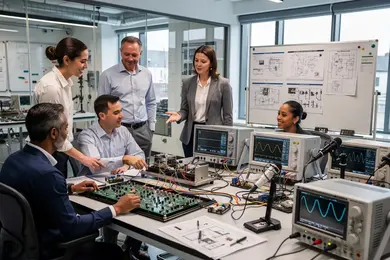
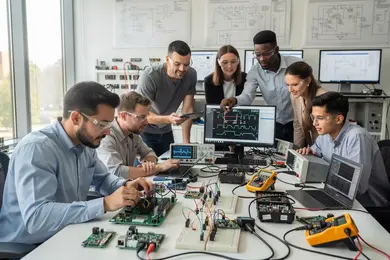
Unlike many fully text-based online degrees, electrical engineering is math-heavy, lab-driven, and project-centered. Students typically complete lectures online, submit problem sets through a learning platform, use simulation software, and take proctored exams. Labs may be handled through mailed hardware kits, remote-access lab equipment, local lab arrangements, short campus residencies, or hybrid sessions.
Prospective students should understand how engineering differs from other online STEM paths. For example, geology degrees online may emphasize earth systems, mapping, environmental data, and field interpretation, while electrical engineering focuses more heavily on circuits, electromagnetics, embedded systems, power, and signal processing.
The most common online electrical engineering formats include the following options, each serving a different type of learner:
- Fully online bachelor's degree: Best for students who need maximum flexibility but still want a full engineering credential; students should confirm how labs and senior design are completed.
- Online degree-completion program: Best for transfer students who already completed calculus, physics, chemistry, and introductory engineering courses at a community college or another university.
- Hybrid engineering program: Best for students who can travel occasionally for labs, exams, advising, or design projects and want more in-person technical support.
- Online master's in electrical engineering: Best for engineers or STEM graduates who want advanced skills in areas such as power systems, photonics, communications, controls, or microelectronics.
A strong online program should feel structured rather than self-directed in a loose sense. Students still need weekly deadlines, faculty access, lab feedback, tutoring, project collaboration, and career advising. The difference is that much of the learning happens through digital systems instead of a physical classroom.
How do online electrical engineering programs compare to campus-based programs?
Online and campus-based electrical engineering programs can cover the same academic content, but the learning experience is different. The right choice depends on a student's schedule, learning style, access to labs, need for internships, and ability to participate in projects.
Electrical engineering is less forgiving than many online majors because students must master calculus, differential equations, physics, circuits, electronics, and design tools in sequence. This makes support systems especially important. Students comparing an engineering program with a more reading- and research-oriented field, such as a library science degree online, should expect electrical engineering to require more scheduled technical practice, lab work, and quantitative assessment.
The table below summarizes practical differences that affect student success, not just convenience. Use it to decide whether online, campus, or hybrid study best fits your circumstances.
| Factor | Online electrical engineering | Campus-based electrical engineering | Best fit |
| Schedule flexibility | Often strong, especially in asynchronous courses | Usually tied to fixed class and lab times | Online may suit working adults and military learners |
| Lab experience | May use remote labs, kits, simulations, or short residencies | Usually uses physical labs and in-person equipment | Campus or hybrid may suit students who want frequent hands-on lab access |
| Faculty interaction | Depends on office hours, discussion boards, video meetings, and response time | Often easier to access informally before or after class | Either can work if advising and tutoring are strong |
| Peer collaboration | Usually organized through digital tools and scheduled team meetings | Often easier through labs, clubs, and design spaces | Campus may help students who rely on daily peer support |
| Internship access | Depends heavily on the school's employer network and the student's location | May benefit from local industry partnerships near campus | Online students should be proactive about local or remote internships |
| Cost structure | May reduce relocation and commuting costs, but online fees can vary | May include housing, commuting, lab, and campus fees | Online may lower total living expenses for students who stay employed |
Online study makes the most sense when a student is organized, comfortable learning from recorded or live digital lectures, and able to schedule regular problem-solving time. Campus study may be better for first-time college students who need more structure, students who want deep lab immersion, or learners who struggle to stay on pace without face-to-face accountability.

Which accreditation and ABET standards should online electrical engineering programs meet?
Accreditation is one of the most important quality checks for an online electrical engineering degree. At minimum, the college or university should hold institutional accreditation from an accreditor recognized by the U.S. Department of Education or the Council for Higher Education Accreditation. For engineering, however, students should also look closely at programmatic accreditation.
The most important engineering credential is ABET accreditation, especially accreditation from the Engineering Accreditation Commission for a bachelor's program in electrical engineering or electrical and computer engineering. ABET evaluates whether a program meets standards for curriculum, faculty, facilities, student outcomes, continuous improvement, and engineering design.
Online delivery does not automatically prevent ABET accreditation, but students should verify that the specific online program and degree name are listed, not merely the university or a similar campus program.
Students should distinguish among these accreditation terms before applying:
- Institutional accreditation: Applies to the college or university as a whole and is important for federal financial aid, credit transfer, and general legitimacy.
- ABET Engineering Accreditation Commission accreditation: Applies to engineering programs and is the preferred accreditation for students who may pursue professional engineering licensure or highly technical engineering roles.
- ABET Engineering Technology Accreditation Commission accreditation: Applies to engineering technology programs, which are typically more applied and may not be viewed the same as engineering degrees by all employers or licensing boards.
- State authorization: Confirms whether a school may enroll online students from a given state, but it is not a substitute for academic accreditation.
ABET matters most for students who want a traditional engineering career path, plan to take the Fundamentals of Engineering exam, or may later pursue a Professional Engineer license. Licensure rules vary by state, so students should check the state engineering board where they plan to work. A non-ABET program may still be useful for certain technical, computing, or industry roles, but it can limit options in regulated engineering work.
What admission requirements do online electrical engineering degrees typically have?
Admission requirements vary by degree level, school selectivity, and whether the applicant is entering as a first-year student, transfer student, or graduate student. Because electrical engineering is sequential, schools pay close attention to math readiness and prior science coursework.
At the bachelor's level, applicants usually need a high school diploma or equivalent, transcripts, and evidence of preparation for college algebra, precalculus, or calculus. More selective programs may expect strong grades in math and science.
Transfer applicants may need completed courses in calculus, physics with lab, chemistry, programming, or introductory engineering. Graduate applicants usually need a bachelor's degree in electrical engineering, computer engineering, physics, mathematics, or a closely related STEM field.
Admission standards can look very different across fields. A student comparing engineering with a professional information pathway such as a master of library science should expect electrical engineering admissions to emphasize calculus, physics, programming, and technical prerequisites more heavily than writing samples or humanities coursework.
Most online electrical engineering programs ask for some combination of the following materials:
- Official transcripts: Schools use these to verify GPA, transfer credits, prerequisite completion, and academic readiness.
- Math placement or prerequisite evidence: Students may need placement scores or completed coursework before entering calculus-based engineering sequences.
- Standardized test scores: Some undergraduate programs are test-optional, while others may still consider SAT or ACT scores for placement, scholarships, or admission.
- Programming or technical background: Some programs recommend or require exposure to Python, C, C++, MATLAB, or similar tools.
- Graduate application materials: Master's programs may require a statement of purpose, resume, recommendations, minimum GPA, and prerequisite engineering coursework.
- English proficiency documentation: International applicants may need TOEFL, IELTS, or comparable evidence, depending on school policy.
A common mistake is applying before confirming prerequisite sequencing. If calculus I is not completed or if physics must be taken before core circuits courses, a student's graduation timeline can expand quickly. Transfer students should request a course-by-course evaluation before enrolling, not after the first term begins.
How long do online electrical engineering programs take and what do they cost?
A full online bachelor's degree in electrical engineering usually requires about four years of full-time study, though transfer students may finish faster if many general education, math, and science credits are accepted. Part-time students often need longer because engineering courses build on one another and are not always offered every term. Online master's programs commonly take one to three years depending on course load, thesis requirements, and employer tuition support.
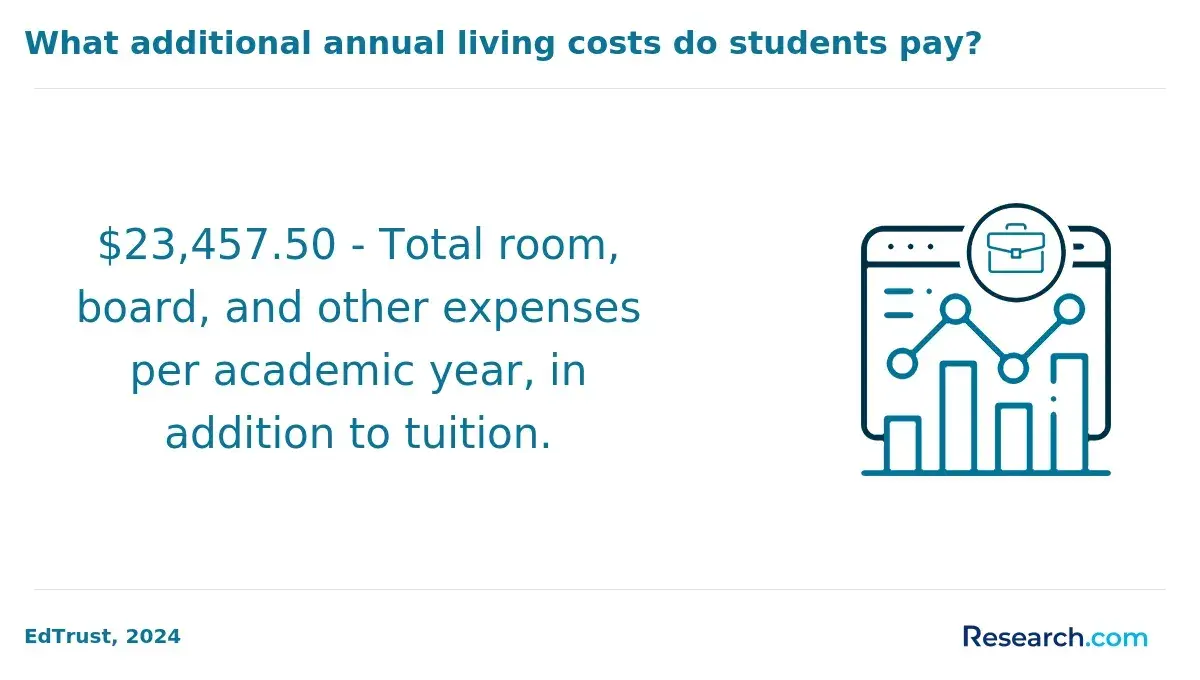
Cost varies based on factors such as residency, public versus private tuition, transfer credits, online fees, lab fees, textbooks, software, and hardware kits. For public four-year in-state students, the College Board's 2024 Trends in College Pricing report lists an average published tuition and fees of $11,610 for the academic year, providing a useful benchmark for comparing tuition quotes.
However, online students should still calculate the total program cost as engineering fees and required technology can significantly impact the final number.
The table below shows major cost and time drivers. These are not price quotes; they are the variables that most often change the affordability of an online electrical engineering degree.
| Cost or timeline factor | Why it matters | What to verify before enrolling |
| Transfer credits | Accepted credits can reduce both cost and time to degree | Whether calculus, physics, chemistry, and engineering courses transfer as major requirements |
| Residency status | Public universities may charge different rates for in-state and out-of-state students | Whether online students pay resident, nonresident, or separate distance-learning tuition |
| Lab delivery | Lab kits, simulations, or residencies can add expenses | Whether students must buy equipment or travel to campus |
| Course availability | Engineering sequences can delay graduation if a required course is offered once per year | Whether courses are offered every term, every year, or on a cohort schedule |
| Employment status | Working full time may reduce term-by-term course load | Whether part-time enrollment affects financial aid, scholarships, or time limits |
| Graduate options | Accelerated bachelor's-to-master's pathways may save time for eligible students | Whether graduate credits can count toward both degrees |
To estimate affordability, students should compare net price rather than sticker price. Net price includes tuition after grants and scholarships, required fees, books, equipment, transportation, lost income, and loan interest. A lower tuition rate is not always the better deal if the program accepts fewer transfer credits or requires extra semesters.
What core courses and specializations are offered in online electrical engineering curricula?
Electrical engineering curricula start with a foundation in mathematics, science, computing, and engineering design. Students then move into circuits, electronics, signals, systems, and specialized technical electives. ABET-accredited bachelor's programs also include a major design experience, often called a capstone or senior design project.
The core curriculum is demanding because each course prepares students for later design work. A student who struggles in calculus, differential equations, or physics should use tutoring early rather than waiting until upper-division engineering courses.
Most online electrical engineering programs include courses like the following:
- Calculus and differential equations: The mathematical base for modeling circuits, signals, electromagnetic fields, and dynamic systems.
- Physics for engineers: A calculus-based study of mechanics, electricity, magnetism, and waves.
- Circuit analysis: Foundational methods for understanding voltage, current, resistance, impedance, and circuit behavior.
- Electronics: Study of diodes, transistors, amplifiers, integrated circuits, and semiconductor devices.
- Signals and systems: Analysis of continuous and discrete signals used in communications, controls, audio, imaging, and sensors.
- Digital logic and embedded systems: Design of digital circuits, microcontrollers, processors, and hardware-software interfaces.
- Electromagnetics: Study of fields, waves, antennas, transmission lines, and related physical principles.
- Control systems: Modeling and design of systems that regulate motion, temperature, speed, voltage, or other outputs.
- Power systems: Study of generation, transmission, distribution, machines, power electronics, and grid operation.
- Engineering design capstone: A team-based project that demonstrates design, testing, documentation, communication, and project management.
Specializations help students align the degree with a target industry. For example, power systems can support utility and renewable-energy careers, while embedded systems can support robotics, automotive, aerospace, and IoT roles. Communications, RF, and signal processing can support defense, wireless, satellite, and electronics industries.
Common online electrical engineering specializations include power and energy systems, microelectronics, embedded systems, robotics and controls, signal processing, telecommunications, photonics, semiconductor devices, computer engineering, and engineering management. Students should choose electives based on job postings in their target region, not just course titles that sound interesting.
What high-demand engineering careers can graduates pursue with an electrical engineering degree?
An electrical engineering degree can lead to careers in energy, electronics, automation, aerospace, defense, telecommunications, manufacturing, transportation, medical devices, and computing hardware. The strongest outcomes usually come from pairing the degree with internships, lab projects, programming skills, design documentation, and evidence of hands-on problem solving.
The table below summarizes common career paths for graduates. It focuses on role fit and responsibilities rather than promising a specific job outcome, because hiring depends on experience, location, clearance requirements, and employer needs.
| Career path | Typical responsibilities | Helpful preparation |
| Electrical engineer | Designs, tests, and improves electrical equipment, components, controls, and power systems | Circuits, power systems, electronics, CAD tools, testing, and documentation |
| Electronics engineer | Works on electronic devices, sensors, communications equipment, control hardware, or embedded electronics | Analog and digital electronics, signal processing, PCB design, and lab testing |
| Power systems engineer | Supports electric grids, substations, renewable integration, protection systems, and reliability planning | Power systems, machines, power electronics, protection, and utility internships |
| Controls engineer | Designs automated systems for factories, vehicles, robotics, HVAC, or process control | Control theory, PLCs, sensors, MATLAB, Python, and industrial automation tools |
| Embedded systems engineer | Builds hardware-software systems for devices, vehicles, medical equipment, and robotics | C, C++, microcontrollers, digital logic, real-time systems, and debugging |
| RF or communications engineer | Works with antennas, wireless systems, radar, satellite systems, or signal transmission | Electromagnetics, communications, signal processing, RF labs, and simulation tools |
| Semiconductor or microelectronics engineer | Supports chip design, device modeling, fabrication, testing, or process engineering | Semiconductor physics, electronics, cleanroom exposure, and graduate electives |
| Test or validation engineer | Develops testing procedures, analyzes failures, validates products, and documents performance | Measurement tools, lab methods, statistics, scripting, and technical writing |
Students who want the broadest employment options should build a portfolio of technical evidence. Useful examples include a capstone project, GitHub or code samples for embedded work, lab reports, PCB designs, simulation results, internship experience, and professional communication samples.
A common mistake is assuming that the degree alone is enough for a specialized role. Employers in robotics, semiconductors, aerospace, and embedded systems often look for tool-specific experience, such as MATLAB, Simulink, SPICE, Altium, LabVIEW, Python, C, C++, Verilog, or FPGA exposure.
What salary ranges and earning potential exist for electrical engineers across the United States?
Electrical engineering compensation varies by occupation, industry, region, experience, security clearance, graduate education, and management responsibility. The U.S. Bureau of Labor Statistics reported a May 2024 median annual wage of $118,780 for electrical and electronics engineers, which is a useful national benchmark but not a personal salary prediction.
The table below compares related occupations that electrical engineering graduates may enter or move toward with additional experience. Use these figures as labor-market reference points, then compare local job postings for your target city and sector.
| Occupation | How it connects to electrical engineering | May 2024 median annual wage |
| Electrical and electronics engineers | Broad category covering design, development, testing, and supervision of electrical and electronic systems | $118,780 |
| Computer hardware engineers | Design and test processors, circuit boards, memory devices, networks, and computing hardware | $155,020 |
| Aerospace engineers | Work on aircraft, spacecraft, defense systems, avionics, sensors, and control systems | $134,830 |
| Architectural and engineering managers | Lead engineering teams, budgets, technical strategy, product development, and project execution | $167,740 |
Higher earning potential often comes from combining electrical engineering knowledge with scarce skills. Examples include power grid modernization, semiconductor manufacturing, RF engineering, embedded software, cybersecurity for industrial systems, aerospace systems, or technical leadership. Graduate education can help in advanced design and research roles, but it should be weighed against tuition cost and work experience opportunities.
Students should avoid treating national medians as guaranteed outcomes. Entry-level pay may be lower, and salary can differ sharply between rural utilities, federal contractors, Silicon Valley hardware firms, manufacturing plants, and engineering consulting companies.
What is the job outlook and industry demand for electrical engineers in key sectors?
Electrical engineering demand is being shaped by electrification, grid modernization, renewable energy integration, semiconductor investment, industrial automation, defense modernization, telecommunications, AI-enabled hardware, and the growth of connected devices. These trends do not remove the need for fundamentals; they increase the value of engineers who understand both physical systems and software-enabled design.
The U.S. Bureau of Labor Statistics projects employment of electrical and electronics engineers to grow 9% from 2024 to 2034, which signals stronger-than-average demand for the combined occupation. For students, this means the degree can be relevant across multiple industries, but the strongest opportunities may require specialization, internships, and geographic flexibility.
Key hiring sectors include the following areas, each with different expectations:
- Electric power and utilities: Demand is tied to grid reliability, renewable integration, battery storage, substations, protection systems, and transmission upgrades.
- Semiconductors and electronics manufacturing: Employers may seek knowledge of device physics, testing, fabrication, microelectronics, and quality systems.
- Aerospace and defense: Roles may involve sensors, avionics, radar, communications, controls, and secure systems, with some positions requiring U.S. citizenship or security clearance.
- Automotive and transportation: EVs, battery management, charging infrastructure, embedded systems, and autonomous features create demand for electrical and computer engineering skills.
- Industrial automation and robotics: Manufacturers need engineers who can work with controls, PLCs, sensors, drives, machine vision, and safety systems.
- Telecommunications and wireless systems: RF, antennas, signal processing, and network hardware remain important for satellite, mobile, and defense communications.
AI is changing the workflow rather than replacing the engineering foundation. Engineers increasingly use simulation tools, automated testing, data analysis, and AI-assisted design support, but employers still need professionals who can validate physical behavior, comply with safety standards, document designs, and troubleshoot real systems.
How can students evaluate and choose a reputable online electrical engineering program?
Choosing an online electrical engineering program should be a structured comparison, not a quick decision based on tuition or brand recognition alone. The best program is the one that matches your career goal, academic preparation, schedule, budget, and licensing needs.
Students with military experience should also compare veteran support, transfer credit for technical training, GI Bill participation, deployment flexibility, and advising quality. A focused guide to electrical engineering programs online for veterans can help military-connected learners identify program features that matter beyond the standard admissions checklist.
Before enrolling, use the following steps to reduce risk and compare programs more effectively:
- Verify institutional and ABET accreditation: Confirm both the school's accreditation and the exact program's ABET status, especially if licensure may matter later.
- Request a degree plan in writing: Ask how long the program will take with your transfer credits, prerequisites, and intended course load.
- Review lab delivery carefully: Find out whether labs use kits, simulations, remote instrumentation, local partners, or required campus visits.
- Compare total cost, not tuition alone: Include fees, software, lab kits, proctoring, travel, books, hardware, and the cost of extra semesters.
- Ask about course rotation: Confirm how often required upper-division courses are offered and whether missing one course delays graduation by a year.
- Evaluate student support: Look for engineering tutoring, faculty office hours, career advising, internship support, disability services, and technical help desk coverage.
- Check career alignment: Compare electives, labs, projects, and employer relationships with the roles you want after graduation.
- Talk to current students or alumni: Ask about workload, faculty responsiveness, group projects, exam proctoring, and whether online students receive equal support.
Red flags include vague accreditation language, no clear lab plan, limited access to faculty, unclear transfer-credit policies, generic career claims, pressure to enroll quickly, and no published pathway from prerequisites to graduation. If a school cannot clearly explain how an online student completes engineering labs and design projects, keep looking.
An online electrical engineering degree is most worth considering when it is accredited, technically rigorous, affordable after aid and transfer credit, and aligned with a realistic career plan. Students who dislike advanced math, cannot schedule weekly study time, or mainly want a quick credential may be better served by a related engineering technology, IT, data, or certificate pathway.
Other Things You Should Know About Electrical Engineering
Yes, at least some programming is usually important. Many programs use MATLAB, Python, C, C++, or similar tools for modeling, data analysis, embedded systems, and controls. Students do not need to be expert programmers before enrolling, but early practice helps.
Some students do, but the workload is demanding. A part-time schedule is often more realistic for working adults, especially during calculus, physics, circuits, electronics, and lab-heavy courses. Ask the school for a sample weekly workload before choosing a course load.
Most online electrical engineering programs use virtual labs, remote-access simulation software, or short on-campus lab sessions for hands-on work. Programs typically require students to complete core labs in circuits, electronics, and signals, while ABET-accredited degrees still must meet the same technical outcomes as campus-based programs.
References
- Inside the Best Online Bachelor's in Electrical Engineering Degrees https://www.onlinecolleges.me/engineering-degrees/bachelors/electrical-engineering/
- Job Market Trends for Electrical Engineers | Vista Projects https://www.vistaprojects.com/job-market-trends-for-electrical-engineers/
- Criteria for Accrediting Engineering Programs, 2025 - 2026 - ABET https://www.abet.org/accreditation/accreditation-criteria/criteria-for-accrediting-engineering-programs-2025-2026/
- Despite a sluggish job market, studying electrical engineering offers good prospects https://www.vde.com/en/press/press-releases/electrical-engineering-job-market-studies
- Job market for electrical engineers: no cause for concern https://pcim.mesago.com/nuernberg/en/pcim-insights/pcim-magazine/job-market-for-electrical-engineers-no-cause-for-concern.html