2027 Online Electrical Engineering Degrees With Practice-Ready Engineering Curricula

Co-Founder and Chief Data Scientist
Choosing an online electrical engineering degree is really a decision about credibility, lab access, cost, and career fit. The stakes are high: the U. S. Bureau of Labor Statistics reports a 2024 median annual wage of $118,780 for electrical and electronics engineers, making the field attractive but academically demanding.
This guide is for prospective undergraduates, transfer students, working technicians, and career changers who want an online path with serious engineering training. You will learn how programs work, how to verify accreditation, what hands-on experiences matter, and how to compare programs without relying only on tuition or rankings.
Key Things You Should Know
- For most engineering roles, the safest choice is an online electrical engineering bachelor's degree from a regionally accredited institution with ABET accreditation or a clear ABET status, especially if you may pursue Professional Engineer licensure later.
- Online electrical engineering programs usually take about 4 years for first-time bachelor's students, but transfer students and working adults may finish faster or slower depending on accepted credits, math readiness, and lab scheduling.
- According to the U.S. Bureau of Labor Statistics, electrical and electronics engineers had a 2024 median annual wage of $118,780, but outcomes vary by industry, location, experience, security clearance, graduate study, and whether the curriculum builds practical design and testing skills.
What is an online electrical engineering degree and how does it work?
An online electrical engineering degree is a college program that teaches the theory, design methods, lab practices, and technical communication skills used to build and improve electrical, electronic, power, control, communication, and embedded systems. The most common credential for entry into engineering roles is a Bachelor of Science in Electrical Engineering or a closely related Bachelor of Science in Electrical and Computer Engineering.
Online does not mean "self-taught" or "light on engineering." In a serious program, students complete calculus-based physics, advanced math, circuit analysis, electronics, signals, electromagnetics, computer systems, and a capstone design project. The online format changes the delivery method, not the need for rigorous problem-solving and verified technical competence.
Most online programs use a combination of digital lectures, problem sets, simulation software, remote or take-home labs, proctored exams, team design projects, and faculty office hours. Some programs are fully online, while others require short campus visits for labs, testing, or senior design presentations. Prospective students should ask early whether any in-person components are required, because travel can affect both cost and schedule.
The degree is a strong fit for students who want engineering roles but need schedule flexibility, including working adults, military-affiliated learners, community college transfers, and technicians moving into design or analysis positions. It may be a poor fit for students who are not ready for calculus, who cannot commit regular weekly study time, or who want a quick credential with minimal math.
Students comparing broader engineering degrees online should pay special attention to major-specific lab requirements, because electrical engineering often demands more structured experimentation than many general technology programs.
How do online electrical engineering programs compare to campus-based programs?
The main difference is not the academic goal; it is the learning environment. A well-designed online program should still teach engineering analysis, experimentation, teamwork, design trade-offs, and documentation. The practical question is whether the online program gives you enough access to faculty, equipment, software, peer collaboration, and career support to build those skills.
The table below summarizes the comparison points that matter most when deciding between online and campus-based electrical engineering study. Use it to evaluate fit rather than assuming one format is automatically better.
| Factor | Online electrical engineering degree | Campus-based electrical engineering degree | Decision point |
| Schedule | Often asynchronous or hybrid, with deadlines and occasional live sessions | Set class, lab, and exam times | Online is better for working adults; campus is better for students who need a fixed routine |
| Labs | May use remote instruments, mailed lab kits, simulations, or short residencies | Usually uses on-campus lab benches and supervised equipment | Ask how experiments are assessed and whether students collect real measurements |
| Peer collaboration | Virtual teams, discussion boards, video meetings, shared repositories | In-person study groups, labs, and project meetings | Online students must be proactive about communication |
| Career access | Virtual career services, employer webinars, online portfolios, internship support | Campus career fairs, research labs, student chapters, local recruiting | Check whether online students receive the same employer access as campus students |
| Cost structure | May reduce relocation and commuting costs but can include technology, lab kit, and residency fees | May include housing, commuting, parking, and campus fees | Compare total cost, not tuition alone |
Online study can be just as demanding as campus study, and sometimes more demanding because students must manage time independently. A campus program may be worth the extra disruption if you want daily access to labs, undergraduate research, hardware clubs, or local engineering employers. An online program may be the better investment if it lets you keep earning income, avoid relocation, or use transfer credits efficiently.
A common mistake is assuming that online courses are easier. Electrical engineering is cumulative: weak algebra, trigonometry, calculus, or physics skills can quickly create problems in circuits, controls, and signal processing. Before enrolling, review placement expectations and ask whether tutoring is available for online students.

How can you verify that an online electrical engineering program is properly accredited?
Accreditation is one of the most important checks for an online electrical engineering degree because it affects credit transfer, employer confidence, graduate school eligibility, federal financial aid access, and, in many cases, licensure pathways. In the United States, you should check both institutional accreditation and programmatic accreditation.
Institutional accreditation means the college or university has been reviewed by an approved accreditor for overall academic and administrative quality. Programmatic accreditation means the engineering program itself has been reviewed against discipline-specific standards. For electrical engineering, ABET accreditation is the most widely recognized programmatic marker.
Use the following steps before you submit an application or pay an enrollment deposit. They reduce the risk of choosing a program that sounds legitimate but does not match your long-term goals.
- Confirm that the institution is listed by an accreditor recognized by the U.S. Department of Education or the Council for Higher Education Accreditation.
- Search the ABET accredited program database for the exact program name, degree level, campus or online designation, and institution.
- Verify whether accreditation applies to the specific electrical engineering program, not just the school or a different engineering major.
- Ask admissions for the program's accreditation status in writing if the website uses vague phrases such as "aligned with ABET standards" or "seeking accreditation."
- If you plan to pursue Professional Engineer licensure, contact your state engineering board to confirm how it treats online, non-ABET, international, or technology-focused degrees.
Be especially careful with programs labeled "electrical engineering technology." These can be valuable, applied degrees, but they are not identical to electrical engineering degrees. Some employers welcome both, while others prefer or require an engineering degree for design, analysis, or licensure-track roles. The right choice depends on whether you want hands-on implementation work, technician-to-engineer advancement, or a more theory-intensive engineering path.
What practice-ready engineering skills and hands-on experiences do these curricula provide?
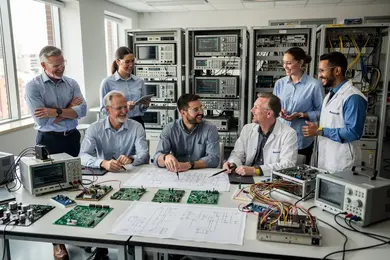
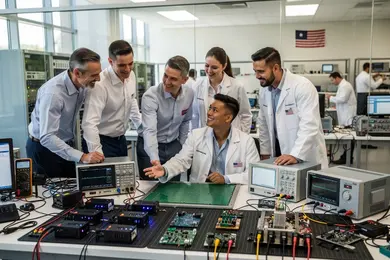
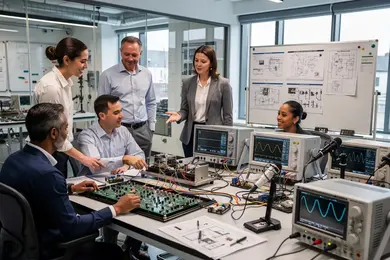
Practice-ready electrical engineering curricula help students move beyond solving textbook problems into designing, testing, debugging, documenting, and improving real systems. Employers often look for evidence that graduates can use engineering tools responsibly, collaborate across disciplines, and explain design decisions, not just pass exams.
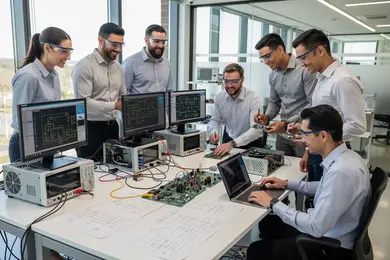
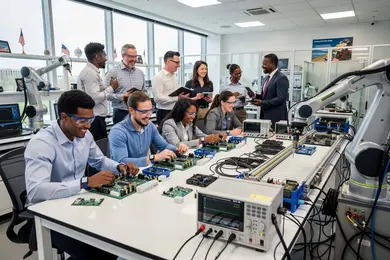
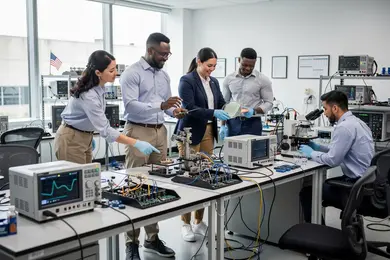
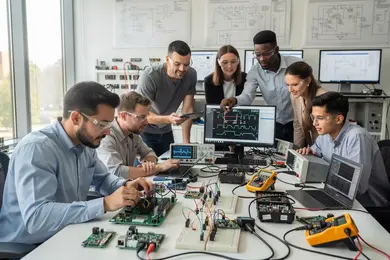
In online programs, hands-on learning may look different from a campus lab, but it should still require direct engagement with engineering constraints. Strong programs usually combine simulations with measurement, design iteration, and communication.
- Circuit design and testing: Students analyze analog and digital circuits, build or simulate circuits, take measurements, interpret errors, and document results.
- Embedded systems: Students program microcontrollers, interface sensors, manage timing constraints, and troubleshoot hardware-software interactions.
- Power and energy systems: Students study generation, distribution, power electronics, renewable integration, protection, and load behavior.
- Signals and communications: Students model waveforms, filtering, modulation, noise, sampling, and data transmission.
- Control systems: Students design feedback systems, evaluate stability, and use modeling tools to predict system behavior.
- Engineering design: Students define requirements, compare alternatives, manage trade-offs, test prototypes, and present results to technical and nontechnical audiences.
Current industry trends make these applied experiences more important. Electric vehicles, grid modernization, advanced manufacturing, robotics, defense electronics, semiconductor demand, and AI-enabled hardware systems all increase the value of engineers who can connect theory to working systems. AI tools may help with coding, simulation setup, or documentation, but they do not replace the need to understand safety, tolerances, validation, and ethical engineering judgment.
Students who are interested in computational modeling, machine learning, or advanced analytics can also look at pathways beyond electrical engineering, such as an online data science doctorate, especially if their long-term goal is research leadership in signal processing, autonomous systems, smart grids, or sensor data analysis.
What courses are typically included in an online electrical engineering curriculum?
An online electrical engineering curriculum is usually built in layers. The first layer develops math and science foundations. The second introduces engineering fundamentals. The third focuses on specialized electrical engineering topics, labs, electives, and a senior design project.
The table below shows common course areas and why they matter. Course names vary by school, but a reputable program should cover the core knowledge needed for engineering analysis and design.
| Course area | Typical topics | Why it matters |
| Mathematics | Calculus, differential equations, linear algebra, probability, statistics | Provides the language used to model circuits, systems, fields, and signals |
| Physics and science | Mechanics, electricity and magnetism, laboratory science | Builds the physical foundation for electrical behavior and engineering measurement |
| Programming and computing | Python, C, MATLAB, data structures, numerical methods | Supports simulation, automation, embedded systems, and engineering analysis |
| Circuits and electronics | DC and AC circuits, semiconductor devices, amplifiers, digital logic | Forms the core of electrical design and troubleshooting |
| Signals and systems | Fourier analysis, filters, sampling, communication theory | Prepares students for communications, controls, audio, radar, and sensor systems |
| Electromagnetics | Fields, waves, transmission lines, antennas | Supports power, wireless, RF, microwave, and high-speed design applications |
| Power and controls | Power systems, machines, control theory, stability | Connects engineering theory to energy, automation, robotics, and infrastructure |
| Capstone design | Requirements, prototyping, testing, teamwork, presentations | Demonstrates readiness to solve open-ended engineering problems |
Electives allow students to shape the degree around career goals. Power systems electives make sense for utility, renewable energy, and grid careers. Embedded systems and digital design fit robotics, aerospace, defense, and consumer electronics. Communications, RF, and signal processing support wireless, satellite, radar, and sensing roles.
One red flag is a curriculum that skips advanced math, lab work, or senior design while still claiming to prepare students for engineering roles. Another is a program that lists many technology tools but does not explain how students are assessed on design, testing, and engineering reasoning.

What admission requirements and prerequisites do online electrical engineering degrees have?
Admission requirements vary by school and degree level, but electrical engineering programs are usually more selective about math readiness than many other online degrees. A student can be motivated and still struggle if they begin without the necessary algebra, trigonometry, calculus, and physics preparation.
For bachelor's programs, schools commonly review academic history, prerequisite coursework, transfer credits, and readiness for college-level STEM study. Adult learners and transfer students may also be asked for transcripts from every prior institution, even if the credits are old or unrelated.
- High school diploma, GED, or equivalent credential for first-time undergraduate applicants
- Prior coursework in algebra, trigonometry, precalculus, chemistry, and physics, depending on the program
- College transcripts for transfer applicants, often with minimum grade requirements for math, science, and engineering courses
- Placement tests or prerequisite checks for calculus and physics sequencing
- Personal statement, resume, or work history for some adult-focused or degree-completion programs
- English proficiency documentation for applicants whose prior education was not in English
Transfer students should ask for a formal credit evaluation before committing. Engineering curricula are tightly sequenced, and not every math, science, or technology course transfers into an ABET-oriented engineering plan. A generous general transfer policy does not always mean a shorter time to graduation.
If you are not ready for calculus, the smartest path may be to complete prerequisite math at a community college or through a structured pre-engineering pathway before entering the major. This may feel slower, but it can reduce course repeats and improve your odds of succeeding in circuits, physics, and differential equations.
How long do online electrical engineering programs take and what do they cost?
A traditional bachelor's degree in electrical engineering typically requires about 120 to 130 credits and often takes 4 years of full-time study. Online students may take longer if they study part time while working, but transfer credits, summer courses, and prior approved coursework can shorten the timeline. Graduate degrees are different: an online master's in electrical engineering often takes 1.5 to 3 years depending on course load and thesis or project requirements.
Cost varies widely because tuition structure, residency status, institution type, transfer credit, fees, and time to completion all matter. College Board's 2024 Trends in College Pricing reported average published tuition and fees of $11,610 for in-state students at public 4-year institutions and $43,350 at private nonprofit 4-year institutions for the 2024-25 academic year. Online engineering students should use those figures as broad benchmarks, not as program-specific prices, because many online programs set separate per-credit rates.
When estimating total cost, look beyond tuition. Electrical engineering can involve software access, calculators, lab kits, proctoring fees, travel for residencies, textbooks, course repeats, and reduced work hours during difficult semesters.
- Tuition: usually charged per credit or per term, with public in-state, public out-of-state, private nonprofit, and private for-profit rates differing by institution
- Technology and online learning fees: May cover platforms, proctoring, digital resources, or student support services
- Lab and equipment costs: May include mailed kits, instrumentation, components, software licenses, or required campus lab sessions
- Residency or travel costs: Relevant when a program requires short in-person labs, orientations, exams, or capstone presentations
- Opportunity cost: Includes work hours reduced because of demanding math, lab, or design courses
Affordability is not just about finding the lowest sticker price. A slightly higher-cost program may be the better value if it accepts more transfer credits, offers stronger advising, has ABET accreditation, provides career support for online students, and reduces the chance of delayed graduation. Conversely, a low-tuition program can become expensive if courses do not transfer, labs are weak, or the degree does not match your target job requirements.
Students exploring other flexible online majors should notice that lab intensity changes the cost equation. For example, someone deciding whether to study exercise science online will evaluate clinical or applied movement experiences differently than an electrical engineering student evaluates circuit labs, embedded hardware, and capstone design.
What careers can you pursue with an online electrical engineering degree?
An online electrical engineering degree can support careers in design, testing, manufacturing, power systems, electronics, communications, automation, defense, transportation, semiconductors, and consulting. The degree format matters less than whether the program is accredited, rigorous, and aligned with the technical expectations of the role.
The table below outlines common career directions and the type of work associated with each. Actual job titles vary by employer, and some specialized roles may prefer a master's degree, security clearance, industry experience, or a Professional Engineer license.
| Career path | Common responsibilities | Useful curriculum focus |
| Electrical engineer | Designs, analyzes, tests, and improves electrical systems or components | Circuits, electronics, electromagnetics, design labs, capstone |
| Power systems engineer | Works on power generation, transmission, distribution, protection, and grid reliability | Power systems, machines, renewable energy, controls |
| Electronics engineer | Develops devices, boards, sensors, embedded electronics, or instrumentation | Analog and digital electronics, PCB design, embedded systems |
| Controls engineer | Designs automation, feedback systems, robotics, and industrial control processes | Control theory, programming, systems modeling, sensors |
| Communications or RF engineer | Works on wireless systems, antennas, radar, satellites, or signal transmission | Signals, communications, electromagnetics, RF electives |
| Test or validation engineer | Creates test plans, gathers measurements, troubleshoots failures, and verifies performance | Lab methods, instrumentation, statistics, documentation |
| Field applications engineer | Helps customers implement technical products and solve design problems | Electronics, communication, technical writing, customer-facing project work |
Career fit depends on your strengths. Students who enjoy math modeling may like signal processing, controls, or power analysis. Students who enjoy building and debugging may prefer embedded systems, electronics, or test engineering. Students who communicate well with customers and cross-functional teams may thrive in applications engineering, systems engineering, or technical sales engineering.
Electrical engineering also connects well with other fields. Biomedical devices, smart buildings, aerospace systems, autonomous vehicles, energy analytics, and industrial automation all rely on electrical systems. Over time, engineers may move into project management, systems architecture, engineering management, patent work, consulting, or graduate research.
What are the salary expectations and job outlook for electrical engineers?
The salary outlook for electrical engineering is strong relative to many bachelor's-level fields, but it should be interpreted carefully. The U.S. Bureau of Labor Statistics reported a 2024 median annual wage of $118,780 for electrical and electronics engineers. A median is not an entry-level guarantee; it represents the midpoint across workers with different experience levels, industries, locations, and responsibilities.
The BLS also projects 7% employment growth for electrical and electronics engineers from 2024 to 2034. For students, this suggests continued demand, but not equal demand in every specialty. Power infrastructure, semiconductors, defense systems, communications, automation, and electrification may create different opportunities depending on region and employer investment.
Several factors can influence compensation and advancement. Use these as variables when thinking about return on investment rather than assuming the degree alone determines salary.
- Industry: Semiconductor, aerospace, energy, defense, utilities, manufacturing, and consulting employers may pay differently for similar engineering skills.
- Location: Salaries often reflect regional labor markets, cost of living, and concentration of engineering employers.
- Experience: Internships, co-ops, technician experience, undergraduate research, and capstone quality can affect early opportunities.
- Specialization: Power systems, embedded systems, RF, controls, hardware verification, and signal processing may lead to different career paths.
- Credentials: ABET accreditation, graduate study, security clearance, software proficiency, and Professional Engineer licensure can matter for specific roles.
AI and automation are changing engineering work, but they are not eliminating the need for electrical engineers. Instead, employers increasingly value engineers who can use simulation, coding, data analysis, and automation tools while still understanding physical systems, standards, safety, and verification. Students should graduate with a portfolio that shows not only what they studied but what they designed, measured, tested, and improved.
How should you choose a reputable online electrical engineering program in the United States?
The best online electrical engineering program is the one that matches your career goal, academic preparation, schedule, budget, and need for accreditation. A program with a famous name is not automatically the best fit, and the cheapest program is not always the best value. Your goal is to reduce academic, financial, and career risk before enrolling.
Start by defining the job you want after graduation. If you want design engineering, power systems, aerospace, semiconductors, controls, or licensure-track work, prioritize ABET status, rigorous labs, and a true engineering curriculum. If you want applied implementation, maintenance, manufacturing support, or technician-to-supervisor advancement, an engineering technology path may also be worth comparing.
Use this checklist when speaking with admissions, faculty, or program advisors. The answers will reveal whether the program is built for real engineering preparation or just online convenience.
- Confirm institutional accreditation and the exact ABET status of the electrical engineering program.
- Ask how online labs work, what equipment students use, and whether any campus visits are required.
- Request a degree plan showing prerequisites, course sequencing, and expected time to graduation for your situation.
- Get a written transfer credit evaluation before enrolling if you have prior college coursework.
- Ask whether online students can access tutoring, faculty office hours, career services, employer events, and engineering student organizations.
- Review capstone project examples to see whether students solve open-ended design problems with testing and documentation.
- Compare total cost, including fees, lab kits, software, travel, textbooks, and expected course load.
- Ask about internship, co-op, research, or portfolio support for remote students.
- Check whether the program aligns with graduate school, employer, or state licensure requirements relevant to your goal.
Common red flags include vague accreditation language, no clear lab model, limited faculty access, weak math requirements, pressure to enroll quickly, unclear transfer policies, and career claims that sound guaranteed. Strong programs are transparent about difficulty, costs, outcomes, and requirements.
It can also help to compare decision rules across fields. For example, someone asking do you need a masters to be a librarian is really asking how credential requirements connect to a target occupation; electrical engineering students should ask the same kind of question about ABET accreditation, licensure, and employer expectations.
Other Things You Should Know About Electrical Engineering
Yes, but it is difficult. Electrical engineering courses are math-heavy and often require weekly problem sets, labs, coding, and team projects. Working students usually do better with part-time enrollment, predictable study blocks, and a realistic plan for the hardest courses, such as calculus, circuits, physics, and signals.
Many universities do not state the delivery format on the diploma, but policies vary. Employers are usually more concerned with the institution, accreditation, major, skills, projects, and experience. Ask the school how the diploma and transcript identify the program before enrolling.
Possibly. Some programs require lab kits, circuit components, microcontrollers, measurement tools, or specific software. Others use remote lab systems or scheduled campus intensives. Before enrolling, ask for a complete list of required equipment and fees by course.
Yes, many do. ABET-accredited online electrical engineering programs often require 1 to 3 short campus or partner-site residencies for hardware labs, senior design, or instrument training. These sessions are usually scheduled in advance and last a few days, not a full semester.
References
- What Can You Do with an Electrical Engineering Degree | HAN https://www.hanuniversity.com/en/programs/bachelor/electrical-and-electronic-engineering/fulltime/careers/
- Making sure you're not a bot! https://www.iastatedigitalpress.com/jtmae/article/id/18398/
- Should Engineering Degrees Require More Hands-On Experience? - Trueline https://wearetrueline.com/should-engineering-degrees-require-more-hands-on-experience/
- Is Your Online Degree Legitimate? How to Verify Private University Approval https://matchtocollege.com/blog/verify-private-university-online-degree-approval
- Electrical Engineering Job Market: 2026 Outlook & Pay https://pathwise.io/electrical-engineering-job-market/
- High School Engineering Curriculum Grades 9-12 | PLTW https://www.pltw.org/curriculum/pltw-engineering
- Online Electrical Engineering Degrees - BSEE, MSEE https://www.onlineengineeringprograms.com/electrical
- Find Programs - ABET https://www.abet.org/accreditation/find-programs/
- Explore Electrical Engineering https://www.learnelectricalengineering.com/explore.php