2027 Best Online MBA Programs With Scholarships & Financial Aid

Co-Founder and Chief Data Scientist
Choosing an online MBA is no longer only about school reputation or course format. For many working professionals, the real question is whether the degree can improve career options without creating debt that outweighs the benefit. Scholarships, grants, employer tuition assistance, and federal aid can change the value of an online MBA dramatically, but only if you compare programs by net cost, renewal rules, accreditation, and career outcomes rather than advertised tuition alone.
This guide is for professionals comparing online MBA programs with meaningful scholarship and financial-aid options, including traditional online MBAs, executive online MBAs, affordable no-GMAT programs, and accredited business schools with flexible formats. It explains how to identify strong programs, what funding conditions to check, how accreditation affects aid access, and how to judge return on investment before enrolling.
Key Benefits of Getting Into Online MBA Programs With Scholarships & Financial Aid
- You can access roles such as senior manager, business development director or operations executive—positions that typically require an MBA credential and yield leadership responsibilities.
- Graduates of online MBA programs frequently enter the job market with median salaries around $125,000 in the U.S., reflecting strong return on investment.
- Pursuing your MBA online allows you to maintain full-time employment, reduce relocation costs and study with flexibility—while still accessing accredited business education.
What are the best online MBA programs with scholarships & financial aid?
The best online MBA program with scholarships and financial aid is not automatically the one with the largest advertised award. A strong option combines recognized accreditation, transparent tuition, renewable aid when possible, career support, and a format that fits your work schedule. The programs below are commonly discussed for online MBA value, scholarship availability, or affordability.
- University of North Carolina—Kenan‑Flagler Business School (MBA@UNC) – A well-known online MBA option with established online delivery, full accreditation, and financial-aid packages for eligible students.
- University of Miami – Miami Herbert Business School (Online MBA) – Reports average annual aid of approximately $29,895 for its online MBA program, making it a school to review closely if aid transparency is a priority.
- Mercer University – Eugene W. Stetson School of Business & Economics (Online MBA) – Highlights scholarships averaging ~$15,850 annually for qualifying students, which may substantially reduce net cost for eligible applicants.
- Northeastern State University (Affordable Online MBA) – Often included in discussions of affordable online MBA pathways, especially for students focused on keeping tuition low from the start.
- Georgia Southwestern State University (Online MBA) – Noted for affordability and online value, which can be especially useful for students who may not receive a large scholarship.
Use this list as a starting point, not a final ranking. Before applying, confirm each program’s current tuition, fees, scholarship deadlines, renewal requirements, enrollment requirements, and whether online MBA students receive the same consideration as campus-based students. Published aid averages can be helpful, but your actual award may differ based on academic profile, work history, financial need, residency status, employer benefits, and application timing.
If your top priority is minimizing tuition before aid is applied, compare these options with broader low-cost program lists, including Research.com’s guide to the cheapest online MBA in the world.
How do you evaluate online MBA programs for scholarships and financial aid?
To evaluate online MBA programs for scholarships and financial aid, compare the total cost after aid, not just the tuition rate or the size of the award. A $20,000 scholarship at a high-cost school may still leave you paying more than a lower-cost accredited program with a smaller award.
Start with accreditation. Look for institutional accreditation and, when possible, business-school accreditation such as Association to Advance Collegiate Schools of Business (AACSB) or another recognized programmatic credential. Accreditation can affect employer perception, transferability, eligibility for some aid options, and the long-term value of the degree.
Next, examine the funding details. Ask each school these questions before you enroll:
- What is the total program cost? Include tuition, required fees, residency or immersion costs, books, technology fees, and graduation fees.
- What is the net cost after scholarships and grants? Separate gift aid from loans, because loans reduce upfront cost but increase long-term repayment obligations.
- Is the scholarship renewable? A one-time award may be much less valuable than a smaller award applied every term.
- What GPA or enrollment status is required? Some awards require continuous enrollment, a minimum course load, or satisfactory academic progress.
- Are online students eligible? Do not assume that campus-based MBA scholarships automatically apply to online cohorts.
- Can you combine awards? Confirm whether school scholarships can be stacked with employer tuition assistance, military benefits, external scholarships, or federal aid.
Cost-effective programs can be useful benchmarks when comparing net price. Research.com’s list of affordable online MBA programs can help you see how accredited options differ on tuition and value.
Finally, evaluate career return. Review available alumni salary data, job-placement information, career coaching, employer connections, concentration options, and alumni-network access. A program with stronger career services may justify a higher net cost, but only if its outcomes align with your goals.
What special scholarship and financial-aid options exist for executive online MBA programs?
Executive online MBA programs often serve experienced managers, directors, entrepreneurs, and senior professionals. Because many online EMBA programs expect 8-15 years of professional experience, their aid options may be structured differently from traditional online MBA scholarships. Instead of focusing only on undergraduate GPA or test scores, these programs may consider leadership scope, management responsibility, industry experience, and employer support.
Common funding options for executive online MBA students include leadership scholarships, executive cohort grants, corporate partner discounts, employer tuition reimbursement, military or veteran benefits, and payment plans designed for working professionals. Some programs may also offer reduced tuition for employees of partner organizations or professional associations.
When comparing executive programs, pay close attention to the total cost. Executive formats often include premium pricing because they may offer shorter completion timelines, cohort-based networking, executive coaching, residencies, or specialized leadership programming. For that reason, scholarship value and employer funding can be more important than they are in lower-cost MBA options.
Before committing to an online EMBA, ask whether the award applies to the full executive cohort, whether it is tied to continued employment, whether travel or residency costs are covered, and whether employer reimbursement can be combined with institutional aid. Also compare the EMBA’s net cost against a traditional online MBA. If your goal is general management advancement rather than executive-level peer networking, a less expensive online MBA may offer a better financial fit.
Cheap online MBA programs with no GMAT requirement can reduce both application friction and total cost. They are especially appealing to working professionals who have strong work experience but do not want to spend time or money preparing for a standardized test. However, “no GMAT” does not automatically mean easier admission or better financial aid.
Programs that waive or do not require the GMAT usually rely more heavily on other evidence of readiness. Admissions committees may review undergraduate GPA, professional experience, leadership history, quantitative coursework, recommendations, essays, and career goals. For applicants with a strong resume but older academic records, this can be an advantage. For applicants with limited work experience, it may be more challenging.
From a scholarship perspective, no-GMAT policies can affect competition. Because application barriers are lower, affordable no-GMAT programs may attract larger applicant pools. Merit awards may still be available, but schools may use GPA, professional achievements, leadership potential, or early application timing instead of test scores to determine eligibility.
When reviewing cheap online MBA programs no GMAT, verify the following:
- whether no-GMAT applicants qualify for the same scholarships as applicants who submit scores;
- whether scholarships are automatic, competitive, or separately applied for;
- whether awards are renewable for the full program;
- whether lower tuition reduces the need for borrowing even if scholarship amounts are smaller;
- whether the program has accreditation and career support strong enough to justify the investment.
The best no-GMAT option is not simply the cheapest one. It is the accredited program with the lowest realistic net cost and enough academic quality, flexibility, and career relevance to support your goals.
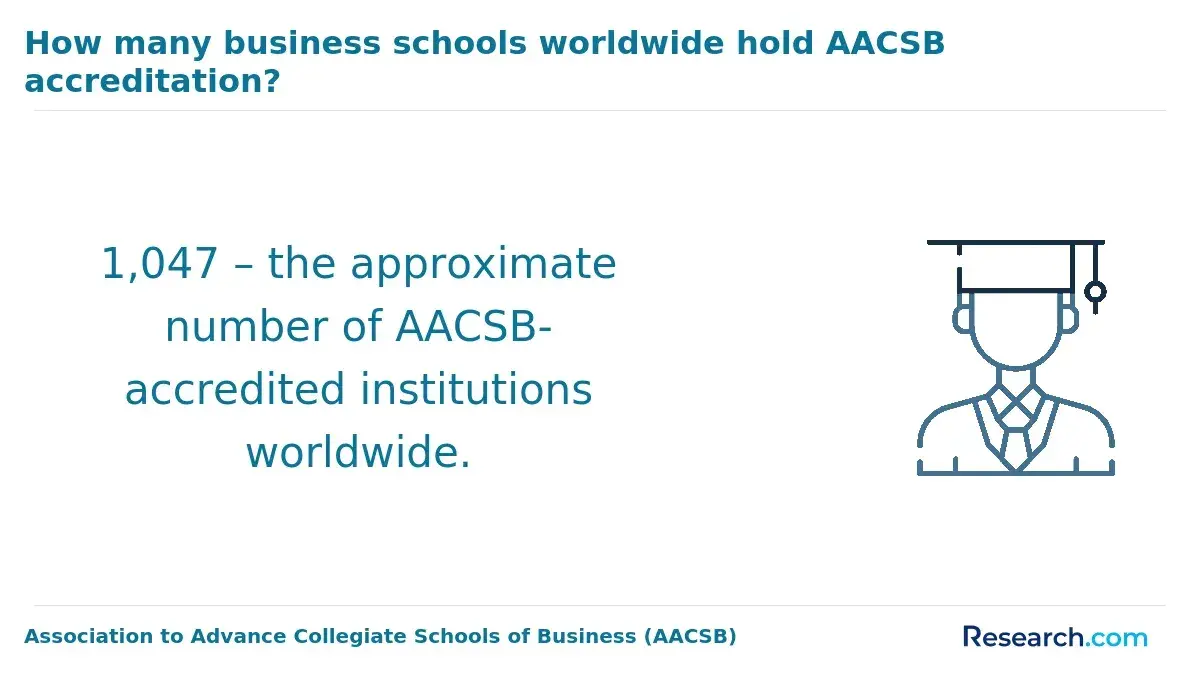
Accreditation affects online MBA scholarships and financial aid because it signals that a school or program has met recognized quality standards. It can also influence eligibility for certain funding sources, employer tuition reimbursement, external scholarships, and the perceived value of the degree after graduation.
There are two accreditation levels to review. Institutional accreditation applies to the college or university as a whole. Programmatic business accreditation applies to the business school or MBA program and may include credentials such as AACSB. A program can be institutionally accredited without holding specialized business accreditation, so check both.
Accredited business schools may be more likely to publish detailed scholarship policies, maintain employer partnerships, and attract donor-funded awards. They may also be more recognizable to employers that reimburse tuition only for approved institutions. From a student perspective, accreditation reduces the risk of spending money on a degree with limited market recognition.
Before applying, confirm accreditation directly through the school and the accrediting body. Also ask whether accreditation status affects federal financial aid eligibility, external scholarships, military benefits, transfer policies, or employer reimbursement. If a program avoids clear answers about accreditation, total cost, or aid eligibility, treat that as a warning sign.
Online MBA scholarships and financial aid usually come with eligibility rules. Missing one requirement can cost you an award, even if you are otherwise a strong applicant. Read the scholarship terms before applying and again before accepting admission.
Common scholarship conditions include:
- Academic performance: Schools may consider undergraduate GPA, graduate coursework, quantitative preparation, or continued GPA during the MBA.
- Professional experience: Work history, management responsibility, career progression, and industry relevance may influence awards.
- Leadership and service: Scholarships may reward supervisory experience, entrepreneurship, military service, community involvement, or nonprofit leadership.
- Financial need: Some awards require financial documentation or a separate financial-aid application.
- Enrollment status: Awards may require full-time, part-time, continuous, or minimum-credit enrollment.
- Program format: Some scholarships apply only to online MBA students, while others exclude online or executive cohorts.
- Application timing: Priority deadlines often matter. Applying late can reduce access to limited scholarship funds.
- Standardized-test scores: Some programs still consider GMAT or GRE scores for merit awards, even when tests are optional for admission.
Some awards are designed for specific groups, such as women in business, minority candidates, international students, veterans, first-generation graduate students, entrepreneurs, or professionals in targeted industries. These can be valuable, but they often require additional essays, documentation, or separate applications.
To improve your chances, prepare a strong resume, request recommendations early, write essays that connect your MBA goals to measurable leadership impact, and confirm that your materials address the scholarship criteria directly. Also ask whether the award is one-time or renewable and what happens if you pause enrollment, change concentration, or reduce your course load.
Maximizing ROI for an online MBA means choosing the program that delivers the best career value for the lowest realistic net cost. The goal is not simply to win the largest scholarship. It is to avoid unnecessary debt while earning a credential that can support promotion, career change, salary growth, business ownership, or leadership advancement.
Start by calculating your net investment. Add tuition, fees, books, technology costs, residency expenses, and any travel requirements. Then subtract scholarships, grants, employer assistance, and other gift aid. Keep loans separate, because they must be repaid and may increase total cost through interest.
Then compare that net investment with expected career outcomes. According to Research.com, for affordable online MBA programs the median starting salary is estimated at around $125,000. Use published salary data carefully: outcomes vary by industry, region, prior experience, job function, and whether the student was already employed while studying.
Ways to strengthen ROI include:
- Keep working if possible. Maintaining income while studying can reduce opportunity cost compared with leaving the workforce.
- Prioritize renewable aid. A recurring scholarship can be more valuable than a larger one-time award.
- Use employer benefits strategically. Tuition reimbursement or sponsorship can reduce debt, but check service commitments and tax implications.
- Choose relevant concentrations. Finance, analytics, healthcare management, supply chain, entrepreneurship, or leadership tracks may be useful if they match your career path.
- Evaluate career support. Coaching, alumni access, employer events, and internship or project opportunities can affect outcomes.
- Avoid overpaying for prestige alone. Brand value matters in some markets, but it should be weighed against net cost and your specific career goals.
For example, if Program A costs $60,000 with $20,000 scholarship and leads to $30,000 increase in salary, it may deliver better ROI than Program B costing $100,000 even with $40,000 aid. The right comparison is always net cost plus likely career benefit, not sticker price or scholarship size in isolation.
Employer tuition assistance can be one of the most valuable funding sources for an online MBA because it reduces out-of-pocket cost without requiring a separate academic scholarship. It is especially relevant for working professionals whose MBA supports leadership development, management training, promotion pathways, or skills the employer needs.
Employer support may take several forms: tuition reimbursement after successful course completion, upfront sponsorship, corporate partner discounts, professional-development budgets, or education benefits through third-party platforms. Some employers cap annual benefits, require a minimum grade, restrict eligible schools, or require the degree to relate to your current role.
Before relying on employer tuition assistance, ask these questions:
- How much funding is available per year or per program?
- Does the benefit apply to online MBA programs?
- Must the school or program meet specific accreditation standards?
- Can employer funding be combined with school scholarships or grants?
- Is reimbursement paid before or after each term?
- Are books, fees, technology costs, or residencies covered?
- Do you have to remain with the employer after graduation?
- Could any portion of the benefit be taxable?
Also consider the career trade-off. Employer funding can lower debt, but a service commitment may limit your ability to change jobs immediately after graduation. If your goal is to move industries or employers, compare the savings against the flexibility you may give up.
Online MBA programs can be highly flexible, but scholarship rules may be less flexible than course delivery. A program may offer asynchronous classes, part-time pacing, and multiple start dates while still limiting certain scholarships to students who meet enrollment, credit-load, or progression requirements.
Common flexibility features include asynchronous coursework, evening or weekend live sessions, part-time and accelerated tracks, rolling or multiple annual start dates, mobile-friendly learning platforms, and optional or limited campus residencies. These features matter because many MBA students continue working full time while completing the degree.
When scholarships and financial aid are part of the decision, confirm how flexibility affects eligibility. Ask whether part-time students receive the same award consideration as full-time students, whether taking a term off affects renewal, whether accelerated students can use the full scholarship amount, and whether online-only students qualify for all aid listed by the business school.
Also consider workload. Flexibility does not mean the program is easy or low-commitment. A working professional may need to plan for group projects, live presentations, exams, networking events, and employer deadlines at the same time. The best program is one that lets you finish without sacrificing performance at work, family obligations, or scholarship eligibility.
What trends are emerging in online MBA scholarships and financial aid?
Online MBA funding is becoming more targeted, more competitive, and more connected to career outcomes. As online and hybrid graduate business education becomes more common, schools are using scholarships not only to reduce cost but also to attract applicants with leadership potential, industry experience, and diverse professional backgrounds.
Several trends are shaping the market. First, more institutions are offering scholarships specifically for online or hybrid MBA students rather than reserving most awards for residential cohorts. Second, schools are placing more emphasis on published outcomes, including salary information, career mobility, debt, and ROI metrics. Third, employer tuition assistance and corporate education partnerships remain important for mid-career professionals who want to study while staying employed.
Funding models are also becoming more modular. Students may be able to combine smaller awards, payment plans, employer benefits, external scholarships, military benefits, or cohort-based grants. Some programs are experimenting with options such as micro-scholarships, modular payment plans, income-share arrangements, and stacking smaller awards.
For applicants, the practical takeaway is clear: apply early, compare net cost, ask whether awards can be combined, and look beyond headline scholarship amounts. The strongest online MBA financial strategy is usually a mix of school aid, employer support, careful program selection, and a realistic view of career return.
Other Things You Should Know About Online MBA Programs With Scholarships & Financial Aid
To qualify for a scholarship in 2027 online MBA programs, applicants typically need a strong academic record, relevant work experience, and high GMAT or GRE scores. Some programs may also require essays or recommendations. Criteria vary by institution, so check specific program details.
Eligibility criteria for scholarships in online MBA programs typically include a strong academic record, leadership experience, professional achievements, and sometimes financial need. Some programs may require a minimum GMAT score or essays outlining career goals for scholarships in 2027.
Yes. Some online MBA programs offer graduate assistantships, corporate tuition discounts, or partial tuition waivers, but these are usually limited and competitive. Many require a 3.0 GPA, enrollment in at least 6 credits per term, and submission of a separate aid application before the program’s stated deadline.
- Coursera. (2025, October 6). MBA Salary: 2025 Guide. Coursera. coursera.org.
- Meley, C. (2025, October 14). 5 ways to fund your online MBA. BusinessBecause. businessbecause.com.
- Pebl. (2025, August 26). 66 Must-Know Remote Work Statistics for 2025. Pebl. hellopebl.com.
- Princeton Review. (n.d.). What’s the ROI of an MBA?. princetonreview.com.
- Wise, L. (2025, October 14). How much does an online MBA cost in 2024? BusinessBecause. businessbecause.com.