2027 Most Affordable Online Biology Degree Programs

Co-Founder and Chief Data Scientist
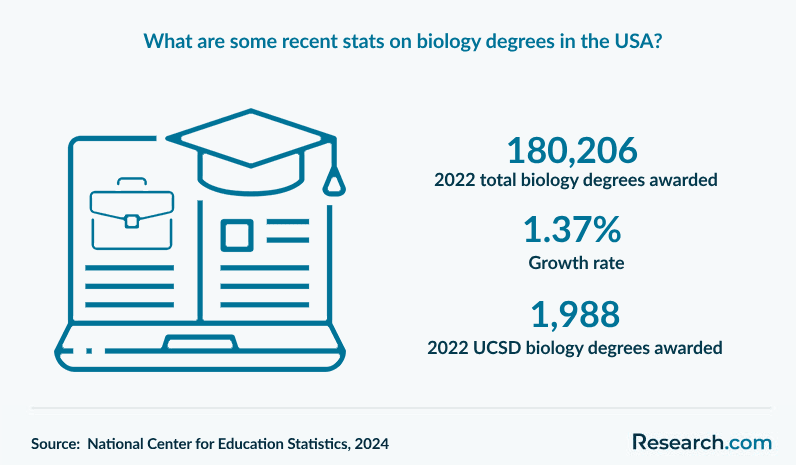
Choosing an affordable online biology degree is not only a tuition decision. It affects how you complete lab work, whether your credits transfer, how prepared you are for graduate or health professional school, and what jobs you can realistically pursue after graduation. Biology remains one of the most common science majors in the United States: approximately 115,000 to 125,000 bachelor's degrees in biology and related fields were awarded in the US in the 2021-2022 academic year. That demand makes program quality, cost control, and career planning especially important.
This guide is designed for students comparing low-cost online biology programs, transfer students trying to finish a bachelor’s degree, working adults who need schedule flexibility, and future healthcare, research, biotechnology, environmental science, or science education professionals. You will learn what affordable online biology programs include, how they compare with campus programs, which schools offer lower-cost options, what questions to ask before enrolling, and how to evaluate whether the degree fits your career goals.
Quick answer: Are affordable online biology degrees a good option?
An affordable online biology degree can be a strong choice if the institution is properly accredited, the curriculum includes the science prerequisites you need, and the program provides credible lab or field-based learning. Online biology programs are especially useful for students who need flexibility, live far from a campus, or want to reduce relocation and commuting costs. They are not ideal for every student, however. If your goal requires extensive in-person lab experience, clinical preparation, field research, or a highly structured campus environment, you should compare online programs carefully before enrolling.
What are the benefits of enrolling in the most affordable online biology degree programs?
The main advantage is access. Affordable online biology programs allow students to study without moving, pause or slow down when life demands it, and often choose from programs outside their local area. For working adults, parents, military-connected students, and transfer students, that flexibility can make a bachelor’s degree more realistic. Cost is another benefit: some online programs charge lower tuition rates, reduce campus-based fees, or make it easier for students to keep working while enrolled.
The best programs still require discipline. Biology is a rigorous science major, even when delivered online. Students should expect reading-heavy courses, quantitative assignments, lab simulations or residencies, group work, and regular interaction with instructors through learning platforms.
What can I expect from the most affordable online biology degree programs?
Affordable online biology programs generally cover the same major foundations as campus-based biology degrees: cell biology, genetics, evolution, ecology, physiology, chemistry, statistics, and scientific communication. Depending on the school, students may also complete courses in microbiology, biotechnology, bioinformatics, environmental science, anatomy, or research methods.
The biggest difference is delivery. Lectures may be asynchronous, discussions may happen through online forums, and labs may use a combination of virtual lab software, at-home lab kits, local site arrangements, or short campus residencies. Some programs are fully online for lecture courses but still require limited in-person laboratory work. Before applying, students should confirm exactly how lab requirements are completed and whether those labs satisfy prerequisites for graduate school, medical school, veterinary school, pharmacy school, teaching licensure, or employer expectations.
| What to review | Why it matters | Question to ask before enrolling |
| Accreditation | Accreditation affects transfer credits, graduate school admission, financial aid eligibility, and employer confidence. | Is the institution accredited by a recognized accreditor? |
| Lab format | Biology is a hands-on field, and some career or graduate pathways expect in-person lab experience. | Are labs virtual, at home, local, or completed during an on-campus residency? |
| Science prerequisites | Health professional and graduate programs often require specific biology, chemistry, math, and physics courses. | Does the curriculum meet the prerequisites for my intended next step? |
| Total cost | Tuition is only one part of the price; fees, books, lab materials, and technology can change affordability. | What is the full estimated cost after fees and required materials? |
| Career support | Online students may need help finding internships, research placements, or entry-level science roles. | What career services, research opportunities, and advising are available to online students? |
Where can I work after graduating from the most affordable online biology degree program?
Biology graduates work across research, healthcare, biotechnology, environmental science, education, public health, science communication, regulatory affairs, and technical sales. The best career fit depends on the student’s specialization, lab experience, internships, certifications, and whether they pursue graduate or professional school.
A bachelor’s degree may qualify graduates for entry-level roles such as laboratory technician, research assistant, environmental technician, quality control associate, biological science technician, science educator, or health-related support roles. Careers such as physician, dentist, pharmacist, veterinarian, professor, genetic counselor, physician assistant, or advanced research scientist usually require additional education beyond the bachelor’s degree.
How much can I make with a degree from the most affordable online biology degree programs?
Biology-related salaries vary widely by occupation, location, industry, experience, and education level. The median salary for biological scientists is around $85,000, but not every biology graduate becomes a biological scientist, and entry-level bachelor’s-level roles may pay less than advanced research or healthcare positions. Students should research salaries for specific job titles, not just the major.
For example, graduates moving into biotechnology, pharmaceutical research, regulatory affairs, or advanced healthcare pathways may see different salary potential than graduates entering education, nonprofit conservation work, or public outreach. A lower-cost degree can improve return on investment, but it does not guarantee a specific salary.
- Most Affordable Online Biology Degree Programs for 2027
- How long does it take to complete the most affordable online biology degree program?
- How does an online biology degree program compare to an on-campus program?
- What is the average cost of the most affordable online biology degree programs?
- What are the financial aid options for students enrolling in the most affordable online biology degree programs?
- What courses are typically in the most affordable online biology degree programs?
- What are the prerequisites for enrolling in the most affordable online biology degree programs?
- What types of specializations are available in the most affordable online biology degree programs?
- How to choose the best most affordable online biology degree program?
- How do affordable online biology degree programs provide hands-on learning opportunities?
- What career paths are available for graduates of the most affordable biology degree programs?
- Is the Affordable Online Biology Degree Worth the Investment?
- Are online biology degree programs ideal for mature learners?
- What challenges should I consider before enrolling in an affordable online biology degree program?
- What is the job market for graduates with the most affordable online biology degree?
- How Are Advanced Digital Tools and Innovations Shaping Online Biology Education?
- Could an Affordable Online Biology Degree Program Lead to Public Health Careers?
- Do Employers Value Online Biology Degrees Equally to Traditional Degrees?
- How can I verify the accreditation and quality of online biology degree programs?
- Can Starting with an Affordable Online Associate Degree be a Stepping Stone to a Biology Career?
Most Affordable Online Biology Degree Programs for 2027
The programs below represent affordable online or online-friendly biology and biology-related bachelor’s options using the program details provided. When comparing them, do not focus on cost per credit alone. Review total credits, transfer policies, lab requirements, residency obligations, accreditation, and whether the curriculum fits your intended career or graduate school plan.
| School and program | Credits | Cost per credit | Best fit | Accreditation |
| University of Florida - Online Bachelor of Arts in Biology | 120 credits | $129.18 (in-state); $552.62 (out-of-state) | Students seeking broad biology training with flexibility for interdisciplinary goals | Southern Association of Colleges and Schools Commission on Colleges (SACSCOC) |
| University of Alaska Fairbanks - Bachelor of Science in Biological Sciences | 120 credits | $289.00 | Students interested in Biomedical Science, Ecology, or Molecular Biology | Northwest Commission on Colleges and Universities (NWCCU) |
| University of Maryland Global Campus - Online Bachelor's Degree in Biotechnology | 120 credits | $330.00 (in-state); $499.00 (out-of-state) | Students targeting biotechnology, bioinformatics, laboratory management, or pharmaceutical biotechnology | Middle States Commission on Higher Education (MSCHE) |
| Louisiana State University of Alexandria - Bachelor of Science in Biology | 120 credits | $325.00 | Students who want online coursework plus a one-week summer lab course on campus | Southern Association of Colleges and Schools Commission on Colleges (SACSCOC) |
| Life University - BS in Biology | 180 quarter credit hours | $301.00 | Students seeking a biology foundation from a life sciences-focused institution | Southern Association of Colleges and Schools Commission on Colleges (SACSCOC) |
| Logan University - BS in Human Biology | 122 credit hours | $375.00 | Students preparing for health professions, graduate study, or science careers | Higher Learning Commission (HLC) |
| Unity Environmental University - BS in Animal Science | 120 credits | $470.00 | Students interested in animal biology, veterinary preparation, or animal management | New England Commission of Higher Education (NECHE) |
| University of Arizona - Bachelor of Science in Biology | 120 credits | $525.00 | Students choosing between Biomedical Sciences and Organismal Biology | Higher Learning Commission (HLC) |
| Washington State University Global Campus - Bachelor of Science in Biology | 120 semester credits | $583.90 (in-state); $651.00 (out-of-state) | Transfer students looking for an online biology degree completion pathway | Northwest Commission on Colleges and Universities (NWCCU) |
| Pennsylvania State University World Campus - Biobehavioral Health degree | 120 credits | $632.00 (in-state); $678 (out-of-state) | Students interested in the relationship among biology, behavior, health, and wellness | Middle States Commission on Higher Education (MSCHE) |
1. University of Florida - Online Bachelor of Arts in Biology
The University of Florida Online Bachelor of Arts in Biology is structured for students who want a broad biology education with room to connect the major to another field. The degree can support goals in education, allied health, environmental or biotechnology law, science journalism, bioscience management, and other interdisciplinary areas. Because it is a Bachelor of Arts rather than a narrowly technical Bachelor of Science, students should compare its science and lab requirements with any graduate or health professional prerequisites they may need.
Program Length: 4 years
Credits: 120 credits
Cost per Credit: $129.18 (in-state); $552.62 (out-of-state)
Tracks/Concentrations: N/A
Accreditation: Southern Association of Colleges and Schools Commission on Colleges (SACSCOC)
2. University of Alaska Fairbanks - Bachelor of Science in Biological Sciences
The University of Alaska Fairbanks Bachelor of Science in Biological Sciences gives students a science-focused pathway with concentrations in Biomedical Science, Ecology, and Molecular Biology. Its regional context may be especially relevant for students interested in Alaska, the Pacific Northwest, field biology, environmental systems, or biomedical preparation. The program emphasizes research exposure and faculty engagement, which can be valuable for students considering graduate study or laboratory-based careers.
Program Length: 4 years
Credits: 120 credits
Cost per Credit: $289.00
Tracks/Concentrations: Biomedical Science, Ecology, Molecular Biology
Accreditation: Northwest Commission on Colleges and Universities (NWCCU)
3. University of Maryland Global Campus - Online Bachelor's Degree in Biotechnology
The University of Maryland Global Campus online bachelor’s degree in biotechnology is a 120-credit program for students who want biology applied to industry, medicine, agriculture, pharmaceuticals, laboratory operations, or biological data. Coursework spans microbiology, bioinformatics, laboratory management, pharmaceutical biotechnology, and the use of biological science in health and disease. This program is better aligned with biotechnology careers than with a general biology curriculum, so students should choose it when they want a more applied life sciences route.
Program Length: 4 years
Credits: 120 credits
Cost per Credit: $330.00 (in-state); $499.00 (out-of-state)
Tracks/Concentrations: Bioinformatics, Laboratory Management, Pharmaceutical Biotechnology
Accreditation: Middle States Commission on Higher Education (MSCHE)
4. Louisiana State University of Alexandria - Bachelor of Science in Biology
The Bachelor of Science in Biology with a concentration in Modern Biology from LSU Alexandria and LSU Online is notable because it combines online coursework with one one-week summer lab course on campus. During that residency, students complete essential lab training and earn 3 different lab credits. This structure may work well for students who want an online format but still need documented in-person lab experience.
Program Length: 4 years
Credits: 120 credits
Cost per Credit: $325.00
Tracks/Concentrations: Modern Biology
Accreditation: Southern Association of Colleges and Schools Commission on Colleges (SACSCOC)
5. Life University - BS in Biology
Life University offers a BS in Biology built around foundational biological concepts and a broader philosophy focused on living systems, human responsibility, and the role of biology in understanding organisms and health. Students considering this program should review the course sequence carefully, especially if they plan to apply to professional healthcare or graduate science programs with specific prerequisite expectations.
Program Length: 4 years
Credits: 180 quarter credit hours
Cost per Credit: $301.00
Tracks/Concentrations: Not specified
Accreditation: Southern Association of Colleges and Schools Commission on Colleges (SACSCOC)
6. Logan University - BS in Human Biology
Logan University's BS in Human Biology is designed for students pursuing health professions, advanced graduate study, or science-based careers. The curriculum emphasizes evidence-informed reasoning, biological problem-solving, and clear scientific communication. This may be a practical option for students who want a human biology focus rather than a broader ecology or organismal biology pathway.
Program Length: 3-4 years
Credits: 122 credit hours
Cost per Credit: $375.00
Tracks/Concentrations: Not specified
Accreditation: Higher Learning Commission (HLC)
7. Unity Environmental University - BS in Animal Science
The BS in Animal Science from Unity Environmental University applies biology, chemistry, nutrition, veterinary medicine, physiology, genetics, behavior, and animal management to a range of species, including livestock, companion animals, and pets. It can support students seeking employment after graduation as well as those considering graduate or veterinary school. Prospective students should confirm whether the program meets veterinary school prerequisites if that is their long-term goal.
Program Length: 3-5 years
Credits: 120 credits
Cost per Credit: $470.00
Tracks/Concentrations: Not specified
Accreditation: New England Commission of Higher Education (NECHE)
8. University of Arizona - Bachelor of Science in Biology
The University of Arizona Bachelor of Science in Biology introduces students to biological systems from cellular structures through ecosystems. Students choose between Biomedical Sciences and Organismal Biology, making the program useful for different goals in medicine, healthcare, forensic science, conservation, wildlife biology, agriculture, environmental science, and global health. Graduates may use the degree for employment or as preparation for professional programs in medicine, pharmacy, optometry, and related areas.
Program Length: 4 years
Credits: 120 credits
Cost per Credit: $525.00
Tracks/Concentrations: Biomedical Sciences, Organismal Biology
Accreditation: Higher Learning Commission (HLC)
9. Washington State University Global Campus - Bachelor of Science in Biology
WSU Global Campus offers a biology degree completion program that combines transferred coursework with online WSU courses. Students study molecular and cell biology, physiology, animal and plant development, human anatomy, genetics, taxonomy, disease biology, ecology, and evolutionary biology. This structure is especially important for transfer students: the value of the program depends partly on how previous credits apply toward the 120 semester credits.
Program Length: 4 years
Credits: 120 semester credits
Cost per Credit: $583.90 (in-state); $651.00 (out-of-state)
Tracks/Concentrations: Not specified
Accreditation: Northwest Commission on Colleges and Universities (NWCCU)
10. Pennsylvania State University World Campus
The Biobehavioral Health degree through Penn State World Campus focuses on the connections among biology, behavior, and health. It is a strong fit for students interested in health and wellness from an interdisciplinary perspective rather than a traditional lab-heavy biology major. Students aiming for medical, graduate science, or laboratory roles should compare course requirements carefully before choosing this path.
Program Length: 4 years
Credits: 120 credits
Cost per Credit: $632.00 (in-state); $678 (out-of-state)
Tracks/Concentrations: Not specified
Accreditation: Middle States Commission on Higher Education (MSCHE)
How long does it take to complete the most affordable online biology degree program?
Most online bachelor’s degrees in biology take about the same time as campus programs: 4 years for full-time students entering as first-year undergraduates. Transfer students may finish sooner if a large number of previous credits apply to the degree. Part-time students may take longer, especially if they are balancing coursework with work, caregiving, or military responsibilities.
Program design also matters. Some schools offer accelerated terms, summer courses, or degree completion formats. Others require science courses in sequence, which can limit how quickly students progress. Biology majors should be especially cautious about course sequencing because chemistry, math, genetics, physiology, and upper-division lab courses often have prerequisites.
| Student situation | Likely timeline consideration | Best strategy |
| First-time full-time student | Usually follows a 4 years bachelor’s sequence | Map science prerequisites early so labs and chemistry courses are not delayed. |
| Transfer student | Timeline depends on accepted credits and major requirements | Request a transfer credit evaluation before committing. |
| Working adult | Part-time enrollment may extend completion time | Choose programs with asynchronous courses and predictable term schedules. |
| Student pursuing health professional school | Prerequisite timing may affect application cycles | Confirm that online labs and science courses meet admission expectations. |
Students exploring other flexible pathways can also compare fields such as an online childhood development degree, but biology requires more careful attention to lab work and science sequencing than many non-lab majors.
How does an online biology degree program compare to an on-campus program?
Online and on-campus biology degrees can lead to similar academic outcomes when they are accredited, rigorous, and designed with appropriate laboratory components. The right choice depends on how you learn best, what career you want, and whether you need in-person research, campus facilities, or local networking.
| Factor | Online biology degree | On-campus biology degree | Decision tip |
| Course delivery | Uses recorded lectures, live sessions, online discussions, digital assignments, and remote exams. | Uses in-person lectures, campus discussions, and scheduled class meetings. | Choose online if schedule flexibility is essential; choose campus if you need face-to-face structure. |
| Laboratory learning | May use virtual labs, lab kits, local placements, or short residencies. | Usually includes regular in-person lab sessions on campus. | Verify lab format before enrolling, especially for graduate or health professional prerequisites. |
| Flexibility | Often better for working students, parents, and students far from campus. | Less flexible but may offer stronger daily structure. | Online learning requires strong time management. |
| Networking | Networking may happen through online faculty interaction, projects, advising, and virtual events. | Students may access campus labs, clubs, faculty offices, and local research networks. | Ask online programs how they help students find internships or research experience. |
| Accreditation | Can be accredited when offered by a recognized institution. | Can be accredited when offered by a recognized institution. | Accreditation matters more than delivery format. |
Some students combine interests across disciplines. For example, a student interested in biotechnology startups or laboratory management may compare biology with an entrepreneurship degree online or add business electives where available.
What is the average cost of the most affordable online biology degree programs?
The cost of an online biology degree depends on tuition, residency status, transfer credits, program fees, lab requirements, technology costs, textbooks, and how long the student remains enrolled. College Board has reported that as of 2024-2025, tuition can range from about $11,610 per year for in-state public universities to over $43,350 per year at private institutions. Many affordable online biology programs fall toward the lower end of that range, but students should never assume that online automatically means cheap.
Cost per credit is useful, but total price is more important. A program with a lower per-credit cost may become expensive if few transfer credits apply, if fees are high, or if students must travel for lab residencies. Conversely, a higher per-credit program may be more affordable overall for a transfer student who can apply many previously earned credits.
| Cost category | Why students overlook it | How to control it |
| Tuition | Students may compare only one term instead of the full degree. | Multiply cost per credit by required credits and ask about tuition changes. |
| Fees | Online, technology, assessment, graduation, or lab fees may be separate. | Request a full cost estimate from the school. |
| Lab materials | Virtual labs, at-home kits, or residencies can add costs. | Ask what lab materials are required for each science course. |
| Travel | Some online programs still require campus labs or field experiences. | Budget for transportation, lodging, and time away from work if residencies are required. |
| Time to completion | Extra semesters increase total tuition and fees. | Confirm course sequencing and transfer credit policies before enrolling. |
Students comparing affordability across disciplines may also review options such as the cheapest online master's in English, but science degrees often have additional lab-related costs that should be included in the budget.
Students interested in biology, mapping, ecology, or environmental analysis may also compare related technology-focused programs. The best geographic information systems degrees online can be relevant for careers involving spatial analysis, cartography, remote sensing, conservation planning, and environmental monitoring.
What are the financial aid options for students enrolling in the most affordable online biology degree programs?
Financial aid can make a low-cost online biology program even more manageable. The first step for most students is completing the Free Application for Federal Student Aid (FAFSA), then comparing federal, state, institutional, employer, military, and private scholarship options.
- Federal grants and loans. Eligible students may qualify for the Federal Pell Grant and other federal aid. Grants do not need to be repaid, while federal student loans must be repaid with interest.
- State aid. Some states offer grants or scholarships for residents attending eligible in-state schools, including online programs.
- Institutional scholarships. Colleges may offer merit-based or need-based aid to online students, but policies vary by school and program.
- External scholarships. Foundations, professional organizations, community groups, and science associations may support biology and STEM students.
- Biology-specific scholarships. Students planning for biology careers should search for awards tied to research, environmental science, healthcare, biotechnology, teaching, or underrepresented STEM populations.
- Employer tuition assistance. Working adults should ask whether their employer supports degree completion, especially in healthcare, laboratory, education, or government settings.
Apply early. Financial aid deadlines, scholarship review cycles, and document requests can affect how much aid is available by the time tuition is due.
What are the prerequisites for enrolling in the most affordable online biology degree programs?
Admission requirements differ by institution, but most online bachelor’s programs in biology ask for standard undergraduate application materials. Transfer students may need additional documentation so the school can determine which previous credits count toward the major.
- High school diploma or GED. This is the typical baseline requirement for first-year undergraduate admission.
- Official transcripts. Applicants usually submit high school transcripts and transcripts from any college previously attended.
- Minimum GPA. Some schools set GPA requirements for admission, transfer standing, or entry into upper-division biology coursework.
- Standardized tests. Some institutions may require SAT or ACT scores, though this is becoming less common.
- Science and math preparation. Biology, chemistry, algebra, precalculus, or other science-related coursework may be expected or strongly recommended.
- Application essay or statement. Some programs ask students to explain their goals, interest in biology, or reasons for choosing online study.
Students planning for medical, dental, veterinary, pharmacy, graduate research, or teaching pathways should look beyond admission requirements. They should confirm that the degree includes the specific prerequisite courses required for the next program or credential.
What courses are typically in the most affordable online biology degree programs?
Most online biology degrees combine general education, foundational science, upper-division biology, lab experiences, and electives. Course names vary by school, but the core academic structure is usually similar.
- Introductory biology. Covers cells, genetics, evolution, ecology, organisms, and biological systems.
- General chemistry. Builds the chemical foundation needed for molecular biology, physiology, and health sciences.
- Genetics. Examines inheritance, gene expression, variation, molecular genetics, and biotechnology applications.
- Cell biology. Focuses on cell structure, function, communication, metabolism, and cellular processes.
- Ecology. Studies relationships among organisms, populations, communities, ecosystems, and environmental change; it is especially useful for students considering environmental science career paths.
- Physiology. Explores how organisms and organ systems function.
- Evolution. Analyzes how biological diversity develops and changes over time.
- Statistics or quantitative methods. Supports data analysis, research interpretation, and evidence-based decision-making.
- Electives. May include microbiology, anatomy, bioinformatics, biotechnology, conservation biology, immunology, animal science, or environmental biology.
Students should compare the actual course list, not just the degree title. A program marketed as biology may have a different focus from one centered on human biology, animal science, biotechnology, or biobehavioral health. For a broader view of possible outcomes, review related biology courses and career pathways.
What types of specializations are available in the most affordable online biology degree programs?
Specialization matters because biology is a broad field. A student interested in wildlife conservation needs a different course mix than a student preparing for biotechnology, healthcare, or public health. Not every online program offers every specialization, so students should match concentration options with career goals before applying.
| Specialization | Focus | Good fit for students interested in |
| General Biology | Broad coverage of major biological concepts and systems. | Teaching, graduate exploration, science communication, or students still deciding on a direction. |
| Molecular and Cellular Biology | Cells, genes, proteins, molecular systems, and biomedical foundations. | Medical sciences, laboratory research, biotechnology, or graduate study. |
| Ecology and Evolutionary Biology | Organisms, ecosystems, biodiversity, adaptation, and conservation. | Environmental science, wildlife biology, conservation, or field-based science. |
| Bioinformatics | Computational analysis of biological data. | Research, genomics, data-driven biology, and biotechnology. |
| Environmental Science | Environmental systems, human impacts, sustainability, and living organisms. | Conservation, environmental consulting, sustainability, and public agencies. |
| Biotechnology | Using biological systems to develop products, tools, processes, or therapies. | Pharmaceuticals, lab management, quality control, regulatory work, and research and development. |
Students considering environmental pathways should compare biology specializations with dedicated environmental science routes, including environmental science degree careers, before choosing a major.
How to choose the best most affordable online biology degree program?
The best affordable online biology degree is the one that balances cost, accreditation, lab quality, transfer efficiency, student support, and career alignment. A cheap program that does not meet your prerequisites or lacks adequate lab preparation may cost more in the long run.
- Verify accreditation first. Confirm that the institution is accredited by a recognized accreditor. This affects financial aid, transferability, graduate school acceptance, and employer trust.
- Calculate total cost, not just tuition. Include fees, books, lab kits, technology, travel, and extra semesters.
- Check lab requirements. Ask whether labs are virtual, at home, on campus, or completed through approved local arrangements.
- Compare curriculum with your career goal. Pre-health, research, teaching, environmental science, and biotechnology pathways require different courses.
- Ask about transfer credit. Transfer students should request a formal evaluation before enrolling.
- Review faculty and student support. Online students need advising, tutoring, technical help, library access, and career services.
- Investigate outcomes. Ask about graduation rates, graduate school placement, internships, alumni roles, and employer partnerships.
- Confirm scheduling flexibility. Determine whether courses are asynchronous, synchronous, accelerated, or offered only once per year.
| Common mistake | Why it can hurt students | Better approach |
| Choosing the lowest cost per credit only | Fees, limited transfer credits, or required travel can raise the total cost. | Compare full program cost and time to completion. |
| Ignoring accreditation | Credits may not transfer, and some employers or graduate schools may not recognize the degree. | Verify institutional accreditation before applying. |
| Assuming all online labs are accepted everywhere | Some graduate or professional programs may have specific lab expectations. | Ask target schools or licensing bodies whether the coursework meets requirements. |
| Overloading science courses | Biology, chemistry, and lab courses can be demanding in the same term. | Create a realistic course plan with an advisor. |
| Relying only on rankings | A ranked program may not match your specialization, budget, or schedule. | Use rankings as one input, then evaluate fit and requirements. |
How do affordable online biology degree programs provide hands-on learning opportunities?
Online biology programs use several approaches to help students build applied skills. These may include virtual labs, simulation software, mailed lab kits, data analysis projects, local site-based learning, research assignments, field observations, and short on-campus residencies. The strongest programs make these expectations clear before enrollment and explain how students document lab competencies.
Hands-on learning matters because biology is not only content knowledge. Students must learn how to observe, measure, analyze, interpret, and communicate scientific evidence. Students who need additional low-cost online options can compare institutions listed among affordable online colleges, but they should still evaluate biology-specific lab quality.
What career paths are available for graduates of the most affordable online biology degree programs?
An affordable online biology degree can support several career directions. According to the US Bureau of Labor Statistics, there are over 1.5 million people employed in life, physical, and social science occupations, and many roles in those occupational groups draw from biology and related fields.
| Career area | Examples of roles | Typical preparation notes |
| Research | Research assistant, biological science technician, laboratory technician, research associate | Lab experience, statistics, faculty projects, internships, or graduate study can improve readiness. |
| Healthcare | Pre-medical, pre-dental, pre-pharmacy, physician assistant, allied health pathways | Often requires professional school or additional clinical training after the bachelor’s degree. |
| Biotechnology | Quality control associate, biotech research support, regulatory affairs assistant, lab operations roles | Biotechnology, microbiology, chemistry, and data skills can be valuable. |
| Environmental science | Environmental technician, conservation specialist, sustainability assistant, field biology support | Fieldwork, GIS, ecology, and environmental policy coursework may help. |
| Education | Biology teacher, science educator, outreach educator | Teaching in public schools may require state-specific educator licensure. |
| Science communication | Science writer, content specialist, outreach coordinator, museum or nonprofit educator | Strong writing, public communication, and science literacy are important. |
| Government and policy | Public health support, regulatory affairs, policy assistant, agency technician | Public health, environmental science, statistics, or policy coursework may be useful. |
Students leaning toward conservation or environmental work should also compare dedicated affordable environmental science programs online, since those programs may provide a more direct route to some environmental roles.
Is the Affordable Online Biology Degree Worth the Investment?
An affordable online biology degree is worth considering when it helps you complete a recognized credential at a manageable cost while still meeting your academic and career requirements. The degree is more likely to pay off when students choose accredited programs, minimize unnecessary debt, transfer credits efficiently, gain lab or research experience, and connect coursework to a specific career plan.
ROI is weaker when students enroll without confirming prerequisites, borrow heavily for a low-paying target role, or choose a program with limited lab preparation for their intended field. Students using aid should review whether their school participates in federal aid programs and may compare options such as online school that accept financial aid to understand how funding can affect net cost.
Are online biology degree programs ideal for mature learners?
Online biology programs can work well for mature learners, career changers, and returning students because they often provide flexible pacing, asynchronous coursework, and remote access to advising and academic resources. These features help students balance school with work, family, and other responsibilities.
However, mature learners should plan for the intensity of science coursework. Biology majors may need chemistry, math, lab reports, exams, and group projects. Before enrolling, returning students should ask whether tutoring, technology support, writing help, academic coaching, and career services are available outside traditional business hours. Older learners comparing flexible education options may also explore online degree programs for seniors.
What challenges should I consider before enrolling in an affordable online biology degree program?
The biggest challenge is self-management. Online biology students must keep up with lectures, readings, lab assignments, exams, and discussion deadlines without the daily structure of a physical campus. Students who fall behind in science courses may find it difficult to catch up because concepts build quickly.
- Limited in-person lab exposure. Some programs rely heavily on virtual labs, which may not satisfy every graduate school or employer expectation.
- Fewer informal networking opportunities. Online students may need to be more intentional about contacting faculty, joining associations, and finding internships.
- Technology dependence. Reliable internet, compatible devices, and comfort with online learning systems are essential.
- Course sequencing constraints. Required science courses may be offered in a specific order, which can affect graduation timing.
- Advanced study planning. Students considering research-heavy graduate education should examine whether the program provides enough research preparation; those comparing future doctoral options may also review online PhD cheap.
What is the job market for graduates with the most affordable online biology degree?
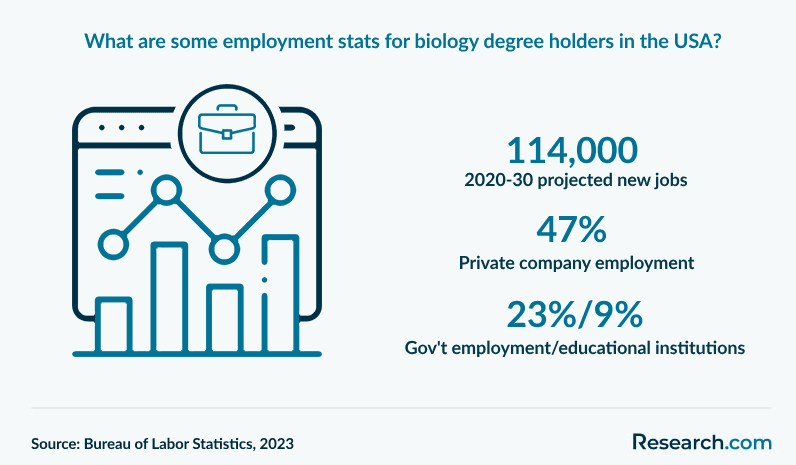
The job market for biology graduates is broad but competitive. The US Bureau of Labor Statistics projects employment for biological scientists and related fields to grow 5% to 7% over the next decade. Growth is influenced by biotechnology, healthcare demand, environmental concerns, research activity, and the need for science-informed decision-making.
Still, a biology bachelor’s degree does not lead to one single job. Graduates who combine the degree with internships, research experience, lab skills, data analysis, certifications, or graduate education may have stronger options. The median salary for biological scientists is around $85,000, but pay varies substantially by job title, sector, location, and education level.
Students should be realistic when comparing programs. The easiest biology degree programs may not be the strongest match if they lack the prerequisites, labs, or specialization required for a student’s target career.
Can an Affordable Online Biology Degree Bridge the Gap to Advanced Academic and Research Opportunities?
An affordable online biology degree can prepare students for graduate study or research-adjacent roles when it includes rigorous science coursework, strong lab preparation, faculty interaction, and opportunities to complete research or applied projects. Students targeting master’s or doctoral programs should pay close attention to prerequisites, research expectations, recommendation letters, GPA requirements, and whether online lab coursework is accepted by their target schools.
For some students, the bachelor’s degree is only the first step. A biology graduate may later pursue public health, biotechnology, environmental science, education, healthcare, data science, or advanced research. Students comparing future graduate pathways can explore related options such as easy masters degrees online, while remembering that science graduate programs may have strict prerequisite and research expectations.
What Graduates Say About Their Affordable Online Biology Degree
"I wasn't sure if online learning was for me, but I decided to take the leap, and it was one of the best decisions I've ever made. The ability to study at my own pace allowed me to really understand the material, and I loved the online discussions with my professors and classmates. I'm now working in a research lab, and I feel well-prepared for my career." - Terry
"I was initially worried about the credibility of an online biology degree, but the program I chose was accredited, and the faculty were experts in their fields. The coursework was very challenging, and I felt like I got a high-quality education. It has helped me get a job that I love." - Cory
"I was able to finish my biology degree in three years because the online format allowed me to take more courses per term. This helped me graduate early, and start working in my field sooner. The online format worked well for my learning style, and I am now working in a research lab." - Jean
How Are Advanced Digital Tools and Innovations Shaping Online Biology Education?
Online biology education increasingly uses digital tools to make remote science learning more interactive. Virtual labs, simulation platforms, augmented reality modules, online collaboration tools, digital microscopes, data dashboards, and adaptive course software can help students practice scientific reasoning when they are not physically on campus.
These tools are useful, but they are not all equal. Students should ask whether virtual labs are used as supplements or as replacements for physical labs, whether lab reports require real data interpretation, and whether instructors provide feedback on experimental design and analysis. Students interested in advanced online research pathways can also compare programs such as 1 year PhD programs online, while carefully checking academic rigor and research requirements.
Could an Affordable Online Biology Degree Program Lead to Public Health Careers?
Yes, an affordable online biology degree can support public health goals, especially for students interested in disease mechanisms, environmental health, epidemiology, health education, laboratory science, or community health research. However, many public health roles require additional training, such as a public health certificate, master’s degree, field experience, or specialized quantitative skills.
Students should choose electives strategically. Courses in microbiology, statistics, epidemiology, environmental biology, health behavior, and data analysis can be useful for public health preparation. If public health is the main goal, students should compare biology with public health programs and consider whether is public health a good major for their intended career path.
Do Employers Value Online Biology Degrees Equally to Traditional Degrees?
Many employers focus less on whether a biology degree was online and more on whether the institution is accredited, the curriculum is rigorous, and the graduate can demonstrate relevant skills. For science roles, employers may look closely at lab experience, research projects, technical skills, internships, communication ability, and familiarity with scientific methods.
Students can strengthen an online degree by building a portfolio of lab reports, research posters, data projects, internship experience, faculty references, and technical competencies. For broader comparisons of major value and career impact, students may review Research.com’s guide to the most valuable degrees.
How can I verify the accreditation and quality of online biology degree programs?
Start by checking institutional accreditation through the school’s website and recognized accreditation databases. Accreditation is a baseline requirement, not a guarantee that the program is the right fit. After confirming accreditation, evaluate the biology curriculum, faculty qualifications, lab design, student support, transfer policies, and outcomes.
- Confirm institutional accreditation. Make sure the school is accredited by a recognized accreditor.
- Review curriculum depth. Look for core biology, chemistry, math, lab, and upper-division science requirements.
- Ask about lab verification. Determine how the school documents lab completion and competencies.
- Check faculty expertise. Review whether instructors have relevant academic, research, or professional backgrounds.
- Look at student support. Online biology students should have access to advising, tutoring, library resources, career help, and technical support.
- Compare external signals. Student feedback, graduate outcomes, and employer or graduate school acceptance can provide additional context.
Students comparing accredited online institutions may begin with resources on regionally accredited online schools, then narrow the search to biology-specific program requirements.
Can Starting with an Affordable Online Associate Degree be a Stepping Stone to a Biology Career?
Starting with an affordable online associate degree can be a practical route for students who want to reduce upfront costs, strengthen academic readiness, or complete general education before transferring into a bachelor’s program. This approach works best when credits are planned carefully from the beginning.
The risk is credit loss. Biology majors often need specific course sequences in biology, chemistry, and math. If an associate program does not align with the bachelor’s requirements, students may repeat courses or extend their timeline. Before enrolling, ask the bachelor’s program for a transfer pathway or articulation agreement. Students exploring this route can review options for the cheapest associates degree.
Questions to ask before choosing an affordable online biology degree
- Is the institution accredited by a recognized accreditor?
- How are laboratory courses delivered, and are any campus visits required?
- Will the lab courses meet the requirements for my intended graduate, health professional, or teaching pathway?
- How many of my transfer credits will apply to the major, not just general electives?
- What is the total estimated cost, including fees, lab materials, textbooks, and travel?
- Are courses asynchronous, live, accelerated, or offered only in certain terms?
- What tutoring, advising, technical support, and career services are available to online students?
- Does the program offer research projects, internships, fieldwork, or faculty mentoring?
- What have graduates done after completing the program?
- Does the specialization match my target career, or would a related major be a better fit?
Key Insights
- Affordability requires looking beyond tuition. Cost per credit matters, but students should also include fees, lab materials, technology, travel, transfer credit loss, and time to graduation.
- Accreditation is non-negotiable. An affordable online biology degree should come from a properly accredited institution so credits, financial aid, graduate school plans, and employer recognition are protected.
- Lab format can make or break the program fit. Biology students should confirm whether labs are virtual, at home, local, or completed during residencies, especially if they plan to enter healthcare, graduate research, teaching, or laboratory roles.
- Career outcomes depend on specialization and experience. A biology degree can lead to research, healthcare, biotechnology, environmental science, education, public health, or communication, but students often need internships, lab work, graduate education, or certifications to reach specific roles.
- The job market is broad but competitive. The US Bureau of Labor Statistics projects employment for biological scientists and related fields to grow 5% to 7% over the next decade, and the median salary for biological scientists is around $85,000, but salaries vary by role, location, industry, and education level.
- Online biology degrees can work well for mature learners. Flexible scheduling helps working adults and returning students, but success requires strong time management and comfort with technology.
- The best program is the one aligned with your next step. Pre-health, biotechnology, environmental science, teaching, public health, and research pathways require different course choices, labs, and experiences.
References:
- College Board. (2025). Major: Biology. bigfuture.collegeboard.org
- College Board. (2025). Trends in college pricing. collegeboard.org
- US Bureau of Labor Statistics. (3 Apr 2024). Biological scientists, all other. bls.gov
- US Bureau of Labor Statistics. (29 Aug 2024). Life, physical, and social science occupations. bls.gov
Other Things You Should Know About the Most Affordable Online Biology Degree Programs
To enroll, applicants typically need a high school diploma or GED. Some programs may require prerequisite courses like introductory biology or chemistry. Application deadlines usually fall in late summer, with decisions announced by early fall.
It should hold regional institutional accreditation from a U.S. Department of Education-recognized agency. For biology majors, programmatic accreditation is less common at the bachelor’s level, so school accreditation matters most for transfer credit, graduate admission, and federal financial aid eligibility under Title IV.
In 2027, students can access financial aid options such as federal grants, scholarships, and work-study programs for online biology degree programs. Eligibility often requires enrolling in accredited programs and may depend on financial need or academic merit.