
2027 Best Online Sterile Processing Technician Certificate Programs

Co-Founder and Chief Data Scientist
Choosing the right career path can be stressful, especially when facing the risk of major student debt. What if you could enter a stable healthcare role earning an average of $57,000 a year, without a four-year degree? This is a real possibility for certified Sterile Processing Technicians.
This isn't just a list of schools. It's a strategic guide built by career planning experts with over 10 years of experience. We'll give you everything you need to know about online sterile processing technician programs so you can make a confident, informed choice for your future.
What are the benefits of getting online sterile processing technician certificate?
- It provides a direct and efficient path to a stable, professional career in the high-demand healthcare industry.
- It offers strong earning potential, with an average salary of around $57,000 and top earners making over $81,000 annually.
- The online learning format provides the flexibility to study core concepts on your own schedule before completing the required in-person training.
What can I expect from online sterile processing technician certificate program?
This is a hands-on, professional role. The purpose of an online sterile processing technician certificate program is to give you maximum flexibility for the theory portion. You’ll learn the critical science—like microbiology, infection control, and decontamination methods—through online coursework.
Then, you will apply that knowledge in the real world. Every accredited program requires you to complete at least 400 hours of in-person clinical training in a hospital or surgical center. This hands-on experience is what truly prepares you for the job.
Where can I work with online sterile processing technician certificate?
A certificate in sterile processing prepares you for roles in a variety of clinical and corporate settings where instrument safety is paramount. The most common employers for certified technicians include:
- General medical & surgical hospitals (private): Having 36% employed sterile processing technicians, this is the primary employer for the industry, offering diverse environments from high-volume trauma centers to specialized community hospitals.
- Medical & diagnostic laboratories: Employs about 21% sterile processing technicians.
- Offices of physicians: Employs about 9% job industry roles.
- Educational services (state, local, private): Composed 5% of the industry workforce.
How much can I make with online sterile processing technician certificate?
A certificate in sterile processing leads to a competitive professional wage, with significant growth potential for certified technicians. As of 2023, the pay scale for this role was as follows:
- Sterile Processing Technician (Average): Approximately $27.40 per hour; $57,000 per year
- Senior/Certified Technician (Top 10%): Over $38.94 per hour; Over $81,000 per year
- Entry-Level Pay: Typically starts around $20.00 per hour; $41,600 per year
Your specific earnings will depend on your geographic location, years of experience, and any advanced certifications you pursue.
- List of the Best Online Sterile Processing Technician Certificate Programs for 2027 List of Programs
- How long does it take to complete an online sterile processing technician certificate program? Completion Time
- How does an online sterile processing technician certificate program compare to an on-campus program? How does an online sterile processing technician certificate program compare to an on-campus program?
- What is the average cost of an online sterile processing technician certificate program? Program Cost
- What are the financial aid options for students enrolling in an online sterile processing technician certificate program? Financial Aid
- What are the prerequisites for enrolling in an online sterile processing technician certificate program? What are the prerequisites for enrolling in an online sterile processing technician certificate program?
- What courses are typically in an online sterile processing technician certificate program? What courses are typically in an online sterile processing technician certificate program?
- What types of specializations are available in an online sterile processing technician certificate program? What types of specializations are available in an online sterile processing technician certificate program?
- How to Choose the Best Online Sterile Processing Technician Certificate Program How to Choose the Best Online Sterile Processing Technician Certificate Program
- What career paths are available for graduates of an online sterile processing technician certificate program? Career Paths
- What is the job market for graduates with an online sterile processing technician certificate program? Job Market
- Should I Broaden My Healthcare Expertise with Additional Interdisciplinary Credentials? Should I Broaden My Healthcare Expertise with Additional Interdisciplinary Credentials?
- How Can an Online Healthcare Administration Degree Complement My Sterile Processing Technician Career? How Can an Online Healthcare Administration Degree Complement My Sterile Processing Technician Career?
Best Online Sterile Processing Technician Certificate Programs for 2027
Choosing an online sterile processing technician certificate program is not just a question of price or speed. The right program should prepare you for certification, help you complete required hands-on experience, and give you enough practical knowledge to work safely in hospitals, surgery centers, and other clinical settings.
This guide is for students, career changers, and healthcare support workers who want a faster route into allied health without committing to a two-year or four-year degree. You will learn how online sterile processing programs work, how long they take, what they cost, what certification usually involves, how online training compares with campus-based training, and how to judge whether a program is worth your time and money.
Quick Answer: What Is the Best Online Sterile Processing Technician Certificate Program?
The best online sterile processing technician certificate program is one that combines accredited instruction, strong certification preparation, clear clinical-experience support, and transparent costs. Most programs can be completed in less than one year, but students pursuing CRCST certification should plan for the required 400 hours of hands-on experience in addition to online coursework.
Online programs are best for students who need schedule flexibility. They are not fully hands-off or entirely remote because sterile processing is a clinical skill. Before enrolling, confirm whether the school helps arrange clinical experience, whether an exam voucher is included, and whether the program prepares you for HSPA or CBSPD certification.
How We Rank Schools
Because certificate programs can vary widely in cost, support, and career preparation, Research.com evaluates schools using transparent data sources and program-level information. Our ranking process draws from the IPEDS database, Peterson's database, the College Scorecard database, and The National Center for Education Statistics. These sources help provide consistent information for comparing education options. To learn more about how Research.com evaluates programs, visit our methodology page.
Online Sterile Processing Technician Programs at a Glance
| School | Program Length | Published Cost | Accreditation | Best Fit |
| Vermont State University | 12 Months | $2,995 | New England Commission of Higher Education (NECHE) | Students who want a longer guided course with an included CRCST exam voucher |
| Penn Foster Career School | 2-4 Months | $949 | Distance Education Accrediting Commission (DEAC) | Self-paced learners seeking a lower-cost career diploma |
| San Francisco State University | 4-6 Months | $1,999 | WASC Senior College and University Commission (WSCUC) | Students who want flexible online study with optional volunteer externship support |
| Ashworth College | 4 Months | $1,049 | Distance Education Accrediting Commission (DEAC) | Learners who want a self-paced diploma focused on certification fundamentals |
| Franklin University | 2-3 Months | $4,000 | Higher Learning Commission (HLC) | Students seeking MedCerts-based online training and provisional CRCST preparation |
| University of Houston | 12 Months | $2,995 | Southern Association of Colleges and Schools Commission on Colleges (SACSCOC) | Learners who want instructor support, a voucher, and clinical-experience assistance |
| SDSU Global Campus | 12 Months | $3,265 | WASC Senior College and University Commission (WSCUC) | Students looking for exam preparation plus possible clinical experience |
| Molloy University | 4-6 Months | $4,000 | Middle States Commission on Higher Education (MSCHE) | Learners who want preparation for either HSPA or CBSPD certification |
| Herzing University | 8 Months | $530 per credit | Higher Learning Commission (HLC) | Students who want online classes paired with 150 lab hours |
| California State University - San Marcos | 12 Months | $2,995 | WASC Senior College and University Commission (WSCUC) | Learners seeking CRCST-focused preparation with a voucher and clinical opportunity |
1. Vermont State University - Sterile Processing Technician (Voucher Included)
Vermont State University offers an online sterile processing technician course designed to build the knowledge needed for entry-level sterile processing duties and CRCST exam preparation. The program includes instructor-led instruction in medical terminology, sterilization procedures, and inventory control.
- Program Length: 12 Months
- Total Tuition: $2,995
- Accreditation: New England Commission of Higher Education (NECHE)
2. Penn Foster Career School - Sterile Processing Technician Training
Penn Foster Career School provides a self-paced career diploma for students who need flexibility while learning core sterile processing concepts. The curriculum introduces aseptic practice, common pathogens, HIPAA expectations, and other workplace essentials, and tuition includes a CRCST exam voucher through HSPA.
- Program Length: 2-4 Months
- Total Tuition: $949
- Accreditation: Distance Education Accrediting Commission (DEAC)
3. San Francisco State University - Sterile Processing Technician Online Course
The online course from San Francisco State University focuses on the infection-control and instrument-management skills sterile processing technicians use to support safe patient care. Students receive learning materials, 24/7 support, and the option to complete a volunteer externship for additional practical exposure.
- Program Length: 4-6 Months
- Total Tuition: $1,999
- Accreditation: WASC Senior College and University Commission (WSCUC)
4. Ashworth College - Sterile Processing Technician Training
Ashworth College offers an online career diploma that emphasizes the technical procedures behind decontamination, sterilization, and quality assurance. The self-paced program is structured to help students prepare for the CRCST certification exam while developing job-relevant sterile processing knowledge.
- Program Length: 4 Months
- Total Tuition: $1,049
- Accreditation: Distance Education Accrediting Commission (DEAC)
5. Franklin University - Sterile Processing Technician Certificate Online
The Franklin University sterile processing technician certificate uses MedCerts-developed online training to teach students how to handle surgical instruments, follow compliance expectations, and apply quality-control procedures. The program is designed to lead to provisional CRCST certification after completion.
- Program Length: 2-3 Months
- Total Tuition: $4,000
- Accreditation: Higher Learning Commission (HLC)
6. University of Houston - Sterile Processing Technician (Voucher Included)
The University of Houston offers an online course that prepares students for sterile processing responsibilities and the HSPA CRCST certification exam. The program includes instructor support, a certification exam voucher, and help from a clinical experience team.
- Program Length: 12 Months
- Total Tuition: $2,995
- Accreditation: Southern Association of Colleges and Schools Commission on Colleges (SACSCOC)
7. SDSU Global Campus - Online Sterile Processing Technician Training
SDSU Global Campus delivers online sterile processing technician training for students preparing for entry-level work and CRCST certification. The course includes an exam voucher and may offer a clinical experience option for students who need hands-on practice.
- Program Length: 12 Months
- Total Tuition: $3,265
- Accreditation: WASC Senior College and University Commission (WSCUC)
8. Molloy University - Online Certificate Sterile Processing Technician
Molloy University provides a fully online sterile processing technician certificate that prepares students for national certification through either HSPA or CBSPD. The program includes a voucher for the exam selected by the student, expert-led video instruction, and an optional volunteer externship opportunity.
- Program Length: 4-6 Months
- Total Tuition: $4,000
- Accreditation: Middle States Commission on Higher Education (MSCHE)
9. Herzing University - Sterile Processing Program Online Classes/Training
Herzing University offers a diploma pathway that combines flexible online coursework with 150 lab hours. Students study microbiology, surgical instruments, and operating room basics while preparing for technical support roles in healthcare settings.
- Program Length: 8 Months
- Required Credits to Graduate: 24
- Cost per Credit: $530
- Accreditation: Higher Learning Commission (HLC)
10. California State University - San Marcos - Sterile Processing Technician (Voucher Included)
The online course from California State University – San Marcos prepares students for sterile processing technician work and the CRCST certification exam. The program includes an exam voucher and offers an opportunity to build practical skills through clinical experience.
- Program Length: 12 Months
- Total Tuition: $2,995
- Accreditation: WASC Senior College and University Commission (WSCUC)
How Long Does It Take to Complete an Online Sterile Processing Technician Certificate Program?
Most online sterile processing technician certificate programs are built to be completed in under one year, although the actual timeline depends on the program format, your weekly study schedule, and how quickly you complete hands-on experience requirements.
There are usually two timelines to understand. The first is online coursework, where students study infection control, microbiology, medical terminology, instrumentation, sterilization methods, and workflow procedures. The second is practical experience. For CRCST certification, students should plan for the 400-hour clinical practicum or work-based experience requirement. You can review current certification application details through the Healthcare Sterile Processing Association.
Typical Completion Timeline
| Stage | What Happens | Planning Consideration |
| Online coursework | Students complete lessons, assignments, and exam preparation modules. | Self-paced programs may move faster, but they require discipline and consistent study time. |
| Clinical or hands-on experience | Students gain supervised experience with sterile processing tasks in a healthcare setting. | Ask whether the school helps arrange placement or expects you to find your own site. |
| Certification exam preparation | Students review sterile processing standards, terminology, instruments, and safety procedures. | Confirm whether an exam voucher is included in tuition. |
| Certification application | Students submit documentation required by the certifying organization. | Keep records of coursework, experience hours, and program completion. |
A Growing and Established Profession
Program timelines are relatively short, but the occupation itself is not a casual side role. Sterile processing technicians are part of the patient-safety system, and hospitals rely on trained staff to prepare instruments correctly before procedures.
Last year alone, schools awarded over 1,300 certificates in this specialty, an increase of nearly 12%. That growth shows continued interest in a career path that is accessible, technical, and connected to essential healthcare operations.
How Does an Online Sterile Processing Technician Certificate Program Compare to an On-Campus Program?
The biggest difference is how you learn the classroom material. Online programs let you complete theory-based coursework from home, which can be valuable if you are working, caregiving, or trying to avoid commuting. Campus programs offer scheduled classes, face-to-face instruction, and more immediate interaction with instructors and classmates. Students considering either format can complete the FAFSA if they want to check eligibility for federal student aid at participating schools.
The important point is that online study does not eliminate hands-on training. Sterile processing is a practical healthcare role, and certification pathways may require documented experience. Employers are usually more interested in your certification, reliability, attention to detail, and clinical readiness than whether your coursework was delivered online or in person.
Online vs. Campus Sterile Processing Programs
| Factor | Online Program | On-Campus Program |
| Schedule | Often more flexible and may be self-paced | Usually follows set class times |
| Best for | Working adults, parents, and students far from campus | Students who prefer structured classroom learning |
| Hands-on experience | Must be completed in a clinical or lab setting when required | May be integrated through campus labs or local sites |
| Instructor access | Usually through email, online platforms, chat, or scheduled support | More direct in-person access before or after class |
| Main risk | Weak clinical-placement support can delay certification progress | Less scheduling flexibility may make attendance harder |
The Better Question: Is the Program Strong Enough?
Instead of asking only whether online or campus learning is better, focus on program quality. A strong online program should clearly explain certification preparation, clinical-experience expectations, student support, total cost, and what happens after coursework ends.
Ask direct questions before enrolling. Is the school accredited? Does it have healthcare partners? Does the program publish certification exam outcomes or graduate support information? Will someone help you understand the CRCST process? A low-cost program with poor clinical support may become more expensive if it delays your progress.
What Is the Average Cost of an Online Sterile Processing Technician Certificate Program?
Online sterile processing technician programs are often more affordable than longer healthcare degree pathways. Median tuition for an in-state public program is only around $3,941.
Still, tuition is not the only cost to compare. Students should also ask about textbooks, online platform fees, uniforms or scrubs, background checks, immunizations, exam fees, and whether a certification voucher is included. A program with a higher sticker price may be more practical if it includes exam preparation, support, and clinical-experience help.
Common Cost Factors to Review
| Cost Item | Why It Matters | Question to Ask |
| Tuition | This is the base price of the program. | Is tuition fixed, or can additional course fees apply? |
| Certification exam voucher | Some programs include the exam cost; others do not. | Which certification exam is covered, if any? |
| Books and supplies | Required materials can raise total cost. | Are textbooks, software, or modules included? |
| Clinical requirements | Hands-on training may involve travel, immunizations, or site paperwork. | Will the school help coordinate placement? |
| Payment options | Payment plans can make a program easier to manage. | Are installment plans, scholarships, or aid options available? |
The Earning Potential of a Certified Technician
Graduates can expect a starting salary in the range of $41,500, with top earners exceeding $81,000 with experience. Data also shows that 81% of technicians receive medical benefits from their employer.
Students comparing allied health pathways may also want to review which medical assistant specialties pay the most. Sterile processing can be financially appealing because it offers a focused healthcare skill set without requiring a long academic pathway, although individual earnings depend on location, employer, shifts, experience, and certification.
The chart below shows typical salary bands for Sterile Processing Technicians.
What Financial Aid Options Are Available for Online Sterile Processing Technician Certificate Students?
Financial aid may be available, but eligibility depends on the school, program, accreditation, enrollment status, and the student’s personal financial situation. Some students pay out of pocket, while others use payment plans, scholarships, employer assistance, workforce-development funding, or federal aid when the program qualifies. Students comparing related allied health options can also review the best online surgical tech certificate programs to understand how costs and aid structures differ across healthcare certificates.
Accreditation is a key starting point, but it is not the only factor. A school may be accredited, yet a specific short-term certificate may or may not qualify for federal aid. Before you enroll, ask the financial aid office whether the exact sterile processing program is eligible for Pell Grants, loans, or other aid.
Financial Aid and Cost-Reduction Options
| Option | How It Can Help | What to Confirm |
| FAFSA-based aid | May open access to federal grants or loans if the program qualifies. | Ask whether this specific certificate is aid-eligible. |
| School payment plan | Spreads cost over multiple payments. | Check fees, due dates, and refund rules. |
| Scholarships | Can reduce out-of-pocket cost. | Ask about healthcare, adult learner, and workforce scholarships. |
| Employer support | Some healthcare employers may support training for current staff. | Confirm eligibility before enrolling. |
| Workforce funding | Local workforce agencies may support training for high-demand roles. | Ask whether sterile processing is on the approved training list. |
Compare Sterile Processing Costs with Other Allied Health Paths
Before committing to a program, verify the school’s accreditation and ask whether credits or credentials transfer into future healthcare education. Comparing programs such as the cheapest dental assistant associate degree online options can help you decide whether a short certificate or a longer allied health program better fits your budget and career goals.
What Are the Prerequisites for Enrolling in an Online Sterile Processing Technician Certificate Program?
Admission requirements are usually accessible, but students should not assume they are optional. Many programs require a high school diploma or GED, current immunization records, and the ability to pass a criminal background check. Students exploring more advanced healthcare pathways, such as online WHNP graduate certificate programs, will see that healthcare programs often use strict admission and compliance standards because students may enter sensitive clinical environments.
The background check is especially important. Sterile processing technicians may work near operating rooms, sterile storage areas, surgical instruments, and patient-care teams. Schools and clinical sites use compliance requirements to protect patients and maintain trust.
Common Admission and Compliance Requirements
| Requirement | Why Programs Ask for It | What You Should Do Before Applying |
| High school diploma or GED | Shows readiness for postsecondary technical training. | Request transcripts early. |
| Immunization records | Clinical sites may require proof of health compliance. | Ask for the full list before clinical placement begins. |
| Background check | Protects patients, staff, and clinical facilities. | Disclose concerns early and ask how results are reviewed. |
| Basic computer access | Online students need reliable access to coursework. | Confirm technology requirements before enrollment. |
| Physical readiness | The job can involve standing, lifting, moving equipment, and repetitive tasks. | Review job expectations honestly before committing. |
How the Certificate Fits the Workforce
These prerequisites reflect the responsibility of the role. Sterile processing technicians help prevent infection by making sure instruments are cleaned, assembled, sterilized, stored, and tracked correctly.
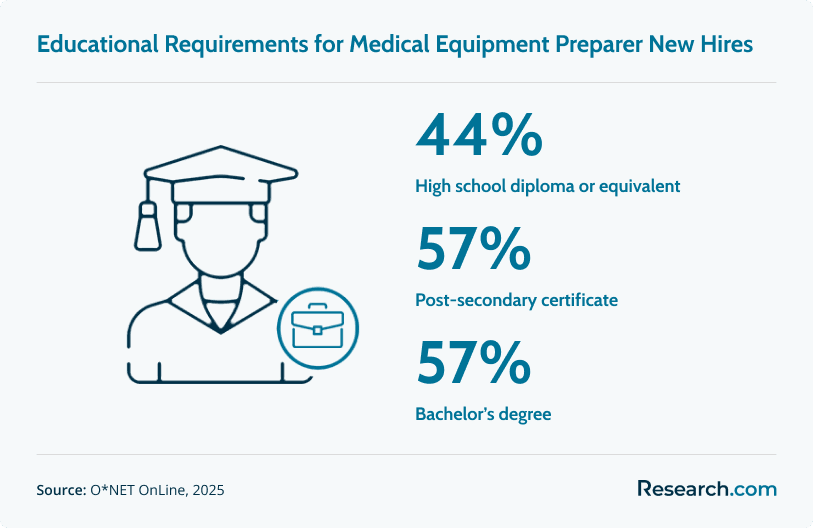
Data shows that 48% of working technicians enter the field with a postsecondary certificate, making it the most common educational pathway. Another 30% start with a high school diploma, using on-the-job training and certification to advance.
What Courses Are Typically Included in an Online Sterile Processing Technician Certificate Program?
A sterile processing technician program is not simply a cleaning course. It teaches the science, procedures, terminology, and safety expectations behind instrument preparation and infection prevention. Students interested in broader patient-safety or training roles can also explore health education jobs, where knowledge of infection control and communication may support public health, education, or outreach work.
Most programs cover microbiology, infection-control principles, decontamination, sterilization methods, packaging, storage, surgical instrumentation, medical terminology, quality assurance, and regulatory expectations. A major part of training involves learning how to identify and handle surgical instruments accurately.
Common Courses and Skills
| Course Area | What You Learn | Why It Matters on the Job |
| Microbiology | Basic information about microorganisms and contamination risks | Helps technicians understand why correct cleaning and sterilization steps matter |
| Infection control | Methods used to reduce the spread of pathogens | Supports patient safety and compliance with healthcare standards |
| Decontamination | How instruments are cleaned before sterilization | Improper decontamination can compromise the entire process |
| Sterilization techniques | Processes used to make instruments safe for use | Technicians must follow precise procedures and documentation rules |
| Surgical instrumentation | Names, uses, and handling requirements for instruments | Accurate instrument preparation supports surgical teams |
| Inventory and quality control | Tracking, storage, inspection, and workflow practices | Helps departments avoid delays, errors, and missing equipment |
Who You May Learn and Work With
Students entering sterile processing often include first-time healthcare workers, career changers, and adults returning to school. The average age of a working technician is 42, so older students should not assume they are out of place.
Women make up 61.7% of the workforce. The field also includes White (56.4%) and Hispanic (18%) professionals, reflecting a workforce with varied backgrounds and career stories.
What Specializations Are Available After an Online Sterile Processing Technician Certificate Program?
Most entry-level sterile processing technician certificate programs do not function like degree programs with formal concentrations. Instead, they provide broad preparation for core sterile processing work and certification readiness.
Specialization usually comes later, after you have worked in the field and understand the department’s workflow. Experienced technicians may pursue advanced credentials or training in areas such as flexible endoscopes, instrument management, leadership, quality assurance, or complex surgical equipment.
Possible Advancement and Specialization Areas
| Specialization Area | What It Involves | Who Should Consider It |
| Flexible endoscope processing | Focused handling, cleaning, and processing of scopes | Technicians working in facilities with endoscopy services |
| Leadership or supervision | Scheduling, training, workflow oversight, and team communication | Technicians who want lead, supervisor, or manager roles |
| Instrument specialist work | Advanced knowledge of specialized surgical instruments | Detail-oriented technicians who enjoy technical complexity |
| Quality assurance | Monitoring processes, documentation, audits, and compliance | Technicians interested in safety systems and process improvement |
| Education and training | Teaching new staff and supporting competency development | Experienced technicians with strong communication skills |
Why Specialization Can Matter
Hospitals and surgery centers increasingly use complex instruments, tracking systems, and specialized equipment. As the work becomes more technical, experienced sterile processing professionals who understand advanced procedures can become more valuable to their departments.
This pattern is common in allied health. For example, comparing dental assistant and dental hygienist roles shows how foundational training can lead to more specialized responsibilities, different credential expectations, and higher earning potential over time.
How to Choose the Best Online Sterile Processing Technician Certificate Program
The best online sterile processing technician program is not automatically the cheapest, shortest, or most heavily advertised option. Your goal should be to choose a program that prepares you for certification, helps you understand hands-on requirements, and gives you enough support to move from coursework to employment.
Program Selection Checklist
- Confirm accreditation: Check whether the school is accredited by an agency recognized by the U.S. Department of Education or the Council for Higher Education Accreditation. Accreditation can affect credibility, aid eligibility, and transfer options.
- Ask about clinical-experience support: Do not settle for vague language. Ask whether the school helps students find clinical sites, whether placements are guaranteed, and what happens if no site is available near you.
- Review certification preparation: Ask whether the program prepares students for CRCST, CBSPD, or both. Also confirm whether an exam voucher is included.
- Compare total cost, not tuition alone: Include exam fees, books, supplies, background checks, immunizations, and travel to a clinical site.
- Check student support: Look for instructor access, tutoring, career services, resume help, and guidance on documenting experience hours.
- Read refund and completion policies: Know what happens if you withdraw, fail a course, or need more time.
If affordability is your main concern, compare the most affordable online sterile processing technician certificate programs while still checking accreditation, certification alignment, and clinical support.
Questions to Ask Before Enrolling
| Question | Why It Matters |
| Which certification exam does the program prepare me for? | Employers may prefer or require specific credentials. |
| Is an exam voucher included in the tuition? | This can affect your real out-of-pocket cost. |
| How do students complete the 400-hour experience requirement? | You need a realistic plan before you finish coursework. |
| Does the school help arrange clinical placement? | Weak placement support can slow your path to certification. |
| What are the technology requirements for online study? | You need reliable access to complete assignments and exams. |
| What career services are available after completion? | Resume help, interview support, and employer connections can matter for first jobs. |
Common Mistakes to Avoid When Choosing a Sterile Processing Program
| Mistake | Why It Can Hurt You | Better Approach |
| Choosing only by lowest tuition | A cheap program may lack clinical support or exam preparation. | Compare total cost, support, accreditation, and certification alignment. |
| Assuming online means fully remote | Certification and employment readiness may require in-person experience. | Ask how hands-on requirements are completed in your area. |
| Ignoring accreditation | Unaccredited options can limit aid, credibility, and future education options. | Verify accreditation before paying an enrollment fee. |
| Not checking certification requirements | A certificate alone may not meet employer expectations. | Confirm CRCST or CBSPD preparation and experience requirements. |
| Overlooking physical job demands | The role can involve standing, lifting, repetitive tasks, and fast-paced work. | Review job descriptions and speak with working technicians if possible. |
| Believing salary outcomes are guaranteed | Pay varies by employer, location, experience, shift, and certification. | Use salary data as a planning tool, not a promise. |
What Career Paths Are Available After an Online Sterile Processing Technician Certificate Program?
Many graduates begin as sterile processing technicians in hospitals, ambulatory surgery centers, outpatient clinics, or specialty procedure centers. With experience, technicians may move into lead roles, training positions, quality-assurance work, or department supervision.
Career Pathways in Sterile Processing
| Role | Main Responsibilities | Typical Next Step |
| Sterile Processing Technician | Clean, inspect, assemble, sterilize, store, and distribute instruments. | Build experience and earn certification. |
| Lead Technician | Support daily workflow, troubleshoot issues, and guide newer staff. | Develop supervisory and communication skills. |
| Sterile Processing Supervisor | Oversee staff schedules, quality checks, productivity, and compliance. | Move toward department management. |
| Sterile Processing Manager | Manage department operations, budgets, staffing, policies, and audits. | Consider healthcare administration or leadership education. |
| Educator or Trainer | Train technicians, support competency reviews, and reinforce best practices. | Gain advanced credentials and teaching experience. |
| Medical Device or Vendor Role | Use instrument knowledge in product support, training, or sales environments. | Build technical expertise and customer-facing skills. |
Comparing Work Environments Across Allied Health
Advancement usually requires more than time on the job. Technicians who want promotions should build leadership skills, learn inventory systems, document quality outcomes, communicate well with operating room teams, and become reliable problem-solvers.
Sterile processing differs from more patient-facing allied health roles. While the places where medical assistants work can include a wider range of front-office and clinical environments, sterile processing is more concentrated around surgical support, infection control, equipment flow, and technical precision.
What Is the Job Market for Online Sterile Processing Technician Certificate Graduates?
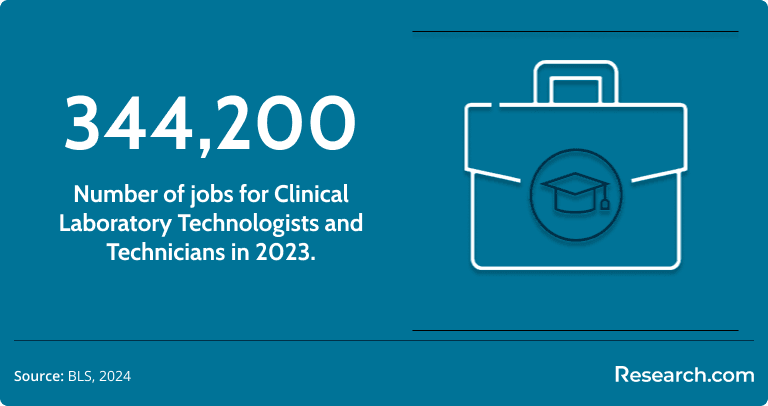
The job market is strongest for graduates who combine formal training with recognized certification and hands-on experience. The U.S. Bureau of Labor Statistics projects that the field will grow by 6%, which is faster than the average for all occupations. This translates to about 10,000 job openings projected each year for the next decade. Healthcare workers who later want broader clinical leadership options may also explore pathways such as online RN to MSN programs, although nursing programs have separate admission, licensure, and clinical requirements.
Employers often look for candidates who can follow procedures precisely, work under pressure, document accurately, communicate with surgical teams, and maintain strong infection-control habits. Completing a certificate can help, but certification is usually the stronger signal of job readiness.
Why Demand Remains Steady
Demand for sterile processing technicians is connected to ongoing surgical care, aging populations, infection-prevention expectations, and increasingly complex medical instruments. Facilities need trained staff who understand the full chain of decontamination, assembly, sterilization, storage, and distribution.
Technology is also changing the work. Instrument tracking systems, automated washers, sterilization equipment, and robotic-surgery tools can improve workflow, but they do not remove the need for trained technicians. Instead, they raise expectations for documentation, technical accuracy, and process discipline.
What Further Educational Opportunities Can Advance My Healthcare Career?
After completing a sterile processing technician certificate, some professionals continue building their healthcare credentials. The right next step depends on whether you want to stay in sterile processing, move into surgical support, become a supervisor, or transition into another clinical or administrative field.
Advanced certifications may be the most practical next move for technicians who want to remain in the field. Those aiming for broader healthcare roles may consider additional academic programs. For example, a PharmD program represents a much longer and more advanced clinical pathway, but it illustrates how healthcare workers can use technical experience as a foundation for future professional growth.
Should I Broaden My Healthcare Expertise with Additional Interdisciplinary Credentials?
Interdisciplinary education can be useful when it supports a clear career goal. A sterile processing technician who wants to train staff, improve patient-safety procedures, or move into operations may benefit from courses in communication, quality improvement, healthcare management, or education.
Not every additional credential will improve your career immediately. For example, nutrition science bachelor's programs may be valuable for students interested in wellness, public health, or patient education, but they are not a direct requirement for sterile processing roles. Choose extra education only when it connects to the work you want to do next.
How Can an Online Healthcare Administration Degree Complement a Sterile Processing Technician Career?
An administrative degree can make sense for experienced sterile processing technicians who want to move into supervision, department management, compliance, or healthcare operations. An online healthcare administration degree can introduce budgeting, staffing, planning, policy, and regulatory topics that are useful in leadership roles.
This pathway is not necessary for every technician. It is most useful if you already enjoy process improvement, team coordination, documentation, and departmental problem-solving. If your goal is to become a stronger technical specialist, advanced sterile processing certifications may be a more direct investment.
What Graduates Say About Online Sterile Processing Technician Certificate Programs
- Marcellina: "When my previous position disappeared, I worried about starting over. Learning a technical healthcare skill at 48 felt like a big leap. The online lessons broke the material into manageable steps, and by the time I reached clinical training, I felt prepared. I now have a dependable career in a field that continues to matter."
- Dashiell: "I wanted a real healthcare career, but a four-year degree was not realistic for my budget. The online format let me study at night while I kept working during the day. Finishing in under a year and moving into a hospital role gave me the career change I needed without taking on a long degree path."
- Kenji: "As someone new to the country, I wanted work where accuracy and focus mattered. Sterile processing gave me that opportunity. The online coursework helped me learn the technical vocabulary, and the hands-on portion let me show what I could do. Certification made me feel like I truly belonged in healthcare."
Key Insights
- Online sterile processing programs can be completed quickly, but they are not entirely remote. Students preparing for CRCST certification should plan for the 400-hour hands-on experience requirement.
- Certification preparation matters more than format. Employers generally care about your credential, skills, reliability, and clinical readiness more than whether you studied online or on campus.
- Costs vary widely. Published tuition in this list ranges from $949 to $4,000, while Herzing University lists $530 per credit for a 24-credit program. Always compare the total cost, not just tuition.
- Accreditation and clinical support are the two biggest quality checks. A program that does not clearly explain accreditation, certification alignment, and hands-on experience support can create problems later.
- Sterile processing is a practical entry point into healthcare. Data shows that 48% of working technicians enter with a postsecondary certificate, and another 30% begin with a high school diploma.
- Advancement is possible, but it requires deliberate skill-building. Lead technician, supervisor, manager, educator, quality-assurance, and vendor roles may become options with experience, certification, and leadership ability.
- Do not treat salary figures as guarantees. Graduates can expect a starting salary in the range of $41,500, with top earners exceeding $81,000 with experience, but actual pay depends on employer, location, certification, shift, and experience.
References:
- Al-Zalabani, A. H., Al-Jabri, B.A., & Al-Qahtani, A. M. (2022). Job satisfaction, burnout, and turnover intention among sterile processing technicians in Saudi Arabia: A cross-sectional study. Journal of Health and Social Sciences, 7(2), 115–126. https://pmc.ncbi.nlm.nih.gov/articles/PMC9318339/
- Data USA. (n.d.). Sterile processing technician/sterilizer. Retrieved August 7, 2025, from https://datausa.io/profile/cip/sterile-processing-technician
- O*NET OnLine. (n.d.). Summary report for: 31-9093.00 - medical equipment preparers. Retrieved August 7, 2025, from https://www.onetonline.org/link/summary/31-9093.00
- Payscale. (n.d.). Average sterile processing technician hourly pay. Retrieved August 7, 2025, from https://www.payscale.com/research/US/Job=Sterile_Processing_Technician/Hourly_Rate
- U.S. Bureau of Labor Statistics. (n.d.). Clinical laboratory technologists and technicians. Occupational Outlook Handbook. Retrieved August 7, 2025, from https://www.bls.gov/ooh/healthcare/clinical-laboratory-technologists-and-technicians.htm
- ZipRecruiter. (n.d.). Sterile processing technician salary. Retrieved August 7, 2025, from https://www.ziprecruiter.com/Salaries/Sterile-Processing-Technician-Salary
- Zippia. (n.d.). Sterile processing technician demographics and statistics in the US. Retrieved August 7, 2025, from https://www.zippia.com/sterile-processing-technician-jobs/demographics/
Other Things You Should Know About Online Sterile Processing Technician Certificate Programs
Yes. Many programs require a criminal background check, proof of immunizations, and current CPR certification before clinical placement. Common vaccine documentation includes hepatitis B, MMR, varicella, and tuberculosis screening. These records are usually checked before students begin any hands-on hospital training.
To enroll in 2027's online sterile processing technician certificate programs, applicants typically need a high school diploma or GED. Some programs may also require background checks or placement tests as part of their admissions criteria. Confirm specific requirements with individual institutions.


