2027 Most Affordable Online Dental Assistant Associate Degree Programs

Co-Founder and Chief Data Scientist
Choosing an online dental assistant associate degree is mostly a question of fit: Will the program meet certification expectations, include real clinical training, stay within your budget, and prepare you for dental assisting rules in your state? The answer matters because dental assisting is hands-on work. Even when lectures are online, students usually need labs, radiography practice, externships, or supervised clinical hours before they are ready for entry-level employment.
This guide is for students comparing affordable online, hybrid, and low-cost associate degree options in dental assisting. It explains what these programs include, how much they may cost, how long they take, what careers they can lead to, and how to evaluate accreditation, certification preparation, clinical placement, and return on investment before enrolling.
Quick answer: Is an affordable online dental assistant associate degree worth it?
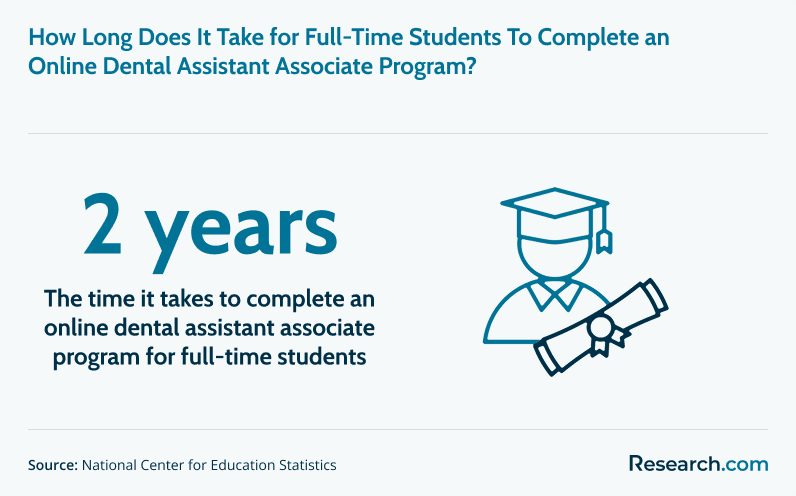
An affordable online dental assistant associate degree can be worth it if the program is accredited, includes required hands-on training, prepares you for state requirements and certification exams, and keeps total tuition low enough for the expected career payoff. Most full-time associate degree programs take about two years, include 60 to 70 credit hours, and combine online coursework with in-person labs or clinical externships.
The degree is usually a stronger option for students who want a structured academic credential, eligibility for broader responsibilities, and a pathway toward certification or future healthcare education. Students who need the fastest possible entry into the workforce may also want to compare certificate or diploma programs, because some dental assisting programs can be shorter than an associate degree.
What are the benefits of getting an online associate dental assistant degree?
- Career flexibility: Graduates may qualify for roles in general dental offices, orthodontic practices, pediatric dental clinics, oral surgery settings, and dental front-office administration.
- Earning potential: Dental assistants have a median annual wage of around $47,300, and certification, experience, location, and expanded functions can influence pay.
- More manageable scheduling: Online coursework can reduce commuting and make it easier for working adults, parents, and career changers to complete lectures while still arranging required in-person training.
- Clinical and administrative preparation: Associate degree programs usually cover chairside assisting, dental radiography, infection control, dental materials, patient communication, and office procedures.
- Longer-term mobility: The degree can support future moves into dental hygiene, healthcare administration, public health, dental office management, or other allied health paths.
What can I expect from an online associate dental assistant degree?
An online dental assistant associate degree is typically a hybrid healthcare program. The academic portions, such as dental terminology, oral anatomy, infection control theory, radiography principles, and office management, may be delivered online. Skills-based training is different. Students generally need in-person labs, clinical rotations, or externships because dental assistants must learn how to work safely with patients, instruments, dental materials, imaging equipment, and dentists during procedures.
Most programs take about two years for full-time students. The curriculum is designed to prepare graduates for entry-level dental assisting work in private practices, clinics, specialty offices, and other oral healthcare settings. Programs accredited by the Commission on Dental Accreditation (CODA) may also help students prepare for the Certified Dental Assistant (CDA) exam and other state-specific requirements, although eligibility rules vary by state and credential.
| Program feature | What it usually means for students | Why it matters |
| Online coursework | Lectures, quizzes, assignments, and discussions may be completed through a learning platform. | This can make the degree easier to manage around work or family obligations. |
| In-person clinical training | Students may attend labs, externships, or rotations at approved dental sites. | Dental assisting requires supervised practice with real equipment and patient-care procedures. |
| Associate degree structure | Programs often include dental assisting courses plus general education classes. | The credential may support transfer options, advancement, or future healthcare study. |
| Certification preparation | Some programs align coursework with exams from the Dental Assisting National Board (DANB). | Certification can improve employability and may be required or preferred for some duties. |
| State-specific requirements | Radiography, expanded functions, and registration rules differ by location. | Students should verify that a program meets requirements where they plan to work. |
Where can I work with an online associate dental assistant degree?
Graduates can work in settings that need trained clinical and administrative dental support. The most common workplace is a general dental practice, where assistants help prepare treatment rooms, support dentists during procedures, sterilize instruments, take or process radiographs when authorized, educate patients, and handle basic office tasks.
Other possible employers include:
- Orthodontic, periodontic, pediatric, oral surgery, and other specialty dental practices
- Community health clinics that provide dental services to underserved patients
- Dental schools and educational clinics that need clinical support staff
- Public health departments involved in prevention, outreach, or community oral health programs
- Military and veteran healthcare facilities that provide oral care services
- Corporate dental offices and dental support organizations (DSOs) with multiple locations
The right workplace depends on your interests. Students who enjoy procedures may prefer chairside or oral surgery assisting. Those who like organization, insurance, scheduling, and patient communication may move toward dental office administration.
How much can I make with an online associate dental assistant degree?
Graduates of online dental assistant associate degree programs typically earn a median annual salary of approximately $47,300, according to the U.S. Bureau of Labor Statistics. Those in the top 10% of the profession can earn over $61,780 annually. Pay varies by state, employer type, experience, credentials, and whether the assistant performs expanded functions allowed by state law.
Certification can also matter. Certified Dental Assistants often earn higher wages than non-certified assistants, and some employers use credentials as a signal of readiness for more complex duties. Government settings may offer higher compensation than some private practices, but students should compare total compensation, commute, schedule, benefits, and advancement opportunities rather than salary alone.
- Most Affordable Online Dental Assistant Associate Degree Programs for 2027
- How long does an affordable online dental assistant associate degree take?
- Online vs. on-campus dental assistant associate degrees
- Average cost of an affordable online dental assistant associate degree
- Financial aid options for dental assistant associate degree students
- Common admission requirements and prerequisites
- Typical courses in a dental assistant associate degree program
- Available dental assisting specializations and focus areas
- Supplemental certifications for dental assistants
- Healthcare advancement options after dental assisting
- How to choose the best affordable dental assistant associate program
- Interdisciplinary advancement after a dental assistant degree
- Moving from dental assisting into administrative roles
- Career paths for dental assistant associate degree graduates
- Job market for dental assistant associate degree graduates
- Technical resources and student support in online programsJob outlook detailsAdditional program considerations
List of the Most Affordable Online Dental Assistant Associate Degree Programs for 2027
How do we rank schools?
Research.com evaluates affordable online dental assistant associate degree options to help students compare programs using cost, academic structure, and available institutional data rather than marketing claims alone. Because dental assisting includes clinical training, students should use rankings as a starting point and then confirm delivery format, clinical placement rules, state eligibility, and CODA accreditation directly with each school.
This ranking uses a transparent methodology informed by sources such as the Integrated Postsecondary Education Data System (IPEDS), Peterson's databases including the Distance Learning Licensed Data Set, and the College Scorecard from the National Center for Education Statistics. These sources help compare schools across cost, program characteristics, and student-relevant factors.
1. Pearl River Community College (PRCC)
Pearl River Community College offers a Dental Assisting pathway that can lead to either a Technical Degree or an Associate of Applied Science. The program begins each fall and includes training in infection control, radiology, and chairside assisting. It is designed to help students prepare for the Dental Assisting National Board (DANB) exam. Students should note that the program is primarily in-person, although some theory coursework may include online components.
- Program Length: 2 years
- Tracks/Concentrations: General Dental Assisting Associate
- Cost per Credit: $160.00 per credit hour
- Required Credits to Graduate: 60 credit hours
- Accreditation: Commission on Dental Accreditation (CODA) of the American Dental Association.
2. Central Community College (CCC)
Central Community College provides dental assisting training in areas such as X-ray procedures, patient preparation, chairside support, and laboratory tasks. The Associate of Applied Science option also includes business and office management content, which can be useful for students who want both clinical and administrative skills. Instruction combines classroom learning with supervised clinical practice.
- Program Length: 2 years
- Tracks/Concentrations: Associate of Applied Science in Dental Assisting
- Cost per Credit: $96 per credit hour
- Required Credits to Graduate: 60 credit hours
- Accreditation: Commission on Dental Accreditation (CODA)
3. Kaskaskia College
Kaskaskia College offers an Associate in Applied Science Degree in Dental Assisting that includes classroom instruction, laboratory practice, and clinical learning. Internships through area dental offices give students exposure to real dental settings and may help them understand different practice environments before graduation.
- Program Length: 2 years
- Tracks/Concentrations: Associate in Applied Science (A.A.S.) in Dental Assisting
- Cost per Credit: $140 per credit hour
- Required Credits to Graduate: 64 credit hours
- Accreditation: Commission on Dental Accreditation
4. Mid-Plains Community College (MPCC)
Mid Plains Community College offers a dental assisting course of study that leads to a diploma, with an option to complete an Associate of Applied Science degree. The program emphasizes hands-on preparation for assisting dentists during examinations and treatment. Students may also learn supportive laboratory and business office procedures.
- Program Length: 2 years
- Tracks/Concentrations: Associate of Applied Science in Dental Assisting
- Cost per Credit: $104
- Required Credits to Graduate: 60 credit hours
- Accreditation: Commission on Dental Accreditation (CODA).
5. Mott Community College (MCC)
Mott Community College offers a Dental Assisting Associate of Applied Science degree accredited by the Commission on Dental Accreditation. Graduates are eligible to take the Michigan State Board Examination for licensure as a Registered Dental Assistant and the National Board Examination to become a Certified Dental Assistant. The program blends classroom instruction with clinical practice.
- Program Length: 2 years
- Tracks/Concentrations: Associate in Applied Science (AAS) in Dental Assisting
- Cost per Credit: $156.25 per credit hour
- Required Credits to Graduate: 67 credit hours
- Accreditation: Commission on Dental Accreditation (CODA)
6. Delta College
Delta College offers an Associate in Applied Science (AAS) in Dental Assisting that prepares students to support diagnostic, operative, restorative, preventive, and surgical procedures. Graduates may sit for the Registered Dental Assistant exam. The curriculum includes both clinical and administrative dental assisting preparation, with an emphasis on workforce readiness.
- Program Length: 2 years
- Tracks/Concentrations: Associate in Applied Science (AAS) in Dental Assisting
- Cost per Credit: $136 per contact hour plus technology fee of $25 per contact hour
- Required Credits to Graduate: 60 credit hours
- Accreditation: Commission on Dental Accreditation (CODA)
7. University of Southern Indiana (USI)
University of Southern Indiana offers a pathway that allows students to earn both a Certificate in Dental Assisting and an Associate of Science degree. Students complete three prerequisite courses and two semesters of dental assisting coursework to earn the certificate. Completing an additional 19 hours in the core curriculum, typically alongside the prerequisites, leads to the associate degree.
- Program Length: 2 years
- Tracks/Concentrations: Associate of Science Degree in Dental Assisting
- Cost per Credit: $446.94 per credit hour
- Required Credits to Graduate: 60 credit hours
- Accreditation: Commission on Dental Accreditation (CODA)
8. Chattanooga State Community College
Chattanooga State offers a 1-year Dental Assisting certificate option and a route toward an Associate of Applied Science (AAS) degree. The AAS is intended for students who have graduated from or are enrolled in an American Dental Association-accredited dental assisting certificate program and want to extend their education through a career-ladder model.
- Program Length: 2 years
- Tracks/Concentrations: Associate of Applied Science (AAS) in Health Sciences with a Dental Assisting concentration
- Cost per Credit: $205.00 per credit hour
- Required Credits to Graduate: 67 credit hours
- Accreditation: Commission on Dental Accreditation (CODA)
9. Kirkwood Community College
Kirkwood Community College offers both a dental assisting diploma and an Associate of Applied Science (AAS) degree. The AAS takes four semesters, including one summer term, and is accredited by the Commission on Dental Accreditation. Students complete classroom instruction, laboratory learning, and clinical rotations at the University of Iowa's College of Dentistry and private dental offices. Graduates are eligible to sit for the National Certified Dental Assistant (CDA) exam.
- Program Length: 2 years
- Tracks/Concentrations: Dental Assisting, A.A.S.
- Cost per Credit: $217 per credit hour
- Required Credits to Graduate: 65 credit hours
- Accreditation: Commission on Dental Accreditation (CODA)
10. Coastal Alabama Community College
Coastal Alabama offers an Associate in Applied Science (AAS) in Dental Assisting. The program prepares students to assist with patient care, dental radiographs, and administrative functions under the supervision of dental professionals. The curriculum includes theoretical learning and practical training for entry-level dental assisting roles.
- Program Length: 2 years
- Tracks/Concentrations: Associate of Applied Science (AAS-DAT) in Dental Assisting
- Cost per Credit: $168 per credit hour
- Required Credits to Graduate: 60 credit hours
- Accreditation: Commission on Dental Accreditation (CODA)
How long does it take to complete an affordable online dental assistant associate degree program?
Most affordable online dental assistant associate degree programs take about two years for full-time students. Like diagnostic medical sonography programs, dental assisting degrees combine academic learning with practical skill development. Students usually study topics such as dental radiography, chairside assisting, infection control, dental materials, patient care, and dental office administration.
Part-time students may need around three years, depending on course load, clinical scheduling, and whether general education requirements are completed in advance. Some schools offer asynchronous online classes, evening-friendly schedules, or accelerated pathways, but clinical externships may still follow the availability of approved dental offices or campus labs.
| Student situation | Typical timeline | Key consideration |
| Full-time associate degree student | About two years | Best for students who can handle a full course load and scheduled clinical requirements. |
| Part-time student | Generally around three years | Works better for students balancing employment, caregiving, or other obligations. |
| Student with transfer credits | May be shorter | General education credits can reduce the number of remaining courses, if accepted. |
| Certificate-to-associate pathway | Varies by school | Useful for students who want to start with a shorter credential and later complete the degree. |
How does an affordable online dental assistant associate degree compare to an on-campus program?
Online and on-campus dental assistant associate programs can lead to similar outcomes if they are properly accredited and include required clinical training. The biggest difference is not the subject matter; it is how students complete lectures, labs, practice sessions, and externships.
| Factor | Online or hybrid associate degree | On-campus associate degree |
| Course delivery | Many lectures and assignments are completed online. | Most lectures, labs, and activities happen in person. |
| Hands-on training | Still required through campus visits, labs, externships, or approved clinical sites. | Usually built into the weekly campus schedule with direct access to labs. |
| Flexibility | Often better for working adults and students with family responsibilities. | Less flexible but more structured. |
| Peer and instructor interaction | May rely on virtual meetings, forums, email, and scheduled clinical sessions. | Offers more immediate face-to-face feedback and practice. |
| Costs | May reduce commuting and relocation expenses. | May involve commuting, parking, and more fixed schedule costs. |
| Best for | Self-directed students who can manage deadlines and arrange clinical requirements. | Students who learn best through frequent in-person instruction and lab access. |
Before choosing an online format, ask the school where clinical training takes place, whether you must find your own externship site, and whether the program satisfies requirements in your state.
What is the average cost of an affordable online dental assistant associate degree program?
The average cost of an affordable online dental assistant associate degree program typically ranges from $6,000 to $15,000 in total tuition. Many low-cost options are offered by community colleges and public institutions. Some schools charge per credit hour, usually between $100 and $300, and programs commonly require around 60 to 70 credit hours to graduate.
Tuition is only one part of the cost. Students should also budget for textbooks, uniforms, lab kits, technology fees, immunizations, background checks, drug screenings, CPR certification, radiography supplies, transportation to clinical sites, and certification exam fees. A program that looks inexpensive on tuition alone may cost more once clinical and testing requirements are included.
Students comparing allied health programs may also review online sonography certificate programs or online associate radiology tech programs to understand how clinical education costs differ across healthcare fields. If you are also considering business or management pathways, the cheapest online bachelor's in management can offer a broader comparison point for tuition and career direction.
Curious how dental assistant pay compares with related healthcare support roles? Use the chart below to place the $47,300 median annual wage in context and think realistically about debt, commuting costs, certification expenses, and expected starting pay.
What are the financial aid options for students enrolling in an affordable online dental assistant associate degree program?
Students in affordable online dental assistant associate degree programs may be able to use federal, state, institutional, employer, and private aid. The first step is usually the Free Application for Federal Student Aid (FAFSA), which determines eligibility for Pell Grants, Federal Supplemental Educational Opportunity Grants (FSEOG), and Direct Subsidized and Unsubsidized Loans. Federal aid generally requires enrollment at an eligible accredited institution.
Students should also ask about state grants, community college scholarships, dental association scholarships, workforce training funds, payment plans, and employer tuition assistance. Some healthcare employers may support workers who are moving into higher-demand clinical support roles. Similar to the most affordable online certified nursing assistant programs, dental assistant programs may offer institutional support for students entering healthcare support occupations.
| Aid option | What to check | Why it matters |
| Federal grants | Complete the FAFSA and confirm the school participates in federal aid. | Grants do not have to be repaid when eligibility rules are met. |
| Federal loans | Review subsidized and unsubsidized loan terms carefully. | Loans can help cover costs but affect ROI after graduation. |
| State and local grants | Ask about workforce, community college, or healthcare training funds. | Local aid may reduce out-of-pocket costs for in-state students. |
| Institutional scholarships | Contact the financial aid office and dental assisting department. | Department-level awards may not always be obvious on the main tuition page. |
| Payment plans | Ask whether payments can be spread over a semester or academic year. | This can help students avoid borrowing more than necessary. |
| Employer assistance | Check benefits if you already work in dental or healthcare settings. | Some employers support education tied to career advancement. |
What are the prerequisites for enrolling in an affordable online dental assistant associate degree program?
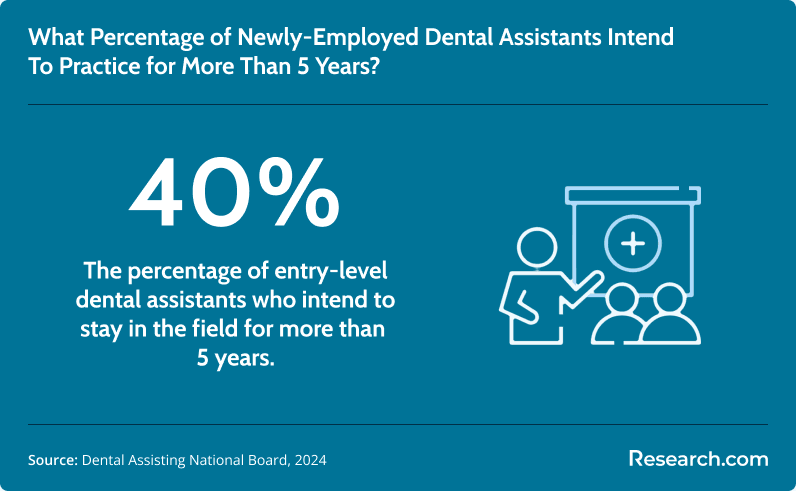
Admission requirements vary by school, but dental assisting programs often require both academic readiness and clinical eligibility documentation. In a 2023 survey, 40% of entry-level dental assistants say they want to stay in the field for a minimum of five years. For many students, the associate degree is the first step before certification, specialization, or advancement.
Common prerequisites include:
- High School Diploma or GED: Applicants usually need proof that they completed secondary education.
- Minimum GPA Requirement: Some colleges require a minimum high school GPA, commonly around 2.0 or higher.
- Official Transcripts: Schools typically request high school transcripts and transcripts from any previously attended colleges.
- Placement Test Scores: Math, reading, or English placement may be required before registering for college-level courses.
- Immunization Records: Clinical sites may require hepatitis B, tetanus, MMR, or other records before placement. Similar documentation can also be required for students in ultrasound tech school online.
- Background Check and Drug Screening: Many programs require these before externships because students work in patient-care settings.
- CPR Certification: Some schools require CPR certification before clinical training begins.
- Basic Computer Skills: Online students need reliable internet access, comfort with learning platforms, and the ability to upload assignments, attend virtual sessions, and communicate with instructors.
What courses are typically in an affordable online dental assistant associate degree program?
An affordable online dental assistant associate degree usually includes general education, dental science, clinical assisting, radiography, infection control, and office administration. The goal is to prepare students for both patient-facing and behind-the-scenes responsibilities in a dental practice while also providing a foundation for further studies. As of 2023, there were 376,500 dental assistants in the U.S. workforce, of which 55,360 were in California.
- Introduction to Dental Assisting: Explains the dental assistant’s role, dental terminology, professional ethics, patient communication, and basic office workflow.
- Dental Anatomy and Physiology: Covers teeth, oral tissues, head and neck anatomy, and the structures dental assistants encounter in patient care.
- Dental Radiography: Teaches imaging techniques, patient positioning, safety practices, and digital radiography concepts.
- Infection Control and Sterilization: Focuses on preventing disease transmission through PPE, instrument processing, disinfection, and clinical safety protocols.
- Chairside Assisting Techniques: Builds skills in instrument transfer, suctioning, procedure setup, moisture control, and patient support.
- Dental Materials: Introduces cements, impression materials, restorative materials, and other products used during dental procedures.
- Oral Pathology and Disease Prevention: Helps students recognize common oral health conditions and understand prevention-focused patient education.
- Dental Office Management: Covers appointment scheduling, billing basics, insurance processing, patient records, and professional communication.
- Clinical Externship or Practicum: Gives students supervised practice in a dental office, school clinic, or approved clinical site.
- General Education Courses: May include English composition, psychology, math, communication, or other college requirements.
Students interested in technical design should understand that the most affordable online autocad certificate programs are not dental assisting credentials, but digital modeling knowledge may be useful for learners exploring dental lab design or prosthodontic-adjacent interests later.
The chart below highlights states with the highest employment levels for dental assistants and can help students think about where job opportunities may be more concentrated.
What types of specializations are available in affordable online dental assistant associate degree programs?
Many associate degree programs focus on general dental assisting, but some include electives, clinical experiences, or certificate add-ons tied to specialty practice areas. Students should verify whether a focus area leads to a formal credential, prepares them for state authorization, or simply provides exposure.
- Orthodontic Assisting: Emphasizes support for braces, retainers, impressions, records, appliance adjustments, and patient education in orthodontic offices.
- Pediatric Dental Assisting: Prepares students to communicate with children and caregivers, support preventive care, and manage patient comfort in pediatric settings.
- Radiology and Imaging: Provides deeper training in dental X-rays, digital imaging, safety standards, and state-specific radiography requirements.
- Oral Surgery Assisting: Covers support during extractions and surgical procedures, including setup, patient monitoring support, post-operative instructions, and infection control.
- Administrative Dental Assisting: Focuses on scheduling, billing, insurance, coding basics, records, and front-office coordination.
Students interested in broader population health careers can compare dental assisting with public health roles, including some of the highest paying public health jobs, but they should recognize that public health positions may require different degrees, credentials, or experience.
Can supplemental certifications boost my dental assistant career potential?
Yes. A dental assistant associate degree can establish a strong foundation, but certifications may help graduates qualify for preferred roles, expanded duties, or higher-responsibility clinical tasks. The most relevant options depend on state regulations and employer expectations. Common areas include Certified Dental Assistant (CDA), radiography, infection control, CPR, expanded functions, and specialty assisting credentials.
Students should prioritize dental-specific credentials before pursuing unrelated certificates. Adjacent healthcare training, such as medical assistant certification online, may be useful for people comparing allied health careers, but it does not replace dental assisting certification or state dental requirements.
| Credential area | Best for | Before you enroll, ask |
| CDA or DANB-related exams | Graduates who want a nationally recognized dental assisting credential. | Does this program meet exam eligibility requirements? |
| Dental radiography | Students who want to take dental X-rays where permitted. | What are the radiography rules in my state? |
| Expanded functions | Assistants in states that allow additional clinical duties. | Which duties are allowed, and what credential is required? |
| CPR and infection control | Nearly all clinical dental assisting students. | Is this included in tuition or charged separately? |
What are my options for advancing my healthcare career after a dental assistant associate degree?
Dental assisting can be a first step into a larger healthcare career. Some graduates stay in dental assisting and pursue expanded functions or specialty roles. Others move into dental hygiene, dental office management, public health, dental sales, dental education support, or healthcare administration. The best next move depends on your state’s scope-of-practice rules, your academic record, and whether you want more clinical responsibility or more administrative leadership.
Students comparing longer healthcare pathways can review programs such as the fastest PharmD programs to understand how accelerated professional healthcare education works. However, pharmacy, dental hygiene, and healthcare administration have different admissions requirements and career outcomes, so compare them carefully before changing direction.
How do you choose the best among the most affordable online dental assistant associate degree programs?
The best affordable program is not always the cheapest. It is the program that meets accreditation standards, fits your schedule, places you in appropriate clinical training, prepares you for relevant exams, and keeps debt reasonable for expected earnings.
- Confirm CODA accreditation or recognized program approval. Accreditation can affect certification eligibility, financial aid, and employer confidence.
- Check state requirements first. Dental assisting duties, radiography permissions, and expanded functions vary by state.
- Ask exactly how clinical training works. Find out whether the school arranges externships or expects students to secure their own sites.
- Calculate total cost, not just tuition. Include fees, supplies, uniforms, immunizations, background checks, travel, and certification exams.
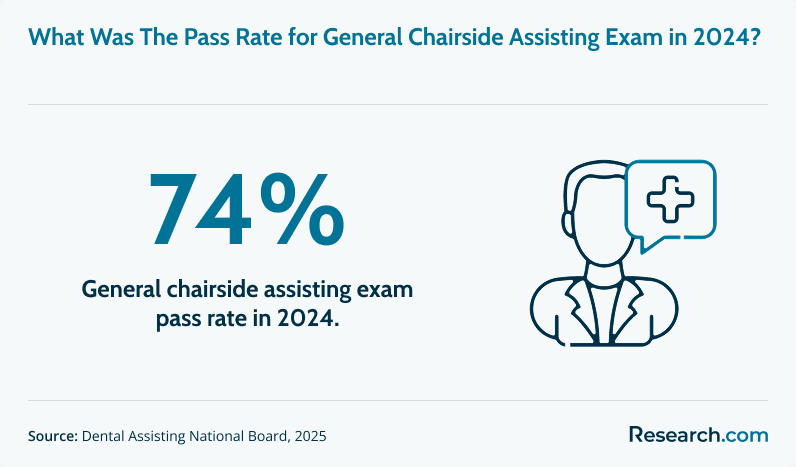
- Review certification outcomes. In 2024, the general chairside assisting exam had a pass rate of 74%, so exam preparation and student support matter.
- Evaluate online support. Ask about tutoring, instructor availability, technical help, advising, and clinical coordination.
- Look at career services. Strong programs help students prepare resumes, find externships, connect with employers, and understand licensure or certification steps.
- Compare alternatives. If your goal is documentation-focused healthcare work, top online medical transcription courses may be worth reviewing. If you want dental patient care, choose a dental-specific program.
| Common mistake | Why it can hurt students | Better approach |
| Choosing a school based only on tuition | Low tuition may not include clinical fees, supplies, or exam costs. | Compare total program cost and out-of-pocket expenses. |
| Assuming “online” means no campus or clinical visits | Dental assisting requires hands-on skill development. | Ask for a written clinical schedule before enrolling. |
| Ignoring accreditation | Non-accredited programs may limit financial aid, certification, or employer acceptance. | Verify CODA status or other recognized approval. |
| Not checking state rules | Radiography and expanded functions are regulated differently by state. | Contact the state dental board or ask the program for state eligibility details. |
| Relying only on rankings | A ranked program may not fit your location, schedule, or clinical needs. | Use rankings as a shortlist, then confirm fit directly with each school. |
Can a Dental Assistant Degree Lead to Interdisciplinary Career Advancement?
Yes, but the path depends on the field. A dental assistant associate degree builds patient-care, infection control, communication, documentation, and clinical support skills. Those skills can transfer into adjacent healthcare roles, but additional education or credentials are often required.
For example, students interested in movement science, rehabilitation, or wellness may explore an online degree in kinesiology. That path is not a direct dental assisting advancement credential, but it may appeal to graduates who want to move toward broader patient-care, health promotion, or interdisciplinary healthcare work.
Can I Transition to Administrative Roles with a Dental Assistant Associate Degree?
Yes. Dental assistants often understand both the clinical and patient-service sides of a practice, which can make them strong candidates for front-office, scheduling, treatment coordination, insurance, billing, or practice management roles after gaining experience. Students who want management responsibilities should build skills in communication, compliance, electronic records, billing workflows, leadership, and healthcare operations.
A healthcare administration degree online may be a logical next step for graduates who want to move beyond dental assisting into broader healthcare management. For dental-office-specific leadership, also ask employers which credentials or experience they value for office manager or practice coordinator roles.
What career paths are available for graduates of affordable online dental assistant associate degree programs?
Graduates may pursue several clinical and administrative roles. Exact duties depend on state law, employer policy, certification, and experience.
| Career path | Main responsibilities | Best fit for |
| Dental Assistant | Provides chairside support, prepares rooms, sterilizes instruments, assists with patient care, and performs basic office tasks. | Students who want a broad entry-level dental role. |
| Orthodontic Assistant | Supports orthodontists with braces, retainers, records, impressions, patient education, and appliance-related procedures. | Students interested in long-term patient relationships and orthodontic care. |
| Pediatric Dental Assistant | Assists with children’s dental care and helps manage comfort, behavior, and communication with families. | Students who enjoy working with children. |
| Dental Office Administrator | Handles scheduling, billing, insurance claims, patient records, and front-office communication. | Students who prefer organization, service, and administrative work. |
| Dental Radiology Technician | Takes and processes dental X-rays under supervision where permitted and follows safety protocols. | Students interested in imaging and technical procedures. |
| Expanded Functions Dental Assistant (EFDA) | Performs additional clinical duties such as placing fillings or applying sealants in states that allow those functions. | Certified assistants seeking a higher-responsibility clinical role. |
| Dental Laboratory Technician (Entry Level) | Assists with dental prosthetics such as crowns, bridges, and dentures using dentist specifications. | Students interested in technical lab work rather than chairside patient care. |
Some graduates eventually add nonclinical technical skills for roles where healthcare and analytics intersect. For example, the most affordable online data science bootcamps may interest students who later want to work with healthcare data, but they are not a substitute for dental assisting education or certification.
What is the job market like for graduates with an affordable online dental assistant associate degree?
The job market for dental assistants is favorable compared with many occupations. According to the U.S. Bureau of Labor Statistics, employment of dental assistants is projected to grow by 8% from 2023 to 2033, faster than the average for all occupations. That projection equals approximately 54,900 new job openings annually.
As of May 2024, the median annual wage for dental assistants was $47,300, with the top 10% earning more than $61,780. As of 2023, there were 376,500 dental assistants in the U.S. workforce. Demand is influenced by preventive dental care, patient volume, retirements, turnover, and the need for trained support staff in general and specialty practices.
Employer expectations are also changing. Dental assistants are increasingly taking on expanded roles, including digital imaging and infection control supervision. That makes certification, continuing education, and comfort with dental technology more important than ever.
What technical resources and support systems are available in affordable online dental assistant associate degree programs?
Strong online dental assistant programs support students with more than recorded lectures. Look for a learning management system that is easy to use, responsive instructors, virtual simulations where appropriate, online tutoring, library access, advising, clinical placement coordination, and reliable technical support. Because students eventually need hands-on practice, communication between the online coursework team and clinical sites is especially important.
Students interested in the administrative side of healthcare may also compare dental office training with the cheapest medical billing and coding certification. Billing and coding programs can support healthcare administration goals, but dental assisting remains a clinical support pathway with separate requirements.
Questions to ask before enrolling
- Is the program accredited by the Commission on Dental Accreditation (CODA)?
- Does the program meet dental assisting, radiography, or expanded-function requirements in my state?
- Which parts are online, and which parts must be completed in person?
- Does the school arrange externships, or do students find their own clinical sites?
- What is the total cost after tuition, fees, books, supplies, background checks, immunizations, CPR, and exam fees?
- Are graduates eligible for the CDA exam or relevant state exams?
- What student support is available for online learners?
- What percentage of students complete the program and find related employment?
- Can credits transfer into dental hygiene, healthcare administration, or another degree later?
- What happens if I move to another state before or after graduation?
Here’s What Graduates Have to Say About Their Affordable Online Dental Assistant Associate Program
-
: "
The online format made it possible for me to keep working while finishing school and caring for my family. The classes were flexible, but the clinical experience still pushed me to build real skills. I now work in a dental office where I feel confident and supported. Jasmine
"
-
: "
I chose an online associate program because I needed to keep costs down. Avoiding extra commuting helped, and I still had access to instructors and classmates when I needed help. It gave me an affordable route into a healthcare career. Carlos
"
-
: "
Returning to school felt intimidating at first, but the structure of the online program helped me stay on track. I learned the technical skills and communication habits I use every day, and the degree helped me move into a more stable career. Ellie
"
Key Insights
- An online dental assistant associate degree is usually hybrid, not fully remote, because students need in-person clinical training.
- Full-time students typically finish in approximately two years, while part-time students may need around three years.
- The average cost of an affordable online dental assistant associate degree program typically ranges from $6,000 to $15,000 in total tuition.
- Some schools charge per credit hour, usually between $100 and $300, with programs requiring around 60 to 70 credit hours to graduate.
- The median annual wage of dental assistants in 2024 was $47,300 or $22.74 per hour, and the top 10% earned more than $61,780.
- As of 2023, there were 376,500 dental assistants in the U.S. workforce.
- Employment of dental assistants is projected to grow by 8% from 2023 to 2033, with approximately 54,900 new job openings annually.
- Accreditation, clinical placement quality, state eligibility, certification preparation, and total cost are more important than tuition alone.
- Certification and expanded functions can improve career options, but requirements vary by state.
- Students should verify every program’s delivery format before enrolling because several affordable dental assisting options include significant in-person requirements.
References:
- Dental Assisting National Board. (2024). 2024 DANB exam pass rates report.
- Dental Assisting National Board. (2024). 2024 DANB salary survey.
- Dental Assisting National Board. (2024). 2024 employer insights salary survey.
- Dental Assisting National Board. (n.d.). Certification benefits dental assistant workforce, survey shows.
- Dental Assisting National Board. (n.d.). Which states have the highest dental assistant job satisfaction?
- U.S. Bureau of Labor Statistics. (2023, April). Dental assistants: Occupational employment and wage statistics.
Other Things You Should Know About the Most Affordable Online Dental Assistant Associate Degree Programs
Yes, if the program is CODA-accredited, it meets the Commission on Dental Accreditation’s standard for dental assisting education. CODA recognition matters for employer acceptance, certification eligibility, and transfer planning. Students should verify the program’s CODA status before enrolling, especially for clinical and licensure-related requirements.
An affordable online dental assistant associate degree typically requires 60 to 70 credit hours to complete. These credits cover foundational courses in dental sciences, patient care skills, and administrative aspects needed to become a qualified dental assistant.
Students should have reliable internet access, a modern computer or tablet, and updated software for video conferencing. Specific programs might also require access to specialized dental software or virtual lab environments. Always check the technical requirements listed by your chosen institution.