2027 What to Know About Free Online Medical Billing and Coding Courses

Co-Founder and Chief Data Scientist
Free online medical billing and coding courses can be a smart first step if you want to explore healthcare administration without paying tuition upfront. They can help you learn basic medical terminology, insurance claims workflows, ICD-10 and CPT concepts, and the role billers and coders play in the healthcare revenue cycle. However, free courses usually do not replace certification-focused training, supervised practice, or employer-recognized credentials.
This guide is for career changers, students, working adults, and healthcare support workers who want to understand whether free medical billing and coding training is enough to get started—or whether a paid certificate, exam-prep program, associate degree, or professional certification would be a better investment. You will learn what free courses typically cover, what they often leave out, how to compare training options, which certifications matter, what skills employers look for, and how salary and job outlook data should shape your decision.
Quick Answer: Are Free Online Medical Billing and Coding Courses Worth It?
Free online medical billing and coding courses are worth using as an introduction, especially if you are unsure whether the field fits your interests. They can teach basic vocabulary, billing workflows, and coding system concepts at no cost. But if your goal is to qualify for competitive jobs, prepare for certification exams, or build coding accuracy with real medical records, you will likely need more structured training, practice exercises, and a recognized credential.
Key Things You Should Know About Free Online Medical Billing & Coding Courses:
- Medical records specialists had a 2023 median pay of $48,780 per year according to the BLS.
- Medical billing and coding professionals vary in salary, with a range between $40,912 and $84,877 depending on factors such as title, experience, location, certification, and employer type.
- Medical and health services managers hold the highest annual salaries in 2024 of this occupation at $98,542, overseeing the business side of healthcare delivery.
- There were 194,300 medical records specialists in the USA in 2022.
- The job outlook for 2022-2032 is 8%, faster than average, with an expected 16,500 new jobs expected to be added in this decade.
- 1 in 5 insured adults have had surprise bills from out-of-network providers in the past two years.
- Two-thirds of adults worry about affording unexpected medical bills.
- In emergency departments, 18% of visits result in at least one surprise bill.
- Over 25% of 5 million consumers have delinquent debt on their credit reports, with a whopping 58% of that debt stemming from medical bills.
- Billing and coding errors can affect patients, providers, insurers, and the broader healthcare system, which is why accuracy, ethics, compliance, and documentation skills matter.
- What is medical billing and coding?
- What jobs can you pursue in medical billing and coding?
- What skills do medical billers and coders need?
- Free vs. paid medical billing and coding courses: which should you choose?
- What should you look for in a free medical billing and coding course?
- What do free online medical billing and coding courses usually teach?
- Do free courses teach ICD-10, CPT, and other coding systems well enough?
- Which certifications may help with medical billing and coding jobs?
- What legal and ethical rules apply to medical billing and coding?
- What challenges do professionals encounter in medical billing and coding?
- What tools and technologies are commonly used in medical billing and coding?
- Can interdisciplinary education enhance your career prospects in healthcare?
- Can expanding into pharmacy complement your billing and coding career?
- How are automation and emerging technologies reshaping the medical billing and coding landscape?
- Are free online medical billing and coding courses accredited and valued by employers?
- How can mentorship and networking enhance career growth in medical billing and coding?
- How much do medical billers and coders make?
- What are the benefits of pursuing additional specialization in medical billing and coding?
- How does medical billing and coding compare to other healthcare career paths?
- Can an MBA boost your career in medical billing and coding?
What is medical billing and coding?
Medical billing and coding is the administrative process that turns healthcare visits, diagnoses, procedures, tests, treatments, and supplies into standardized codes and insurance claims. These codes help providers document care, bill insurance companies, track reimbursement, and maintain accurate patient records.
Although people often combine the terms, medical coding and medical billing are not the same job.
| Function | What the professional does | Why it matters |
| Medical coding | Reviews medical documentation and assigns standardized diagnosis and procedure codes. | Accurate codes support claims, reporting, compliance, and provider reimbursement. |
| Medical billing | Uses coded information to prepare claims, submit them to insurers, track payments, resolve denials, and handle patient balances. | Clean billing helps providers get paid correctly and helps patients understand financial responsibility. |
| Combined billing and coding | Performs both documentation review and claims-related tasks, often in smaller offices or entry-level revenue cycle roles. | A combined role gives broad exposure to the full healthcare revenue cycle. |
Medical coding starts with the patient record. A coder reviews documentation such as physician notes, diagnoses, procedures, lab orders, discharge summaries, and treatment details. The coder then assigns codes using systems such as ICD-10 and CPT.
- ICD-10 (International Classification of Diseases, Tenth Revision): Used to classify diagnoses, injuries, symptoms, and health conditions.
- CPT (Current Procedural Terminology): Used to identify medical services and procedures performed by healthcare providers.
Medical billing uses those codes to create and manage claims. A biller may verify insurance coverage, submit claims, monitor payment status, correct rejected claims, appeal denials, communicate with insurers, answer patient billing questions, and collect patient payments.
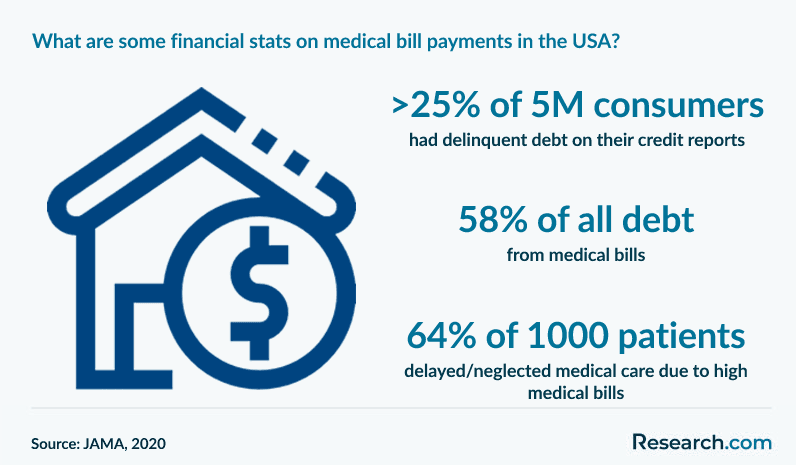
To see how codes connect to real-world claims, review these medical billing and coding examples. The stakes are high: over 25% of 5 million consumers have delinquent debt on their credit reports, and 58% of that debt stems from medical bills. Another survey found that 64% of 1,000 patients delayed or avoided care because they were worried about high medical bills.
Accurate billing and coding will not solve every problem in healthcare affordability, but errors can make an already stressful system harder for patients and providers. That is why careful training matters. If you want structured training without a high price tag, compare affordable medical billing and coding online options before choosing a program.
What jobs can you pursue in medical billing and coding?
Medical billing and coding can lead to entry-level administrative jobs, specialized coding roles, compliance positions, revenue cycle careers, and management pathways. Your options depend on your training, certification, experience, accuracy, software skills, and familiarity with payer rules.
| Career path | Common roles | Best fit for |
| Entry-level billing and coding | Medical biller, medical coder, billing and coding specialist, medical records technician | New professionals who want to enter healthcare administration and learn claims workflows. |
| Specialized coding | Inpatient coder, outpatient coder, specialty coder, coding auditor | Coders who want deeper expertise in a care setting or medical specialty. |
| Compliance and auditing | Coding compliance specialist, compliance officer, coding auditor | Detail-oriented professionals who enjoy rules, documentation review, risk reduction, and quality control. |
| Revenue cycle operations | Billing coordinator, revenue cycle analyst, revenue cycle manager | Professionals who want to move from individual claims work into process improvement and operations. |
| Training and consulting | Trainer, consultant, EHR specialist | Experienced professionals who can teach, advise, troubleshoot systems, or improve workflows. |
Core roles
- Medical biller: Prepares claims, submits them to insurance companies, follows up on unpaid claims, answers billing questions, posts payments, and helps resolve denials.
- Medical coder or coding specialist: Reviews patient documentation and assigns ICD-10, CPT, and related codes for billing, reporting, and compliance.
- Medical coder/biller: Handles both coding and billing duties, which is common in smaller practices or broader administrative roles.
Specialized and advanced roles
- Inpatient coder: Focuses on services provided to admitted hospital patients.
- Outpatient coder: Codes visits and procedures in clinics, ambulatory surgery centers, and other non-admitted settings.
- Specialty coder: Works in an area such as cardiology, oncology, or orthopedics and applies specialty-specific coding knowledge.
- Coding auditor: Reviews coded records for accuracy, documentation support, and guideline compliance.
- Coding compliance specialist: Helps an organization follow coding rules, payer requirements, internal policies, and regulatory standards.
- Revenue cycle analyst: Studies billing data, denial patterns, claim issues, and process gaps to improve revenue collection.
- Revenue cycle manager: Oversees registration, insurance verification, claim submission, denials, collections, and related workflows.
- EHR specialist: Works with electronic health record systems and helps ensure documentation and billing data are captured correctly.
- Trainer or consultant: Teaches coding and billing practices, supports onboarding, or helps healthcare organizations improve compliance and efficiency.
If your long-term goal is management rather than hands-on coding, you may eventually want to compare medical billing and coding experience with healthcare administration training, including affordable online Masters in Healthcare Administration programs.
What skills do medical billers and coders need?
Successful medical billers and coders combine technical knowledge, accuracy, communication, privacy awareness, and persistence. The work is not clinical, but it requires enough medical understanding to interpret documentation and enough administrative skill to manage claims correctly.
| Skill area | What it includes | Why employers care |
| Medical terminology | Anatomy, procedures, diagnoses, abbreviations, and common clinical language. | Coders must understand provider documentation before assigning codes. |
| Coding knowledge | ICD-10, CPT, coding guidelines, documentation standards, and basic payer rules. | Incorrect codes can create denials, delays, compliance risk, and patient billing problems. |
| Billing workflow | Insurance verification, claim creation, clearinghouse submission, denials, appeals, payments, and collections. | Billers need to move claims through the revenue cycle accurately and on time. |
| Technology skills | EHR systems, billing platforms, coding tools, spreadsheets, portals, and secure communication tools. | Most billing and coding work now happens through digital systems. |
| Attention to detail | Checking documentation, dates, modifiers, payer requirements, demographic information, and claim edits. | Small mistakes can change reimbursement or trigger claim rejection. |
| Communication | Clear writing, professional phone or portal communication, patient service, and teamwork with providers and insurers. | Claims often require follow-up, clarification, and explanation. |
| Ethics and confidentiality | HIPAA awareness, appropriate access to records, honest coding, and privacy protection. | Healthcare organizations must protect patient information and avoid fraudulent billing. |
The need for accuracy becomes clearer when you consider patient billing concerns. 1 in 5 insured adults have faced surprise bills from out-of-network providers in the past two years, two-thirds of adults worry about affording unexpected medical bills, and 18% of emergency department visits result in at least one surprise bill.
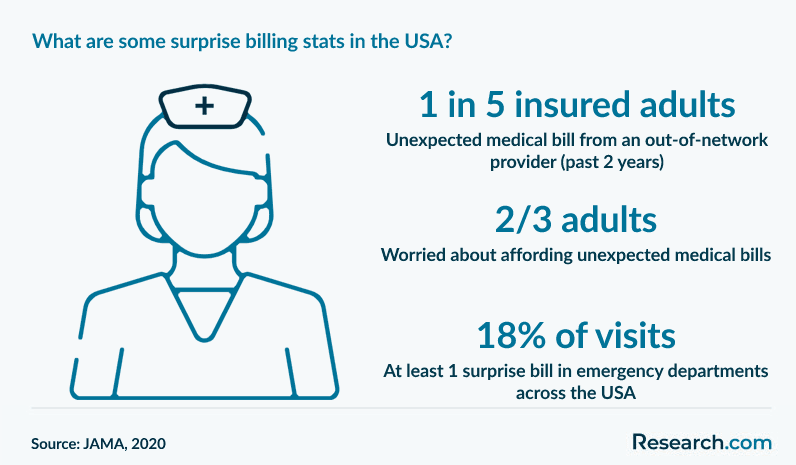
Those figures do not mean every surprise bill is caused by coding, but they show why documentation, insurance verification, clean claims, and transparent billing communication are important parts of patient-centered healthcare administration.
Free vs. paid medical billing and coding courses: which should you choose?
The right training option depends on your goal. If you only want to test your interest, a free course is usually enough. If you want to compete for jobs, prepare for certification, or become confident with real coding scenarios, a paid program or exam-prep pathway may be more useful.
| Option | Advantages | Limitations | Best for |
| Free online course | No tuition cost, flexible schedule, low-risk introduction, useful for learning basic terms and workflows. | Often limited practice, little instructor feedback, may not prepare you for certification exams, and may not carry strong employer recognition. | Beginners exploring the field before committing money. |
| Paid certificate or training program | More structured curriculum, deeper coding practice, instructor support, exam preparation, and sometimes career services. | Requires upfront cost and may have deadlines or less flexibility. | Learners who want job preparation and certification readiness. |
| Associate degree | Broader healthcare, records, and administrative education; may support advancement. | Longer and usually more expensive than a short certificate. | Students who want a stronger academic credential and may later pursue management or health information roles. |
| Self-study plus certification exam prep | Can be flexible and targeted if you are disciplined. | Requires strong motivation and careful selection of reliable materials. | Experienced healthcare workers or independent learners. |
When a free course makes sense
- You want to understand what medical billing and coding work actually involves.
- You are not ready to spend money on a certificate program.
- You want to learn basic terminology before enrolling in a more formal course.
- You need a flexible, self-paced option while working or caring for family.
When a paid program may be the better choice
- You want a curriculum designed around certification exam objectives.
- You need graded assignments, instructor access, coding practice, and accountability.
- You want career services, resume support, or employer connections.
- You are aiming for a job where certification is required or strongly preferred.
A practical approach is to start with a free course, then move to a paid certification-focused program only if the work interests you and the career path fits your goals.
What should you look for in a free medical billing and coding course?
Not every free course is useful. Some provide a credible introduction, while others are outdated, too shallow, or mainly designed to sell a paid program. Before enrolling, evaluate the course the same way you would evaluate any career training resource.
| Feature to check | What to look for | Warning sign |
| Current content | Lessons mention ICD-10, CPT, billing workflows, HIPAA, insurance claims, and recent coding guidance. | No update information, old examples, or vague claims about certification. |
| Clear curriculum | Modules progress from terminology to coding basics, billing processes, claims, compliance, and practice activities. | Random videos without a learning path. |
| Practice opportunities | Quizzes, sample claims, coding examples, case exercises, or self-assessments. | Only passive lectures with no way to test understanding. |
| Instructor or provider credibility | Course is offered by a recognized school, healthcare organization, professional association, or established learning platform. | No author credentials or unclear provider identity. |
| Certification transparency | The course explains whether it prepares for certification or simply provides a completion certificate. | It implies a free certificate is the same as an industry credential. |
| Student support | Discussion forums, FAQs, office hours, peer community, or clear help resources. | No support, no contact information, or unanswered learner questions. |
| Technology access | Materials work on your device and include downloadable notes or practice resources when possible. | Broken links, inaccessible videos, or materials that require hidden fees. |
Questions to ask before starting a free course
- Who created the course, and what healthcare billing or coding experience do they have?
- When was the course last reviewed or updated?
- Does it explain ICD-10 and CPT, or does it only define the terms?
- Are there coding practice exercises or only overview lessons?
- Does it clearly state whether the certificate is a completion certificate or an industry-recognized credential?
- Does the course help you decide what certification or next training step to pursue?
What do free online medical billing and coding courses usually teach?
Free courses vary widely, but most credible introductory options cover the language of healthcare, the purpose of coding, basic insurance concepts, and the claims process. If you have experience with general programming or have compared the best online coding bootcamps, remember that medical coding is different: it is not software development. It is a healthcare documentation, classification, compliance, and reimbursement function.
| Topic | What you may learn in a free course | What may require deeper training |
| Medical billing and coding overview | How coders and billers support the revenue cycle. | Complex payer rules, audits, and advanced revenue cycle strategy. |
| Healthcare system basics | Common insurance types, patient registration, eligibility checks, and claims flow. | Detailed reimbursement rules and payer-specific billing requirements. |
| Medical terminology | Common prefixes, suffixes, body systems, diagnoses, procedures, and abbreviations. | Specialty-specific terminology and complex clinical documentation. |
| ICD-10 | Purpose, structure, diagnosis coding basics, and introductory examples. | Full guideline application, sequencing, specificity, and complex case coding. |
| CPT | Purpose, code categories, procedure coding concepts, and simple examples. | Modifier use, bundled services, specialty procedures, and exam-level practice. |
| Billing process | Claims, insurance verification, claim submission, payment posting, denials, and appeals. | Hands-on billing system practice and payer-specific denial management. |
| Compliance and ethics | HIPAA basics, confidentiality, accurate documentation, and honest claims practices. | Formal compliance programs, audits, investigations, and regulatory management. |
Free courses are often useful for deciding whether to continue. They are less likely to provide the volume of practice needed to become job-ready, especially if you have never worked with clinical documentation before.
Educational backgrounds in the field vary. According to Zippia, in 2024, approximately 11% of medical billers and coders hold a high school diploma, 21% have a diploma, 30% have an associate degree, 16% have a bachelor's degree, and 22% have other degrees.
Do free courses teach ICD-10, CPT, and other coding systems well enough?
Free courses may introduce ICD-10 and CPT, but they usually do not provide enough guided practice to master coding for employment or certification exams. You may learn what the systems are, how codes are structured, and how simple coding examples work. That is helpful, but it is not the same as coding real-world records accurately under current guidelines.
What a free course can realistically teach
- The purpose of ICD-10 diagnosis codes and CPT procedure codes.
- The basic format and organization of common code sets.
- Simple examples showing how codes connect to diagnoses or services.
- Introductory billing terminology, including claims, payers, denials, and reimbursement.
- Why documentation quality affects code selection.
What free courses often do not cover deeply
- Large numbers of realistic coding cases.
- Detailed ICD-10 and CPT guidelines.
- Advanced sequencing, modifiers, bundled services, and specialty-specific rules.
- Instructor-reviewed coding assignments.
- Certification exam strategy and timed practice.
- Hands-on use of coding manuals, encoders, or billing software.
If your goal is employment, use free training to build the foundation, then look for structured practice, certification preparation, or an employer-recognized program. Coding accuracy improves through repetition, feedback, and exposure to real documentation—not only by watching lectures.
Which certifications may help with medical billing and coding jobs?
Certification requirements vary by employer and role. Some entry-level jobs may accept training plus relevant skills, while others prefer or require a recognized credential. Certification can signal that you understand coding rules, billing concepts, compliance responsibilities, and professional standards.
General and specialty certification options
| Certification type | Examples mentioned in the field | When it may help |
| Entry-level or general billing and coding credential | Certified Billing and Coding Specialist (CBCS), Certified Coding Specialist (CCS) | Useful for many entry-level billing and coding roles and for proving baseline knowledge. |
| Outpatient coding certification | Certified Outpatient Coder (COC) | Helpful if you want to code services in clinics, ambulatory surgical centers, or other outpatient settings. |
| Inpatient coding certification | Certified Inpatient Coder (CIC) | Relevant for coders working with hospital admissions and inpatient services. |
| Specialty coding certification | Certifications in areas such as cardiology, oncology, or orthopedics | Useful after gaining foundational experience and choosing a specialty focus. |
| Compliance or auditing credential | Role-specific coding audit or compliance credentials | Helpful for professionals moving into review, risk management, documentation quality, or regulatory roles. |
Two major professional organizations to research are the American Academy of Professional Coders (AAPC) and the American Health Information Management Association (AHIMA). Review job postings in your target area to see which credentials employers request most often.
Certification is not the only career factor. Compare training time, cost, job fit, and advancement potential with other easy degrees that pay well if your main goal is a fast and practical career path.
Because medical billing and coding work depends on privacy, data integrity, and secure systems, some professionals also become interested in healthcare cybersecurity. If that path appeals to you, you can explore how long to become a cyber security engineer.
What legal and ethical rules apply to medical billing and coding?
Medical billing and coding professionals work with sensitive health information and financial claims. That means accuracy is not just a productivity goal; it is a legal, ethical, and patient-care responsibility.
Legal considerations
- HIPAA: The Health Insurance Portability and Accountability Act protects patients' protected health information, often called PHI. Billers and coders must access, use, store, and share patient information only for authorized purposes.
- False Claims Act: Submitting false or misleading claims to government health programs can create serious legal risk. Coding must reflect the documentation and services actually provided.
- Federal and state rules: Billing practices, coding updates, reimbursement rules, and payer requirements can change. Professionals must keep learning to remain compliant.
Ethical responsibilities
- Code honestly: Never choose a code to increase payment if the documentation does not support it.
- Protect confidentiality: Do not access or discuss patient information without a legitimate work purpose.
- Document decisions: Clear notes and support for coding choices help with audits and corrections.
- Avoid conflicts of interest: Financial pressure should not influence code selection or claim submission.
- Communicate clearly: Patients have a right to understandable billing information and respectful support.
How to reduce compliance risk
- Complete employer-required HIPAA training.
- Review ICD-10 and CPT updates regularly.
- Follow official coding guidelines and payer rules.
- Ask for clarification when documentation is incomplete.
- Report suspected fraud, abuse, or unethical practices through the appropriate channels.
What challenges do professionals encounter in medical billing and coding?
Medical billing and coding can be stable and flexible, but it is not easy clerical work. Professionals must keep up with changing coding rules, payer requirements, software systems, documentation gaps, claim denials, and productivity expectations. Many roles require speed and accuracy at the same time, which can be difficult for beginners.
| Challenge | Why it happens | How to prepare |
| Frequent coding and payer updates | Guidelines, reimbursement rules, and insurer requirements can change. | Choose training that teaches how to find current guidance, not just memorize facts. |
| Incomplete provider documentation | Medical records may not clearly support a code or claim. | Learn documentation standards and how to query providers appropriately. |
| Claim denials | Claims may be rejected because of coding errors, eligibility issues, missing information, or payer edits. | Study denial management, appeals, and root-cause analysis. |
| High accuracy expectations | Errors can delay payment, create compliance issues, or confuse patients. | Practice with real examples and build a careful review routine. |
| Technology changes | EHR, billing platforms, clearinghouses, and automation tools continue to evolve. | Develop comfort with healthcare software and data workflows. |
Experience, certification, specialization, and technology skills can influence job options and may affect medical coding salary outcomes over time.
What tools and technologies are commonly used in medical billing and coding?
Medical billing and coding work is heavily technology-based. Even entry-level professionals may need to use electronic health records, billing platforms, claims portals, clearinghouses, spreadsheets, and secure messaging systems.
- Electronic Health Records (EHR) Systems: Platforms such as Epic, Cerner, and Athenahealth help store clinical documentation that coders review and billers use during the claims process.
- Coding Software: Tools such as 3M Encoder and TruCode help professionals search, validate, and apply ICD-10, CPT, and HCPCS codes.
- Billing Systems: Software such as AdvancedMD, Kareo, and NextGen Healthcare supports claim creation, submission, payment tracking, and billing workflow management.
- Clearinghouses: Services such as Availity or Change Healthcare help transmit claims between providers and payers and may flag issues before submission.
- Productivity Tools: Microsoft Excel, Trello, Asana, and similar tools may be used to track projects, claims, tasks, or workflow priorities.
- Communication Tools: Secure email, internal messaging, video meetings, payer portals, and documentation query systems help teams resolve billing and coding questions.
If you want short, career-focused training that includes common tools and workflow practice, compare 4 to 6 week medical billing and coding courses. Short courses can be useful, but always check whether they include coding practice, certification preparation, and realistic claims examples.
Can interdisciplinary education enhance your career prospects in healthcare?
Medical billing and coding sits between clinical care, insurance, documentation, finance, and compliance. Because of that, broader healthcare knowledge can help you communicate more effectively with clinical staff, understand treatment documentation, and identify errors or missing information more quickly.
Interdisciplinary education can be useful if it connects directly to your career goal. For example, a coder who works with medication claims may benefit from basic pharmacy knowledge, while a revenue cycle professional may benefit from business, compliance, data analysis, or healthcare administration training. Some learners also explore advanced clinical education, including online Pharm D programs USA, but that path is very different from billing and coding and should be considered only if it matches long-term professional goals.
Can expanding into pharmacy complement your billing and coding career?
Pharmacy knowledge can complement billing and coding when your work involves medication documentation, drug reimbursement, prior authorization, specialty pharmacy claims, or communication with clinical teams. It may also help if you want to move into broader healthcare operations rather than remain in general billing.
However, pharmacy is a separate professional pathway with different education and licensing expectations. If you are considering that direction, review How do you become a pharmacist? before assuming it is a quick add-on to a billing and coding career.
How are automation and emerging technologies reshaping the medical billing and coding landscape?
Automation, artificial intelligence, machine learning, computer-assisted coding, claim edits, and EHR integrations are changing how billing and coding teams work. These tools can speed up repetitive tasks, flag missing documentation, identify possible codes, and improve claims processing. They do not eliminate the need for human judgment, especially when documentation is ambiguous, regulations change, or payer rules require interpretation.
As technology handles more routine steps, employers may place more value on professionals who can review automated suggestions, catch errors, explain denials, communicate with providers, and understand compliance risks. Training in adjacent healthcare roles can also build context; for example, a medical assistant 6 week program may expose learners to clinical terminology and patient care workflows that support better documentation understanding.
Are free online medical billing and coding courses accredited and valued by employers?
Most free online medical billing and coding courses should be treated as introductory learning, not as a substitute for an accredited program or recognized certification. Some may offer a completion certificate, but a completion certificate is not the same as professional certification from a recognized organization.
| Credential or training type | How employers may view it | Best use |
| Free course completion certificate | May show initiative but usually has limited hiring value by itself. | Exploring the field and building basic vocabulary. |
| Paid certificate program | May carry more value if it is from a reputable school or prepares for certification. | Structured job preparation and exam readiness. |
| Industry certification | Often more meaningful to employers than a course completion certificate. | Demonstrating tested knowledge and professional commitment. |
| Associate degree | May support broader health information or administrative roles. | Longer-term career mobility. |
Before enrolling in any free or paid option, confirm whether the course is endorsed by a reputable institution or professional body, whether it prepares for a specific exam, and whether employers in your area recognize it. Learners comparing healthcare education more broadly may also review the quickest PharmD degree programs, but pharmacy training serves a different career goal than billing and coding.
How can mentorship and networking enhance career growth in medical billing and coding?
Mentorship can shorten the learning curve in medical billing and coding because many workplace challenges are practical: how to handle unclear documentation, how to approach denials, how to use software efficiently, and how to prepare for certification. A mentor can help you understand which credentials matter for your target role and how to move from entry-level billing into coding, auditing, compliance, or revenue cycle management.
Ways to build a professional network
- Join professional associations and attend webinars or local events.
- Ask instructors or program advisors whether alumni are available for informational interviews.
- Follow employer job descriptions to identify common skills and certifications.
- Participate in coding practice groups or discussion forums.
- Seek feedback from experienced coders before taking certification exams.
Some professionals expand their healthcare network by exploring adjacent education, including PharmD programs. This can be useful for people considering a broader healthcare career, but it is not necessary for most medical billing and coding roles.
How much do medical billers and coders make?
Pay in medical billing and coding depends on job title, setting, experience, certification, location, specialty, and whether the role is entry-level, remote, auditing-focused, or management-oriented. According to the BLS, medical records specialists had a 2023 median pay of $48,780 per year. The broader salary range cited for medical billing and coding professionals is between $40,912 and $84,877.
Medical and Health Services Managers are listed at $98,542 annually in 2024, reflecting a higher-level administrative role that oversees the business side of healthcare delivery. That role is not the same as entry-level billing or coding, but it may be a longer-term direction for professionals who gain revenue cycle, compliance, leadership, and healthcare operations experience.
For comparison, some healthcare occupations outside billing and coding may pay differently and require different training. The salary range in this field may be comparable in some cases to outcomes associated with the highest paying bachelor degrees, but salaries are not guaranteed and depend heavily on role and market conditions. If you are comparing patient-care roles, you may also ask how much does an ultrasound tech make a month; the cited figure is around $7,418 per month or $89,020 per year.
If you are evaluating return on investment, compare salary potential with tuition, exam fees, time to completion, certification costs, and job availability in your area. You may also want to compare billing and coding programs with broader affordable online degrees if you are deciding between a short credential and a degree pathway.
What are the benefits of pursuing additional specialization in medical billing and coding?
Specialization can help medical billing and coding professionals move beyond general entry-level work. It may support advancement into inpatient coding, outpatient coding, specialty coding, auditing, compliance, analytics, or revenue cycle leadership.
- More targeted job options: Specialized coders may qualify for roles in hospitals, outpatient centers, specialty clinics, and compliance departments.
- Stronger credibility: A focused credential can show employers that you understand a specific setting or specialty.
- Potential for higher pay: Specialization may improve earning potential, especially when combined with experience and certification, though salary outcomes are not guaranteed.
- Greater job resilience: Auditing, compliance, and complex coding skills can remain valuable as software automates simpler tasks.
- Leadership pathways: Specialized knowledge can support movement into billing coordination, revenue cycle analysis, compliance, training, or management.
- Better accuracy in complex cases: Specialty knowledge can help coders interpret documentation and apply rules more confidently.
How does medical billing and coding compare to other healthcare career paths?
Medical billing and coding is best for people who want to work in healthcare without providing direct patient care. It generally requires less clinical training than nursing, pharmacy, diagnostic imaging, or physician assistant roles, but it still requires precision, healthcare knowledge, and compliance awareness.
| Career path | Typical work focus | Training intensity | Best fit |
| Medical billing and coding | Claims, documentation, coding, reimbursement, denials, and compliance. | Often certificate, certification prep, or associate-level training. | People who prefer administrative healthcare work and detail-focused tasks. |
| Medical assistant | Clinical and administrative support in healthcare settings. | Short-term training may be available, depending on program and employer. | People who want some patient interaction and office-based clinical tasks. |
| Ultrasound technician | Diagnostic imaging and direct patient interaction. | More specialized clinical and technical training. | People interested in hands-on patient care and imaging technology. |
| Healthcare administration | Operations, leadership, finance, compliance, staffing, and strategy. | Often degree-based for advanced roles. | Professionals aiming for management rather than coding production. |
| Pharmacy | Medication therapy, dispensing, clinical consultation, and pharmacy operations. | Significant professional education and licensing requirements. | People seeking a clinical medication-focused career. |
If your priority is maximum income rather than fast entry, compare this field with high paying medical jobs. Many higher-paying healthcare careers require longer education, licensing, direct patient care, or advanced degrees.
Can an MBA boost your career in medical billing and coding?
An MBA is not necessary for entry-level medical billing or coding. It may become useful later if you want to move into healthcare management, revenue cycle leadership, operations, consulting, finance, or strategy. The value depends on your career goal, experience level, employer expectations, and whether the cost of the degree makes sense for your expected advancement.
Billing and coding professionals who understand claims, compliance, data, and payer operations may be well positioned for business-side healthcare roles after gaining experience. If you are considering graduate business education, research MBA jobs in healthcare to see whether the roles you want actually require or prefer an MBA.
What are the growth trends in the medical billing and coding field?
The field is shaped by healthcare utilization, electronic health records, insurance coverage, coding complexity, payer requirements, and the need for accurate claims. The BLS reported 194,300 medical records specialists in the USA in 2022, with a 2022-2032 job outlook of 8%, faster than average, and an expected 16,500 new jobs expected to be added in this decade.
Trends affecting medical billing and coding careers
- More digital documentation: EHR systems make documentation easier to access but require coders and billers to understand digital workflows.
- Greater use of automation: Software can suggest codes or flag errors, but human review remains important for accuracy and compliance.
- Continued payer complexity: Denials, prior authorizations, documentation requirements, and payer-specific edits keep skilled billing professionals in demand.
- Increased focus on compliance: Healthcare organizations need professionals who can reduce billing risk and support clean documentation.
- Demand for specialization: Inpatient, outpatient, specialty coding, auditing, and revenue cycle analysis can offer advancement beyond basic claims processing.
For a deeper look at earnings, job requirements, and compensation variables, review this guide to medical billing and coding salary.
Common mistakes to avoid when choosing a free medical billing and coding course
| Mistake | Why it can hurt you | Better approach |
| Assuming free training is enough for certification | Many free courses introduce topics but do not provide exam-level practice. | Use free courses for exploration, then choose targeted exam preparation if certification is your goal. |
| Confusing a completion certificate with professional certification | Employers may not treat a course certificate as a recognized credential. | Verify which certifications employers request in job postings. |
| Ignoring course currency | Outdated coding or billing information can lead to incorrect habits. | Check update dates and whether current ICD-10 and CPT references are included. |
| Choosing based only on cost | The cheapest option may lack feedback, structure, or useful practice. | Compare curriculum depth, practice exercises, support, and certification alignment. |
| Skipping software and claims workflow practice | Employers often expect comfort with digital systems. | Look for courses that demonstrate EHR, billing software, clearinghouse, or claims examples. |
| Overlooking ethics and privacy | HIPAA and honest coding are essential workplace responsibilities. | Choose training that includes confidentiality, compliance, and documentation standards. |
| Relying only on rankings or marketing claims | Program claims may not reflect your local job market or employer expectations. | Review job postings, talk to professionals, and compare credentials before enrolling. |
Step-by-step plan for using free courses wisely
- Start with one credible free course: Choose a course that covers medical terminology, ICD-10, CPT, billing workflows, claims, and HIPAA basics.
- Track what you learn: Keep notes on coding systems, unfamiliar terms, and areas that feel difficult.
- Test yourself: Use quizzes, sample cases, and practice questions to see whether you actually understand the material.
- Review job postings: Search for medical biller, medical coder, coding specialist, and revenue cycle roles in your area to identify required skills and certifications.
- Compare certification options: Look at AAPC, AHIMA, and employer-preferred credentials before paying for an exam or program.
- Decide whether to invest: If you still want the career after free training, compare paid certificate programs, exam-prep courses, and associate degree options.
- Build practical experience: Practice coding examples, learn billing software concepts, and look for entry-level administrative healthcare roles if you need workplace exposure.
- Keep learning: Coding rules, technology, payer requirements, and compliance expectations change, so continuing education is part of the job.
References
- Bureau of Labor Statistics. (2024). Medical Records and Health Information Technicians. Bureau of Labor Statistics.
- Bureau of Labor Statistics. (2024). Health Information Technologists and Medical Registrars. Bureau of Labor Statistics.
- DataUSA. (2024). Medical & Health Services Managers. DataUSA.
- DataUSA. (2024). Healthcare Practitioners & Technical Occupations. DataUSA.
- DataUSA. (2024). Medical Assistants. DataUSA.
- Indeed. (2024). Medical Biller Salaries in the United States. Indeed.
- Indeed. (2024). Medical Coder Salaries in the United States. Indeed.
- Mathews, S. C., & Makary, M. A. (2024). Billing Quality Is Medical Quality. JAMA.
- Payscale. (2024). Average Certified Medical Billing/Coding Specialist Hourly Pay. Payscale.
- Payscale. (2024). Average Medical Billing/Coding Specialist Salary in Los Angeles, California. Payscale.
- Payscale. (2024). Average Medical Billing Specialist Hourly Pay. Payscale.
- Pollitz, K., Lopes, L., Kearney, A., Rae, M., Cox, C., Fehr, R., & Rousseau, D. (2024). US Statistics on Surprise Medical Billing. JAMA.
- Salary.com. (2024). Medical Coding and Billing Salaries in the United States. Salary.com.
- Salary.com. (2024). Medical Billing Coding Salaries in the United States. Salary.com.
- Salary.com. (2024). Medical Billing & Coding Specialist Salaries in the United States. Salary.com.
- Zippia. (2024, April 10). Medical biller coder demographics and statistics [2024]: Number of medical biller coders in the US. Zippia.
Key Insights
- Free online medical billing and coding courses are best for exploration and fundamentals, not full career preparation.
- To become job-ready, most learners need deeper practice with ICD-10, CPT, claims, documentation, denials, compliance, and healthcare software.
- Medical billing and medical coding are related but distinct: coding translates documentation into standardized codes, while billing turns those codes into claims and payment workflows.
- Certification can improve credibility, but the right credential depends on whether you want general billing, outpatient coding, inpatient coding, specialty coding, auditing, or compliance work.
- Salary varies by title, experience, location, certification, and setting; medical records specialists had a 2023 median pay of $48,780 per year according to the BLS.
- The field is affected by automation, EHR systems, payer complexity, and compliance expectations, so adaptability and continuing education are essential.
- Before paying for any program, check curriculum depth, certification alignment, course currency, employer recognition, practice opportunities, and total cost.
- The smartest path for many beginners is to start free, confirm interest, study local job requirements, then invest only in the credential or program that matches the role they actually want.
Other Things You Should Know About Free Online Medical Billing And Coding Courses
In 2027, free online medical billing and coding courses tend to cover current technologies and software updates, ensuring students are familiar with the latest industry-standard tools. They often provide practical skills applicable in telehealth environments, preparing graduates for roles in diverse healthcare settings and paving the way for career advancements in the rapidly evolving field.
In 2027, look for courses with updated ICD-11 training, interactive simulations, and real-world case studies. Integration with AI tools for coding efficiency is also becoming standard. Ensure courses offer current insights on compliance and reimbursement policies to keep pace with industry standards.