2027 Best Online Coding Bootcamps

Co-Founder and Chief Data Scientist
Choosing an online coding bootcamp is a career decision, not just a course purchase. The right program can help you build job-ready programming skills faster than a traditional degree path, while the wrong one can leave you with debt, weak projects, and limited employer traction. This guide is for career changers, college students, working professionals, and self-taught learners comparing online coding bootcamps against degrees, certificates, and independent study.
Coding bootcamps have become a major part of tech training. Tech bootcamps reskilled and upskilled over 100,000 professionals globally in 2021, compared with less than 20,000 in 2015, and earlier projections indicated this number would grow to 380,000 by 2025, representing over $3 billion in expenditures. This growth does not mean every bootcamp is worth the price. It means students need a clearer way to compare cost, curriculum, career support, outcomes, and risk.
In this guide, you will learn what online coding bootcamps teach, how much they cost, how long they take, which programs to compare, what jobs may be available, and how to judge whether a bootcamp fits your goals.
Quick Answer: Are Online Coding Bootcamps Worth It?
Online coding bootcamps can be worth it for learners who want structured, hands-on training for entry-level tech roles and can commit enough time to build a strong portfolio. They are usually faster than degree programs and may cost less, with the average cost of an online coding bootcamp listed at $9,408. However, a bootcamp certificate alone does not guarantee a job. Employers still look for demonstrated coding ability, projects, interview readiness, communication skills, and relevant experience.
A bootcamp is usually a better fit if you want practical training in web development, software engineering, data science, cybersecurity, or UX/UI design. A degree may be a better fit if you want deeper computer science theory, access to roles that prefer bachelor’s credentials, graduate study options, or long-term advancement into research-heavy or highly specialized technical positions.
What Are the Main Benefits of Online Coding Bootcamps?
Online coding bootcamps are designed around practical skill-building. Instead of spending years completing broad general education requirements, students typically focus on programming languages, development tools, projects, and career preparation.
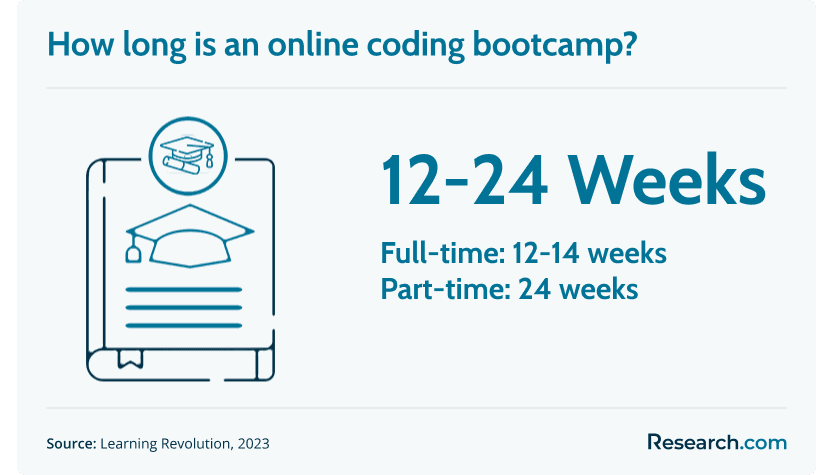
- Career transition speed: Full-time programs often run for 12 to 14 weeks, while part-time options may extend to 24 weeks, helping motivated learners retrain quickly.
- Flexible access: Online delivery allows students to study from home, keep working, or avoid relocation costs.
- Portfolio development: Many bootcamps require projects that can be shown to employers through GitHub or a personal website.
- Industry range: Bootcamp skills may apply in technology, finance, healthcare, education, retail, and other sectors that rely on software and data systems.
- Employer relevance: Coding skills are used by large employers such as Google, Microsoft, and Amazon, but hiring depends on the applicant’s skills, portfolio, location, and role requirements.
What Can I Expect From an Online Coding Bootcamp?
An online coding bootcamp is typically an intensive, project-focused training program. Most programs teach core web and software development tools such as JavaScript, Python, HTML/CSS, React, Node.js, and Git. Depending on the track, students may also study databases, APIs, cloud tools, testing, data analysis, cybersecurity fundamentals, or UX/UI design.
Instruction commonly combines recorded lessons, live classes, coding labs, pair programming, group projects, code reviews, office hours, and one-on-one mentorship. Strong programs do more than teach syntax. They help students learn how to debug, read documentation, work in teams, explain technical decisions, and prepare for coding interviews.
Where Can I Work After Earning an Online Coding Bootcamp Certificate?
A coding bootcamp certificate may help you compete for technical or tech-adjacent roles in several industries, especially if your portfolio matches the job description. Common employment areas include:
- Technology: software developer, web developer, mobile app developer
- Finance: financial technology developer, data analyst, IT support specialist
- Healthcare: health informatics specialist, bioinformatics analyst, IT project manager
- Education: educational technology developer, instructional designer, IT support professional
- Retail: ecommerce developer, UX/UI designer, retail systems IT specialist
The certificate matters less than what it represents. Employers will usually want to see working applications, clean code, collaboration experience, and the ability to solve problems under realistic constraints.
How Much Can I Make With an Online Coding Bootcamp Certificate?
Coding bootcamp graduates report a median salary increase of $22,000 over their pre-bootcamp jobs. Median incomes for bootcamp graduates range from $60,000 to $110,000, depending on location, experience, specialization, employer type, and the strength of the graduate’s portfolio.
For comparison, U.S. Bureau of Labor Statistics data from 2024 lists annual median pay of $99,700 for computer programmers with a bachelor’s degree, $92,750 for web developers, and $130,160 for software developers with a bachelor’s degree. Some professionals without bachelor’s degrees can reach or exceed these figures after gaining substantial experience, but students should not assume a bootcamp certificate alone will produce the same outcome.
The most realistic way to evaluate salary potential is to compare local job postings, required skills, degree preferences, interview expectations, and the kinds of projects recent graduates completed.
- Best Online Coding Bootcamps in 2027
- How long does it take to complete an online coding bootcamp?
- How does an online coding bootcamp compare to an on-campus program?
- What is the average cost of an online coding bootcamp?
- What are the financial aid options for students enrolling in an online coding bootcamp?
- What are the prerequisites for enrolling in online coding bootcamps?
- What courses are typically in an online coding bootcamp?
- What types of specializations are available in online coding bootcamps?
- How to choose the best online coding bootcamp?
- What are the most in-demand computer coding jobs in the industry?
- What challenges should I anticipate after completing an online coding bootcamp?
- What career paths are available for graduates of online coding bootcamps?
- What is the job market for graduates with an online coding bootcamp certificate?
- Can coding bootcamp skills complement healthcare management credentials?
- Can coding bootcamp training lead to the highest paying careers in technology?
- What is the return on investment of an online coding bootcamp?
- Can coding bootcamp skills boost my career in health informatics?
- How can I enhance my career prospects after completing a coding bootcamp?
- How can I verify the quality and credibility of an online coding bootcamp?
- Can advanced academic degrees boost my coding bootcamp career?
- Industry Recognition and Employer Preferences
- Continuing Education After a Coding Bootcamp
How Do We Rank Schools?
Research.com evaluates education options using credible data sources and transparent criteria. For degree-focused rankings, sources include the IPEDS database, Peterson's database, The College Scorecard database, and The National Center for Education Statistics. For more information about the ranking process, see Research.com's methodology page.
Best Online Coding Bootcamps in 2027
The bootcamps below are useful starting points for comparison. Before enrolling, verify current tuition, refund policies, job placement claims, financing terms, schedule requirements, and whether the curriculum matches the roles you want.
| Bootcamp | Cost of Attendance | Program Length | Course Track | Popularity Rating |
| Coding Dojo | $14,995 | 14 weeks | Full-Stack Development | 4.5/5 |
| App Academy | $17,000 (deferred payment available) | 16 weeks | Full-Stack Development | 4.7/5 |
| General Assembly | $13,950 | 12 weeks (full-time), 24 weeks (part-time) | Software Engineering Immersive | 4.6/5 |
| Flatiron School | $16,900 | 15 weeks (full-time), 40 weeks (part-time) | Software Engineering, Data Science | 4.5/5 |
| BrainStation | $15,000 | 12 weeks (full-time), 24 weeks (part-time) | Web Development, Data Science, UX/UI Design | 4.4/5 |
| Springboard | $11,910 | 9 months (self-paced) | Software Engineering, Data Science | 4.7/5 |
| Hack Reactor | $17,980 | 12 weeks | Software Engineering Immersive | 4.8/5 |
| Thinkful | $16,000 | 6 months (full-time), 9 months (part-time) | Software Engineering, Data Science | 4.6/5 |
| The Tech Academy | $12,000 | 15-40 weeks (self-paced) | Full-Stack Development | 4.3/5 |
| Lambda School (now BloomTech) | $30,000 (ISA available) | 6 months | Full-Stack Web Development, Data Science | 4.4/5 |
1. Coding Dojo
Coding Dojo is an online bootcamp option for students who want exposure to multiple programming languages and practical development projects. Its Full-Stack Development track is designed to help learners build broader coding fluency across web development and related technical areas.
- Cost of attendance: $14,995
- Program length: 14 weeks
- Course track: Full-Stack Development
- Popularity rating: 4.5/5
2. App Academy
App Academy focuses on full-stack web development and practical coding preparation. Its deferred tuition option may appeal to students who prefer to delay payment until after employment, but applicants should carefully read the payment terms before committing.
- Cost of attendance: $17,000 (deferred payment available)
- Program length: 16 weeks
- Course track: Full-Stack Development
- Popularity rating: 4.7/5
3. General Assembly
General Assembly offers both full-time and part-time online study formats. Its Software Engineering Immersive track is suited to learners who want a structured curriculum covering front-end, back-end, and career preparation topics.
- Cost of attendance: $13,950
- Program length: 12 weeks (full-time), 24 weeks (part-time)
- Course track: Software Engineering Immersive
- Popularity rating: 4.6/5
4. Flatiron School
Flatiron School provides online options in software engineering and data science. The program blends technical coursework with project work and career coaching, making it a possible fit for students who want a guided transition into technical roles.
- Cost of attendance: $16,900
- Program length: 15 weeks (full-time), 40 weeks (part-time)
- Course track: Software Engineering, Data Science
- Popularity rating: 4.5/5
5. BrainStation
BrainStation uses a project-based approach across web development, data science, and UX/UI design. It may work well for students who want a portfolio-driven program with both full-time and part-time scheduling options.
- Cost of attendance: $15,000
- Program length: 12 weeks (full-time), 24 weeks (part-time)
- Course track: Web Development, Data Science, UX/UI Design
- Popularity rating: 4.4/5
6. Springboard
Springboard offers self-paced online training with mentorship and career support. Its structure may suit independent learners who want flexibility but still need guided feedback and accountability.
- Cost of attendance: $11,910
- Program length: 9 months (self-paced)
- Course track: Software Engineering, Data Science
- Popularity rating: 4.7/5
7. Hack Reactor
Hack Reactor is an intensive software engineering bootcamp aimed at students who can handle a demanding schedule. Its format emphasizes collaboration, applied engineering skills, and technical depth for software development roles.
- Cost of attendance: $17,980
- Program length: 12 weeks
- Course track: Software Engineering Immersive
- Popularity rating: 4.8/5
8. Thinkful
Thinkful provides online programs in software engineering and data science with mentorship and flexible pacing. It can be a useful option for students who want more individual support while balancing training with other responsibilities.
- Cost of attendance: $16,000
- Program length: 6 months (full-time), 9 months (part-time)
- Course track: Software Engineering, Data Science
- Popularity rating: 4.6/5
9. The Tech Academy
The Tech Academy offers a self-paced online bootcamp covering several programming languages and development tools. It may be appropriate for learners who need schedule control and are comfortable managing their own progress.
- Cost of attendance: $12,000
- Program length: 15-40 weeks (self-paced)
- Course track: Full-Stack Development
- Popularity rating: 4.3/5
10. Lambda School (now BloomTech)
Lambda School, now known as BloomTech, offers online training in full-stack web development and data science. Its income share agreement option may reduce upfront cost pressure, but students should compare the total repayment obligation with standard tuition and loan alternatives.
- Cost of attendance: $30,000 (ISA available)
- Program length: 6 months
- Course track: Full-Stack Web Development, Data Science
- Popularity rating: 4.4/5
Key Findings
- Full-time coding bootcamps usually last 12 to 14 weeks, while part-time programs can extend up to 24 weeks.
- The global coding bootcamp market is projected to grow from $889.37 million in 2022 to $1.66 billion by 2028.
- The average cost of an online coding bootcamp is $9,408.
- JavaScript remains central to web development, with 65.82% of professional developers using it in 2023.
- Many reputable coding bootcamps report that 75-86% of graduates find jobs within six months, but students should verify how each program defines and measures employment outcomes.
How Long Does It Take to Complete an Online Coding Bootcamp?
Most online coding bootcamps take 12 to 24 weeks, though self-paced programs may take longer depending on the student’s schedule and consistency.
| Format | Typical Length | Best For | Trade-Off |
| Full-time | 12 to 14 weeks | Students who can pause work or commit full days to study | Fast progress, but the workload can be intense |
| Part-time | Up to 24 weeks | Working adults, parents, and students with other obligations | More manageable schedule, but slower completion |
| Self-paced | Varies by schedule and effort | Independent learners who need maximum flexibility | Requires discipline and may offer less urgency |
When choosing a timeline, be honest about your available hours. A shorter bootcamp is not automatically better if you cannot keep up with assignments, projects, and interview preparation. The growth in North American coding bootcamp graduates from 18,027 in 2019 to 25,000 in 2020 shows that many learners are choosing accelerated training, but successful outcomes still depend on consistent practice.
A bootcamp can also serve as a foundation for later specialization. If security interests you, compare affordable online cybersecurity degree options. If you are drawn to healthcare-related coding, review what medical billing and coding involves and explore a free online medical coding course before committing to a longer program.
How Does an Online Coding Bootcamp Compare to an On-Campus Program?
Online and on-campus coding bootcamps can teach similar technical skills, but the learning experience is different. The best choice depends on your schedule, learning style, location, and need for in-person accountability.
| Factor | Online Coding Bootcamp | On-Campus Coding Bootcamp |
| Flexibility | Study from anywhere and often choose full-time, part-time, or self-paced formats | Usually requires attendance at scheduled in-person sessions |
| Cost Considerations | May reduce commuting, housing, and relocation expenses | May add transportation or relocation costs |
| Learning Environment | Works well for self-directed learners who can communicate online | Provides face-to-face interaction and structured classroom energy |
| Networking | Depends on virtual events, mentors, alumni groups, and online communities | May offer stronger local networking and peer relationships |
| Accessibility | Useful for students outside major tech hubs | Limited by geography and campus availability |
The global coding bootcamp market is projected to grow from $889.37 million in 2022 to $1.66 billion by 2028, reflecting broader acceptance of accelerated tech training. Still, format should not be the only deciding factor. Compare instructor access, project quality, job support, curriculum depth, and graduate outcomes before choosing online or campus-based study.
What Is the Average Cost of an Online Coding Bootcamp?
The average cost of an online coding bootcamp is $9,408. Full-time programs typically cost around $14,237, while part-time programs have an average cost of $12,226. Online programs may be less expensive than some in-person options because students can avoid relocation, commuting, and campus-related costs.
| Program Type | Average Cost | What to Check Before Paying |
| Online programs | $9,408 | Mentorship access, live support, project reviews, refund terms |
| Full-time programs | $14,237 | Weekly time commitment, intensity, career services, completion expectations |
| Part-time programs | $12,226 | Schedule fit, total duration, pacing, employer compatibility if you work |
Do not compare programs by tuition alone. A lower-priced bootcamp may cost more in the long run if it lacks support, current curriculum, or credible career services. A higher-priced bootcamp may still be a poor investment if its job placement data is unclear or its financing terms are restrictive.
What Financial Aid Options Are Available for Online Coding Bootcamp Students?
Bootcamp financing is different from traditional college financial aid. Some programs offer scholarships, payment plans, private loans, deferred tuition, or income share agreements, but terms vary widely. Read every contract carefully before enrolling.
- Scholarships: Some bootcamps and outside organizations offer awards for eligible students, including career changers and underrepresented learners.
- Income Share Agreements: ISAs allow students to pay a percentage of future income after employment, but the total cost can be higher than upfront tuition.
- Private loans: Some lenders provide bootcamp-specific loans, which may include interest and repayment obligations even if you do not get a job.
- Employer sponsorship: Current employers may pay for training if the skills align with business needs.
- Need-based grants: Some bootcamps offer grants that do not require repayment.
- Payment plans: Monthly installments can reduce upfront burden, but confirm fees, due dates, and cancellation terms.
Questions to Ask Before Signing a Bootcamp Financing Agreement
- What is the total amount I could pay under the plan?
- What happens if I withdraw, pause, or fail to complete the program?
- Does the job guarantee exclude certain locations, job types, or salary levels?
- Are taxes, fees, deposits, or interest included in the advertised price?
- Will I owe money if I accept freelance, part-time, contract, or non-technical work?
What Are the Prerequisites for Enrolling in Online Coding Bootcamps?
Most online coding bootcamps are designed to be accessible, but “beginner-friendly” does not mean effortless. Students should be comfortable using computers, learning independently, solving problems, and committing many hours to practice.
- Basic computer literacy: You should be able to manage files, install software, use the internet, and troubleshoot simple technical issues.
- High school diploma or equivalent: Many bootcamps require a high school diploma or GED.
- Reliable computer and internet: You need hardware and connectivity that can support coding tools, video meetings, and assignments.
- Time and persistence: Bootcamps are compressed, so falling behind can happen quickly.
- Pre-course work: Some programs require introductory exercises before admission or before the first class.
If you have never coded before, complete free beginner exercises before applying. This helps you confirm that you enjoy the work, not just the career idea.
What Courses Are Typically Included in an Online Coding Bootcamp?
Most online coding bootcamps teach a practical stack of languages, frameworks, tools, and collaboration workflows. The exact mix depends on the specialization, but common subjects include:
- JavaScript: JavaScript is essential for web development and was used by 65.82% of professional developers in 2023. Companies such as Facebook, Google, Microsoft, and PayPal rely on it.
- HTML and CSS: These are the basic building blocks for structuring and styling web pages.
- Python: Python was used by 45.32% of professional developers and is valued for readability, versatility, automation, data work, and back-end development.
- Front-end frameworks: React or Angular courses teach students how to create interactive user interfaces.
- Back-end development: Students may learn Node.js or similar tools for server-side logic and application architecture.
- Databases: SQL and MongoDB help students understand how applications store, retrieve, and manage data.
- Version control: Git and GitHub are used to track code changes, collaborate, and show employers project history.
What Types of Specializations Are Available in Online Coding Bootcamps?
Specialization helps align your training with a specific job market. Choose based on the roles you want, not just the technology that sounds most advanced.
| Specialization | What You Learn | Best Fit |
| Web Development | Front-end, back-end, full-stack applications, APIs, and deployment | Learners targeting junior developer or web developer roles |
| Data Science | Data analysis, machine learning, statistical modeling, and data tools | Students who enjoy math, analysis, and business problem-solving |
| Cybersecurity | Security fundamentals, ethical hacking, risk management, and defensive practices | Learners interested in protecting systems and networks |
| Mobile App Development | iOS, Android, Swift, Kotlin, and mobile user experience | Students who want to build mobile products |
| UX/UI Design | User research, interface design, prototyping, and usability | Creative learners who want to combine design and technology |
| DevOps | Automation, continuous integration, continuous deployment, and infrastructure workflows | Developers interested in deployment, systems, and operations |
| Blockchain Development | Smart contracts, decentralized applications, and blockchain architecture | Learners targeting blockchain-focused technical roles |
If data science is your long-term direction, a bootcamp may help you build an applied foundation before comparing the most affordable online master's in data science programs.
How to Choose the Best Online Coding Bootcamp
The best online coding bootcamp is the one that matches your target role, schedule, budget, learning style, and risk tolerance. Use the following factors to compare programs before applying.
- Curriculum fit: Match the curriculum to job postings for roles you want. A web development bootcamp is not the same as a data science or cybersecurity bootcamp.
- Instructor and mentor access: Ask how often you can get code reviews, live help, and one-on-one feedback.
- Project quality: Look for portfolio projects that solve realistic problems rather than simple tutorial copies.
- Career services: Resume reviews, mock interviews, networking support, and employer referrals can matter as much as coursework.
- Outcome transparency: Ask how the bootcamp defines “employed,” whether part-time or contract work counts, and whether outcomes are independently verified.
- Schedule realism: Choose full-time only if you can sustain the workload. Otherwise, part-time may be safer.
- Cost and financing: Compare total cost, not just advertised tuition. Read ISA, loan, and deferred tuition terms closely.
- Credibility: Coding bootcamps are not always accredited in the same way as colleges, so verify state authorization, partnerships, instructor qualifications, graduate reviews, and employer recognition.
Common Mistakes to Avoid When Choosing a Coding Bootcamp
| Mistake | Why It Can Hurt You | Better Approach |
| Choosing only by ranking or popularity | A popular program may not fit your goals, schedule, or learning style | Compare curriculum, projects, support, and outcomes for your target job |
| Ignoring financing terms | Deferred tuition or ISAs can create expensive obligations | Calculate the highest possible repayment before signing |
| Assuming a certificate guarantees employment | Hiring depends on skills, portfolio, interviews, location, and market conditions | Build projects, practice interviews, and network before graduation |
| Skipping accreditation and credibility checks | Some programs may have weak oversight or unclear outcomes | Review authorization, reviews, instructor experience, and employer relationships |
| Underestimating time commitment | Bootcamps move quickly, and falling behind can be hard to recover from | Choose a pace you can sustain for the entire program |
What Are the Most In-Demand Computer Coding Jobs in the Industry?
Common coding-related career targets include software developer, data scientist, cybersecurity specialist, full-stack developer, front-end developer, back-end developer, and mobile app developer. The best role for you depends on your interests and the skills you build during training.
Students should study job postings before choosing a bootcamp specialization. Compare required languages, frameworks, years of experience, degree preferences, and portfolio expectations. For a broader look at role options, review Research.com's guide to computer coding jobs.
What Challenges Should I Anticipate After Completing an Online Coding Bootcamp?
The hardest part of a bootcamp often begins after graduation. Many students finish with basic projects but still need stronger interview skills, deeper debugging practice, better networking, and more experience working on larger codebases.
- Experience gap: Bootcamp projects may not fully reflect production environments, legacy code, or large engineering teams.
- Portfolio competition: Employers may see many similar bootcamp projects, so yours needs clear problem-solving and polish.
- Technical interviews: Coding challenges, algorithms, and system design questions may require practice beyond the bootcamp curriculum.
- Networking demands: Job applications alone may not be enough; referrals and community involvement can help.
- Specialization decisions: Some graduates need additional training to move into healthcare, cybersecurity, data, or cloud roles.
If you want a healthcare-oriented technical path, complementary training such as medical billing and coding online programs can broaden your domain knowledge.
What Career Paths Are Available for Graduates of Online Coding Bootcamps?
Bootcamp graduates often begin in junior or entry-level positions and then advance by building experience, improving their portfolio, and learning more specialized technologies. Senior and management roles usually require additional experience, leadership skills, and sometimes further education.
| Career Path | Typical Responsibilities | Additional Growth Needs |
| Entry-Level Coder | Write basic code, fix bugs, complete assigned tasks, and learn team workflows | Practice, mentorship, and stronger project experience |
| Junior Developer | Build features, collaborate with developers, test code, and use version control | Deeper framework knowledge and production experience |
| Front-End Developer | Create user-facing interfaces and improve website or application usability | React, accessibility, performance, and design collaboration |
| Back-End Developer | Work with servers, databases, APIs, authentication, and application logic | Database design, security, cloud tools, and architecture |
| Full-Stack Developer | Handle both front-end and back-end development tasks | Broader project ownership and deployment experience |
| Data Analyst | Clean, analyze, and interpret data for business decisions | Statistics, SQL, dashboards, and domain knowledge |
| Software Engineer | Design, build, test, and maintain software systems | Computer science fundamentals and scalable system experience |
| DevOps Engineer | Support releases, automation, infrastructure, and deployment pipelines | Cloud platforms, scripting, monitoring, and security practices |
| IT Manager | Lead teams, coordinate projects, and oversee technology operations | May require additional education or significant experience |
| Chief Information Officer (CIO) | Guide organization-wide technology strategy and implementation | Typically requires graduate studies and extensive experience |
If your long-term goal is leadership, technical training can be paired with graduate education later. Options such as an online EDD in leadership or affordable online master's degrees may support advancement beyond individual contributor roles.
What Is the Job Market for Graduates With an Online Coding Bootcamp Certificate?
The job market for bootcamp graduates is opportunity-rich but competitive. Many reputable coding bootcamps report that 75-86% of graduates find jobs within six months, though students should verify each program’s reporting method and whether the outcome data includes full-time, part-time, contract, freelance, or non-technical roles.
Technology skills are used across software companies, financial services, healthcare, education, ecommerce, and public-sector organizations. Graduates who combine coding with business or industry knowledge may have more ways to differentiate themselves. For example, students interested in finance, operations, or management can compare an online accounting degree or affordable online MBA programs as longer-term complements.
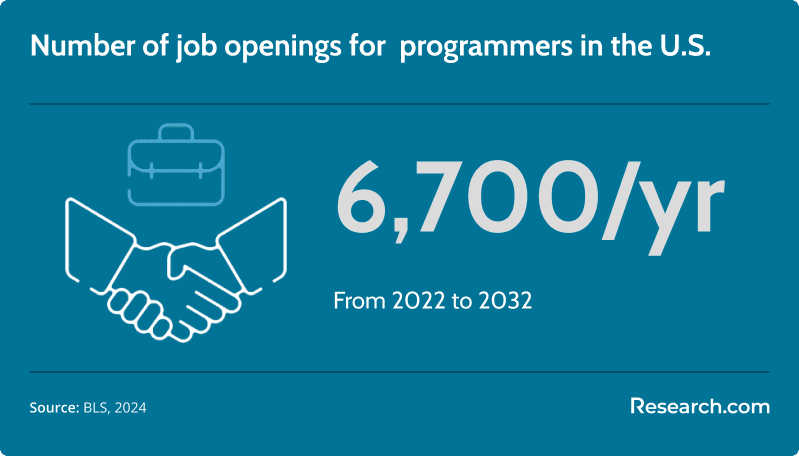
The employment outlook also varies by occupation. BLS projects an 11% decline in employment for computer programmers from 2022 to 2032, but still reports about 6,700 job openings each year because of workers retiring or moving to other occupations. This is why students should look beyond the title “programmer” and prepare for broader roles such as software developer, web developer, data analyst, cloud support, QA automation, and technical support engineering.
Some students use bootcamps as a near-term skills path while planning a degree later. If time is a major constraint, compare the best online accelerated degree programs to see whether a faster degree pathway also fits your goals.
Can Coding Bootcamp Skills Complement Healthcare Management Credentials?
Yes. Coding skills can strengthen healthcare management credentials when the role involves health data, digital systems, workflow automation, reporting, or technology implementation. Professionals who understand both healthcare operations and software tools may be useful in health informatics, systems integration, analytics, and digital transformation projects.
If you want to move toward healthcare technology, a bootcamp can provide programming fundamentals, while a healthcare-specific credential can add regulatory, operational, and data-management context. Research.com's list of the most affordable online health information management degree programs can help you compare formal education options in this area.
Can Coding Bootcamp Training Lead to the Highest Paying Careers in Technology?
A coding bootcamp can be the first step toward high-paying technology work, but it is rarely the final credential needed for top-tier roles. Higher-paying paths often require a combination of strong coding ability, production experience, specialized technical knowledge, business impact, and continuous learning.
To move toward more competitive roles, build a portfolio that shows real problem-solving, learn high-demand tools in your chosen field, contribute to open-source or freelance projects, and pursue targeted certifications when they match your role. For more career-path context, review Research.com's guide to the highest paying careers in technology.
What Is the Return on Investment of an Online Coding Bootcamp?
The ROI of an online coding bootcamp depends on total cost, time out of the workforce, financing terms, salary change, job-search duration, and whether the program helps you reach a role you could not reasonably access on your own.
How to Estimate Bootcamp ROI
- List the full cost: tuition, fees, equipment, software, financing charges, and living expenses.
- Estimate opportunity cost: include lost wages if you reduce work hours or leave a job.
- Compare realistic salary outcomes using jobs in your location and target role.
- Ask the bootcamp for employment data and how outcomes are defined.
- Decide how long it would take to recover your investment after graduation.
- Consider whether a certificate, degree, or self-study path could produce similar results at lower risk.
Some students can improve ROI by combining coding with a specialized field. For example, those interested in computational life sciences may later compare a bioinformatics master's online to deepen domain expertise.
Can Coding Bootcamp Skills Boost My Career in Health Informatics?
Coding skills can be valuable in health informatics because the field depends on data systems, electronic health records, analytics, reporting tools, and digital health platforms. A bootcamp may help you automate tasks, analyze data, or work more effectively with technical teams.
However, health informatics also requires domain knowledge in healthcare workflows, privacy, data standards, and organizational decision-making. If this path interests you, compare a bootcamp with formal programs such as a best online health informatics bachelor's degree to determine which credential better supports your target role.
How Can I Enhance My Career Prospects After Completing a Coding Bootcamp?
Graduation is not the finish line. The strongest bootcamp graduates keep building evidence of skill after the program ends.
- Build a focused portfolio: Publish polished projects on GitHub and, if possible, a personal website. Explain the problem, tools used, challenges solved, and what you would improve.
- Practice technical interviews: Work on coding challenges, debugging exercises, and clear verbal explanations of your decisions.
- Network intentionally: Attend alumni events, meetups, online communities, and local tech gatherings. Referrals can improve visibility.
- Gain experience through small projects: Freelance work, internships, volunteer projects, and open-source contributions can help bridge the experience gap.
- Use career services fully: Take resume reviews, mock interviews, employer introductions, and coaching seriously.
- Specialize when it makes sense: Cybersecurity, data science, full-stack development, cloud, and healthcare technology can help you stand out if aligned with your strengths.
- Consider longer-term education: If compensation and advancement are major goals, compare bootcamp training with the best degrees to make money and decide whether a degree should be part of your plan.
How Can I Verify the Quality and Credibility of an Online Coding Bootcamp?
Before enrolling, verify the bootcamp’s claims rather than relying on advertising. Ask for written information about curriculum, instructors, student support, financing, refunds, graduation rates, and job outcomes.
| What to Verify | Why It Matters | What to Ask |
| Curriculum currency | Outdated tools can weaken job readiness | When was the curriculum last updated, and which employers reviewed it? |
| Instructor qualifications | Strong teachers need both technical and mentoring ability | Who teaches live sessions, and what industry experience do they have? |
| Career outcomes | Placement claims can be defined in different ways | Does employment data include full-time roles only, or also part-time and contract work? |
| Student reviews | Independent feedback can reveal support gaps | What do recent graduates say about workload, support, and job search help? |
| Credential recognition | Some employers may prefer degrees or experience | Which employers have hired graduates from this program? |
| Alternative pathways | A bootcamp may not be the best fit for every goal | Would an accelerated computer science program be more useful for my target role? |
If you want a more formal academic route, compare bootcamp training with a computer science 2 year degree or other accelerated degree options.
Industry Recognition and Employer Preferences
Employer acceptance of coding bootcamps has improved, especially for roles where applicants can demonstrate practical ability. Many hiring teams care about whether candidates can write code, collaborate, debug, explain trade-offs, and learn quickly. A respected bootcamp can help, but it is not a universal substitute for experience or a degree.
Employer preferences vary by company and role. Startups and product teams may emphasize portfolios and practical skills. Larger organizations may use degree filters for some positions. Specialized roles in security, data science, machine learning, infrastructure, or senior engineering may require deeper experience, certifications, or formal education.
Companies such as Google, Apple, and IBM have expressed interest in hiring bootcamp graduates for programming and technical expertise. Still, candidates should expect to compete on projects, interview performance, communication skills, and evidence of continuous learning.
If your goal is to move into one of the highest-paying computer science jobs, treat a bootcamp as one part of a larger plan that may include professional experience, specialization, certifications, and possibly a degree.
Can Advanced Academic Degrees Boost My Coding Bootcamp Career?
Advanced degrees can strengthen a bootcamp graduate’s profile when the target role requires deeper theory, research ability, domain expertise, or leadership preparation. A bootcamp may teach applied coding, while graduate education can add advanced analysis, specialized knowledge, and broader professional credibility.
This route is especially relevant for interdisciplinary fields. For example, professionals interested in biotechnology, analytics, health technology, or research-driven product development may compare online master's programs biotechnology after building technical foundations.
Continuing Education After a Coding Bootcamp
After a bootcamp, continuing education should be strategic. Do not collect credentials randomly. Choose the next learning step based on job postings, skill gaps, and the roles you want in the next one to three years.
- Certifications: Cloud computing, cybersecurity, artificial intelligence, and other technical certifications can help when they match the role’s requirements.
- Degree programs: A formal degree may help with employers that prefer academic credentials or with long-term advancement into senior, research, or leadership roles.
- Specialized courses: Short courses can close gaps in algorithms, databases, system design, testing, accessibility, or cloud deployment.
- Professional projects: Real projects often teach what structured courses miss, especially collaboration, ambiguity, and maintenance.
Some professionals combine technical and business education through dual masters programs, especially if they want to move toward technical project management, product leadership, or executive roles.
Key Insights
- Online coding bootcamps are best for learners who want fast, structured, project-based technical training and can commit serious time to practice.
- The average cost of an online coding bootcamp is $9,408, but students should compare total cost, financing terms, refund policies, and opportunity cost.
- Bootcamp certificates can help open doors, but hiring depends on portfolio quality, interview performance, networking, and real technical ability.
- Full-time programs can be completed in 12 to 14 weeks, while part-time programs may take up to 24 weeks; choose the pace you can realistically sustain.
- Before enrolling, verify curriculum quality, instructor access, career outcomes, job guarantee terms, and whether the program’s specialization matches your target role.
- Bootcamps can complement degrees, certifications, and industry credentials, especially in areas such as cybersecurity, data science, healthcare technology, and business leadership.
References:
- Cobb, J. (2023, September 26). Bootcamp market statistics – and the Edupreneur opportunity. Learning Revolution. https://www.learningrevolution.net/bootcamp-market-statistics/
- Juberg, M. (2023, June 14). Bootcamp Market Statistics and Share Report 2023. Career Karma. https://careerkarma.com/blog/state-of-the-bootcamp-market-2023/
- Occupational Outlook Handbook - Computer Programmers. (2024, May). U.S. Bureau of Labor Statistics. Retrieved May 24, 2024, from https://www.bls.gov/ooh/computer-and-information-technology/computer-programmers.htm
- There are hundreds of programming languages. Which are the most in demand in 2024? (2024, March 15). Fortune Education. https://fortune.com/education/articles/most-in-demand-programming-languages/
Other Things You Should Know About Online Coding Bootcamp
2027's top online coding bootcamps provide beginner-friendly curricula, foundational programming courses, and comprehensive support systems such as mentorship, peer communities, and access to additional resources. These features ensure that complete beginners can effectively learn and succeed in their coding journey.
Yes. Many top 2027 online coding bootcamps include weekly live mentor sessions, 1:1 office hours, and graded code reviews. These services help students debug projects, meet assignment standards, and build portfolio-ready work for employers.
To enroll in 2027's best online coding bootcamps, most programs require a high school diploma and basic computer skills. Some bootcamps may also have preliminary assessments or coding challenges to gauge applicants' aptitude, but prior coding experience is often not necessary.