2027 Best Online Associate in Computer Programming Programs

Co-Founder and Chief Data Scientist
Choosing an online associate degree in computer programming is usually a practical question: will a two-year credential help you build employable coding skills, qualify for entry-level technology roles, and keep future education costs manageable? The answer depends on the program’s curriculum, accreditation, transfer options, hands-on projects, and how well you use the degree to build a portfolio.
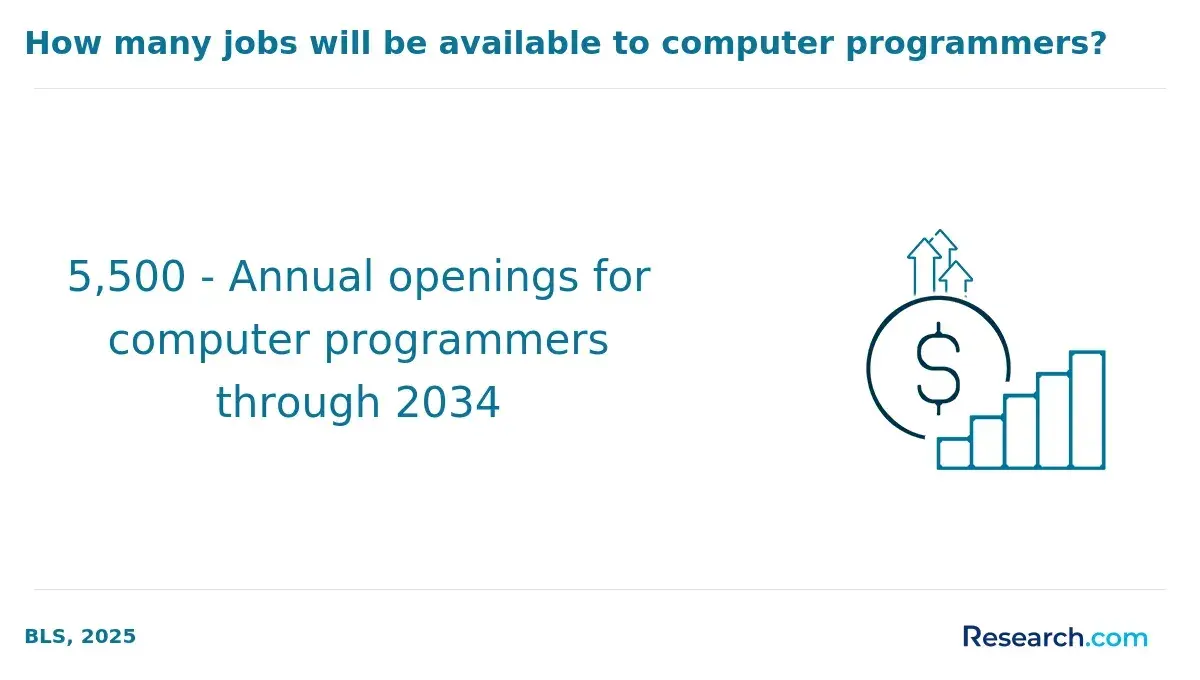
The labor market for programming is changing rather than disappearing. The employment outlook for computer programmers shows a 6% decline between 2024 and 2034, but specialized technology roles continue to attract attention, including projections that demand for roles such as software developers and engineers could rise by 297% within the next decade. For students, the key lesson is clear: a general programming credential is useful, but it becomes much stronger when paired with software development experience, current tools, and evidence of real projects.
This guide is designed for working adults, recent high school graduates, career changers, and cost-conscious students comparing online computer programming associate degree programs. You will learn how to evaluate programs, what courses to expect, what admission requirements are common, how much programs may cost, which schools are featured, and how to turn an associate degree into career momentum through portfolios, certifications, internships, or further study.
Best Online Associate in Computer Programming Programs Table of Contents
- How to choose an online associate in computer programming program
- Common admission and technology requirements
- Typical courses in online associate programming programs
- Online computer programming associate degree costsAffordable optionsCost comparison
- Top Online Associate in Computer Programming Programs for 2027
- Continuing education after an associate degree
- Career options with an online associate in computer programming
- Alternative academic paths for future programmers
- Lower-cost routes into programming
- Accelerated programs and faster completion options
- Whether advanced study makes sense after an associate degreeAccelerated learning options
- How to build a programming portfolio after graduation
- Certifications that may strengthen your resume
- Cost-effectiveness of online programming associate degrees
- Why practical industry experience matters
- Technology trends that can shape programming careersExperience and career outcomesOnline degree value
Quick Answer: Is an Online Associate Degree in Computer Programming Worth Considering?
An online associate degree in computer programming can be worth considering if you want a structured, lower-cost path into coding, software support, web development, or further computer science study. It is usually best for students who need flexibility, want to start with a two-year credential, or plan to transfer credits later into a bachelor’s program.
It may not be the best fit if your target jobs routinely require a bachelor’s degree, advanced mathematics, cybersecurity specialization, artificial intelligence expertise, or extensive software engineering experience. In those cases, the associate degree should be treated as a starting point, not the final credential.
| Best fit | When it makes sense | What to verify before enrolling |
| Career starter | You want entry-level coding, web, database, or IT support skills. | Check project requirements, internship options, and employer-aligned coursework. |
| Transfer student | You plan to complete a bachelor’s degree later. | Confirm transfer agreements and whether credits apply to the major, not only electives. |
| Working adult | You need online coursework that fits around a job or family responsibilities. | Ask whether classes are asynchronous, synchronous, or a mix of both. |
| Cost-conscious learner | You want to reduce the cost of your first two years of college. | Compare total cost, fees, books, technology expenses, and financial aid eligibility. |
Factors to Consider When Choosing an Online Associate in Computer Programming Program
The best online associate in computer programming program is not automatically the cheapest, fastest, or most recognizable school name. The right choice is the program that teaches marketable skills, fits your schedule, has credible accreditation, provides enough practice, and supports your next step after graduation.
Use the following criteria before you apply:
- Accreditation and institutional credibility. Start by confirming that the college is accredited by an agency recognized for higher education. Accreditation affects financial aid eligibility, transfer credit, and employer confidence. In the United States, institutional accreditors include organizations such as the Higher Learning Commission and the Council for Higher Education. For technology-focused programs, also check whether program-level accreditation such as ABET is relevant to the specific credential you are considering.
- Curriculum depth. A strong associate program should go beyond basic syntax. Look for programming logic, data structures, algorithms, databases, web development, software development practices, version control, testing, and operating systems. If your goal is software development rather than general IT support, make sure the curriculum includes substantial coding projects.
- Faculty experience. Review instructor profiles when available. Faculty with software development, systems analysis, database, web, or enterprise technology experience can help connect coursework to workplace expectations.
- Online format and scheduling. Some online programs are fully asynchronous, while others require live meetings, proctored exams, or scheduled labs. If you work full time, ask how often you must be online at a specific time.
- Hands-on learning. Programming is learned by building. Prioritize programs with capstone projects, coding labs, Git-based assignments, internships, simulations, or employer-connected projects.
- Career and transfer support. Ask whether the college offers resume reviews, interview preparation, internship leads, transfer advising, portfolio guidance, or partnerships with local employers.
- Affordability and borrowing risk. Tuition is only one part of cost. Include fees, software, textbooks, exam proctoring, and lost work time. According to recent statistics, the average federal student loan debt of graduates with an associate degree as their highest level of educational attainment is around $23,500, so students should compare aid packages carefully before borrowing.
| Question to ask | Why it matters | Red flag |
| Is the institution accredited? | Accreditation can affect aid, transfer, and employer recognition. | The school cannot clearly explain its accreditation status. |
| Will credits transfer into a bachelor’s program? | Transferability matters if you later pursue a four-year degree. | Credits transfer only as electives or are not guaranteed. |
| How many real coding projects will I complete? | Employers often want proof of skills, not just completed courses. | The program relies mainly on quizzes and lectures. |
| Which languages and tools are taught? | Current tools help your portfolio and job search. | The curriculum appears outdated or lacks software development workflow. |
| Are internships or capstones available? | Experience can separate you from other entry-level applicants. | No practical project, internship, or capstone requirement is offered. |
What are the requirements for an online associate in computer programming programs?
Admission requirements for online computer programming associate degree programs are usually accessible, but students still need to meet academic, technical, and online learning expectations. During the COVID period, over four million students enrolled in two-year institutions, with 91% of them exclusively participating in distance education or online courses. That shift made online learning more common, but it also showed why students need reliable technology, self-management, and digital communication skills.
- High school diploma or equivalent. Most associate degree programs require a high school diploma, GED, or equivalent credential.
- College application. Applicants usually complete an online application, pay any required application fee, and submit transcripts or proof of prior education.
- Placement or prerequisite review. Some colleges may evaluate math, English, or computer readiness before placing students into courses.
- Basic computer skills. Students should be comfortable using email, learning management systems, file management, browsers, word processing tools, and common productivity software.
- English language proficiency. Applicants whose first language is not English may need TOEFL, IELTS, or another accepted proof of proficiency, depending on institutional policy.
- Technology access. Online learners typically need a reliable computer, stable Internet connection, required software, webcam or microphone for some courses, and the ability to install development tools.
Students considering a later transfer should compare these requirements with bachelor’s-level expectations as well. If you already know you want a four-year credential, reviewing a computer science online bachelor degree pathway can help you avoid taking associate courses that do not transfer cleanly.
Courses to Expect in Online Associate in Computer Programming Programs
Most online associate programming programs are built around coding fundamentals, software design, databases, web technologies, and problem-solving. Course names vary by school, and some programs may include business technology topics such as management information systems, but the strongest programs share a common goal: helping students move from writing simple scripts to building usable applications.
| Course area | What you learn | Why it matters for careers |
| Programming fundamentals | Variables, logic, functions, loops, debugging, and basic algorithms. | Builds the foundation for every coding role. |
| Programming languages | Languages such as Java, C++, Python, JavaScript, or C#. | Helps you write applications and understand different development environments. |
| Data structures and algorithms | Arrays, lists, stacks, queues, trees, searching, sorting, and efficiency. | Improves problem-solving and prepares students for technical interviews. |
| Web development | HTML, CSS, JavaScript, layout, interactivity, and front-end basics. | Supports web developer and application support roles. |
| Database management | Data modeling, SQL, normalization, queries, and database administration concepts. | Prepares students for data-driven applications and entry-level database work. |
| Object-oriented programming | Classes, objects, inheritance, encapsulation, polymorphism, and reusable code. | Essential for many enterprise and application development environments. |
| Mobile app development | App interfaces, mobile frameworks, platform deployment, and mobile design basics. | Useful for students interested in Android, iOS, or cross-platform applications. |
| Operating systems | Processes, memory, file systems, permissions, and concurrency concepts. | Helps programmers understand how software interacts with hardware and systems. |
| Software engineering | Requirements, testing, quality assurance, project planning, and documentation. | Connects coding skills to team-based software production. |
| Software development capstone | Designing, building, testing, and presenting a complete project. | Can become a portfolio artifact for jobs or transfer applications. |
Students pursuing an associate’s degree in coding should look for coursework that results in finished projects, not only assignments. That matters when applying for competitive coding jobs. According to Payscale, software developers with associate’s degrees can earn more than $58,000 annually on average (PayScale, n.d.), but individual outcomes depend on location, experience, portfolio strength, employer, and specialization.
How much does an online computer programming associate’s degree cost?
The price of an online computer programming associate degree depends on school type, residency, credit requirements, fees, and pace of study. Public colleges often cost less for in-state students, while private institutions usually charge higher tuition. Accelerated formats can also change total cost, as students comparing a standard associate pathway with a 1 year computer science degree online option should evaluate both tuition and workload.
Public Institutions
- Public in-state. For in-state students at a public institution, annual tuition for an online computer programming associate degree can range from approximately $3,000 to $8,000 per year.
- Public out-of-state. Out-of-state students in public online associate programs may pay a higher rate, with costs ranging from around $8,000 to $15,000 per year.
Private Institutions
- Private in-state. Private colleges generally charge more than public institutions. An online associate program at a private in-state institution can cost approximately $10,000 to $25,000 per year.
- Private out-of-state. Out-of-state students at private institutions may see annual tuition ranging from around $12,000 to $30,000 per year.
Community Colleges
Community colleges are often the most affordable starting point for an associate degree, though residency can still affect pricing. For an average full-time student residing within the state, the average cost for tuition and fees to attend a community college can range between $1,310 to $7,560. For out-of-state students, community college tuition can go as low as $7,730 and as high as $16,384.
| Cost factor | What to check | Why it can change the final price |
| Tuition model | Per-credit, per-term, or flat-rate pricing. | Fast or part-time students may pay differently depending on the model. |
| Residency | In-state, out-of-state, or online-specific tuition. | Public colleges may charge different rates by residency status. |
| Fees | Technology, distance learning, lab, proctoring, and graduation fees. | Fees can add meaningful cost beyond tuition. |
| Books and software | Textbooks, subscriptions, development tools, or cloud platforms. | Programming programs may require technical resources beyond standard books. |
| Transfer credits | Prior college, exams, military training, or industry credentials. | Accepted credits can reduce time and total cost. |
| Financial aid | Grants, scholarships, employer reimbursement, and loans. | A lower sticker price is not always the lowest net price. |
Before choosing a program, ask the school for a full cost estimate that includes tuition, fees, required materials, and expected time to completion. Published ranges are useful for comparison, but the actual amount you pay depends on the institution and your eligibility for aid or transfer credit.
Top Online Associate in Computer Programming Programs for 2027
Most associate programs are designed to take about two years of full-time study, though transfer credit, course load, and term structure can shorten or extend that timeline. The programs below are examples of online associate options in computer programming or closely related software development fields. Use the descriptions as a comparison starting point, then confirm current tuition, admissions, transfer rules, and graduation requirements directly with each institution.
1. Seminole State College of Florida’s Computer Programming and Analysis Associate in Science
Seminole State College of Florida offers a Computer Programming and Analysis Associate in Science program focused on programming, software development, and applied information technology. The curriculum is built to help students understand core computing concepts and use those concepts to design, build, and implement technology solutions.
Students complete practical assignments that connect classroom learning to real programming tasks. The program also emphasizes analytical thinking, troubleshooting, collaboration, and the type of project work students may encounter in software and IT environments. Graduates may use the credential to pursue entry-level roles or continue toward broader computer science degree career paths.
- Tracks/concentrations: Simulation, programming, or web development
- Cost: $3,131
- Required Credits to Graduate: 60
2. Limestone University’s Associate Science in Computer Science-Programming
Limestone University’s Associate of Science in Computer Science-Programming online program provides an online route for students who want foundational computer science knowledge with an emphasis on programming. The program is structured for flexibility, allowing students to complete coursework online while building practical technical skills.
The curriculum includes programming-focused study, and faculty support can help students connect theory to software development tasks. Limestone may also appeal to transfer students because the program can accommodate learners with prior coursework. Students should confirm how transferred credits apply to major requirements before enrolling.
- Tracks/concentrations: C# programming, Internet programming
- Cost: $479 per credit hour
- Required Credits to Graduate: 62
3. St. Petersburg College’s Online Associate of Science program in Computer Programming and Analysis
St. Petersburg College, a public college in Florida, offers an online Associate of Science program in Computer Programming and Analysis. The program is designed for students who want to develop and maintain applications using multiple programming languages and software tools.
The program includes 36 major credits and covers areas such as operating systems, web foundations, systems analysis and design, and Java programming. Students may also choose electives in areas including mobile device programming, application programming, web programming, and augmented/virtual reality programming.
SPC places emphasis on applied learning. Students may complete an internship in the final semester, and the curriculum is aligned with preparation for the Oracle Java certified associate industry certification.
- Tracks/concentrations: Computer programming (Java, C++ and C#), software development
- Cost: $3,400
- Required Credits to Graduate: 36 major credits
4. University of Toledo’s Associate Degree in Programming and Software Development
The University of Toledo offers an online Associate Degree in Programming and Software Development that covers programming languages, software development methods, database management, and web development. The program is intended to help students learn how to write code, design applications, and create software-based solutions.
Students who complete the associate degree gain a foundation for entry-level software development opportunities and may also apply credits toward a bachelor’s degree if they decide to continue studying in the field.
- Tracks/concentrations: Data management, software development, web applications
- Cost: $11,885 per year
- Required Credits to Graduate: 60
5. Minnesota State Community and Technical College’s Associate Degree in Computer Programming
Minnesota State Community and Technical College offers an Associate Degree in Computer Programming that focuses on programming languages, software development, database management, web development, and software engineering practices. Students learn to write code, build applications, and solve technical problems through applied coursework.
Graduates may pursue entry-level roles such as software developer, application programmer, or web developer. They may also continue at a four-year institution if they want deeper preparation for advanced computer science or software engineering roles.
- Tracks/concentrations: Computer software and information management systems development
- Cost: $10,235
- Required Credits to Graduate: 60
| Program | Best for students who want | Credits or major credits listed | Cost listed |
| Seminole State College of Florida | Programming, simulation, or web development pathways. | 60 | $3,131 |
| Limestone University | Online computer science-programming study with C# or Internet programming focus. | 62 | $479 per credit hour |
| St. Petersburg College | Online programming and analysis with internship and Java certification preparation. | 36 major credits | $3,400 |
| University of Toledo | Programming and software development with transfer potential. | 60 | $11,885 per year |
| Minnesota State Community and Technical College | Applied programming, databases, web development, and software development skills. | 60 | $10,235 |
Continuing Education Options for Online Associate in Computer Programming Degree Holders
An associate’s degree is the most popular degree awarded to computer programming graduates. Still, programming careers reward continuous learning. Languages, frameworks, cloud platforms, cybersecurity expectations, and AI-assisted development tools evolve quickly, so graduates should plan for skill updates after completing the degree.
- Complete a bachelor’s degree. Many associate programs are built with transfer in mind, although applied programs may transfer differently than transfer-oriented degrees. Students can continue into computer science, software engineering, an online or campus-based programming degree online, or another technology field. A bachelor’s degree can support access to roles requiring deeper theory, algorithms, systems design, or software engineering preparation.
- Use short courses and bootcamps strategically. Focused online courses can help graduates add skills in web development, mobile apps, data analytics, cloud computing, cybersecurity, or a specific framework. These options work best when they fill a clear skill gap rather than repeat what you already learned.
- Specialize in a language or framework. Mastery of Java, Python, C#, JavaScript, React, Angular, or another in-demand ecosystem can make your resume more focused. Choose based on the roles you want, not simply on popularity.
- Build public projects and contribute to open source. Personal applications, bug fixes, documentation contributions, and collaborative repositories can show employers how you think and how you write code.
- Attend industry events and join professional communities. Workshops, conferences, developer meetups, and professional associations can help you learn current practices and meet people in the field.
- Earn targeted certifications. Certifications such as Certified Java Programmer (OCP), Microsoft Certified Professional Developer (MCPD), or Oracle Certified Professional (OCP) can support a resume when they match your job target. Credentials may also help candidates discuss skills when seeking a stronger computer programming certificate salary, though no certification guarantees a specific salary.
Career Opportunities With an Online Associate in Computer Programming
An online associate degree in computer programming can qualify graduates for entry-level technology roles, especially when paired with a portfolio, internship, or demonstrated project experience. The degree is often strongest as a launchpad: it gives students enough foundation to enter junior roles while keeping the option open for further study.
| Role | Typical entry-level work | Skills to emphasize |
| Junior software developer | Assist with coding, testing, maintenance, debugging, and feature updates. | Programming language proficiency, version control, debugging, and software development basics. |
| Web developer | Create or maintain websites, user interfaces, and web-based applications. | HTML, CSS, JavaScript, responsive design, accessibility, and basic back-end awareness. |
| Entry-level database administrator or database support specialist | Support data organization, queries, backups, integrity, and database maintenance. | SQL, database design, data security basics, and documentation. |
| IT support specialist | Troubleshoot software, assist users, document issues, and support business systems. | Problem-solving, operating systems, scripting, communication, and customer support. |
| Mobile app developer assistant | Help develop, test, or maintain mobile applications. | Mobile development tools, UI basics, testing, and platform-specific knowledge. |
Students who want to grow beyond entry-level roles should plan for continued skill development. Exploring the highest paying computer science jobs can help you identify which specializations may require additional education, experience, certifications, or advanced technical skills.
What Are Some Alternative Academic Paths for Aspiring Computer Programmers?
An associate degree is not the only route into programming. Some students begin with certificates, individual online courses, bootcamps, self-study, or a broader degree before specializing. Others choose easy degrees that still allow them to develop technology-related skills while completing a bachelor’s credential.
| Path | Advantages | Limitations | Best for |
| Associate degree | Structured, often affordable, transfer-friendly, and eligible for financial aid at accredited colleges. | May not be enough for roles requiring a bachelor’s degree. | Students who want a balanced academic and career pathway. |
| Certificate program | Shorter and focused on a specific skill area. | May not include general education or transfer well. | Learners who need targeted skills quickly. |
| Coding bootcamp | Intensive and project-oriented. | Quality, cost, job support, and employer recognition vary widely. | Motivated learners who can handle a fast pace. |
| Self-study | Low cost and highly flexible. | No formal credential and requires strong discipline. | Students building skills before or alongside formal education. |
| Bachelor’s degree | Deeper theory and broader access to roles requiring four-year credentials. | Usually takes longer and costs more. | Students targeting software engineering, advanced computing, or graduate study. |
Affordable Pathways to a Computer Programming Career
A programming career does not have to begin with an expensive four-year degree. Many students reduce cost by starting at a community college, choosing an online associate program, transferring credits, applying for grants, or combining formal coursework with free or low-cost programming resources.
Students searching for a lower-cost bachelor’s pathway can compare options such as a cheap online computer science degree. This can be especially useful if you know you eventually want a four-year credential but want to control cost from the beginning.
- Start with a community college. Community colleges can offer lower tuition and may have transfer agreements with four-year institutions.
- Maximize transfer credit. Ask whether prior college credit, AP credit, military training, or professional certifications can reduce required coursework.
- Use employer tuition assistance. If you are working, check whether your employer reimburses job-related education.
- Apply for grants and scholarships before loans. Free aid reduces borrowing risk and improves return on investment.
- Supplement with low-cost practice. MOOCs, coding challenge platforms, documentation, and open-source projects can deepen your skills without adding major expense.
The best financial strategy is not always choosing the lowest tuition. A program with stronger transfer agreements, internship access, or better project-based learning may provide more long-term value than a cheaper program with weak student support.
Enhancing Your Skillset Through Accelerated Programs
Accelerated associate options can help motivated students finish faster, reduce time away from the workforce, or move more quickly into a bachelor’s program. Programs aligned with the quickest associates degree may appeal to students who already have transfer credits, strong study habits, or prior technical experience.
Speed, however, has trade-offs. Programming requires repetition, debugging, and project practice. A faster program can be valuable if it still includes core programming concepts, meaningful assignments, and enough time to build a portfolio. It can be risky if it compresses technical material so much that students complete courses without developing confidence.
| Accelerated programs may work well if | They may be a poor fit if |
| You can study consistently each week. | You need a slower pace to learn technical concepts. |
| You have prior coding or college experience. | You are brand new to programming and need extensive practice. |
| You want to transfer or enter the workforce sooner. | You are balancing heavy work, caregiving, or unpredictable schedules. |
| The program includes projects and support. | The program emphasizes speed over skill development. |
Should I Pursue Advanced Studies After My Online Computer Programming Associate Degree?
Advanced study can be worthwhile if your goals require deeper technical preparation, higher-level software engineering work, data science, artificial intelligence, cybersecurity, or leadership. For example, students who eventually pursue the best online masters in artificial intelligence will typically need a stronger academic foundation beyond an associate degree.
That does not mean every associate graduate should immediately enroll in more school. Many students benefit from gaining work experience first, building a portfolio, and then choosing a bachelor’s or graduate specialization based on real career interests.
| Next step | Choose this when | Be careful about |
| Enter the workforce | You have projects, internship experience, and are ready for junior roles. | Applying only to roles that require a bachelor’s degree. |
| Transfer to a bachelor’s program | You want broader career access or plan to pursue advanced computing roles. | Lost credits due to poor transfer planning. |
| Earn certifications | You need proof of a specific tool, language, cloud platform, or security skill. | Collecting certifications without projects to support them. |
| Consider graduate study later | You want AI, data science, cybersecurity, research, or technical leadership roles. | Skipping foundational coursework needed for advanced programs. |
Is an online computer programming associate’s degree credible and recognized by employers?
An online associate degree in computer programming can be credible when it comes from an accredited institution and includes rigorous, practical coursework. Employers may view it positively for entry-level roles, especially when applicants can show finished projects, internship experience, and working knowledge of relevant languages and tools.
The credential has limits. Some software engineering, systems, data, or enterprise development jobs prefer or require a bachelor’s degree. However, an associate degree can still help students qualify for junior software, web, database support, or IT support roles. It can also serve as a pathway for students who want to become a database administrator or later pursue one of the best online computer science degree programs.
Can a Computer Programming Associate Degree Lead to Cybersecurity Opportunities?
A computer programming associate degree can support a cybersecurity pathway because secure systems depend on understanding code, software behavior, databases, scripting, and automation. Programming knowledge is useful for identifying vulnerabilities, writing secure applications, automating repetitive security tasks, and understanding how attackers exploit software weaknesses.
Most cybersecurity roles, however, require additional preparation. Graduates may need security coursework, certifications, labs, networking knowledge, or a higher-level degree. Students interested in combining programming and security can review What can you do with a masters in cybersecurity? to understand how advanced study can expand long-term options.
How can I build a compelling programming portfolio after my online degree?
A portfolio can make an associate degree far more useful in the job market. Employers hiring entry-level programmers often want to see how candidates solve problems, structure code, document projects, test features, and learn new tools. A strong portfolio should show finished work rather than isolated class exercises.
- Build three to five polished projects. Include a web app, database-backed application, automation script, API project, or mobile prototype.
- Write clear project descriptions. Explain the problem, tools used, your role, challenges, and what you would improve next.
- Use version control. Host code in public or shareable repositories when possible, and show meaningful commit history.
- Document setup instructions. A reviewer should understand how to run or view your project.
- Connect projects to job targets. A web developer portfolio should look different from a database, mobile, or cybersecurity-focused portfolio.
- Add stretch projects carefully. Projects inspired by topics from affordable online data science masters programs can show ambition, but they should be accurate, functional, and clearly explained.
What additional certifications can further boost your career prospects?
Certifications can strengthen an associate degree when they validate skills that employers actually request. They are most useful when paired with projects, labs, or work experience. A certification alone rarely replaces the need to demonstrate practical ability.
| Certification area | Why it may help | Best paired with |
| Programming language certification | Shows structured knowledge of a specific language or platform. | Applications written in that language. |
| Database certification | Supports roles involving SQL, data storage, reporting, or database administration. | Database-backed projects and query samples. |
| Cloud certification | Demonstrates familiarity with modern deployment and infrastructure environments. | Cloud-hosted applications or labs. |
| Cybersecurity certification | Can help programmers move toward secure coding, application security, or security support. | Security labs, scripting, and networking fundamentals. |
| Web development certification | May reinforce front-end, back-end, or full-stack skills. | A live portfolio site and deployed web projects. |
Students who want a more formal cybersecurity pathway can compare options such as the cheapest online cybersecurity degree, especially if security becomes a primary career goal rather than a supplemental skill.
Is an online computer programming associate degree a cost-effective option compared to other technical degrees?
An online computer programming associate degree can be cost-effective because it is shorter than a bachelor’s degree, often available through community colleges, and can be completed without relocating. It may also reduce commuting and housing costs compared with campus-based study. The value depends on whether the program leads to transferable credits, marketable projects, and realistic career opportunities.
Cost-effectiveness should be measured against your goals. If you want an entry-level coding or IT role, an associate degree may be a reasonable starting point. If you want engineering-heavy, hardware-focused, or advanced technical roles, you may need to compare other degree routes, including the online electrical engineering degree cost.
What role does practical industry experience play in enhancing career outcomes?
Practical experience can be the difference between having a degree and being job-ready. Programming employers often evaluate whether applicants can debug unfamiliar problems, collaborate with others, use development tools, communicate clearly, and complete work that resembles real software tasks.
- Internships provide workplace exposure and may help students transition from coursework to professional expectations.
- Capstone projects allow students to complete a larger, integrated application that can be shown to employers.
- Freelance or volunteer projects can create experience when internships are unavailable.
- Open-source contributions demonstrate collaboration, code review, and familiarity with existing codebases.
- Technical support roles can help students enter an organization and later move toward development or security work.
Students considering cross-disciplinary growth should weigh experience alongside further education. For example, deciding whether a cybersecurity degree worth it depends partly on your current skills, target roles, and whether you already have relevant technical experience.
What emerging technology trends can impact your programming career?
Programming careers are being reshaped by artificial intelligence, machine learning, cloud computing, cybersecurity demands, mobile development, data-driven applications, and automation. AI coding assistants can speed up routine tasks, but they also raise employer expectations: programmers still need to understand architecture, testing, security, debugging, and problem-solving rather than relying on generated code without review.
Associate degree graduates can stay competitive by learning modern development workflows, practicing with APIs, understanding cloud basics, writing secure code, and building projects that solve realistic problems. Students interested in advanced AI roles may eventually consider options such as the fastest online masters degree in artificial intelligence, but the immediate goal after an associate degree should be building strong fundamentals and a credible project record.
Common Mistakes to Avoid When Choosing an Online Programming Associate Degree
| Mistake | Why it hurts students | Better approach |
| Choosing only by tuition | The cheapest program may lack transfer pathways, projects, or student support. | Compare total value, not only price. |
| Ignoring accreditation | Unaccredited study can create problems with aid, transfer, and recognition. | Verify institutional accreditation before applying. |
| Assuming all credits transfer | Credits may not apply to a bachelor’s major. | Get written transfer guidance from both schools. |
| Skipping portfolio development | A transcript alone may not prove coding ability. | Build projects throughout the program. |
| Overlooking online format | Live class times, proctored exams, or lab requirements may conflict with work. | Ask how courses are delivered before enrolling. |
| Expecting guaranteed salary outcomes | Pay depends on location, role, employer, skills, and experience. | Use salary data as a planning tool, not a promise. |
| Collecting unrelated certifications | Random credentials can distract from your job target. | Select certifications tied to specific roles and projects. |
How to Choose the Right Program: A Practical Step-by-Step Plan
- Define your goal. Decide whether you want a job after the associate degree, transfer to a bachelor’s program, or both.
- Shortlist accredited schools. Remove any program that cannot clearly document institutional accreditation.
- Compare curriculum line by line. Look for programming, data structures, databases, web development, software engineering, and capstone or internship requirements.
- Ask about transfer agreements. If a bachelor’s degree may be in your future, verify how credits move into specific programs.
- Request a full cost estimate. Include tuition, fees, books, software, proctoring, and expected completion time.
- Review online support. Ask about tutoring, technical support, advising, career services, and access to instructors.
- Check project expectations. Choose programs that help you graduate with portfolio-ready work.
- Plan your skill add-ons. Identify one or two certifications, tools, or specializations that align with your target jobs.
Key Insights
- An associate degree is a starting credential, not a career guarantee. It can help students build core programming skills, but job outcomes depend heavily on projects, experience, location, and continued learning.
- The labor market rewards specialization. Traditional computer programming employment is projected to decline by 6% between 2024 and 2034, while specialized roles such as software developers and engineers are projected to see demand surge by 297% within the next decade. The Key Insights source material also notes a 21% projected growth in demand for application developers, reinforcing the importance of role-specific planning.
- Accreditation should be non-negotiable. Accredited institutions are more likely to support financial aid eligibility, transfer opportunities, and employer recognition.
- Cost varies widely. Public in-state programs may range from approximately $3,000 to $8,000 per year, while private out-of-state options may range from around $12,000 to $30,000 per year. Community colleges can be a lower-cost starting point.
- Portfolio quality matters. Students should graduate with finished applications, database projects, web work, or other evidence that shows how they solve real programming problems.
- Transfer planning can save time and money. If a bachelor’s degree is likely, confirm transferability before enrolling rather than after graduation.
- Practical experience improves employability. Internships, capstones, open-source contributions, freelance work, and technical support experience can make an associate degree more competitive.
- Continuous learning is part of the field. Certifications, short courses, bachelor’s study, and emerging technology training can help graduates adapt as AI, cloud computing, cybersecurity, and data-driven software reshape programming careers.
References:
- Hanson, M. (2025, October 14). Average Cost of Community College. EducationData.org.
- Payscale. (n.d.). Associate’s degree, software development salary. Payscale
- Roller, A. (2025, November 5). 2026 tech job market statistics and outlook. TechTarget
- U.S. Bureau of Labor Statistics. (2025, August 28). Computer programmers: Occupational outlook handbook. U.S. Bureau of Labor Statistics.
- Zippia (2025, January 8). Computer programmer education requirements. Zippia
Other Things You Should Know About Online Associate in Computer Programming Programs
Requirements vary by institution, but generally, applicants need a high school diploma or equivalent, basic computer proficiency, and may need to demonstrate English language proficiency. Some programs might also have specific technical requirements and require standardized test scores.
Common courses include Introduction to Computer Science, Programming Languages (Java, C++, Python), Data Structures and Algorithms, Web Development, Database Management, Object-Oriented Programming, Mobile App Development, Operating Systems, and Software Engineering Principles.
Graduates with an online associate in computer programming degree can pursue various entry-level roles such as junior programmer, software support specialist, or web developer. This degree provides foundational skills that are valuable in the tech industry, and it can also serve as a stepping stone for further education and career advancement.
Yes, you can pursue further education by enrolling in a bachelor’s degree program, taking online short courses and bootcamps, obtaining professional certifications, and attending workshops and conferences. These options can enhance your skills and career prospects.
Yes, an online associate’s degree in computer programming is a valuable credential that can open doors to entry-level programming positions and serve as a foundation for further education and career advancement. The flexibility and affordability of online programs make them an attractive option for many students.
To choose the right online associate in computer programming program in 2027, consider accreditation, curriculum relevance, faculty expertise, and flexibility. Additionally, check for resources like career services and industry connections, ensuring the program aligns with your career goals.