
2027 Best Online Master's in Information Technology Degree Programs

Co-Founder and Chief Data Scientist
Choosing an online master’s in information technology is usually not a question of whether technology skills matter. The harder question is whether a graduate IT degree is the right credential for your career goal, budget, timeline, and current experience level. IT roles now span cybersecurity, cloud systems, data analytics, software platforms, digital forensics, artificial intelligence, and enterprise technology leadership, so the best program is the one that matches the type of work you want to do next.
This guide explains what online master’s in information technology programs typically include, how long they take, what they cost, what admissions committees often expect, and how to compare programs without relying only on rankings. It also covers career paths, salaries, accreditation, specializations, certifications, AI-related trends, common mistakes, and practical questions to ask before enrolling.
Demand remains a major reason students consider this path. Per CompTIA's 2023 State of the Workforce report, there were 4.1 million tech job postings in 2022. A master’s degree is not required for every IT job, but it can help professionals move toward more advanced technical, managerial, or specialized roles when paired with relevant experience and current skills.
Quick answer: Is an online master’s in information technology worth it?
An online master’s in information technology can be worth it if you already have some technical background or professional experience and want to move into higher-level roles such as IT manager, systems architect, cloud solutions architect, cybersecurity specialist, data scientist, or technology consultant. The strongest return usually comes from choosing an accredited program with a relevant specialization, practical projects, strong career support, and a total cost you can reasonably manage.
It may not be the best first step if you are completely new to computing, need an entry-level credential quickly, or would benefit more from a focused certification, bootcamp, or undergraduate foundation. If you are still building basic IT knowledge, reviewing options such as online IT associates degree programs or the cheapest online it degree may help you compare lower-cost starting points.
What are the benefits of getting an online master’s in information technology?
- Preparation for advanced IT roles: A graduate IT program can help you build deeper skills in systems design, security, databases, cloud infrastructure, project management, analytics, and technology strategy.
- Access to higher-responsibility positions: Graduates often pursue roles such as IT manager, systems architect, data scientist, network security specialist, cloud solutions architect, or consultant. These roles earn approximately $85,000-$170,000, depending on location, certification, and experience.
- Flexible study for working professionals: Online delivery can make it possible to keep working while completing coursework, which helps students apply concepts to current workplace problems.
- Specialization without leaving the workforce: Many online programs let students focus on cybersecurity, data science, cloud computing, software development, AI, or digital forensics while remaining employed.
- Stronger leadership foundation: Many master’s programs combine technical courses with project management, risk management, budgeting, governance, and communication training.
What can I expect from online master's in information technology programs?
An online master’s in information technology is a graduate program focused on the design, management, security, and strategic use of technology systems. Unlike a purely theoretical computer science degree, many IT programs emphasize applied systems, organizational technology needs, infrastructure, data, cybersecurity, and leadership.
| Program feature | What it usually means for students | Why it matters when comparing programs |
| Core curriculum | Courses commonly cover systems analysis and design, database management, network security and management, and IT project management. | The core should match the skills required for the jobs you want, not just provide a broad survey of technology topics. |
| Specializations | Common options include cybersecurity, data science and analytics, software development, artificial intelligence (AI), and machine learning (ML). | A specialization can improve alignment with a specific career path, but only if the courses include practical tools, projects, and current technologies. |
| Program duration | Most programs take 18 months to 3 years, depending on full-time or part-time enrollment. | Accelerated formats can save time, but they may be difficult for students working full time. |
| Tuition range | Average tuition for an online master’s in IT program generally ranges between $15,000 and $50,000. | Total cost should include fees, books, software, technology requirements, and any campus visits or residencies. |
| Final requirement | Many programs include a capstone, thesis, applied project, portfolio, internship, or practicum. | Applied projects can help you demonstrate skills to employers, especially if you are changing roles or industries. |
Where can I work with a master’s in information technology?
A master’s in IT can support careers in technology companies as well as non-tech organizations that rely on secure, efficient, and scalable digital systems. Graduates may work in software firms, cloud service organizations, cybersecurity companies, consulting firms, healthcare systems, banks, universities, government agencies, manufacturers, retailers, and multinational corporations.
In technology-focused companies, graduates may help design infrastructure, manage cloud deployments, secure networks, lead development teams, or advise clients on digital transformation. In non-tech sectors, IT professionals often protect sensitive data, modernize legacy systems, manage analytics platforms, support compliance, and align technology investments with business needs.
| Industry | Why IT talent is needed | Possible roles |
| Finance | Secure transactions, fraud detection, analytics, compliance, and high-availability systems | Information security analyst, data scientist, IT risk manager, cloud architect |
| Healthcare | Patient data systems, privacy controls, interoperability, telehealth platforms, and analytics | Systems architect, health IT manager, cybersecurity specialist, data analyst |
| Government | Cyber defense, digital services, records systems, public infrastructure, and secure networks | Digital forensics analyst, security specialist, network architect, IT project manager |
| Retail and manufacturing | Supply chain systems, automation, customer analytics, cloud platforms, and enterprise software | IT manager, cloud solutions architect, systems analyst, data scientist |
| Consulting | Technology strategy, system implementation, cybersecurity assessment, and modernization projects | IT consultant, solutions architect, project manager, cybersecurity consultant |
How much can I make with a master’s in information technology?
Pay depends on the job title, location, employer, technical specialization, certifications, experience, and management responsibility. A graduate degree can help qualify candidates for more advanced roles, but it does not guarantee a specific salary.
- Computer and Information Research Scientist: $145,080 per year
- Computer Network Architect: $129,840 per year
- Information Security Analyst: $120,360 per year
- Software Developer: $130,160 per year
Specialized fields such as cybersecurity, data science, and AI/ML can offer strong salary potential, especially for professionals who combine graduate education with hands-on experience and industry credentials. Senior and executive roles, including Chief Information Officer (CIO) or Chief Technology Officer (CTO), can see salaries exceeding $200,000, though those positions usually require extensive leadership experience.
- 10 best online master’s in information technology programs for 2027
- How long does an online master’s in information technology take?
- Online vs. on-campus master’s in IT: what is different?
- How much does an online master’s in IT cost?
- Financial aid options for online master’s in IT students
- Admissions requirements for online master’s in IT programs
- Common courses in master’s in information technology programs
- Common IT master’s specializations
- Why accreditation matters for online master’s in IT programs
- Certifications that can strengthen a master’s in IT
- How to evaluate ROI before enrolling
- Networking and industry connections in online IT programs
- How to choose the best online master’s in information technology program
- How online master’s in IT programs are responding to AI
- Career paths for master’s in information technology graduates
- Can an online master’s in IT support a game development career?
- Can interdisciplinary study improve an IT master’s degree?
- Job market outlook for master’s in IT graduates
- Who is a good candidate for an online master’s in IT?
- Should you add engineering management training?
- Challenges students may face in an online IT master’s program
- How data science can complement an IT master’s degree
10 Best Master's in Information Technology Programs for 2027
How do we rank schools?
To identify strong online master’s in IT options, we reviewed trusted education data sources, including the IPEDS database, Peterson's Distance Learning Licensed Data Set, College Scorecard database, and the National Center for Education Statistics.
Our research methodology section explains how Research.com collects, reviews, and analyzes education data. Rankings can be a useful starting point, but students should still compare accreditation, cost, curriculum, career outcomes, faculty expertise, and program format before applying.
| Rank | School and program | Program length | Focus areas | Tuition or estimated cost | Credits or units | Accreditation |
| 1 | University of Central Florida, Master of Science in Digital Forensics (MSDF) | 2-3 years | Digital Forensics, Cybersecurity | $337-$1,151 per credit hour | 30 | Southern Association of Colleges and Schools Commission on Colleges (SACSCOC) |
| 2 | Arkansas Tech University, Master of Science in Information Technology (MSIT) | 2 years | Network Security, Data Analytics, IT Management | $300 per credit hour | 30 | Higher Learning Commission (HLC) |
| 3 | University of Southern California, Master of Science in Computer Science (MSCS) | 2-3 years | Data Science, Cyber Security Engineering, Healthcare Data Science, and more | $2,340 per unit | 30 | Western Association of Schools and Colleges (WASC) |
| 4 | Texas Tech University, Master of Science in Data Science | 1-2 years | Data Analytics, Machine Learning, Big Data Technologies | $560 per credit hour | 36 | SACSCOC |
| 5 | West Texas A&M University, Master of Science in Computer Information Systems (MSCIS) | 2 years | IT Management, Software Engineering, Data Analytics | $535 per credit hour | 33 | Association to Advance Collegiate Schools of Business (AACSB) |
| 6 | University of West Florida, MSCS | 3 years | AI, Cloud Computing, Software Development | $500 per credit hour | 30 | SACSCOC |
| 7 | University of Texas at Austin, Master of Science in Information Studies | 2-3 years | UI Research, UI Design, Digital Humanities, Data Curation, Data Analysis, and more | $10,000 - $15,000 | 36 | SACSCOC |
| 8 | National University, MSIT | 16 months | IT Project Management, Network Risk Management and Control, and more | $500 per credit hour | 30 | WASC |
| 9 | Johns Hopkins University, Master of Science in Information Systems | 2 years | Cybersecurity, Cloud Computing, Data Science | $1,680 per course | 30 | MSCHE |
| 10 | Boston University, MSCIS | 12-20 months | Data Analytics, Information Security, Data Analytics, Computer Networks, and more | $34,200–$35,900 | 40 | New England Commission of Higher Education (NECHE) |
How to use this list
Use rankings as a shortlist, not a final answer. A lower-cost program with the right specialization, practical projects, and strong employer alignment may be a better fit than a more expensive option with a broader reputation. Also compare whether the program is truly IT-focused or closer to computer science, data science, digital forensics, information systems, or information studies.
How long does it take to complete online master's in information technology programs?
Most online master’s in information technology programs take 18 to 24 months for full-time students and 2 to 3 years for part-time students. The actual timeline depends on credit requirements, course load, start dates, transfer policies, specialization requirements, and whether the program includes a capstone, thesis, internship, or lab-based component.
| Enrollment option | Typical timeline | Best for | Trade-off |
| Full-time | 18 to 24 months | Students who can dedicate substantial weekly time to coursework | Faster completion, but harder to balance with demanding work or family obligations |
| Part-time | 2 to 3 years | Working professionals who need predictable pacing | More manageable schedule, but delayed graduation and possible longer exposure to fees |
| Accelerated | 12-18 months | Students with strong preparation, flexible schedules, and clear career goals | Intensive workload and less time for internships, networking, or portfolio development |
Most programs require 30 to 36 credit hours. If you are comparing graduate options and wondering what's the easiest masters degree, remember that “easiest” depends on your background. A master’s in IT may feel manageable for someone with technical experience, but demanding for a student without programming, networking, database, or systems coursework.
Postsecondary institutions granted 880,200 master's degrees in 2021-22. Of the master's degrees granted, computer and information sciences and support services were among the top fields of study.
How does an online master's in information technology compare to an on-campus program?
The best online information technology programs can cover the same academic content as campus-based programs, but the experience is different. The better choice depends on your schedule, learning style, need for campus facilities, and career goals.
| Factor | Online master’s in IT | On-campus master’s in IT | Decision point |
| Schedule | Often available full time or part time, with asynchronous or evening options | More likely to follow fixed class meeting times and a campus calendar | Online is usually better for employed students; campus may suit those who want a traditional academic routine. |
| Resources | Uses virtual labs, digital libraries, online collaboration tools, and remote support | May provide in-person labs, campus technology spaces, libraries, and face-to-face faculty access | Check whether online students receive the same lab, software, tutoring, and career services access. |
| Networking | Depends on virtual events, group projects, discussion boards, alumni platforms, and career fairs | Can include in-person classmates, faculty office hours, student organizations, and local employers | Online students should look for structured networking, not just recorded lectures. |
| Learning pace | Often more flexible, with part-time and sometimes accelerated options | Usually follows term-based sequencing and on-campus course availability | Flexible pacing helps working students, but requires stronger self-management. |
| Cost considerations | May reduce commuting or relocation costs, though fees can still apply | May include housing, transportation, parking, and campus-based costs | Compare total cost, not just tuition. |
Online degrees are not all the same. Some programs are highly interactive, while others rely heavily on independent work. Before enrolling, ask whether classes are live or asynchronous, how group projects are handled, how faculty communicate with online students, and whether virtual labs are included. Shorter credentials, including 1 year associate degree programs online, may be useful for different goals, but they are not substitutes for a graduate IT program.
What is the average cost of online master's in information technology programs?
For the 2021-22 academic year, the NCES reported that the average graduate tuition was $20,513. Online master’s in IT costs vary widely by institution type, residency rules, tuition model, fees, and specialization. In general, online master’s in IT tuition falls into these ranges:
- Public Universities (In-state): $15,000 – $30,000 for the entire program
- Public Universities (Out-of-state): $20,000 – $40,000 for the entire program
- Private Universities: $30,000 – $50,000 for the entire program
| Cost category | What to check before enrolling |
| Tuition model | Confirm whether tuition is charged per credit, per course, per semester, or as a flat program cost. |
| Fees | Ask about technology fees, graduation fees, online course fees, lab fees, and student service fees. |
| Materials and software | Some programs require textbooks, cloud credits, security tools, analytics software, or a specific computer setup. |
| Residency rules | Public universities may charge different rates for in-state and out-of-state students. |
| Opportunity cost | Consider whether the program will reduce your work hours or delay other career moves. |
If cost is a major concern, compare public universities, employer-supported programs, scholarships, and flexible payment options. Students focused on security careers may also want to compare IT programs with an affordable cyber security degree online.
What are the financial aid options for students enrolling in online master's in information technology programs?
Online graduate students may qualify for several forms of financial support, depending on the school, enrollment status, citizenship or residency requirements, military status, employer benefits, and program eligibility. Students comparing technology programs with other online options, such as online finance degrees, should always confirm whether the institution participates in federal aid and whether the specific program is eligible.
| Financial aid option | Amount stated | Who it may fit |
| Association of Computing Machinery (ACM) | $15,000 yearly stipend | Diverse students pursuing computational and data science fellowships |
| CyberCorps®: Scholarship for Service Program | $37,000 + tuition | Cybersecurity candidates who plan to work for the government |
| SMART Scholarship-for-Service Program | $30,000-$46,000 + tuition | Students interested in Department of Defense-supported study, internships, and employment after graduation |
| Yellow Ribbon | Covers the cost of a graduate program, such as tuition and fees | Current military members or veterans who meet program requirements |
Other ways to reduce cost
- Ask about employer tuition assistance: Many technology employers support job-relevant graduate study, but policies vary by employer and may require continued employment.
- Compare transfer credit policies: Some programs may allow limited graduate transfer credits, which can reduce time and cost.
- Use federal aid carefully: Loans can expand access, but repayment should be evaluated against realistic earnings and career plans.
- Look for program-specific scholarships: Some universities offer scholarships for online graduate students, veterans, women in technology, cybersecurity students, or underrepresented groups.
What are the prerequisites for enrolling in online master's in information technology programs?
Admissions requirements differ by school, but most online master’s in IT programs want evidence that applicants can handle graduate-level technical work. Some programs are designed for current IT professionals, while others offer bridge coursework for students from non-technical backgrounds.
- Bachelor’s degree: Most programs require a bachelor’s degree from an accredited institution. The degree is often in computer science, information technology, engineering, mathematics, business, or a related field. Some schools also consider applicants from non-technical majors or fast track degree completion programs, but they may require prerequisite coursework.
- Relevant coursework or experience: Applicants may need prior study in programming, data structures, networking, or mathematics, including discrete math or statistics. In some cases, 2-3 years of IT-related experience can help offset limited coursework.
- Minimum GPA: Many programs ask for a minimum GPA of around 2.5 to 3.0 on a 4.0 scale. Competitive programs may expect a stronger academic record.
- GRE scores: Some programs require GRE scores, but many online IT programs make the GRE optional or waive it for applicants with strong professional or academic backgrounds.
- Application materials: Schools may request a resume, statement of purpose, letters of recommendation, transcripts, and proof of English proficiency for some international applicants.
If your technical background is limited, ask whether the program offers foundation courses before you apply. Completing an undergraduate IT sequence, certificate, or related preparation may be more effective than entering a graduate program underprepared.
What courses are typically in master's in information technology programs?
Master’s in information technology courses usually combine systems knowledge, data management, security, project leadership, and applied technology problem-solving. The exact course list depends on whether the program emphasizes IT management, information systems, computer science, cybersecurity, data science, digital forensics, or cloud platforms.
| Course area | What students learn | Career relevance |
| Foundations of Information Technology | Core concepts in hardware, software, networks, systems, security, and IT management | Useful for students who need a broad graduate-level understanding of enterprise IT environments |
| Data Structures and Algorithms | How to organize, process, search, sort, and optimize data using efficient programming techniques | Important for software development, systems design, analytics, and technical problem-solving |
| Database Management Systems | Relational database design, normalization, indexing, transactions, and SQL | Relevant to data roles, application development, business intelligence, and systems administration |
| Networking and Communication | Network protocols, TCP/IP, Wi-Fi, VPNs, network design, troubleshooting, and communication technologies | Supports roles in network administration, security, cloud infrastructure, and systems architecture |
| Information Security and Risk Management | Threat assessment, encryption, security policies, compliance, incident response, and disaster recovery | Essential for cybersecurity, governance, IT management, and risk-focused roles |
Students interested in analytics may also compare graduate IT coursework with data science and data analytics courses online, especially if their main career goal is extracting insights from large datasets rather than managing broader IT systems.
What types of specializations are available in master's in information technology programs?
Specializations help students focus a broad IT degree on a more specific job market. The right concentration depends on whether you want to build systems, secure systems, analyze data, manage teams, or lead cloud and infrastructure projects.
| Specialization | Best for students who want to | Common career targets |
| Cybersecurity | Protect systems, investigate threats, manage risk, and create security policies | Information security analyst, network security specialist, cybersecurity consultant |
| Data Science and Analytics | Use statistics, machine learning, visualization, and data systems to support decisions | Data scientist, data analyst, business intelligence specialist |
| Cloud Computing | Design, deploy, and manage cloud infrastructure and cloud-based applications | Cloud solutions architect, cloud engineer, systems architect |
| Software Development | Build scalable applications and understand software architecture and engineering practices | Software developer, application architect, technical lead |
| Network and Systems Administration | Maintain complex networks, servers, infrastructure, and enterprise systems | Network engineer, systems administrator, infrastructure manager |
Students drawn to analytics should compare curriculum depth carefully. A specialization may include only a few analytics courses, while a dedicated data science program may go deeper. If salary is part of your decision, reviewing a guide to data analyst salary can help you understand how role, industry, and experience affect pay.
Is accreditation essential for online master’s in IT programs?
Yes. Accreditation is one of the first things students should verify before applying to an online master’s in IT program. It signals that the institution or program has been reviewed against recognized academic standards. Accreditation can affect federal financial aid eligibility, transfer credit, employer recognition, and admission to future academic programs.
Start by checking institutional accreditation through recognized agencies such as the Higher Learning Commission (HLC), SACSCOC, WASC, MSCHE, or NECHE, depending on the school. Some technology-related programs may also have programmatic accreditation or industry alignment, but institutional accreditation is the minimum baseline students should confirm.
Accreditation checklist
- Is the university institutionally accredited by a recognized agency?
- Does the online program have the same accreditation status as the campus program?
- Will credits transfer if you later change programs?
- Does the program meet employer expectations in your target field?
- Is the program eligible for federal financial aid?
Should you consider complementary certifications to maximize your IT expertise?
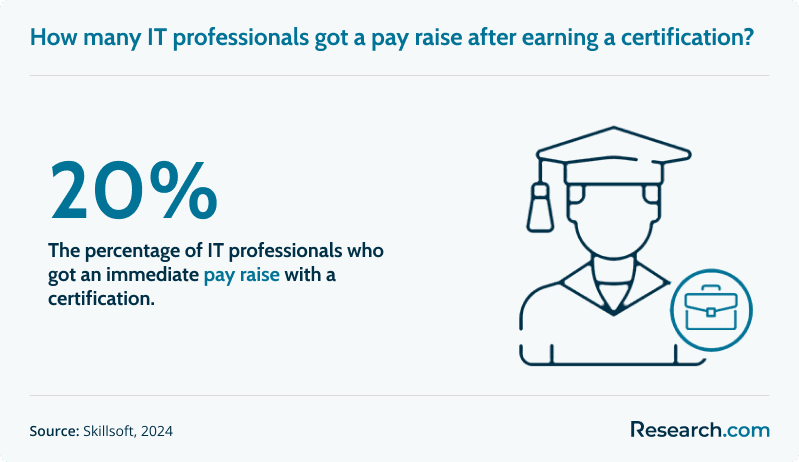
Certifications can strengthen a master’s in IT when they validate a specific technical skill employers recognize. A degree may demonstrate broader graduate-level preparation, while certifications can show current proficiency in cloud platforms, cybersecurity frameworks, project management, data tools, or agile methods.
| Credential strategy | When it makes sense | What to avoid |
| Degree first | You need graduate-level leadership, architecture, research, or management preparation. | Assuming the degree alone proves hands-on skill with current tools. |
| Certification first | You need a faster credential for a specific platform, security role, or technical skill. | Stacking unrelated certifications without a career target. |
| Degree plus certification | You want both broad graduate preparation and proof of specialized, job-ready skills. | Choosing certifications that do not align with your specialization or employer needs. |
Students who want deeper coding preparation may also compare IT graduate programs with a programming degree online, particularly if their goal is software engineering rather than IT management or infrastructure.
Is an online master's in information technology program worth the investment?
The value of an online master’s in information technology depends on the gap between where you are now and the role you want next. The degree is more likely to be worth the investment if it gives you access to advanced responsibilities, a relevant specialization, a stronger portfolio, leadership training, and credible employer recognition.
When the degree is more likely to make sense
- You already work in IT and want to move into management, architecture, cybersecurity, cloud, analytics, or consulting.
- Your employer values graduate education for advancement or salary bands.
- The curriculum includes applied projects you can show to employers.
- The total cost is manageable through savings, aid, employer support, or scholarships.
- The program is accredited and has strong student support for online learners.
When another path may be better
- You need an entry-level credential and have little technical background.
- Your target job primarily requires a certification rather than a graduate degree.
- The program is expensive but does not offer relevant specialization depth.
- You cannot commit enough weekly time to succeed in graduate coursework.
- You are choosing the program only because of rankings, not fit.
If speed is important, compare program length and workload carefully. Some students may also review options such as an accelerated computer science degree online, but the right path depends on whether you need IT leadership preparation, computer science depth, or a different credential altogether.
How do online master's in IT programs enhance networking and industry connections?
Networking in an online IT program does not happen automatically. Strong programs build it into the student experience through live sessions, cohort projects, faculty access, career coaching, industry speakers, alumni groups, virtual career fairs, and employer-connected capstone work.
Before enrolling, ask how online students interact with classmates, alumni, and employers. A program with recorded lectures but limited engagement may be convenient, but it may not provide the professional connections students expect from graduate school. Students comparing adjacent graduate routes can also explore the best online master's in computer science to understand differences in networks, curriculum focus, and employer alignment.
How to choose the best online master's in information technology program?
The best online master’s in information technology program is the one that fits your career target, background, schedule, budget, and preferred learning style. Do not choose based on name recognition alone. A practical, well-supported program with the right specialization may serve you better than a famous program that is too expensive or poorly aligned with your goals.
| Selection factor | What to look for | Questions to ask |
| Accreditation | Recognized institutional accreditation and clear program legitimacy | Is the online degree awarded by the same institution as the campus degree? |
| Curriculum fit | Courses aligned with cybersecurity, cloud, data, software, systems, or IT leadership goals | Will the required courses help me qualify for my target roles? |
| Faculty expertise | Faculty with relevant academic and industry experience | Do faculty have current experience in the areas I want to study? |
| Online learning quality | Reliable platform, virtual labs, technical support, library access, and collaboration tools | What happens if I need help with labs, software, or remote exams? |
| Career support | Resume help, interview preparation, job boards, alumni access, employer events, and portfolio guidance | Are career services available to online graduate students? |
| Total cost | Transparent tuition, fees, materials, and aid options | What will I pay from start to finish if I complete on my planned schedule? |
| Student outcomes | Graduation rates, job placement information, alumni feedback, and employer connections | What data does the program publish about graduate outcomes? |
Internal comparison can also help. For example, a student researching the cheapest online masters in human resources is evaluating a different career pathway, but the decision logic is similar: check accreditation, total cost, outcomes, and curriculum fit before committing.
Common mistakes to avoid
- Choosing without checking accreditation: This can affect financial aid, transfer credit, and employer recognition.
- Looking only at tuition: Fees, materials, software, and delayed graduation can change the real cost.
- Assuming all online programs are equally flexible: Some require live sessions, group work, exams at set times, or occasional campus visits.
- Ignoring prerequisite gaps: Graduate IT work can be difficult without programming, networking, database, or statistics preparation.
- Relying only on rankings: Rankings are useful for discovery, but fit matters more.
- Assuming salary outcomes are guaranteed: Pay depends on role, experience, location, industry, employer, and demonstrated skills.
- Choosing a specialization too early: Make sure the specialization matches actual job postings and your long-term interests.
How are online master's in IT programs integrating emerging AI trends?
Many online master’s in IT programs are adding AI-related content because organizations increasingly need professionals who understand how automation, analytics, machine learning, security, governance, and infrastructure interact. AI coursework may appear as a dedicated concentration, elective sequence, applied project, or module inside data analytics, cloud, cybersecurity, or software engineering courses.
Students should look beyond course titles. A useful AI-related IT curriculum should explain practical implementation, data quality, model limitations, security risks, ethical concerns, and integration with existing systems. If you want a more specialized AI path, compare a general IT degree with an online AI degree.
What career paths are available for graduates of master's in information technology programs?
Graduates of online master’s in information technology programs can pursue technical, managerial, and hybrid roles. The strongest pathway depends on specialization, professional experience, certifications, and the types of projects completed during the program.
| Career path | What the role does | Useful preparation |
| IT Manager | Leads IT teams, manages infrastructure, allocates resources, coordinates vendors, and aligns technology with organizational goals | IT project management, budgeting, governance, systems administration, leadership |
| Systems Architect | Designs complex IT environments so hardware, software, networks, and cloud systems work together effectively | Systems design, cloud architecture, networking, databases, security |
| Data Scientist | Analyzes large datasets, builds models, identifies patterns, and communicates insights for decision-making | Statistics, machine learning, programming, data visualization, database systems |
| Network Security Specialist | Protects networks from intrusions, monitors vulnerabilities, supports incident response, and implements security controls | Cybersecurity, risk management, networking, compliance, threat analysis |
| Cloud Solutions Architect | Designs and manages cloud environments using platforms such as AWS, Microsoft Azure, and Google Cloud | Cloud computing, security, networking, automation, systems architecture |
Can an online master's in IT program prepare me for a career in game development?
An online master’s in IT can support a move toward game development if the curriculum includes software engineering, graphics, interactive systems, cloud services, databases, networking, or project management. However, game development often requires a portfolio that shows actual game projects, programming ability, design thinking, and familiarity with game engines.
If game development is your main goal, compare a general IT master’s with specialized programs and portfolio-focused coursework. Reviewing the best program for game development can help you decide whether a dedicated game development degree is a better match than a broader IT credential.
Can interdisciplinary perspectives enhance my online master's in IT program?
Interdisciplinary study can be valuable when your IT work connects to a specific industry, such as healthcare, life sciences, finance, manufacturing, education, or public policy. Domain knowledge helps IT professionals design better systems because they understand the users, regulations, workflows, and data problems of a particular field.
For example, a student interested in bioinformatics, research data, or health technology may benefit from exposure to life science concepts. Exploring the best biochemistry bachelor's degree online is not a direct substitute for an IT master’s, but it shows how domain-specific education can complement technical training for students pursuing cross-disciplinary work.
What is the job market for graduates of master's in information technology programs?
The job market for computer and information technology professionals remains broad because nearly every industry depends on digital infrastructure, cybersecurity, data systems, cloud platforms, software tools, and technical leadership. According to reports from the U.S. Bureau of Labor Statistics (BLS), IT occupations are expected to grow faster than the average growth rate for all occupations. About 356,700 vacancies are seen each year, on average, in these roles from 2023 to 2033.
Cybersecurity, data science, cloud computing, AI, automation, and remote collaboration technologies continue to influence employer expectations. Employers often want candidates who can combine technical depth with business judgment, communication, security awareness, and project execution. A master’s degree can help, but practical experience and demonstrated skills remain central.
In a 2024 survey, talent recruitment and retention are among the challenges faced by IT decision-makers. IT leaders listed talent recruitment (22%) and retention (23%) as two of their biggest challenges.
Who is the ideal candidate for an online master's in IT program?
The best candidates for an online master’s in IT are self-directed learners with a clear career reason for pursuing graduate study. Many are working professionals who already have IT, software, analytics, engineering, business systems, cybersecurity, or technical support experience and want to move into more advanced or specialized roles.
This program may be a strong fit if you:
- Want to move from technical execution into IT leadership or architecture.
- Need graduate-level preparation in cybersecurity, cloud, data analytics, or systems management.
- Can manage independent study, deadlines, group work, and remote communication.
- Want to keep working while earning a graduate degree.
- Have enough technical background to handle graduate-level coursework or are willing to complete prerequisites.
You may want a different option if you:
- Have no computing foundation and need beginner-level training.
- Only need one platform-specific skill that a certification could address faster.
- Are unsure which IT career path you want.
- Cannot commit consistent time to coursework.
- Need a program tied to a specific licensed profession outside IT.
Students who want a technology career inside healthcare may also compare IT programs with accelerated masters in health informatics online, which may offer a more targeted path for health data, clinical systems, and healthcare technology roles.
Should I include engineering management training in my online master’s in IT program?
Engineering management training can be useful if your career goal involves leading technical teams, managing budgets, coordinating complex projects, assessing risk, or communicating between engineers, executives, vendors, and clients. This type of training is especially relevant for IT professionals who want to move into project leadership, digital transformation, infrastructure management, or technology operations.
If management is a central part of your goal, compare IT programs with leadership concentrations against an affordable engineering management masters degree online. The better choice depends on whether you want deeper IT specialization or broader engineering and operations leadership preparation.
What do graduates say about online master's in information technology programs?
- "Studying for my Master’s in IT online gave me the flexibility to balance work, family, and school without compromising my career growth. The ability to access lectures and coursework at my own pace allowed me to learn in a way that fit my lifestyle, and the real-world applications I learned have helped me excel in my job. It was an empowering experience." — Robin
- "I never thought I could pursue a master's degree while maintaining a full-time job, but the online IT program made it possible. The interactive online platform, collaborative projects, and supportive faculty made me feel just as engaged as in a traditional classroom, and I gained invaluable technical skills that have opened up new career opportunities for me." — Mark
- "The convenience of studying IT online was life-changing for me. I could attend classes from anywhere, and the tight-knit online community of peers and professors made me feel supported throughout the program. This flexibility allowed me to grow my skill set without the stress of commuting or rigid schedules." — David
What challenges might I face in an online master's in IT program?
Online master’s in IT programs can be demanding because students must balance technical coursework, deadlines, labs, projects, reading, and collaboration without the structure of a traditional campus schedule. The format is flexible, but flexibility does not mean the work is light.
| Challenge | Why it happens | How to reduce the risk |
| Time management | Many students study while working full time. | Block weekly study hours before the term begins and avoid overloading courses. |
| Technical gaps | Graduate courses may assume prior programming, networking, database, or math knowledge. | Complete prerequisite refreshers before enrolling in advanced courses. |
| Limited interaction | Some online programs rely heavily on asynchronous work. | Choose programs with live sessions, faculty access, study groups, and active discussion spaces. |
| Fast-changing tools | IT platforms and employer expectations evolve quickly. | Pair coursework with hands-on projects, certifications, and current professional practice. |
| Motivation and isolation | Remote students may feel disconnected from classmates and faculty. | Join virtual cohorts, attend office hours, and participate in group projects early. |
Students focused on security can also strengthen readiness through targeted cyber security education, especially if their IT program offers only a limited security sequence.
How can a data science specialization complement my online master's in IT program?
A data science specialization can make an IT master’s more valuable for students who want to work at the intersection of systems, analytics, and decision-making. IT professionals who understand data pipelines, databases, analytics platforms, machine learning concepts, and visualization can help organizations move from raw information to practical insight.
This combination is useful in roles involving business intelligence, cloud analytics, cybersecurity monitoring, operations optimization, product analytics, and digital transformation. If your primary goal is data science rather than broader IT leadership, compare your options with affordable online data science masters programs before deciding.
Questions to ask before applying
- Is the university accredited, and is the online program covered by that accreditation?
- Does the curriculum match the jobs I want, or is it too broad?
- Are courses asynchronous, live, or blended?
- How many hours per week should I expect to study?
- Are virtual labs, software, and cloud tools included in tuition?
- Can I complete the program while working full time?
- Does the program offer a capstone, portfolio, internship, or employer-connected project?
- What career services are available specifically to online students?
- What is the total cost after tuition, fees, books, and technology requirements?
- Will my employer reimburse any part of the degree?
Key Insights
- An online master’s in information technology is best for students who want advanced technical, managerial, or specialized IT roles and can manage graduate study independently.
- Most programs take 18 months to 3 years, with accelerated options sometimes available in 12-18 months.
- Average tuition for an online master’s in IT generally ranges between $15,000 and $50,000, while the NCES reported average graduate tuition of $20,513 for the 2021-22 academic year.
- Accreditation should be verified before applying because it can affect aid eligibility, credit transfer, and employer recognition.
- Specializations matter. Cybersecurity, data science, cloud computing, software development, and network administration lead to different courses and career paths.
- Salary potential can be strong, but it is not automatic. Role, experience, location, certifications, employer, and demonstrated skills all influence earnings.
- The BLS sees 356,700 vacancies each year, on average, in computer and IT roles from 2023 to 2033.
- Do not choose a program based only on rankings. Compare curriculum fit, total cost, online support, practical projects, career services, and faculty expertise.
- AI is changing IT programs, but students should look for practical AI integration, not just trendy course titles.
- Certifications can complement a master’s degree when they align with a clear career goal, especially in cloud, cybersecurity, project management, and data-focused roles.
References:
- CompTIA. (2024). State of the Tech Workforce 2024. Retrieved December 9, 2024, from CompTIA.
- Bureau of Labor Statistics. (2024, August 29). Computer and Information Technology Occupations. Retrieved December 9, 2024, from BLS.
- Indeed. (2023, December 14). Best IT Master's Degree and Programs To Pursue in 2024. Retrieved December 9, 2024, from Indeed.
- NCES. (n.d.). Average and percentiles of graduate tuition and required fees in degree-granting postsecondary institutions, by control of institution: Academic year 1989-90 through 2021-22. Retrieved December 9, 2024, from NCES.
Other Things You Should Know About Online Master's in Information Technology Programs
Many 2027 online master's programs in Information Technology do not require on-campus residencies, but some may have short-term residencies or intensive workshops. It's essential to check specific program requirements, as they can differ across institutions offering online IT master's degrees.
Many 2027 online Master’s in Information Technology programs include a capstone project instead of a thesis. Typical capstones require 3 to 6 credits and are completed in the final term, with faculty approval of the topic and final project report.





