2027 Best Online Bachelor's in Information Technology Programs

Co-Founder and Chief Data Scientist
Building a lasting career in technology feels more complex than ever, especially with AI changing the game. Yet, the number of bachelor's degrees in computer and information sciences has increased by 129% over the last decade. That’s because a comprehensive degree teaches you how to think and solve problems—skills that don’t become obsolete.
Choosing an online bachelor’s in information technology is a strategic investment in your future adaptability. Our team of career planning experts has seen what works. We created this guide not only to list programs, but also to provide a clear framework for choosing the one that’s the absolute best fit for your specific career goals.
What are the benefits of getting an online bachelor's in information technology?
- You gain access to a wide range of high-demand jobs that are essential in nearly every industry, from healthcare to finance.
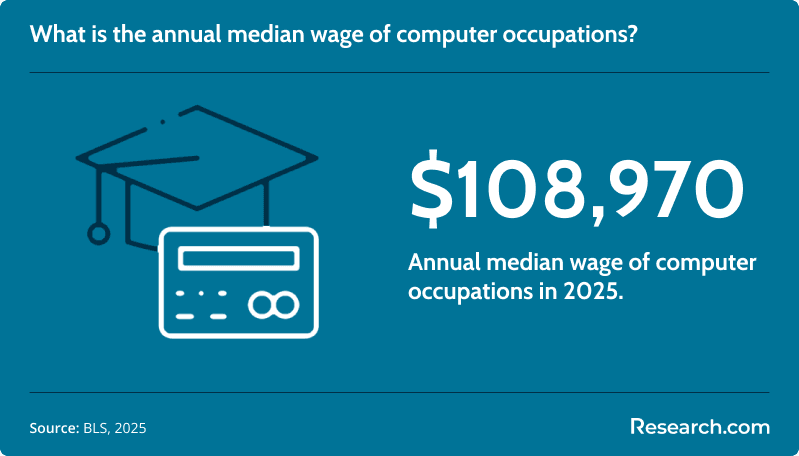
- You position yourself for significant earning potential, as computer occupations have a median annual wage of $108,970.
- You build deep, foundational knowledge that goes far beyond short-term certifications, all while developing the self-management skills employers value in a remote-first world.
What can I expect from an online bachelor's in information technology program degree?
You can expect a structured four-year curriculum with weekly deadlines, interactive virtual labs for hands-on practice, and collaborative projects with classmates. A modern online IT program isn’t just a collection of videos; it’s a complete academic experience where you have direct access to professors through virtual office hours and class discussions.
Think of it this way: short-term bootcamps or certifications are great for learning a specific tool, the “how.” A bachelor’s degree is designed to teach you the foundational principles, the “why.” This deeper understanding enables you to adapt and grow throughout your entire career, not just in your first job.
Where can I work with an online bachelor's degree in information technology degree?
With this degree, you can work in almost any industry you can think of. That’s because every modern company is a tech company in some way. Many people assume IT jobs are only at big-name tech firms, but that’s not where most of the opportunities are.
The vast majority of IT professionals work in the technology departments of other sectors. Think about the IT teams that run the networks for a major hospital system, secure the data for a large bank, or manage the logistics software for a manufacturing company. This demand across the entire economy provides incredible job security and a wide choice of career paths.
How much can I make with an online bachelor's degree in information technology degree?
For an entry-level position, you can expect a starting salary in the $60,000 to $80,000 range. Of course, that figure will depend on your location, your specialization, and the industry you enter.
That's just the starting point. As you gain experience, the growth potential is strong, with the median annual wage for computer occupations sitting at $108,970. Your earning power can climb even higher in top-paying fields, such as information services and finance, which is why choosing a strategic path is so important.
- List of the Best Online Bachelor's in Information Technology Programs for 2027 List of Programs
- How long does it take to complete an online bachelor's in information technology program? Completion Time
- How does an online bachelor's in information technology program compare to an on-campus program? How does an online bachelor's in information technology program compare to an on-campus program?
- What is the average cost of an online bachelor's in information technology program? Program Cost
- What are the financial aid options for students enrolling in an online bachelor's in information technology program? Financial Aid
- What are the prerequisites for enrolling in an online bachelor's in information technology program? What are the prerequisites for enrolling in an online bachelor's in information technology program?
- What courses are typically in an online bachelor's in information technology program? What courses are typically in an online bachelor's in information technology program?
- What types of specializations are available in an online bachelor's in information technology program? What types of specializations are available in an online bachelor's in information technology program?
- How to choose the best online bachelor's in information technology degree program? How to choose the best online bachelor's in information technology degree program?
- What challenges might you face in an online bachelor's in information technology program? What challenges might you face in an online bachelor's in information technology program?
- Can an online bachelor's in IT serve as a pathway to a career in software engineering? Can an online bachelor's in IT serve as a pathway to a career in software engineering?
- What career paths are available for graduates of an online bachelor's in information technology program? What career paths are available for graduates of an online bachelor's in information technology program?
- What is the job market for graduates with an online bachelor's degree in information technology? Job Market
- Can an online bachelor's in IT open doors to accelerated advanced degrees? Can an online bachelor's in IT open doors to accelerated advanced degrees?
- What student support and networking opportunities boost online IT program success? What student support and networking opportunities boost online IT program success?
Best Online Bachelor’s in Information Technology Programs for 2027
An online bachelor’s in information technology can be a practical route into tech for students who want a broad, employer-recognized credential without relocating or pausing work. The decision is not just which school ranks highest. You need to compare accreditation, cost, transfer policies, technical focus areas, student support, certification preparation, and how well the curriculum matches the IT role you want.
This guide explains how to evaluate online IT bachelor’s programs, what the top programs offer, how long they take, what they cost, and how they compare with campus-based degrees, bootcamps, certifications, and related computer science or software engineering pathways. It also covers common mistakes to avoid before enrolling.
Quick answer: What should you look for in an online IT bachelor’s degree?
The strongest online bachelor’s in information technology program is accredited, fits your schedule, accepts applicable transfer credits, offers coursework in your target area, provides career support, and has a total cost you can manage after financial aid. Most programs require 120 credits and are designed to take about 4 years, although transfer credits, certifications, accelerated terms, or competency-based formats may shorten that timeline.
How we rank schools
Choosing a degree program affects your time, finances, and career options, so our ranking process is built around transparent data rather than personal preference.
Our analysis uses information from the Department of Education’s IPEDS database and College Scorecard, along with data from Peterson's and the National Center for Education Statistics. These sources help us compare schools using consistent, factual information.
You can review the full explanation of our ranking process in our methodology.
Program comparison at a glance
| School | Program Length | Credits or Units | Cost | Accreditation |
| Florida International University | 4 years | 120 | $235.57 (in-state); $648.87 (out-of-state) | Accreditation Board for Engineering and Technology (ABET) |
| Colorado State University Global | 4 years | 120 | $375 | Higher Learning Commission (HLC) |
| Excelsior University | 4 years | 120 | $510 | Accreditation Board for Engineering and Technology (ABET) |
| Liberty University | 3-4 years | 120 | $390 | Southern Association of Colleges and Schools Commission on Colleges (SACSCOC) |
| Thomas Edison State University | 4 years | 120 | $440 (in-state); $573 (out-of-state) | Middle States Commission on Higher Education (MSCHE) |
| George Mason University | 4 years | 120 | $433 (in-state); $1,474.50 (out-of-state) | Accreditation Board for Engineering and Technology (ABET) |
| University of Minnesota-Twin Cities | 4 years | 120 | $448 | Higher Learning Commission (HLC) |
| Concordia University, St. Paul | 2 years | 120 | $420 | Higher Learning Commission (HLC) |
| University of Massachusetts Global | 2-4 years | 120 | $500 | WASC Senior College and University Commission (WSCUC) |
| Western Governors University | Approximately 3 years | 121 competency units | $3,760 per 6-month term | Northwest Commission on Colleges and Universities (NWCCU) |
1. Florida International University
Florida International University offers an online IT program that builds technical depth in areas such as cloud computing, DevOps, and database development. Its online format is designed to give students applied experience they can connect to workplace technology problems.
- Program Length: 4 years
- Required Credits to Graduate: 120
- Cost per Credit: $235.57 (in-state); $648.87 (out-of-state)
- Accreditation: Accreditation Board for Engineering and Technology (ABET)
2. Colorado State University Global
CSU Global structures its IT curriculum around workplace-relevant skills and preparation for certification exams from organizations such as CompTIA and AWS. Students can use the school’s specialization options to focus their degree on a specific technology or business direction.
- Program Length: 4 years
- Specializations: Artificial Intelligence (AI) and Robotics; Cybersecurity; Project Management; and Web Application Development
- Required Credits to Graduate: 120
- Cost per Credit: $375
- Accreditation: Higher Learning Commission (HLC)
3. Excelsior University
Excelsior University is built with adult learners in mind and covers major IT foundations while allowing students to choose a general route or a more technical concentration. The cybersecurity technology and network operations options may be especially relevant for students who already know which IT function they want to enter.
- Program Length: 4 years
- Concentrations: Cybersecurity Technology; General; and Network Operations
- Required Credits to Graduate: 120
- Cost per Credit: $510
- Accreditation: Accreditation Board for Engineering and Technology (ABET)
4. Liberty University
Liberty University combines broad IT coursework with concentration options that help students develop a more focused professional profile. The program includes technical areas such as database development, networking, security, gaming design, and web and mobile programming.
- Program Length: 3-4 years
- Specializations: Application and Database Development; Data Networking and Security; Gaming Design; and Web and Mobile Programming
- Required Credits to Graduate: 120
- Cost per Credit: $390
- Accreditation: Southern Association of Colleges and Schools Commission on Colleges (SACSCOC)
5. Thomas Edison State University
Thomas Edison State University’s online IT degree may be a strong option for students who bring prior IT knowledge, professional experience, or eligible certifications. The curriculum includes subjects such as cloud computing and network technology and ends with a capstone tied to current technology issues.
- Program Length: 4 years
- Required Credits to Graduate: 120
- Cost per Credit: $440 (in-state); $573 (out-of-state)
- Accreditation: Middle States Commission on Higher Education (MSCHE)
6. George Mason University
George Mason University emphasizes the use of information technology to improve business operations, while also developing communication, troubleshooting, and analytical skills. Its concentration choices include cybersecurity, computing infrastructure, software solutions, and AI-focused applications.
- Program Length: 4 years
- Concentrations: Software Solutions; Cyber Security; AI Driven Solutions; and Computing Platforms and Infrastructure
- Required Credits to Graduate: 120
- Cost per Credit: $433 (in-state); $1,474.50 (out-of-state)
- Accreditation: Accreditation Board for Engineering and Technology (ABET)
7. University of Minnesota-Twin Cities
The University of Minnesota’s online IT program blends technical preparation with business knowledge, which can help students pursue roles that require both systems expertise and organizational judgment. Students gain exposure to areas such as network administration and database management and may add a cybersecurity minor.
- Program Length: 4 years
- Required Credits to Graduate: 120
- Cost per Credit: $448
- Accreditation: Higher Learning Commission (HLC)
8. Concordia University, St. Paul
Concordia University, St. Paul focuses on applying technology in business settings and includes topics such as AI and cyber defense. Its asynchronous format can work well for employed students, and coursework supports the creation of a digital portfolio.
- Program Length: 2 years
- Required Credits to Graduate: 120
- Cost per Credit: $420
- Accreditation: Higher Learning Commission (HLC)
9. University of Massachusetts Global
UMass Global gives students a choice between instructor-led study and a self-paced, competency-based option. The program includes preparation connected to industry credentials such as CompTIA A+ and offers an emphasis in Project Management.
- Program Length: 2-4 years
- Emphasis: Project Management
- Required Credits to Graduate: 120
- Cost per Credit: $500
- Accreditation: WASC Senior College and University Commission (WSCUC)
10. Western Governors University
WGU’s competency-based IT program lets students move through material as they demonstrate mastery. The curriculum includes several industry certifications and concludes with a capstone project based on a business technology problem.
- Program Length: Approximately 3 years
- Required Competency Units to Graduate: 121
- Tuition: $3,760 per 6-month term
- Accreditation: Northwest Commission on Colleges and Universities (NWCCU)
How long does it take to complete an online bachelor’s in information technology program?
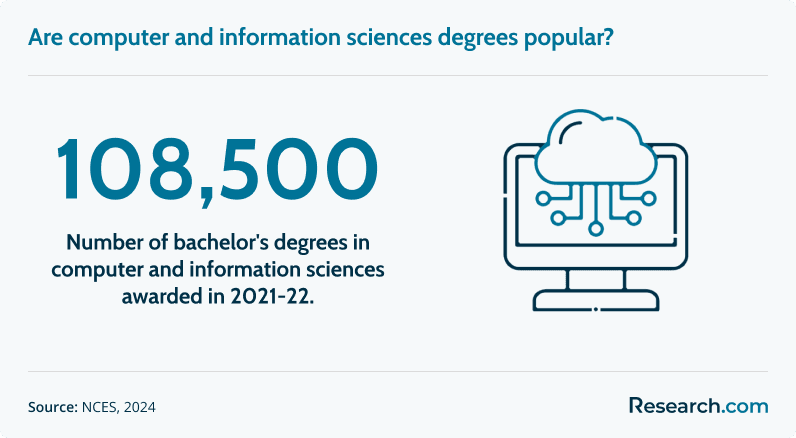
Most online bachelor’s in information technology programs require 120 credits and take about four years of full-time study. That timeline is common, but it is not fixed. In a recent year, over 108,500 bachelor’s degrees were awarded in computer and information sciences alone, showing that this remains a major academic pathway into technology careers.
What can make the degree faster?
Transfer credit is usually the biggest time-saver. Prior college coursework, general education credits, AP courses, dual-enrollment classes, and eligible military or professional training may reduce the number of credits you still need to complete.
Students with IT experience should ask whether the school awards credit for professional certifications. Some universities also use accelerated terms or competency-based formats. If you are comparing closely related technology paths, you may also want to review an accelerated online bachelor’s degree in computer science to see whether a computer science curriculum better matches your goals.
| Factor | How it may affect completion time | What to ask before enrolling |
| Transfer credits | May reduce general education or elective requirements | How many credits will transfer into the IT major? |
| Industry certifications | May count toward selected technical requirements at some schools | Which certifications are eligible for credit? |
| Accelerated terms | May allow students to complete more courses per year | Are courses offered year-round? |
| Competency-based learning | May let experienced students progress faster | How is mastery assessed, and what support is available? |
How does an online bachelor’s in information technology compare to an on-campus program?
At an accredited institution, an online IT bachelor’s degree should meet the same academic standards as the campus version. The core distinction is not usually the credential itself; it is the learning experience, schedule, and type of support you prefer.
Online programs often work best for students who need flexibility because of work, family responsibilities, location, or military service. Campus programs may appeal to students who want face-to-face interaction, structured routines, labs, and informal networking. Employers increasingly expect technology workers to collaborate remotely, so completing an online program can also demonstrate self-management and digital communication skills.
Online degree vs. campus degree: key trade-offs
| Option | Best for | Possible drawbacks |
| Online IT bachelor’s degree | Working adults, transfer students, remote learners, and students who need schedule flexibility | Requires strong time management and proactive communication |
| On-campus IT bachelor’s degree | Students who want in-person classes, campus labs, and local networking | Less flexible and may require commuting or relocation |
| Hybrid IT program | Students who want some campus access while completing part of the degree online | May still require scheduled visits or local availability |
How online degrees differ from bootcamps and short training programs
Online education includes many formats, from full bachelor’s degrees to focused fast-track IT training bootcamps online. These options serve different purposes. A bachelor’s degree provides a broad academic foundation, while bootcamps usually target one narrow skill set and are often shorter.
For many students, the best long-term strategy is not “degree or bootcamp” but “which credential fits the next step?” A bachelor’s degree can support entry into multiple IT roles, while bootcamps and certifications can help add specialized skills later.
What is the average cost of an online bachelor’s in information technology program?
Online IT degree costs vary widely based on school type, residency status, tuition model, fees, and how many credits you transfer. Total tuition can range from around $28,000 to over $176,000. On a per-credit basis, the average is about $417 for in-state public schools and $593 for private schools.
Do not compare programs using tuition alone. The more useful number is total cost of attendance, which may include tuition, required fees, technology charges, books, software, hardware, exam fees, and lost income if you reduce work hours.
| Cost item | Why it matters | Question to ask |
| Tuition | Usually the largest direct expense | Is tuition charged per credit, per term, or by competency period? |
| Fees | Online, technology, graduation, and assessment fees can add up | Which fees are mandatory for online students? |
| Transfer credits | Accepted credits may reduce total tuition | Will I receive a written transfer evaluation before committing? |
| Certification costs | Some programs include exams; others may not | Are certification exam vouchers included in tuition? |
| Books and technology | IT students may need software, hardware, or lab access | What equipment and subscriptions are required? |
Students who plan to combine technology with healthcare, informatics, analytics, or leadership roles may compare IT degrees with specialized healthcare pathways. For example, shortest BSN to PhD online programs are designed for a different audience but may be relevant to nurses seeking advanced credentials alongside data- or technology-focused leadership.
How to think about ROI
Return on investment depends on your total program cost, your current earnings, the amount you borrow, your graduation timeline, and the kinds of roles you pursue after completing the degree. The median salary for computer occupations exceeds six figures, but individual outcomes vary by job title, experience, location, specialization, and employer.
A lower-cost accredited program with strong transfer credit policies may produce a better financial outcome than a higher-priced program with a similar curriculum. Before enrolling, compare expected debt against realistic entry-level roles, not only senior-level salaries.
What financial aid options are available for online IT bachelor’s students?
Students enrolled in accredited online programs may qualify for the same major types of financial aid as campus students. The school’s accreditation status is essential because it affects eligibility for federal aid.
Your first step should be completing the Free Application for Federal Student Aid (FAFSA). The FAFSA is used to determine eligibility for federal grants, federal student loans, and some state or institutional aid. Grants do not have to be repaid, while loans do.
Where to look beyond federal aid
- Employer tuition assistance: If you are working, ask your HR department whether your company reimburses tuition or pays for approved programs.
- School scholarships: Many universities offer awards for transfer students, adult learners, military-affiliated students, or students in technology majors.
- Private scholarships: Technology companies, professional associations, and nonprofits may fund students pursuing IT, cybersecurity, software, or data careers.
- Industry and diversity initiatives: Groups such as Women Who Code and organizations supporting underrepresented students in tech may publish scholarship opportunities or directories.
What are the prerequisites for enrolling in an online bachelor’s in information technology program?
The standard admission requirement is a high school diploma or GED. Some schools require a minimum GPA, while others use test-optional admissions and do not require SAT or ACT scores.
Admission prerequisites are different from courses you may need after acceptance. For example, a school may admit you but still require foundational math or writing coursework if your prior record does not meet specific degree requirements.
Students interested in both healthcare education and technology-supported instruction may also explore an accelerated online nurse educator graduate certificate, although that type of graduate certificate serves a different purpose than an undergraduate IT degree.
How to make your application stronger
If you have work experience, explain how your job responsibilities connect to technology, troubleshooting, customer support, systems, data, or operations. If you hold certifications from CompTIA, Cisco, or similar providers, include them in your application materials.
Recent high school graduates can strengthen their applications by highlighting advanced math or computer courses, robotics or coding projects, part-time technical work, volunteer experience, or personal projects such as websites, home labs, or apps.
What courses are typically included in an online bachelor’s in information technology program?
Online IT programs vary by institution, but most build a broad foundation in infrastructure, systems, security, databases, and problem-solving. Common courses include:
- Computer Networking: Covers how systems communicate, how networks are built, and how organizations maintain connectivity.
- Database Management: Teaches students how to design, organize, query, and protect structured information.
- Information Security: Introduces methods for protecting systems, networks, and data from threats and vulnerabilities.
- Systems Analysis: Develops the ability to identify business needs and design technology solutions that address them.
For students who want to combine IT knowledge with healthcare management responsibilities, a fastest online graduate certificate in nursing leadership may be a later option after building the appropriate academic and professional foundation.
This broad curriculum helps explain why 61% of IT professionals hold a bachelor's degree. The degree is meant to provide adaptable knowledge that can transfer across technologies, not just training on one platform.
Degree coursework vs. certification training
A bachelor’s program teaches the concepts behind networks, databases, security, programming logic, systems design, and organizational technology use. That conceptual base matters because tools change quickly.
Certifications usually focus on defined job tasks, vendor tools, or role-specific knowledge. For instance, an IT degree can prepare you to solve problems across many technical settings, while a credential focused on how to become a certified professional coder, is designed around the rules and processes of one healthcare career path.
What specializations are available in an online bachelor’s in information technology program?
Specializations help you connect a general IT degree to a more specific career direction. The right choice depends on whether you want to work in infrastructure, security, software, cloud, data, project management, or a technology-adjacent business role.
| Specialization area | Examples | Best fit for students interested in |
| Core technical paths | Cybersecurity, Network Operations, Application and Database Development | Security, infrastructure, systems administration, and database roles |
| Development and creative technology | Web and Mobile Programming, Gaming Design, Digital Marketing | Building digital products, user-facing applications, and creative technology projects |
| Business and management | Project Management, IT Management, Fundraising, Public Relations | Technology coordination, operations, leadership, and stakeholder communication |
| Public and social sector fields | Healthcare Management, Criminal Justice, Emergency Management | Applying IT skills in regulated, public-service, or mission-focused organizations |
Students pursuing healthcare-focused leadership may also compare technology programs with specialized clinical credentials, such as fastest online graduate certificate nurse midwifery programs, when their long-term goal is maternal and infant care rather than general IT employment.
Specialization or separate credential?
A concentration within a bachelor’s degree is integrated into the broader curriculum, which can help you connect theory, technical skills, and business context. A separate credential, such as one of the fastest online software engineering bootcamps, usually provides narrower and more intensive training in one skill area.
If you need a broad credential for long-term flexibility, the degree may be the better foundation. If you already have a degree or need one specific technical skill quickly, a bootcamp or certification may be more efficient.
How to choose the best online bachelor’s in information technology degree program
The best online IT program is the one that fits your goals, budget, schedule, and prior credits. A high ranking can help you build a shortlist, but it should not replace your own evaluation.
Step-by-step program selection checklist
- Confirm accreditation. Verify the institution and, when relevant, program-level accreditation before applying.
- Compare the curriculum to your target role. Look for courses and concentrations tied to cybersecurity, networking, cloud, software, data, or management depending on your goals.
- Request a transfer evaluation. Do this before committing so you know your actual time and cost.
- Calculate total cost. Include tuition, fees, books, technology, certification exams, and expected aid.
- Review course delivery. Decide whether you prefer asynchronous courses, live sessions, competency-based pacing, or structured terms.
- Evaluate student support. Ask about tutoring, technical support, career services, internships, employer connections, and academic advising.
- Check outcomes carefully. Review employment information when available, but remember that no school can guarantee a specific salary or job.
Why accreditation should come first
Accreditation is one of the clearest protections against low-quality or misleading programs. It indicates that a school has been reviewed against recognized standards and is important for federal financial aid, transfer credit, graduate school admission, and employer recognition.
You can verify a school’s status through the U.S. Department of Education’s Database of Accredited Postsecondary Institutions and Programs.
Common mistakes to avoid
| Mistake | Why it can hurt you | Better approach |
| Choosing based only on tuition | A low tuition rate may hide fees or poor transfer policies | Compare total cost after transfer credits and aid |
| Ignoring accreditation | Credits may not transfer and federal aid may not apply | Verify accreditation before submitting deposits |
| Assuming all online programs are equally flexible | Some require live attendance or fixed schedules | Ask about synchronous sessions, deadlines, and pacing |
| Selecting a specialization too casually | Your electives may not support your target job | Match concentrations to specific roles and skills |
| Relying only on rankings | A ranked program may not fit your budget or learning style | Use rankings as a starting point, then compare details |
What challenges might you face in an online bachelor’s in information technology program?
Online IT students often benefit from flexibility, but they also need discipline. Without a campus routine, it can be easier to fall behind in technical courses that require steady practice. Networking with classmates, getting quick help from instructors, and staying motivated may require more intentional effort in a virtual format.
Technical problems can also interrupt learning, especially in courses that depend on labs, specialized software, remote servers, or virtual machines. Before enrolling, ask whether the program provides 24/7 technical support, online tutoring, virtual labs, and clear instructor response policies.
If your main goal is a faster technology credential rather than a full IT bachelor’s program, you can compare alternatives such as a computer science fast track degree.
Can an online bachelor’s in IT lead to a software engineering career?
An online IT bachelor’s degree can support a move into software-related work, especially if you choose programming-heavy electives, complete software projects, build a portfolio, and learn development tools outside class. However, IT and software engineering are not identical fields.
IT programs usually focus on systems, networks, security, infrastructure, support, databases, and technology operations. Software engineering programs typically go deeper into software design, algorithms, development methods, testing, and large-scale application building. If your primary goal is software development, compare course lists carefully and review a targeted option such as the most affordable software engineering degree.
What career paths are available for graduates of an online bachelor’s in information technology program?
An IT bachelor’s degree can lead to several technical and technology-adjacent careers, including IT support, network administration, database work, cybersecurity, cloud operations, systems analysis, and technical project coordination. Many graduates do not move through a single straight career ladder. They shift across specialties as they gain experience and identify stronger interests.
For example, a graduate might begin in support, move into networking, specialize in security, and later pursue cloud architecture or IT management. This flexibility is one of the main advantages of a broad IT degree.
Career directions to consider
| Career direction | Typical focus | Useful preparation |
| IT support and operations | Troubleshooting, user support, systems maintenance | Networking, operating systems, customer communication |
| Network and systems administration | Maintaining infrastructure, connectivity, and internal systems | Networking, cloud, security, scripting |
| Cybersecurity | Protecting systems, monitoring threats, improving defenses | Security, networking, risk management, ethical hacking coursework |
| Database and data systems | Organizing, securing, and managing business data | Database design, SQL, data governance, security |
| IT project or management roles | Coordinating technology projects and teams | Project management, communication, business systems analysis |
How earning potential changes over time
Early roles may focus on support, implementation, or junior administration. Higher pay usually comes with experience, specialization, leadership responsibilities, and strong technical proof such as projects or certifications. Graduates who continue developing advanced skills may eventually compete for some of the highest paying IT jobs.
What is the job market for graduates with an online bachelor’s degree in information technology?
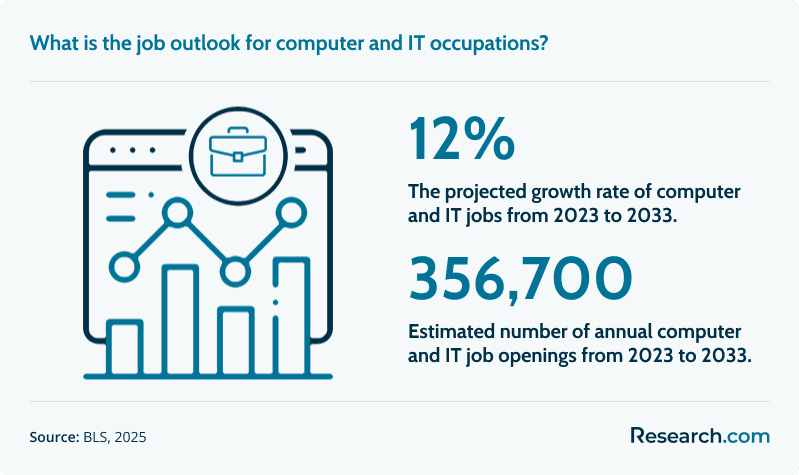
The labor market for computer and information technology workers remains strong. According to the U.S. Bureau of Labor Statistics, employment in computer and information technology occupations is expected to increase significantly from 2023 to 2033, with approximately 356,700 openings every year because of both job growth and replacement needs.
Tech layoffs can make the field look unstable, but those headlines often reflect specific companies or segments of the market. Core IT roles that support hospitals, banks, schools, government agencies, logistics firms, and other organizations remain essential because nearly every sector depends on digital systems.
- Information security analysts are projected to grow 33% between 2023–2033, with around 17,300 openings per year
- Computer and information research scientists are projected to grow 26%, with 3,400 new yearly openings
- Database administrators and architects are expected to grow 9%, with about 9,500 annual openings
Those projections compare with 4% average growth expected across all occupations.
AI and automation: risk or opportunity?
AI is changing IT work, but it does not remove the need for skilled IT professionals. Organizations need people who can implement, integrate, monitor, secure, govern, and troubleshoot AI-enabled systems. One report estimates that 86% of business transformations in the coming years will be driven by AI and related technologies.
For students, this means a strong IT foundation should include security, cloud, data, automation, business analysis, and responsible technology use. AI may change daily tasks, but it also increases the need for professionals who understand infrastructure and risk.
Can an online bachelor’s in IT help you enter accelerated graduate programs?
An online bachelor’s in IT can prepare students for graduate study in areas such as cybersecurity, information systems, data analytics, health informatics, project management, and technology leadership. Your eligibility will depend on the graduate program’s admission requirements, your GPA, prerequisite coursework, and professional background.
Students interested in healthcare data and technology leadership may compare advanced pathways such as the fastest masters of health informatics online.
What student support and networking opportunities help online IT students succeed?
Strong online IT programs provide more than recorded lectures. Look for academic advising, tutoring, technical support, virtual labs, career coaching, resume feedback, interview preparation, employer events, alumni networks, and mentorship opportunities.
Support services matter because online students must often build professional connections deliberately. Programs that host virtual career fairs, connect students with alumni, or provide portfolio guidance may help students translate coursework into job-search materials.
Students pursuing interdisciplinary technology careers may also compare related fields, including healthcare administration degree online accredited programs, when their goal is healthcare operations rather than a traditional IT role.
What graduates say about earning an online bachelor’s degree in information technology
- : "I did not know which direction to take after high school, and the IT degree helped me turn general interest in technology into a real plan. The program was not only about coding. It taught me how to break down problems, evaluate systems, and explain technical solutions, which made interviews much less intimidating. — Liana"
- : "A campus schedule would not have worked with a full-time job and two young children. Studying online let me complete lectures at night and finish assignments on weekends. It was demanding, but earning the degree changed what I believed was possible for my career. — Amara"
- : "I assumed IT meant help desk work until I took cybersecurity courses. Network defense and ethical hacking assignments made the field feel practical and challenging. Choosing that specialization helped me find a career path I actually wanted to stay in. — Nabil"
References:
- Bureau of Labor Statistics, U.S. Department of Labor. (2024). Field of degree: Computer and information technology. Occupational Outlook Handbook. Retrieved July 23, 2025, from BLS.
- Bureau of Labor Statistics, U.S. Department of Labor. (2025a). 15-1299 Computer Occupations, All Other. Occupational Employment and Wage Statistics. Retrieved July 23, 2025, from BLS.
- Bureau of Labor Statistics, U.S. Department of Labor. (2025b). Computer and Information Technology Occupations. Occupational Outlook Handbook. Retrieved July 23, 2025, from BLS.
- Bureau of Labor Statistics, U.S. Department of Labor. (2025c). Computer Programmers. Occupational Outlook Handbook. Retrieved July 23, 2025, from BLS.
- National Center for Education Statistics. (2024). Undergraduate Degree Fields. U.S. Department of Education, Institute of Education Sciences. Retrieved July 23, 2025, from NCES.
- World Economic Forum. (2025). Future of Jobs Report 2025: Insight Report. Retrieved July 23, 2025, from WEF.
- Zippia. (2025). Information technology professional education requirements. Retrieved July 23, 2025, from Zippia.
Key Insights
- Accreditation is the first filter. It affects financial aid, transfer credit, employer recognition, and future graduate study.
- Most online IT bachelor’s programs require 120 credits. A four-year timeline is typical, but transfer credits, certifications, accelerated terms, and competency-based formats can change the schedule.
- Cost comparisons should use total cost, not tuition alone. Fees, books, software, equipment, certification exams, and transfer credit policies can significantly affect what you actually pay.
- Specialization matters. Cybersecurity, networking, software, cloud, database, AI, and project management paths can lead to different entry-level opportunities.
- An IT degree is broader than a bootcamp or certification. The degree builds long-term technical and analytical foundations; shorter credentials can add targeted skills.
- The job market remains favorable, but outcomes are not automatic. Strong projects, internships, certifications, career services, and networking can make a major difference in your job search.
- AI is changing IT work, not eliminating it. Employers still need professionals who can manage, secure, troubleshoot, and govern complex digital systems.
Other Things You Should Know About Online Bachelor's in Information Technology Programs
For online IT bachelor's programs in 2027, accreditation from recognized bodies like ABET (Accreditation Board for Engineering and Technology) is crucial. This ensures that the program meets industry standards and that the degree will be respected by employers and other educational institutions.
In 2027, selecting a program with a comprehensive curriculum is crucial to your success. The University of Maryland Global Campus is renowned for a curriculum that emphasizes practical IT skills, cybersecurity, and emerging technologies. It combines theoretical knowledge with hands-on practice, preparing graduates for rapid industry advancements.