
2027 Fastest Online IT Training Bootcamps

Co-Founder and Chief Data Scientist
Choosing an online IT bootcamp is usually a trade-off between speed, cost, credibility, and job readiness. A short program can help you build technical skills faster than a traditional degree, but not every bootcamp offers the same level of instruction, project work, career support, or employer recognition.
This 2026 guide is for career changers, recent graduates, working adults, and self-taught learners comparing fast online IT training bootcamps. It explains what bootcamps teach, how long they take, what they cost, which careers they may lead to, and how to decide whether a bootcamp or a degree is the better path for your goals.
The demand side remains strong: the U.S. Bureau of Labor Statistics projects employment in computer and information technology occupations to grow by 11.7% between 2023 and 2033, much faster than the average for all occupations. However, competition for entry-level tech jobs has also increased, so the best choice is not simply the shortest bootcamp. It is the program that helps you build marketable skills, complete credible projects, and prepare for interviews in your target role.
Quick answer: Are fast online IT bootcamps worth considering?
Fast online IT bootcamps can be worth considering if you want practical training in software development, cybersecurity, data, cloud, AI, or related technical fields and can commit to an intensive schedule. Many full-time programs can be completed in about three to four months, while part-time options often take longer. A bootcamp is strongest when it includes live or well-supported instruction, portfolio projects, career coaching, transparent outcomes, and curriculum aligned with the jobs you want.
A bootcamp is not a guaranteed job shortcut. Salaries, job offers, and advancement depend on your prior experience, project quality, interview readiness, location, specialization, and the hiring market. Some roles may still favor candidates with degrees, certifications, or deeper academic preparation.
What are the benefits of enrolling in one of the fastest online IT training bootcamps?
- Shorter training timeline: Accelerated bootcamps can help motivated learners build job-focused skills in months rather than years.
- Practical portfolio development: Project-based assignments give students evidence of their skills through applications, dashboards, scripts, security labs, or other technical work.
- Flexible online access: Online delivery can work well for learners balancing employment, caregiving, or geographic limitations.
- Career-focused curriculum: Many bootcamps concentrate on tools employers commonly expect, such as JavaScript, React, Node.js, PostgreSQL, cybersecurity fundamentals, AI concepts, or cloud technologies.
- Potentially strong earning outcomes: Graduates of IT bootcamps can earn as much as $106,000 annually, depending on role, employer, location, experience, and credentials.
What can I expect from an online IT training bootcamp?
An online IT training bootcamp is a short, intensive program designed to teach job-relevant technology skills. Unlike a traditional degree, a bootcamp usually narrows its focus to a specific career track, such as software engineering, cybersecurity, data analytics, cloud engineering, quality assurance, or AI-related development.
Most programs combine technical instruction, independent study, exercises, portfolio projects, and career preparation. The experience can feel demanding because bootcamps compress a large amount of material into a limited timeframe.
| Bootcamp feature | What it means for students | Why it matters |
| Flexible schedule options | Programs may offer full-time, part-time, evening, weekend, or self-paced formats. | Your available weekly study time will determine whether a fast program is realistic. |
| Live or self-directed instruction | Some bootcamps use real-time online classes, while others rely on recorded lessons, readings, and exercises. | Live formats provide structure; self-paced formats require more independence. |
| Hands-on technical work | Students complete coding tasks, labs, team exercises, capstones, or portfolio projects. | Employers often want proof that candidates can apply skills, not just describe them. |
| Career services | Support may include resume reviews, mock interviews, portfolio feedback, job-search planning, and employer introductions. | Career support can be especially useful for career changers without a prior tech network. |
| Specialized tracks | Some programs focus on software engineering, cybersecurity, AI, data analytics, UX/UI, cloud, or QA. | Choosing the right track helps you avoid spending time on skills unrelated to your target role. |
Where can I work with an online IT training bootcamp certificate?
Bootcamp graduates can apply technical skills across industries because nearly every sector depends on software, data, networks, cloud systems, and cybersecurity. The specific jobs you can pursue depend on your bootcamp track, project portfolio, prior background, and whether you add certifications or further education.
- Healthcare: Hospitals, health technology companies, and insurers need workers who can support digital records, secure patient information, maintain applications, and assist with IT systems.
- Finance and banking: Banks, fintech firms, payment platforms, and credit unions hire technical workers for secure applications, backend systems, data workflows, compliance support, and cybersecurity operations.
- E-commerce and retail: Online retailers and logistics companies use developers, analysts, support specialists, QA testers, and systems staff to improve websites, inventory platforms, payment flows, and customer data systems.
- Education and edtech: Schools, universities, and education technology companies need support for learning management systems, student data security, online platforms, analytics, and user experience.
- Government and public services: Public agencies and contractors hire IT workers for infrastructure support, software modernization, cybersecurity, help desk services, and data systems.
- Technology companies and startups: Software companies, SaaS providers, AI firms, cloud vendors, and cybersecurity companies may offer roles in development, support, testing, infrastructure, or technical operations.
How much can I make with an online IT training bootcamp certificate?
The BLS reports a median annual wage of $105,990 for computer and information technology occupations. That figure is useful as a broad benchmark, but bootcamp graduates should be cautious about treating it as an expected starting salary. Actual pay depends heavily on job title, experience, employer, location, industry, portfolio strength, and additional credentials.
Role-level wages vary considerably. Software developers earn an average of $144,570 yearly, information security analysts make $127,730, computer programmers earn $103,640, and web developers take home around $98,790 annually.
Industry can also make a major difference. Cybersecurity analysts in the Web Search Portals, Libraries, Archives, and Other Information Services industry earn up to $190,960. Software developers in Media Streaming Distribution Services, Social Networks, and Other Media Networks & Content Providers can earn as much as $216,110.
Experience matters as much as training format. A learner who completes a bootcamp, builds a strong portfolio, earns recognized certifications, and gains hands-on experience may qualify for better opportunities over time. In contrast, a graduate who finishes quickly but lacks strong projects or interview preparation may face a longer job search.
| Factor | How it can affect salary |
| Target role | Software engineering, cybersecurity, data, QA, support, and networking roles have different pay ranges and hiring requirements. |
| Location | High-cost technology markets may pay more, although living expenses can reduce the real financial advantage. |
| Industry | Media, fintech, cloud, information services, and security-focused employers may offer higher compensation for specialized skills. |
| Prior background | Workers with professional experience, a degree, or transferable domain knowledge may move faster than complete beginners. |
| Credentials | Certifications, degrees, and verified project work can help strengthen a bootcamp graduate’s profile. |
- Fastest Online IT Training Bootcamps
- How long does it take to complete an online IT training bootcamp?
- Are self-paced IT bootcamps faster than instructor-led ones?
- What is the average cost of an online IT training bootcamp?
- What are the enrollment requirements for fast online IT training bootcamps?
- What courses are included in fast online IT training bootcamps?
- Do fast online IT training bootcamps include real-world projects?
- How to choose the best online IT training bootcamp?
- What jobs can I get after a fast-track IT training bootcamp?
- What is the job market for graduates with an online IT training bootcamp certificate?
- Can IT Bootcamps Support Specializations in Niche Tech Areas?
- Can IT Bootcamps Serve as a Bridge to Advanced Tech Degrees?
- What are the potential challenges associated with online IT bootcamps?
- IT Training Bootcamp vs. IT Degree: Which Is Better for You?
Fastest Online IT Training Bootcamps
How do we rank schools?
IT training is a meaningful financial and time commitment, especially for learners who hope to change careers quickly. Research.com evaluated fast online IT bootcamps using a data-informed approach that draws from the Integrated Postsecondary Education Data System, Peterson’s database and its Distance Learning Licensed Data Set, College Scorecard, and the National Center for Education Statistics (NCES).
Our team also reviewed program structure, time to completion, curriculum relevance, cost, and career support using Research.com’s transparent methodology. The goal is to help readers compare programs by more than speed alone.
| Program | Fastest listed completion time | Primary areas | Cost |
| Codesmith | 14 weeks/3 months | Software Engineering + AI/ML Immersive, ML/AI Technical Leadership, JavaScript for Beginners, CS Prep, Future Code X NYC | $22,500 |
| Fullstack Academy | 13 weeks/3 months | Software Engineering, Cybersecurity, AI and Machine Learning, Data Analytics | $13,995 |
| Tech Elevator | 14 weeks/3 months | Web Development | $16,500 |
| TripleTen | 17 weeks/4 months | Software Engineering, AI Automation, Business Intelligence Analytics, Cyber Security, Data Science, Quality Assurance, UX/UI Design | $8,513–14,520 |
| Hack Reactor | 12 weeks/2.7 months | Software Engineering | $19,480 |
| Actualize | 20 weeks/4.6 months | Software Development with AI Engineering focus | $16,900 |
| BrainStation | 27 weeks/6 months | Software Engineering, Data Science, UX Design, Web Development, Digital Marketing | $16,500 |
| Coding Temple | 27 weeks/6 months | Front-End Development with React, Back-End Development with Java8, Back-End Development with Python | $8,995 upfront; $12,495 enroll-now-pay-later |
| Noble Desktop | 27 weeks/6 months | Software Engineering, Data Science, AI, Web Development, Machine Learning, and more | $10,995 |
| Springboard | 39 weeks/9 months | Software Engineering, Data + AI, Cybersecurity, UX/UI Design | $9,900 upfront; $1,540/monthly |
1. Codesmith
Codesmith is built for learners who want an intensive full-stack engineering program with exposure to AI and machine learning concepts. The online format combines technical lectures, pair programming, and collaborative engineering projects, which can be helpful for students who want both structure and peer interaction.
The program also includes weekly virtual community events, giving remote learners more chances to connect with classmates. Codesmith’s program is approved by the Council on Integrity in Results Reporting (CIRR), which can be useful for students looking for outcome transparency.
- Program Length: 14 weeks/3 months (full-time), 39 weeks/9 months (part-time)
- Tracks/Concentrations: Software Engineering + AI/ML Immersive, ML/AI Technical Leadership, JavaScript for Beginners, CS Prep, Future Code X NYC
- Cost: $22,500
2. Fullstack Academy
Fullstack Academy offers a live online software engineering bootcamp designed around full-stack web development. Students work with technologies such as Git, React, PostgreSQL, Express, and Node.js while receiving support from instructors with industry experience.
The program may fit learners who want a structured online classroom and a portfolio-oriented path into software development. Graduates receive a certificate and access to career services that support resume building, interviewing, and job-search preparation.
- Program Length: 13 weeks/3 months (full-time), 22 weeks/5 months (part-time)
- Tracks/Concentrations: Software Engineering, Cybersecurity, AI and Machine Learning, Data Analytics
- Cost: $13,995
3. Tech Elevator
Tech Elevator provides a remote, instructor-led full-stack web development bootcamp approved by CIRR. Students attend live sessions, collaborate through virtual tools, and complete pair programming and group exercises.
This program may appeal to learners who want a high-accountability format with access to one-on-one instructor help during the day. Career preparation includes resume support, mock interviews, and employer connection opportunities.
- Program Length: 14 weeks/3 months (full-time), 32 weeks/7 months (part-time)
- Tracks/Concentrations: Web Development
- Cost: $16,500
4. TripleTen
TripleTen offers online bootcamps with full-time and part-time pacing. Full-time learners attend two live lectures daily, while part-time students participate in weekly live sessions. Its software engineering curriculum includes JavaScript, backend foundations, and advanced HTML, with support from tutors, code reviewers, and success managers.
TripleTen also provides career coaching, which can help students organize their job search, refine application materials, and prepare for interviews after completing technical training.
- Program Length: 17 weeks/4 months (full-time), 39 weeks/9 months (part-time)
- Tracks/Concentrations: Software Engineering, AI Automation, Business Intelligence Analytics, Cyber Security, Data Science, Quality Assurance, UX/UI Design
- Cost: $8,513–14,520
5. Hack Reactor
Hack Reactor offers a full-time online software engineering bootcamp organized into curriculum units. Students complete a project after each unit, which helps them practice new concepts and build portfolio material.
The program begins with an 18–20 hour self-paced prep course intended to prepare students for the pace of the immersive experience. After graduation, learners receive personalized support for the job search.
- Program Length: 12 weeks/2.7 months (full-time intermediate), 16 weeks/4 months (full-time beginner), 30 weeks/7 months (part-time beginner)
- Tracks/Concentrations: Software Engineering
- Cost: $19,480
6. Actualize
Actualize emphasizes live instruction, technical practice, and learning strategies that help students continue improving after the bootcamp ends. Its “Learn-How-To-Learn” approach focuses on problem-solving methods such as experimentation, decomposition, and reading documentation.
Students complete individual and team-based projects using current tools and receive career guidance during and after the program. Prospective students can also attend free sample classes before deciding whether the format fits them.
- Program Length: 20 weeks/4.6 months
- Tracks/Concentrations: Software Development (AI Engineering focus)
- Cost: $16,900
7. BrainStation
BrainStation delivers a project-centered software engineering bootcamp focused on full-stack web development. Students attend evening classes during the week, with additional weekend sessions, making it a possible option for learners who need a structured schedule outside traditional work hours.
The program includes two industry sprint projects with real companies and ends with a BrainStation diploma. Career support includes one-on-one coaching, resume reviews, and a job-search strategy tailored to each graduate.
- Program Length: 27 weeks/6 months
- Tracks/Concentrations: Software Engineering, Data Science, UX Design, Web Development, Digital Marketing
- Cost: $16,500
8. Coding Temple
Coding Temple runs a fully live online bootcamp with real-time instruction and interactive support. Students study topics such as full-stack development, API design, and CI/CD pipelines.
The curriculum includes nine modules and requires a 20-hour weekly commitment. Students complete nine applied projects, which can help them demonstrate readiness for entry-level technical work.
- Program Length: 27 weeks/6 months
- Tracks/Concentrations: Front-End Development with React, Back-End Development with Java8, Back-End Development with Python
- Cost: $8,995 (upfront); $12,495 (enroll-now-pay-later)
9. Noble Desktop
Noble Desktop offers a software engineering certificate bootcamp approved by the New York State Department of Education. The curriculum covers full-stack tools and languages such as HTML, CSS, JavaScript, React, Python, Django, and Node.js.
Small class sizes and twelve one-on-one mentoring sessions can help students receive individualized guidance. Learners can also retake any module or the full program once for free within a year.
- Program Length: 27 weeks/6 months (full-time)
- Tracks/Concentrations: Software Engineering, Data Science, AI, Web Development, Machine Learning, and more
- Cost: $10,995
10. Springboard
Springboard offers an online software engineering bootcamp centered on full-stack development, mentorship, and career planning. The curriculum includes a unit on using generative AI to improve coding speed and accuracy.
Students complete five substantial portfolio projects, including a capstone that requires building a full web application. Career development is integrated into the program through coaching and individualized job-search planning.
- Program Length: 39 weeks/9 months
- Tracks/Concentrations: Software Engineering, Data + AI, Cybersecurity, UX/UI Design
- Cost: $9,900 (upfront); $1,540/monthly
How long does it take to complete an online IT training bootcamp?
Online IT bootcamps vary in length based on schedule, intensity, and subject area. Full-time programs are typically the fastest, with many designed for completion in roughly 12 to 16 weeks. These programs often require a demanding weekly commitment and may include live instruction, assignments, labs, and group projects.
Part-time bootcamps are usually longer because they spread the workload across evenings, weekends, or fewer weekly hours. Many part-time formats run about 20 to 30 weeks, while some extend further depending on curriculum depth and student pacing. Self-paced bootcamps can be faster for highly disciplined students, but they can also take longer if learners delay assignments or need more time to master difficult topics.
| Format | Typical learner | Main advantage | Main risk |
| Full-time | Learners who can pause or reduce work commitments | Fastest route through the curriculum | Heavy workload and less flexibility |
| Part-time | Working adults and caregivers | More manageable schedule | Longer time to completion |
| Self-paced | Independent learners with strong discipline | Maximum flexibility and possible acceleration | Less accountability and higher risk of losing momentum |
Fast online IT bootcamps are similar in concept to other accelerated programs that compress career training into a shorter timeline. For example, the shortest hospitality management online programs are also designed for learners who want a quicker route into or upward within an industry.
The best timeline is the one you can sustain. A 12-week bootcamp may look attractive, but if you cannot commit enough weekly hours, a part-time option may lead to better learning and stronger final projects.
Are self-paced IT bootcamps faster than instructor-led ones?
Self-paced IT bootcamps can be faster than instructor-led programs, but only for students who can study consistently, solve problems independently, and keep moving without external deadlines. Instructor-led bootcamps usually follow a fixed schedule, so they may not be as flexible, but they provide structure, live support, and accountability.
Self-paced bootcamps work best if you:
- Are comfortable planning your own weekly study schedule
- Already have some technical background or strong problem-solving habits
- Want to study during evenings, weekends, or unpredictable blocks of time
- Can move quickly through easier material without waiting for a class cohort
Instructor-led bootcamps work best if you:
- Learn better with live explanations and real-time feedback
- Need scheduled milestones to stay motivated
- Want peer collaboration, pair programming, or group projects
- Prefer direct access to instructors when concepts become difficult
The same choice appears in other fast online training fields. For example, many shortest AutoCAD online certificate programs also use accelerated, flexible formats that require students to decide between independent pacing and structured instruction.
Speed should not be the only criterion. A faster program is only valuable if you retain the material, complete meaningful projects, and can explain your work in technical interviews.
Public perceptions of bootcamps are also more mixed than perceptions of traditional colleges. According to an HCM and EDGE Research (2024), commissioned by the Bill & Melinda Gates Foundation, many high schoolers and non-enrolled adults believe four-year and two-year colleges provide strong value. By comparison, only 36% of high schoolers and 41% of non-enrolled adults view bootcamp programs as valuable.
That does not mean bootcamps lack value. It means students should understand what a bootcamp can and cannot do. A bootcamp can accelerate skill development, but a degree may still carry stronger recognition for some employers, industries, or advanced roles.
The chart below shows how high school students and non-enrolled adults evaluate the value of different education options.
What is the average cost of an online IT training bootcamp?
Online IT training bootcamp tuition varies by provider, subject area, instructional format, program length, and included support. Many comprehensive programs cost between $7,000 and $15,000, although some are lower and others are more expensive.
Higher-cost programs may include live instruction, mentorship, career coaching, portfolio reviews, employer networking, or longer access to learning resources. Lower-cost options are often self-paced or narrower in scope. Neither model is automatically better; the right choice depends on your learning needs, target role, and ability to stay accountable.
If cost is the deciding factor, compare lower-priced options carefully. Some affordable software engineer training bootcamp online programs are priced under $5,000, particularly when they use self-paced formats or flexible payment models. Other programs may offer scholarships, installment plans, or income share agreements.
| Cost item | Why students should check it |
| Tuition | Confirm the full tuition, not only the advertised starting price or monthly amount. |
| Payment plan terms | Deferred tuition, installment plans, and enroll-now-pay-later options can increase the total amount paid. |
| Equipment and software | Some programs require a reliable computer, internet access, cloud credits, or paid tools. |
| Prep courses | Introductory courses may be required before enrollment or recommended for beginners. |
| Career services | Ask whether job-search support is included, limited, or available only for a certain period. |
| Opportunity cost | Full-time study may reduce your ability to work during the program. |
When evaluating return on investment, consider the broader market as well as your personal readiness. The global IT services market was valued at $1.50 trillion in 2024 and is projected to nearly double, reaching approximately $2.98 trillion by 2034, with a compound annual growth rate (CAGR) of 7.11%, according to Precedence Research.
That growth suggests continued demand for technical services, but it does not guarantee an individual job outcome. A bootcamp’s value depends on whether it helps you gain skills that employers actually need.

What are the enrollment requirements for accelerated online IT training bootcamps?
Most accelerated online IT bootcamps are designed to be accessible to beginners, career changers, and working adults. Many do not require a computer science degree. Instead, they look for motivation, time availability, basic technical readiness, and the ability to learn quickly.
Requirements differ by provider and track. A beginner software engineering bootcamp may focus on aptitude and commitment, while an intermediate program may expect prior coding knowledge. Cybersecurity, cloud, and data tracks may also ask for basic familiarity with computers, networking, or analytical thinking.
- Technical readiness: Applicants may need to use online learning platforms, video conferencing tools, file management systems, and basic computer functions. Some programs provide onboarding materials for students who need a refresher.
- Entrance assessment: Some bootcamps use aptitude tests, logic exercises, or beginner coding challenges to assess problem-solving ability.
- Admissions interview: Interviews often evaluate motivation, communication skills, career goals, and whether the applicant understands the intensity of the program.
- Track selection: Applicants may need to choose a concentration such as front-end development, software testing, cybersecurity, or data analytics. Learners considering QA roles should also review software tester requirements, since testing roles may emphasize documentation, detail orientation, and quality assurance workflows.
- English proficiency: Because most bootcamp materials and live sessions are delivered in English, non-native speakers may need to demonstrate language readiness.
Questions to ask before applying
- Is the bootcamp truly beginner-friendly, or does it assume prior coding experience?
- How many hours per week should I expect to study outside class?
- What happens if I fall behind?
- Can I switch tracks after enrolling?
- Does the program provide prep materials before the start date?
What courses are included in fast online IT training bootcamps?
Fast online IT bootcamps focus on practical skills rather than broad general education. Most begin with fundamentals, then move into tools, workflows, and projects tied to a specific career path. A software engineering bootcamp will look different from a cybersecurity or cloud bootcamp, but many share core topics.
Accelerated programs in other fields use a similar structure. For instance, shortest online professional writing programs compress essential communication and content skills for learners who need career-focused training in less time.
- Computer programming fundamentals: Students learn core coding concepts, often with beginner-friendly languages such as JavaScript. Topics may include variables, functions, loops, conditionals, debugging, and basic application logic.
- Front-end web development: Learners build the user-facing parts of websites using HTML, CSS, JavaScript, responsive design practices, and frameworks such as React.
- Back-end web development: Students learn how servers, APIs, databases, authentication, and application logic work, often using tools such as Node.js or Django.
- Database management: Coursework may cover SQL and NoSQL databases such as PostgreSQL and MongoDB, including queries, schemas, relationships, and data retrieval.
- Network fundamentals: Students study IP addresses, routing, protocols, and device communication. This can be useful preparation for learners considering the cheapest CompTIA network training course online or the CompTIA Network+ certification.
- Cybersecurity essentials: Students learn about threats, encryption, firewalls, access control, vulnerability assessment, phishing, and incident response basics.
- DevOps and deployment: Coursework may introduce CI/CD pipelines, automated testing, deployment workflows, cloud hosting, and system monitoring.
- Software testing and quality assurance: Learners practice identifying defects, writing test cases, using QA workflows, and improving software reliability.
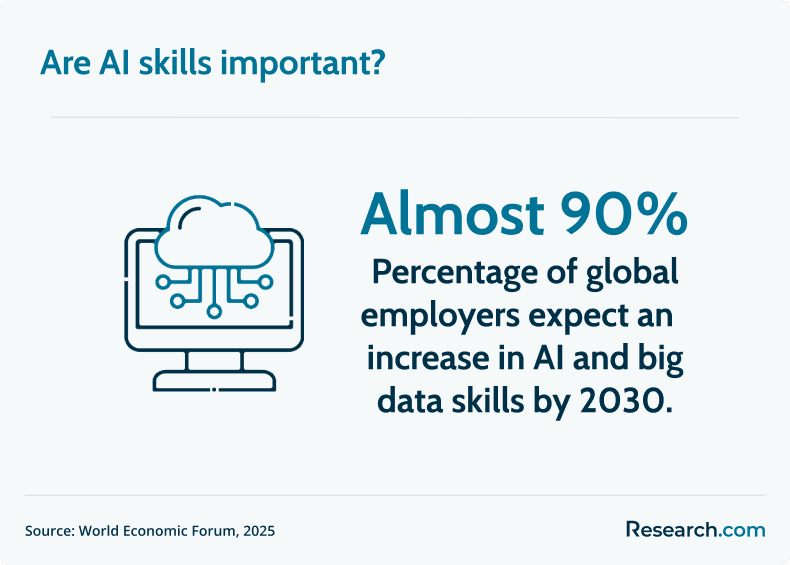
Many programs now include AI, big data, cybersecurity, cloud, and automation content because employer expectations are shifting. The World Economic Forum’s Future of Jobs Report (2025) identifies AI, big data, technological literacy, and analytical thinking as core skills by 2030. Networks and cybersecurity are also becoming more important as organizations rely more heavily on digital infrastructure.
Do fast online IT training bootcamps include real-world projects?
Yes. Strong online IT bootcamps usually include real-world projects because projects are one of the best ways to turn lessons into demonstrable skills. A portfolio can help employers see how you think, build, test, troubleshoot, and explain technical work.
Project requirements vary by track. Software engineering students may build a full-stack application using React, Node.js, and PostgreSQL. Cloud students in one of the most affordable online cloud engineering bootcamps may design a secure and scalable cloud environment using AWS and Terraform.
Data analytics students may create dashboards that visualize business performance, while DevOps learners may configure CI/CD pipelines for deployment and monitoring. Cybersecurity students may complete labs involving threat detection, vulnerability analysis, or incident response scenarios.
| Project type | What it demonstrates | Useful for roles such as |
| Full-stack web application | Front-end, back-end, database, API, and deployment skills | Web developer, software engineer |
| Security lab or incident response exercise | Threat analysis, defensive thinking, documentation, and remediation | Cybersecurity analyst, security support specialist |
| Cloud infrastructure build | Networking, automation, scalability, and cloud platform knowledge | Cloud support associate, cloud engineer trainee |
| Data dashboard | Data cleaning, visualization, business analysis, and storytelling | Data analyst, BI analyst |
| QA testing suite | Test planning, bug reporting, automation, and software quality practices | QA tester, software tester |
When comparing programs, ask to see examples of recent student projects. A vague promise of “hands-on learning” is not enough. You want clear evidence that the bootcamp requires work similar to what entry-level employees actually do.
How to choose the best online IT training bootcamp?
The best online IT bootcamp is the one that matches your target job, schedule, budget, learning style, and level of prior experience. A program can be highly rated and still be wrong for you if it teaches the wrong tools or moves faster than you can realistically manage.
Step-by-step checklist for comparing bootcamps
- Start with the job, not the school: Decide whether you are aiming for software engineering, web development, cybersecurity, cloud, data, UX/UI, QA, or technical support.
- Review the curriculum line by line: Confirm that the program teaches current tools used in your target role and includes enough depth for your experience level.
- Match the schedule to your real life: Full-time study may be fastest, but part-time study may produce better results if you are working. Learners outside IT can also compare accelerated formats in other fields, such as the shortest public relations master's degree online.
- Evaluate the instructional model: Decide whether you need live classes, mentor meetings, office hours, code reviews, or can succeed independently.
- Inspect career services: Ask about resume help, interview practice, technical interview preparation, portfolio review, alumni networks, and hiring partner access.
- Check instructor experience: Look for instructors who have worked in relevant technical roles and can explain workplace expectations.
- Read outcomes carefully: Review job placement claims, salary claims, completion rates, refund policies, and whether outcomes are independently reported.
- Compare total cost: Include tuition, fees, payment-plan costs, equipment, prep work, and income lost while studying.
- Look for credible approvals: CIRR participation, state approval, or other transparency measures can help you evaluate quality, though they do not guarantee employment.
Students interested in cloud security should consider whether a bootcamp complements certification-focused training. For example, fast-track online CCSP certification training may be useful for learners who want recognized cloud security preparation in addition to broader IT skills.
Common mistakes to avoid
- Choosing only the fastest option: A shorter timeline is not helpful if the curriculum is too shallow or rushed.
- Ignoring admissions fit: Intermediate programs can overwhelm beginners who skip prep work.
- Looking only at tuition: Career support, mentorship, project feedback, and payment terms can affect overall value.
- Assuming a certificate guarantees a job: Employers evaluate skills, projects, interviews, experience, and role fit.
- Not checking outcome transparency: Placement rates and salary claims should be clearly defined and verifiable.
- Skipping portfolio review: A weak portfolio can limit your job prospects even after completing a reputable program.
- Relying only on rankings: Rankings are a starting point, not a substitute for comparing curriculum, schedule, cost, and support.
What jobs can I get after a fast-track IT training bootcamp?
Fast-track IT bootcamps can prepare students for entry-level or early-career roles in software, web development, technical support, cybersecurity, QA, UX/UI, systems analysis, and related areas. The exact role you can pursue depends on the bootcamp track, your prior experience, your portfolio, certifications, and local or remote hiring conditions.
- Computer Network Support Specialists ($79,610): These professionals troubleshoot network issues, assist users, configure equipment such as routers and switches, and monitor performance.
- IT Consultants ($86,843): IT consultants advise organizations on software, systems, technology upgrades, integrations, and efficiency improvements. The IT consultant salary depends on industry, experience, client base, and specialization.
- Web Developers ($98,790): Web developers create and maintain websites and web applications using HTML, CSS, JavaScript, and frameworks such as React.
- Network Administrators ($101,190): These workers maintain servers, routers, internal networks, and related infrastructure so systems remain stable and secure.
- Computer Programmers ($103,640): Programmers write, test, maintain, and update code that supports applications and systems.
- QA Testers ($110,260): QA testers identify bugs, document defects, test usability, and help development teams improve software quality.
- UX/UI Designers ($111,450): UX/UI designers improve digital products by researching users, designing interfaces, building prototypes, and testing usability.
- Computer Systems Analysts ($111,960): Systems analysts evaluate technology needs and recommend solutions that connect business goals with IT systems.
- Cybersecurity Analysts ($127,730): Cybersecurity analysts monitor threats, protect systems, respond to incidents, and help reduce the risk of breaches.
- Software Engineers ($144,570): Software engineers design and build applications, tools, platforms, and automated systems for organizations or consumers.
Some learners combine IT training with technical knowledge from hands-on trades or facilities management. For example, affordable online HVAC certifications may complement IT skills for people interested in smart building technology, IoT-enabled systems, facilities IT support, or building automation.
These positions can serve as entry points into the technology field. Advancement usually comes from experience, stronger projects, specialization, certifications, and continued learning.
The chart below displays average wages for selected IT-related jobs.
What is the job market for graduates with an online IT training bootcamp certificate?
The overall job market for IT talent remains favorable, but it is uneven. Bootcamp graduates may find strong opportunities in software development, cybersecurity, data, AI, and cloud-related work, while some entry-level roles have become more competitive.
According to the BLS, computer and information technology occupations are projected to generate about 356,700 job openings annually (11.7%) between 2023 and 2033. Demand is tied to artificial intelligence, cloud infrastructure, advanced data systems, software products, and security needs.
Several computer and IT roles have especially strong projected growth. Data scientists are projected at 36%, information security analysts at 32.7%, computer and information research scientists at 25.6%, and software developers at 17.9%.
Security-focused learners may benefit from specialized preparation beyond a general bootcamp. For example, the fastest online ISC2 CGRC training bootcamps can help professionals build skills related to governance, risk, compliance, cybersecurity frameworks, and risk assessment.
However, the market is not strong for every occupation. Entry-level tech roles are becoming more saturated (Berkowitz, 2024), and demand for some programming skills is declining. The BLS projects a 9.6% decline in employment for computer programmers and a 2.6% drop for network and systems administrators, with automation and outsourcing contributing to those trends.
For bootcamp graduates, this means specialization matters. A general coding certificate may not be enough. Candidates should build strong portfolios, practice technical interviews, learn collaboration tools, understand AI-assisted workflows, and keep adding skills after graduation.
The chart below shows the job outlook for selected computer and IT occupations.
Can IT Bootcamps Support Specializations in Niche Tech Areas?
Yes, but usually as a starting point rather than a complete substitute for specialized training. A general IT bootcamp can teach programming, systems thinking, debugging, deployment, and collaboration skills that transfer into niche fields. However, areas such as game development, bioinformatics, geospatial technology, robotics, or advanced cybersecurity often require additional domain knowledge.
For example, learners interested in game development may need more than general coding practice. They may benefit from studying game engines, interactive design, physics, animation workflows, and specialized programming. In that case, comparing bootcamp training with the best game development online degree options can help students decide whether they need a broader academic program.
Can IT Bootcamps Serve as a Bridge to Advanced Tech Degrees?
IT bootcamps can help learners test their interest in technology, build practical skills, and prepare for further study. They can be especially useful for students who lack a technical background and want hands-on experience before committing to a longer degree program.
Bootcamp experience may also help students understand which advanced field they want to pursue. For instance, someone who enjoys programming and data analysis may later explore affordable bioinformatics master's programs online to combine computing skills with biological and health-related data work.
What are the potential challenges associated with online IT bootcamps?
Online IT bootcamps can be effective, but they also come with risks. Curricula can fall behind fast-changing technologies, program quality varies, and some providers make employment outcomes difficult to verify. Online learners must also manage time, distractions, motivation, and technical frustration without the structure of a campus environment.
Students should review instructor qualifications, curriculum updates, project requirements, career support, completion policies, and outcome reporting before enrolling. Comparing bootcamps with traditional academic pathways, such as the best online geoscience degree programs, can also clarify how different credentials support long-term career goals.
| Challenge | Why it matters | How to reduce the risk |
| Intense pace | Fast programs can overwhelm beginners. | Complete prep work and choose a schedule that fits your real availability. |
| Variable quality | Bootcamps are not all evaluated the same way. | Check approvals, reviews, outcomes, curriculum, and instructor backgrounds. |
| Limited employer recognition | Some employers may prefer degrees or experience. | Build strong projects, earn certifications when relevant, and network actively. |
| Online learning demands | Remote study requires discipline and reliable technology. | Create a weekly schedule, use office hours, and join peer study groups. |
| Job-search competition | Entry-level roles can attract many applicants. | Specialize, tailor applications, practice interviews, and keep improving after graduation. |
IT Training Bootcamp vs. IT Degree: Which Is Better for You?
The better option depends on your career target, timeline, budget, and need for academic credentials. A bootcamp is usually better for learners who want focused, practical training and can move quickly into a portfolio-driven job search. A degree is usually better for learners who want deeper theory, broader academic preparation, access to internships, graduate school eligibility, or roles where employers expect a bachelor’s or master’s degree.
Students thinking broadly about long-term education may also consider affordable degree options outside IT. For example, the cheapest online anthropology degree can build research, writing, and cultural analysis skills that may complement technical work in user research, product strategy, or human-centered technology.
| Decision factor | IT bootcamp | IT degree |
| Typical purpose | Fast, practical career preparation for a specific technical role | Broad academic foundation in computing, theory, systems, and general education |
| Time commitment | Often months | Usually longer than a bootcamp |
| Curriculum depth | Focused on job-ready tools and projects | Broader and more theoretical, with deeper foundations |
| Cost profile | Often lower than a full degree, but varies widely | Often higher overall, though financial aid and transfer credits may help |
| Employer perception | Useful when paired with strong projects and skills | More widely recognized for roles requiring formal education |
| Best fit | Career changers, upskillers, and learners targeting applied roles quickly | Students seeking long-term academic credentials, internships, graduate study, or advanced roles |
Choose an IT bootcamp if:
- You want to enter the job market quickly with practical technical skills.
- You can commit to an intensive study schedule.
- You already know your target role and the tools you need to learn.
- You value portfolio work, mentorship, and career coaching.
- You do not need a degree for your immediate career goal.
Choose an IT degree if:
- You want deeper computer science theory and broader academic preparation.
- Your target role commonly requires a bachelor’s or master’s degree.
- You may pursue graduate school or research-oriented work later.
- You want access to internships, faculty networks, and formal academic credentials.
- You are aiming for roles where a degree may improve long-term mobility.
Some careers strongly favor formal education. For example, students asking what degree do you need to be a data scientist should know that many employers expect at least a bachelor’s or master’s degree in computer science, statistics, or a related field.
Key Insights
- Fast online IT bootcamps can help motivated learners build practical tech skills in months, but speed should not outweigh curriculum quality, project depth, and career support.
- Full-time programs are often the fastest, while part-time and self-paced options may be better for working adults who need flexibility.
- Bootcamp costs vary widely. Many comprehensive programs cost between $7,000 and $15,000, but students should compare total cost, payment terms, support services, and opportunity cost.
- Strong bootcamps include real-world projects. A credible portfolio can be as important as the certificate itself when applying for entry-level technical roles.
- The IT job market is growing overall, with BLS projecting 356,700 annual openings and 11.7% growth between 2023 and 2033, but entry-level competition remains real.
- Specialization matters. Cybersecurity, data, AI, cloud, and software development may offer stronger opportunities than roles facing automation or outsourcing pressure.
- A bootcamp is best for focused, job-ready training. A degree is better when the target career requires deeper theory, formal credentials, internships, or graduate education.
- Before enrolling, ask about admissions requirements, weekly workload, instructor access, project expectations, career services, outcome reporting, refund policies, and whether the curriculum matches your target job.
References:
- HCM, & EDGE Research. (2024, March). Continuing to Explore the Exodus from Higher Education: Year Two. https://hcmstrategists.com/resources/hcm-edge-research-continuing-to-explore-the-exodus-from-higher-education
- U.S. Bureau of Labor Statistics. (2024). Emergency Management Directors [Interactive data]. May 2024 OEWS Profiles, Occupational Employment and Wage Statistics (OEWS) Profiles. Retrieved June 27, 2025, from https://data.bls.gov/oesprofile
- U.S. Bureau of Labor Statistics. (2025a, April 18). Computer and Information Technology Occupations. Occupational Outlook Handbook. https://www.bls.gov/ooh/computer-and-information-technology
- U.S. Bureau of Labor Statistics. (2025b, April 18). Occupational projections, 2023–33, and worker characteristics, 2023 (Numbers in thousands). Employment Projections. https://www.bls.gov/emp/tables/occupational-projections-and-characteristics.htm
- World Economic Forum. (2025, January). Future of Jobs Report 2025. https://www.weforum.org/publications/the-future-of-jobs-report-2025
- ZipRecruiter. (2025, June 20). IT Consultant Salary. Retrieved June 27, 2025, from https://www.ziprecruiter.com/Salaries/It-Consultant-Salary
Other Things You Should Know About the Fastest Online IT Training Bootcamps
No, many accelerated online IT bootcamps accept beginners, but they usually require basic computer literacy, reliable internet access, and availability for 15 to 30 hours of study per week. Some advanced tracks, such as cybersecurity or cloud support, may ask for prerequisite knowledge or a placement assessment.
2027's fastest online IT training bootcamps cover in-demand specialties such as cybersecurity, data science, cloud computing, and coding. They focus on providing intensive, accelerated courses that equip students with essential skills in these rapidly evolving technology fields.


