2027 Best Online CompTIA A+ Training Bootcamps

Co-Founder and Chief Data Scientist
With the tech industry accounting for 8.6% of the U.S. economy's direct value, the opportunity is undeniable. The real challenge is breaking in. Figuring out that first step can feel overwhelming, especially if you are changing careers and worry your past skills won't count, or if you are trying to land your first professional job.
That is precisely why this guide was created. Think of it as more than just a list of the best online CompTIA A+ training bootcamps. It is a complete roadmap from our career planning experts, designed to give you a clear, strategic path to your first role in IT and show you how your background is a valuable asset.
What are the benefits of attending an online CompTIA A+ training bootcamp?
- You will gain the job-ready skills needed to secure in-demand roles like IT Support Specialist or Help Desk Technician, which are essential to every single industry.
- You will enter a field where there is a 93% positive salary gain expectation after certification, setting you up for significant income growth throughout your career.
- Completing one of the top online CompTIA A+ training bootcamps gives you the flexibility to learn on your schedule and unlocks more career choices, an outcome 91% of certified professionals confirm.
What can I expect from an online CompTIA A+ training bootcamp?
A quality online bootcamp is an accelerated, intensive program designed to get you job-ready, fast. Don't confuse this with passively watching pre-recorded videos. These are active learning environments.
You should expect live instruction from expert teachers who work in the field. You'll also spend significant time in hands-on virtual labs, working with the same hardware and software you'll use on the job. The entire experience is structured around a single goal: preparing you to pass your certification exam and succeed in your first IT role.
Where can I work with an online CompTIA A+ training bootcamp?
With a CompTIA A+ certification, you are qualified for foundational roles like Help Desk Technician, IT Support Specialist, or Field Service Technician. Now, it is crucial that you see these roles for what they are: the launchpad for your entire IT career.
Some people mistakenly see support as a "dead-end," but it's the opposite. This is where you learn how a company's technology actually works and how to communicate with users. It's the best training ground in the industry.
Every senior IT professional, from network engineers to cybersecurity analysts, understands the value of this starting point. For those of you changing careers, this is a huge advantage, as you can find a support role in an industry you already know well.
How much can I make with an online CompTIA A+ training bootcamp?
The U.S. Bureau of Labor Statistics reports that the median annual wage for computer user support specialists was $60,340 in May 2024. For many people changing careers, this represents a significant and immediate salary increase over their previous field.
It's important to view this as a strong starting salary. This isn't a six-figure job on day one, but it is a solid financial foundation for a career with high growth potential. The real value is the career trajectory and earning power you will build from this essential first role.
- List of the Best Online CompTIA A+ Training Bootcamps for 2027 List of Bootcamps
- How long does it take to complete an online CompTIA A+ training bootcamp? Completion Time
- How does an online CompTIA A+ training bootcamp compare to an on-campus training bootcamp? How does an online CompTIA A+ training bootcamp compare to an on-campus training bootcamp?
- What is the average cost of an online CompTIA A+ training bootcamp? Bootcamp Cost
- What are the financial aid options for students enrolling in an online CompTIA A+ training bootcamp? Financial Aid
- What are the prerequisites for enrolling in an online CompTIA A+ training bootcamp? Requirements
- What courses are typically in an online CompTIA A+ training bootcamp? What courses are typically in an online CompTIA A+ training bootcamp?
- What types of specializations are available in an online CompTIA A+ training bootcamp? What types of specializations are available in an online CompTIA A+ training bootcamp?
- How Do Online CompTIA A+ Bootcamps Stay Current with Industry Trends? How Do Online CompTIA A+ Bootcamps Stay Current with Industry Trends?
- How to Choose the Best Online CompTIA A+ Training Bootcamps How to Choose the Best Online CompTIA A+ Training Bootcamps
- What career paths are available for graduates of an online CompTIA A+ training bootcamp? Career Paths
- What is the job market for graduates with an online CompTIA A+ training bootcamp? Job Market
- What career support services do online CompTIA A+ bootcamps offer? What career support services do online CompTIA A+ bootcamps offer?
Best Online CompTIA A+ Training Bootcamps for 2027
Choosing an online CompTIA A+ bootcamp is usually a practical career decision: you want entry-level IT skills, exam preparation, and a faster route into technical support without committing to a full degree first. The challenge is that bootcamps vary widely in cost, schedule, instructor access, hands-on practice, and career support. A short program can be useful, but only if it prepares you for both CompTIA A+ Core exams and the realities of help desk, desktop support, and technician work.
This guide is for beginners, career changers, working adults, and students comparing CompTIA A+ with related options such as a CompTIA cloud training program. You will learn which online A+ bootcamps made this list, how long they take, what they cost, what to expect in the curriculum, how online training compares with campus-based training, and how to decide whether a bootcamp is the right next step for your IT career.
Quick Answer: Is an Online CompTIA A+ Bootcamp Worth It?
An online CompTIA A+ bootcamp can be worth it if your goal is to prepare quickly for entry-level IT support roles and you prefer structured instruction over studying alone. The strongest programs include live teaching or guided self-paced lessons, hands-on labs, practice exams, exam voucher guidance, and career support. A bootcamp is not a replacement for experience, and it does not guarantee employment, but it can shorten the learning curve for people who need a focused path into IT.
| Best fit | When a CompTIA A+ bootcamp makes sense | When another option may be better |
| Career changers | You need a structured, beginner-friendly route into IT support. | You already have strong IT experience and mainly need exam review. |
| Working adults | You need online access, evening study options, or a short training window. | You need a slower academic schedule with broader general education. |
| Self-taught learners | You understand basic computers but need exam-focused accountability. | You are disciplined enough to pass with books, labs, and low-cost practice exams. |
| Future cybersecurity or cloud learners | You want a technical foundation before pursuing Network+, Security+, CCNA, cloud, or cybersecurity training. | You already meet prerequisites for a more advanced certification path. |
How We Rank Schools
Because bootcamp tuition can be a meaningful investment, this list emphasizes transparency, program structure, cost information, institutional credibility where applicable, and student decision factors. Our ranking process draws on recognized education data sources, including the IPEDS database, Peterson's database, the College Scorecard database, and The National Center for Education Statistics.
These sources help support a consistent review of online CompTIA A+ training options. To learn more about how Research.com evaluates programs and education providers, see our methodology page.
Online CompTIA A+ Bootcamps at a Glance
| Program | Length | Tuition | Best for |
| University of Tennessee at Chattanooga - CompTIA A+ Live Online Boot Camp | 5 days | $2,495 | Learners who want a university-affiliated, intensive live online format |
| Infosec Institute - CompTIA A+ Boot Camp | 5 days | $2,499 (Boot Camp); $1,999 (Self-Paced) | Students choosing between instructor-led and self-paced exam preparation |
| SecureNinja - CompTIA A+ Technician Course & Boot Camp | 5 days | Starting tuition: $499 | Learners seeking a lower starting price and technical role alignment |
| Training Camp - CompTIA A+ Certification Bootcamp | 5 days | $2,495 | Students who want labs, practice tests, and an exam-focused schedule |
| Cyberkraft - CompTIA A+ Bootcamp | 15 days | $2,670 | Learners who want more time than a five-day intensive format |
| Louisiana State University-Shreveport - CompTIA A+ Boot Camp | 6 months | $2,195 | Students who prefer a longer, 200-hour training schedule |
| Manor College - CompTIA A+ Training Boot Camp | 5 days | $2,495 | Entry-level learners looking for a college-affiliated bootcamp |
1. University of Tennessee at Chattanooga - CompTIA A+ Live Online Boot Camp
The University of Tennessee at Chattanooga offers a five-day live online boot camp for students who want a concentrated introduction to computer technician work. The program focuses on the practical skills tested on the CompTIA A+ certification exams, including installation, configuration, hardware support, software support, and troubleshooting.
- Program Length: 5 days
- Total Tuition: $2,495
- Accreditation: Southern Association of Colleges and Schools Commission on Colleges (SACSCOC)
2. Infosec Institute - CompTIA A+ Boot Camp
Infosec Institute provides a five-day CompTIA A+ boot camp for learners who want an accelerated path through essential IT support topics. The provider also lists a self-paced option, giving students a choice between a more structured boot camp schedule and a lower-cost independent study format.
- Program Length: 5 days
- Total Tuition: $2,499 (Boot Camp); $1,999 (Self-Paced)
3. SecureNinja - CompTIA A+ Technician Course & Boot Camp
SecureNinja delivers a CompTIA A+ technician course built around foundational IT support knowledge. Its curriculum is approved under DoD 8140 for technical roles and includes support for hardware, operating systems, and exam preparation through instructor-led training and a proprietary quiz engine.
- Program Length: 5 days
- Starting Tuition: $499
4. Training Camp - CompTIA A+ Certification Bootcamp
Training Camp offers a five-day certification bootcamp covering the material for both CompTIA A+ Core 1 and Core 2. The program uses labs and practice tests to help students connect exam objectives with real IT support scenarios and reports a 94% first-time pass rate for participants.
- Program Length: 5 days
- Total Tuition: $2,495
5. Cyberkraft - CompTIA A+ Bootcamp
Cyberkraft offers a 15-day CompTIA A+ bootcamp for learners who want more time than a typical five-day intensive course. The program emphasizes performance-based tasks, critical thinking, and preparation for the Core 1 and Core 2 exams.
- Program Length: 15 days
- Total Tuition: $2,670
6. Louisiana State University-Shreveport - CompTIA A+ Boot Camp
Louisiana State University-Shreveport provides a six-month CompTIA A+ boot camp for students who prefer an extended schedule over a one-week sprint. The 200-hour course covers hardware, software, networking, security, and cloud computing fundamentals for aspiring IT technicians.
- Program Length: 6 months
- Required Course Hours: 200
- Total Tuition: $2,195
- Accreditation: Southern Association of Colleges and Schools Commission on Colleges (SACSCOC)
7. Manor College - CompTIA A+ Training Boot Camp
Manor College offers a five-day entry-level CompTIA A+ training boot camp. The program is designed to help students build the baseline hardware, software, troubleshooting, and technical support knowledge needed for certification preparation and early IT roles.
- Program Length: 5 days
- Total Tuition: $2,495
- Accreditation: Middle States Commission on Higher Education (MSCHE)
How Long Does It Take to Complete an Online CompTIA A+ Training Bootcamp?
Online CompTIA A+ bootcamps commonly fall into two timelines: intensive programs that last about five days and longer formats that may take several months. A five-day bootcamp can work if you can study full time, absorb technical information quickly, and continue reviewing after class. A longer program may be better if you are new to IT, working full time, or need repeated practice with labs and troubleshooting scenarios.
| Training format | Typical time commitment | Best for | Main trade-off |
| Five-day intensive bootcamp | Usually completed in one week | Learners who can study full time and want fast exam preparation | Fast pace leaves little room to fall behind |
| 15-day bootcamp | Several weeks depending on schedule | Students who want more breathing room than a five-day course | Still requires steady study and exam review |
| Six-month course | Extended part-time structure | Beginners who need gradual skill development | Longer timeline before sitting for the exam |
| Self-paced option | Depends on student discipline | Independent learners managing work or family responsibilities | Less external accountability |
Bootcamp Timeline vs. Degree Timeline
A CompTIA A+ bootcamp is built for rapid certification preparation, not broad academic study. A degree covers more theory, general education, and long-term academic development. Even a specialized option such as an accelerated artificial intelligence online degree usually requires a much larger time commitment than an A+ bootcamp.
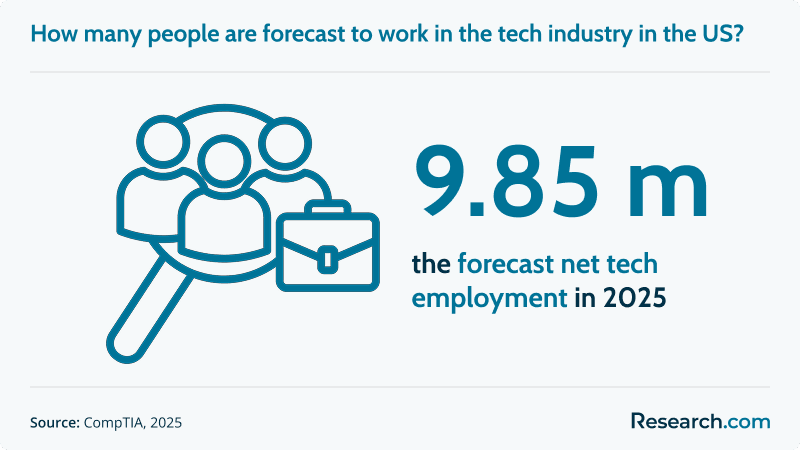
The key question is not which option is “better” in the abstract. It is which option matches your goal. If you need a fast, focused path into IT support, a bootcamp may be appropriate. If you want a broader computer science, engineering, analytics, or AI career path, a degree or longer academic program may provide a stronger foundation. CompTIA has reported a forecast of 9.85 million tech jobs in 2025, and the chart below shows the scale of the workforce connected to this training path.
How Does an Online CompTIA A+ Training Bootcamp Compare to an On-Campus Bootcamp?
An online CompTIA A+ bootcamp can provide strong preparation when it includes live instruction, virtual labs, practice exams, and instructor access. The format is not automatically weaker than in-person training. What matters is whether the program gives you enough guided practice to troubleshoot devices, operating systems, networks, and common user problems.
On-campus training may be better for students who need a physical classroom, face-to-face accountability, and direct access to equipment. Online training is usually better for students who need flexibility, cannot commute, or want to compare programs outside their local area.
Online vs. On-Campus CompTIA A+ Bootcamps
| Factor | Online bootcamp | On-campus bootcamp |
| Schedule flexibility | Often stronger, especially for remote learners and working adults | Usually tied to a fixed classroom schedule |
| Hands-on practice | Can be strong if virtual labs and guided exercises are included | May include direct access to physical equipment |
| Instructor interaction | Depends on live sessions, office hours, and response times | Often easier for students who prefer in-person questions |
| Program access | Allows enrollment beyond your local area | Limited by commute, location, and campus schedule |
| Best fit | Self-directed learners who can stay organized online | Learners who need a traditional classroom routine |
How to Choose the Right Format
Choose online training if flexibility is the reason you can realistically complete the program. Choose campus training if you know you learn better with physical presence and a fixed routine. The same logic applies across many online technical programs, including online technical communication programs: the delivery format matters less than the quality of instruction, practice, feedback, and learner support.
What Is the Average Cost of an Online CompTIA A+ Training Bootcamp?
The listed programs in this guide range from a starting tuition of $499 to $2,670. Several five-day bootcamps list tuition near $2,495, while one self-paced option lists $1,999 and one six-month program lists $2,195. Cost alone should not drive your decision. A cheaper program may be the right choice if it includes adequate instruction and practice, but a low price can also mean fewer supports.
What Should Be Included in the Price?
Before enrolling, ask exactly what tuition covers. Some bootcamps may include instruction only, while others may include labs, practice tests, books, exam voucher support, career coaching, or retake policies. If exam vouchers are not included, your total out-of-pocket cost may be higher than the advertised tuition.
| Cost factor | Why it matters | Question to ask |
| Exam vouchers | CompTIA A+ requires Core 1 and Core 2 exams. | Are exam vouchers included, discounted, or separate? |
| Hands-on labs | Labs help turn exam topics into real troubleshooting ability. | How many lab hours or exercises are included? |
| Practice exams | Practice tests help identify weak areas before the real exam. | Are practice exams included, and are they aligned with current objectives? |
| Instructor access | Beginners often need help when troubleshooting concepts do not click. | Can I ask questions outside live class sessions? |
| Career services | Certification preparation alone may not be enough to land interviews. | Do you help with resumes, interview practice, or job search planning? |
| Payment terms | Financing may reduce upfront cost but increase total cost depending on terms. | What is the full cost after fees, interest, or payment plan charges? |
When comparing costs, avoid using unrelated education pricing as a benchmark. For example, healthcare bridge options such as fast track CNA to RN programs online follow a different training model, licensure pathway, and cost structure than CompTIA A+ bootcamps.
What Financial Aid Options Are Available for Online CompTIA A+ Bootcamp Students?
Traditional federal student aid is often limited for short, non-degree bootcamps. Programs that are not eligible for Title IV aid typically do not qualify for the FAFSA Pell Grant. That does not mean students must always pay the full amount upfront, but it does mean you need to verify funding options before enrolling.
Common Ways Students Pay for CompTIA A+ Bootcamps
- Provider payment plans: Some training companies allow students to split tuition into installments.
- Third-party financing: Some providers work with consumer financing services, but students should review interest rates, fees, and repayment terms carefully.
- Employer reimbursement: If you already work in a company with an IT department, ask whether professional development funds can cover certification training.
- Workforce programs: The Workforce Innovation and Opportunity Act (WIOA) may help eligible learners pay for job training.
- Self-paced alternatives: Students with strong discipline may reduce costs by choosing lower-priced self-paced options and buying labs or practice exams separately.
Ask each provider for a written breakdown of tuition, included materials, voucher policies, refund rules, and financing terms. This same due diligence applies when comparing other certification paths, including online CCNA training courses.
What Are the Prerequisites for Enrolling in an Online CompTIA A+ Training Bootcamp?
CompTIA A+ is designed as an entry-level certification path. Most bootcamps do not require a college degree, programming background, or prior IT job title. A high school diploma or GED and basic computer comfort are typically enough to begin. You should know how to use a computer, browse the web, manage files, follow technical instructions, and stay organized during a fast-paced course.
Prerequisites That Matter in Practice
The most successful beginners usually bring curiosity, patience, communication skills, and a willingness to troubleshoot problems step by step. If you have experience in customer service, retail, healthcare, hospitality, education, or office administration, those skills can help. Entry-level IT support is not only about fixing devices; it is also about helping frustrated users explain problems and get back to work.
Customer-facing skills are especially relevant because support roles require clear communication. One cited customer service source reports that 75% of consumers prefer talking to actual humans for customer service. In IT support, the ability to stay calm, ask useful questions, and explain technical issues in plain language can separate strong candidates from applicants who only know exam facts.
What Courses Are Typically Included in an Online CompTIA A+ Training Bootcamp?
A CompTIA A+ bootcamp usually follows the exam objectives for Core 1 and Core 2. Students learn the basic knowledge needed to support devices, operating systems, networks, security practices, mobile tools, cloud concepts, and common troubleshooting workflows. The goal is not to make you an expert in every area. The goal is to build enough breadth to function in entry-level IT support and continue learning on the job.
Common CompTIA A+ Training Topics
| Topic area | What students learn | Why it matters for entry-level IT |
| Hardware | Computer components, peripherals, installation, replacement, and basic repair | Technicians often diagnose physical device problems |
| Operating systems | Installation, configuration, command-line basics, and user support | Support roles require daily work with operating system issues |
| Networking fundamentals | IP addressing basics, connectivity, wireless concepts, and troubleshooting | Many user problems involve network access or connectivity |
| Security basics | Authentication, malware prevention, safe practices, and basic protection steps | Even entry-level technicians are expected to follow security procedures |
| Mobile devices | Configuration, synchronization, troubleshooting, and support practices | Modern support teams handle laptops, tablets, phones, and hybrid work tools |
| Cloud and virtualization | Basic cloud models, virtual machines, and remote support concepts | Organizations increasingly use cloud-based systems and remote infrastructure |
| Operational procedures | Documentation, change management, safety, professionalism, and communication | Employers value technicians who solve problems without creating new ones |
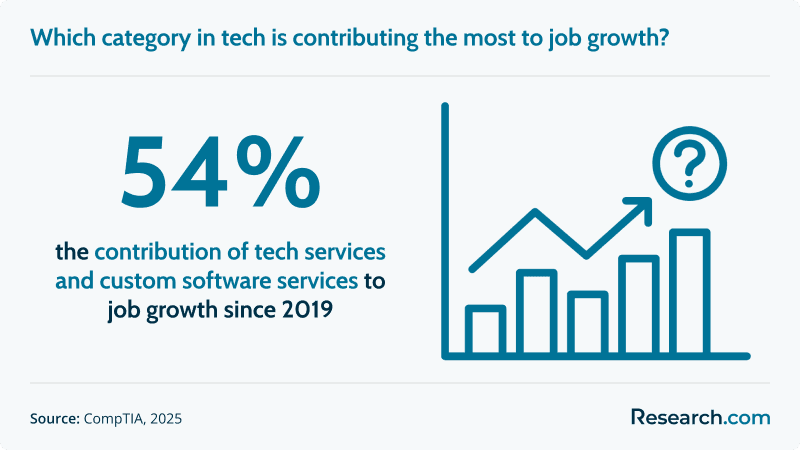
CompTIA has reported that tech services contributed 54% to all tech job growth since 2019. That makes the practical support and services skills covered in A+ training especially relevant for new entrants.
Why Security and Operations Matter Early
The security and operational procedures portion of A+ is important because it prepares students for more advanced IT pathways. If you eventually want to work in cybersecurity, governance, risk, or compliance, these early habits matter. After A+, some learners continue into specialized options such as accelerated ISC2 CGRC training bootcamps online, but those paths are easier to understand after you have built the basics.
What Types of Specializations Are Available After an Online CompTIA A+ Bootcamp?
CompTIA A+ itself is a general foundation, not a specialization. It prepares you for broad entry-level IT work. Specialization usually comes later, after you have passed the exams, gained workplace experience, and discovered which parts of IT you actually enjoy.
Common Next-Step Certification Paths
| Path after A+ | What it emphasizes | Who should consider it |
| Network+ | Networking concepts, infrastructure, connectivity, and troubleshooting | Support technicians who want to move toward network administration |
| Security+ | Security fundamentals, threats, controls, and risk concepts | Learners aiming for cybersecurity support or analyst pathways |
| CCNA | Networking with a vendor-specific Cisco focus | Students who want deeper networking skills after building fundamentals |
| Cloud training | Cloud platforms, services, infrastructure, and administration concepts | Learners interested in cloud support, systems, or cloud security roles |
| Cybersecurity and ethical hacking | Security testing, defensive thinking, and threat analysis | Students who have built enough IT fundamentals to handle advanced material |
The Stackable Path: A+ to Network+ to Security+ and Beyond
Many beginners use A+ as the first credential, then pursue Network+ or Security+ after getting experience. This stackable approach can make more sense than jumping straight into an advanced certification without context. Once you understand core IT support, a program such as accelerated CCNA certification training online becomes easier to evaluate and apply.
How Do Online CompTIA A+ Bootcamps Stay Current with Industry Trends?
Strong CompTIA A+ bootcamps stay current by aligning course content with current exam objectives, employer expectations, and changes in IT support work. Today’s entry-level technicians may support remote workers, cloud applications, mobile devices, identity tools, endpoint security, and AI-assisted troubleshooting systems. A bootcamp that has not updated its labs and scenarios may leave students underprepared for modern support environments.
Current trends do not mean every student should chase every new technology immediately. For most beginners, the better strategy is to master the fundamentals first, then specialize. More research-intensive or advanced academic fields, such as online masters in space studies, follow a very different education model than a short A+ bootcamp and should not be used as a direct comparison.
How to Choose the Best Online CompTIA A+ Training Bootcamp
The best online CompTIA A+ bootcamp is the one that fits your schedule, budget, learning style, and exam timeline while giving you enough hands-on practice to become employable. Do not choose based only on a provider’s marketing language. Ask specific questions and compare programs side by side.
CompTIA A+ Bootcamp Selection Checklist
- Exam alignment: Confirm that the curriculum prepares students for both Core 1 and Core 2 exams.
- Instructor qualifications: Ask whether instructors have current IT experience and certification knowledge.
- Hands-on labs: Look for practical troubleshooting activities, not just lectures and slides.
- Practice exams: Make sure the program includes realistic exam preparation and feedback.
- Student support: Ask how quickly instructors or advisors respond when students need help.
- Career services: Find out whether resume help, interview coaching, or job search guidance is included.
- Total cost: Verify tuition, materials, exam vouchers, financing fees, and refund policies.
- Schedule fit: Choose a timeline you can actually complete without rushing through the material.
Questions to Ask Before You Enroll
| Question | Why it matters |
| Which CompTIA A+ exam version does the course prepare for? | You need training aligned with current exam objectives. |
| Are both Core 1 and Core 2 covered in full? | Passing A+ requires both exams. |
| Are labs included, and what tools will I use? | Hands-on troubleshooting is essential for job readiness. |
| Are exam vouchers included in tuition? | This affects the real total cost. |
| What happens if I do not pass the exam? | Retake support, guarantees, or additional study access can reduce risk. |
| What career support is available after the course? | Certification alone may not be enough to secure interviews. |
| Can I speak with an advisor about my background? | A good provider should help you choose the right pace and format. |
Why an Exam Pass Guarantee Can Be Useful
An exam pass guarantee can be a positive signal, but read the details carefully. Some guarantees require attendance, completion of practice tests, minimum scores, or specific retake timelines. A guarantee is most valuable when it is paired with strong instruction, practice exams, and additional support rather than used as a marketing promise by itself.
What Career Paths Are Available After an Online CompTIA A+ Training Bootcamp?
CompTIA A+ is most closely connected to entry-level IT support work. Graduates often start by helping users, maintaining devices, documenting issues, escalating problems, and learning how a real IT department operates. From there, experience and additional certifications can open paths into networking, systems administration, cybersecurity, and cloud support.
| Career path | Typical responsibilities | How A+ helps |
| IT Support Specialist | Responds to user issues, troubleshoots devices, documents tickets, and supports basic systems | Builds the broad troubleshooting foundation expected in entry-level support |
| Help Desk Technician | Handles support requests, password issues, software problems, and escalation workflows | Prepares students for common hardware, software, and operating system problems |
| Desktop Support Technician | Maintains user workstations, peripherals, operating systems, and endpoint tools | Connects directly to A+ hardware, operating system, and troubleshooting topics |
| Network or Systems Administrator | Maintains servers, user accounts, networks, and internal infrastructure | A+ can be the first step before Network+ or systems-focused experience |
| Cybersecurity Analyst | Monitors threats, investigates alerts, follows security procedures, and protects systems | A+ introduces security basics before more advanced cybersecurity study |
| Cloud Security Professional | Helps protect cloud systems, identities, infrastructure, and data | A+ can support the early technical foundation before advanced cloud security training |
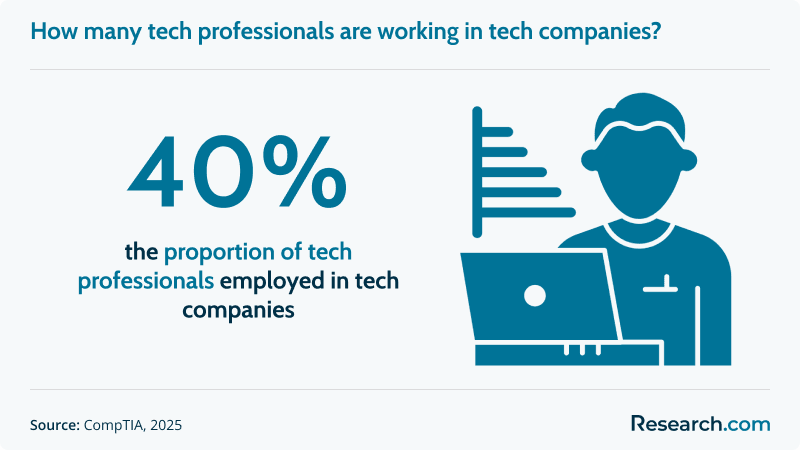
CompTIA has reported that only 40% of tech professionals work in “tech companies,” while 60% work in industries such as healthcare, finance, manufacturing, and other sectors. That matters for career changers: experience in a non-tech field can become an advantage when you support users, software, and workflows in that same industry. For more specialized cloud security goals, learners may later compare options such as the fastest online CCSP training bootcamps.
What Is the Job Market for Graduates of Online CompTIA A+ Training Bootcamps?
The job market for A+ graduates is tied to entry-level support needs across many industries. Organizations still need people who can help employees use devices, connect to networks, troubleshoot software, follow security procedures, and communicate clearly with nontechnical users. A+ is not a job guarantee, but it can help signal that a beginner has studied recognized IT support fundamentals.
How AI Is Changing Entry-Level IT Support
AI may automate some repetitive support tasks, such as simple password guidance, knowledge base suggestions, and ticket triage. That does not eliminate the need for technicians. It changes what employers value. Human support workers increasingly need to handle unclear problems, frustrated users, device-specific issues, security-sensitive situations, and tasks that require judgment.
This is why A+ learners should focus on troubleshooting logic, documentation, communication, and security habits rather than memorization alone. CompTIA has reported strong hiring activity in AI-related roles, but foundational IT skills remain an entry point into more advanced pathways. For example, a learner interested in security testing may eventually explore the shortest online ethical hacking dual certification after building practical IT experience. CompTIA also reports that 89% of people who enter the tech field are still working in it five years later.
What Career Support Services Do Online CompTIA A+ Bootcamps Offer?
Career support varies widely by provider. Some bootcamps focus almost entirely on exam preparation, while others include job search help. If your goal is employment, career services should be part of your evaluation, not an afterthought.
Career Services to Look For
- Resume support: Help translating non-IT experience into support-relevant skills.
- Interview preparation: Practice answering technical and behavioral questions for help desk and technician roles.
- LinkedIn or portfolio guidance: Advice on presenting labs, projects, certifications, and transferable experience.
- Employer networking: Access to hiring events, employer sessions, or alumni connections when available.
- Job search strategy: Guidance on entry-level titles, applicant tracking systems, and realistic first roles.
- Continuing education planning: Help choosing whether to pursue Network+, Security+, CCNA, cloud, or degree options next.
Students who want a broader academic credential after certification may also compare IT bootcamps with accelerated computer science programs. A bootcamp may help with a first support role, while a computer science degree may be better for long-term goals in software development, computing theory, research, or advanced technical leadership.
Common Mistakes to Avoid When Choosing a CompTIA A+ Bootcamp
| Mistake | Why it can hurt you | Better approach |
| Choosing only by lowest tuition | The program may exclude labs, support, practice tests, or voucher help. | Compare total value, not only sticker price. |
| Assuming all bootcamps include exam vouchers | You may face extra costs after enrollment. | Ask for a written list of what tuition includes. |
| Picking a five-day program without time to study | Intensive schedules can overwhelm beginners. | Choose a longer or self-paced option if you need more review. |
| Ignoring hands-on practice | Passing exam questions is different from troubleshooting real problems. | Prioritize labs, scenarios, and performance-based practice. |
| Assuming certification guarantees a job | Employers also evaluate experience, communication, and interview performance. | Build a home lab, document projects, and practice job search skills. |
| Skipping career services questions | You may finish the program without a job search plan. | Ask how the provider supports resumes, interviews, and employer connections. |
| Not checking refund and retake policies | You may have limited options if the course is not a fit. | Review policies before paying or financing tuition. |
Here’s What Graduates Have to Say About Their Online CompTIA A+ Training Bootcamps
- Fatima: "I worked in medical billing and already understood the hospital’s software from the user side. After earning A+, I was able to move into the hospital IT department. Now I support the systems I used every day, and that background helps me understand what nurses and doctors need when something breaks."
- Kenji: "I did not want another large student loan. The bootcamp was a focused cost that I could plan for, and it gave me a clear skill target instead of a vague promise. It helped me move toward my first salaried IT role."
- Esmie: "With kids at home, attending a traditional program was not realistic. Live online classes at night made the career change possible. I now have a steadier IT job, and my hybrid schedule gives my family more stability."
How Can I Get Hands-On IT Experience While Studying for the A+?
You can build practical experience before your first IT job by creating a small home lab. Use an older computer to install and reinstall operating systems, practice basic command-line tasks, configure user accounts, test antivirus tools, or troubleshoot network connectivity. You can also set up a home router, document your steps, and practice explaining problems in plain language.
Volunteering can also help. A local nonprofit, library, community group, or small business may need basic help with devices, printers, software updates, or documentation. Keep a record of what you worked on, what you learned, and how you solved problems. Those examples can make your resume and interviews stronger.
Key Insights
- CompTIA A+ bootcamps are best for focused entry-level IT preparation. They are useful when you want structure, labs, and exam guidance without starting a full degree first.
- Program length should match your learning style. Five-day bootcamps are fast and intense; longer or self-paced formats may be better for complete beginners or working adults.
- Cost must be evaluated beyond tuition. Ask about exam vouchers, labs, practice tests, books, financing fees, refund policies, and career support before enrolling.
- Online training can work if it is interactive and hands-on. The strongest online programs include live support, realistic labs, and structured practice rather than passive video lessons alone.
- A+ is a foundation, not the final destination. Many learners use it to enter help desk or technician roles, then move toward Network+, Security+, CCNA, cloud, cybersecurity, or systems administration.
- Career support matters. Certification can help, but resumes, interviews, home labs, communication skills, and job search strategy often determine who gets hired.
- Avoid guarantees that sound too simple. No bootcamp can promise a job outcome for every student. Choose providers that are transparent about requirements, support, and realistic next steps.
References:
- CompTIA. (2024). Assessing outcomes, efficacy, and value. Retrieved July 29, 2025, from https://partners.comptia.org/docs/default-source/resources/comptia-assessing-outcomes-efficacy-and-value.pdf
- CompTIA. (2025). State of the Tech Workforce 2025. Retrieved July 29, 2025, from https://lecbyo.files.cmp.optimizely.com/download/808ea63053b111f08b6ca695fc160b1a
- CompTIA. (2025, July). Tech Jobs Report July 2025. Retrieved July 29, 2025, from https://lecbyo.files.cmp.optimizely.com/download/6b6fc8e4ff4a11efbebeaeb5c39a94d9?sfvrsn=725f3c8d_0
- General Assembly. (2024, April 16). The state of tech talent acquisition 2024. General Assembly Blog. Retrieved July 29, 2025, from https://generalassemb.ly/blog/the-state-of-tech-talent-acquisition-in-2024-insights-strategies-revealed/
- McKinsey. (2025). McKinsey Technology Trends Outlook 2025. Retrieved July 29, 2025, from https://www.mckinsey.com/capabilities/mckinsey-digital/our-insights/the-top-trends-in-tech
Other Things You Should Know About the Best Online CompTIA A+ Training Bootcamps
When selecting an online CompTIA A+ training bootcamp in 2027, consider factors such as instructor expertise, course content relevance, interactive elements like labs and quizzes, cost, student reviews, and the availability of support resources. These elements ensure you get comprehensive and current training aligned with industry standards.
To enroll in a 2027 online CompTIA A+ bootcamp, you typically need a basic understanding of computers and the internet. While no formal prerequisites are required, familiarity with computer hardware and operating systems can be beneficial. Each bootcamp may have its own specific recommendations or entry requirements.