
2027 Fastest Online Ethical Hacking Dual Certification Bootcamps

Co-Founder and Chief Data Scientist
Choosing a fast online ethical hacking dual certification bootcamp is not just about finding the shortest program. It is about deciding whether an intensive, skills-first training path can help you move into cybersecurity faster than a traditional degree or self-study alone. That decision matters because recent reports estimate 3.5 million unfilled cybersecurity jobs globally in 2025, and organizations need professionals who can identify vulnerabilities before attackers exploit them.
This guide is designed for career changers, IT professionals, security analysts, and technically curious learners comparing accelerated ethical hacking bootcamps. You will learn what these programs teach, how fast they can be completed, what they cost, which certifications they prepare you for, what career support to expect, and how to evaluate whether a program is worth your time and money.
Quick answer: Is a fast online ethical hacking dual certification bootcamp worth it?
A fast online ethical hacking dual certification bootcamp can be worth it if you already have basic technical knowledge, want structured hands-on training, and need preparation for recognized credentials such as Certified Ethical Hacker (CEH) and CompTIA PenTest+. These programs are best for learners who can handle a compressed schedule, practice independently in labs, and use career services actively. They are not ideal for students who need a slow introduction to computing, prefer broad academic theory, or expect a bootcamp alone to guarantee a cybersecurity job.
| Best fit | Use caution if | What to verify before enrolling |
| You have IT, networking, systems, or security experience and want to move into offensive security. | You are completely new to operating systems, networking, and command-line tools. | Whether the curriculum includes live labs, exam preparation, instructor access, and career coaching. |
| You need a shorter, career-focused alternative to a longer academic program. | You cannot commit concentrated study time during the bootcamp window. | Whether the certifications are CEH, CompTIA PenTest+, or another credential valued by employers. |
| You want to practice vulnerability discovery, exploitation, reporting, and remediation in a legal training environment. | You are relying only on the bootcamp name rather than checking outcomes, prerequisites, and support. | Whether tuition includes exam vouchers, labs, retakes, books, and post-program job support. |
What are the benefits of attending a fast online ethical hacking dual certification bootcamp?
- Focused preparation for offensive security roles: Students build skills relevant to penetration testing, vulnerability analysis, security consulting, and related roles where the goal is to find weaknesses before criminals do.
- A shorter route into a high-demand cybersecurity field: The U.S. Bureau of Labor Statistics reports a median annual salary of $120,360 for information security analysts, making cybersecurity an attractive field for workers seeking stronger earning potential.
- Hands-on practice in remote cyber labs: Online bootcamps often use virtual environments that let students test scanning, exploitation, privilege escalation, and reporting techniques without needing a physical classroom.
- Career transition support: Many programs include resume help, interview preparation, job-search guidance, and access to cybersecurity employer or alumni networks.
- Credential alignment: Dual certification programs can help learners prepare for two separate exams, which may strengthen a resume when paired with practical projects and lab experience.
What can I expect from a fast online ethical hacking dual certification bootcamp?
A fast online ethical hacking dual certification bootcamp is typically an intensive, lab-heavy program that teaches students how attackers think and how defenders can use that knowledge legally. Instead of spending years on broad computer science theory, you focus on practical security tasks: reconnaissance, scanning, enumeration, exploitation, password attacks, web application testing, wireless security, documentation, and remediation planning.
The “dual certification” label usually means the curriculum is mapped to two industry exams, commonly CEH and CompTIA PenTest+. However, not every fast program prepares students for two exams, so you should confirm the exact credentials before enrolling. A strong program should clearly state whether exam vouchers, practice tests, labs, and retake options are included in tuition.
| Bootcamp component | What it should help you do | Why it matters |
| Virtual labs | Practice legal hacking techniques in controlled environments. | Employers care about applied ability, not just terminology. |
| Certification preparation | Review objectives for CEH, CompTIA PenTest+, or another stated exam. | Certifications can help validate skills, especially for career changers. |
| Instructor-led lessons | Understand tools, methods, and ethical boundaries. | Guidance reduces the risk of fragmented self-study. |
| Reporting practice | Write findings, risk explanations, and remediation recommendations. | Penetration testers must communicate clearly with business and technical teams. |
| Career services | Prepare a security-focused resume, portfolio, LinkedIn profile, and interview strategy. | A bootcamp is only valuable if you can translate training into job opportunities. |
Where can I work with a fast online ethical hacking dual certification bootcamp?
Ethical hacking skills apply anywhere organizations rely on digital systems, customer data, cloud platforms, payment systems, connected devices, or regulated information. Graduates may work inside a company’s security team, at a consulting firm, with a managed security provider, or in public-sector cyber defense.
Private-sector employers include technology companies, banks, healthcare organizations, retailers, insurance firms, telecommunications companies, and software vendors. In-house roles often focus on protecting one organization’s systems, while consulting roles may involve testing many different clients across industries.
Government agencies, law enforcement, defense contractors, and public infrastructure organizations also hire cybersecurity professionals. These roles may involve national security, incident response, cyber defense, compliance, or vulnerability assessment for critical systems.
How much can I make with a fast online ethical hacking dual certification bootcamp?
A bootcamp can help you qualify for cybersecurity roles, but it does not guarantee a specific salary. Pay depends on your previous experience, location, clearance eligibility, certifications, portfolio, interview performance, and employer. According to the US Bureau of Labor Statistics, the median annual salary for information security analysts is $124,910, with the top 10% earning more than $186,420.
Students should treat salary data as a benchmark, not a promise. A learner with several years of IT experience may move faster into a higher-paying security role than a complete beginner. The strongest candidates combine certification preparation with lab documentation, networking knowledge, scripting ability, and a clear understanding of security reporting.
- List of 7 Fastest Online Ethical Hacking Dual Certification Bootcamps for 2027
- How long does it take to complete a fast online ethical hacking dual certification bootcamp?
- How does a fast online ethical hacking dual certification bootcamp compare to an on-site bootcamp?
- What is the average cost of a fast online ethical hacking dual certification bootcamp?
- What are the financial aid options for students enrolling in a fast online ethical hacking dual certification bootcamp?
- What are the prerequisites for enrolling in a fast online ethical hacking dual certification bootcamp?
- What courses are typically in a fast online ethical hacking dual certification bootcamp?
- What types of specializations are available in the fastest online ethical hacking dual certification bootcamp?
- What ongoing career support services enhance long-term career success?
- What advanced academic pathways can complement my bootcamp experience?
- What challenges might you face in a fast online ethical hacking dual certification bootcamp?
- How are these bootcamps accredited and validated?
- How to choose the best fast online ethical hacking dual certification bootcamp?
- What career paths are available for graduates of a fast online ethical hacking dual certification bootcamp?
- What is the job market for graduates with a fast online ethical hacking dual certification bootcamp?
7 Fastest Online Ethical Hacking Dual Certification Bootcamps for 2027
How do we rank schools?
This list was built to help readers compare short online ethical hacking bootcamps that emphasize certification preparation, practical security training, and flexible delivery. Research.com evaluates programs using available school information and trusted education data sources, including the IPEDS database, Peterson’s Distance Learning Licensed Data Set, the College Scorecard database, and the National Center for Education Statistics.
Programs were reviewed for factors such as curriculum relevance, credential alignment, affordability, online access, institutional or provider validation, and career support. For more detail on how Research.com evaluates programs, see our methodology page.
| Program | Length | Certification preparation | Published cost |
| Infosec Institute - CEH Certification Training Boot Camp | 5 days | Certified Ethical Hacker (CEH) | $3,039 |
| Indiana University South Bend - Ethical Hacking Dual Certification Boot Camp | 5 days | Certified Ethical Hacker (CEH); CompTIA PenTest+ | Not specified; must request information |
| University of New Orleans (PACE) - Ethical Hacking Dual Certification Boot Camp | 5 days | Certified Ethical Hacker (CEH); CompTIA PenTest+ | $4,599 |
| University of Tennessee at Chattanooga - Ethical Hacking Dual Certification Boot Camp | 5 days | Certified Ethical Hacker (CEH); CompTIA PenTest+ | Not specified; must request information |
| Cuesta College - Ethical Hacking Dual Certification Boot Camp | 5 days | Certified Ethical Hacker (CEH); CompTIA PenTest+ | Not specified; must request information |
| Virginia Wesleyan University - Ethical Hacking Dual Certification Bootcamp | 5 days | Certified Ethical Hacker (CEH); CompTIA PenTest+ | Not specified; must request information |
| Morgan State University - Ethical Hacking Dual Certification Bootcamp | 5 days | Certified Ethical Hacker (CEH); CompTIA PenTest+ | Not specified; must request information |
1. Infosec Institute - CEH Certification Training Boot Camp
Infosec Institute offers a CEH Certification Training Boot Camp for learners preparing for the EC-Council Certified Ethical Hacker (CEH) v13 certification. The five-day format is built for penetration testers, cybersecurity analysts, and offensive security professionals who want concentrated exam preparation and practical exposure to the five phases of ethical hacking, now integrated with AI, from reconnaissance to covering tracks.
- Program Length: 5 days
- Certifications Prepared For: Certified Ethical Hacker (CEH)
- Required Experience: Firm understanding of Windows, exposure to Linux/Unix, and grasp of TCP/IP protocols
- Total Tuition: $3,039
- Accreditation: EC-Council
2. Indiana University South Bend - Ethical Hacking Dual Certification Boot Camp
Indiana University South Bend offers an Ethical Hacking Dual Certification Boot Camp in partnership with Infosec. The online program is intended for IT professionals who want to strengthen offensive security skills and prepare for two exams. Over five days, learners study how to identify, test, and help remediate vulnerabilities using methods aligned with the EC-Council Certified Ethical Hacker (CEH) and CompTIA PenTest+ exams.
- Program Length: 5 days
- Certifications Prepared For: Certified Ethical Hacker (CEH) ; and CompTIA PenTest+
- Required Experience: Firm understanding of Windows, exposure to Linux/Unix, and grasp of TCP/IP protocols
- Cost: Not specified; must request information
- Accreditation: EC-Council; CompTIA
3. University of New Orleans (PACE) - Ethical Hacking Dual Certification Boot Camp
University of New Orleans (PACE) provides a five-day Ethical Hacking Dual Certification Boot Camp that prepares students for both CEH and CompTIA PenTest+. The course is designed for learners entering or advancing in cybersecurity and includes hands-on work in a cloud-hosted cyber range. Topics include reconnaissance, exploitation, data exfiltration, and professional report writing.
- Program Length: 5 days
- Certifications Prepared For: Certified Ethical Hacker (CEH) ; and CompTIA PenTest+
- Required Experience: 2 years of work experience in Information Security (unless attending official training for CEH); knowledge equivalent to Network+ or Security+ for PenTest+
- Total Tuition: $4,599
- Accreditation: EC-Council; CompTIA
4. University of Tennessee at Chattanooga - Ethical Hacking Dual Certification Boot Camp
University of Tennessee at Chattanooga offers its Ethical Hacking Dual Certification Boot Camp through the Center for Professional Education. This five-day expert-led online program is aimed at aspiring and current cybersecurity professionals, including analysts and consultants. Students practice ethical vulnerability discovery and prepare for the Certified Ethical Hacker (CEH) and CompTIA PenTest+ exams.
- Program Length: 5 days
- Certifications Prepared For: Certified Ethical Hacker (CEH) ; and CompTIA PenTest+
- Required Experience: Firm understanding of Windows, exposure to Linux/Unix, and grasp of TCP/IP protocols
- Cost: Not specified; must request information
- Accreditation: EC-Council; CompTIA
5. Cuesta College - Ethical Hacking Dual Certification Boot Camp
Cuesta College offers an Ethical Hacking Dual Certification Boot Camp through its Community Programs division. The five-day online program is designed for IT professionals who want to specialize in offensive security. Learners use tools and techniques associated with attackers in a legal training context while preparing for EC-Council Certified Ethical Hacker (CEH) and CompTIA PenTest+ certifications.
- Program Length: 5 days
- Certifications Prepared For: Certified Ethical Hacker (CEH) ; and CompTIA PenTest+
- Required Experience: Firm understanding of Windows, exposure to Linux/Unix, and grasp of TCP/IP protocols
- Cost: Not specified; must request information
- Accreditation: EC-Council; CompTIA
6. Virginia Wesleyan University - Ethical Hacking Dual Certification Bootcamp
Virginia Wesleyan University provides an Ethical Hacking Dual Certification Bootcamp through VWU Global Campus. This live online five-day program is structured for IT professionals and aspiring penetration testers who want to validate offensive security knowledge through recognized exams. The bootcamp prepares students for Certified Ethical Hacker (CEH) and CompTIA PenTest+.
- Program Length: 5 days
- Certifications Prepared For: Certified Ethical Hacker (CEH) ; and CompTIA PenTest+
- Required Experience: Firm understanding of Windows, exposure to Linux/Unix, and grasp of TCP/IP protocols
- Cost: Not specified; must request information
- Accreditation: EC-Council; CompTIA
7. Morgan State University - Ethical Hacking Dual Certification Bootcamp
Morgan State University offers an Ethical Hacking Dual Certification Bootcamp through its Center for Continuing and Professional Studies. The live online five-day format is intended for IT professionals who want concentrated training in legal vulnerability identification and exploitation. Students prepare for EC-Council Certified Ethical Hacker (CEH) and CompTIA PenTest+ certifications.
- Program Length: 5 days
- Certifications Prepared For: Certified Ethical Hacker (CEH) ; and CompTIA PenTest+
- Required Experience: Firm understanding of Windows, exposure to Linux/Unix, and grasp of TCP/IP protocols
- Cost: Not specified; must request information
- Accreditation: EC-Council; CompTIA
How long does it take to complete a fast online ethical hacking dual certification bootcamp?
Many accelerated ethical hacking bootcamps can be completed in 3 to 9 months, depending on whether the program is full time or part time. Full-time options often run 3 to 6 months and may require a workload similar to a job. Part-time options commonly take 6 to 9 months and are better suited to learners who are employed or balancing family responsibilities.
The programs listed above are even shorter, with several structured as five-day intensive boot camps. That format can be useful for experienced IT professionals preparing for specific exams, but it may be too compressed for beginners who need more time with networking, Linux, scripting, and security fundamentals. Similar to the fastest online data science bootcamps, speed works best when the learner already has enough background to keep up.
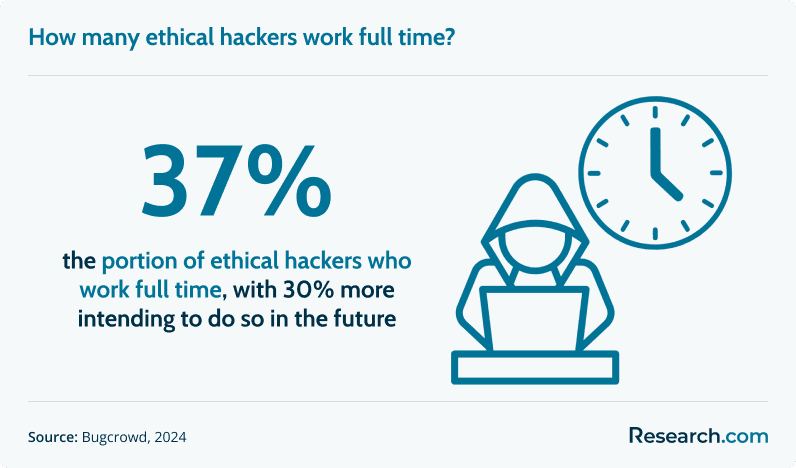
Data shows that 37% of ethical hackers work full-time and another 30% intend to do so soon. That level of commitment is important to understand before enrolling: a fast bootcamp may be short on the calendar, but the learning curve can be steep.
A bootcamp is different from a degree. A university program usually provides a broader academic foundation over multiple years, while a bootcamp narrows the focus to job-specific tools, workflows, and certification objectives. This differs from fields such as criminology careers, where formal academic pathways may be more central to entry-level employment.
| Path | Typical timeline | Best for | Main trade-off |
| Five-day certification boot camp | 5 days | Experienced IT or security professionals preparing for exams quickly. | Very little time to absorb fundamentals if you are new. |
| Full-time cybersecurity bootcamp | 3 to 6 months | Career changers who can study intensively. | Requires major schedule flexibility. |
| Part-time cybersecurity bootcamp | 6 to 9 months | Working adults who need a slower pace. | Takes longer and requires sustained discipline. |
| Degree program | Several years | Students seeking broad academic preparation and long-term optionality. | More time and often more total cost. |
How does a fast online ethical hacking dual certification bootcamp compare to an on-site bootcamp?
The online versus on-site decision should be based on learning style, schedule, technology access, and the quality of labs and instructors. Cybersecurity work is already digital and remote-friendly in many settings, so an online format can be highly practical when it includes live instruction, responsive support, and realistic lab environments.
- Flexibility: Online programs remove commuting and may let students study from any location, while on-site programs require attendance at a fixed place and time.
- Lab access: Strong online programs can use virtual networks and cloud-based ranges that mirror real security environments. Similar hands-on infrastructure is also common in technical training such as fastest online data analytics bootcamps.
- Instructor reach: Online delivery can connect students with instructors outside their local region, which may improve access to specialized cybersecurity expertise.
- Peer interaction: On-site programs may provide easier face-to-face networking, while online programs need strong discussion channels, live sessions, and group labs to create community.
- Quality factors: Curriculum design, instructor experience, career support, and lab realism matter more than the delivery format alone.
| Factor | Online bootcamp | On-site bootcamp |
| Schedule | Often more flexible and easier to combine with work. | Usually more fixed and location-dependent. |
| Hands-on practice | Depends on the quality of virtual labs and cyber ranges. | May include classroom labs, but still often uses virtual environments. |
| Networking | Requires intentional participation in chats, cohorts, alumni groups, and webinars. | Can make informal peer interaction easier. |
| Best for | Working adults, remote learners, and students outside major metro areas. | Learners who need physical classroom structure and in-person accountability. |
Choose the program with stronger outcomes, clearer prerequisites, better labs, and better instructor access. A weak on-site program is not better than a strong online one simply because it has a classroom.
What is the average cost of a fast online ethical hacking dual certification bootcamp?
A high-quality online ethical hacking bootcamp may cost $10,000 to $20,000, although shorter certification boot camps can cost less depending on provider, exam inclusion, and support services. Unlike degree programs priced by credits, bootcamps often package instruction, labs, learning materials, and certification preparation into one tuition amount.
Before comparing prices, ask what is actually included. A lower sticker price may not include exam vouchers, extended lab access, career coaching, books, retakes, or instructor office hours. A higher price may be reasonable if the program includes strong support and measurable outcomes, but expensive tuition alone does not prove quality.
How to think about return on investment
The simplest way to evaluate ROI is to compare program cost, time away from work, financing costs, and realistic job outcomes. The US Bureau of Labor Statistics reports that the median annual salary for information security analysts is $124,910. That figure can help frame earning potential, but your actual first cybersecurity salary may be lower or higher depending on your background and market.
Compared with longer pathways into technical or investigative careers, such as a forensic scientist career, a bootcamp can offer a faster and more targeted training model. The trade-off is that you must build credibility quickly through labs, projects, certifications, networking, and job-search discipline.
The value of certification in a growing market
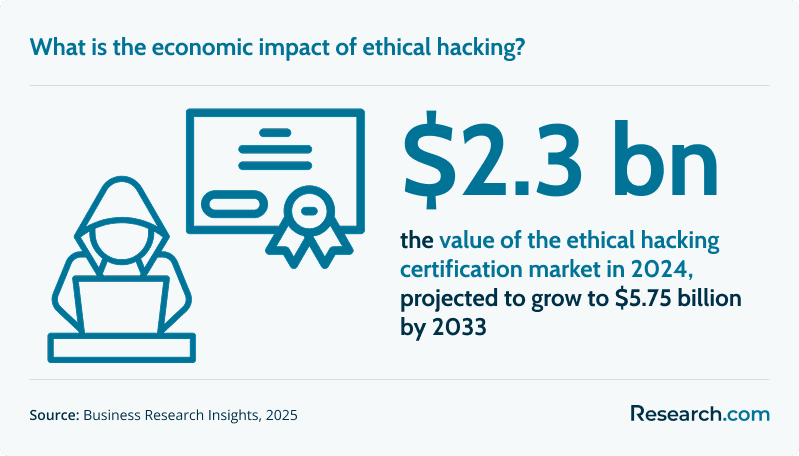
The ethical hacking certification market was valued at $2.3 billion in 2024 and is projected to more than double, reaching $5.75 billion by 2033. That growth reflects employer demand for validated cybersecurity skills, but not all credentials carry the same weight. Research each certification’s exam objectives, employer recognition, renewal requirements, and fit with your target job titles.
| Cost question | Why it matters |
| Are exam vouchers included? | Certification exams can add to your total cost if billed separately. |
| How long do I keep lab access? | Extra practice time can be valuable after the live bootcamp ends. |
| Is career coaching included after graduation? | Post-program support can affect how quickly you convert training into interviews. |
| Are there financing fees or interest charges? | A payment plan can make tuition manageable but may increase total cost. |
| What refund or withdrawal policy applies? | Accelerated programs move quickly, so you need to know your options before starting. |
What are the financial aid options for students enrolling in a fast online ethical hacking dual certification bootcamp?
Financing options vary widely because bootcamps are not all treated the same way as degree programs. Some are run through colleges or universities, some through private training companies, and some through continuing education divisions. Always confirm eligibility directly with the provider before assuming that any aid option applies.
- Federal Financial Aid: If a program is offered through an eligible accredited college or university, students may be able to complete the Free Application for Federal Student Aid (FAFSA). Not every bootcamp qualifies, so verify before enrolling.
- Private Loans: Some learners use private lenders for skills-based training. Review interest rates, repayment timelines, credit requirements, and whether payments begin during or after the program.
- Installment Plans: Bootcamp providers may allow students to divide tuition across several payments. Ask whether the plan is interest-free and what happens if you withdraw.
- Scholarships and Grants: Some programs offer awards for veterans, women in tech, underrepresented learners, career changers, or local workforce participants. These funds usually do not need to be repaid.
- The GI Bill®: Eligible veterans and service members may be able to use GI Bill® benefits for approved programs.
- Employer Sponsorship: If you already work in IT or security, ask whether your employer offers tuition reimbursement, professional development funds, or certification support.
Before committing, request a written estimate of total cost. Include tuition, exam fees, equipment, software, books, financing charges, and the value of unpaid time away from work. If you are comparing technical career pathways, a fast-track software engineering bootcamp online can also provide context for how bootcamp pricing and outcomes differ across tech fields.
What are the prerequisites for enrolling in a fast online ethical hacking dual certification bootcamp?
Prerequisites depend on the program’s pace and target student. A five-day dual certification boot camp usually assumes more prior knowledge than a multi-month beginner cybersecurity bootcamp. At minimum, you should be comfortable using a computer, troubleshooting problems, learning technical tools, and studying independently.
If you want a broader technical foundation before specializing, an accelerated artificial intelligence online degree may be a better fit than jumping directly into an offensive security bootcamp. Ethical hacking is not an entry point into basic computer use; it builds on systems, networks, and security concepts.
For beginners and career changers
Beginner-friendly programs may not require prior cybersecurity employment, but they still expect commitment and aptitude. Look for programs that include pre-work, foundational networking lessons, Linux basics, and support for students who are new to security.
- Comfort navigating Windows and basic system settings is usually expected.
- Curiosity, persistence, and logical problem-solving are essential because labs often involve trial and error.
- Students may need to complete pre-course work or a readiness assessment.
- Basic familiarity with networks, IP addresses, browsers, and file systems will make the program easier.
For learners with IT experience
Advanced bootcamps move quickly and often assume students already understand infrastructure. If you have worked in help desk, systems administration, networking, SOC operations, cloud support, or IT auditing, you may be better prepared for a compressed certification-focused program.
- Networking knowledge such as TCP/IP, DNS, ports, routing, and common protocols is highly useful.
- Linux command-line experience can help with tools, scripting, and lab navigation.
- Basic scripting in Python, Bash, or PowerShell can make testing workflows easier to understand.
- Foundational credentials such as CompTIA Network+ or Security+ may be recommended or required by some providers.
The mindset requirement
The strongest ethical hackers are patient investigators. They ask why a system behaves a certain way, test assumptions carefully, document evidence, and stay within legal authorization. This analytical mindset also appears in other technical careers, including roles described in guides about what does a data scientist do. Tools change, but disciplined problem-solving remains central.
What courses are typically in a fast online ethical hacking dual certification bootcamp?
Ethical hacking bootcamps usually follow the lifecycle of a penetration test: define scope, gather information, scan systems, identify vulnerabilities, attempt exploitation in an authorized environment, document findings, and recommend fixes. Research shows that 78% of hackers use self-study and 87% use online resources, but structured coursework can help learners organize that knowledge and avoid gaps.
Students who want broader academic preparation before or after a bootcamp may also compare options such as the shortest online bachelor's programs in computer science. A degree and a bootcamp serve different purposes: one is broad and academic, while the other is usually narrower and faster.
- Networking and security foundations: Covers TCP/IP, network architecture, virtualization, common services, Linux basics, and core security principles.
- Reconnaissance and footprinting: Teaches how to collect open-source intelligence and map a target’s public-facing environment within legal scope.
- Scanning and enumeration: Introduces tools and methods for identifying ports, services, versions, users, shares, and potential weaknesses.
- System exploitation: Explores how vulnerabilities can be used to gain access, escalate privileges, and demonstrate business risk in a controlled lab.
- Web application testing: Covers common flaws such as SQL injection and cross-site scripting, along with testing methods and mitigation concepts.
- Wireless security: Examines wireless protocols, misconfigurations, and attacks relevant to enterprise and local networks.
- Cloud and modern infrastructure basics: Some programs introduce cloud misconfigurations, identity controls, and container or platform risks.
- Professional reporting: Focuses on documenting findings, severity, evidence, business impact, and remediation steps.
A good curriculum should teach not only how to run tools, but how to interpret results. Tool output without context can lead to false positives, weak reports, and poor interview performance.
What types of specializations are available in the fastest online ethical hacking dual certification bootcamp?
A bootcamp should give you broad exposure to offensive security, but specialization usually comes later through work experience, advanced labs, and additional credentials. Even after completing the shortest CompTIA CySA+ certification training, you may need to explore several areas before choosing a long-term focus.
- Penetration Tester: Tests networks, applications, systems, and sometimes physical security controls to identify exploitable weaknesses and recommend fixes.
- Web Application Security Analyst: Focuses on websites, APIs, authentication systems, input validation, session management, and application-layer vulnerabilities.
- Cloud Security Engineer: Helps secure AWS, Azure, GCP, and related cloud environments by reviewing identity, configuration, storage, logging, and network controls.
- Mobile Security Analyst: Tests iOS and Android applications for insecure storage, weak authentication, reverse engineering risks, and data exposure.
- Red Team Operator: Simulates more realistic adversary behavior to test not only technical defenses but also monitoring, detection, and response capabilities.
- IoT/OT Security Specialist: Works on connected devices, industrial control systems, operational technology, and environments where cyber risk can affect physical systems.
| Specialization | Good fit if you like | Common next step after bootcamp |
| Penetration testing | Hands-on exploitation, reports, client-facing work, and broad technical challenges. | Build a lab portfolio and pursue more advanced hands-on practice. |
| Web application security | Code, APIs, browser behavior, authentication, and software flaws. | Study secure coding and common web vulnerability frameworks. |
| Cloud security | Identity, infrastructure, automation, and large-scale platforms. | Learn one major cloud platform deeply and practice configuration reviews. |
| Red teaming | Adversary simulation, stealth, strategy, and detection testing. | Gain professional security experience before moving into advanced roles. |
What ongoing career support services enhance long-term career success?
Career support should not stop when the last lecture ends. The strongest bootcamps help students turn technical training into a credible job-search strategy. Look for one-on-one coaching, resume and LinkedIn reviews, mock technical interviews, portfolio guidance, employer introductions, alumni communities, and continuing access to webinars or security resources.
Long-term support matters because cybersecurity hiring can be competitive, especially for entry-level roles. A learner who can explain lab projects, document findings clearly, and discuss risk with confidence will usually be stronger than someone who only lists a certification. Career services can also help students compare adjacent technical pathways, much as learners evaluating game development programs online may look for portfolio support and employer connections.
What advanced academic pathways can complement my bootcamp experience?
A bootcamp can help you build practical skills quickly, but it does not replace every benefit of a degree. If your goals include management, research, policy, security architecture, teaching, or highly specialized technical work, additional academic study may be useful. Degree programs can strengthen theory, writing, leadership, compliance knowledge, and interdisciplinary problem-solving.
Choose an academic pathway that fits your cybersecurity direction. For example, computer science can support software security, information systems can support enterprise security, public policy can support cyber governance, and data-focused programs can support threat intelligence or security analytics. Some professionals also explore fields outside security, including options such as the cheapest online biotechnology master's degree, when their career goals intersect with regulated data, research systems, or emerging technology.
What challenges might you face in a fast online ethical hacking dual certification bootcamp?
Fast bootcamps compress a large amount of material into a short period, which can be stressful. Students may struggle with networking fundamentals, unfamiliar command-line tools, lab troubleshooting, exam pressure, or the need to learn independently outside scheduled sessions. Online learners also need reliable internet, a capable computer, and the discipline to keep practicing when no one is physically present.
Another challenge is separating marketing language from real outcomes. A bootcamp may advertise “job-ready” training, but employers still evaluate experience, communication, judgment, and practical proof. Before enrolling, ask how often labs are updated, how quickly instructors respond, what mentoring is available, and whether the curriculum reflects current threats and tools. This kind of due diligence is similar to evaluating claims in other accelerated programs, including the fastest masters in engineering management.
| Common challenge | Better way to prepare |
| Feeling overwhelmed by technical vocabulary | Complete pre-work in networking, Linux, and security basics before the start date. |
| Relying too much on tools | Practice explaining what the tool found, why it matters, and how to fix it. |
| Falling behind in labs | Schedule practice blocks outside class and ask for help early. |
| Expecting certification to guarantee employment | Build a portfolio, document projects, network, and prepare for technical interviews. |
| Choosing only by speed | Compare prerequisites, support, lab access, certification alignment, and outcomes. |
How are these bootcamps accredited and validated?
Bootcamp validation can be confusing because cybersecurity training providers, colleges, universities, and certification bodies all use different quality signals. A bootcamp itself may not be accredited in the same way as a degree program. Instead, you should check the institution offering it, the certification bodies involved, the curriculum alignment, instructor qualifications, and whether employers recognize the credentials.
Look for clear links to recognized organizations such as EC-Council or CompTIA when programs claim exam preparation. Also review verified student feedback, alumni outcomes when available, refund policies, lab quality, and employer partnerships. Academic options such as the cheapest online masters in artificial intelligence may involve different accreditation considerations, so do not assume bootcamp and degree validation work the same way.
How to choose the best fast online ethical hacking dual certification bootcamp?
The best bootcamp is the one that matches your starting point, career goal, budget, and learning style. Speed matters, but it should not be the only factor. As with choosing the fastest online master's programs in clinical mental health counseling, a shorter timeline is only useful if the program still meets your professional needs.
- Confirm the exact certifications: Do not rely on the phrase “dual certification.” Ask whether the program prepares for CEH, CompTIA PenTest+, or another exam, and whether vouchers are included.
- Check instructor experience: Prioritize instructors with real penetration testing, security consulting, incident response, or security engineering experience.
- Review prerequisites honestly: If the program expects networking and Linux knowledge you do not have, complete pre-work first or choose a longer beginner-friendly option.
- Inspect the labs: Ask whether labs are browser-based, cloud-hosted, live, graded, scenario-based, and available after the course ends.
- Evaluate career services: Look for individualized job-search support, mock interviews, resume reviews, portfolio guidance, and employer connections.
- Compare total cost: Include tuition, financing charges, exam fees, equipment, books, retake costs, and time away from work.
- Match training to target industries: If you want to work in healthcare, finance, government, or cloud security, ask whether the curriculum addresses relevant compliance and data protection issues. Guides on health information technology careers salary can help show why security skills matter in regulated sectors.
| Question to ask admissions | Strong answer | Warning sign |
| Which certifications does this program prepare me for? | The provider names the exact exams and explains what is included. | The answer is vague or uses only broad terms like “industry certification.” |
| What technical skills should I have before day one? | The provider gives a clear prerequisite list and pre-work plan. | The provider says “no experience needed” for an extremely compressed advanced course. |
| How much time should I study outside class? | The provider gives realistic weekly expectations. | The provider minimizes the workload or suggests certification will be easy. |
| What happens after graduation? | Career support, alumni access, and job-search resources are clearly defined. | Support ends immediately after the final session. |
| Can I speak with alumni or read verified outcomes? | The provider offers transparent information or credible testimonials. | The provider avoids outcome questions or makes guaranteed job claims. |
What career paths are available for graduates of a fast online ethical hacking dual certification bootcamp?
Graduates may pursue several cybersecurity roles, but the right entry point depends on prior experience. A current systems administrator may move toward penetration testing faster than someone with no IT background. A beginner may start in help desk, SOC analysis, junior security analysis, or vulnerability management before moving into offensive security.
| Career path | Typical focus | Bootcamp relevance |
| Junior Penetration Tester | Assists with authorized tests, evidence collection, tool execution, and reporting. | Strong fit when labs include exploitation and report writing. |
| Vulnerability Analyst | Finds, validates, prioritizes, and tracks vulnerabilities across systems. | Strong fit when training includes scanning, risk ranking, and remediation. |
| Security Consultant | Advises clients on security weaknesses, controls, and compliance needs. | Useful if the program develops communication and documentation skills. |
| SOC Analyst | Monitors alerts, investigates threats, and escalates incidents. | Offensive knowledge can improve defensive analysis. |
| Red Team Associate | Supports adversary simulation and detection testing. | Usually requires experience beyond an introductory bootcamp. |
The government and intelligence community job market
Public-sector cybersecurity roles can involve national security, cyber defense, law enforcement support, intelligence, and infrastructure protection. Some jobs require background checks, citizenship requirements, or security clearances. Compensation and responsibilities vary, and some technical security roles may be comparable in complexity to careers people research when asking what is the average salary for CIA agents.
The AI trend: ethical hackers who use AI effectively may be more valuable
Artificial intelligence is changing security work, but it is not eliminating the need for human judgment. Data shows that 71% of hackers believe AI increases their value, and 86% report that AI has already changed their approach to hacking for the better. AI can help automate repetitive tasks, summarize findings, generate test ideas, or speed up reconnaissance, but humans still need to define scope, validate results, avoid false positives, understand business impact, and act ethically.
The future of ethical hacking will likely favor professionals who combine security fundamentals with responsible AI use. A good bootcamp should help students understand tools without becoming dependent on them.
What is the job market for graduates with a fast online ethical hacking dual certification bootcamp?
The job market for ethical hacking and cybersecurity talent remains strong because organizations continue to face expanding attack surfaces, cloud adoption, ransomware risk, third-party exposure, and regulatory pressure. The US Bureau of Labor Statistics projects that employment for information security analysts will grow by 33% between 2023 and 2033, a rate more than ten times the average for all other occupations.
That does not mean every bootcamp graduate will immediately become a penetration tester. Entry-level cybersecurity roles can be competitive because many applicants have certifications but limited hands-on experience. Candidates who document labs, build projects, understand networking, write clearly, and practice interviews are more likely to stand out.
The market is also open to different starting points. Career changers may use a bootcamp to build a foundation and pursue junior security roles. Existing IT professionals may use it to pivot into vulnerability management, penetration testing, or consulting. Public-sector and security-adjacent roles may also appeal to learners comparing options such as the fastest online public policy degree programs or exploring technical paths among the highest paying criminal justice jobs.
For long-term growth, do not stop at the bootcamp. After gaining experience, consider deeper specialization in cloud security, web application security, mobile testing, incident response, or an advanced hands-on certification such as Offensive Security Certified Professional (OSCP).
Here’s what graduates have to say about their fast online ethical hacking dual certification bootcamp
-
: "
"I have always liked puzzles and systems, so ethical hacking made sense to me. I expected the course to feel dry, but the labs made it feel like a sequence of real challenges. When I gained my first root shell in the training environment, the concepts finally connected. The program turned my curiosity into a practical skill that employers understand." - Rumi
"
-
: "
"With two kids and a full-time job, I could not attend classes on campus. Online study made the program possible. Most nights, I worked after 10 p.m., and weekends became lab time. It was demanding, but the flexibility let me prepare for a new career without putting my family life on hold." - John
"
-
: "
"As a SOC analyst, I was always responding after something happened. I wanted to understand the attacker’s side so I could defend better. The bootcamp changed how I think about security. Learning the offensive workflow helped me contribute to our company’s purple team efforts." - Noelle
"
Common mistakes to avoid when choosing an ethical hacking bootcamp
- Choosing only the fastest option: A five-day boot camp can be powerful for experienced professionals, but beginners may need a longer runway.
- Ignoring prerequisites: If you lack networking, Linux, and command-line experience, prepare before enrolling.
- Assuming all certifications have equal value: Research employer demand for each credential instead of counting the number of certificates offered.
- Looking only at tuition: Total cost includes exams, labs, books, financing, equipment, and lost work time.
- Overlooking career support: Technical training without job-search help may leave you unsure how to present your skills.
- Expecting guaranteed employment: A bootcamp can improve your readiness, but hiring still depends on experience, interviewing, networking, and local market conditions.
- Skipping accreditation and validation checks: Confirm the provider, credentialing bodies, curriculum alignment, and institutional reputation.
Key Insights
- Fast online ethical hacking dual certification bootcamps are best for motivated learners who want structured, hands-on preparation for offensive security roles and recognized exams such as CEH and CompTIA PenTest+.
- Speed is useful only when the program matches your background. Experienced IT professionals may benefit from a five-day intensive boot camp, while beginners often need more time for fundamentals.
- Cybersecurity salary and job outlook data are strong, with the US Bureau of Labor Statistics reporting a median annual salary of $124,910 and projecting 33% employment growth for information security analysts between 2023 and 2033.
- The ethical hacking certification market is projected to grow from $2.3 billion in 2024 to $5.75 billion by 2033, but students should still verify whether a specific credential is valued for their target job.
- AI is changing ethical hacking rather than replacing it. With 71% of hackers saying AI increases their value and 86% saying it has improved their hacking approach, future-ready professionals should learn to use AI responsibly while maintaining strong fundamentals.
- Bootcamp ROI depends on more than tuition. Compare exam vouchers, lab access, career coaching, prerequisites, instructor experience, financing terms, and realistic job outcomes before enrolling.
- The strongest graduates do not rely on certification alone. They build lab portfolios, write professional reports, practice interviews, network with security professionals, and continue learning after the bootcamp ends.
References:
- Bugcrowd. (2024). Inside the mind of a hacker 2024. Bugcrowd.
- Business Research Insights. (2023, October). Ethical hacking certification market size, share, growth, trends & forecast 2033. Business Research Insights.
- Coker, J. (2023, October 19). Ethical hackers increasingly using generative AI tools. Infosecurity Magazine.
- Infosecurity Europe. (2023, March 28). How effective is ethical hacking?. Infosecurity Europe.
- Intigriti. (2023, October 31). Six must-know ethical hacking facts and stats for businesses. Intigriti.
Other Things You Should Know About the Fastest Online Ethical Hacking Dual Certification Bootcamps
In 2027, the fastest online ethical hacking dual certification bootcamps offer features like hands-on labs, real-world scenarios, and expert-led sessions. These elements ensure professionals gain practical skills and knowledge to tackle cybersecurity threats effectively.
To enroll in a 2027 Fastest Online Ethical Hacking Dual Certification Bootcamp, participants typically need a fundamental understanding of networking, system administration, and basic programming skills. Some bootcamps may require prior experience in IT security or a related field to ensure readiness for the advanced content.
To enroll in a 2027 Fastest Online Ethical Hacking Dual Certification Bootcamp, you'll generally need a basic understanding of networking, operating systems, and some experience with programming. Admissions may also require completing a preliminary assessment or interview to evaluate your aptitude for cybersecurity concepts.


