2027 Best Online Ethical Hacking Dual Certification Bootcamps

Co-Founder and Chief Data Scientist
With 3.5 million unfilled cybersecurity jobs available, it's frustrating to feel stuck in a dead-end IT role or to have a problem-solving mind with no clear path into the industry. Ethical hacking is the professional discipline that transforms that frustration or untapped potential into a high-value career. It's a critical specialization that teaches you to find and fix the very weaknesses that attackers exploit, moving beyond general defense to proactive security.
This article, prepared by experts in career planning, serves as a comprehensive guide to help you cut through the noise and chart clear paths into tech. Here, you'll get direct answers and a full breakdown of the best online ethical hacking bootcamps to help you make your move.
What are the benefits of getting an online ethical hacking dual certification bootcamp program?
- You gain a direct path into high-demand roles like Penetration Tester, where you find and fix critical security flaws to protect businesses and their customers.
- You can achieve significant earning potential, as entry-level salaries for graduates typically range from $85,000 to $127,000.
- An online program gives you the flexibility to build these career-changing skills from anywhere, without having to put your current life on pause.
What can I expect from an online ethical hacking dual certification bootcamp program?
You should expect an intense, fast-paced, and practical learning experience. These programs are designed to be career accelerators, so they compress a huge amount of information into a matter of months. The core of the program will be hands-on learning in virtual lab environments that simulate real-world networks and applications.
Think of the career path like this: many professionals start with general cybersecurity, which focuses on defense. An ethical hacking bootcamp is the next step—a specialization in offensive security. From there, senior practitioners often advance their careers toward strategic roles, aiming for management certifications like the CISM or architecture credentials like the CISSP.
Where can I work with an online ethical hacking dual certification bootcamp program?
You can work in-house at companies in almost any sector, for specialized security consulting firms, or for government agencies. Many people think of tech startups, but the most stable and high-paying jobs are often in traditional industries. Sectors like finance, insurance, and healthcare have massive security and compliance needs, making them top employers for ethical hackers.
This means you have the flexibility to align your cybersecurity career with other professional interests you might have, whether it’s in FinTech, health tech, or another field you're passionate about.
How much can I make with an online ethical hacking dual certification bootcamp program?
While salaries depend on location, experience, and the specific role, the earning potential is significant. Information security analysts just starting out can expect to earn around $69,000. With experience, that number grows substantially—the median salary for the role is over $124,000 per year.
Top earners in senior or specialized positions can command salaries of $186,000 or more. Completing one of the top online ethical hacking bootcamps is a direct investment in that earning potential, giving you the specific skills employers are willing to pay a premium for.
- List of the Best Online Ethical Hacking Dual Certification Bootcamps for 2027 List of Bootcamps
- How long does it take to complete an online ethical hacking dual certification bootcamp program? Completion Time
- How does an online ethical hacking dual certification bootcamp compare to an on-campus program? How does an online ethical hacking dual certification bootcamp compare to an on-campus program?
- What is the average cost of an online ethical hacking dual certification bootcamp program? Program Cost
- What are the financial aid options for students enrolling in an online ethical hacking dual certification bootcamp program? Financial Aid
- What are the prerequisites for enrolling in an online ethical hacking dual certification bootcamp program? What are the prerequisites for enrolling in an online ethical hacking dual certification bootcamp program?
- What courses are typically in an online ethical hacking dual certification bootcamp program? What courses are typically in an online ethical hacking dual certification bootcamp program?
- What types of specializations are available in an online ethical hacking dual certification bootcamp program? What types of specializations are available in an online ethical hacking dual certification bootcamp program?
- How to Choose the Best Online Ethical Hacking Dual Certification Bootcamp Program How to Choose the Best Online Ethical Hacking Dual Certification Bootcamp Program
- What career paths are available for graduates of an online ethical hacking dual certification bootcamp program? Career Paths
- What is the job market for graduates with an online ethical hacking dual certification bootcamp program? Job Market
- Are Online Ethical Hacking Bootcamp Certifications Widely Recognized? Are Online Ethical Hacking Bootcamp Certifications Widely Recognized?
Best Online Ethical Hacking Dual Certification Bootcamps for 2027
Choosing an online ethical hacking dual certification bootcamp is not just about finding the shortest program or the lowest tuition. The right choice depends on your current technical background, the certifications you want, the amount of hands-on lab practice included, and whether the program realistically supports your next career move. This guide is for career changers, IT professionals, security analysts, and students comparing online ethical hacking bootcamps that prepare learners for industry-recognized credentials such as CEH, PenTest+, CPT, CEPT, or CompTIA Security+.
You will learn which programs stand out, how long they take, what they cost, what prerequisites to expect, how online training compares with campus-based options, and how to judge whether a bootcamp is worth the investment. The goal is to help you compare programs with a practical lens instead of relying only on marketing claims.
Quick Answer: What Is the Best Online Ethical Hacking Dual Certification Bootcamp?
The best online ethical hacking dual certification bootcamp is the one that matches your experience level and certification goal. Beginners usually need a longer cybersecurity bootcamp that covers networking, Linux, scripting, security fundamentals, and hands-on labs before moving into penetration testing. Experienced IT or security professionals may be better served by an intensive 5-day ethical hacking boot camp focused on certification preparation and advanced offensive security practice.
Based on the programs reviewed here, tuition ranges from about $4,375 to $17,500, and program length ranges from 5 days to 6 months. Before enrolling, confirm whether exam vouchers, lab access, career support, and certification preparation are included in the listed price.
How We Ranked the Programs
Because a certification bootcamp can be a major financial and career decision, our ranking process emphasizes transparency, program relevance, cost clarity, and practical student value. Research.com reviews information from reliable education data sources, including the IPEDS database, Peterson's database, the College Scorecard database, and The National Center for Education Statistics. These sources help establish a consistent foundation for evaluating education providers and comparing online ethical hacking dual certification bootcamp options. You can learn more about our process on Research.com's methodology page.
| Program | Length | Tuition | Best Fit |
| Claims Academy Cybersecurity Bootcamp | 14 weeks full-time or 24 weeks part-time | $15,998 | Beginners who want a structured path from fundamentals to CompTIA Security+ preparation |
| Fullstack Academy Live Online Cybersecurity Bootcamp | 13 weeks full-time or 21 weeks part-time | $13,995 | Learners who want both defensive and offensive security training with GenAI exposure |
| Flatiron School Cybersecurity Bootcamp | 15 weeks full-time to 45 weeks flexible | $17,500 | Students who want Python scripting, practical projects, and a capstone portfolio piece |
| Infosec Institute Advanced Ethical Hacking Boot Camp | 5 days | Contact the school for specific pricing; payment plans are available. | Experienced professionals seeking advanced offensive security training for CPT and CEPT exams |
| Texas State University Ethical Hacking Dual Certification Boot Camp | 5 days | $4,475 | Professionals who want a university-backed ethical hacking boot camp powered by Infosec |
| California State University San Marcos Cybersecurity Boot Camp | 6 months | $4,375 | Beginners who prefer self-paced cybersecurity fundamentals and CompTIA Security+ preparation |
| Virginia Wesleyan University Ethical Hacking Dual Certification Bootcamp | 5 days | $4,375 | Professionals preparing for CEH and PenTest+ exams, including those considering DoD-related requirements |
| Indiana University South Bend Ethical Hacking Dual Certification Boot Camp | 5 days | $4,375 | Learners who want CEH and PenTest+ preparation with exam vouchers, extended materials, and Infosec Skills access |
1. Claims Academy - Cybersecurity Bootcamp
Claims Academy offers a cybersecurity bootcamp built for learners who need a clear foundation before moving into certification preparation. The program starts with essential concepts such as computer hardware, Linux command line use, and security fundamentals, then progresses toward the knowledge areas covered by CompTIA Security+.
- Program Length: 14 weeks full-time or 24 weeks part-time
- Total Tuition: $15,998
2. Fullstack Academy - Live Online Cybersecurity Bootcamp
Fullstack Academy provides a live online cybersecurity program that covers both Blue Team defense and Red Team offensive security. The bootcamp includes modern GenAI training, prepares students for the CompTIA Security+ exam, and supports learners through career services and an established alumni network.
- Program Length: 13 weeks full-time or 21 weeks part-time
- Total Tuition: $13,995
3. Flatiron School - Cybersecurity Bootcamp
Flatiron School emphasizes applied cybersecurity training, smaller learning environments, and project-based skill development. Students receive exposure to Python scripting and complete a capstone project, giving them work samples they can discuss with employers.
- Program Length: 15 weeks full-time to 45 weeks flexible
- Total Tuition: $17,500
4. Infosec Institute - Advanced Ethical Hacking Boot Camp
Infosec Institute offers an advanced ethical hacking boot camp for professionals who already understand IT, networking, or security operations. The course focuses on offensive techniques, advanced persistent threats, and preparation for the CPT and CEPT certification exams.
- Program Length: 5 days
- Total Tuition: Contact the school for specific pricing; payment plans are available.
5. Texas State University Online and Extended Programs - Ethical Hacking Dual Certification Boot Camp
Texas State University offers a university-backed ethical hacking boot camp powered by Infosec. The program is designed around hands-on exposure to hacker tools, tactics, and defensive thinking so students can better understand how to identify and respond to real-world security weaknesses.
- Program Length: 5 days
- Total Tuition: $4,475
6. California State University San Marcos - Cybersecurity Boot Camp
California State University San Marcos provides a self-paced cybersecurity boot camp for beginners. The 6-month curriculum focuses on core cybersecurity concepts and prepares students for the CompTIA Security+ certification exam, with an exam voucher included after completion.
- Program Length: 6 months
- Total Tuition: $4,375
7. Virginia Wesleyan University - Ethical Hacking Dual Certification Bootcamp
Virginia Wesleyan University provides a dual certification bootcamp focused on CEH and PenTest+ exam preparation. The program may appeal to professionals interested in meeting U.S. Department of Defense directive expectations while learning from instructors with industry experience.
- Program Length: 5 days
- Total Tuition: $4,375
8. Indiana University South Bend - Ethical Hacking Dual Certification Boot Camp
Indiana University South Bend offers a cohort-based ethical hacking boot camp that prepares learners for CEH and PenTest+ certifications. Its support package includes exam vouchers, longer access to course materials, and a one-year subscription to Infosec Skills.
- Program Length: 5 days
- Total Tuition: $4,375
What Is an Online Ethical Hacking Dual Certification Bootcamp?
An online ethical hacking dual certification bootcamp is a short, focused training program that teaches learners how to test systems legally, identify vulnerabilities, document findings, and recommend fixes. “Ethical hacking” means using attacker-style methods with permission. The goal is not to break systems for harm; it is to help organizations find weaknesses before malicious actors exploit them.
The phrase “dual certification” usually means the program prepares students for two credentials, such as CEH and PenTest+, or CPT and CEPT, depending on the provider. Some cybersecurity bootcamps instead focus on CompTIA Security+ as an entry-level credential. Read the program description carefully because not every cybersecurity bootcamp is a true dual certification ethical hacking program.
Who Should Consider This Type of Bootcamp?
- Career changers who want structured cybersecurity training but do not want to commit immediately to a full degree.
- IT support, networking, or systems professionals who want to move into security roles.
- Security analysts who want stronger offensive security and penetration testing knowledge.
- Military, government, or contractor professionals who need certification preparation for specific role requirements.
Who May Need a Different Path?
- Absolute beginners with no technical foundation may struggle in a 5-day ethical hacking boot camp and should consider a longer cybersecurity fundamentals program first.
- Students seeking broad theory, general education, or long-term academic credentials may prefer a cybersecurity degree.
- Learners who need federal financial aid should know that most non-degree bootcamps do not qualify for FAFSA-based aid.
- People expecting an immediate senior penetration tester role should reset expectations; most graduates build experience first in analyst or support-oriented security roles.
How Long Does It Take to Complete an Online Ethical Hacking Dual Certification Bootcamp?
The online ethical hacking and cybersecurity bootcamps in this guide range from 5 days to 6 months. Short programs are usually designed for professionals who already understand networking, operating systems, and security concepts. Longer programs are better suited to learners who need time to build fundamentals before attempting certification exams or job applications.
If speed is your main priority, you may also want to compare an accelerated online cybersecurity training program. However, the fastest option is not always the strongest option. A 5-day boot camp can be effective for certification review, but it is rarely enough time for a complete beginner to become job-ready.
Choosing the Right Timeline for Your Background
| Your Starting Point | Better Program Format | Why It Makes Sense |
| No IT experience | Longer beginner cybersecurity bootcamp | You need time to learn networking, Linux, security concepts, and basic tools before ethical hacking topics become useful. |
| Help desk, IT support, or networking background | Multi-week cybersecurity or ethical hacking program | You may already understand systems but still need structured security practice and lab work. |
| Current security analyst or systems administrator | 5-day dual certification boot camp | You may be ready for intensive certification preparation and advanced offensive security exercises. |
| Working professional with limited weekly availability | Part-time or flexible bootcamp | A slower schedule can reduce burnout and give you more time for labs, review, and exam preparation. |
Also account for the job search after graduation. Even with strong training, building a portfolio, applying for roles, preparing for interviews, and passing certification exams can take additional time.
Online vs. On-Campus Ethical Hacking Bootcamps: Which Is Better?
Online ethical hacking bootcamps offer flexibility, remote access, and virtual lab environments. On-campus programs provide in-person structure, scheduled classroom interaction, and local networking. For cybersecurity, the better choice depends less on the delivery format and more on lab quality, instructor experience, certification alignment, and career support.
Some learners still assume campus-based training is automatically more credible. In cybersecurity, that assumption is too simple. Employers and the top ethical hacking and penetration testing firms tend to care heavily about practical ability, current tools, and evidence that a candidate can solve real security problems.
| Factor | Online Bootcamp | On-Campus Bootcamp |
| Schedule | Often more flexible, with full-time, part-time, or self-paced options | Usually follows a fixed class schedule |
| Labs | Can provide strong virtual environments that mirror remote security work | May include in-person labs, depending on facilities and equipment |
| Instructor Access | May draw instructors from a wider geographic pool | Often limited to local or commuting faculty |
| Networking | Remote communities, online events, alumni networks, and career coaching | Face-to-face interaction with classmates and local employers |
| Best For | Working adults, remote learners, and students who need schedule flexibility | Learners who prefer a classroom routine and in-person accountability |
Why Online Training Can Work Well for Cybersecurity
Cybersecurity work frequently happens in digital environments, across distributed teams, and through remote tools. A strong online bootcamp can reflect that reality by giving students access to virtual labs, cloud-based practice environments, recorded lessons, and live instructor support. The most important question is not “online or campus?” but “Will I get enough guided hands-on practice to demonstrate real skill?”
How Much Does an Online Ethical Hacking Dual Certification Bootcamp Cost?
The online ethical hacking and cybersecurity bootcamps in this guide cost about $4,375 to $17,500, with the average sitting around $9,300. The lowest listed tuition does not always mean the best value, and the highest tuition does not guarantee stronger outcomes. The more useful question is what the price includes.
Compare tuition the same way you would evaluate any career-focused training investment. A bootcamp, like a freight broker course online, should be judged by the skills it develops, the support it provides, and the realistic career opportunities it can help you pursue.
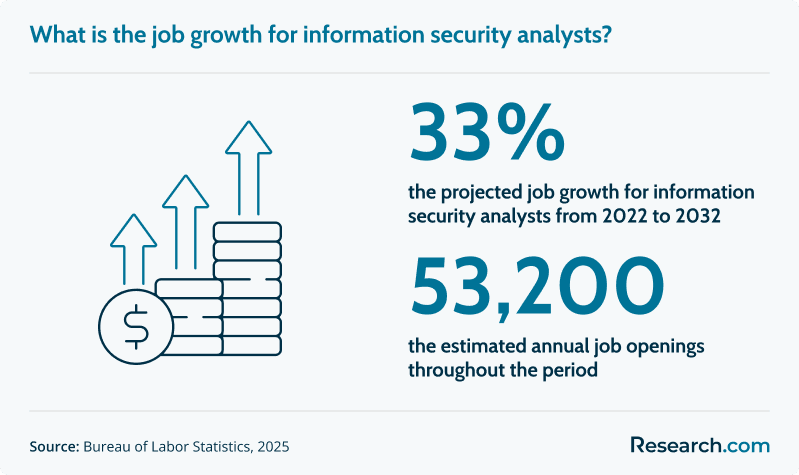
The U.S. Bureau of Labor Statistics projects that information security analyst jobs will grow by 33% over the next decade. That demand can make cybersecurity training appealing, but it does not guarantee employment for every graduate. Your results will depend on your background, certifications, lab experience, interview preparation, location, and persistence in the job search.
What to Check Before Comparing Tuition
- Certification exam vouchers: Ask whether CEH, PenTest+, Security+, CPT, or CEPT exam vouchers are included.
- Lab access: Find out whether you keep access to labs after the live instruction ends.
- Career services: Look for resume review, mock interviews, employer events, and job search coaching.
- Financing costs: Payment plans and private loans can increase the total amount you pay.
- Retake support: Ask what happens if you do not pass a certification exam the first time.
Bootcamp Cost Compared With Degree Pathways
Some of the fastest online bachelor's programs in cybersecurity can cost over $50,000. A bootcamp can be less expensive and more targeted, but it is also narrower. A degree may carry broader academic value, while a bootcamp is usually designed for faster skill development and certification preparation.
Financial Aid and Payment Options for Online Ethical Hacking Bootcamps
Common bootcamp payment options include installment plans, private loans, scholarships, and employer tuition support. Most non-degree bootcamps do not qualify for federal financial aid through FAFSA or federal student loans. This differs from many degree programs, including options such as an online Christian studies degree, where federal aid eligibility may apply if the institution and program meet the required criteria.
Best Funding Option: Employer Sponsorship
If you already work in IT, operations, compliance, risk, or another technology-adjacent role, employer sponsorship may be the most practical way to reduce your out-of-pocket cost. Companies benefit when current employees can identify vulnerabilities, support incident response, improve security awareness, and reduce organizational risk.
When asking for support, prepare a short business case. Explain what the program teaches, which certifications it supports, how the training connects to your current duties, and how the company will benefit. If possible, propose a specific plan for sharing what you learn with your team after completing the bootcamp.
| Funding Option | What to Ask | Risk to Watch |
| Employer sponsorship | Will my employer pay all or part of tuition, exam vouchers, or study materials? | Some employers require a service commitment or repayment if you leave soon after training. |
| Installment plan | Does the plan add fees, interest, or penalties? | A lower monthly payment can hide a higher total cost. |
| Private loan | What is the interest rate and repayment timeline? | Loan payments may begin before you secure a cybersecurity role. |
| Scholarship | Who is eligible, and when is the deadline? | Scholarships may be limited, competitive, or tied to specific groups. |
Prerequisites for Online Ethical Hacking Dual Certification Bootcamps
Beginner-focused cybersecurity bootcamps may not require a bachelor's degree or previous IT job experience. Instead, they often look for motivation, logical thinking, persistence, and comfort learning technical material quickly. Advanced ethical hacking boot camps, however, are usually better suited to learners who already understand networks, operating systems, and basic security concepts.
Many ethical hackers hold college degrees, but formal education is not the only route into the field. A significant number—28%—only have a high school diploma or equivalent. That said, “no degree required” does not mean “easy.” Cybersecurity hiring still depends on demonstrable skills, practical experience, certifications, and the ability to communicate risk clearly. Learners seeking a shorter path can compare the fastest online ethical hacking dual certification bootcamps to see which programs match their background.
What “No Prerequisites” Really Means
A reputable bootcamp should still assess whether you are prepared to succeed. Admissions interviews, readiness assessments, or pre-work assignments are not obstacles; they are safeguards. They help you avoid paying for a program that moves too fast for your current skill level.
- Helpful before enrollment: Basic computer literacy, curiosity about systems, patience with troubleshooting, and willingness to practice outside class.
- Strongly recommended: Introductory networking, Linux command line exposure, and basic understanding of security concepts.
- Important for advanced boot camps: Prior IT, systems administration, networking, or cybersecurity experience.
The data below shows that professionals enter the field from varied educational backgrounds.
What Courses Are Usually Included in an Online Ethical Hacking Bootcamp?
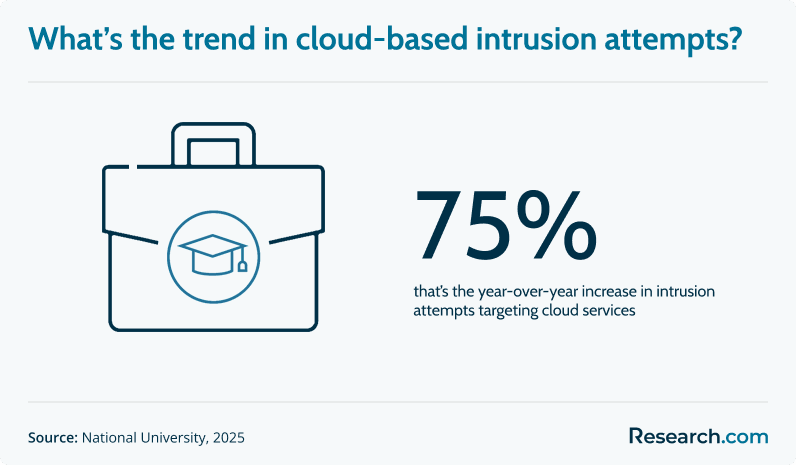
Course content varies by provider, but strong ethical hacking and cybersecurity bootcamps usually combine foundations, attack methods, defensive thinking, and hands-on practice. This matters because the threat landscape keeps changing, including a reported 75% increase in cloud intrusions. Unlike a broad academic program such as a geography degree online, an ethical hacking bootcamp is narrow, technical, and paced around job-relevant tools.
| Course Area | What You Learn | Why It Matters |
| Networking Fundamentals | How systems communicate, how traffic moves, and how networks are structured | Penetration testing requires understanding what you are testing and how systems connect. |
| Linux and Command Line | Core commands, file systems, permissions, and shell use | Many cybersecurity tools and environments rely on Linux-based workflows. |
| Penetration Testing Methodology | Reconnaissance, scanning, exploitation, documentation, and reporting | Ethical hacking must follow authorized, repeatable, and well-documented processes. |
| Web Application Hacking | Common weaknesses such as SQL injection and cross-site scripting | Web applications are frequent targets and require specialized testing skills. |
| Cloud Security | Security issues in environments such as AWS, Azure, and Google Cloud | Organizations increasingly rely on cloud platforms, making cloud risk a major concern. |
| Incident Response | Detection, containment, investigation, and recovery after a breach | Understanding defense helps ethical hackers explain business risk and recommend fixes. |
| Scripting and Automation | Basic Python or automation concepts, depending on the program | Scripting helps security professionals analyze data, automate tasks, and customize workflows. |
Lab Quality Matters More Than the Course List
A syllabus can look impressive while still offering limited practice. Ask admissions teams to explain the lab platform in detail. You want realistic scenarios, guided exercises, independent challenges, feedback on mistakes, and enough access time to repeat tasks until they become familiar. In ethical hacking, confidence comes from practice, not from watching demonstrations alone.
Ethical Hacking Specializations After Bootcamp
A bootcamp can help you build a general foundation in cybersecurity or offensive security, but specialization usually develops after you gain experience. The best niche depends on your interests, employer demand, and the systems you enjoy working with.
- Cloud Penetration Testing: Focuses on finding weaknesses in cloud environments such as AWS and Azure. Learners who want to move toward cloud security may compare a fast-track online CCSP certification training option after building experience.
- Web Application Security: Centers on testing websites, APIs, authentication flows, and application logic.
- Mobile Security: Involves assessing iOS and Android applications, mobile data storage, and device-related risks.
- Red Teaming: Simulates real attacker behavior to test how well an organization detects, responds to, and recovers from threats.
- Incident Response and Threat Hunting: Uses investigative methods to detect intrusions, analyze suspicious activity, and strengthen defenses.
How Specialization Can Affect Career Growth
General cybersecurity skills can help you enter the field, but specialized expertise can make you more competitive for advanced roles. Cloud security, application security, and red team operations require deeper practice and often stronger portfolios. The salary chart below shows how compensation can increase from average levels to top percentiles, a difference often influenced by experience, specialization, industry, and location.
How to Choose the Best Online Ethical Hacking Dual Certification Bootcamp
To choose the right online ethical hacking bootcamp, look beyond the program homepage. A strong bootcamp should make its curriculum, certification targets, lab structure, instructor qualifications, career services, and total cost clear before you enroll.
- Confirm the certification target. Ask whether the program prepares you for CEH, PenTest+, CPT, CEPT, CompTIA Security+, or another credential.
- Match the difficulty to your background. Do not choose an advanced 5-day boot camp if you still need networking and Linux fundamentals.
- Evaluate the labs. Ask how many lab hours are included, what tools are used, whether labs are guided or independent, and how long you keep access.
- Check instructor experience. Look for current or former practitioners with relevant certifications and real security work experience.
- Review career support carefully. Resume help is useful, but mock interviews, portfolio guidance, networking opportunities, and employer connections are stronger indicators of support.
- Ask about outcomes without accepting vague promises. Be cautious with job guarantees that include restrictive conditions or unclear definitions.
- Calculate the full cost. Include tuition, exam fees, retake fees, equipment, study materials, loan costs, and lost work hours.
The same decision discipline applies when comparing very different education paths, whether you are evaluating a technical bootcamp or a specialized graduate option such as an MSN care coordination online degree. The best program is the one that fits your goal, schedule, budget, and realistic next step.
Questions to Ask Admissions Before You Enroll
| Question | Why It Matters |
| Which certifications does the program prepare students to take? | “Cybersecurity bootcamp” and “dual certification bootcamp” are not always the same thing. |
| Are certification exam vouchers included in tuition? | Exam costs can change the real price of the program. |
| How much hands-on lab time is required? | Ethical hacking is skill-based; labs are central to employability. |
| What happens if I fall behind? | Fast programs can be intense, so tutoring, office hours, or remediation support matters. |
| Who teaches the course? | Instructor credibility can affect how practical and current the training feels. |
| What career support is included after graduation? | Job search help after the bootcamp can be as important as classroom instruction. |
| Can I speak with recent graduates? | Graduate feedback can reveal workload, support quality, and whether expectations were realistic. |
Common Mistakes to Avoid When Choosing an Ethical Hacking Bootcamp
- Choosing only by speed. A short boot camp can be efficient for experienced professionals but overwhelming for beginners.
- Ignoring certification details. Make sure the program prepares you for the credential you actually need.
- Focusing only on tuition. Exam vouchers, lab access, financing fees, and retakes can change the total cost.
- Assuming online means lower quality. Strong online programs can offer rigorous virtual labs and experienced remote instructors.
- Believing salary outcomes are guaranteed. Job results vary by experience, location, certifications, portfolio strength, and interview performance.
- Skipping employer conversations. If you already work in IT or a related role, your employer may help pay for training.
- Relying only on rankings. Rankings are a starting point. Your best-fit program depends on your background and target role.
Career Paths After an Online Ethical Hacking Dual Certification Bootcamp
Graduates commonly begin in defensive or analyst-oriented cybersecurity roles before moving into more advanced offensive security positions. A bootcamp can help you build skills and prepare for certifications, but most new graduates should not expect to become senior penetration testers immediately.
| Role | Typical Focus | How a Bootcamp Helps |
| SOC Analyst | Monitoring alerts, investigating suspicious activity, and escalating incidents | Provides security fundamentals, threat awareness, and incident response concepts. |
| Security Analyst | Assessing risks, supporting controls, reviewing vulnerabilities, and documenting findings | Builds practical knowledge of vulnerabilities, attack methods, and defensive workflows. |
| Cybersecurity Specialist | Supporting security tools, policies, monitoring, and response tasks | Helps develop a broad security foundation for entry-level or early-career roles. |
| Information Security Analyst | Protecting systems, analyzing threats, and recommending security improvements | Aligns with core security topics and certification preparation. |
| Penetration Tester | Conducting authorized security testing and reporting exploitable weaknesses | Ethical hacking labs and offensive security training can support progression into this path. |
Long-Term Advancement
Cybersecurity careers often progress from hands-on technical work to engineering, architecture, leadership, or specialized consulting. After gaining experience, some professionals move into security architect or security engineer roles and may pursue advanced credentials such as CISSP. Those aiming for management may later compare options such as the fastest online CISM training bootcamps.
Job Market for Ethical Hacking and Cybersecurity Bootcamp Graduates
The cybersecurity labor market remains strong for candidates who can show practical ability. Recent estimates point to 3.5 million unfilled cybersecurity jobs globally, and the U.S. Bureau of Labor Statistics projects 33% growth for information security analysts over the next decade. These figures signal demand, but employers still evaluate candidates carefully.
Graduates improve their chances when they combine certification preparation with labs, projects, clear documentation, interview practice, and realistic role targeting. Many opportunities exist in computer systems design, finance, government, healthcare, consulting, and other industries that depend on secure digital infrastructure.
Are Online Ethical Hacking Bootcamp Certifications Recognized by Employers?
Employer recognition depends on the credential, the provider, and the evidence of skill you bring with it. Certifications such as CEH, PenTest+, CPT, CEPT, and CompTIA Security+ can support your resume, but they are strongest when paired with hands-on labs, projects, technical writeups, and interview-ready explanations of your work.
Hiring teams increasingly look for practical problem-solving, not just course completion. A certificate of completion from a bootcamp may show commitment, but an industry certification and a strong portfolio usually carry more weight. If you want a broader technical foundation beyond bootcamp training, you may also compare a computer science degree accelerated program.
Can Academic Programs Strengthen a Cybersecurity Career?
A bootcamp can be useful for focused technical training, while an academic program can add broader theory, research skills, and long-term credential value. Some professionals combine both: a bootcamp for immediate tool-based practice and a degree for deeper computer science, policy, management, or systems knowledge.
Cross-disciplinary study can also help in specialized environments. For example, a space studies degree online may be relevant for learners interested in complex systems, aerospace contexts, or technology sectors where cybersecurity intersects with mission-critical infrastructure.
What Graduates Say About Online Ethical Hacking Dual Certification Bootcamps
- : "The workload was intense, and there were weeks when the amount of material felt difficult to manage. What made the difference was instructor support and repeated lab practice. The pressure helped me adjust to the pace I later saw in incident response work."
- : "Online study made the program possible for me. I was balancing a job and family responsibilities, so commuting to a campus was not realistic. Recorded lessons, evening labs, and remote support gave me enough flexibility to stay enrolled."
- : "I was worried that my previous logistics experience would not connect to cybersecurity. Career coaching helped me explain how process management, risk awareness, and complex operations translated into security work. That changed how I presented myself in interviews."
Key Insights
- Program fit matters more than program speed. A 5-day ethical hacking boot camp is best for experienced professionals, while beginners usually need a longer program with fundamentals and labs.
- Costs vary widely. The bootcamps reviewed here range from about $4,375 to $17,500, with the average sitting around $9,300.
- Certifications are useful, but not enough by themselves. Employers value CEH, PenTest+, CPT, CEPT, and CompTIA Security+ more when candidates can demonstrate hands-on skill.
- Online can be a strong format for cybersecurity. Virtual labs, remote tools, and flexible scheduling can mirror how modern security teams work.
- Federal aid is usually not available for non-degree bootcamps. Compare employer sponsorship, scholarships, payment plans, and private loans before committing.
- Be realistic about first roles. Many graduates begin as SOC analysts, security analysts, cybersecurity specialists, or information security analysts before moving into penetration testing.
- Ask hard questions before enrolling. Confirm certification targets, exam voucher coverage, lab access, career support, instructor credentials, and total cost.
References:
- Associated Press. (2024, April 9). Cybersecurity job openings to hit 3.5 million by 2025. Retrieved May 24, 2024, from https://apnews.com/press-release/ein-presswire-newsmatics/technology-steve-morgan-ein-presswire-newsmatics-2c99c00b8673966bde5eca81f6535320
- CareerExplorer. (n.d.). What does an ethical hacker do? Retrieved May 24, 2024, from https://www.careerexplorer.com/careers/ethical-hacker/
- CybersecurityEducation.org. (n.d.). Cybersecurity bootcamps: A comprehensive guide. Retrieved May 24, 2024, from https://www.cybersecurityeducation.org/bootcamps/
- National University. (2025). 101 cybersecurity statistics and trends for 2025. Retrieved May 24, 2024, from https://www.nu.edu/blog/cybersecurity-statistics/
- U.S. Bureau of Labor Statistics. (2024, April 9). Information security analysts. Occupational Outlook Handbook. Retrieved May 24, 2024, from https://www.bls.gov/ooh/computer-and-information-technology/information-security-analysts.htm
- Zippia. (2025, January). Cyber security analyst demographics. Retrieved May 24, 2024, from https://www.zippia.com/cyber-security-analyst-jobs/demographics/
- Zippia. (2025, January). Hacker education requirements. Retrieved May 24, 2024, from https://www.zippia.com/hacker-jobs/education/
- Zippia. (2025, January). Hacker salary. Retrieved May 24, 2024, from https://www.zippia.com/salaries/hacker/
Other Things You Should Know About Best Online Ethical Hacking Dual Certification Bootcamp Programs
When selecting a dual certification bootcamp, consider accreditation, course content, instructor expertise, and alumni outcomes. Ensure the bootcamp covers up-to-date tools and techniques. Look for programs offering hands-on labs and simulations to enhance practical skills.
Graduates of 2026 online ethical hacking dual certification bootcamps typically earn an average salary ranging from $70,000 to $120,000 annually. This varies based on factors such as location, experience, and specific roles in cybersecurity or ethical hacking.