
2027 Best Online Christian Studies Degree Programs

Co-Founder and Chief Data Scientist
Finding the right Christian Studies degree is now easier than ever, thanks to online programs. In fact, 54% of college students now take at least some courses online, and many enroll in full degree programs. For those pursuing ministry, theology, or biblical scholarship, online learning offers the same accredited courses as on-campus, with the flexibility to study anywhere.
Choosing the right program is key to finding the best path toward your calling or career. To help prospective Christian Studies students, I reviewed data from trusted schools to find degrees that offer strong value and quality. After comparing the options and drawing on my experience in education advising, I selected 10 standout programs for 2025.
What are the benefits of taking an online Christian Studies degree program for 2027?
- Online programs offer the freedom to study from anywhere, making it easier to balance spiritual growth, academic goals, and personal responsibilities.
- Graduates of Christian Studies can pursue careers in ministry, education, counseling, or nonprofit leadership.
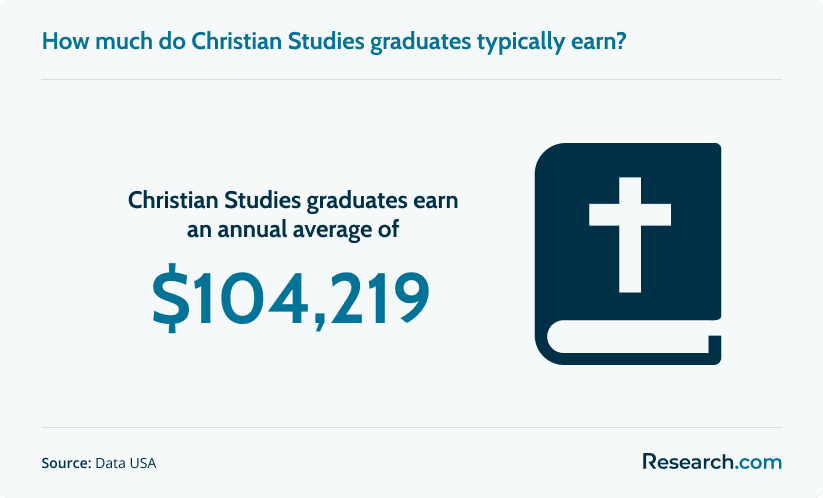
- Christian Studies graduates earn an average of $104,219 annually.
What can I expect from an online Christian Studies program?
An online Christian Studies program typically combines academic depth with practical ministry training. The curriculum covers the Bible, theology, church history, and Christian ethics. These are typically paired with courses in leadership, ministry practice, and sometimes biblical languages.
Most classes are taught by experienced faculty, often pastors, theologians, or scholars. The coursework can be challenging, especially in areas like theology or biblical exegesis. Thankfully, the flexible pacing of online programs helps students balance studies with work, family, or ministry.
Where can I work with an online Christian Studies degree?
An online Christian Studies degree can open doors to both ministry-related and non-ministry careers. Many graduates serve in churches as pastors, youth ministers, worship leaders, or Christian educators. Others work in faith-based nonprofits, mission organizations, or humanitarian agencies.
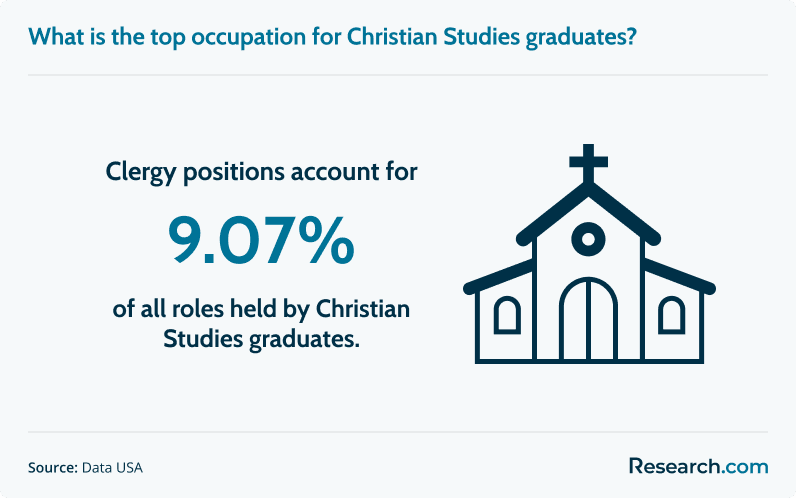
The most common industries for majors in Philosophy and Religious Studies are colleges, universities, and professional schools. It is followed by religious organizations, where 9.07% of graduates serve as clergy. Geographically, regions like Loudoun County, VA, Essex County, MA, and Hampden County, MA show particularly high average salaries for graduates.
How much can I make with an online Christian Studies degree for 2027?
Graduates with a Christian Studies degree can expect earnings that reflect both their chosen career path and where they work. Entry-level ministry positions, such as pastors or youth ministers, typically offer $30,000–$45,000 per year.
Roles in nonprofit leadership, education, or counseling often range from $40,000–$60,000. Those who advance into administrative, academic, or specialized ministry positions can make $60,000–$80,000 or more.
Location is another key factor. Religious Studies graduates living in Loudoun County, VA earn a striking average annual salary of $494,564. Essex County, MA shows an average of $457,515, while Hampden County, MA reports $442,805.
- The Best Online Christian Studies Degree Programs for 2027 List of Programs
- How long does it take to complete an online Christian Studies program? Completion Time
- How does an online Christian Studies program compare to an on-campus program? How does an online Christian Studies program compare to an on-campus program?
- What is the average cost of an online Christian Studies degree program? Average Cost
- What are the financial aid options for students enrolling in an online Christian Studies degree program? Financial Aid
- What are the prerequisites for enrolling in a Christian Studies program? Requirements
- What courses are typically in a Christian Studies degree program? What courses are typically in a Christian Studies degree program?
- What types of specializations are available in an online Christian Studies program? What types of specializations are available in an online Christian Studies program?
- How do you choose an online Christian Studies degree program? How do you choose an online Christian Studies degree program?
- What career paths are available for graduates of online Christian Studies degree programs? Career Paths
- What is the job market for graduates with an online Christian Studies degree? Job Market
- What emerging trends are shaping online Christian Studies education? What emerging trends are shaping online Christian Studies education?
- How Can Interdisciplinary Studies Enhance Your Online Christian Studies Degree? How Can Interdisciplinary Studies Enhance Your Online Christian Studies Degree?
- Can Supplementary Credentials, Such as a MLIS, Enhance Your Career Prospects? Can Supplementary Credentials, Such as a MLIS, Enhance Your Career Prospects?
Best Online Christian Studies Degree Programs for 2027
Choosing an online Christian Studies degree is not just a question of convenience. Students often need to know whether a program is accredited, whether its theology matches their faith tradition, whether it prepares them for ministry or graduate study, and whether the cost makes sense for their goals. This guide is designed for adult learners, ministry workers, career changers, church volunteers, and students preparing for seminary, nonprofit leadership, chaplaincy, teaching, or faith-based service.
You will find a ranked list of online Christian Studies and biblical studies programs, followed by practical guidance on cost, time to completion, accreditation, admissions, coursework, specializations, career paths, and how to compare online programs without relying on rankings alone.
Quick Answer: What Should You Look for in an Online Christian Studies Degree?
The best online Christian Studies degree for you is the one that combines recognized accreditation, a curriculum aligned with your theological and career goals, affordable tuition, flexible scheduling, and meaningful faculty or ministry support. Students planning to pursue seminary, ordination, teaching, chaplaincy, or nonprofit leadership should pay special attention to accreditation, transfer policies, field education options, and whether the program’s faith tradition fits their intended ministry context.
How the Schools Were Evaluated
A Christian Studies degree is a serious academic and financial commitment, so rankings should be built on verifiable information rather than marketing claims. To evaluate programs, we considered publicly available institutional and education data from sources such as the IPEDS database, Peterson’s, College Scorecard, and the National Center for Education Statistics. These sources help compare cost, institutional characteristics, and student-facing program details.
For more detail on how Research.com evaluates schools and programs, review our ranking methodology.
Top Online Christian Studies Degree Programs
| Rank | School and Program | Cost | Credits | Accreditation | Best Fit |
| 1 | Nelson University – Online Bachelor’s in Biblical Studies | $445 per credit hour | 120 | Association for Biblical Higher Education (ABHE) | Students who want a strong theological foundation with online learner support |
| 2 | Central Christian College of the Bible – Online Bachelor’s in Bible | $125 per credit | 120 | Association for Biblical Higher Education (ABHE) | Transfer students and future ministry or seminary students seeking a lower-cost option |
| 3 | Moody Bible Institute – Online Bachelor’s in Biblical Studies | $425 per credit hour | 121 | Higher Learning Commission (HLC); Association for Biblical Higher Education (ABHE) | Students who want applied biblical study and a portfolio-based learning experience |
| 4 | Biola University – Online BS in Bible, Theology, and Apologetics | $425 per credit hour | ~48 | WASC Senior College and University Commission | Students focused on apologetics, theology, and asynchronous study |
| 5 | The Master's University – Online BA in Biblical Studies | $450 per credit hour | ~48 | WASC Senior College and University Commission | Students interested in biblical context, Greek study, and evangelical theological training |
| 6 | Harding University – Online BA in Bible and Ministry | $883 per credit hour | 120 | Higher Learning Commission (HLC) | Adult learners with transfer credits who want ministry-focused preparation |
| 7 | Union University – Online BA in Christian Leadership with Biblical Studies Concentration | $400 per credit hour | 120 | Southern Association of Colleges and Schools Commission on Colleges (SACSCOC) | Students who want biblical education combined with leadership development |
| 8 | Ozark University – Online BA in Biblical Studies | $400 per credit hour | 120 | HLC | Adult learners who may qualify for merit scholarship support |
| 9 | Cairn University – Online BS in Christian Studies | $425 per credit hour | ~120 | HLC | Students seeking asynchronous study, faculty guidance, and a Christ-centered curriculum |
| 10 | NationsUniversity – Online BA in Religious Studies | $450 per quarter | Standard BA level | DEAC; member of ECFA | Students looking for cost-effective global access to Christian higher education |
1. Nelson University – Online Bachelor’s in Biblical Studies
Nelson University’s online bachelor’s program is built for students who want both careful biblical study and ministry-oriented preparation. The curriculum includes biblical interpretation, hermeneutics, preaching, and church history, giving students a foundation for teaching, church service, or further theological education.
- Cost: $445 per credit hour
- Required Credits to Graduate: 120
- Accreditation: Association for Biblical Higher Education (ABHE)
- Why students may choose it: Strong theological emphasis, high student satisfaction, and access to campus-style support while studying online
2. Central Christian College of the Bible – Online Bachelor’s in Bible
This online Bible degree emphasizes biblical theology, apologetics, and preparation for church-based service or graduate theological study. Courses include biblical theology, apologetics, and the life of Christ. Its transfer-friendly design can be especially useful for students who have already completed college credits.
- Cost: $125 per credit
- Required Credits to Graduate: 120
- Accreditation: Association for Biblical Higher Education (ABHE)
- Why students may choose it: Lower listed cost, strong completion profile, transfer flexibility, and direct preparation for ministry or seminary
3. Moody Bible Institute – Online Bachelor’s in Biblical Studies
Moody Bible Institute’s online biblical studies program helps students strengthen their ability to interpret, explain, and apply Scripture. Students complete a digital portfolio using documents, videos, and podcasts to demonstrate their learning. The curriculum includes Scripture interpretation, teaching methods, and core theology.
- Cost: $425 per credit hour
- Required Credits to Graduate: 121
- Accreditation: Higher Learning Commission (HLC); Association for Biblical Higher Education (ABHE)
- Why students may choose it: Portfolio-based learning, practical biblical application, and a widely recognized name in evangelical education
4. Biola University – Online BS in Bible, Theology, and Apologetics
Biola University’s program is a strong option for students who want theological depth with a major emphasis on apologetics. Courses such as “God, Evil, and Suffering” and “Evidence for the Resurrection” point to a curriculum designed for students who want to defend, communicate, and apply Christian doctrine. The fully asynchronous format may allow completion in as little as two years.
- Cost: $425 per credit hour
- Required Credits to Graduate: ~48
- Accreditation: WASC Senior College and University Commission
- Why students may choose it: Strong apologetics focus, asynchronous delivery, and an intentional Christian learning community
5. The Master’s University – Online BA in Biblical Studies
The Master’s University offers a biblical studies program with substantial attention to interpretation, scriptural geography, and biblical languages. Courses such as “Lands of the Scriptures” and three semesters of Greek instruction make it a fit for students who want a text-centered program. John MacArthur’s long-standing leadership also gives the school visibility among many evangelical students.
- Cost: $450 per credit hour
- Required Credits to Graduate: ~48
- Accreditation: WASC Senior College and University Commission
- Why students may choose it: Emphasis on Scripture, biblical languages, and theological identity
6. Harding University – Online BA in Bible and Ministry
Harding University’s online BA in Bible and Ministry is designed with adult learners in mind. Its “2+2” structure allows students to transfer up to 60 general education credits, which can shorten the path to graduation for eligible learners. The curriculum combines biblical study with practical ministry areas such as Christian counseling and congregational leadership.
- Cost: $883 per credit hour
- Required Credits to Graduate: 120
- Accreditation: Higher Learning Commission (HLC)
- Why students may choose it: Transfer-friendly structure and a practical ministry curriculum
7. Union University – Online BA in Christian Leadership with Biblical Studies Concentration
Union University offers this online program through its School of Adult and Professional Studies (SOAPS). The degree is built for adult students who want leadership preparation alongside biblical coursework. Students take biblical courses such as “Acts and Paul” along with leadership-focused classes such as “Strategic Communication.”
- Cost: $400 per credit hour
- Required Credits to Graduate: 120
- Accreditation: Southern Association of Colleges and Schools Commission on Colleges (SACSCOC)
- Why students may choose it: A balanced mix of Bible, leadership, communication, and adult-focused online learning
8. Ozark Christian College – Online BA in Biblical Studies
Ozark Christian College’s online BA in Biblical Studies serves adult learners who want stronger biblical knowledge and ministry preparation. The curriculum includes Bible, general education, and professional education. Scholarship support may also help some online students manage costs; students with a GPA of 3.5+ receive $2,000/year in merit-based aid.
- Cost: $400 per credit hour
- Required Credits to Graduate: 120
- Accreditation: HLC
- Why students may choose it: Merit scholarship opportunity and a curriculum aimed at adult ministry learners
9. Cairn University – Online BS in Christian Studies
Cairn University’s online Christian Studies program uses a modular, asynchronous format that can work well for students balancing school, ministry, work, and family responsibilities. The program reflects Cairn’s long history in biblical education and emphasizes faculty mentorship, academic guidance, and a Christ-centered worldview.
- Cost: $425 per credit hour
- Required Credits to Graduate: ~120
- Accreditation: HLC
- Why students may choose it: A combination of flexible delivery, affordability, tradition, and personalized faculty support
10. NationsUniversity – Online BA in Religious Studies
NationsUniversity provides low-cost Christian higher education to a global student body, with over 1,400 students enrolled from more than 120 countries. Its B.R.S. program introduces students to Christian theology, biblical studies, and ministry practices, with an emphasis on accessibility and Christian leadership development.
- Cost: $450 per quarter
- Required Credits to Graduate: Standard BA level
- Accreditation: DEAC; member of ECFA
- Why students may choose it: Cost-effective access for students in many countries and a focus on Christian service and leadership
How Long Does an Online Christian Studies Degree Take?
Most undergraduate online Christian Studies programs take about four years for full-time students who begin without transfer credit. However, completion time can vary widely based on transfer credits, course load, term length, and whether the program is structured for adult learners.
Some students look specifically for a fast-track Christian studies online degree because accelerated formats may shorten the timeline. Accelerated bachelor’s pathways can sometimes be completed in as little as 12 to 18 months, particularly when students enter with prior credits or enroll in shorter 5- to 8-week terms.
Graduate options, including master’s degrees in Christian Studies or Theology, usually require 30 to 48 credits and commonly take 1 to 2 years to complete. Many online graduate programs offer year-round scheduling, which can help motivated students finish sooner.
| Program Level | Typical Credits or Structure | Common Completion Time | What Can Shorten the Timeline? |
| Bachelor’s degree | Often 120 credits | About four years full time | Transfer credits, accelerated terms, prior learning credit, heavier course loads |
| Accelerated bachelor’s pathway | Varies by program and prior credits | As little as 12 to 18 months | Fewer remaining credits, 5- to 8-week classes, year-round enrollment |
| Master’s degree | 30 to 48 credits | 1 to 2 years | Full-time enrollment, year-round courses, efficient scheduling |
Before choosing the fastest option, consider whether the pace fits your reading load, ministry responsibilities, family schedule, and ability to complete writing-heavy theological assignments.
Online vs. On-Campus Christian Studies Programs: Which Format Fits You?
Online and campus-based Christian Studies programs often cover similar academic areas: Scripture, theology, church history, biblical interpretation, ethics, and ministry practice. The main difference is how students interact with faculty, classmates, and field experiences.
Online programs are usually better for students who need scheduling flexibility, live far from a Christian college, work in ministry already, or want to continue serving in their local church while earning a degree. Campus programs may be stronger for students who want daily chapel, face-to-face mentoring, residential community, and easier access to campus ministry opportunities.
Students comparing online and campus options should use the same decision logic that applies in other professional fields: flexibility matters, but so do accreditation, outcomes, and fit. For example, readers researching what can you do with a master's in clinical nurse leadership often evaluate whether a program’s format supports their professional goals; Christian Studies students should do the same.
| Factor | Online Christian Studies | On-Campus Christian Studies |
| Flexibility | Strong fit for working adults, parents, ministry staff, and remote students | Best for students who can relocate or follow a fixed campus schedule |
| Community | Built through discussion boards, video meetings, online chapel, and local ministry | Built through residence life, chapel, student groups, and in-person mentoring |
| Ministry experience | Often completed through local churches, nonprofits, or community organizations | May be easier to coordinate through campus ministry networks |
| Learning style | Works best for self-directed students who can manage deadlines independently | Works best for students who prefer in-person accountability and classroom discussion |
| Recognition | Generally strongest when the institution is properly accredited | Also depends on accreditation, faculty quality, and denominational or ministry fit |
Practical ministry experience still matters in online programs. Many schools allow students to complete internships, service-learning projects, or ministry assignments through churches, nonprofits, or community organizations in their own area. Some programs also use virtual ministry simulations or supervised online ministry projects.
How Much Does an Online Christian Studies Degree Cost?
The cost of an online Christian Studies degree depends on the institution, program level, residency rules, transfer credits, fees, and whether the school charges by credit, term, year, or quarter. Undergraduate tuition and fees in the U.S. typically range from approximately $4,000 per year at public community colleges to around $31,700 for out-of-state public universities.
Program examples show how wide the price range can be. Huntsville Bible College offers fast-track online theology degrees at approximately $5,550 to $6,000 annually, while College of the Ozarks charges about $23,900 per year.
Graduate-level options, including a Master of Divinity or Master of Theological Studies, generally cost between $1,500 and $10,000 per year. Costs may shift based on institutional reputation, delivery format, location, and whether the program is fully online or hybrid.
Students should also budget for expenses beyond tuition. Textbooks and digital resources usually cost between $500 and $1,200 per year. Internet service can cost around $50 to $100 per month. A reliable computer typically costs between $500 and $1,500. Some courses may require software that adds $100 to $300.
| Cost Category | Typical Amount Stated | Why It Matters |
| Undergraduate tuition and fees | Approximately $4,000 per year to around $31,700 | This is usually the largest cost and varies significantly by institution type and residency |
| Graduate tuition | Between $1,500 and $10,000 per year | Important for students planning seminary, MDiv, or advanced theological study |
| Books and digital resources | Between $500 and $1,200 per year | Theology and biblical studies courses can require multiple texts per class |
| Internet | Around $50 to $100 per month | Online programs require reliable access for lectures, discussions, and submissions |
| Computer | Between $500 and $1,500 | A dependable device is essential for online coursework |
| Special software | $100 to $300 | Some courses may require tools for research, writing, media, or Bible study |
What Financial Aid Is Available for Online Christian Studies Students?
Online Christian Studies students may qualify for several types of aid, depending on the school’s eligibility, the student’s financial need, enrollment status, and program structure. Completing the Free Application for Federal Student Aid (FAFSA) is the first step for students seeking federal grants, loans, or work-study opportunities.
For the 2022–23 academic year, the Federal Pell Grant may award up to $6,895 to eligible students. Pell Grants are primarily need-based and do not require repayment. The Federal Supplemental Educational Opportunity Grant (FSEOG) may also provide additional assistance, with awards ranging up to $4,000 per year.
Some programs also offer work-study options, institutional scholarships, ministry scholarships, church matching funds, or merit aid. Students should ask whether online learners qualify for the same scholarships as campus students, whether part-time enrollment affects eligibility, and whether aid continues during accelerated or year-round terms.
Cost comparison matters across many fields. Students weighing Christian Studies programs can use the same practical mindset as professionals researching masters in health systems management jobs: the right program should balance affordability, educational quality, and realistic post-graduation opportunities.
| Aid Type | Does It Need to Be Repaid? | What to Check |
| Federal Pell Grant | No | FAFSA eligibility, enrollment status, and annual award limits |
| FSEOG | No | School participation and financial need requirements |
| Federal loans | Yes | Interest rates, borrowing limits, and repayment obligations |
| Work-study | No, because it is earned wages | Whether online students can access eligible positions |
| Institutional or ministry scholarships | Usually no | GPA rules, church membership requirements, renewal conditions, and online eligibility |
What Are the Admission Requirements for a Christian Studies Program?
Christian Studies admissions usually include standard academic requirements, but some programs also evaluate ministry experience, faith commitment, or personal readiness for theological education. This is especially common at seminaries, Bible colleges, and programs connected to denominational traditions.
- Academic credentials: Most bachelor’s programs require a high school diploma or GED. A minimum GPA around 2.0 or 2.5 on a 4.0 scale is often expected.
- Faith or service expectations: Some institutions ask applicants to demonstrate Christian commitment or ministry involvement. For example, in the Lutheran Theological Seminary, applicants have to be a baptized Christian, provide evidence of commitment to Christian service, and show readiness for theological study.
- Graduate admissions: Programs such as a fast-track Master of Divinity online generally require a completed bachelor’s degree. Some schools also ask for a minimum undergraduate GPA, typically 2.5.
- Application materials: Students may need official transcripts, an online application, recommendations, a statement of purpose, and possibly a video interview. Some programs prefer references from a pastor, church leader, ministry supervisor, or faculty member.
What Courses Will You Take in a Christian Studies Degree?
A Christian Studies degree combines academic study of Scripture, theology, history, ethics, and ministry practice. Students learn how to interpret biblical texts, understand Christian doctrine, communicate faith-based ideas, and apply theological reasoning in churches, schools, nonprofits, and community settings.
Career-focused students should connect coursework to the roles they want after graduation. This is similar to how students in other fields ask career-outcome questions, such as what can you do with a master's in nursing care coordination. In Christian Studies, the relevant question is whether the curriculum supports preaching, teaching, counseling, nonprofit service, graduate theological study, or another ministry pathway.
| Course Area | What Students Study | Why It Matters |
| Biblical Studies | Old Testament, New Testament, Scripture interpretation, and Apocalyptic books | Builds the foundation for preaching, teaching, and Bible-based ministry |
| Theology and Systematic Theology | Doctrines such as the Trinity, Christology, salvation, and eschatology | Helps students explain Christian belief clearly and consistently |
| Church History | Early Christianity, major traditions, reform movements, and modern developments | Gives context for today’s churches and theological debates |
| Ethics and Christian Morality | Moral reasoning, bioethics, justice questions, and Christian responses to public issues | Prepares students for pastoral care, nonprofit work, and community leadership |
| Hermeneutics and Exegesis | Methods for interpreting and applying biblical texts responsibly | Reduces shallow or inaccurate interpretation of Scripture |
| Biblical Languages | Introductory Hebrew, Greek, or both | Supports deeper engagement with original biblical texts |
Biblical languages can be among the more demanding parts of the degree. Unlike modern language study, students often work with ancient grammar and vocabulary without the benefit of everyday immersion, which requires consistent practice and disciplined study habits.
What Specializations Are Available in Online Christian Studies Programs?
Specializations help students turn a broad Christian Studies degree into a more targeted pathway. The right concentration can support ministry leadership, teaching, apologetics, counseling-related service, intercultural work, or graduate theological preparation.
Focused credentials work the same way in many professions. A post master's adult gerontology primary care NP certificate online, for instance, narrows a nurse’s expertise for a specific patient population. Christian Studies concentrations similarly help students align academic preparation with a defined ministry or service setting.
| Specialization | Focus | Good Fit For |
| Biblical Studies | Scripture interpretation, biblical books, and teaching the Bible | Future Bible teachers, ministry leaders, and seminary-bound students |
| Theology and Philosophy | Doctrinal questions, philosophical reasoning, and theological argument | Students interested in teaching, apologetics, or graduate study |
| Church History | Christian traditions, historical movements, and theological development | Students who want historical context for ministry or scholarship |
| Practical Theology or Ministry Leadership | Preaching, pastoral care, discipleship, and congregational leadership | Current or future church staff, lay leaders, and ministry workers |
| World Religions | Religious diversity and engagement with pluralistic communities | Students interested in missions, intercultural ministry, or community work |
| Pastoral Counseling | Faith-based care, mentoring, and spiritual support | Youth ministry, chaplaincy-related settings, and church care roles |
| Christian Leadership | Organizational leadership, spiritual formation, worship, and ministry management | Students pursuing church administration, nonprofit work, or ministry coordination |
| Christian Doctrine | Christian beliefs and how to communicate them clearly | Religious educators, ministry teachers, and students strengthening doctrinal understanding |
How to Choose the Right Online Christian Studies Degree
The best program is not always the cheapest, fastest, or most familiar name. A strong choice should match your theological convictions, academic goals, career plans, schedule, and budget. Students considering accelerated online Christian ministry degrees should be especially careful to confirm that speed does not come at the expense of faculty access, writing support, ministry preparation, or transferability.
Accreditation should be one of the first items you verify. Nearly 75% of online students rank accreditation among their primary criteria when selecting a program. Employers, graduate schools, churches, and ministry organizations may also look more favorably on degrees from accredited institutions because accreditation signals that the school has met recognized academic standards.
When reviewing accreditation, look for:
- Regional accreditation: Examples include the Southern Association of Colleges and Schools Commission on Colleges (SACSCOC), Higher Learning Commission (HLC), and New England Commission of Higher Education (NECHE).
- Faith-specific accreditation: Relevant examples include the Association of Theological Schools (ATS) and the Association for Biblical Higher Education (ABHE).
Questions to Ask Before Enrolling
- Is the institution accredited, and by which agency?
- Does the program’s theology match my denomination, church tradition, or ministry goals?
- Will credits transfer if I later pursue seminary or another graduate degree?
- Are online students eligible for the same scholarships and advising as campus students?
- Does the program require internships, field education, local ministry, or service learning?
- How often are courses offered, and can I study part time?
- Are classes asynchronous, live, or hybrid?
- What academic support is available for writing, research, biblical languages, and theology courses?
- Are faculty members academically qualified and experienced in ministry?
- What are the total costs, including fees, books, software, and technology?
Common Mistakes to Avoid
| Mistake | Why It Can Hurt You | Better Approach |
| Choosing only by tuition | The lowest price may not include the support, accreditation, or transfer options you need | Compare total cost, aid, accreditation, faculty access, and career fit |
| Ignoring accreditation | Unaccredited programs may create problems for transfer, graduate admission, or employment | Verify institutional and faith-specific accreditation before applying |
| Assuming online means easier | Online theology courses can be reading- and writing-intensive | Review syllabi, workload expectations, and course length |
| Overlooking theological fit | A program may not align with your church tradition or ministry context | Read doctrinal statements, faculty profiles, and course descriptions |
| Not checking field experience rules | Some ministry roles require supervised practice or local placement | Ask how online internships and ministry projects are arranged |
| Relying only on rankings | A highly ranked program may not fit your goals or schedule | Use rankings as a starting point, then compare personal fit factors |
What Can You Do With an Online Christian Studies Degree?
Graduates of online Christian Studies programs work in churches, schools, nonprofits, ministries, publishing, communications, and community organizations. Some use the degree as a foundation for graduate study, seminary, chaplaincy preparation, or academic work. Career outcomes vary by denomination, employer, graduate education, licensure or ordination requirements, and prior experience.
| Career Path | Typical Work | Salary Information Stated |
| Clergy | Serving as pastors, ministers, or spiritual advisors in churches and religious communities | Average annual salary of around $63,720 |
| Education and Teaching | Teaching in Sunday school, Christian schools, ministry programs, or academic settings | Salaries typically range from $30,000 to $60,000 annually |
| Chaplaincy | Providing spiritual care in hospitals, military settings, schools, prisons, or other institutions | Around $63,587 per year |
| Community Service and Nonprofit Coordination | Leading outreach, missions, service programs, or faith-based community initiatives | Median salary of $67,150 annually in religious organizations |
| Publishing, Media, and Communications | Writing, editing, content strategy, or communications work in faith-informed settings | Earnings from this career path can reach up to $168,353 |
| Church Administration and Leadership | Managing operations, fundraising, membership services, and organizational leadership | A senior pastor makes around 52,000 to $90,000 annually |
| Academic Roles | Pursuing seminary, graduate study, or postsecondary teaching in religion-related fields | The median annual wage for postsecondary philosophy and religion teachers was $79,930 |
Students who want leadership roles in churches or ministries may also compare programs connected to the fastest Christian leadership degree online options, especially if they already have transfer credit or ministry experience.
What Is the Job Market Like for Christian Studies Graduates?
Christian Studies graduates often pursue purpose-driven careers rather than one single standardized occupation. Many move into clergy, religious education, nonprofit service, ministry coordination, or graduate theological study. Graduates of an accelerated religious studies degree online may also use their education for faith-based leadership, teaching, or community service roles.
According to employment projections, careers in theology and religious vocations are expected to grow by 7.7% until 2026. Demand may come from congregations seeking clergy, faith-based schools offering religious education, and organizations needing leaders who understand theology, ethics, and community service.
Students should avoid assuming that a degree alone guarantees a specific ministry title, salary, or ordination. In many traditions, ordination, chaplaincy, counseling-related work, and teaching roles may require graduate study, denominational approval, supervised experience, certification, or additional credentials.
Current Trends in Online Christian Studies Education
Online Christian Studies programs are becoming more interactive and ministry-oriented. Many schools now use learning platforms, virtual chapel sessions, online discussions, video assignments, and real-time ministry simulations to help students connect theology with practice. Modular course structures and adaptive learning technologies are also being used to personalize pacing and support students who balance school with work or ministry.
Hybrid ministry has also changed what students need to know. Graduates may be expected to teach online Bible studies, manage digital communication, support remote small groups, or create faith-based media. Students interested in advanced education leadership may also explore how ministry, teaching, and administration intersect through resources such as the shortest EdD program online.
Can Interdisciplinary Study Strengthen a Christian Studies Degree?
Christian Studies can become more practical when paired with another field. Students interested in missions, community work, nonprofit leadership, religious education, or cultural engagement may benefit from coursework in communication, psychology, education, anthropology, history, social work, or information science.
For example, an online degree anthropology can help students better understand cultural norms, belief systems, and community structures. That perspective can be useful for global ministry, interfaith engagement, missions, and service in diverse communities.
What Online Christian Studies Graduates Say
- : "Earning my Christian Studies degree online made it possible to keep serving with my youth group while finishing school. I studied after services and had theology discussions with classmates from five countries, which gave me a much wider view of ministry. — Elinor"
- : "I was working full time at a nonprofit, so the online format made the degree realistic. The biblical ethics courses changed how I thought about grant writing, outreach, and the people our organization serves. — Samson"
- : "The online program connected me with professors who had decades of ministry experience, even though I never had to relocate. The discussion groups were more personal than I expected, and I still meet with two classmates for Bible study every month. — Greg"
Can an MLIS or Other Supplementary Credential Expand Your Career Options?
Additional credentials can help Christian Studies graduates move into specialized roles beyond congregational ministry. Students interested in archives, theological libraries, digital collections, museum work, publishing, or academic research may benefit from training in information organization and digital curation.
For example, a best affordable MLIS online degree may complement theological training by preparing graduates to manage historical materials, religious archives, digital repositories, or faith-based educational resources. This pathway may be especially relevant for students interested in seminaries, Christian colleges, research centers, or cultural institutions.
References
- Data USA. (n.d.). Christian Studies. Retrieved from https://datausa.io/profile/cip/christian-studies
- Data USA. (n.d.). Philosophy and Religious Studies. Retrieved from https://datausa.io/profile/cip/philosophy-and-religious-studies
- Employed Historian. (2023, March 6). Theology major facts & statistics. Retrieved from https://employedhistorian.com/humanities/theology-major-facts-statistics/
- Pew Research Center. (2025, February 26). Religious landscape study: Executive summary. Retrieved from https://www.pewresearch.org/religion/2025/02/26/religious-landscape-study-executive-summary/
- Pitt Community College. (n.d.). Biblical Studies: Statistics. Retrieved from https://libguides.pittcc.edu/biblical_studies/stats
- Trinity College. (n.d.). American Religious Identification Survey (ARIS). Retrieved from https://commons.trincoll.edu/aris/
- The ARDA. (n.d.). The Association of Religion Data Archives. Retrieved August 13, 2025, from https://www.thearda.com/
- U.S. Department of Education. (2023, May). Fast Facts: Enrollment. National Center for Education Statistics. Retrieved August 13, 2025, from https://nces.ed.gov/fastfacts/display.asp?id=80
Key Insights
- The strongest online Christian Studies program is not automatically the fastest or cheapest one; it is the one that fits your theology, goals, budget, schedule, and need for ministry preparation.
- Accreditation matters. Check both institutional accreditation and faith-specific accreditation before enrolling, especially if you plan to transfer credits, attend seminary, seek ordination, or apply for ministry roles.
- Online programs can be respected when they are well-designed and accredited, but students should confirm how internships, ministry projects, mentoring, and community formation work at a distance.
- Costs vary widely. Compare tuition, fees, books, software, technology, transfer credit policies, scholarships, and financial aid instead of looking only at the advertised per-credit rate.
- Christian Studies graduates may pursue clergy, education, chaplaincy, nonprofit, communications, church administration, or academic pathways, but some roles require graduate study, denominational approval, certification, or supervised experience.
- Before enrolling, ask whether the program’s doctrine, faculty expertise, course format, and student support match the type of ministry or service you hope to pursue.
Other Things You Should Know About Online Christian Studies Degree Programs for CURRENT_YEAR
Admission requirements typically include a high school diploma or GED, submission of transcripts, a personal statement, and possibly an interview. Some programs might also require proof of Christian faith or a recommendation from a church leader for 2027 enrollment.
Most online Christian Studies bachelor’s degrees require 120 semester credit hours. That total usually includes general education, Bible and theology courses, and a capstone or ministry practicum. Students with transfer credit can finish faster, but schools often require at least 30 credits from the degree-granting institution.


