2027 Most Affordable Online Christian Studies Degree Programs

Co-Founder and Chief Data Scientist
An online Christian Studies degree can make sense if you want formal training in Scripture, theology, ministry, worship, Christian leadership, or faith-based service without relocating or leaving work. The decision is not only spiritual; it is also academic and financial. You need to compare tuition, accreditation, transfer policies, ministry requirements, online support, and realistic career outcomes before choosing a program.
This guide is for prospective undergraduate and graduate students, adult learners already serving in ministry, church volunteers preparing for leadership, and career changers exploring faith-based work. It explains what online Christian Studies programs cover, how long they take, what they cost, which affordable schools are listed for 2027, what careers may follow, and how to avoid choosing a program that does not fit your goals.
Christianity remains a large global faith tradition, with over 2.6 billion Christians worldwide according to the Center for the Study of Global Christianity (2025). That scale creates continuing demand for trained leaders, educators, counselors, administrators, and outreach professionals. Still, ministry-related careers often pay modestly compared with many other fields, so affordability and accreditation should be central to your decision.
Quick Answer: Is an Online Christian Studies Degree Worth It?
An online Christian Studies degree is worth considering if you are preparing for church ministry, Christian education, missions, chaplaincy, nonprofit service, or graduate theological study and you need a flexible learning format. It is less likely to be the best standalone degree if your main goal is high earnings, state-licensed clinical counseling, or public school teaching unless you also complete the required licensure, certification, or graduate training.
- The field of religious workers, including religious education directors, youth pastors, and counselors, is projected to grow by 2% from 2023 to 2033, with an expected 85,700 employees in this sector (Bureau of Labor Statistics, 2023).
- Religious workers earn about $45,120 on average, based on Bureau of Labor Statistics wage data for 2024.
- Online Christian Studies degree programs are best for students who need scheduling flexibility while building a foundation in theology, biblical interpretation, ministry practice, and faith-based leadership.
What to Expect in an Online Christian Studies Degree Program
Online Christian Studies programs usually combine biblical studies, theology, church history, Christian ethics, ministry leadership, and practical service preparation. Students learn how to interpret Scripture, understand major Christian doctrines, communicate faith-based ideas clearly, and apply theological thinking to real ministry and community contexts.
Depending on the school, the degree may be called Christian Studies, Biblical Studies, Theology and Ministry, Religion, Christian Ministry, Worship Studies, Christian Leadership, or Biblical Counseling. These labels matter because they often signal different career preparation. A Biblical Studies program may emphasize Scripture and languages, while a ministry leadership program may include preaching, administration, discipleship, and supervised ministry practice.
Online coursework commonly includes recorded lectures, assigned readings, discussion boards, papers, exams, video meetings, and ministry projects. Some programs are fully asynchronous, while others require live sessions, chapel participation, intensives, internships, or local ministry supervision. Students already active in churches may be able to complete practical assignments in their current ministry setting.
What You Will Usually Learn
| Learning Area | What It Covers | Why It Matters |
| Biblical interpretation | Old Testament, New Testament, hermeneutics, and scriptural context | Helps students teach, preach, write, and lead with stronger textual understanding |
| Theology | Christian doctrine, the Trinity, salvation, ecclesiology, and ethics | Provides the doctrinal foundation expected in many ministry roles |
| Ministry practice | Pastoral care, leadership, worship, discipleship, preaching, or church administration | Connects classroom learning to day-to-day ministry responsibilities |
| Christian service | Missions, outreach, nonprofit work, community support, and cross-cultural ministry | Prepares students for work beyond the walls of a local church |
| Communication | Teaching, writing, public speaking, counseling basics, and digital ministry tools | Builds transferable skills useful in both faith-based and secular settings |
Where Can You Work With an Online Christian Studies Degree?
Graduates often pursue work in churches, Christian schools, seminaries, mission agencies, campus ministries, hospitals, correctional facilities, the military, Christian publishers, and faith-based nonprofits. The best role depends on degree level, denomination, ordination requirements, supervised ministry experience, and whether the position requires state licensure.
Common ministry roles include pastor, minister, youth leader, worship leader, children’s ministry director, church administrator, missionary, and community outreach coordinator. Graduates interested in education may work in religious schools, curriculum development, or teaching support roles, although K-12 teaching usually has separate certification requirements.
Students interested in counseling should be especially careful. A Christian Studies or Christian counseling degree may prepare graduates for church-based spiritual care, mentoring, or pastoral counseling, but it does not automatically qualify someone for state-licensed mental health counseling, marriage and family therapy, or clinical social work. Those paths normally require specific graduate degrees, supervised clinical hours, exams, and state approval.
How Much Can You Make After an Online Christian Studies Degree?
Income after a Christian Studies degree varies widely because graduates enter very different settings. A small church, a large multisite ministry, a private Christian school, a nonprofit, a military chaplaincy role, and a hospital chaplaincy position may have very different compensation structures. Location, denomination, experience, graduate education, ordination, and organizational budget all matter.
According to ZipRecruiter (2025), average annual salaries for several common paths include:
- Pastor: $48,640
- Full-time Minister: $56,840
- Youth Leaders: $40,593
- High School Religion Teacher: $57,056
- Army Chaplain: $63,587
- Missionary: $49,170
Use these figures as broad benchmarks, not guarantees. Some roles include housing, benefits, parsonage arrangements, fundraising support, or part-time compensation, while others require graduate education or denominational endorsement before applicants are competitive.
- Most Affordable Online Christian Studies Degree Programs for 2027
- Program Length: How Long Online Christian Studies Degrees Usually Take
- Average Cost of Online Christian Studies Degree Programs
- Financial Aid for Online Christian Studies Students
- Admission Requirements and Prerequisites
- Common Courses in Online Christian Studies Programs
- Christian Studies Degree Types and Specializations
- How to Choose the Right Online Christian Studies Program
- Student Support Services for Online Christian Studies Learners
- Career Paths After an Online Christian Studies Degree
- Interdisciplinary Options for Christian Studies Graduates
- Questions to Ask Before Enrolling
- Job Market Outlook for Christian Studies Graduates
- Do Employers Prefer Christian Studies Graduates?
- Why Accreditation Matters
- Challenges and Limitations of Online Christian Studies Programs
Most Affordable Online Christian Studies Degree Programs for 2027
How Research.com Ranked These Schools
Affordability is important in Christian Studies because many ministry and service-oriented careers do not offer high starting salaries. This ranking was developed to help students compare lower-cost online options while also reviewing program focus, accreditation, and basic completion details.
Research.com’s ranking process follows our published methodology and draws from trusted education datasets, including the IPEDS database, Peterson’s database, College Scorecard database, and the National Center for Education Statistics (NCES). Students should still confirm current tuition, fees, accreditation status, and program requirements directly with each institution before applying.
| Rank | School | Online Program Options Listed | Cost per Credit | Accreditation Listed |
| 1 | SUM Bible College and Theological Seminary | BA in Theology and Ministry; BA in Worship and Music | $200 | Transnational Association of Christian Colleges and Schools (TRACS) |
| 2 | Manna University | BA in Christian Counseling; BA in Christian Leadership; BA in Worship Studies | $200 | Regionally accredited |
| 3 | Hobe Sound Bible College | BA in Ministerial Studies | $203 | Association for Biblical Higher Education (ABHE) |
| 4 | Bethesda University | BA in Religion | $235 | WASC Senior College and University Commission |
| 5 | Luther Rice College and Seminary | BA in Religion | $238 | Transnational Association of Christian Colleges and Schools (TRACS) |
| 6 | America Evangelical University | BA in Ministry Leadership | $250 | Association for Biblical Higher Education (ABHE) |
| 7 | Horizon University | BA in Biblical Studies Leadership and Ministry; BA in Biblical Counseling | $250 | Association for Biblical Higher Education (ABHE) |
| 8 | City Vision University | Bachelor’s in Christian Ministry and Leadership | $250 | Transnational Association of Christian Colleges and Schools (TRACS) |
| 9 | God’s Bible School and College | BA in Biblical and Theological Studies; BA in Christian Ministry; BS in Church and Family Ministry | $250 | Association for Biblical Higher Education (ABHE) |
| 10 | World Mission University | BA in Christian Ministries; BA in Christian Counseling | $260 | Association for Biblical Higher Education (ABHE) |
1. SUM Bible College and Theological Seminary
SUM Bible College and Theological Seminary provides online undergraduate programs designed for students preparing for ministry, worship leadership, and church service. Its Bachelor of Arts in Theology and Ministry and Bachelor of Arts in Worship and Music emphasize biblical foundations, theological formation, and practical leadership for congregational and community settings.
- Program Length: Typically 4 years
- Program Name(s):
- BA in Theology and Ministry
- BA in Worship and Music
- Cost per Credit: $200
- Required Credits to Graduate: Varies by program
- Accreditation: Transnational Association of Christian Colleges and Schools (TRACS)
2. Manna University
Manna University offers online Christian degree options for students interested in counseling-oriented ministry, leadership, and worship. Its BA in Christian Counseling, BA in Christian Leadership, and BA in Worship Studies combine biblical learning with applied preparation for service in churches and Christian organizations.
- Program Length: Typically 4 years
- Program Name(s): BA in Christian Counseling, BA in Christian Leadership, BA in Worship Studies
- Cost per Credit: $200
- Required Credits to Graduate: Varies by program
- Accreditation: Regionally accredited
3. Hobe Sound Bible College
Hobe Sound Bible College offers an online Bachelor of Arts in Ministerial Studies for students preparing for pastoral, preaching, and church leadership responsibilities. The curriculum centers on biblical studies, theology, and practical ministry formation.
- Program Length: Varies (typically 4 years)
- Program Name(s): BA in Ministerial Studies
- Cost per Credit: $203
- Required Credits to Graduate: Varies by program
- Accreditation: Association for Biblical Higher Education (ABHE)
4. Bethesda University
Bethesda University offers a Bachelor of Arts in Religion that gives students a broad academic base in Christian theology, Scripture, and ministry. It may fit learners seeking preparation for church leadership, Christian education, or additional theological study.
- Program Length: Varies (typically 4 years)
- Program Name(s): BA in Religion
- Cost per Credit: $235
- Required Credits to Graduate: Varies by program
- Accreditation: WASC Senior College and University Commission
5. Luther Rice College and Seminary
Luther Rice College and Seminary offers an online Bachelor of Arts in Religion for students seeking undergraduate theological education with ministry relevance. The program includes biblical studies, theology, and leadership preparation for Christian service.
- Program Length: Varies (typically 4 years)
- Program Name(s): BA in Religion
- Cost per Credit: $238
- Required Credits to Graduate: Varies by program
- Accreditation: Transnational Association of Christian Colleges and Schools (TRACS)
6. America Evangelical University
America Evangelical University lists a Bachelor of Arts in Ministry Leadership focused on preparing students for leadership in churches and Christian organizations. Coursework is designed around ministry theory, leadership development, and applied church service.
- Program Length: Varies (typically 4 years)
- Program Name(s): BA in Ministry Leadership
- Cost per Credit: $250
- Required Credits to Graduate: Varies by program
- Accreditation: Association for Biblical Higher Education (ABHE)
7. Horizon University
Horizon University provides online bachelor’s options in areas such as biblical studies, leadership, ministry, and biblical counseling. These programs may appeal to students who want a flexible path into ministry leadership or counseling-related church service.
- Program Length: Varies (typically 4 years)
- Program Name(s): BA in Biblical Studies Leadership and Ministry, BA in Biblical Counseling
- Cost per Credit: $250
- Required Credits to Graduate: Varies by program
- Accreditation: Association for Biblical Higher Education (ABHE)
8. City Vision University
City Vision University offers a Bachelor’s in Christian Ministry and Leadership for students preparing for ministry, nonprofit, and faith-based leadership roles. The program emphasizes practical ministry skills, leadership, and biblical learning.
- Program Length: Varies (typically 4 years)
- Program Name(s): Bachelor’s in Christian Ministry and Leadership
- Cost per Credit: $250
- Required Credits to Graduate: Varies by program
- Accreditation: Transnational Association of Christian Colleges and Schools (TRACS)
9. God's Bible School and College
God’s Bible School and College offers online Christian Studies-related degrees in biblical and theological studies, Christian ministry, and church and family ministry. These options support students preparing for church leadership, teaching, family ministry, and other faith-based service roles.
- Program Length: Varies (typically 4 years)
- Program Name(s): BA in Biblical and Theological Studies, BA in Christian Ministry, BS in Church and Family Ministry
- Cost per Credit: $250
- Required Credits to Graduate: Varies by program
- Accreditation: Association for Biblical Higher Education (ABHE)
10. World Mission University
World Mission University offers online programs such as the BA in Christian Ministries and BA in Christian Counseling. These degrees are designed for students preparing to serve in ministry, counseling-related church roles, missions, and Christian leadership.
- Program Length: Varies (typically 4 years)
- Program Name(s): BA in Christian Ministries, BA in Christian Counseling
- Cost per Credit: $260
- Required Credits to Graduate: Varies by program
- Accreditation: Association for Biblical Higher Education (ABHE)
How Long Does It Take to Complete an Online Christian Studies Degree Program?
Completion time depends on the degree level, transfer credits, course load, academic calendar, and whether the program requires internships, ministry practicums, research, or a dissertation. Online study can be flexible, but it is not automatically faster unless the school offers accelerated terms or generous transfer policies.
| Degree Level | Typical Full-Time Length | Best For | Important Consideration |
| Associate’s degree | Typically 2 years | Students starting college or planning to transfer into a bachelor’s program | Confirm whether credits transfer cleanly to your target bachelor’s school |
| Bachelor’s degree | Typically 4 years | Students preparing for ministry, Christian education, worship, missions, or graduate school | Transfer credits may shorten the timeline |
| Master’s degree | About 2-3 years | Students seeking advanced theological, ministry, or divinity training | M.Div. programs may require more credits than many MA programs |
| Doctoral degree | Typically 3-5 years | Experienced ministry leaders, scholars, or advanced practitioners | DMin and PhD programs often require substantial research, projects, or dissertation work |
What Is the Average Cost of an Online Christian Studies Degree Program?
Christian Studies tuition varies by degree level, school type, accreditation, fees, and whether you receive transfer credit or institutional aid. Students should compare total program cost rather than tuition alone, because technology fees, textbooks, ministry travel, intensives, graduation fees, and practicum costs can change the final price.
At the associate level, tuition usually ranges from $200 to $400 per credit hour. For a 60-credit program, that places estimated tuition between $6,000 and $16,000.
At the bachelor’s level, tuition for programs such as a Bachelor of Arts in Christian Studies often falls between $200 and $350 per credit hour. For a 120-credit program, that equals about $24,000 to $42,000 in tuition.
At the master’s level, including Master of Divinity and similar graduate programs, tuition commonly ranges from $300 to $600 per credit hour. Depending on credit requirements, total tuition may fall between $15,000 and $45,000.
At the doctoral level, Christian Studies programs may cost $400 to $700 per credit hour. Total program expenses can range from $30,000 to $70,000, especially when research, dissertation, or ministry project requirements are included.
Return on investment should be evaluated carefully. According to the Bureau of Labor Statistics, the mean annual wage for religious workers was approximately $45,000 in 2023, while the national mean annual wage across all occupations was about $65,470 in the same year. That does not mean the degree lacks value, but it does mean students should avoid unnecessary debt.
Location can also affect earnings. The top-paying states for religious workers listed in the chart below include Maryland ($54,510), Tennessee ($52,880), California ($52,800), the District of Columbia ($52,430), and New Jersey ($52,120).
Students comparing cost across online programs can also review how other affordable online degree guides approach tuition and ROI, including Research.com’s guide to the cheapest environmental engineering online degree. The field is different, but the cost-comparison logic is similar: look beyond the advertised price and calculate the total cost to graduate.
What Financial Aid Options Are Available for Online Christian Studies Students?
Online Christian Studies students may qualify for several types of financial aid, but eligibility depends on the school’s accreditation, Title IV participation, enrollment status, academic progress, and student circumstances. Always confirm whether the program is eligible for federal aid before assuming loans or grants are available.
- Federal financial aid: Students may access Pell Grants, federal student loans, and work-study by completing the Free Application for Federal Student Aid (FAFSA), if the institution and program qualify.
- Institutional scholarships: Colleges may award aid based on academic achievement, financial need, ministry involvement, denominational affiliation, or leadership potential.
- Christian organization scholarships: Some Christian foundations and organizations, including groups such as the Christian Leadership Alliance or the National Christian Foundation, offer scholarships for students pursuing Christian Studies or ministry-related education.
- Merit-based scholarships: Institutions such as Liberty University or The King’s University may offer awards tied to academic performance or financial need.
- Church or denominational support: Some students receive assistance from a local congregation, ministry employer, or denominational body, especially if the degree aligns with leadership development or ordination preparation.
- Employer tuition assistance: Faith-based nonprofits, schools, and churches may offer partial reimbursement for staff members pursuing relevant education.
How to Reduce the Cost of a Christian Studies Degree
- Ask each school for a full cost sheet that includes tuition, fees, books, intensives, and graduation charges.
- Send official transcripts early so the school can evaluate transfer credit before you commit.
- Choose the lowest-cost accredited option that still fits your theology, career goals, and support needs.
- Apply for denominational, church-based, and institutional scholarships before taking loans.
- Consider starting with an associate degree only if credits will transfer into your target bachelor’s program.
What Are the Prerequisites for Enrolling in an Online Christian Studies Degree Program?
Admission requirements are usually manageable at the undergraduate level, but graduate and doctoral programs may be more selective. Requirements also vary depending on whether the school is a Bible college, seminary, Christian university, or general university with a religion department.
Undergraduate admissions commonly resemble those for an affordable online interdisciplinary studies degree: students typically submit proof of high school completion, an application, transcripts, and sometimes a personal statement explaining academic goals, faith background, or ministry interests.
- High school diploma or GED: Undergraduate applicants generally need proof of secondary school completion.
- Minimum GPA or test scores: Some schools may request a minimum GPA or SAT/ACT scores, though requirements vary.
- Bachelor’s degree: Graduate programs usually require a bachelor’s degree from an accredited institution, and many set a minimum GPA requirement of 2.5 or higher.
- Ministry or professional experience: Some graduate programs value church, nonprofit, teaching, or ministry experience, especially for leadership-focused degrees.
- Recommendations and purpose statement: Graduate applicants may need references and a statement describing calling, academic readiness, and career goals.
- Faith or conduct expectations: Some Christian institutions require a statement of faith, pastoral reference, or agreement with community standards.
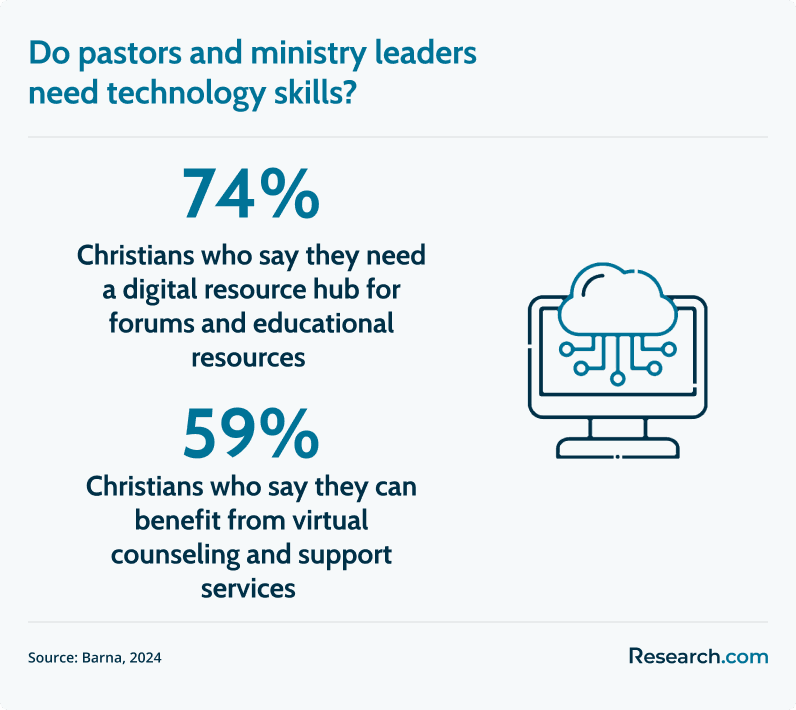
Digital readiness is becoming more important for ministry preparation. A 2024 Barna study found that 74% of Christians believe pastors and ministry leaders need a digital resource hub for forums and educational resources. The same study reports that 59% of Christians say they would benefit from virtual counseling and support services. For online Christian Studies students, this reinforces the value of learning digital communication, online pastoral care, and responsible use of ministry technology.
What Courses Are Typically Included in an Online Christian Studies Program?
Course requirements vary by denomination, school mission, degree level, and specialization. However, many online Christian Studies programs share a core set of biblical, theological, historical, ethical, and ministry-focused courses.
- Introduction to Theology: Covers central Christian doctrines, including God, Scripture, the Trinity, salvation, church, and Christian belief.
- Old Testament Studies: Examines the historical, literary, cultural, and theological context of the Hebrew Scriptures.
- New Testament Studies: Studies the life and teachings of Jesus, the apostles, early Christian communities, and New Testament writings.
- Biblical Hermeneutics: Teaches principles for interpreting different biblical genres responsibly and applying texts with care.
- Christian Ethics: Explores moral reasoning, justice, compassion, human dignity, and contemporary ethical issues from a Christian perspective.
- Church History: Traces major events, leaders, theological debates, reforms, and movements across Christian history.
- Ministry and Leadership: Builds practical skills in preaching, pastoral care, discipleship, church administration, and team leadership.
- Christian Counseling: Introduces faith-informed helping skills and spiritual care. Students seeking deeper preparation can compare options such as a Christian counseling degree online.
- World Religions: Surveys major faith traditions and helps students understand Christianity in a broader religious context.
- Missiology: Focuses on missions, evangelism, cross-cultural ministry, and global Christian engagement.
Students interested in counseling-related ministry should compare course content carefully. The data below highlights common skills for Christian counselors in 2025 based on resume usage: crisis intervention (21.7%), community resources (20.9%), substance abuse counseling (13.2%), mental health expertise (10.1%), ministry (7.2%), couples counseling (6.5%), and spiritual care (5.8%). These skills show why faith-based care often requires both theological sensitivity and practical helping competencies.
What Are the Main Online Christian Studies Degree Types and Specializations?
Christian Studies is a broad academic area. Choosing the right concentration matters because a worship degree, ministry degree, counseling degree, and biblical studies degree may lead to different internships, faculty mentors, and career outcomes.
| Program Type | Primary Focus | Best Fit |
| BA in Theology and Ministry | Christian doctrine, biblical studies, ministry practice, and leadership | Students preparing for pastoral, discipleship, or church leadership roles |
| BA in Worship and Music | Theology of worship, music leadership, service planning, and ministry skills | Students interested in worship ministry or music leadership |
| BA in Christian Counseling | Spiritual care, biblical counseling foundations, and helping skills | Students preparing for church-based care, mentoring, or further counseling study |
| BA in Christian Leadership | Leadership, administration, ministry strategy, and organizational service | Future church staff members, nonprofit workers, or ministry administrators |
| BA in Biblical Studies | Scripture, interpretation, theology, and sometimes biblical languages | Students who want strong Bible knowledge for teaching, preaching, or graduate study |
| BA in Ministry | Preaching, pastoral care, discipleship, church operations, and practical ministry | Students seeking preparation for direct ministry roles |
| Master of Divinity (M.Div.) | Advanced theology, biblical studies, pastoral preparation, and ministry formation | Students pursuing ordination, chaplaincy, or advanced ministry leadership |
| MA in Christian Studies | Graduate-level theological, biblical, ethical, and practical study | Students wanting advanced study without necessarily completing a full M.Div. |
| Master of Arts in Biblical Counseling | Faith-informed counseling, biblical care, and pastoral support | Students seeking deeper training in counseling-related ministry |
| Doctor of Ministry (DMin) | Advanced professional ministry leadership, applied research, and ministry projects | Experienced ministry leaders pursuing high-level professional development |
For aspiring pastors, educational backgrounds vary. The chart below shows Theology as the most common major at 38%. Other reported majors include Pastoral Counseling and Specialized Ministries at 9%, Business at 8%, and Biblical Studies at 7%. This range shows that ministry preparation can include theology, counseling, administration, and Scripture-focused study.
How Do You Choose the Best Online Christian Studies Degree Program?
The best program is the one that fits your calling, theological commitments, budget, learning style, and career requirements. A low price is valuable, but it should not outweigh accreditation, faculty quality, ministry fit, and whether the degree will be accepted by employers, graduate schools, or denominational bodies.
| Selection Factor | What to Check | Why It Matters |
| Accreditation | Institutional and programmatic accreditation, including agencies such as ATS, TRACS, or ABHE when relevant | Affects transfer credit, graduate admission, financial aid, and employer confidence |
| Theological fit | Statement of faith, denominational alignment, chapel expectations, and faculty perspective | Ensures the program matches your beliefs and ministry context |
| Curriculum | Bible, theology, ministry, counseling, worship, missions, languages, or leadership courses | Determines whether you graduate with the preparation your target role requires |
| Online format | Asynchronous courses, live classes, intensives, deadlines, and residency requirements | Helps you choose a schedule you can realistically sustain |
| Field experience | Internships, practicums, supervised ministry, church partnerships, or local placement options | Builds practical experience and references for ministry employment |
| Total cost | Tuition, fees, books, travel, transfer credits, scholarships, and aid eligibility | Protects you from underestimating debt or out-of-pocket expenses |
| Faculty background | Academic credentials, pastoral experience, publications, counseling experience, and ministry involvement | Improves mentorship and connects theory to practice |
| Student support | Advising, library access, tutoring, technical support, career services, and spiritual formation resources | Online students need structured help to stay engaged and complete the degree |
Students comparing online programs in very different fields often face the same core decision: cost, credibility, fit, and outcomes. For example, Research.com’s guide to the cheapest online biochemistry degree programs uses a different academic field but highlights a similar need to match program structure with long-term goals.
Who Should Choose an Online Christian Studies Degree?
- Students preparing for ministry, missions, Christian education, worship leadership, or church administration
- Adult learners already serving in churches who need formal credentials
- Students planning to continue into seminary, M.Div., chaplaincy, or doctoral ministry study
- Faith-based nonprofit workers who want stronger theological and leadership training
- Students who need online flexibility because of work, family, or ministry commitments
Who Should Consider a Different Degree?
- Students whose main goal is state-licensed counseling should compare licensure-focused counseling, psychology, social work, or marriage and family therapy pathways.
- Students who want to teach in public K-12 schools should verify teacher certification requirements before choosing Christian Studies.
- Students who are primarily focused on high salary potential may want to combine Christian Studies with business, nonprofit management, education, counseling licensure, or another applied field.
- Students who need a degree recognized by a specific denomination should ask that denomination which schools and degrees it accepts.
How Do Student Support Services Improve the Online Christian Studies Experience?
Strong support services can determine whether online students persist or disengage. Christian Studies learners often balance coursework with church responsibilities, employment, family life, and volunteer commitments, so advising and technical support should not be an afterthought.
Look for programs that provide academic advising, online library access, research support, tutoring, ministry mentoring, career counseling, and clear technical help. Peer discussion forums, virtual chapel opportunities, pastoral faculty access, and supervised ministry guidance can also strengthen spiritual formation and community connection in an online environment.
Students who are considering long-term educational planning may compare support models across different disciplines. For instance, someone exploring ministry plus education leadership might also review options such as the cheapest online masters degree in early childhood education to understand how online advising, field placement, and professional preparation differ by field.
What Career Paths Are Available After an Online Christian Studies Degree?
A Christian Studies degree can lead to many service-oriented roles, but the required credentials vary. Some church positions depend on calling, experience, and denominational approval. Other roles require graduate education, ordination, endorsement, teaching certification, or state licensure.
| Career Path | Main Responsibilities | Additional Requirements to Check |
| Pastor | Preaches, leads a congregation, provides pastoral care, and oversees church ministries | Ordination, denominational approval, seminary training, or M.Div. may be expected |
| Full-time Minister | Supports preaching, discipleship, counseling, outreach, and church programming | Requirements vary by church and denomination |
| Youth Leader | Leads youth groups, Bible studies, retreats, mentoring, and student discipleship | Experience with youth ministry and safeguarding policies may be required |
| Worship Leader | Plans and leads worship services, music teams, and congregational worship elements | Music skill, worship theology, and church experience are often important |
| Children’s Ministry Director | Coordinates children’s discipleship, curriculum, volunteers, and family ministry activities | Background checks, child safety training, and ministry experience may be required |
| Church Administrator | Manages operations, budgets, events, facilities, communications, or staff coordination | Business, accounting, HR, or nonprofit skills can improve competitiveness |
| Religious Educator | Teaches Christian studies or religion in faith-based educational settings | K-12 roles may require certification; students asking can you get a teaching degree online? should compare licensure-approved education programs |
| Christian Counselor | Offers spiritual support, biblical guidance, mentoring, and church-based care | Clinical counseling roles require separate licensure-focused education and supervised hours |
| Marriage and Family Therapist | Provides relational and family therapy, sometimes integrating faith perspectives | Requires approved graduate education, supervised clinical experience, exams, and state licensure |
| Christian Author or Speaker | Creates books, devotionals, blogs, talks, podcasts, or teaching resources | Writing practice helps; students may also compare writing programs online |
| Army Chaplain | Provides spiritual care, worship services, counseling, and support to military personnel | Military requirements, denominational endorsement, and graduate theological education may apply |
| Hospital Chaplain | Supports patients, families, and healthcare staff during illness, crisis, and grief | Clinical pastoral education and organizational requirements may apply |
| Nonprofit Organization Worker | Leads programs, outreach, fundraising, case coordination, or community services | Management skills help; some students later pursue low-cost master's in nonprofit management online |
| Correctional Facility Chaplain | Provides worship, counseling, spiritual care, and rehabilitation support in correctional settings | Facility approval, background checks, chaplaincy credentials, and endorsement may be needed |
| Community Outreach Coordinator | Organizes service programs, partnerships, volunteers, and local ministry initiatives | Grant writing, nonprofit administration, and community engagement experience can help |
| Social Worker | Supports vulnerable individuals and families, sometimes in faith-based agencies | Students exploring how to start a career in child and family social work should review social work degree and licensure requirements |
| Missionary | Serves local or global communities through evangelism, discipleship, humanitarian work, or church planting | Training, fundraising, language preparation, and sending-agency requirements may apply |
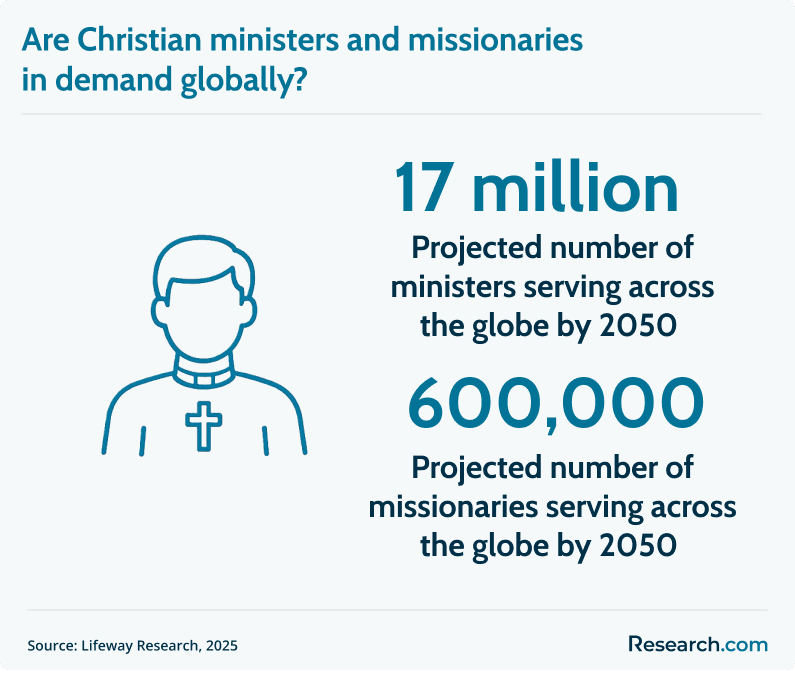
Mission and ministry work remains a large global enterprise. Nearly 13.6 million national workers are currently engaged in Christian missions, with that number growing annually at 0.91% and expected to reach 17 million by 2050. Missionaries serving abroad are projected to reach 450,000 in 2025, growing at 1.15% per year and reaching 600,000 by 2050.
Students who want a career driven by personal values should still compare training requirements carefully. Service-oriented programs vary widely, whether in ministry, nonprofit work, education, or even vocational fields such as affordable beauty certification programs online, where career choice may also be shaped by personal mission, community connection, and practical skill development.
How Do Online Christian Studies Programs Support Interdisciplinary Careers?
Christian Studies can pair well with other fields because ministry work often involves communication, education, counseling, administration, technology, nonprofit leadership, and community development. Graduates who add complementary skills may be better prepared for roles that require both theological judgment and practical problem-solving.
Useful pairings include Christian Studies plus nonprofit management for faith-based organizations, Christian Studies plus education for teaching or curriculum work, Christian Studies plus counseling for pastoral care pathways, and Christian Studies plus communication for writing, media, and digital ministry. Students with analytical interests may also compare structured online bachelor’s options in other disciplines, such as the fastest online bachelor's mathematics degree, to understand how different online programs build problem-solving and professional skills.
What Questions Should You Ask Before Enrolling in an Online Christian Studies Degree Program?
Before applying, ask direct questions that reveal the program’s quality, fit, and limitations. Do not rely only on marketing pages or rankings.
- Is the institution accredited, and which accreditor recognizes it?
- Is the program eligible for federal financial aid?
- Will credits transfer to other accredited schools or seminaries?
- Does this degree meet the educational expectations of my denomination, church network, or ministry employer?
- Are courses fully asynchronous, or are live sessions required?
- Are internships, practicums, ministry projects, or campus intensives required?
- Who teaches the courses, and what academic and ministry experience do faculty members have?
- What student support is available online, including advising, library services, tutoring, spiritual formation, and technical help?
- What is the total estimated cost to graduate after transfer credit and scholarships?
- What roles have recent graduates entered, and what additional credentials did they need?
- If I want counseling, chaplaincy, or teaching work, what licensure or certification will I still need after this degree?
- How often is the curriculum reviewed for changes in ministry practice, digital communication, ethics, and cultural context?
Students interested in combining Christian Studies with research, information services, archives, or theological librarianship may also compare graduate library science options such as cheap online MLIS degrees.
What Is the Job Market Like for Online Christian Studies Graduates?
The job market for Christian Studies graduates is steady but not fast-growing. Students should expect meaningful opportunities in ministry, education, and faith-based organizations, but they should also understand that hiring can be relationship-driven, denomination-specific, and dependent on experience.
The clergy occupation, which includes pastors, ministers, and chaplains, is expected to grow by 3% from 2023 to 2033, with 266,700 projected employees (BLS, 2023). Postsecondary philosophy and religion teachers are projected to see 2% growth during the same period, with 27,000 projected positions (BLS, 2023). Religious workers, a category including roles such as religious education directors, youth pastors, and counselors, are projected to grow by 2% from 2023 to 2033, with 85,700 employees expected in the field (BLS, 2023).
These projections suggest continued but modest demand. To improve employability, students should build practical experience before graduation through internships, church service, teaching opportunities, volunteer leadership, digital ministry projects, writing samples, or supervised pastoral care.
Do Religious Organizations Prefer Christian Studies Graduates?
Many churches, Christian schools, ministries, and faith-based nonprofits value Christian Studies graduates because the degree signals formal preparation in Scripture, theology, ethics, ministry, and Christian leadership. For roles involving teaching, discipleship, pastoral care, or doctrinal instruction, that preparation can be directly relevant.
However, preference depends on the role. Some churches prioritize ordination, denominational alignment, experience, character references, and preaching or leadership ability as much as academic credentials. For counseling-oriented church roles, a Christian Studies background may support pastoral care, but students should review what is needed to become a pastoral counselor if they want a more defined counseling pathway.
In secular organizations, the degree may be viewed less as specialized professional training and more as evidence of communication, ethical reasoning, cultural awareness, leadership, and service experience. Graduates may need to translate their skills clearly on resumes and interviews, especially when applying outside church or ministry settings.
Is Accreditation Essential for Online Christian Studies Degree Programs?
Yes. Accreditation is one of the most important factors to verify before enrolling. It can affect financial aid eligibility, transfer credit, graduate school admission, employer recognition, and whether the degree is accepted by denominational or professional bodies.
Students should check both institutional accreditation and any relevant theological or faith-based accreditation. Common names in Christian higher education include the Association for Biblical Higher Education (ABHE), the Transnational Association of Christian Colleges and Schools (TRACS), and the Association of Theological Schools (ATS), depending on the degree level and institution type.
Do not rely only on a school’s website language. Confirm accreditation through the accreditor’s own directory and through official federal or recognized education databases when applicable. This is similar to the due diligence students should use when comparing an online education degree, especially when credentials may affect employment, licensure, or graduate study.
What Are the Challenges and Limitations of Online Christian Studies Degree Programs?
Online Christian Studies programs are convenient, but they are not perfect for every learner or ministry goal. The biggest limitations involve community formation, mentorship, supervised practice, and credential recognition.
| Common Challenge | Why It Matters | Better Approach |
| Choosing without checking accreditation | An unrecognized degree may not transfer or qualify for aid, graduate admission, or employer review | Verify accreditation before applying |
| Assuming online ministry training replaces in-person formation | Pastoral maturity often develops through mentoring, community, and observed practice | Choose a program with internships, faculty access, and local ministry supervision |
| Focusing only on tuition | Fees, books, technology, travel, and lost transfer credits can raise the total cost | Compare total cost to graduate |
| Assuming counseling roles require only a Christian counseling degree | Licensed clinical roles have strict state requirements | Confirm licensure rules before choosing a counseling-related program |
| Ignoring denominational requirements | Some churches or denominations accept only specific degrees, seminaries, or ordination routes | Ask your denomination or ministry employer before enrolling |
| Underestimating online workload | Flexible does not mean easy; self-paced study requires discipline | Create a weekly study plan before the term begins |
| Relying only on rankings | A highly ranked or affordable program may still be a poor theological, academic, or career fit | Compare curriculum, faculty, support, outcomes, and accreditation together |
Students seeking accelerated leadership credentials should compare options carefully and avoid assuming faster is always better. For some learners, advanced education paths such as fast EdD online programs may fit education or organizational leadership goals better than another ministry-specific credential.
Key Insights
- An online Christian Studies degree is most useful for students pursuing ministry, missions, Christian education, worship leadership, faith-based nonprofit work, chaplaincy preparation, or graduate theological study.
- Affordability matters because many religious and ministry roles pay modestly. Compare total program cost, not just cost per credit.
- Accreditation should be verified before enrollment. It affects aid, transfer credit, graduate school options, and employer or denominational recognition.
- Career outcomes depend heavily on degree level, denomination, ordination, supervised experience, location, and additional credentials.
- Christian counseling, chaplaincy, public school teaching, social work, and therapy roles may require specific graduate degrees, certification, endorsement, supervised hours, or state licensure beyond Christian Studies.
- The strongest online programs combine theological depth with practical ministry experience, student support, digital learning resources, and clear pathways into service.
- Before enrolling, ask whether the program matches your theology, your budget, your schedule, your target role, and the requirements of the organizations where you hope to serve.
References:
- Center for the Study of Global Christianity. (2025). Status of Global Christianity 2025. https://www.gordonconwell.edu/wp-content/uploads/sites/13/2025/01/Status-of-Global-Christianity-2025.pdf
- Zippia. (2024). Christian counselor skills. https://www.zippia.com/christian-counselor-jobs/skills/
- Zippia. (2024). Pastor education. https://www.zippia.com/pastor-jobs/education/ Pastor education source
- ZipRecruiter. (2025, June 4). Salary: Pastor (United States). https://www.ziprecruiter.com/Salaries/Church-Pastor-Salary
- ZipRecruiter. (2025, June 2). Salary: Minister (United States). https://www.ziprecruiter.com/Salaries/Minister-Salary
- ZipRecruiter. (2025, n.d.). Salary: Youth Leader (United States). https://www.ziprecruiter.com/Salaries/Youth-Leader-Salary
- ZipRecruiter. (2025, n.d.). Salary: High School Religion Teacher (United States). https://www.ziprecruiter.com/Salaries/High-School-Religion-Teacher-Salary
- ZipRecruiter. (2025, n.d.). Salary: Army Chaplain (United States). https://www.ziprecruiter.com/Salaries/Army-Chaplain-Salary
- ZipRecruiter. (2025, n.d.). Salary: Christian Missionary (United States). https://www.ziprecruiter.com/Salaries/Christian-Missionary-Salary
- U.S. Department of Labor. (2024). Religious workers, all other. O*NET Online. https://www.onetonline.org/link/localtrends/21-2099.00?st=
- U.S. Department of Labor. (2024). Philosophy and religion teachers, postsecondary. O*NET Online. https://www.onetonline.org/link/localtrends/25-1126.00?st=
- U.S. Department of Labor. (2024). Clergy. O*NET Online. https://www.onetonline.org/link/localtrends/21-2011.00?st=
Other Things You Should Know About Online Christian Studies Degree Programs
Some do. Many low-cost online Christian Studies programs are fully online, but others require 1–3 short campus visits for orientation, intensive courses, or ministry training. Schools usually state these requirements in the program catalog, along with the total credit hours needed for graduation.
Yes, most affordable online Christian Studies degree programs in 2027 are eligible for federal financial aid. Students must fill out the Free Application for Federal Student Aid (FAFSA) to determine their eligibility and apply for grants or loans.
Admission requirements typically include a high school diploma or equivalent, transcripts, and application fees. Some programs may require a personal statement or letters of recommendation. Check each institution for specific criteria as they can vary between universities.