2027 Most Affordable Online Beauty and Cosmetology Trade School Programs

Co-Founder and Chief Data Scientist
Choosing an online beauty and cosmetology trade school is not just about finding the lowest tuition. You also need to know whether the program meets your state’s licensing rules, how much hands-on training you must complete, what supplies and fees are included, and whether the school can help you move from training into paid work. This guide is for students who want a practical, lower-cost route into cosmetology, esthetics, nail technology, makeup artistry, barbering, or salon-related careers without committing to a traditional four-year degree.
The beauty field continues to attract students because it offers creative work, flexible schedules, and self-employment potential. McKinsey & Company reported that the global skin care, makeup, hair care, and fragrance market posted 10% growth in 2024, outperforming expectations and some other consumer categories. At the same time, cosmetology students still face real barriers: state-by-state licensing differences, required practical hours, supply costs, and uneven credit portability when moving between states.
This guide explains what affordable online and hybrid beauty programs include, how long they take, what they cost, how to evaluate accreditation and licensure readiness, and which career paths may follow after graduation. It also highlights common mistakes to avoid before enrolling.
Quick answer: Are affordable online beauty and cosmetology trade school programs worth considering?
Affordable online beauty and cosmetology trade school programs can be a strong option if they are state-approved, include required in-person practice hours, prepare students for licensure, and fit your budget. They are best for students who want flexibility for theory coursework but understand that cosmetology cannot be learned fully online because state licensing typically requires supervised hands-on training.
The strongest programs combine online lessons in sanitation, anatomy, product knowledge, chemistry, state law, and client communication with in-person labs, salon practice, or externships. Before enrolling, confirm that the program is accepted by your state board, ask how practical hours are arranged, and compare the total cost—not just tuition.
What are the main benefits of an online beauty and cosmetology trade school program?
- Multiple career directions: Graduates may pursue entry-level roles such as hairstylist, esthetician, nail technician, makeup artist, barber, beauty consultant, or salon manager, depending on state licensing and specialization.
- Accessible earning potential: The median hourly salary for cosmetologists was $18.73, as of 2025, though income can vary widely by location, experience, tips, commissions, specialty services, and self-employment.
- Flexible theory coursework: Online delivery can make it easier to complete lectures, readings, quizzes, and exam preparation around work or family responsibilities.
- Lower opportunity cost than many degrees: Many cosmetology programs can be completed more quickly than a four-year degree, helping students enter the workforce sooner if they meet licensing requirements.
- Career mobility within beauty services: Licensed professionals may add services over time through certifications in areas such as lash extensions, skincare, nail enhancements, or makeup artistry.
What can I expect from an affordable online beauty and cosmetology trade school program?
An affordable online beauty and cosmetology program usually follows a hybrid model. Students complete academic and theory-based lessons online, then attend required hands-on training in a school lab, approved salon, externship site, or supervised local facility. This structure is designed to support flexibility while still meeting state licensing standards.
Online coursework commonly covers hair care, skin care, nail care, makeup, sanitation, infection control, salon safety, client consultation, state laws, and business fundamentals. These topics help students understand not only how to perform services, but also how to work safely, communicate with clients, and prepare for state board exams.
The in-person portion is essential. Students typically practice haircutting, coloring, chemical services, facials, manicures, pedicures, and other procedures under instructor supervision. Because each state sets its own hour and licensure requirements, the exact structure of online and in-person training can differ significantly by program.
After completing the required coursework and practical hours, graduates generally prepare for their state cosmetology licensing exam. Some programs include test prep, mock exams, career coaching, resume support, or salon placement assistance, but these services vary by school.
Typical features to compare before enrolling
| Program feature | Why it matters | Question to ask the school |
| State approval | Your training must meet licensing rules in the state where you plan to work. | Is this program approved by my state cosmetology board? |
| Hands-on training arrangement | Online theory is not enough for licensure in most cosmetology fields. | Where do I complete practical hours, and who supervises them? |
| Total program cost | Tuition may not include kits, uniforms, fees, exam costs, or transportation. | What is the full cost from enrollment through licensure exam preparation? |
| Schedule flexibility | Working adults may need evening, weekend, part-time, or self-paced options. | Can I complete theory online while scheduling lab hours around work? |
| Career support | Externships and salon connections can help students transition into paid roles. | Do you offer job placement help, portfolio support, or salon partnerships? |
Where can I work after completing an affordable online beauty and cosmetology trade school program?
Graduates can work in many personal care and beauty settings after meeting state licensing requirements. Common workplaces include salons, spas, barbershops, med spas, beauty counters, department stores, bridal studios, mobile service businesses, and freelance settings.
Salon and spa roles are the most direct route for many graduates. Licensed cosmetologists may provide haircuts, styling, coloring, scalp treatments, basic skincare services, manicures, or other services permitted by their license. Estheticians may focus more heavily on skincare, facials, waxing, and product recommendations, while nail technicians specialize in manicures, pedicures, nail art, and enhancements.
Retail beauty roles can also be a practical entry point. Cosmetics companies, department stores, and beauty retailers often hire trained professionals as makeup artists, skincare consultants, sales specialists, or brand representatives. These positions can help graduates build product knowledge, client communication skills, and industry contacts.
Some graduates pursue event, fashion, film, theater, or media work. These roles can be competitive and often depend on portfolio quality, reliability, networking, and specialized skills. Freelance makeup artists and stylists may work weddings, photo shoots, performances, or production sets, but income can be inconsistent at first.
How much can I make with an affordable online beauty and cosmetology trade school program?
Income in cosmetology depends heavily on license type, location, client base, employer, tips, commissions, service menu, and whether you work as an employee, booth renter, freelancer, or business owner. According to CareerOneStop, cosmetologists and hairstylists earned a median annual wage of $34,970 in 2024. Experienced professionals in strong markets, high-end salons, or self-employed roles may earn more, especially when tips, commissions, and retail sales are included.
Different beauty specialties have different earning patterns. Estheticians and skincare specialists earned a median wage of $41,700, while makeup artists in theatrical or performance settings averaged over $134,000 per year. Nail technicians typically earn less, around $30,000 per year, though some value the schedule flexibility and self-employment potential of the field.
Students should be cautious when evaluating salary claims. A program cannot guarantee income after graduation. Your earnings will depend on licensure, local demand, service quality, customer retention, business skills, and continued education. Certifications in areas such as microblading, lash extensions, advanced nail services, or medical esthetics may help expand services, but students should verify whether additional training is legal, recognized, or separately licensed in their state.
| Career area | Reported wage information | Income factors to consider |
| Cosmetologists and hairstylists | Median annual wage of $34,970 in 2024 | Tips, commissions, salon location, clientele, color services, and experience |
| Estheticians and skincare specialists | Median wage of $41,700 | Spa setting, advanced skincare training, product sales, and local regulations |
| Theatrical or performance makeup artists | Averaged over $134,000 per year | Portfolio strength, entertainment market access, union or production work, and networking |
| Nail technicians | Around $30,000 per year | Client retention, nail art skills, service speed, location, and self-employment |
Choosing a lower-cost accredited or state-approved program can improve return on investment by reducing debt. However, the cheapest option is not always the best if it does not prepare you for licensure, provide enough supervised practice, or clearly disclose fees.
- Most Affordable Online Beauty and Cosmetology Trade School Programs for 2027
- How long does it take to complete a beauty and cosmetology trade school program?
- How does an online beauty and cosmetology compare to a traditional trade school program?
- What is the average cost of a beauty and cosmetology trade school program?
- What are the financial aid options for students enrolling in a beauty and cosmetology trade school program?
- What are the prerequisites for enrolling in a beauty and cosmetology trade school program?
- What courses are typically in a beauty and cosmetology trade school program?
- What types of specializations are available in beauty and cosmetology trade school programs?
- Is further academic education beneficial to advancing my cosmetology career?
- What role does accreditation play in ensuring program quality and career readiness?
- What additional certifications can boost my cosmetology career?
- How can I advance my career through further education in beauty and cosmetology?
- How to choose the best beauty and cosmetology trade school program?
- What career paths are available for graduates of beauty and cosmetology trade school programs?
List of Most Affordable Online Beauty and Cosmetology Trade School Programs for 2027
How do we rank schools?
This ranking is designed to help students compare affordable online and hybrid beauty and cosmetology trade school options using transparent, education-focused criteria. Because cosmetology programs must prepare students for licensure as well as employment, affordability should be reviewed alongside state approval, practical training access, program length, and student support.
Our research methodology draws from established education data sources, including the IPEDS database, Peterson’s database and its Distance Learning Licensed Data Set, the College Scorecard database, and the National Center for Education Statistics.
1. Madison College Hybrid Cosmetology Program
Madison College offers a hybrid cosmetology program that combines online theory instruction with required in-person skills labs. The format may appeal to working adults who need flexibility while still completing supervised technical training. The program is accredited by NACCAS and Wisconsin’s Board of Cosmetology, supporting licensure preparation for eligible students.
- Tuition: $6,769/year in-state
- Cost Per Credit: $240
- Credits Required to Graduate: 30 credits
- Program Length: 9–12 months
2. Evergreen Beauty College Cosmetology Program
Evergreen provides hybrid cosmetology training with online theory coursework and in-person practical instruction at Washington campus locations. Students receive instruction from beauty educators and gain salon-client experience. Financial aid is available for eligible students.
- Tuition: $7,200
- Cost Per Credit: $150
- Credits Required to Graduate: 48 credits
- Program Length: 10 months
3. University of Spa & Cosmetology Arts Cosmetology Program
The University of Spa & Cosmetology Arts in Springfield, Illinois, offers online coursework paired with salon-based labs. Students practice with real clients in a salon environment, and the curriculum includes spa management and advanced skincare topics.
- Tuition: $8,875
- Hours Required: 750 hours
- Program Length: 9–12 months
4. Vincennes University Cosmetology Program
Vincennes offers a hybrid associate cosmetology program that teaches core beauty skills while also developing communication and critical thinking abilities. Students who want a longer academic pathway may be able to continue into bachelor’s-level study after two years of school.
- Tuition: Starts at $5,581
- Credits Required to Graduate: 60 hours
- Program Length: 2 year
5. Central Piedmont Community College Cosmetology Program
Central Piedmont Community College offers an associate cosmetology program that covers hair cutting, hair color and design, safety, sanitation, and related technical skills. Simulated salon experiences are part of the training, and graduates can sit for the North Carolina State Board of Cosmetic Arts Licensing Exam.
- Tuition: Starts at $2,432
- Credits Required to Graduate: No information available
- Program Length: 2 years
6. Avenue Five Institute Cosmetology Program
Avenue Five, established in 2007, provides hybrid options in cosmetology, esthetics, nail technology, and barbering. Students gain salon-based experience intended to support licensure preparation and entry into beauty service careers.
- Cost Per Credit: No information available
- Credits Required to Graduate: No information available
- Program Length: 9 months
7. Online Makeup Academy Master/Advanced Makeup Program
Online Makeup Academy focuses on makeup education through online learning and one-on-one tutoring. It offers Master and Advanced makeup training for students interested in beauty makeup applications. The academy has 55,000 students globally and has a 94% graduation rate.
- Cost: $57/month for the Master Program; $63/month for the Advanced Program
- Credits Required to Graduate: No information available
- Program Length: No information available
How long does it take to complete a beauty and cosmetology trade school program?
Many full-time online or hybrid beauty and cosmetology trade school programs take 9 to 12 months to complete. The exact timeline depends on your state’s required training hours, whether you study full time or part time, how quickly you complete online theory modules, and how often you can attend in-person labs.
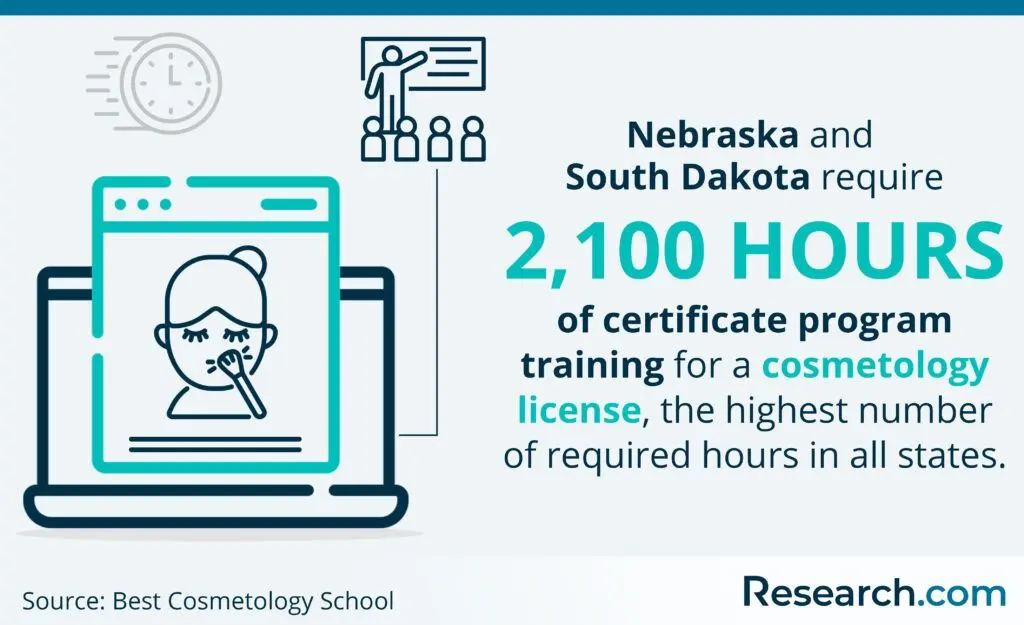
Some states require 1,000 to 1,600 training hours, which can stretch completion to 18 months for part-time students or those balancing online coursework with scheduled practical sessions. Accelerated formats may be available for students who can attend intensive labs and complete theory coursework quickly.
Cosmetology timelines are comparable to other short-term, career-focused training options such as affordable online baking and pastry arts programs, where students build job-ready skills through concentrated technical training. Students comparing fast credentials may also review 4-week medical certificate programs, although healthcare certificates and cosmetology programs follow very different licensing and practice requirements.
| Enrollment format | Typical timeline | Best for |
| Full-time hybrid cosmetology program | 9 to 12 months | Students who can prioritize school and attend required labs consistently |
| Part-time or working-adult schedule | May extend to 18 months | Students balancing employment, caregiving, or transportation limits |
| Programs in states with higher hour requirements | Depends on required 1,000 to 1,600 training hours | Students who need to meet specific state board rules before testing |
This is the common academic educational background of professionals in the field.
How does an online beauty and cosmetology compare to a traditional trade school program?
Online and traditional cosmetology programs can both prepare students for beauty careers, but they differ in how instruction is delivered. Online programs usually move theory coursework to a remote format, while traditional trade schools keep most instruction, demonstrations, and practice on campus.
The better choice depends on your schedule, learning style, transportation access, and comfort practicing skills outside a full-time classroom environment. Students who need remote academic flexibility may also compare how online learning works in broader fields, including the cheapest interdisciplinary studies online degree options, though cosmetology requires more in-person technical practice than most academic programs.
| Factor | Online or hybrid cosmetology program | Traditional trade school program |
| Course delivery | Theory topics are completed online, often through videos, readings, quizzes, and modules. | Most lessons take place in person with scheduled classroom and lab sessions. |
| Hands-on practice | Still required through labs, externships, or approved local practice sites. | Built directly into the school day with instructor supervision and access to equipment. |
| Flexibility | Often better for students with work, family, or transportation constraints. | Usually better for students who want a fixed schedule and face-to-face structure. |
| Equipment access | May require at-home kits and scheduled lab attendance. | Tools, products, and stations are generally available on campus. |
| Networking | May require more independent effort to build local salon connections. | Often provides direct local networking through instructors, salons, and school clinics. |
| Licensure readiness | Depends on whether the program satisfies state practical-hour rules. | Often designed around state board requirements from the start. |
What is the average cost of a beauty and cosmetology trade school program?
The average cost of a beauty and cosmetology trade school program typically ranges from $10,000 to $20,000. Costs vary by state, school type, program length, specialization, supplies, and whether the school is public, private, or brand-affiliated.
Public vocational schools may charge lower tuition, sometimes under $7,000. Private or specialized cosmetology institutes may cost upwards of $25,000. Students should confirm whether tuition includes registration fees, cosmetology kits, textbooks, uniforms, digital learning fees, state board exam preparation, and required supplies.
Beauty school can be less expensive than many degree pathways, including some fields with higher tuition profiles such as the cheapest online degree in environmental engineering. However, affordability should be measured by total out-of-pocket cost, licensing eligibility, completion support, and realistic earnings after graduation. Students comparing healthcare-related upskilling may also review medical assistant certification online cost to understand how short-term training costs differ by field.
| Cost category | What to check | Why it affects affordability |
| Tuition | Whether the posted price covers the full program | Some schools quote tuition separately from fees and supplies. |
| Cosmetology kit | Tools, mannequin heads, brushes, clippers, shears, skincare tools, or nail supplies | Required kits can increase upfront costs. |
| Fees and exams | Registration, technology, lab, graduation, and licensing exam fees | These costs may not appear in the tuition headline. |
| Transportation | Travel to labs, salons, externships, or campus clinics | Hybrid programs can still require regular in-person attendance. |
| Lost work time | Time away from paid employment for labs or school clinic hours | Schedule design affects your real cost of attendance. |
What are the financial aid options for students enrolling in a beauty and cosmetology trade school program?
Students in beauty and cosmetology trade school programs may be able to use federal aid, state aid, scholarships, school-based grants, payment plans, veteran benefits, or private financing, depending on the institution and student eligibility. The key is to confirm whether the school is approved for the type of aid you plan to use.
Some programs have introduced income-share agreements (ISAs) to reduce upfront payment pressure. Students should read these agreements carefully, including repayment triggers, income thresholds, total repayment caps, and what happens if they do not complete the program or do not work in the field.
- Empire Beauty School Scholarship: The High School Scholarship awards $1,000 to over 100 seniors entering cosmetology, while attendance-based awards of $500–$1,000 recognize students with strong school attendance. The school also offers a “Gives Back” endowment granting up to $3,000 to qualified students from domestic violence shelters.
- Beauty Changes Lives Scholarship: This scholarship provides up to $250,000 per year for aspiring barbers, cosmetologists, estheticians, nail professionals, and massage professionals. Applicants must submit an essay and video.
- Great Clips Scholarship (Alice Madden Barton) Program: This scholarship awards over $100,000 total in barber or cosmetology scholarships annually. Applications are accepted between September 2 and March 1 only.
- Rosy Rewards Scholarship: Rosy Salon Software awards up to $12,000 for cosmetology, esthetics, and barber students. Applicants need recommendation letters, a resume, and photos.
How to reduce the cost of cosmetology school
- Ask for a full cost-of-attendance estimate before signing an enrollment agreement.
- Compare public vocational schools, community colleges, and private beauty institutes.
- Apply for industry scholarships early, since deadlines and requirements vary.
- Confirm whether supplies are included or must be purchased separately.
- Ask whether prior training, transfer credits, or previous hours can count toward completion.
- Choose a schedule that reduces transportation and lost-work costs.
What are the prerequisites for enrolling in a beauty and cosmetology trade school program?
Beauty and cosmetology trade schools usually have accessible admissions requirements. Most programs are open to students with a high school diploma or GED, though age rules, documentation requirements, and state board expectations vary.
- Education requirement: Most schools ask for a high school diploma or GED. Some may accept proof of 10th-grade completion under specific conditions, and some may allow dual enrollment for high school students.
- Minimum age: Students typically must be at least 16 years old to enroll, though many states and schools require students to be 17 or 18. Minors generally need parent or guardian consent.
- Application and enrollment steps: Applicants may need to submit identification, education records, an application form, and sometimes complete a school interview, tour, or orientation.
- State-specific licensing rules: Some states may require background checks, residency documentation, English proficiency, or other licensing-related steps. Ask the school to explain exactly what applies in your state.
Because the entry requirements are often straightforward, cosmetology can be as accessible as other practical training options such as affordable online dog obedience training. Still, simple admission does not guarantee licensure, so students should verify state requirements before enrolling.
What courses are typically in a beauty and cosmetology trade school program?
Beauty and cosmetology trade school programs combine technical training, science, sanitation, customer service, business basics, and state board preparation. Online courses are usually strongest for theory topics, while hands-on services must be practiced under supervision.
- Haircutting and styling: Students learn sectioning, layering, texturizing, blowouts, thermal styling, and client consultation for different hair types and preferences.
- Hair coloring and chemical services: Courses may include color theory, lightening, highlighting, permanent waving, relaxing, scalp safety, product chemistry, and chemical service precautions.
- Skincare and facials: Training often covers skin analysis, cleansing, facial massage, masks, product selection, sanitation, and basic dermatology concepts.
- Nail technology: Students practice manicures, pedicures, nail shaping, polish application, acrylics, gels, nail art, sanitation, and infection control.
- Makeup application: Coursework may include everyday beauty makeup, bridal looks, color matching, contouring, sanitation, and client preference assessment.
- Salon business and state law: Students study appointment scheduling, retail sales, customer service, inventory, professional ethics, board regulations, and licensing rules.
- Safety and sanitation: Infection control, disinfection, tool handling, and workplace safety are central because improper sanitation can harm clients and affect licensure.
What types of specializations are available in beauty and cosmetology trade school programs?
Cosmetology students can often choose a general license path or focus on a specialty such as hair, esthetics, nails, makeup, barbering, or salon operations. Students interested in wellness-adjacent services should also understand where beauty careers overlap with broader health science careers, especially in skincare, med spa, and dermatology-adjacent environments.
- Hair design and barbering: This path emphasizes haircutting, coloring, styling, grooming, shaving, beard design, scalp care, and services for different hair textures.
- Esthetics and skincare: Students focus on facials, waxing, makeup, skin analysis, spa treatments, and product knowledge. Some later pursue advanced skincare training where state law allows.
- Nail technology: This specialization covers manicures, pedicures, acrylics, gels, nail art, sanitation, nail health, and client service efficiency.
- Makeup artistry: Training may include bridal, editorial, theatrical, beauty, and airbrush makeup, along with color theory and portfolio development.
- Salon management: This track adds business topics such as marketing, staff scheduling, client retention, budgeting, retail sales, and compliance. Students planning to eventually manage or own a business may also explore broader business education, including guidance on what age to get MBA.
| Specialization | Best fit for students who enjoy | Possible work settings |
| Hair design | Cutting, color, styling, and long-term client relationships | Salons, bridal studios, freelance styling, entertainment work |
| Esthetics | Skincare, facials, waxing, and product consultation | Spas, med spas, skincare clinics, retail beauty |
| Nail technology | Detailed work, nail art, repeat clients, and flexible scheduling | Nail salons, mobile services, independent studios |
| Makeup artistry | Creative looks, events, photography, and client transformation | Weddings, fashion, theater, film, retail beauty |
| Salon management | Leadership, operations, customer experience, and entrepreneurship | Salons, spas, beauty franchises, independent businesses |
Is further academic education beneficial to advancing my cosmetology career?
Further education can help, but it should match your career goal. A trade school program can prepare you for entry-level licensure and technical work, while additional academic study may be useful for students who want to move into salon ownership, brand education, training, management, marketing, product sales, or entrepreneurship.
Not every cosmetology professional needs a degree. Many grow through experience, continuing education, certifications, and client retention. However, those who want a broader credential may compare short academic options such as an accelerated associate degree online, especially if they want business, communication, or management skills to support advancement.
What role does accreditation play in ensuring program quality and career readiness?
Accreditation and state approval are two of the most important checks before enrolling. Accreditation can indicate that a school meets recognized education standards, while state board approval determines whether the training can count toward licensure in your state. Students should verify both, because a program may look legitimate online but still fail to meet local licensing requirements.
Ask the school which accreditor recognizes the program, whether the state board accepts its training hours, and whether graduates are eligible to sit for the licensing exam. If you plan to move, ask whether hours or credits can transfer. Students considering long-term academic pathways may also compare options such as accelerated online bachelor's degree programs, but cosmetology licensure remains state-specific.
What additional certifications can boost my cosmetology career?
Additional certifications can help licensed beauty professionals expand services, build client trust, and compete in specialized niches. Common areas include lash extensions, advanced skincare, microblading, nail enhancements, bridal makeup, airbrush makeup, hair color techniques, and product-specific training.
Before paying for a certification, confirm whether the service is legal under your current license, requires a separate license, or is regulated differently in your state. A certificate from a private provider is not the same as state licensure. Students comparing credential-based career moves can review broader certification programs for high paying jobs to understand how certificates vary by industry.
How can I advance my career through further education in beauty and cosmetology?
Career advancement in beauty often comes from a combination of technical skill, business ability, specialization, customer retention, and professional reputation. Further education can support that growth when it helps you solve a specific career problem, such as learning advanced color correction, qualifying for med spa-related work, managing staff, teaching, or launching a salon.
Beauty professionals who want leadership or entrepreneurial roles may benefit from business, marketing, accounting, human resources, or operations training. Some may compare advanced academic routes such as 1 year online masters programs, but a graduate degree is not necessary for most cosmetology roles. The better question is whether the education directly supports your next career step.
How to choose the best beauty and cosmetology trade school program?
The best beauty and cosmetology trade school is the one that is affordable, state-approved, realistic for your schedule, transparent about costs, and strong enough to prepare you for licensure and employment. Rankings can help you start a shortlist, but they should not replace your own verification.
- Check state approval first: Contact your state cosmetology board or review its official program list before enrolling.
- Verify accreditation: Accreditation can affect quality assurance, financial aid eligibility, and transfer options, but state approval is still essential for licensure.
- Ask about licensure exam outcomes: Request recent pass-rate information and ask how the school prepares students for written and practical exams.
- Review practical-hour logistics: Find out where labs take place, how often you must attend, and whether the school arranges externships or expects you to find your own site.
- Compare total cost: Include tuition, kits, fees, books, transportation, uniforms, missed work time, and exam costs.
- Evaluate schedule fit: Online theory helps, but required labs may still be difficult if the campus or salon site is far from home.
- Look at career support: Ask about job placement assistance, local salon partnerships, portfolio development, resume help, and alumni outcomes.
- Read the enrollment agreement carefully: Pay attention to refund policies, attendance rules, make-up hour fees, leave policies, and financing terms.
Common mistakes to avoid when choosing a cosmetology school
| Mistake | Why it can hurt you | Better approach |
| Choosing only by lowest tuition | The cheapest program may not include supplies, lab access, or strong licensure preparation. | Compare full cost, state approval, pass rates, and student support. |
| Assuming “online” means fully remote | Cosmetology usually requires in-person practical hours. | Ask exactly when and where hands-on hours are completed. |
| Ignoring state licensing rules | A program may not qualify you to test in your state. | Confirm requirements with the state board before enrolling. |
| Overlooking transfer policies | Moving states or schools can lead to repeated coursework or lost hours. | Ask whether credits or hours are portable before you start. |
| Believing salary claims are guaranteed | Income varies by location, license, clientele, and experience. | Use wage data as a benchmark, not a promise. |
| Skipping the refund policy | Withdrawing can be expensive if refund rules are strict. | Read cancellation, withdrawal, and make-up hour policies in writing. |
What career paths are available for graduates of beauty and cosmetology trade school programs?
Graduates can pursue roles across personal care, wellness, grooming, beauty retail, entertainment, and self-employment. The right path depends on your license, state rules, specialization, portfolio, location, and business goals.
- Hairstylist or colorist: Stylists cut, color, treat, and style hair in salons, spas, mobile businesses, or freelance settings. Many build repeat clientele and may later rent a chair or open a salon.
- Esthetician: Skincare professionals provide facials, waxing, skin analysis, and product recommendations in spas, med spas, salons, or dermatology-adjacent settings, depending on state rules.
- Nail technician: Nail technicians perform manicures, pedicures, enhancements, nail art, and related services in salons, independent studios, or mobile businesses.
- Makeup artist: Makeup artists work in bridal, beauty retail, fashion, theater, photography, television, and special events. Students interested in fashion-facing careers may also compare top fashion design programs.
- Barber: Barbers provide cutting, shaving, grooming, beard design, and related services, often in barbershops, salons, or independent studios.
- Salon owner or manager: Experienced professionals may supervise staff, manage scheduling, oversee inventory, market services, and build a client-centered business.
- Beauty educator or brand representative: Some professionals move into product education, sales, training, or platform artistry after gaining industry experience.
Cosmetologists are thriving in Washington, per a recent data.
What is the job market for graduates of beauty and cosmetology trade school programs?
The labor market for cosmetology graduates remains supported by demand for grooming, skincare, nail care, and personal appearance services. According to the U.S. Bureau of Labor Statistics (BLS), employment for barbers, hairstylists, and cosmetologists is projected to grow by 7% from 2023 to 2033. Demand is influenced by population growth, personal grooming habits, and consumer interest in wellness and self-care.
Job prospects may be stronger for graduates who offer more than one service, build strong client relationships, and continue learning after licensure. Urban and suburban areas with more salons, spas, and wellness centers may offer more openings, while mobile and freelance services can create opportunities in areas with fewer brick-and-mortar employers.
Specialized roles such as makeup artist, esthetician, and nail technician can be promising for graduates who develop a clear niche and market themselves effectively. Social media has also changed how beauty professionals attract clients, display portfolios, and build personal brands. However, online visibility does not replace licensure, sanitation standards, technical skill, or reliable customer service.
The field can also support entrepreneurship. Some licensed professionals eventually open salons, rent booths, launch mobile service businesses, or sell beauty products. Those interested in combining beauty services with business, media, events, or brand work may find it useful to study broader business topics, including options such as the cheapest online entertainment business degree programs.
Current trends affecting beauty and cosmetology students
- Hybrid learning is expanding: More programs are moving theory coursework online while keeping practical hours in person.
- Licensing portability remains a challenge: State-by-state differences can create duplication for students who move or transfer programs.
- Employer expectations include business skills: Salons often value graduates who understand client communication, retail sales, scheduling, sanitation, and social media presentation.
- Specialized services are shaping career growth: Areas such as advanced skincare, lashes, nail art, hair color, and bridal styling can help professionals differentiate themselves.
- Financing options require careful review: ISAs, payment plans, scholarships, and private loans can reduce upfront cost but may create repayment obligations later.
Questions to ask before enrolling in an online cosmetology program
- Is the program approved by the state cosmetology board where I plan to work?
- Is the school accredited, and by which accreditor?
- How many practical hours are required, and where will I complete them?
- Does the posted tuition include kits, books, fees, uniforms, and exam preparation?
- What percentage of students complete the program and pass the licensing exam?
- What happens if I move to another state before or after graduation?
- Are credits or clock hours transferable to another school?
- Does the school offer job placement, externships, or salon partnerships?
- What are the refund rules if I withdraw?
- Will my desired specialty require additional certification or a separate license?
Key Insights
- Affordable online beauty and cosmetology programs are usually hybrid, not fully online, because licensure typically requires supervised hands-on practice.
- Most full-time students of online beauty and cosmetology trade schools graduate in 9 to 12 months, though state hour requirements and part-time schedules can extend the timeline.
- Students should prepare for total costs beyond tuition. A beauty and cosmetology trade school program often costs $10,000 to $20,000, with public programs sometimes under $7,000 and private institutes sometimes upwards of $25,000.
- The minimum age for beauty and cosmetology students is 16 years, but many states and schools admit students at 17 or 18.
- Salary outcomes vary by specialty. Cosmetologists and hairstylists earned a median annual wage of $34,970 in 2024, estheticians and skincare specialists earned a median wage of $41,700, theatrical or performance makeup artists averaged over $134,000 per year, and nail technicians earned around $30,000 per year.
- Licensure rules should drive your school choice. Before enrolling, confirm state approval, practical-hour arrangements, exam preparation, and whether hours can transfer if you move.
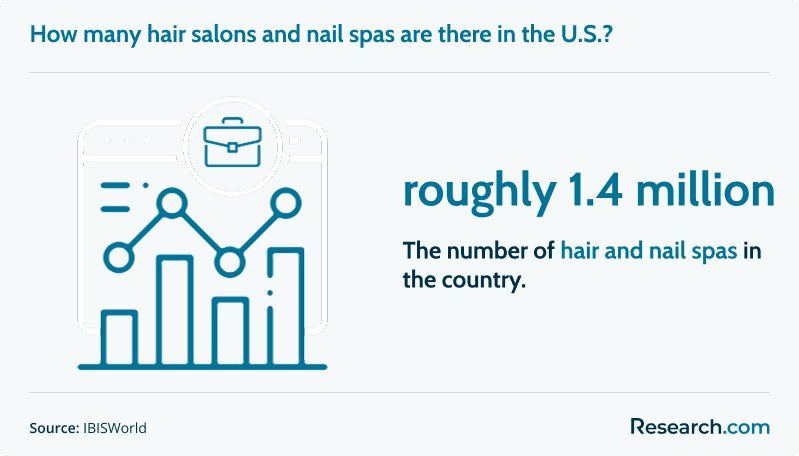
- There are approximately 1.4 million hair and nail salon spas in the U.S., and Washington pays beauty and cosmetology professionals with $51,978 yearly, making it the highest-paying state for the workforce.
- Further education is most useful when it supports a clear goal, such as advanced skincare, salon management, teaching, entrepreneurship, or brand work.
References:
- BLS. (2025, April 18). Barbers, Hairstylists, and Cosmetologists. Retrieved June 13, 2025, from BLS.
- CareerOneStop. (n.d.). Hairdressers, Hairstylists, and Cosmetologists. Retrieved June 13, 2025, from BLS.
- McKinsey & Company. (2024, September 11). The beauty boom and beyond: Can the industry maintain its growth? Retrieved June 10, 2025, from McKinsey & Company.
- Zippia. (2023). What is the highest-paying job in the beauty industry? Retrieved June 13, 2025, from Zippia.
Other Things You Should Know About Online Beauty and Cosmetology Trade School Programs
Yes, but only if the program is approved by the state board that licenses cosmetologists, estheticians, or barbers in that state. Many boards require a set number of supervised in-person practice hours, often 1,000 to 1,600 for cosmetology, before exam eligibility.
Many online beauty and cosmetology trade programs offer financial aid in 2027, including Pell Grants and federal student loans. Check with specific programs for eligibility criteria and application deadlines. Typically, accredited institutions are more likely to provide such options.