
2027 What Can You Do with a Criminology Degree? Costs & Job Opportunities

Co-Founder and Chief Data Scientist
Criminology Degree Guide: How to Choose the Right Program and Career Path
A criminology degree is for students who want to understand why crime happens, how justice systems respond, and how research can improve public safety, rehabilitation, and policy. It can lead to work in law enforcement, corrections, investigations, security, policy analysis, social services, and graduate study in law, sociology, forensic psychology, or criminal justice.
This guide explains what criminology programs teach, how long they take, what they cost, how online and campus programs compare, which schools stand out, and what careers may be available after graduation. It is designed to help you decide whether criminology is the right degree for your goals, budget, schedule, and long-term career plans.
Quick Answer: Is a Criminology Degree Worth It?
A criminology degree can be worth it if you want a career connected to crime analysis, law enforcement, corrections, public policy, victim advocacy, private investigation, security, or graduate study. The best value usually comes from choosing an accredited program with strong research training, internship access, transfer-friendly policies, and career services aligned with your target role.
The U.S. Bureau of Labor Statistics (BLS) projects 3% growth in police and detective jobs by 2032. Salary outcomes depend heavily on the job, employer, location, experience, and whether the role requires additional training, civil service testing, certification, or licensure. Detectives and criminal investigators have a reported median annual wage of $86,280, while some salary summaries cite $83,640 for detectives and criminal investigators. Sociologists who study crime and criminal behavior earn $98,590, and probation officers and correctional treatment specialists receive $59,860.
What are the benefits of getting a degree in criminology?
- A criminology program gives students a broad understanding of crime, law, justice institutions, public safety, research methods, and social behavior while also building writing, analysis, communication, and problem-solving skills.
- Graduates can pursue public-service and private-sector roles in policing, courts, corrections, criminal justice agencies, victim services, industrial security, risk management, and related fields.
- Career earnings vary by occupation and employer. Detectives and criminal investigators are among the better-paid roles connected to the field, with a median annual wage of $83,640 in one cited wage snapshot and $86,280 in the BLS occupational data referenced in this guide.
What can I expect from a criminology degree program?
Criminology is the systematic study of crime, criminal law, people who commit crimes, and the institutions that respond to crime. Wilson describes criminology as the formal study of crime, crime law, criminals, and criminal justice. In practical terms, students examine how laws are created, how they are enforced, why people break them, and how justice systems affect individuals and communities.
Most criminology programs combine sociology, psychology, law, statistics, public policy, and criminal justice. Students learn to evaluate crime data, interpret social patterns, assess justice policies, and communicate findings clearly. This makes the degree useful not only for law enforcement but also for research, policy, social services, compliance, security, and graduate study.
| What You Study | Why It Matters |
| Criminal behavior and criminological theory | Helps students understand major explanations for crime, including social, psychological, economic, and environmental factors. |
| Law enforcement, courts, and corrections | Shows how the justice system works from arrest through sentencing, supervision, incarceration, and reentry. |
| Research methods and statistics | Prepares students to evaluate evidence, read crime data, and support policy or investigative decisions with research. |
| Social inequality and justice | Encourages critical analysis of how race, class, gender, poverty, and community conditions intersect with crime and punishment. |
| Ethics and public policy | Builds decision-making skills for roles where individual rights, public safety, and institutional accountability must be balanced. |
Where can I work with a criminology degree program?
Criminology graduates can work in public agencies, private organizations, nonprofit groups, and research settings. Many enter law enforcement or corrections, while others focus on crime prevention, victim services, legal support, security, data analysis, or policy work.
Correctional facilities, probation departments, courts, police agencies, federal and state government offices, consulting firms, security companies, and advocacy organizations may all hire candidates with criminology-related training. The right workplace depends on whether you prefer fieldwork, case management, research, policy, investigation, community work, or administrative leadership.
How much can I make with a criminology degree program?
Pay depends on the role you pursue after graduation. According to the U.S. Bureau of Labor Statistics (BLS), detectives and criminal investigators have an annual median wage of $86,280 or an hourly wage of $41.48. Sociologists who conduct research on crime and criminal behavior earn $98,590, while probation officers and correctional treatment specialists receive $59,860.
| Career Area | Relevant Work | Reported Pay Figure |
| Detectives and criminal investigators | Investigate suspected crimes, interview witnesses, collect evidence, and prepare case materials. | $86,280 annual median wage; $41.48 hourly wage |
| Sociologists | Study crime, institutions, social behavior, inequality, and policy outcomes using research methods. | $98,590 |
| Probation officers and correctional treatment specialists | Supervise individuals in the justice system and support rehabilitation, compliance, and reentry planning. | $59,860 |
- List of the Best Criminology Programs for 2027
- How long does it take to complete a criminology program?
- How does an online criminology program compare to an on-campus program?
- What is the average cost of a criminology program?
- What are the financial aid options for students enrolling in a criminology program?
- What are the prerequisites for enrolling in a criminology program?
- What courses are typically in a criminology program?
- What types of specializations are available in online criminology programs?
- How to choose the best criminology program?
- What career paths are available for graduates of criminology programs?
- What challenges do criminology professionals face?
- What skills do employers value most in criminology graduates?
- What is the return on investment for a criminology degree?
- How can networking and professional development boost criminology career success?
- Can integrating forensic science enhance criminology careers?
- How can a criminology degree support careers in homeland security?
- Which professional certifications can enhance my criminology degree?
- Can a criminology degree lead to careers in intelligence?
- What is the job market for graduates with a criminology degree?
- What are the current trends in criminology?
- How does a criminology degree prepare you for law school or graduate programs?
- How can you maximize the value of your criminology degree?
- What are the advantages of accelerated criminology degree programs?
List of the Best Criminology Programs for 2027
How do we rank schools?
The right criminology program should match your academic interests, career goals, preferred learning format, and budget. Research.com reviewed undergraduate criminology options for the 2024 research cycle using indicators tied to academic quality, student outcomes, and institutional reputation. Sources include the IPEDS database, Peterson’s database, the Distance Learning Licensed Data Set from the College Scorecard database, and the National Center for Education Statistics. To understand how Research.com evaluates programs, review our methodology.
1. University of California - Irvine
UC Irvine’s Criminology, Law, and Society major introduces students to the American legal system, social responses to crime, and the regulation of behavior. The curriculum draws from anthropology, economics, history, political science, sociology, and related fields, giving students multiple ways to analyze crime and justice. Its applied social science research focus can support careers in criminal justice or preparation for graduate study.
- Program Length: Four years
- Tracks/concentrations: None specified
- Estimated Cost: $17,105 per year (resident rate), $49,679 per year, (non-resident rate)
- Required Credits to Graduate: 44 credits
- Accreditation: WASC Senior College and University Commission (WSCUC)
2. University of Pennsylvania
The University of Pennsylvania offers the Ivy League’s only undergraduate criminology major. Students study crime through an interdisciplinary lens that connects theory, evidence, policy, courts, crime control, and applied science. Every major completes a senior capstone research project, and honors students may expand that work into a thesis.
- Program Length: Four years
- Tracks/concentrations: None specified
- Estimated Cost: $66,104 per year
- Required Credits to Graduate: 34 course units
- Accreditation: Middle States Commission on Higher Education (MSCHE)
3. Arizona State University
Arizona State University’s Bachelor of Science in Criminology and Criminal Justice examines crime and justice from social, psychological, biological, and economic perspectives. Students can strengthen classroom learning through research opportunities and internships with over 200 agencies. The program is available in person, online, and across multiple campuses, which can help students balance scheduling needs with career preparation.
- Program Length: Four years
- Tracks/concentrations: None specified
- Estimated Cost: $13,161 per year (resident rate), $34,103 per year (non-resident rate)
- Required Credits to Graduate: 120 credits
- Accreditation: Higher Learning Commission (HLC)
4. Florida State University
Florida State University’s College of Criminology and Criminal Justice offers an undergraduate program available online and on campus. The program emphasizes independent thinking, policy-relevant research, and preparation for roles in organizations that influence public safety and criminal justice practice. Its connections with criminal justice professionals and agencies can be valuable for students seeking applied experience.
- Program Length: Four years
- Tracks/concentrations: None specified
- Estimated Cost: $180 - $216 per credit (resident rate), $686 - $721 per credit (non-resident rate)
- Required Credits to Graduate: 120 credit hours
- Accreditation: Southern Association of Colleges and Schools Commission on Colleges (SACSCOC)
5. George Mason University
George Mason University’s Criminology, Law, and Society program explores justice, policing, hate crimes, human trafficking, technology in law enforcement, and the effects of justice systems on communities and individuals. Its location near Washington D.C. gives students access to internship possibilities with courts, correctional settings, law enforcement agencies, and policy-related organizations.
- Program Length: Four years
- Tracks/concentrations: None specified
- Estimated Cost: $575 per credit (resident rate), $833 per credit (non-resident rate)
- Required Credits to Graduate: 120 credits
- Accreditation: Southern Association of Colleges and Schools Commission on Colleges (SACSCOC)
6. Ohio State University
Ohio State University’s Criminology and Criminal Justice Studies program uses sociology and empirical research to study crime, criminal behavior, prevention, control, and the justice system. Students can apply what they learn through required internships or faculty-directed research, making the program useful for those who want both theory and practical experience.
- Program Length: Four years
- Tracks/concentrations: None specified
- Estimated Cost: $9,167 - $12,859 per year (resident rate), $38,365 (non-resident rate)
- Required Credits to Graduate: No information available
- Accreditation: Higher Learning Commission (HLC)
7. University of Cincinnati
The University of Cincinnati’s Bachelor of Science in Criminal Justice covers criminal behavior, justice institutions, criminal law, child behavior challenges, juvenile delinquency, crime prevention, and technology. Students can tailor the degree by selecting a minor, certificate, or focus area that supports their specific career plans.
- Program Length: Four years
- Tracks/concentrations: None specified
- Estimated Cost: $3,277 - $6,785 per semester (resident rate), $6,893 - $14,452 (non-resident rate)
- Required Credits to Graduate: 120 credits
- Accreditation: Higher Learning Commission (HLC)
8. University of Iowa
The University of Iowa’s Criminology, Law, and Justice major studies crime and justice through race, ethnicity, gender, poverty, politics, economics, and social institutions. Students use data analysis to examine national and international crime trends, making the program a strong option for those considering graduate or professional study in criminology, law, social work, or related areas.
- Program Length: Four years
- Tracks/concentrations: None specified
- Estimated Cost: $23,580 per year (resident rate), $45,543 (non-resident rate)
- Required Credits to Graduate: 120 credits
- Accreditation: Higher Learning Commission (HLC)
9. University of Minnesota - Twin Cities
The University of Minnesota - Twin Cities offers a Sociology of Law, Criminology, and Justice (LCJ) program centered on law, crime, justice, social control, institutional power, and inequality. Students learn social science research methods while also examining advocacy, human rights, and public engagement. The program provides several academic pathways for students with different goals.
- Program Length: Four years
- Tracks/concentrations: Bachelor of Arts; Bachelor of Science; Health Care and Careers; Organization, Business, or Nonprofit; Policy Analysis; Quantitative Emphasis
- Estimated Cost: $557 per credit (resident rate), $1,324 per credit (non-resident rate)
- Required Credits to Graduate: 120
- Accreditation: Higher Learning Commission (HLC)
10. University of South Florida
The University of South Florida’s Bachelor of Arts in Criminology introduces students to criminological theory, the criminal justice system, and research methods. The curriculum is designed to strengthen critical thinking and prepare graduates for criminal justice careers or advanced study in criminology and related fields.
- Program Length: Two to four years
- Tracks/concentrations: None specified
- Estimated Cost: $210 - $211 (resident rate), $574 - $$575.(non-resident rate)
- Required Credits to Graduate: 120 degree hours
- Accreditation: Southern Association of Colleges and Schools Commission on Colleges (SACSCOC)
How should you use this criminology program list?
Rankings can help you identify strong options, but they should not replace your own fit analysis. A highly ranked program may not be the best choice if it lacks online flexibility, affordable tuition, transfer-credit options, internships near your location, or coursework in your preferred specialization.
| Ask This Before Applying | Why It Matters |
| Is the institution accredited? | Accreditation affects credit transfer, financial aid eligibility, graduate school options, and employer confidence. |
| Does the curriculum match my goal? | A student interested in law school may need different electives than someone targeting cybercrime, corrections, or policing. |
| Are internships available? | Field experience can help students test career interests, build references, and compete for entry-level roles. |
| What is the total cost after aid? | Tuition alone does not show the full financial commitment; fees, housing, transportation, books, and lost work hours also matter. |
| Does the program support online learners? | Online students should check advising access, career services, tutoring, faculty interaction, and internship coordination. |
Here's what graduates have to say about their criminology degree
"As a veteran moving back into civilian life, online study gave me the schedule flexibility I needed while allowing me to use my benefits." - John
"After high school, I knew I was interested in criminal justice but was not ready to commit to one career. My online associate program was affordable, helped me explore the field, and gave me the confidence to continue toward a bachelor's degree in criminal justice." - Michael
"I already had a bachelor's degree in psychology when I completed an online criminology degree. Transfer credits helped me avoid repeating coursework, and the online platform and responsive faculty made the program manageable." - Olivia
Key Findings
- Criminology programs are offered at several academic levels, but the bachelor’s degree is the most common route for students preparing for professional roles or graduate study.
- Online criminology programs can be especially useful for working adults, out-of-state students, military-affiliated learners, and students without a nearby campus option.
- A bachelor’s degree in criminology typically costs between $7,716 and $33,500.
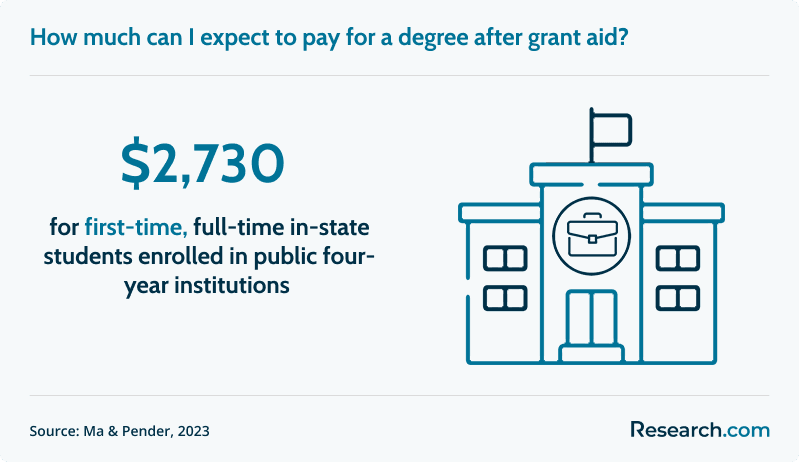
- Grant aid can lower the net cost of a bachelor’s degree to about $2,730 for some students, depending on institution type, aid eligibility, and award package.
- The field offers stable but moderate growth, with related job opportunities projected to grow at a 3% rate until 2032.
How long does it take to complete a criminology program?
Completion time depends on the credential level, course load, transfer credits, and whether the student attends full time, part time, online, or in an accelerated format. Associate programs usually require about 60 credits and take two to two and a half years. They cover introductory topics such as communication, law, science, statistics, and the basics of the criminal justice system.
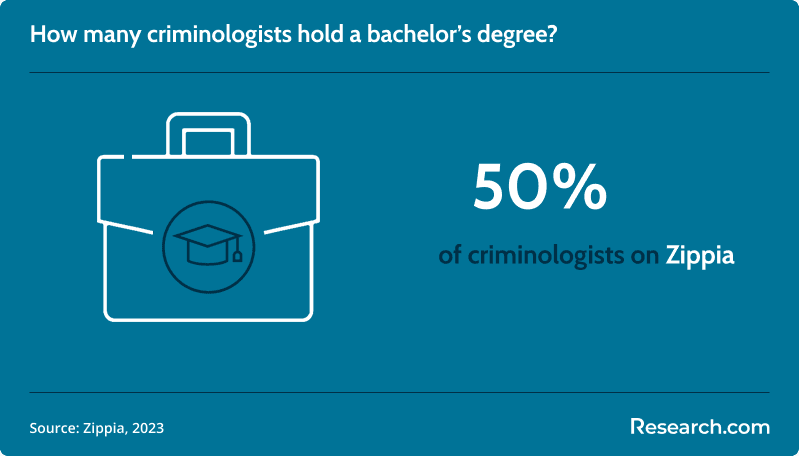
A bachelor’s degree usually takes four years and requires 120 credits. Bachelor’s programs go deeper into criminological theory, crime analysis, public policy, psychology, social factors related to crime, and justice institutions. Zippia reports that the bachelor’s degree is the most common degree type for criminologists, selected by 50%.
Graduate and post-baccalaureate options are available for students who want advanced research, leadership, or specialized roles. Master’s programs typically take two years, doctoral programs often take five to seven years, and certificate programs may last only a few months.
| Credential | Typical Time | Common Purpose |
| Certificate | A few months | Adds focused knowledge in an area such as cybercrime, corrections, homeland security, or crime analysis. |
| Associate degree | Two to two and a half years | Builds a foundation for entry-level roles or transfer into a bachelor’s program. |
| Bachelor’s degree | Four years | Prepares students for many criminology-related roles and for graduate or law school preparation. |
| Master’s degree | Two years | Supports advanced research, policy, leadership, or specialized professional roles. |
| Doctorate | Five to seven years | Prepares graduates for research, academic, senior policy, or high-level analytical careers. |
How does an online criminology program compare to an on-campus program?
Online and campus-based criminology programs can cover similar material, especially when they are offered by the same accredited institution. Students in either format may study criminal justice systems, criminological theory, research methods, ethics, policy, and data analysis. The main difference is how students interact with faculty, classmates, field placements, and campus resources.
On-campus programs are often better for students who want face-to-face instruction, campus organizations, in-person networking, and direct access to local internship partners. Online programs can be a better fit for students who need schedule flexibility, live far from campus, work full time, care for family members, or want to compare programs beyond their local area. Students comparing options may also want to review affordable online criminal justice degree programs, since criminal justice and criminology degrees often overlap in coursework and career outcomes.
| Factor | Online Criminology Program | On-Campus Criminology Program |
| Schedule | Often more flexible, especially with asynchronous classes. | Usually follows fixed class times and campus attendance requirements. |
| Networking | Depends on virtual events, faculty access, alumni networks, and local internships. | Often easier through campus organizations, faculty office hours, and local agencies. |
| Field experience | May require students to arrange approved placements near their location. | May have established relationships with nearby courts, police departments, agencies, or nonprofits. |
| Best for | Working adults, military-affiliated students, parents, transfer students, and students outside commuting distance. | Students who prefer structured routines, campus life, and in-person instruction. |
| Potential drawback | Requires self-discipline and careful verification of student support services. | May be less convenient and more expensive for students who must relocate or commute. |
What is the average cost of a criminology program?
The average tuition for a four-year undergraduate degree in criminology in 2021 was $7,716 at in-state public institutions and $33,500 at out-of-state private colleges. DataUSA reports tuition increases of up to 6.56% from the previous year.
Students should look beyond tuition when comparing programs. Fees, housing, meals, books, supplies, transportation, technology, and personal expenses can change the total price significantly. College Board estimates for the 2023-2024 academic year range from $19,860 to $60,420, depending on institution type and living arrangement. The table below summarizes average estimated budgets that include tuition, fees, and other expenses.
| School Type | Average Budget (2023-2024) |
| Public Two-Year In-District | $19,860 |
| Public Four-Year In-State | $28,840 |
| Public Four-Year Out-of-State | $46,730 |
| Private Nonprofit Four-Year | $60,420 |
What are the financial aid options for students enrolling in a criminology program?
Criminology students may qualify for federal, state, institutional, and private financial aid. Start by completing the Free Application for Federal Student Aid (FAFSA), then compare each school’s grants, scholarships, work-study options, payment plans, assistantships, and transfer-credit policies. Some institutions also offer full-ride or full-tuition scholarships, though eligibility can be highly competitive.
Grant aid can substantially reduce the final price. The College Board reports that since the 2019-2020 school year, in-district students at public two-year colleges have received enough grant aid to cover the full price of their degree. Students at four-year colleges paid between $2,730 and $15,910 after grant aid.
| Cost-Reduction Strategy | How It Helps |
| Complete the FAFSA early | Opens access to federal aid and may support state or institutional aid decisions. |
| Compare net price, not sticker price | Shows what you may pay after grants and scholarships instead of only advertised tuition. |
| Use transfer credits carefully | Can shorten time to graduation if credits apply directly to degree requirements. |
| Consider in-state public options | May reduce tuition compared with out-of-state or private college pricing. |
| Ask about internship pay or work-study | Can help offset living costs while building experience. |
What are the prerequisites for enrolling in a criminology program?
Admissions requirements vary by school, degree level, and applicant type. Universities, liberal arts colleges, and the top cop schools commonly ask undergraduate applicants to document prior academic preparation and meet general admission standards. Always confirm current requirements with each institution before applying.
- Proof of Graduation. Applicants generally submit an official high school diploma or certificate. Schools may also accept a document showing completion of the 30 credit hours from the General Education Program (GED).
- Transcript. Many universities look for a minimum 2.5 to 3.0 Grade Point System (GPA). Some schools may consider applicants with lower GPAs if their grades improved consistently from 9th to 12th grade.
- Coursework. Institutions often prefer applicants who completed higher secondary education in the Science and Arts stream.
- SAT or ACT Score. Some criminology degree admissions processes require SAT or ACT scores, often taken during junior year or early senior year. The average SAT score requirement is 1200 to 1500, and the average ACT score is 25 to 35.
- Other Requirements. Homeschooled students may need to provide required SAT and ACT scores. Students with credentials from outside the U.S. may need evaluation by a National Association of Credential Evaluation Services (NACES)-member credential evaluation service.
What courses are typically in a criminology program?
Criminology courses help students connect human behavior, law, public policy, institutions, and research evidence. A strong curriculum should teach students how to analyze crime, understand justice-system processes, interpret data, and write clearly about complex issues.
- Criminological Theory. Students examine major explanations for crime patterns, criminal behavior, and social responses to lawbreaking.
- Criminal Justice System. This course introduces law enforcement, courts, corrections, probation, and the relationships among these institutions.
- Research Methods. Students learn how to design studies, collect and analyze data, interpret findings, and evaluate research related to crime and justice.
- Crime and Society. This subject explores poverty, inequality, social disorganization, culture, and other social conditions linked to crime and justice outcomes.
- Criminology and Law. Students study how criminal laws are created, enforced, interpreted, challenged, and applied in real cases.
Many programs also offer electives in specialized areas such as cybercrime, forensic criminology, juvenile justice, policing, corrections, victimology, homeland security, and crime analysis.
What types of specializations are available in online criminology programs?
Specializations help students focus their degree around a specific career interest. A student who wants to investigate digital offenses may choose cybercrime, while someone interested in evidence may consider forensic science. Specialization options vary by institution, so students should review course catalogs before applying.
- Forensic Criminology
- Law and Criminology
- Crime Analysis
- Corrections and Rehabilitation
- Cybercrime
- Homeland Security
- Police Administration
- Prevention of Crime
How to choose the best criminology program?
Choosing the right degree requires more than finding a recognizable school name. The best criminology program for you should be accredited, affordable, realistic for your schedule, aligned with your career goal, and strong in the area of criminology you want to pursue.
Start with accreditation. Institutional accreditation is important for financial aid, transfer credits, graduate school admissions, and employer recognition. The Department of Education, the Council for Higher Education Accreditation (CHEA), and the Academy of Criminal Justice Sciences (ACJS) are relevant sources to review when evaluating quality and standards in criminal justice and criminology education.
Next, study the curriculum. Look for required coursework in theory, research methods, statistics, law, criminal justice systems, and ethics. If you already know your target role, check whether the school offers a relevant concentration, minor, certificate, internship, capstone, or research opportunity.
Finally, compare career support. Strong programs should help students find internships, prepare resumes, connect with alumni, explore graduate study, and understand hiring requirements for public agencies or private employers.
Common mistakes to avoid when selecting a criminology degree
- Choosing a school without checking accreditation. This can create problems with financial aid, credit transfer, graduate school, and employer recognition.
- Looking only at tuition. Fees, housing, books, transportation, and lost work time can change the true cost.
- Assuming every online program has local internships. Online students should ask how placements are approved and whether the school has partners near their area.
- Ignoring transfer-credit rules. Credits may transfer to the university but not always apply to the major or graduation requirements.
- Relying only on rankings. A ranked school may still be a poor fit if it lacks your specialization, schedule format, or career support.
- Assuming a degree guarantees a specific job or salary. Many criminology careers require exams, background checks, academy training, experience, certifications, licensure, or graduate education.
What career paths are available for graduates of criminology programs?
Criminology graduates can pursue roles in policing, investigations, corrections, social services, research, legal support, private security, and policy. Some jobs are available with a bachelor’s degree, while others may require academy training, field experience, a graduate degree, licensure, certification, or civil service testing.
One common career path is criminal investigation. According to the U.S. Bureau of Labor Statistics (BLS), 107,400 professionals worked as detectives and criminal investigators in 2022. Other possible roles include:
- Police Detective. Detectives investigate crimes, interview witnesses and suspects, review records, gather evidence, and help prepare cases for prosecution.
- Private Investigator. Private investigators conduct inquiries related to legal, financial, personal, or business matters, often outside a traditional law enforcement agency.
- Criminal Profiler. Criminal profilers use knowledge of criminal behavior and psychology to support investigations, identify patterns, and help law enforcement understand offender behavior.
- Clinical Social Worker. Clinical social workers help people facing addiction, unemployment, domestic violence, trauma, and other serious challenges. Some work with clients who also interact with police, courts, parole officers, or other justice-system professionals.
- Correctional Officer. Correctional officers enforce rules in jails or prisons, supervise incarcerated people, respond to conflicts, and help maintain safety inside correctional facilities.
| If You Want To... | Consider Roles In... | What to Build During School |
| Work directly in investigations | Law enforcement, private investigation, crime analysis | Report writing, interviewing, evidence basics, statistics, internship experience |
| Support rehabilitation and reentry | Corrections, probation, community programs, social services | Case management, communication, ethics, psychology, cultural competence |
| Analyze crime patterns | Research offices, police departments, policy organizations, intelligence units | Data analysis, research methods, GIS or mapping exposure, statistical reasoning |
| Move toward legal careers | Law firms, courts, legal support, law school preparation | Legal writing, constitutional law, criminal law, research, internships |
| Enter security or risk management | Private security, corporate risk, homeland security, consulting | Threat assessment, cybercrime basics, emergency planning, communication |
What challenges do criminology professionals face?
Criminology-related work can involve limited agency resources, emotionally difficult cases, changing laws, high-stakes decisions, and growing technology demands. Professionals may need to interpret imperfect data, work with vulnerable populations, manage public scrutiny, and respond to new forms of digital and cybercrime.
Students aiming for advanced or competitive roles should prepare for ongoing learning. Building research ability, ethical judgment, communication skills, and technical fluency can help graduates compete for specialized opportunities, including some of the highest paying criminal justice jobs.
What skills do employers value most in criminology graduates?
Employers generally look for graduates who can think critically, write clearly, interpret information, communicate with diverse groups, and make sound decisions under pressure. Technical skills also matter more as agencies and organizations use data, digital records, cybersecurity tools, and analytical software in everyday work.
- Analytical thinking: Ability to evaluate evidence, compare explanations, and identify patterns.
- Research literacy: Comfort reading studies, interpreting data, and applying evidence to real problems.
- Written communication: Clear reports, case notes, policy memos, and professional documentation.
- Verbal communication: Effective interviewing, teamwork, public interaction, and conflict de-escalation.
- Ethical judgment: Careful decision-making when rights, safety, privacy, and accountability are involved.
- Digital competence: Familiarity with online research, databases, basic data analysis, and technology-enabled crime issues.
For a broader look at related occupations, review Research.com’s guide to careers in criminology.
What is the return on investment for a criminology degree?
The return on investment for a criminology degree depends on total cost, debt, time to completion, career target, location, prior credits, and whether the degree helps you qualify for a specific role. A low-cost accredited program with strong internships may produce better value than a higher-priced program with limited career support.
To estimate ROI, compare tuition and living costs with realistic career pathways such as criminal investigation, probation, corrections, crime analysis, research, or policy work. Also consider whether graduate education may be necessary for your preferred role. Some students later pursue advanced criminal justice study, including options such as the easiest online criminal justice master's degree, to support career mobility.
| ROI Factor | Why It Affects Value |
| Accreditation | Supports credit transfer, financial aid access, graduate study, and employer confidence. |
| Net price after aid | Determines how much you actually pay, not just the listed tuition. |
| Transfer credits | Can reduce the number of required courses and shorten the path to graduation. |
| Internships and fieldwork | Help students gain experience, references, and a clearer career direction. |
| Career requirements | Some roles require exams, background checks, academy training, certifications, licensure, or graduate degrees. |
How can networking and professional development boost criminology career success?
Networking can help criminology students move from classroom knowledge to real job opportunities. Faculty, classmates, alumni, internship supervisors, professional associations, and agency recruiters can provide career advice, references, job leads, and insight into hiring expectations.
Students should attend department events, join relevant student organizations, use alumni networks, request informational interviews, and participate in workshops or conferences when possible. These efforts can clarify whether a student is better suited for policing, research, courts, corrections, policy, security, or another path. To compare related options, explore careers with a careers with criminal justice degree.
Can integrating forensic science enhance criminology careers?
Forensic science can strengthen a criminology background for students interested in evidence, investigations, laboratory-adjacent roles, crime scene processes, or case analysis. Criminology explains patterns of crime and justice responses, while forensic science focuses more directly on physical evidence and scientific analysis.
Students should be careful, however, not to assume that a criminology degree alone qualifies them for all forensic roles. Some forensic jobs require specific science coursework, laboratory training, or advanced credentials. If this path interests you, compare criminology electives with an affordable online forensic science degree to see which option fits the role you want.
How can a criminology degree support careers in homeland security?
Criminology can be useful in homeland security because it trains students to analyze risk, criminal behavior, institutions, policy, and prevention. Graduates interested in this area may work toward roles involving threat assessment, emergency preparedness, counterterrorism support, intelligence analysis, border and transportation security, or public-sector risk management.
Students who want stronger homeland security preparation should look for coursework in terrorism, cybercrime, emergency management, public policy, intelligence, and security operations. A dedicated degree in homeland security may be a better fit for students who want a more specialized curriculum from the start.
Which professional certifications can enhance my criminology degree?
Certifications can help criminology graduates document specialized skills, especially in areas such as cybersecurity, forensic technology, investigations, homeland security, emergency management, and security operations. The right credential depends on the target job, employer expectations, and the student’s prior experience.
Before paying for a certification, ask whether employers in your preferred role recognize it, whether it requires work experience, whether it must be renewed, and whether it fills a real gap in your degree plan. Students comparing accelerated or specialized study options may also review focused homeland security degree pathways as part of their planning.
Can a criminology degree lead to careers in intelligence?
Yes, a criminology degree can support intelligence-related careers when paired with strong analytical, writing, research, technology, and security knowledge. Graduates may pursue roles in law enforcement intelligence units, national security agencies, private-sector risk analysis, cyber intelligence, counterterrorism support, or strategic threat assessment.
Students interested in intelligence careers should prioritize courses in data analysis, research methods, cybercrime, terrorism, policy, statistics, and security studies. Graduate education can also help build specialized knowledge; one option to compare is an online intelligence masters degree.
What is the job market for graduates with a criminology degree?
Criminology-related jobs are expected to grow at a moderate pace from 2022 to 2032. BLS projections show that private detectives and investigators are projected to grow 6%, compared with the 3% national average. Police and detective jobs are projected to grow 3% by 2032.
Even when crime rates change, communities, agencies, courts, correctional systems, private organizations, and security employers continue to need professionals who can investigate incidents, analyze patterns, supervise caseloads, support rehabilitation, manage risk, and evaluate policy. Graduates who combine criminology knowledge with internships, technical skills, and strong writing may be better positioned in competitive hiring environments.
What are the current trends in criminology?
Criminology is changing as technology, public policy, community expectations, and justice-system practices evolve. Students should choose programs that help them understand both classic theories of crime and newer issues affecting agencies and communities.
- Cybercrime and digital offenses: Crimes involving identity theft, hacking, online fraud, digital evidence, and networked communication require graduates who understand both criminal behavior and technology-enabled offending.
- Restorative justice: Some justice systems and community programs emphasize accountability, victim participation, rehabilitation, and repairing harm rather than relying only on punishment.
- Social justice and inequality: Criminology increasingly examines how race, income, neighborhood conditions, policing practices, sentencing, and access to services affect justice outcomes.
- Data-driven policing: Agencies use data to analyze crime patterns, allocate resources, and evaluate strategies, making statistics and ethical data use more important for students.
- Mental health and crime: Justice systems continue to address the connection between behavioral health, crisis response, substance use, homelessness, and public safety.
- AI and automation: Artificial intelligence and automated tools are influencing surveillance, risk assessment, digital evidence review, and public safety operations. Students should learn both the possibilities and the ethical concerns tied to these technologies.
How does a criminology degree prepare you for law school or graduate programs?
A criminology degree can be a strong foundation for law school, criminal justice graduate programs, sociology, forensic psychology, public policy, social work, or related fields. It gives students practice reading complex material, evaluating evidence, writing arguments, and analyzing how institutions affect people and communities.
- Legal knowledge: Courses in criminal law, constitutional issues, courts, and justice systems introduce concepts that are relevant to law school.
- Critical thinking: Students learn to compare theories, evaluate data, question assumptions, and analyze competing explanations.
- Research and writing: Papers, literature reviews, policy briefs, and capstone projects build skills needed for graduate and professional programs.
- Understanding of social systems: Criminology helps students examine how law, inequality, institutions, and behavior interact.
- Preparation for specialization: The degree can lead naturally into advanced study in criminal justice, forensic psychology, sociology, policy, or law.
How can you maximize the value of your criminology degree?
The value of a criminology degree depends on how strategically you use it. An affordable program can help reduce debt, but students also need experience, skills, relationships, and a clear plan. Students considering lower-cost options can compare programs from cheap accredited online colleges, while still checking quality, support, and outcomes.
- Use financial aid wisely: Apply for grants, scholarships, work-study, and low-interest loans when available, and compare net price before enrolling.
- Build a professional network: Connect with faculty, alumni, classmates, internship supervisors, and professionals in your preferred field.
- Get hands-on experience: Prioritize internships, fieldwork, research assistantships, volunteer work, or part-time roles related to justice, security, policy, or social services.
- Choose relevant electives: Select courses in cybercrime, forensic psychology, criminal justice policy, corrections, law, statistics, or research methods based on your career goal.
- Develop technical skills: Learn basic data analysis, spreadsheet tools, report writing, online research, and digital evidence concepts when possible.
- Document your work: Keep strong writing samples, research projects, internship evaluations, and examples of data or policy analysis for job and graduate school applications.
What are the advantages of accelerated criminology degree programs?
Accelerated criminology programs can help motivated students finish faster, enter the workforce sooner, or move more quickly into graduate study. They can be especially useful for transfer students, working adults with prior credits, and students who can handle heavier course loads.
- Faster Completion Times: Accelerated programs may allow students to complete a bachelor’s degree in criminology in as little as 18 to 36 months instead of following a traditional four-year timeline.
- Cost Efficiency: Finishing sooner may reduce tuition, housing, and other attendance costs, especially when transfer credits apply to degree requirements.
- Career Advancement Opportunities: A shorter timeline can help students qualify sooner for entry-level roles or graduate programs in criminal justice, forensic psychology, or related fields.
- Flexibility: Many accelerated programs are online, which can help students balance school with work, family responsibilities, or military obligations.
- Focus on Specialization: Some accelerated tracks emphasize career-focused coursework in areas such as law enforcement, cybercrime, or criminal profiling.
Accelerated study is not ideal for everyone. Students should confirm workload expectations, internship availability, transfer-credit rules, financial aid eligibility, and whether the pace leaves enough time to build experience. If speed is a priority, compare accelerated degree programs that match your career goals and learning style.
Key Insights
- A criminology degree is strongest when it combines theory, research methods, writing, data analysis, ethics, and real-world experience.
- The best program is not always the highest-ranked one. Accreditation, affordability, internships, curriculum fit, transfer policies, and career services matter more for individual outcomes.
- Online criminology degrees can offer strong flexibility, but students should verify internship support, faculty access, and whether online learners receive the same career resources as campus students.
- Costs vary widely. Compare net price after aid, not just tuition, and include fees, housing, transportation, books, and time away from work.
- Career paths differ significantly. Some roles are available with a bachelor’s degree, while others require academy training, certification, licensure, graduate study, background checks, or prior experience.
- Students can improve ROI by choosing relevant electives, completing internships, building technical skills, networking early, and keeping strong writing or research samples.
- Current trends such as cybercrime, data-driven policing, restorative justice, mental health response, social justice, and AI are shaping what employers expect from criminology graduates.
References:
- Data USA. (n.d.). Criminology. Data USA. Retrieved February 29, 2024, from https://datausa.io/profile/cip/criminology
- U.S. Bureau of Labor Statistics. (2023, April 25). 19-3041 Sociologists. Bureau of Labor Statistics. Retrieved February 28, 2024, from https://www.bls.gov/oes/current/oes193041.htm
- U.S. Bureau of Labor Statistics. (2023, April 25). 33-3021 Detectives and Criminal Investigators. Bureau of Labor Statistics. Retrieved February 28, 2024, from https://www.bls.gov/oes/current/oes333021.htm
- U.S. Bureau of Labor Statistics. (2023, April 25). 21-1092 Probation Officers and Correctional Treatment Specialists. Bureau of Labor Statistics. Retrieved February 28, 2024, from https://www.bls.gov/oes/current/oes211092.htm
- U.S. Bureau of Labor Statistics. (2023, September 6). Sociologists : Occupational Outlook Handbook: : U.S. Bureau of Labor Statistics. Retrieved February 29, 2024, from https://www.bls.gov/ooh/life-physical-and-social-science/sociologists.htm
- Wilson, J. R. (n.d.). Aphorisms on Criminology. Harvard University. Retrieved March 1, 2024, from https://wilson.fas.harvard.edu/aphorisms/criminology
- Zippia. (2023, July 21). Best Colleges and Majors for Criminologists. Zippia. Retrieved February 29, 2024, from https://www.zippia.com/criminologist-jobs/education
Other Things You Should Know About Criminology Degrees
Check for institutional accreditation from a recognized national or regional agency, and for programmatic approval where relevant, such as British Society of Criminology recognition in the UK or university approval by a country’s education ministry. Accreditation affects credit transfer, employer recognition, and eligibility for postgraduate study.
In 2027, criminology graduates find employment in various sectors, including law enforcement, government agencies, research institutions, and private security firms. Opportunities also exist within non-profit organizations focusing on criminal justice reform and forensics departments in legal firms.
In 2027, earning a criminology degree can cost between $10,000 to $30,000 annually, depending on the institution and residency status. Public universities typically offer lower tuition for in-state students, while private institutions tend to be more expensive. Additional costs may include books and supplies.


