
2027 What Can You Do with a Criminal Justice Degree? Costs and Job Opportunities

Co-Founder and Chief Data Scientist
Choosing a criminal justice degree is not just a question of picking a major. It is a decision about the kind of public-service, legal, security, investigative, or policy work you want to do—and what level of education is actually necessary to get there. Some roles may require only an associate degree and academy training, while others call for a bachelor’s degree, graduate study, professional certification, licensure, or legal education.
This guide explains what a criminal justice degree covers, how much it may cost, what jobs it can lead to, and how to compare programs before enrolling. It is designed for prospective students, working adults considering an online degree, law enforcement professionals planning advancement, and anyone comparing criminal justice with related fields such as criminology, forensic science, homeland security, cybersecurity, paralegal studies, legal studies, and criminal psychology.
According to the NCES, more than 57,339 bachelor’s degrees were awarded from 2018 to 2019 in homeland security, law enforcement, and other protective services. The largest groups were criminal justice/law enforcement administration with 15,091 degrees and criminal justice/safety studies with 29,893 degrees. If you are still learning how undergraduate education works, start by reviewing what a bachelor’s degree is before comparing criminal justice programs.
Criminal Justice Degree Table of Contents
- What is a criminal justice degree?
- Cost of a Criminal Justice Degree
- Criminal Justice Degree Jobs
- Types of Degrees in Criminal Justice
- Criminal Justice Degree Requirements
- What to Look For in a Criminal Justice Degree Program
- How can a paralegal certification enhance your criminal justice career?
- What are the emerging trends in criminal justice careers?
- Exploring Online Criminal Justice Degree Options
- How can advanced legal studies complement a criminal justice career?
- How Internship Opportunities Shape Future Criminal Justice Professionals
- How can integrating forensic science fortify criminal justice careers?
- How can criminal justice and criminal psychology complement each other?
- What Factors Contribute to the Accessibility of a Criminal Justice Degree?
- What role does technology play in shaping criminal justice careers?
- How can professional certifications and advanced training boost your criminal justice career?
- What Are the Benefits of Lifelong Learning and Continuing Education in Criminal Justice?
- How can pursuing an advanced intelligence studies enhance your criminal justice career?
Quick Answer: Is a Criminal Justice Degree Worth Considering?
A criminal justice degree can be useful if your goal is to work in law enforcement, corrections, courts, victim services, investigations, forensic support, homeland security, compliance, or justice policy. It is usually most valuable when the degree level matches the job you want, the program is accredited, and you use internships, fieldwork, or certifications to build practical experience.
It is not the best choice for every legal or public-safety career. If you want to become a lawyer, criminal justice can be a helpful undergraduate foundation, but you will still need law school and bar admission. If you want a technical forensic laboratory role, a stronger science-heavy program may be required. If you want cybercrime or digital forensics work, you may need cybersecurity, data analysis, or information technology training in addition to criminal justice coursework.
| Student goal | Best-fit option | Why it may make sense |
| Enter the field quickly | Associate degree or certificate plus required agency training | Can support entry-level work in corrections, security, policing pathways, or transfer into a bachelor’s program |
| Qualify for broader public-sector roles | Bachelor’s degree in criminal justice | Often provides stronger preparation in law, courts, corrections, ethics, research, and policy |
| Move into leadership, analysis, or teaching | Master’s degree | Can deepen research, administration, and policy skills for advanced roles |
| Teach at the college level or conduct advanced research | Doctorate degree | Designed for high-level scholarship, policy analysis, and senior academic or administrative work |
| Work in a specialized technical area | Criminal justice plus cybersecurity, forensic science, paralegal, legal studies, or intelligence training | Builds targeted skills for digital evidence, investigations, legal support, compliance, or security analysis |
What is a criminal justice degree?
A criminal justice degree is an academic program focused on the systems society uses to prevent crime, enforce laws, adjudicate cases, supervise offenders, support victims, and shape public-safety policy. Students usually study the police, courts, corrections, constitutional rights, criminal law, criminology, research methods, ethics, and the social factors connected to crime and justice.
The degree is broader than police training. It can prepare students to understand how different parts of the justice system interact, where legal limits apply, how evidence is handled, and why fairness, due process, and accountability matter. Students may also take courses in forensic science, juvenile justice, homeland security, victim advocacy, cybercrime, social services, or public administration depending on the program.
Criminal justice vs. criminology: what is the difference?
Criminal justice usually focuses on institutions and practice: law enforcement, court processes, corrections, investigations, public safety, and justice administration. Criminology focuses more on why crime occurs, how crime patterns develop, and how society can reduce crime through research, prevention, and policy. The two fields overlap, which is why students comparing career paths often also ask what you can do with a criminology degree.
What do criminal justice students learn?
- Legal foundations: criminal law, constitutional protections, court procedures, evidence, and due process.
- Law enforcement and corrections: policing models, correctional systems, probation, parole, rehabilitation, and community supervision.
- Criminology and social context: theories of crime, inequality, victimization, juvenile justice, and community-based prevention.
- Research and analysis: statistics, data interpretation, program evaluation, policy analysis, and report writing.
- Ethics and professional responsibility: discretion, accountability, bias reduction, civil rights, and public trust.
- Specialized topics: forensic science, cybercrime, homeland security, intelligence, victim advocacy, or criminal psychology.
Why social responsibility matters in criminal justice education
Criminal justice work affects people during some of the most vulnerable and high-stakes moments of their lives. That includes victims, witnesses, accused individuals, incarcerated people, families, and communities that may have experienced unequal treatment. A strong program should therefore teach more than statutes and procedures. It should also help students understand disability, discrimination, trauma, equity, and the ethical use of authority.
In the 2021 study “Designing Solutions for Improved Support within Health, Social Care and Criminal Justice for Adults with Learning Disabilities and/or Autism who Have Offended,” published in the Howard Journal of Crime and Justice, Hollomotz and Talbot examined how criminal justice, social care, and forensic health systems can better support adults with learning disabilities and/or autism.
The authors concluded that “there are often many complex issues affecting people with learning disabilities and/or autism and it rationalizes why solutions need to be carefully planned around individual needs.” They also noted that “professional practice can be optimized, as well as on how disabling barriers can be removed or overcome when people with learning disabilities and/or autism access services within the CJS and forensic health system.”
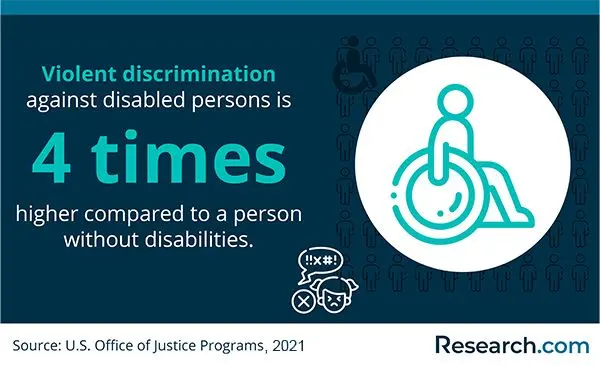
Accessibility and fair treatment are not abstract issues. According to the Office of Justice Programs, the violent victimization of disabled persons is four times higher than it is for people without disabilities. Students entering the field should be prepared to recognize barriers, communicate appropriately, and support lawful, equitable processes.
The Office of Justice Programs has also emphasized the role of social responsibility in addressing inequities in justice systems. For students, that means program quality should be measured not only by job placement but also by how well the curriculum addresses civil rights, community trust, accountability, and the treatment of marginalized groups.
Cost of a Criminal Justice Degree
The cost of a criminal justice degree depends on the credential level, institution type, residency status, delivery format, transfer credits, fees, and living expenses. Published tuition is only one part of the total price. Students should also consider books, technology fees, background checks, transportation, housing, internship-related costs, and whether they can continue working while enrolled.
| Degree level | Estimated cost stated in source material | Typical completion time | Best for |
| Associate degree | $3,900 to $18,000 | Two years | Students seeking a lower-cost starting point, entry-level preparation, or transfer credits |
| Bachelor’s degree | $10,700 to $32,000 | Four years | Students who want broader career access, public-sector roles, or graduate-school preparation |
| Master’s degree | Around $19,000, with some programs as high as $45,000 | One and a half to two years | Professionals pursuing leadership, policy, analysis, federal roles, or teaching pathways |
| Doctorate degree | $40,000 to $90,000 | Four to five years | Students focused on research, higher education, executive leadership, or advanced policy work |
Associate’s Degree Cost
According to the National Center for Education Statistics (NCES), the cost of an associate’s degree ranges from $3,900 to $18,000, depending on residency and institution type. Community colleges are often the most affordable route, especially for students who plan to transfer into a bachelor’s program later.
Bachelor’s Degree Cost
A bachelor’s degree in criminal justice may cost about $10,700 to $32,000, depending on residency, school choice, and format. Online programs can reduce commuting and housing costs, but they may still charge technology fees or out-of-state tuition. Students comparing options may want to look at affordable online criminal justice degree programs, especially if flexibility and cost control are priorities.
Master’s Degree Cost
The average cost of a master’s degree in criminal justice is around $19,000, while higher-priced programs may cost as much as $45,000. Some institutions offer competency-based formats or flexible schedules, and certain students may finish in 15 months. A master’s degree should be evaluated carefully against career goals because it is usually most useful for advancement, specialization, teaching, analysis, or administration rather than basic entry into the field.
Doctorate Degree Cost
Doctoral programs may range from $40,000 to $90,000 depending on whether the institution is public or private. These estimates do not include expenses such as books, housing, transportation, research travel, dissertation costs, or lost income from reducing work hours.
How to reduce the cost of a criminal justice degree
- Start at a community college: Complete general education and introductory criminal justice courses before transferring.
- Check transfer-credit rules before enrolling: A low-cost course is not useful if the next school will not accept it.
- Compare total cost, not tuition only: Include fees, books, commuting, housing, exam fees, and internship requirements.
- Ask about credit for prior learning: Some programs may evaluate military, law enforcement, corrections, or professional training.
- Use financial aid carefully: Grants and scholarships reduce cost; loans must be repaid regardless of job outcome.
- Choose the degree level required for your target role: Do not pay for a graduate degree if an associate or bachelor’s degree meets the requirement.
Is a Criminal Justice Degree Worth it?
A criminal justice degree can be worth it when it connects directly to a realistic career plan. It may help students qualify for roles in law enforcement, corrections, security, courts, social services, investigations, policy, and related fields. It can also provide a foundation for specialized training in forensic science, cybersecurity, criminology, legal studies, intelligence, or homeland security.
The degree is less likely to pay off if a student chooses an unaccredited program, ignores agency hiring requirements, assumes the degree alone guarantees employment, or selects an expensive program without comparing salary expectations and advancement opportunities. For many students, the strongest return comes from combining the degree with internships, academy training, certifications, technical skills, or experience in a public-safety setting.
Criminal Justice Degree Jobs
Criminal justice graduates can pursue roles across public agencies, private employers, nonprofit organizations, courts, law firms, correctional settings, security departments, and research or policy organizations. The best job fit depends on degree level, physical and background requirements, licensing rules, location, internships, and specialized skills.
Is criminal justice in high demand?
Demand varies by occupation rather than by the degree title alone. According to the U.S. Bureau of Labor Statistics, employment numbers for selected criminal justice and related fields as of 2021 included Criminal Justice and Law Enforcement Teachers (13,790), Police and Detectives (808,200), Forensic Science Technicians (17,600), and Lawyers (833,100).
The field is also being reshaped by cybersecurity, digital evidence, corrections and rehabilitation needs, forensic science, and data analysis. The BLS projects 4% employment growth for correctional treatment specialists, with fewer than 100,000 people employed in 2020. Criminal justice students who also complete a cyber security bachelor degree online may be better positioned for cybercrime, information security, and digital investigation pathways, where the cited growth estimate is 33% from 2020 to 2030.
Forensic science is another specialized area connected to criminal investigations. Employment of forensic science technicians is expected to grow by 14% from 2019 to 2029, which is faster than average in the U.S. Students interested in this path should verify whether a criminal justice program includes enough laboratory science for their target role, because some forensic positions require stronger natural science preparation.
What jobs can you get with a criminal justice degree?
A criminal justice degree can support many career paths, but it does not replace all job-specific requirements. Police officers may need academy training and background screening. Lawyers must complete legal education and meet bar requirements. Private investigators may need state licensure. Forensic roles may require science coursework or laboratory experience.
| Career path | How criminal justice helps | Additional requirements to check |
| Police officer | Builds knowledge of law, ethics, community relations, evidence, and public safety | Academy training, physical standards, background check, psychological screening, and agency rules |
| Corrections officer or supervisor | Provides understanding of correctional systems, rehabilitation, safety, and offender management | Agency training, shift requirements, background standards, and promotion criteria |
| Probation officer or correctional treatment specialist | Supports work in supervision, case planning, rehabilitation, and community-based corrections | Degree level, field experience, state or agency requirements |
| Forensic science technician | Introduces evidence handling, investigation procedures, and criminal law context | Science coursework, laboratory skills, and possibly a specialized forensic science degree |
| Private investigator | Develops interviewing, legal awareness, documentation, and investigative thinking | State licensing, experience requirements, insurance, and legal restrictions |
| Victim advocate or social services role | Explains court processes, victim rights, trauma-informed practice, and service coordination | Social work credentials may be required for some roles |
| Security manager | Applies risk assessment, law, policy, emergency planning, and personnel supervision | Experience, industry certifications, and employer-specific security background |
| Lawyer | Provides an undergraduate foundation in courts, law, crime, and justice systems | Law school, bar admission, and jurisdiction-specific licensing |
- Lawyer: Criminal justice can be a useful undergraduate major for students planning to study law because it introduces court systems, criminal procedure, legal research, and policy issues. It does not, by itself, qualify someone to practice law.
- Police Officer: A criminal justice background can help future officers understand law, ethics, communication, community relations, and the limits of authority. Advancement may depend on agency rules, experience, exams, and leadership training.
- Forensic Scientist: This role involves examining evidence and applying scientific methods to investigations. Students should compare criminal justice with forensic science programs and review the costs, requirements, and job opportunities for forensic science before choosing a curriculum.
- Social Worker or Victim Advocate: Criminal justice coursework can help professionals support victims, explain legal processes, coordinate services, and work with agencies. Some social work roles require a social work degree or licensure.
- Security Manager: Security managers coordinate protection strategies for organizations, agencies, facilities, or private companies. Criminal justice training can help with compliance, risk management, investigation, and policy enforcement.
- Private Investigator: Private investigators assist individuals, attorneys, corporations, and sometimes law enforcement with legal, personal, and business investigations. Licensing and experience requirements vary, and students should verify state rules before planning this career.
Students interested in forensic psychology should also examine how psychology coursework fits into their plan. For example, a criminal justice degree may introduce courts and corrections, while a forensic psychology pathway may focus more heavily on behavior, assessment, and mental health. Review the costs and job opportunities in forensic psychology if that specialization is part of your career plan.
What kind of salary can I earn with a Criminal Justice Degree?
Salary depends on occupation, employer, location, union agreements, rank, education, experience, overtime, credentials, and security clearance requirements. A degree may improve eligibility or advancement prospects, but it does not guarantee a specific wage.
According to the U.S. Bureau of Labor Statistics, there were approximately 3.2 million jobs in criminal justice and related fields in 2020. Higher-level roles or positions in specialized agencies such as the DEA or FBI may offer salaries ranging from $60,000 to $100,000 per year, depending on role, qualifications, responsibilities, and agency requirements.
Based on BLS data on median annual salaries of criminal justice professionals as of May 2021, Criminal Justice and Law Enforcement Teachers earned around $64,600, while Forensic Science Technicians earned approximately $61,930. Information Security Analysts had an average salary of $102,600.
Police and Detectives earned about $66,020, Social Workers earned around $50,390, and Probation Officers and Correctional Treatment Specialists earned an average salary of $60,250. Lawyers earned a substantially higher average salary of $127,990, though becoming a lawyer requires additional legal education and licensure.
Types of Degrees in Criminal Justice
Criminal justice degrees are available at the associate, bachelor’s, master’s, and doctoral levels. The right level depends on whether you want entry-level employment, advancement, specialization, graduate study, teaching, or research.
| Degree | Average time to complete | Common focus | Possible entry-level roles listed in source material |
| Associate degree | Two years | Foundations of criminal justice, policing, corrections, law, and public safety | Police Officer, Corrections Officer, Paralegal |
| Bachelor’s degree | Four years | Broader study of criminal justice systems, research, statistics, behavioral science, and policy | Probation Officer, Private Investigator, Forensic Scientist |
| Master’s degree | One and a half to two years | Advanced analysis, leadership, policy, administration, research, and specialization | Intelligence Analyst, Corrections Officer Supervisor, Federal Agent |
| Doctorate degree | Four to five years | Research, higher education, policy analysis, executive leadership, and scholarship | College or University Professor, Researcher, Policy Analyst |
Associate’s Degree
An associate degree is often the fastest academic entry point into criminal justice. It usually takes two years and introduces students to the basics of law enforcement, courts, corrections, criminal law, and ethics. It may be suitable for students who want to seek entry-level roles, reduce college costs, or transfer into a bachelor’s program later.
Entry-level jobs: Police Officer, Corrections Officer, Paralegal
Bachelor’s Degree
A bachelor’s program usually takes four years and often requires 120 units. It offers deeper study in areas such as research methods, statistics, behavioral science, law, justice administration, and social systems. This degree may be a stronger fit for students pursuing broader public-sector opportunities, federal pathways, graduate study, or specialized work. Students who need flexibility can compare online criminal justice bachelor’s programs.
Entry-level jobs: Probation Officer, Private Investigator, Forensic Scientist
Master’s Degree
A master’s degree is a graduate credential for students who want advanced training in research, analysis, policy, administration, or specialized practice. It may support movement into supervisory, analytical, academic, or federal roles, but students should evaluate whether their target job specifically rewards graduate education before enrolling.
Entry-level jobs: Intelligence Analyst, Corrections Officer Supervisor, Federal Agent
Doctorate Degree
A doctorate is the highest academic path in criminal justice. It is generally intended for people pursuing university teaching, advanced research, policy leadership, consulting, or senior administrative work. Students considering this route should understand the time commitment, dissertation expectations, and opportunity cost. If you are comparing graduate pathways, it may help to first review what a doctorate degree is.
Entry-level jobs: College or University Professor, Researcher, Policy Analyst
According to the NCES, from 2018-2019, the number of criminal justice and corrections degrees awarded by type included Associate’s Degrees (13,035), Bachelor’s Degrees (35,158), and Master’s Degrees (6,837).
Those figures show that criminal justice remains a common academic pathway, particularly at the bachelor’s level. However, enrollment volume should not be the only reason to choose the major. Students should focus on whether the program’s curriculum, internships, accreditation, and career outcomes match their specific plans.
Criminal Justice Degree Requirements
Requirements vary by school and degree level, but most programs combine general education, criminal justice core courses, electives, and sometimes internships or capstone projects. Online and campus-based programs usually cover similar academic content, although field placements, exam proctoring, and residency requirements may differ.
Admission Requirements
- High school diploma or GED: Undergraduate programs typically require proof that the applicant has completed secondary education or an equivalent credential.
- Application and transcripts: Schools use applications and prior academic records to determine eligibility, course placement, transfer credits, and whether prerequisite coursework has been completed.
- GPA: Some programs require a minimum GPA. Certain programs may set the minimum at 2.0 or higher, while more selective schools may use a higher standard.
- Background check: Criminal justice programs may require screening because internships and field placements can involve agencies, courts, correctional settings, vulnerable populations, or sensitive information.
- Standardized test scores: Some institutions may request SAT or ACT scores, although testing policies vary. Scores may also affect scholarship eligibility in some programs.
- Prerequisite coursework: Graduate and doctoral programs often expect prior coursework, a related bachelor’s degree, professional experience, or research preparation.
Skill Requirements
Successful criminal justice students need more than interest in crime shows or law enforcement. The field requires sound judgment, strong communication, ethical reasoning, and the ability to work with people under stress.
- Ethics: Criminal justice professionals make decisions that affect liberty, safety, privacy, and public trust. Ethical training is central to responsible practice.
- Critical thinking: Students must learn to evaluate evidence, identify assumptions, apply legal standards, and make decisions under uncertainty.
- Interpersonal skills: Communication matters in interviews, report writing, community interaction, victim support, supervision, and interagency collaboration.
- Technology skills: Modern criminal justice work often involves databases, digital records, body-worn camera systems, cybersecurity concerns, data analysis, and digital evidence.
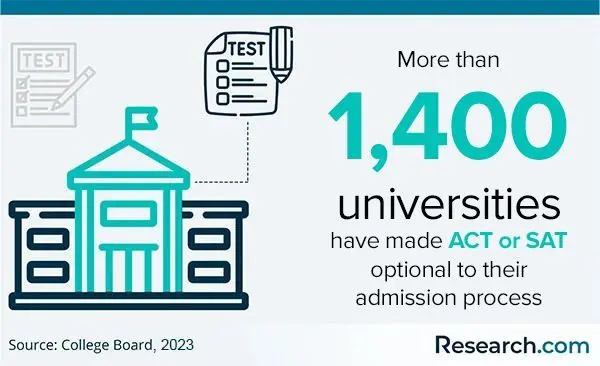
As of 2021, more than 1,400 universities in the U.S. made standardized tests such as the ACT or SAT optional in response to the COVID-19 pandemic. Program requirements may continue to differ by institution, so applicants should verify current admissions policies directly with each school.
What to Look for in a Criminal Justice Degree Program
A criminal justice program should be judged by more than convenience or name recognition. The strongest choice is usually the program that is accredited, affordable, aligned with your career goal, transparent about outcomes, and able to provide practical experience.
| Selection factor | What to ask before enrolling | Why it matters |
| Accreditation | Is the institution accredited by a recognized accreditor? | Affects credit transfer, financial aid eligibility, graduate admission, and employer recognition |
| Career alignment | Does the curriculum match policing, corrections, forensic work, cybercrime, legal support, policy, or another goal? | Prevents paying for courses that do not support the role you want |
| Internships | Are placements available with courts, agencies, law firms, nonprofits, or security organizations? | Practical experience can help students test career fit and build job-ready skills |
| Faculty experience | Do instructors have research expertise, field experience, or both? | Students benefit from academic depth and real-world context |
| Online support | Are advising, tutoring, library access, technical support, and career services available remotely? | Online students need comparable support, not just recorded lectures |
| Total cost | What is the full cost after tuition, fees, books, travel, housing, and lost work time? | A lower tuition rate may not always mean a lower total cost |
| Transfer policy | How many credits will the school accept, and which courses count toward the major? | Transfer rules can change the time and cost to finish |
Accreditation
Accreditation is one of the first items to verify. Students should look for institutions recognized by appropriate accrediting bodies, such as the Higher Learning Commission, and may also review field-specific quality indicators where available, including the Council for Accreditation of Criminal Justice Education. Accreditation helps signal that the school meets recognized standards and can affect credit transfer, employer acceptance, and eligibility for further study.
Curriculum
A well-designed curriculum should cover law enforcement, courts, corrections, criminology, ethics, research, statistics, and criminal law. Stronger programs also address civil rights, disability access, bias, trauma, discrimination, community relations, and evidence-based policy. Students interested in technical careers should check whether the program includes forensic science, cybersecurity, data analytics, or digital evidence coursework.
Internship Opportunities
Internships can be especially important in criminal justice because many students do not fully understand the day-to-day realities of law enforcement, corrections, victim advocacy, security, courts, or investigations until they observe them directly. Ask whether the school helps place students, whether online students can complete local placements, and whether background checks or transportation are required.
Career Services
Career services should include more than a general job board. Useful support may include resume review, interview preparation, civil-service exam guidance, networking events, graduate-school advising, internship coordination, and help understanding agency hiring timelines.
Faculty
Faculty quality matters because criminal justice is both academic and applied. Look for instructors with research credentials, agency experience, legal knowledge, policy expertise, or specialized knowledge in areas such as corrections, forensic science, cybercrime, juvenile justice, or victim services.
Flexibility
Flexibility can make the difference between enrolling and finishing. Working adults should compare asynchronous courses, evening classes, part-time pacing, accelerated terms, hybrid options, and internship scheduling. However, convenience should not outweigh accreditation, field experience, or career fit.
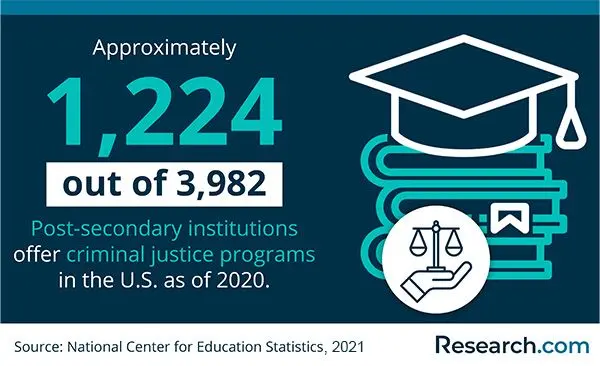
According to the NCES, about 1,224 postsecondary institutions offered criminal justice programs in the United States during the 2019 to 2020 academic year, out of approximately 3,982 degree-granting postsecondary institutions in the U.S. during the same year. With that many choices, students should compare programs systematically instead of relying on one ranking or advertisement.
How can a paralegal certification enhance your criminal justice career?
A paralegal certification can strengthen a criminal justice background for students who want to work closer to courts, law offices, compliance teams, legal investigations, or case preparation. Criminal justice programs explain the system; paralegal training adds practical legal skills such as document drafting, legal research, case organization, discovery support, and procedural awareness.
This combination may be useful for roles such as legal investigator, court clerk, compliance assistant, litigation support specialist, or law enforcement administrative support. Students who want a structured legal-support credential can compare an ABA-approved paralegal program with their criminal justice degree plan.
A paralegal credential does not make someone a lawyer, and duties are limited by state rules and employer policies. However, it can make a graduate more versatile in workplaces where criminal law, documentation, case management, and legal procedure intersect.
What are the emerging trends in criminal justice careers?
Criminal justice careers are changing as agencies, courts, private employers, and communities respond to digital crime, data-driven operations, reform efforts, and new expectations for accountability. Students should choose electives and internships with these shifts in mind.
- Cybersecurity and digital forensics: Cybercrime, digital evidence, and networked devices have made technical skills more important in investigations and security work. Students interested in this area should pair criminal justice with cybersecurity, information systems, or digital forensics coursework.
- Data analytics in criminal justice: Agencies increasingly use data to analyze crime patterns, allocate resources, evaluate programs, and support policy decisions. Students who can interpret data and understand its limits may have an advantage in research, administration, and policy roles.
- Restorative justice: Some systems and community organizations are using approaches focused on accountability, repair, victim participation, and reduced recidivism. This can create opportunities in community programs, rehabilitation, mediation, and nonprofit work.
- Trauma-informed policing and victim advocacy: Criminal justice professionals are expected to better understand trauma, especially when working with victims, families, youth, and vulnerable populations. Training in communication, crisis response, and victim support is increasingly valuable.
- Policy and criminal justice reform: Public attention to fairness, equity, sentencing, reentry, policing standards, and corrections has expanded opportunities in research, advocacy, public administration, and legislative support.
Exploring Online Criminal Justice Degree Options
Online criminal justice programs can be a practical option for working adults, military students, parents, and students who do not live near a campus. The main advantage is flexibility, but students should not assume every online program is equal. Accreditation, internship access, faculty support, and career alignment still matter.
| Online criminal justice program | Potential advantages | Risks to check |
| Fully online | Flexible location, often easier to balance with work, fewer commuting costs | May have limited in-person networking or local internship support |
| Hybrid | Combines online coursework with campus or field experiences | Requires travel and scheduled attendance |
| Accelerated online | Can shorten time to completion for prepared students | Fast pacing may be difficult for students working full time |
| Part-time online | More manageable for adults with work or family obligations | Longer time to graduation may increase total costs or delay advancement |
When reviewing online options, ask whether the program is accredited, whether credits transfer, whether internship placements can be completed near your home, and whether career services support online students. Also confirm whether the program meets requirements for your intended role in your state or agency.
An online criminal justice associates degree can be a cost-conscious starting point for students who want foundational coursework before entering the workforce or transferring into a bachelor’s program. Students pursuing higher-level roles should compare associate, bachelor’s, and master’s options before deciding how far to go.
How can advanced legal studies complement a criminal justice career?
Advanced legal studies can help criminal justice professionals understand legal reasoning, administrative law, compliance, risk management, and policy development in greater depth. This can be useful for people working with investigations, court systems, regulatory agencies, corporate security, or justice administration.
A legal studies graduate program is not the same as a law degree, but it may be a strong fit for professionals who need legal literacy without becoming attorneys. Students comparing cost-conscious options can review the cheapest master of legal studies online programs as part of a broader graduate-school search.
How Internship Opportunities Shape Future Criminal Justice Professionals
Internships can turn a criminal justice degree from a classroom credential into a career-tested pathway. They help students understand whether they actually want to work in patrol, corrections, courts, probation, victim services, investigations, compliance, security, or federal agencies.
Internships also build practical skills that are difficult to learn from lectures alone: professional communication, report writing, confidentiality, chain-of-command expectations, case documentation, safety awareness, and ethical decision-making. For many students, the internship is also the first serious networking opportunity in the field.
Students targeting competitive or higher-paying roles should treat internships strategically. Research potential employers early, ask whether placements match your career goal, and choose electives that support the internship you want. You can also compare career options in the highest paying criminology jobs to understand where advanced education and hands-on experience may matter most.
Before enrolling, ask each school how many students complete internships, what agencies or organizations host them, whether online students receive placement help, and whether any placements require background checks, drug screening, transportation, or specific schedules.
Is a criminal justice degree a good career investment?
A criminal justice degree can be a good investment for students who choose the right degree level, keep costs manageable, and build practical experience. It may be especially valuable for people who want to work in public safety, courts, corrections, investigations, security, justice reform, forensic support, or cybercrime-related roles.
The investment is weaker when students borrow heavily for a program that does not improve eligibility, choose a school without recognized accreditation, or assume that a degree automatically leads to a badge, federal position, or high salary. Before enrolling, compare the cost of the program with entry requirements and salary expectations for the specific job you want.
How can integrating forensic science fortify criminal justice careers?
Forensic science can strengthen a criminal justice career by adding scientific methods for collecting, preserving, analyzing, and explaining evidence. This is especially useful for students interested in crime scene investigation, laboratory support, digital evidence, forensic toxicology, forensic psychology, or investigative analysis.
Students should be careful when choosing between criminal justice and forensic science programs. A general criminal justice degree may not include enough chemistry, biology, or laboratory work for some forensic science technician roles. If forensic work is your goal, compare science requirements closely and consider affordable online forensic science degrees that better match technical expectations.
How can criminal justice and criminal psychology complement each other?
Criminal psychology adds behavioral insight to criminal justice training. It can help students better understand offender behavior, victim response, interviewing, rehabilitation, risk assessment, and prevention strategies. This combination may be useful in corrections, juvenile justice, victim advocacy, investigations, treatment programs, and research.
Students interested in behavior-focused roles should compare psychology coursework, field placements, and graduate requirements. Some criminal psychology jobs may require additional education, supervised experience, or mental health credentials beyond a criminal justice degree.
What Factors Contribute to the Accessibility of a Criminal Justice Degree?
A criminal justice degree may be more accessible when a program offers online courses, evening classes, part-time enrollment, transfer-friendly policies, affordable tuition, clear advising, and career support. Students with work, military, family, or geographic constraints should prioritize programs that make completion realistic, not just programs that appear easy to enter.
Accessibility should not be confused with low academic value. A streamlined program can still be rigorous if it has clear outcomes, qualified faculty, recognized accreditation, and meaningful assignments. Students comparing difficulty, flexibility, and program structure can review Is criminal justice an easy degree? for additional context.
What role does technology play in shaping criminal justice careers?
Technology is changing criminal justice work in investigations, policing, courts, corrections, security, and policy analysis. Professionals may now work with digital records, surveillance systems, cybersecurity threats, databases, digital evidence, real-time information tools, and data analytics.
These tools can improve efficiency and investigative capacity, but they also raise questions about privacy, accuracy, bias, civil liberties, and accountability. Students should look for programs that teach both technical competence and ethical judgment. Career paths connected to criminology degree jobs increasingly benefit from the ability to interpret data and understand technology’s limits.
How can professional certifications and advanced training boost your criminal justice career?
Certifications and advanced training can help criminal justice graduates specialize beyond the general degree. Depending on the career goal, useful areas may include homeland security, cybersecurity, emergency management, forensic interviewing, crime analysis, legal research, compliance, intelligence analysis, or leadership.
For students interested in national security, emergency preparedness, and counterterrorism topics, a homeland security bachelor's degree may provide a more focused academic route than a general criminal justice program. The best credential is the one that aligns with a specific role, employer requirement, or promotion pathway.
What Are the Benefits of Lifelong Learning and Continuing Education in Criminal Justice?
Criminal justice professionals work in a field shaped by changing laws, court decisions, technology, community expectations, and agency policies. Continuing education helps professionals stay current, reduce mistakes, and prepare for advancement.
Ongoing learning may include workshops, academy courses, graduate certificates, cybersecurity training, forensic seminars, leadership development, legal updates, or online programs. Professionals exploring faster academic formats may compare options such as masters psychology online fast track programs while carefully checking whether the content matches their career goals.
How can pursuing an advanced intelligence studies enhance your criminal justice career?
An intelligence studies background can strengthen criminal justice careers that require research, threat assessment, risk analysis, cyber awareness, and decision support. Professionals in law enforcement, homeland security, corporate security, investigations, and public-sector analysis may benefit from training in open-source analysis, intelligence methods, and data-informed reporting.
Students considering this path can evaluate an online masters intelligence degree if they want graduate-level preparation for analytical or security-focused roles. As with any advanced degree, compare cost, curriculum, faculty expertise, and employer expectations before enrolling.
Common Mistakes to Avoid When Choosing a Criminal Justice Degree
- Choosing a program without checking accreditation: Accreditation can affect transfer credits, financial aid, graduate admission, and employer confidence.
- Focusing only on tuition: Fees, books, commuting, housing, technology costs, and internship expenses can change the real price.
- Assuming online means easier: Online courses still require writing, exams, research, deadlines, and self-discipline.
- Ignoring job-specific requirements: Some roles require academy training, licensure, physical standards, background checks, science coursework, or graduate education.
- Picking a degree level before choosing a career target: An associate, bachelor’s, master’s, and doctorate serve different purposes.
- Overlooking internships: Practical experience can clarify career fit and make a resume more credible.
- Assuming salary outcomes are guaranteed: Pay varies by occupation, agency, location, experience, rank, and credentials.
- Using rankings as the only decision tool: A highly ranked program may still be too expensive, too theoretical, or poorly matched to your goal.
Questions to Ask Before Enrolling
- Is the institution accredited by a recognized accreditor?
- Does the curriculum match the career I want: policing, courts, corrections, forensic science, cybersecurity, legal support, policy, or security?
- What internships or field placements are available, and are they available to online students?
- How many transfer credits will the school accept, and will they apply to the major?
- What is the full cost after tuition, fees, books, housing, transportation, and technology costs?
- Does the program prepare students for any required academy training, licensure, certification, or graduate study?
- What career services are available before and after graduation?
- What are the background-check requirements for admission, internships, or target careers?
- Do faculty members have field experience, research expertise, or specialized knowledge in my area of interest?
- What outcomes does the school report, and how are those outcomes measured?
Key Insights
- A criminal justice degree is broad, but your career goal should be specific: The same major can lead toward law enforcement, courts, corrections, victim services, investigations, security, forensic support, policy, or graduate study, but each path has different requirements.
- Degree level matters: Associate degrees can support entry-level or transfer goals, bachelor’s degrees provide broader preparation, master’s degrees are better for advancement or specialization, and doctorates are mainly for research, teaching, or senior policy work.
- Costs vary widely: Stated estimates range from $3,900 to $18,000 for an associate degree, $10,700 to $32,000 for a bachelor’s degree, around $19,000 to as much as $45,000 for a master’s degree, and $40,000 to $90,000 for a doctorate.
- Accreditation is nonnegotiable: Before enrolling, verify institutional accreditation and confirm that the program will be recognized by employers, graduate schools, and transfer institutions.
- Specialization can improve career fit: Cybersecurity, forensic science, paralegal studies, legal studies, criminal psychology, homeland security, and intelligence studies can make a criminal justice background more targeted.
- Internships are often the difference-maker: Field experience helps students test career assumptions, build professional contacts, and develop practical skills employers value.
- Technology is reshaping the field: Digital evidence, data analytics, cybersecurity, and AI-related tools are expanding opportunities while also increasing the need for ethical and legally sound judgment.
- No degree guarantees a job or salary: Outcomes depend on location, agency requirements, background checks, experience, credentials, and how well the program aligns with the role you want.
References:
- College Board. (2023). SAT COVID-19 updates. https://pages.collegeboard.org/sat-covid-19-updates
- Coursera. (2021). What is a Degree in Criminal Justice? https://www.coursera.org/articles/criminal-justice-degree
- Hanson, M., (2022). Average Cost of a Doctorate Degree. https://educationdata.org/average-cost-of-a-doctorate-degree
- Hollomotz, A., Talbot, J. (2021). “Designing Solutions for Improved Support within Health, Social Care and Criminal Justice for Adults with Learning Disabilities and/or Autism who Have Offended". The Howard Journal of Crime and Justice. https://doi.org/10.1111/hojo.12414
- Imagine America Foundation. (n.d.). How Much Does a Criminal Justice Degree Cost? Imagine America Foundation. https://www.imagine-america.org/much-criminal-justice-degree-cost
- Maryland Higher Education Commission. (n.d.). Accreditations and out-of-state institutions. https://mhec.maryland.gov/institutions_training/Pages/acadaff/oos_online/accreditationOOS.aspx
- National Council on Disability. (2007). The No Child Left Behind Act and the Individuals with Disabilities Education Act: A Progress Report. https://ncd.gov/publications/2007/May212007
- University of the People. (2020). Criminal justice degree: What you need to know. University of the People Blog. https://www.uopeople.edu/blog/criminal-justice-degree
- Walden University. (n.d.). MS in Criminal Justice. https://www.waldenu.edu/online-masters-programs/ms-in-criminal-justice
Other Things You Should Know About Criminal Justice Degrees
A criminal justice degree can lead to careers such as a lawyer, police officer, forensic scientist, social worker, security manager, and private investigator. The degree provides a foundation for various roles within the criminal justice system and related fields.
In 2027, the cost of a criminal justice degree can significantly affect students' financial planning. Factors like institution type, location, and program duration influence expenses. Scholarships, grants, and financial aid can alleviate costs, helping students manage tuition and related expenses more effectively. --- **Question** What types of jobs can I get with a criminal justice degree? **Answer** With a criminal justice degree, you can pursue roles such as law enforcement officer, corrections officer, forensic analyst, probation officer, or a role in federal agencies. These positions offer various opportunities depending on your specialization and career goals. --- **Question** What skills are developed in a criminal justice degree program? **Answer** A criminal justice degree program develops critical thinking, ethical decision-making, analytical skills, and a comprehensive understanding of legal systems. Communication and conflict resolution skills are also emphasized to prepare students for diverse roles in the justice sector. --- **Question** What should I look for in a criminal justice degree program? **Answer** When choosing a criminal justice degree program, consider accreditation, faculty experience, curriculum relevance, internship opportunities, and alumni success. Evaluate whether the program offers specializations aligned with your career goals and has strong connections with industry professionals. --- **Question** Are online criminal justice degree programs as good as in-person ones? **Answer** Online criminal justice degree programs can be as robust as in-person ones if accredited, offering comprehensive curricula and interactive learning experiences. Consider factors like student support, resource availability, and program flexibility when evaluating online options.
In 2027, the average starting salary for graduates with a criminal justice degree is projected to be between $35,000 and $50,000 annually. This range can vary based on the specific job role, geographic location, and level of experience or additional education.
A criminal justice degree program develops critical thinking, ethics, interpersonal communication, and technology proficiency. These skills are essential for effectively navigating the complexities of the criminal justice system and performing various professional roles.
To gain practical experience in a criminal justice program, students can engage in internships, participate in ride-alongs with law enforcement, volunteer at legal aid organizations, or join student organizations focused on criminal justice. These activities enhance real-world understanding and improve job prospects after graduation.
Online programs offer flexibility and convenience, making them suitable for working professionals. They provide the same curriculum and quality of education as in-person programs. However, they may lack direct hands-on experience, which can be mitigated by hybrid models that include some on-campus components.
In 2027, entry-level positions like police officers typically require an associate degree, while forensic analysts and certain federal agents often need a bachelor’s degree. Advanced roles, such as criminal profilers, may require a master’s degree or higher in criminal justice or related fields.
Yes. Look for a program accredited by a recognized agency such as the Higher Learning Commission or a regional accreditor. Accreditation affects transfer credit, graduate school admission, and eligibility for some federal financial aid, and many employers prefer graduates from accredited schools.


