
2027 Highest Paying Criminal Justice Jobs and Careers

Co-Founder and Chief Data Scientist
High-paying criminal justice careers usually require more than an interest in policing, courts, or public service. The strongest-paying paths often combine a relevant degree, specialized training, field experience, leadership ability, and—in some roles—licensure, certification, security clearance, or admission to the bar.
This guide is for students comparing criminal justice degrees, working professionals planning a promotion, and career changers who want to understand which roles can lead to stronger earnings. You will learn which criminal justice jobs pay the most, what education each path typically requires, how much degrees may cost, how online and accelerated programs fit into career planning, and what mistakes to avoid before investing time or money.
Quick Answer: What Are the Highest-Paying Criminal Justice Jobs?
The highest-paying criminal justice careers tend to be legal, federal, executive, technical, or highly specialized roles. Criminal defense attorneys, judges, FBI agents, forensic psychologists, security managers, intelligence analysts, financial examiners, criminologists, criminal justice professors, and police chiefs are among the stronger-paying options. The best path depends on whether you want courtroom work, investigations, leadership, research, cybercrime, forensic analysis, or public safety administration.
Key Things You Should Know About the Highest Paying Criminal Justice Jobs and Careers
- Specialization matters. Cybersecurity, digital forensics, forensic psychology, intelligence analysis, fraud examination, and federal investigations can lead to stronger compensation than broad entry-level criminal justice roles.
- Advanced credentials can change your ceiling. A bachelor’s degree may qualify you for many law enforcement and analyst roles, while a J.D., master’s degree, PhD, or professional certification is often needed for the highest-paying legal, academic, forensic, and leadership positions.
- Where you work affects what you earn. Federal agencies, large cities, courts with broader jurisdiction, and private-sector employers in finance, technology, and legal services may pay differently from local agencies or smaller jurisdictions.
- Public and private employers offer different trade-offs. Government jobs may provide stability and benefits, while private-sector roles in corporate security, compliance, cybercrime investigation, and risk management may offer higher salary potential for specialized talent.
- Experience is not optional for most top roles. Promotions to police chief, senior investigator, judge, forensic expert, professor, or executive security leader usually require years of relevant work, strong professional judgment, and documented performance.
- Highest-paying criminal justice careers to compare
- Degrees commonly required for high-paying criminal justice jobs
- Criminal justice degree costs by level
- Steps to qualify for better-paying criminal justice roles
- Benefits of earning a criminal justice education
- How to move up in criminal justice
- Certifications that may improve criminal justice career options
- Continuing education options for criminal justice professionals
- Job outlook for criminal justice careers
- Online degrees and high-paying criminal justice careers
- Regional differences in criminal justice job opportunities
- ROI considerations for advanced criminal justice degrees
- Accelerated graduate programs and career advancement
- How to choose a criminal justice degree program
- Challenges in high-paying criminal justice roles
- Financial aid for criminal justice students
- Trends changing criminal justice careers
- Cost-effective specialized criminal justice training
- Technology’s impact on criminal justice careers
- Skills needed for top criminal justice roles
- Accelerated master’s programs as a career strategy
- Work-life balance in demanding criminal justice careers
- Alternative education pathways for career growth
- Homeland security specialization and criminal justice careers
- Specialized intelligence training and career outcomes
- Career progression strategies in criminal justice
- Interdisciplinary advanced degrees for criminal justice professionals
- Online doctoral programs for advanced criminal justice expertise
Highest Paying Criminal Justice Jobs and Careers
The strongest-paying criminal justice jobs are not all traditional law enforcement roles. Some are legal careers, some are federal or intelligence positions, and others sit at the intersection of criminal justice, technology, psychology, finance, or public administration.
| Career | Reported salary range or average | Typical education or preparation | Best fit for |
| Lawyers, including criminal defense attorneys | $145,000 to $166,000 annually | Bachelor’s degree, law school, bar exam | People who want courtroom advocacy, legal strategy, and case preparation |
| Judges and hearing officers | Around $132,000 annually | Usually a law degree, legal experience, and election or appointment depending on jurisdiction | Experienced legal professionals interested in court administration and rulings |
| FBI specialists and agents | $81,000 to $129,000 per year | At least a bachelor’s degree, screening, training, background checks, and physical requirements | Candidates interested in federal crime, terrorism, cybercrime, or organized crime investigations |
| Forensic psychologists | Around $104,000 per year | Doctoral degree in psychology, forensic training, and certification | Professionals interested in mental health, offender assessment, and expert testimony |
| Security managers | $90,000 to $120,000 per year | Bachelor’s degree in criminal justice, security management, or a related field; certifications may help | Professionals who want to lead physical and digital security programs |
| Intelligence analysts | $75,000 and $120,000 per year | Bachelor’s degree in criminal justice, homeland security, or a related field; graduate education may help | Analytical thinkers interested in threat assessment, data review, and national security |
| Criminal justice professors | $64,000 to over $102,000 annually | Usually a PhD; some positions may accept a master’s degree with relevant experience | Researchers, educators, and practitioners who want to teach at colleges or universities |
| Financial examiners | Approximately $80,000 to $110,000 annually | Bachelor’s degree in accounting, finance, economics, or a related field; CFA or CPA may be required in some roles | Professionals interested in compliance, financial crime, and regulatory review |
| Criminologists | $60,000 to $100,000 annually | Often a master’s degree in criminology or sociology; PhD for advanced research or academic roles | People interested in crime patterns, prevention, policy, and research |
| Police chiefs | $90,000 to $140,000 annually | Bachelor’s degree in criminal justice or public administration, extensive law enforcement experience, and leadership training | Experienced officers ready to manage departments, budgets, policy, and community relations |
1. Lawyers, Including Criminal Defense Attorneys
Criminal defense attorneys represent people and organizations accused of crimes. Their work can include client counseling, evidence review, plea negotiation, motion practice, jury trial preparation, and courtroom advocacy. The median salary for lawyers in criminal justice ranges from $145,000 to $166,000 annually, depending on experience, location, and the complexity of cases.
This path requires a bachelor’s degree, a Juris Doctor, and passage of the bar exam. Attorneys who handle complex litigation, white-collar crime, federal matters, or high-profile cases may command stronger compensation, but earnings vary widely by market, employer, caseload, reputation, and practice setting.
2. Judges and Hearing Officers
Judges and hearing officers manage legal proceedings, evaluate arguments, issue rulings, and help ensure that court processes follow the law. The average annual salary for judges is around $132,000, though pay can rise with experience and the court’s jurisdiction.
Most judges first build substantial legal experience. Depending on the jurisdiction, they may be elected, appointed, or selected through another formal process. Hearing officer roles can have different requirements and may not always require a law degree, although legal knowledge is central to the work.
3. FBI Specialists and Agents
FBI agents investigate federal crimes such as terrorism, cybercrime, organized crime, public corruption, and other national security matters. FBI agents earn an average salary of $81,000 to $129,000 per year.
Candidates generally need at least a bachelor’s degree and must complete a demanding hiring process that includes background screening, physical requirements, training, and suitability review. Degrees in criminal justice, law, computer science, accounting, foreign language, or related fields may be useful depending on the specialty.
4. Forensic Psychologists
Forensic psychologists apply psychological expertise to criminal investigations, court proceedings, offender evaluation, competency questions, treatment planning, and expert testimony. The average salary for forensic psychologists is around $104,000 per year.
This route usually requires a doctoral degree in psychology, supervised clinical training, forensic specialization, and certification. It is best suited for students who are prepared for a long education timeline and want to combine behavioral science with legal and investigative work.
5. Security Manager
Security managers design and oversee systems that protect people, facilities, data, and organizational assets. Security managers earn an average salary of around $90,000 to $120,000 per year, depending on the industry and location.
A bachelor’s degree in criminal justice, security management, or a related field is commonly expected. Credentials such as Certified Protection Professional (CPP) or Physical Security Professional (PSP) may strengthen a candidate’s profile, especially for leadership roles in corporate, campus, healthcare, government, or infrastructure security.
6. Intelligence Analysts
Intelligence analysts collect, organize, and interpret information to identify threats and support decision-making. They may work for agencies such as the FBI, CIA, or Department of Homeland Security. Intelligence analysts can earn between $75,000 and $120,000 per year, depending on experience and agency.
A bachelor’s degree in criminal justice, homeland security, international relations, data analysis, or a related field is common. Advanced degrees may help candidates compete for senior roles, especially when combined with language skills, technical ability, cyber knowledge, or regional expertise.
7. Criminal Justice Professors
Criminal justice professors teach courses, advise students, conduct research, publish scholarship, and contribute to public policy conversations. Criminal justice professors can earn anywhere from $64,000 to over $102,000 annually, depending on their experience, institution, and geographic location.
A PhD is typically required for tenure-track university teaching and advanced research. Some colleges may consider applicants with a master’s degree and significant professional experience, particularly for applied or practitioner-focused courses.
8. Financial Examiner
Financial examiners review whether financial institutions and transactions comply with laws and regulations. In criminal justice-adjacent work, they may contribute to anti-money laundering, fraud detection, consumer protection, or financial crime investigations. The average salary for financial examiners is approximately $80,000 to $110,000 annually, with higher earnings possible in sectors like investment banking or at federal regulatory agencies.
Most roles require a bachelor’s degree in accounting, finance, economics, or a related field. Some positions may require or prefer credentials such as the Chartered Financial Analyst (CFA) or Certified Public Accountant (CPA) designation.
9. Criminologists
Criminologists study why crime occurs, how crime affects society, and which policies may reduce harm. They may work in research institutes, universities, government agencies, advocacy organizations, or policy offices. Criminologists earn an average salary of $60,000 to $100,000 annually, depending on education level and employer.
A master’s degree in criminology, sociology, or a related field is common. A PhD can support higher-level research, academic, or policy leadership roles.
10. Police Chiefs
Police chiefs lead entire police departments. Their responsibilities can include staffing, budgeting, policy development, community relations, public safety strategy, crisis response, and accountability systems. Police chiefs earn an average salary of $90,000 to $140,000 annually, with larger cities typically offering higher pay.
This is a senior leadership position. Most police chiefs have extensive law enforcement experience, a bachelor’s degree in criminal justice or public administration, command-level training, and a record of effective management.
What degree do you need to get a high-paying criminal justice job?
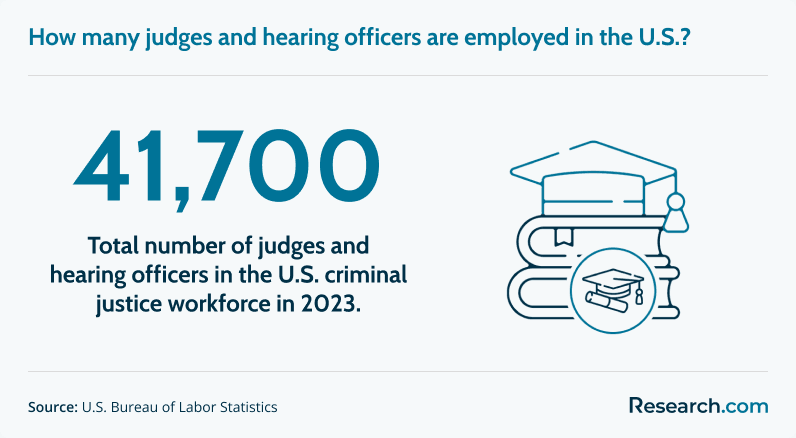
The right degree depends on the role you want. Criminal justice careers include law enforcement, courts, corrections, forensic science, cybersecurity, intelligence, legal support, policy, and academic research. In 2023, there were 41,700 judges and hearing officers in the U.S. criminal justice workforce.
| Education level | Common career targets | When this path makes sense |
| Associate degree | Entry-level law enforcement support, corrections, security, legal support, transfer pathway | Best for students seeking a lower-cost start or planning to transfer into a bachelor’s program |
| Bachelor’s degree | FBI agent, ICE agent, intelligence analyst, police leadership track | Best for students who want broad eligibility for federal, investigative, analytical, or supervisory roles |
| Juris Doctor | Criminal defense attorney, prosecutor, judge | Required for attorney licensure and central to many judicial career paths |
| Master’s degree | Criminologist, forensic psychology-related roles, leadership, policy, analytics | Useful for specialization, advancement, research, or career changes into higher-level work |
| Doctoral degree | Professor, forensic psychologist, senior researcher | Best for careers requiring advanced research, university teaching, or doctoral-level clinical preparation |
Bachelor's Degree
A bachelor’s degree is a common baseline for many better-paying criminal justice roles. Relevant majors include criminal justice, criminology, law enforcement, forensic science, public administration, homeland security, cybersecurity, or political science.
- FBI Agent
- Police Chief
- ICE Agent
- Intelligence Analyst
Bachelor’s programs typically introduce criminal law, ethics, research methods, investigation, corrections, policing, and policy. Students interested in law, government, and public policy may also compare options such as the most affordable online political science degree programs, especially if they want a broader foundation in governance and public institutions.
What role do paralegals play in criminal justice?
Paralegals support attorneys by organizing case materials, performing legal research, drafting documents, tracking deadlines, managing evidence files, and preparing for hearings or trials. In criminal law, accuracy matters because small errors in records, citations, evidence handling, or timelines can affect a case.
Some paralegals focus on criminal defense, prosecution support, forensic evidence coordination, victim services, or digital case management. Students who want a structured route into legal support can compare ABA-approved online paralegal programs, which may help them build credibility and learn legal research, writing, ethics, and technology tools used in modern law offices.
Paralegal work can also be a stepping stone. It gives aspiring attorneys, investigators, compliance professionals, and court personnel exposure to legal procedure before they commit to graduate or law school.
Law Degree (Juris Doctor)
A Juris Doctor is the standard professional degree for becoming a lawyer. Students typically complete a bachelor’s degree first, attend law school, and then pass the state bar exam. For criminal defense attorneys, prosecutors, and many judges, this path is essential.
Law school can lead to some of the strongest-paying criminal justice careers, but it is also expensive and competitive. Before enrolling, students should compare bar passage outcomes, employment results, cost, scholarships, clinical opportunities, and criminal law coursework.
Master’s Degree
A master’s degree can help professionals move into research, leadership, policy, forensic psychology-related work, intelligence, cybersecurity, or criminal justice administration. Students looking for lower-cost graduate options can compare affordable online masters programs that align with their career goals.
A master’s program is most useful when it adds a clear specialization or qualifies you for a role you could not reasonably obtain with your current credentials alone.
Doctoral Degree (PhD)
A PhD is most relevant for university teaching, advanced research, policy leadership, and some expert-level roles. Criminal justice professors and high-level researchers usually need doctoral preparation. For forensic psychology, doctoral training is also commonly required because the work may involve clinical evaluation, testing, and expert testimony.
How much does a criminal justice degree cost?
Criminal justice degree costs vary by credential level, institution type, residency status, delivery format, transfer credits, fees, and time to completion. Students should compare total program cost, not just tuition. If federal financial aid is part of your plan, start by reviewing colleges that accept FAFSA.
| Degree type | Estimated cost stated | Typical duration | Best use case |
| Associate Degree in Criminal Justice | $6,000 to $20,000 | 2 years | Lower-cost entry point, transfer preparation, or early career qualification |
| Bachelor’s Degree in Criminal Justice | $20,000 to $120,000 per year | 4 years | Broad preparation for federal, investigative, analyst, and leadership-track careers |
| Master’s Degree in Criminal Justice or Related Field | $20,000 to $60,000 | 1 to 2 years | Specialization, promotion, policy, analytics, or management preparation |
| Law Degree (Juris Doctor) | $30,000 to $70,000 per year (public) | 3 years | Attorney, prosecutor, criminal defense, or judicial career path |
| PhD in Criminal Justice or Related Field | $25,000 to $50,000 per year | 3 to 6 years | Research, academia, expert analysis, or senior policy work |
Associate Degree in Criminal Justice
- Cost: $6,000 to $20,000
- Duration: 2 years
An associate degree can be a practical starting point for students who want to limit debt, test their interest in the field, or transfer credits later. Students interested in legal support work may also compare a list of ABA approved paralegal programs as an alternative or complementary route.
Bachelor’s Degree in Criminal Justice
- Cost: $20,000 to $120,000 per year
- Duration: 4 years
A bachelor’s degree is often the most flexible credential for students who want to qualify for investigative, federal, analytical, or supervisory tracks. Online students can compare the criminal justice degree online cost across programs, but they should also review accreditation, transfer policy, fees, graduation support, and employer recognition.
Master’s Degree in Criminal Justice or Related Field
- Cost: $20,000 to $60,000
- Duration: 1 to 2 years
A master’s degree is usually more focused than an undergraduate degree. It may be worth the investment when it supports a specific promotion, specialty, leadership move, or transition into research, analytics, forensic psychology, or public administration.
Law Degree (Juris Doctor)
- Cost: $30,000 to $70,000 per year (public)
- Duration: 3 years
Law school is a major investment. It can lead to high-paying legal careers, but students should examine bar passage rates, scholarship conditions, employment outcomes, loan obligations, clinical opportunities, and the realities of legal practice before enrolling.
PhD in Criminal Justice or Related Field
- Cost: $25,000 to $50,000 per year
- Duration: 3 to 6 years
A PhD is best suited to students with clear goals in research, university teaching, policy analysis, or expert-level practice. Because doctoral programs can be long and demanding, funding, assistantships, dissertation support, and faculty fit are especially important.
How can I get a high-paying criminal justice job with a degree?
A degree can open doors, but it rarely works alone. The strongest candidates connect their education to field experience, specialization, professional relationships, and measurable skills.
- Choose the role before choosing the degree. A bachelor’s in criminal justice or law enforcement may fit FBI agent, intelligence analyst, or police chief tracks. A Juris Doctor is needed for criminal defense attorney and many judge pathways. In 2023, a total of 30,160 students graduated from 195 ABA-approved law schools.
- Select a program with relevant career support. Look for internships, field placements, capstone projects, faculty with current industry experience, and connections with law firms, police departments, courts, correctional agencies, or federal employers.
- Build experience early. Internships with police departments, law firms, prosecutors’ offices, courts, federal agencies, victim services organizations, or security teams can help you build references and practical judgment.
- Start in a role that teaches the system. Entry-level work as a police officer, corrections officer, paralegal, security professional, probation support worker, or analyst can provide the experience needed for higher-paying roles later.
- Specialize where demand is strong. Cybersecurity, white-collar crime, fraud, intelligence, forensic science, and digital evidence can separate you from general applicants. Students considering cybercrime work can compare affordable cyber security degree online options.
- Add credentials strategically. Shorter programs, including online graduate certificate programs, can help professionals document expertise without committing immediately to another full degree.
- Network with purpose. Build relationships with professors, supervisors, attorneys, investigators, analysts, and association members. Conferences, job fairs, professional organizations, and alumni networks can reveal openings that are not obvious from job boards alone.
What are the benefits of a criminal justice education?
A criminal justice education can be valuable when it is tied to a realistic career plan. It can prepare students for multiple parts of the justice system while building skills that transfer into government, nonprofit, legal, security, technology, and corporate roles.
Diverse Career Opportunities
Criminal justice graduates may pursue law enforcement, corrections, probation, forensic science, intelligence, legal support, security management, compliance, or graduate study. Students interested in national security can also review what jobs can you do with a homeland security degree to compare related careers such as border security, emergency management, transportation security, and intelligence roles.
High Earning Potential
Some criminal justice-related careers can pay well, especially in federal agencies, law, forensic psychology, cybersecurity, intelligence, financial examination, and executive leadership. However, salary is never guaranteed. Employer type, region, experience, education, clearance status, certifications, and performance all influence earnings.
Job Stability and Demand
Public safety, courts, corrections, fraud prevention, cybersecurity, and compliance remain essential functions. Demand can shift by region and budget cycle, but criminal justice skills often remain relevant because communities, courts, agencies, and organizations need trained professionals to manage risk and respond to harm.
Transferable Skills
Strong criminal justice programs help students build practical skills that apply beyond traditional law enforcement.
- Critical thinking: Interpreting evidence, identifying gaps, and solving complex problems.
- Communication: Writing reports, interviewing people, testifying, presenting findings, and working with diverse communities.
- Ethical judgment: Applying legal rules, protecting rights, and making fair decisions under pressure.
- Research and analysis: Studying crime trends, reviewing policy, evaluating programs, and interpreting data.
These abilities can also support roles in business, social services, public policy, and careers in communications.
How can I advance my career in criminal justice?
Advancement in criminal justice usually comes from a combination of education, field performance, specialization, leadership, and credibility. The right move depends on whether you want to supervise people, become a technical expert, move into federal work, teach, practice law, or shape policy.
| Advancement goal | Useful strategy | Why it helps |
| Promotion into leadership | Earn a master’s degree, complete leadership training, lead projects, and document results | Shows readiness for supervision, budgeting, policy, and personnel management |
| Specialized investigation | Seek assignments in homicide, cybercrime, organized crime, fraud, forensics, or intelligence | Builds expertise in areas that often require advanced judgment and technical knowledge |
| Legal career | Earn a J.D., pass the bar, and gain courtroom or litigation experience | Required for attorney practice and valuable for prosecutor, defense, and judicial tracks |
| Forensic psychology or research | Pursue graduate or doctoral education and research experience | Supports expert, academic, clinical, or policy roles |
| Cybersecurity or fraud | Earn relevant technical certifications and build case-based experience | Demonstrates competence in specialized, evidence-heavy work |
Graduate education can be especially useful for leadership, forensic psychology, policy, or research roles. For example, students comparing psychology-focused options can review affordable graduate programs in forensic psychology.
- Master’s Degree: Criminal justice, criminology, forensic science, public administration, law enforcement, or related graduate programs may support leadership and specialist roles.
- Law Degree (Juris Doctor): Required for attorney careers and important for many judicial pathways.
- Certifications: Cybersecurity, fraud investigation, forensics, homeland security, and law enforcement credentials may strengthen specialized applications.
Experience is equally important. Volunteer for challenging assignments, request cross-training, build a record of ethical decision-making, and seek mentors who can provide candid feedback. Professional organizations such as the International Association of Chiefs of Police (IACP), National Criminal Justice Association (NCJA), and American Society of Criminology (ASC) can also help professionals stay current and connected.
What certifications are required for high-paying criminal justice jobs?
Certifications are not required for every criminal justice career, but they can help professionals prove specialized expertise. The best credential depends on the job target. A fraud investigator, cybercrime specialist, police supervisor, forensic analyst, and intelligence analyst will not all need the same credential.
| Certification | Relevant area | Why it may matter |
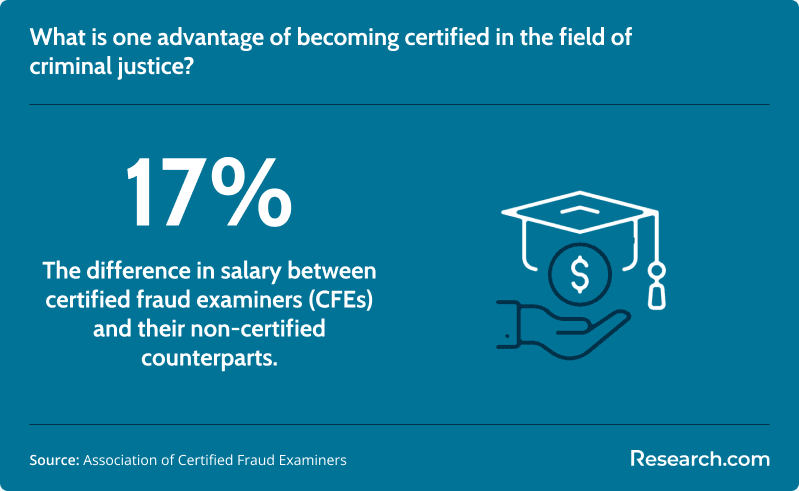
| Certified Fraud Examiner (CFE) | Fraud prevention, detection, and investigation | Offered by the Association of Certified Fraud Examiners; based on data from the Association of Certified Fraud Examiners, CFEs earn 17% more than their non-certified counterparts. |
| Certified Information Systems Security Professional (CISSP) | Cybersecurity, digital forensics, national security | Signals advanced information security knowledge for cyber-focused roles |
| Certified Law Enforcement Analyst (CLEA) | Crime analysis and public safety strategy | Offered by the International Association of Crime Analysts for professionals who analyze crime data |
| Peace Officer Standards and Training (POST) Certification | Law enforcement | Mandatory in many states and may be tied to promotion or specialized policing roles |
| Certified Forensic Computer Examiner (CFCE) | Digital evidence and computer investigations | Offered by the International Association of Computer Investigative Specialists for professionals handling technology-based evidence |
Before paying for a certification, verify whether employers in your target role actually request it. A credential is most valuable when it matches job postings, agency standards, promotion requirements, or recognized professional practice.
What are the best continuing education programs for criminal justice professionals?
Continuing education can help criminal justice professionals keep up with legal changes, new investigative tools, leadership expectations, digital evidence practices, and specialized risks. The strongest option is the one that fits your current role and next career move.
- The FBI National Academy provides advanced training for law enforcement officers and federal agents, with emphasis on leadership, investigative methods, counterterrorism, cybercrime, and forensic science.
- Harvard University’s Program in Criminal Justice Policy and Management (PCJ) offers executive education focused on criminal justice reform, public safety leadership, and system-level improvement.
- John Jay College offers certificate and continuing education options in areas such as forensic psychology, digital forensics, police leadership, crime analysis, public administration, and emergency management.
- American Public University offers online certificate programs in topics such as cybersecurity, corrections management, and law enforcement leadership for working professionals who need flexibility.
- Georgetown University’s executive master’s program in Emergency and Disaster Management is designed for professionals involved in crisis response, homeland security, emergency management, and public safety operations.
When comparing continuing education, ask whether the program is recognized by employers, whether it awards a credential, whether it teaches current tools, and whether it fits your promotion or specialization plan.
What is the job outlook for criminal justice careers?
The criminal justice job outlook varies by occupation, funding, geography, public policy, technology, retirement patterns, and crime trends. In July 2024 a total of 49,844 law school graduates took the multi-state bar examination.
Law Enforcement Officers, Including Police Officers and Detectives
Employment of police officers and detectives is projected to grow 4% from 2023 to 2033, according to the U.S. Bureau of Labor Statistics (BLS). Public safety needs, retirements, local budgets, and community priorities all influence hiring.
Some jurisdictions may expand staffing or invest in new technology, while others may face funding constraints. Candidates should study local hiring cycles, civil service requirements, academy requirements, and promotion structures.
Cybersecurity and Cybercrime Investigators
The demand for cybersecurity professionals, including cybercrime investigators, is expected to grow by 33% from 2023 to 2033, much faster than the average for all occupations.
Cybercrime work can exist inside law enforcement, federal agencies, corporations, consulting firms, financial institutions, and legal support teams. Candidates who combine criminal justice knowledge with technical security skills may have broader options.
Forensic Science Technicians
The employment of forensic science technicians is projected to grow 11% from 2022 to 2032, faster than the average for all occupations. DNA analysis, digital evidence, lab capacity, and forensic technology can affect demand.
Students pursuing this path should understand that forensic work often requires strong science preparation, careful evidence handling, documentation, quality control, and comfort with laboratory or technical procedures.
Probation Officers and Correctional Treatment Specialists
The employment of probation officers and correctional treatment specialists is expected to grow by 4% over the next decade, which is about average for all occupations. Criminal justice reform, treatment-focused approaches, and reentry programs can shape these roles.
Private Detectives and Investigators
Employment of private detectives and investigators is projected to grow by 6% through 2032, which is slightly faster than the average for all occupations. Corporate security, insurance investigation, financial fraud, cybersecurity, and digital forensics may create opportunities for investigators with specialized skills.
Are online degree programs a viable path to high-paying criminal justice careers?
Online criminal justice programs can be a realistic option when they are accredited, career-relevant, and accepted by employers or licensing bodies connected to your target role. They are especially useful for working adults, military students, public safety professionals, and career changers who need flexibility.
Online study is not automatically the right choice for every path. Students should confirm whether the program includes internships, labs, field placements, residency requirements, clinical components, or licensure preparation if those are needed. For students seeking a flexible bachelor’s route, an option such as a criminal law degree online can be compared with campus-based programs.
How does the job outlook for criminal justice careers vary by region?
Criminal justice hiring is highly local. A role that is competitive in one region may be in demand in another because of agency budgets, population size, court caseloads, crime patterns, federal facilities, and private-sector needs.
- Urban vs. Rural Areas: Large cities such as New York or Los Angeles may have more specialized units, larger agencies, and higher case complexity. Rural areas may offer smaller teams and broader responsibilities.
- High Crime Regions: Cities such as Detroit or St. Louis may have greater demand for police officers and detectives, while lower-crime areas may offer more limited entry-level openings but opportunities in analysis, prevention, or policy.
- Federal Opportunities: Washington D.C. and Southern Border States such as Texas and Arizona may offer more federal law enforcement, homeland security, border, or national security opportunities.
- State and Local Funding: States such as California and Texas often have larger criminal justice systems, which can affect hiring in policing, corrections, probation, courts, and administration.
- Specialized Roles: Technology and finance centers, including Silicon Valley and New York, may have stronger demand for cybersecurity, fraud, compliance, and digital forensics talent.
If you need flexibility while preparing for regional opportunities, a criminal justice online degree may help you study without relocating immediately.
What Is the ROI for Advanced Criminal Justice Degrees?
The return on investment for an advanced criminal justice degree depends on cost, lost work time, employer tuition support, salary increase, promotion requirements, and whether the credential is necessary for your target role. A graduate degree can be worthwhile when it clearly supports advancement into leadership, research, law, forensic psychology, intelligence, cybersecurity, or policy.
Before enrolling, compare tuition and fees against realistic career outcomes. Do not assume that a degree alone will produce a salary increase. Students looking for faster credential options can compare quick degrees online that pay well, but they should still verify accreditation and employer acceptance.
How can accelerated graduate programs advance your criminal justice career?
Accelerated graduate programs can help experienced professionals earn advanced credentials faster, especially when they already know their target specialty. These programs may emphasize forensic analytics, ethics, cybersecurity, leadership, public policy, or criminal justice administration.
The trade-off is intensity. Condensed programs can require heavier weekly workloads, strong time management, and fewer breaks. Professionals who want a shorter graduate path may compare one year master programs online to see whether the format supports their schedule and career goals.
How Do I Choose the Right Criminal Justice Degree Program?
Choosing a criminal justice program should be a decision process, not a ranking exercise. The right program is the one that matches your role target, budget, schedule, learning format, and credential requirements.
| Question to ask | Why it matters |
| Is the school institutionally accredited? | Accreditation can affect transfer credits, financial aid, employer recognition, and graduate school eligibility. |
| Does the curriculum match my career goal? | A policing-focused program may not be ideal for cybercrime, forensic psychology, legal studies, or policy research. |
| Are internships, practicums, labs, or field experiences available? | Practical experience can be critical for investigations, forensics, legal support, and public safety careers. |
| What are the total costs? | Fees, technology costs, books, travel, lost work time, and program length affect affordability. |
| Will credits transfer? | Transfer policies can shorten or lengthen your time to completion. |
| Does the program prepare students for licensure, certification, or academy requirements? | Some careers have requirements outside the degree itself. |
Students seeking a simpler academic route can review the easiest criminal justice degree options, but “easy” should never replace accreditation, relevance, and career fit.
What are the unique challenges faced in high-paying criminal justice roles?
Higher pay in criminal justice often comes with higher pressure. Before pursuing a top-paying role, candidates should understand the emotional, ethical, physical, and scheduling demands involved.
- High stress and mental health strain: Federal agents, forensic psychologists, police chiefs, attorneys, and investigators may deal with violent crime, trauma, public scrutiny, crisis decisions, and intense workloads.
- Safety risks: Field roles in policing, federal enforcement, intelligence, and undercover work may involve direct exposure to dangerous people or unstable situations.
- Ethical and legal pressure: Judges, attorneys, investigators, administrators, and analysts must make decisions that can affect liberty, safety, public trust, and institutional accountability.
- Work-life balance challenges: Irregular hours, overtime, court deadlines, emergency response, on-call duties, and high-stakes investigations can affect family life and long-term well-being.
How can financial aid opportunities empower your criminal justice education?
Financial aid can make a criminal justice degree more manageable, but students should use aid carefully. Grants, scholarships, employer tuition assistance, military benefits, federal loans, institutional aid, and transfer credits can reduce out-of-pocket costs.
Students comparing online options can start with online colleges that accept FAFSA. Before borrowing, calculate the total cost of attendance, expected monthly loan payments, likely starting salary, and whether the degree is required for your target job.
What emerging trends are shaping the future of criminal justice careers?
Criminal justice careers are being reshaped by technology, public accountability, criminal justice reform, data-driven policing, cybercrime, community-based approaches, forensic innovation, and changing expectations around transparency and ethics.
Professionals who can adapt to these changes may be better positioned for advancement. For example, policy and research-oriented professionals can examine criminology jobs salary information while considering how evidence-based prevention, data analysis, and reform initiatives affect career options.
What are the most cost-effective options for specialized criminal justice training?
Cost-effective training may include employer-sponsored academies, certificates, community college programs, online courses, graduate certificates, professional association training, and affordable degree programs. The key is to choose training that employers recognize and that builds a skill you can use immediately.
Forensic science, cybersecurity, legal studies, and intelligence training can vary widely in price and quality. Students seeking a lower-cost forensic path can compare the cheapest forensic science degree options while reviewing lab access, science prerequisites, faculty qualifications, and career support.
How Technology is Reshaping Criminal Justice Careers
Technology is changing how crimes are investigated, how evidence is handled, how courts manage cases, and how agencies allocate resources. Criminal justice professionals increasingly need digital literacy, data ethics, cybersecurity awareness, and the ability to work with technical specialists.
AI and Predictive Policing
Artificial intelligence can help agencies analyze historical crime data, identify patterns, and allocate resources. However, AI tools also raise concerns about bias, explainability, oversight, privacy, and accountability. Professionals who use these systems need technical awareness and strong ethical judgment.
Cybersecurity and Digital Forensics
Cybercrime has expanded the criminal justice field beyond physical evidence and traditional investigations. Digital forensic analysts may recover data, trace online activity, examine devices, document breaches, and support prosecutions or internal investigations. Skills in encryption, network security, blockchain analysis, and credentials such as Certified Ethical Hacker (CEH) or Certified Information Systems Security Professional (CISSP) may be valuable.
Advancements in Forensic Technology
Forensic work increasingly uses tools such as biometric authentication, genetic genealogy, advanced DNA methods, and 3D crime scene reconstruction. These tools can improve investigations, but they also require careful validation, documentation, and courtroom-ready explanation.
Automated Case Management Systems
Courts and legal offices use digital case management systems to organize filings, deadlines, evidence, calendars, and communications. Paralegals, attorneys, clerks, and court administrators who understand these systems can improve efficiency and reduce administrative errors.
Drone and Surveillance Technologies
Drones may be used for search-and-rescue, traffic monitoring, tactical support, and crime scene documentation. Surveillance systems, facial recognition, and motion detection technologies can assist public safety operations, but they also raise privacy and civil liberties questions.
Students who want a faster foundation before moving into a specialized path may consider an accelerated associates degree online as an entry point.
What key skills are critical for success in high-paying criminal justice roles?
Top criminal justice roles require more than credentials. Employers often look for people who can make sound decisions under pressure, communicate clearly, use technology responsibly, and lead ethically.
- Analytical thinking: Needed for investigations, intelligence, policy, fraud, and forensic work.
- Digital literacy: Increasingly important for cybercrime, evidence management, case systems, and data analysis.
- Ethical judgment: Essential because criminal justice decisions can affect rights, safety, liberty, and public trust.
- Communication: Required for reports, testimony, interviews, courtroom work, public briefings, and interagency collaboration.
- Leadership: Critical for police chiefs, security managers, supervisors, professors, and agency administrators.
- Adaptability: Necessary as laws, technology, evidence standards, and public expectations change.
Students who want to build a broad foundation more quickly can compare an accelerated online bachelor degree with traditional degree formats.
Is an Accelerated Master’s Program the Right Strategy to Fast-Track Your Career?
An accelerated master’s program can be useful if you already have professional experience and a clear reason for needing the credential. It may reduce time to completion and help you move faster into leadership, analysis, policy, or specialized criminal justice work.
The risk is workload. Shorter programs may require concentrated study, fast deadlines, and fewer scheduling breaks. Working professionals should compare pacing, support services, faculty access, and employer acceptance before choosing one of the shortest masters degree options.
How can you maintain work-life balance while excelling in high-paying criminal justice careers?
High-paying criminal justice careers can involve court deadlines, shift work, emergency response, trauma exposure, travel, overtime, or leadership pressure. Long-term success depends on managing stress as deliberately as you manage career advancement.
- Set boundaries where the role allows, especially around availability and recovery time.
- Use employee assistance programs, peer support, counseling, or wellness resources when exposed to trauma or chronic stress.
- Build routines for sleep, exercise, family time, and decompression after difficult cases.
- Delegate appropriately when you move into leadership rather than carrying every task yourself.
- Choose education formats that fit your life. Options such as cheap online colleges without application fee may reduce barriers for working adults.
Can alternative education pathways accelerate your criminal justice career growth?
Alternative pathways such as online degrees, certificates, microcredentials, academy training, bootcamps, and employer-based professional development can help professionals gain targeted skills without immediately committing to a long degree program.
These options work best when they are stackable, accredited or industry-recognized, and connected to a specific career outcome. Working adults comparing flexible programs can review cheap online colleges while checking whether credits transfer and whether employers value the credential.
Can a Homeland Security Specialization Enhance Your Criminal Justice Career?
A homeland security specialization can strengthen a criminal justice career when your goals involve emergency management, intelligence, border security, counterterrorism, cyber defense, infrastructure protection, or interagency coordination.
This specialization is most useful for professionals who want to work on large-scale threats rather than only local criminal cases. Students can compare the best homeland security degree programs to find options aligned with public safety, crisis management, and national security goals.
How can specialized intelligence training enhance criminal justice outcomes?
Intelligence training helps professionals evaluate threats, interpret data, recognize patterns, assess risk, and communicate findings to decision-makers. These skills can improve investigations, prevention strategies, emergency planning, and national security operations.
A specialized program such as an intelligence masters degree online may be useful for professionals seeking advanced analytical training while continuing to work.
How can career progression strategies impact long-term success in criminal justice?
A strong criminal justice career is usually planned in stages. Entry-level experience builds credibility, specialization builds value, leadership builds influence, and continuing education helps professionals stay current.
- Identify the role you want three to five years from now.
- Compare job postings to identify required degrees, certifications, clearances, and experience.
- Ask supervisors or mentors which assignments would make you more competitive.
- Track measurable achievements such as cases handled, teams led, grants managed, trainings completed, or systems improved.
- Reassess your plan regularly as laws, technology, and agency needs change.
Students still choosing an undergraduate path may find it useful to explore "What are the easiest bachelor degrees to get?" while keeping career relevance and accreditation at the center of the decision.
How can interdisciplinary advanced degrees expand your criminal justice expertise?
Modern criminal justice problems rarely fit one discipline. Psychology, cybersecurity, public administration, law, sociology, data analytics, emergency management, and ethics all influence how agencies investigate crime, manage risk, and build policy.
Interdisciplinary graduate study can be valuable for professionals who want to connect behavioral science, legal systems, technology, and leadership. Some students compare options such as the fastest psychology master's programs when looking for accelerated routes that connect behavioral insight with public safety work.
Can online doctoral programs elevate your criminal justice expertise?
An online doctoral program may support careers in teaching, research, senior administration, policy development, or expert analysis. It can be especially useful for working professionals who cannot pause their careers for full-time campus study.
Doctoral study is demanding even when online. Before enrolling, review dissertation support, faculty expertise, research expectations, residency requirements, time to completion, and total cost. Students seeking shorter doctoral routes can compare shortest online PhD programs, but they should confirm that the program’s rigor and reputation match their goals.
What criminal justice professionals say about their careers
-
: "
Forensic science has challenged me intellectually and professionally. Developing specialized DNA analysis skills made my work more valuable to my team, and compensation improved as my expertise grew. Knowing that my work helps resolve difficult cases is one of the most meaningful parts of the career. -Patty
"
-
: "
Moving into private-sector cybersecurity changed my career path. Demand for digital security skills has been strong, and the work keeps me learning constantly. I value the combination of technical challenge, strong earning potential, and relevance in a rapidly changing field. -Mike
"
-
: "
Becoming a federal agent required intense preparation and training, but it gave me a career with strong pay, benefits, and purpose. The work is demanding, yet I take pride in contributing to national-level investigations and public safety. -Robert
"
Common Mistakes to Avoid When Pursuing High-Paying Criminal Justice Careers
| Mistake | Why it can hurt you | Better approach |
| Choosing a program without checking accreditation | It may affect financial aid, transfer credits, graduate admission, and employer recognition. | Verify institutional accreditation before applying. |
| Focusing only on tuition | Fees, books, travel, technology, housing, and lost work time can change the real cost. | Compare total cost of attendance and time to completion. |
| Assuming any criminal justice degree fits every role | Cybercrime, law, forensic psychology, policing, and intelligence require different preparation. | Match the degree concentration to the job requirements. |
| Ignoring experience requirements | Many top-paying roles require years of field experience, leadership, or technical work. | Use internships, entry-level roles, special assignments, and mentorship to build a record. |
| Assuming online programs automatically meet licensure or certification requirements | Some roles require state-specific training, clinical hours, bar admission, academy completion, or supervised experience. | Confirm requirements with the relevant state board, agency, employer, or credentialing body. |
| Relying only on rankings | A highly ranked program may not be the best fit for your budget, schedule, location, or specialty. | Evaluate outcomes, curriculum, support, cost, accreditation, and career alignment. |
References
- Association of Certified Fraud Examiners. (2022). Compensation guide for anti-fraud professionals.
- National Center for Education Statistics. (2023). Undergraduate degree fields. U.S. Department of Education.
- National Conference of Bar Examiners. (2023). Statistics from The Bar Examiner.
- National Jurist. (2023). Employment rates for 2023 law school graduates.
- U.S. Bureau of Labor Statistics. (2023). Lawyers. Occupational Outlook Handbook.
- U.S. Bureau of Labor Statistics. (2023). Judges and hearing officers. Occupational Outlook Handbook.
- USAFacts. (2023). Crime and justice: 2023 State of the Union.
Key Insights
- The highest-paying criminal justice careers usually require a specialized path: law school for attorneys and many judges, doctoral preparation for forensic psychologists and professors, and technical or federal training for cybercrime, intelligence, and investigative roles.
- A bachelor’s degree is often the most flexible starting point, but it is not always enough for top-tier roles. Plan backward from the job you want before choosing a major, concentration, or graduate program.
- Salary depends on more than the job title. Location, employer type, years of experience, certifications, clearance requirements, leadership responsibility, and specialization can all affect compensation.
- Online and accelerated programs can work well for criminal justice students, especially working adults, but accreditation, field experience, licensure alignment, and employer recognition must be verified before enrolling.
- Cybersecurity, digital forensics, intelligence analysis, fraud examination, forensic psychology, and homeland security are important growth-oriented specialties for professionals who want to move beyond generalist criminal justice roles.
- Before investing in an advanced degree, calculate ROI carefully. Compare total cost, likely career outcomes, time away from work, available aid, and whether the credential is truly required for your next step.
Other Things You Should Know About the Highest Paying Criminal Justice Jobs and Careers
The highest-paid criminal justice jobs are commonly found with the FBI, DEA, U.S. Marshals Service, Secret Service, and Bureau of Prisons. These agencies hire special agents, analysts, and investigators, often requiring U.S. citizenship, a clean background check, a bachelor’s degree, and agency-specific academy training.
The highest-paying criminal justice roles in 2027 requiring advanced degrees include federal judges, forensic psychologists, and criminologists. Federal judges earn around $223,400 annually. Forensic psychologists can make over $95,000, while experienced criminologists find salaries exceeding $80,000, reflecting the value of advanced education in these fields.


