2027 Online Digital Photography Degrees That Prepare Students for Photography Roles in Business and Media

Co-Founder and Chief Data Scientist
Choosing an online digital photography degree is really a portfolio, cost, and career-fit decision. The U.S. Bureau of Labor Statistics projects photographer employment to grow 4% from 2024 to 2034, but competition remains strong because many roles depend on freelance work, business skills, and specialized media production.
This guide is for students comparing online photography programs for business, advertising, journalism, social media, and creative media careers. You will learn how degrees differ, what they cost, what accreditation matters, and how to choose a program that supports your goals.
Key Things You Should Know
- Online digital photography degrees are most useful when they combine technical camera training, editing software, visual storytelling, business practices, and a portfolio that can be shown to employers or clients.
- Cost varies widely by institution type; College Board's 2024-25 averages show published tuition and fees of $4,050 at public two-year colleges and $11,610 for in-state students at public four-year colleges.
- The BLS reported a May 2024 median annual wage of $42,520 for photographers, so ROI depends heavily on specialization, location, client base, internships, and whether the program helps students build paid-work readiness.
What Are Online Digital Photography Degrees?
Online digital photography degrees are college programs that teach students how to create, edit, manage, and present photographic work using digital cameras, lighting systems, editing software, and visual communication principles. Unlike short hobby courses, degree programs usually include general education, art and design foundations, critiques, portfolio development, and career preparation.
These programs can fit students who want to work in commercial photography, media production, branding, journalism, real estate, product imaging, portraiture, or content creation. They may not be the best fit for someone who only wants to learn camera basics quickly or who already has a strong portfolio and needs only a focused software or business certificate.
The table below compares the common academic options. The right choice depends on how much time you can invest, whether you want transfer options, and how much academic credentialing matters in your target role.
| Program type | Typical focus | Best fit | Main trade-off |
| Certificate | Camera operation, editing, lighting, or a specialty such as portrait or product photography | Learners who need targeted skills or portfolio pieces quickly | Usually does not carry the same transfer value as a degree |
| Associate degree | Foundations in photography, design, digital workflow, and general education | Students seeking entry-level work or transfer to a bachelor's program | May offer fewer advanced studio, business, or specialization courses |
| Bachelor of Arts | Photography plus broader liberal arts, media studies, communication, or visual culture | Students interested in media, brand storytelling, arts administration, or graduate study | May be less studio-intensive than a BFA |
| Bachelor of Fine Arts | Studio practice, critiques, portfolio development, concept building, and professional presentation | Students pursuing creative production, exhibitions, commercial portfolios, or advanced visual work | Can require more intensive project work and may have portfolio admission requirements |
A strong online program should not simply upload lectures about photography. It should require original image production, peer and faculty critique, software-based editing, file management, and a final portfolio that reflects the type of work you want to pursue.
How Do Online and Campus Photography Programs Compare?
Online and campus photography programs can teach the same fundamentals, but they differ in how students access studios, equipment, critique, and networking. The best format depends on your schedule, budget, local resources, and comfort with independent production.
The comparison below shows where each format tends to be strongest. Use it to identify which learning environment matches your constraints rather than assuming one format is automatically better.
| Factor | Online photography degree | Campus photography degree | Decision point |
| Schedule | Often asynchronous or hybrid, which helps working adults and parents | Set class, studio, and critique times | Choose online if flexibility is essential; choose campus if structure improves your follow-through |
| Equipment access | Students may need their own camera, lighting, storage, and software access | Schools may provide studios, lighting kits, printers, and labs | Compare the total equipment cost, not just tuition |
| Critique | Video, discussion board, or digital gallery critique | In-person critique with immediate visual feedback | Online can work well if the program has frequent, detailed faculty feedback |
| Networking | Depends on virtual events, internships, alumni access, and local self-directed networking | Often easier through campus shows, studios, clubs, and local creative communities | Ask how online students meet employers, alumni, and clients |
| Portfolio building | Can be strong if assignments require real-world shoots and professional presentation | Can benefit from studio access and collaborative projects | Review student portfolios before enrolling |
Online learning makes the most sense for students who can create shooting opportunities where they live. For example, a student interested in product photography can build a home tabletop setup, while someone focused on events may need access to local community, nonprofit, or small-business projects.
Campus learning may be better if you need darkroom access, high-end studio lighting, large-format printing, or constant in-person critique. A hybrid program can be a strong middle ground if it lets you complete lecture, history, and editing work online while using campus facilities for intensive studio experiences.
Which Accreditation Matters for Digital Photography Programs?
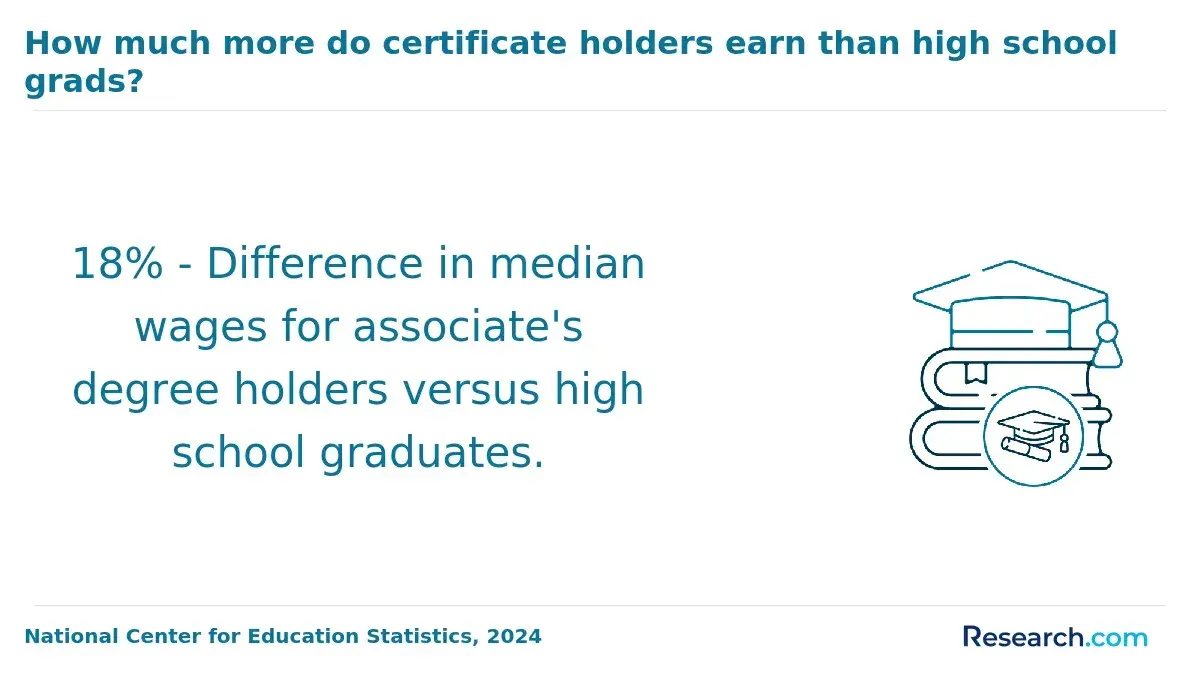
For digital photography degrees, institutional accreditation is the first thing to verify. It affects federal financial aid eligibility, credit transfer, graduate school recognition, and how other colleges evaluate your coursework. In the U.S., students should look for schools accredited by agencies recognized by the U.S. Department of Education or the Council for Higher Education Accreditation.
Programmatic accreditation can also matter, but it is not always required for photography careers. Some art and design programs may hold accreditation from the National Association of Schools of Art and Design, which can signal that the curriculum, faculty, facilities, and review practices meet field-specific standards. However, many legitimate photography programs operate without specialized art accreditation, so students should not treat it as the only marker of quality.
Use this checklist before applying. It helps you separate a credible online degree from a program that may create transfer, aid, or career-readiness problems later.
- Confirm the school's institutional accreditation through an official accreditor database rather than relying only on marketing language.
- Ask whether online students are eligible for the same degree, faculty review, career services, and transcript notation as campus students.
- Check whether photography, art, or design credits transfer into bachelor's programs if you are starting with an associate degree.
- Review state authorization if you live outside the school's home state, especially for programs with internships or in-person requirements.
- Ask employers, alumni, or working photographers whether the program's portfolio expectations match current industry standards.
A common mistake is choosing a program because the sample images look attractive without checking accreditation and student support. Beautiful marketing does not guarantee that credits will transfer, financial aid will apply, or faculty critique will be rigorous.
What Courses Are in an Online Digital Photography Degree?
Online digital photography degrees usually combine creative, technical, and business coursework. The strongest programs teach students not only how to take better images but also how to plan shoots, edit consistently, communicate with clients, license work, and present a professional portfolio.
The table below summarizes common course areas and why each one matters for photography roles in business and media.
| Course area | What students learn | Why it matters |
| Digital camera techniques | Exposure, focus, lenses, composition, file formats, and workflow | Builds the technical control needed for consistent client-ready work |
| Lighting | Natural light, studio lighting, flash, modifiers, and lighting ratios | Supports portrait, product, editorial, and commercial photography |
| Digital editing | Color correction, retouching, compositing, image organization, and output preparation | Helps students meet brand, publication, and platform standards |
| Visual storytelling | Narrative sequencing, documentary practice, audience, and image selection | Important for journalism, social media, branding, and campaign work |
| Business of photography | Pricing, contracts, copyright, licensing, client communication, and marketing | Essential for freelancers and small studio owners |
| Portfolio development | Project selection, critique, sequencing, artist statements, and online presentation | Turns coursework into evidence employers and clients can evaluate |
Current programs are also adapting to artificial intelligence, computational photography, and automated editing tools. Students should look for courses that teach ethical image manipulation, metadata practices, copyright awareness, and when AI-assisted editing is acceptable in commercial or journalistic contexts.
Photography students who enjoy teaching, training, or educational media may also benefit from understanding instructional design, because visual assets are often used in e-learning, corporate training, museum education, and digital course production.
Before enrolling, ask to see a recent syllabus or assignment sequence. A useful program should require original shoots, editing revisions, instructor critique, and a final portfolio rather than relying mostly on quizzes about camera theory.
What Are the Admission Requirements for Photography Programs?
Admission requirements vary by degree level and selectivity. Community colleges and some online bachelor's programs may use open or broad-access admissions, while BFA programs may require a portfolio review to evaluate creative readiness.
Most applicants should expect some combination of academic records, identity documentation, and program-specific materials. The list below explains the requirements that commonly matter and what they tell the school about your readiness.
- High school diploma, GED, or prior college transcript showing that you meet baseline academic eligibility.
- Application form and fee, although some online programs waive fees during certain enrollment periods.
- Portfolio samples for selective programs, usually showing composition, visual curiosity, editing judgment, and potential rather than professional perfection.
- Statement of purpose or short essay explaining your goals in photography, media, business, or visual communication.
- Transfer credit evaluation if you have prior college, military, or dual-enrollment coursework.
- Technology readiness confirmation, including access to a digital camera, reliable internet, image-editing software, and file storage.
Students who need a faster enrollment timeline should still compare quality controls, not just start dates. Some online colleges starting soon can be convenient, but applicants should confirm accreditation, refund rules, equipment requirements, and whether the first course actually applies to the degree plan.
A major red flag is an admissions process that promises career outcomes without reviewing your goals, transfer background, or equipment needs. A trustworthy program should be able to explain how online critique works, how many portfolio reviews occur, and what support exists for internships or client-based projects.
How Long Does an Online Photography Degree Take?
The length of an online photography degree depends on the credential, transfer credits, course load, and whether studio or portfolio courses are offered every term. Full-time students move faster, but part-time study may be more realistic for working adults who need time to complete shoots and revisions.
The table below gives typical timelines. Use it as a planning tool, then confirm the exact course sequence with each school because some photography classes must be taken in order.
| Credential | Typical full-time length | Part-time planning note | Best use |
| Certificate | Several months to 1 year | Often flexible, but may not include enough portfolio depth | Skill upgrade or career testing |
| Associate degree | About 2 years | Often 3 or more years if taking one to two courses per term | Entry-level preparation or transfer |
| Bachelor's degree | About 4 years from first enrollment | Can shorten with transfer credits or extend with part-time study | Broader career preparation and advanced portfolio work |
| Degree completion program | Often 1 to 2 years after prior credits | Depends on how many art, general education, and elective credits transfer | Students with an associate degree or substantial college credit |
Accelerated study can be useful if you already have general education credits, a strong self-directed work routine, and access to subjects or locations for assignments. It can be risky if compressed terms leave too little time for shooting, critique, reshoots, editing, and portfolio polish.
Program length also differs across creative and technical fields. If you are comparing photography with design-adjacent or built-environment options, reviewing architect course duration can help you see how credit load, studio sequencing, and professional expectations change from one discipline to another.
To avoid delays, ask whether required courses are available every term, whether online students can access summer classes, and whether transfer credits apply to major requirements or only to electives.
How Much Do Online Digital Photography Degrees Cost?
Costs include more than tuition. Photography students may also pay for cameras, lenses, lighting, software subscriptions, hard drives, printing, portfolio platforms, travel to shooting locations, and exhibition or capstone materials.
The College Board's 2024-25 published tuition and fee averages give a useful starting point for comparing institution types. These are national averages, so students should use them as benchmarks rather than as exact program prices.
- Public two-year colleges: $4,050 for in-district students.
- Public four-year colleges: $11,610 for in-state students.
- Public four-year colleges: $30,780 for out-of-state students.
- Private nonprofit four-year colleges: $43,350.
Online programs may reduce commuting and housing costs, but they can shift equipment costs to the student. A lower-tuition program is not automatically cheaper if it requires expensive gear immediately, offers limited software access, or does not accept transfer credits.
The table below shows common cost factors and how they affect the real price of an online digital photography degree.
| Cost factor | Why it matters | What to ask before enrolling |
| Tuition and fees | Usually the largest direct cost | Is tuition charged per credit, per term, or by residency status? |
| Equipment | Camera bodies, lenses, lighting, tripods, and storage can add up | What gear is required in the first term versus later courses? |
| Software | Editing and asset-management tools may require subscriptions | Does tuition include software licenses or student discounts? |
| Printing and portfolio | Some courses require physical prints, books, or final displays | Are digital portfolios accepted, or are print submissions required? |
| Transfer policy | Accepted credits can reduce total cost and time | How many credits transfer into the major, not just electives? |
| Financial aid | Federal aid generally requires eligible institutions and programs | Is the program Title IV eligible, and what is the net price after aid? |
When comparing applied online degrees, the smartest approach is to calculate the total program cost by including tools and field requirements. This is true for photography and for other equipment-dependent programs, such as the best online animal science degree, where tuition alone rarely tells the full affordability story.
To evaluate ROI, compare the program's total net cost with your likely career path. A student targeting freelance portrait work should ask about business training and client acquisition, while a student targeting media production should look for internships, editorial assignments, and digital asset workflow experience.
What Careers Can a Photography Degree Lead To?
A photography degree can lead to roles in business, media, marketing, publishing, events, and creative production. The degree itself is rarely the only hiring factor; employers and clients usually judge applicants by portfolio quality, reliability, software skill, communication, and the ability to deliver images for a specific audience or platform.
The table below connects common career directions with the kind of work students should prepare to show in a portfolio.
| Career path | Typical responsibilities | Portfolio evidence to build |
| Commercial photographer | Create images for products, brands, campaigns, websites, and catalogs | Product setups, lighting consistency, brand-style images, and before-and-after edits |
| Portrait photographer | Photograph individuals, families, professionals, graduates, or performers | Controlled lighting, posing, retouching, client galleries, and location work |
| Editorial or photojournalism assistant | Support news, magazine, documentary, or nonprofit visual storytelling | Photo essays, captions, ethical editing practices, and deadline-based assignments |
| Social media content producer | Create visual assets for campaigns, posts, reels, ads, and brand storytelling | Platform-ready images, short-form visual sequences, analytics-aware campaign samples |
| Real estate or architectural photographer | Photograph interiors, exteriors, properties, rentals, or commercial spaces | Wide-angle control, HDR or exposure blending, vertical correction, and fast delivery |
| Digital imaging technician or photo editor | Manage files, color correction, retouching, metadata, and delivery workflows | Editing samples, organized asset libraries, color consistency, and workflow documentation |
Students should also understand that many photography careers are portfolio-driven and entrepreneurial. Even staff roles may require freelancers' habits: pitching, estimating, meeting deadlines, communicating revisions, and protecting usage rights.
A practical career-building plan should include steps that turn school assignments into market-ready proof of skill. The sequence below can help students move from coursework to paid or professional experience.
- Choose a specialization early enough to build a coherent portfolio, such as product, portrait, editorial, real estate, or brand photography.
- Complete assignments as if they were client projects, with briefs, shot lists, file naming, editing rounds, and delivery deadlines.
- Seek supervised real-world work through internships, campus media, nonprofits, small businesses, student publications, or local events.
- Build a simple portfolio website with clear categories, contact information, project descriptions, and only your strongest images.
- Learn contracts, licensing, model releases, invoices, and backup procedures before accepting paid assignments.
One common mistake is trying to show every style at once. A focused portfolio usually helps employers and clients understand what you do best faster than a broad collection of unrelated images.
What Is the Salary Outlook for Photography Graduates?
The salary outlook for photography graduates depends on role, market, location, employment type, and business model. The BLS reported a May 2024 median annual wage of $42,520 for photographers. That figure is useful as a labor-market benchmark, but it should not be read as a guaranteed outcome for degree holders because many photographers are self-employed, part-time, or paid by project.
BLS also projects photographer employment to grow 4% from 2024 to 2034. For students, this suggests that opportunities may exist, but competition can remain intense because digital tools have lowered the barrier to entry, and clients often compare candidates by portfolio, niche, speed, and price.
The table below explains how different work settings can affect income stability and growth potential without treating any path as a guaranteed salary ladder.
| Work setting | Income pattern | What improves earning potential |
| Freelance or self-employed | Variable project-based income | Strong niche, repeat clients, pricing discipline, contracts, and marketing |
| Studio or portrait business | Can be seasonal and client-driven | Customer experience, local reputation, packages, print sales, and referrals |
| Corporate or marketing team | More stable when hired as staff, but openings may be competitive | Brand content skills, video basics, editing speed, and cross-platform production |
| Media or editorial organization | Often deadline-driven with variable staff and contract opportunities | News judgment, ethics, captions, metadata, and ability to work under pressure |
| E-commerce or product imaging | May involve high-volume production workflows | Lighting consistency, color accuracy, retouching, and asset management |
Technology is reshaping the field. AI-assisted editing, phone-based computational photography, and automated background removal can reduce demand for basic production work, but they also increase the value of photographers who can plan concepts, direct people, control lighting, solve client problems, and deliver trustworthy visual assets.
Students should ask programs for career-services data, internship examples, alumni portfolio links, and employer partnerships. If a school discusses salary only in broad promises and cannot explain how students build marketable skills, that is a warning sign.
Do Photography Careers Require Licensure or Certification?
Most photography careers in the U.S. do not require a state license. Employers and clients typically care more about portfolio quality, technical reliability, professionalism, and business practices. However, certain activities connected to photography may trigger legal, safety, or certification requirements.
The examples below show where credentials or permissions may matter. Students should verify rules based on their state, city, employer, and type of work.
- Commercial drone photography may require a Federal Aviation Administration Remote Pilot Certificate under Part 107.
- Wedding, event, or studio businesses may need local business registration, insurance, sales tax compliance, or venue-specific permits.
- School, healthcare, government, or corporate photography may require background checks, privacy training, or site-specific approval.
- Photojournalism and documentary work may require press credentials for certain events, but credentials do not replace ethical and legal responsibilities.
- Optional credentials, such as Adobe software certifications or professional association certifications, may help demonstrate specific skills but are not universal hiring requirements.
Students should also learn copyright, model releases, property releases, and licensing. These issues often affect working photographers more directly than formal licensure. A degree program that includes business law, media ethics, and client contracts can help students avoid costly mistakes.
If your goal involves drone work, travel, minors, restricted venues, or regulated industries, ask the program whether coursework addresses those situations. If it does not, plan to supplement the degree with targeted training or certification.
Other Things You Should Know About Digital Photography
Yes, if the program requires original shoots, regular critique, revisions, and a final portfolio review. Before enrolling, ask to see examples of recent student portfolios and confirm how often faculty give individualized feedback.
Essential skills for success in online digital photography degrees in 2027 include artistic vision, proficiency in photo editing software, knowledge of digital camera operation, and an understanding of media and business applications. Students should also develop strong communication skills for collaborating on creative projects remotely.
Yes. Many 2027 online digital photography degrees ask applicants to submit 10–15 original images as a portfolio, along with a high school diploma or GED and an online application. Some schools also require a personal statement showing interest in commercial, editorial, or media photography.
Usually, yes. Specializing in areas such as product, portrait, editorial, real estate, or brand photography helps you build a clearer portfolio and makes it easier for employers or clients to understand your value.
References
- Online Photography Degree | Associate Degree (AOS) https://www.sessions.edu/online-degrees/digital-photography/
- Professional Photography https://langara.ca/programs-courses/professional-photography-diploma-we
- Accreditation | SPOA https://www.schoolphotographersofamerica.com/spoa-accreditation
- Photography Jobs Outlook 2026: Is Studying Photography Still a Good Career Investment? https://www.baph.co.uk/blog/photography-jobs-outlook-2026--is-studying-photography-still-a-good-career-investment-
- How to Become a Photographer https://www.howtobecome.com/how-to-become-a-photographer
- Would you do a photography degree later in life? — StreetSnappers Street Photography Workshops https://streetsnappers.com/street-photography-blog/a-photography-degree-later-in-life
- The Association of Photographers https://www.the-aop.org/find/accredited-courses
- Image Arts: Photography Media Arts - BFA https://www.torontomu.ca/programs/undergraduate/photography-media-arts/
- Photography BA(Hons) (Online) https://www.falmouth.ac.uk/study/online/undergraduate/photography
- College Certificate vs Online Photography School | Cameraderie https://cameraderie.org/threads/college-certificate-vs-online-photography-school.56322/