2027 How Long Does It Take to Become a Pharmacist?

Co-Founder and Chief Data Scientist
If you are planning a pharmacy career, the main question is not only whether you can get into pharmacy school. It is how much time, money, testing, and supervised experience you must complete before you can legally work as a pharmacist. The path is structured: prerequisite college coursework, a Doctor of Pharmacy degree, internship hours, licensure exams, and state board approval.
This guide explains how long it takes to become a pharmacist in the U.S., what can shorten or extend the timeline, when a bachelor’s degree or residency matters, and how to compare pharmacy school with faster healthcare alternatives. It is designed for students, career changers, international applicants, and healthcare workers deciding whether the PharmD route fits their goals.
Key Things You Should Know About How Long It Takes to Become a Pharmacist
- Most candidates need 6 to 8 years to become licensed pharmacists, including undergraduate prerequisites and the PharmD. Accelerated PharmD options may reduce the total timeline to about 6 to 7 years.
- After earning the PharmD, graduates must pass the North American Pharmacist Licensure Examination (NAPLEX) and the Multistate Pharmacy Jurisprudence Examination (MPJE) or a state-specific pharmacy law exam.
- State internship requirements commonly fall between 1,000 and 1,500 hours. These hours are often built into the PharmD, but candidates must still document and verify them for licensure.
- Pharmacist licensing is state-specific. Required internship hours, law exams, application procedures, and continuing education rules can differ by state board.
- Pharmacists generally earn a median annual salary ranging from $120,000 to $140,000, but pay varies by employer, location, setting, and experience.
- Pharmacy careers are not limited to retail. Pharmacists may work in community pharmacies, hospitals, pharmaceutical companies, academia, research, managed care, public health, and informatics.
- A residency or fellowship is optional for general licensure, but it can add 1 to 2 years and may be valuable for clinical, research, or specialized practice roles.
- How long does it take to become a pharmacist?
- What are the steps involved in becoming a pharmacist?
- How many years of school are required to become a pharmacist?
- What degree do you need to become a pharmacist?
- How long does it take to complete pre-pharmacy coursework?
- Do I need a bachelor's degree to apply to pharmacy school?
- Is a residency required to become a pharmacist?
- How long does it take to get a pharmacist license after completing a PharmD?
- What exams are required to become a licensed pharmacist?
- How many hours of internship experience do pharmacists need before licensing?
- What are the key skills and attributes needed to become a successful pharmacist?
- What are the most cost-effective ways to become a pharmacist?
- How can you manage the financial investment in pharmacy education?
- What is the role of mentorship in a pharmacist's career journey?
- What factors should I consider when choosing a pharmacy school?
- How do technological advancements impact the pharmacy profession?
- Is pharmacy school worth it?
- Can additional certifications, such as in medical coding, improve career prospects for pharmacists?
- What challenges do pharmacy students encounter, and how can they overcome them?
- How can new pharmacists effectively transition from education to employment?
- Could an accelerated healthcare program offer a faster pathway to a healthcare career?
- How can supplementing pharmacy education with health information management boost career success?
- What should international students know about pursuing a PharmD in the U.S.?
- How can pharmacists transition into leadership roles and healthcare management?
- How can interdisciplinary studies enrich a pharmacist’s career?
- How do healthcare policies shape the future of pharmacy practice?
- How can pharmacists benefit from accredited online healthcare certificate programs?
- What alternative career paths are available for those interested in pharmacy but not ready to commit to a PharmD program?
- How can pharmacists expand their career opportunities through healthcare administration and coding certifications?
- What is the current job outlook for pharmacists?
- What is the earning potential of a pharmacist compared to other healthcare careers?
How long does it take to become a pharmacist?
Quick answer: In the U.S., becoming a licensed pharmacist usually takes 6 to 8 years. The common route includes two to four years of undergraduate prerequisite coursework followed by a Doctor of Pharmacy program that typically lasts four years. Some accelerated PharmD programs reduce the professional phase to three years.
The timeline can change based on whether you complete only the required pre-pharmacy courses or earn a full bachelor’s degree first. Some pharmacy schools admit students after two years of prerequisites, while others prefer or require a bachelor’s degree.
After the PharmD, graduates must pass required licensure exams and apply through the state board of pharmacy. Exam preparation, scheduling, score reporting, and application review often add several months. In 2023, there were 331,700 pharmacists in the U.S.
Students who want advanced clinical, research, or specialty roles may add a 1- to 2-year residency or fellowship. That step is not required for all pharmacist jobs, but it can matter for hospital, specialty, academic, or research-focused positions.
| Pathway | Typical Time | Best Fit | Main Trade-Off |
| Two years of prerequisites plus PharmD | About 6 years | Students who meet admission requirements early and want the shortest traditional route | Fewer undergraduate years may leave less time to strengthen the application |
| Bachelor’s degree plus PharmD | About 8 years | Students applying to competitive programs or wanting a broader science foundation | More time in school and usually higher total cost |
| Accelerated PharmD route | About 6 to 7 years | Students prepared for an intensive year-round academic schedule | Less schedule flexibility and faster academic pace |
| PharmD plus residency or fellowship | About 7 to 10 years | Future clinical specialists, researchers, or hospital pharmacists | Additional training time before full career advancement |
What are the steps involved in becoming a pharmacist?
The pharmacy career path is sequential. Skipping a licensing step is not an option, so students should plan the full process before committing to a program.
- Complete prerequisite college coursework. Most applicants take courses in biology, chemistry, physics, mathematics, anatomy, physiology, and related sciences. Some students start at community colleges or through lower-cost undergraduate options, including affordable accredited bachelor’s degree programs, when the courses meet pharmacy school requirements.
- Confirm whether the PCAT is required. Some pharmacy schools require or recommend the Pharmacy College Admission Test, while many programs have moved away from making it mandatory. Check each school’s current admissions policy.
- Apply to PharmD programs. Applications generally include transcripts, prerequisite verification, recommendations, essays, interview preparation, and sometimes test scores.
- Earn the Doctor of Pharmacy degree. Campus-based and online PharmD programs cover pharmacology, therapeutics, medicinal chemistry, pharmacy law, patient care, and experiential rotations.
- Complete required internship or experiential hours. Many hours are integrated into the PharmD, but state boards still require documentation.
- Pass licensing exams. Graduates must pass the NAPLEX and, in most states, the MPJE or another approved law exam. The national passage rate for first-time test takers of the North American Pharmacist Licensure Examination was 77.5%.
- Apply for licensure through the state board. Candidates submit education records, exam results, internship verification, fees, and other state-required materials.
- Complete continuing education after licensure. Licensed pharmacists must keep meeting state continuing education requirements to maintain active status.
- Consider residency, fellowship, or certification if your goal requires it. Advanced clinical, research, or specialty jobs may strongly prefer additional postgraduate training.
How many years of school are required to become a pharmacist?
Most students spend 6 to 8 years in school before becoming eligible for pharmacist licensure. This usually includes two to four years of undergraduate coursework and three to four years in a PharmD program. Because this route can be expensive compared with many graduate options, students comparing doctoral pathways may also want to understand how pharmacy differs from the most affordable online doctorate programs.
The shorter route generally means completing only the required pre-pharmacy courses before admission. The longer route usually includes a bachelor’s degree before pharmacy school. Neither option is automatically better; the stronger choice depends on admissions requirements, academic readiness, transfer credit policies, and cost.
Some pharmacists later move into administrative or operational roles. In that case, programs such as affordable online healthcare administration degrees may support a transition into management, compliance, or healthcare leadership.
What degree do you need to become a pharmacist?
The required professional degree for pharmacists in the U.S. is the Doctor of Pharmacy, or PharmD. A general healthcare administration credential, including one of the most affordable online MHA programs, does not qualify a graduate to become a licensed pharmacist.
A PharmD is a professional doctorate focused on medication therapy, patient safety, pharmacology, pharmacy operations, law, ethics, and clinical decision-making. It also includes supervised practice experiences where students apply classroom knowledge in real pharmacy and healthcare settings.
Before entering a PharmD program, applicants must complete required undergraduate prerequisites. A bachelor’s degree may help with competitiveness, but it is not universally required. After the PharmD, candidates must pass the NAPLEX and MPJE or state-approved law exam before receiving a pharmacist license.
How long does it take to complete pre-pharmacy coursework?
Pre-pharmacy coursework usually takes two to four years. The length depends on the pharmacy school’s prerequisites, the student’s course load, and whether the student completes a bachelor’s degree before applying.
A two-year prerequisite route may include required science and math courses only. Students comparing professional pharmacy costs can also review affordable online PharmD programs to understand how tuition and delivery format differ by school.
A four-year route gives students time to complete a bachelor’s degree in biology, chemistry, biochemistry, or another relevant field. This can strengthen academic preparation, but it also adds time and potential cost.
| Pre-Pharmacy Option | Typical Length | When It Makes Sense | Risk to Check |
| Prerequisites only | About 2 years | You meet target schools’ minimum requirements and want a faster path | Some programs may prefer broader undergraduate preparation |
| Associate-level coursework | Varies by course plan | You want a lower-cost starting point before transferring | Not every course may transfer or meet PharmD prerequisites |
| Bachelor’s degree | About 4 years | You want a stronger academic profile or are applying to schools that require it | Higher total education cost and longer time before pharmacy school |
Do I need a bachelor's degree to apply to pharmacy school?
No, a bachelor’s degree is not always required for pharmacy school admission. Many PharmD programs accept applicants who have completed the required pre-pharmacy courses, often within about two years of undergraduate study. Students considering shorter undergraduate routes sometimes compare options such as an online associate degree in 6 months, but pharmacy applicants must verify that every science prerequisite is accepted by the PharmD program.
A bachelor’s degree can still be useful. It may provide stronger preparation in advanced sciences, improve maturity and study skills, and make an application more competitive at selective schools. However, it can also add cost and delay entry into the PharmD.
Applicants should check each school individually. Admissions expectations continue to shift as programs respond to the decreasing number of pharmacy students and changing workforce needs.
Is a residency required to become a pharmacist?
No. A residency is not required to become a licensed pharmacist in most general practice roles. This differs from physician pathways such as becoming a radiologist, where residency is a core requirement.
Once you earn the PharmD, complete required internship hours, pass licensure exams, and receive state approval, you may practice as a pharmacist without residency training. However, residency can be strategically important for certain career goals.
When a pharmacy residency may be worth considering
- Clinical pharmacy roles in hospitals or health systems
- Oncology pharmacy
- Pediatric pharmacy
- Infectious diseases pharmacy
- Ambulatory care or specialty pharmacy
- Academic, research, or advanced practice opportunities
Residency typically adds one to two years. Pharmacists interested in teaching or academic work may also explore education-focused graduate study, such as affordable online graduate programs for teachers, when it fits their long-term plans.
How long does it take to get a pharmacist license after completing a PharmD?
After graduating from a PharmD program, the licensing process usually takes three to six months. The exact timeline depends on exam scheduling, preparation time, score release, internship verification, background requirements, and state board processing.
- NAPLEX preparation and testing: Many graduates spend one to three months preparing for and scheduling the NAPLEX.
- MPJE or state law exam preparation: Candidates often prepare for the law exam around the same period, but state-specific content may require additional study time.
- State board review: After passing exams, candidates submit a license application and supporting documentation. Processing can take a few weeks to a few months depending on the state.
Compared with broader public health credentials such as the most affordable online public health degrees, pharmacy licensure is more tightly controlled because pharmacists independently dispense, verify, and counsel on medications.
What exams are required to become a licensed pharmacist?
Most U.S. pharmacist candidates must pass two major exams: the NAPLEX and a pharmacy law exam. Some states use the MPJE, while others require a state-specific exam.
North American Pharmacist Licensure Examination (NAPLEX)
The NAPLEX evaluates whether a PharmD graduate can apply pharmacy knowledge in practice. It tests areas such as pharmacotherapy, disease management, medication safety, and distribution systems. The exam includes 225 multiple-choice questions, and a scaled score of 75 or higher is required to pass. It is administered by The National Association of Boards of Pharmacy (NABP).
Multistate Pharmacy Jurisprudence Examination (MPJE)
The MPJE focuses on pharmacy law, regulation, and professional responsibilities. It includes 120 multiple-choice questions on federal and state-specific pharmacy rules. A scaled score of 75 or higher is required to pass. Most states require the MPJE, although some use their own law exam instead.
Other possible state requirements
- State-specific law exam: California, for example, requires the California Practice Standards and Jurisprudence Examination for Pharmacists (CPJE).
- Additional practical or clinical exams: A small number of states may require additional assessments, though this is less common.
How many hours of internship experience do pharmacists need before licensing?
Pharmacist internship requirements vary by state, but candidates generally need 1,000 to 1,500 hours of supervised experience before licensure.
Many PharmD programs include experiential training and rotations that count toward these requirements. Students may complete hours in community pharmacies, hospitals, clinics, long-term care settings, specialty pharmacies, or other approved practice environments.
The critical step is documentation. State boards usually require verified records of completed hours, and candidates should confirm whether hours earned in school fully satisfy the state’s requirement. After licensure, pharmacists may pursue many career pathways across clinical care, operations, education, research, industry, and public health.
What are the key skills and attributes needed to become a successful pharmacist?
Pharmacy requires scientific knowledge, sound judgment, and strong communication. A pharmacist must be able to interpret prescriptions, evaluate medication therapy, identify risks, and explain instructions clearly to patients and healthcare teams.
- Precision and attention to detail: Dispensing, dosing, labeling, and interaction checks leave little room for error.
- Clear patient communication: Pharmacists must explain medication use, side effects, adherence strategies, and safety concerns in plain language.
- Clinical reasoning: Strong pharmacists can evaluate drug interactions, allergies, contraindications, and therapeutic alternatives.
- Ethical judgment: Confidentiality, controlled substances, patient safety, and conflict-of-interest issues require professionalism.
- Organization and time management: Pharmacy settings often involve high prescription volume, patient questions, insurance issues, inventory control, and provider communication.
- Empathy: Patients may be confused, worried, or managing chronic illness. Effective pharmacists combine technical accuracy with patience and compassion.
- Adaptability: Automation, electronic records, telepharmacy, and changing regulations require continuous learning.
- Team collaboration: Pharmacists coordinate with physicians, nurses, technicians, insurers, and administrators to support safe care.
Students who need flexibility may compare accredited program formats, including an online Doctor of Pharmacy, while confirming experiential and licensure requirements.
What are the most cost-effective ways to become a pharmacist?
The PharmD can be a major financial commitment, so students should control costs before, during, and after pharmacy school. The lowest sticker price is not always the best choice; the goal is to minimize unnecessary debt while choosing a program that supports licensure and employment goals.
- Start with lower-cost prerequisites. Community colleges and affordable undergraduate programs can reduce early costs if courses transfer and satisfy PharmD prerequisites.
- Compare three-year and four-year PharmD formats. Accelerated programs may reduce time and living costs, but the pace can be demanding.
- Apply broadly for scholarships and grants. Institutional aid, professional association awards, and federal aid may reduce borrowing.
- Choose pharmacy schools based on total cost, not tuition alone. Include fees, commuting, housing, rotations, exam costs, and lost income.
- Gain paid healthcare experience when realistic. Working as a pharmacy technician or intern may build practical skills and reduce expenses.
- Understand loan forgiveness rules before relying on them. Some pharmacists in qualifying settings may receive assistance, but eligibility rules matter.
- Consider lower-cost healthcare entry roles first. If you are uncertain about a PharmD, a low-cost medical assistant program can provide earlier exposure to patient care before committing to pharmacy school.
How can you manage the financial investment in pharmacy education?
Start with a full cost estimate. Include prerequisite tuition, PharmD tuition, fees, supplies, transportation, housing, internship-related expenses, licensing exams, state application fees, and interest on loans. Then compare that total with likely earnings in the practice settings you are targeting.
Students should speak with financial aid offices, ask about scholarships for each year of the PharmD, and compare repayment plans before borrowing. If the PharmD timeline feels too long or costly, faster healthcare routes such as fast-track LPN programs may offer earlier employment while keeping future pharmacy school open as a later option.
| Cost Question | Why It Matters | What to Ask the School |
| What is the total program cost? | Fees, rotations, and living expenses can change the real price. | Can you provide a full cost-of-attendance estimate? |
| How many students receive aid? | Scholarship availability can vary by institution and year. | Are scholarships renewable, and what GPA is required? |
| Are rotations local? | Distant rotations can add travel and housing costs. | Where do students typically complete experiential placements? |
| What are recent licensure outcomes? | Exam success affects the time it takes to start earning as a pharmacist. | What support is available for NAPLEX and law exam preparation? |
What is the role of mentorship in a pharmacist's career journey?
Mentorship can help pharmacy students and new graduates make better decisions about specialties, residencies, exams, job offers, and long-term advancement. A strong mentor can also help students understand the difference between retail, hospital, industry, managed care, academic, and public health pharmacy.
- Career direction: Mentors can explain which roles require residency, board certification, or additional training.
- Skill development: Feedback from experienced pharmacists helps students improve counseling, documentation, clinical reasoning, and workplace communication.
- Professional network: Mentors may introduce students to organizations, conferences, rotations, and job leads.
- Licensure guidance: A mentor can help candidates plan for NAPLEX preparation, state law exams, internship documentation, and deadlines.
- Confidence and resilience: Pharmacy school and early practice can be stressful; mentorship helps students handle setbacks more effectively.
What factors should I consider when choosing a pharmacy school?
Choose a pharmacy school by looking beyond rankings or convenience. The best program is one that is accredited, affordable enough for your financial situation, aligned with your preferred practice area, and strong enough to support licensure.
- Accreditation and licensure alignment: Confirm that the program meets professional pharmacy education standards and supports eligibility in the state where you plan to practice.
- NAPLEX and law exam support: Ask how the school prepares students for licensing exams.
- Clinical rotation network: Strong experiential placements can help students explore hospitals, community pharmacies, ambulatory care, industry, and specialty settings.
- Total cost and aid: Compare net price, not advertised tuition alone.
- Admissions fit: Review prerequisite rules, GPA expectations, interview format, and whether a bachelor’s degree or PCAT is required.
- Student support: Academic advising, tutoring, wellness resources, career services, and residency advising can affect outcomes.
Applicants who want to understand admission competitiveness can review pharmacy schools with less competitive admissions profiles, but easier admission should never replace accreditation, cost, and licensure considerations.
How do technological advancements impact the pharmacy profession?
Technology is changing how pharmacists work, but it is not removing the need for clinical judgment. Automation, electronic prescribing, data systems, telepharmacy, and artificial intelligence can improve efficiency while shifting pharmacists toward more patient-facing and decision-support work.
- Automation: Robotic dispensing and verification systems can reduce repetitive tasks and help pharmacists focus on counseling, safety checks, and clinical services.
- Telepharmacy: Remote consultations can expand access for patients in rural or underserved settings.
- Electronic prescribing and health records: Integrated systems help pharmacists review medication histories, identify risks, and communicate with prescribers.
- AI and analytics: Emerging tools may support drug discovery, medication adherence monitoring, and risk identification, but pharmacists still need to interpret results responsibly.
- Mobile health tools: Apps can support reminders, adherence tracking, and patient education, with pharmacists helping patients use them correctly.
Pharmacists interested in advanced research or technology-driven roles may explore additional graduate study, including more accessible PhD program options, when aligned with their goals.
Is pharmacy school worth it?
Pharmacy school can be worth it for students who want a medication-focused healthcare career, understand the debt risk, and are realistic about the job settings they are targeting. It may be less suitable for students who want the fastest path into healthcare, dislike heavy science coursework, or are not prepared for licensing exams and state requirements.
The decision should compare total education cost, time out of the workforce, expected practice setting, geographic flexibility, career satisfaction, and the likelihood of needing residency. For a deeper return-on-investment discussion, see this guide on whether pharmacy school is worth it.
| PharmD May Be Worth It If | Consider Another Route If |
| You want to counsel patients and manage medication therapy. | You want a healthcare role that can be entered in months rather than years. |
| You are comfortable with chemistry, biology, pharmacology, and clinical decision-making. | You are not prepared for a rigorous science-heavy curriculum. |
| You can manage tuition and debt with a realistic repayment plan. | The total cost would require borrowing beyond what your career goals can reasonably support. |
| You are open to retail, hospital, specialty, industry, or public health pharmacy roles. | You are interested mainly in general healthcare administration, coding, or support roles. |
Can additional certifications, such as in medical coding, improve career prospects for pharmacists?
Additional credentials can help pharmacists move into roles that combine clinical knowledge with operations, reimbursement, compliance, informatics, or healthcare management. They do not replace the PharmD for pharmacist licensure, but they can broaden career options.
Medical billing and coding knowledge may be useful for pharmacists working in managed care, specialty pharmacy, revenue cycle, compliance, or medication-use policy. Professionals exploring this area can compare the best accredited online medical billing and coding schools before choosing a credential.
What challenges do pharmacy students encounter, and how can they overcome them?
Pharmacy students often deal with heavy course loads, dense scientific material, clinical rotations, long study hours, financial pressure, and exam anxiety. The workload can be manageable, but only with planning.
- Academic intensity: Use structured weekly study blocks, active recall, practice questions, and faculty office hours instead of last-minute review.
- Rotation demands: Treat rotations like professional auditions. Be punctual, document carefully, and ask for feedback early.
- Financial stress: Build a semester budget, apply for aid repeatedly, and avoid borrowing more than necessary for living expenses.
- Burnout risk: Protect sleep, exercise, and personal time. High achievement is not sustainable without recovery.
- Career uncertainty: Shadow pharmacists in multiple settings before assuming retail or hospital work is the only option.
Students who are unsure about committing to a PharmD can explore shorter allied health routes such as affordable online medical assistant programs before making a long-term decision.
How can new pharmacists effectively transition from education to employment?
New pharmacists should begin the job transition before graduation. Employers look at licensure readiness, experiential training, communication skills, reliability, and fit with the practice setting.
- Track internship hours and licensure documents early.
- Prepare for the NAPLEX and law exam with a written study schedule.
- Ask rotation preceptors for feedback and potential references.
- Build a resume that highlights patient counseling, medication safety, immunization experience, leadership, and systems knowledge.
- Join pharmacy organizations or local professional groups to expand your network.
- Compare offers based on workload, schedule, support, growth opportunities, and benefits, not salary alone.
For a broader overview of the career path, review Research.com’s guide on how to become a pharmacist.
Could an accelerated healthcare program offer a faster pathway to a healthcare career?
Yes. If your primary goal is to enter healthcare quickly, an accelerated allied health program may be a better first step than a PharmD. These programs can prepare students for support or entry-level clinical roles in less time, although they do not qualify graduates to work as pharmacists.
For example, an accelerated medical assistant program may help students gain patient-care exposure before deciding whether to pursue pharmacy, nursing, public health, or healthcare administration later.
How can supplementing pharmacy education with health information management boost career success?
Health information management can strengthen a pharmacist’s ability to work with electronic health records, medication data, quality improvement, documentation, compliance, and analytics. This is especially relevant for pharmacists interested in informatics, managed care, population health, or system-level medication safety.
Students and pharmacists exploring this direction may compare online health information management associate degree programs as a way to build complementary technical knowledge.
What should international students know about pursuing a PharmD in the U.S.?
International applicants should expect additional planning. U.S. PharmD programs may require transcript evaluations, proof of English proficiency, prerequisite verification, visa documentation, and evidence that prior coursework meets U.S. academic standards.
International students should ask each pharmacy school about admissions rules, clinical placement eligibility, licensure support, state board requirements, and international student advising. Those interested in broader healthcare roles may also consider flexible administration options, including the fastest online healthcare administration degree programs.
How can pharmacists transition into leadership roles and healthcare management?
Pharmacists who want to move into leadership should build skills in budgeting, staffing, compliance, operations, quality improvement, strategic planning, and team communication. Clinical expertise is valuable, but management roles also require business and organizational judgment.
Additional education such as accelerated healthcare administration degree programs can support transitions into pharmacy management, health system leadership, managed care operations, or policy-related positions.
How can interdisciplinary studies enrich a pharmacist’s career?
Pharmacy overlaps with biochemistry, public health, informatics, healthcare administration, policy, and data science. Interdisciplinary study can help pharmacists pursue research, precision medicine, clinical trials, medication safety, population health, or academic work.
For pharmacists interested in deeper scientific preparation, an affordable online biochemistry degree may support research-oriented or advanced scientific career goals.
How do healthcare policies shape the future of pharmacy practice?
Policy changes influence pharmacist scope of practice, reimbursement, immunization authority, telehealth rules, medication access, controlled substance oversight, and patient safety standards. Pharmacists must understand both clinical practice and the regulatory environment that governs medication use.
Educational pathways are also adapting. Students comparing faster professional options can review accelerated PharmD programs in the USA, while remembering that faster formats still need to satisfy licensure requirements.
How can pharmacists benefit from accredited online healthcare certificate programs?
Online healthcare certificates can help pharmacists build targeted skills without committing to another full degree. Useful areas may include patient safety, healthcare analytics, digital health, compliance, leadership, public health, or quality improvement.
Before enrolling, confirm accreditation, course relevance, time commitment, employer recognition, and whether the credential supports your specific career goal. Start by comparing accredited online healthcare certificate programs.
What alternative career paths are available for those interested in pharmacy but not ready to commit to a PharmD program?
Students interested in medications and patient care do not have to start with a PharmD. Pharmacy technician roles, medical assisting, billing and coding, health information management, nursing pathways, and public health programs can all provide healthcare exposure with shorter training timelines.
One direct pharmacy-related option is becoming a pharmacy technician. Technicians help pharmacists process prescriptions, manage inventory, support dispensing workflows, and assist with administrative tasks. To explore this route, compare the best online pharmacy technician courses.
How can pharmacists expand their career opportunities through healthcare administration and coding certifications?
Pharmacists can expand beyond dispensing and direct patient counseling by developing skills in healthcare administration, billing, coding, compliance, informatics, and operations. These areas can support careers in specialty pharmacy, managed care, health systems, consulting, or revenue-cycle-related roles.
Professionals who want cost support while adding coding skills can review accredited online medical billing and coding schools with financial aid.
What do graduates have to say about studying pharmacy?
Pharmacy school challenged me academically while giving me practical experience that helped me understand how pharmacists affect patient care. Online coursework also made it easier to manage school alongside work and family obligations. - Edgar
The program required serious discipline, but the combination of coursework and clinical training gave me a strong foundation. Having online options made the process more flexible and helped me stay on track. - David
Earning the pharmacy degree changed how I viewed healthcare and my own professional goals. The online format allowed me to study more independently while keeping balance in my personal life. - Alice
What is the current job outlook for pharmacists?
The pharmacist role continues to evolve as medication therapy becomes more complex and pharmacy services expand beyond traditional dispensing. Demand can vary by region, employer type, and practice setting, so students should research local labor markets before choosing a program.
Technology, clinical services, and patient medication management are shaping future opportunities. In 2024, a total of 10,188 job openings were posted for retail pharmacists. For state-specific guidance, see this overview of how to become a pharmacist in Texas.
What is the earning potential of a pharmacist compared to other healthcare careers?
Pharmacists often have strong earning potential because the role requires doctoral-level education, licensure, medication expertise, and significant responsibility for patient safety. However, salary is not guaranteed and can differ by setting, state, schedule, employer, specialization, and years of experience.
Students comparing healthcare careers should evaluate both pay and training time. For example, coding and billing roles generally require a different education pathway and compensation structure; Research.com’s guide to medical coder salary and career preparation can provide a useful comparison point.
Common mistakes to avoid when planning a pharmacy career
| Mistake | Why It Can Hurt You | Better Approach |
| Assuming every PharmD program has the same licensure pathway | State requirements and experiential expectations can differ. | Check the state board requirements where you plan to practice. |
| Choosing a school based only on tuition | Fees, living expenses, rotations, and exam preparation can change total cost. | Compare full cost of attendance and net price after aid. |
| Ignoring accreditation and outcomes | Licensure eligibility and employer confidence depend on program quality. | Verify accreditation and ask about exam preparation support. |
| Assuming a bachelor’s degree is always required | You may spend extra time and money unnecessarily. | Review admissions rules for each target PharmD program. |
| Assuming residency is always required | Residency adds time and may not be needed for every job. | Pursue residency when it supports a defined clinical or specialty goal. |
| Relying on salary averages as guarantees | Actual pay depends on location, setting, experience, and market conditions. | Research local job postings and talk with pharmacists in your target field. |
Key Insights
- Becoming a pharmacist usually takes 6 to 8 years: two to four years of prerequisites plus a three- to four-year PharmD.
- The PharmD is the required professional degree for pharmacist licensure in the U.S.; healthcare administration or public health degrees do not substitute for it.
- Licensure usually takes three to six months after PharmD graduation, depending on exam timing, state board processing, and internship verification.
- Most states require 1,000 to 1,500 internship hours, and students should confirm whether PharmD experiential hours fully satisfy their target state’s rules.
- A residency is optional for general licensure but may be important for hospital, clinical specialty, academic, or research careers.
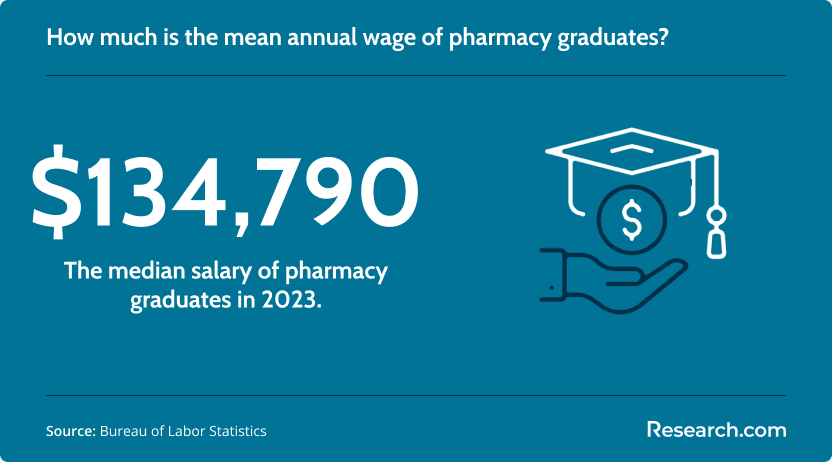
- In 2023, there were 331,700 pharmacists in the U.S. with a mean annual wage of $134, 790.
- The national passage rate for first-time test takers of the North American Pharmacist Licensure Examination was 77.5%.
- In 2024, a total of 10,188 job openings were posted for retail pharmacists.
- The best pharmacy school choice is not simply the cheapest or easiest to enter. Students should weigh accreditation, licensure outcomes, total cost, rotations, support services, and career fit.
- If the PharmD timeline or cost feels too high, pharmacy technician, medical assisting, health information management, LPN, coding, or healthcare administration pathways can provide faster entry into healthcare.
References:
- American Association of Colleges of Pharmacy (2024). National Pharmacist Workforce Study.
- American Journal of Health System Pharmacy (2024). ASHP National Survey of Pharmacy Practice in Hospital Settings: Workforce 2022.
- U.S. Bureau of Labor Statistics (2024). Pharmacists.
Other Things You Should Know About Becoming a Pharmacist
A U.S. pharmacy school should hold accreditation from the Accreditation Council for Pharmacy Education, or ACPE. Graduating from an ACPE-accredited Doctor of Pharmacy program is required for eligibility to sit for the NAPLEX and, in most states, the MPJE for licensure.
Before starting pharmacy school in 2027, you typically need a bachelor's degree in a science-related field, such as biology or chemistry. This forms the prerequisite undergrad education required for Doctor of Pharmacy (Pharm.D.) program entry.
Yes, you can become a pharmacist faster by choosing an accelerated PharmD program. These programs are designed to expedite the path to becoming a licensed pharmacist by compressing the traditional four-year PharmD curriculum into a shorter timeframe.
While a typical PharmD program takes four years to complete, the accelerated program lasts three years. However, accelerated programs have a more intensive curriculum, with fewer breaks and a faster-paced schedule compared to traditional programs.
Students in accelerated programs often have a heavier course load and more frequent classes to cover the same material in a shorter time. Admission into accelerated PharmD programs can be competitive, and these programs may have more stringent entry requirements.
Getting an accelerated program can be advantageous if you want to start practicing and earning sooner. A shorter program may result in reduced overall tuition costs, though this varies by school.
To become a pharmacist in 2027, one typically needs to complete a Doctor of Pharmacy (Pharm.D.) program, which usually requires four years. Before entering the Pharm.D. program, prospective pharmacists need to complete at least two years of undergraduate education, primarily focused on prerequisites like biology and chemistry. Subsequently, passing the North American Pharmacist Licensure Examination (NAPLEX) is necessary for licensure.