
2027 How to Become a Radiologist

Co-Founder and Chief Data Scientist
Becoming a radiologist is a long, competitive path for students who want to combine medicine, diagnostic reasoning, imaging technology, and patient care. It is not a short healthcare credential or a quick technical program: radiologists are physicians who complete college, medical school, residency training, licensing exams, board certification, and often fellowship training before practicing independently. The payoff can be significant, but so are the time, cost, and academic demands.
This guide explains how to become a radiologist in the U.S., what to study before medical school, how residency works, which certifications are required, how radiology differs from radiologic technology, and what salary, subspecialty, technology, and career-growth factors students should weigh before committing to the field. It is written for high school students, college pre-med students, career changers, and healthcare workers comparing radiology with related medical and allied health careers.
Quick Answer: How Long Does It Take to Become a Radiologist?
Becoming a radiologist generally requires a minimum of 13 years of education and clinical training: four years of undergraduate study, four years of medical school, about four years of radiology residency, and, for many physicians, one to two years of fellowship training in a subspecialty. Radiologists must also earn a state medical license and usually complete American Board of Radiology certification.
- In 2021, there were around 27,197 radiologists actively engaged in patient care in the U.S., a number that did not fully meet demand for imaging services.
- Radiologists are highly compensated physicians. The annual mean wage was $353,960 as of 2023, and some salary discussions cite around $360,000 depending on location, practice type, and subspecialty.
- Common subspecialties include diagnostic radiology, interventional radiology, neuroradiology, pediatric radiology, breast imaging, musculoskeletal imaging, and nuclear medicine.
- Step-by-step path to becoming a radiologist
- Medical school prerequisites for future radiologists
- Skills needed for radiology residency
- Radiology subspecialties to compare
- Licensure and board certification requirements
- Radiologist salary and earning factors
- Daily work of a radiologist
- Online study resources for radiology learners
- Radiologist vs. radiologic technologist
- Continuing education for radiologists
- Career advancement options
- Alternative careers in radiology and imaging
- Pre-med education options before medical school
- Administrative credentials, billing, and coding
- Managing the cost of radiology training
- Mentorship and professional guidance
- Professional organizations and networking
- Technology trends changing radiology
- Administrative and leadership skills
- Challenges in modern radiology practice
- Patient communication and engagement
- Diagnostic medical sonography and radiology
- Online education for career development
- Public health and imaging practice
- Interdisciplinary education for radiologists
- Pharmacy collaboration in imaging care
- Why biology matters in radiology
- Research and innovation in radiology
- Legal and ethical responsibilities
- Future trends in radiology practice
Step-by-Step Path to Becoming a Radiologist
Radiologists are medical doctors, not imaging technicians. That distinction matters because the training path is built around physician-level diagnosis, patient safety, treatment planning, and procedural responsibility. Students comparing this route with shorter graduate options should understand that radiology is far longer than 1 year graduate programs.
| Stage | Typical focus | Decision point for students |
| Bachelor’s degree | Complete pre-med coursework in sciences, math, and writing while building clinical and research experience. | Choose a major you can perform well in while still completing medical school prerequisites. |
| Medical school | Earn an MD or DO degree through classroom science, clinical skills, and rotations across medical specialties. | Confirm that you are prepared for competitive admissions, intensive study, and physician-level responsibility. |
| Radiology residency | Train in image interpretation, imaging safety, emergency imaging, procedures, and subspecialty rotations. | Develop speed, accuracy, communication, and judgment under supervision. |
| Fellowship | Gain advanced training in a focused area such as neuroradiology, pediatric radiology, or interventional radiology. | Use fellowship training if you want deeper expertise, academic roles, or a narrower clinical practice. |
| Licensure and certification | Meet state medical licensing rules and complete board certification requirements. | Plan early for exam timelines, documentation, and continuing education. |
- Undergraduate preparation: Most future radiologists complete a four-year bachelor’s degree with required pre-med courses in biology, general and organic chemistry, physics, mathematics, and often English or behavioral science. Biology, chemistry, neuroscience, biomedical sciences, and physics are common majors, but medical schools usually care more about prerequisites, grades, MCAT performance, and readiness than the name of the major. Nursing completion programs, including affordable RN to BSN online programs, can support nursing advancement but usually are not designed as direct pre-med pathways.
- Medical school: Students then complete four years in an MD or DO program. The first part emphasizes anatomy, physiology, pathology, pharmacology, clinical reasoning, and patient interviewing. Later rotations expose students to internal medicine, surgery, pediatrics, emergency medicine, obstetrics and gynecology, psychiatry, and other areas.
- Residency training: After medical school, graduates match into radiology residency, where they learn to interpret X-rays, CT scans, MRIs, ultrasounds, fluoroscopy, and other imaging studies while communicating results to clinicians.
- Optional fellowship: Many radiologists complete one to two additional years in a subspecialty. Fellowship can strengthen expertise and marketability but extends training time.
Medical School Prerequisites for Future Radiologists
The radiology pathway begins with admission to medical school, and that step is difficult. It is more selective and academically demanding than many allied health routes, including the path to become a dental hygienist. Applicants need strong grades, evidence of service, healthcare exposure, persuasive recommendations, and a competitive MCAT score.
- Required coursework: Most medical schools expect biology, chemistry, organic chemistry, physics, mathematics or statistics, and writing-intensive coursework. Some also value psychology, sociology, or behavioral science; students comparing majors can review options such as affordable online psychology degree programs, but they must still confirm medical school prerequisite coverage.
- MCAT preparation: The MCAT evaluates scientific knowledge, critical analysis, and reasoning. It does not guarantee admission, but a weak score can limit options, especially for competitive specialties.
- Clinical exposure: Shadowing physicians, volunteering, working as a medical assistant, or participating in hospital-based roles helps students understand patient care before committing to medicine. Graduate nursing programs, including affordable online MSN programs, also emphasize clinical experience, but they lead to nursing careers rather than physician training.
- Research and service: Radiology is data-heavy and technology-driven, so research experience can be useful. Service work shows maturity and commitment to patients beyond academic performance.
- Letters of recommendation: Faculty, physicians, and supervisors should be able to describe the applicant’s reliability, ethics, communication, resilience, and readiness for medical training.
Medical school admission is highly competitive. For the 2023-24 academic year, more than 50,000 applicants submitted approximately 966,947 applications to U.S. medical schools, according to AAMC applicant and matriculant data. The same admissions cycle resulted in only over 22,000 matriculants, which means applicants should build a strong academic and experiential profile early.
Skills Needed to Succeed in a Radiology Residency
Radiology residency requires more than recognizing anatomy on a screen. Residents must interpret complex studies quickly, communicate clinically useful conclusions, handle uncertainty, and know when urgent findings require immediate escalation.
| Skill | Why it matters in radiology | How students can build it early |
| Attention to detail | Small imaging findings can change diagnosis, staging, or treatment. | Practice systematic review methods in anatomy, pathology, and case-based learning. |
| Clinical reasoning | Images must be interpreted in the context of symptoms, lab results, and patient history. | Take clinical electives, shadow physicians, and ask how imaging changes management. |
| Technology fluency | Radiologists work with CT, MRI, ultrasound, nuclear imaging, PACS, reporting tools, and AI-enabled systems. | Learn imaging basics, informatics concepts, and the strengths and limits of each modality. |
| Communication | Reports must be precise, timely, and useful to referring clinicians; some findings require direct calls. | Develop concise writing, presentation skills, and patient-centered language. |
| Time management | Emergency cases, high study volumes, and call shifts require prioritization under pressure. | Build disciplined study routines and learn to work accurately without unnecessary delay. |
| Professional judgment | Radiologists must balance diagnostic confidence, limitations, radiation exposure, and patient safety. | Study ethics, evidence-based medicine, and quality improvement. |
Leadership also becomes important as radiologists supervise teams, help set protocols, participate in quality improvement, and sometimes manage imaging departments. Students more interested in the business and operations side of healthcare may want to compare clinical training with affordable online healthcare management degree options.
Radiology Subspecialties to Compare
Radiology is broad. Some radiologists spend most of their time interpreting diagnostic studies, while others perform image-guided procedures or focus on a specific body system, disease type, or patient population.
| Subspecialty | Primary focus | Best fit for physicians who enjoy |
| Diagnostic radiology | Interpreting X-rays, CT scans, MRIs, ultrasounds, and other imaging studies. | Broad diagnostic problem-solving across many diseases and body systems. |
| Interventional radiology | Performing minimally invasive image-guided procedures such as biopsies, stent placement, embolization, and tumor treatments. | Procedures, direct patient care, and fast-paced clinical decision-making. |
| Neuroradiology | Imaging of the brain, spine, head, neck, and nervous system. | Neurology, neurosurgery collaboration, and high-detail anatomy. |
| Pediatric radiology | Imaging infants, children, and adolescents with attention to age-specific conditions and radiation safety. | Children’s healthcare, communication with families, and pediatric disease patterns. |
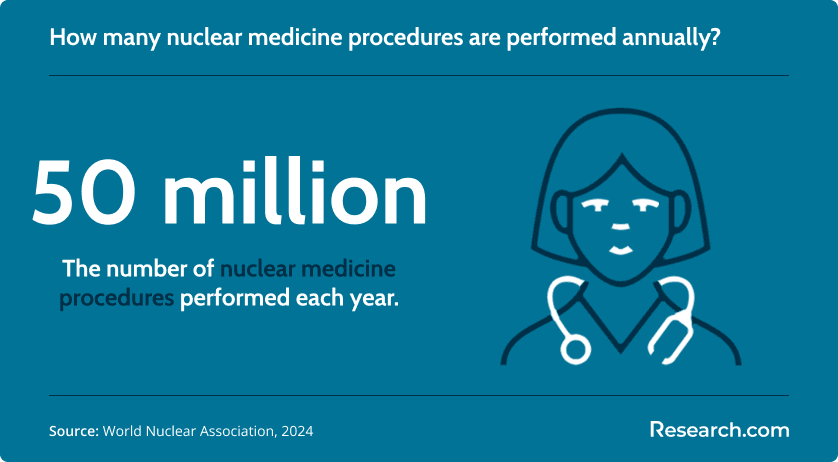
| Nuclear medicine | Using radioactive materials for diagnosis and treatment, including PET and SPECT imaging. | Functional imaging, oncology, physiology, and theranostics. |
| Breast imaging | Mammography, breast ultrasound, breast MRI, and image-guided breast procedures. | Cancer detection, screening programs, and patient-facing diagnostic work. |
| Musculoskeletal imaging | Imaging bones, joints, soft tissues, sports injuries, arthritis, and tumors. | Orthopedics, sports medicine, anatomy, and procedure-related imaging. |
Licensure and Board Certification Requirements
Radiologists must meet physician licensing and certification standards before practicing independently. This training route is longer than the timeline described in many other healthcare career guides, including how long it takes to become a pharmacist.
- State medical license: Radiologists must hold a medical license in the state where they practice. Requirements vary by state, but physicians generally complete medical school, postgraduate training, and licensing exams such as the USMLE for MDs or COMLEX for DOs.
- American Board of Radiology certification: Many radiologists pursue certification through the American Board of Radiology. The process assesses knowledge of clinical radiology, physics, imaging safety, and professional practice.
- Maintenance of Certification: Board-certified radiologists must keep their knowledge current through ongoing learning, practice improvement, and certification requirements. Some physicians supplement CME with structured academic options such as online graduate certificate programs, although any activity must match the certifying body’s requirements to count.
- Hospital credentialing and privileges: Even with a license and board certification, radiologists usually need hospital or health-system approval to interpret studies or perform procedures in a specific setting.
Radiologist Salary and Earning Factors
Radiology is one of the higher-paying physician specialties. The annual mean wage for radiologists was $353,960 as of 2023. Data from the Medical Group Management Association also showed that the average annual salary for a radiologist increased by 7.48% between 2019 and 2023.
Salary figures should not be treated as guaranteed outcomes. Compensation varies by employer, region, call burden, partnership structure, productivity model, fellowship training, and clinical focus.
- Location: Pay may differ between rural hospitals, academic centers, urban health systems, private groups, and teleradiology practices.
- Subspecialty: Procedure-heavy areas such as interventional radiology may have different compensation patterns than primarily diagnostic roles.
- Experience: Newly trained radiologists, senior partners, academic faculty, and department leaders may have very different earnings.
- Work model: Call coverage, overnight shifts, remote reading, and volume expectations can affect pay and lifestyle.
What Radiologists Do Day to Day
A radiologist’s work centers on answering clinical questions through imaging. The daily schedule can vary widely by subspecialty, but most roles combine interpretation, consultation, reporting, safety oversight, and ongoing learning.
- Interpret imaging studies: Radiologists review X-rays, CT scans, MRIs, ultrasounds, mammograms, fluoroscopic studies, nuclear medicine exams, and other images to identify disease, injury, or treatment response.
- Create diagnostic reports: They document findings, impressions, recommendations, and urgent alerts in the patient record. Clear reporting is essential, and some workflows may involve professionals trained in medical transcription or speech-recognition editing.
- Consult with other physicians: Radiologists discuss findings with emergency physicians, surgeons, oncologists, neurologists, pediatricians, and primary care clinicians to guide next steps.
- Perform image-guided procedures: Interventional radiologists and some diagnostic radiologists perform biopsies, drainages, vascular procedures, ablations, and other minimally invasive treatments.
- Manage safety and protocols: Radiologists help ensure appropriate imaging use, contrast safety, radiation dose management, and quality control.
- Stay current: Imaging technology, guidelines, AI tools, and treatment pathways change, so continuous education is part of the job.
Online Resources for Studying Radiology
Online resources cannot replace medical school, residency, or supervised clinical training, but they can help students and residents strengthen anatomy, case review, differential diagnosis, and imaging pattern recognition.
- Radiopaedia: A widely used educational library with radiology cases, articles, quizzes, and teaching files.
- AuntMinnie: A radiology news and professional community site with case discussions, industry updates, and forums.
- LearningRadiology.com: A beginner-friendly source for image examples, cases, and foundational explanations.
- StatDX: A subscription-based reference commonly used for differential diagnosis, imaging features, and case comparison.
- Radiology Resident Core Curriculum: A structured learning resource from the American College of Radiology designed around resident education needs.
Students should use online tools to supplement formal instruction, not to bypass accredited medical training or supervised interpretation experience.
Radiologist vs. Radiologic Technologist: Key Differences
Radiologists and radiologic technologists both work in medical imaging, but they do different jobs and require very different levels of education. This is one of the most important distinctions for students deciding how much time and training they want to invest.
| Category | Radiologist | Radiologic technologist |
| Professional role | Physician who interprets imaging, diagnoses conditions, consults with clinicians, and may perform procedures. | Allied health professional who operates imaging equipment and prepares patients for exams. |
| Education | Medical school, residency, and often fellowship after a bachelor’s degree. | Typically an associate degree or bachelor’s degree in radiologic technology. |
| Scope of practice | Can diagnose, report findings, recommend imaging follow-up, and perform selected interventions. | Performs imaging exams but does not independently diagnose or interpret studies. |
| Salary comparison | Radiologists earn far more because they are physicians; the original comparison described pay as nearly $400,000 for radiologists. | The average salary for a radiologic technologist is around $65,140 per year. |
| Best fit | Students committed to becoming physicians and completing long training. | Students who want a faster entry into imaging-focused patient care. |
Continuing Education Requirements for Radiologists
Radiology changes quickly, so continuing education is not optional for long-term competence. Radiologists must maintain medical licensure, meet hospital credentialing standards, and, if board-certified, satisfy certification maintenance requirements.
- Maintenance of Certification: The American Board of Radiology’s Maintenance of Certification process includes lifelong learning, self-assessment, and ongoing professional requirements. In one reported group of 20,354 diagnostic radiologists, 11,479 (56.4%) were actively participating in the MOC program some time ago.
- Continuing Medical Education credits: Radiologists earn CME through conferences, online modules, journal-based learning, quality-improvement activities, and specialty courses.
- Subspecialty updates: Physicians in areas such as interventional radiology, nuclear medicine, breast imaging, and neuroradiology often need focused training on new devices, protocols, safety standards, and clinical guidelines.
- Workshops and professional meetings: Conferences help radiologists learn new imaging techniques, compare practice standards, and build referral and research networks.
Career Advancement Options for Radiologists
Radiologists can advance by deepening clinical expertise, moving into leadership, teaching, conducting research, building teleradiology models, or shaping imaging policy and quality standards.
- Subspecialty practice: Fellowships in neuroradiology, breast imaging, pediatric radiology, interventional radiology, nuclear medicine, or musculoskeletal imaging can position physicians for specialized roles.
- Department leadership: Experienced radiologists may become section chiefs, medical directors, vice chairs, or chiefs of radiology, with responsibilities in staffing, quality, budgets, workflow, and strategy.
- Academic medicine: Faculty radiologists teach residents and medical students, publish research, present at conferences, and help develop clinical guidelines.
- Teleradiology and remote practice: Remote reading has expanded options for different schedules and practice models, though it also raises questions about workload, quality oversight, licensing, and team communication.
- Healthcare operations: Radiologists with administrative interest may work on imaging utilization, AI implementation, safety programs, reimbursement strategy, or service-line growth.
Alternative Careers for People Interested in Radiology
Not everyone interested in imaging needs to become a radiologist. If the 13-year physician route feels too long, too expensive, or too academically competitive, allied health careers can provide a more direct path into diagnostic imaging.
- Radiologic technologist: Operates X-ray and other imaging equipment under clinical protocols. Students looking for a shorter imaging route can review the fastest way to become a radiology tech.
- MRI technologist: Specializes in MRI scanning, patient screening, safety procedures, and image acquisition.
- CT technologist: Performs CT exams and follows contrast, radiation safety, and positioning protocols.
- Diagnostic medical sonographer: Uses ultrasound to image organs, vessels, pregnancies, and soft tissues.
- Nuclear medicine technologist: Works with radiopharmaceuticals and specialized imaging equipment.
- Radiology administrator: Manages imaging department scheduling, compliance, staffing, billing processes, and operations.
Educational Options Before Medical School
Future radiologists do not need to major in radiology as undergraduates. The priority is completing medical school prerequisites, earning strong grades, preparing for the MCAT, and gaining meaningful clinical exposure. However, some students benefit from early exposure to imaging through related programs or healthcare work.
- Pre-med bachelor’s degree: A science-heavy major such as biology, chemistry, physics, neuroscience, or biomedical sciences can align well with medical school prerequisites.
- Radiologic technology program: A radiology tech background can provide practical familiarity with imaging equipment and patient positioning, but it does not replace medical school. Students comparing cost-conscious options may explore online radiology tech programs.
- Clinical employment: Working as a medical assistant, scribe, EMT, research assistant, or imaging aide can help students understand healthcare systems and patient care.
- Research experience: Imaging research, AI projects, anatomy labs, oncology studies, or biomedical engineering work can strengthen a future radiology profile.
The best pre-med route is the one that allows a student to meet prerequisites, perform well academically, and build a realistic understanding of physician work.
Can Medical Billing and Coding Knowledge Help Radiologists?
Radiologists do not need to become billers or coders to practice medicine, but understanding documentation, coding logic, payer rules, and reimbursement workflows can help physicians lead practices more effectively. This knowledge is especially useful for radiologists involved in private practice, utilization review, compliance, or department administration.
- Better documentation can reduce ambiguity in reports and support appropriate billing.
- Knowledge of coding can help radiologists understand why certain studies, procedures, or modifiers require precise documentation.
- Administrative literacy can improve communication with practice managers, compliance officers, and revenue-cycle teams.
Physicians or imaging professionals who want a structured introduction to this area can compare options such as affordable online medical billing and coding courses.
How to Manage the Financial Challenges of Radiology Training
The radiology path can be financially demanding because it includes undergraduate education, medical school tuition, exam fees, residency application costs, relocation, and years of delayed full physician earnings. Students should plan for cost as carefully as they plan for academics.
| Cost issue | Why it matters | Practical strategy |
| Undergraduate debt | Debt before medical school can compound later financial pressure. | Compare scholarships, in-state public universities, transfer credits, and lower-cost prerequisite options. |
| Medical school cost | Medical training is expensive and often requires loans. | Ask schools about total cost of attendance, institutional aid, service scholarships, and repayment support. |
| Application expenses | MCAT preparation, applications, interviews, and residency applications add up. | Budget early and use fee assistance programs when eligible. |
| Supplemental training | Pre-med students sometimes add certificates or healthcare courses to gain exposure. | Choose only programs that support a clear goal; for example, medical assistant classes online with financial aid may help some students gain healthcare experience but are not required for radiology. |
| Loan repayment | Repayment terms can shape early-career choices. | Understand federal repayment options, employer benefits, and contract terms before signing. |
Why Mentorship Matters in Radiology
Mentorship helps students and residents make better decisions at every stage: choosing electives, preparing for the match, selecting research projects, identifying fellowship options, and evaluating job offers. A good mentor also helps learners understand lifestyle, call expectations, burnout risk, and professional reputation.
- Before medical school: Shadowing and advising can clarify whether radiology fits your strengths.
- During medical school: Radiology mentors can guide electives, research, residency applications, and letters of recommendation.
- During residency: Faculty mentors can help residents choose fellowships, improve reporting, and build procedural or research skills.
- After training: Senior colleagues can advise on contracts, partnership tracks, academic promotion, leadership, and work-life balance.
Some radiologists also benefit from understanding other clinical fields. For example, reviewing the structure of an online pharmacy degree can help physicians compare how different health professions approach medication safety and patient management.
Professional Organizations and Networking in Radiology
Professional organizations help radiologists stay current, find mentors, attend conferences, participate in advocacy, and access educational resources. Networking is not just about career mobility; it also supports quality improvement, research collaboration, and shared standards across imaging practice.
- Use conferences to learn new clinical protocols, AI applications, safety guidance, and subspecialty updates.
- Join committees or interest groups if you want leadership, policy, or academic exposure.
- Build relationships with technologists, physicists, administrators, referring physicians, and other specialists.
- Compare interprofessional training models, including resources related to online pharmacy schools, when exploring broader healthcare collaboration.
Technology Trends Changing Radiology
Radiology is one of the medical specialties most affected by digital transformation. New tools can improve workflow and diagnostic support, but they also require careful validation, clinician oversight, patient-safety review, and ethical implementation.
Artificial Intelligence and Machine Learning
AI tools are increasingly used to help prioritize worklists, detect patterns, flag urgent findings, support measurements, and reduce repetitive tasks. AI does not remove the need for radiologists; instead, it changes the skills radiologists need, including model oversight, error recognition, workflow design, and communication of uncertainty.
3D and 4D Imaging
Advanced visualization can help clinicians understand anatomy, motion, surgical planning, and disease progression more clearly. These tools are especially valuable when complex anatomy or procedure planning requires more than standard two-dimensional views.
Hybrid Imaging
Hybrid modalities such as PET-MRI and SPECT-CT combine functional and anatomical information. This can be valuable in oncology, neurology, cardiology, and other areas where structure and metabolism both matter.
Teleradiology and Distributed Reading
Remote interpretation can expand coverage, support overnight reads, and help underserved hospitals access specialist expertise. It also requires strong quality systems, secure data handling, state licensure awareness, and communication processes.
Radiologists who want to lead implementation of new systems may benefit from management education, such as a one year online master’s in healthcare administration, particularly if their work includes operations, budgeting, or technology adoption.
How Radiologists Can Build Administrative and Leadership Skills
Many radiologists eventually take on responsibilities beyond interpretation. Leadership roles may involve scheduling, workflow redesign, AI procurement, quality assurance, patient safety, resident education, staffing, contracts, and service-line growth.
- Learn healthcare finance: Understand reimbursement, payer rules, productivity metrics, capital equipment costs, and staffing constraints.
- Study operations: Imaging departments depend on throughput, protocol standardization, equipment uptime, and team coordination.
- Develop people-management skills: Radiologists often work with technologists, nurses, physicists, administrators, and other physicians.
- Build communication habits: Leaders need to explain complex imaging and operational decisions to both clinical and nonclinical audiences.
Students and physicians considering administrative growth can compare radiology leadership with high paying medical administrative jobs to understand how clinical and management careers overlap.
Challenges Facing Radiologists Today
Radiology can be intellectually rewarding, but the field has real pressures. Students should understand these challenges before choosing the specialty.
- High imaging volume: Demand for imaging can create heavy reading lists, rapid turnaround expectations, and fatigue risk.
- Burnout concerns: Long hours, overnight call, productivity metrics, and constant screen-based work can affect well-being.
- Technology adaptation: Radiologists must continually evaluate new imaging tools, AI systems, and reporting platforms.
- Regulatory and reimbursement complexity: Compliance, prior authorization, coding, and payer policies can influence practice operations.
- Misunderstanding of the role: Some patients may not realize that radiologists are physicians who guide diagnosis and treatment, even when they are not always the face-to-face clinician.
Students who want to enter imaging but not physician training can compare allied health options, including radiology tech programs that may be easier to get into.
How Radiologists Improve Patient Engagement
Radiology has traditionally been viewed as a behind-the-scenes specialty, but patient communication is becoming more important. Patients increasingly access imaging reports through portals, ask questions about findings, and want clearer explanations of next steps.
- Use plain-language summaries when appropriate and permitted by workflow.
- Coordinate with referring clinicians so patients receive consistent messages.
- Improve reports by making the impression section clear, actionable, and clinically relevant.
- Support direct consultation models in breast imaging, interventional radiology, and other patient-facing areas.
- Use administrative training, such as an accelerated online bachelor's degree in healthcare administration, only when it aligns with a broader leadership or operations goal.
How Diagnostic Medical Sonography Relates to Radiology
Ultrasound is an important imaging modality because it is real-time, portable, and does not use ionizing radiation. Radiologists often interpret ultrasound studies and may work closely with sonographers who acquire the images.
- Sonography can support obstetric, abdominal, vascular, cardiac, breast, and musculoskeletal evaluation.
- Radiologists need to understand ultrasound physics, artifacts, anatomy, and limitations.
- Sonographers and radiologists collaborate closely because image quality depends on technique, patient factors, and the clinical question.
Students interested in this allied health route can review best sonography schools to compare program options.
How Online Education Can Support Radiology Career Development
Online education can help radiologists and imaging professionals keep pace with technology, leadership, informatics, public health, and administrative changes. It cannot replace required in-person clinical training for physicians, but it can supplement professional development.
- Use online CME for flexible updates on imaging protocols and guidelines.
- Consider healthcare administration or informatics coursework if you want leadership responsibilities.
- Use online anatomy, physics, and case-review tools to reinforce formal training.
- Compare legitimate online options carefully; a guide to medical degrees you can earn online can help clarify which credentials are realistic online and which require clinical placement.
How Public Health Connects With Radiology
Radiology supports public health through screening, early detection, trauma systems, cancer care, infectious disease evaluation, and population-level imaging access. Imaging departments also make decisions that affect radiation safety, equity, resource use, and preventive care.
- Screening programs rely on imaging quality, access, follow-up systems, and patient education.
- Population health data can help departments identify gaps in care or delayed diagnosis.
- Public health training can support leaders who work on imaging access, policy, or community screening initiatives.
Radiologists with an interest in population health may compare clinical leadership training with an affordable online MPH.
Interdisciplinary Education That Can Strengthen Radiology Practice
Radiology sits at the intersection of anatomy, pathology, physics, computer science, engineering, biology, and clinical medicine. Interdisciplinary learning can help radiologists understand new tools and collaborate across specialties.
- Biomedical informatics: Useful for AI, workflow analytics, structured reporting, and clinical decision support.
- Molecular biology: Helpful for oncology imaging, nuclear medicine, and precision medicine.
- Healthcare technology: Supports evaluation of imaging platforms, data systems, and automation.
- Foundational biology: Students who need flexible science preparation can compare options such as the fastest biology online degree, while confirming that any online lab science meets medical school requirements.
How Pharmacy Collaboration Can Improve Radiology Practice
Radiologists frequently make decisions involving contrast agents, radiopharmaceuticals, sedation support, medication allergies, kidney function, and drug-related imaging findings. Collaboration with pharmacists can improve safety and protocol design.
- Pharmacists can support contrast reaction policies and medication reconciliation.
- Nuclear medicine teams rely on safe handling and appropriate use of radioactive materials.
- Interventional radiology workflows may involve anticoagulation management, antibiotics, analgesia, and sedation coordination.
- Interprofessional education through resources such as colleges with PharmD programs can help clinicians understand how pharmacy training approaches medication safety.
Why Foundational Biology Matters in Radiology
Radiologists interpret images of disease processes, not just anatomy. A strong biology foundation helps physicians understand inflammation, cancer, infection, vascular disease, congenital conditions, degeneration, and treatment response.
- Cellular biology helps explain how disease develops and spreads.
- Physiology helps radiologists interpret functional and dynamic imaging.
- Pathology knowledge improves differential diagnosis and pattern recognition.
- Students building science preparation can explore an online biology bachelor degree, but should confirm medical school laboratory and prerequisite policies before enrolling.
Research and Innovation in Radiology
Research drives better imaging protocols, lower radiation exposure, improved diagnostic accuracy, safer procedures, and more effective AI tools. Radiologists who participate in research can shape how new technologies enter clinical practice.
- Clinical research: Tests imaging approaches for diagnosis, staging, treatment planning, and follow-up.
- AI and informatics research: Evaluates algorithms, workflow tools, structured reporting, and data quality.
- Safety research: Focuses on contrast use, radiation dose, procedural risk, and quality improvement.
- Education research: Improves how residents and medical students learn imaging interpretation.
Professionals interested in emerging imaging modalities may also review allied health pathways such as an online ultrasound tech school.
Legal and Ethical Responsibilities in Radiology
Radiologists handle sensitive health information, make high-stakes diagnostic judgments, and influence treatment decisions. Legal and ethical practice requires accuracy, privacy protection, informed consent when applicable, and transparent communication.
- Patient privacy: Imaging data and reports must be protected under HIPAA and relevant local rules.
- Informed consent: Procedures, contrast use, sedation, and interventional treatments may require clear explanation of risks and alternatives.
- Diagnostic responsibility: Radiologists must use appropriate protocols, communicate urgent findings, and document limitations.
- AI ethics: Physicians should understand bias, validation, oversight, and accountability when AI tools influence workflow.
- Professional boundaries: Accurate reporting, respectful communication, and conflict-of-interest awareness are essential.
Students building broader patient-care awareness may compare related allied health training, including the fastest medical assistant program, though this is not a substitute for physician education.
Future Trends That May Redefine Radiology Practice
Radiology will likely continue shifting toward more integrated, data-driven, and team-based care. The most successful radiologists will combine diagnostic excellence with technology literacy, communication skills, and operational awareness.
- AI-supported workflows: Tools may help triage urgent exams, automate measurements, and reduce repetitive work, while radiologists remain responsible for clinical interpretation.
- More remote and hybrid practice: Teleradiology can improve coverage but requires strong quality controls and licensing awareness.
- Greater emphasis on patient-facing communication: Patient portals and direct-access reports make clarity more important.
- Hybrid imaging and molecular imaging growth: Functional and anatomical data will continue shaping oncology and complex diagnosis.
- Interprofessional collaboration: Radiologists will work more closely with clinicians, technologists, pharmacists, physicists, informaticists, and administrators. Comparing specialized training routes, such as pharmacist school requirements, can help students understand how rigorous healthcare professions differ.
Common Mistakes to Avoid When Planning a Radiology Career
| Mistake | Why it can hurt you | Better approach |
| Assuming radiology is a quick imaging credential | Radiologists are physicians, and the training path is much longer than allied health imaging programs. | Decide early whether you want to be a physician or an imaging technologist. |
| Choosing a major without checking prerequisites | A major may not automatically include required labs or courses for medical school. | Map every target medical school’s prerequisites before registering for classes. |
| Focusing only on salary | High earnings come after years of training, debt, exams, residency, and responsibility. | Evaluate lifestyle, burnout risk, debt, work model, and interest in diagnostic medicine. |
| Ignoring accreditation and licensure rules | Unrecognized programs may not support medical school, certification, or employment goals. | Verify institutional accreditation, medical school recognition, and state licensing requirements. |
| Assuming AI will replace radiologists | AI is changing workflows, but clinical judgment, safety oversight, and accountability remain central. | Build AI literacy and learn how to evaluate tools critically. |
| Using rankings as the only decision factor | A highly ranked program may not be affordable, supportive, or aligned with your goals. | Compare outcomes, mentorship, cost, location, match support, and clinical exposure. |
Questions to Ask Before Choosing the Radiology Path
- Am I prepared for at least 13 years of education and training before independent practice?
- Do I want to become a physician, or would an allied health imaging career fit my goals better?
- Can I handle sustained academic competition, high-stakes exams, and residency training?
- Do I enjoy anatomy, pathology, technology, pattern recognition, and diagnostic uncertainty?
- How will I finance undergraduate study, medical school, applications, exams, and relocation?
- Which practice model appeals to me: academic medicine, private practice, hospital employment, teleradiology, interventional care, or leadership?
- Am I comfortable with continuous learning as imaging technology and AI tools evolve?
References
- American Medical Association. MCAT scores and medical school success: Do they correlate? American Medical Association. Retrieved September 2, 2024.
- Medicus Healthcare Solutions. Navigating the radiologist shortage: Strategies for meeting the rising demand in healthcare. Medicus Healthcare Solutions. Retrieved September 2, 2024.
- Rawson, J. V., Smetherman, D., & Rubin, E. Short-term strategies for augmenting the national radiologist workforce. American Journal of Roentgenology, 222(6). https://doi.org/10.2214/ajr.24.30920
- Rosenkrantz, A. B., Berland, L. L., Heitkamp, D. E., & Duszak, R. Diagnostic radiologists' participation in the American board of radiology maintenance of certification program. American Journal of Roentgenology, 213(6), 1284-1290. https://doi.org/10.2214/ajr.19.21724
- U.S. Bureau of Labor Statistics. Occupational Employment and Wages, May 2023: Radiologists. U.S. Bureau of Labor Statistics. Retrieved September 2, 2024.
- World Nuclear Association. Radioisotopes in medicine. World Nuclear Association. Retrieved September 2, 2024.
Key Insights
- Radiologists are physicians, so the path is long: students should expect at least 13 years of education and training before independent practice, with fellowship adding more time for many subspecialties.
- The field offers strong compensation, including an annual mean wage of $353,960 as of 2023, but salary should be weighed against debt, training length, workload, call expectations, and burnout risk.
- Students who like imaging but do not want medical school should compare allied health careers such as radiologic technologist, MRI technologist, CT technologist, sonographer, or nuclear medicine technologist.
- Medical school preparation matters early. Strong science grades, MCAT performance, clinical exposure, service, research, and mentorship all influence competitiveness.
- AI, teleradiology, hybrid imaging, and patient portals are changing radiology, but they increase the need for radiologists who can combine diagnostic judgment with technology oversight and clear communication.
- The best radiology career decision is not based on salary alone. It should reflect your tolerance for long training, your interest in diagnostic medicine, your financial plan, and the kind of clinical role you want to hold.
Other Things You Should Know About How to Become a Radiologist
Aspiring radiologists in 2027 should pursue an undergraduate degree in a science-related field, such as Biology or Chemistry. This provides the foundational knowledge needed for medical school, which is the next step in the path to becoming a radiologist.
After medical school, radiology training usually requires a one-year internship plus four years of diagnostic radiology residency, for a total of five postgraduate years. Some doctors then complete an additional one- or two-year fellowship in a subspecialty such as neuroradiology or interventional radiology.


