2027 How to Become an Urban Planner in Georgia

Co-Founder and Chief Data Scientist
Becoming an urban planner in Georgia is a practical career choice for people who want to shape how communities grow, move, build housing, protect natural resources, and use land responsibly. The decision matters because Georgia includes fast-growing metro areas, historic towns, coastal communities, rural counties, and transportation corridors that all face different planning pressures. With 74.1% of Georgia’s population living in urban areas, planners play a visible role in decisions about development, infrastructure, affordability, resilience, and quality of life.
This guide explains how to become an urban planner in Georgia, including the education usually expected, useful specializations, certification options, career timelines, salaries, internships, scholarships, and professional organizations. It is designed for students comparing degree paths, career changers evaluating whether planning is worth the investment, and early-career professionals deciding how to build stronger credentials.
Quick Answer: How do you become an urban planner in Georgia?
Most urban planners in Georgia begin with a bachelor’s degree in urban planning or a related field, gain internship or field experience, and often complete a master’s degree in planning or a closely aligned discipline. Georgia does not require a separate state license for urban planners, but many professionals pursue American Institute of Certified Planners certification to strengthen their qualifications. The full path commonly takes six to eight years when a bachelor’s degree, graduate study, internships, and optional certification preparation are included.
Key Things to Know About Becoming an Urban Planner in Georgia
- Georgia’s total annual expenditures average $66,254, and housing costs are nearly 22% lower than the national average.
- Urban planners in Georgia earn an average annual salary of $63,357, or $30 per hour.
- Projected employment for urban planners in Georgia by 2030 is 1,050 employees.
- Urban and regional planners in Georgia have a projected growth rate of 13% through 2032.
- Georgia is projected to have 100 annual job openings for urban planners through 2032.
| Decision Point | What It Means in Georgia | Why It Matters |
| Typical education | Bachelor’s degree plus, often, a master’s degree | Many planning roles require technical, policy, design, and public engagement skills. |
| State licensure | No separate Georgia-specific urban planner license | Candidates can focus on education, experience, and national credentials. |
| Optional credential | American Institute of Certified Planners certification | AICP can signal professional competence and commitment to the field. |
| Common employers | Local governments, regional agencies, transportation departments, nonprofits, consulting firms, and design firms | Planning work exists across public, private, and nonprofit settings. |
| Best fit | People who enjoy research, policy, maps, public meetings, writing, community problem-solving, and long-term projects | The work is collaborative and analytical, not only design-focused. |
- Education requirements for urban planners in Georgia
- Urban planning specializations available in Georgia
- Licensing and certification requirements for Georgia planners
- How long it takes to become an urban planner in Georgia
- Urban planner salaries in Georgia
- Career options for urban planners in Georgia
- Typical responsibilities of Georgia urban planners
- How business education can support a planning career
- Technology trends changing urban planning work
- Whether an MBA can help urban planners advance
- How interdisciplinary expertise improves planning outcomes
- Legal and regulatory issues in Georgia planning projects
- Continuing education and professional development
- Using interdisciplinary skills to expand career options
- Connecting urban planning with social initiatives
- Why financial knowledge matters in planning projects
- Diversity, inclusion, and equitable planning
- Working with social services on community projects
- Scholarships for urban planning students in Georgia
- Internships and practical experiences in Georgia
- Professional organizations for Georgia urban plannersCareer-building checklist
What are the education requirements for urban planners in Georgia?
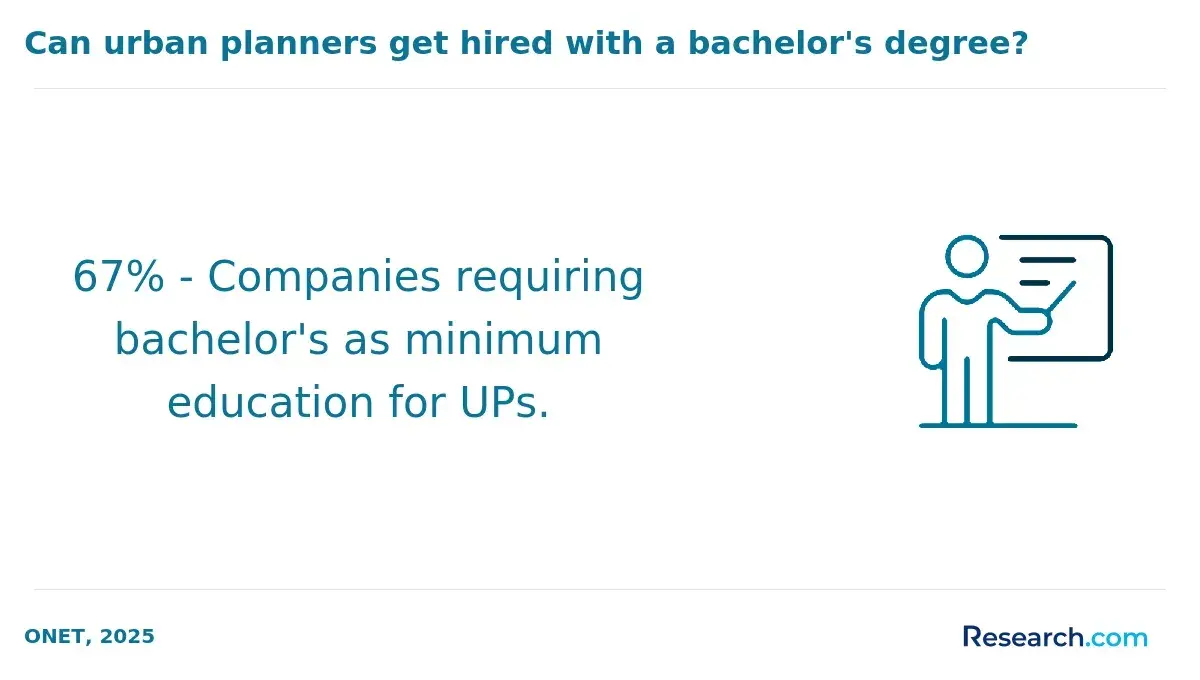
Urban planning jobs in Georgia usually require formal education because the work combines land-use policy, public engagement, data analysis, environmental review, transportation systems, and long-range community development. A bachelor’s degree can prepare candidates for entry-level planning support roles, while many professional planner positions prefer or require graduate-level training.
- Bachelor’s degree: A four-year degree is the usual starting point for people entering the field. Although Georgia has a limited number of Planning Accreditation Board-accredited options, schools such as the University of Georgia and Georgia Tech offer relevant academic pathways that can prepare students for planning careers.
- Relevant major: Strong preparation may come from urban planning, geography, environmental science, public administration, architecture, landscape architecture, public policy, sociology, or economics. The best major is one that helps you understand how people, infrastructure, regulations, land, and the environment interact.
- Core coursework: Students should look for classes in land-use planning, zoning, urban design, environmental policy, transportation planning, housing, statistics, research methods, GIS, community engagement, and public finance.
- Graduate education: Many candidates pursue a master’s degree in city and regional planning, urban planning, public administration, environmental planning, or a related field to qualify for more advanced roles and build a professional portfolio.
- Applied experience: Internships, studios, capstone projects, community mapping work, and field research help students translate classroom knowledge into practical planning skills.
| Education Path | Best For | Typical Advantage | Possible Limitation |
| Bachelor’s degree in planning or a related field | Students seeking entry-level planning assistant, GIS, research, or community development roles | Faster route into the workforce | May not be enough for competitive planner roles that prefer graduate training |
| Master’s degree in city, regional, or urban planning | Candidates pursuing professional planning, policy, transportation, environmental, or leadership roles | Builds technical depth, portfolio experience, and professional credibility | Requires additional time and tuition investment |
| Related graduate degree | Career changers from public administration, sustainability, real estate, design, engineering, or policy | Can support specialized planning work | May require extra planning coursework or experience to compete for planner roles |
| Certificate or continuing education | Working professionals who need GIS, zoning, transportation, sustainability, or community engagement skills | Can fill targeted skill gaps | Usually does not replace a degree for roles requiring formal education |
How to choose the right planning program
- Check whether the curriculum includes GIS, planning law, land-use policy, community engagement, and a studio or capstone project.
- Ask where students complete internships and whether those placements are in Georgia agencies, local governments, planning firms, or regional organizations.
- Review faculty expertise in areas such as transportation, environmental planning, housing, urban design, or economic development.
- Compare tuition, fees, assistantships, scholarships, and commuting or relocation costs instead of looking only at published tuition.
- Look for portfolio-building opportunities because employers often want evidence that you can write reports, analyze data, prepare maps, and present recommendations.
What urban planning specializations are available in Georgia?
Georgia’s planning needs are not limited to one type of community. Atlanta’s growth creates transportation, housing, redevelopment, and infrastructure challenges, while smaller cities and rural counties may need help with economic development, conservation, downtown revitalization, hazard mitigation, or land-use updates. Choosing a specialization can make your education and early work experience more targeted.
- Transportation planning: Transportation planners study travel patterns, congestion, road safety, public transit, pedestrian access, and regional mobility. This specialization is especially relevant in large metropolitan areas where commuting, freight movement, transit access, and highway systems affect economic activity and daily life.
- Environmental planning: Environmental planners evaluate how land development affects water, ecosystems, conservation priorities, flood risk, and environmental compliance. This path suits students who want to connect planning with sustainability, environmental policy, and responsible growth.
- Community development: Community development planners work on neighborhood revitalization, affordable housing, public spaces, local services, and equitable investment. This specialization is useful for people who want to work closely with residents, nonprofits, housing agencies, and local governments.
- Economic development planning: Economic development planners focus on business attraction, job creation, redevelopment strategies, incentives, market conditions, and place-based investment. In regions designated as Job Tax Credit Tier 1, this work can be tied directly to local revitalization goals.
- Urban design: Urban design connects planning with the physical form of streets, public spaces, buildings, and districts. It can be a strong fit for students interested in design, walkability, streetscapes, placemaking, and community identity.
- Historic preservation planning: Historic preservation planners help communities manage growth while protecting historic buildings, districts, and cultural resources. This can be especially relevant in Georgia cities and towns with significant architectural and cultural heritage.
| Specialization | Good Fit If You Like | Common Work Products |
| Transportation planning | Mobility, transit, traffic, safety, infrastructure, and regional systems | Transportation studies, corridor plans, transit recommendations, traffic analyses |
| Environmental planning | Sustainability, conservation, environmental policy, and land stewardship | Environmental reviews, sustainability plans, impact assessments, resilience strategies |
| Community development | Housing, equity, neighborhood engagement, and local quality of life | Neighborhood plans, housing strategies, public meeting summaries, grant support |
| Economic development planning | Local economies, redevelopment, business districts, and job creation | Market analyses, incentive strategies, redevelopment plans, site evaluations |
| Urban design | Streets, public spaces, design guidelines, and the built environment | Site concepts, design guidelines, streetscape plans, visualization materials |
Are there licensing requirements for urban planners in Georgia?
Georgia does not have a separate state licensure or registration requirement for urban planners. That means you do not need a Georgia-issued planning license to work in the profession. However, credentials still matter. Employers may look closely at your degree, internship history, GIS skills, writing samples, project experience, and professional certification.
The most recognized planning credential is certification through the American Institute of Certified Planners. To pursue it, candidates register with AICP, pass the AICP exam, meet professional planning experience requirements, and maintain the credential through the Certification Maintenance program. The maintenance requirement is 32 credits every two years.
AICP certification is not mandatory for every planning job, but it can help experienced planners demonstrate professional knowledge, ethics, and commitment to continuing education. Applicants commonly need relevant planning experience, and those with a graduate degree in urban planning typically need at least two years of work in the field.
Additional certifications that can strengthen a Georgia planning career
- GIS Professional (GISP): A credential for professionals who use geographic information systems to organize, analyze, and communicate spatial data.
- Professional Transportation Planner (PTP): A transportation-focused credential for planners working with mobility, infrastructure, and transportation systems.
- Certified Floodplain Manager (CFM): A certification for professionals involved in floodplain management, flood risk reduction, compliance, and sustainable land-use practices.
If you want to build planning skills while managing cost, compare program formats carefully. Some students may find that affordable online urban development degrees help them continue working while completing relevant coursework.
| Credential | Required in Georgia? | When It May Help |
| AICP certification | No | Mid-career advancement, public-sector credibility, consulting roles, and professional recognition |
| GISP | No | Roles involving mapping, spatial analysis, land-use data, and infrastructure planning |
| PTP | No | Transportation planning, transit, traffic, mobility, and regional infrastructure projects |
| CFM | No | Floodplain management, resilience planning, hazard mitigation, and environmental review |
How long does it take to become an urban planner in Georgia?
The typical route to becoming an urban planner in Georgia takes about six to eight years when undergraduate education, graduate study, internships, and optional certification preparation are included. The timeline can be shorter for entry-level planning support roles and longer for candidates who study part time or change careers from another field.
A bachelor’s degree usually takes about four years. For example, the University of Georgia offers a Bachelor of Science in Environmental Design, which can provide relevant preparation for planning-related graduate study or community design work. Many students then pursue a master’s degree, which generally adds about two years. Georgia Tech offers a Master of City and Regional Planning that prepares students for professional planning responsibilities.
Internships are also important. Practical experience may last from three months to a year and can help students understand how zoning, community meetings, plan review, transportation projects, and development proposals work outside the classroom. AICP preparation, if pursued later, typically requires several months of focused study.
| Step | Typical Time | Purpose |
| Bachelor’s degree | Approximately 4 years | Builds a foundation in design, policy, environmental systems, geography, public administration, or related fields |
| Master’s degree | Approximately 2 years | Develops professional planning knowledge, studio experience, and specialized technical skills |
| Internship or fieldwork | 3 months to 1 year | Provides applied experience and helps build a professional network |
| AICP exam preparation | Several months | Supports optional national certification after meeting experience requirements |
Can you become an urban planner without a planning degree?
It is possible to enter planning from related fields such as geography, public administration, environmental science, architecture, landscape architecture, engineering, real estate, economics, or public policy. However, candidates without a planning degree should be prepared to show relevant experience, technical skills, writing ability, community engagement experience, and familiarity with zoning and land-use processes.
How much do urban planners in Georgia earn?
Urban planner salaries in Georgia vary by employer, location, education, specialization, and experience. Public agencies may offer stability and benefits, while consulting firms or specialized technical roles may reward candidates with advanced GIS, transportation, environmental, or project management skills.
The average annual salary for urban planners in Georgia is $63,357, or $30 per hour. More experienced professionals can earn upwards of $100,481. In Atlanta, urban planner salaries can reach as high as $72,156.
Cost of living affects the real value of a salary. Georgia’s cost of living is 9.2% lower than the national average. Total annual expenditures average $66,254, and housing costs are nearly 22% lower than the national average. For some planners, that affordability can make Georgia more attractive than higher-cost states, especially early in a career.
Specialization can also influence earning potential. For example, an Environmental Planner III can earn significantly more than the average urban planner, reflecting the value of specialized environmental expertise. Students interested in sustainability-focused planning may want to review broader sustainability career growth options to understand adjacent career paths.
| Salary or Cost Factor | Georgia Figure | How to Interpret It |
| Average urban planner salary | $63,357 annually, or $30 per hour | A general benchmark; actual pay depends on role, region, and experience |
| Experienced planner earnings | Upwards of $100,481 | More likely for advanced, specialized, or senior-level professionals |
| Atlanta salary ceiling cited | As high as $72,156 | Metro opportunities may differ from smaller-city or rural planning roles |
| Georgia cost of living | 9.2% lower than the national average | Lower living costs may improve practical purchasing power |
| Average annual expenditures | $66,254 | Useful when comparing salary against household budget needs |
| Housing costs | Nearly 22% lower than the national average | Housing affordability may be a career-location advantage |
Questions to ask before judging salary potential
- Is the position public-sector, private-sector, nonprofit, academic, or consulting-based?
- Does the role require evening public meetings, travel, or fieldwork?
- Will the employer pay for AICP exam fees, professional memberships, conferences, or continuing education?
- Does the position include GIS, transportation modeling, environmental review, grant writing, or project management responsibilities?
- How do benefits, retirement plans, remote-work flexibility, and commuting costs affect total compensation?
What careers are available to urban planners in Georgia?
Urban planning training can lead to several job paths in Georgia because planning decisions affect housing, transportation, infrastructure, economic development, environmental protection, and public space. Career options exist in city and county governments, regional agencies, state departments, consulting firms, architecture and design practices, nonprofit organizations, and development-related organizations.
- City planner: City planners help local governments update comprehensive plans, review development proposals, manage zoning issues, support public meetings, and guide growth in communities such as Atlanta and Savannah.
- Transportation planner: Transportation planners work on mobility, traffic, transit access, road safety, freight movement, and long-range transportation systems. The Georgia Department of Transportation is one example of an organization connected to this type of work.
- Environmental planner: Environmental planners evaluate development impacts, sustainability goals, conservation needs, and environmental risk. Employers may include nonprofits and government agencies such as the Georgia Environmental Protection Division. Students who want a sustainability-oriented foundation may consider a sustainability degree program online.
- Urban designer: Urban designers focus on how streets, buildings, parks, plazas, and public spaces function and feel. Firms such as Perkins+Will and local architecture studios may seek professionals who can connect planning principles with design concepts.
- Community development specialist: These professionals work on housing, neighborhood revitalization, grant-funded programs, public engagement, and local service access.
- Planning analyst or GIS analyst: Analysts support planning decisions through mapping, demographic analysis, parcel data, land-use inventories, and visual communication.
| Role | Typical Employer | Main Focus |
| City planner | City or county government | Land use, zoning, comprehensive planning, plan review, public engagement |
| Transportation planner | State agencies, regional agencies, consulting firms | Mobility, transit, roads, safety, transportation systems |
| Environmental planner | Government agencies, nonprofits, consulting firms | Sustainability, environmental review, conservation, resilience |
| Urban designer | Design firms, planning firms, redevelopment agencies | Public spaces, streetscapes, site design, district character |
| GIS analyst | Public agencies, utilities, consulting firms, planning departments | Spatial data, mapping, land-use analysis, infrastructure analysis |
What are the typical responsibilities of urban planners in Georgia?
Urban planners in Georgia do far more than draw maps. Their work often involves research, public communication, technical analysis, legal review, report writing, and coordination with elected officials, engineers, developers, residents, and agency staff. Responsibilities vary by employer, but most planning roles require both analytical judgment and the ability to explain complex trade-offs clearly.
- Research population trends, land-use patterns, housing needs, environmental conditions, transportation access, and economic indicators.
- Analyze data to identify development pressures, infrastructure needs, demographic changes, and community priorities.
- Prepare plans related to zoning, comprehensive development, transportation, housing, public space, redevelopment, or environmental protection.
- Facilitate public meetings, workshops, hearings, and stakeholder interviews to collect community input.
- Review development proposals for consistency with local ordinances, adopted plans, zoning rules, and community goals.
- Help address issues such as affordable housing, mobility, infrastructure capacity, environmental risk, and equitable access to services.
- Coordinate with local officials, regional agencies, consultants, developers, residents, and nonprofit partners.
- Write staff reports, planning recommendations, grant materials, presentation slides, and policy memos.
Skills Georgia urban planners need
- Technical analysis: GIS, demographic research, mapping, data interpretation, and site analysis.
- Policy knowledge: Zoning, land-use regulation, comprehensive planning, transportation policy, environmental review, and public administration.
- Communication: Public presentations, meeting facilitation, plain-language writing, report preparation, and stakeholder listening.
- Project management: Timelines, budgets, consultant coordination, grant deadlines, and implementation tracking.
- Judgment: The ability to balance growth, equity, environmental protection, fiscal realities, and legal constraints.
How can business education boost an urban planning career in Georgia?
Business training can be useful for urban planners because many planning projects involve budgets, financing, market feasibility, procurement, stakeholder negotiation, and implementation strategy. A planner who understands economic trade-offs can better evaluate whether a redevelopment plan, infrastructure proposal, housing strategy, or public-private partnership is realistic. Students or professionals who want stronger management and finance skills may compare options among the best business schools in Georgia.
What emerging technologies are shaping urban planning in Georgia?
Technology is changing how planners evaluate growth, communicate options, and involve the public. GIS, data dashboards, digital mapping, scenario modeling, remote engagement tools, and visualization software help planning teams test alternatives and explain impacts more clearly. The best planners do not treat technology as a replacement for community judgment; they use it to make decisions more transparent and evidence-based. Career guides in other fields, such as how to become a nutritionist in Georgia, can also show how digital platforms and data skills are affecting professional pathways across Georgia.
Can an MBA Advance Your Urban Planning Career in Georgia?
An MBA is not required to work as an urban planner, but it can help planners who want to move into leadership, consulting, real estate development, infrastructure finance, public-private partnerships, or executive management. The value depends on your goals. If you want to manage departments, lead complex capital projects, or evaluate financing strategies, business education may be useful. If your goal is technical planning practice, a planning-focused graduate degree or certificate may be more directly relevant. Candidates comparing graduate business options can review MBA acceptance rates as one factor among cost, curriculum, format, and career fit.
Can interdisciplinary expertise enhance urban planning outcomes in Georgia?
Urban planning often benefits from knowledge outside traditional planning. Infrastructure safety, environmental risk, housing conditions, redevelopment feasibility, historic structures, and disaster resilience may require collaboration with engineers, scientists, architects, legal professionals, and public health experts. For example, training associated with a forensic science degree in Georgia can highlight how evidence analysis, material evaluation, and investigative thinking may inform building assessment or redevelopment discussions. The key is to connect outside expertise to real planning problems rather than collecting unrelated credentials.
How do legal and regulatory frameworks shape urban planning projects in Georgia?
Planning decisions in Georgia are shaped by zoning ordinances, subdivision rules, comprehensive plans, environmental regulations, public notice requirements, property rights, infrastructure standards, and local political processes. A technically sound plan can still fail if it ignores legal constraints or community concerns. Planners who communicate clearly with attorneys, elected officials, developers, and residents are better positioned to move projects forward. Courses that build persuasion, messaging, and stakeholder strategy, such as a business and marketing course, may help planners explain complex proposals and manage public-facing communication.
Can continuing education and professional development boost my urban planning career in Georgia?
Continuing education can help planners stay current with zoning changes, housing policy, transportation tools, sustainability practices, GIS software, public engagement methods, and ethics requirements. Professional workshops, certificate programs, conferences, webinars, and AICP Certification Maintenance activities can all support career growth. Cross-disciplinary resources can also sharpen communication and community engagement. For example, information on speech pathologist requirements in Georgia can remind planners how important accessibility, communication, and public service standards are in community-facing work.
Can urban planners leverage interdisciplinary skills to expand their career opportunities in Georgia?
Yes. Urban planners often build transferable skills in research, mapping, communication, policy analysis, budgeting, facilitation, and project coordination. Adding finance, data analytics, environmental science, real estate, public administration, or community development skills can open doors to adjacent roles. For planners interested in stronger financial analysis, reviewing pathways such as how to become an accountant in Georgia can help clarify what formal finance and accounting training involves.
How Can Urban Planning Integrate Social Initiatives to Enhance Community Well-Being in Georgia?
Planning decisions affect daily life: where housing is built, whether people can reach jobs, how safe streets feel, which neighborhoods receive investment, and whether residents have access to parks, schools, services, and healthy environments. Planners can strengthen community outcomes by partnering with public health, education, housing, and social service professionals. Understanding fields such as social worker education requirements in Georgia can help planners appreciate how social needs assessments, casework systems, and community support networks intersect with physical planning.
How Important Is Financial Acumen for Urban Planning Projects in Georgia?
Financial knowledge is important because plans must eventually be funded, implemented, and maintained. Planners may need to evaluate infrastructure costs, grant requirements, tax implications, development feasibility, operating budgets, and long-term maintenance obligations. Strong financial judgment can help prevent plans that look good on paper but cannot be executed. Professionals who want to strengthen this skill set may explore programs such as those offered by the best accounting schools in Georgia.
How Does Diversity and Inclusion Impact Urban Planning in Georgia?
Diversity and inclusion are central to responsible planning because land-use decisions can affect neighborhoods differently. Equitable planning requires outreach that reaches renters, homeowners, business owners, older adults, young people, people with disabilities, immigrants, low-income residents, and communities historically excluded from decision-making. Planners should examine who benefits, who bears costs, and whose voices are missing. Legal and civic career pathways, including how to become a paralegal in Georgia, can offer useful context on documentation, rights, process, and public-facing legal systems.
How Can Urban Planners Collaborate with Social Services to Enhance Community Projects in Georgia?
Urban planners can improve project outcomes by working with agencies and nonprofits that understand housing instability, food access, disability services, aging services, workforce needs, behavioral health, and family support. Collaboration can help planners design public spaces, housing strategies, transportation access, and neighborhood improvements that respond to actual community conditions. If you want to understand the education behind this type of social-service expertise, review social worker degree requirements in Georgia.
Are there available scholarships for urban planners in Georgia?
Urban planning education can be expensive, especially for students pursuing both undergraduate and graduate study. Scholarships, fellowships, assistantships, and need-based aid can reduce the total cost, but students should confirm eligibility, deadlines, renewal requirements, and whether funding applies to tuition, fees, living expenses, or research support.
- Andrew Young School Scholarships: Georgia State University offers scholarships that may support strong students in relevant programs. Funding can help with tuition, fees, and living costs, although specific award amounts may vary.
- College of Environment + Design Scholarships: The University of Georgia’s College of Environment + Design awards scholarships to students completing degree-required coursework in urban planning. Eligible students must maintain a minimum GPA of 3.0, and the application period typically runs from September to November each year.
- Frederick K. Bell Fellowships: These fellowships support Master of City and Regional Planning students at Georgia Tech and honor the legacy of a notable planner. They often provide financial assistance without work obligations attached.
- Glatting, Jackson, Kercher, Anglin, Lopez Fellowships: These Georgia Tech fellowships support MCRP students focused on land development, transportation, and urban design.
Students comparing affordability should look beyond scholarships and evaluate total program cost, transfer policies, assistantships, commuting, housing, and work flexibility. If you are exploring broader education options that may complement planning preparation, you can also review the least difficult online college degrees for context on online study formats and degree planning.
Questions to ask before accepting financial aid
- Is the award renewable, or is it only for one semester or one academic year?
- Does the scholarship require a specific GPA, enrollment status, studio course, or degree track?
- Can the award be combined with assistantships, grants, employer tuition support, or federal aid?
- Are fees, books, software, transportation, and housing included in your cost estimate?
- Will working part time affect your eligibility or your ability to complete studio and internship requirements?
What urban planning internships or practical experiences can I pursue in Georgia?
Internships are one of the most important ways to enter the planning profession in Georgia. They help students build work samples, learn public-sector processes, understand community engagement, and meet professionals who may later provide references or job leads. Even if an organization does not always have posted openings, students can monitor career pages, contact program advisors, attend planning events, and ask about seasonal opportunities.
- Georgia Department of Transportation (GDOT): Interns may gain exposure to transportation planning, traffic management, infrastructure projects, public transit coordination, and public outreach.
- Atlanta Regional Commission (ARC): ARC works on regional planning issues such as land use, sustainability, transportation, and growth management. Internships can help students understand metropolitan planning in the Atlanta region.
- Metro Atlanta Chamber: This organization connects economic development with regional growth. Interns may support research and analysis related to urban development, business attraction, and planning strategy.
Students should also look for experience with city and county planning departments, community development corporations, housing nonprofits, architecture and landscape architecture firms, environmental consulting groups, and campus-based planning studios. If you are comparing schools for long-term value, reviewing the best value colleges in the US can help you think about cost, outcomes, and institutional fit.
| Experience Type | What You Can Learn | How It Helps Your Job Search |
| Local government internship | Zoning, permits, staff reports, hearings, plan review | Shows employers you understand municipal planning processes |
| Regional agency internship | Transportation, demographics, regional growth, policy coordination | Builds experience with large-scale planning issues |
| Consulting or design firm internship | Client work, deadlines, maps, presentations, site analysis | Creates portfolio samples and exposes you to private-sector expectations |
| Nonprofit or community development role | Housing, equity, outreach, grant-funded programs, neighborhood needs | Demonstrates community engagement and mission-driven project experience |
What professional organizations in Georgia should I join to advance my career as an urban planner?
Professional organizations can help students and new planners find mentors, learn about job openings, attend training, understand policy changes, and build credibility. Membership is most useful when you actively participate through events, committees, conferences, webinars, or volunteer opportunities.
- American Planning Association (APA): Founded in 1909, APA is a major national organization for planning professionals. It offers publications, training, conferences, ethics resources, and career development support.
- Georgia Planning Association (GPA): GPA is Georgia’s APA chapter and serves over 1,100 members, including planners and public officials. It supports planning practice in the state through education, advocacy, and networking.
- Georgia Association of Zoning Administrators (GAZA): Established in 1985, GAZA provides training, professional development, and networking for zoning professionals who need to stay current on zoning laws and administration.
- Cyburbia: Cyburbia is an online planning community where planners discuss practice issues, exchange resources, and connect with peers in a digital setting.
Common mistakes to avoid when pursuing an urban planning career in Georgia
- Choosing a program only by name recognition: Instead, compare curriculum, internship access, faculty expertise, cost, and portfolio opportunities.
- Ignoring GIS and data skills: Many entry-level planning jobs value mapping, spatial analysis, and basic data visualization.
- Assuming no state license means credentials do not matter: Georgia does not require state licensure, but employers may still value AICP, specialized certifications, graduate education, or strong work samples.
- Waiting too long to gain practical experience: Internships, studios, volunteer planning projects, and local government exposure can make a major difference in competitiveness.
- Overlooking public communication: Planning involves public meetings, conflict, trade-offs, and plain-language explanations, not just technical analysis.
- Focusing only on salary: Benefits, cost of living, career growth, flexibility, location, and mission fit also shape long-term satisfaction.
- Relying only on rankings: Rankings can be useful, but they should not replace questions about cost, accreditation, internships, faculty, and career placement.
Career-building checklist for future Georgia urban planners
- Choose a bachelor’s major that builds analytical, policy, environmental, design, or public administration skills.
- Take coursework in GIS, statistics, zoning, land use, environmental policy, transportation, and community engagement.
- Build a portfolio with maps, reports, presentations, research memos, and studio or capstone projects.
- Complete at least one internship or applied planning experience in Georgia if you plan to work in the state.
- Attend Georgia Planning Association events or local planning meetings to understand real community issues.
- Consider a master’s degree if your target jobs commonly prefer graduate planning education.
- After gaining experience, evaluate whether AICP certification or a specialty credential fits your career goals.
What Urban Planners in Georgia Have to Say About Their Careers
- "Urban planning in Georgia gives me the chance to work on projects that people actually use every day. I enjoy seeing a plan move from a public meeting to a built space that supports connection, mobility, and neighborhood pride." - Sadie
- "My work often sits between preservation and growth. Georgia communities have deep history, but they also need housing, transportation, and economic opportunity. The challenge is finding solutions that respect both." - Marcus
- "Every project requires listening. I work with residents, local officials, developers, and agency partners, and the best outcomes happen when people feel heard and the data supports a clear path forward." - Emmet
Related Articles for Nearby States
- 2027 How to Become an Urban Planner in South Carolina
- 2027 How to Become an Urban Planner in Florida
- 2027 How to Become an Urban Planner in Alabama
- 2027 How to Become an Urban Planner in Tennessee
- 2027 How to Become an Urban Planner in North Carolina
- 2027 How to Become an Urban Planner in Mississippi
- 2027 How to Become an Urban Planner in Kentucky
- 2027 How to Become an Urban Planner in Virginia
- 2027 How to Become an Urban Planner in Louisiana
- 2027 How to Become an Urban Planner in West Virginia
Key Insights
- Georgia does not require a separate state license for urban planners, but education, internships, technical skills, and AICP certification can strongly influence career opportunities.
- The common path takes six to eight years when a bachelor’s degree, master’s degree, practical experience, and optional certification preparation are included.
- Urban planners in Georgia earn an average annual salary of $63,357, or $30 per hour, but pay varies by specialization, location, employer, and experience.
- Transportation planning, environmental planning, community development, economic development planning, urban design, and historic preservation are especially relevant specialization areas in Georgia.
- Internships with agencies such as GDOT, ARC, local governments, planning firms, and community organizations can be just as important as coursework for entering the field.
- Strong planners combine technical tools like GIS and data analysis with public communication, policy judgment, legal awareness, and financial understanding.
- Before choosing a degree program, compare total cost, curriculum, internship access, faculty expertise, work samples, and how well the program matches your target planning role.
References:
- American Institute of Certified Planners. (n.d.). AICP certification information. American Planning Association. https://www.planning.org/aicp/
- American Planning Association. (n.d.). Advance Your Career resources. https://www.planning.org/advance/
- Bureau of Labor Statistics. (2025). Education level and jobs: Opportunities by state. U.S. Department of Labor. https://www.bls.gov/careeroutlook/2025/article/education-level-and-jobs.htm
- Georgia Planning Association. (n.d.). Georgia Planning Association home page. https://georgiaplanning.org/
- Georgia Planning Association. (2026). Planner — Planning and Urban Design job posting. https://georgiaplanning.org/jobs/planner-planning-and-urban-design/
- GOBankingRates (2025). Here’s the Cost of Living in Every State. Retrieved from https://www.gobankingrates.com/money/economy/cost-of-living-by-state/
- O*Net OnLine (n.d.). Georgia Employment Trends 19-3051.00 - Urban and Regional Planners. Retrieved from https://www.onetonline.org/link/localtrends/19-3051.00?st=GA
- Zippia (n.d.). Urban Planner demographics and statistics in the US. Retrieved from https://www.zippia.com/urban-planner-jobs/demographics/
- Zippia (n.d.). Urban Planner Salary. Retrieved from https://www.zippia.com/salaries/urban-planner/
- ZipRecruiter (2025). Urban Planning Salary in Georgia. Retrieved from https://www.ziprecruiter.com/Salaries/Urban-Planning-Salary--in-Georgia
Other Things to Know About Becoming an Urban Planner in Georgia
The Georgia Secretary of State, through the State Licensing Board for Residential and General Contractors, does not license urban planners as a separate profession. Urban planning work is usually governed by employer requirements, while related AICP certification is overseen nationally by the American Planning Association.
Urban planners in Georgia in 2027 must obtain the AICP (American Institute of Certified Planners) certification. This requires a combination of education and experience, followed by passing a comprehensive exam. The certification ensures adherence to professional standards in the field.