2027 How to Become an Urban Planner in Kentucky

Co-Founder and Chief Data Scientist
Becoming an urban planner in Kentucky means preparing for work that directly affects where people live, how they move, what neighborhoods get built, how land is protected, and whether communities can grow without losing affordability, access, or local identity. Kentucky has about 400 cities, and more than half of its population lives in urban centers. As more residents live in or move toward cities in the Blue Grass State, local governments, regional agencies, consulting firms, and community organizations need planners who can manage growth responsibly.
This guide is for students, career changers, and early-career professionals who want a practical roadmap to urban planning careers in Kentucky. You will learn what degree paths make sense, whether Kentucky requires licensure, how long the process usually takes, what salaries look like, which specializations fit the state’s needs, and how to build experience before applying for planning roles.
Quick Answer: How do you become an urban planner in Kentucky?
To become an urban planner in Kentucky, you typically need at least a bachelor’s degree in urban planning, geography, public administration, environmental science, sustainability, civil engineering, or a related field. Many planning jobs prefer or require a master’s degree, especially for advanced policy, transportation, land use, or regional planning roles. Kentucky does not have a separate state license for urban planners, but the American Institute of Certified Planners (AICP) credential can strengthen your credibility after you gain qualifying professional experience.
| Career step | What it usually involves | Why it matters in Kentucky |
| Earn a relevant bachelor’s degree | Study land use, public policy, geography, environmental planning, data analysis, and community development. | Entry-level planning roles often require a broad foundation in how cities, counties, and regions grow. |
| Gain practical experience | Complete internships, planning studio projects, GIS work, public engagement assignments, or transportation-related fieldwork. | Kentucky employers value candidates who understand local zoning, infrastructure, rural-urban connections, and community needs. |
| Consider graduate study | Pursue a master’s degree if you want stronger advancement options or specialized training. | Graduate education can help with policy analysis, urban design, transportation planning, research methods, and leadership roles. |
| Build technical and communication skills | Learn GIS, zoning analysis, public meeting facilitation, grant writing, report preparation, and project management. | Planning work in Kentucky often involves collaboration with residents, local officials, developers, engineers, and public agencies. |
| Pursue certification when eligible | Prepare for AICP certification after meeting the professional experience requirements. | AICP is not a Kentucky license, but it can signal professional competence and commitment to planning standards. |
Key Things to Know About Becoming an Urban Planner in Kentucky
- The job outlook for urban planners in Kentucky is promising, with a projected growth rate of 3% from 2024 to 2034, reflecting continued need for sustainable development, infrastructure coordination, and community planning.
- Urban planners in Kentucky earn an average annual wage of approximately $65,000, although pay can be higher in metropolitan areas such as Louisville and Jefferson.
- This career can be a strong fit if you want to influence housing, transportation, environmental sustainability, economic development, public spaces, and quality of life.
- The University of Kentucky (UK) and the University of Louisville (UofL) are two leading institutions offering urban planning programs that can help students build technical skills, policy knowledge, and professional networks.
- Education requirements for urban planners in Kentucky
- Urban planning specializations available in Kentucky
- Licensing and certification requirements in Kentucky
- How long it takes to become an urban planner in Kentucky
- Urban planner salary in Kentucky
- Career paths for urban planners in Kentucky
- Common responsibilities of Kentucky urban planners
- How business skills can help planners manage projects and funding
- Why public health and nutrition knowledge can support better planning
- When an accelerated business degree may help urban planners
- How interdisciplinary skills can expand planning career options
- Scholarships and financial aid options for planning students
- How planning decisions affect community health services
- How zoning and local regulations shape planning work
- How planners work with social service professionals
- Skills Kentucky employers look for in urban planners
- How legal knowledge supports planning careers
- How emerging technologies are changing urban planning
- Internships and practical experience in Kentucky
- Professional organizations for Kentucky urban planners
- Whether an Executive MBA is worth considering for planning leaders
What are the education requirements for urban planners in Kentucky?
Kentucky urban planners usually enter the field through a planning-related bachelor’s degree, then build experience through internships, studio projects, GIS work, public engagement, and local government exposure. A master’s degree is not always required for every role, but it can be important for higher-level positions, specialized planning work, and competitive metropolitan jobs.
The best academic path depends on the type of planning work you want to do. A student interested in transportation planning may benefit from coursework in civil engineering, mobility systems, and GIS. Someone focused on housing policy may need stronger training in public administration, community development, real estate, and data analysis. Students drawn to environmental planning can also compare related options such as online bachelor's sustainability programs.
| Education option | Best fit | Common planning value | Decision tip |
| Bachelor’s in urban studies, planning, geography, public administration, environmental science, or a related field | Students seeking entry-level planning analyst, zoning, community development, or GIS roles | Builds the baseline knowledge needed to understand land use, public policy, community systems, and spatial analysis | Choose programs that include applied projects, GIS training, and internship support. |
| Master’s in urban planning or related planning field | Students who want stronger advancement potential or specialized roles | Offers deeper preparation in research methods, urban design, transportation, environmental policy, and planning law | Compare curriculum, faculty expertise, assistantships, accreditation, and local employer connections. |
| Related professional degree or certificate | Career changers or professionals adding planning skills to another field | Can support niche work in sustainability, housing, transportation, public health, business, or infrastructure | Make sure the credential matches your target job postings rather than choosing it only because it is short or inexpensive. |
Core subjects to prioritize
- Land use and zoning: These courses help you understand how communities regulate development, density, commercial activity, open space, and redevelopment.
- GIS and spatial analysis: Mapping and data skills are central to modern planning, especially for transportation, hazard mitigation, infrastructure, and land use studies.
- Urban design and community development: These subjects connect physical planning with public spaces, neighborhood revitalization, and quality-of-life goals.
- Environmental planning and sustainability: Kentucky planners may work on flood risk, watershed protection, agricultural land preservation, and climate resilience.
- Public administration and policy: Planning is closely tied to public meetings, budgets, ordinances, grants, and local government decision-making.
- Communication and public participation: Planners must explain technical information clearly and listen carefully to residents, officials, and community groups.
What should be in your planning portfolio?
A portfolio can help you show employers or graduate programs that you can turn planning concepts into usable work. Include maps, policy briefs, site analysis, public engagement materials, design concepts, zoning summaries, transportation studies, or community development proposals. Strong portfolios do not just look polished; they explain the planning problem, the evidence used, the recommendations made, and the likely trade-offs.
According to Zippia, 30% of urban planners have a master’s degree and 64% have a bachelor’s. The chart below provides more detail on educational attainment among urban planning specialists.
What urban planning specializations are available in Kentucky?
Urban planning is not one single job. In Kentucky, planners may work on transportation systems, neighborhood redevelopment, housing access, rural-urban growth, economic development, historic districts, environmental protection, or disaster resilience. Choosing a specialization early can help you select better electives, internships, software skills, and professional contacts.
| Specialization | What planners focus on | Why it matters in Kentucky |
| Transportation planning | Roadway networks, transit access, pedestrian and bicycle safety, freight movement, traffic studies, and regional mobility | Kentucky depends on highways, railroads, and river transport, so mobility planning connects economic development with public access. |
| Historic preservation | Protecting historic buildings, districts, landmarks, and cultural resources while managing redevelopment | Kentucky’s historic communities need planners who can balance preservation with modern housing, tourism, and infrastructure needs. |
| Housing and community development | Affordable housing, neighborhood revitalization, infrastructure access, equitable development, and community partnerships | Many cities and towns must address housing affordability, aging infrastructure, and uneven neighborhood investment. |
| Economic development planning | Business attraction, downtown redevelopment, industrial sites, workforce access, tourism, and small business districts | Planning supports growth in sectors such as manufacturing, agriculture, and tourism while helping communities manage land and infrastructure wisely. |
| Environmental and resilience planning | Floodplain management, conservation, hazard mitigation, sustainable land use, and infrastructure resilience | Flooding, severe weather, waterways, forests, and agricultural land make environmental planning especially relevant across the state. |
How to choose a specialization
- If you like maps, data, and infrastructure, start with transportation planning or GIS-heavy roles.
- If you care about affordability, equity, and neighborhood quality, look at housing and community development.
- If you are drawn to conservation, hazards, or sustainability, environmental and resilience planning may be a better fit.
- If you enjoy local history, architecture, and redevelopment, historic preservation can align well with Kentucky’s older communities.
- If you want to work closely with business groups, local governments, and redevelopment authorities, economic development planning may offer the right mix.
Are there licensing requirements for urban planners in Kentucky?
Kentucky does not have a separate state-specific license or registration requirement for urban planners. That means you do not need a Kentucky planning license in the same way some professions require state licensure. However, employers may still prefer candidates with strong education, practical experience, GIS capability, and professional certification.
The most recognized planning credential is certification through the American Institute of Certified Planners (AICP). AICP is not the same as a state license, but it can improve professional credibility and may help with advancement, consulting work, and leadership roles.
Typical AICP certification steps
- Register with the AICP.
- Meet the education and professional planning experience requirements.
- Pass the certification exam.
- Complete the certification maintenance program to keep the credential active.
- Document qualifying professional planning experience.
Additional credentials that can strengthen a Kentucky planning career
| Credential area | What it signals | When it is useful |
| Certified Floodplain Manager (CFM) | Knowledge of floodplain management, flood risk, mitigation strategies, and related regulations | Useful because flooding is considered the most common and costly natural disaster in Kentucky. |
| GIS certification, including Esri’s GIS Professional (GISP) certification | Technical ability in spatial data, mapping, analysis, and geospatial tools | Helpful for land use analysis, transportation studies, infrastructure planning, environmental assessment, and disaster mitigation. |
| Historic preservation certification | Specialized knowledge in protecting cultural resources and managing preservation-sensitive development | Relevant for planners working in communities with historic districts, landmarks, or tourism-centered redevelopment. |
Planning also overlaps with conservation, sustainability, infrastructure, and environmental policy. If you are comparing related career directions, review top environmental careers to understand how environmental roles may intersect with urban and regional planning.
How long does it take to become an urban planner in Kentucky?
The usual timeline to become an urban planner in Kentucky is about six to eight years when a student completes both a bachelor’s degree and a master’s degree before pursuing full professional roles. Some candidates begin working after a bachelor’s degree, while others take longer because they study part time, change fields, or gain experience before graduate school.
| Stage | Typical time | What to focus on |
| Bachelor’s degree | Around four years | Complete planning-related coursework, learn GIS, join student projects, and pursue internships. Students comparing flexible options can explore affordable online degrees in urban planning. |
| Master’s degree | About two years | Develop specialization in areas such as transportation, urban design, housing, regional planning, sustainability, or policy analysis. |
| Internship or applied experience | Three months to a year | Work with local government, regional agencies, transportation organizations, consulting firms, or community groups. |
| AICP preparation | After qualifying experience | Those planning to take the AICP certification exam should note that eligibility typically requires two years of professional experience. |
Can you become an urban planner without a master’s degree?
Yes, some planning-related roles are available to candidates with a bachelor’s degree, especially planning technician, GIS analyst, zoning assistant, community development assistant, or entry-level analyst positions. A master’s degree can become more important if you want to lead comprehensive planning, manage projects, move into senior government roles, or compete for specialized urban and regional planning positions.
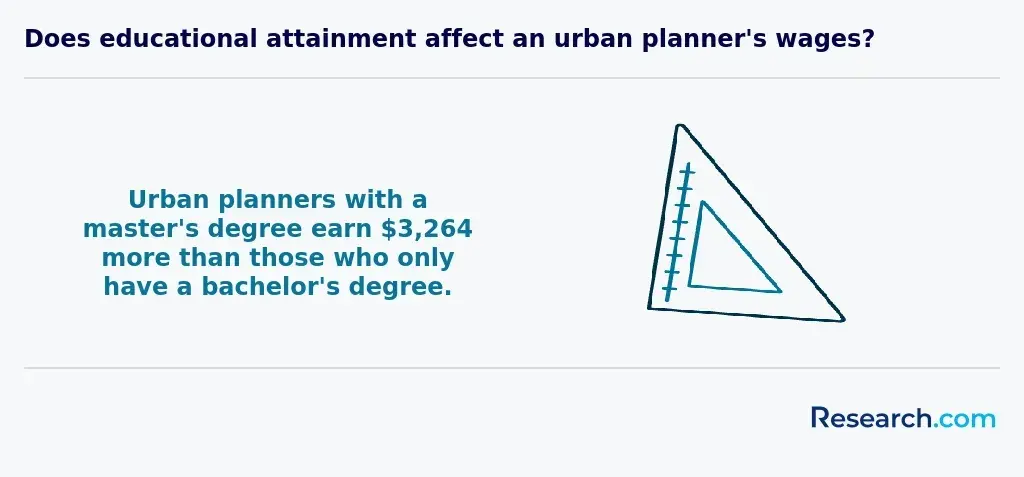
How much do urban planners in Kentucky earn?
Urban planner pay in Kentucky varies by employer, location, experience, education, technical skill, and specialization. A planner working for a small municipality may have a different salary range than one working for a transportation agency, state government, consulting firm, or metropolitan planning organization.
ZipRecruiter reports average annual earnings of $65,169 for urban planners in Kentucky. The broader estimate commonly described for the state is approximately $65,000 per year. Meanwhile, 2025 data from the U.S. Bureau of Labor Statistics (BLS) shows that urban and regional planners in Kentucky can make an annual mean wage of $54,018. This is lower than the national average of $66,622, but the lower cost of living in the Bluegrass State may affect how far those wages go.
More experienced planners in Kentucky can earn more, with the top 10% of earners bringing home approximately $87,000 to $110,000 per year.
Industry also matters. Based on 2025 salary figures from BLS, the top-paying industries for planners are architectural, engineering, and related services ($91,610 annual mean wage), management, scientific, and technical consulting services ($89,430 annual mean wage), and the state government, excluding education and hospitals ($86,220 annual mean wage).
| Salary factor | How it can affect pay | What candidates can do |
| Experience level | Senior planners, project managers, and specialists generally earn more than entry-level planning assistants. | Seek progressively responsible projects, document outcomes, and build a portfolio of plans, reports, maps, and public engagement work. |
| Specialization | Transportation, environmental resilience, GIS, consulting, and infrastructure-related roles may offer different compensation. | Match electives and internships to the specialization most common in your target job postings. |
| Employer type | Local government, state agencies, consulting firms, nonprofits, and universities often use different pay structures. | Compare salary, benefits, stability, advancement, workload, and mission fit rather than looking only at base pay. |
| Location | Metropolitan areas such as Louisville and Jefferson may offer different opportunities than smaller cities or rural regions. | Consider commuting, cost of living, hybrid work, travel expectations, and regional planning needs. |
| Credentials and graduate education | A master’s degree, AICP certification, GIS expertise, or technical credentials can support advancement. | Invest in credentials only when they align with specific job requirements or promotion goals. |
What careers are available to urban planners in Kentucky?
Urban planners in Kentucky can work in city departments, county governments, regional planning agencies, state agencies, consulting firms, nonprofits, transportation organizations, universities, and development-related organizations. The right career path depends on whether you prefer public service, technical analysis, design, policy, community engagement, environmental work, or private-sector consulting.
| Career path | Common employers | Typical work |
| Municipal or regional planner | City and county planning departments, Area Development Districts (ADDs), regional planning agencies | Prepare land use plans, review development proposals, update zoning regulations, coordinate infrastructure, and support public meetings. |
| Environmental planner | Kentucky Department for Environmental Protection (DEP), environmental nonprofits, consulting firms, conservation organizations | Assess project impacts, develop sustainable land use recommendations, protect waterways and natural resources, and support environmental compliance. |
| Economic development specialist | Local governments, chambers of commerce, redevelopment agencies, economic development organizations | Attract investment, support job creation, plan downtown improvements, analyze industrial sites, and coordinate tourism or small business initiatives. |
| Disaster and resilience planner | Federal Emergency Management Agency (FEMA), Kentucky Emergency Management (KYEM), regional agencies, local governments | Create hazard mitigation plans, support recovery work, improve infrastructure resilience, and reduce risks from flooding or severe weather. |
| Urban designer | Planning departments, architecture firms, engineering firms, design consultancies | Design streetscapes, parks, plazas, pedestrian-friendly districts, green spaces, and neighborhood improvement concepts. |
| Nonprofit or advocacy planner | Housing organizations, environmental groups, community development nonprofits, policy organizations | Lead outreach, advocate for sustainable or equitable policies, support affordable housing, and manage community initiatives. |
| Planning consultant | Private consulting firms, engineering firms, real estate development consultants | Conduct site planning, zoning analysis, transportation studies, environmental assessments, public engagement, and client-facing planning projects. |
| Academic or research professional | Universities, think tanks, research centers | Teach planning-related courses, study local and regional challenges, publish research, and inform public policy. |
Entry-level job titles to search for
- Assistant planner
- Planning technician
- Community development coordinator
- Zoning analyst
- GIS analyst
- Transportation planning assistant
- Environmental planning assistant
- Economic development analyst
- Research assistant in urban or regional planning
What are the typical responsibilities of urban planners in Kentucky?
Urban planners in Kentucky combine research, policy analysis, technical mapping, public engagement, and project coordination. Their daily work depends on the employer and specialization, but most roles require the ability to translate community goals into practical plans that comply with local rules and funding limits.
| Responsibility | What it looks like in practice | Skills involved |
| Research land use and demographics | Study population changes, housing patterns, land availability, development pressure, and infrastructure needs. | Data analysis, GIS, census research, policy interpretation |
| Prepare plans and recommendations | Draft comprehensive plans, neighborhood plans, transportation plans, zoning updates, and redevelopment strategies. | Writing, planning law, public policy, urban design, scenario analysis |
| Review development proposals | Evaluate whether projects align with zoning, environmental rules, public infrastructure capacity, and local planning goals. | Regulatory analysis, site plan review, communication, documentation |
| Coordinate with stakeholders | Work with residents, elected officials, developers, engineers, nonprofits, businesses, and public agencies. | Facilitation, negotiation, meeting management, active listening |
| Lead public engagement | Organize workshops, surveys, hearings, neighborhood meetings, and community feedback sessions. | Plain-language communication, outreach, equity awareness, conflict management |
| Support implementation | Track project progress, update ordinances, coordinate grants, monitor outcomes, and help agencies carry out adopted plans. | Project management, budgeting, grant writing, reporting |
How can business acumen boost my urban planning career in Kentucky?
Planning ideas often fail or stall when budgets, financing, procurement, and stakeholder incentives are not handled well. Business skills can help urban planners estimate costs, compare development scenarios, manage grants, evaluate public-private partnerships, and explain why a project is financially realistic. This matters in Kentucky because many planning projects involve limited local budgets, infrastructure trade-offs, and coordination between public agencies and private developers.
If you want to move into management, consulting, economic development, or project leadership, business training can be useful. Programs connected to the best business schools in Kentucky may help planners strengthen budgeting, strategic planning, leadership, and financial analysis skills.
Can urban planners in Kentucky benefit from public health and nutrition insights?
Yes. Urban planning decisions influence whether residents can reach grocery stores, clinics, parks, sidewalks, schools, and safe public spaces. Public health and nutrition knowledge can help planners identify food deserts, support walkable neighborhoods, improve access to services, and coordinate with health professionals on community well-being goals. Professionals who want a deeper view of food access and health behavior can review what is involved in learning how to become a nutritionist in Kentucky.
Are accelerated business degrees beneficial for urban planners in Kentucky?
Accelerated business degrees can be useful for planners who already have technical planning experience and want to move quickly into leadership, consulting, project finance, or economic development. They are less useful if you are still trying to qualify for entry-level planning roles and have not yet built a planning portfolio. Before enrolling, compare cost, time commitment, employer recognition, curriculum, and whether the program includes finance, strategy, public-sector management, or real estate-related coursework. If speed is a priority, you can compare one year MBA programs online.
How can interdisciplinary skills enhance my urban planning career in Kentucky?
Strong urban planners often know more than planning theory. They understand data, law, budgets, engineering constraints, environmental risk, social services, public health, and community safety. Interdisciplinary training can help you stand out when planning projects involve hazards, infrastructure, redevelopment, crime prevention through environmental design, emergency management, or evidence-based policy work. For example, reviewing a forensic science degree in Kentucky can help students understand how evidence analysis, risk assessment, and investigative methods may connect with safer community design and resilience planning.
Are there available scholarships for urban planners in Kentucky?
Urban planning students in Kentucky should search for scholarships from planning associations, universities, transportation agencies, engineering programs, sustainability organizations, and community development groups. Some funding is specifically tied to planning, while other awards support related fields such as civil engineering, construction management, sustainability, transportation, or environmental studies.
| Scholarship or funding option | Who it may help | Important details |
| American Planning Association-Kentucky (APA-KY) Scholarship | Students who demonstrate commitment to planning and sustainability | The award amount varies and is designed to support graduate students in their studies. |
| Construction Management Scholarship Program | Students interested in construction management, infrastructure, transportation, and development-related planning | Offered by the Kentucky Transportation Cabinet (KYTC), the scholarship can cover up to $7,600 per semester for upperclassmen, totaling over $59,000 over four years. |
| Civil Engineering Scholarship | Students pursuing a Bachelor of Science in Civil Engineering at designated universities | Also administered by the Kentucky Transportation Cabinet, this award can support students whose engineering training connects to infrastructure and urban planning work. |
| College and department scholarships | Planning, geography, public administration, sustainability, civil engineering, or environmental science students | Check deadlines, GPA requirements, residency rules, assistantships, and whether awards are renewable. |
How to reduce the cost of planning education
- Ask whether your program offers assistantships, tuition waivers, research positions, or paid planning studio work.
- Compare total cost, not just tuition. Include fees, software, commuting, housing, books, and lost income.
- Use transfer credits carefully if starting at a community college or changing majors.
- Prioritize programs with strong internship placement because paid experience can reduce financial pressure and improve job prospects.
- Compare adjacent affordable degree paths when relevant; for example, students interested in land stewardship may review forestry degrees on a budget.
How can urban planning influence community health services in Kentucky?
Urban planning affects health access by shaping where clinics, hospitals, rehabilitation services, sidewalks, transit routes, parks, and housing are located. A well-planned neighborhood can make it easier for residents to reach care, maintain mobility, and use public spaces safely. In underserved areas, planners may coordinate with healthcare providers and local agencies to identify service gaps before zoning, transportation, or facility decisions are finalized.
Health-centered planning also benefits from understanding specialized provider needs. For instance, reviewing speech pathologist requirements in Kentucky can help planners think more carefully about how rehabilitative, school-based, and community-based services fit into neighborhood and regional infrastructure.
How do local regulations and zoning laws impact urban planning in Kentucky?
Zoning ordinances, subdivision regulations, comprehensive plans, permitting rules, environmental requirements, building standards, and public hearing procedures shape what urban planners can recommend and what communities can legally approve. In Kentucky, planners must be able to interpret local rules while also explaining them to residents, elected officials, developers, and applicants.
Regulatory knowledge is also tied to budgeting and compliance. Poor cost estimates or unclear financial assumptions can delay infrastructure, housing, and redevelopment projects. Planners who regularly work on budgets, grants, or public finance may benefit from understanding accounting principles; one related pathway is learning how to become an accountant in Kentucky.
How do urban planners collaborate with social service professionals in Kentucky?
Planning decisions influence access to housing, transportation, parks, food, health services, schools, and emergency support. Social service professionals can help planners understand the lived experience behind the data, especially for older adults, low-income residents, people with disabilities, families with children, and communities facing displacement risk.
Collaboration can improve public engagement, affordable housing strategies, community facility planning, and equity analysis. Planners who want to better understand this intersection can review social worker education requirements in Kentucky and consider how social work perspectives can strengthen community-centered planning.
What skills do employers in Kentucky prioritize for urban planners?
Kentucky employers generally look for planners who can combine technical analysis with public communication. A strong candidate can prepare maps, interpret zoning, write clear reports, manage public meetings, analyze data, and work professionally with residents and officials who may disagree with one another.
| Skill area | Why it matters | How to build it |
| GIS and mapping | Modern planning relies on spatial evidence for land use, transportation, environmental risk, and infrastructure decisions. | Take GIS courses, complete mapping projects, and include maps in your portfolio. |
| Data analysis | Planners must interpret demographics, housing trends, traffic patterns, environmental data, and economic indicators. | Use planning studio projects, research assistantships, and public datasets to practice analysis. |
| Writing and presentation | Plans, staff reports, grant applications, public notices, and meeting materials must be clear and defensible. | Collect examples of policy memos, executive summaries, and public-facing materials. |
| Public engagement | Community input is central to planning, especially when projects affect housing, zoning, transportation, or neighborhood change. | Volunteer for public meetings, charrettes, surveys, and facilitation roles. |
| Budgeting and cost analysis | Plans must account for funding limits, maintenance costs, grants, and implementation feasibility. | Take public finance, budgeting, or accounting-related coursework; compare options at the best accounting schools in Kentucky if deeper training is useful. |
| Regulatory judgment | Planners must apply zoning and land use rules without losing sight of community goals. | Study local ordinances, attend planning commission meetings, and practice site plan review. |
How Can Legal Expertise Enhance an Urban Planning Career in Kentucky?
Planning work often involves zoning rules, public hearings, development agreements, environmental review, procurement, open meeting requirements, appeals, and contracts. Planners are not expected to replace attorneys, but they benefit from understanding legal concepts well enough to spot risk, communicate clearly with legal counsel, and avoid procedural mistakes.
Legal awareness is especially helpful for planners who work in zoning administration, land development review, code enforcement, consulting, or public-private projects. If you want a structured introduction to legal support work, consider reviewing how to become a paralegal in Kentucky.
How Can Emerging Technologies Drive Urban Planning Strategies in Kentucky?
Technology is changing how planners collect evidence, model future conditions, and communicate with the public. GIS, big data analytics, digital engagement tools, real-time simulation, remote sensing, and scenario modeling can help planners compare land use options, evaluate environmental impacts, identify infrastructure needs, and communicate trade-offs visually.
Technology should not replace public judgment or community engagement. It should make planning decisions more transparent and evidence-based. Kentucky planners using technical tools still need to ask who benefits, who may be burdened, which populations are missing from the data, and how recommendations will be implemented. Understanding social worker degree requirements in Kentucky can also help planners connect technical solutions with social welfare and community access concerns.
What urban planning internships or practical experiences can I pursue in Kentucky?
Internships are one of the most important steps toward becoming employable in urban planning. They help you learn how planning decisions are actually made, how public meetings work, how staff reports are written, and how GIS, zoning, transportation, and community engagement come together in practice.
| Experience option | What you may do | What you can gain |
| Kentucky Transportation Cabinet | Assist with transportation infrastructure, traffic analysis, environmental assessments, public engagement, and mobility-related projects. | Exposure to transportation planning, state agency processes, environmental review, and infrastructure decision-making. |
| Private planning, engineering, or design firms such as Qk4 | Support site planning, urban design, transportation studies, development review, mapping, and client research. | Experience with consulting deadlines, technical deliverables, client communication, and multidisciplinary teams. |
| Real estate development companies | Observe land acquisition, zoning approvals, feasibility analysis, site planning, and sustainable building practices. | A clearer understanding of how private development interacts with local rules and public priorities. |
| Building & Scaling Internships through Greater Louisville Inc. (GLI) | Participate in work-based learning connected to the Talent Pipeline initiative, which helps businesses create stronger internship programs. | Professional exposure, employer connections, and a better understanding of talent development in the Louisville region. |
| Local planning departments and regional agencies | Help with staff reports, zoning applications, comprehensive plan updates, public meetings, surveys, and GIS mapping. | Direct experience with the public-sector planning process and local government decision-making. |
How to make an internship count
- Ask for assignments that produce portfolio pieces, such as maps, reports, presentation boards, public engagement summaries, or policy memos.
- Attend public meetings so you understand how planning recommendations are debated and approved.
- Request feedback on your writing, maps, and presentations before the internship ends.
- Track the software, datasets, regulations, and project types you worked with.
- Stay in touch with supervisors and coworkers because planning careers often grow through local professional networks.
What professional organizations in Kentucky should I join to advance my career as an urban planner?
Professional organizations can help students and early-career planners find mentors, learn current practices, hear about job openings, attend training, and stay informed about changes affecting planning in Kentucky. Membership is most valuable when you actively attend events, volunteer, ask questions, and build relationships rather than simply listing the organization on a résumé.
| Organization | Who should consider joining | Potential benefits |
| American Planning Association-Kentucky Chapter | Students, planners, public officials, and professionals interested in effective planning across the state | Networking, professional development, planning education, conferences, mentorship, and connection to statewide planning issues. |
| Northern Kentucky Urban & Community Forestry Council (NKUCFC) | Planners interested in urban forestry, green infrastructure, community trees, and environmental planning | Collaboration with environmental professionals and access to resources that support greener community planning. |
| Kentucky Association of Mitigation Managers (KAMM) | Planners focused on disaster resilience, hazard mitigation, flood risk, and FEMA-related planning | Training, conferences, mitigation planning resources, and professional connections in emergency management and hazard planning. |
Professional groups are most useful when they align with your goals. A transportation planner, historic preservation planner, housing advocate, and resilience planner may all need different networks. The same principle applies across fields: targeted organizations matter more than random memberships. For comparison, students exploring fast workforce-focused credentials may review the best accelerated medical assistant programs, but urban planning candidates should prioritize planning, infrastructure, public policy, and sustainability networks.
Is an Executive MBA the Right Investment for Urban Planners in Kentucky?
An Executive MBA can make sense for experienced urban planners who are moving into senior leadership, consulting management, real estate development, infrastructure finance, public-private partnerships, or executive roles that require stronger business judgment. It is usually not the first credential an aspiring planner needs. For most students, planning education, GIS skills, internships, and a strong portfolio should come first.
Before investing in an Executive MBA, compare tuition, employer support, schedule flexibility, opportunity cost, and whether the curriculum includes finance, negotiation, strategy, operations, and leadership topics that match your career goals. Because costs can be substantial, review examples such as the Wharton Executive MBA cost only as one part of a broader return-on-investment analysis.
Common mistakes to avoid when preparing for an urban planning career in Kentucky
| Mistake | Why it can hurt you | Better approach |
| Choosing a program without checking fit | A degree may be related to planning but weak in GIS, public policy, internships, or local employer connections. | Review curriculum, faculty expertise, portfolio requirements, internship placement, and graduate outcomes. |
| Focusing only on tuition | A cheaper program may cost more in the long run if it lacks experience opportunities or requires extra time to complete. | Compare total cost, financial aid, assistantships, location, software, commuting, and internship access. |
| Assuming a master’s degree guarantees a job | Employers still want applied skills, writing samples, GIS experience, and evidence that you can work with communities. | Build a portfolio, complete internships, attend planning meetings, and document real project contributions. |
| Ignoring local zoning and public process | Planning is not only design or policy theory; it operates through ordinances, hearings, boards, and public accountability. | Attend planning commission meetings and study local comprehensive plans and zoning codes. |
| Waiting too long to learn GIS | Many entry-level planning roles expect mapping or spatial analysis ability. | Take GIS early and create portfolio-ready maps using real planning questions. |
| Relying only on rankings | A highly visible program is not always the best match for your specialization, budget, or location. | Use rankings as one input, then compare cost, curriculum, accreditation, internships, and career support. |
| Assuming online programs automatically meet every career goal | Online study can be flexible, but some students need local fieldwork, studio experience, or employer networks. | Ask how online students complete applied projects, internships, software training, and faculty interaction. |
Questions to ask before choosing an urban planning program in Kentucky
- Does the program include GIS, planning law, land use, public engagement, and applied studio work?
- Are internships required, supported, or commonly completed by students?
- Do faculty or alumni have connections with Kentucky planning departments, transportation agencies, consulting firms, or regional organizations?
- Can students specialize in transportation, housing, historic preservation, environmental planning, economic development, or resilience?
- What portfolio pieces will I graduate with?
- Are assistantships, scholarships, or paid research opportunities available?
- How does the program support AICP preparation or professional networking?
- What are the total costs, including fees, software, commuting, housing, and time away from work?
- Do graduates commonly work in Kentucky, or does the program mainly place students elsewhere?
- If the program is online, how are fieldwork, collaboration, studio projects, and internships handled?
Current trends affecting urban planning careers in Kentucky
- Urban growth and redevelopment: With more residents living in urban centers, planners must help communities manage housing, transportation, infrastructure, and land use pressures.
- Flood risk and resilience: Flooding is a major planning concern in Kentucky, making hazard mitigation, stormwater planning, floodplain management, and infrastructure resilience valuable areas of expertise.
- GIS and data-driven planning: Employers increasingly expect planners to use spatial data, digital maps, scenario analysis, and visualization tools to support decisions.
- Housing affordability and neighborhood change: Planners are often involved in policies that affect affordability, displacement risk, infill development, and community investment.
- Interdisciplinary collaboration: Planning now frequently overlaps with public health, social services, environmental management, transportation engineering, finance, law, and economic development.
- Public engagement expectations: Communities expect transparent decision-making, accessible meetings, and meaningful opportunities to shape plans that affect their neighborhoods.
Key Insights
- Kentucky does not require a state urban planning license, but AICP certification can strengthen your professional credibility after you gain qualifying experience.
- A bachelor’s degree can open entry-level planning doors, but a master’s degree may improve access to advanced, specialized, or leadership roles.
- Urban planners in Kentucky earn an average annual wage of approximately $65,000, while salary estimates vary by source, employer, industry, experience, and location.
- The strongest candidates combine planning knowledge with GIS, writing, public engagement, zoning analysis, project management, and practical internship experience.
- Specializations such as transportation planning, housing and community development, historic preservation, economic development, environmental planning, and resilience planning all align with Kentucky’s urban and regional needs.
- Do not choose a program based only on price or reputation. Compare curriculum, applied projects, internships, total cost, faculty expertise, and local employer connections.
- Business, law, public health, social services, and technology skills can make planners more effective, especially in projects involving funding, regulation, equity, resilience, and cross-sector partnerships.
Related Articles for Nearby States
- 2027 How to Become an Urban Planner in Indiana
- 2027 How to Become an Urban Planner in Ohio
- 2027 How to Become an Urban Planner in Tennessee
- 2027 How to Become an Urban Planner in West Virginia
- 2027 How to Become an Urban Planner in Virginia
- 2027 How to Become an Urban Planner in Illinois
- 2027 How to Become an Urban Planner in Missouri
- 2027 How to Become an Urban Planner in North Carolina
- 2027 How to Become an Urban Planner in Georgia
- 2027 How to Become an Urban Planner in Mississippi
References:
- O*NET OnLine (n.d.). Urban and Regional Planners, 19-3051.00. Retrieved from https://www.onetonline.org/link/summary/19-3051.00
- Ritchie et al.(2024). Urbanization. Our World in Data. https://ourworldindata.org/urbanization
- U.S. Bureau of Labor Statistics (2024). Occupational Employment and Wage Statistics Query System. Data Retrieved from: https://data.bls.gov/oes
- U.S. Bureau of Labor Statistics (April 2024). Occupational Employment and Wages, May 2023, 19-3051 Urban and Regional Planners. https://www.bls.gov/oes/current/oes193051.htm
- Zippia, (2024). Urban Planner demographics and statistics in the US. https://www.zippia.com/urban-planner-jobs/demographics
- ZipRecruiter (2024). What Is the Average Urban Planner Salary by State. Retrieved from https://www.ziprecruiter.com/Salaries/What-Is-the-Average-Urban-Planner-Salary-by-State https://www.ziprecruiter.com/Salaries/What-Is-the-Average-Urban-Planner-Salary-by-State
Other Things to Know About Becoming an Urban Planner in Kentucky
Yes, to become an urban planner in Kentucky, you typically need at least a bachelor's degree in urban planning, geography, or a related field. Advanced positions may require a master's degree. Accreditation by the Planning Accreditation Board can enhance the education's credibility.
In 2027, to become an urban planner in Kentucky, you typically need a bachelor’s degree in urban planning or a related field, such as geography, environmental design, or public administration. A master’s degree may enhance job prospects and is required for advanced positions.