2027 How to Become an Urban Planner in Oregon

Co-Founder and Chief Data Scientist
Becoming an urban planner in Oregon means preparing for a career that sits at the intersection of land use, housing, transportation, environmental protection, public engagement, and local policy. The work matters because Oregon communities are balancing growth, affordability, climate resilience, transportation access, and the protection of natural landscapes. This guide explains the education, experience, certifications, career options, salaries, internships, scholarships, and professional steps that can help you enter the field with a realistic plan.
Use this guide if you are considering an urban planning degree, comparing Oregon programs, changing careers into planning, or trying to understand whether this profession matches your interests and long-term goals.
Quick answer: How do you become an urban planner in Oregon?
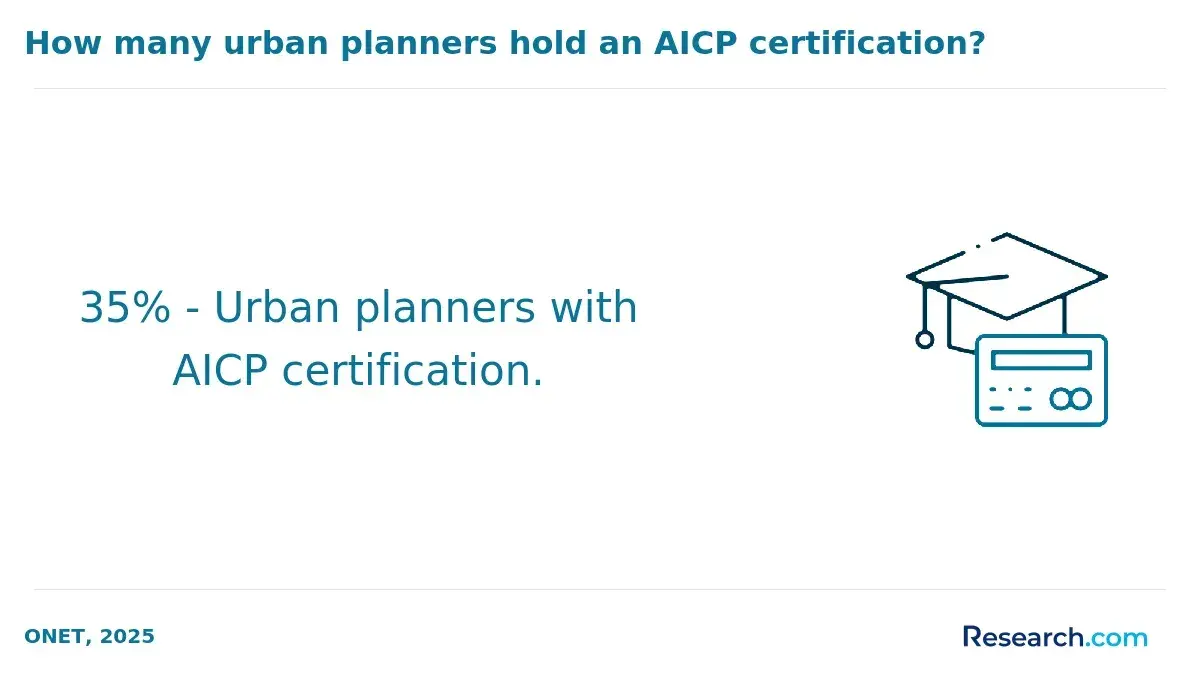
Most urban planners in Oregon start by earning a bachelor’s degree in urban planning or a related field, then build practical experience through internships, studio projects, research, or local government work. Many candidates strengthen their qualifications with a master’s degree, especially for more competitive public-sector, consulting, policy, and leadership roles. Oregon does not require a state license for urban planners, but the American Institute of Certified Planners (AICP) credential can improve professional credibility after candidates meet education, experience, and exam requirements.
Key things to know about becoming an urban planner in Oregon
- Employment for urban and regional planners in the US was projected to increase by 3% between 2024 and 2034.
- Urban and regional planners across the US have a median annual wage of $83,720, equal to $40.25 per hour. Urban and regional planners in Oregon had a median hourly wage of $44.84 in the same period.
- Planning graduates may work as city planners, transportation planners, environmental planners, community development specialists, urban designers, or policy analysts.
- The University of Oregon and Portland State University offer Planning Accreditation Board (PAB)-accredited programs in community planning, urban studies, and regional planning.
| Decision point | What it means for Oregon planning careers | What to check before choosing |
| Degree level | A bachelor’s degree can support entry-level roles, while a master’s degree is common for advanced planning positions. | Review job postings in Oregon cities, counties, agencies, and consulting firms to see which degree they prefer. |
| Program accreditation | PAB accreditation signals that a planning program meets recognized professional standards. | Confirm the program’s current accreditation status before enrolling. |
| Specialization | Transportation, environmental planning, land use, housing, and community development can lead to different job paths. | Choose electives, internships, and projects that match the type of planning work you want to do. |
| Certification | Oregon has no state licensure requirement for planners, but AICP certification can strengthen advancement prospects. | Review AICP education, experience, exam, and maintenance requirements early. |
| Experience | Internships, capstones, GIS projects, and public engagement experience are important for employability. | Ask programs how they help students secure internships and applied planning work. |
- Education requirements for urban planners in Oregon
- Urban planning specializations in Oregon
- Licensing and certification requirements
- Timeline to become an urban planner in Oregon
- Urban planner salary in Oregon
- Career paths for urban planners in Oregon
- Typical responsibilities of Oregon urban planners
- Essential skills for Oregon urban planners
- Community health and urban planning
- Business skills for planning careers
- Technology trends in Oregon planning
- Local policy and legal frameworks
- Interdisciplinary expertise in planning
- Funding and budgeting for planning projects
- Common development challenges in Oregon
- Accounting knowledge for planners
- Legal knowledge for planning initiatives
- Social services and inclusive planning
- Scholarships for Oregon planning students
- Internships and practical experience
- Professional organizations for Oregon planners
What are the education requirements for urban planners in Oregon?
Urban planning is a professional field that usually requires formal study in planning, public policy, geography, environmental studies, architecture, public administration, or a closely related discipline. In Oregon, your education should help you understand land use rules, transportation systems, housing policy, environmental review, public engagement, data analysis, and the state’s approach to growth management.
The right academic route depends on the type of role you want. Some entry-level positions may be open to bachelor’s graduates with strong internships and technical skills. More specialized or senior roles often prefer candidates with graduate-level planning education.
| Education option | Best for | What to prioritize |
| Bachelor’s degree in urban planning or a related field | Students seeking entry-level planning assistant, research, GIS, community engagement, or public agency roles. | Coursework in land use, environmental policy, statistics, GIS, public policy, and community planning. |
| Master’s degree in urban or regional planning | Candidates who want stronger access to professional planner, policy, consulting, transportation, or leadership-track roles. | PAB accreditation, applied studios, internship support, faculty expertise, and Oregon-focused planning projects. |
| Related degree plus planning experience | Career changers from architecture, environmental science, public administration, geography, civil engineering, or policy. | Portfolio-building projects, GIS training, zoning and land use knowledge, and public-sector internships. |
| Graduate certificate or continuing education | Working professionals who need targeted planning, GIS, sustainability, public management, or transportation skills. | Employer relevance, transferability into a degree, and alignment with job posting requirements. |
- Undergraduate preparation: A bachelor’s degree is commonly the first academic step. Students often major in urban planning, public policy, geography, environmental studies, architecture, public administration, or management-related fields.
- Planning-focused coursework: Strong programs include classes in land use policy, community planning, zoning, urban design, environmental policy, public finance, research methods, GIS, and planning law.
- Applied experience: Internships, studio courses, service-learning projects, and research assistantships help students convert classroom knowledge into practical planning skills.
- Communication training: Planners must explain technical information to residents, elected officials, developers, agency staff, and community organizations. Writing, facilitation, presentation, and negotiation skills are essential.
- Accreditation review: The University of Oregon and Portland State University are important options to examine because both offer PAB-accredited planning programs.
Before choosing a program, ask whether graduates work in Oregon planning agencies, whether students complete local planning projects, and whether the curriculum covers Oregon’s land use system. A program with strong community partnerships can be especially useful because planning employers value evidence that you can work with real data, real neighborhoods, and real public processes.
What urban planning specializations are available in Oregon?
Urban planning is not one job. It includes several practice areas, and Oregon’s planning needs make some specializations especially relevant. Your specialization should match the problems you want to solve, the employers you want to work for, and the technical skills you are willing to build.
| Specialization | Typical focus | Good fit if you enjoy |
| Transportation planning | Transit systems, traffic patterns, bike and pedestrian networks, mobility access, and long-range transportation plans. | Data analysis, infrastructure, public meetings, maps, and mobility equity. |
| Environmental planning | Environmental review, conservation planning, climate resilience, resource protection, and sustainable development. | Ecology, land use policy, regulation, climate adaptation, and environmental impact analysis. |
| Community development | Neighborhood planning, housing access, economic development, public participation, and local revitalization. | Working with residents, nonprofits, local governments, and equity-focused initiatives. |
| Urban design | Public spaces, streetscapes, building form, placemaking, and the physical experience of neighborhoods. | Design thinking, visual communication, architecture, walkability, and human-scale development. |
| Land use and policy planning | Zoning, comprehensive plans, growth boundaries, development review, and policy implementation. | Policy analysis, legal frameworks, local government processes, and long-term community strategy. |
- Transportation planning: Transportation planners analyze travel behavior, evaluate transit needs, support safer street design, and help communities improve access without relying only on car travel.
- Environmental planning: Environmental planners assess how development affects land, water, habitat, emissions, and resilience. This specialization is well aligned with Oregon’s strong environmental and land conservation priorities.
- Community development: Community development planners focus on neighborhood needs, housing access, economic opportunity, public engagement, and social equity.
- Urban design: Urban designers shape how streets, buildings, parks, sidewalks, and public spaces function together.
- Policy and land use planning: These planners work closely with zoning codes, comprehensive plans, development proposals, urban growth boundaries, and local ordinances.
If you are undecided, choose a program that lets you complete applied projects in more than one area. A transportation studio, environmental policy project, and community engagement internship can help you test which work fits your strengths before you graduate.
Are there licensing requirements for urban planners in Oregon?
Oregon does not have a state-issued license or registration requirement specifically for urban planners. That means you can work in planning without holding a state planning license. However, certification still matters because employers may view it as evidence of professional experience, planning knowledge, and commitment to the field.
The main professional credential for planners is certification through the American Institute of Certified Planners (AICP). Candidates typically need to register with AICP, document qualifying planning experience, pass the AICP exam, and complete certification maintenance requirements after earning the credential.
| Credential | Required in Oregon? | Why it may help |
| AICP certification | No | Can strengthen credibility for experienced planners and may support advancement into more competitive roles. |
| Professional Transportation Planner® (PTP) | No | Useful for planners focused on transportation systems, mobility planning, and infrastructure coordination. |
| LEED Accredited Professional | No | Relevant for planners working on sustainable development, green building, and environmentally responsible design. |
- AICP certification: This credential is not a substitute for experience, but it can help demonstrate professional planning competence.
- Specialized credentials: Certifications such as Professional Transportation Planner® and LEED Accredited Professional can be useful when your job targets a specific technical area.
- Continuing education: Planners should expect ongoing learning because local policy, environmental rules, public engagement methods, and technology tools change over time.
If environmental planning is part of your career goal, reviewing affordable online environmental science degree options can help you compare related academic paths that build sustainability and environmental analysis skills.
How long does it take to become an urban planner in Oregon?
The path to a professional planning role often takes 6 to 8 years when it includes both undergraduate study and graduate education. The exact timeline depends on whether you pursue a master’s degree, how quickly you gain internship experience, and whether you later seek AICP certification.
| Stage | Typical length | What you should accomplish |
| Bachelor’s degree | 4 years | Build a foundation in planning, policy, environmental studies, geography, design, research, GIS, or related fields. |
| Master’s degree | Usually 2 additional years | Develop professional planning skills through advanced coursework, studios, internships, and applied research. |
| Internship or field experience | 3 months to a year | Gain practical experience with public agencies, consulting firms, nonprofits, or university-linked projects. |
| AICP certification preparation | After qualifying experience | Document experience, prepare for the exam, and complete certification requirements. |
Oregon students often examine the University of Oregon’s Master of Community and Regional Planning and Portland State University’s Master of Urban and Regional Planning when comparing graduate routes. Both options should be evaluated based on accreditation, cost, internship access, faculty expertise, curriculum focus, and employment outcomes.
A faster path may be possible for people who already hold a related degree and have relevant work experience in public administration, environmental science, architecture, transportation, community development, or GIS. However, skipping planning-specific coursework can leave gaps in land use law, public engagement, and development review, so career changers should compare job requirements carefully.
How much do urban planners in Oregon earn?
Urban planner pay varies by experience, employer, location, specialization, education, and project complexity. Nationally, urban and regional planners have a median annual wage of $83,720, which equals $40.25 per hour. In Oregon, urban and regional planners had a median hourly wage of $44.84 in the same period.
Salary should be evaluated alongside cost of living, commute, benefits, union or public-sector compensation structures, remote or hybrid options, and advancement potential. Portland-area roles may involve larger and more complex projects, while smaller cities and rural jurisdictions may give planners broader responsibilities earlier in their careers.
| Salary factor | How it can affect earnings | What to ask before accepting a role |
| Employer type | City, county, regional agency, state agency, nonprofit, and consulting roles may use different pay structures. | How are raises, promotions, and senior planner levels determined? |
| Specialization | Transportation, environmental review, GIS-heavy work, and policy roles may reward different skill sets. | Which technical skills are most valued for advancement? |
| Location | Urban centers may offer higher pay but can also come with higher living costs. | Does the compensation match local housing and transportation costs? |
| Experience | Project management, public meeting facilitation, zoning review, and grant experience can support advancement. | What responsibilities qualify someone for the next planner level? |
| Credentials | AICP or specialized certifications may improve competitiveness for some positions. | Does the employer support certification fees or continuing education? |
Students comparing related paths can also review environmental careers, especially if they are interested in planning work connected to sustainability, public health, conservation, or environmental compliance.
The chart below visualizes the states offering the highest compensation for urban planners.
What careers are available to urban planners in Oregon?
An urban planning background can lead to public-sector, nonprofit, consulting, transportation, environmental, housing, and policy roles. Oregon planners may work for city planning departments, counties, regional agencies, state agencies, community development organizations, transit agencies, engineering firms, architecture firms, or private planning consultancies.
| Career path | What the role usually does | Common employers |
| City planner | Reviews development proposals, supports comprehensive plans, interprets zoning, and works with residents and elected officials. | Municipal planning departments and local government agencies. |
| Transportation planner | Plans transit, road, bicycle, pedestrian, and mobility systems while analyzing travel patterns and access needs. | Regional agencies, transit organizations, consulting firms, and transportation departments. |
| Environmental planner | Reviews environmental impacts, supports conservation strategies, and aligns development with environmental rules. | State agencies, local governments, environmental consulting firms, and nonprofits. |
| Urban designer | Works on the form and function of streets, public spaces, neighborhoods, and mixed-use areas. | Planning firms, architecture firms, design consultancies, and local agencies. |
| Community planner | Leads neighborhood engagement, supports housing and equity initiatives, and helps align plans with community priorities. | Local governments, nonprofits, community development organizations, and regional agencies. |
- Transportation planner: In the Portland area, organizations such as the Tri-County Metropolitan Transportation District (TriMet) may need planners who can improve mobility and transit access.
- Environmental planner: Agencies such as the Oregon Department of Environmental Quality may use planning expertise for environmental compliance and sustainable development work.
- Urban designer: This path is useful for planners who want to shape the look, feel, accessibility, and usability of public places.
- Community planner: These planners work directly with residents, community organizations, and public officials to make planning decisions more responsive and inclusive.
If your main interest is climate, energy, or environmental impact work, compare planning careers with sustainability careers before choosing a degree or specialization.
What are the typical responsibilities of urban planners in Oregon?
Urban planners in Oregon combine technical analysis, policy interpretation, public communication, and project coordination. Their day-to-day work can vary widely depending on whether they work in land use review, long-range planning, transportation, environmental policy, housing, or community development.
| Responsibility | What it looks like in practice | Skills involved |
| Research and analysis | Study demographic trends, land use patterns, housing needs, transportation data, and environmental conditions. | Data analysis, GIS, policy research, and critical thinking. |
| Public engagement | Plan meetings, surveys, workshops, and outreach efforts that gather input from residents and stakeholders. | Facilitation, communication, listening, and conflict management. |
| Policy and zoning review | Interpret land use codes, zoning rules, comprehensive plans, and development standards. | Legal reading, attention to detail, and policy analysis. |
| Plan development | Prepare reports, recommendations, maps, and implementation strategies for community plans. | Writing, mapping, strategic planning, and presentation skills. |
| Interdisciplinary coordination | Work with engineers, architects, environmental specialists, elected officials, and community partners. | Project management, collaboration, and technical translation. |
| Implementation monitoring | Track whether adopted plans, projects, or policies are being carried out as intended. | Evaluation, reporting, budgeting awareness, and accountability. |
Planners must often balance competing priorities. A project may need to satisfy housing demand, transportation access, environmental protection, local budget limits, and neighborhood concerns at the same time. This is why technical skill alone is not enough; successful planners also need patience, transparency, and the ability to explain trade-offs clearly.
What essential skills should urban planners in Oregon develop?
Urban planners need a mix of analytical, technical, policy, and people-centered skills. Employers often look for candidates who can work with data, understand regulations, write clearly, coordinate with many stakeholders, and handle public feedback professionally.
- GIS and mapping: Helps planners analyze land use, transportation, environmental constraints, housing patterns, and service access.
- Data analysis: Supports evidence-based decisions using demographic, economic, environmental, and infrastructure information.
- Writing and presentation: Planners prepare staff reports, memos, grant narratives, public presentations, and policy recommendations.
- Community engagement: Public meetings, interviews, workshops, and surveys require careful facilitation and trust-building.
- Policy interpretation: Zoning, land use codes, environmental standards, and local plans must be understood and applied accurately.
- Project management: Planning work often involves deadlines, budgets, consultant teams, public hearings, and implementation schedules.
- Financial awareness: Planners benefit from understanding public budgets, grant funding, infrastructure costs, and long-term maintenance needs.
For planners moving toward leadership, management, or agency administration, business training can be valuable. Comparing options through the best business schools in Oregon can help professionals identify programs that build budgeting, strategy, and organizational leadership skills.
How does urban planning in Oregon integrate community health strategies?
Urban planning affects health because the built environment influences physical activity, transportation safety, access to parks, food availability, air quality, social connection, and exposure to environmental risks. Oregon planners may work with public health professionals, school systems, community groups, and environmental agencies to design places that support safer and healthier daily life.
| Planning decision | Possible community health connection |
| Walkable street design | Can support physical activity and reduce barriers for residents who do not drive. |
| Green space access | Can support recreation, heat mitigation, stormwater management, and mental well-being. |
| Transit-oriented planning | Can improve access to jobs, education, healthcare, and essential services. |
| Local food access | Can connect land use, transportation, and community wellness strategies. |
| Safe public spaces | Can support social connection, mobility, and neighborhood participation. |
Planners interested in food policy, nutrition access, and community wellness may find useful context in this guide on how to become a nutritionist in Oregon.
How can advanced business skills boost an urban planning career?
Urban planners increasingly need to understand budgets, procurement, staffing, partnerships, grant administration, consultant management, and long-term financial trade-offs. This is especially true for planners who move into project management, department leadership, development consulting, infrastructure planning, or public-private partnership work.
- Financial management: Helps planners evaluate project feasibility and explain cost implications.
- Leadership: Supports team supervision, public presentation, interdepartmental coordination, and conflict resolution.
- Negotiation: Useful when working with developers, agencies, community groups, and elected officials.
- Strategic planning: Helps align long-range community goals with budgets and implementation plans.
Professionals who already have planning experience and want executive-level training may compare options such as an online executive MBA, especially if they are aiming for management, consulting, or agency leadership roles.
How is technology transforming urban planning practices in Oregon?
Technology is changing how planners collect data, model alternatives, engage the public, and monitor outcomes. GIS remains central, but planners are also using digital engagement platforms, visualization tools, scenario modeling, remote sensing, and data dashboards to make planning more transparent and evidence-driven.
| Technology area | How planners use it | Why it matters |
| GIS mapping | Analyze zoning, environmental constraints, transit access, parcel data, and service gaps. | Improves spatial decision-making and public communication. |
| Public engagement tools | Collect comments, map community concerns, and reach residents who cannot attend meetings. | Can broaden participation when used thoughtfully. |
| Scenario modeling | Compare development, transportation, housing, or climate resilience alternatives. | Helps decision-makers understand trade-offs before adopting plans. |
| Data dashboards | Track implementation progress, housing trends, transportation metrics, or infrastructure needs. | Supports accountability after plans are adopted. |
Students interested in technical analysis across public-service fields may also review how evidence, data, and investigation skills are developed in a forensic science degree in Oregon, although urban planning has its own distinct education and career requirements.
How do local policies and legal frameworks shape urban planning strategies in Oregon?
Planning decisions in Oregon are shaped by zoning codes, comprehensive plans, land use regulations, environmental policies, public hearing procedures, development standards, and local ordinances. Planners must understand both the technical goals of a project and the legal process required to approve, revise, or implement it.
- Zoning and land use codes: Determine what can be built, where it can be built, and under what conditions.
- Comprehensive planning: Guides long-term decisions about housing, employment areas, public facilities, transportation, and environmental protection.
- Public process rules: Affect notice, hearings, appeals, documentation, and community participation.
- Environmental regulations: Influence site planning, natural resource protection, and development review.
- Budget and administrative requirements: Shape whether approved plans can actually be implemented.
Planners who want stronger management and policy implementation skills may also compare the best accelerated business degree online programs to see whether business coursework fits their professional goals.
How can interdisciplinary expertise enhance impact as an urban planner in Oregon?
Urban planning problems rarely fit into one discipline. A housing plan may involve public finance, social services, transportation, environmental justice, architecture, public health, and local law. Planners who can communicate across disciplines are better prepared to build practical solutions and manage complex projects.
| Related field | How it can strengthen planning work |
| Environmental science | Improves understanding of habitat, water, climate resilience, and environmental impact. |
| Public administration | Builds knowledge of government operations, budgeting, procurement, and policy implementation. |
| Architecture and design | Supports better public space, building form, site planning, and urban design work. |
| Social services | Helps planners understand housing instability, access barriers, community needs, and equity concerns. |
| Communication sciences | Highlights the importance of accessible communication, listening, and public-facing engagement. |
For a different example of Oregon-specific professional requirements and communication-centered practice, readers can review speech pathologist requirements in Oregon.
How can urban planners secure and manage project funding effectively in Oregon?
Planning ideas often fail when funding is unclear, costs are underestimated, or implementation responsibilities are vague. Urban planners do not always control the budget, but they frequently help define project scope, support grant applications, estimate phasing needs, coordinate partners, and communicate why a project deserves investment.
- Identify funding sources early: Public grants, municipal funds, state programs, federal sources, private partnerships, and nonprofit funding may all play a role depending on the project.
- Link funding to implementation: A plan should explain not only what should happen but also who will carry it out and how it may be financed.
- Use clear cost assumptions: Decision-makers need transparent estimates, phasing options, and maintenance considerations.
- Coordinate with finance staff: Budget officers, grant managers, and accountants can help planners avoid unrealistic funding assumptions.
- Track performance: Funded projects often need reporting, compliance documentation, and measurable outcomes.
Planners who want to strengthen budgeting and financial reporting skills can review how to become an accountant in Oregon for a clearer view of the accounting competencies that support public projects.
What challenges do urban planners in Oregon face in overcoming community development obstacles?
Oregon planners often work in environments where land, housing, transportation, environmental protection, infrastructure costs, and public expectations are all under pressure. The most effective planners do not treat these as separate issues. They identify trade-offs, communicate constraints, and help communities make decisions that are realistic and equitable.
| Challenge | Why it is difficult | Better planning response |
| Housing affordability | Communities need housing supply, but development can raise concerns about displacement, infrastructure, and neighborhood change. | Use data, inclusive engagement, anti-displacement strategies, and clear housing policy goals. |
| Climate and environmental risk | Growth decisions can affect emissions, natural resources, wildfire risk, flooding, and habitat protection. | Integrate resilience, environmental review, and long-range land use planning. |
| Transportation access | Residents need safe, affordable, and reliable mobility options across urban and rural areas. | Coordinate land use with transit, walking, biking, safety, and accessibility planning. |
| Limited funding | Communities may adopt plans without enough money for implementation. | Build phasing, grant strategy, and realistic cost estimates into the plan. |
| Public trust | Residents may feel planning decisions are already made before engagement begins. | Use transparent processes, explain constraints, and show how public input affects decisions. |
Because many planning challenges involve household stability, service access, and community support, planners may benefit from understanding human-service systems. This overview of social worker education requirements in Oregon offers useful context for readers interested in community-centered work.
Why is accounting knowledge important for urban planning success in Oregon?
Planning recommendations are stronger when they account for costs, funding timelines, maintenance obligations, and fiscal trade-offs. Accounting knowledge can help planners communicate more effectively with finance departments, grant administrators, elected officials, and project partners.
- Budget literacy: Helps planners understand whether a project is financially realistic.
- Cost analysis: Supports comparison of alternatives before implementation begins.
- Grant management awareness: Helps planners track eligible expenses, reporting requirements, and compliance needs.
- Fiscal transparency: Builds trust when communities can see how public resources are being used.
- Long-term planning: Helps connect capital projects with maintenance and operating costs.
Professionals who want deeper financial training can compare programs through the best accounting schools in Oregon.
How can legal expertise boost urban planning initiatives in Oregon?
Urban planning involves laws, procedures, contracts, hearings, appeals, and documentation. Planners are not usually attorneys, but legal literacy helps them prepare stronger staff reports, understand development conditions, follow public process requirements, and reduce project risk.
| Legal knowledge area | Planning value |
| Zoning and land use rules | Helps planners apply local codes consistently and explain decisions clearly. |
| Public meeting and hearing procedures | Supports transparency, due process, and defensible decision-making. |
| Contracts and agreements | Useful when coordinating consultants, developers, agencies, and community partners. |
| Environmental compliance | Helps align project review with applicable environmental requirements. |
| Documentation | Creates a clear record for recommendations, approvals, and implementation steps. |
Readers interested in legal support roles can explore how to become a paralegal in Oregon to understand how legal documentation and procedural skills are developed in a related profession.
How can integrating social services enhance urban planning outcomes in Oregon?
Planning decisions affect where people live, how they travel, whether they can access services, and how communities respond to growth or disruption. Integrating social-service knowledge can help planners identify who may be affected by a project, what support systems exist, and where physical development alone is not enough.
- Housing and homelessness: Social-service coordination can help connect land use decisions with real housing stability needs.
- Equitable engagement: Community partners can help planners reach residents who are often left out of formal public meetings.
- Resource access: Planning can improve connections to schools, healthcare, food, transit, parks, and public services.
- Anti-displacement strategies: Social-service insight can help identify vulnerable households and reduce unintended harm.
- Community resilience: Stronger collaboration can support neighborhoods during climate events, economic disruption, and redevelopment.
If you are comparing planning with social-service careers, review social worker degree requirements in Oregon to understand the educational path for that field.
Is becoming an urban planner in Oregon worth it?
Becoming an urban planner in Oregon can be worth it if you want a public-impact career that combines policy, data, community engagement, sustainability, and long-term problem-solving. It may be less suitable if you want a career with quick decisions, limited public scrutiny, or predictable day-to-day tasks.
| This path may be a strong fit if you... | You may want another path if you... |
| Care about housing, transportation, sustainability, public space, and community development. | Prefer work that does not involve public meetings, conflict, or political trade-offs. |
| Enjoy combining data, maps, policy, and public input. | Want a purely technical role with little writing or stakeholder communication. |
| Can handle long timelines and incremental progress. | Need fast, visible results from every project. |
| Are comfortable explaining complicated rules in plain language. | Dislike regulations, public process, or formal documentation. |
| Want to work in local government, regional agencies, consulting, nonprofits, or environmental planning. | Want a career path with no graduate education expectations for advancement. |
How to choose an urban planning program in Oregon
The best planning program is not always the one with the most recognizable name. It is the one that fits your goals, budget, schedule, specialization, and need for practical experience.
- Confirm accreditation: Check whether the planning program is currently accredited by the Planning Accreditation Board if you want a professionally recognized planning degree.
- Compare curriculum depth: Look for land use, planning law, GIS, community engagement, environmental planning, transportation, housing, and applied studio courses.
- Review internship support: Ask which agencies, firms, and nonprofits regularly host students.
- Check faculty expertise: Faculty research and local partnerships can shape the projects and mentoring available to you.
- Ask about graduate outcomes: Request examples of where recent graduates work, not just general career claims.
- Calculate total cost: Include tuition, fees, transportation, housing, books, lost wages, and time to completion.
- Evaluate flexibility: If you work full time, ask about part-time study, evening courses, online options, and internship scheduling.
- Look at applied work: A strong portfolio of maps, reports, community engagement materials, and studio projects can help in job applications.
Common mistakes to avoid when preparing for an urban planning career
| Mistake | Why it hurts | Better approach |
| Choosing a program without checking accreditation | You may miss the professional recognition that some planning employers value. | Verify PAB accreditation and ask how the program supports AICP preparation. |
| Focusing only on tuition | The cheapest option may not offer the internship access, faculty mentorship, or applied projects you need. | Compare total cost against career support, location, curriculum, and placement outcomes. |
| Ignoring GIS and data skills | Many planning roles require map-based analysis and evidence-based recommendations. | Build a portfolio with GIS maps, analysis, and planning reports. |
| Assuming a degree guarantees a planner job | Employers still evaluate experience, writing, public engagement, and technical ability. | Complete internships, applied projects, and professional networking before graduation. |
| Avoiding public engagement experience | Planning work often requires facilitation, conflict management, and community trust-building. | Seek projects that involve meetings, surveys, outreach, and stakeholder communication. |
| Relying only on rankings | Rankings may not reflect your specialization, budget, or Oregon career goals. | Use rankings as one input, then verify curriculum, costs, and local employer connections. |
Are there available scholarships for urban planners in Oregon?
Oregon planning students may find financial support through universities, professional associations, and planning-related organizations. Scholarship availability, eligibility rules, and award amounts can change, so students should confirm details directly with the organization or school before applying.
| Scholarship or award | Provider | Who it is designed to support |
| Diane M. McKeel Scholarship in Public Affairs | University of Oregon | Undergraduate students in the School of Planning, Public Policy and Management, with consideration of academic achievement, financial need, and community involvement. |
| Gregory R. Pulliam Student Assistance Award | University of Oregon | Undergraduate students seeking support for summer internships or research projects, especially those connected to community development. |
| Oregon American Planning Association (OAPA) Scholarship | Oregon Chapter of the American Planning Association | Students pursuing urban planning education and demonstrating commitment to the planning profession in Oregon. |
Students should also contact financial aid offices, planning departments, graduate coordinators, and local professional associations. Ask whether scholarships can be combined with assistantships, internships, tuition remission, or work-study opportunities.
If you are still comparing built-environment or infrastructure-related fields, reviewing the easiest engineering degrees for students may help you decide whether planning, engineering, environmental science, or public policy best matches your strengths.
What urban planning internships or practical experiences can I pursue in Oregon?
Internships are one of the most important steps for becoming employable as an urban planner. They help you learn public process, apply GIS and research methods, understand zoning and land use review, and build a professional network in Oregon.
| Internship source | Possible experience | Why it helps |
| Metro | Regional land use, transportation planning, environmental sustainability, growth management, and community engagement projects. | Provides exposure to regional-scale planning in the Portland area. |
| Oregon Department of Land Conservation and Development (DLCD) | Land use policy, coastal management, resource conservation, regulations, and state-level planning processes. | Helps students understand Oregon’s statewide planning structure. |
| Academic planning programs | University-linked internships with consulting firms, public agencies, nonprofits, or local governments. | Connects coursework with professional practice and portfolio-building projects. |
| City and county planning departments | Development review, public meetings, zoning research, comprehensive plan updates, and staff report preparation. | Builds direct local government experience. |
| Nonprofit and community development organizations | Housing, neighborhood engagement, equity initiatives, public outreach, and community needs assessment. | Develops engagement skills and understanding of community priorities. |
Portland State University requires students to complete 400 hours of internship work to graduate. The university has collaborated with consulting firms, public agencies, and nonprofit organizations to host interns, and it also requires students to attend internship workshops that prepare them for professional practice.
To get the most value from an internship, keep copies of work samples you are allowed to share, such as maps, research summaries, engagement materials, or portions of planning reports. These can become part of a job-search portfolio.
If urban planning no longer feels like the right route and you want to compare shorter workforce programs, you can review this guide to fast medical assistant diploma programs.
The chart below illustrates the typical educational attainment of urban planners in the United States.
What professional organizations in Oregon should I join to advance my career as an urban planner?
Professional organizations can help students and early-career planners find mentors, understand Oregon planning issues, attend workshops, learn about job openings, and stay current on policy and practice. Membership is most valuable when you actively attend events, volunteer, join committees, and follow up with professionals you meet.
| Organization | Why it may be useful | How to use it strategically |
| Oregon Chapter of the American Planning Association (OAPA) | Offers Oregon-focused planning resources, events, workshops, conferences, and AICP-related information. | Attend events, look for mentors, follow policy discussions, and learn about planning jobs across the state. |
| Portland Community Reinvestment Initiatives (PCRI) | Works in affordable housing and community development, offering useful perspective on housing policy and neighborhood engagement. | Use it to better understand housing equity, community reinvestment, and resident-centered development work. |
Students should also look for university planning associations, local government networking events, regional transportation forums, housing coalitions, sustainability groups, and public-sector career events. A strong network can help you learn which skills employers actually want before you graduate.
Questions to ask before committing to an urban planning path in Oregon
- Do I want to work mostly with policy, design, transportation, environmental review, housing, or community engagement?
- Am I comfortable speaking at public meetings and receiving criticism from residents, developers, officials, or advocacy groups?
- Does the program I am considering have PAB accreditation, strong internships, and Oregon-based applied projects?
- Will I need a master’s degree for the roles I want, or can I begin with a bachelor’s degree and experience?
- Can I build GIS, writing, data analysis, and facilitation skills before graduation?
- What is the total cost of my education, and how does it compare with the salary range of jobs I am likely to pursue?
- Does the program help students prepare for AICP certification later in their careers?
- Which Oregon agencies, firms, or nonprofits regularly hire graduates from the program?
Key Insights
- Oregon does not require a state license for urban planners, but AICP certification can strengthen credibility after candidates meet education, experience, exam, and maintenance requirements.
- A bachelor’s degree can support entry-level planning work, but a master’s degree is often valuable for professional planner, policy, consulting, and leadership-track roles.
- Urban and regional planners nationally have a median annual wage of $83,720, equal to $40.25 per hour, while Oregon urban and regional planners had a median hourly wage of $44.84 in the same period.
- The most useful planning education combines coursework with internships, GIS, policy analysis, public engagement, writing, and Oregon-focused applied projects.
- Transportation planning, environmental planning, community development, urban design, and land use policy are major specialization options for Oregon planning careers.
- Program choice should be based on accreditation, internship access, curriculum fit, faculty expertise, cost, flexibility, and graduate outcomes—not name recognition alone.
- Common mistakes include ignoring accreditation, underestimating the importance of internships, avoiding GIS, focusing only on tuition, and assuming a degree alone guarantees employment.
Related Articles for Nearby States
- 2027 How to Become an Urban Planner in Washington
- 2027 How to Become an Urban Planner in California
- 2027 How to Become an Urban Planner in Idaho
- 2027 How to Become an Urban Planner in Nevada
- 2027 How to Become an Urban Planner in Montana
- 2027 How to Become an Urban Planner in Utah
- 2027 How to Become an Urban Planner in Wyoming
- 2027 How to Become an Urban Planner in Arizona
- 2027 How to Become an Urban Planner in Colorado
- 2027 How to Become an Urban Planner in New Mexico
References:
- American Planning Association Oregon Chapter. (n.d.). AICP Certification. https://oregon.planning.org/aicp
- Oregon Department of Land Conservation and Development. (n.d.). Urban Planning. https://www.oregon.gov/lcd/up/pages/urban-planning.aspxAmerican Planning Association Oregon Chapter AICP information
- Portland State University. (n.d.). Toulan School of Urban Studies and Planning. https://www.pdx.edu/urban-studies-planning
- University of Oregon. (n.d.). Scholarships and Awards: Planning, Public Policy and Management Funding and Scholarships. https://pppm.uoregon.edu/admissions/scholarshipsUrban planning scholarship guideBLS Oregon occupational employment and wage data
- US Bureau of Labor Statistics. (2025, August 28). Urban and Regional Planners. Occupational Outlook Handbook. https://www.bls.gov/ooh/life-physical-and-social-science/urban-and-regional-planners.htmBLS Oregon wage reference
Other Things to Know About Becoming an Urban Planner in Oregon
In 2027, becoming an urban planner in Oregon typically entails pursuing a relevant bachelor's degree, such as in urban planning or geography. Following that, gaining experience through internships and possibly earning a master's degree can enhance job prospects. Licensing is not mandatory but can be beneficial.
Urban planners are indeed in demand in Oregon, driven by the state's rapid population growth and urban development needs. Across the US, employment is expected to increase by 3% between 2024 and 2034. Oregon cities, such as Portland, are investing in comprehensive planning initiatives, further enhancing job prospects for urban planners in the region. As urban areas continue to evolve, the demand for skilled planners will remain strong.
In 2027, aspiring urban planners in Oregon typically need at least a bachelor's degree in urban planning, geography, or a related field. Many employers prefer candidates with a master's degree in urban planning or a similar discipline. Additionally, candidates should consider gaining certification through the American Institute of Certified Planners for better career prospects.