2027 How to Become an Urban Planner in Rhode Island

Co-Founder and Chief Data Scientist
Becoming an urban planner in Rhode Island means preparing to work on some of the state’s most practical and high-stakes local decisions: where housing should be built, how transportation systems should improve, how coastal communities can become more resilient, and how towns can grow without losing their character. Rhode Island ranked 41st out of all 50 US states in terms of economic performance in 2024, and planning decisions can directly affect local development, infrastructure investment, housing access, and environmental protection.
This guide is for students, career changers, and early-career professionals who want a clear path into urban planning in Rhode Island. It explains the education you need, how long the process usually takes, whether licensure is required, what planners earn, which specializations are available, where to look for internships, and how to choose the right next step without relying only on rankings or generic career advice.
Quick Answer: How Do You Become an Urban Planner in Rhode Island?
To become an urban planner in Rhode Island, you typically need a bachelor’s degree in a related field such as urban studies, environmental science, geography, architecture, or planning, followed by practical experience through internships, fieldwork, or entry-level planning roles. Many planners strengthen their prospects with a master’s degree in urban or regional planning, although it is not always required for every position. Rhode Island does not have a state-specific urban planner license, but the American Institute of Certified Planners credential can help demonstrate professional competence.
Key Things to Know About Becoming an Urban Planner in Rhode Island
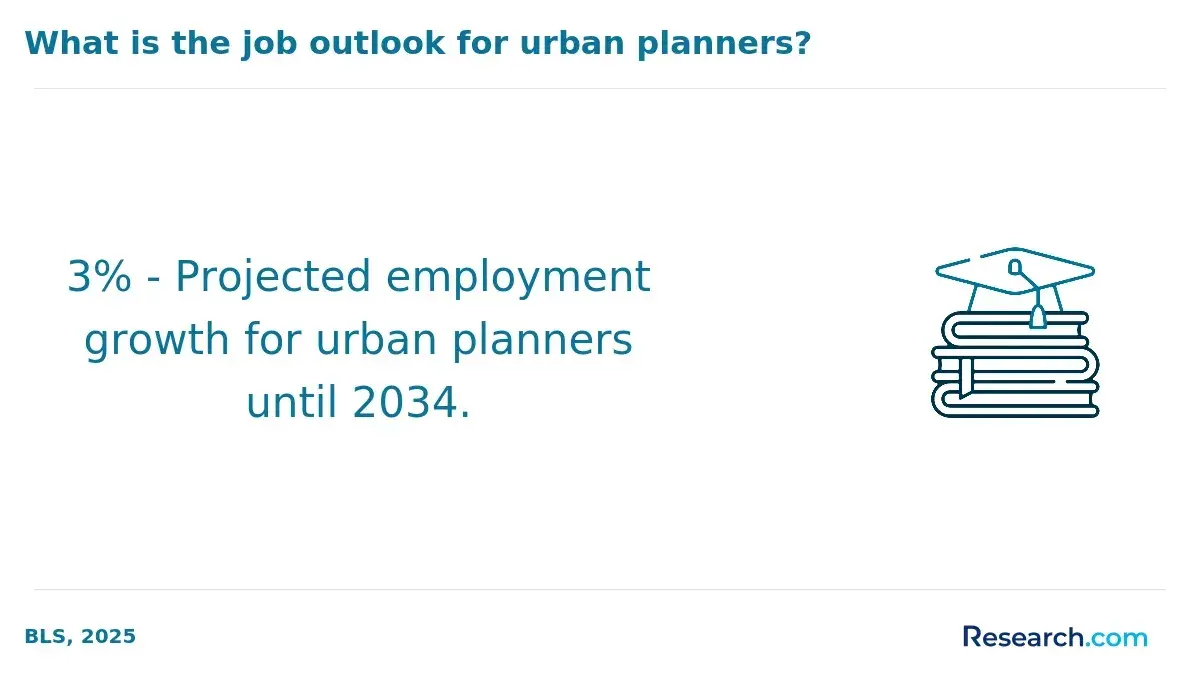
- The job outlook for urban and regional planners in the US is promising, with a projected growth rate of 4% between 2023 and 2033 [US Bureau of Labor Statistics (BLS), 2024], reflecting ongoing demand for professionals who can support sustainable urban development.
- Urban and regional planners in the US have a median hourly wage of $40.25, while Rhode Island have a median hourly wage of $40.75.
- Urban planning work in Rhode Island can involve community development, sustainable land use, transportation improvements, coastal resilience, affordable housing, and local policy implementation.
- Schools for urban planning programs in Rhode Island include the University of Rhode Island and Rhode Island School of Design, both offering robust curricula and hands-on experiences in the field.
- What are the education requirements for urban planners in Rhode Island?
- What urban planning specializations are available in Rhode Island?
- Are there licensing requirements for urban planners in Rhode Island?
- How long does it take to become an urban planner in Rhode Island?
- How much do urban planners in Rhode Island earn?
- What careers are available to urban planners in Rhode Island?
- What are the typical responsibilities of urban planners in Rhode Island?
- How can a business education complement my urban planning career in Rhode Island?
- What emerging technologies are reshaping urban planning in Rhode Island?
- How Will Climate Change Impact Urban Planning in Rhode Island?
- Can Interdisciplinary Studies Enhance My Urban Planning Career in Rhode Island?
- How Do Local Regulations Shape Urban Planning Projects in Rhode Island?
- What Are the Continuing Education Options to Advance Urban Planning Skills in Rhode Island?
- Can Urban Planning Skills Open Doors to Other Professions in Rhode Island?
- Can Integrating Social Work Enhance Urban Planning Outcomes in Rhode Island?
- How Do Urban Planners Navigate Financial Management for Their Projects in Rhode Island?
- How can legal insights boost urban planning project success in Rhode Island?
- How Can Urban Planners Collaborate with Social Services in Rhode Island?
- Are there available scholarships for urban planners in Rhode Island?
- What urban planning internships or practical experiences can I pursue in Rhode Island?
- What professional organizations in Rhode Island should I join to advance my career as an urban planner?
What are the education requirements for urban planners in Rhode Island?
Urban planners need training that combines policy, design, data analysis, public engagement, environmental awareness, and local government processes. In Rhode Island, that preparation is especially important because planners may work on dense neighborhoods, coastal areas, historic districts, transportation corridors, and small-town development decisions.
- Bachelor’s degree: A bachelor’s degree is the usual starting point for entry-level planning work or graduate study. Brown University and the University of Rhode Island are among the institutions that can help students build relevant academic preparation.
- Relevant major: Common undergraduate fields include urban studies, environmental science, geography, architecture, public policy, landscape architecture, and related social science or design disciplines.
- Core coursework: Useful subjects include land use planning, urban design, environmental policy, housing policy, public administration, statistics, community engagement, and Geographic Information Systems (GIS).
- Applied experience: Internships, studio projects, planning workshops, public meetings, and field research help students understand how regulations, budgets, political priorities, and community needs shape real projects.
- Graduate education: A master’s degree is not required for every planning job, but it can improve competitiveness for advanced roles, specialized work, and positions that require deeper technical or policy expertise.
Students comparing degree options should pay attention to curriculum, internship access, faculty expertise, alumni outcomes, and whether the program fits their intended specialization. If cost and flexibility are major concerns, reviewing the most affordable online urban planning degrees can help you compare online options before committing to a program.
| Education or experience step | Why it matters | Best fit for |
| Bachelor’s degree | Builds the academic foundation for planning, policy, design, data, and environmental analysis. | Students starting from high school or changing majors early in college. |
| Planning-related internship | Shows employers that you can work with real plans, public input, agency processes, and project deadlines. | Undergraduates, graduate students, and career changers. |
| Master’s degree | Can strengthen qualifications for higher-responsibility roles or specialized planning work. | Applicants targeting competitive municipal, consulting, transportation, or environmental planning positions. |
| Professional certification | Signals commitment to professional standards and continuing education. | Working planners seeking advancement, credibility, or broader career mobility. |
What urban planning specializations are available in Rhode Island?
Urban planning is not one single job. In Rhode Island, planners may focus on transportation, housing, coastal resilience, environmental protection, historic preservation, economic development, or neighborhood revitalization. The right specialization depends on the type of problems you want to solve and the employers you want to work for.
- Transportation planning: Transportation planners study how people move through communities and help improve roads, transit systems, pedestrian access, bicycle infrastructure, and congestion management. This path suits professionals who enjoy data, infrastructure, mobility, and public systems.
- Environmental planning: Environmental planners assess how development affects land, water, habitats, and climate-related risks. In a coastal state, this specialization can be especially relevant for projects involving flooding, shoreline protection, stormwater, and natural resource management.
- Community development: Community development planners work with residents, nonprofits, agencies, and local governments to support affordable housing, public spaces, neighborhood investment, and social infrastructure. This path is strong for people who want frequent public engagement and equity-focused work.
- Sustainable development planning: Sustainable development planners balance economic growth, environmental protection, and quality of life. They help communities grow responsibly while considering land use rules, infrastructure capacity, and long-term resilience.
| Specialization | Typical focus | Good choice if you enjoy |
| Transportation planning | Transit access, traffic patterns, mobility, complete streets, and infrastructure coordination. | GIS, modeling, infrastructure, public agencies, and regional systems. |
| Environmental planning | Environmental review, coastal impacts, natural resources, sustainability, and climate resilience. | Science, policy, regulation, and conservation-focused planning. |
| Community development | Housing, neighborhood investment, public participation, and social needs. | Resident engagement, local government, nonprofits, and equity-centered planning. |
| Sustainable development planning | Responsible growth, land use strategy, infrastructure capacity, and long-term community goals. | Systems thinking, policy trade-offs, and balancing competing priorities. |
Are there licensing requirements for urban planners in Rhode Island?
Rhode Island does not have a state-specific licensure process for urban planners. That means you generally do not need a Rhode Island planning license to work in the field. However, employers may prefer or value professional credentials, especially for experienced roles, consulting work, or leadership positions.
The most recognized planning credential is certification through the American Institute of Certified Planners. To earn this credential, candidates must register with the AICP, document relevant professional experience, pass the AICP examination, and complete certification maintenance. Maintaining the credential requires earning 32 credits every two years.
Additional credentials can be useful when they align with your specialization:
- Certified Economic Development (CEcD): Useful for planners focused on business attraction, redevelopment, local economic growth, and community investment.
- LEED Accreditation: Relevant for planners who work with sustainable buildings, green development standards, and environmentally responsible design.
- Professional Transportation Planner (PTP): Appropriate for professionals focused on transportation networks, mobility planning, and infrastructure systems.
If your planning interests overlap with sustainability, environmental review, or climate resilience, the cheapest online environmental science degrees may also be worth comparing as part of your academic planning.
How long does it take to become an urban planner in Rhode Island?
The full preparation timeline commonly takes six to eight years when it includes both undergraduate education and graduate study. The exact timeline depends on whether you pursue a master’s degree, how quickly you gain practical experience, and whether you choose to earn a professional credential.
| Stage | Typical length | What you should accomplish |
| Bachelor’s degree | Four years | Complete a planning-related major or coursework in urban studies, geography, environmental science, architecture, public policy, or a related field. |
| Master’s degree | Two years | Develop advanced planning knowledge, complete applied projects, and specialize in areas such as transportation, sustainability, or community development. |
| Internship or field experience | Three months to a year | Work with agencies, nonprofits, planning departments, transportation groups, or community organizations on real planning tasks. |
| AICP certification preparation | Several months to a year | Meet experience requirements, prepare for the examination, and complete the credentialing process if it supports your goals. |
You can shorten or stretch the path depending on your situation. A student who enters a planning-related bachelor’s program early and completes strong internships may qualify for entry-level roles sooner. A career changer may need additional coursework, a graduate certificate, or a master’s program to become competitive.
How much do urban planners in Rhode Island earn?
Urban planner pay depends on education, experience, specialization, employer type, and location. Municipal planning roles, transportation agencies, consulting firms, housing organizations, environmental agencies, and regional planning employers may all structure compensation differently.
Urban and regional planners in the US have a median annual wage of $83,720. In the same period, Rhode Island urban and regional planners had a median hourly wage of $40.75, which is approximately $84,750 a year.
| Location or measure | Reported wage | How to interpret it |
| US urban and regional planners | Median hourly wage of $40.25 | A national benchmark for comparing Rhode Island wages with the broader market. |
| US urban and regional planners | Median annual wage of $83,720 | A useful reference point for evaluating planning career earnings nationally. |
| Rhode Island urban and regional planners | Median hourly wage of $40.75 | Rhode Island’s reported median hourly wage for the occupation. |
| Rhode Island urban and regional planners | Approximately $84,750 a year | An annualized estimate based on the reported Rhode Island hourly wage. |
Do not assume that a median wage is a guaranteed starting salary. Entry-level roles may pay less, while experienced planners, specialists, and managers may earn more depending on employer needs and local budgets. If you are also considering adjacent environmental careers, explore jobs in environmental sustainability to compare overlapping options.
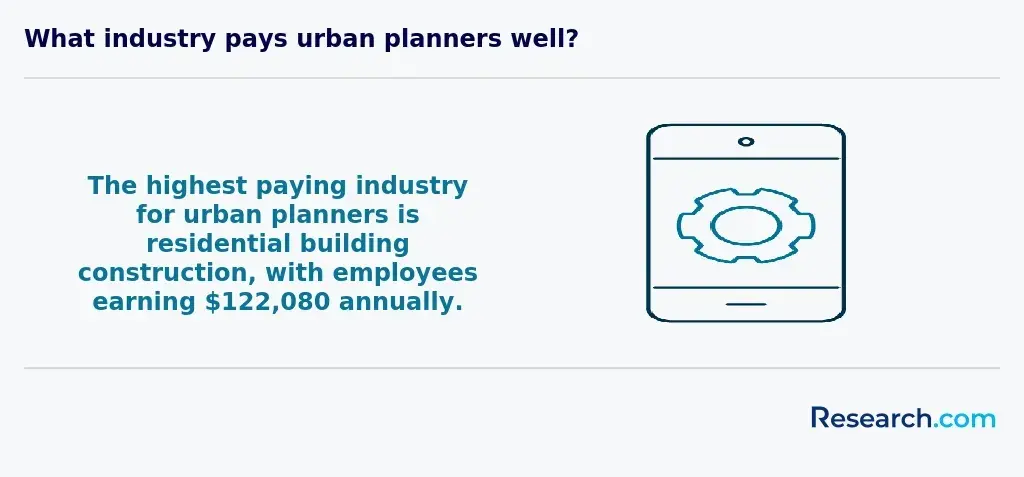
The chart below shows the industries with the highest average salaries for urban planners.
What careers are available to urban planners in Rhode Island?
Urban planning skills can lead to jobs in local government, state agencies, regional planning, consulting, housing, transportation, environmental policy, and nonprofit community development. Rhode Island’s mix of coastal communities, historic towns, urban neighborhoods, and infrastructure needs creates several career directions.
- City Planner: City planners usually work for municipal governments on land use, zoning, community plans, development review, and public engagement. Cities such as Providence and Newport may need planners to help manage growth, housing, public spaces, and neighborhood change.
- Transportation Planner: Transportation planners analyze mobility needs, transit access, traffic patterns, and infrastructure priorities. They may collaborate with the Rhode Island Department of Transportation or local agencies on projects that affect commuting, safety, and regional connectivity.
- Environmental Planner: Environmental planners evaluate how development affects natural resources and help apply sustainable planning practices. In Rhode Island, coastal conditions make this role relevant to climate resilience, resource management, and environmental review.
- Community Development Specialist: Community development specialists often work with nonprofits, housing organizations, local agencies, and foundations on neighborhood improvement, housing access, public services, and community investment.
Urban planning is not the only route to meaningful local development work. If you are comparing skilled career paths across education levels, the top trade school jobs guide can help you consider alternatives before choosing a degree-heavy path.
What are the typical responsibilities of urban planners in Rhode Island?
Urban planners turn policy goals, community needs, maps, regulations, budgets, and public input into practical recommendations. Their work can be highly technical one day and deeply community-facing the next.
- Review land use plans, zoning ordinances, site proposals, and local regulations for consistency with community goals.
- Coordinate with elected officials, planning boards, residents, developers, agency staff, and nonprofit partners.
- Analyze demographic, environmental, transportation, housing, and economic data to identify local needs.
- Prepare comprehensive plans, neighborhood plans, transportation studies, housing strategies, or redevelopment proposals.
- Support the design and improvement of parks, public spaces, streetscapes, civic areas, and community facilities.
- Evaluate environmental effects and recommend practices that reduce harm or improve long-term resilience.
- Present recommendations to city councils, planning commissions, boards, or public agencies.
- Facilitate meetings, workshops, hearings, and community conversations so residents understand and influence planning decisions.
| Responsibility | Skill it requires | Why it matters |
| Land use and zoning review | Regulatory analysis and attention to detail | Projects must follow local and state requirements before they can move forward. |
| Community engagement | Communication, facilitation, and listening | Plans are stronger when residents, businesses, and public agencies can contribute meaningfully. |
| GIS and data analysis | Mapping, statistics, and spatial reasoning | Data helps planners identify patterns in housing, transportation, population, and environmental risk. |
| Plan writing and presentation | Clear writing and public speaking | Decision-makers need practical recommendations, not just technical reports. |
How can a business education complement my urban planning career in Rhode Island?
Business training can make an urban planner more effective when projects involve budgets, redevelopment finance, cost-benefit analysis, public-private partnerships, grant planning, or long-term asset management. Planning ideas often fail when they are not financially realistic, so business knowledge can help planners connect policy goals with fundable implementation plans.
A business background may be especially useful for planners working in economic development, real estate, infrastructure planning, housing finance, or municipal administration. If you want to add management and financial decision-making skills, compare options from the best business schools in Rhode Island.
What emerging technologies are reshaping urban planning in Rhode Island?
Digital planning tools are changing how planners collect evidence, explain trade-offs, and involve the public. GIS mapping, IoT networks, urban data analytics, visualization tools, and real-time public engagement platforms can help planners understand how neighborhoods function and how proposed changes may affect residents.
Technology does not replace local knowledge or public participation. Instead, it gives planners better ways to test assumptions, identify risks, and communicate complex information. Professionals in many fields are blending technical tools with traditional expertise; for another example of career preparation in the state, see this guide on how to become a nutritionist in Rhode Island.
How Will Climate Change Impact Urban Planning in Rhode Island?
Climate change affects Rhode Island planning through coastal erosion, increased flooding risks, stormwater challenges, infrastructure vulnerability, and changing development priorities. Planners may need to consider whether roads, housing, utilities, parks, and public facilities can withstand future conditions, especially in coastal or low-lying areas.
Analytical skills are becoming more important as planners use risk assessment, scenario planning, mapping, and forecasting to support decisions. For planners who want stronger quantitative and management preparation, an online MBA business analytics program may complement technical planning work.
Can Interdisciplinary Studies Enhance My Urban Planning Career in Rhode Island?
Urban planning benefits from interdisciplinary thinking because community problems rarely fit into one academic category. Planners often draw from public policy, sociology, design, environmental science, economics, law, data analysis, and community development.
Some professionals build analytical strength through fields that emphasize investigation, evidence, and structured problem-solving. For example, reviewing a forensic science degree in Rhode Island can show how rigorous analysis and evidence-based methods may transfer to risk assessment, site evaluation, and public safety planning.
How Do Local Regulations Shape Urban Planning Projects in Rhode Island?
Local regulations influence nearly every planning project in Rhode Island. Zoning rules, permitting procedures, environmental requirements, historic preservation standards, public hearing processes, and municipal priorities can determine whether a proposal is feasible, delayed, revised, or rejected.
Successful planners learn how to work with municipal boards, agency staff, community stakeholders, and legal or financial advisors. Business training can help when regulatory issues affect budgets, project timelines, or development feasibility, which is why some professionals compare accelerated online MBA programs to build practical management skills.
What Are the Continuing Education Options to Advance Urban Planning Skills in Rhode Island?
Continuing education helps planners keep up with changing tools, community needs, regulations, climate risks, and public engagement methods. Options may include workshops, local training sessions, graduate certificates, professional seminars, software courses, and certification maintenance activities.
Communication is also a continuing education priority. Planners frequently explain technical issues to residents, elected officials, and partner agencies. Looking at fields focused on communication, such as speech pathologist requirements in Rhode Island, can offer perspective on how professionals develop audience-centered communication skills.
Can Urban Planning Skills Open Doors to Other Professions in Rhode Island?
Urban planning develops transferable skills in research, mapping, budgeting, public engagement, policy analysis, writing, project coordination, and stakeholder management. These skills can support roles in real estate development, nonprofit leadership, municipal administration, sustainability, housing policy, transportation, economic development, and finance-related public projects.
If you are interested in the financial side of development, infrastructure, or public-sector budgeting, learning how to become an accountant in Rhode Island can help you understand another career path that overlaps with planning through budgets, compliance, and financial analysis.
Can Integrating Social Work Enhance Urban Planning Outcomes in Rhode Island?
Urban planning decisions affect housing stability, access to services, transportation options, neighborhood safety, and quality of life. Social work perspectives can help planners better understand how policy and design choices affect vulnerable residents and communities with limited resources.
Planning teams that collaborate with social work professionals may design stronger housing strategies, more inclusive public spaces, and better community support systems. To understand how this related field prepares professionals, review social worker education requirements in Rhode Island.
How Do Urban Planners Navigate Financial Management for Their Projects in Rhode Island?
Urban planning projects need sound financial management because even strong plans depend on realistic budgets, funding sources, implementation timelines, and accountability. Planners may contribute to cost estimates, grant proposals, capital improvement priorities, cost-benefit analysis, and long-term maintenance planning.
Financial literacy can be especially important for planners working on housing, infrastructure, redevelopment, and public facilities. Professionals who want stronger accounting and budgeting knowledge can compare the best accounting schools in Rhode Island.
How can legal insights boost urban planning project success in Rhode Island?
Legal awareness helps planners avoid preventable delays and reduce project risk. Zoning decisions, permitting, public hearings, contracts, environmental review, land use disputes, and development approvals all require careful attention to legal procedures.
Urban planners do not need to become attorneys to benefit from legal literacy. Understanding documentation, regulatory language, and procedural requirements can improve collaboration with counsel and public agencies. For a related legal support pathway, see how to become a paralegal in Rhode Island.
How Can Urban Planners Collaborate with Social Services in Rhode Island?
Urban planners can create stronger community outcomes when they work with social service agencies, housing providers, public health partners, and nonprofit organizations. These partners often understand resident needs that may not appear clearly in maps, zoning documents, or development proposals.
Collaboration can help align physical planning with support programs, such as housing stability services, transportation access, public space programming, and community resource delivery. To better understand the education behind this partner field, review social worker degree requirements in Rhode Island.
Is Becoming an Urban Planner in Rhode Island Worth It?
Urban planning can be worth it if you want a career that blends public service, policy, design, environmental thinking, and community problem-solving. It is a strong fit for people who are comfortable working with competing priorities, public feedback, regulations, data, and long project timelines.
It may not be the best fit if you want quick results, limited public interaction, or a career that avoids political and regulatory complexity. Planning work can be rewarding, but it often requires patience because community decisions move through public hearings, funding cycles, agency reviews, and stakeholder negotiations.
| Choose urban planning if... | Consider another path if... |
| You want to help shape housing, transportation, land use, public spaces, or climate resilience. | You prefer work with minimal public meetings or stakeholder negotiation. |
| You enjoy combining data, maps, policy, and community input. | You want a career where technical analysis alone drives decisions. |
| You are comfortable with long-term projects and gradual community change. | You need fast, highly visible results from most projects. |
| You can balance environmental, economic, legal, and social considerations. | You prefer roles with fewer regulatory or political constraints. |
Common Mistakes to Avoid When Preparing for an Urban Planning Career
- Choosing a program without checking fit: A strong planning program should match your goals, whether you care most about transportation, environmental planning, design, housing, or community development.
- Looking only at tuition: Total cost can include fees, housing, transportation, software, lost work time, and internship limitations. Compare the full financial picture before enrolling.
- Assuming a master’s degree is always required: Some roles may be accessible with a bachelor’s degree and experience, while others strongly prefer graduate training. Read job postings before deciding.
- Ignoring practical experience: Planning is applied work. Internships, field research, studio projects, and public meeting experience can be as important as coursework.
- Overlooking GIS and data skills: Mapping and analysis are increasingly central to planning decisions, especially in transportation, housing, environmental review, and climate resilience.
- Relying only on rankings: Rankings can be useful, but they do not tell you whether a program has the right internships, faculty, location, cost structure, or specialization for your goals.
Are there available scholarships for urban planners in Rhode Island?
Scholarships and grants can reduce the cost of planning education, especially for students pursuing undergraduate or graduate programs. Availability, eligibility, deadlines, and award amounts can change, so students should confirm details directly with the scholarship provider or school financial aid office.
- Rhode Island Foundation Scholarships: These scholarships support students at different education levels, including Rhode Island residents studying fields such as urban planning. They are accessible to all Rhode Island residents, regardless of immigration status, and usually require an eligibility quiz and application.
- American Planning Association Latinos and Planning Division Scholarship: This award supports Latino students who are part of the Latinos and Planning Division of the American Planning Association. Eligible students must be in the third or fourth year of undergraduate study or the first and second year of graduate studies in programs accredited by the Planning Accreditation Board.
- American Planning Association New Urbanism Division – Gina Tirinnanzi, AICP Memorial Scholarship: This scholarship is available to students in PAB-accredited planning programs and requires an original paper on New Urbanism topics.
Students trying to lower education costs should compare institutional aid, assistantships, scholarships, employer tuition support, transfer credit policies, and online options. If flexibility is a priority, reviewing the easiest online majors can provide context on alternative academic routes, although “easiest” should never be the only factor in choosing a degree.
The chart below visualizes the most common majors that urban planners take for their undergraduate studies.
What urban planning internships or practical experiences can I pursue in Rhode Island?
Internships help aspiring planners prove they can apply classroom knowledge to real communities. In Rhode Island, practical experience may come from public agencies, housing organizations, preservation groups, transportation offices, environmental agencies, consulting firms, or community nonprofits.
- Providence Preservation Society: This organization focuses on historic preservation in Providence. Interns may support outreach, events, research, or projects that show how preservation and planning intersect in a historic city.
- Rhode Island Housing: This state agency works on housing needs and sustainable communities. Interns may assist with research, policy work, community engagement, or housing-related planning efforts.
- Rhode Island Department of Transportation (RIDOT): Internships connected to transportation planning can expose students to infrastructure projects, traffic studies, project coordination, and public outreach.
Not every organization will have openings at all times. If no internship is posted, students can still look for volunteer projects, capstone partnerships, municipal board meetings, research assistantships, or short-term planning-related assignments that build relevant experience.
| Experience type | What you can learn | How to make it count |
| Municipal planning internship | Zoning review, public meetings, development applications, and local government procedures. | Ask to attend meetings and contribute to maps, memos, or staff reports. |
| Transportation project experience | Mobility data, infrastructure planning, safety analysis, and public outreach. | Build a portfolio sample using maps, summaries, or project documentation. |
| Housing or nonprofit work | Affordable housing, community needs, resident engagement, and policy implementation. | Track measurable contributions such as research, outreach, or program support. |
| Preservation or design project | Historic context, public space, design review, and neighborhood character. | Document before-and-after analysis, site observations, and community input. |
What professional organizations in Rhode Island should I join to advance my career as an urban planner?
Professional organizations can help new planners find mentors, learn about policy changes, attend training events, discover job opportunities, and stay connected to the local planning community. Membership is not required to work as a planner, but it can make career development easier.
- American Planning Association Rhode Island (APA RI): Founded in 1978, this chapter supports planning practice, land use policy, professional education, and networking in the state.
- Grow Smart Rhode Island: This organization promotes sustainable economic growth, responsible resource management, and compact development through research, training, and advocacy.
- DESIGNxRI: This nonprofit connects planning and design professionals, creating opportunities for interdisciplinary collaboration across Rhode Island’s design sector.
- Rhode Island Housing: Established in 1973, this organization focuses on improving housing conditions and supporting sustainable communities, making it relevant for planners interested in housing policy and community development.
Questions to Ask Before Choosing an Urban Planning Program
- Does the curriculum cover the specialization I care about most, such as transportation, housing, sustainability, environmental planning, or urban design?
- How much GIS, statistics, policy writing, and community engagement training will I receive?
- What internships, studios, fieldwork, or local agency partnerships are available?
- Do graduates work in planning roles in Rhode Island or nearby markets?
- How much will the program cost after scholarships, assistantships, grants, transfer credits, and fees?
- Can I study part time or online if I need to keep working?
- Will the program help me prepare for AICP certification later in my career?
- What portfolio, capstone, or applied project will I have when I graduate?
What Urban Planners in Rhode Island Have to Say About Their Careers
- "Urban planning in Rhode Island gives me the chance to work on projects that residents can actually see and use. The best part is watching agencies, neighborhoods, and local leaders work toward a shared improvement." - Eugene
- "Planning here means respecting historic places while still responding to modern housing, transportation, and public space needs. That balance keeps the work challenging and meaningful." - Christian
- "Rhode Island’s coastal and urban conditions make planning especially important. Projects often require us to think about current residents and long-term resilience at the same time." - Shelby
Related Articles for Nearby States
- 2027 How to Become an Urban Planner in Massachusetts
- 2027 How to Become an Urban Planner in Connecticut
- 2027 How to Become an Urban Planner in New York
- 2027 How to Become an Urban Planner in New Jersey
- 2027 How to Become an Urban Planner in Vermont
- 2027 How to Become an Urban Planner in New Hampshire
- 2027 How to Become an Urban Planner in Pennsylvania
- 2027 How to Become an Urban Planner in Delaware
- 2027 How to Become an Urban Planner in Maine
- 2027 How to Become an Urban Planner in Maryland
References:
- American Legislative Exchange Council. (2025). Rhode Island. Rich States, Poor States. https://www.richstatespoorstates.org/states/RI
- American Planning Association Rhode Island Chapter. (n.d.). Welcome to APA Rhode Island. https://ri.planning.org/
- Brown University. (n.d.). Internships, Fellowships and Jobs. Urban Studies. https://urbanstudies.brown.edu/career-opportunities/internships-fellowships-and-jobs
- Rhode Island Department of Business Regulation. (n.d.). License Lookup. https://elicensing.ri.gov/Lookup/LicenseLookup.aspx
- Roger Williams University. (n.d.). Urban and Regional Planning Graduate Certificate. https://www.rwu.edu/graduate/programs/graduate-programs/urban-and-regional-planning
- University of Rhode Island. (n.d.). Graduate Certificate in Community Planning. Department of Landscape Architecture. https://web.uri.edu/lar/academics/community-planning-certificate
- University of Rhode Island. Community Planning Certificate. https://web.uri.edu/lar/academics/community-planning-certificate/
- Unity Environmental University. How to Become an Urban Planner. https://unity.edu/careers/urban-planner
- Urban Planning Degree scholarship resource. https://urbanplanningdegree.com/scholarship-guide
- US Bureau of Labor Statistics. Urban and Regional Planners. https://www.bls.gov/ooh/life-physical-and-social-science/urban-and-regional-planners.htm
- US Bureau of Labor Statistics. Occupational Employment and Wage Statistics, Rhode Island. https://www.bls.gov/oes/2023/may/oes_ri.htm
- US Bureau of Labor Statistics. (2025, August 28). Urban and Regional Planners. Occupational Outlook Handbook. https://www.buildstream.co/career-guides/career-guide-how-to-become-an-urban-planner
- Additional urban planner career guide. https://www.buildstream.co/career-guides/career-guide-how-to-become-an-urban-planner
- woonsocketri.gov. (n.d.). Department of Planning & Development. https://www.woonsocketri.gov/personnel-department/files/job-description-0
Key Insights
- Rhode Island does not require a state urban planner license, but AICP certification can strengthen credibility and advancement potential.
- The typical preparation path includes a bachelor’s degree, practical experience, and often a master’s degree, with the full route commonly taking six to eight years.
- Urban and regional planners in Rhode Island had a median hourly wage of $40.75, which is approximately $84,750 a year, but individual salaries depend on experience, employer, specialization, and location.
- The strongest candidates combine planning knowledge with applied skills in GIS, public engagement, policy writing, environmental analysis, and project coordination.
- Rhode Island planners may find meaningful work in transportation, environmental planning, community development, sustainable development, housing, coastal resilience, and municipal planning.
- Before choosing a degree program, compare cost, curriculum, internship access, specialization options, faculty expertise, and whether the program supports your long-term career goals.
Other Things to Know About Becoming an Urban Planner in Rhode Island
To become an urban planner in Rhode Island by 2026, individuals typically need at least a bachelor's degree in urban planning or a related field. Some employers may also require a master's degree or certification from the American Institute of Certified Planners (AICP).
The demand for urban planners in Rhode Island is expected to remain steady in 2027, influenced by ongoing urban development projects and environmental planning needs. Opportunities may arise in both public and private sectors, with a focus on sustainable and community-centered planning.