2027 Best Online APA-Accredited PsyD Programs with No GRE Requirements

Co-Founder and Chief Data Scientist
Are you searching for a fully online, APA-accredited PsyD program? If your search has been frustrating, you're not alone. The truth is, due to the American Psychological Association's non-negotiable standards for hands-on clinical training, the 100% online APA-accredited PsyD is a practical myth. The legitimate path forward is through low-residency programs that allow for hybrid learning, though these are also exceptionally rare.
This scarcity exists in the face of immense national need, with nearly 58 million American adults experiencing mental illness each year. This guide, created by career planning experts with 10 years of experience, is designed to cut through the confusion around APA-accredited PsyD programs no GRE. We will explain why this rigorous model is the profession's standard for flexible learning, help you navigate the limited landscape of available programs, and provide a clear framework to evaluate the best path toward your goal of becoming a licensed clinical psychologist.
What are the benefits of getting a degree from an APA-accredited PsyD program?
- It is the primary pathway to becoming a licensed clinical psychologist, allowing you to provide direct psychological services to patients.
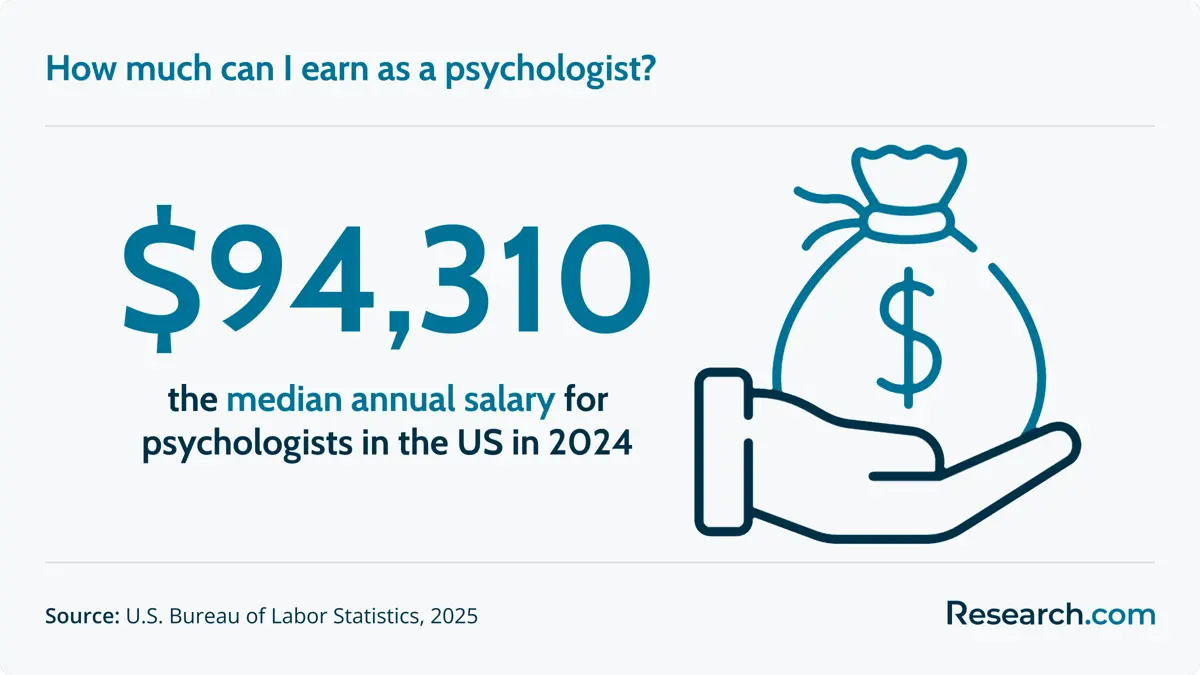
- The degree leads to significant earning potential, with psychologists earning a median salary of $94,310, offering a strong return on investment.
- Its curriculum is specifically designed to prepare you for hands-on clinical work, emphasizing therapeutic skills over academic research.
What can I expect from an online APA-accredited PsyD program with no GRE requirements?
You can expect a demanding blend of three core components: online coursework, mandatory in-person residencies that require travel, and extensive local clinical training. These rare hybrid programs are not fully remote; they are designed to be just as rigorous as on-campus options.
The online portion covers your academic learning, giving you flexibility. The residencies, however, require you to travel to campus periodically for intensive, face-to-face training with faculty and fellow students.
Most importantly, you will be responsible for securing local, in-person clinical placements. This involves hundreds of hours of supervised work in your community. This structure is intentional, as a Doctor of Psychology (PsyD) is a professional degree focused on clinical practice, unlike a research-focused PhD. This is how APA-accredited PsyD programs no GRE ensure you meet the highest standards for hands-on patient care.
Where can I work with a degree from APA-accredited PsyD programs with no GRE requirements?
As a licensed clinical psychologist, you can work in a wide range of settings. This includes hospitals and integrated care facilities, private practice, schools and universities, government agencies like the VA, and community mental health centers. You'll find opportunities across the country, with states like California and New York having the highest number of practicing psychologists.
However, here is the most important piece of advice you will receive: an APA-accredited degree is not a license to practice.
Licensure is granted by individual states, and each state has its own specific requirements. Before you even apply to a program, you must verify that its curriculum meets the licensure rules for the state where you intend to work. This is a non-negotiable step to avoid a very costly mistake.
How much can I make with a degree from APA-accredited PsyD programs with no GRE requirements?
The median annual salary for psychologists is $94,310. That's the baseline you should be thinking about.
Of course, that figure can change significantly based on where you decide to practice and the specific role you take on. For instance, the median salary for a clinical psychologist in Oregon is over $132,000.
It's helpful to view this earning potential as the "return" side of an important financial equation. When you consider the cost of a doctoral program, which we'll discuss, you are really calculating your potential return on investment. This is a critical step in making a sound decision for your career.
- List of the Best Online APA-accredited PsyD Programs With No GRE for 2027 List of Programs
- How long does it take to complete an APA-accredited PsyD program with no GRE requirements? Completion Time
- How does an online PsyD program compare to an on-campus program? How does an online PsyD program compare to an on-campus program?
- What is the average cost of APA-accredited PsyD programs with no GRE requirements? Program Cost
- What are the financial aid options for students enrolling in APA-accredited PsyD programs with no GRE requirements? Financial Aid
- What are the prerequisites for enrolling in APA-accredited PsyD programs with no GRE requirements? Requirements
- What courses are typically in APA-accredited PsyD programs with no GRE requirements? What courses are typically in APA-accredited PsyD programs with no GRE requirements?
- What types of specializations are available in APA-accredited PsyD programs with no GRE requirements? Specializations
- How to Choose the Best APA-accredited PsyD Program with No GRE Requirements How to Choose the Best APA-accredited PsyD Program with No GRE Requirements
- What career paths are available for graduates of APA-accredited PsyD programs with no GRE requirements? Career Paths
- What is the job market for graduates of APA-accredited PsyD programs with no GRE requirements? Job Outlook
- What Student Support Services Can Enhance Your Success in an APA-accredited PsyD Program? What Student Support Services Can Enhance Your Success in an APA-accredited PsyD Program?
Best Online APA-Accredited PsyD Programs with No GRE for 2027
Choosing a PsyD program is a high-stakes decision because it affects your licensure path, clinical training options, debt load, and long-term career mobility. The search becomes even more complex when you want three things at once: APA accreditation, no GRE requirement, and online or hybrid flexibility. Those programs are uncommon, and some that appear “online” still require in-person residencies, local practicum placements, and a full-time clinical internship.
This guide is for prospective clinical psychology doctoral students who want a practice-focused degree without taking the GRE. It explains which programs fit the no-GRE and APA-accredited category, how long training takes, what it costs, how online and campus formats compare, what admissions committees look for instead of GRE scores, and how to evaluate whether a program can actually help you become licensed.
Quick Answer: What Should You Know First?
The best no-GRE PsyD program is not simply the one with the most convenient format. It should be APA-accredited, transparent about practicum and internship outcomes, aligned with your state’s psychologist licensure requirements, and realistic about the time and cost involved. Most full-time PsyD programs take four to six years, total tuition can range from $100,000 to over $150,000, and hybrid programs are usually not cheaper just because some coursework is online.
No-GRE admission does not mean low selectivity. Programs still review your GPA, psychology prerequisites, clinical or helping experience, letters of recommendation, writing ability, interview performance, and fit with the program’s practitioner-scholar model.
How Research.com Evaluates Programs
Because doctoral psychology training is expensive and closely tied to licensure, program evaluation must be based on more than convenience or name recognition. Research.com uses data from established education sources, including the IPEDS database, Peterson's database, the College Scorecard database, and The National Center for Education Statistics.
These sources help compare institutional characteristics, costs, and outcomes. Readers can review the broader approach on Research.com’s methodology page. For PsyD programs, applicants should also verify current APA accreditation status directly with the accreditor and ask each program how its curriculum supports licensure in their intended state.
Comparison of Featured No-GRE APA-Accredited PsyD Options
| Program | Format and Training Model | Length | Credits | Cost Information | Accreditation |
| The Chicago School of Professional Psychology - Doctor of Psychology in Applied Clinical Psychology | Online coursework with practicum training and four required in-person residencies | 3 years | 66 | $1,815 per credit | American Psychological Association (APA) |
| National University - Doctor of Psychology in Clinical Psychology | Primarily in-person at the Pleasant Hill campus with concentration options | 5-7 years | 180 required quarter credits | $135,396 estimated total tuition | American Psychological Association (APA) |
1. The Chicago School of Professional Psychology - Doctor of Psychology in Applied Clinical Psychology
The Chicago School of Professional Psychology offers a post-master’s PsyD designed for students preparing for advanced clinical practice. The program combines online doctoral coursework, supervised practicum experiences, and four required in-person residencies so students can develop clinical competence while maintaining some location flexibility.
- Program Length: 3 years
- Required Credits to Graduate: 66
- Cost per Credit: $1,815
- Accreditation: American Psychological Association (APA)
2. National University - Doctor of Psychology in Clinical Psychology
National University prepares students for clinical psychology practice through a practitioner-scholar curriculum with a strong focus on multicultural and diversity competence. The program is delivered primarily in person at the Pleasant Hill campus and allows students to tailor training through several concentration areas.
- Program Length: 5-7 years
- Concentrations: Forensic/Correctional Psychology; Neuropsychology; and Integrated Health Psychology
- Required Quarter Credits to Graduate: 180
- Estimated Total Tuition: $135,396
- Accreditation: American Psychological Association (APA)
How Long Does It Take to Complete an APA-Accredited PsyD Program with No GRE Requirements?
Most full-time APA-accredited PsyD programs take four to six years. Hybrid delivery can make coursework more flexible, but it usually does not shorten the clinical training sequence.
A typical PsyD timeline includes three to four years of doctoral coursework, assessment training, supervised practicum, and dissertation work. Students then complete a required one-year full-time clinical internship before graduation. Part-time enrollment may push the total timeline to seven years or more.
Typical PsyD Training Timeline
| Stage | What Happens | Why It Matters |
| Coursework and foundational training | Students study psychological science, ethics, assessment, diagnosis, research methods, and intervention models. | This stage builds the academic base required for evidence-based clinical practice. |
| Practicum experiences | Students complete supervised clinical work, often in community clinics, hospitals, schools, or other approved sites. | Practicum hours help students develop direct-service skills and prepare for internship applications. |
| Dissertation or doctoral project | Students complete a scholarly project tied to clinical psychology, applied research, or professional practice. | This requirement demonstrates the ability to use research to inform practice. |
| Full-time clinical internship | Students complete a one-year full-time clinical internship before finishing the degree. | The internship is a major milestone for professional readiness and later licensure. |
Why Clinical Training Cannot Be Rushed
The timeline is long because APA-accredited psychology training is sequential. Students do not simply complete a checklist; they build competence gradually through supervised practice, feedback, assessment, and progressively more complex clinical responsibilities.
Before applying for a pre-doctoral internship, students must document extensive supervised clinical experience and demonstrate readiness for advanced training. This structure protects clients, supports professional competence, and helps ensure graduates are prepared for the responsibilities of independent practice.
How Does an Online PsyD Program Compare to an On-Campus Program?
For APA-accredited programs, the delivery format should not reduce academic or clinical expectations. Online or hybrid coursework may change how students attend classes, but it does not remove practicum, residency, internship, faculty supervision, or competency requirements.
A legitimate hybrid online PsyD program still requires substantial in-person clinical training. The diploma generally reflects the degree earned, not whether some didactic coursework was completed online. The more important questions are whether the program is APA-accredited, whether it supports licensure in your intended state, and whether it has strong clinical training infrastructure.
Online vs. Campus PsyD Programs: Practical Differences
| Factor | Online or Hybrid PsyD | On-Campus PsyD |
| Course delivery | Some didactic courses may be completed online, often with required residencies. | Most coursework is completed in person on campus. |
| Clinical training | Students still complete supervised practicum and internship requirements in approved settings. | Students complete supervised practicum and internship requirements through campus-connected or external sites. |
| Flexibility | May be better for students who cannot relocate, but travel and local placement coordination are still required. | May provide more direct access to faculty, classmates, and established local practicum relationships. |
| Risk to check | Students must ask how the school helps secure local practicum sites and whether the format meets state licensure rules. | Students should still confirm APA accreditation, internship outcomes, and state licensure alignment. |
The Role of APA Accreditation
APA accreditation is the key quality marker for doctoral clinical psychology training. The accreditor reviews curriculum, faculty qualifications, supervised training, student outcomes, and professional competency standards across programs, regardless of whether classes are delivered online, on campus, or in a hybrid structure.
Students should not assume that “online” means easier or less rigorous. In many cases, hybrid doctoral study requires exceptional organization because students must manage online coursework, clinical placement logistics, residency travel, dissertation deadlines, and internship preparation at the same time.
What Is the Average Cost of APA-Accredited PsyD Programs with No GRE Requirements?
Students should plan for total tuition between $100,000 and over $150,000. The average per-credit cost is around $1,283, and hybrid PsyD programs are generally not discounted simply because some courses are online.
Tuition is only one part of the budget. Students may also need to pay for residency travel, lodging, meals, technology, books, clinical documentation requirements, internship application costs, and reduced working hours during intensive training periods. For APA-accredited PsyD programs no GRE, these extra costs can materially change the total investment.
Cost Factors to Include Before You Enroll
| Cost Category | What to Ask | Why It Matters |
| Tuition | What is the per-credit or total program tuition? | This is the largest direct cost and should be compared across programs. |
| Residencies | How many in-person residencies are required, and where are they held? | Travel, lodging, and meals can add meaningful expenses. |
| Practicum requirements | Will I need background checks, liability insurance, testing materials, or site-specific fees? | Clinical training often includes costs not shown in tuition tables. |
| Internship year | Can I relocate for internship if needed? | Internship placement may affect housing, income, and family logistics. |
| Debt repayment | What federal loan options and repayment plans will I use? | Loan planning should begin before the first semester, not after graduation. |
How to Think About ROI
A PsyD should be evaluated as both a professional credential and a financial commitment. A useful return-on-investment calculation compares total program cost, expected borrowing, years in training, likely geographic job market, and salary potential after licensure.
Salary varies by location and setting. A doctor of psychology salary may be higher in some states or industries, which can change the financial picture. For example, the median salary of $132,550 in Oregon can make a high-tuition program easier to justify than it would be in a lower-paying market. The chart below shows top-paying states for clinical psychologists and can help applicants compare potential earnings against projected debt.
What Financial Aid Options Are Available for APA-Accredited PsyD Programs with No GRE Requirements?
Federal student loans are the main funding source for many PsyD students. Applicants commonly use Direct Unsubsidized Loans and Grad PLUS Loans to cover tuition, fees, and living expenses during doctoral training.
Prospective students should be realistic about funding. Practice-focused PsyD programs often provide fewer institutional stipends and grants than some research-focused PhD programs. With over 72,190 clinical and counseling psychologists practicing in the U.S., federal lending remains a major financing pathway for doctoral clinical training.
Public Service Loan Forgiveness Can Change the Repayment Strategy
Public Service Loan Forgiveness is one of the most important repayment programs for future psychologists to understand. Under PSLF, borrowers who work full-time for a qualifying employer, such as a government agency or 501(c)(3) non-profit organization, may have the remaining balance on eligible federal student loans forgiven after 10 years of qualifying payments.
This can make public-sector and non-profit clinical work financially strategic, especially for graduates employed in community mental health, non-profit hospitals, university counseling centers, correctional systems, or agencies such as the VA. Students who expect to borrow heavily should discuss PSLF eligibility, repayment plans, and documentation requirements with a financial aid advisor before enrolling.
Ways to Reduce the Net Cost
- Compare total program cost, not only tuition. Residency travel and internship relocation can shift the real price.
- Ask about transfer credit. Post-master’s PsyD options may reduce required coursework for eligible students.
- Use federal loans before private loans. Federal loans may provide repayment protections and access to forgiveness programs.
- Plan around internship mobility. Being flexible about internship location may improve match opportunities but can affect household costs.
- Track qualifying employment early. Students interested in PSLF should understand employer eligibility before choosing postdoctoral and early-career roles.
What Are the Prerequisites for APA-Accredited PsyD Programs with No GRE Requirements?
Most programs expect a bachelor’s degree from an accredited institution, a competitive GPA, often 3.0 or higher, and prior coursework in psychology. No-GRE admission means the test is not required, but it does not remove the expectation of academic readiness.
Admissions committees usually look for evidence that applicants understand psychology as a science and a helping profession. Common prerequisite areas include statistics, research methods, abnormal psychology, developmental psychology, and biopsychology. Students preparing their applications should review grad school psychology requirements so they can identify missing coursework before deadlines arrive.
What Programs May Review Instead of GRE Scores
| Application Component | What It Shows | How to Strengthen It |
| Undergraduate or graduate GPA | Academic consistency and readiness for doctoral-level work | Address weak grades directly and show improvement in advanced coursework. |
| Psychology prerequisites | Preparation in core scientific and clinical foundations | Complete missing courses before applying or explain when they will be finished. |
| Clinical or helping experience | Exposure to human services, mental health settings, or client-facing work | Seek supervised roles, volunteer work, crisis services, research assistantships, or behavioral health experience. |
| Letters of recommendation | Professional judgment from faculty, supervisors, or clinicians | Choose recommenders who can discuss maturity, ethics, writing, and interpersonal skill. |
| Interview performance | Fit with the program and readiness for clinical training | Be prepared to discuss ethical judgment, self-awareness, career goals, and why a PsyD fits your plans. |
How Career-Changers Can Prepare
Applicants from non-psychology backgrounds are not automatically excluded. They may need to build a stronger academic bridge before applying by completing prerequisite psychology courses after their original degree.
Some students use post-baccalaureate study, while others take individual courses at accredited institutions. For cost-conscious learners, affordable online community colleges may provide flexible options for completing foundational coursework before doctoral application season.
What Courses Are Typically Included in APA-Accredited PsyD Programs with No GRE Requirements?
PsyD coursework combines psychological science, assessment, diagnosis, intervention, ethics, research literacy, and supervised practice. The goal is to prepare graduates to deliver evidence-based services, not simply to learn counseling techniques.
Students usually begin with scientific foundations and professional ethics, then move into assessment, psychopathology, therapeutic methods, diversity-informed practice, and advanced clinical training. Coursework is integrated with practicum experiences so students can apply classroom learning under supervision.
Core PsyD Course Areas
- Psychometrics: Students learn how psychological tests are designed, evaluated, and interpreted.
- Cognitive and Affective Bases of Behavior: Coursework examines how thinking, emotion, motivation, and behavior interact.
- Cognitive Assessment: Students practice administering and interpreting intelligence and cognitive measures.
- Research Methods and Statistics: Training helps students evaluate evidence and apply research findings to clinical work.
- Professional Ethics and Law: Students study confidentiality, informed consent, mandated reporting, boundaries, supervision, and legal standards.
Why the Scientific Foundation Matters
A PsyD is practice-oriented, but APA standards require training in psychological science. The APA accreditation process emphasizes evidence-based practice, professional competence, and systematic evaluation of clinical work.
This preparation supports employment across multiple healthcare and human-service settings. The chart below shows major employment sectors for psychologists, including offices of other health practitioners, which employ nearly 30,000 psychologists, as well as outpatient care centers and hospitals.
Students who want a psychology education rooted in academic tradition, representation, and supportive campus culture may also explore the best HBCUs for psychology as part of their broader research into psychology pathways.
What Specializations Are Available in APA-Accredited PsyD Programs with No GRE Requirements?
Specialization in a PsyD program usually comes from a combination of formal coursework, certificates or concentrations, practicum placements, internship training, and postdoctoral experience. A concentration listed on a program website is useful, but it is not enough by itself.
Before choosing a program for a specialization, students should confirm whether they can access relevant practicum sites in their area. For example, a student interested in neuropsychology will need assessment-focused training opportunities, while a student interested in child and adolescent work will need supervised experience with young people and families.
Common PsyD Specialization Areas
| Specialization | Typical Focus | Possible Settings |
| Health Psychology | The connection between physical health, behavior, coping, illness, and mental health | Hospitals, integrated care clinics, rehabilitation settings, and medical practices |
| Child and Adolescent Psychology | Assessment and treatment for children, teens, and families | Schools, community clinics, hospitals, private practice, and youth-serving agencies |
| Forensic Psychology | Application of psychological principles to legal and correctional contexts | Courts, correctional facilities, forensic hospitals, and evaluation practices |
Specialization and Earnings
Specialized clinical training may affect the settings where graduates work and the populations they serve. Some higher-paying roles are tied to specific industries or advanced competencies. For example, roles in home health care services can lead to a median salary of over $118,000. The chart below highlights industries associated with stronger earning potential for psychologists.
Students who want additional graduate-level preparation before doctoral study may also compare the top HBCU psychology master’s programs, particularly if they value mentorship, community, and a culturally supportive learning environment.
How to Choose the Best APA-Accredited PsyD Program with No GRE Requirements
The right program is the one that can help you become licensed, clinically competent, and financially prepared. At minimum, it should be APA-accredited, aligned with your state’s licensure rules, transparent about internship outcomes, and clear about how students secure practicum placements.
Because legitimate accredited online PsyD programs are rare, applicants should evaluate each program carefully instead of relying only on rankings, convenience, or marketing language. The best choice depends on your career goals, location, finances, clinical interests, and ability to manage intensive doctoral training.
Questions to Ask Before Applying
- Licensure: Does the curriculum meet psychologist licensure requirements in the state where I plan to practice?
- APA status: Is the program currently APA-accredited, and where can I verify that status?
- Internship outcomes: What has the APPIC internship match rate been during the last three years?
- Practicum support: Does the school identify practicum sites, or am I responsible for finding them in my area?
- Residencies: What are the required dates, locations, and estimated travel costs for in-person sessions?
- Completion: What are the program’s attrition and completion rates?
- Faculty access: How often do students meet with advisors, supervisors, and dissertation chairs?
- Debt planning: What is the typical borrowing pattern for students in the program?
Common Mistakes to Avoid
| Mistake | Why It Can Hurt You | Better Approach |
| Choosing only because the GRE is waived | No-GRE admission does not guarantee quality, licensure alignment, or strong clinical placements. | Make APA accreditation, outcomes, and licensure fit your first filters. |
| Looking only at tuition | Residencies, internship relocation, books, fees, and lost work time can increase the real cost. | Build a full cost-of-attendance estimate before accepting admission. |
| Assuming online means fully remote | APA-accredited clinical psychology training requires in-person supervised practice. | Ask exactly which requirements must be completed in person. |
| Ignoring state licensure rules | A program may not automatically satisfy requirements in every state. | Confirm licensure alignment with the school and your state psychology board. |
| Underestimating practicum logistics | Weak local placement options can delay progress or limit specialization. | Research training sites near you before enrolling. |
What Career Paths Are Available for Graduates of APA-Accredited PsyD Programs with No GRE Requirements?
PsyD graduates often become licensed clinical psychologists, but private practice is only one option. The broader psychology workforce includes clinical, healthcare, government, assessment, academic, consulting, and program leadership roles. Psychologists have a median salary of $94,310, though earnings vary by setting, location, experience, and specialization.
Graduates may work in integrated healthcare, hospitals, outpatient clinics, community mental health agencies, correctional settings, veterans’ services, schools, university counseling centers, and private practices. Some focus on therapy, while others specialize in assessment, supervision, program evaluation, or interdisciplinary care.
Career Options After a PsyD
| Career Path | Typical Work | Who It May Fit |
| Clinical psychologist in private practice | Assessment, diagnosis, therapy, consultation, and treatment planning | Graduates who want autonomy and are prepared for business responsibilities |
| Hospital or integrated care psychologist | Behavioral health care within medical teams, health psychology, assessment, and consultation | Students interested in the connection between mental and physical health |
| Community mental health psychologist | Therapy, crisis work, assessment, supervision, and services for underserved populations | Graduates interested in access, public service, and possible PSLF-qualifying employment |
| Forensic or correctional psychologist | Evaluations, treatment, consultation, and services within legal or correctional systems | Students with strong interest in law, risk assessment, and justice settings |
| Academic or training role | Teaching, clinical supervision, program coordination, and student mentorship | Graduates who enjoy education and professional development |
Research and Teaching Opportunities
Although the PsyD is primarily a practice degree, it can still support applied research, teaching, supervision, and clinical leadership. Some graduates become adjunct faculty, clinical supervisors, training directors, or contributors to program evaluation projects in healthcare systems.
Graduates who enjoy evidence-based practice may also move into clinical research careers, especially in hospitals, academic medical centers, or applied behavioral health organizations. Those interested in teaching and supervision may draw on theories of educational psychology to improve instruction, mentoring, and curriculum design.
What Is the Job Market for Graduates of APA-Accredited PsyD Programs with No GRE Requirements?
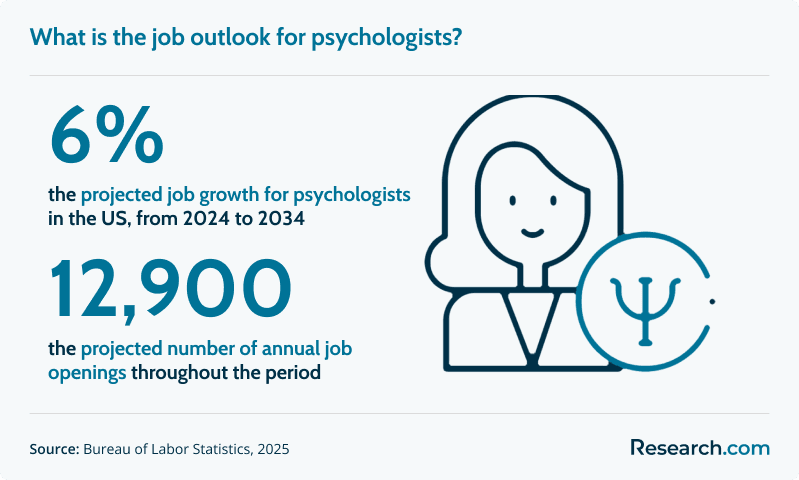
The labor market for psychologists is favorable compared with many occupations. The U.S. Bureau of Labor Statistics projects 6% growth for psychologists overall through 2034, equal to about 12,900 job openings each year.
The outlook is stronger for clinical and counseling psychologists specifically, with projected growth of 11%. This demand supports the value of APA-accredited PsyD programs no GRE for students who are prepared for the training length, licensing process, and financial investment.
Why Demand Remains Strong
Demand for licensed psychologists is shaped by several long-term factors: greater public awareness of mental health, reduced stigma around seeking treatment, broader use of integrated behavioral healthcare, and continued need for assessment and evidence-based intervention.
Technology is also changing practice. Telehealth, digital documentation, measurement-based care tools, and AI-supported administrative systems are becoming more common. These tools may improve efficiency, but they do not replace the clinical judgment, ethical responsibility, diagnostic skill, and supervised training required of licensed psychologists.
What Student Support Services Can Improve Success in an APA-Accredited PsyD Program?
Student support is especially important in hybrid and low-residency PsyD programs because students must coordinate coursework, clinical training, dissertation work, and internship preparation across several years. Strong programs provide academic advising, faculty mentoring, writing support, clinical placement guidance, career counseling, and internship application assistance.
Applicants should ask how often students meet with advisors, how practicum problems are handled, whether faculty help with dissertation progress, and what career support is available after graduation. Students exploring related behavioral health training may also review cheap BCBA master's programs online as a separate pathway or supplemental option, depending on their professional goals.
Student Perspectives on APA-Accredited PsyD Training
- : "I was concerned that a low-residency format might make internship applications harder. Instead, the workload, supervision, and competency expectations prepared me well, and I matched with my preferred site alongside applicants from major campus-based universities. The experience taught me that training quality mattered more than format. — Kris"
- : "I expected the PsyD to focus mostly on therapy, but the scientific and assessment coursework was far more demanding than I anticipated. Psychometrics and cognitive assessment were challenging, yet they became central to the work I do now. That research-informed foundation is what makes clinical practice professional rather than informal advice. — Hazel"
- : "Finding local practicum placements was one of the hardest parts of my program. It pushed me to build relationships with clinicians in my community before graduation, and those connections eventually led to my current position. The networking required during training became the starting point for my career. — Bernard"
Key Insights
- APA accreditation is the non-negotiable filter. No-GRE admission and online flexibility matter, but they should never outweigh accreditation, licensure alignment, and clinical training quality.
- Hybrid does not mean faster or easier. Most full-time PsyD programs take four to six years because supervised practicum, dissertation work, and a one-year full-time internship cannot be skipped.
- Total cost is larger than tuition. Applicants should budget for tuition between $100,000 and over $150,000, plus residency travel, clinical training expenses, and possible internship relocation.
- Admissions still require strong preparation. Without GRE scores, programs place more weight on GPA, psychology prerequisites, clinical experience, recommendations, writing, and interviews.
- Practicum access can make or break the program fit. Before enrolling, confirm whether your local area has training sites that match your clinical interests and whether the school provides placement support.
- Career outcomes depend on licensure, setting, and specialization. Psychologists have a median salary of $94,310, while some states and industries report higher salary levels.
- Debt strategy should start before enrollment. Federal loans and Public Service Loan Forgiveness may shape whether a PsyD is financially sustainable for your goals.
- The best program is the one that fits your state, budget, training needs, and career plan. Rankings can help narrow options, but final decisions should be based on accreditation, outcomes, support, and licensure readiness.
References:
- Bureau of Labor Statistics. (2025). Occupational employment and wage statistics (OEWS) - May 2024 OEWS profiles. Retrieved September 26, 2025, from BLS.
- Bureau of Labor Statistics. (2025). Psychologists. Retrieved September 26, 2025, from BLS.
- Data USA. (2025). Psychology. Retrieved September 26, 2025, from Data USA.
- Mental Health America. (2025). Quick facts and statistics about mental health. Retrieved September 26, 2025, from MHA.
Other Things You Should Know About APA-accredited PsyD Programs with No GRE Requirements
Yes, APA-accredited online PsyD programs often require internships, which must meet specific criteria such as a minimum of 1,500 hours of supervised practice. These internships are typically completed in the final year and are crucial for meeting licensure requirements.
Most APA-accredited PsyD programs require at least 1,000 hours of supervised practicum before the full-time predoctoral internship. Many also require at least 600 direct service hours and face-to-face supervision. The American Psychological Association’s internship standards still apply even when the didactic portion is online.
In 2027, APA-accredited online PsyD programs typically require courses in clinical psychology, research methods, and ethics. Programs might also include supervised practicum hours, varying by program. Check specific program requirements for details on credit hours and practicum experience.