
2027 What Can You Do With a Master’s in Industrial Organizational Psychology?

Co-Founder and Chief Data Scientist
A master’s in industrial organizational psychology is for people who want to solve workplace problems with evidence, not guesswork. The degree prepares graduates to improve hiring systems, employee development, leadership, performance, workplace culture, and organizational change using psychology, research methods, and business strategy.
This guide is designed for prospective graduate students comparing I-O psychology with human resources, business psychology, counseling, organizational leadership, consulting, or doctoral study. You will learn what the degree covers, what admissions committees look for, how online programs are viewed, what careers may be available, what salary data suggests, and how to decide whether the cost and time commitment make sense for your goals.
Quick Answer: What can you do with a Master’s in Industrial Organizational Psychology?
With a master’s in industrial organizational psychology, graduates can pursue roles in human resources, talent management, organizational development, workforce analytics, leadership training, compensation, employee relations, consulting, and workplace research. The degree is strongest for students who want applied careers in business or organizational settings rather than clinical counseling roles. According to the U.S. Bureau of Labor Statistics, the median annual salary for I-O psychologists in May 2023 was $147,420, though actual earnings vary by role, industry, experience, location, and whether a job requires doctoral-level training.
What are the benefits of getting a Master’s in Industrial Organizational Psychology?
- Broad workplace career options: Graduates can apply I-O psychology skills in HR, organizational development, talent strategy, consulting, training, employee engagement, analytics, government, nonprofit management, and corporate research.
- Strong salary potential in specialized roles: Professionals in this field may reach high-paying positions, especially in consulting, large corporations, people analytics, leadership development, and senior HR management. The median salary cited for I-O psychologists is around $147,420 per year, while several related leadership and consulting roles can exceed six figures.
- Online study can fit working professionals: Many universities offer online master’s programs in industrial organizational psychology, allowing students to continue working while completing coursework, projects, and applied research. The key is choosing an accredited program with a credible curriculum and strong career support.
- What is a Master’s in Industrial Organizational Psychology?
- What are the requirements for admission to a Master’s in Industrial Organizational Psychology?
- How much does it cost to complete a Master’s in Industrial Organizational Psychology?
- Will employers recognize an online Master’s in Industrial Organizational Psychology degree?
- Top Careers for Master’s in Industrial Organizational Psychology Graduates
- How much can I make with a Master’s in Industrial Organizational Psychology?
- Which industries are best for graduates of a Master’s in Industrial Organizational Psychology?
- Which states are best for graduates of a Master’s in Industrial Organizational Psychology?
- What is the job outlook for graduates of Master’s in Industrial Organizational Psychology?
- What emerging trends are shaping the future of industrial organizational psychology?
- What ethical considerations should I be aware of in industrial-organizational psychology?
- What are the potential career challenges after earning a Master’s in Industrial Organizational Psychology?
- Is a Master’s in Industrial Organizational Psychology worth it?
- Can complementary disciplines like counseling enhance my I-O psychology skills?
- How do I choose the right Master's in Industrial Organizational Psychology program?
- Which Professional Associations Can Help Advance My I-O Psychology Career?
- What is the return on investment for a Master's in Industrial Organizational Psychology?
- Is an Accelerated Online Program Right for My Career Goals?
- How can I verify the credibility of an online Master’s program in industrial organizational psychology?
- How can I launch my career in industrial organizational psychology?
- How can I finance my Master’s in Industrial Organizational Psychology?
What is a Master’s in Industrial Organizational Psychology?
A master’s in industrial-organizational psychology, often called I-O psychology, is a graduate degree that applies psychological science to work and organizations. Instead of focusing on therapy or mental health treatment, I-O psychology examines how people behave at work and how organizations can make better decisions about hiring, training, leadership, performance, culture, motivation, and change.
The degree sits at the intersection of psychology, business, statistics, human resources, and organizational behavior. Students learn how to design employee assessments, evaluate training programs, analyze survey data, improve team performance, support organizational change, and recommend workplace interventions based on research rather than opinion.
Common coursework includes statistics, research methods, personnel psychology, organizational behavior, employee selection, performance appraisal, leadership, motivation, psychometrics, workplace diversity, and human factors. Many programs also require a thesis, capstone, internship, practicum, or applied consulting project so students can demonstrate that they can use research methods in real workplace contexts.
The degree can be a good fit for students who enjoy psychology but want a business-facing career. It is not usually the right path for students whose main goal is to become a licensed mental health counselor, therapist, or clinical psychologist, because I-O psychology programs typically do not meet clinical licensure requirements.
| Program Focus | What Students Learn | Common Career Use |
| Industrial psychology | Hiring, selection, testing, job analysis, performance appraisal, and workforce planning | Talent acquisition, assessment, compensation, and HR analytics |
| Organizational psychology | Leadership, motivation, culture, engagement, teamwork, and organizational change | Organizational development, leadership development, change management, and consulting |
| Research and analytics | Statistics, survey design, program evaluation, psychometrics, and applied research | People analytics, workforce research, employee listening, and evidence-based HR strategy |
What are the requirements for admission to a Master’s in Industrial Organizational Psychology?
Admissions requirements vary by university, but most master’s programs look for evidence that applicants can handle graduate-level psychology, statistics, writing, and applied research. Strong applicants usually show a clear connection between their academic background, work experience, and career goals in I-O psychology.
Bachelor's Degree
Applicants generally need a bachelor’s degree from a regionally accredited institution. A psychology major is helpful but not always mandatory. Programs may also consider applicants with backgrounds in business, human resources, sociology, organizational leadership, social sciences, or related fields. Some schools set minimum GPA requirements, and competitive programs may expect stronger academic records in psychology, statistics, and research-based courses.
Prerequisite Coursework
Many online master’s in industrial organizational psychology programs recommend or require undergraduate preparation in several foundational areas. These courses help ensure students can understand research literature and apply psychological concepts in organizational settings.
- Introduction to psychology: Gives students a basic vocabulary for understanding behavior, cognition, motivation, and personality.
- Statistics: Builds the quantitative foundation needed for survey analysis, employee assessment, research interpretation, and people analytics.
- Research methods: Prepares students to evaluate evidence, design studies, and understand validity, reliability, sampling, and measurement.
- Social psychology: Helps students understand group behavior, influence, attitudes, decision-making, and interpersonal dynamics.
- Additional psychology courses: Some programs may value coursework in cognitive psychology, developmental psychology, personality psychology, or organizational behavior.
Standardized Tests
Some programs require the GRE General Test, while others have made it optional or do not use it. A smaller number may ask for the GRE Psychology Subject Test, although this is less common now. Applicants should check each school’s current admissions page rather than assuming requirements are the same across programs.
Application Materials
- Official transcripts: Schools usually require transcripts from every college or university previously attended.
- Letters of recommendation: Most programs ask for 2-3 letters from professors, supervisors, or professionals who can evaluate your academic readiness, analytical ability, work ethic, and fit for graduate study.
- Statement of purpose: This essay should explain why you want I-O psychology, what career problems interest you, how the program matches your goals, and what experience has prepared you for graduate work.
- Resume or CV: Include work experience, internships, research projects, HR experience, leadership roles, analytics skills, presentations, and relevant volunteer or organizational work.
For International Students
- English language proficiency: International applicants are commonly asked to submit TOEFL or IELTS scores unless they qualify for a waiver under the university’s policy.
| Admissions Factor | Why It Matters | How to Strengthen Your Application |
| Psychology and statistics background | I-O psychology relies heavily on research and measurement | Take prerequisite courses before applying if your transcript is light in these areas |
| Relevant work or research experience | Programs value applicants who understand organizational problems | Highlight HR, training, management, analytics, research, or consulting experience |
| Statement of purpose | Shows whether your goals match the program’s strengths | Name specific interests such as selection, leadership, people analytics, or organizational change |
| Recommendations | Provides outside evidence of graduate readiness | Choose recommenders who can discuss your analytical skills and professional maturity |
How much does it cost to complete a Master’s in Industrial Organizational Psychology?
The cost of a master’s in industrial organizational psychology depends on the institution, delivery format, residency status, total credits, fees, and how long you take to finish. Because graduate school can affect your finances for years, evaluate both the sticker price and the total cost after scholarships, employer support, assistantships, transfer credits, and loan interest.
- Institution type: Public universities often charge lower tuition than private universities, especially for in-state students.
- Location: Costs can differ by state, region, and campus-based living expenses.
- Program format: An online degree in psychology may use a per-credit tuition model and may reduce relocation or commuting costs, but fees can still add up.
- Residency status: In-state students at public universities typically pay less than out-of-state students.
The stated tuition ranges for this type of master’s program are:
- Public universities: Tuition for a master’s in industrial organizational psychology at a public university can range from roughly $10,000 to $30,000 per year for in-state students. Out-of-state tuition will generally be higher.
- Private universities: Private university tuition can range from $30,000 to $60,000 or more per year.
- Online programs: Online programs may charge per credit, so the final price depends on the number of credits required and any additional technology, practicum, residency, or graduation fees.
| Cost Item | Why Students Miss It | Question to Ask Before Enrolling |
| Tuition per credit | Programs advertise tuition differently, making totals hard to compare | What is the total tuition for the full degree based on required credits? |
| University fees | Technology, student service, graduation, and online learning fees may be separate | Which fees are mandatory for online and campus students? |
| Books and software | Statistics, survey, and analytics courses may require specialized tools | Are software licenses included in tuition? |
| Internship or residency expenses | Some applied experiences may require travel or time away from work | Are there campus visits, practicum hours, or local placement requirements? |
| Opportunity cost | Working fewer hours can reduce income while enrolled | Can I complete the program part time without delaying my career plans too much? |
Will employers recognize an online Master’s in Industrial Organizational Psychology degree?
Employers can recognize an online master’s in industrial organizational psychology, especially when the degree comes from a regionally accredited institution with a rigorous curriculum and a credible university reputation. The word “online” is usually less important than whether the school is legitimate, whether the program develops applied skills, and whether the graduate can show evidence of strong work.
That said, not all online programs are viewed equally. Employers may look more favorably on programs with experienced faculty, applied projects, internships or practicums, strong assessment and analytics coursework, and clear learning outcomes. A well-built portfolio can also help. Examples include employee survey projects, job analysis reports, training evaluations, selection system designs, leadership development plans, and data dashboards.
Students should also be realistic about role requirements. Some research-intensive, academic, or psychologist-titled positions may prefer or require a doctorate. Other roles in HR, consulting, people analytics, and organizational development may be more focused on skills, experience, and demonstrated business impact.
| Online Program Feature | Why It Matters to Employers | What to Verify |
| Regional accreditation | Signals that the institution meets recognized higher education standards | Check the school’s accreditation status through official accreditor or government-recognized sources |
| Applied curriculum | Shows that students practice workplace problem-solving, not only theory | Look for capstones, consulting projects, internships, assessment work, and research methods |
| Faculty background | Faculty with research and industry experience can connect coursework to current employer needs | Review faculty bios, publications, consulting experience, and areas of specialization |
| Career support | Networking and job-search guidance can affect outcomes | Ask about internship support, alumni outcomes, employer connections, and career coaching |
Top Careers for Master’s in Industrial Organizational Psychology Graduates
A master’s in industrial organizational psychology prepares graduates for applied workplace roles that use research, assessment, and behavioral science to improve how organizations hire, develop, manage, and retain employees. As of 2023, there were 1,030 industrial organizational psychologists in the U.S. workforce.
Job titles vary widely because many graduates do not work under the exact title “industrial-organizational psychologist.” Instead, they may hold positions in HR leadership, talent management, organizational development, workforce analytics, learning and development, consulting, research, or performance management.
Human Resources and Talent Management
In HR and talent roles, I-O psychology graduates help organizations make better people decisions. They may design structured interviews, improve selection systems, analyze employee engagement, build leadership pipelines, support employee relations, and strengthen the workplace culture through evidence-based practices.
| Job Title | Annual Salary |
| HR Manager | $136,350 |
| Talent Development Specialist | $75,371 |
| Employee Relations Specialist | $78,650 |
Business Consultancy
Consulting roles are a strong fit for graduates who can translate research into business recommendations. I-O professionals may advise clients on organizational restructuring, leadership coaching, culture change, employee assessment, workforce planning, change readiness, and productivity improvement.
| Job Title | Annual Salary |
| Organizational Development Consultant | $109,958 |
| Change Management Specialist | $106,002 |
| Executive Coach | $120,520 |
Workplace Training and Development
Training and development careers focus on helping employees build skills that support organizational goals. Graduates may conduct needs assessments, design learning programs, evaluate training outcomes, coach leaders, improve team collaboration, and apply learning theory to corporate education.
| Job Title | Annual Salary |
| Training and Development Manager | $137,942 |
| Learning and Development Specialist | $91,1577 |
| Leadership Coach | $95,500 |
Applied Psychological Research in Business
Research-oriented graduates may work with workforce data, employee surveys, assessment tools, retention studies, engagement metrics, and program evaluation. These roles are valuable in organizations that want to understand motivation, burnout, turnover, leadership effectiveness, and employee experience through measurable evidence.
| Job Title | Annual Salary |
| Workforce Research Analyst | $104,074 |
| Corporate Researcher | $113,102 |
| People Analytics Specialist | $75,487 |
Compensation and Performance Management
Compensation and performance roles use I-O psychology principles to create fairer, clearer, and more motivating systems. Graduates may help design pay structures, performance review processes, incentive programs, job evaluations, competency models, and productivity measures.
| Job Title | Annual Salary |
| Compensation and Benefits Analyst | $80,386 |
| Performance Management Specialist | $108,849 |
How much can I make with a Master’s in Industrial Organizational Psychology?
I-O psychology can lead to strong compensation, but salary depends heavily on job title, industry, geography, experience, and whether the role is classified as an I-O psychologist or as a related business, HR, analytics, consulting, or management position.
According to the U.S. Bureau of Labor Statistics, the median annual salary for I-O psychologists in May 2023 was $147,420. A median is not a guaranteed starting salary. It means half of workers in that occupation earned more and half earned less.
Several factors can influence pay:
- Experience: Entry-level graduates often start below senior specialists, consultants, directors, or executives with years of applied experience.
- Education: A master’s degree can qualify graduates for many applied roles, but academic, research-heavy, or psychologist-designated positions may prefer or require a doctorate. Some students later consider an online PhD in industrial organizational psychology to pursue advanced research or academic paths.
- Industry: Consulting firms, technology companies, and large corporations may offer higher compensation than some nonprofit, education, or government settings.
- Location: Salaries can be higher in major labor markets, but cost of living can also be higher.
- Specific role: Management consulting, executive coaching, people analytics leadership, and senior HR roles may pay differently than entry-level training or employee relations positions.
Examples of salary ranges include:
- Entry-Level: $60,000 - $80,000
- Mid-Career: $90,000 - $120,000
- Senior-Level: $150,000 - $200,000.
How to evaluate salary claims from schools
- Ask whether salary data is based on graduates from the same program, the broader occupation, or national labor statistics.
- Look at job titles, not just degree names, because many graduates enter HR, analytics, or consulting roles.
- Compare expected earnings with total program cost, loan payments, and the time required to complete the degree.
- Remember that salary ranges are not guarantees and may depend on experience you build before and during the program.
Which industries are best for graduates of a Master’s in Industrial Organizational Psychology?
Graduates with a master’s in I-O psychology, like many online master’s in psychology graduates, can work in multiple sectors because organizations in every industry need effective hiring, training, leadership, engagement, and change management. The best industry for you depends on whether you prefer analytics, consulting, employee-facing work, operations, research, or leadership development.
| Industry | Why I-O Skills Matter | Best Fit For |
| Consulting | Clients need help with leadership, change, culture, workforce planning, and performance | Students who like project-based work, client communication, and problem-solving under deadlines |
| Technology | Tech employers rely on people analytics, talent strategy, team design, user experience, and human factors | Students interested in data, fast-changing organizations, and employee experience |
| Healthcare | Healthcare systems need support with workflow, safety, burnout, leadership, and staffing | Students who want mission-driven organizational work with complex teams |
| Government and public sector | Agencies need fair selection systems, training, policy evaluation, and performance improvement | Students who value stability, public service, and structured systems |
| Education | Colleges and training organizations need research, administration, development, and learning support | Students interested in teaching, research, training, or academic administration |
| Finance | Financial institutions need compliance training, leadership, customer-facing team performance, and change support | Students comfortable with high-stakes business environments |
| Manufacturing | Manufacturing organizations need productivity, safety, ergonomics, workforce planning, and team effectiveness | Students interested in operations, safety, human factors, and process improvement |
| Nonprofit organizations | Nonprofits need leadership development, team cohesion, retention, and organizational effectiveness | Students who prioritize mission impact and can work with tighter budgets |
Consulting
- Management consulting: I-O professionals may support strategy execution, leadership alignment, organizational design, and cultural improvement.
- Human capital consulting: This path focuses on talent management, assessment, workforce planning, and leadership development.
- Organizational development consulting: Consultants help organizations manage change, improve processes, and strengthen employee engagement.
Technology
- Tech companies: I-O graduates may contribute to people analytics, team performance, employee experience, manager effectiveness, and workplace research.
- Human factors and ergonomics: Professionals apply knowledge of human behavior to improve systems, workflows, tools, and user-centered processes.
Healthcare
- Hospitals and healthcare systems: I-O skills can support patient safety initiatives, staffing, employee well-being, workflow improvement, and leadership development.
- Healthcare administration: Graduates may help improve management systems, employee engagement, and organizational effectiveness.
Government and Public Sector
- Government agencies: I-O professionals may work on selection systems, training, leadership, policy implementation, and employee performance.
- Public health organizations: Program evaluation, behavior change, and workforce development are common areas of contribution.
Education
- Colleges and universities: Graduates may work in research, teaching support, administration, assessment, or organizational effectiveness.
- Training and development: I-O skills can improve curriculum design, employee learning, and professional development programs.
Finance
- Financial institutions: I-O professionals may help improve employee performance, customer service teams, leadership, and organizational change.
- Banking and investment: The field can support decision-making, team dynamics, ethics training, and workforce performance.
Manufacturing
- Manufacturing companies: I-O graduates may contribute to safety, productivity, engagement, training, and workforce planning.
- Human factors and ergonomics: These skills are especially useful for designing efficient, safe, and human-centered work processes.
Non-profit Organizations
- Non-profits: I-O psychology can improve leadership, teamwork, employee retention, and mission-driven performance.
- Human resources and talent management: Graduates can help nonprofits recruit, train, and retain employees and volunteers.
Which states are best for graduates of a Master’s in Industrial Organizational Psychology?
The best state for an I-O psychology graduate depends on more than salary. You should weigh employer concentration, industry fit, cost of living, remote work options, networking opportunities, and competition. Large business markets and regions with technology, consulting, finance, healthcare, or corporate headquarters often provide more opportunities.
- California: California is often associated with strong salary opportunities for I-O psychologists, especially because of its technology sector and large corporate employers. The trade-off is the high cost of living in many major cities.
- Washington: Washington, particularly the Seattle area, has a major technology presence that can support demand for talent strategy, analytics, leadership development, and organizational effectiveness.
- New York: New York City’s concentration of corporations, financial institutions, and consulting firms can create strong opportunities for I-O professionals.
- Illinois: The Chicago area has a diverse business base with large employers that may need I-O psychology expertise in HR, analytics, and organizational development.
- Texas: Texas offers opportunities across many industries because of business growth, population growth, and a broad employer base.
What is the job outlook for graduates of Master’s in Industrial Organizational Psychology?
The outlook for graduates with a master’s in industrial organizational psychology is supported by employers’ growing interest in employee well-being, productivity, retention, leadership development, people analytics, and evidence-based human capital management. However, job prospects are strongest for graduates who combine the degree with practical experience, technical skills, and a clear career direction.
Internships, practicums, assistantships, applied research, and consulting projects can make a major difference. Employers often want to see that candidates can work with data, communicate findings, influence stakeholders, and apply psychological science to real business problems.
Specialization can also help. Students who build depth in organizational development, talent management, assessment, leadership, people analytics, or training evaluation may be more competitive for targeted roles. A behavioral psychology degree can also add value when a student wants a stronger foundation in behavior change and applied behavioral science.
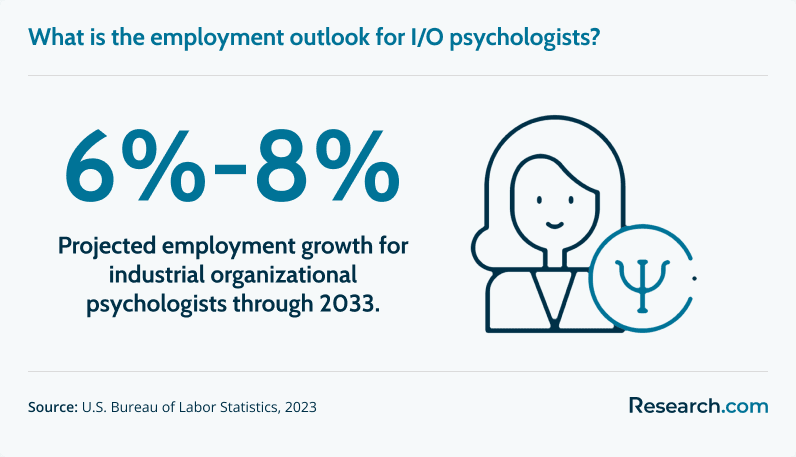
Organizations are using I/O psychology principles to address talent acquisition, employee engagement, leadership development, workplace stress, retention, and organizational change. Employment for I/O psychology professionals is projected to grow between 6% to 8% through 2033.
The U.S. Bureau of Labor Statistics projects faster-than-average growth for I-O psychologist occupations. Graduates with strong skills in research methods, data analysis, assessment, and consulting may be able to apply their training across a wide range of workplace roles.
What emerging trends are shaping the future of industrial organizational psychology?
Several workplace trends are changing how I-O psychology is practiced. Organizations are relying more on data analytics, artificial intelligence, digital assessment tools, employee listening platforms, and remote collaboration systems. These tools can improve measurement and decision-making, but they also require professionals who understand validity, bias, privacy, and ethical use of employee data.
Remote and hybrid work have also changed traditional assumptions about leadership, culture, onboarding, communication, and performance management. I-O professionals are increasingly asked to help organizations define productivity, support distributed teams, evaluate flexible work policies, and build manager capability in digital environments.
Diversity, equity, and inclusion remain central to the field because employee selection, promotion, assessment, compensation, and leadership systems can create or reduce inequity. I-O professionals are expected to use evidence-based methods rather than symbolic initiatives. The growing acceptance of digital graduate education is also visible across related fields, including options such as marriage and family therapy master's programs online, which reflect broader demand for flexible professional education.
What ethical considerations should I be aware of in industrial-organizational psychology?
Ethics are central in I-O psychology because professionals often work with sensitive employee data, hiring decisions, assessments, survey results, and organizational power dynamics. A poorly designed test, biased algorithm, unclear consent process, or mishandled employee survey can harm workers and expose organizations to legal and reputational risk.
- Confidentiality: Employees need to understand how their data will be used and who will see it.
- Fair assessment: Hiring and promotion tools should be valid, job-related, and monitored for adverse impact.
- Informed consent: Participants in surveys, research, or assessments should know the purpose and limits of participation.
- Data privacy: Digital workplace tools must be evaluated carefully, especially when collecting behavioral, productivity, or engagement data.
- Objectivity: I-O professionals should avoid tailoring results to please leadership when data points to uncomfortable findings.
- Conflict of interest: Consultants and internal professionals must be transparent about competing obligations to employees, managers, clients, and organizations.
Students who want to compare I-O psychology with other psychology pathways can review this psychology careers list.
What are the potential career challenges after earning a Master’s in Industrial Organizational Psychology?
A master’s in I-O psychology can be valuable, but graduates should expect a competitive and sometimes confusing job market. Many roles that use I-O skills do not use the title “I-O psychologist,” so job searches may need to include HR analyst, organizational development specialist, talent management consultant, people analytics associate, training manager, change management specialist, and workforce researcher.
Another challenge is proving applied experience. Employers may hesitate to hire a graduate who understands theory but has not completed internships, consulting projects, data analysis work, or organizational research. Building a portfolio during graduate school can reduce this risk.
Technology is another pressure point. Graduates who can use data tools, interpret analytics, evaluate AI-based assessments, and communicate insights to business leaders may be more competitive. Some professionals later consider additional graduate study, including options such as a psychology PhD online, when they want advanced research, academic, or specialized roles.
| Common Challenge | Why It Happens | Better Strategy |
| Searching only for “I-O psychologist” jobs | Many applied roles use HR, analytics, OD, or consulting titles | Search by skill area: assessment, people analytics, talent development, change management, and organizational effectiveness |
| Graduating without a portfolio | Employers want proof of applied ability | Save capstones, survey analyses, training evaluations, and consulting deliverables when allowed |
| Underestimating data skills | I-O work often involves measurement, statistics, and dashboards | Build confidence with statistics, survey tools, spreadsheets, and analytics platforms |
| Assuming the degree guarantees senior roles | Leadership positions usually require experience | Target entry or mid-level roles that build toward consulting, management, or director-level work |
Is a Master’s in Industrial Organizational Psychology worth it?
A master’s in industrial organizational psychology can be worth it if you want an applied workplace career that blends psychology, research, business strategy, and people systems. It is especially useful for students interested in HR analytics, organizational development, leadership training, assessment, consulting, employee engagement, and workplace research.
The degree may offer strong value because organizations increasingly need professionals who can improve employee experience, evaluate programs, use data responsibly, and guide change. For students who are interested in the business side of psychology, a master’s in I-O psychology can overlap with paths such as a business psychology major.
However, the degree is not automatically worth it for everyone. It requires time, tuition, and sustained effort. It may not meet licensure requirements for counseling or clinical practice. Some high-level research or academic roles may require a doctorate. And salary outcomes depend on the role you secure, your experience, your market, and your ability to translate graduate training into business impact.
| This Degree May Be Worth It If... | You May Want a Different Path If... |
| You want to improve workplaces using psychology and data | You want to provide therapy or become a licensed counselor |
| You are interested in HR, analytics, consulting, or organizational development | You dislike statistics, research, surveys, or measurement |
| You can complete internships, applied projects, or workplace research | You expect the degree alone to guarantee a senior job |
| You are willing to build business communication and consulting skills | You prefer purely academic psychology without organizational application |
Can complementary disciplines like counseling enhance my I-O psychology skills?
Counseling concepts can strengthen some I-O psychology skills, especially in conflict resolution, coaching, communication, leadership support, employee well-being, and difficult workplace conversations. However, counseling and I-O psychology serve different professional purposes. Counseling programs often prepare students for helping relationships and, in some cases, licensure pathways, while I-O psychology focuses on organizational systems, work behavior, and applied research.
Students who want stronger interpersonal and helping skills may benefit from exploring related training, including the best affordable online counseling programs. Before combining disciplines, clarify whether your goal is organizational consulting, employee support, coaching, HR leadership, or a licensed counseling role.
How do I choose the right Master's in Industrial Organizational Psychology program?
The right program is the one that matches your career target, budget, schedule, and learning needs. Do not choose solely by brand name, tuition, or convenience. A strong I-O psychology program should help you build applied research skills, workplace consulting ability, ethical judgment, and a portfolio that employers can understand.
| Program Factor | What to Look For | Why It Matters |
| Accreditation | Regional accreditation at the institution level | Helps with employer recognition, transferability, and financial aid eligibility |
| Curriculum | Courses in statistics, research methods, selection, assessment, leadership, organizational development, and analytics | Ensures the degree develops core I-O competencies |
| Applied experience | Internship, practicum, capstone, consulting project, or thesis option | Gives you evidence of real-world skill for job applications |
| Faculty expertise | Faculty with I-O research, consulting, HR, analytics, or organizational development experience | Improves mentoring and relevance to current workplace problems |
| Format | Online, hybrid, campus, full-time, part-time, synchronous, or asynchronous options | Affects your ability to balance school, work, and family responsibilities |
| Cost and aid | Total tuition, fees, scholarships, assistantships, and employer reimbursement | Determines affordability and return on investment |
| Career support | Internship help, alumni network, resume support, employer partnerships, and career coaching | Can influence how quickly you convert the degree into a relevant role |
Quality assurance looks different across fields, but students can learn from how other disciplines evaluate academic standards. For example, resources on CACREP accredited counseling programs online show how accreditation can shape program credibility in counseling; I-O psychology applicants should similarly verify the accreditation and reputation standards that apply to their intended program.
Questions to ask before applying
- Is the institution regionally accredited?
- Does the program include statistics, research methods, assessment, and organizational development?
- Can online students access internships, applied projects, or faculty mentoring?
- What career titles do recent graduates hold?
- Are GRE scores required, optional, or waived?
- How many credits are required, and what is the total cost?
- Does the program support working adults with flexible scheduling?
- Will the curriculum help me build a portfolio of applied work?
Which Professional Associations Can Help Advance My I-O Psychology Career?
Professional associations can help students and graduates stay current, find mentors, attend conferences, read field research, and discover job opportunities. The Society for Industrial and Organizational Psychology (SIOP) is one of the most relevant organizations for this field, and applicable divisions of the American Psychological Association (APA) may also be useful depending on your interests.
Membership can be especially valuable for students who are still learning the job market. Associations expose you to common job titles, ethical standards, research trends, graduate student resources, and networking opportunities. Students who are still building an academic foundation may also consider starting with a most affordable online bachelor's degree in psychology before moving into graduate specialization.
What is the return on investment for a Master's in Industrial Organizational Psychology?
Return on investment depends on how much you pay, how much income you give up while studying, how quickly you finish, how relevant your current experience is, and what role you obtain after graduation. A lower-cost accredited program with strong applied training may produce better ROI than a more expensive program that lacks career support or practical projects.
To evaluate ROI, compare tuition and fees with realistic salary ranges for the roles you plan to pursue. Include the duration of the program, loan costs, employer tuition assistance, scholarships, internship access, and the value of specialized projects or certifications. Students comparing other behavioral and organizational pathways may also review the cheapest BCBA online masters program for a broader view of cost and career trade-offs.
| ROI Factor | Why It Matters | How to Evaluate It |
| Total program cost | Tuition alone may not show the full financial commitment | Add tuition, fees, books, software, travel, and loan interest |
| Time to completion | Longer enrollment can delay earnings growth | Compare full-time, part-time, and accelerated options |
| Current experience | Students already in HR or management may convert the degree faster | Assess whether your resume already supports your target role |
| Applied projects | Portfolio evidence can improve job competitiveness | Choose programs with capstones, internships, or consulting deliverables |
| Career target | Different roles pay differently | Compare salaries for HR, OD, analytics, consulting, and research roles separately |
Is an Accelerated Online Program Right for My Career Goals?
An accelerated online master’s program may be a good option if you already have relevant experience, can manage an intensive schedule, and want to move quickly into a new role or promotion track. These programs can be useful for working professionals, but speed should not come at the expense of research depth, faculty support, applied projects, or career preparation.
Before choosing an accelerated format, confirm the weekly workload, course length, internship expectations, student support, and whether the compressed schedule allows enough time to master statistics, assessment, and applied research. Students considering faster academic pathways can compare options such as a fast track psychology degree online to decide whether accelerated learning fits their career readiness needs.
How can I verify the credibility of an online Master’s program in industrial organizational psychology?
To verify an online I-O psychology program, start with accreditation. The institution should be regionally accredited, and the accreditation should be verifiable through official sources. Then evaluate whether the program has qualified faculty, a relevant curriculum, transparent tuition, student support services, and evidence of graduate outcomes.
Also review how employers may interpret online psychology degrees in general. A helpful starting point is this guide on how are online psychology degrees viewed by employers. The strongest online programs are not simply convenient; they provide rigorous coursework, meaningful applied experience, and credible institutional backing.
Common mistakes to avoid when choosing a program
- Choosing without checking accreditation: An unaccredited or poorly recognized school can limit employer acceptance and financial aid options.
- Looking only at tuition: A cheap program may be costly if it lacks career support, applied training, or employer recognition.
- Assuming every online degree has the same reputation: Institutional credibility, faculty, curriculum, and outcomes matter.
- Ignoring practical experience: A program without projects, internships, or capstones may leave you with fewer examples to show employers.
- Overlooking doctoral requirements: Some academic or psychologist-titled roles may require education beyond a master’s degree.
- Expecting guaranteed salary outcomes: Salary depends on role, location, industry, experience, and performance.
What do graduates have to say about their Master's in Industrial Organizational Psychology degree?
- Completing my Master’s in Industrial Organizational Psychology changed the direction of my career. The online structure made it possible to keep working while I built practical skills in leadership development and organizational strategy. I now help employers improve culture and engagement, and the degree gave me the confidence to move into that work. Sarah
- I needed a graduate program that fit around my HR job while still giving me stronger career options. The online format helped me keep my position, and the coursework in workforce analytics and performance management was immediately useful. After graduating, I moved into a leadership role and saw a significant salary increase. Michael
- I was drawn to psychology but wanted to work in business rather than clinical practice. This program gave me that bridge. The online courses were practical, and I applied the material directly to consulting projects. Today, I help organizations improve team effectiveness and productivity. Lisa
How can I launch my career in industrial organizational psychology?
Launching a career in I-O psychology requires more than completing coursework. Start by identifying the type of role you want: HR analytics, talent development, organizational development, consulting, assessment, training, leadership coaching, or research. Then build evidence that you can do that work.
- Choose a career lane early: Use electives, projects, and internships to build toward a specific job family.
- Get applied experience: Prioritize internships, practicums, assistantships, HR projects, survey work, or consulting projects.
- Build a portfolio: Include job analyses, survey reports, training evaluations, dashboards, assessment plans, and capstone projects when confidentiality rules allow.
- Strengthen data skills: Employers value graduates who can analyze data, interpret results, and explain findings to nontechnical audiences.
- Network in the field: Join professional associations, attend events, connect with alumni, and seek mentors in I-O psychology and HR.
- Search by skills, not only titles: Look for organizational development, talent management, people analytics, training, change management, and workforce research roles.
For a more focused career roadmap, review the guide on how to become an industrial organizational psychologist.
How can I finance my Master’s in Industrial Organizational Psychology?
Financing a master’s degree should begin before you apply. Ask each program for a full cost breakdown and compare financial aid options, not just tuition. Many students use a mix of scholarships, grants, employer tuition reimbursement, assistantships, savings, and student loans.
- Institutional scholarships: Ask whether graduate psychology, business, or professional studies departments offer merit or need-based awards.
- Federal or state grants: Eligibility varies, so complete the required financial aid forms and confirm options with the financial aid office.
- Employer tuition reimbursement: HR, training, analytics, and leadership development employees may be able to connect the degree to current job responsibilities.
- Assistantships: Some programs may offer teaching, research, or administrative assistantships that reduce costs.
- Student loans: Borrow conservatively and compare repayment obligations with realistic post-graduation salary expectations.
- Part-time enrollment: Studying part time can help working students reduce income loss and avoid excessive borrowing.
Students considering adjacent or complementary credentials can also explore options such as a drug counseling certificate, although funding, career fit, and licensure implications should be evaluated separately. Always speak directly with financial aid offices for program-specific guidance.
Key Insights
- A master’s in industrial organizational psychology is best for students who want to apply psychology to workplace systems, not for those seeking clinical or counseling licensure.
- Graduates can pursue roles in HR, organizational development, training, consulting, people analytics, research, compensation, employee relations, and leadership development.
- As of 2023, there were 1,030 industrial organizational psychologists in the U.S. workforce.
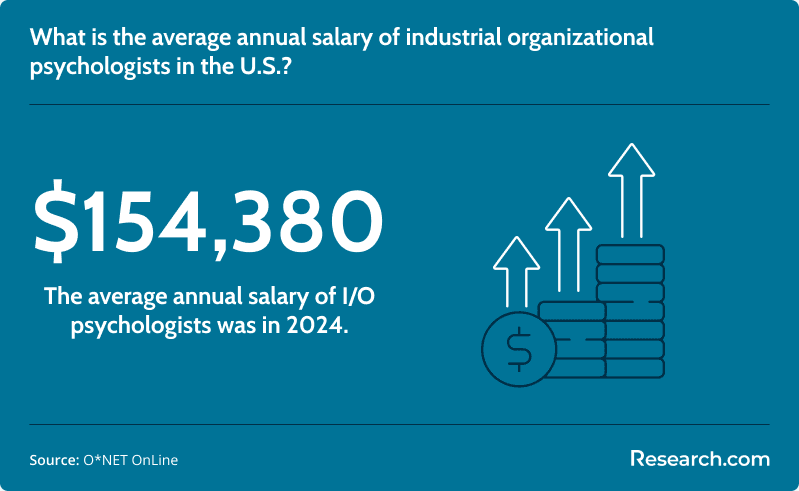
- The U.S. Bureau of Labor Statistics reported a median annual salary of $147,420 for I-O psychologists in May 2023, while the article’s cited findings also note that the average annual salary of I/O psychologists was 154,380 in 2024.
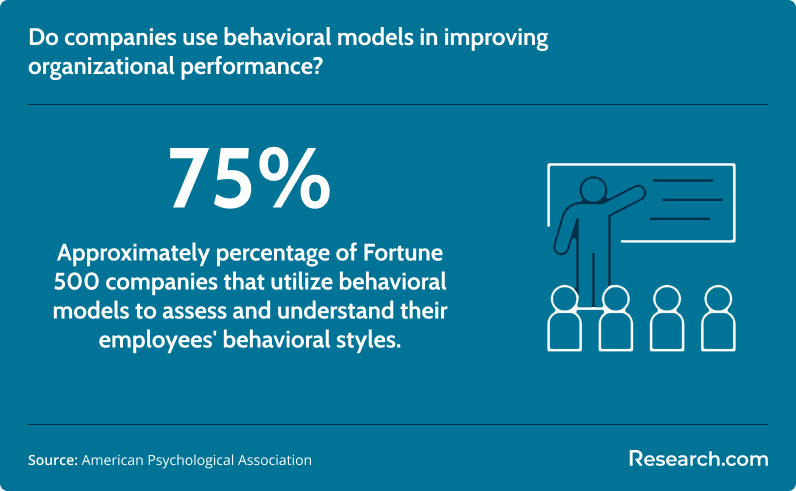
- Human performance technology indicates that approximately 75% of Fortune 500 companies utilize behavioral models to assess and understand their employees' behavioral styles.
- Workplace stress remains an important organizational issue, with nearly half of employees (47%) and a substantial majority of CEOs (66%) attributing most or all of their stress to their jobs rather than personal matters.
- Employment growth for I/O psychology professionals is projected to grow between 6% to 8% through 2033.
- Online programs can be credible if the institution is regionally accredited and the curriculum includes research methods, statistics, applied projects, and strong faculty support.
- The best ROI usually comes from choosing an accredited program with manageable cost, applied experience, career support, and a curriculum aligned with your target role.
- Before enrolling, ask about total program cost, graduate outcomes, internships, capstones, faculty expertise, accreditation, and whether the program supports your specific career goals.
References:
- American Psychological Association. (n.d.). Careers in industrial and organizational psychology.
- American Psychological Association. (n.d.). Organizational psychology.
- Bureau of Labor Statistics. (2023, May). Industrial-organizational psychologists. U.S. Department of Labor.
- Headspace for Work. (2024). The workforce state of mind in 2024.
- O*NET OnLine. (n.d.). Summary report for: 19-3032.00 - Industrial-organizational psychologists. U.S. Department of Labor.
- Society for Industrial and Organizational Psychology. (n.d.). Homepage. SIOP.
- The Chicago School of Professional Psychology. (n.d.). Industrial-organizational psychology careers.
- Workforce Science Associates. (2024, June). 2024 state of the workforce report.
Other Things You Should Know About Master's in Industrial Organizational Psychology
In 2027, a master’s in industrial-organizational psychology opens doors to roles such as HR specialist, talent management consultant, and employee development manager, as well as positions in organizational development and change management.
Crucial skills include data analysis, organizational development, and effective communication. Additionally, proficiency in psychological research methods and an understanding of human resource practices are essential for applying industrial-organizational psychology principles in diverse workplace environments in 2027.
Many programs do not require the GRE in 2027, but some still accept or recommend it for applicants with weaker transcripts. Schools typically look for a bachelor’s degree, a minimum GPA near 3.0, and prerequisite coursework in psychology or statistics.


