2027 Most Affordable Online School Psychology Degree Programs

Co-Founder and Chief Data Scientist
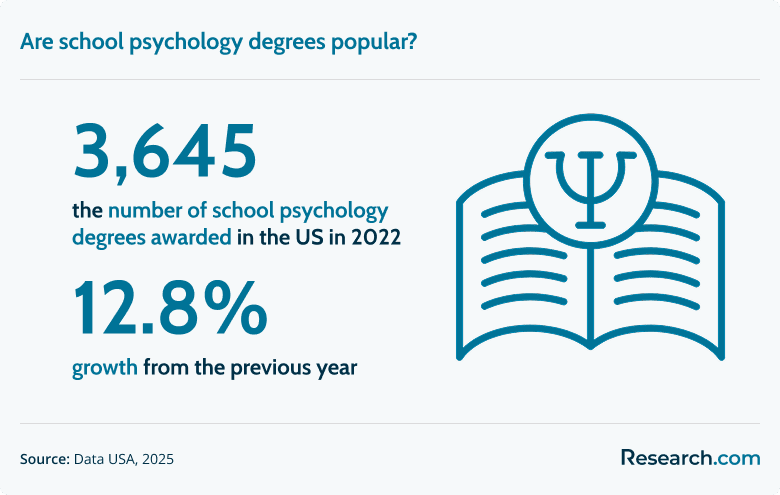
Choosing an online school psychology degree is not just a tuition decision. You also need to know whether the program prepares you for licensure, includes supervised fieldwork, fits your work schedule, and leads to realistic career options in K–12 schools or related settings. Interest in this field is rising: 3,645 school psychology degrees were awarded in the US in 2022, with growth of over 12% from the prior year. That makes program quality, affordability, and credential alignment more important than ever.
This guide is designed for aspiring school psychologists, educators considering a career change, graduate students comparing specialist-level programs, and working professionals who need an online or hybrid format. You will learn what affordable online school psychology programs include, how long they take, what they cost, how licensure works, which careers may be available, and how to compare programs without relying only on rankings.
Quick answer: Are affordable online school psychology degree programs worth considering?
Yes, an affordable online school psychology degree can be a practical option if the program is properly accredited, includes required practicum and internship experiences, and aligns with the state where you plan to work. The online format can reduce relocation and commuting barriers, but school psychology is not fully remote training: students still complete in-person fieldwork in schools or approved settings.
What are the main benefits of an affordable online school psychology degree?
- Graduates may qualify for roles in elementary and secondary schools, educational support services, colleges, universities, mental health settings, local government, or private health practices, depending on credential level and state requirements.
- The average annual salary for school psychologists in the US is $91,990, with reported earnings ranging from $59,250 to $131,470.
- Online and hybrid formats can help working adults continue their education while managing employment, caregiving, or location constraints.
- Affordable programs can lower total borrowing, especially when students combine lower tuition with employer support, scholarships, or public-service loan options.
What can I expect from an affordable online school psychology degree program?
Affordable online school psychology programs are usually graduate-level programs that combine online coursework with supervised, in-person training. They are built for students who need flexibility but still must meet professional expectations for assessment, intervention, consultation, ethics, and school-based practice.
- Online coursework with structured interaction. Many programs use asynchronous modules for lectures and assignments, while adding live sessions, cohort meetings, or faculty check-ins for discussion and supervision.
- Required practicum and internship experiences. Even when classes are online, students complete fieldwork in approved schools or local educational settings. These experiences are central to licensure and cannot be skipped.
- Credential-focused curriculum. Strong programs map coursework and field hours to state credential requirements, the Nationally Certified School Psychologist (NCSP) pathway, or state-specific credentials such as California’s Pupil Personnel Services (PPS) credential.
- Student support for adult learners. Online students should expect advising, licensure guidance, technology support, field placement coordination, and access to faculty who understand school-based mental health practice.
- Applied training, not just theory. Typical assignments include assessment reports, intervention planning, consultation exercises, behavior support plans, and case-based decision-making.
Lower tuition should not mean weaker preparation. Many affordable options are offered by public universities, regional institutions, or mission-driven schools that use online delivery to widen access to the profession. The best programs keep costs controlled while maintaining clear academic standards, qualified faculty, supervised practice, and transparent credential outcomes.
Where can I work after graduating from an affordable online school psychology degree program?
Most school psychology graduates work in K–12 education. Elementary and secondary schools employed more than 53,000 school psychologists as of 2023, making schools the primary employment setting for this profession. In these roles, school psychologists assess student learning needs, support behavior plans, consult with teachers and families, contribute to special education decisions, and help schools respond to crises.
Graduates may also find opportunities in educational support services, which employed 3,650 professionals, and in colleges and universities, which employed 1,330 professionals. Other settings include local government agencies and private health practices, where work may involve community mental health, assessment, intervention design, or collaboration with multidisciplinary teams.
The right setting depends on your credential, state rules, internship experience, and preferred population. If your goal is public school employment, confirm before enrolling that your program meets the credential requirements in your state.
How much can I make with a degree from an affordable online school psychology degree program?
The average annual salary for school psychologists in the US is $91,990 as of 2023. Reported salaries range from $59,250 to $131,470, with pay influenced by location, employer type, years of experience, credential level, and specialized skills.
Some settings report higher averages than traditional school employment. Roles in child care services report $142,500, offices of other health practitioners report $105,140, and educational support services report $102,230. These figures can help you evaluate potential return on investment, but they should not be treated as guaranteed outcomes for every graduate.
- Most Affordable Online School Psychology Degree Programs for 2027
- How long does an affordable online school psychology degree take?
- Online vs. on-campus school psychology programs: which format fits?
- How much does an affordable online school psychology degree cost?
- What financial aid can online school psychology students use?
- What are the admission requirements for online school psychology programs?
- What accreditation and quality standards should you verify?
- What challenges should online school psychology students expect?
- What courses are included in online school psychology programs?
- Can an affordable online program lead to doctoral study?
- Can added certifications strengthen a school psychology career?
- What school psychology specializations are available?
- How should you choose an affordable online school psychology program?
- What careers are available after an online school psychology degree?
- What is the job market for school psychology graduates?
- How do online programs prepare students for licensure?
10 Most Affordable Online School Psychology Degree Programs for 2027
How this ranking was developed
This list was built using Research.com’s ranking process and our published methodology. Data sources included the IPEDS database from the National Center for Education Statistics, Peterson’s database and its Distance Learning Licensed Data Set, and the College Scorecard for institutional cost, completion, and outcome information. The National Center for Education Statistics was also used to confirm current institutional details.
Use this ranking as a starting point, not as your only decision tool. Before applying, confirm current tuition, residency rules, delivery format, internship expectations, and whether the program meets licensure requirements in the state where you plan to practice.
| Rank | School and program | Format and fit | Cost information provided | Accreditation listed |
| 1 | University of Wisconsin-La Crosse - EdS in School Psychology | Specialist-level preparation with extensive practicum and internship training | $575 per credit; estimated total of $17,825 | NASP |
| 2 | Fort Hays State University - MS in School Psychology | Fully online coursework with one required five-day campus workshop | $338 per credit; estimated total of $22,348.92 | HLC; NASP |
| 3 | Idaho State University - EDS in School Psychology | Online live classes with part-time and full-time options | $592 in-state; $1,292 out-of-state; estimated totals of $37,888 in-state and $82,688 out-of-state | NASP |
| 4 | National University - MS in School Psychology with PPS Credential | California-focused pathway for PreK–12 public school practice | $442 per credit; estimated total of $41,769 | CTC; NASP |
| 5 | Eastern Washington University - EdS in School Psychology | Hybrid distance-learning model with live sessions and annual residency | $433 per credit; estimated total of $46,331 | NASP |
| 6 | Fresno Pacific University - MA in School Psychology with PPS Credential | California credential-focused program with online and in-person course options | $770 per credit; estimated total of $47,740 | CTC; NASP |
| 7 | Eastern University - MS in School Psychology with CAGS | Hybrid program with online coursework and evening campus classes | $790 per credit; estimated total of $49,770 | NASP |
| 8 | Alliant International University - EdS in School Psychology with PPS Credential | California school-based mental health preparation | $876 per credit; estimated total of $68,328 | CTC |
| 9 | Lewis & Clark College - EdS in School Psychology | Hybrid pathway designed for professionals in Oregon’s rural communities | Estimated total of $73,216 | NASP |
| 10 | Capella University - PsyD in School Psychology | Hybrid doctoral pathway with residencies, practicum, and internship | $555; estimated total of $80,475 | HLC |
1. University of Wisconsin-La Crosse - EdS in School Psychology
The University of Wisconsin-La Crosse offers an EdS in School Psychology focused on preparing students to consult with teachers, families, and school teams. The program emphasizes intervention, pupil services, educational psychology, social justice, mental health, curriculum knowledge, and special education. Students complete 500 practicum hours and a 1200-hour internship, giving them substantial supervised experience before entering school-based psychological service roles.
- Program Length: 4 years
- Required Credits to Graduate: 31
- Cost per Credit: $575, with an estimated total of $17,825
- Accreditation: National Association of School Psychologists (NASP)
2. Fort Hays State University - MS in School Psychology
Fort Hays State University offers an MS in School Psychology for students who want a flexible online path with full-time or part-time pacing. Students may choose a three- or four-year track. Although the coursework is primarily virtual, the program includes one required five-day campus workshop in child appraisal. Courses include Behavior Therapy, Developmental Psychology, Professional Ethics, and Inferential Statistics. Graduates are prepared to work with students, parents, teachers, and administrators in K-12 settings.
- Program Length: 3 to 4 years, depending on track
- Required Credits to Graduate: 30
- Cost per Credit: $338, with an estimated total of $22,348.92
- Accreditation: Higher Learning Commission (HLC); National Association of School Psychologists (NASP)
3. Idaho State University - EDS in School Psychology
Idaho State University offers an EdS in School Psychology and describes it as the only program of its type in the state. The NASP-approved program prepares students to support the academic, behavioral, and mental health needs of children in P–12 schools. Classes are delivered fully online through live interactive instruction, and students may attend part time or full time. The pathway does not require entry exams or a dissertation. Students usually begin with an MEd in School Psychological Examiner before moving into the 64-credit EdS. Graduates may qualify for Idaho school psychologist licensure and may also pursue roles connected to special education leadership.
- Program Length: ~2 years
- Required Credits to Graduate: 64
- Cost per Credit: $592 in-state; $1,292 out-of-state; $37,888 in-state estimated total; $82,688 out-of-state estimated total
- Accreditation: National Association of School Psychologists (NASP)
4. National University - MS in School Psychology with Pupil Personnel Services Credential (California)
National University offers an MS in School Psychology with a Pupil Personnel Services Credential for California students preparing to serve diverse PreK–12 populations. The program combines research, advocacy, assessment, intervention, consultation, leadership, and crisis prevention. Because the curriculum is aligned with California CTC standards and NASP guidelines, it is designed for graduates pursuing school psychologist licensure in California public schools.
- Program Length: 3 year, 23 courses
- Required Quarter Credits to Graduate: 94.5
- Cost per Credit: $442, with an estimated total of $41,769
- Accreditation: California Commission for Teacher Credentialing (CTC); National Association of School Psychologists (NASP)
5. Eastern Washington University - EdS in School Psychology
Eastern Washington University offers an EdS in School Psychology in a hybrid distance-learning format for working professionals in education, counseling, or psychology. The program combines asynchronous work, weekly live sessions, and an annual residency on the Cheney campus. Students may select an accelerated 2-year track or a 3-year track. Both options end with a full-time, 1,200-hour internship. The program is delivered through Eastern Online and is fully accredited by NASP.
- Program Length: ~2 to 3 years
- Required Quarter Credits to Graduate: 107
- Cost per Credit: $433, with an estimated total of $46,331
- Accreditation: National Association of School Psychologists (NASP)
6. Fresno Pacific University - MA in School Psychology with Pupil Personnel Services Credential (California)
Fresno Pacific University offers an MA in School Psychology with a Pupil Personnel Services Credential for professionals seeking credentialed roles in California public schools. The program is set within a Christian, value-centered academic environment and combines graduate coursework with ethical and personal formation. Students complete at least 62 units of advanced coursework under faculty who are active practitioners. Course delivery includes synchronous online and in-person options, which can help working adults plan around professional responsibilities.
- Program Length: ~2 to 3 years
- Required Quarter Credits to Graduate: 62
- Cost per Credit: $770, with an estimated total of $47,740
- Accreditation: California Commission for Teacher Credentialing (CTC); National Association of School Psychologists (NASP)
7. Eastern University - MS in School Psychology with Certificate of Advanced Graduate Studies
Eastern University offers an MS in School Psychology with a Certificate of Advanced Graduate Studies (CAGS). The hybrid program prepares students for specialist-level practice and PK–12 school psychology certification. Students complete online coursework along with evening classes in St. Davids, Pennsylvania. NASP accreditation supports the program’s focus on data-informed assessment, intervention, consultation, scientific knowledge, and supervised practice. Graduates meet educational requirements for Pennsylvania LPC and LBS credentials.
- Program Length: 3 years full-time; 4 years part-time
- Required Quarter Credits to Graduate: 63
- Cost per Credit: $790, with an estimated total of $49,770
- Accreditation: National Association of School Psychologists (NASP)
8. Alliant International University - EdS in School Psychology with Pupil Personnel Services Credential
Alliant International University offers an EdS in School Psychology with a Pupil Personnel Services (PPS) Credential for students preparing for school-based mental health work in California. The curriculum trains students to evaluate student needs, create intervention plans, collaborate with families, and use data-informed practices. The program emphasizes emotional and behavioral wellness in schools and does not require applicants to have a prior psychology background.
- Program Length: 14 terms
- Required Credits to Graduate: 78
- Cost per Credit: $876, with an estimated total of $68,328
- Accreditation: California Commission on Teacher Credentialing (CTC)
9. Lewis & Clark College - EdS in School Psychology
Lewis & Clark College offers a hybrid EdS in School Psychology for professionals serving Oregon’s rural communities. Students complete online coursework with occasional in-person meetings and prepare for public school practice as licensed school psychologists. Training covers counseling, assessment, intervention, and school collaboration. Students may also add an optional 8-credit Multilingual Culturally Responsible Certificate to strengthen preparation for culturally and linguistically diverse communities. The program generally takes three years and includes a full-time internship in the final year.
- Program Length: 3 years
- Required Credits to Graduate: 64
- Total Cost Estimate: $73,216
- Accreditation: National Association of School Psychologists (NASP)
10. Capella University - PsyD in School Psychology (Hybrid)
Capella University offers a hybrid PsyD in School Psychology for students pursuing advanced practice, leadership, and supervision roles. The program blends online coursework with residencies, practicum, and internship requirements. Students complete 145 quarter credits and 20 core courses covering psychological assessment, neuropsychological assessment, child psychopathology, and collaboration within school systems. Graduates may pursue supervisory work in school districts or higher education settings.
- Program Length: ~5 years
- Required Quarter Credits to Graduate: 145
- Total Cost Estimate: $555, with an estimated total of $80,475
- Accreditation: Higher Learning Commission (HLC)
How long does it take to complete an affordable online school psychology degree program?
Most online school psychology programs take two to six years, depending on degree level, enrollment pace, and fieldwork structure. The biggest timeline factor is not only the number of credits; it is also the practicum, internship, and credential requirements attached to the program.
| Program type | Typical timeline | Best fit | Important planning issue |
| Master’s or EdS program | Two to three years full time | Students preparing for school-based licensure or certification | Usually includes supervised fieldwork and a yearlong internship |
| Part-time master’s or EdS program | Often one to two years longer than full time | Working educators, counselors, or career changers | Ask whether field placements can be completed near your home |
| Doctoral program | 4–6 years | Students pursuing advanced clinical, leadership, research, or supervisory roles | Hybrid or campus requirements may be more intensive |
- Master’s and specialist-level programs: Many students complete these programs in two to three years of full-time study, including practicum and internship training.
- Doctoral pathways: Online or hybrid doctoral options, including some PsyD programs, usually require a longer timeline because of advanced coursework and extensive field experience.
- Part-time options: Part-time enrollment may make the degree more manageable but can add one to two years to completion.
- Credential pacing: Programs that are built around NASP standards or state credential requirements may structure the timeline around field readiness rather than speed alone.
Why timeline matters for working professionals
A short program is not automatically the best program. Students who work full time need to know whether live classes, internships, residencies, and school-day fieldwork will fit their schedule. If you cannot complete practicum hours during school operating hours, the most flexible online coursework may still be difficult to finish.
Also consider the financial impact of time. A longer program may allow you to keep working, while a faster program may require reduced hours or unpaid fieldwork. The best timeline is the one that supports your credential goal without creating unsustainable stress or debt.
How does an online school psychology degree program compare to an on-campus program?
Online school psychology programs can offer the same credential-oriented training as campus programs when they are accredited, fieldwork-focused, and aligned with state requirements. The main difference is delivery: academic coursework may happen online, while practicum and internship requirements still occur in person.
For educators and career changers, online or hybrid study can be the more realistic route because it reduces commuting and relocation demands. Some students exploring mental health careers also compare school psychology with counseling or therapy routes, including guidance on the fastest ways to become a therapist. However, school psychology has its own school-based credential expectations, so students should not assume that all psychology or counseling programs lead to the same roles.
Employers generally care more about accreditation, supervised experience, assessment skills, and licensure eligibility than whether lectures were delivered online or in person.
| Factor | Online or hybrid program | On-campus program | What to check before enrolling |
| Course delivery | Online modules, virtual discussions, live sessions, and occasional residencies | Face-to-face classes and campus-based meetings | Whether classes are synchronous, asynchronous, or mixed |
| Fieldwork | Often arranged in local districts or approved nearby sites | Often coordinated through campus partnerships | Who is responsible for securing placements |
| Flexibility | Usually better for working adults and students outside the campus region | May offer stronger daily access to faculty and peers | Whether the schedule fits school-day practicum requirements |
| Networking | May rely on cohorts, virtual advising, and online faculty access | More face-to-face peer and faculty interaction | How students are mentored during practicum and internship |
| Licensure value | Can be equivalent if properly aligned | Can be equivalent if properly aligned | State credential eligibility and NASP or state approval |
Which format should you choose?
Choose online or hybrid study if you need schedule flexibility, cannot relocate, or already work in education and want to complete fieldwork locally. Choose an on-campus program if you prefer in-person instruction, want more campus-based networking, or need stronger placement support from a nearby university.
Enrollment interest supports the demand for flexible pathways. More than 3,600 school psychology degrees were awarded in the US in 2022, a 12.8% increase from the previous year. Students in other fields make similar cost-and-flexibility comparisons, such as reviewing the cheapest online master’s in industrial engineering degree when they want career advancement without unnecessary expense.
What is the average cost of an affordable online school psychology degree program?
Among the affordable programs reviewed here, the average cost per credit is approximately $650 for in-state students and $720 for out-of-state students. Across a full degree, estimated tuition is about $48,500 to $53,000, depending on residency, credit requirements, and program length.
Costs vary widely because school psychology programs differ by institution type, residency policy, credit load, and degree level. Public universities may offer lower in-state tuition, while some online programs use flat-rate pricing for distance learners. Specialist-level degrees may also cost less than doctoral programs because they often require fewer credits than research doctorates or PsyD programs.
If you are comparing school psychology with other healthcare or human-services pathways, it may help to review tuition in nearby fields, such as the cheapest online WHNP programs or affordable online paramedic to RN bridge programs, to understand how graduate training costs differ across professions.
What costs should you include beyond tuition?
- University fees: Online programs may still charge technology, student services, practicum, or graduation fees.
- Residency travel: Hybrid programs may require campus visits, which can add transportation, lodging, and meal costs.
- Fieldwork expenses: Students may need background checks, liability insurance, testing materials, or transportation to school sites.
- Licensure and exam costs: State applications, certification exams, and credential reviews can add expenses near graduation.
- Lost income: A full-time internship or practicum schedule may reduce the number of hours you can work.
How cost connects to long-term value
School psychology can offer a strong professional outcome when the degree leads to credential eligibility and stable employment. The average annual salary for school psychologists in the US is $91,990, with reported salaries from $59,250 to $131,470. Higher reported averages appear in child care services at $142,500, offices of other health practitioners at $105,140, and educational support services at $102,230.
Still, return on investment depends on your state, employer, debt level, licensure timeline, and career goals. A lower-cost program that does not meet your state’s credential requirements can become more expensive in the long run than a higher-priced program with a clear path to licensure.
What are the financial aid options for students enrolling in an affordable online school psychology degree program?
Online graduate students may qualify for many of the same funding options available to campus-based students, provided they enroll in an eligible accredited program. Because school psychology programs can include several years of study and unpaid or reduced-paid fieldwork, students should build a funding plan before enrolling.
- Federal financial aid: Eligible graduate students may use Direct Unsubsidized Loans and, in some cases, Graduate PLUS Loans. Students must complete the FAFSA to determine federal aid eligibility.
- Scholarships and grants: Some universities, professional groups, state education agencies, and private organizations offer awards for psychology students or future school-based mental health professionals.
- Employer tuition assistance: Current school district employees, paraprofessionals, teachers, or behavioral health staff may have access to tuition reimbursement or district-university partnership discounts.
- Service-based aid and loan forgiveness: Graduates who work in high-need public schools or underserved communities may be able to pursue Public Service Loan Forgiveness (PSLF) or state-based incentive programs.
- Institutional aid and assistantships: Assistantships are less common in fully online programs, but some schools may offer limited research, teaching, or tuition-support opportunities.
Students comparing school psychology with doctoral clinical options, such as APA accredited PsyD programs, should compare total debt, time to credential, and career eligibility side by side. Start conversations with the financial aid office, program coordinator, and field placement team before you commit.
What are the prerequisites for enrolling in an affordable online school psychology degree program?
Admission requirements depend on whether you are applying to a master’s, EdS, certificate, or doctoral program. Some programs accept students with a bachelor’s degree, while others expect prior graduate study in psychology, education, counseling, or a related field.
| Pathway | Common admission requirements | Who it is usually for |
| Master’s degree | Bachelor’s degree, possible psychology or education prerequisites, letters of recommendation, relevant experience, and sometimes GRE scores | Students beginning graduate preparation for school psychology |
| Education Specialist (EdS) | Often a master’s degree or graduate-level preparation in a related field | Students seeking specialist-level training and school psychologist credential preparation |
| Post-master’s certificate | Usually a completed master’s degree in a related area | Professionals adding targeted credentials or specialized skills |
| Doctoral program | Often a master’s degree, strong academic record, references, and possible research or professional experience | Students pursuing advanced practice, research, clinical leadership, or academic roles |
Master’s degree requirements
- Applicants typically need a bachelor’s degree, and some schools prefer prior coursework in psychology, education, statistics, or child development.
- Programs may request recommendations, a statement of purpose, a resume, GRE scores, or evidence of related professional experience.
- This route is often the entry point for students who want to move toward school psychologist licensure or a specialist credential.
Education Specialist requirements
- Many EdS programs expect previous graduate work in psychology, education, or a closely related field.
- The curriculum is usually practice-oriented and built around assessment, consultation, intervention, and credential preparation.
- This pathway can be a practical alternative for students who want specialist-level school practice without committing to a full doctorate.
Certificate requirements
- Post-master’s certificates commonly require a completed master’s degree before admission.
- They are intended for professionals who need added specialization, state-specific requirements, or focused graduate training.
- They can be useful when a full second degree is unnecessary.
Doctoral program requirements
- Doctoral applicants often need prior graduate study and a strong academic record.
- Some programs look for research experience, professional references, or GRE scores.
- PsyD programs are commonly practice-focused, while PhD programs more often emphasize research and academia.
Common credential patterns
Master’s degrees account for nearly two-thirds of all school psychology awards, making them the most common academic credential in the field. Post-master’s certificates also represent an important share, showing that many professionals add specialization after earning an initial graduate degree. Doctoral degrees are less common but may support advanced practice, research, leadership, or academic work.
Students comparing credential ladders across allied health and education careers may also review the cheapest surgical technician online programs to see how shorter credentials differ from graduate-level school psychology training.
What accreditation and quality benchmarks should I consider in an affordable online school psychology degree program?
Accreditation is one of the most important filters when comparing affordable online school psychology programs. It affects credit transfer, financial aid eligibility, employer confidence, and licensure readiness. At minimum, verify that the institution is properly accredited and that the program meets the school psychology standards required in your intended state of practice.
- Institutional accreditation: Confirm that the college or university is recognized by an appropriate accrediting body.
- Program approval: Look for NASP approval when relevant, especially if you want a program aligned with nationally recognized school psychology preparation standards.
- State credential alignment: Check whether the curriculum and field hours meet the rules in the state where you want to work.
- Fieldwork quality: Ask how practicum and internship sites are approved, supervised, and evaluated.
- Graduate outcomes: Request information on completion, credential eligibility, exam preparation, and employment support.
- Faculty expertise: Review whether faculty have school psychology, assessment, intervention, special education, or child mental health experience.
If you are looking for a faster undergraduate route before graduate study, Research.com also compares options in its guide to an accelerated online psychology degree. Just remember that becoming a school psychologist generally requires graduate-level preparation and supervised experience.
What challenges might students face in affordable online school psychology degree programs?
Online school psychology programs can be convenient, but they are not easy. Students must manage graduate coursework, live meetings, field placements, assessment training, and professional expectations while often continuing to work.
| Common challenge | Why it matters | Better approach |
| Assuming online means fully remote | School psychology requires in-person practicum and internship hours | Ask where and how fieldwork is completed before applying |
| Underestimating time demands | School-day placements can conflict with full-time employment | Create a weekly schedule that includes class, supervision, and travel time |
| Choosing only by lowest tuition | A cheap program may not meet your state credential requirements | Compare total cost, accreditation, licensure fit, and placement support |
| Waiting too long to plan fieldwork | Some districts have limited openings or approval deadlines | Ask the program how early students begin placement planning |
| Ignoring online support services | Remote students need accessible advising and supervision | Confirm faculty availability, tech support, and cohort structure |
Students who want a broader comparison of graduate psychology options can review the most affordable online master's in psychology. However, school psychology is more specialized than a general psychology master’s because it must prepare students for school-based assessment, consultation, and credential requirements.
What courses are typically in an affordable online school psychology degree program?
Coursework in school psychology connects child development, learning science, assessment, intervention, ethics, data use, and supervised practice. The goal is to prepare graduates to make evidence-informed decisions that improve student learning, behavior, and mental health.
- Human development and learning: Students study child and adolescent development, cognition, behavior, motivation, and learning differences.
- Assessment and evaluation: Courses teach students how to select, administer, interpret, and communicate school-based assessments.
- Academic and behavioral intervention: Students learn how to design supports for learning difficulties, emotional concerns, and behavioral challenges.
- Consultation and collaboration: Training focuses on working with teachers, families, administrators, special education teams, and community providers.
- Ethics, law, and professional practice: Students learn privacy requirements, ethical decision-making, special education rules, and professional responsibilities.
- Research methods and statistics: These courses help students evaluate data and intervention outcomes. If you are worried about quantitative work, Research.com explains the broader question, “Does a psychology degree require math?”
- Special topics and electives: Programs may include trauma-informed practice, multicultural assessment, neuropsychology, crisis response, or special education leadership.
Many programs include material related to educational psychology, which studies how people learn and how teaching can be improved. School psychology goes further by combining learning science with mental health support, assessment, consultation, and intervention inside educational systems.
How can affordable online programs pave the way for advanced doctoral studies?
An affordable online master’s or specialist program can be a stepping stone to doctoral study when it includes rigorous coursework, supervised practice, research exposure, and faculty mentorship. Students who may later pursue a doctorate should look for programs with research methods, statistics, assessment, intervention evaluation, and opportunities to work with faculty on applied projects.
Before enrolling, ask whether credits can transfer, whether the program has graduates who entered doctoral study, and whether the curriculum supports future applications to online psychology doctorate programs. Transfer policies vary, so do not assume that completing an affordable program will automatically shorten a doctorate.
Can additional certifications enhance my school psychology career?
Additional credentials can strengthen a school psychology career when they match your role, state rules, and student population. For example, professionals interested in behavioral intervention may explore affordable online board certified behavior analyst programs. Behavior-analysis training can be useful in schools that need support for functional behavior assessment, intervention planning, and data-based behavior support.
Certifications are not a substitute for school psychologist licensure or state credentials. Before investing in another program, confirm whether the credential is recognized by employers, fits your scope of practice, and adds skills you will actually use.
What types of specializations are available in an affordable online school psychology degree program?
Specializations allow students to focus their training on specific student needs, school systems, or career goals. Not every affordable program offers formal concentrations, but many include electives, certificates, or fieldwork opportunities that support specialized practice.
- Child and adolescent mental health: Focuses on emotional, behavioral, and developmental concerns among school-age students.
- Educational assessment and intervention: Builds advanced skills in student evaluation, progress monitoring, and targeted academic or behavioral support.
- Neuropsychology: Explores brain-behavior relationships and cognitive functioning in educational or clinical contexts.
- Special education: Prepares students to collaborate with special education teams and support students with disabilities.
- Crisis intervention and trauma counseling: Emphasizes school crisis response, trauma-informed care, and student stabilization after disruptive events.
- School administration and leadership: Supports students interested in program development, supervision, policy, and systems-level improvement.
How specializations connect to employment settings
Specializations can align with different employment settings. Child and adolescent mental health, crisis intervention, assessment, and special education are especially relevant to elementary and secondary schools, which employ over 53,000 professionals and report an average salary of $90,940. Educational assessment and special education can also support work in educational support services, where salaries average $102,230. Neuropsychology and leadership-focused preparation may be relevant to offices of other health practitioners or local government roles, where salaries are around $105,140.
State-specific credentials can matter as much as specialization. For example, California students may need a pathway that includes the Pupil Personnel Services Credential (California). Some programs also combine degrees with certificates such as a Certificate of Advanced Graduate Studies to support specialist-level preparation.
How do you choose an affordable online school psychology degree program?
The best affordable online school psychology program is the one that fits your budget, schedule, state credential requirements, and preferred career setting. Do not choose by tuition alone. A program that looks inexpensive can become costly if it delays licensure, requires unexpected travel, or lacks field placement support.
Questions to ask before applying
- Accreditation: Is the institution accredited, and is the program approved or aligned with NASP or relevant state standards?
- Licensure fit: Does the program meet school psychologist requirements in the state where I plan to work?
- Field placement support: Will the school help me secure practicum and internship sites, or must I find them myself?
- Schedule: Are classes asynchronous, synchronous, hybrid, or residency-based?
- Total cost: What is the full estimated cost after tuition, fees, travel, books, testing, and licensure expenses?
- Faculty access: How often can online students meet with advisors, supervisors, and instructors?
- Outcomes: What do graduates typically do after completing the program?
- Transfer and doctoral options: If I continue later, will credits apply toward additional graduate study?
Decision guide: when an online program makes sense
| Choose an online or hybrid program if... | Consider a campus program or different path if... |
| You need to stay employed while completing graduate coursework | You need daily face-to-face faculty interaction and campus-based support |
| You can complete fieldwork in local schools or approved nearby sites | You cannot arrange school-day practicum or internship hours |
| The program clearly matches your state credential requirements | The program cannot confirm licensure alignment where you plan to work |
| You are comfortable with online learning technology and self-directed study | You struggle without in-person structure and immediate classroom interaction |
| You want lower relocation and commuting costs | You want access to a specific campus network or local district partnership |
If you are also considering related student-support roles, compare this path with the most affordable online school counseling degrees. School counselors and school psychologists both support students, but their training, assessment responsibilities, and credential requirements differ.
What career paths are available for graduates of an affordable online school psychology degree program?
Graduates may work in education, behavioral health, government, or student support roles. The exact jobs available depend on licensure, degree level, internship experience, and state regulations.
| Career area | Possible roles | Typical focus |
| K–12 schools | School psychologist, behavioral specialist, student support coordinator | Assessment, intervention, consultation, crisis response, and special education support |
| Educational support services | Assessment consultant, intervention specialist, district support professional | System-wide interventions, program evaluation, and teacher consultation |
| Higher education | Student support specialist, counseling-related support role, research assistant | Student learning, mental health support, research, and academic services |
| Healthcare and community settings | Behavioral health specialist, crisis intervention support, assessment-related role | Student and family mental health, trauma response, and collaborative care |
| Leadership and administration | Program coordinator, school mental health lead, policy or systems support role | Program design, supervision, staff training, and systems improvement |
Educational settings
K–12 schools are the most common destination for school psychology graduates. Professionals in these settings support learning, behavior, mental health, and special education decision-making.
Educational support services and higher education
Graduates may work with districts, agencies, or higher education institutions to improve student services, assessment practices, and intervention systems. Some positions involve research, training, or academic support.
Healthcare and government roles
Local government agencies and health practitioner offices may hire professionals with school psychology training for assessment, trauma response, crisis intervention, or community mental health collaboration. Some roles may require additional credentials.
Leadership and adjacent careers
Experienced professionals may move into supervision, program development, or policy-related roles. Others may apply their skills in related fields, including student success, behavior support, coaching, or the transformational coach career path, though these alternatives may not use the school psychologist title.
What is the job market for graduates of an affordable online school psychology degree program?
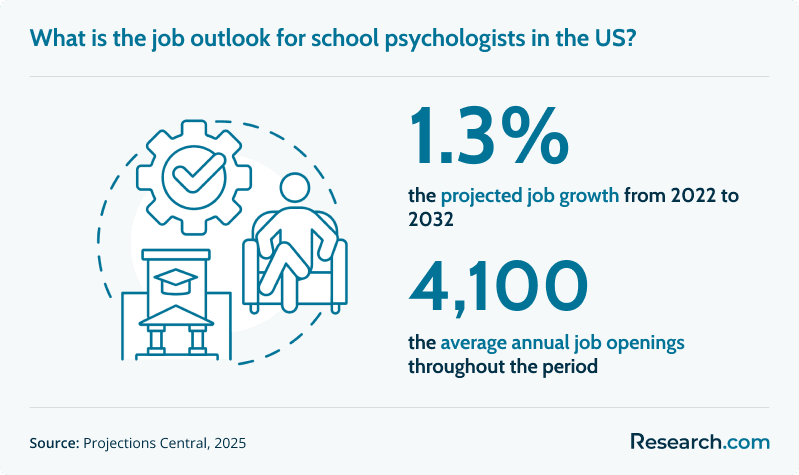
The job market for school psychologists is steady, even though projected growth is modest. The U.S. Bureau of Labor Statistics projects 1.3% job growth for school psychologists from 2022 to 2032. A more practical number for graduates is the projected average of 4,100 annual job openings during that period.
Many openings come from replacement needs as professionals retire, change roles, or leave the occupation. Demand is also supported by school mental health needs, special education assessment requirements, crisis response planning, and broader recognition that student well-being affects learning.
For graduates of affordable online programs, the employment value depends on completing a licensure-aligned degree and finishing required fieldwork. A flexible online format can help you enter the pipeline, but credential eligibility is what ultimately determines access to many public school roles.
How do online school psychology programs facilitate licensure readiness?
Strong online school psychology programs build licensure preparation into the entire degree. They align courses with state standards, require supervised practicum and internship experiences, prepare students for relevant exams or credential reviews, and provide advising on application timelines.
- Curriculum mapping: Courses should match required areas such as assessment, consultation, intervention, ethics, data use, and school systems.
- Supervised fieldwork: Programs should clearly explain practicum and internship hour requirements and how supervisors are approved.
- State-specific advising: Students should receive guidance for the state where they intend to practice, not only the state where the university is located.
- Exam preparation: Programs may offer workshops, study resources, or faculty support for certification and licensure exams.
- Documentation support: Graduates often need transcripts, supervisor forms, hour logs, and institutional verification for credential applications.
Students considering more advanced credential routes can also compare cheap online PsyD programs. A PsyD may support broader clinical or leadership goals, but it is typically longer and more expensive than specialist-level school psychology preparation.
Common mistakes to avoid when choosing an affordable online school psychology program
- Choosing the lowest tuition without checking licensure alignment. Affordability matters, but a program must meet the rules in your intended state of practice.
- Assuming online means no campus or field requirements. Many programs include residencies, workshops, practicum, and internships.
- Ignoring total cost. Fees, travel, books, testing, credential applications, and lost work hours can change the real price.
- Waiting to plan practicum and internship placements. Fieldwork is often the hardest part of an online program to coordinate.
- Relying only on rankings. Rankings help narrow your options, but they cannot replace program-specific questions about accreditation, supervision, and outcomes.
- Assuming salaries are guaranteed. Salary varies by employer, region, experience, specialization, and credential level.
Key Insights
- Affordable online school psychology programs can be worthwhile when they are accredited, fieldwork-ready, and aligned with the state where you plan to work.
- Online coursework does not remove in-person requirements. Practicum and internship experiences remain essential for credential preparation.
- The average annual salary for school psychologists in the US is $91,990, but actual earnings vary widely by setting, location, and experience.
- Program cost should be judged by total price, not tuition alone. Include fees, travel, fieldwork expenses, and licensure costs.
- NASP approval, state credential alignment, and supervised field placement support are more important than delivery format.
- Working adults should compare program timelines carefully because school-day fieldwork can conflict with full-time employment.
- The job market is supported by an average of 4,100 projected annual openings, even though projected growth from 2022 to 2032 is 1.3%.
- The best program is not simply the cheapest one. It is the one that gets you to credential eligibility with manageable debt, realistic scheduling, and strong professional preparation.
References:
- Bureau of Labor Statistics. (2024). Occupational employment and wages, May 2023 - 19-3034 school psychologists. U.S. Department of Labor. Retrieved May 24, 2025, from BLS school psychologist wage data.
- Bureau of Labor Statistics. (2025). Psychologists. U.S. Department of Labor. Retrieved May 24, 2025, from BLS psychologist occupational outlook.
- Projections Central. (2025). Long-term occupational projections (2022-2032). Retrieved May 24, 2025, from Projections Central long-term projections.
- Data USA. (2025). School psychology. Retrieved May 24, 2025, from Data USA school psychology profile.
Other Things You Should Know About Affordable Online School Psychology Degree Programs
The affordability of online school psychology degree programs in 2027 is influenced by factors such as tuition rates, availability of scholarships, cost of learning materials, and technology fees. Prospective students should also consider the program's accreditation, as this can impact overall value and potential financial aid options.
Yes. Most NASP-aligned programs require about 300 to 600 supervised practicum or internship hours, plus a 1,200-hour internship for specialist-level preparation. These field experiences are completed in school settings and must meet state licensing or certification rules.
Yes, most affordable online school psychology degree programs in 2027 are accredited by recognized bodies like the American Psychological Association (APA). Checking accreditation ensures the program meets educational standards and may be necessary for licensure or further education.