
2027 Most Affordable Paramedic to RN Online Bridge Programs

Co-Founder and Chief Data Scientist
For experienced paramedics, moving into registered nursing can be a practical way to expand clinical authority, qualify for broader healthcare roles, and improve long-term earning potential without starting from the beginning of nursing school. Paramedic to RN online bridge programs are built for licensed emergency medical professionals who already understand assessment, stabilization, medications, and high-pressure patient care but need formal nursing preparation, supervised clinical experiences, and eligibility for the NCLEX-RN exam.
This guide is for working paramedics comparing affordable online or hybrid bridge programs. It explains what these programs include, how long they take, what they cost, how online study compares with campus-based nursing education, what to verify before enrolling, and which career paths may open after licensure. The goal is to help you choose a program based on accreditation, state approval, clinical placement requirements, total cost, NCLEX preparation, and fit with your work schedule.
Quick answer: Is an affordable paramedic to RN online bridge program worth it?
An affordable paramedic to RN online bridge program can be worth it if you already hold an active paramedic license, want to become a registered nurse, and need a flexible route that recognizes prior emergency medical training. These programs usually combine online nursing theory with in-person labs, simulations, and clinical rotations. Graduates who meet state requirements may sit for the NCLEX-RN and pursue RN licensure.
- Graduates may qualify for RN roles in hospitals, emergency departments, intensive care units, outpatient clinics, home health, public health, and transport nursing.
- The median annual salary for RNs in the U.S. is around $93,600, while the median for paramedics is approximately $58,410.
- Online and hybrid bridge formats can help working paramedics continue earning income while completing nursing coursework, although clinical hours still require scheduled in-person attendance.
What can I expect from an affordable paramedic to RN online bridge program?
A paramedic to RN bridge program is a nursing pathway that uses your emergency medical background as a foundation for registered nursing education. Instead of repeating all first-year nursing content, eligible paramedics may receive advanced standing, credit for prior learning, or access to an accelerated track. The program still must cover the nursing competencies required for RN licensure, including assessment, care planning, pharmacology, medical-surgical nursing, maternal-newborn care, pediatric care, mental health nursing, ethics, documentation, delegation, and evidence-based practice.
Most online bridge programs are not fully online. A more accurate term is usually “hybrid.” Didactic courses may be delivered online, but nursing skills labs, simulation activities, exams, and clinical rotations are completed in person. Some schools assign clinical sites near the student, while others require travel to approved hospitals or campus-based labs. Before applying, ask exactly where clinicals take place, who arranges placements, and whether your state allows the program to enroll residents.
| Program feature | What it usually means for paramedics | What to verify before enrolling |
| Bridge credit | Your paramedic education may shorten the nursing sequence or reduce required credits. | Ask how many credits are awarded and whether they apply only after you pass a bridge course. |
| Online coursework | Lectures, assignments, discussions, quizzes, and exams may be completed remotely. | Confirm whether classes are asynchronous, live online, or tied to fixed meeting times. |
| Clinical training | You must complete supervised patient care in approved healthcare settings. | Ask whether the school secures placements or requires you to find your own site. |
| NCLEX-RN preparation | The curriculum should prepare graduates for RN licensure testing. | Review published NCLEX-RN pass rates, graduation rates, and remediation support. |
| State authorization | The program must meet nursing education rules for the state where you plan to practice. | Contact your state board of nursing before enrolling, especially if the school is out of state. |
Where can I work after completing an affordable paramedic to RN online bridge program?
After passing the NCLEX-RN and receiving RN licensure, former paramedics can pursue nursing roles in many settings. Their background is especially useful in environments where rapid assessment, triage, airway management, trauma response, and calm decision-making are valued. Emergency departments, trauma centers, intensive care units, cardiac units, and transport teams often recognize the practical strengths that paramedics bring to nursing.
RN licensure also opens doors beyond emergency response. Graduates may work in outpatient clinics, rehabilitation centers, surgical recovery units, long-term care facilities, correctional health, community health programs, home healthcare, and occupational health. Common employers include:
- Private, nonprofit, and public hospitals
- Urgent care centers and walk-in clinics
- State and local healthcare agencies
- Travel nursing organizations
- Military and Veterans Affairs (VA) healthcare systems
- Home health and hospice providers
- Flight and ground transport services
How much can I make after a paramedic to RN online bridge program?
Becoming an RN can substantially change your earnings outlook, but salary is not guaranteed. Pay depends on licensure, location, employer, shift differentials, union contracts, specialty, experience, and whether you move into leadership or advanced practice later. As of 2024, the median annual salary for RNs in the U.S. is approximately $93,600, with the top 10% exceeding $135,320. Paramedics typically earn a median annual salary of around $58,410.
Entry-level RNs, including many new bridge program graduates, earn an average of $71,414 annually, with most salaries ranging between $64,754 and $80,493. Salaries are often higher in states such as California, Hawaii, and Oregon because of regional demand and cost-of-living differences. Some nurses later pursue advanced roles such as nurse practitioner or nurse anesthetist, where certain positions may exceed $120,000 annually.
- Most affordable paramedic to RN online bridge programs for 2027
- How long does an affordable paramedic to RN online bridge program take?
- Online versus on-campus paramedic to RN bridge programs
- Average cost of affordable paramedic to RN online bridge programs
- Financial aid for paramedic to RN bridge students
- Common admission requirements and prerequisites
- Courses usually included in paramedic to RN bridge programs
- Specializations and clinical focus areas
- Student support services in online bridge programs
- Accreditation, state approval, and licensure checks
- How to choose the right affordable paramedic to RN online bridge program
- NCLEX-RN outcomes and program performance metrics
- Career paths for paramedic to RN bridge graduates
- Job market outlook for bridge program graduates
- Advanced education options after becoming an RN and related job-market considerations
Most Affordable Paramedic to RN Online Bridge Programs for 2027
How do we rank schools?
Choosing a paramedic to RN bridge program affects your budget, licensure eligibility, work schedule, and future nursing options. Research.com evaluates programs with a data-focused process designed to help readers compare schools on practical factors such as affordability, program format, institutional quality, and available student information.
This ranking follows a transparent methodology and uses information from established education data sources, including the Integrated Postsecondary Education Data System (IPEDS), Peterson's databases and their Distance Learning Licensed Data Set, and the College Scorecard database from the National Center for Education Statistics. Program details can change, so confirm current tuition, state approval, admission rules, clinical requirements, and NCLEX-RN outcomes directly with each school before applying.
| School | Program length | Credit cost listed | Credits listed | Accreditation listed |
| Mesa Community College | 2 years | $97 per credit hour for in-state students | 62-72 credits | Accreditation Commission for Education in Nursing (ACEN |
| Waukesha County Technical College | 2 years | $159.50 per credit hour for online courses | 65 credit hours | Accreditation Commission for Education in Nursing (ACEN) |
| Abraham Baldwin Agricultural College | One-year bridge track | $199 per credit hour | 70 credit hours | Accreditation Commission for Education in Nursing (ACEN) |
| Holmes Community College | 12-month accelerated program | $76; additional online class fee of $10 per credit hour | 66 credit hours, with 6 hours credited for prior LPN/Paramedic training | Accreditation Commission for Education in Nursing (ACEN) |
| Bishop State Community College | 2 years | $178 per credit hour | 55 credit hours | Accreditation Commission for Education in Nursing (ACEN) |
| Hutchinson Community College | 3 semesters | $128 per credit hours | 69 credit hours | Accreditation Commission for Education in Nursing (ACEN) |
1. Mesa Community College (Arizona)
Mesa Community College, a Maricopa Community Colleges institution, offers an Associate in Applied Science (AAS) in Nursing with a paramedic bridge option. The program is designed for certified paramedics who want to transition into registered nursing by applying their emergency medical background to a nursing curriculum. The AAS Nursing program lists Fall 2025 as a start option, and students should verify current application windows and delivery details with the department. Coursework is generally paired with hands-on clinical training to prepare graduates for the NCLEX-RN exam.
- Program Length: 2 years
- Tracks/Concentrations: Paramedic to RN Bridge
- Cost per Credit: $97 per credit hour for in-state students
- Required Credits to Graduate: 62-72 credits
- Accreditation: Accreditation Commission for Education in Nursing (ACEN
2. Waukesha County Technical College
Waukesha County Technical College provides a paramedic bridge route into an associate degree in nursing. The pathway is aimed primarily at actively licensed Wisconsin paramedics who want to use their prior training toward an ADN. Online theory courses include “Paramedic to ADN Theory 1” and “Paramedic to ADN Theory 2,” while bridge clinical and skills requirements are offered in the summer. Applicants should confirm Wisconsin licensure expectations, clinical locations, and current start dates before applying.
- Program Length: 2 years
- Tracks/Concentrations: Paramedic to RN Bridge
- Cost per Credit: $159.50 per credit hour for online courses
- Required Credits to Graduate: 65 credit hours
- Accreditation: Accreditation Commission for Education in Nursing (ACEN)
3. Abraham Baldwin Agricultural College
Abraham Baldwin Agricultural College offers a one-year bridge program for students with eligible health sciences backgrounds, including paramedics, licensed practical nurses, and registered respiratory therapists. The pathway leads to an Associate of Science in Nursing (ASN) Degree and typically includes nursing coursework across three semesters, or one calendar year. ABAC also offers flexible evening and hybrid online courses, making it a potential option for students who need a blended format.
- Program Length: One-year bridge track
- Tracks/Concentrations: Bridge track for LPNs, paramedics, and respiratory therapists
- Cost per Credit: $199 per credit hour
- Required Credits to Graduate: 70 credit hours
- Accreditation: Accreditation Commission for Education in Nursing (ACEN)
4. Holmes Community College
Holmes Community College offers a Paramedic to RN Online Bridge - AAS pathway for certified paramedics seeking an Associate of Applied Science in Nursing. The program uses online coursework along with required practicum experiences, allowing students to build on prior emergency care training while completing nursing-specific requirements. Its accelerated format may appeal to paramedics who already meet prerequisites and can manage an intensive schedule.
- Program Length: 12-month accelerated program
- Tracks/Concentrations: Paramedic to RN Bridge Program
- Cost per Credit: $76; additional online class fee of $10 per credit hour
- Required Credits to Graduate: 66 credit hours, with 6 hours credited for prior LPN/Paramedic training
- Accreditation: Accreditation Commission for Education in Nursing (ACEN)
5. Bishop State Community College
Bishop State Community College offers Career Mobility Track I, an LPN/Paramedic to RN route that leads to an Associate in Applied Science Degree. The track is intended for students who have completed a paramedic program and hold an unencumbered license. Students complete online coursework along with laboratory and clinical experiences, with a curriculum that emphasizes critical thinking, patient-centered care, and professional nursing judgment.
- Program Length: 2 years
- Tracks/Concentrations: Career Mobility Track I for LPNs and paramedics
- Cost per Credit: $178 per credit hour
- Required Credits to Graduate: 55 credit hours
- Accreditation: Accreditation Commission for Education in Nursing (ACEN)
6. Hutchinson Community College
Hutchinson Community College offers a paramedic and LPN bridge pathway to registered nursing through an online bridge format. After prerequisites, the program can be completed in three semesters and leads to an Associate of Science degree in Nursing (ADN). Students complete online nursing coursework and required in-person clinical experiences, including instruction focused on moving from student responsibilities into the professional nurse role.
- Program Length: 3 semesters
- Tracks/Concentrations: Paramedic to RN Online Bridge
- Cost per Credit: $128 per credit hours
- Required Credits to Graduate: 69 credit hours
- Accreditation: Accreditation Commission for Education in Nursing (ACEN)
How long does it take to complete an affordable paramedic to RN online bridge program?
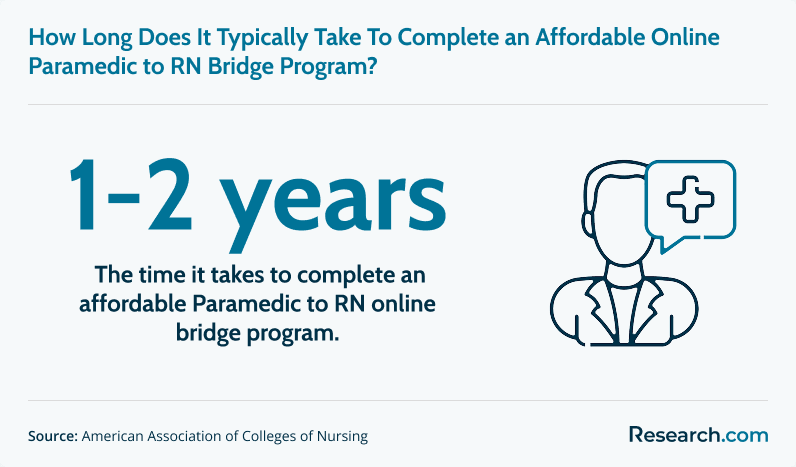
Most affordable online paramedic to RN bridge programs take 12 to 24 months. The exact timeline depends on prerequisite completion, transfer credits, whether you study full time or part time, and whether the program runs in a traditional or accelerated format. A student who has already completed anatomy and physiology, microbiology, psychology, and math requirements may move faster than someone who still needs general education courses.
Accelerated options can be demanding because they compress nursing theory, skills labs, exams, and clinical requirements into fewer semesters. Working paramedics should compare the academic calendar with their shift schedule before enrolling. Even if lectures are online, clinical rotations may occur during weekday, evening, or weekend blocks and may not be adjustable around every work obligation.
If your long-term goal is leadership or graduate nursing study, it can also help to compare future pathways such as the cheapest clinical nurse leader MSN programs online. Looking ahead can clarify whether an ADN bridge program is enough for your immediate goals or whether you should plan for a later BSN or MSN.
| Timeline factor | How it can affect completion | Question to ask |
| Prerequisites | Missing science or general education courses can add one or more terms. | Which courses must be finished before admission, and which can be taken during the program? |
| Bridge credit | Credit for paramedic training may shorten the nursing sequence. | Is credit automatic, exam-based, or awarded only after completing a transition course? |
| Full-time versus part-time study | Full-time study is faster but harder to balance with EMS shifts. | Can I reduce my course load if my work schedule changes? |
| Clinical placement | Limited clinical site availability can affect scheduling. | Who arranges clinicals, and how far might I need to travel? |
How does an affordable paramedic to RN online bridge program compare to an on-campus program?
The main advantage of an online or hybrid paramedic to RN bridge program is flexibility. Students can often complete lectures, assignments, and discussions away from campus, which is helpful for paramedics working irregular shifts. Online study may also reduce commuting costs, parking expenses, and relocation needs. However, online does not mean self-paced in every case; many programs still have weekly deadlines, proctored exams, required labs, and scheduled clinicals.
Campus-based programs offer more face-to-face contact with faculty and classmates, easier access to simulation labs, and a more structured routine. That structure can be helpful if you learn best through in-person demonstration and immediate feedback. The trade-off is less scheduling flexibility, which may be difficult for students who cannot leave full-time EMS work.
Both formats can prepare students for NCLEX-RN eligibility when the program is properly accredited and approved by the relevant state nursing board. If you expect to continue into graduate study after becoming an RN, compare future options such as the cheapest online MSN in care coordination so you understand how credits, degree level, and clinical background may affect your next step.
| Comparison point | Online or hybrid bridge program | On-campus bridge program |
| Schedule flexibility | Usually better for working paramedics, depending on clinical requirements. | Usually more fixed, with set class and lab times. |
| Clinical requirements | Still completed in person at approved sites. | Often coordinated through local campus partnerships. |
| Peer and instructor interaction | May rely on video meetings, learning platforms, discussion boards, and scheduled office hours. | More frequent in-person contact during lectures, labs, and simulations. |
| Costs beyond tuition | May reduce commuting or relocation expenses but can include technology and proctoring fees. | May involve commuting, parking, housing, or campus fees. |
| Best fit | Self-directed learners who can manage deadlines while working. | Students who want structure, immediate feedback, and regular campus access. |
What is the average cost of an affordable paramedic to RN online bridge program?
The average cost of affordable online paramedic to RN programs in the U.S. ranges from approximately $5,000 to $10,000, depending on residency status, school type, credit requirements, fees, and program format. Examples include Parkland College in Illinois at about $5,130, Utah Tech University at around $7,149, and Southern Union State Community College in Alabama at approximately $9,073.50, including tuition, fees, and course materials.
Community colleges and public institutions often provide some of the lowest tuition rates, especially for in-state students. These routes may cost less than traditional nursing pathways, but tuition is only one part of the total price. Budget for textbooks, uniforms, background checks, drug screenings, immunizations, liability insurance, skills kits, testing fees, travel to clinical sites, proctored exams, graduation fees, and NCLEX-RN-related expenses.
To compare programs accurately, calculate total program cost rather than cost per credit alone. A school with a low credit price may still be more expensive if it requires more credits, has high fees, or requires travel for labs and clinicals.
| Cost category | Why it matters | How to control it |
| Tuition | This is usually the largest direct expense. | Compare in-state rates, community college options, and credit-transfer policies. |
| Fees | Online, lab, simulation, testing, and clinical fees can raise the final bill. | Ask for a full program cost sheet, not just tuition rates. |
| Clinical travel | Long drives or overnight stays can make a “cheap” program less affordable. | Confirm clinical locations before committing. |
| Lost work hours | Clinical blocks and exams may reduce available EMS shifts. | Plan with your employer early and build a savings buffer. |
| Licensure and exam costs | NCLEX-RN preparation and state licensure steps add expenses near graduation. | Ask whether review materials are included in tuition or billed separately. |
Understanding how RN wages compare with paramedic earnings can help you evaluate return on investment. The chart below compares median annual wages for paramedics and selected nursing roles.
What are the financial aid options for students enrolling in an affordable paramedic to RN online bridge program?
Students in eligible paramedic to RN bridge programs may be able to use federal, state, institutional, employer, veteran, and private aid. The first step is usually the Free Application for Federal Student Aid (FAFSA), which determines eligibility for Pell Grants, Direct Subsidized and Unsubsidized Loans, and Federal Work-Study when the school participates in federal aid programs. The process is similar to aid planning for other accelerated health pathways, including accelerated medical assistant programs.
Working paramedics should also ask employers about tuition reimbursement, workforce-development funds, hospital sponsorships, and loan repayment programs. Some healthcare systems help employees become RNs in exchange for continued service after graduation. Nursing departments may also offer institutional scholarships, adult learner awards, emergency grants, and payment plans. Veterans may be eligible for GI Bill® benefits, while private scholarships may be available through groups such as the National Student Nurses’ Association (NSNA) or the Emergency Nurses Association (ENA).
Smart ways to reduce program cost
- Complete prerequisites at a low-cost community college: Make sure credits will transfer before enrolling.
- Choose an in-state public option when possible: Residency rates can make a major difference.
- Ask about credit for paramedic training: Bridge credit can reduce both time and tuition.
- Compare total fees: Online fees, lab fees, and testing costs can change the real price.
- Use employer benefits strategically: Tuition reimbursement may require minimum grades, continued employment, or program approval.
- Avoid unnecessary borrowing: Borrow only after grants, scholarships, and employer funding are considered.
What are the prerequisites for enrolling in the affordable paramedic to RN online bridge program?
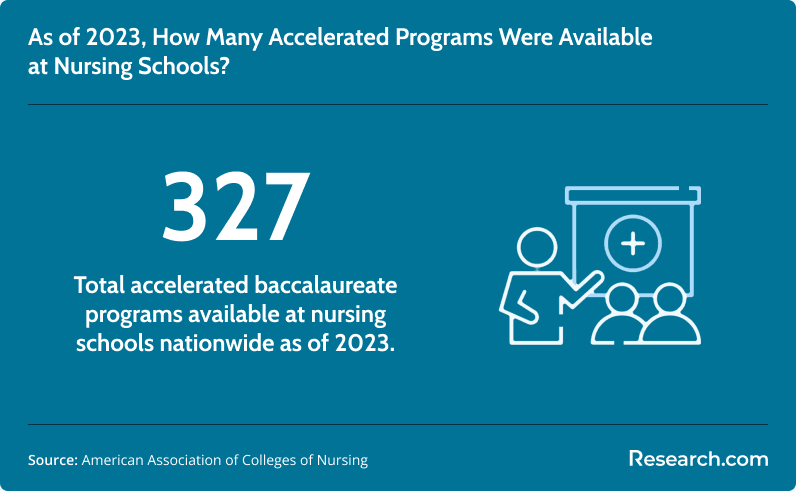
Admission requirements vary by school, but paramedic to RN bridge programs usually require proof that you are ready for college-level nursing coursework and eligible for clinical placement. In 2023, there were 327 accelerated baccalaureate programs available at nursing schools nationwide, and nursing remains one of the healthcare fields often discussed among degrees you can get online that pay well. Bridge programs are different from accelerated baccalaureate programs, so review each school’s exact requirements rather than assuming the rules are the same.
- Active paramedic license or certification: Most schools require a current, unencumbered paramedic credential, often through the state or the National Registry of Emergency Medical Technicians (NREMT).
- Paramedic work experience: Many programs prefer or require at least 1–2 years of work experience so students bring real patient care exposure into nursing coursework.
- High school diploma or GED: This is the baseline education requirement for most associate-level bridge programs.
- College prerequisites: Common requirements include human anatomy and physiology, microbiology, college algebra, statistics, psychology, and sometimes English composition or lifespan development.
- Minimum GPA: Schools often set a minimum GPA, typically around 2.5 to 3.0, especially for science and prerequisite courses.
- Entrance exam scores: Some programs use the TEAS or HESI A2 to evaluate academic readiness.
- CPR certification: Programs may require current American Heart Association Basic Life Support for Healthcare Providers certification.
- Clinical compliance: Expect background checks, drug screening, immunization records, health insurance documentation, and professional liability coverage.
What courses are typically in an affordable paramedic to RN online bridge program?
Paramedic to RN bridge curricula are designed to shift the student from prehospital emergency care into the broader nursing process. Paramedics already understand urgent assessment and stabilization, but RN education adds longitudinal care planning, patient education, interprofessional coordination, nursing diagnoses, documentation standards, and legal accountability across many populations. If you are comparing flexible graduate-level education in another discipline, you can also review affordable online mathematics degree programs to see how online program formats and pricing structures differ outside nursing.
- Transition to Professional Nursing: Introduces the RN role and helps paramedics adapt from rapid-response practice to comprehensive nursing care.
- Nursing Fundamentals: Covers safety, infection prevention, mobility, hygiene, documentation, communication, and basic bedside care.
- Health Assessment: Teaches systematic physical assessment, health history collection, and nursing-based interpretation of findings.
- Pharmacology for Nurses: Reviews medication classes, safe administration, adverse effects, dosage calculation, and patient teaching.
- Medical-Surgical Nursing: Focuses on adults with acute and chronic conditions, including assessment, interventions, monitoring, and discharge planning.
- Maternal and Newborn Nursing: Covers pregnancy, labor, birth, postpartum care, newborn assessment, and related complications.
- Pediatric Nursing: Addresses care for infants, children, and adolescents with attention to development and family-centered practice.
- Mental Health Nursing: Explores psychiatric conditions, therapeutic communication, crisis response, safety planning, and behavioral health care.
- Leadership and Management in Nursing: Prepares students for RN responsibilities such as delegation, prioritization, ethics, and coordination with healthcare teams.
- Nursing Capstone or Clinical Practicum: Gives students supervised opportunities to apply nursing judgment in real clinical settings.
What types of specializations are available in affordable paramedic to RN online bridge programs?
Most paramedic to RN bridge programs lead to general RN eligibility rather than a formal specialization. At the associate degree level, students usually complete required nursing courses and clinical rotations across multiple populations. Some schools may offer electives, specialty clinical placements, or capstone experiences in areas such as emergency care or critical care. For broader context on associate nursing pathways, compare bridge options with the top ADN programs.
From 2022 to 2023, there was a decline in both enrollment and graduates for accelerated baccalaureate nursing programs, according to the AACN's 2023 survey. Enrollment decreased from 28,580 students in 2022 to 25,869 in 2023, while the number of graduates fell from 19,076 to 18,714 during the same period.
- Emergency Nursing: Applies paramedic triage and acute-care experience to emergency department nursing.
- Critical Care Nursing: Focuses on patients with life-threatening conditions who need intensive monitoring and complex interventions.
- Pediatric Nursing: Centers on infants, children, adolescents, development, family education, and age-specific assessment.
- Geriatric Nursing: Emphasizes older adult care, chronic disease management, mobility, cognition, and medication safety.
- Mental Health Nursing: Builds skills for supporting patients with psychiatric disorders, substance use concerns, and crisis needs.
- Community/Public Health Nursing: Addresses prevention, health education, outreach, and care coordination in community settings.
- Medical-Surgical Nursing: Provides broad preparation for adult inpatient care across many diagnoses and procedures.
If you are comparing specialization structures in non-nursing online graduate programs, an affordable master’s in industrial engineering online can offer a useful contrast in how professional programs organize concentrations, electives, and career-focused coursework.
Employment projections differ by healthcare role. The chart below compares projected employment changes for paramedics and registered nurses through 2033.
What student support services do these online bridge programs offer?
Strong support services matter because many bridge students are working adults balancing EMS shifts, family responsibilities, clinical hours, and demanding nursing exams. A good online program should provide more than recorded lectures. Look for responsive faculty communication, academic advising, tutoring, technology support, library access, online test preparation, clinical placement guidance, and clear policies for students who fall behind.
Career support is also important. Resume review, interview preparation, job-search guidance, employer connections, and transfer advising can help students move from paramedic roles into RN positions or continue into bachelor’s-level nursing. If you plan to earn a BSN later while minimizing additional clinical requirements, review options such as RN to BSN online with no clinicals and ask whether your bridge credits transfer smoothly.
| Support service | Why it matters for bridge students | What to ask the school |
| Academic advising | Helps sequence prerequisites, nursing courses, and graduation requirements. | Will I have an advisor who understands paramedic bridge students? |
| Clinical coordination | Clinical placement issues can delay graduation. | Does the school arrange clinical sites or must I secure them? |
| NCLEX-RN preparation | Licensure depends on passing the exam after graduation. | Are review tools, practice exams, and remediation included? |
| Technology support | Online exams and simulations can create technical barriers. | Is support available during evenings or weekends? |
| Career services | Paramedics may need help translating EMS experience into nursing resumes. | Does the program provide RN job-search support before graduation? |
Are these online bridge programs accredited and state-approved?
Accreditation and state approval are non-negotiable. Accreditation indicates that a nursing program has been reviewed against recognized education standards, while state board approval determines whether graduates can meet RN licensure requirements in a specific jurisdiction. Before enrolling, confirm both. Do not assume that a program approved in one state automatically qualifies you for licensure in another.
Look for nursing program accreditation from recognized agencies such as ACEN or CCNE, and verify the program with the board of nursing in the state where you intend to practice. Accreditation can also affect federal financial aid eligibility, employer recognition, credit transfer, and later admission to RN to BSN or graduate nursing programs. For a broader affordability comparison, see cheap online RN-BSN programs, but remember that RN-BSN programs serve already licensed RNs and are not the same as pre-licensure bridge programs.
Licensure checklist before you apply
- Confirm the school is institutionally accredited.
- Verify nursing program accreditation, if listed.
- Check state board approval for the pre-licensure RN program.
- Ask whether the program enrolls students from your state.
- Confirm whether clinical placements are available in your area.
- Review NCLEX-RN pass rates and graduation outcomes.
- Ask whether graduates are eligible for RN licensure in the state where you plan to work.
How do you choose the best affordable paramedic to RN online bridge program?
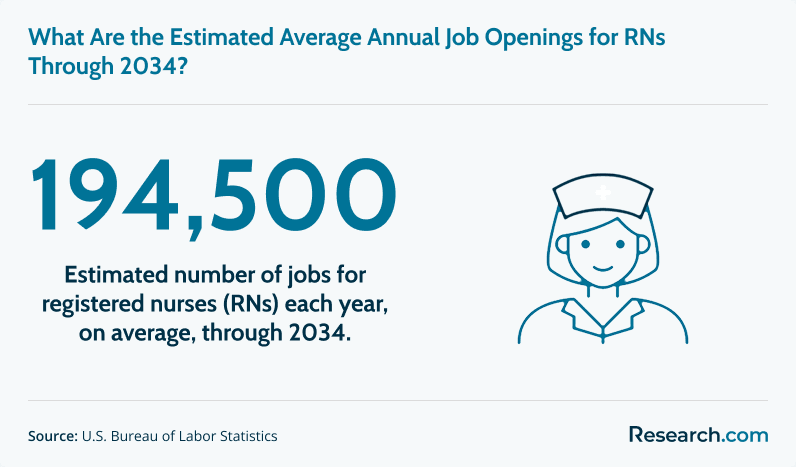
The best affordable program is not always the one with the lowest tuition. It is the program that is approved for your licensure goal, fits your schedule, provides realistic clinical placement options, prepares students for the NCLEX-RN, and keeps total cost manageable. About 194,500 openings for registered nurses are projected each year, on average, through 2034, which is one reason many RNs later consider bachelor’s completion routes such as fast track RN to BSN online programs.
- Start with licensure eligibility: Confirm state approval and whether graduates can sit for the NCLEX-RN where you plan to practice.
- Check nursing accreditation: Look for recognized programmatic accreditation such as ACEN or CCNE when available.
- Compare total cost: Include tuition, fees, books, supplies, uniforms, testing, travel, clinical costs, and potential lost wages.
- Review admission requirements: Make sure your paramedic license, experience, GPA, prerequisites, and entrance exam scores meet expectations.
- Analyze the schedule: Ask whether coursework is asynchronous and when labs, exams, and clinicals occur.
- Investigate clinical placement: A flexible online program can still be impractical if clinical sites are far away or difficult to secure.
- Ask for outcomes: Review NCLEX-RN pass rates, graduation rates, retention, job placement data, and student support resources.
- Plan your next degree: If you will need a BSN later, ask whether credits transfer into partner RN to BSN programs.
| Common mistake | Why it can hurt you | Better approach |
| Choosing only by lowest tuition | Fees, travel, and delayed graduation can make the program more expensive. | Compare total cost and time to completion. |
| Ignoring state approval | You may complete courses but face licensure problems. | Verify eligibility with your state board of nursing before applying. |
| Assuming “online” means no campus visits | Labs, simulations, exams, and clinicals may require travel. | Request a full list of in-person requirements. |
| Overestimating work-school balance | EMS shifts plus nursing clinicals can lead to burnout. | Create a realistic weekly calendar before enrollment. |
| Skipping outcome data | Poor NCLEX-RN preparation can delay licensure. | Ask for recent pass rates, remediation policies, and exam support. |
What are the NCLEX-RN success rates and key outcomes for these programs?
NCLEX-RN performance is one of the most important indicators to review, but it should not be the only one. A strong program should be transparent about licensure exam pass rates, graduation rates, retention, employment outcomes, clinical placement support, and student remediation. High pass rates may suggest effective preparation, but you should also ask how many students start the program, how many finish, and whether students who struggle receive structured help before testing.
Ask the nursing department for the most recent published NCLEX-RN pass rates and compare them with state expectations. Also review how the curriculum uses simulation, skills validation, clinical evaluation, and standardized testing. If you are considering a much later move into advanced practice, compare requirements carefully with pathways such as direct entry nurse practitioner programs for non nurses, which are designed for a different student population and should not be confused with paramedic to RN bridge programs.
Outcome questions to ask every program
- What is the most recent NCLEX-RN pass rate?
- How many students were included in that pass-rate calculation?
- What percentage of admitted students graduate?
- How many students withdraw or repeat nursing courses?
- What remediation is available after failed exams or clinical difficulties?
- What percentage of graduates find RN employment?
- Are clinical sites consistent, or do students face placement delays?
What career paths are available for graduates of affordable paramedic to RN online bridge programs?
Once licensed, paramedic to RN bridge graduates can pursue many nursing roles. Some choose settings that closely match their EMS background, while others use RN licensure to move into more predictable schedules, long-term patient relationships, or specialty practice.
- Hospital Registered Nurse: Provides direct care in medical-surgical units, step-down units, emergency departments, ICUs, telemetry, or specialty floors.
- Emergency Room Nurse: Uses triage, trauma response, and rapid assessment skills in urgent and acute care settings.
- Critical Care Nurse: Monitors and supports seriously ill patients in intensive care environments.
- Community Health Nurse: Delivers education, screening, outreach, and preventive services through clinics, schools, or public health organizations.
- Home Health Nurse: Cares for patients recovering or managing chronic conditions in their homes.
- Nurse Educator or Trainer: Teaches, precepts, or supports training programs for nurses, paramedics, or emergency care teams.
- Nurse Case Manager: Coordinates care plans, services, discharge needs, and communication among providers.
- Occupational Health Nurse: Supports workplace safety, injury prevention, wellness, and employee health programs.
- Flight Nurse or Transport Nurse: Provides advanced care during air or ground transport, often drawing heavily on prehospital experience.
- Nursing Leadership Roles: Supervises staff, manages workflow, or supports clinical operations; many nurses build toward these roles through affordable RN to BSN online programs.
What is the job market like for graduates with an affordable paramedic to RN online bridge program?
The RN job market is generally favorable for graduates who earn licensure, but opportunities vary by state, specialty, employer, and experience level. The U.S. Bureau of Labor Statistics projects that employment for RNs will grow by 6% from 2023 to 2033, faster than the average for all occupations, with approximately 19,200 openings each year due to retirements and workforce transitions.
Paramedics who become RNs may have an advantage in departments that value emergency response, triage, and crisis decision-making. Emergency departments, trauma services, transport teams, cardiac units, and intensive care settings may be especially aligned with prior EMS experience. However, new RNs still need orientation, preceptorship, and nursing-specific judgment development; paramedic experience is valuable, but it does not replace RN practice standards.
Degree type can also affect your next step. Some students graduate from ADN, AAD, or AAS nursing pathways and later pursue a BSN depending on employer expectations and career goals. For a credential comparison, review ADN vs AAD vs AAS nursing degrees.
What advanced educational opportunities can further boost my nursing career?
After becoming an RN, many former paramedics continue their education to broaden career options. A common next step is an RN to BSN program, especially for nurses who want hospital advancement, leadership roles, public health opportunities, or future graduate study. Others pursue specialty certifications after gaining the required RN experience in emergency nursing, critical care, pediatrics, oncology, or transport nursing.
Graduate education may lead to advanced clinical, leadership, education, or administrative roles. Some nurses later pursue a Master of Science in Nursing, nurse practitioner preparation, nurse educator training, or leadership-focused programs. If you are researching advanced practice routes, compare them carefully with direct entry nurse practitioner programs online, which serve a different audience and may not be the right comparison point for licensed paramedics seeking initial RN licensure.
Key Insights
- Paramedic to RN bridge programs are best for licensed paramedics who want RN licensure without repeating all foundational healthcare training.
- Most affordable online bridge options are actually hybrid programs: coursework may be online, but labs, simulations, exams, and clinical rotations require in-person participation.
- Affordable programs commonly cost approximately $5,000 to $10,000, but students should compare total cost, including fees, supplies, clinical travel, testing, and lost work hours.
- Program length typically ranges from 12 to 24 months, depending on prerequisites, transfer credits, full-time or part-time enrollment, and clinical scheduling.
- Accreditation and state board approval should be checked before applying. Without the right approval, you may face problems qualifying for the NCLEX-RN or state licensure.
- Many programs prefer or require at least 1–2 years of work experience, which helps students connect paramedic practice with nursing responsibilities.
- The median annual salary for RNs in the U.S. is around $93,600, compared with approximately $58,410 for paramedics, but individual earnings depend on location, employer, specialty, and experience.
- From 2022 to 2023, accelerated baccalaureate nursing program enrollment declined from 28,580 students in 2022 to 25,869 in 2023, while graduates decreased from 19,076 to 18,714 during the same period.
- The strongest program choice is not simply the cheapest one; it is the accredited, state-approved, clinically feasible program that fits your schedule and prepares you well for the NCLEX-RN.
References:
- American Association of Colleges of Nursing. (n.d.). Accelerated baccalaureate and master’s degrees in nursing.
- American Association of Colleges of Nursing. (n.d.). Nursing workforce fact sheet.
- Bureau of Labor Statistics, U.S. Department of Labor. (2024). EMTs and paramedics. Occupational Outlook Handbook.
- Bureau of Labor Statistics, U.S. Department of Labor. (2024). Registered nurses. Occupational Outlook Handbook.
- O*NET OnLine. (n.d.). Paramedics.
Other Things You Should Know About Affordable Paramedic to RN Online Bridge Programs
In 2027, paramedic to RN online bridge programs typically require around 400 to 600 clinical hours, depending on the specific program and state regulations. These hours are essential for hands-on experience and must be completed at approved healthcare facilities.
Most programs require proof of MMR, varicella, hepatitis B, and influenza vaccines, plus a two-step TB test or IGRA and a recent physical exam. Students may also need a drug screen, CPR certification, and current health insurance before starting clinical rotations.








