
2027 Best Associate Degree in Nursing (ADN) Programs

Co-Founder and Chief Data Scientist
If you want to become a registered nurse without spending four years in school before entering the workforce, an Associate Degree in Nursing (ADN) is one of the most direct routes. ADN programs combine classroom study, labs, and supervised clinical practice so graduates can qualify for the NCLEX-RN and pursue RN licensure. For students comparing nursing school options in 2027, the key decision is not simply “Which program is best?” but “Which accredited ADN program fits my budget, schedule, clinical needs, state requirements, and long-term career goals?”
This guide explains how ADN programs work, what they cost, how online and campus-based formats compare, which schools stand out, and what to check before applying. It also covers salary expectations, job settings, NCLEX preparation, BSN bridge options, career advancement, financial aid, and common mistakes that can slow down your path to becoming an RN.
Quick answer: Is an ADN a good path to becoming a registered nurse?
Yes. An ADN can be a practical and lower-cost pathway into registered nursing if the program is properly accredited, approved by the state board of nursing, and provides enough clinical preparation for the NCLEX-RN. Registered nurses ranked 8th among the top 10 fastest-growing healthcare professions according to BLS (2023), and the Bureau of Labor Statistics projects RN employment to grow by 6% from 2023 to 2033. For many students, the ADN is also a stepping stone to a BSN, MSN, or advanced nursing role later.
Why choose an Associate Degree in Nursing?
- It can lead to RN licensure. Graduates of qualifying ADN programs can sit for the NCLEX-RN and apply for licensure, opening roles in hospitals, clinics, long-term care facilities, schools, outpatient centers, and home health.
- It supports several entry-level nursing paths. ADN-prepared RNs may work in medical-surgical units, emergency departments, pediatrics, labor and delivery, oncology, home care, and care coordination, depending on employer requirements and state regulations.
- It offers solid earning potential. Zippia (2025) reports a median RN salary of $73,349 per year, though pay depends heavily on location, employer type, experience, shift differentials, and specialty.
- It can be more flexible than a traditional four-year degree. Some online and hybrid ADN programs allow students to complete theory coursework remotely while finishing labs and clinical rotations in person.
- It keeps future education options open. Many ADN graduates later enroll in RN-to-BSN, ADN-to-MSN, or other bridge programs to qualify for leadership, specialty, or advanced practice roles.
What is an Associate Degree in Nursing?
An Associate Degree in Nursing is an undergraduate nursing program that usually takes two to three years and prepares students for entry-level registered nursing practice. The curriculum typically includes anatomy, physiology, microbiology, pharmacology, nursing fundamentals, medical-surgical nursing, maternal-newborn nursing, pediatric nursing, mental health nursing, and supervised clinical experiences.
After completing an eligible ADN program, graduates may take the National Council Licensure Examination for Registered Nurses, commonly called the NCLEX-RN. Passing the exam is a major step toward RN licensure, although each state board of nursing sets its own final licensing requirements.
The ADN appeals to students who want a shorter, more affordable route into nursing than a traditional bachelor’s program. It can also work well for adults changing careers, working students, and those who plan to earn a BSN after gaining RN experience.
Where can ADN-prepared nurses work?
An ADN can qualify graduates for RN roles in many care environments, but hiring standards vary by employer and region. Some hospitals prefer or require BSN-prepared nurses, while other settings regularly hire ADN graduates.
| Work setting | Typical ADN nurse responsibilities | Best fit for students who want |
| Hospitals | Monitor patients, administer medications, assist with diagnostic testing, provide bedside care, and coordinate with physicians and care teams. | Fast-paced acute care experience and exposure to multiple specialties. |
| Doctor’s offices and clinics | Perform health assessments, give vaccinations, support exams, assist with minor procedures, and educate patients. | More predictable schedules and ongoing patient relationships. |
| Outpatient care centers | Support pre- and post-procedure care, monitor recovery, assist with rehabilitation, and help manage chronic conditions. | Clinical variety outside an inpatient hospital setting. |
| Nursing homes and long-term care facilities | Manage medications, observe health changes, supervise care plans, document patient status, and communicate with families. | Work with older adults, chronic care, and continuity of care. |
| Home healthcare companies | Provide wound care, medication support, treatment monitoring, family education, and care coordination in patients’ homes. | Autonomy, one-on-one care, and community-based nursing. |
| Insurance carriers | Review cases, evaluate patient needs, support utilization review, and help coordinate appropriate healthcare services. | Non-bedside nursing, documentation, and case management work. |
How much can you earn with an Associate Degree in Nursing?
ADN-related pay varies by role, state, employer, specialty, and experience level. According to Indeed (2025), average annual wages for selected roles associated with an ADN include the following:
| Role | Average annual wage |
| Home Care Nurse | $66,542 |
| Patient Coordinator | $47,463 |
| Care Coordinator | $49,579 |
| Clinical Associate | $57,551 |
| Pediatric Nurse | $65,988 |
| Clinical Nurse Liaison | $80,425 |
| Clinical Research Associate | $93,292 |
| Oncology Nurse | $73,616 |
| Emergency Room Nurse | $66,940 |
| Infection Preventionist | $79,149 |
These figures should be used as planning estimates, not guarantees. Before choosing a program, compare RN job postings in your local market and check whether employers prefer ADN, BSN, specialty certification, or prior healthcare experience.
- ADN completion timeline
- Online ADN vs. campus ADN comparison
- Typical ADN program cost
- Financial aid for ADN students
- ADN admission prerequisites
- Common ADN courses
- ADN specializations and certifications
- How to select the right ADN program
- Faster routes from ADN to advanced practice
- How ADN graduates can move into a BSN faster
- NCLEX-RN preparation tips
- RN-to-BSN programs without clinicals
- Career progression challenges for ADN graduates
- Moving from an ADN into advanced nursing education
- Whether ADN graduates can become nurse practitioners directly
- Career options after an ADN
- ADN job market outlook
Best Associate Degree in Nursing Programs for 2027
The following programs were selected for students comparing ADN options in 2027. When reviewing any nursing school, confirm current tuition, state approval, clinical placement policies, NCLEX outcomes, and licensure eligibility directly with the institution and your state board of nursing.
How Research.com evaluates schools
Choosing a nursing program is a major financial and professional decision, so our ranking approach emphasizes transparency, data quality, and student relevance. Our ranking methodology draws on established sources such as the IPEDS database, Peterson's database, the College Scorecard, and The National Center for Education Statistics. These sources help provide a consistent foundation for comparing institutions.
| School | Program length | Cost per credit | Credits required | Accreditation |
| Howard College | 2 years | $90 | 72 | ACEN |
| Cayuga Community College | 2 years | $211 (In-state), $442 (Out-of-state) | 64 | ACEN |
| University of Pittsburgh-Titusville | 2 years (full-time) | $475 (out-of-state) / $326 (in-state) | 65 | ACEN |
| Rasmussen University | 2 years | $365 | 90 | ACEN |
| Galen College of Nursing | 2 years | $425 | 72 | ACEN |
| Chabot College | 2 years | $46 | 72 | ACEN |
| Big Bend Community College | 2 years | $118 | 90 | ACEN |
| Asheville-Buncombe Technical Community College | 2 years | $76 (In-state), $268 (Out-of-state) | 72 | ACEN |
| Mesa Community College | 2 years | $85 (In-state), $250 (Out-of-state) | 64 | ACEN |
| Saddleback College | 2 years | $46 | 72 | ACEN |
1. Howard College
Howard College offers an Associate Degree in Nursing pathway built to prepare students for the NCLEX-RN. The program includes traditional classroom and online formats, which can help students who are working, living in rural communities, or seeking a faster route into nursing. Howard College began its online ADN option in 2018. Students complete online coursework while meeting clinical requirements through local placements.
- Program length: 2 years
- Tracks/concentrations: ADN
- Cost per credit: $90
- Credits required to graduate: 72
- Accreditation: ACEN (Accreditation Commission for Education in Nursing)
2. Cayuga Community College
Cayuga Community College provides an ADN designed for students preparing to become registered nurses. The program is available in traditional and online formats, with the online version serving learners who need more control over their schedules. The online ADN launched in 2019 and combines remote coursework with required in-person clinical experiences.
- Program length: 2 years
- Tracks/concentrations: ADN
- Cost per credit: $211 (In-state), $442 (Out-of-state)
- Credits required to graduate: 64
- Accreditation: ACEN
3. University of Pittsburgh-Titusville
The University of Pittsburgh-Titusville offers an Associate Degree in Nursing that prepares graduates for the NCLEX-RN and entry-level RN practice. The program includes on-campus and online learning options intended to support working students and those who need a more flexible format. Its online ADN option began in 2020 and serves students from varied locations and backgrounds.
- Program length: 2 years (full-time)
- Tracks/concentrations: ADN
- Cost per credit: $475 (out-of-state) / $326 (in-state)
- Credits required to graduate: 65
- Accreditation: ACEN (Accreditation Commission for Education in Nursing)
4. Rasmussen University
Rasmussen University offers an ADN with online coursework for students who need scheduling flexibility. Available since 2019, the online option is aimed at adults balancing school with work, family, or other commitments. The program pairs online nursing theory with in-person clinical training at healthcare facilities.
- Program length: 2 years
- Tracks/concentrations: ADN
- Cost per credit: $365
- Credits required to graduate: 90
- Accreditation: ACEN
5. Galen College of Nursing
Galen College of Nursing offers an ADN for students who want focused preparation for registered nursing practice. The school began offering online options in 2017, with a structure that supports students seeking an intensive path into the field. Coursework is combined with face-to-face clinical training so students can develop practical nursing skills.
- Program length: 2 years
- Tracks/concentrations: ADN
- Cost per credit: $425
- Credits required to graduate: 72
- Accreditation: ACEN
6. Chabot College
The Chabot College ADN prepares students for registered nursing through nursing theory, lab practice, and clinical rotations. Its online option began in 2020 and is designed for both traditional students and working adults. The program emphasizes core nursing knowledge and applied patient care experience.
- Program length: 2 years
- Tracks/concentrations: ADN
- Cost per credit: $46
- Credits required to graduate: 72
- Accreditation: ACEN
7. Big Bend Community College
Big Bend Community College offers an ADN for students who want to enter healthcare relatively quickly. The program began offering online courses in 2018 and is structured for rural learners as well as students managing work or family responsibilities. Students complete online coursework along with clinical placements in local healthcare settings.
- Program length: 2 years
- Tracks/concentrations: ADN
- Cost per credit: $118
- Credits required to graduate: 90
- Accreditation: ACEN
8. Asheville-Buncombe Technical Community College
Asheville-Buncombe Technical Community College provides an ADN that blends classroom instruction with clinical experience in local hospitals. The online option launched in 2020 to support students needing greater scheduling flexibility. The program focuses on essential nursing skills and NCLEX-RN preparation.
- Program length: 2 years
- Tracks/concentrations: ADN
- Cost per credit: $76 (In-state), $268 (Out-of-state)
- Credits required to graduate: 72
- Accreditation: ACEN
9. Mesa Community College
Mesa Community College offers an ADN centered on patient-focused care and community health. Its online option started in 2019 and is geared toward non-traditional students. The program combines virtual learning with in-person clinical experiences so graduates can build the skills needed for RN practice.
- Program length: 2 years
- Tracks/concentrations: ADN
- Cost per credit: $85 (In-state), $250 (Out-of-state)
- Credits required to graduate: 64
- Accreditation: ACEN
10. Saddleback College
Saddleback College offers an ADN intended to prepare students for RN licensure and entry-level nursing work. The program has included online components since 2018, giving students some flexibility while maintaining clinical and practice-based requirements. Its curriculum combines academic nursing coursework with direct clinical learning.
- Program length: 2 years
- Tracks/concentrations: ADN
- Cost per credit: $46
- Credits required to graduate: 72
- Accreditation: ACEN
How long does an ADN take to complete?
Most ADN programs take about 2 to 3 years to finish. That timeline typically includes general education courses, nursing theory, lab simulations, and clinical rotations in healthcare settings. Many programs begin with foundational science and general education courses before moving into nursing-specific coursework and increasingly complex clinical practice.
Clinical rotations are essential because nursing cannot be learned only through lectures. Students need supervised experience with patient assessment, medication administration, documentation, communication, care planning, and safety procedures. Lab work also gives students a controlled environment to practice skills before applying them with real patients.
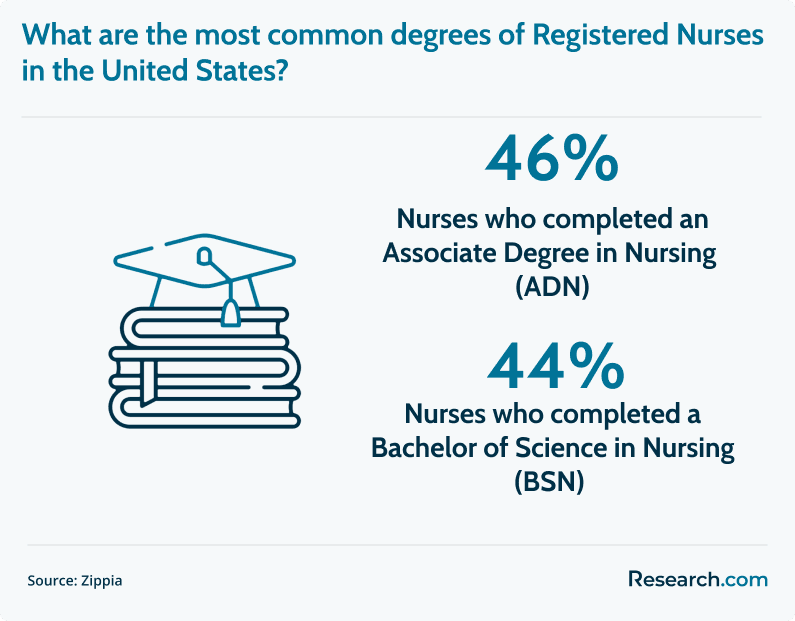
According to Zippia, nearly 46% of Registered Nurses (RNs) in the U.S. hold an Associate Degree in Nursing, while 44% completed a Bachelor’s Degree in Nursing. That makes the ADN a widely used and recognized route into the nursing profession.
Students comparing career paths outside healthcare may also explore other professional routes. For example, those interested in law, policy, and environmental protection can review this guide on how to become an environmental lawyer. Nursing and environmental law are very different paths, but comparing training time, licensure requirements, salary expectations, and daily work can help undecided students make a clearer choice.
For nursing students, the ADN can serve as both an entry credential and a launch point. After becoming licensed, many nurses continue into BSN, MSN, certification, or specialty training programs as their goals become more defined.
Online ADN vs. on-campus ADN: Which format is better?
Online, hybrid, and campus-based ADN programs usually share the same core goal: preparing students for the NCLEX-RN and safe entry-level nursing practice. The biggest difference is how academic coursework is delivered. Even in online ADN programs, clinical rotations and many lab requirements still take place in person.
Students researching online ADN programs for non-nurses should understand that “online” does not mean fully remote. Nursing requires supervised hands-on practice, and programs must arrange clinical learning that satisfies state and accreditation standards.
| Factor | Online or hybrid ADN | On-campus ADN |
| Best for | Students who need flexible theory coursework and can manage independent study. | Students who prefer structured schedules, direct instructor access, and in-person peer support. |
| Course delivery | Many lectures and assignments are completed remotely. | Classes are usually held on campus at set times. |
| Clinical requirements | Completed in person at approved healthcare sites. | Completed in person at approved healthcare sites. |
| Lab experience | May require scheduled campus visits or approved lab sessions. | Typically completed in campus simulation labs. |
| Flexibility | Usually higher for coursework, but clinical schedules may still be fixed. | Usually lower because classes, labs, and clinicals follow set schedules. |
| Main risk | Choosing a program without confirming local clinical placement and state licensure eligibility. | Underestimating commute time, campus attendance requirements, or limited scheduling options. |
Flexible nursing programs online can be helpful for working adults, but students should carefully verify accreditation, clinical placement support, technology requirements, and state authorization before enrolling.
Campus programs offer more immediate contact with faculty and classmates, which can be valuable for students who learn best through face-to-face instruction. The trade-off is less scheduling freedom.
In both formats, clinical learning remains non-negotiable. A strong ADN program should clearly explain where clinicals occur, how placements are assigned, what immunizations or background checks are required, and how students are evaluated in patient-care settings.
How much does an ADN program cost?
The average cost of an ADN program generally ranges from $6,000 to $20,000 per year. Your actual cost depends on the school type, residency status, tuition model, fees, textbooks, supplies, transportation, and whether you need to repeat or retake prerequisite courses.
Tuition is only part of the total price. ADN students may also pay for lab fees, books, uniforms, shoes, background checks, drug screening, immunizations, CPR certification, clinical travel, exam preparation, graduation fees, and NCLEX-related expenses. Online programs may reduce commuting for theory courses, but they still require in-person clinical and lab work that can create travel or scheduling costs.
| Cost item | Why it matters | Question to ask before enrolling |
| Tuition and fees | This is the largest visible cost, but fee structures vary widely. | Is tuition charged per credit, per term, or as a program package? |
| Clinical travel | Students may need to drive to hospitals, clinics, or long-term care facilities. | Where are clinical sites located, and can I be placed near home? |
| Books and supplies | Nursing materials, kits, software, and uniforms can add to the total price. | What is the estimated cost for required materials each term? |
| Exam and licensing costs | Students should budget for NCLEX preparation and licensure-related expenses. | Does the program include NCLEX prep, or is it a separate cost? |
| Lost work hours | Clinical schedules can make full-time employment difficult. | How many hours per week should I expect for class, lab, study, and clinicals? |
The Bureau of Labor Statistics (2024) identifies registered nursing as one of the fastest-growing healthcare jobs in the United States, with a projected growth rate of 6%. Advanced nursing roles such as nurse anesthetists, nurse midwives, and nurse practitioners are growing at a rate of 38%.
If you are comparing nursing with other high-responsibility fields, it can also help to review salary and training requirements outside healthcare. For instance, an environmental health and safety manager salary may appeal to students interested in workplace safety, compliance, and environmental regulation rather than direct patient care.
For ADN students, the best financial decision is not always the cheapest program. A low-cost program that lacks strong clinical support, licensure alignment, or NCLEX preparation can become expensive if it delays graduation or licensure.
What financial aid is available for ADN students?
ADN students may qualify for federal, state, institutional, employer-based, and private financial aid. The first step is usually completing the Free Application for Federal Student Aid, or FAFSA, because many grants, loans, and work-study opportunities depend on that application.
- Pell Grants. Pell Grants are need-based awards that do not have to be repaid. Eligibility is determined through the FAFSA and can help cover tuition, fees, books, and other approved education costs.
- Federal Work-Study. Federal Work-Study allows eligible students to earn money through part-time jobs while enrolled. Some positions may relate to healthcare or student services, giving students income and work experience.
- Federal Student Loans. Direct Subsidized and Unsubsidized Loans can help cover ADN costs. Federal loans often provide borrower protections and repayment options that private loans may not offer.
- Health Resources and Services Administration (HRSA) Nurse Corps Scholarship. The HRSA Nurse Corps Scholarship may cover full tuition and provide a stipend for students who commit to working in underserved areas after graduation. The award can include books and uniforms, and acceptance creates a federal service obligation.
- The Foundation of the National Student Nurses Association (FNSA) Undergraduate Scholarship. This scholarship supports students enrolled and matriculated in state-approved nursing programs, including associate degree pathways.
- NSCDA American Indian Nurse Scholarship Program. This program supports undergraduate and graduate nursing students who are at least a quarter American Indian. Applicants must be enrolled in a tribe or provide proof of direct tribal ancestry and remain in good academic standing in a nursing or related program.
- TravelNurseSource Future U.S. Nurse Scholarship. This scholarship is for first-time undergraduate students who have completed at least one semester in a U.S. nursing school. Applicants must be U.S. residents, at least 18 years old, and have a cumulative GPA of 2.5 or higher.
Students considering other STEM or public-service careers may find field-specific aid as well. For example, learners researching an environmental engineer career path should compare scholarship availability, required credentials, and long-term earnings in that discipline.
What are the usual ADN admission requirements?
ADN admission requirements vary by school, but competitive programs often expect applicants to complete prerequisites, meet GPA standards, pass entrance exams, and satisfy clinical eligibility requirements. Because nursing seats are limited, meeting the minimum requirements does not always guarantee admission.
- Prerequisite courses. Common prerequisites include Anatomy and Physiology with labs, Microbiology, English Composition, Introductory Algebra or Statistics, Psychology or Human Growth and Development, and Nutrition.
- High school diploma or GED. Most ADN programs require proof of high school completion or an equivalent credential before admission.
- Minimum GPA. Many programs expect a cumulative GPA of 2.5 or higher on a 4.0 scale, though competitive programs may require stronger academic performance.
- Application essays. Some schools ask applicants to describe their academic goals, motivation for nursing, healthcare experience, or commitment to patient care.
- Standardized tests. Programs may require the Test of Essential Academic Skills (TEAS), Pre-Admission Examination (PAX), or Health Education Systems, Inc. (HESI) exam to evaluate readiness in reading, science, math, and related areas.
- English proficiency tests. Non-native English speakers may need TOEFL or IELTS scores to demonstrate the communication skills required for nursing education and patient care.
- Background checks and fingerprints. Schools commonly require background screening, fingerprinting, immunization records, drug screening, or other documentation before clinical placement.
Before applying, ask whether prerequisites expire, whether repeated courses are averaged or replaced, how applicants are ranked, and whether prior healthcare experience improves admission chances.
What classes do ADN students take?
ADN coursework builds the scientific, clinical, communication, and decision-making skills needed for entry-level nursing practice. Course names vary, but most programs include the following subjects.
| Course area | What students learn | Why it matters in nursing |
| Anatomy and Physiology I and II | Human body structure, organ systems, and normal body function. | Provides the foundation for understanding illness, assessment findings, and treatment plans. |
| Microbiology | Microorganisms, infection processes, and infection control principles. | Supports safe care, prevention practices, and clinical decision-making related to infectious disease. |
| Pharmacology for Nursing Practice | Medication categories, dosage principles, side effects, interactions, and administration safety. | Helps students administer medications accurately and monitor patient responses. |
| Nursing Fundamentals | Basic nursing skills, patient safety, vital signs, hygiene, mobility, wound care, and documentation. | Introduces the practical skills used across nearly every care setting. |
| Medical-Surgical Nursing I, II, and III | Care for adult patients with acute and chronic conditions. | Builds assessment, planning, intervention, and evaluation skills for common patient scenarios. |
| Mental Health Nursing | Psychiatric care, therapeutic communication, safety planning, and behavioral health interventions. | Prepares nurses to support patients with mental health needs in multiple settings. |
| Maternal-Newborn Nursing | Pregnancy, childbirth, postpartum care, newborn assessment, and family-centered support. | Develops skills for caring for birthing patients, newborns, and families. |
| Pediatric Nursing | Care of infants, children, and adolescents. | Addresses developmental stages, family education, and pediatric health conditions. |
| Community Health Nursing | Public health principles, prevention, community resources, and health disparities. | Connects nursing practice with population health and community-based care. |
| Leadership and Professional Identity | Ethics, teamwork, delegation, communication, and professional responsibilities. | Helps students understand the RN role within complex healthcare teams. |
| Human Growth and Development | Psychological and developmental changes across the lifespan. | Supports age-appropriate care for patients from infancy through older adulthood. |
| English Composition | Clear writing, argument development, and professional communication. | Strengthens documentation, patient education, and communication with care teams. |
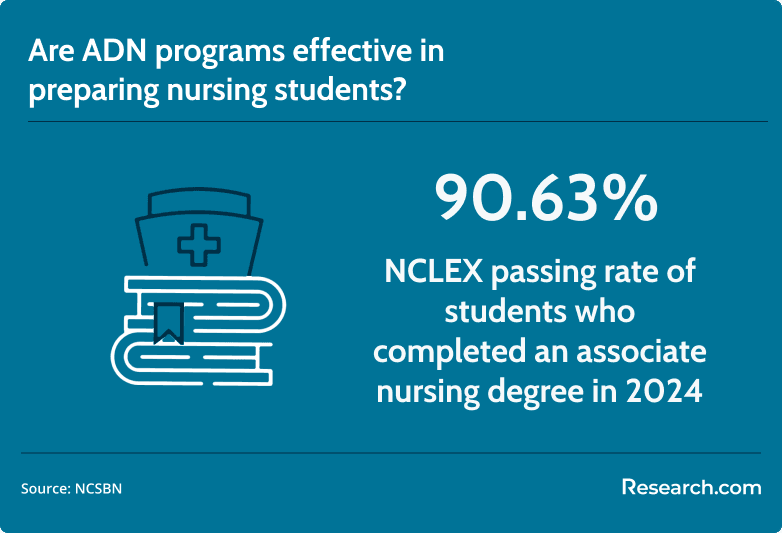
These courses are paired with lab practice and clinical experiences so students can apply theory to real patient-care situations. The NCLEX passing rate for ADN graduates rose from 87.75% in 2023 to 90.63% in 2024, reflecting improved performance among ADN test-takers during that period.
Students interested in data-driven health, sustainability, or environmental risk may also compare nursing with an environmental data analyst career guide to understand how analytical skills can lead to different kinds of public-impact careers.
What ADN specializations and certifications are available?
ADN programs usually focus on broad RN preparation rather than narrow specialization. However, students may gain exposure to specialty areas through clinical rotations, electives, employer training, or post-licensure certifications. Many ADN graduates later pursue nursing certifications online after gaining RN experience.
- Ambulatory Care Nursing. This area focuses on outpatient care, patient education, chronic condition management, diagnostic support, and preventive services in clinics or physician offices.
- Cardiac Nursing. Cardiac nurses care for patients with cardiovascular conditions, monitor heart rhythms, administer related medications, and teach risk-reduction strategies.
- Long-Term Care Nursing. Nurses in long-term care support residents with chronic conditions, rehabilitation needs, mobility challenges, medication management, and family communication.
- Critical Care Nursing. Critical care nursing involves high-acuity settings such as ICUs, trauma units, and emergency departments. The Critical Care Registered Nurse (CCRN) credential is associated with this specialty.
- Dialysis Nursing. Dialysis nurses care for patients with kidney failure, monitor fluid balance, manage dialysis equipment concerns, and provide education about access care and diet. The Certified Dialysis Nurse (CDN) credential is tied to this field.
- Gerontological Nursing. This specialty centers on older adults, including fall prevention, cognitive changes, chronic disease management, and support for age-friendly care. The Gerontological Nursing Certification (RN-BC) is associated with this area.
- Medical-Surgical Nursing. Medical-surgical nurses care for adult patients with a wide range of conditions, including post-operative recovery, diabetes, hypertension, and wound care. A Medical-Surgical Nursing Certification (RN-BC) can support advancement in this field.
- Oncology Nursing. Oncology nurses assist patients receiving cancer treatment, manage symptoms, monitor treatment reactions, and provide emotional support. The Oncology Certified Nurse (OCN) credential is common in this specialty.
- Pediatric Nursing. Pediatric nurses work with infants, children, adolescents, and families. The Certified Pediatric Nurse (CPN) credential supports nurses focused on child health and development.
- Psychiatric-Mental Health Nursing. Psychiatric-mental health nurses support patients with behavioral health conditions through therapeutic communication, safety planning, medication support, and crisis response. The Psychiatric-Mental Health Nursing Certification (RN-BC) applies to this specialty.
- Trauma Nursing. Trauma nurses respond to serious injuries in high-pressure environments, stabilize patients, and coordinate rapid care with emergency teams. The Trauma Certified Registered Nurse (TCRN) credential is associated with this work.
Higher-level specialty and advanced practice roles usually require additional education beyond the ADN. Graduates interested in nurse practitioner or advanced practice pathways may compare ADN to NP programs, MSN options, DNP programs, or PhD in Nursing pathways. The chart below shows Certified Registered Nurse Anesthetist (CRNA) as the highest-paying nursing job, with a national average salary of $216,896, followed by Family Nurse Practitioner (FNP) and Advanced Practice Registered Nurse (APRN) roles.
How should you choose the best ADN program?
The right ADN program is the one that qualifies you for licensure, fits your budget, provides reliable clinical placement, supports NCLEX success, and aligns with your schedule. Students comparing campus options or the cheapest ADN online programs should look beyond tuition alone.
| Selection factor | Why it matters | What to verify |
| Accreditation and state approval | Accreditation and state approval can affect licensure eligibility, transfer options, and employer acceptance. | Confirm ACEN or CCNE accreditation when applicable and verify approval with the state board of nursing. |
| NCLEX-RN pass rates | Pass rates can indicate whether graduates are being prepared for licensure exams. | Ask for recent pass rates and compare them with state and national expectations. |
| Clinical placement support | Clinical delays can delay graduation and licensure. | Ask whether the school assigns placements or requires students to find their own. |
| Total cost | Tuition does not include every required expense. | Request a full cost estimate covering fees, uniforms, books, screening, travel, and exam prep. |
| Schedule and format | Nursing programs require consistent attendance and clinical availability. | Confirm class times, lab requirements, clinical shifts, weekend expectations, and part-time options. |
| Student support | Tutoring, advising, remediation, and career services can affect persistence and NCLEX readiness. | Ask what support is available for struggling students and online learners. |
| Local employer reputation | Employers may know which programs produce practice-ready graduates. | Speak with local nurses, recruiters, alumni, and clinical partners when possible. |
| Bridge opportunities | Many ADN graduates later pursue a BSN or MSN. | Ask whether the school has RN-to-BSN articulation agreements or transfer pathways. |
Common mistakes when choosing an ADN program
- Assuming all online ADN programs are fully remote. Clinicals and many labs are still in person.
- Choosing based only on tuition. A cheaper program may cost more if clinical placement is weak or graduation is delayed.
- Ignoring state licensure rules. A program may not meet licensing requirements in every state.
- Not checking accreditation and approval. Accreditation, state board approval, and employer acceptance should be verified before enrollment.
- Overlooking NCLEX support. Ask how the program identifies at-risk students and prepares graduates for the exam.
- Forgetting about commute and clinical schedules. Clinical shifts can start early, run late, or occur on weekends.
- Assuming an ADN will be enough for every RN job. Some hospitals and specialty units may prefer or require a BSN.
How can ADN graduates move faster toward advanced practice roles?
ADN graduates who want advanced practice careers should plan early. Bridge programs, employer tuition assistance, specialty certifications, and targeted experience can shorten the path, but advanced practice roles usually require graduate-level nursing education and specific clinical preparation. An accelerated NP program may be relevant for nurses who already meet required prerequisites and want a faster route to nurse practitioner preparation.
Before choosing an advanced pathway, compare admission requirements, required RN experience, BSN bridge rules, graduate clinical hours, state licensure requirements, and whether the program supports placement for required preceptorships.
How can ADN graduates complete a BSN faster?
RN-to-BSN bridge programs are designed for licensed registered nurses who already completed an ADN or diploma pathway. These programs usually build on existing clinical experience while adding coursework in leadership, research, public health, community health, informatics, and evidence-based practice. Students seeking a shorter completion timeline can compare a RN to BSN fastest program with traditional part-time or employer-sponsored options.
The best accelerated BSN bridge option is not always the shortest one. ADN graduates should check accreditation, transfer credit policies, tuition, employer reimbursement rules, weekly workload, and whether the program is accepted by employers or graduate schools they may target later.
How should ADN graduates prepare for the NCLEX-RN?
NCLEX-RN preparation should begin before the final term, not after graduation. A strong plan includes content review, practice questions, rationales, timed exams, weak-area tracking, and remediation in subjects where scores remain low.
- Build a weekly study calendar. Schedule focused sessions for pharmacology, safety, medical-surgical nursing, maternal-newborn nursing, pediatrics, mental health, and prioritization.
- Use practice questions strategically. Review rationales for both correct and incorrect answers so you understand the clinical reasoning behind each option.
- Simulate test conditions. Practice timed sets to build stamina and reduce anxiety.
- Study test-taking frameworks. Focus on prioritization, delegation, patient safety, and nursing process questions.
- Use school resources early. If your scores are weak, meet with faculty, tutors, or remediation staff before graduation.
- Protect rest and consistency. Long, unfocused cram sessions are usually less effective than steady review.
After passing the NCLEX-RN and gaining experience, nurses interested in family practice or advanced clinical work may compare the most affordable NP programs as part of a longer-term education plan.
Should ADN graduates consider RN-to-BSN programs with no clinicals?
An RN-to-BSN program with no additional clinical placement requirement may make sense for working RNs who already have bedside or patient-care experience and want to complete the BSN without arranging new clinical rotations. These programs often focus on leadership, research, population health, informatics, and management rather than basic clinical skill development.
Before enrolling, confirm that the program is accredited, accepted by your employer, aligned with your state’s expectations, and suitable for graduate admission if you plan to pursue an MSN later. To compare options, review programs described as RN to BSN online no clinicals accredited.
What career advancement challenges can ADN graduates face?
ADN graduates can enter registered nursing, but some may face limits when competing for leadership, specialty, magnet hospital, public health, or advanced practice roles. Employers in certain markets prefer BSN-prepared nurses, and some promotion tracks may require a bachelor’s degree or higher.
These barriers are not permanent. ADN-prepared nurses can strengthen their profile through RN experience, specialty certification, strong performance evaluations, charge nurse experience, committee participation, and additional education. For those who want a faster route to a bachelor’s credential, an online accelerated BSN program may be worth comparing with traditional RN-to-BSN formats.
How can ADN graduates transition into advanced nursing education?
An ADN can be the first stage of a longer nursing education pathway. Many nurses move from ADN to BSN, then to MSN, DNP, or specialty certification depending on whether they want clinical leadership, education, administration, informatics, public health, or advanced practice.
Working nurses should prioritize programs with clear transfer policies, strong accreditation, realistic pacing, and coursework that supports their career goals. Flexible options such as self paced RN to BSN online programs may help nurses continue working while completing bachelor’s-level requirements.
Can ADN graduates become nurse practitioners directly?
An ADN alone is not typically enough to enter nurse practitioner practice. Nurse practitioner preparation usually requires graduate-level nursing education, advanced clinical training, and state-specific licensure or certification steps. Many ADN graduates first complete a BSN or enter a bridge pathway before moving into MSN or DNP study.
Students interested in skipping traditional steps should examine admission rules carefully. Some pathways may be marketed as accelerated or direct-entry options, but applicants still need to meet academic prerequisites, clinical experience expectations, and licensure requirements. To understand available formats, review this guide to a direct entry NP online.
What careers can you pursue after an ADN?
ADN graduates who pass the NCLEX-RN and meet state licensure requirements can pursue multiple RN roles. Some are available immediately after licensure, while others may require experience, specialty training, or certification.
- Registered Nurse (RN). RNs provide direct patient care, assess health status, administer medications, educate patients, document care, and coordinate with healthcare teams in hospitals, clinics, long-term care, and other settings.
- Travel Nurse. Travel nurses accept temporary assignments in different locations, often filling staffing needs in hospitals or clinics. This path can provide flexibility and exposure to varied practice environments.
- School Nurse. School nurses care for students, manage routine health needs, respond to emergencies, and support health education. Students interested in lower-stress nursing environments can compare this role with other least stressful nursing jobs that pay well.
- Emergency Room Nurse. ER nurses care for patients with urgent and unpredictable needs, requiring quick assessment, prioritization, and strong stress management.
- Pediatric Nurse. Pediatric nurses care for infants, children, and adolescents while supporting families through illness, injury, preventive care, and developmental concerns.
- Labor and Delivery Nurse. These nurses support patients before, during, and after childbirth while caring for newborns and assisting the obstetric care team.
- Home Health Nurse. Home health nurses provide care in patients’ homes, often supporting wound care, medication management, chronic illness, post-surgical recovery, and family education.
- Oncology Nurse. Oncology nurses care for patients undergoing cancer treatment, monitor symptoms and side effects, assist with chemotherapy-related care, and provide emotional support.
- Geriatric Nurse. Geriatric nurses work with older adults, often managing chronic conditions, mobility limitations, medication needs, dementia-related concerns, and end-of-life care.
- Mental Health Nurse. Mental health nurses support patients with psychiatric or behavioral health conditions through assessment, safety planning, medication support, and therapeutic communication.
For ADN students aiming to become RNs, earnings can differ by industry. The chart below shows government positions with an average RN salary of $99,840, followed by hospitals (state, local, and private) at around $88,430. Educational services are shown at an average salary of $71,550.
What is the job outlook for ADN graduates?
The labor market for ADN graduates remains favorable in many regions, especially where employers need registered nurses in hospitals, outpatient centers, long-term care facilities, home health, and nonmetropolitan communities. However, hiring conditions vary. Some employers hire ADN-prepared RNs readily, while others prefer BSN-prepared candidates for certain units, leadership tracks, or hospital systems.
The Bureau of Labor Statistics projects registered nurse employment to grow by 6% from 2023 to 2033. BLS also reports an estimated 194,500 openings for registered nurses each year, reflecting both growth and replacement needs as workers retire or move into other occupations.
Nurse Workforce Projections (2024) anticipate a 13% shortage of RNs in nonmetropolitan areas and a 5% shortage in metropolitan areas by 2037. These projections suggest continued demand, particularly in communities with persistent healthcare workforce gaps.
To improve job prospects, ADN graduates can pursue BSN completion, specialty certifications, strong clinical experience, and roles that build transferable skills such as charge nursing, care coordination, quality improvement, or patient education.
What ADN graduates say about their experience
- "Completing my ADN online helped me keep up with family responsibilities while working toward nursing. I could study around my schedule and complete clinicals close to home, which made the program realistic for me. The support I received helped me stay on track, and I am now proud to be practicing as a registered nurse." — Angelie.
- "I came to nursing after working in another field, and the online ADN format gave me the flexibility I needed. Being able to complete coursework on my own schedule made the transition manageable while I worked part-time. I felt ready for the NCLEX, and I am now working in the ICU." — Ryan.
- "The on-campus ADN experience gave me structure, community, and hands-on learning. Working directly with instructors and classmates during labs, classes, and clinicals kept me motivated. I graduated feeling prepared and was able to move into a nursing position soon after finishing." — Mark.
Key Insights
- An ADN is a common entry route into registered nursing: Zippia reports that 46% of RNs hold an Associate Degree in Nursing, compared with 44% who completed a Bachelor’s Degree in Nursing.
- Program quality matters more than format. Online ADN coursework can add flexibility, but clinical rotations and many lab experiences still require in-person participation.
- Accreditation, state board approval, NCLEX-RN pass rates, and clinical placement support should be verified before applying to any ADN program.
- Costs extend beyond tuition. Budget for fees, books, uniforms, screenings, transportation, clinical travel, exam preparation, and licensing-related expenses.
- The NCLEX passing rate for ADN graduates increased from 87.75% in 2023 to 90.63% in 2024.
- ADN graduates can pursue roles such as registered nurse, travel nurse, school nurse, pediatric nurse, oncology nurse, geriatric nurse, emergency room nurse, home health nurse, and mental health nurse.
- Industry affects pay. The charted data shows government RN roles at $99,840, hospitals at around $88,430, and educational services at $71,550.
- BLS projects RN employment to grow by 6% from 2023 to 2033, with 194,500 openings for registered nurses each year.
- Career advancement may require more education. ADN-prepared nurses who want leadership, specialty, or advanced practice roles should plan for BSN, MSN, certification, or bridge-program options.
References:
- BH Workforce. (n.d.). Nurse Corps Scholarship Program. Health Resources & Services Administration. Retrieved from https://bhw.hrsa.gov/programs/nurse-corps/scholarship/apply
- National Council of State Boards of Nursing (NCSBN). (2023). NCLEX® pass rates: 2023 Q4. Retrieved from https://www.ncsbn.org/public-files/NCLEX_Stats_2023_Q4_PassRates.pdf
- National Council of State Boards of Nursing (NCSBN). (2024). NCLEX® pass rates: 2024 Q4. Retrieved from https://www.ncsbn.org/public-files/NCLEX_Stats_2024_Q4_Passrates.pdf
- National Society of Collegiate Daughters of America (NSCDA). (n.d.). Grants and scholarships. Retrieved from https://nscda.org/grants-and-scholarships/
- Indeed. (n.d.). Associate degree in nursing jobs. Retrieved from https://www.indeed.com/career-advice/finding-a-job/associate-degree-nursing-jobs
- Indeed. (n.d.). High-paying nursing jobs. Retrieved from https://www.indeed.com/career-advice/finding-a-job/high-paying-nursing-jobs
- U.S. Bureau of Labor Statistics (BLS). (2023). Registered nurses. Retrieved from https://www.bls.gov/ooh/healthcare/registered-nurses.htm
- Zippia. (2023). Registered nurse salary and job outlook. Retrieved from https://www.zippia.com/salaries/registered-nurse/
- Zippia. (2023). Registered nurse job demographics. Retrieved from https://www.zippia.com/registered-nurse-jobs/demographics/
Other Things You Need to Know About ADN
Most ADN programs require anatomy and physiology, microbiology, and sometimes chemistry before acceptance. Many also expect a minimum grade of C or better in each prerequisite and may require recent completion within 5 to 7 years. Some schools also require a placement test before enrollment.
The best ADN programs in 2027 typically require students to complete 500 to 800 clinical hours. These hours are essential for hands-on experience and meeting the accreditation standards set by bodies like the Accreditation Commission for Education in Nursing (ACEN).
Admission requirements for the best ADN programs in 2027 typically include a high school diploma or GED, completion of prerequisite courses like biology and chemistry, a minimum GPA, and passing scores on entrance exams like the TEAS (Test of Essential Academic Skills).


