
2027 How to Become a Medical Biller & Coder in Wichita, KS: Education Requirements & Certification

Co-Founder and Chief Data Scientist
If you want to enter healthcare in Wichita without spending years in college, medical billing and coding is one of the more direct administrative paths. The work does not require a Kansas license, can often be learned through a certificate program, and may lead to jobs in hospitals, clinics, physician offices, billing companies, and remote revenue cycle teams.
The important decision is not simply whether to enroll. You need to know which program format fits your schedule, which certification employers recognize, how much training may cost, what salary range is realistic in Wichita, and how to avoid paying for a program that does not prepare you for work. This guide explains the full path from high school graduate to entry-level medical biller and coder, including local training options, certification choices, pay expectations, remote work, advancement, and common mistakes to avoid.
Quick answer: How do you become a medical biller and coder in Wichita?
To become a medical biller and coder in Wichita, KS, you generally need a high school diploma or GED, completion of a medical billing and coding certificate or associate degree program, and preparation for a national certification such as CPC, CCA, or CCS. Kansas does not require a state license for medical billing and coding, but many employers prefer applicants with formal training, certification readiness, and hands-on experience with coding systems, claims processing, and electronic health records.
Key things to know about becoming a medical biller and coder in Wichita, KS
- Training can be completed relatively quickly. Medical billing and coding certification in Wichita can often be earned in as little as 9 to 12 months, including options such as Wichita Technical Institute’s 48-week hybrid program and Butler Community College’s physician coding pathway.
- Certification matters. Employers commonly value credentials such as CPC, CCA, or CCS because they signal that you understand coding guidelines, medical terminology, compliance rules, and insurance claim procedures.
- Wichita pay varies by experience and specialty. Medical billers and coders in the city earn an average salary of $40,858 per year, while entry-level workers may start around $25,500 per year and experienced specialists in areas such as inpatient coding may earn up to $67,000 annually.
- The local job market is active but competitive. Wichita has about 17 active job listings for billers and coders, while Kansas has roughly 54 openings statewide. Applicants with certification, EHR experience, and claims knowledge are better positioned.
- What education do you need to become a medical biller and coder in Wichita?
- How do you get certified as a medical biller and coder in Wichita?
- How much do medical billers and coders make in Wichita?
- Which medical billing and coding specialties pay the most in Wichita?
- Is medical billing and coding in demand in Wichita?
- How long does certification take in Wichita?
- What advancement options are available after entry-level billing and coding?
- How can billing and coding experience support a move into clinical healthcare?
- What related healthcare paths can pair well with billing and coding?
- How can additional healthcare certifications improve your career options?
- How much does a medical billing and coding program cost in Wichita?
- What does a medical biller and coder do each day?
- Which technology skills do Wichita employers look for?
- Can medical billers and coders work from home in Wichita?
- How should you choose a medical billing and coding program?
- What do medical billers and coders in Wichita say about the field?
- What is the fastest way to become a medical coder in Wichita?
- Which medical coding certification is best in Wichita?
- How can you find Wichita-area billing and coding job openings?
- Which Wichita healthcare employers hire billers and coders?
- References
What education is needed to become a medical biller and coder in Wichita, KS?
The minimum educational requirement is usually a high school diploma or GED. From there, most Wichita students choose either a focused certificate program or a longer associate degree. Kansas does not require medical billers and coders to hold a state license, but employers often screen for formal training, coding knowledge, and readiness for a national certification exam.
The right education path depends on how quickly you want to work, how much you can spend, and whether you want a short-term credential or a broader health information foundation.
| Education option | Best for | Typical focus | Trade-off |
| Certificate program | Students who want a faster path into entry-level billing or coding work | Medical terminology, coding systems, billing workflows, claims, healthcare software, and exam preparation | Usually faster than a degree, but may offer less general education and fewer transfer options |
| Associate degree program | Students who want deeper training or may later move into health information roles | Billing, coding, health information systems, compliance, and general education coursework | Takes longer and often costs more, but may provide a broader academic base |
Local training options in and near Wichita
Wichita students can compare local and nearby programs that prepare learners for billing, coding, and certification exams. Three options commonly discussed by students in the area include:
- Wichita Technical Institute (WTI) — Offers a 48-week program with hands-on learning and a hybrid schedule.
- Butler Community College — Provides a Physician Coding certificate that emphasizes job preparation and certification exam readiness.
- Hutchinson Community College — Offers a Health Information Technology program near Wichita for students who want a broader health information pathway.
Who is this career path a good fit for?
- Students who want healthcare work but do not want a bedside clinical role
- Detail-oriented people who can review documentation carefully and follow coding rules
- Workers who prefer structured tasks, accuracy, compliance, and computer-based workflows
- Career changers looking for a healthcare administrative role that may be available in office, hybrid, or remote formats
Who should consider another path?
- People who want direct patient care as their primary responsibility
- Students who dislike detailed documentation, policy updates, or insurance rules
- Applicants who need immediate high pay without building experience or credentials
- Workers who are not comfortable using healthcare software, secure systems, and electronic records
How do I get certified as a medical biller and coder in Wichita, KS?
Certification is not the same as Kansas licensure. Kansas does not issue a state license for medical billing and coding, but national credentials can make you more competitive because they show employers that you have studied coding guidelines and can apply them in real billing environments.
A practical certification plan usually looks like this:
- Finish high school or earn a GED. Most certificate and associate degree programs require this before enrollment.
- Choose a billing and coding program. Look for coursework in anatomy, medical terminology, ICD coding, CPT coding, HCPCS, reimbursement, compliance, billing software, and healthcare privacy rules.
- Select a target certification. Common options include Certified Professional Coder (CPC) through AAPC and Certified Coding Associate (CCA) or Certified Coding Specialist (CCS) through AHIMA.
- Practice with real-world scenarios. Programs that include coding exercises, simulated claims, chart review, or internships can help you apply what you learn before sitting for an exam.
- Confirm exam requirements. Review the certification organization’s eligibility rules, testing format, fees, and recommended preparation before registering.
- Take the certification exam. Exams may be available online or in person, depending on the credential and testing provider.
- Keep learning after certification. Coding rules, payer policies, and documentation standards change, so continuing education is part of the career.
| Credential | Often fits students interested in | Why Wichita employers may value it |
| CPC | Professional and physician office coding | It is commonly recognized for outpatient and provider-based coding work |
| CCA | Entry-level coding and health information roles | It can show foundational knowledge for candidates starting their coding careers |
| CCS | More advanced coding, including complex records | It may support growth into higher-skill coding roles after experience |
How much do medical billers and coders make in Wichita, KS?
Medical billers and coders in Wichita earn an average of $40,858 per year. That equals about $20 per hour, $785 per week, or $3,404 per month. For someone seeking an entry-level healthcare role that does not require a four-year degree, that can make the field worth considering.
Actual pay depends on your experience, certification, employer type, and specialty. In Wichita, common salaries range from $33,500 to $42,900 per year. Entry-level roles start around $25,500 annually, or about $12.26 per hour. With stronger credentials and experience, professionals can earn up to $48,756 or more.
Salary should not be evaluated by the average alone. A new graduate applying for front-office billing jobs may earn less than a certified coder working on complex records. Credentials such as CPC or CCS, experience with inpatient coding or medical auditing, and employment with larger healthcare providers can improve earning potential. For a broader view of compensation and requirements, compare Wichita figures with this guide to medical billing and coding salary and career requirements.
| Career stage or pay measure | Wichita pay information | What it means for planning |
| Average salary | $40,858 per year | A useful midpoint, but not a guarantee for new graduates |
| Hourly equivalent | About $20 per hour | Helpful when comparing full-time and hourly job listings |
| Weekly equivalent | $785 per week | Useful for estimating take-home budgeting before taxes and deductions |
| Monthly equivalent | $3,404 per month | Helpful for comparing program cost against expected earnings |
| Entry-level pay | Around $25,500 per year, or roughly $12.26 per hour | New workers should expect to build experience before reaching higher pay bands |
| Common range | $33,500 to $42,900 per year | This range may better reflect many working roles in the area |
| Experienced earning level | Up to $48,756 or more | Experience, certification, and specialization can increase income |
What medical billing and coding specialties pay the most in Wichita, KS?
The highest-paying billing and coding roles in Wichita tend to involve more complex documentation, stricter compliance requirements, or specialized payer rules. These jobs usually require experience beyond an entry-level certificate and may favor candidates with advanced credentials.
| Specialty | What the work involves | Wichita salary information |
| Inpatient hospital coding | Assigning codes for hospital admissions, complex diagnoses, and procedures using ICD-10-CM and PCS knowledge | $55,000–$67,000 per year |
| Outpatient coding | Coding same-day services such as emergency visits, outpatient procedures, and ambulatory services using CPT, ICD-10-CM, and HCPCS | $47,000–$55,000 per year |
| Professional or physician coding | Coding physician office visits, group practice services, and E/M documentation | $46,000–$60,000 per year |
| Risk adjustment coding | Reviewing records for chronic conditions and risk scores, often tied to Medicare and Medicaid documentation | $50,000–$61,000 per year |
| Medical coding management | Supervising coders, reviewing audits, monitoring compliance, and improving coding quality | $55,000–$61,000 per year |
| Remote coding | Working off-site in coding roles that may overlap with inpatient, outpatient, physician, or risk adjustment coding | Kansas average for remote risk adjustment coding is close to $51,000 per year |
If your goal is higher pay, plan beyond your first job. Entry-level experience can help you learn payer rules and documentation patterns, but higher-paying specialties often require stronger coding accuracy, audit readiness, and confidence with complex records.
Is there a high demand for medical billers and coders in Wichita, KS?
Wichita shows steady demand for medical billing and coding workers, but applicants should still expect competition for the best roles. About 17 medical coding jobs are currently listed in the city, including positions such as Certified Coder, Medical Coding Specialist, Billing Specialist, and related coding analyst roles. Across Kansas, there are roughly 54 openings.
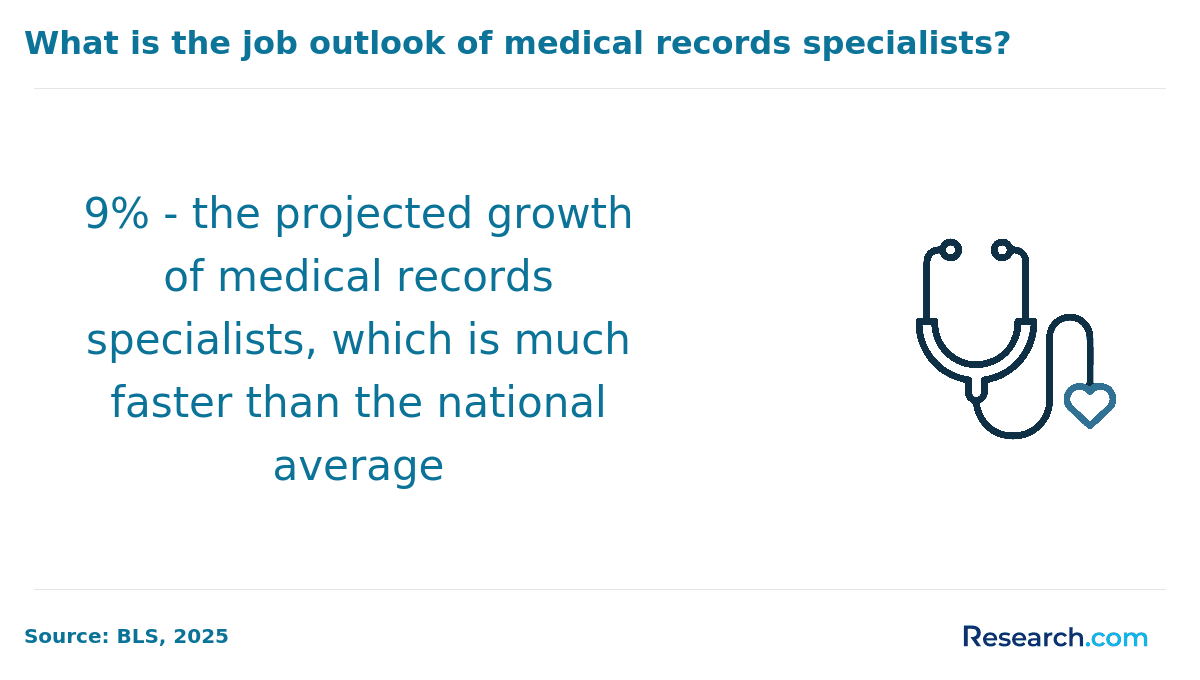
Nationally, the U.S. Bureau of Labor Statistics projects employment for medical records and health information technicians, a group that includes coders, to grow 8% from 2022 to 2032. Wichita’s hospitals, clinics, physician practices, and healthcare support organizations create recurring need for workers who can translate documentation into accurate claims and compliant records.
Current trends affecting billing and coding jobs
- More digital documentation: Employers increasingly expect workers to understand EHR workflows, electronic claims, secure data access, and payer portals.
- Remote and hybrid work: Remote roles exist, but they often favor experienced and certified coders who can work independently with strong accuracy.
- Greater compliance pressure: Incorrect coding can affect reimbursement and audits, so employers value workers who understand guidelines and documentation quality.
- Automation support, not full replacement: Software can assist with coding suggestions and claim checks, but human review remains important for context, accuracy, exceptions, and compliance.
How long does it take to become certified in medical billing and coding in Wichita, KS?
Most students in Wichita can prepare for certification in 9 to 12 months, depending on the program and study schedule. Wichita Technical Institute’s 48-week program is one local example of a hybrid option that combines online and in-person learning.
Some faster online options also exist. Rasmussen University offers a fully online certificate program that can take about 9 months with full-time study. Students who attend part time, need extra exam preparation, or choose an associate degree may need longer.
| Timeline factor | How it affects completion | What to ask before enrolling |
| Program format | Online, hybrid, and in-person programs may have different pacing and attendance requirements | Can I complete coursework around work or family obligations? |
| Full-time or part-time study | Full-time study can shorten the timeline, while part-time study may extend it | How many hours per week should I expect to study? |
| Certificate or associate degree | A certificate is usually faster, while an associate degree includes broader coursework | Do I need quick job entry or a longer academic pathway? |
| Exam preparation | Some students need extra time after coursework to prepare for CPC, CCA, or CCS exams | Does the program include exam review and practice tests? |
If cost is a barrier, compare programs that support aid options and review this resource on medical billing and coding programs with financial aid.
What career advancement opportunities exist for medical billers and coders in Wichita, KS?
Medical billing and coding can be more than a first healthcare job. With experience, workers may move into specialized coding, auditing, revenue cycle support, compliance, team leadership, or health information roles. Advancement usually depends on accuracy, certification, productivity, knowledge of payer policies, and the ability to communicate documentation problems clearly.
| Advancement direction | What to build | Why it can help |
| Specialized coder | Experience in inpatient, outpatient, physician, risk adjustment, or other focused coding areas | Specialization can lead to more complex work and stronger pay potential |
| Medical auditor | Deep knowledge of guidelines, documentation standards, and compliance reviews | Auditing roles help organizations reduce errors and prepare for payer scrutiny |
| Billing or revenue cycle lead | Claims, denials, reimbursement, reporting, and team communication skills | Leadership roles may combine technical billing knowledge with workflow management |
| Health information pathway | Additional education in records management, privacy, compliance, and data quality | Broader health information skills can expand career options beyond coding alone |
Some professionals eventually explore different healthcare careers altogether. If you want to compare administrative work with another healthcare pathway, Research.com’s guide on how to become a pharmacist in Wichita can help you understand how a longer clinical education route differs.
How can I transition to an advanced clinical career in Wichita, KS?
Billing and coding experience can give you useful exposure to diagnoses, procedures, provider documentation, insurance rules, and healthcare operations. However, it does not replace clinical education. Moving into advanced patient care requires a separate academic and licensing path, along with supervised clinical training.
If you are considering a clinical transition, start by deciding whether you want direct patient care, a prescribing or diagnostic role, or a healthcare support position. Then compare prerequisites, degree requirements, clinical hours, licensure exams, and program costs. For example, becoming a nurse practitioner involves advanced nursing education and clinical preparation. You can review the full pathway in this guide to becoming a nurse practitioner in Wichita.
What alternative healthcare career paths can complement medical billing and coding in Wichita, KS?
Some billing and coding professionals stay in administrative healthcare, while others use the field as a starting point for related roles. Complementary paths may make sense if you want more patient interaction, stronger case documentation skills, or a broader understanding of care systems.
For example, behavioral health and counseling-related fields can give workers a different view of patient support, documentation, and care coordination. If you are interested in that direction, compare requirements carefully by reviewing resources such as this guide to mental health counselor certification in Wichita.
How can complementary healthcare certifications boost my career as a medical biller and coder in Wichita, KS?
Additional certifications can help when they are connected to a clear career goal. For billing and coding professionals, the most useful add-ons are usually credentials that strengthen documentation, compliance, revenue cycle, auditing, or specialized healthcare knowledge. A credential that does not match your target job may add cost without improving your hiring prospects.
Some professionals explore patient support fields to understand behavioral health documentation, case notes, and care continuity more deeply. If that type of work interests you, compare the requirements in this guide on how to become a substance abuse counselor in Wichita.
What’s the average cost of a medical billing and coding program in Wichita, KS?
Medical billing and coding program costs in Wichita range from about $3,000 to over $30,000. The price depends on the school, credential level, program length, delivery format, and whether the institution is public or private. Butler Community College, for example, offers a two-year associate degree in medical coding for around $10,020 for Kansas residents.
Shorter certificate programs, especially online options, may start at about $3,000. Private institutions can cost more. A 10-month diploma at Herzing University costs roughly $12,875, while a full associate degree there can reach up to $31,000 before financial aid.
Tuition is only part of the total cost. Students should also budget for textbooks, coding manuals, certification exam fees, technology requirements, and possible lab or internship-related expenses. Online programs may reduce commuting costs, but they are not automatically the cheapest option once fees and exam costs are included.
| Cost item | Why it matters | Question to ask the school |
| Tuition | This is the largest advertised cost, but it may not include everything | Is the quoted tuition for the full program or only one term? |
| Books and coding manuals | Coding courses may require current manuals and reference materials | Are books included in tuition? |
| Certification exam fees | Certification can affect employability, but exam costs may be separate | Does the program include CPC, CCA, or CCS exam preparation or vouchers? |
| Technology and software | Online and hybrid students may need reliable hardware and secure access | What computer, internet, or software requirements apply? |
| Financial aid | Aid can change the net cost significantly | Which grants, scholarships, payment plans, or state assistance options may apply? |
Before committing, compare program outcomes, total cost, and accreditation status. You can also review accredited online medical billing and coding programs to evaluate options beyond Wichita.
What does a medical biller and coder in Wichita, KS do on a daily basis?
Medical billers and coders help turn patient encounters into accurate records, codes, claims, and reimbursement activity. They do not provide hands-on patient care, but their work affects whether providers are paid correctly and whether patient billing information is accurate.
- Reviewing clinical documentation, physician notes, diagnoses, and procedure details
- Assigning codes using ICD-10-CM, CPT, and HCPCS according to documentation and coding guidelines
- Preparing, submitting, tracking, and correcting insurance claims
- Following up on rejected, delayed, or denied claims
- Checking records for compliance with payer rules and healthcare regulations
- Communicating with providers when documentation is unclear or incomplete
- Responding to billing questions from patients, insurers, or internal departments
- Reconciling charges and producing reports that support revenue cycle accuracy
These workers may be employed by hospitals, clinics, physician practices, billing service companies, or remote healthcare teams. If you want a lower-cost training option before applying, compare affordable online medical billing and coding courses that align with certification preparation.
What are the most in-demand tech skills for medical billers and coders in Wichita, KS?
Billing and coding is now heavily software-based. Wichita employers commonly look for applicants who can work accurately inside digital systems, protect patient information, and manage claims electronically.
- Electronic health records: Ability to navigate EHR systems, locate clinical documentation, and update records accurately.
- Medical coding software: Comfort using tools that support ICD-10-CM, CPT, and HCPCS coding.
- Claims processing systems: Skill in submitting, tracking, editing, and resolving electronic insurance claims.
- HIPAA-compliant data handling: Understanding how to protect patient information and follow privacy requirements.
- Reporting and analysis: Ability to generate reports, identify claim issues, monitor denials, and support revenue cycle improvements.
- Digital communication tools: Professional use of secure email, messaging, task systems, and collaboration platforms.
Programs that include practice with billing platforms, EHR workflows, compliance scenarios, and claim correction exercises can better prepare students for the workplace. If you are still comparing this career with other coding pathways, review this guide on how to become a medical coder.
Can medical billers and coders work from home in Wichita, KS?
Yes. Medical billers and coders in Wichita can work from home, and remote or hybrid listings are now part of the field. However, remote jobs are not always the easiest entry point. Employers often prefer remote candidates who already have certification, experience, strong productivity, and a track record of accurate coding or billing work.
Remote billing and coding roles may be available through hospitals, physician groups, billing companies, and healthcare support organizations. These positions still require secure systems, compliance awareness, and reliable communication with providers, payers, and internal teams.
To work effectively from home, you typically need:
- A dependable computer and high-speed internet connection
- Secure access to billing and coding systems, often through a VPN
- Familiarity with EHR platforms such as Epic or Cerner
- Dual monitors for reviewing records, codes, claims, and payer guidance efficiently
- A quiet workspace that supports concentration and protects patient privacy
How should you choose a medical billing and coding program in Wichita?
The best program is not always the fastest or cheapest. A strong choice should prepare you for certification, give you enough practical coding practice, fit your schedule, and make financial sense based on realistic local salary expectations.
Questions to ask before enrolling
- Does the program prepare students for CPC, CCA, or CCS certification?
- Are textbooks, coding manuals, certification exam fees, and software costs included?
- Is the program online, hybrid, or campus-based, and how many weekly study hours are expected?
- Does the curriculum include ICD-10-CM, CPT, HCPCS, anatomy, medical terminology, reimbursement, compliance, and EHR or billing software?
- Are there coding labs, simulations, internships, or hands-on claim practice?
- What student support is available for tutoring, exam preparation, career services, and job search help?
- Can credits transfer if you later pursue an associate degree or health information program?
- What is the total cost after fees, books, exams, and supplies?
Common mistakes to avoid
| Mistake | Why it can hurt you | Better approach |
| Choosing only by tuition price | A low advertised cost may exclude books, exams, software, or support | Compare total program cost and what is included |
| Ignoring certification preparation | Employers may prefer applicants ready for CPC, CCA, or CCS | Ask which exam the curriculum is designed to support |
| Assuming online means easier | Online coding courses still require disciplined study and practice | Confirm weekly workload and support options before enrolling |
| Skipping career services questions | Training alone does not guarantee a job | Ask about resume support, interview help, employer connections, and job search resources |
| Overlooking transfer policies | You may lose time or money if credits do not apply to future education | Ask whether credits can transfer into an associate degree or related program |
| Expecting top specialty pay immediately | Higher-paying coding roles usually require experience and stronger credentials | Plan for entry-level work first, then build toward specialization |
What do medical billers and coders in Wichita, KS have to say about their careers?
-
: "
My medical billing and coding training at Wichita State University helped me understand the practical side of healthcare documentation. The coursework connected classroom concepts to workplace expectations, which made the transition into the field less intimidating. I like knowing that accurate billing can support both providers and patients, and Wichita’s healthcare environment gives me room to keep growing. — Seren
"
-
: "
At Friends University, I learned that administrative healthcare work still has a real connection to patient care. The technical training mattered, but so did learning how documentation supports providers and serves Wichita’s community. Local professional connections and ongoing education have helped me stay current and engaged. — Cael
"
-
: "
Newman University’s billing and coding program gave me a foundation for a stable career that continues to change. Wichita’s healthcare setting keeps the work challenging, and I have been able to take on more responsibility over time. I appreciate the independence, accuracy, and problem-solving the role requires. — Liora
"
What is the quickest way to become a medical coder in Wichita, KS?
The fastest practical route is usually a focused certificate program followed by certification exam preparation. In Wichita, many students can prepare in 9 to 12 months, while Wichita Technical Institute’s program runs 48 weeks and some fully online certificate options can take about 9 months with full-time study.
Speed should not come at the expense of exam readiness. A short program is only useful if it gives you enough practice in medical terminology, anatomy, coding guidelines, claims, compliance, and real chart scenarios.
Which medical coding certification is best in Wichita, KS?
There is no single best certification for every student. CPC is often a strong choice for physician and professional coding roles. CCA can be suitable for entry-level coders who want to show foundational knowledge. CCS may be useful for more advanced coding work, especially as you build experience with complex records.
Before choosing, review job postings in Wichita and note which credential appears most often for your target role. Then choose a program that prepares directly for that exam rather than offering general billing coursework without a certification plan.
How do I find medical billing and coding job openings specifically in the Wichita, KS area?
Start by searching job boards with terms such as medical coder, certified coder, medical billing specialist, coding analyst, revenue cycle specialist, claims specialist, and billing coordinator. Use Wichita, KS as the location filter, but also search remote and hybrid roles that accept Kansas applicants.
For better results, compare listings by certification requirement, EHR software, specialty, experience level, and whether the role focuses on billing, coding, denials, auditing, or revenue cycle support. Entry-level applicants should not ignore billing specialist or claims roles, because these jobs can build the experience needed for coding-focused positions later.
Which major healthcare systems in Wichita, KS employ medical billers and coders?
Medical billers and coders in Wichita may work for hospitals, clinics, physician groups, private practices, billing service providers, and healthcare administrative teams. Larger healthcare providers often have more structured revenue cycle departments, while smaller practices may combine billing, coding, patient account, and front-office duties in one role.
When researching employers, look beyond the job title. Review whether the position requires certification, whether remote work is available, what software is used, how productivity is measured, and whether the role includes denials, audits, insurance follow-up, or direct coding.
Related Articles for Nearby Cities
- 2027 How to Become a Medical Biller & Coder in Tulsa, OK: Education Requirements & Certification
- 2027 How to Become a Medical Biller & Coder in Oklahoma City, OK: Education Requirements & Certification
- 2027 How to Become a Medical Biller & Coder in Kansas City, MO: Education Requirements & Certification
- 2027 How to Become a Medical Biller & Coder in Lincoln, NE: Education Requirements & Certification
- 2027 How to Become a Medical Biller & Coder in Omaha, NE: Education Requirements & Certification
- 2027 How to Become a Medical Biller & Coder in Plano, TX: Education Requirements & Certification
- 2027 How to Become a Medical Biller & Coder in Garland, TX: Education Requirements & Certification
- 2027 How to Become a Medical Biller & Coder in Irving, TX: Education Requirements & Certification
- 2027 How to Become a Medical Biller & Coder in Dallas, TX: Education Requirements & Certification
- 2027 How to Become a Medical Biller & Coder in Fort Worth, TX: Education Requirements & Certification
References:
- Medical Coding | Kansas School fo Effective Learning. (n.d.). https://www.ed2go.com/kansel/online-courses/medical-coding/
- 247MedicalBillingServices. (n.d.). Medical Billing Services in Wichita, Kansas (KS) - 24/7 medical billing services. https://www.247medicalbillingservices.com/medical-billing-services-wichita
- Wichita Medical Billing and Coding | Medical Billing and Coding. (2024, June 25). Wichita Technical Institute. https://www.wti.edu/medical-billing-and-coding/medical-billing-and-coding-at-wti/wichita-medical-billing-and-coding/
- Writer, S. (2024, August 16). Inside a day in the life of a medical biller and coder. National Career College. https://nccusa.edu/blog/a-day-in-the-life-of-a-medical-biller-and-coder/
- Studies, T. C. &. P. (2025, February 17). Top reasons to consider a career in medical Billing. Engage TU. https://www.engagetu.com/2024/08/27/top-reasons-to-consider-a-career-in-medical-billing/
- Admin. (2025c, May 28). Wichita Medical Billing, credentialing. Medwave Billing & Credentialing. https://medwave.io/wichita-medical-billing-credentialing/
- Butler Community College. (n.d.). Medical Coding (Physician Coding) | Butler Community College. https://www.butlercc.edu/info/200161/medical-coding-physician-coding
- Fourrage, L. (2024, December 27). Most in demand tech job in Wichita in 2024. Nucamp. https://www.nucamp.co/blog/coding-bootcamp-wichita-ks-most-in-demand-tech-job-in-wichita-in-2024
- Kansas Labor Information Center (KLIC) - Job Seeker Services - Job search options. (n.d.). https://klic.dol.ks.gov/vosnet/jobbanks/jobdetails.aspx
Key Insights
- Medical billing and coding is a realistic healthcare entry path in Wichita because Kansas does not require a state license, but certification and formal training can strongly improve job prospects.
- Most students can prepare in 9 to 12 months, though associate degree pathways take longer and may cost more.
- Wichita medical billers and coders earn an average of $40,858 per year, but entry-level pay can be much lower and higher-paying specialties usually require experience.
- Program choice matters. Compare total cost, certification preparation, hands-on practice, software training, and career support before enrolling.
- Remote work is possible, but many remote roles favor certified and experienced applicants who can work accurately without close supervision.
- The strongest long-term strategy is to start with solid billing and coding fundamentals, earn a recognized credential such as CPC, CCA, or CCS, gain experience, and then specialize in areas such as inpatient coding, risk adjustment, auditing, or revenue cycle leadership.
Other Things You Should Know About Becoming a Medical Biller & Coder in Wichita, KS
To become a medical biller and coder in Wichita, KS in 2027, individuals typically need a postsecondary certificate or an associate degree in medical billing and coding. Programs often cover medical terminology, coding systems, health information management, and relevant software to prepare for the role.
The Certified Professional Coder (CPC) exam from the AAPC is the most widely recognized credential for outpatient medical coding. It covers CPT, ICD-10-CM, HCPCS Level II, and medical terminology, and employers in Wichita often prefer candidates who pass it before applying for coding jobs.


