2027 Health Administration Degree vs. Certificate: Which Should You Choose?

Co-Founder and Chief Data Scientist
Choosing between a health administration degree and a certificate is really a choice between speed, depth, cost, and career ceiling. A certificate can help you build targeted administrative skills quickly, often while you keep working. A degree usually takes longer and costs more, but it provides broader preparation for management, compliance, operations, and long-term advancement in healthcare organizations.
This decision matters because healthcare employers often match credentials to responsibility level. Entry-level office, billing, intake, and records roles may be accessible with a certificate and relevant experience. Supervisory and leadership roles more often favor candidates with a degree, especially when the job involves budgeting, staffing, quality improvement, policy, or regulatory oversight. Healthcare management job growth is projected at over 30% in the next decade, making the credential you choose an important part of your career strategy.
This guide compares health administration degrees and certificates by completion time, online availability, admissions, credits, tuition, transfer options, accreditation, jobs, and starting salaries so you can decide which path fits your current qualifications, budget, schedule, and career goals.
Key Points About Health Administration Degree vs. Certificate Programs
- A health administration degree typically offers comprehensive management skills and higher salary potential, with graduates earning 15-25% more than certificate holders on average.
- Certificate programs focus on specific technical skills, providing faster entry into the workforce and flexible schedules suited for working professionals.
- Degree programs support long-term career growth and leadership roles, while certificates enhance specialized knowledge ideal for immediate application in healthcare settings.
What are the differences between health administration degree and certificate programs?
The main difference is scope. A health administration degree is designed to build a broad academic and professional foundation for healthcare management. A certificate is usually shorter and more focused, helping students gain specific administrative, billing, records, compliance, or office-management skills without completing a full degree.
Neither option is automatically better. The stronger choice depends on where you are now and what kind of role you want next.
| Factor | Health administration degree | Health administration certificate |
| Best for | Students seeking broader management preparation and long-term advancement | Working adults or career changers who need targeted skills quickly |
| Curriculum depth | Covers healthcare systems, leadership, finance, policy, ethics, operations, and strategy | Focuses on selected skills such as medical office procedures, billing, records, compliance basics, or administration |
| Time commitment | Usually requires several years, depending on degree level and enrollment status | Often completed in months, depending on format and credit load |
| Career use | Better aligned with supervisory, management, and advancement-oriented roles | Useful for entry-level roles, skill refreshers, or adding healthcare-specific knowledge to an existing background |
| Flexibility | Structured curriculum with general education, core courses, and electives | More narrowly focused and often easier to fit around work |
A degree is usually the better investment if you want to compete for leadership roles, move into management, or continue to graduate study later. A certificate may be the better first step if you need a faster, lower-cost credential, already have a degree in another field, or want to test your interest in healthcare administration before making a larger commitment.
- Choose a degree if: you want a comprehensive credential, plan to pursue management roles, or expect your future employers to screen for a bachelor's or master's degree.
- Choose a certificate if: you need job-ready skills quickly, want to strengthen your résumé, or cannot commit to a multi-year program right now.
- Be careful if: a certificate is marketed as equivalent to a degree. In most hiring situations, it is not. It can be valuable, but it usually serves a different purpose.
How long does it take to complete a health administration degree vs. a certificate program?
A health administration certificate is usually the faster route. A certificate program length typically ranges from 4 weeks to 12 months, while a degree can take from about 2 years to 4 years or longer depending on the level of study and whether you enroll full time or part time.
- Certificate programs: Often take 4 weeks to 12 months. These programs are built for rapid skill development and are commonly designed for working professionals.
- Associate degrees: Usually require about 2 years of full-time study.
- Bachelor's degrees: Usually take around 4 years, though transfer credits, prior learning, or accelerated formats may shorten the timeline.
- Master's degrees: Typically require an additional 2 years beyond the bachelor's level, depending on program structure and course load.
Program format also matters. Online and self-paced certificates may let motivated students finish faster, while cohort-based programs follow fixed start dates and term schedules. Degree programs may offer part-time options, but reducing your course load extends the calendar time to graduation.
Several factors can change your timeline:
- Transfer credits: Prior college coursework may reduce the number of courses you still need.
- Accelerated formats: Shorter terms and year-round enrollment can compress the schedule.
- Work and family responsibilities: Part-time study may be more realistic but slower.
- Internship or practicum requirements: Some degree programs require field experience that must be scheduled separately from coursework.
If your main concern is finishing a bachelor's degree faster, comparing formats such as a fast track bachelor degree online can help you understand how accelerated study may affect workload, cost, and completion time.
The practical takeaway is simple: choose a certificate when you need a short, focused credential; choose a degree when you can invest more time for broader preparation and stronger advancement potential.
Can you complete a health administration degree or certificate entirely online?
Yes, many health administration degrees and certificates can be completed entirely online, but students should verify the delivery format before applying. “Online” does not always mean every requirement is virtual. Some programs include internships, practicums, proctored exams, campus intensives, or local fieldwork.
Online health administration degree programs are widely available in the US, including programs from Southern New Hampshire University, Capella University, and Purdue Global. Online health administration certificate programs are also common through colleges, universities, community colleges, extension divisions, and other academic providers.
Before enrolling, confirm the following details with the school:
- Course delivery: Are classes fully online, hybrid, synchronous, asynchronous, or self-paced?
- Campus requirements: Are there any required in-person sessions, orientations, exams, or residencies?
- Field experience: Does the program require an internship, practicum, or local placement?
- Student support: Are online students eligible for advising, tutoring, career services, library access, and technical support?
- Career alignment: Does the online format support your goals for employment, advancement, certification, or licensure where relevant?
Bachelor's degrees in health administration are often available fully online without mandatory campus visits, but some may still require local internships to provide applied experience. Certificates are usually shorter and may have fewer hands-on requirements, though advanced or specialized certificates can still include applied projects or professional practice components.
Flexibility is especially important for adult learners, career changers, and students balancing school with caregiving or employment. If online learning is central to your plan, reviewing resources such as the best online degrees for seniors can help you think through accessibility, scheduling, and support services.
The safest approach is to ask the admissions office for a written breakdown of all online, hybrid, and in-person requirements before you apply.
What are the admission requirements for a health administration degree vs. a certificate program?
Health administration degree programs usually have more formal admission requirements than certificate programs. Certificates are often easier to enter because they are shorter and more skills-focused. Degree programs, especially at the graduate level, typically require stronger academic documentation and may evaluate applicants more competitively.
Admission requirements for health administration degree programs
- Educational background: Most bachelor's degree programs require a high school diploma or GED. Master's programs usually require a four-year undergraduate degree from an accredited institution.
- GPA: Undergraduate programs often require a minimum high school GPA of 2.5-3.0. Master's programs usually ask for a college GPA of at least 3.0.
- Transcripts: Applicants generally must submit official transcripts from all previous institutions.
- Standardized tests: SAT or ACT scores may be requested for bachelor's programs, though some schools waive them. Master's programs sometimes require GRE or GMAT scores, but these are increasingly optional.
- English proficiency: Non-native English speakers may need TOEFL, IELTS, or equivalent results.
- Personal statement or essays: Many programs ask applicants to explain their career goals and interest in health administration.
- Letters of recommendation: One or two letters from academic or professional references are often required, especially for graduate admission.
- Interview: Some master's programs use interviews to assess fit, experience, and communication skills.
- Professional résumé: Graduate applicants typically submit a résumé showing work, volunteer, leadership, or healthcare-related experience.
These health administration degree admission requirements in the United States reflect the broader academic commitment of a degree program. They also help schools assess whether applicants are prepared for writing-intensive, policy-oriented, and management-focused coursework.
Admission requirements for health administration certificate programs
- Educational background: Many certificate programs require only a high school diploma or GED. Some prefer or require college credits or relevant professional experience.
- Transcripts: Some programs request transcripts to verify prior education, but requirements are usually less demanding than degree admissions.
- Professional experience: Certain certificates may prefer applicants with healthcare, office administration, business, or customer service experience.
- English proficiency: Non-native English speakers may need proof of English ability, especially for academic-based certificates.
- Application form: Most certificate programs use a simpler application process.
- Letters of recommendation and personal statement: These are usually not required, except for some advanced or post-baccalaureate certificates.
Applicants should not assume that “certificate” means open admission. Some programs are introductory, while others are designed for people who already hold a degree or work in healthcare. If you are comparing advanced academic options, resources on the cheapest online masters can help you evaluate whether a graduate degree may be a better long-term fit than a certificate.
How many credits do you need to complete a health administration degree vs. a certificate?
Credit requirements show how much coursework a program includes. A bachelor's degree in health administration generally requires around 120 to 121 credit hours, while a certificate usually requires between 12 and 18 credit hours. That difference explains why certificates can be completed much faster but do not provide the same academic breadth as a degree.
| Credential | Typical credit requirement | What the credits usually cover |
| Bachelor's degree | Around 120 to 121 credit hours | General education, core health administration courses, electives, leadership, finance, healthcare policy, ethics, and often applied projects or internships |
| Certificate program | Between 12 and 18 credit hours | Focused coursework in selected health administration skills, such as office operations, billing, records, compliance basics, or healthcare systems |
The credit difference affects more than time. It also affects transferability, financial aid eligibility, employer perception, and how much academic preparation you receive. A certificate can be highly practical, but it is not a substitute for the broader curriculum of a bachelor's degree.
A student pursuing a health administration certificate described the shorter credit requirement as the reason he could continue working while studying. “Choosing the certificate meant I could gain essential skills without the long-term commitment of a full degree,” he said. He found the pace intense, but the coursework was directly connected to his job and easier to apply immediately.
That experience reflects the main trade-off. A certificate can be a strategic, focused step forward when time is limited. A degree is a larger academic commitment, but it gives students more room to build management, communication, analytical, and healthcare-system knowledge over time.
What is the average tuition for a health administration degree vs. a certificate?
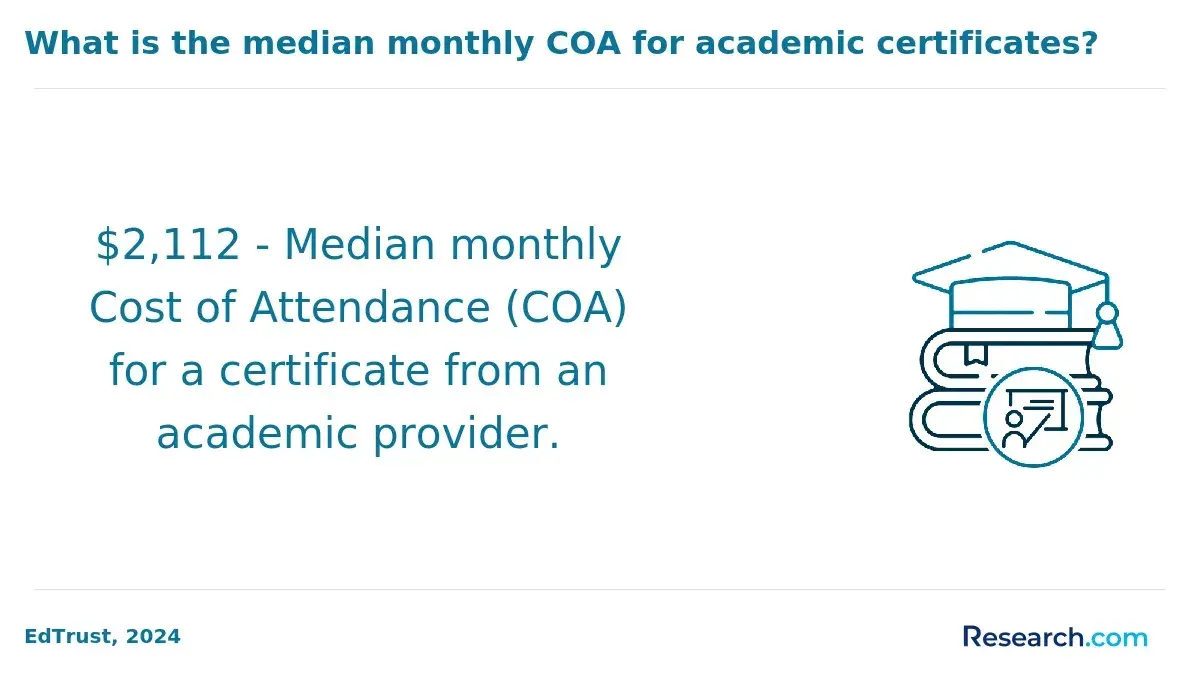
Health administration certificates usually cost less than degrees because they require fewer credits and take less time to complete. However, the cheapest option is not always the best option. Students should compare total cost, accreditation, employer recognition, credit transfer options, and expected career value before enrolling.
Average tuition for health administration degree programs
- Tuition range: Undergraduate health administration degrees usually range from about $9,791 per year at public institutions to $25,636 annually at private schools. Some online programs may offer lower tuition, as low as $5,100 per year.
- Graduate degree costs: Master's programs can cost significantly more, with some programs charging between $39,000 and $64,000 total. Graduate tuition is often calculated per credit hour.
- Cost drivers: Tuition varies by public or private status, in-state or out-of-state residency, online or campus delivery, and institutional pricing policies.
- Program length: Bachelor's degrees typically last 3-4 years, while master's degrees take 1-2 years. The longer you are enrolled, the more important it becomes to estimate total cost rather than yearly tuition alone.
- Additional fees: Registration, technology, books, materials, and health insurance fees can add thousands to the total cost.
Average tuition for health administration certificate programs
- Tuition range: Certificate programs generally cost between $2,000 and $7,000 total, depending on the provider, format, and number of credits.
- Shorter duration: Because certificates often take several months to a year, students usually face a smaller total financial commitment than they would for a degree.
- Cost drivers: Prices vary depending on whether the certificate is offered by a community college, university extension program, online provider, or academic department.
- Additional costs: Some programs charge registration, materials, exam, technology, or transcript fees, though these are generally lower than degree-related fees.
- Return on investment: A certificate can make sense for working professionals who need a specific skill boost, but students seeking management-track roles should compare the lower cost against possible limits on advancement.
When comparing cost, ask each school for the full estimated price of attendance, not just tuition. Also ask whether the program is eligible for financial aid, employer tuition assistance, payment plans, or transfer into a future degree. Students interested in accelerated study in other academic pathways may also compare options such as a PhD online 1 year to understand how time-to-completion can affect educational cost.
Can you transfer certificate credits toward a health administration degree later on?
Yes, certificate credits can sometimes transfer into a health administration degree, but transfer is never guaranteed. Each institution decides which credits it will accept, how many credits can apply, and whether the courses match degree requirements.
Transfer is more likely when the certificate and degree are offered by the same institution, when both programs are accredited, and when certificate courses are equivalent in level, content, and rigor to degree courses. It is less likely when the certificate is noncredit, offered by a nonacademic provider, or focused on professional training rather than college-level coursework.
Before enrolling in a certificate with the intention of later earning a degree, ask these questions:
- Are the certificate courses credit-bearing? Noncredit courses usually do not transfer into a degree.
- Will the credits apply to major requirements or only electives? Elective transfer may not shorten the degree as much as expected.
- Is there a transfer limit? Some schools cap the number of certificate credits that can count toward a degree.
- What grade is required? Programs may require minimum grades before accepting transfer credit.
- Does transfer approval expire? Policies can change, and older credits may be reviewed differently.
- Can the school provide written confirmation? Verbal advice is not enough for planning a degree pathway.
One student who completed a health administration certificate said she initially did not know which credits would apply to a later degree. She had to review official transfer guidelines and speak with program advisors before she received confirmation. “I had to be proactive in asking for documentation and approvals to ensure my credits counted,” she recalled.
Her experience highlights the most important rule: confirm transferability before you enroll, not after you finish. Written approval can prevent wasted credits, unexpected tuition costs, and delays in completing the degree.
Are certificate programs accredited the same way as health administration degrees?
No. Health administration certificate programs are generally not accredited in the same way as health administration degrees. Degree programs, especially bachelor's and master's programs, may be reviewed by institutional accreditors and specialized agencies. Certificates are more often covered by the overall accreditation of the institution rather than by a separate programmatic accreditation process.
Health administration degrees such as bachelor's or master's programs are typically associated with specialized accreditation from organizations like the Commission on Accreditation of Healthcare Management Education (CAHME). Certificates seldom receive this type of accreditation. Some certificate programs may be connected to niche organizations, such as the National Association of Long Term Care Administrators Boards (NAB), but many rely primarily on the school's institutional accreditation.
Accreditation matters because it can affect:
- Academic quality: Accreditation review examines factors such as curriculum, faculty qualifications, student outcomes, and institutional resources.
- Credit transfer: Credits from accredited institutions are generally easier to evaluate for transfer.
- Employer recognition: Employers may be more confident in credentials from accredited schools or recognized programs.
- Financial aid: Eligibility for certain forms of aid is often tied to institutional accreditation.
- Professional pathways: Some roles or certifications may prefer or require education from accredited programs.
Graduating from an accredited degree program can be important for certain health administration roles and may support eligibility for professional certifications, such as the Fellow of the American College of Healthcare Executives (FACHE). Certificate students should be equally careful, even if programmatic accreditation is less common.
Before enrolling, verify the school's institutional accreditation and, for degrees, whether the health administration program has relevant specialized accreditation such as CAHME. For certificates, ask whether the program is credit-bearing, who recognizes it, and whether it aligns with your intended career path.
What jobs can you get with a health administration degree vs. a certificate?
A health administration degree generally prepares graduates for a wider range of administrative, supervisory, and management roles. A certificate more often supports entry-level administrative work, specialized office functions, or advancement for people who already have healthcare or business experience.
Jobs you can get with a health administration degree
- Health services manager: Oversees daily operations of healthcare facilities, departments, or service lines while supporting efficiency, staffing, and regulatory compliance.
- Medical office manager: Manages administrative staff, workflows, scheduling, billing coordination, and office procedures in medical practices.
- Clinic administrator: Coordinates clinical operations, budgets, staffing, patient flow, and administrative systems in outpatient settings.
- Administrative coordinator: Supports healthcare leaders through scheduling, communications, reporting, documentation, and policy implementation.
- Healthcare compliance officer: Helps organizations follow legal, ethical, privacy, and regulatory requirements.
- Patient services supervisor: Oversees patient relations, service quality, front-desk operations, and patient experience processes.
Jobs you can get with a health administration certificate
- Medical administrative assistant: Handles scheduling, records, phone communication, patient paperwork, and basic office support.
- Patient intake coordinator: Collects patient information, verifies registration details, and supports the first stage of the care process.
- Medical records clerk: Maintains, updates, organizes, and protects patient health records.
- Billing specialist: Processes insurance claims, patient billing, payment records, and related documentation.
- Scheduling coordinator: Manages appointments, provider calendars, reminders, and scheduling workflows.
Degree programs typically provide broader exposure to healthcare finance, law, leadership, policy, analytics, quality improvement, and organizational management. That broader preparation can matter when employers are hiring for roles involving supervision, decision-making, or cross-department coordination.
Certificate programs can still be valuable, especially for candidates who need healthcare-specific administrative skills quickly. However, a certificate alone may not be enough for long-term movement into management unless it is paired with experience, additional education, or strong performance in the workplace.
What is the average starting salary for a certificate vs. health administration degree graduates?
Starting salaries are generally higher for health administration degree graduates than for certificate holders, largely because degrees can qualify candidates for roles with more responsibility. Salary still depends heavily on location, employer type, prior experience, job title, and the size of the healthcare organization.
- Typical salary range for certificate holders: A health care administration certificate starting salary usually falls between $45,000 and $53,000 annually. Common roles include medical secretary, medical records specialist, or patient services representative.
- Typical salary range for bachelor's degree holders: Graduates with a bachelor's degree in health administration generally start at higher salaries, ranging from $73,000 to $98,000 for entry-level clinical manager or health information manager positions.
- Typical salary range for master's degree holders: Those with a master's degree often begin between $82,000 and $93,000, with potential to exceed $100,000 as they gain experience.
- Influencing factors: Experience, industry setting, and location can change pay substantially. Hospitals and large health systems often pay more than smaller clinics. Urban areas or states with higher living costs may also offer higher salaries.
- Career outlook: Degrees tend to provide better access to supervisory and management positions, which can improve long-term earning potential. Certificates offer a quicker and lower-cost entry point but may limit advancement without further education.
- Educational quality: Programs from nationally accredited colleges can provide a stronger foundation and may improve employer confidence in the credential.
Use salary ranges as planning estimates, not guarantees. A certificate holder with strong healthcare experience may earn more than a new degree graduate in some settings, while a degree graduate in a large health system may advance faster. The best salary decision is to compare the cost of the credential with the specific jobs it can realistically help you pursue.
Here's What Graduates of Health Administration Programs Say About Their Degree or Certificate
-
: "Pursuing the health administration certificate program was a game-changer for me. The shorter length and focused curriculum allowed me to gain essential skills quickly without the hefty price tag often associated with degree programs. It's perfect for professionals like me looking to boost career prospects without committing years or a large budget.
Emmanuel"
-
: "Choosing the health administration degree program meant investing more time and money, but it provided a comprehensive learning experience that deeply enhanced my understanding of the field. The slower pace allowed me to absorb complex concepts and opened doors to leadership roles I never thought possible. For anyone seeking long-term career growth, the degree is worth considering.
Gage"
-
: "Having completed both the certificate and degree programs in health administration, I can confidently say each served a distinct purpose. The certificate offered an affordable, accelerated path for foundational knowledge, while the degree expanded that foundation into a full professional skill set. Balancing cost and career goals is key, and this dual approach helped me achieve both effectively.
Isaac"
Other Things You Should Know About Health Administration Degrees
In 2027, a Health Administration degree typically offers more structured practical experience through internships and fieldwork, aiming for comprehensive industry exposure. Certificate programs may provide limited practical experience, focusing more on theoretical knowledge and skill enhancement.
A 2027 Health Administration degree may lead to roles like healthcare administrator or manager, whereas a certificate typically supports entry-level positions like medical office assistant. A degree usually provides a broader scope and more advancement potential within healthcare organizations.
A Health Administration degree typically requires 3-4 years of full-time study, comprising around 120 credit hours. In contrast, a certificate program can be completed in 6 months to a year, requiring approximately 15-30 credit hours, allowing for quicker entry into the workforce.
References
- What is the Difference Between a Graduate Certificate and a Master’s Degree? - Healthcare Management Degree Guide https://www.healthcare-management-degree.net/faq/difference-between-graduate-certificate-and-masters-degree/
- Healthcare Admininistration Certificate vs Degree: Pros and Cons https://onlinemhaprograms.org/healthcare-administration-certificate-vs-degree/
- Certificates vs. Diplomas vs. Degrees in Healthcare: An Online Guide for Students https://www.edumed.org/articles/certificate-vs-diploma-vs-degree/
- Healthcare Administration Certificate Online or On Campus https://und.edu/programs/health-administration-certificate/index.html
- Home https://www.husson.edu/online/blog/2023/09/certificate-vs-certification
- 3 Degrees of Healthcare Management: MSHCM vs. MBA vs. MHA https://www.michiganstateuniversityonline.com/resources/healthcare-management/degrees-in-healthcare-management-mba-vs-mha-mshcm/
- What Is the Salary for a Healthcare Manager? | Saint Mary’s University of Minnesota https://www.smumn.edu/blog/how-much-can-you-earn-in-a-healthcare-management-career/
- What Is The Typical Salary For Someone With a Healthcare Administration Degree? - Healthcare Administration Degree Programs https://www.healthcare-administration-degree.net/faq/what-is-the-typical-salary-for-someone-with-a-healthcare-administration-degree/
- Health Care Administration, Certificate https://bulletins.psu.edu/undergraduate/colleges/health-human-development/health-care-administration-certificate/
- Health Services Administration Certification - FGCU https://www.fgcu.edu/mariebcollege/healthsciences/healthservicesadministration-certificate